
BTTS stands for Both Teams to Score and it is one of the clearest markets in soccer wagering. In this bet you predict whether both sides will score at least one goal during regular time (90 minutes plus injury time). The BTTS meaning is simple: if each team nets once or more, a BTTS “Yes” wins; if either side fails to score, the bet loses.
Major bookmakers such as Bet365, Paddy Power, William Hill, Ladbrokes and DraftKings offer BTTS across top European leagues and lower divisions. Odds for BTTS betting explained often show “Yes” prices in competitive fixtures around 4/6 to Evens, though rates vary by matchup, league form, and bookie. Bettors like BTTS because it removes the need to pick a winner — a single late goal can turn a losing prediction into a winner, adding tension and value to many matches.
This introduction sets the stage for a deeper look at what is btts in soccer betting, how to analyze teams, and strategies for using both teams to score betting in live and pre-match markets. The rest of the article will clarify types of BTTS bets, where it fits in overall betting strategies, and practical tips for managing risk.
Key Takeaways
- BTTS means both teams must score during regular time for a “Yes” result.
- Offered widely by Bet365, Paddy Power, William Hill, Ladbrokes, and other major sportsbooks.
- Popular because bettors avoid picking a match winner — one goal can change the outcome.
- Typical “Yes” odds in competitive games often range from about 4/6 to Evens, varying by fixture.
- The article will explain how to analyze teams, place BTTS bets, and manage risk effectively.
What Does BTTS Mean in Soccer Betting?
Both Teams to Score is a popular market that asks a simple question: will both sides find the net during regular time? The short primer below breaks the concept down and shows why many bettors favor this wager.
Definition of BTTS
The definition of BTTS is plain: a Yes/No market where both teams must score at least once in the 90 minutes plus stoppage time. Extra time and penalties do not count. For example, Manchester United 2–1 Chelsea would make a BTTS Yes pay out. A 0–0 draw such as Arsenal 0–0 Tottenham would mean BTTS Yes loses.
Importance of the BTTS Market
The importance of BTTS comes from accessibility and frequency. Most fixtures offer this market, giving bettors steady options across leagues like the Premier League and La Liga.
Its appeal rises from staying alive deep into matches. A late goal can flip the outcome, which keeps bettors engaged. Bookmakers often include BTTS in bet builders and accumulators to boost odds and variety.
How BTTS Differs from Other Bet Types
BTTS vs other bets shows a clear difference in focus. Match result bets require predicting the winner or a draw. BTTS ignores who wins and concentrates only on scoring by both sides.
Variations mix BTTS with results or totals, such as BTTS & Win or BTTS & Over/Under. Those combos raise complexity and payouts. BTTS stays simpler than handicaps or spreads, but it pairs well with those markets for higher returns.
Understanding the BTTS Betting Market
Both teams to score markets have grown into a core option for soccer bettors. This section outlines the main types of BTTS bets, explains why BTTS popularity has surged, and shows how bettors fold this market into a wider betting plan.
Types of BTTS Bets
Standard yes/no BTTS is the baseline most players know. You back whether both teams score at any time during the match.
Bookmakers expand that choice with BTTS & Match Result, which pairs a BTTS outcome with a winner like Manchester United to win. Bettors can target higher returns by combining outcomes.
Other BTTS variations include BTTS & Over/Under lines such as BTTS & Over 2.5 goals. Markets that require both teams to score in each half are offered for more advanced play.
Player-focused markets layer in personal scorers. For example, a BTTS & Player to Score bet pays if both teams net and a named player, such as Mohamed Salah, scores. Half-time BTTS markets limit the window to the first or second 45 minutes.
Popularity Among Bettors
BTTS popularity is visible across apps and exchanges worldwide. In the UK, punters treat this market as a staple on Bet365 and William Hill menus.
During the 2024–25 Premier League season roughly 59% of matches satisfied BTTS criteria. Common scorelines like 1–1, 2–1, and 2–2 often trigger these markets, making them familiar to casual backers and sharp bettors alike.
Exchanges and sportsbooks display a range of odds and micro-markets that reflect demand. That depth helps explain steady growth in BTTS popularity from in-play wagers to pre-match accumulators.
How BTTS Fits into Overall Betting Strategies
Many bettors use BTTS as a building block. A betting strategy BTTS often appears in accumulators, where a Both Teams to Score acca boosts combined returns without forcing a match-winner prediction.
Bet builders on sites like DraftKings and FanDuel let users fuse BTTS selections with cards, corners, or match results. That flexibility attracts players who like to tailor stakes and risk.
In-play traders favor BTTS when a game opens up. If both sides press forward after a goal, live BTTS odds move quickly. That makes BTTS a popular choice for bettors unsure of a victor but confident in attacking intent.
How to Place a BTTS Bet
Placing a BTTS selection is simple when you follow clear steps and pick a trusted operator. The guide below breaks down BTTS betting steps, shows where to compare prices, and lists what to check before you place BTTS wager.
Step-by-Step Guide to Placing a Bet
Follow this sequence to place a BTTS bet with confidence.
- Select a licensed sportsbook or betting app such as Bet365, William Hill, Paddy Power, Ladbrokes.
- Find the fixture and locate the BTTS market, typically shown as Yes/No.
- Compare odds across sites using aggregators like Oddschecker to spot value.
- Enter your stake and confirm the wager on the bet slip.
- For in-play BTTS, monitor the scoreline and game context before staking.
Choosing a Reputable Sportsbook
Pick operators known for reliability and clear market rules. Bet365 and William Hill lead with deep markets and in-play tools.
Check licensing relevant to your jurisdiction, app store reviews, deposit limits, cash-out options, and promotions. Use odds comparison to see which of the best sportsbooks for BTTS offers the most competitive price for your selection.
Key Factors to Consider
Confirm market rules up front. Most BTTS markets count only regular time and exclude penalties and extra time.
Understand how bet builders treat combined selections and whether cash-out is available. Assess odds value, recent team form, injuries, and weather before you place BTTS wager.
Keep a simple checklist: market rules, odds comparison, stake size, and match context. These steps help you place BTTS wager with clearer judgment and steady staking.
Analyzing Teams for BTTS Betting
Successful BTTS betting starts with focused team study. A clear framework helps bettors weigh attacking power, defensive tendencies, and short-term trends. Use objective metrics and match context to guide choices.
Evaluating Team Offenses
Begin your team offense evaluation by checking goals scored per match and shot volume. Expected goals (xG) numbers reveal chances quality beyond raw goals. Compare home and away scoring splits; some clubs like Bournemouth in 2024/25 showed consistent scoring across fixtures, which lifts BTTS Yes probability.
Look at chance creation from set pieces and wing play. Teams that press high and generate shots inside the box tend to keep scoring rates stable. Use this to predict continued output over several matches.
Consideration of Team Defenses
Defensive analysis BTTS requires tracking clean sheet frequency and goals conceded. Strong defenses reduce BTTS incidence. For example, Arsenal’s low concession run in 2024/25 correlated with fewer both-teams-to-score outcomes.
Factor in managerial style. Coaches who prioritize compact defending, similar to Sean Dyche-type approaches, can suppress goal flow even when facing prolific offenses. Check how teams perform under pressure and their recovery after conceding.
Importance of Recent Form
Recent form for BTTS is crucial. Short-term spikes or drops in goals scored and conceded alter probabilities fast. Brighton once had BTTS in eight of ten league games during a stretch, a pattern that bettors could exploit while it held.
Always review head-to-head trends and home/away splits. Aston Villa examples show higher BTTS at home than away in certain periods. Injuries, suspensions, and rotation change attacking and defensive balance, so verify lineups before placing a bet.
Combine team offense evaluation with defensive analysis BTTS and current match context to refine predictions. A layered approach offers clearer edge than relying on one metric alone.
Statistics and Trends in BTTS Betting
Past performance helps shape smart betting. Historical BTTS data shows variation across countries and seasons. In recent Premier League campaigns common scorelines like 1–1 and 2–1 appeared often, with an overall BTTS incidence near 59% in 2024–25. Serie A typically records lower league BTTS rates because of tactical, defensive setups.
Historical BTTS Data
Leagues with open styles tend to produce more matches where both teams score. The English Premier League, Dutch Eredivisie, and German Bundesliga register higher BTTS statistics than leagues focused on defense. Tracking team-by-team BTTS statistics reveals clubs that consistently score and concede.
Longitudinal records help spot patterns. Teams that over several seasons average frequent BTTS results become targets for value bets. Use resources like both-teams-to-score stats for deeper breakdowns by fixture and time period.
Recent Trends in League Performances
Short-term BTTS trends shift with tactics and personnel. During sample periods, clubs such as Brighton, Manchester United, and Liverpool showed elevated BTTS occurrence, while Arsenal registered fewer BTTS outcomes thanks to stronger defense. Home and away splits matter: some clubs produce more BTTS at home, others on the road.
Analyzing league BTTS rates week by week highlights when markets move. Pressing styles and fast transitions often increase goal opportunities for both sides. Watching recent fixtures and head-to-heads refines predictions better than relying on season averages alone.
Impact of Player Injuries and Suspensions
Availability of key attackers and creative midfielders reduces the chance of both teams scoring. Missing a top striker often lowers expected goals for that side, altering BTTS probabilities. Defensive absences can raise the likelihood of both teams scoring if replacement options are weaker.
Always review updated squads before placing a bet. The injuries impact BTTS more in tight fixtures or when small tactical changes force different formations. Bookmakers adjust odds quickly when suspensions or injuries change a matchup’s risk profile.
| Factor | Typical Effect on BTTS | How to Use It |
|---|---|---|
| League playing style | Open leagues raise BTTS rates; defensive leagues lower them | Compare league BTTS rates to season averages |
| Team form | Attacking form increases BTTS chances; leaky defenses also boost rates | Check recent scoring trends and head-to-heads |
| Home vs away | Some teams show strong home BTTS tendencies; others score on the road | Use home/away splits to refine stake size |
| Injuries and suspensions | Missing attackers lowers scoring; missing defenders raises BTTS odds | Monitor injury lists to assess injuries impact BTTS before betting |
| Match context | Cup ties or relegation battles often increase urgency and goals | Factor in motivation when assessing BTTS trends |
Strategies for Successful BTTS Betting
Successful BTTS betting relies on clear rules, good data, and disciplined execution. Start by setting a framework that fits your bankroll and appetite for risk. Use a mix of pre-match filters and in-play reads to build a consistent approach to BTTS strategies.
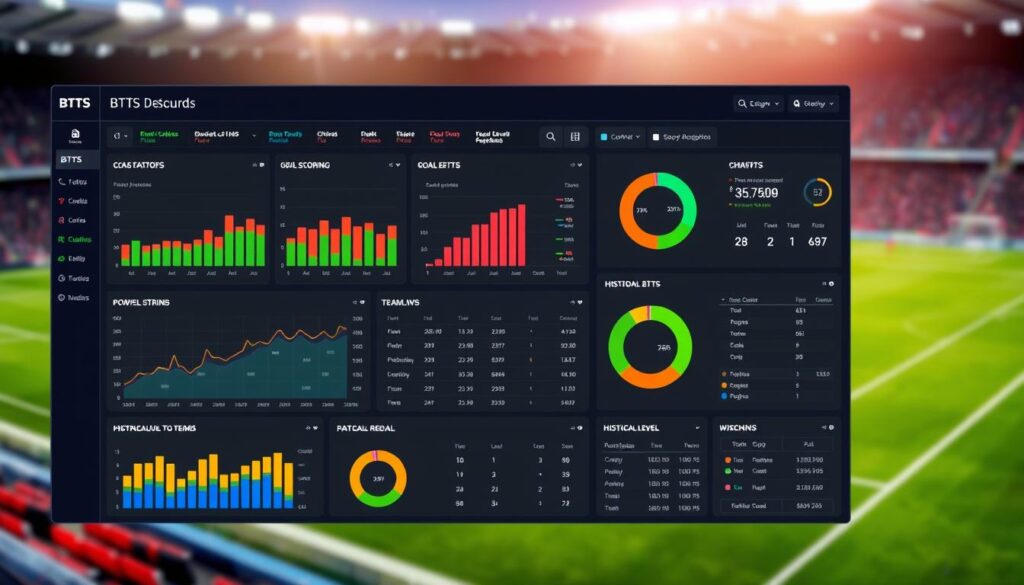
Use statistical filters to identify fixtures where both sides score. Look at teams that create quality chances and those that concede under pressure. League context, recent head-to-head results, and home/away splits help you identify BTTS value before kick-off.
Look for inflated odds compared with historical BTTS rates for the matchup. Avoid very short prices unless you pair them with other markets. A disciplined staking plan protects your bank when value bets do not land.
Live markets offer price shifts you can exploit. When a match stays 0–0 at 30 or 60 minutes, BTTS Yes odds often drift and create opportunities. Watch substitutions, red cards, and tactical shifts to judge whether momentum favors both teams scoring in the remaining minutes.
- Monitor key game events to time entries for live BTTS betting.
- Compare pre-match implied probabilities with in-play market moves.
- Use small, targeted stakes when chasing in-game swings.
Advanced metrics improve decision-making. Expected goals (xG) highlights quality chances each side creates. Shot quality, pressing intensity, and chance creation rates reveal underlying balance between attack and defense.
Combine analytics for BTTS with qualitative context such as managerial style, fixture congestion, and weather. Data showing high xG for both teams or persistent conceded xG raises BTTS probability even if raw scores tell a different story.
Keep records of each bet to refine filters and learn which BTTS strategies work in different leagues. Regular review lets you spot patterns and adjust models to changing team behavior and market pricing.
Risk Management in BTTS Betting
Managing risk in both-teams-to-score markets demands clear rules and steady discipline. Start with a simple plan that defines how much you will risk each day and week. This helps prevent emotional stakes after a run of wins or losses.
Setting a budget
Decide a firm betting budget before you place a BTTS selection. Break that budget into units so each stake is consistent. Use unit sizes to cap exposure and track how many units you risk on different BTTS variants.
Importance of bankroll management
Adopt bankroll management BTTS methods like fixed-unit staking or a small percentage per bet. These approaches protect your funds during variance. Keep stakes smaller for high-volatility options such as BTTS in Both Halves or multi-leg accumulators.
Understanding odds and probabilities
Convert decimal or fractional odds into implied probability to test value. BTTS odds understanding means recognizing bookmaker margin and that a 59% seasonal BTTS rate does not guarantee profit. Avoid heavy stakes on short-priced Yes bets without clear edge.
| Risk Area | Practical Rule | Why It Matters |
|---|---|---|
| Betting budget | Set weekly and monthly caps; limit daily exposure to a fraction of total funds | Prevents impulsive chasing after losses and preserves funds for quality opportunities |
| Stake sizing | Use fixed units or 1–2% of bankroll per bet | Keeps variance manageable and reduces risk of ruin during losing streaks |
| Accumulator risk | Limit number of BTTS legs; reduce stake on high-leg accas | Each added leg compounds risk; one loss voids the whole acca |
| Volatility control | Lower stakes on Both Halves and special BTTS markets | These markets show higher variance despite similar long-term frequencies |
| Odds assessment | Calculate implied probability; only back bets with positive expected value | BTTS odds understanding helps spot value and avoid sharp bookmaker margins |
Common Misconceptions About BTTS Betting
Many bettors misunderstand what Both Teams To Score really asks. It seems simple: each side must score at least once. That clarity fuels interest, yet a few persistent BTTS misconceptions steer players toward bad choices.
BTTS vs Traditional Betting
People often think BTTS is easier than picking a match winner. That belief ignores nuance. Research into team form, tactics, and injuries still matters. Combining BTTS with a match result raises complexity and variance. Smart bettors treat BTTS vs match betting as different tools, not interchangeable shortcuts.
Debunking Myths About Soccer Scores
One common BTTS myth says big-name clashes always produce goals. Real-world examples in the UEFA Champions League show finals with 1–0 outcomes and clean sheets. Another myth claims favorites always concede when facing minnows. Teams like Atletico Madrid or Chelsea have used defensive setups to frustrate stronger opponents. Relying on stereotypes about scorelines skews judgment.
Understanding Variability and Luck
Scoring includes random events: late goals, red cards, and weather. Those elements explain why historical frequency cannot erase variance. Bettors should accept luck in BTTS plays a real role. That awareness helps set realistic expectations and manage stakes.
Practical takeaways:
- Use head-to-head and recent form, not only reputation.
- Factor in lineup news, referee profile, and weather.
- Separate pure BTTS bets from combo wagers to control variance.
Conclusion: The Future of BTTS in Soccer Betting
The future of BTTS betting looks dynamic as bookmakers add more in-play options, half-specific markets, and player-combo lines to apps and bet builders. Odds comparison services such as Oddschecker and advanced analytics platforms are shaping BTTS trends by making it easier to spot value across markets and leagues.
Data-driven metrics like xG, expected goals conceded, and chance quality will drive BTTS growth as casual bettors adopt the tools used by professional analysts. League-specific patterns will matter: the Premier League often shows higher BTTS rates than La Liga or Serie A, which should guide where bettors focus their research.
Final insights BTTS: treat this market as one that rewards disciplined, data-led play. Study scoring and conceding trends, monitor injuries and venue splits, compare odds across reputable bookmakers, and use in-play opportunities carefully. With sound bankroll management and realistic expectations, BTTS can be a valuable part of a diversified betting approach.