
Predictive analytics transforms raw sports data into practical foresight. Teams, analysts, and organizations use match prediction models to turn historical results, player tracking, and wearable metrics into clear match outcome prediction and tactical guidance.
Modern football analytics blend statistical models and machine learning to answer when to rotate players, how to value a chance, and which lineup best counters an opponent. This data-driven approach to football forecasting improves training, scouting, and in-game decisions.
Bookmakers and professional bettors also rely on sports predictive analytics. By combining expected goals, travel fatigue, and possession trends, they treat market decisions much like financial trading to gain an edge.
Success with match prediction models depends on focused objectives, centralized data infrastructure, and close collaboration between analysts and coaching staff. When models are interpretable and integrated into dashboards and alerts, they deliver measurable value across performance and business functions.
What Are Match Prediction Models and Why They Matter
Match prediction models turn raw numbers into clear forecasts. Teams, clubs, and bookmakers use these systems to answer forward-looking questions about injuries, lineups, and ticket demand. The core aim is to convert diverse inputs into actionable recommendations that support decisions on and off the pitch.
Definition match prediction models refers to statistical and machine learning tools that combine historical matches, tracking, biometrics, and contextual data. Their purpose of prediction models is to provide probabilities and scenario-level outputs, such as win chance, expected goals, or injury risk.
Predictive analytics shifted football from gut calls to data-driven football decisions. Coaches at Liverpool or Manchester City now consult analytics teams when planning rotations. Sports scientists at Bayern Munich use model outputs to adjust training loads. Betting firms and professional bettors rely on the same logic to compute value versus bookmaker odds.
Implementation demands measurable goals, integrated data infrastructure, and governance. Clear ownership and access rules help keep model outputs reliable and repeatable. Collaboration between analysts and coaching staff ensures recommendations fit real-world constraints like travel, competition schedules, and player availability.
Key stakeholders sports analytics include coaches, performance analysts, club management, and bettors. Each group consumes model outputs in different ways. Coaches use tactical probabilities for in-game choices. Management looks at season simulators to plan transfers and budgets. Bettors and bookmakers use forecasts to shape odds and strategy.
- Forecasts for lineups and substitutions
- Injury risk assessments to inform load management
- Business uses such as dynamic ticket pricing and season projections
Data Inputs Used in Professional Forecasting
Professional forecasting blends many data streams to make match-level predictions reliable and actionable. Teams, bookmakers, and analysts pull in structured records from past matches, real-time sensor feeds, and external scouting notes. Proper integration turns fragmented sources into clear signals for models and decision-makers.
Historical match data and event logs
Past game results, goals, and detailed event logs form the statistical backbone of most models. Event logs list passes, shots, tackles, and turnovers with timestamps and locations, which feed expected goals and possession metrics. Aggregated match histories help create team power ratings and home advantage parameters that league simulators use.
Player-level inputs and player tracking data
Player-level inputs include biometrics, workload measures, and high-frequency player tracking data from GPS and optical systems. These sources record speed, distance, and positional heatmaps sampled many times per second. Wearables football devices add heart rate variability and recovery metrics used for load management and injury forecasting.
Contextual variables: environment and logistics
Weather, travel schedules, venue characteristics, and crowd influence change how teams perform on match day. Models that include travel fatigue and stadium effects adjust win probabilities when a squad faces long flights or unfamiliar turf. Contextual variables capture those situational shifts that raw performance numbers miss.
External sources, scouting, and video analytics
Scouting reports and third-party trackers supply qualitative assessments and alternative metrics that supplement internal feeds. Video analytics generate event tagging and tactical patterns not always present in raw sensor outputs. Combining these external inputs with internal medical and performance data reduces blind spots from fragmented systems.
- Core model features: xG, shot quality, possession trends, and fatigue indicators drawn from event logs and player tracking data.
- Injury and rotation inputs: workload spikes from wearables football and recovery scores that inform lineup choices.
- Simulator inputs: team ratings, home advantage, and updated match-level results used in Monte Carlo season forecasts.
Statistical Foundations: Models Commonly Employed
Professional forecasting rests on a handful of statistical tools that turn raw match events into actionable probabilities. These methods range from transparent regression techniques to probabilistic goal models and adaptive rating systems. Practitioners pick a mix that balances explainability with predictive power.

Regression approaches for performance and outcomes
Regression sports analytics is a starting point for many teams and sportsbooks. Linear models and generalized linear models map inputs like shots, expected goals, and player minutes to outcomes such as win probability or goal difference. Coaches value simple, interpretable coefficients that explain which variables move the needle.
Logistic and Poisson regressions let analysts predict discrete events. Regularization and cross-validation keep models robust when samples are small. Decision-makers often prefer models they can justify in meetings and on the touchline.
Count distributions for goal prediction
Goal generation is usually modeled with a Poisson goal model or its extensions. The Poisson framework treats goals as rare events and estimates scoring rates for each team. When variance exceeds Poisson assumptions, negative binomial variants correct for overdispersion while preserving interpretability.
Bookmakers and bettors routinely simulate match scores using these distributions. That approach delivers realistic scorelines and underpins expected goals tallies and handicap markets.
Rating systems to track team strength
Elo football ratings provide a compact view of evolving form that outperforms simple rolling averages. Each match updates ratings based on result and opponent strength, which feeds into match-level expectation models. Clubs and media outlets use Elo-style systems to generate power rankings and pre-match probabilities.
Hybrid systems often blend Elo with domain features such as injuries and home advantage. The result is a dynamic baseline that complements match-specific predictors.
Bayesian frameworks for uncertainty and priors
Bayesian sports models let analysts encode prior beliefs and update them with new data. This approach is useful for rare-event situations and for integrating expert scouting with historical records. Posterior distributions deliver principled uncertainty estimates that inform risk-aware decisions.
Teams use Bayesian updates in areas like youth scouting and injury risk, where small samples and evolving evidence demand careful inference.
Machine Learning Techniques in Match Prediction
Machine learning has reshaped how analysts forecast football. Teams and bookmakers rely on models that range from simple regressions to complex neural nets. This section outlines practical approaches, model choices, and the role of careful feature design.
Tree-based ensembles for tabular data
Tree-based models excel with match logs, player stats, and situational variables. Random forest football methods offer robustness to noise and clear feature importance. Gradient boosting, including XGBoost and LightGBM, often wins in predictive contests because it tightens errors over many iterations.
Neural nets for high-dimensional inputs
Neural networks process player trajectories, video frames, and event streams. Deep learning tracking data uncovers movement patterns, pressing shapes, and off-ball runs that classical stats miss. Clubs use these insights to map tactical trends and to feed downstream probability models.
Model selection and validation
Start with simple baselines: logistic regression and single decision trees. They set a performance floor before adding complexity. Use cross-validation and holdout seasons to check stability. Continuous backtesting reduces chances of deploying overfit systems into live betting or coaching tools.
Feature engineering and practical tips
- Feature engineering sports inputs often beats model tuning. Create interaction terms, rolling averages, and context flags like travel or rest days.
- Limit correlated variables and apply domain filters. Clean features reduce variance and make outputs easier for coaches to trust.
- Blend approaches. Combine random forest football outputs with gradient boosting probabilities and neural net embeddings from tracking layers to form stacked ensembles.
Risk control and deployment
Guard against overfitting by tracking real-world calibration. In betting, ML match prediction frameworks simulate many scenarios to find edges, yet success depends on blending quantitative rigor with football knowledge. Keep models interpretable enough for end users to act on the insights.
Simulation Approaches and Season-Level Forecasting
Season-level forecasting turns match-by-match data into a coherent probabilistic story. Analysts feed current team strength measures, injury reports, and schedule context into engines that project outcomes over an entire campaign. This approach gives coaches, analysts, and fans a living view of title races and relegation battles.
Monte Carlo football runs thousands of simulated seasons to capture variance in form and results. Each iteration samples match outcomes based on modeled team power, home advantage, and league rules. The spread of results across runs reveals how often a club finishes first, makes playoffs, or drops out of contention.
League simulator platforms apply the same core engines used for power rankings and single-match predictions. Weekly updates ingest new results, lineup changes, and injuries so projections shift with the season. This makes probabilistic narratives responsive to real events instead of fixed forecasts.
Season simulation frameworks produce clear outputs for decision makers. They generate ranked tables, berth probabilities, and sensitivity diagnostics that show which fixtures swing a title race. These outputs support tactical planning, transfer timing, and communication with stakeholders.
Table probability forecasting quantifies uncertainty in standings by showing chances for each finishing position. Teams with similar expected points can have very different probability profiles once variance is modeled. Front offices use that nuance when setting targets and evaluating risk in roster moves.
Weekly recalibration and backtesting are vital to keep simulations honest. Modelers compare past predictions to actual outcomes, tune team strength metrics, and incorporate fresh data streams like minutes played and match events. This process improves reliability over the long arc of a season.
Practical deployment balances depth and speed. A robust league simulator must be rich enough to reflect real-world factors yet fast enough for frequent updates. That balance determines whether season simulation outputs are actionable for coaches, broadcasters, and betting markets.
Real-Time and In-Play Prediction Systems
Live models transform raw feeds into rapid decisions during a match. Teams, bookmakers, and broadcasters rely on streamed inputs to refresh odds, inform tactical choices, and power fan displays. Low-latency processing and focused feature extraction make real-time outputs useful rather than noisy.

Streaming data pipelines collect tracking coordinates, event logs, and sensor signals. These pipelines clean and normalize inputs, then push features to scoring services that update win expectancy and micro-market probabilities in seconds. Efficient pipelines favor incremental computation to avoid recomputing entire models for small game events.
Streaming data pipelines for live probability updates
- Capture: optical tracking, referee event feeds, wearable telemetry.
- Process: automated feature extraction for possession, shot danger, and pressure metrics.
- Serve: low-latency APIs that return refreshed probabilities for dashboards and odds engines.
Micro-market applications: next goal, corners, substitutions
Micro-markets require fine-grained forecasts. Models estimate next-goal chances, corner sequences, and substitution impacts using short-window context. Bookmakers use these outputs in live betting analytics to set dynamic markets, while coaches view micro-market probabilities to weigh in-game tactics.
Latency, infrastructure, and balancing complexity with responsiveness
Processing delays can erase value for bettors and teams. Systems often trade model sophistication for speed, using lightweight ensembles or distilled neural nets for inference. Scalable message buses, GPU inference servers, and edge caching help keep latency low without discarding crucial signals.
Operational controls guard against drift and outage. Automated fallback models supply conservative estimates when streaming sports data degrades. Monitoring ensures live betting analytics remain reliable and that in-play prediction outputs stay aligned with on-field events.
Injury Risk and Performance Optimization Models
Teams use data to spot subtle signs of strain before a player misses games. Wearables and sensors track biomechanics, heart rate variability, sleep, and external loads. When models ingest this data, they can flag changes that raise concern for injury prediction football efforts.
Using biometric and workload data to forecast probability
Biometric streams from Garmin, Catapult, and Polar feed models with objective markers. Machine learning detects patterns in movement, acceleration, and recovery metrics. Those patterns form the backbone of injury prediction football systems used by medical teams.
How predictions inform training adjustments and rotations
Workload monitoring helps coaches decide when to reduce intensity or give rest days. Clear cues from analysis allow managers to rotate squads without guessing. This link between data and decisions supports training load optimization across a season.
Case examples: wearable-driven prevention and longer availability
- Clubs combine wearable analytics with clinician judgment to act early on warning signs.
- Programs that use workload monitoring alongside scheduled recovery report fewer soft-tissue injuries.
- Published studies show improved match availability when teams implement training load optimization driven by wearable analytics.
Successful implementations pair sports scientists with coaching staff to translate model outputs into practice plans. That workflow keeps recommendations practical and protects player welfare. Adoption grows when staff see clear links between signals and reduced injury time.
Match Prediction Models
In a pro analytics environment, models sit above raw pipelines and feature stores. They pull event logs, optical tracking, medical feeds, and scouting reports to produce clear outputs that coaching staffs and management can use. This placement in an analytics stack football workflow ensures predictions feed directly into decisions on selection, tactics, and risk management.
Where the term fits in a professional analytics stack
Teams such as Liverpool and Bayern Munich layer prediction engines on top of data ingestion. The stack begins with capture tools like STATS Perform or Catapult and moves through cleaning, feature engineering, and model orchestration. At the top, match prediction models definition becomes operational: the models transform inputs into match-level forecasts and scenario outputs.
Interpretable outputs: win probability, expected goals, and tactical recommendations
Coaches prefer concise, interpretable metrics over black boxes. Win probability models and expected goals validation numbers offer quick situational insight during match prep. Tactical suggestions might include pressing triggers or lineup swaps backed by xG shifts and probability gains.
Win probability models often present minute-by-minute chances while xG explains chance quality. These paired outputs help staff weigh risk when making substitutions or changing formation.
How models are validated with backtesting and live performance tracking
Validation combines backtesting on past seasons with cross-validation and continuous live monitoring. Analysts run expected goals validation routines to check calibration and recalibrate models when drift appears.
- Backtesting: replay seasons to measure hit rates and calibration.
- Cross-validation: guard against overfitting across leagues and fixtures.
- Live tracking: compare in-play outputs to outcomes for early warning.
Early practical wins—spotting an emerging injury pattern or improving a lineup choice—build trust and speed adoption within clubs like Manchester City and Ajax. Regular validation keeps models reliable and aligned with changing squads and styles.
Integrating Models into Coaching and Decision Workflows
Practical adoption of match prediction models depends on clear, usable outputs that fit a coach’s day-to-day routine. Teams that succeed tidy complex analytics into simple views, make thresholds visible, and pair recommendations with short explanations. Trust grows when technical results match on-field observations and when staff can see the direct link between model signals and training or selection choices.
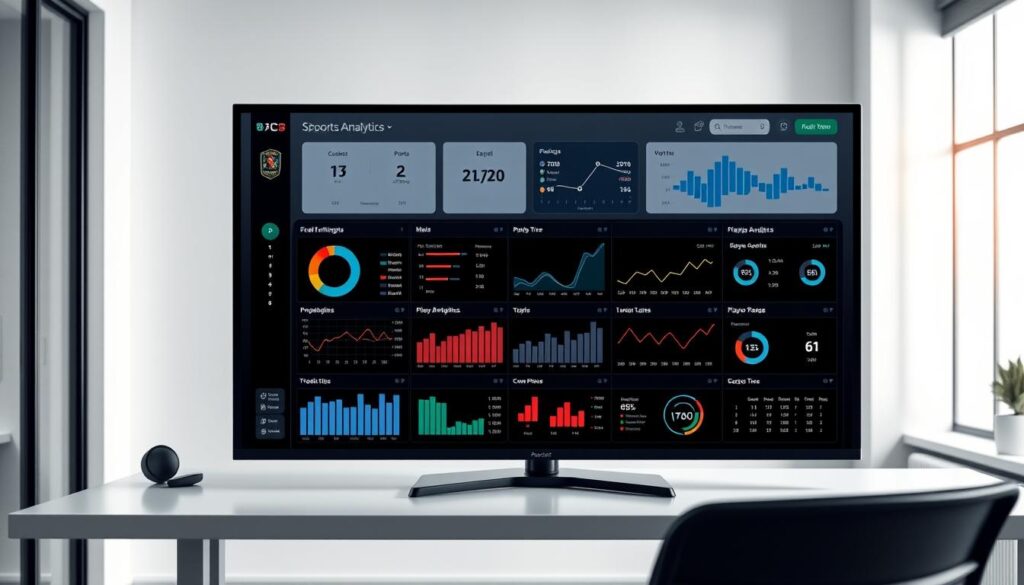
Designing dashboards and alerts for practical use by coaches
Start with focused sports dashboards that show a few critical KPIs: injury probability, rotation suggestions, and win expectancy. Use color-coded alerts for urgent items and concise tooltips to explain model logic. Keep interactions minimal so coaches can act fast before training or match time.
Embed brief case notes in the dashboard so coaches read context, not raw numbers. That approach reduces cognitive load and helps analytics integration coaching move from theory to routine.
Bridging the gap between data scientists and coaching staff
Bridge the divide with regular, structured touchpoints. Embed analysts at training sessions, invite coaches into model reviews, and translate outputs into tactical options. Speak in minutes of practice saved or chances created rather than statistical jargon.
Use short playbook cards that map model signals to concrete actions: substitution timing, pressing triggers, or load adjustments. These materials build common language and speed up data-driven coaching workflows.
Pilot projects, early wins, and change management to drive adoption
Run small pilots that target one measurable outcome, such as reduced soft-tissue injuries or improved set-piece success. Track results over a few weeks and present clear before-and-after metrics to staff and leadership.
Change management sports analytics requires training on data literacy, clear role ownership, and a process for escalating model recommendations. Celebrate early wins publicly to create momentum and justify further investment in analytics integration coaching.
- Tip: Pair every alert with a simple explanation and a recommended action.
- Tip: Keep dashboards mobile-friendly so coaching staff can consult them during travel and matchdays.
- Tip: Document decisions to build an evidence trail for long-term adoption.
Commercial Applications: Betting, Ticketing, and Fan Engagement
Analytics that once lived in research labs now drive clear commercial value for clubs, leagues, and sportsbooks. Predictive models betting has reshaped how bookmakers set odds and how professional bettors build portfolios. Teams use the same signals to inform pricing, operations, and outreach.
How model outputs inform odds and betting strategies
Bookmakers and trading desks translate regression, Poisson, Elo, and machine learning outputs into market prices. Professional bettors treat match markets like financial markets, sizing stakes on edges found through backtesting and live models. This practice demands fast pipelines, rigorous validation, and clear calibration of probability estimates.
Dynamic ticket pricing and attendance forecasting
Clubs use match-level predictions to run dynamic ticket pricing and accurate attendance forecasting. Models ingest weather, opponent strength, day of week, and past demand to adjust prices in real time. Research published by MDPI highlights how demand forecasts tied to these variables improve revenue and seat-fill rates. Integrating these forecasts with CRM systems helps sales teams target promotions before games.
Personalized content and targeted fan outreach
Predictive insights power personalized fan engagement through tailored content, push notifications, and sponsorship offers. Real-time analytics and computer vision tools can flag high-value fans at the stadium and deliver customized experiences that increase loyalty and spend. Case studies from providers such as AH2 show tangible gains in operational efficiency and fan satisfaction.
Practical steps clubs and sportsbooks take
- Deploy ensemble models for price setting and risk control.
- Feed ticketing platforms with live demand scores for dynamic ticket pricing.
- Combine attendance forecasting with staffing and concession planning to cut costs.
- Use segmentation and predictive recommendations to enable personalized fan engagement across channels.
For teams looking to learn more about applied predictive analytics in sports, this overview of techniques and commercial use cases offers practical entry points and real-world evidence of impact: predictive analytics in sports.
Challenges, Biases, and Ethical Considerations
Professional forecasting relies on many data streams. When records are incomplete or sensors report different values, model outputs lose trust. Teams and analysts must treat data quality sports analytics as a core concern to keep forecasts useful and actionable.
Missing entries, timestamp mismatches, and siloed storage across medical, performance, and commercial systems create gaps. Calibration differences between wearable devices can shift workload metrics by a notable margin. Regular audits, unified schemas, and cross‑system reconciliation reduce noise and raise confidence.
Models trained on historical patterns can inherit unfair tendencies. Smaller clubs and youth leagues often supply far less data than elite teams. That imbalance increases the risk of model bias football toward well‑represented players and styles.
Overfitting to past seasons creates fragile forecasts. Continuous validation against fresh match data, pruning of spurious features, and ensemble approaches lower the chance that a model learns noise instead of signal.
Biometric and behavioral monitoring offers performance gains and delicate tradeoffs. Collecting heart rate, sleep, and GPS traces raises serious privacy biometric data questions for athletes and staff.
Consent must be explicit, revocable, and documented. Governance frameworks should mirror legal standards such as GDPR for European players and HIPAA practices where medical data overlap in the United States. Clear policies on ownership, retention, and access build trust.
Ethics sports analytics goes beyond compliance. It asks how models affect selection, playing time, and career progression. Independent review boards, multidisciplinary oversight, and published audit trails can help ensure fair treatment across positions, genders, and leagues.
- Audit raw inputs regularly to improve data quality sports analytics.
- Use stratified samples and transfer learning to reduce model bias football.
- Implement layered access controls and encryption to protect privacy biometric data.
- Create transparent policies and athlete education to uphold ethics sports analytics.
Best Practices and the Future of Football Forecasting
Adopt clear, measurable objectives before building models. Define success metrics tied to outcomes like win probability improvements, injury reduction, or revenue gains. Centralize data infrastructure so sources such as Opta, Statcast, and SkillCorner feed a single pipeline. Start with interpretable techniques—logistic regression, Elo ratings, and simple Poisson models—then layer in AI football analytics as needs grow.
Emphasize explainability and coach collaboration. Present outputs in plain terms that coaching staff and performance teams can act on. Train users and document decisions to build trust. Continuous model improvement is vital: run routine backtesting, recalibration, and live performance tracking to detect drift and preserve a competitive edge.
Prepare for deeper automation and real-time systems. The next wave of future sports forecasting will combine higher-resolution tracking with fast in-play updates, enabling dynamic market-making and smarter tactical shifts during matches. In commercial settings, professional bettors and bookmakers will push demand for shorter-latency, more accurate probabilities.
Balance ambition with governance. Apply privacy safeguards for biometric data and hold KPIs to measure real impact. When teams and organizations follow these best practices match prediction, they create resilient pipelines that scale, improve, and deliver measurable value across sporting and commercial use cases.