
Amir Khan brings rare, first-hand perspective to boxing bettors. He is the only pro to share the ring with both Canelo Álvarez and Terence Crawford, so his observations carry weight for anyone tracking Canelo vs Crawford odds or studying fight betting tips.
Khan fought Canelo in 2016 and met Crawford in 2019, both title fights that ended in sixth-round stoppages. Those meetings inform Amir Khan predictions today: he has publicly favored Crawford in the matchup, citing a 60-40 edge for Crawford based on conditioning and ring IQ.
Khan’s commentary touches on concrete factors bettors care about. He notes Crawford’s reported training weight near 180 pounds, muscle gain while moving up, and overall ability to hold weight. He also flags Canelo’s power, the effectiveness of his left hook, and moments where Canelo can fade later in fights.
This boxing betting guide shows how to pair Khan’s fighter-insider insight with market data and disciplined staking. Use these notes to interpret shifting lines, compare Canelo vs Crawford odds, and shape practical fight betting tips for the U.S. market.
Amir Khan betting: How to use Khan’s insights for wagering
Amir Khan brings rare firsthand contrast to matchups because he has shared the ring with both Canelo Álvarez and Terence Crawford. That perspective gives bettors a different angle than standard punditry. Use his observations on speed, stamina, and punch timing as qualitative scouts’ notes when you open markets.
Why Amir Khan’s perspective matters to bettors
Khan has described Canelo as slower-footed but capable of sudden hand speed and heavy power. He has noted that Canelo often starts slowly and can fade after around round six. Those comments turn into practical signals for round props and second-half totals.
Khan has said he leans toward Crawford, pointing to Crawford’s comfort moving up in weight and reported training mass near 180 pounds. That view highlights power retention and durability as betting inputs, especially in markets tied to later rounds and stoppage odds.
Translating Khan’s predictions into betting strategy
Treat his remarks as insider boxing insight rather than hard data. Map his notes on speed and stamina to specific markets: round-by-round lines, totals, and method-of-victory props. When Khan mentions a fighter “fading,” look at over/under rounds and second-half value.
Weight his commentary within a broader betting strategy. Combine use fighter opinion with objective metrics like recent fight rounds, official weigh-ins, and punch-rate statistics. That approach helps you spot mispriced lines and find edge plays.
Limitations of fighter-insider commentary
Fighter-insider insight can be subjective. Khan lost to both men, which may color perception of vulnerabilities and strengths. Sparring narratives and camp anecdotes can skew toward selective memories.
Always apply weighting expert opinion against market consensus and quantitative checks. Blend qualitative notes with age, recorded weights, and activity level before sizing stakes in any wagering plan.
Latest odds and market movement for high-profile matchups
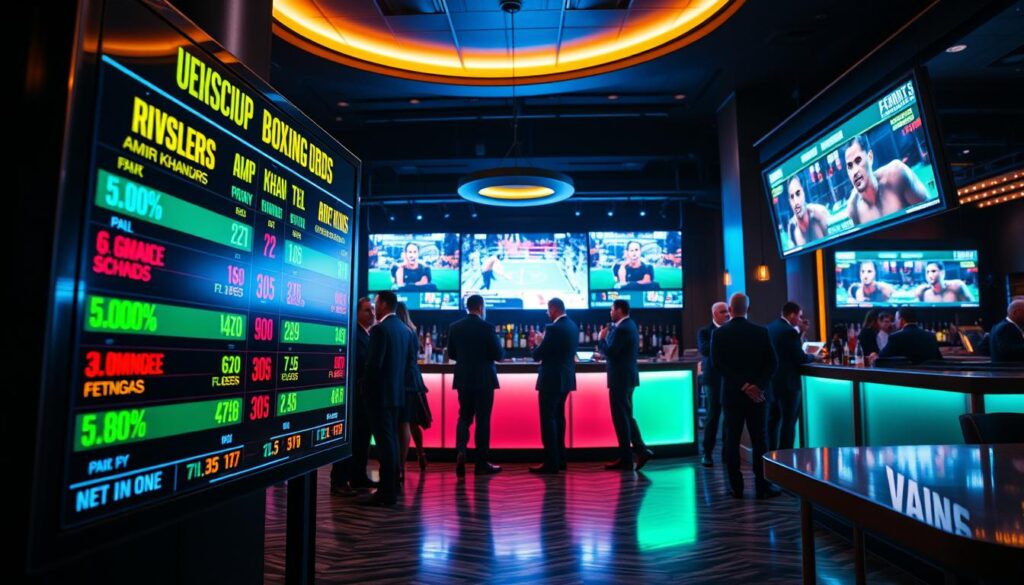
Betting markets often tell a different story than expert panels. Bookmakers set opening lines, public action arrives, and those numbers shift. Tracking the latest odds gives a snapshot of where money and sentiment sit before a fight.
Below are focused notes on how markets responded in the Canelo vs Crawford build-up. The example highlights divergence between public perception and bookmaker pricing, plus triggers that prompt rapid odds movement.
Snapshot of recent odds (example: Canelo vs Crawford)
ESPN BET listed Canelo Alvarez at -180 and Terence Crawford at +145 for the undisputed super middleweight title bout. Those Canelo vs Crawford odds show the market favoring Alvarez despite many experts leaning the other way.
Amir Khan and several former champions preferred Crawford by decision, creating a clear split between expert picks and sportsbook pricing. That gap can create value for bettors who compare early lines and wait for clear odds movement.
How odds shift as weigh-ins and media events happen
Odds movement tends to accelerate around concrete events. Weigh-ins, official medical updates, and press-tour confrontations produce visible line changes. Public sparring photos and reports of Crawford training near 180 pounds stirred debate and nudged markets.
History shows fighters moving up multiple divisions often face early market skepticism. Crawford’s jump to 168 pounds triggered additional scrutiny and volatility, making timing critical for prospective wagers.
Where to find reliable odds and compare lines
Use regulated U.S. sportsbooks and reputable aggregators to compare sportsbook lines. DraftKings, FanDuel, BetMGM, Caesars, and PointsBet routinely publish competitive markets and limits. Aggregators help spot differences before limits bite.
Check ESPN BET odds for context and commentary, then cross-check with major books to confirm market consensus. Smart bettors watch liquidity, line drift, and sharp action to decide when to act.
| Source | Example Line | Market Signal | When to Watch |
|---|---|---|---|
| ESPN BET | Canelo -180 / Crawford +145 | Public favorite vs expert divergence | Post-preview release, early week movement |
| DraftKings | Compare sportsbook lines for best price | Shows sharp vs public pricing gaps | After weigh-ins and injury reports |
| FanDuel | Live adjustments near fight night | Reflects late money and prop shifts | Media events and weigh-ins |
| Lines aggregators | Composite odds snapshot | Highlights outliers and value | Throughout promotion cycle |
Pre-fight analysis: styles, strengths, and tactical matchups
Amir Khan’s read on Canelo vs Crawford focuses on contrasting tools and match tempo. Canelo brings heavy hands, a sharp left hook, and proven body work. Crawford offers movement, switch-hitting range control, and high ring IQ.
Amir Khan’s breakdown of Canelo vs Crawford styles
Khan notes Canelo lands power from close range and wears down opponents with body shots. Khan sees Crawford as the fresher boxer, able to use angles and distance to frustrate pressure fighters.
Key match-up statistics and historical evidence
Look at punch output, connect rates, and past rounds where fatigue set in. Canelo has a record of breaking down bigger men at 168 with sustained body punching. Crawford’s track record shows adaptive tactics across multiple weights and high defensive efficiency.
How stylistic edges translate to betting markets
When movement and range dominate, favor decision markets and higher-round totals. If pressure and body work prevail, moneyline swings toward stoppage or late-round props. Use punch stats, camp reports, and stamina indicators to choose between method-of-victory and round-based bets.
Bankroll management and staking plans for fight bettors
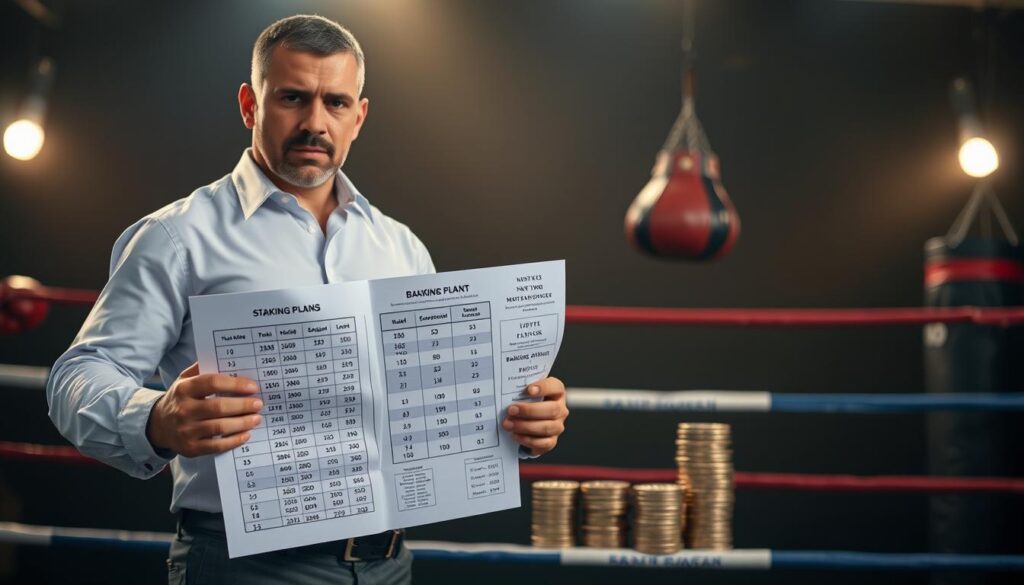
Smart staking starts with a clear framework. Use simple rules to keep emotions out of bets and protect your fund over long runs. Treat boxing as a high-variance market and plan for swings.
Flat staking means wagering a fixed unit on each selection. This lowers volatility and helps evaluate edge strength over time. Flat staking works well when you want stable exposure across many fights.
Percent-of-bankroll stakes ask you to bet a set share of your bankroll, commonly 1–3% per wager. This method scales bets with your capital and keeps single-event risk small. It pairs well with single-event markets where variance is large.
Kelly criterion boxing betting can maximize growth when you have a quantified edge. Use fractional Kelly—10–25% of full Kelly—to avoid large swings. Only apply Kelly when your probability estimates are robust and backed by data.
Adjust stakes around insider commentary with caution. Increase size only if new information clearly shifts your estimated probability versus market odds. Reduce or skip bets when commentary is vague, widely reported, or likely priced into lines.
Cap single-event exposure to a modest percentage of your bankroll. Avoid chasing losses after a poor run. Review whether your edge assumptions still hold before raising stakes.
Good record keeping bettors rely on is simple and consistent. Log sportsbook, market, odds at placement, stake, and expected value. Track closing odds and write short post-fight notes on what went right or wrong.
Post-fight analysis should include round-by-round errors and missed late information like weigh-ins or injury reports. Use these notes to adjust how much weight you give specific experts, including insider commentary, in future bets.
Prop bets and specialty markets to consider for marquee fights
Amir Khan’s commentary can steer attention to specific prop markets that offer practical value for bettors. Look beyond the straight moneyline and use his insights to map probable outcomes. Focus on how his observations about pace, power, and conditioning affect niche odds.
Popular props informed by fight context
Method-of-victory props merit early review when a trusted analyst predicts a clear outcome. If Khan favors a decision for one fighter, markets for decision or points may give more upside than knockout lines. Round props tied to when a fighter often tires can surface as overlooked edges.
Value-seeking techniques for prop markets
Compare prices at DraftKings, FanDuel, BetMGM, and Caesars to spot small discrepancies on niche offers. Use implied probabilities against your model and Khan’s qualitative take; an underpriced decision market is a common miss. Diversify with method + round or individual fighter-to-win-by-decision markets to spread risk.
Live prop considerations and in-fight indicators
In-play moves fast during live betting boxing. Watch the first two rounds for signs of early damage, ring control, and energy usage. If a boxer starts slow, late-round totals may gain value. If an opponent lands clean counters and controls distance, live decision props may lengthen in value.
Staking during live action requires caution. Markets widen quickly and margins grow. Trim stake sizes and seek clear in-fight indicators before committing to round props or method of victory wagers.
Use these focused approaches to spot mispriced markets and protect bankrolls while exploiting tangible edges in boxing prop bets.
Legal and regulatory considerations for United States bettors
Before you place a wager, check whether the operator is authorized to take bets in your state. Many major brands such as DraftKings, FanDuel, BetMGM, Caesars and PointsBet operate as licensed sportsbooks where state regulators permit online play. Availability varies by jurisdiction, so confirm the operator’s license and local rules before funding an account.
State betting laws change often and can restrict online and retail options differently. Some states ban internet sports betting while others require in-person registration or limit wagers to mobile apps with geolocation checks. Review the fine print on age verification and know-your-customer steps when opening accounts, since these protect you and help sportsbooks comply with regulation.
Which sportsbooks operate legally in the U.S. and state restrictions
Use only licensed sportsbooks to ensure dispute resolution and consumer protections. Licensed operators must follow state requirements for payouts, bet limits and promotional practices. Nationally recognized sportsbooks such as ESPN BET syndicate odds through licensed partners in states where they hold permission to operate.
Interstate differences matter for banking and payments. Many U.S. banks block gambling charges on credit cards, creating delays or rejections for deposits. Learn deposit and withdrawal policies before wagering to avoid surprises during cashouts.
Responsible gambling resources and limits
Major sportsbooks provide tools to support responsible gambling. Set deposit caps, loss limits, session timers or self-exclusion directly in account settings. These controls reduce risk and help maintain healthy play habits.
National and state resources are available for those who need help. The National Council on Problem Gambling operates a 24/7 helpline at 1-800-522-4700 and state helplines offer local support. Keep these contacts handy and review sportsbook links to responsible gambling pages when you register.
| Topic | What to check | Why it matters |
|---|---|---|
| Operator license | State-issued license and regulator (example: Pennsylvania Gaming Control Board) | Ensures oversight, payout protections and formal complaint channels |
| Payment rules | Accepted methods, withdrawal timelines, card restrictions | Prevents delayed cashouts and unexpected fees |
| Account verification | KYC, age checks and geolocation | Meets legal requirements and prevents fraud |
| Betting limits & promos | Maximum stake, bonus terms, wagering requirements | Affects real value and exposure when chasing promotions |
| Responsible gambling tools | Deposit limits, loss caps, self-exclusion, helpline links | Supports safer play and offers pathways to help |
| Tax and record-keeping | Documentation of wins/losses, reporting obligations | Required by the IRS; losses deductible only to extent of winnings when itemizing |
For context on online gambling across U.S. jurisdictions and historical federal actions, see background on internet wagering online gambling. Understanding this history helps explain why bettors must navigate a patchwork of rules instead of a single national framework.
When in doubt, prioritize licensed sportsbooks that comply with state betting laws and offer robust responsible gambling options. That approach gives greater protection for both your funds and your rights as a consumer.
How to read expert panels and reconcile conflicting predictions
Expert panels and market odds can tell different stories before a big fight. Start by noting the split between pundit sentiment and sportsbook pricing. For example, a press panel may favor a technical boxer while bettors push the line toward a heavier favorite. That gap signals a topic worth investigating.
Comparing expert picks
Scan who backs each side and why. In past panels, many former fighters voiced support for a slick boxer by decision while betting markets priced the power puncher as favorite. Look for specific, verifiable claims such as reported training weight, sparring reports, or known injuries. Treat broad statements about “style” as lower value than concrete, observable details.
Weighting expert insight versus models
Models use age, recent rounds, punch stats, power metrics, and public money to produce objective probabilities. Experts supply qualitative context like temperament or gym reports. Combine both by letting confirmed observations shift model priors. Do not over-weight an opinion that is purely subjective or likely already reflected in lines.
When to follow the market vs go contrarian
Follow the market when liquidity and sharp action push prices. That usually means many informed bettors agree on value. Go contrarian when your model plus verified insider evidence diverges from public pricing and the underdog shows positive expected value. Use disciplined sizing if you take a minority view: shrink stakes when your pick opposes both market and majority expert pick.
Track outcomes and update your process. Note which experts were right for verifiable reasons and which models missed context. This practice helps reconcile predictions over time and improves future decisions about expert picks boxing, models vs experts, and when to go contrarian.
Betting checklist and pre-fight playbook
Start by confirming verified odds across at least three licensed U.S. books such as DraftKings, FanDuel, and BetMGM. Note opening lines and current movement to spot where value sits. This betting checklist boxing step keeps you from overpaying for a position and helps track where sharps are placing money.
Cross-check official weigh-in results, medical disclosures, and commission notices. Amir Khan’s comment about Terence Crawford training near 180 lbs should be verified against commission data and the official weigh-in. Weigh-in changes and injury reports are core inputs in any pre-fight playbook and can flip markets quickly.
Assess recent ring activity and stylistic matchups: consider Canelo Álvarez’s heavy campaigns, damage accrued in wars, and tendency to tire after round six versus Crawford’s fresher ledger, switch-hitting, and elusiveness. Use those insights to select markets—moneyline, method-of-victory, rounds, or decision props. If Amir Khan betting checklist points to a Crawford decision edge and the market underprices that outcome, favor decision/points markets over risky KO lines.
Set stake size with a clear plan: flat stakes, percent-of-bankroll, or a fractional Kelly based on your quantified edge. Decide your primary market before prices move and monitor late-breaking info—weigh-ins, commission statements, injury updates, and sparring footage. After the fight, record the outcome, realized ROI, what proved decisive, and whether Khan’s insights aligned with results to refine future how to bet Canelo Crawford models.