
GeoComply logged 2.6 million geolocation checks statewide in the first 24 hours after Missouri’s Dec. 1 sports betting launch, with more than 250,000 active sports betting accounts and nearly 188,000 pre-registered accounts built in the two weeks before launch. That immediate surge places Missouri at the center of a betting market snapshot that shows where sharp action today is clustering across U.S. markets.
Data from Arrowhead Stadium underscores the pattern: GeoComply detected over 43,000 geolocation checks between 5 p.m. and 11 p.m. during the Chiefs–Texans Sunday Night Football game and more than 10,000 active betting accounts on site. BetMGM reported spikes in app signups and activations around Chiefs games, and early futures flow favored the Kansas City Chiefs for AFC and Super Bowl markets. These events frame a focused betting market analysis that combines in-stadium behavior with app-level trends.
Beyond Missouri, smaller matchups illustrate a split between sharp and public tendencies. Bookmakers handling games like Army–Navy note sharps often take targeted plays — for example, a Navy side and an Over — while public money piles onto simple spreads and moneylines. Those patterns create low-liability books for niche contests and highlight how sports betting hotspots vary by event type and bettor profile.
Globally, soccer still dominates turnover, while basketball and tennis drive heavy in-play volume. In North America, the NFL generates concentrated, high-stakes wagers and a wealth of prop action. Emerging verticals such as eSports are growing quickly, reshaping where sharps deploy capital and where operators adjust lines in real time. This briefing sets the scene for a deeper betting market snapshot and sharp action today across regions and sports.
Key Takeaways
- Missouri’s launch produced 2.6 million geolocation checks and over 250,000 active accounts, marking a major sports betting hotspot.
- Arrowhead Stadium activity and BetMGM app surges point to concentrated futures and game-week betting on the Chiefs.
- Sharps and public bettors diverge in small-game matchups, creating asymmetric liability for bookmakers.
- Soccer dominates global turnover; NFL, basketball, and tennis drive high-volume, in-play action in the U.S.
- eSports growth is shifting capital allocation and expanding where sharp action today appears.
Betting market analysis: current hotspots and sharp activity
The opening days of Missouri sports betting launch revealed clear hotspots and sharp flows. GeoComply data showed concentrated logins and account activations tied to home-team interest. These patterns help explain why in-stadium wagering and app-driven live markets grew so quickly during marquee primetime games.
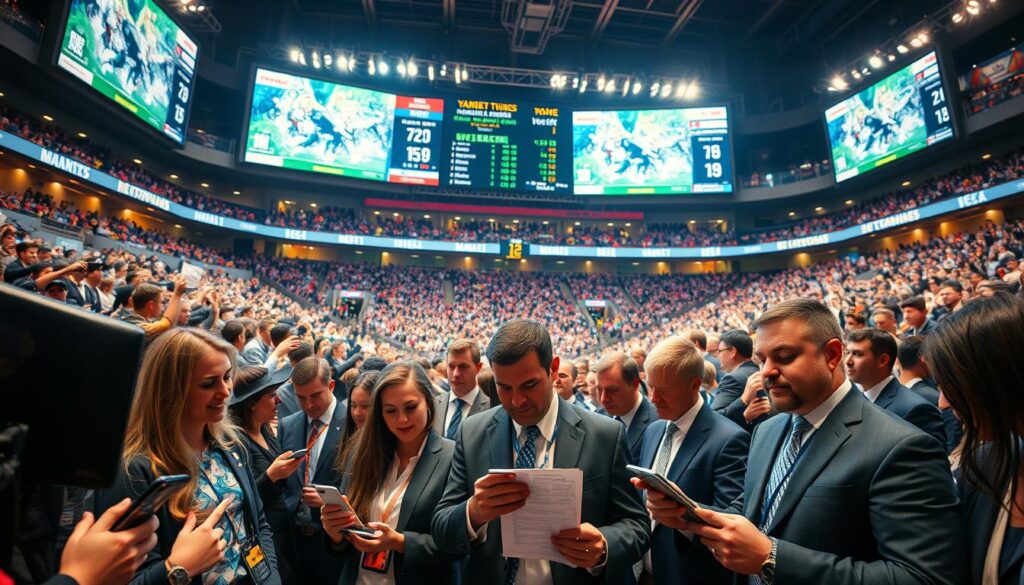
In-stadium wagering signals from Arrowhead Stadium and Missouri launch data
GeoComply recorded heavy geolocation traffic at Arrowhead during a Week 14 primetime game. More than 43,000 geolocation checks came between 5 p.m. and 11 p.m., with over 10,000 active betting accounts inside the venue. Statewide numbers were strong, with 2.6 million checks in the first 24 hours and a quarter-million active accounts in that window.
Operator reports matched the GeoComply snapshot. BetMGM and other sportsbooks logged spikes in app signups and activations around Chiefs matchups. The correlation between Arrowhead Stadium betting and quick account growth underscores how team-driven enthusiasm translates into live wagering signals for operators.
Sharp interest in NFL futures and Chiefs-centric liability
Early market action skewed heavily toward NFL futures betting, with Chiefs futures bets showing prominent volume after launch. Large futures tickets created outsized exposure for bookmakers, forcing rapid moves to manage sportsbook liability.
Sharps reacted to public concentrations by targeting correlated props and niche futures. Market-level examples show how public piles create obvious liabilities while sharp interest futures can appear via smaller, high-value wagers that shift lines and systemic risk for books.
Live betting and in-play markets drawing sharp action
Live betting analysis shows the fastest flows coming from in-play markets in sports with frequent action. Basketball and tennis generate high live turnover due to fast possessions and point swings. The NFL’s stop-start format fuels many prop options that fans and sharp live bettors use during games.
GeoComply and operator data point to concentrated in-stadium logins converting into real-time stakes. That mix of mobile access and pre-registered accounts feeds sharp live bettors and produces clear in-play betting trends and real-time market shifts for bookmakers to monitor.
- Key signals: geolocation checks, activation spikes, and in-play turnover.
- Risk drivers: concentrated Chiefs betting liability and large futures tickets.
- Market behavior: sharps exploit mispricings while public volume creates visible sportsbook liability.
Regional and sport-specific concentrations shaping market flow

New regulated markets reveal how local fandom and timing shape early wagering. The Missouri sports betting market shows rapid account growth and clustered activity that highlights regional betting trends and market launch metrics. GeoComply Missouri data from launch day gives a clear picture of where bets concentrated and why operators moved lines quickly.
Missouri market example: rapid account growth and regional enthusiasm
Missouri’s Dec. 1 rollout recorded more than 2.6 million geolocation checks in the first 24 hours and over 250,000 active sports betting accounts. Pre-registration figures neared 188,000 two weeks earlier, which points to strong pent-up demand.
In-stadium signals were striking. Arrowhead betting hotspot activity produced over 43,000 geolocation checks during the Chiefs–Texans game and more than 10,000 active accounts in the venue. BetMGM and other operators reported signup surges tied to Chiefs games, a pattern consistent with concentrated betting markets.
NFL and American Football as high-stakes, concentrated markets
NFL betting analysis shows why American Football remains a high-stakes market. The sport’s structure generates many prop markets and large single-game handle, so concentrated liability can form quickly around popular teams.
Missouri data underscores this. Kansas City Chiefs matchups drove signups and in-venue wagering, leading to outsized futures exposure and prop betting NFL flows. Bookmakers monitor these pockets closely to manage liability and adjust pricing.
Other sports drawing sharp volume: soccer, basketball, tennis, and emerging eSports
Outside American Football, sport-by-sport differences direct sharp volume to distinct market segments. Soccer commands a dominant share of global betting turnover, which creates deep liquidity across match and player markets and explains high soccer betting market share worldwide.
Basketball live betting attracts sharps who trade frequent scoring swings and high-event density, while tennis in-play betting rewards traders who exploit momentum shifts in two-player contests. eSports betting growth is notable for its young, digital-native audience and fast expansion across niche titles.
Operators balance these demands against overall global betting turnover. A diversified book that reflects regional preferences helps contain liability in concentrated betting markets while offering sharp and public customers meaningful opportunities.
Bookmaker response, liability signals, and how to read sharp betting indicators
Bookmakers react quickly when sharp money concentrates on a market. In states like Missouri, BetMGM and other operators manage sudden local imbalances by adjusting odds, cutting limits, or offering hedges to reduce futures liability on popular teams such as the Kansas City Chiefs. Watching app activations, geolocation spikes, and rapid signup surges gives early clues about regional pressure and bookmaker liability management.
Practical sharp betting indicators include swift line movement opposite public percentages, abrupt limit reductions, and the release of alternate markets. A coordinated steam move — where lines shift across books in minutes — signals professional action and is a key element in line movement interpretation. Bettors should confirm those shifts across multiple books to avoid false positives and to understand the books response to sharps.
Sport-specific dynamics change how books react. Soccer’s deep liquidity leads to smaller tweaks, while basketball and tennis show rapid in-play swings and sudden liquidity shifts. Emerging markets like eSports demand bespoke risk models, and bookmakers may tighten limits or close markets during unusual flows. Monitoring opening moves, overnight adjustments, and hedge positions helps reveal where liability is concentrated.
Taking operator data, geolocation signals, and sport turnover patterns together creates a clear framework for reading market signals. Track discrepancies between bet percentage and money percentage, spot early steam moves, and note limit changes to identify sharp action. For a deeper primer on sharp versus square behavior and market mechanics, see this analysis on sharp vs square betting action: sharp vs square betting action.

