
Nearly half the teams will face two games in seven days this week, a pace that will reshape standings and test rotations across EuroLeague basketball.
The December double-week compresses the EuroLeague schedule into back-to-back rounds that demand quick turnarounds, heavier travel and sharper game plans. With January 5 and February 25 registration deadlines looming, form in this stretch will feed directly into front-office choices and possible roster moves.
Fans should expect heightened intensity from contenders such as Real Madrid and Fenerbahçe, while mid-table clubs fight to climb the ladder. EuroLeague news this week will focus on lineup decisions, minutes management and injury updates that could alter the season narrative.
This Euro basketball December period also sets the stage for EuroLeague Women highlights and broader competition storylines that will shape the winter headlines.
Key Takeaways
- The December double-week forces teams to play twice in seven days, increasing stakes for coaches and players.
- Performance now matters: form during this stretch can prompt midseason transfers before January 5 and final registrations by February 25.
- Expect tight rotations, more defensive emphasis and strategic rest for key players to manage fatigue and travel.
- Top clubs will be under scrutiny in EuroLeague news for how they respond to the packed EuroLeague schedule.
- Euro basketball December action will influence both men’s and women’s competition narratives heading into the new year.
December double-week schedule and must-watch matchups in EuroLeague basketball
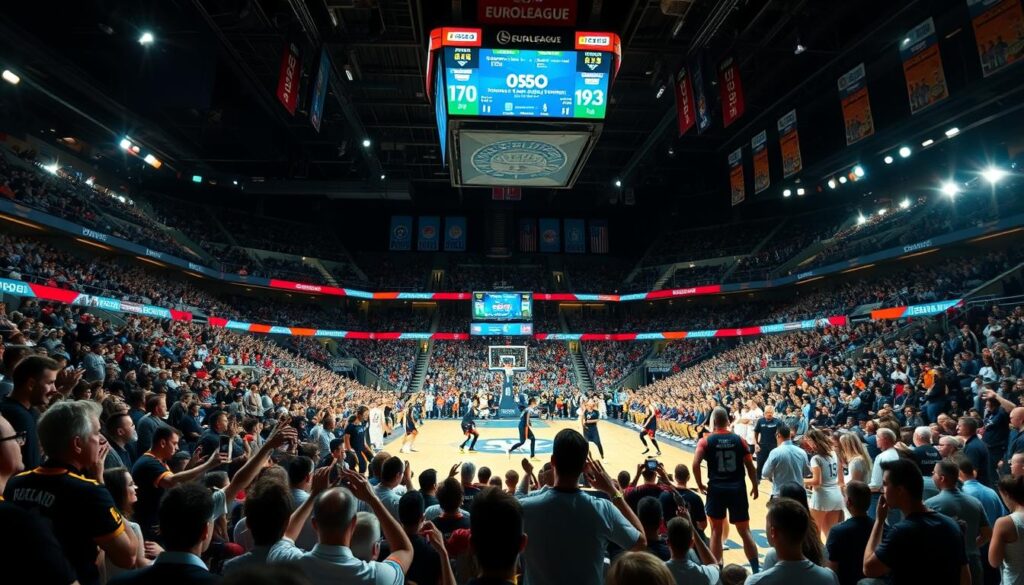
The December double-week compresses two EuroLeague rounds into a single calendar week. Teams face back-to-back high-stakes games that shape the EuroLeague regular season. This schedule spike tests depth, speeds up standings shifts, and raises the importance of rotation choices for coaches across Europe.
Overview of the double-week format and why it matters
The EuroLeague double-week format means clubs play two rounds in the same seven-day span. Rounds like 16–17 or 18–19 create packed windows and force teams to adapt quickly. The importance of double-week rises because results can change seeding and playoff outlooks fast.
Coaches must manage minutes and balance the EuroLeague schedule with domestic cups. The compact calendar magnifies EuroLeague travel fatigue and double-week fatigue, leaving little practice time between matchups.
Key fixtures to follow this week: teams, times, and viewing info
Fans should track marquee EuroLeague matchups that influence playoff races and seeding. Convert game times EuroLeague to ET for U.S. viewing plans. Official EuroLeague broadcast partners and streaming platforms list regional windows, and knowing how to watch EuroLeague helps viewers catch must-watch EuroLeague games live.
Across competitions, EuroCup Round 11 adds context to the December calendar. Expect competitive ties such as Lietkabelis vs. NINERS Chemnitz on Dec. 16, Cedevita Olimpija vs. Hapoel Midtown Jerusalem on Dec. 16, and Trento vs. Buducnost on Dec. 16. Turk Telekom vs. JL Bourg and U-BT Cluj-Napoca vs. Neptunas on Dec. 17, plus London Lions vs. Besiktas on Dec. 17, highlight tight scheduling across Europe.
EuroLeague Women streaming is widely available. Examples include Casademont Zaragoza vs. Valencia on Dec. 9 at 1:15 p.m. ET and Umana Reyer Venezia vs. Fenerbahçe Opet on Dec. 10 at 12 p.m. ET via FIBA’s channels. Check regional feeds for exact game times EuroLeague and EuroCup windows.
Players to watch and potential game-changers
Scouting the right names helps predict outcomes during double-weeks. Khadeen Carrington has been a red-hot scorer for Hapoel Midtown Jerusalem in EuroCup. Amadou Sow provides interior strength for NINERS Chemnitz after his recent double-double. Devante Jones and Rasheed Sulaimon offer key backcourt matchups in Trento vs. Buducnost.
From EuroLeague Women, Gabby Williams returns as a defensive anchor for Fenerbahçe Opet. Nia Coffey bolsters Valencia Basket, while Emma Meesseman, Kayla McBride, and Megan Gustafson remain impact players EuroLeague teams monitor in second-round swings.
On the EuroLeague transfer front, movers like Bruno Fernando, Iffe Lundberg, and Nick Calathes have immediate effects on their new clubs. Coaches watch these performances closely to judge fit and tradeability ahead of January 5 and February 25 roster windows.
Game-changers EuroLeague during tight schedules often include three-point specialists such as Jonah Mathews and Marcis Steinbergs, interior rebounders like Payton Aldridge and Trevion Williams, and primary playmakers including Arnas Velicka in EuroCup.
How the double-week affects travel, fatigue and in-season rotations
Long flights and quick turnarounds increase EuroLeague travel fatigue. Teams face limited recovery time, which raises the risk of performance dips and injuries. Coaches must plan load management to avoid double-week fatigue while keeping intensity high.
Player rotation EuroLeague tactics shift in short weeks. Coaches shorten veterans’ minutes, expand bench usage, and use matchup-specific lineups. In-season rotations become a strategic tool to protect key players and prioritize certain must-watch EuroLeague games.
Rotation choices in December influence roster management ahead of registration deadlines. Strong showings can make players more attractive on the market, while struggles may trigger midseason moves. That dynamic ties the importance of double-week to later transfer decisions and long-term playoff positioning.
Transfer market developments and roster implications ahead of winter deadlines

The midseason transfer window forces choices that shape clubs for weeks. Teams face the EuroLeague January 5 deadline as a hard stop for deregistration. By that date, players who want to move between EuroLeague clubs must be removed from their current roster.
Clubs that deregister a player before the registration deadline EuroLeague can allow that player to sign with another EuroLeague team. If a player is not deregistered by Jan. 5, the roster spot holds them for the rest of the immediate period and limits freedom to move under EuroLeague transfer rules January.
Between Jan. 6 and Feb. 25 the market tightens but remains active. Teams may add players who were properly deregistered or bring in talent from outside the competition. The EuroLeague February 25 deadline is the final registration EuroLeague for new players this season.
After Feb. 25 no new additions are permitted, which creates a near-final roster freeze EuroLeague for the run to the playoffs. That cutoff falls roughly ten rounds before the end of the regular season.
The window from Jan. 5 to Feb. 25 becomes decisive. Clubs have to weigh short-term fixes against long-term chemistry. Smart front offices use EuroLeague in-season transfers to plug gaps revealed during December form influence and the double-week grind.
Recent moves show how fluid the market can be. The Bruno Fernando transfer to Partizan (Oct. 26), the Nick Calathes transfer to Partizan (Oct. 29), and the Iffe Lundberg transfer to Maccabi Tel Aviv (Nov. 10) all altered team dynamics early in the campaign.
Other notable EuroLeague midseason transfers include Jordan Loyd to Anadolu Efes (Sept. 20), Frank Ntilikina to Olympiacos (Sept. 26), and Nate Sestina to Milan (Oct. 20). These roster changes EuroLeague highlight growing mobility inside the competition.
High-profile internal moves can uplift contenders overnight. Partizan’s signings created a ripple across matchups and tactics. Teams watching December form influence may accelerate plans to free spots and pursue targets before the registration deadline EuroLeague.
Front offices monitor December closely. Strong performances raise player value and spark interest from contenders. Poor results push clubs to deregister players by Jan. 5 to open the door for reinforcements from EuroCup, domestic leagues, or the NBA.
Coaches often target specific needs revealed in double-weeks: perimeter shooting, interior defense, or additional playmaking. The roster freeze EuroLeague and the timing of EuroLeague in-season transfers force faster, clearer decisions on squad construction.
Expect heightened activity as teams balance immediate gain with season-long goals. The path from Jan. 5 to the EuroLeague February 25 deadline will shape final rotations and playoff readiness across the competition.
Injury updates, EuroLeague Women highlights, and broader competition context
Daily tracking of EuroLeague injuries is essential during the December double-week. Short-term absences can flip matchups and force rotation changes. Outlets such as BasketNews publish timely player injury updates, and coaches often adjust minutes or lineups based on those reports.
EuroLeague Women highlights shift into the second round in early December, with the field narrowed to 12 teams and new groupings. Fenerbahçe Opet entered the second round undefeated and bolstered its defense with Gabby Williams, while Valencia added Nia Coffey to boost depth. Fans in the U.S. can stream key games on FIBA’s EuroLeague Women YouTube channel, including Casademont Zaragoza vs. Valencia (Dec. 9, 1:15 p.m. ET) and Reyer Venezia vs. Fenerbahçe (Dec. 10, 12 p.m. ET).
Beyond EuroLeague, EuroCup action feeds the wider EuroLeague competition context. Round 11 matchups such as Chemnitz vs. Lietkabelis, Cedevita Olimpija vs. Hapoel Midtown Jerusalem, and Trento vs. Buducnost give scouts a live look at emerging targets. Strong EuroCup performances frequently trigger midseason interest from EuroLeague clubs and can reshape transfer plans.
All three strands—EuroLeague injuries, EuroLeague Women highlights, and EuroCup form—will influence decisions ahead of the Jan. 5 and Feb. 25 registration windows. Teams weighing playoff outlooks and roster needs will factor in injury trends and standout performances when pursuing late-season additions. U.S. readers should follow official injury reports and stream EuroLeague Women action to track developments that matter for transfers and competitive narratives.

