
Nearly one-third of teams across professional and collegiate leagues cite compressed windows this month, and coaches are openly linking fixture congestion to rising injury risk and frenetic game-day preparation.
From NFL sidelines to college practice fields, coaches react to a heavy schedule by adjusting player load management and rethinking routines. High-profile late-season injuries — including reports around Patrick Mahomes’ ACL/LCL surgery and recent serious chest and knee issues for key players — have sharpened urgency in decisions about who plays and how much.
Coaches point to performance swings as they balance recovery and form. Trevor Lawrence’s hot streak under coordinator Liam Coen is an example teams use to show how momentum can coexist with fatigue. That reality forces quicker rotation choices and targeted prep work to protect athletes while trying to win today.
League and conference moves add pressure. The ACC’s phased shift to a nine-game conference schedule and tougher Power Four mandates for 2026–27 are already factored into long-term load plans, prompting staffs to consider season-long player load management and revised practice cycles.
Key Takeaways
- Coaches cite fixture congestion as a direct contributor to shortened recovery windows and higher injury risk.
- Player load management is becoming central to day-to-day game-day preparation and roster choices.
- High-profile injuries and hot streaks both shape coaching decisions during congested stretches.
- Conference scheduling changes are forcing teams to plan season-long workload strategies.
- Expect more rotation, targeted practices, and cautious public messaging from coaching staffs.
How coaches describe the impact of fixture congestion on player performance and preparation

Coaches across the NFL and college ranks say fixture congestion effects show up in clear ways. Teams point to recent high-profile injuries involving Patrick Mahomes, Micah Parsons, and Christian Watson when they explain more conservative choices. Those incidents feed concern about long-term injury risk and shape weekly plans.
Staffs link fatigue to shorter practice windows and fewer live reps. Many programs shift to walk-throughs and situational work to protect starters. This change reduces immediate wear while keeping players sharp for game day.
Common physical and mental effects cited by coaching staffs
Coaches name fatigue as a top symptom from heavy schedules. Players report slower recovery between contests and lower peak power in late-game situations.
Mental strain is also a recurring theme. Long travel, losing streaks, and public pressure can heighten locker-room tension and raise stress levels. Teams often bring in sports psychologists or run group sessions to manage that load.
Adjustments to practice schedules and pregame routines
Practice load management has become standard. Coaches use GPS and biometric data to track workload and set minute limits. On dense weeks, sessions emphasize film study, install efficiency, and light conditioning.
Pregame routines are tweaked to avoid early exertion. Warm-ups are shorter and more targeted. Trainers prioritize cryotherapy and adjusted recovery protocols for high-risk players returning from injury.
Coaches’ public messaging and managing expectations
Coach media messaging aims to balance candor with calm. Leaders give measured updates after injuries to prevent panic while protecting player privacy.
Some coaches frame fixture congestion as a shared challenge and rallying point. That tone helps steady fans and keeps focus on execution rather than speculation.
Strategic roster and game-plan changes amid intense scheduling
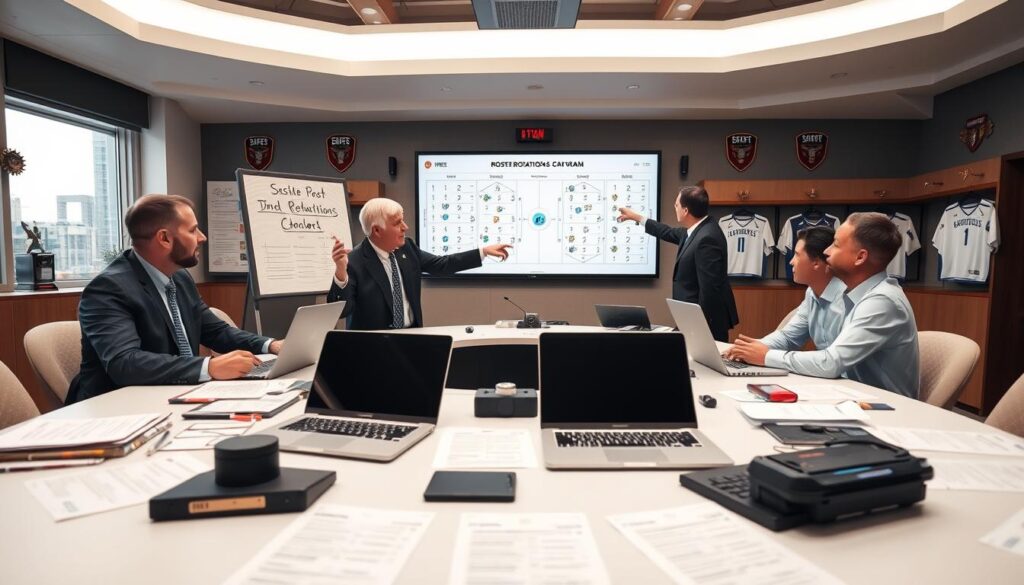
Fixture congestion forces coaches to rethink who plays and how the team moves the ball. Teams balance short-term results with player health by using roster rotation and clear depth chart rules. That keeps veterans fresh while giving backups chances to prove they belong.
Rotation strategies and depth-chart decisions
Coaches prioritize matchups and rest key players in lower-stakes games. NFL examples show clubs elevating backups from the practice squad to cover minutes and avoid overloading starters.
Data-guided rotation relies on wearable metrics and staff communication. A transparent depth chart helps players accept reduced snaps and understand the plan.
Tactical tweaks to reduce physical toll during games
Teams use tactical adjustments to protect players without surrendering control. Offenses aim for short possessions and quicker passing to lower high-impact plays and conserve energy.
On defense, coaches limit high-snap pass rushers, expand zone work, and simplify blitz packages. Snap management and simplified roles preserve legs across a congested run of games.
Special teams strategy shifts toward low-risk calls. That means fewer trick plays and more conservative return plans to limit unpredictable collisions.
Long-term roster planning and offseason considerations
Front offices adapt contracts, free-agent targets, and draft priorities when congestion raises injury risks. High-profile medical events can reshape a team’s competitive window and force quicker roster moves.
Offseason planning must include recovery protocols, depth investments, and contingency signings. Those steps create resilience for the next cycle of dense scheduling.
Research on fixture congestion supports many of these approaches and highlights the link between load, injury risk, and recovery practices.
Media interactions, fan reactions, and league scheduling context
Coaches today find themselves managing more than Xs and Os; media relations and fan-owner friction are now part of the daily workload. When owner communications leak, as in the widely discussed Joe Lacob email that reached Golden State Warriors supporters, coaches such as Steve Kerr have to publicly reassure stakeholders while keeping the locker room focused. Clear, consistent messaging helps defuse speculation and preserves team cohesion during congested stretches.
Public statements that outline concrete recovery steps and load-management plans calm anxious fans and reduce pressure on players. Coaches lean on simple, steady language to explain next steps after a loss or an injury, framing issues as solvable. That approach can limit misinterpretation and lessen fan-owner friction when high-profile back-and-forths appear in social feeds or local press conferences.
At the league level, scheduling changes are reshaping how coaches plan seasons. The ACC nine-game schedule and new Power Four requirements set for 2026–27 create denser calendars that increase travel and competitive intensity. Transitional models, with uneven rotations and extra marquee nonconference tests, push fixture congestion into critical windows and force staff to rethink recovery windows and depth strategies.
Policy responses under discussion include expanded roster limits, mandated rest days, and revised tiebreaker formats that could ease load on athletes. Athletic directors and ACC Commissioner Jim Phillips have referenced such league reforms when outlining phased rollouts. Media narratives, fan pressure, and formal scheduling shifts together make transparent communication and tactical conservatism essential tools for coaches navigating this new landscape.

