
56% of betting lines shift within three hours of kickoff when a key player’s status changes, according to recent market tracking — a reminder that a single late injury update can tilt sports betting odds and punish or reward quick-moving bettors.
When a non-contact knee injury or a questionable designation appears on the injury report impact, spreads and moneylines react fast. The Micah Parsons absence example from the NFL shows how a defender’s sudden loss reshapes depth charts, play-call expectations, and betting markets almost immediately.
In hockey and season-long futures, teams like the Florida Panthers and Winnipeg Jets saw playoff probabilities swing wildly after injuries to stars such as Matthew Tkachuk and Connor Hellebuyck. Those swings illustrate how injury news betting reaches beyond a single game and alters futures and correlation-driven markets.
Late-week volatility also hit the Buffalo Bills when Joey Bosa and Spencer Brown cleared to play while Christian Benford remained questionable. That mix of certainty and limbo pushed the line from Bills -4.5 to -1.5 by game morning, showing how availability of a trench player versus a secondary starter creates opposing forces in betting markets.
Bookmakers balance several inputs — injuries, team history, home/away splits, and analytics — and then use supply and demand to tweak numbers. For a primer on why lines move as they do and how bookmakers respond to cash flow, see this primer on why the line moves from SportsBettingDime: why the line moves.
Key Takeaways
- Late injury update can change spreads, moneylines, totals, and prop markets within hours.
- High-profile absences often affect futures and playoff odds as much as single-game lines.
- Bookmakers adjust lines to manage demand, not just to reflect pure probability.
- Smart money and public action arrive at different times; timing matters for injury news betting.
- Track credible sources and official injury reports to limit noise and react effectively.
How late injury updates shift odds and market sentiment

Late injury news forces quick recalibration across sportsbooks. Sharp bettors and market makers react to the same update in different ways. That drives visible line movement mechanics in both pregame and live odds windows.
Real-time impact on point spreads and moneylines
When a starter is ruled out, point spreads can swing several points in minutes. A pass rusher returning or exiting the lineup changes expected pressure on the opposing quarterback. That alters both point spreads and moneyline movement as books reshape win probability.
Books tighten or widen spreads to manage exposure. Live odds update to reflect in-game shifts and new projections. Market depth matters; larger books absorb more action before moving, while small markets show dramatic swings.
Prop markets and player lines reacting to availability
Player props are the quickest to reprice. Usage drives props, so snap-share changes alter player lines and anytime touchdown odds in real time. If a secondary defender is downgraded, receiver targets and receiving props climb.
Availability impact on props shows up in subtle ways. Running back workload projections change rushing props. Quarterback passing totals shift when a top pass rusher returns. Those adjustments cascade into correlated markets.
Liquidity and bookmaker hedging behavior
Sportsbook liquidity shapes how aggressively a line moves after an injury update. Thin liquidity means a modest wager can force outsized movement. Deep books use hedging and layered pricing to limit risk.
- Books hedge by laying off correlated markets and shifting spreads.
- Limit-setting appears when uncertainty is high; some props get pulled or capped.
- Sharp action after an injury can signal more than the reported update, prompting further repricing.
Understanding these dynamics helps bettors interpret sudden swings. Watching market depth and hedging patterns often reveals whether movement is transient or a lasting adjustment.
injury news betting: best practices for bettors handling late updates
Late injury updates force quick calls. Use a repeatable process that centers on credible injury sources and clear rules for bet timing. Start with primary outlets, weigh the trend in official injury reports and track beat reporters who reliably break team news. That approach reduces noise and protects line value when markets swing.
How to track credible sources and avoid noise
Prioritize team press releases, practice participation logs and league transaction lists before acting. Combine those items with established beat reporters at ESPN, The Athletic and local papers to confirm scoops. Cross-check multiple outlets; a single social post is never enough for big stakes.
Use timestamped feeds and follow reporters like Matt Schneidman on X for Packers coverage when relevant. Track changes across several updates to see if a player’s status is trending toward full or out. That reduces exposure to rumor-driven volatility.
Timing strategies: when to act and when to wait
- Early action: take a credible scoop that a starter will be ruled out when the public has not reacted. Early bets can capture line value.
- Wait: if a player is trending between limited and full practice, the market may overreact. Holding off preserves value on close calls.
- Live edges: use in-play betting for prop markets when late practice reports contradict public sentiment.
Example: when Joey Bosa’s participation moved toward full, lines stabilized. Bettors who waited avoided volatile moves. In contrast, when Micah Parsons sustained a serious injury, immediate re-evaluation of futures and divisional wagers was necessary.
bankroll management after late swings
Late injury-driven volatility demands stricter bankroll management. Shrink unit sizes for game-day hedging and props if you carry concentrated exposure. Use proportional staking plans, such as a percent-of-bankroll model, rather than chasing losses with larger bets.
Set exposure control rules: if a market moves beyond a preset threshold—say 2.5 points on the spread or 10% on the moneyline—pause and reassess. Avoid heavy correlated bets on the same roster when trench or quarterback injuries raise binary outcomes.
Adopt flat-betting or proportional staking plans to limit emotional decisions. Hedge only when a late injury materially shifts expected value for existing wagers. For long-term futures, reprice positions if a report signals a season-ending prognosis.
Case studies: recent late injuries that moved markets
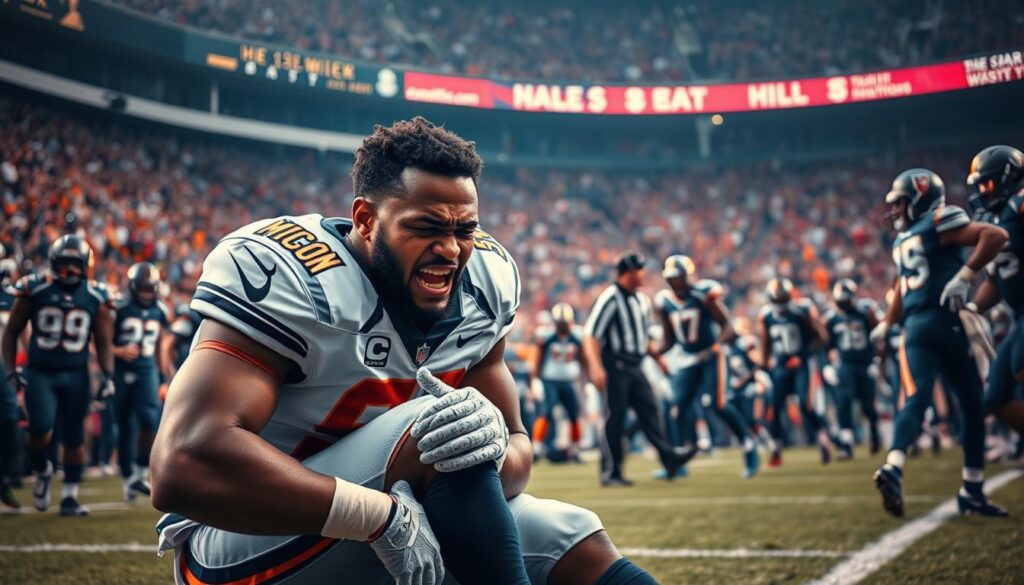
Late injuries reshape odds and bettor sentiment quickly. The examples below show how a single update can force lines to move, futures to reset, and prop markets to shift in real time.
Micah Parsons’ exit and divisional betting
Micah Parsons torn ACL was reported after a non-contact knee injury late in a game. The loss sent immediate ripples through divisional betting. Packers pass rush impact metrics dropped, pushing books to cut Green Bay’s short-term win probabilities.
Markets that price NFC North standings and playoff chances reacted fastest. Bettors who model win probability had to adjust expected sack rates and opponent passing efficiency. Public narratives praising Rashan Gary tempered some sharp activity, though futures and season-long lines still tightened against the Packers.
Bills vs. Patriots week: trench updates and coverage doubts
Late-week news around Joey Bosa return stabilized Bills’ front, reducing some perceived pass-rush issues. Spencer Brown cleared play status for the offensive line, which helped settle initial volatility in Bills Patriots odds.
Christian Benford questionable created a secondary layer of uncertainty for coverage matchups. That doubt pushed more money into receiver props for the opposing team and nudged totals toward lower outcomes. Game-day injury impact to secondary personnel often shows up first in matchup-based props before shifting point spreads.
NHL playoff odds responding to key absences
NHL markets move significantly when core players miss time. Matthew Tkachuk absence and related scoring gaps lowered the Florida Panthers’ preseason playoff odds. Books trimmed futures after the team lost top-end scoring depth.
Goalie injuries are equally disruptive. Connor Hellebuyck injury and placement on injured reserve hurt the Winnipeg Jets’ win percentage. The team’s subsequent slide led to large swings in NHL playoff odds across futures markets.
Patterns repeat across sports: injuries and futures interact with correlated team effects. When a frontline player goes down, nemesis dynamics and division races often shift, producing layered market moves that savvy bettors can trace to specific game-day injury impact.
Actionable angles and market opportunities from late injury updates
Late injury updates create clear market opportunities when you act on reliable information before the public fully adjusts. Follow team beat reporters and official practice reports, note coach comments from people like Matt LaFleur or Sean McDermott, and only pull the trigger after confirmation from two reputable sources. This approach supports injury betting strategies that exploit differential information timing and find value bets after injuries.
Player props often misprice first, so target those markets for sharper edges. Anytime touchdown, passing yards, and sack lines can swing dramatically if a starter sits or a key defender returns. For example, Carlson Bosa’s presence compresses opposing passing totals, while a Questionable secondary starter can inflate a receiver’s prop. Repricing expected team metrics—pressure rate, passing yards allowed, scoring—helps reveal market opportunities across spreads, moneylines, and totals.
Use models to quantify impact and compare model EV to market prices. Re-run win-probability simulations with updated availability, as analysts did for Bills–Patriots scenarios, to spot divergences. When a late injury transforms a large exposure like a futures ticket or live parlay, employ selective hedging and partial cashouts to manage risk. Hedging late news should be measured and driven by your acceptable variance, not emotion.
Finally, monitor correlated markets and size bets conservatively. Star injuries ripple into futures, divisional lines, and related props—Micah Parsons’ absence, for instance, can shift divisional win expectations for Green Bay opponents. Use a simple game-day checklist: confirm from two reputable sources, assess the positional replacement, reprice team metrics, and avoid concentrated exposure across correlated markets. These steps keep your injury betting strategies disciplined and increase chances of finding clean market opportunities.

