
More than 1,000 flights were delayed and over 200 canceled after an FAA LaGuardia ground stop tied to convective storms and controller staffing limits, triggering an acute football fixture disruption across multiple U.S. hubs.
The LaGuardia ground stop and a separate Denver high wind ground stop combined with tight league timetables to create systemwide travel delays affecting sports teams, forcing late arrivals, missed warm-ups and sudden schedule shuffles for college and professional matches.
Delta, American and United faced large backlogs as passengers rebooked through Atlanta, Detroit and Boston or shifted to buses and Amtrak. Airlines issued waivers and extra staffing, but recovery required aircraft repositioning and crew realignments over several days.
The timing could not be worse for the College Football Playoff windows and tightly slotted broadcast commitments. When travel delays affecting sports teams trim preparation time, competitive fairness and player recovery become immediate concerns for coaches and league officials.
Key Takeaways
- LaGuardia ground stop and Denver high wind ground stop produced major travel disruptions.
- Systemwide effects fueled football fixture disruption and fixture schedule disruption across venues.
- Teams faced late arrivals, missed connections and compressed prep windows.
- Airlines adopted flexible policies; full recovery required days of crew and aircraft moves.
- Leagues and airports must coordinate to limit travel delays affecting sports teams and protect competition integrity.
For added context on how extreme weather and match stoppages have affected recent tournaments, see this report on heat and delays at international fixtures here.
How Severe Weather Triggered Widespread Travel and Fixture Interruptions
Severe storms and fierce winds forced a chain reaction across major airports, leaving teams and fans scrambling. The initial disruptions at New York and Denver created immediate travel headaches. Airlines, clubs, and fans faced a mix of cancellations, long waits, and complex rebooking choices that stretched into the next day.
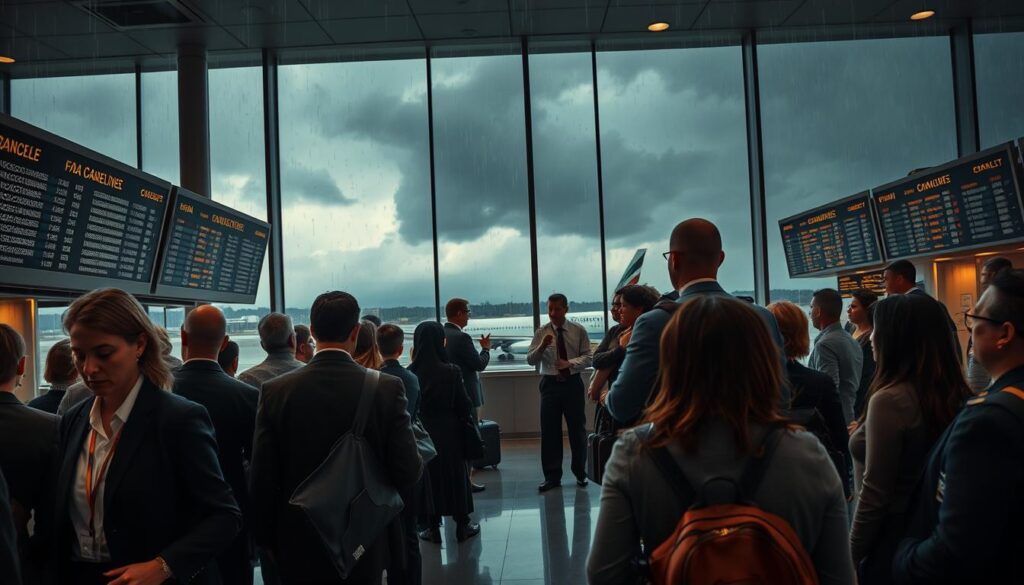
The FAA ground stop was one of the most restrictive tools used to protect safety. At LaGuardia, convective storms and strained controller capacity pushed arrival rates down, producing LaGuardia delays that topped 1,000 recorded delays and more than 200 cancellations in a single day. Staffing pressures tied to the federal government shutdown worsened the backlog.
In Denver, powerful crosswinds on the Front Range prompted a separate stoppage. Denver high wind delays limited usable runways until the ground stop was lifted around 9 p.m. Both hubs saw extended tarmac holds and long customer-service lines as airlines tried to manage stretched resources.
Ripple effects moved quickly across the network. Missed connections and crew duty-time limits forced airlines to cancel additional flights or leave aircraft out of position. Carriers like Delta, with a large footprint at LaGuardia, felt outsized impacts. Constrained slots and runway capacity made it hard to add recovery flights even when passenger demand surged for rebooking.
Team logistics suffered because of those knock-on effects. Clubs bound for Northeast fixtures diverted through Atlanta, Detroit, and Boston or shifted to rail and bus when flying the same day became impractical. Late arrivals compressed preparation windows and complicated the transport of equipment and staff.
System vulnerabilities surfaced during the events. Aging infrastructure at legacy airports and staffing gaps in air-traffic control combined with more volatile weather to expose weak links in the network. Policymakers and industry leaders are discussing measures like schedule reductions at busy airports and pay protections for safety-critical workers to reduce future disruption.
- Scale: LaGuardia delays and cancellations hit large numbers in a short span.
- Operational impact: Crew limits and out-of-position aircraft forced multi-day recoveries.
- Passenger solutions: Rebooking through alternate hubs or switching to ground transport.
- Team effect: Compressed prep time, late arrivals, equipment challenges.
football fixture disruption: Direct impact on match scheduling and competitive fairness
Severe weather and airport closures create sudden strain on schedules. When flights are canceled at hubs like LaGuardia or Denver, teams face team travel disruption that can force a match postponement or last-minute venue change. Broadcasters hold tight windows for marquee slots, which limits options for rescheduling games without affecting national TV plans.

Postponements, rescheduling and venue changes often follow a clear chain of logistics. Leagues must find alternate dates, reassign officials, and renegotiate broadcast times. Ticketing and refund policies require updates. These steps create pressure on staff and increase costs for clubs and fans when a match postponement is declared.
Last-minute travel delays can alter team routines. Reduced warmups and compressed recovery time harm player readiness and raise short-term injury risk. Visiting squads routed through affected hubs may arrive fatigued, which can skew competitive fairness when one side enjoys a smoother journey.
- League rules set thresholds for delay or cancellation and outline official windows.
- Emergency referee protocols exist, but venue staffing limits remain a constraint.
- Bracketed competitions like the College Football Playoff face added complexity when rescheduling games affects downstream matchups.
Rescheduling games is a complex puzzle of dates, venues, officials, and broadcast slots. A single change can cascade through calendars, forcing clubs to juggle player rotation and recovery plans. That juggling can alter match outcomes and upset competitive fairness across a season.
Decision-makers weigh safety against sporting integrity. Canceling a game protects players and staff from hazards caused by team travel disruption and airport ground stops, yet it creates ripple effects for leagues, broadcasters, and supporters. Clear, consistent protocols help manage those trade-offs while aiming to preserve fairness and player readiness.
Operational responses from leagues, airports, and airlines to limit disruption
When weather forces ground stops at hubs like LaGuardia or Denver, a mix of airline waivers and airport recovery steps starts within hours. Carriers issue flexible rebooking policies and deploy extra agents to process changes. Airports run phased inspections and clearances so runways and ramps return to service safely.
On the airline side, rebooking policies and airline waivers reduce missed connections and keep fans moving. Delta and other carriers expanded flexibility, upgauged aircraft where possible, and added flights when slot rules allowed. Dispatch teams work with the FAA to meter arrivals and prioritize flights with many connecting passengers.
Airports focus on sequenced restoration to avoid secondary risks. Ramp crews inspect taxiways for debris, check lighting and navaids, and stagger gate assignments to match available ground staff. Denver teams completed targeted checks after high winds to speed safe reopening without overtaxing crews.
Airline and airport recovery tactics
Recovery is logistical triage. Airlines reassign aircraft and crews, keeping duty limits in mind. Where slots are tight, upgauging helps move more passengers but cannot erase all delays. Airports coordinate ground handlers and air traffic managers to clear bottlenecks while maintaining safety protocols.
- Issue airline waivers to allow fee-free changes and prevent oversold flights.
- Prioritize inbound flights with many connections to reduce network knock-on effects.
- Conduct phased runway and ramp inspections to confirm safety before full ops resume.
League and club contingency planning
Leagues maintain match-official windows and emergency staffing plans so games can be adjusted without sacrificing fairness. Rules spell out late-arrival allowances for referees and backup venues if primary sites become unreachable.
Clubs are adopting flexible travel clauses in contracts and contingency rosters to cover last-minute absences. Teams sometimes choose road travel by coach or reroute through alternate hubs when air service is unreliable, putting player safety ahead of timetables.
- Keep clear match-official windows and backup referee pools.
- Negotiate travel contracts that permit alternative routings and fast rebooking.
- Coordinate with broadcasters early to allow time for production changes and fan notices.
Real-time communication matters. League channels, team alerts, airport notices, and airline apps work together to manage expectations and reduce confusion during recovery. These operational responses limit safety risks while beginning the complex task of restoring normal schedules.
What fans and teams can do to prepare for future disruptions and reduce risk
Track advisories starting 48 hours before travel and enroll in airline text and email alerts. Use carrier apps and the FAA’s real-time advisories to monitor ground stops or delays. Checking airport status boards on travel day helps fans who want to prepare for disruptions without surprises.
Build buffer time into itineraries and choose alternate routings when hubs look risky. For Northeast games, consider routing through Atlanta, Detroit, or Boston or using Amtrak for regional legs. For flights via LaGuardia, follow LaGuardia travel tips and avoid tight same‑day connections; for mountain markets, follow Denver travel tips and plan extra time for high‑wind impacts.
Pack essentials in carry‑on: medications, a change of clothes, chargers and printed receipts for expenses. Document delays with boarding passes and delay notices, then use airline customer‑service dashboards to request rebooking, vouchers, or meal and hotel accommodations. Fans who build a travel contingency for sports fans increase their chance of same‑day recovery.
Clubs should adopt flexible travel contracts, contingency rosters and clear emergency communications. Team travel planning must prioritize safety, allow last‑minute reroutes, and coordinate with league offices when kickoff windows are threatened. Robust record‑keeping supports insurance claims and contractual conversations with broadcasters and partners.

