
Nearly 60% of bettors adjust positions in the final two hours before kickoff, underscoring how decisive final pre-game signals have become for both fans and markets.
Final pre-game signals — last-minute roster updates, visible team behavior, coach comments, and betting-market moves — compress a season of context into minutes. These signals set pregame expectations by telling fans what to feel, informing media narratives, and sending price cues to traders.
Look at Nebraska’s 58-56 win over Michigan State. Players Rienk Mast and Jamarques Lawrence and coach Fred Hoiberg framed the outcome with a calm, “one game at a time” message that reshaped fan expectations and reinforced internal standards. That internal messaging is a classic sports event signal: it dampens overreaction and refocuses attention on consistency.
Likewise, media framing around the Los Angeles Lakers and broader franchise transitions shows how analyst tone separates realistic goals from wishful thinking. When writers balance aspiration with concrete steps — roster construction or trade-deadline targets — they actively shape public expectations and the narratives fans bring to the arena.
On the market side, experts like Ryan Miles explain opening odds as conservative baselines. Early movements often reflect protection or correction, not prophetic certainty. Reading timing windows — initial open, post-news drift, and final hours — helps decode whether odds are passing along true information or merely limiting risk.
Key Takeaways
- Final pre-game signals rapidly compress information and shape immediate expectations.
- Team messaging after key wins can reset fan expectations and calm overreaction.
- Media framing separates realistic outcomes from wishful narratives.
- Opening odds act as protective baselines; early moves often signal correction.
- Timing matters: different windows carry different informational value.
How final pre-game signals influence public and market expectations
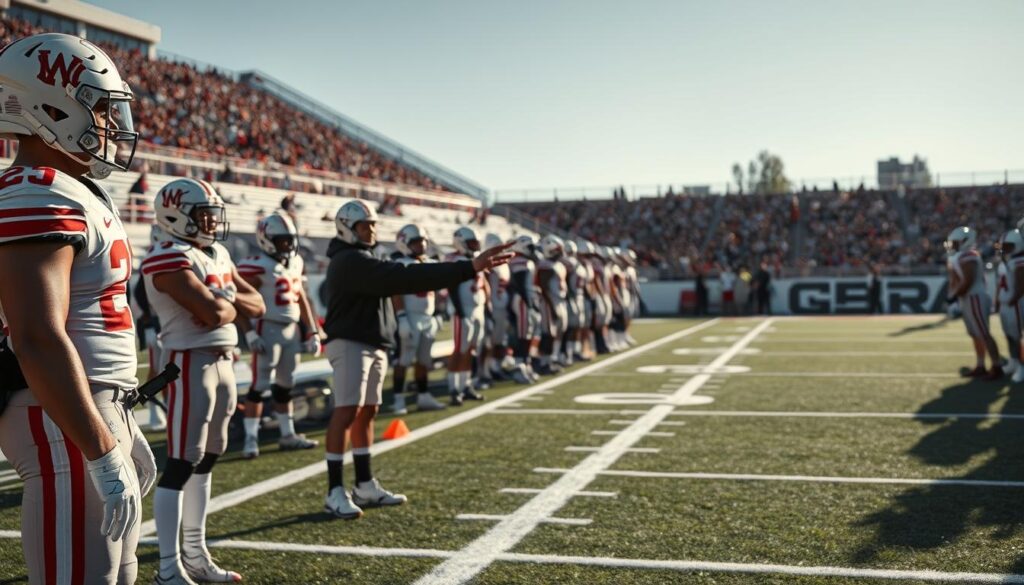
Final pre-game signals arrive in the hours before kickoff or tipoff and change how fans, media, and bettors update beliefs. These items range from official lineup confirmations and injury-designated statuses to visible warm-ups and coach remarks. Treat each item as a distinct piece of information with its own reliability and timing.
Defining final pre-game signals
Defining final pre-game signals means cataloging time-sensitive cues: starting lineups, late injury reports, warm-up behavior, last-minute coach comments, and initial market moves. Official confirmations tend to carry high weight. Coach platitudes carry less weight unless they match physical cues or roster paperwork.
Signals as expectation shapers for fans and media
Media framing sets the public mood by choosing which signals to amplify. A columnist writing about the Los Angeles Lakers can push a narrative of steady rebuild or instant success. That narrative alters fan reaction to the same roster news.
Fans react to both tangible cues and narrative cues. Visible warm-ups can calm fears about an injury. A confident quote from a starter can escalate optimism. Large fan responses often follow small, well-timed signals.
Signals as inputs for markets and odds
Bookmakers embed many of these items as market inputs when they post opening odds. Opening lines are not absolute truth. They reflect model conservatism, public bias, and schedule effects.
Subsequent betting signals show which market actors think new information matters. Early movement can indicate sharp money or risk control. Late-hour liquidity often smooths prices toward a settled expectation.
Traders and bettors parse timing windows to know when to act. The open is a baseline. Team news triggers corrections. Final hours reveal whether public money or informed bets dominate the book.
For background on how signaling works in markets and institutions, see a concise explanation on signalling in economics.
Pre-game roster updates, injuries, and team messaging that matter
Late changes before tip-off often shift how fans and markets view a game. Teams release lineup confirmations and injury updates that editors, bettors, and broadcasters parse to gauge matchups and rotation depth. These items can move expectations as much as stretch stats or recent form.
Here are three practical signal areas to watch.
-
Lineup confirmations and late scratches
Official starters and last-minute scratches redefine tasks for coaches and bench groups. Markets often wait for these updates to clear model uncertainty. When a primary scorer or defender is ruled out, odds and public sentiment can adjust in short order.
-
Coach and player pregame statements
What coaches say carries weight. Clear comments on availability or game plan produce higher informational value than generic optimism. Fans and journalists treat pointed coach statements as signals for lineup certainty and intent.
-
Visible warm-ups and on-court behavior
Warm-up observations offer live cues about readiness and minor injuries. Focused, calm drills may indicate a tight game plan. Energetic displays can read as confidence, but they rarely replace formal injury updates when teams confirm a player’s status.
Combining lineup confirmations, late scratches, and coach statements with warm-up observations helps construct a clearer pre-game picture. Use each signal for context rather than as a lone trigger for sweeping judgments.
Betting lines, opening odds, and early movements as interpretive signals
Opening odds are the market’s first hypothesis. They come from models, power ratings, and a built-in defensive posture that protects sportsbooks while public and team information is still incomplete.

What opening odds represent and their protective posture
Opening odds rarely claim certainty. They encode league baselines such as home advantage and tempo, along with public bias. For example, Bundesliga markets often show inflated totals because league scoring patterns set a baseline, not because any single match will reach that number.
Bookmakers construct conservative openers to limit exposure. Treat these lines as starting points to be tested when roster news, injuries, or coach statements arrive.
How to read cross-market alignment and timing windows
Cross-market alignment reveals the opener’s assumed script. Compare handicap, total, and first-half lines to find inconsistencies. When totals and handicaps diverge, models are being stretched in at least one market.
Timing windows matter. The initial open reflects baseline models. Moves after team news correct availability. Final-hour shifts often show retail influence and liquidity smoothing. Early line movement in low-liquidity periods can indicate informed action or simple risk protection.
Watch opener posture. Conservative openers use narrow spreads and limited early movement. Aggressive openers post wider spreads, higher totals, and active early moves. Identifying that posture helps set expectations for how meaningful subsequent shifts will be.
Common misreads and how to avoid them
- Do not treat opening odds as definitive forecasts; they are hypotheses.
- Avoid overvaluing tiny early moves without context about liquidity and timing windows.
- Do not ignore lineup uncertainty; missing starters often explain apparent market anomalies.
- Do not assume all movement is public-driven; some shifts protect books or reflect sharp capital.
To avoid misreads, wait for corrective windows after official team news and read relationships between markets instead of isolated numbers. Use historical comparisons and timing splits on platforms to see whether early line movement fits normal schedule patterns before assigning confidence to a shift.
Shifting expectations: real-world examples and practical guidance for readers
The Nebraska Huskers example shows how final pregame signals can reset public belief even when box score details look poor. Nebraska won 58–56 while shooting 32 percent and losing the rebound battle by 14; players like Rienk Mast and Jamarques Lawrence held restrained celebrations and coach Fred Hoiberg stressed composure. Those visible behaviors signaled that beating top opponents is becoming standard for the program, a subtle cue that shifts expectations in ways a simple power rating cannot capture.
Media narratives also shape shifting expectations. Coverage of roster transitions—such as framing the Los Angeles Lakers’ future around Luka Dončić and Austin Reaves—nudges fans and markets toward pragmatic goals like clarity and continuity. Treat such pieces as context, not verdicts: they calibrate sentiment and often precede tangible moves at the deadline, so follow both commentary and confirmed team signals when you update beliefs.
Market mechanics provide a third lens. Opening odds and early movements act as conservative hypotheses that adjust after concrete team news. Ryan Miles’ work on Bundesliga openings highlights three timing windows: the initial open, post-team news adjustments, and final-hour smoothing. For bettors, that means using opening lines as a baseline, watching cross-market alignment, and avoiding low-liquidity spikes until verified lineup information arrives—practical betting guidance that reduces costly overreactions.
For readers seeking pregame guidance: fans should read reactions—celebration level, body language, warm-up intensity—as signals about internal standards; journalists should separate repeated, material quotes from fleeting emotion; bettors should monitor the three timing windows and treat opening odds as starting points. Reading team cues, media framing, and market movement together gives a calibrated view that accounts for surprise and correction. For a deeper theoretical angle on how unexpected actions convey meaning, see this study on expectation signals in nonverbal communication: information-theoretic surprise in signaling.

