
Arsenal beat Brentford 2-0 at the Emirates, but the win came with fresh uncertainty: Declan Rice left after 83 minutes with ice on his calf and will face further tests ahead of Saturday’s trip to Aston Villa. This matchday injury update immediately put betting markets on edge, with odds movement visible across multiple sportsbooks as traders weighed limited public information against club assessments.
Manager Mikel Arteta confirmed Arsenal have multiple fitness doubts after the game, following earlier absences for Gabriel Magalhaes and William Saliba and an early withdrawal for Cristhian Mosquera. Arsenal injury news now sits alongside broader market unease: bettors react to visible events, while clubs and medical teams hold the deeper data that often decides availability.
The split in betting markets reflects that gap. A last-minute fitness test for Declan Rice can shift lines quickly, creating short windows for sharp traders and uncertainty for casual bettors. Injury Update Betting Impact is most acute when public signals—ice packs, substitutions, brief off-camera comments—contrast with the 90% of information kept inside club walls.
Key Takeaways
- Declan Rice left the Brentford match with a calf issue; further tests are scheduled.
- Arsenal have multiple defensive concerns after missing Gabriel and William for the Brentford win.
- Last-minute fitness tests drive rapid betting odds movement and split market sentiment.
- Public clues often understate the full medical picture held by clubs and staff.
- Sharp bettors may exploit short windows of uncertainty; casual bettors face higher risk.
Matchday Injury Context and Latest Team News
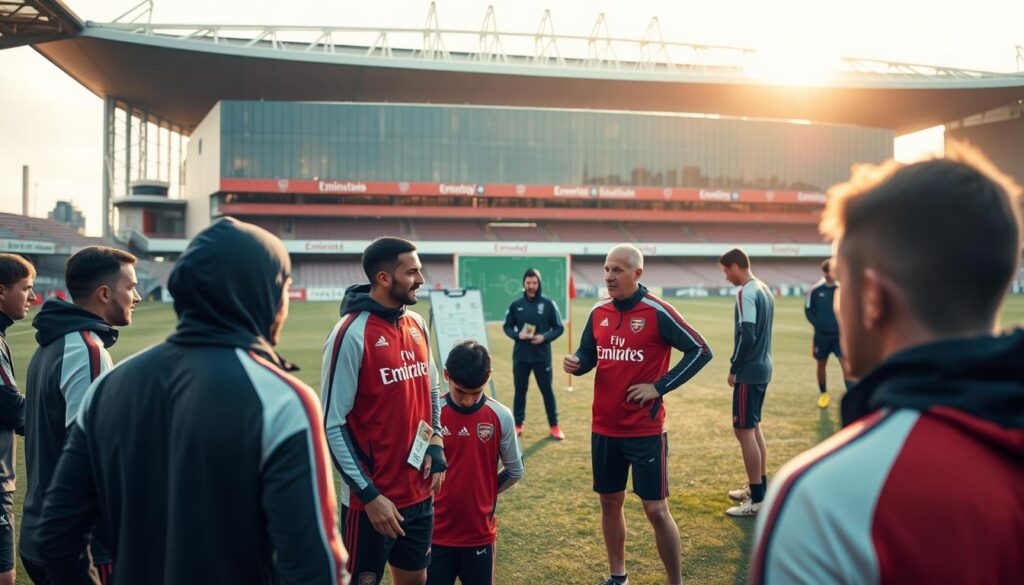
Arsenal’s post-Brentford update centers on short-term checks and squad planning. The win left selectors with defensive questions after Gabriel and William Saliba were already absent. That background frames the matchday injury context for the upcoming Aston Villa fixture and shapes how medical staff and coaches approach late decisions.
Arsenal squad availability after Brentford win
The immediate picture for Arsenal squad availability is mixed. Cristhian Mosquera left early after an awkward header and that withdrawal introduced a need for quick defensive cover. Declan Rice completed most of the match but had ice applied to his calf when the game ended, raising the prospect of a short-term check.
Player-specific reports and immediate reactions
On Declan Rice calf concerns, the player told a reporter he felt fine and expected to be available. Club medics arranged follow-up tests to rule out a strain. Visible signs after the match—Rice walking unaided and using ice—offer cautious optimism without medical certainty.
Cristhian Mosquera injury removal was precautionary. Early substitution after a heavy landing triggers standard concussion and musculoskeletal protocols. That approach underscores Arsenal’s process for protecting young defenders in high-pressure moments.
Managerial stance and selection implications
Mikel Arteta selection choices will hinge on medical feedback and the fitness test timeline. Arteta has shown a cautious bent when key fixtures loom, balancing competitive need with player welfare. The absence of Saliba and Gabriel magnifies any new defensive issue and could force tactical tweaks against Aston Villa.
Midweek assessments that finish close to kickoff increase the chance of last-minute calls. Those outcomes will shape the matchday XI and immediate substitution strategy, with Arteta expected to favor verified fitness over risk.
For full context on Arteta’s post-match comments and health assessments, read the manager’s pre-West Ham briefing here.
Injury Update Betting Impact

Late fitness news creates a narrow window for market reaction and affects how sportsbooks set prices. Injury Update Betting Impact shows up across match odds, player props, and in-play betting as bookmakers race to reflect altered tactics and personnel. When a key starter faces a last-minute fitness test, the book may widen spreads or temporarily suspend specific markets to limit exposure.
How late fitness tests change betting markets
Last-minute fitness test betting produces asymmetric information. Teams post tests or scans that few see before the public. Market-makers respond by shifting lines that lean on tactical effect rather than headline names.
Player absences alter match result lines, correct-score markets, Asian handicaps, and individual props. If a defender is doubtful, early in-play betting patterns may shift as opponents probe the back line. Reliable outlets and club bulletins drive the fastest corrections.
Odds movement observed after the Brentford game
Noticeable odds movement followed the Brentford game as confirmations and follow-up scans emerged. Visible mobility on-field and player comments reduced some volatility, yet scheduled medical checks kept lines alive for more change. Pre-existing absences pushed longer-term lines; any new defensive doubts nudged goals-under markets downward.
In cases where managers confirm fitness within a short window before kickoff, sportsbooks often pull odds partially back toward prior levels. When tests remain inconclusive, larger swings occur and certain player props get voided or cashed early.
Betting strategies for last-minute injury uncertainty
Sharp bettors hunt for value during the immediate aftermath of an update. Early lines can misprice risk when medical details are sparse. A sound betting strategy injury news approach uses small, measured stakes and looks to spread exposure across correlated markets.
Hedging open pre-injury positions with in-play betting or cash-out tools helps manage volatility. Focus on markets less tied to one player’s presence, or wait until official club confirmations from trusted sources arrive. Use reputable reporting, not offhand remarks, to inform trades.
Regulatory and integrity considerations in the U.S. market
U.S. betting regulation requires operators to maintain market integrity and monitor for suspicious volume tied to late fitness tests. Regulators and sportsbooks may limit or suspend bets on specific player props until official confirmation fixes uncertainty.
Clear policies on voids, cancellations, and cash-outs protect customers and support market integrity. Bettors should check how parlay rules and local rules treat non-participation events when wagering around uncertain fitness updates.
For background on broader injury patterns and roster trends that feed these market shifts, see this roundup from Dobber Hockey: injury roundup and updates.
Opponent Form, Historical Context, and Market Reaction
Aston Villa vs Arsenal history has become a key lens for bettors and traders. Villa’s recent edge — two wins and a draw in the last four league meetings — gives the home side a psychological advantage. That opponent form impact magnifies the market reaction to any Arsenal injury update, especially when a midfield anchor like Declan Rice is doubtful.
The 2023–24 season still shapes perceptions. Arsenal lost both fixtures to Villa that year and dropped the title by two points to Manchester City. That memory increases stakes and can push market reaction to rivalry results more sharply than usual, with sportsbooks factoring historical head-to-head influence into lines and prop pricing.
League table context matters. With only six points separating Villa and the leaders after 14 games, bookmakers treat this match as meaningful for season-long markets. In the betting market context, late confirmation of a weakened Arsenal backline or Rice’s absence tends to raise Villa odds, shift over/under liability, and reprice player props quickly.
Practical takeaways for U.S. bettors: weigh opponent form impact and head-to-head trends alongside verified medical updates. Track official club statements, reputable outlets such as BBC Sport and The Athletic, and watch live line movement. Use hedging and prudent stake sizing because regulatory limits and sportsbook policies may prevent rapid, outsized gains from last-minute information.

