
Nearly half a billion dollars is changing hands in prediction markets and sportsbooks as Week 15 betting heats up, and odds sliding across books is steering much of the action.
Lines for marquee matchups — Chargers–Chiefs, Bills–Patriots, Broncos–Packers, Texans–Cardinals and Giants–Commanders — have shifted repeatedly this week as injury reports, matchup analytics and late look-ahead lines push money toward specific sides. That NFL odds movement reflects more than single-game calculus; it captures a web of market signals from sportsbooks, media coverage and prediction platforms.
On-field developments are feeding those market signals. Reports that Philip Rivers could debut for the Colts at 44, rookie Brady Cook’s possible start, C.J. Stroud and Woody Marks powering Houston, and Josh Allen’s duel with Drake Maye all factor into betting trends and totals adjustments. Analysts at ESPN Research, The Ringer and FanDuel have published betting nuggets that bettors use to justify late wagers and contrarian plays.
Prediction markets and news outlets increasingly overlap, and that amplification helps explain why lines slide so fast. Commercial ties and coverage agreements give outlets new incentives to report markets as news, which can in turn accelerate sportsbook movement — a dynamic explored in broader reporting on how media and markets interact here.
Below is a concise set of takeaways that frame how odds sliding is reshaping Week 15 betting and where bettors are directing capital.
Key Takeaways
- Odds sliding is concentrated around five Week 15 matchups with heavy market attention.
- Injury updates and late lineup reports are primary triggers for short-term NFL odds movement.
- Prediction markets and major outlets now amplify each other, speeding line shifts.
- Analyst nuggets from ESPN, The Ringer and FanDuel influence contrarian and totals plays.
- Bettors watch market signals and liquidity to time entries when sportsbooks adjust lines.
Why bettors flock when odds slide: market signals and news-driven moves
Odds that shift quickly catch attention because they pack new information into a single number. A sudden dip or spike can reflect fresh injury reports, sharp money from pros, or heavy public action. Smart bettors watch those changes to read market sentiment and spot potential value before books correct the line.

How odds sliding reflects changing market sentiment
Line movement often mirrors how bettors and sportsbooks reassess team strength. For Week 15, markets treated the Broncos differently than their 11-2 record, while bettors doubted the Patriots and Chargers in certain matchups. Historical ATS trends feed that reassessment: the Chargers’ cover history vs. the Chiefs, the Bengals’ 0-5 ATS stretch in close lines, and the Cardinals’ 5-1 road ATS mark all shape how quickly books move.
Analysts such as Seth Walder and outlets like The Ringer combine stats and narrative to influence perception. When those voices highlight matchup edges or shaky metrics, cash follows and the market responds. That cycle tightens spreads or creates fleeting edges for bettors who act fast.
Media, prediction markets and their impact on betting flows
Media coverage amplifies line movement by broadcasting odds to wide audiences. Partnerships between news outlets and prediction markets make those numbers more visible. Examples include CNN and CNBC work with Kalshi and Yahoo Finance citing Polymarket. Such visibility can drive more bets and change the price of a market quickly.
- Prediction markets offer minute-by-minute sentiment, but liquidity matters. Some cited markets hold only modest dollars, which limits predictive power.
- When journalists use these markets as signals, reporting can create a feedback loop that alters betting flows.
Commercial ties between outlets and trading platforms raise ethical questions. Those ties can nudge public perception, which then shows up as line movement at major sportsbooks.
Insider info, injury reports and look-ahead lines
Concrete roster news triggers sharp moves. Week 15 examples included concerns over Justin Herbert’s hand and changes in the Patriots’ run defense after Milton Williams’ injury. A rumor about a comeback starter can swing spreads dramatically, as happened in markets that reacted to potential surprise starts.
Look-ahead lines can mislead when liquidity is low or info is thin. Sudden jumps, like a move from Seattle –3.5 to a much larger number, often reflect thin markets reacting to a single news item. Bettors must separate signal from noise by checking injury reports and matching those notes to matchup context.
Sharp players treat insider tips with caution. The risk of conflicts grows when newsrooms and prediction markets share business relationships, which complicates how injury reports and leaks affect look-ahead lines.
Bettors chase sliding odds because movement signals fresh data and possible value. To interpret those moves, they should weigh liquidity, matchup history, and the source of information before committing money.
Key matches drawing action as odds sliding reshapes Week 15 betting
The slide in early lines has concentrated money on a handful of games that matter for playoff odds, draft positioning and daily markets. Sharp bettors and the public are reacting to injuries, streaks and matchup nuances. Below are the matchups getting the most attention and the market themes shaping each contest.
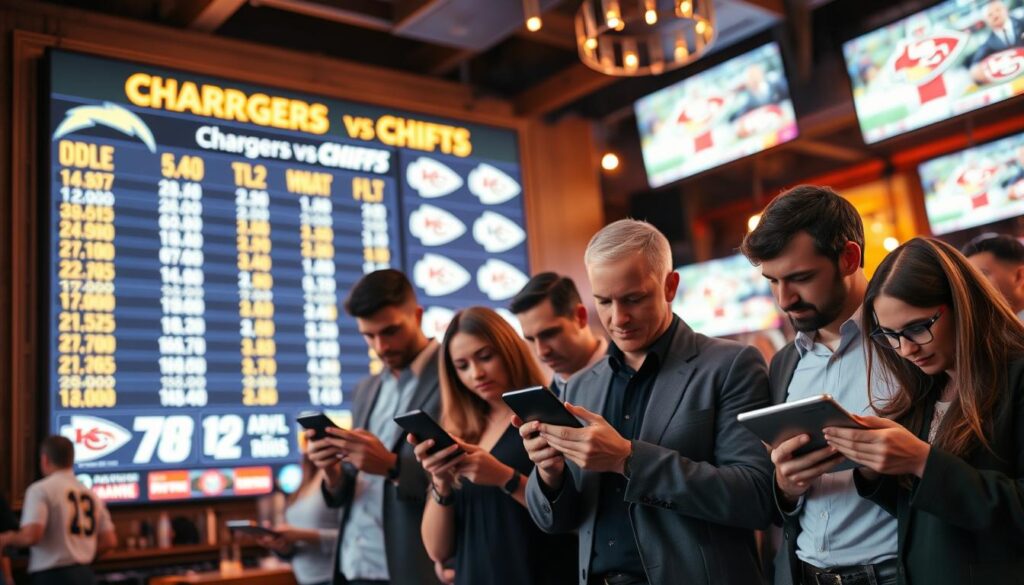
Chargers vs. Chiefs — market skepticism and cover history
Los Angeles seeks a season sweep of Kansas City for the first time since 2013, and early listings put Kansas City around -5.5 with a 41.5 O/U. Chargers vs Chiefs odds tightened after public interest in the upset angle and cover history. Justin Herbert’s hand issue and higher pressure rates have bettors leaning to unders and alternate markets rather than a clean moneyline play.
Bills vs. Patriots — divisional stakes and line movement
Buffalo opened near -1.5 with a 49.5 total as the Patriots chase an AFC East clinch. Bills Patriots line movement reflected concerns about Buffalo’s recent division form and New England’s run defense health. Bettors watching matchups for TreVeyon Henderson and Bills rush defense trends pushed volume into props and situational plays.
Broncos vs. Packers — defense-heavy showdown and totals action
Two stout defenses meet, producing conservative early pricing and lower totals. Broncos Packers totals became the focal point when market models favored unders near the low 40s. Bettors who expect limited explosive plays are shifting money into small spreads and alternative totals rather than large outright wagers.
Texans vs. Cardinals — streaks, momentum and spread swings
Houston rode a five-game win streak into an early HOU -9.5 line with a 42.5 total. Texans Cardinals spread has moved as books balanced heavy public money and sharp bets on Houston’s top-ranked defense. Contrarian action shows in alternate spreads and live markets when blowout risk meets betting value on the underdog.
Giants vs. Commanders — draft implications and sleeper action
With both clubs out of playoff contention, NYG opened around -2.5 and totals near 46.5. Giants Commanders betting reflects tanking narratives and low liquidity, so player props and alternate prices see disproportionate attention. Bettors hunting value focus on rookie QB matchups and defensive sack props tied to Brian Burns.
How bettors can respond to odds sliding with smart strategies
When lines move, interpret them instead of chasing blindly. Odds sliding can reflect sharp money reacting to verified developments—injuries to players like Justin Herbert or last-minute weather shifts—or a public rush amplified by TV prediction markets. Sharp-driven moves often sustain; public-driven spikes can reverse. Apply prediction market caution and cross-check any rumor against official injury reports and team lists before adjusting stakes.
Line shopping is essential. Compare prices across DraftKings, FanDuel, BetMGM and smaller books to capture small edges that compound over time. Use alternate lines and totals where value betting appears, and lean on matchup data and ATS history—Chargers’ cover trends or Cardinals’ road ATS success—to find advantage. If spreads inflate quickly, pivot to prop markets and player lines where inefficiencies show up more often.
Manage exposure with strict bankroll management. Scale stake size to the clarity of the move: smaller tickets for suddenly sliding lines until the cause is confirmed. Diversify across moneyline, spread, totals and props to reduce single-game shock. Set stop-loss rules and treat novelty scenarios—older quarterbacks returning or unexpected starters—as high-variance bets that deserve conservative sizing.
Finally, protect against info asymmetry and media entanglements. Treat Kalshi-style headlines and CNN or CNBC tickers as one data point, not the whole story, and be mindful of the injury market’s impact. Responsible play matters: balance pursuit of value betting with limits and awareness of gambling risks. Disciplined line shopping, verification of liquidity, matchup analysis and prudent bankroll controls turn market motion into repeatable edge.

