
Nearly 70% of college programs now report using expanded lineup rotation during the busiest stretches of the season, a shift driven by congested calendars, injury risk and rising roster churn.
Across Division I to Division III, college basketball coaching staffs are moving away from a fixed five and toward a 7–10 player rotation to manage schedule demands and preserve player health. Load management, stamina and depth now shape daily practice plans and in-game decisions as much as Xs and Os.
New York University’s early-season example highlights the trend. Under Waleed Farid, NYU absorbed 12 new additions — three freshmen, eight transfers and a walk-on — and still opened 7-1 after handling early injuries to David Petrusev and Luke Kolaja. Captain Bryan Moussako, Quinn Clark and Carnegie Johnson anchored leadership while the staff adjusted lineup rotation to protect starters and keep competitive minutes balanced.
Teams borrow ideas from pro clubs and international squads, where heavy schedules force coaches to rotate entire units. That cross-pollination informs roster strategy and practical load management in college programs, whether preserving veteran legs or giving younger players live minutes in garbage time.
This piece will explain why lineup rotation is growing in college basketball coaching, how staffs build depth and buy-in, and what tactical shifts follow. For a practical guide on assembling robust rotations, see a coaching primer on rotation construction at coach resource.
Key Takeaways
- Lineup rotation helps teams manage schedule demands while reducing injury risk.
- Effective rotations typically span 7–10 players to balance rest and performance.
- Load management depends on conditioning, depth and smart in-game substitutions.
- Roster strategy must account for transfers, freshmen and unexpected absences.
- Coaches are adapting pro and international rotation models for college play.
Why coaches are rotating lineups during intense stretches
Coaches across college basketball are changing lineups to meet dense schedules, protect players and keep teams competitive. Rotation is a strategic tool that ties together load management in college basketball, injury prevention, season-long freshness, roster churn and the transfer portal impact. The goal is simple: keep the best group available when it matters most.
Physical load management and injury prevention
Programs limit minutes to preserve durability and availability. Reducing cumulative stress through short-burst rotations and managed practice loads lowers the odds of soft-tissue strains and overuse problems. Teams borrow a page from professional clubs like FC Barcelona, who rotate before fixture congestion to protect key players.
NYU’s staff emphasized targeted conditioning and careful minute plans after early-season injuries forced lineup shifts. Using backups in low-leverage minutes helps reduce wear on starters while keeping game rhythm intact.
Maintaining competitive freshness across long seasons
Coaches plan for peak performance late in the year. Rotations spread competitive reps so starters arrive in conference play and postseason seeded, not spent. This approach supports season-long freshness while keeping intensity high across the roster.
Adjustments depend on opponent matchups, travel windows and recovery days. When rotations are handled deliberately, depth remains game-ready and the team can sustain quality through long road trips and tournament stretches.
Adapting to roster churn and roster unpredictability
The modern college landscape shows more movement through the transfer portal impact and NIL-related shifts. Programs now manage shorter timelines, with coaches building plans around a cycle of arrivals and departures instead of four-year projections.
Teams with many new faces, including transfers, need flexible rotation models to establish chemistry. Summer churn and late roster changes force coaches to rely on rotation as a practical means to balance minutes, evaluate newcomers and absorb midseason losses.
- Planned rest and short-burst substitutions protect core players and improve depth.
- Controlled practice loads reduce injury risk while allowing skill work for backups.
- Frequent rotation helps coaches assess fit as transfer portal impact reshapes rosters.
college basketball coaching strategies for building depth and buy-in
Coaches who focus on building depth college basketball keep practice plans simple and outcomes measurable. Early-season minutes in low-pressure games speed development. Small, frequent reps let staff evaluate fit while preserving team performance.
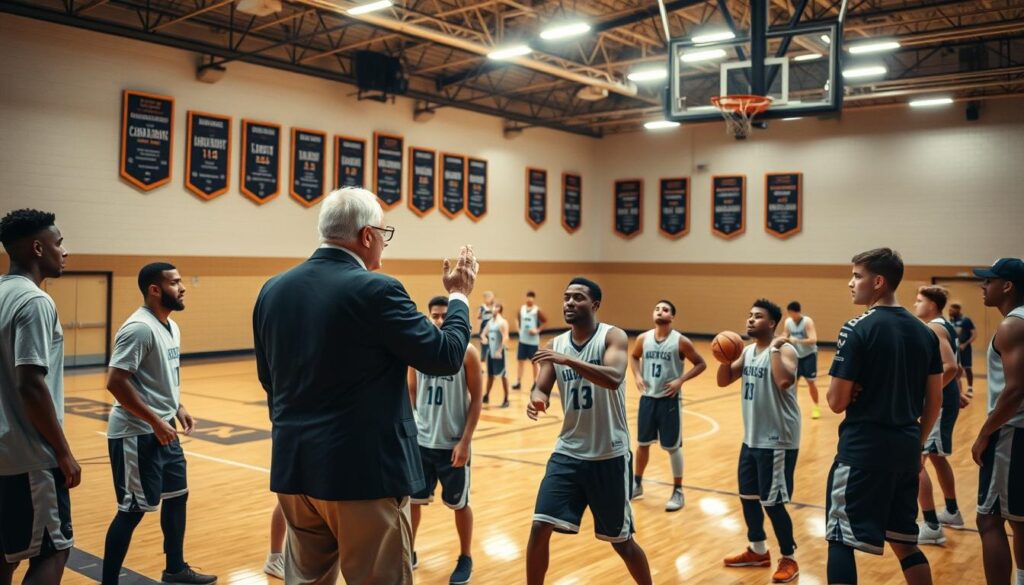
Blending new transfers, freshmen and walk-ons into working rotations requires a plan. Use short-burst rotations to grant skill exposure and confirm readiness. Create tailored development plans that spell out practice goals, film review checkpoints, and targeted drills.
Programs that emphasize integrating transfers create predictable paths. Showcasing a track record of player growth attracts contributors who can step into minutes quickly. Summer-league style scrimmages help coaches test roles before assigning larger responsibilities.
Clear leadership accelerates team buy-in. Captains who set standards and model accountability speed cultural adoption. Leadership in basketball is not just vocal; it is visible in practice habits, defensive intensity, and how veterans mentor newcomers.
Role clarity reduces friction when rotations shift. Define who defends, who spaces the floor, and who controls tempo. When players know their assignments, substitutions become tactical tools rather than sources of confusion.
Assistant coaches continuity plays a critical role when rosters turn over. Longstanding assistants carry institutional memory and smooth transitions. They explain previous systems, bridge communication between players and the head coach, and maintain day-to-day development rhythms.
- Deliberate practice reps for newcomers
- Short-burst rotations for evaluation
- Captains and veteran transfers as cultural translators
- Assistant coaches continuity to sustain development
Together, these elements form a practical framework for coaches to build depth college basketball while integrating transfers and maintaining leadership in basketball through clear role clarity and stable staff support.
Tactical adjustments coaches make when rotating lineups
Smart coaches use tactical rotation strategies to shape how a game is played. They build plans that shift pace, protect leads, and expose young players to real minutes without risking the team’s structure.
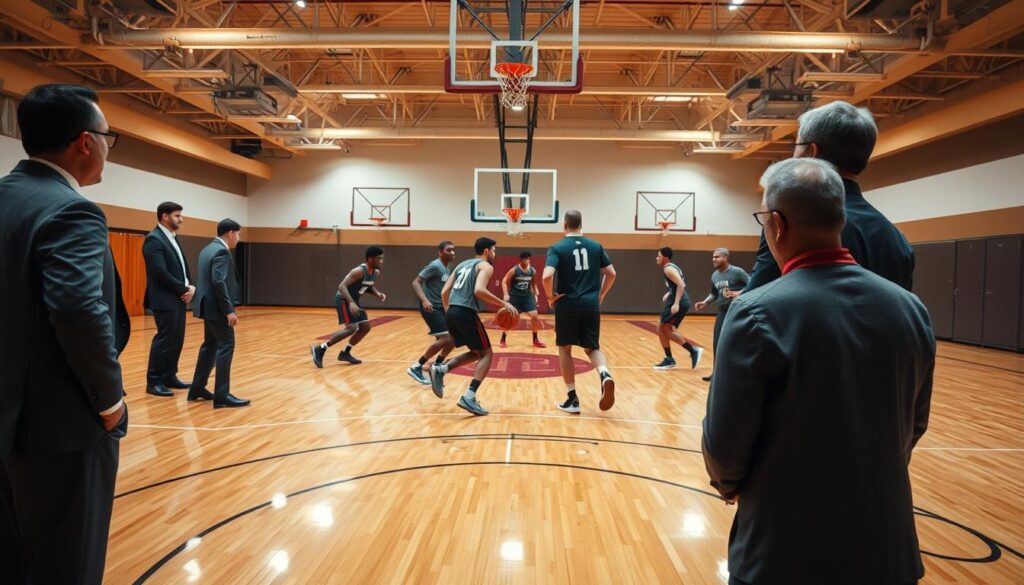
Tempo control and situational game management
Coaches alter personnel to control tempo control basketball. Bringing in a ball-dominant guard can slow the game while fresh defenders can push full-court pressure to speed possessions. This type of situational management helps teams respond to runs and conserve energy across a busy schedule.
Coaching staffs often plan rotations by phase of the game. A veteran starting five can set a tone, then alternating units maintain rhythm and manage minutes. These shifts let coaches restore control when momentum drifts.
Matchup-driven substitutions and role specialization
Matchup substitutions let coaches exploit opponent weaknesses. Bigger lineups emphasize rebounding and interior defense. Smaller, quicker groups pressure ball-handlers and create transition chances. Lineup changes hinge on clear role specialization so on-court identity stays intact.
Identifying three-and-D wings, rim protectors, and floor generals makes swaps predictable and safe. Staffs can insert specific players for defensive stops, scoring bursts, or late-game facilitation without scrambling team chemistry.
Short-burst rotations for skill exposure and development
Short-burst rotations give developing players brief, repeatable minutes. These bursts provide game reps while limiting prolonged exposure to high-intensity minutes. Coaches use them in early-season games and low-risk stretches to evaluate prospects.
Short-burst rotations also serve load management goals. They reduce continuous minutes for any single athlete, lowering injury risk while accelerating skill growth and assessment for future, larger roles.
- Plan rotations by game phase to manage fatigue.
- Match personnel to opponent profiles through matchup substitutions.
- Use short-burst rotations to test young players and protect veterans.
What rotation means for team goals, scheduling and fan expectations
Rotation impact team goals by prioritizing long-term objectives like conference titles and postseason readiness over short-term box-score gains. Coaches at programs such as New York University frame rotation around peaking late in the season, spreading minutes so more players gain experience and the roster stays healthy for conference tournaments and NCAA play.
Scheduling strategies must align with rotation plans to handle travel, exams, and recovery windows. Congested stretches — holiday tournaments and long road trips — demand pre-planned rotation templates. The volatility of the transfer portal and NIL-era roster moves adds uncertainty, so flexible contingency lineups are now a standard part of staff planning.
Fan expectations can clash with rotation tactics when star players see reduced minutes. Clear program messaging that ties rotation to player health, development, and championship goals helps maintain support. Coaches and captains play a key role inside the program to reinforce buy-in while public statements explain the tactical and medical reasoning.
Resource gaps change how teams use rotation. Well-funded programs with strong NIL infrastructures can reload through transfers and rest key players more often, while less-resourced teams rely on careful minute management and development. Overall, rotation is a strategic response that balances physical demands, tactical needs, scheduling realities, and fan expectations to protect postseason readiness and team cohesion.

