
Attendance at the PDC World Championship consistently sends more than 100,000 fans through Alexandra Palace across the festive run — a number that underlines how Ally Pally has become the spiritual home of modern darts.
For nearly two decades, the World Darts Championship has transformed the Great Hall and surrounding spaces into a festival of noise, color, and tension. The venue’s partnership with the Professional Darts Corporation and Matchroom has helped turn weekend matches into headline events that draw international viewers and a lively, party-style crowd.
Alexandra Palace is more than a stage; it’s a year-round charity and cultural hub that reinvests event revenue into restoring the building and supporting local programs. With the World Championship secured at Ally Pally through at least 2031, fans and players can expect the same signature World Darts Championship atmosphere that has amplified the sport’s profile worldwide.
Key Takeaways
- Alexandra Palace hosts the PDC World Championship and draws six-figure attendance over the tournament.
- Ally Pally’s partnership with the PDC and Matchroom has elevated the Darts World Championship into a global spectacle.
- The venue’s year-round role as a charity ensures event revenue supports restoration and community programs.
- The World Darts Championship atmosphere at Ally Pally blends passionate fans, dramatic match moments, and strong international appeal.
- Contractual security through 2031 gives organizers time to plan continued growth and fan-focused improvements.
Darts World Championship: Ally Pally’s Role in Modern Darts History
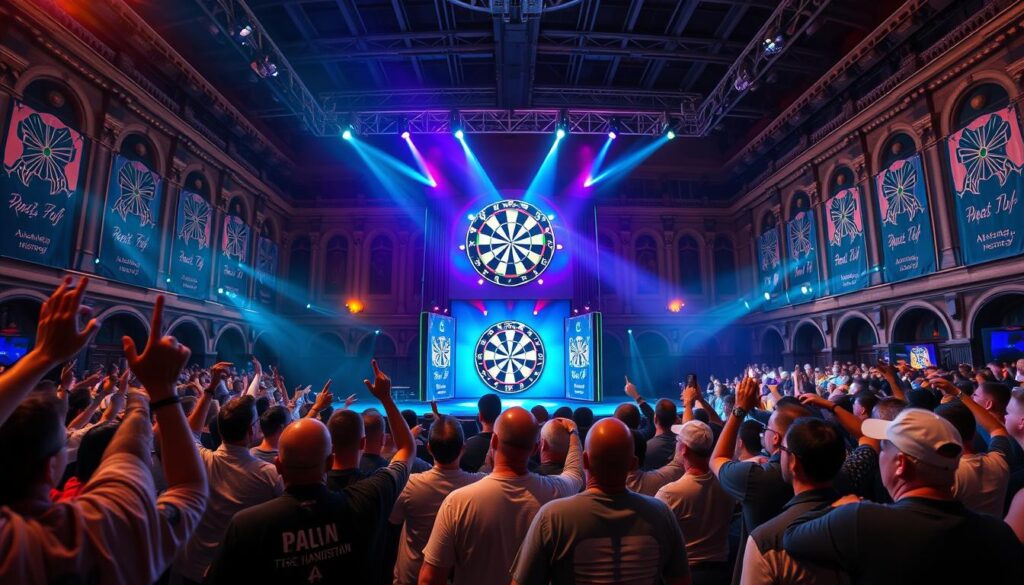
Alexandra Palace rose from Victorian showground to a global stage for darts. The venue’s festive-season slot on a London ridge and the long run of sessions helped cement its place in the history of Ally Pally darts. Broadcasters and fans began to think of the venue as essential to the sport’s calendar.
How Alexandra Palace became synonymous with the World Championship
When the PDC moved the World Championship to Alexandra Palace in 2008, organizers aimed for growth. Greater capacity and extra sessions matched rising prize money and global TV audiences. The long-term agreement with the PDC reinforced Alexandra Palace’s importance in PDC venue history.
Key historic moments that defined the venue’s legacy
Landmark matches and viral moments turned Ally Pally into a cultural touchstone. Memorable finals and high-stakes sets drove casual viewers to follow darts year-round. The World Darts Championship legacy at Alexandra Palace grew as fans and players created electric scenes that replayed across social media and sports highlights.
Notable finals and breakthrough performances at Ally Pally
John Part took the first title staged at Alexandra Palace, while Phil Taylor added another record at the venue in 2010. Michael van Gerwen’s repeated final appearances and Luke Littler’s Youth-era victories shaped modern narratives. Fans still recall the MVG–Smith match where a nine-darter moment went viral and helped define Alexandra Palace finals as must-watch events.
The venue’s evolution from the Great Hall to expanded hosting plans reflects the PDC venue history and the sport’s rise. For a deeper look at notable milestones and the venue’s wild backstory, read this close account of Alexandra Palace’s role in modern darts here.
Electric Crowd Culture and Fan Experience at Alexandra Palace
The Alexandra Palace stage turns every session into a show. The Ally Pally crowd culture fuels players and cameras alike. Costumes, loud chants, and a festival vibe create moments that stay on highlight reels and social feeds.
Fans dress in bold outfits and carry signs. Cheers and synchronized chants build tension during big finishes. That combination makes the darts fan experience as much about atmosphere as it is about scoring.
What makes the Ally Pally crowd unique: costumes, chants, and party atmosphere
Creativity drives the crowd. Supporters arrive in themed costumes tied to players or pop culture. The noise level rises on dramatic checkouts, giving each match a live-wire feel.
Television exposure amplifies those scenes. Viral clips of party-goers have brought new fans to the sport. The “Power of the Crowd” at Alexandra Palace turns simple moments into cultural touchpoints.
Fan village, seating changes and the move to the Great Hall
Organizers moved the tournament into the Great Hall to fit more spectators per session. The Great Hall move aims to boost capacity while keeping the same electric ambiance.
The fan village Alexandra Palace now sits in the West Hall. That relocation mirrors concert setups. Food, merchandise, and interactive zones give crowds a half-day entertainment experience before play starts.
Logistics and planning for a safe, high-energy environment
Venue teams and the PDC coordinate tight schedules and seating logistics. Security plans, beverage operations, and TV allocations are choreographed to handle fast turnarounds.
Stewards use clear sightlines and crowd-flow routes to reduce bottlenecks. Emergency planning and staffing scale with session size to protect fans and players without killing the party mood.
International visitors and the event’s appeal to U.S. audiences
The festive timing and panoramic London views draw international visitors each year. U.S. viewers follow on broadcasts and social clips, which heightens overseas interest.
PDC international fans bring diverse chants and flags, adding color to the hall. Those visitors amplify the global darts fan experience and help grow the sport in new markets.
Memorable Matches and Players Who Fueled the Atmosphere
The Alexandra Palace crowd has fed on moments that changed the sport. Standout finals and shock results created buzz nights and long memories. These contests shaped how fans talk about pressure, skill, and drama in modern darts.
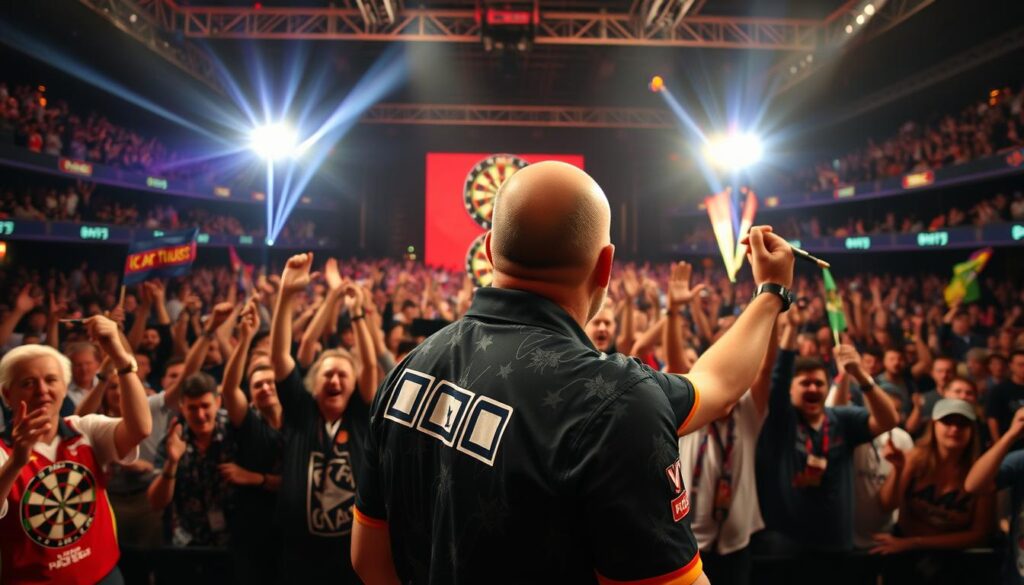
Michael van Gerwen’s rise peaked with Michael van Gerwen 2014, a win that announced a new era. The final showed relentless scoring power and a champion’s mentality. The atmosphere at Ally Pally reacted like a stage finding its next superstar.
Fallon Sherrock 2020 sent waves beyond the arena when she won matches against top opponents. Her run brought fresh headlines and new viewers from the United States. The crowd response reflected a cultural shift toward inclusion and wider interest in the sport.
Rob Cross 2018 read like a fairy-tale for fans who love rapid rises. Rob Cross 2018 ended with a victory over Phil Taylor in Taylor’s final events. That upset underlined the open nature of competition and energized the championship crowd.
The 2007 clash between Phil Taylor and Raymond van Barneveld remains a touchstone for why darts could grow into a major televised event. Phil Taylor van Barneveld 2007 helped push the sport into larger venues and wider audiences. Fans still cite that match when recalling the drama that builds a legacy.
- Big finals that deliver high tension and huge crowds
- Breakthrough runs that draw mainstream attention
- Head-to-head rivalries that create repeat viewing
These moments combine into a tapestry of iconic darts matches that keep people talking year after year. The energy from fans at Ally Pally grows from both planned rivalries and surprising upsets. Each match adds to the venue’s reputation as a place where history happens.
Alexandra Palace as a Venue: Year-Round Operations and Championship Impact
Alexandra Palace operates as a multiuse cultural venue and charity, staging roughly 150 events a year. From BBC Concert Orchestra performances to the Kaleidoscope festival and a seasonal production of A Christmas Carol, the site’s programming shows how Alexandra Palace year-round events keep the building active and relevant beyond the World Championship.
Ally Pally operations are built on tight event-management expertise. Staff coordinate rapid turnarounds, seating plans and media infrastructure, moving smoothly between concerts, the Mosconi Cup and the PDC World Championship. Upgrades to the Great Hall capacity and the relocation of the fan village to the West Hall reflect long-term planning to future-proof the event through at least 2031.
The PDC partnership Matchroom has been pivotal to the championship’s growth and to sustaining venue community impact. Revenue from commercial activity and the PDC/Matchroom Foundation’s multi-year commitments are reinvested in park restoration, forest school projects and programs like Singing for the Brain, linking major sporting spectacle to clear local benefits.
These combined strengths—diverse programming, trusted operations and strategic partnerships—make Alexandra Palace more than a tournament site. The venue’s year-round calendar and community focus help the World Championship flourish while preserving and enhancing a landmark for Londoners and international visitors alike.

