
Lando Norris clinched the 2025 title in Abu Dhabi, yet the market is already pricing large swings for the 2026 F1 season after a cascade of technical and commercial shifts. Teams tested prototype active aero at the Abu Dhabi post‑season trial and Pirelli gathered data for new rubber, signaling concrete performance changes that are moving Formula 1 futures betting today.
Catalysts are clear: Cadillac joins as the 11th team, Audi and Ford deepen manufacturer involvement, and the 2026 rules overhaul removes traditional DRS in favor of active aero settings plus an electric overtaking boost. Those developments, paired with Mercedes and Ferrari running mule cars and paired 2025/2026 simulations, are already driving early futures movement and shifting betting odds 2026 across the board.
Driver markets are reacting too. Max Verstappen will again take the grid with a new teammate, while Arvid Lindblad joins as the fifth British driver. With the season opener in Australia roughly 87 days away and a tentative Madrid race that could be replaced by Imola, off-track F1 news is reshaping where bettors and markets place their chips for the 2026 F1 season.
Key Takeaways
- Prototype active aero tests and Pirelli data from Abu Dhabi produced early technical signals.
- Manufacturer entries like Cadillac, Audi and Ford have altered team prospects and market sentiment.
- Removal of DRS and new electric boost/active aero modes are central to regulation-driven odds changes.
- Driver moves, including Max Verstappen’s new teammate and Arvid Lindblad’s arrival, affect futures pricing.
- Calendar uncertainty and sprint race sites add extra variables for Formula 1 futures betting and betting odds 2026.
How regulation and technical changes are reshaping 2026 title odds
The 2026 regulation changes are forcing teams to rethink chassis, powertrains, and race tactics. The MGU-H removal and a much larger hybrid power split shift the balance toward electric systems. Active aerodynamics and a move to 100% sustainable fuel change how lap time gains are won. Early mule tests and prototype sightings have turned abstract rules into visible performance signals for bookmakers and fans.
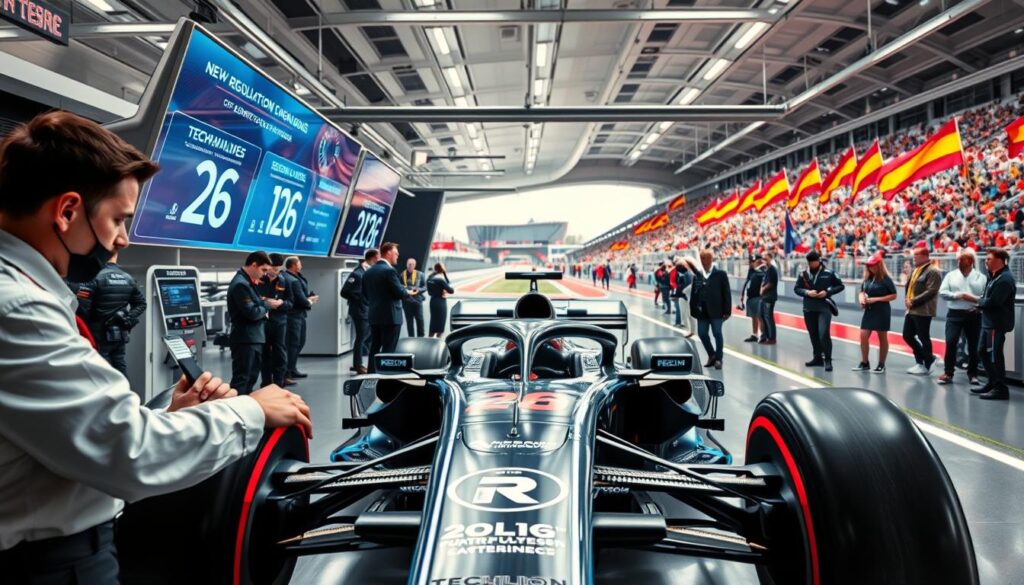
The overview of the 2026 regulation shake-up centers on trimmed chassis dimensions, a 30 kg lighter target weight, and a near 50% electrical share of peak power. Teams must adapt to the MGU-H removal while exploiting the doubled hybrid power split. Movable front and rear wing flaps replace ground-effect reliance, creating new engineering races around active aerodynamics and simplified mode names that aid fan understanding.
The immediate competitive implications for teams are clear when development focus shifts. Teams that prioritized team development focus 2026 gained test mileage and design clarity. Manufacturer engine entries influence grid dynamics as Honda powers Aston Martin and Mercedes supplies McLaren, Williams, and Alpine. Red Bull’s Ford partnership yields an in-house power unit that makes Verstappen futures more dependent on early reliability. Ferrari’s low-key program leaves questions about their form.
Concrete mule tests gave bookmakers tangible data. Active flap prototypes from Mercedes and Ferrari and Pirelli tyre readings under lower downforce reduced speculation. Teams with early working active aero concepts can convert that head start into on-track gains, affecting short-term odds. Clarity on overtaking modes calms markets, while uncertain naming and system complexity keep some lines volatile.
Driver and team-specific betting signals are emerging from personnel moves and technical partnerships. Aston Martin Newey impact is cited in markets that tilt Alonso odds upward. Williams 2026 strategy under James Vowles and a strengthened driver lineup created fresh hope for podiums. Manufacturer engine entries broaden contenders but add volatility as supply relationships get tested on race day.
Market watchers track betting signals drivers 2026 tied to power unit performance and aero evidence. Verstappen futures hinge on Red Bull-Ford reliability. Rookie volatility Arvid Lindblad brings novelty value that can swing props and rookie markets. Bookmakers price Alonso odds with Newey’s arrival and Honda backing in mind, while teams that showed promising active aero and hybrid integration enjoyed tightening lines.
An ordered view of the technical and market variables:
- MGU-H removal and hybrid power split changes that alter engine design priorities.
- Active aerodynamics and Straightline/Cornering/Overtake modes shaping race dynamics.
- Sustainable fuel and lighter cars creating new thermal and tyre demands.
- Team development focus 2026 and manufacturer engine entries shifting title math.
- Betting signals drivers 2026 driven by testing, personnel moves, and early reliability.
Formula 1 futures betting: market reactions to off-track developments
Bookmakers reaction F1 often comes fast after news breaks. Early statements from teams, engine suppliers, or the FIA can trigger notable shifts in futures market behavior. Bettors who watch lines closely see how pricing moves as markets try to quantify technical and regulatory risk.
How bookmakers and futures markets react to regulatory and personnel news
Regulation impact betting becomes visible when rule clarifications arrive. Clear guidance on aero systems or Overtake Mode shrinks uncertainty and tightens odds. When teams announce major hires or restructures, markets reprice constructor and driver chances within hours.
Personnel announcements such as the Aston Martin Newey hiring sent immediate chatter through bookmaking books. That kind of move influences how traders assess long-term development paths and can create short windows for value bets 2026.
Key off-track events that drove early 2026 odds movement
Several key off-track events 2026 shaped early lines. The Abu Dhabi mule test and Pirelli’s tyre reports supplied the first technical signals that traders can model. Concrete test data tends to move futures market behavior more than vague statements.
Manufacturer shifts and entries also matter. Cadillac entry news and Audi’s engine plans forced bookmakers to reassess constructor depth. High-profile team decisions and power unit partnerships produced fresh volatility in the market.
Rumors around Max Verstappen’s future and Mercedes responses created another layer of price action. Readers can follow evolving coverage and market reaction with focused reporting like this roundup of transfer talk and betting.
Practical betting strategies given current off-track signals
Betting strategies F1 futures should center on staged exposure. Start with smaller stakes when markets are noisy and scale positions as technical clarity improves. Use hedging futures to lock profits or cut downside after favorable test data or regulatory clarifications.
Value bets 2026 often appear when a team publicly prioritizes 2026 development before markets fully price that focus. Teams like Aston Martin and Williams drew early attention for this reason. Traders who monitor mule car revelations and engine bench reports gain actionable edges.
- Watch technical tests such as the Abu Dhabi mule test as bet triggers.
- Track formal FIA clarifications to avoid mispriced lines from naming confusion.
- Hedge futures after a big swing to protect gains or limit losses.
Smart bettors mix small initial stakes with disciplined scaling and hedging. That approach helps manage volatility tied to off-track stories while keeping exposure to long-term upside in case markets underreact to real technical progress.
Calendar, new entrants and preseason signals that matter to bettors and fans
The 2026 F1 calendar is already shaping bettors’ thinking. With the Madrid street circuit penciled in for September but potentially not ready, Imola stands ready as a contingency. Monaco moves to June and Canada shifts to May to regionalize the schedule, while Barcelona’s contract may expire after next year. Sprint events at Silverstone, Canada, Singapore and Zandvoort — with Zandvoort slated for its final August edition — change race-specific advantage bets and mid-season momentum expectations.
Manufacturer moves create fresh variables. Audi’s takeover of Sauber and the development of an Audi Sauber engine under operational figures such as Jonathan Wheatley and Mattia Binotto introduces an engine reliability and performance story lines. At the same time, General Motors’ Cadillac F1 team will arrive as a works entry with Sergio Perez and Valtteri Bottas expected to start toward the back while development ramps. Those dynamics expand value hunting in futures markets as power unit bench tests and early reliability reports filter out.
Preseason technical signals are critical to gauging true competitiveness. Abu Dhabi test signals from mule cars, prototype active aero trials and Pirelli tyre feedback offer direct clues. Teams ran 2025-spec cars alongside modified 2026-like chassis to compare behavior, and tests covered Monza-style low-downforce setups and hybrid wheel rim experiments. Early actuation hardware performance and power unit bench data from Red Bull‑Ford, Audi and other manufacturers will steer odds adjustments before the first race.
Fan and market behavior also matters. Greater British driver representation — Lewis Hamilton, Lando Norris, George Russell, Tom Bearman and Jakob Lindblad — can tilt shorter-term markets in the UK and U.S. Bookmakers and bettors should track public statements and insider reporting on resource allocation between 2025 and 2026 programs. Combining calendar shifts, Audi Sauber engine development, Cadillac F1 team progress and Abu Dhabi test signals gives a rounded view for sensible futures positions.

