
Bookmakers report a 28% uptick in wagers on late-game goals this season, driven by a measurable surge in matches finishing with over 3.5 goals. The Over 3.5 Goals Trend is no longer a niche angle; it has become a focal point for traders and retail bettors reacting to a string of high-scoring finales.
Sports science and load data explain much of this shift. Modern footballers routinely exceed 60 matches across league, cup, European, and international play, creating fixture congestion that erodes top speed and repeated high-intensity capacity. Fatigue commonly appears in the final 15–20 minutes as slower pressing, wider spaces, and concentration lapses on set pieces—conditions that favor late goals.
Cross-sport evidence reinforces the pattern. The Boston Celtics’ bench runs and rotation shifts this season show how quick personnel changes can spark scoring bursts; NFL injury-driven quarterback and backfield rotations similarly alter fourth-quarter dynamics. Those examples mirror soccer: substitutes, tactical gambles, or a hot-form attacker can turn the last minutes into a goal-rich window that fuels an in-play betting and sports betting surge.
Bookmakers and bettors are responding by pricing markets more aggressively for late play. As modelers fold fatigue indicators, GPS outputs, and match-flow signals into live lines, markets for in-play betting now reflect higher probabilities of late goals and more frequent heavy action on Over 3.5 Goals markets.
Key Takeaways
- There is a clear sports betting surge around matches ending with over 3.5 goals.
- Fixture congestion and cumulative load are major drivers of late-game goals.
- Wearable and physiological data help clubs and sportsbooks anticipate late fatigue effects.
- Cross-sport rotation and substitution patterns offer useful analogies for late scoring spikes.
- In-play betting markets are adapting quickly as models incorporate fatigue and personnel shifts.
Why the Over 3.5 Goals Trend is Driving Late-Game Wagers
The Over 3.5 Goals definition is simple: bettors back matches that finish with four or more total goals. Recent data shows a clear trend spike toward these outcomes, especially in the final 15–20 minutes. That late window now attracts heavier in-play betting strategy as odds movement shortens and market reaction intensifies.

Trend definition and recent spike
Bookmakers and bettors have tracked more high-scoring matches that flip in the closing stages. In-play market liquidity rises as sharps and retail players pile in. Odds movement often compresses quickly when visible signs point to late goals, creating short-term betting edges for those who act fast.
Fatigue as a key driver of late-game scoring
Player fatigue shows up as higher PPDA, fewer high-intensity runs and more technical errors. Teams with falling sprint counts or declining countermovement-jump results tend to concede more late goals. Physical drops, neuromuscular tiredness and lapses in concentration all widen the chance of late scoring.
Fixture congestion and roster management implications
Packed schedules push clubs into fixture congestion that forces squad rotation and load management decisions. Coaches use minutes limits and planned rests to avoid injuries, but rotating lineups or relying on role players can alter match tempo. High-press teams suffer most when rotation breaks rhythm, which increases vulnerability late in games.
Implications for bettors and markets
Bettors who monitor minutes played, travel, cumulative load and in-game physical indicators can anticipate higher late-goal probabilities. Markets react to visible signs such as rising PPDA or drop-offs in high-intensity runs. Smart bettors blend prematch context with live signals to find betting edges while watching market liquidity and odds movement closely.
In-play Factors That Push Matches Toward Late Goals
Live match flow gives bettors and analysts clear signals when late goals become more likely. Watching the rhythm of a game helps spot shifts in energy, structure, and risk that bookies price into markets. The next parts break down measurable signs and behavioral triggers that often precede a scoring burst late in matches.
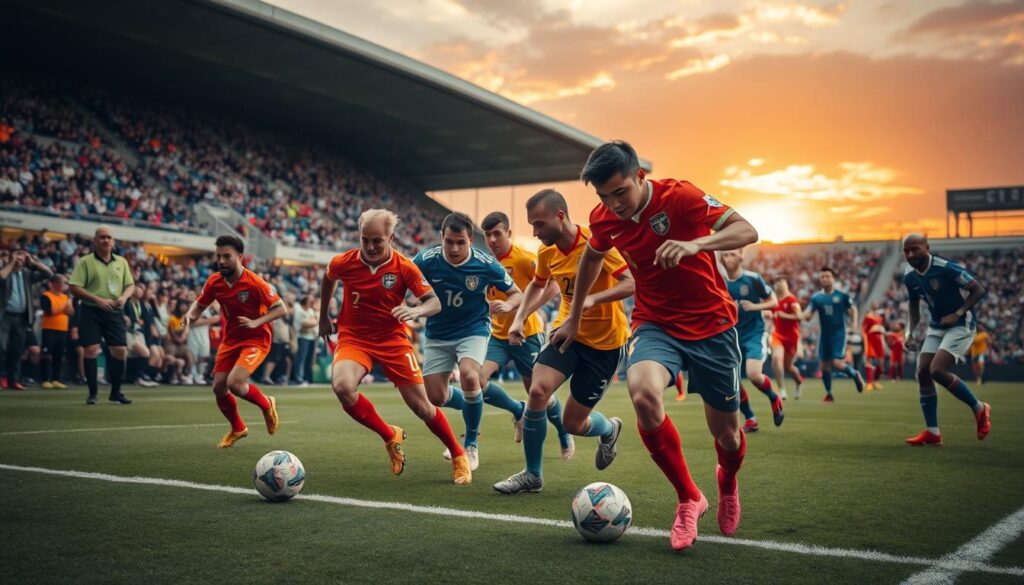
Visible match signals: pressing, sprint counts, and PPDA
Pressing metrics and PPDA move together as defenses tire. A rising PPDA means opponents complete more passes before pressure arrives. That change widens passing lanes and speeds transitions toward goal.
Teams that show falling sprint counts and reduced high-intensity distance during the 60–75 minute window often concede more chances. Live indicators from providers such as Opta or Stats Perform let traders compare those numbers to a team baseline in real time.
- Watch for a drop in sprint counts tied to a defensive line that sinks closer to goal.
- Spot a steady PPDA uptick after substitution waves or a tactical change.
- Combine TV replays with live indicators to confirm fatigue rather than planned rotation.
Substitutions, fresh legs and tactical shifts
Substitutions impact the contest in measurable ways. Fresh legs on the wings or a late creative midfielder can push shot volume and conversion rates upward.
Coaches use rotation strategies to manage load and exploit tired defenders. Sharp bettors track substitution timing patterns to find value before bookmakers shorten odds.
- Note the arrival of super-subs who alter tempo and create overloads.
- Expect a tactical change toward attack when a team chases a result; that stretches fatigued blocks.
- Map substitutions impact against team pressing profiles to predict late chances.
Set-piece vulnerability and concentration lapses
Set-piece goals spike late when marking and reactions slip. Neuromuscular decline reduces explosiveness in aerial duels and second-phase battles.
Concentration lapses and late-match errors often show as misjudged clearances, heavy first touches, or missed marks at corners. Those defensive mistakes create repeat chances after knockdowns and indirect deliveries.
- Monitor set-piece frequency and late defending quality as an in-play edge.
- Use live indicators to flag games where mental fatigue piles on physical decline.
Cross-sport examples reinforcing the pattern
Pattern reinforcement appears across sports. NBA hot streaks from role players can swing offensive rating in minutes, mirroring how a fresh attacker changes soccer dynamics.
NFL late scoring often follows injuries or in-game personnel swaps that force defensive adjustments. Those cross-sport parallels help bettors adapt features like fatigue indicators and substitution timing to soccer models.
- Use NBA hot streak analogies to value sudden offensive bursts after a tactical change.
- Translate NFL late scoring lessons about turnover cascades to expect quick swings after a defensive mistake.
- Blend cross-sport parallels into models to improve late-goal predictions when multiple signals align.
Data-Driven Models and Indicators to Watch for Late-Game Over 3.5 Goals
Predicting late-game overloads demands clear pre-match and live indicators. Models that blend event feeds, tracking outputs and tactical context spot matches where late goals are more likely. Traders, analysts and serious bettors watch a compact set of signals to trigger bets or hedges.
Key metrics to track pre-match and live
Pre-match, cumulative minutes played and recent minutes played for starters flag squads at higher fatigue risk. Fixture congestion and travel history weigh into those totals. Past trends in PPDA and xG conceded show whether a team is already leaking chances.
Live, monitor in-play PPDA shifts, sprint counts delta versus baseline and high-intensity distance per player. Watch opponent xG per minute and sudden rises in shots inside the box after the 70th minute. Substitutions and their timing change risk profiles fast.
Combining physical data with tactical context
Raw workload metrics gain power when read through tactical context. A high pressing style with falling sprint counts becomes vulnerable late. Possession teams may hide fatigue until passing tempo drops and xG conceded climbs.
Formation changes and role-player effects are important. When coaches chase results and move to aggressive shapes, defensive gaps often widen. Counterattacking sides lose potency if their fresh runners show reduced high-intensity distance.
How analysts and sportsbooks incorporate fatigue data
Elite clubs and data vendors merge GPS outputs from Catapult or STATSports with event data from Opta or Second Spectrum to create fatigue integration dashboards. Sportsbook modeling teams ingest these feeds to adjust live lines and market pricing as match dynamics shift.
When metrics show physical decline and tactical loosening, bookmakers may shorten Over 3.5 odds, tighten liability limits or reduce bet caps on extreme markets. Some firms flag repeat exploiters and apply account limits as part of risk management.
Modeling alerts for bettors
Program model thresholds for automated betting alerts. Useful triggers include PPDA rising above team baseline in the second half, high-intensity running or sprint counts falling 20% or more for key players and two or more starters exceeding cumulative minutes thresholds over 7–14 days.
Additional triggers: opponent brings on attacking substitutes while the defender team makes no like-for-like reinforcements, or a sudden uptick in opponent xG per minute after 70′. Combine these in-play triggers with bankroll rules and exposure limits to avoid chasing noise.
- Integrate substitution propensity and formation changes into risk scores.
- Weight role-player effects when starters show elevated minutes played totals.
- Use betting alerts tied to model thresholds for rapid staking or hedging.
Practical Betting Strategies and Risk Management for Heavy Late-Game Action
Start with clear pre-match edges: flag teams with fixture congestion, starters logging high minutes, opponents that keep high PPDA, and sides that concede late. Use those signals to build an in-play betting strategy and size initial exposure. A concise staking plan set before kickoff prevents emotion-driven increases when the market moves.
In-play observation matters. Track sprint counts, substitution timing, visible lapses on set pieces, and any injury-related lineup changes. Late-goal windows often open between the 70th and 90th minute, so rapid reaction is vital. Automate alerts where possible to capture short-lived edges before sportsbooks adjust prices.
On staking, favor smaller, targeted stakes in the higher-variance Over 3.5 markets and consider laddered entries—split your stake into stages across the final 20, 15, and 10 minutes. Use a Kelly-fraction or fixed-percentage approach for bankroll management, calibrated to the volatility of late-game markets. Predefine stop-loss limits and profit targets to avoid chasing reversals when PPDA or tactical setups shift.
Hedging and exit rules should be explicit. If the market shortens but your model’s edge wanes, use cash-out or quick hedging to lock profits or limit losses. Limit exposure on low-liquidity fixtures and monitor market reaction speed—edges are often time-sensitive. A short checklist—cumulative minutes, travel load, baseline PPDA/xG, sprint trends, substitutions, and set-piece frequency—keeps execution disciplined and reduces downside while trying to capture heavy late-game action.

