
Broadcast cues, not goals, triggered a 14% swing in the live market during last night’s Arsenal–Manchester City clash, according to platform logs — a reminder that subtle commentary can move money faster than visible events.
Across recent matches, live betting signals often originate from a commentator’s single sentence. That line, delivered between plays, can prompt immediate betting line shifts as thousands of in-play bettors react to perceived momentum. Platforms tracking timestamps report clear bet surges within seconds of these moments, linking tone and wording to market behavior.
Commentators at networks like Sky Sports and NBC Sports effectively become unofficial market influencers. Experienced traders and sharp bettors monitor voices and cadence more than raw facts, treating rising pitch or long pauses as cues for action. This behavior turns narrative emphasis into a measurable trigger for soccer betting news and in-play betting analysis.
Some operators now tag audio cues and cross-reference them with wager spikes to map the causal chain behind betting line shifts. The result is a new layer of market intelligence where broadcast texture, not just match events, feeds decision-making and reshapes live odds.
Key Takeaways
- Live commentary often drives immediate soccer line move more than visible events.
- Betting platform logs show seconds-long correlations between commentary and bet spikes.
- Experienced bettors follow tone and cadence as live betting signals for quick trades.
- Networks like Sky Sports and NBC Sports can unintentionally influence betting line shifts.
- Platforms are tagging commentary moments to improve in-play betting analysis and market mapping.
How live broadcast cues and commentator tone trigger instant market reactions

Live broadcasts deliver more than play-by-play. A single line—an anticipatory phrase, a drawn-out pause, a rising cadence—can shift perception and generate immediate bets. Those micro-moments feed narrative-driven betting as viewers interpret commentary as implicit information about momentum and probability.
Commentary operates like a stream of signals that platforms and bettors act on within seconds. Traders and algorithmic models pick up the same cues that human bettors do, creating measurable in-play market reaction and bet spikes. Researchers note that embedded odds displays and extended betting chatter in broadcasts make these cues especially effective; see this analysis for context on broadcast patterns promotion and live betting odds.
Commentary as a high-frequency trading signal
Short phrases from commentators can act like high-frequency betting signals. A fast utterance about a team “looking dangerous” often precedes bets on next-goal markets. Platforms log these spikes with timestamps, allowing firms to map commentary to wager timing and size.
Tone, cadence, and perceived momentum
Tonal changes drive perceived momentum. A commentator’s excitement, elongated syllables, or dramatic pause signals increased likelihood of an event in the minds of viewers. That perceived edge pushes retail bettors to place broadcast-driven wagers before odds fully adjust.
Cross-sport parallels and behavioral patterns
Similar patterns appear across sports. Tennis commentary on a player’s movement can swing point markets. Basketball analysts saying a shooter is “heating up” encourages quick bets. Formula 1 notes on tire wear prompt pre-pit-window wagers. These parallels underline how narrative-driven betting spans disciplines.
Platform tracking: matching commentary moments to bet spikes
Operators and researchers pair audio timestamps with betting logs to identify cause and effect. This matching isolates commentator influence betting and shows how broadcast elements convert attention into action. Understanding these links helps regulators and platforms assess exposure from broadcast-driven wagers and refine in-play market reaction monitoring.
soccer injury betting impact
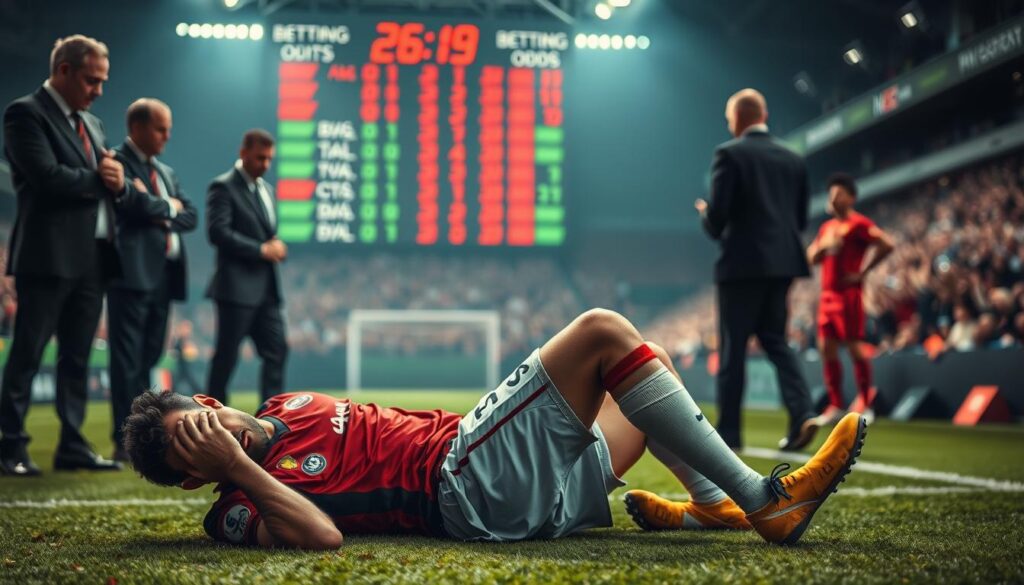
In-play dynamics shift fast when a player shows discomfort. Broadcasters note a limp or an awkward fall and the market reacts. That narrative often sparks immediate flows in live odds injury and creates visible injury-driven line moves within seconds.
How injury signals ripple through live markets
Short cues from commentary or sideline camera shots act like triggers. Bettors see perceived risk and place bets on outcomes such as next-goal or match-winner. Platforms that tag those moments show spikes tied to on-air mentions, producing clear patterns in in-play injury markets.
Latency, data feeds, and the premium on speed
Milliseconds matter for traders and sharp bettors. Exchanges and bookmakers using faster data feeds lock or adjust lines sooner. Delays create arbitrage windows, which explains why betting latency injuries is a hot topic for risk teams and algorithmic traders.
Trader and bookmaker responses to injury information
- Traders widen margins after uncertain injury reports to absorb sudden volume.
- Bookmakers move lines when key players exit; bettors see the live odds injury shift and react.
- Some firms suspend markets briefly to verify medical updates, then reopen with new pricing.
Practical in-play tactics for injury-driven swings
- Watch multiple feeds: compare broadcaster remarks with official club updates before committing stakes.
- Use small, staged bets to test market reaction to an injury-driven line move.
- Follow exchanges like Betfair for early signs of large lay stakes that signal smart-money responses.
Reading the rhythm of commentary and the speed of data feeds helps bettors navigate sudden shifts. Knowing how injury-driven line moves form gives an edge in tight games, while respecting the risk that live odds injury can change again within moments.
Platform mechanics and bettor behavior behind today’s biggest line move
Today’s sharp line move is as much about systems as it is about sentiment. Core technical components—odds engines, streaming data feeds, latency infrastructure, and risk modules—define how quickly a broadcast cue turns into price action. When the odds engine latency drops to a market refresh cadence near 200 ms, information flows almost instantly; when latency spikes toward peak levels, those same cues can create delayed, larger swings in live market liquidity.
Liquidity and algorithmic pricing shape how that information is absorbed. Thin books react violently to modest stakes because low live market liquidity forces algorithms to widen gaps. Bookmakers counter with dynamic max bet sizes, temporary suspensions, and changing margins; these risk controls blunt extreme moves but also signal value to perceptive bettors. That interplay is a central piece of in-play market mechanics.
How bettors behave in-play is tied to both UI and narrative. Mobile users place bets inside seconds after a commentator’s emphatic line or a visible injury because mobile UX prioritizes fast taps and simple flows. Desktop traders may read deeper data but can hesitate under information overload. This split explains why the same moment produces an immediate retail surge and a measured professional response.
Operators use practical tools to manage and study these episodes: redundant low-latency feeds, tagging broadcast moments, and analytics that correlate phrases or camera angles with bet spikes. By mapping platform mechanics betting to bettor behavior in-play and monitoring odds engine latency alongside liquidity, firms can predict which cues will drive the next big move and where opportunity or risk will concentrate.

