
Breaking: the NBA Last Two-Minute report confirmed a controversial sequence that cost the Memphis Grizzlies a key moment and reshaped public reaction after Dillon Brooks was ejected following contact ruled as drawing a charge against LeBron James. The ruling, paired with Devin Booker’s validated foul on LeBron and a late block by LeBron to secure a 116-114 Lakers win, shows how official clarifications can change a game’s narrative and the immediate sportsbook lines.
Across the league, Giannis Antetokounmpo remains sidelined with a calf strain, prompting trade chatter and an uneven market view of Milwaukee’s short-term odds. Teams and bettors interpret availability statements and timelines differently, which drives both futures pricing and in-game odds shift on the same day.
The Orlando Magic’s NBA Cup semifinal with the New York Knicks highlighted another angle: Paolo Banchero’s late scoring and Jalen Suggs leaving with a hip issue illustrate how returning or limited players alter rotation reliability. Those changes ripple through live betting windows, prop markets, and pregame sportsbook lines.
When ejections, late injury reports, and prolonged absences collide, they create immediate movements from in-game win probability to season-long markets. Following official reports, team statements, and injury timelines is essential for bettors who want to react fast and protect bankrolls as odds shift.
Key Takeaways
- Official clarifications like the L2M report can force rapid sportsbook lines movement.
- Star absences, such as Giannis’ calf strain, change futures and short-term odds.
- Late-game injuries to rotation players affect live betting and prop markets.
- Bettors should monitor team availability statements and league reports in real time.
- Shop sportsbook lines to find leverage when markets react differently to the same news.
How late injury reports change lines and why bettors should care
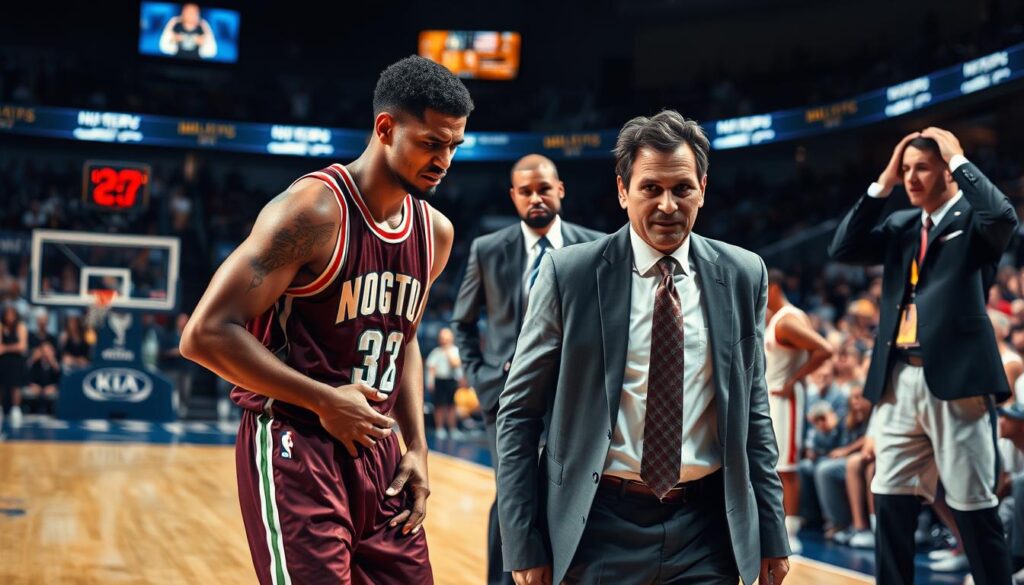
Late injury news can flip a market in minutes. Bettors who track how odds move know that officials’ rulings and team updates replay across sportsbooks, causing rapid point spread adjustments and moneyline swings. The scale of a move depends on injury severity, role of the affected player, and how much exposure a book carries.
The mechanics behind those swings rest on live models and market makers. Books feed injury reports, rotation projections, and usage data into live models that recalculate win probabilities and player outcomes. Market makers react to sharp action and public bets while weighing liability limits; lines can widen, tighten, or get pulled until the picture clears.
Mechanics of odds movement after last-minute injuries
When a last-minute injury appears, sportsbooks first flag the market and often lower max bets. Live models update minutes and tempo projections. If sharp bettors place heavy wagers, market makers adjust lines quickly to protect books from skewed liability.
Books may remove a market or set hard liability limits while they verify team confirmations. Those steps cause staggered movement: sharp-driven shifts come early, public money amplifies trends later. That sequence explains why understanding how odds move is vital for timing wagers.
Examples from recent games that show the impact
The Lakers-Suns late-game sequence with Dillon Brooks’ ejection and follow-up rulings shows how officiating and last-minute injuries change perceptions of fairness and final scoring. Immediate clarifications can flip totals and spreads once free throws or ejections are confirmed.
Giannis Antetokounmpo’s calf strain and the subsequent team messaging illustrate long-term effects. Franchise statements about availability prompted market makers to reprice futures and adjust liability limits for wins and MVP odds as sportsbooks revised season-long exposure.
Paolo Banchero’s managed return and Jalen Suggs’ hip issue highlight rotation shifts. A starter limited or out boosts bench minutes and forces live models to alter points-per-minute estimates, shifting player props, moneylines, and point spread adjustments across books.
Risk management for sharp and recreational bettors
Sharp bettors manage exposure by scaling positions, using correlated hedges, and exploiting alt lines or in-game markets when injury clarity is low. That approach reduces downside from sudden reversals while letting pros capitalize on early inefficiencies.
Recreational bettors should wait for official confirmations and shop multiple books to find the best pricing. Keeping stake caps for volatile games helps avoid outsized losses when market makers change limits or when liability pressures force abrupt line moves.
For deeper reading on injuries and market responses see how injuries affect NBA betting odds.
NBA betting news: late scratches, injury updates, and real-world examples
Late scratches and day-of injury updates can flip lines in minutes. Bettors who follow game-day reports and trusted insiders gain an edge when markets react. Short paragraphs below break down real examples and the timeline effects that matter for both live and futures markets.
High-profile injury headlines that shifted markets
Giannis Antetokounmpo’s calf strain pushed Milwaukee futures and single-game totals in opposite directions. When Giannis moved from day-to-day to indefinite, books adjusted season win totals and player props. Orlando’s Paolo Banchero status updates produced different swings; his return timeline nudged prop lines while extended absence changed team-based forecasts.
In-game incidents and official clarifications
The NBA Last Two-Minute Report has direct betting impact. The L2M on the LeBron–Dillon Brooks incident altered how final scoring was understood. Bettors saw how the Dillon Brooks ejection, the counted three, and the technical affected closing numbers. Official clarifications from the league or a league report often calm markets or force corrections.
How injury timeline updates (day-of vs. in-season) differently impact odds
Day-of scratches trigger the sharpest, fastest moves. A last-minute scratch forces live markets to reprice minutes and matchups immediately. In-season injuries reshape broader models; an extended absence like Giannis’ calf strain changes lines across futures, trades, and season-long props.
- Day-of: immediate line shifts and live-betting volatility.
- In-season: model recalibration for minutes, rotations, and futures.
- Official reports: items such as the NBA Last Two-Minute Report can validate market reactions.
Track reliable confirmations from teams and respected reporters. Late scratches, timely injury updates, and clarity on incidents such as the Dillon Brooks ejection or Paolo Banchero status help separate noise from actionable information.
Betting angles and market responses to late-game developments
Late scratches and in-game incidents create immediate trading windows. A sudden ejection or a confirmed injury can swing win probability and unlock live betting chances for traders who react fast. Books lag on in-play prop markets, giving room to capture mispriced opportunities before adjustments arrive.
Live betting opportunities created by sudden lineup changes
When a star exits, real-time markets reprice outcomes. Bettors can use live betting to hedge pregame stakes or to add exposure on teams that gain unexpected roles. The Lakers example shows how an ejection altered win odds within seconds and offered hedging routes for pregame positions.
Track sharp money indicators and rotation reports during the first timeout. Rapid line movement or sudden market closures often flag professional action. Those signals help decide whether to act in-play or hold for clearer minutes projections.
Prop bets and player lines affected by last-minute availability
Absent starters push minutes projections up for backups. Giannis’ calf issue highlighted how bench value rises when a star sits. Props tied to points, rebounds, assists, and minutes often lag, so swift readers can target undervalued bench players or inflated starter lines.
Use prop bet adjustments to pinpoint where sportsbooks are slow. In-play multipliers and same-game props frequently trail live rotations. Quick reaction to lineup hooks yields better odds before books correct those props.
Shop lines and leverage public vs. sharp money
Different books move at different speeds. Line shopping across DraftKings, FanDuel, BetMGM and Caesars shows which shops favor public balance and which mirror professional flows. Seek slower markets for live prop plays and compare limits to measure trade risk.
Observe sharp money indicators like rapid odds swings, limit cuts, and closed markets. Public-heavy books sometimes skew prices to balance liability, creating contrarian chances for those who follow pro patterns. A disciplined line shopping routine increases edge and preserves portfolio EV when reacting to late news.
For a deeper primer on timing early versus late action and how closing line value affects strategy, read this guide on early and late betting strategy: early vs. late betting strategy.
Practical checklist for bettors reacting to sudden injury-driven odds shifts
Start by monitoring injury reports from official channels: team press releases, NBA statements, and the Last Two-Minute Report. Verify day-of confirmations and in-game medical exits before placing bets. Insider summaries like those from Brett Siegel can add color, but confirm with primary sources to avoid acting on rumor.
Translate availability into lineup and rotation impact. Identify who will inherit minutes and usage — for example, if Paolo Banchero is limited, pinpoint likely scoring replacements and adjust player props. Evaluate matchup consequences: a star scratch can change pace, rebounding battles, and defensive matchups, so compare similar situations such as how New York absorbs pressure or how Jalen Brunson’s scoring spikes affect lines.
Decide an action using a clear betting checklist: hedge existing exposure, take a new line, or stand down until clarity. For live bets, act fast when lines lag but use conservative stake limits. For futures, reassess season exposure after confirmed long-term injuries like a calf strain. Maintain multiple sportsbook accounts to shop lines and capture value when injury-driven odds shifts open windows.
Manage risk and document choices. Set pre-defined stake limits for volatile late-injury markets, log outcomes to refine strategy, and watch sharp indicators such as rapid movement or closed limits. Use injury-tracking services, reliable beat reporters, and alerts for L2M or team updates so your hedge strategy and sizing respond within the narrow window that matters.

