
Trading volume ran nearly 40% below the 20-day average as U.S. stocks opened largely unchanged, a clear sign that holiday trading volume left most desks on the sidelines while selective late-session trading hinted at concentrated bets.
Megacap tech held the line early, with the Nasdaq 100 and Bloomberg’s Magnificent Seven trading sideways at 9:38 a.m. New York time, even as energy and communication services showed modest gains and consumer discretionary, materials, and financials lagged. Isolated corporate headlines — Meta’s acquisition of Manus, Tesla’s softer delivery outlook, Boeing’s possible $8.58 billion contract — produced sharp single-stock moves that matter more when broad participation is thin.
In an environment of light holiday trading volume, late market movement can read like insider confidence betting: a handful of traders shifting positions in the final hour can reveal more about market sentiment than the muted action during the day. Investors are watching late-session trading for clues as 2026 begins after three strong years and as Fed minutes and housing reports add fresh context.
Key Takeaways
- Light holiday trading volume amplifies the impact of late-session trading on market direction.
- Concentrated moves in individual names may signal insider confidence betting rather than broad sentiment shifts.
- Corporate news and M&A activity are driving many of the late-market price changes.
- Risk factors — Fed minutes, tariffs, and geopolitical tensions — keep selective positioning essential.
- Watch sector splits and volume spikes in the final hour for actionable signals.
What late-session shifts reveal about market sentiment
Holiday trading this year has been quiet, with trading turnover roughly 40% below the 20-day average on Monday. Thin participation makes late-session activity more meaningful. When buyers or sellers concentrate at the close, those moves can reflect conviction from institutional desks rather than broad retail flows.
Low volume sessions magnify selective flows. The Nasdaq 100 showed early sideways action while a handful of large-cap names led into the close. That pattern often precedes a shift in market breadth as traders either consolidate winners or rotate into new leaders.
Overview of subdued holiday trading and volume trends
Markets have seen muted price action amid holiday calendars and reduced liquidity. Low volume sessions can produce outsized effects from limited orders, so late-session bids or offers deserve attention. Historical patterns suggest that after strong multi-year gains, selective selling and dispersion become more common.
Thin afternoons make volatility breakouts in single stocks easier to spot. Concentrated moves near the close may signal early position-taking ahead of earnings, guidance or policy events. Traders watching trading turnover often treat late-session spikes as higher-information events.
Technical signs that support a constructive market tone
Technical indicators continue to point to a constructive market tone in many cases. Improving market breadth and supportive moving-average relationships indicate resilience. Lower realized volatility recently has helped sustain calm momentum across broad averages.
Trend signals remain intact for select indexes, even as rallies become more selective. Volatility breakouts back into ranges or fade below thresholds can change risk appetites quickly, prompting rebalancing into favored sectors.
Sector snapshots showing pockets of late movement
Sector rotation has become more evident during late-session windows. Energy and communications outperformed while consumer discretionary, materials and financials lagged. That divergence shows how concentrated flows can exist under a flat headline market.
- AI supply chain names and semiconductor suppliers saw late bids tied to product and capacity narratives.
- Precious metals rebound showed up in mining stocks as Newmont and peers caught late buying.
- Defense contracting rallied on Boeing’s contract news, lifting related suppliers near the close.
- Healthcare endorsements created bursts of activity, with Molina Healthcare drawing notable interest.
Watching late-session activity alongside market breadth and trading turnover can help distinguish fleeting moves from early leadership shifts. Where technical indicators and concentrated sector flows align, the late-day clamps often reveal where conviction lies.
insider confidence betting: interpreting late market bets and news flows
Markets often reveal concentrated bets near the close when fresh information lands. Traders watch corporate announcements and earnings windows for surprises that trigger swift repositioning. Late trading that lines up with major acquisitions or revised delivery guidance can look like conviction from well-informed players.
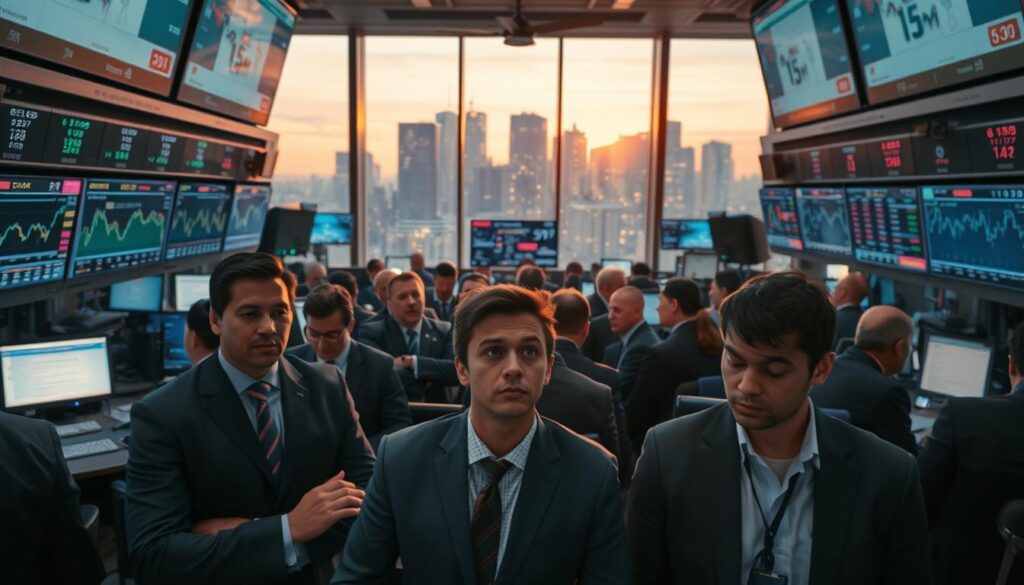
Big M&A headlines or analyst updates that arrive late compress decision time. A surprise acquisition or a tweak to delivery guidance may spark targeted purchases and block trades. Those concentrated moves can stand out on days of unusual volume, prompting other traders to treat the flow as a meaningful signal.
Notable investor actions and their market impact
High-profile bullishness from figures like Michael Burry or visible hedge-fund moves often coincide with clustered late buys. Investor endorsements and activist influence can revive interest in a name and lead to rapid short-covering. When such endorsements appear near market close, the effect is amplified by the timing.
Data cues traders use to spot insider-like signals
- Options flow showing heavy call buying ahead of earnings windows.
- Block trades and unusual volume concentrated in a few tickers.
- Spikes in open interest or concentrated late buys not matched by broad market moves.
Cross-checks that lend credibility to late-session moves
Traders pair news-driven trades with macro context and technical confirmation. If Fed minutes or a tariff announcement aligns with concentrated options flow, conviction rises. Breakouts above moving averages or sustained accumulation after a block trade reduce the chance the move is noise.
How sector and structural exposure shapes interpretation
Announcements tied to AI infrastructure, defense contracts, or supply-chain wins often draw selective end-of-day bids. A company reporting stronger-than-expected capacity plans or a major contract award can attract targeted buying that looks like informed positioning when it appears late.
Practical markers that separate luck from informed bets
- Timing: clustered late buys that follow news or high-profile investor signals.
- Concentration: unusual volume and large block trades in a narrow set of names.
- Confirmation: options flow, short-covering, and follow-through in subsequent sessions.
Macro, geopolitics and structural themes behind late-market positioning
Markets pivot at the end of the day when big-picture forces line up. Traders parse the Federal Reserve minutes for clarity on interest-rate guidance and for signals that Fed policy will stay steady or shift. Those excerpts act as market catalysts for bond flows and equity rotations, shaping how portfolio managers set exposure before overnight headlines.

Investors watch rate cuts expectations alongside inflation reads. Softening data can nudge swaps markets and tilt positioning toward riskier, growth-linked names. Uncertainty about central-bank independence, leadership changes at the Fed and legal questions over policy powers can amplify moves tied to interest-rate guidance.
Monetary policy and Fed minutes as catalysts
Fed communications often trigger concentrated late trades as funds and prop desks adjust duration and carry. Clear language on future easing feeds into rate cuts expectations and re-prices yield curves. That repricing alters equity sector leadership, with financials, utilities and technology reacting to shifting odds of easier policy.
AI, energy and supply-chain shifts shaping selective leadership
Corporate AI investment has lifted data centers and related infrastructure stocks. Investors favored pick-and-shovel stocks that supply chips, racks and cooling systems. Constraints on semiconductor capacity and rising energy costs put a premium on names that scale without straining grids or supply chains.
Power exposure moved into focus as firms plan AI buildouts. Elevated energy costs in parts of the U.S. reshape project economics for cloud providers and data centers. Supply-chain reshoring and tariff-driven shifts benefit domestic suppliers and specialized vendors that serve cloud and AI needs.
Geopolitical risks and trade policy that influence market selectivity
Trade policy and tariffs have redirected sourcing, creating winners and losers among suppliers. New tariff regimes and bilateral frictions make investors pickier about global names with complex footprints. Currency swings tied to central-bank divergence further influence cross-border profit forecasts.
Geopolitical risk lifts defense spending and domestic-capex beneficiaries. Large defense contracts can produce concentrated upside for prime contractors and parts suppliers. That dynamic pushes late-session bets into companies positioned to gain from higher defense budgets or localized production.
- Market catalysts: Fed commentary, tariff announcements, and major contract awards.
- Structural themes: AI investment, semiconductor capacity limits, and energy cost pressures.
- Policy drivers: tariffs, trade policy shifts, and supply-chain reshoring incentives.
Practical takeaways for investors watching late-market signals
Late-day moves matter more in low-volume, holiday sessions. Concentrated end-of-day buying or selling, block trades or unusual options activity can signal informed positioning. Always cross-check those trading signals against corporate headlines such as M&A, delivery guidance, or large government contracts before adjusting exposure.
Enter 2026 with a selective leadership mindset: expect gains but wider dispersion and sharper swings. Focus on earnings delivery, sector selection and careful position sizing. Track tech and AI leaders while widening the watchlist to include financials, industrials and consumer stocks that show durable earnings or policy-backed demand.
Validate late-session signals with supporting volume and options flow and factor in macro and structural checks — Fed minutes, tariff shifts and energy or semiconductor constraints. Tilt exposure toward firms benefiting from AI infrastructure and onshoring, and allocate some capital to defense and energy where contract visibility exists. For an example of disciplined insider activity that can contextualize liquidity management, see this brief on Cisco insider sales review.
Keep risk management central. Use stop levels, caps on position sizing, and scenario planning for sudden policy or geopolitical moves. When late-trading signals line up with fundamental catalysts and clear volume support, they can guide tactical entries — but only with disciplined position sizing and ongoing risk controls.

