
Three game-changing injuries in Week 15 have reshaped playoff implications across the NFL: Patrick Mahomes suffered a torn ACL that ended Kansas City’s season, Micah Parsons sustained a torn ACL that removes Green Bay’s defensive centerpiece, and Davante Adams exited with a troubling hamstring issue. This late-season injury update shifts the balance of power and forces contenders to rethink short-term plans and offseason strategy.
Mahomes’ injury magnifies roster weaknesses the Chiefs had masked for years and immediately eliminates a perennial AFC obstacle. The full recovery timeline remains uncertain until surgery and a complete evaluation, and projecting 2026 availability is premature. Meanwhile, Parsons’ torn ACL in Denver strips Green Bay of its premier pass-rusher and will alter defensive scheming and training camp priorities.
Davante Adams’ hamstring is listed week-to-week but tight hamstring issues in December often linger, increasing pressure on Puka Nacua and the Rams’ running backs. With Kansas City out of contention, Buffalo’s path changes; Josh Allen’s strong performance in New England and the Bills’ recent consistency now carry added weight in the conference race.
Week 15 has underlined how late-season injuries, depth limits after the trade deadline, and cumulative wear can reshape playoff scenarios overnight. For a deeper rundown of how these events unfolded and what they mean for the league, read the full Week 15 notebook at Sports Journey.
Key Takeaways
- Patrick Mahomes injury: torn ACL ends Chiefs’ season and creates immediate playoff ramifications.
- Micah Parsons torn ACL removes Green Bay’s primary disruptive force and forces defensive adjustments.
- Davante Adams hamstring is week-to-week but raises availability concerns and target redistribution for the Rams.
- Late-season injuries magnify roster depth issues and affect both short-term game plans and offseason moves.
- Buffalo’s strong showing narrows paths in the AFC now that Kansas City is eliminated.
Week 15 shockwaves and key nfl injury update
Week 15 produced a string of injuries that reshaped playoff math and roster planning across the league. Early reports and team statements set the tone for discussion about recovery windows, lineup adjustments, and the practical limits of depth as the season heads into its final stretch.
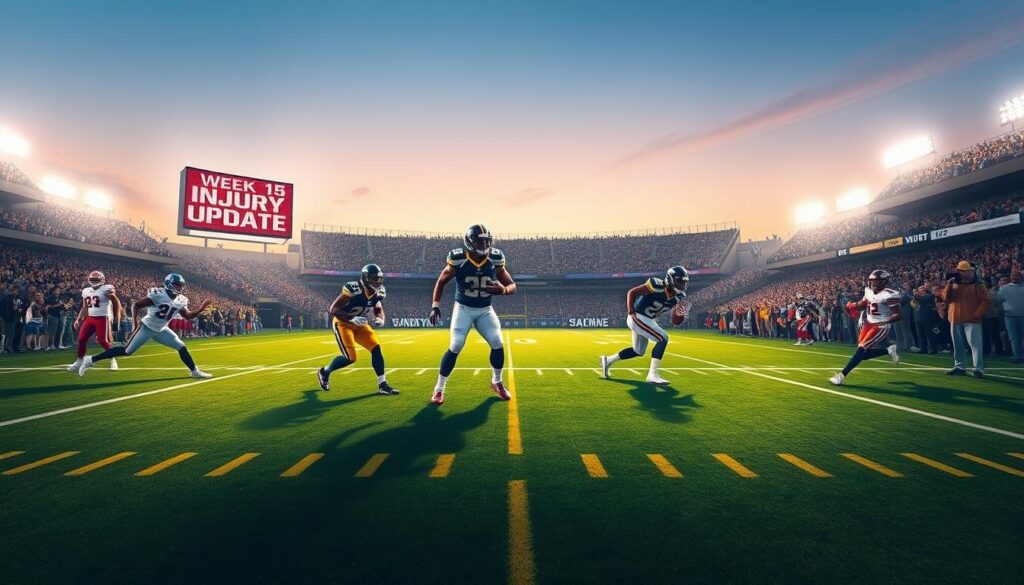
Overview of Week 15 injury timeline
Patrick Mahomes suffered a torn ACL late in Kansas City’s Dec. 14 matchup, an injury that shifted immediate focus from the game to offseason evaluation. Micah Parsons tore his ACL in Green Bay’s road loss to Denver, removing a defensive cornerstone from that roster. Davante Adams exited with a non-contact hamstring problem for the Rams and was listed week-to-week, prompting a quick redistribution of targets to Puka Nacua and running backs Kyren Williams and Blake Corum.
Other notable issues included Christian Watson’s chest injury, which required hospital evaluation before he was released, and Zach Tom leaving with an undisclosed issue that thinned the Packers’ offensive line. Bears receiver Luther Burden III avoided major ankle damage and is day-to-day. Saints back Devin Neal picked up a hamstring concern that may affect workloads.
Medical context and recovery expectations
Both Mahomes and Parsons face ACL tears that require surgical confirmation and detailed post-op assessments before any firm timetable can be set. The ACL recovery timeline varies by case depending on associated ligament or meniscal damage and by position-specific demands. Predicting availability for 2026 remains premature until surgeons provide intraoperative findings.
Soft-tissue concerns like Davante Adams’ hamstring injury are being managed cautiously. In mid-December, a hamstring injury week-to-week label often reflects guarded optimism rather than guaranteed, rapid returns. For receivers and running backs, hamstring integrity is central to burst and route-running. For quarterbacks and pass-rushers, knee stability and protection become primary return-to-play priorities.
League-wide trends and late-season attrition
Week 15 underscored a recurring pattern of late-season attrition as fatigue, harder field conditions, and cumulative wear increase injury risk. Clusters of knee injuries raise questions about conditioning, surfaces, and scheduling that teams and the league must weigh during the offseason.
- Thin WR rooms and depleted offensive lines magnify the impact of lost starters
- Trade deadline limits and practice-squad depth reduce meaningful short-term replacements
- Teams often resort to schematic compromises rather than matching lost production
The “next man up” ethos meets real constraints when generational talents are sidelined. Roster managers will track the ACL recovery timeline and hamstring injury week-to-week reports closely as they weigh playoff viability and offseason roster moves amid late-season attrition.
Kansas City and AFC ripple effects
The Chiefs injury update sent immediate shock through the conference. Patrick Mahomes torn ACL removed a perennial playoff fixture and forced teams to reframe the AFC playoff picture. Coaches, front offices, and players all face new tasks as seeding and game plans shift with Kansas City out of the mix.
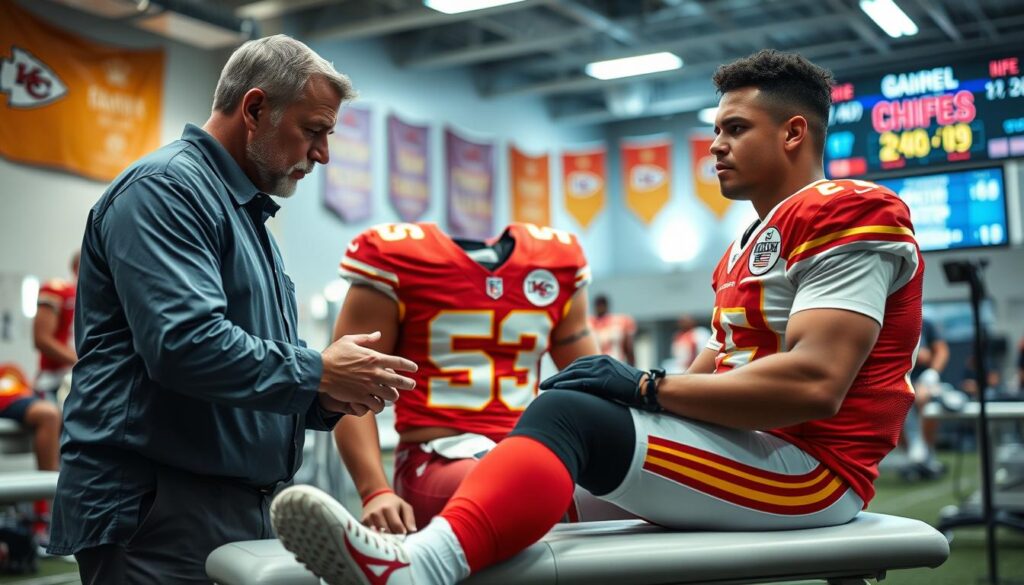
Immediate playoff impact for the Chiefs and AFC bracket
- The loss of Mahomes ends his streak of playoff appearances and clears a path for Buffalo, Miami, and other contenders to pursue higher seeds without preparing for Kansas City.
- Teams that expected to meet the Chiefs must now recalculate tiebreakers and scouting priorities for opponents like the Bills and the Chargers.
- Game-day preparations will change, especially for squads that had planned to rest players or peak against Kansas City late in the season.
Roster and offseason strategy questions
- Kansas City’s thin wide receiver depth and offensive-line concerns gain urgency under the Chiefs offseason strategy debate.
- Cap management will drive tough calls on free agency and trades as the front office weighs immediate fixes against long-term balance while monitoring Mahomes’ recovery timeline.
- Choices may include adding pass catchers, bolstering protection, or prioritizing defensive upgrades to prepare for Mahomes’ potential return in 2026.
Psychological and preparation shifts across the conference
- Opponents gain a psychological lift without a dominant figure to target, which can change pacing and focus during the final weeks.
- Coaching staffs must emphasize depth and reliability since the nfl injury update shows that structural limits, not just star power, determine playoff survival.
- The AFC bracket looks less predictable, rewarding teams that maintain health, depth, and adaptive game plans over the rest of the season.
Green Bay, Los Angeles and NFC landscape changes
The NFC picture has shifted quickly after a string of late injuries. Teams once viewed as locks now face tougher matchups when depth is tested. This passage explores how key absences change game plans and playoff math.
Impact of Micah Parsons’ injury on Green Bay’s defensive identity
Micah Parsons torn ACL removes a primary pass-rush engine that altered opponents’ timing all season. The loss forces Green Bay to replace consistent pressure without making dramatic schematic compromises.
Packers injury update shows that without Parsons the secondary will see more tight windows and longer coverage snaps. Defensive coordinators must call more exotic blitzes or lean on rotational edge rushers to mask the drop in pass-rush efficiency.
Compounding matters, other setbacks such as Christian Watson’s chest evaluation and Zach Tom exiting with an undisclosed issue thin both skill and protection. Those factors raise questions about sustaining a legitimate postseason push.
Rams’ adjustments after Davante Adams’ hamstring issue
Davante Adams hamstring concerns are being treated week-to-week. Even a short absence changes target distribution in Los Angeles and forces snap-count shifts for other playmakers.
Coaches are likely to lean more on Puka Nacua and the running game to offset any drop in contested catches and red-zone presence. Play designs will emphasize horizontal and short-developing concepts when Adams is limited.
Short-term game plans must account for the possibility of Adams missing snaps on short rest, which increases the pressure on backups and pushes the Rams to create space for secondary options.
Broader NFC competitiveness and margin for error
The current nfl injury update reveals a conference where depth matters as much as star power. NFC injury impact shows teams with shallow rosters face steeper declines when replacing high-impact players.
Late-season attrition means margins shrink against elite defenses. The playoff picture now favors the healthiest, most balanced rosters rather than those that rely on a few dynamic talents.
- Depth at edge and offensive line becomes a decisive factor.
- Coaches will adjust tempo and play selection to protect thin units.
- Teams with reliable backups can exploit others’ weakened rotations.
Team case studies and path forward for contenders
Late-season injuries have rewritten several postseason paths and forced teams into quick adaptation. The Bills comeback in New England showed Buffalo can rely on Josh Allen under pressure, a clear plus in discussions about postseason paths. That performance, paired with Kansas City’s absence, gives Buffalo a more defined route to higher seeding and changes how opponents plan for playoff matchups.
Coaches are dialing up schematic pivots to cover lost production. Expect more run concepts, quick passing, and rotation-based pass rushes to hide weaknesses while backups take expanded roles. These tactical shifts are common across team case studies NFL as clubs try to preserve wins while working around limited practice squads and thin depth charts.
Front offices face trade-offs between short-term pushes and careful roster rehab timelines. ACL recoveries and other major surgeries mean realistic return windows that affect cap planning and offseason moves. Teams will prioritize offensive line help, pass-catchers, and front-seven depth in free agency and the draft as part of longer-term repair.
The broader lesson from this nfl injury update cycle is simple: depth and medical planning matter as much as star power. Immediate beneficiaries like Buffalo gain clearer matchups after the Chiefs’ exit, while Green Bay and the Rams must reconfigure identity without key players. Effective management of Josh Allen injury update, roster rehab timelines, and tactical pivots will determine who ascends in January.

