
Officials held play with 22 seconds on the clock in a recent college game, forcing the offense to burn a timeout — a clear sign of how late substitution impact now alters outcomes. Fans on the Bobcat Football board and other forums report similar scenes where substitution timing effectively pauses action and reshapes end-of-game strategy.
Late substitution affects play clock management, game tempo, and competitive fairness across college and pro football. Observers note officials sometimes delay the snap to allow defensive changes after an offensive substitution, creating confusion over what counts as a reasonable pause and when delay of game should be enforced.
These moments matter. Teams and coaches adjust clock strategy when substitution timing is uncertain, and fans accuse defenses of “lollygagging” or using substitutions as de facto timeouts. The disputes highlight gaps in rule interpretation and fuel calls for clearer limits on how long substitutions can delay play.
Key Takeaways
- Late substitution impact often forces offenses to use timeouts or risk a delay of game penalty.
- Inconsistent substitution timing by officials complicates play clock management and game tempo.
- Fans and coaches report officials sometimes hold play to allow defensive matching, raising fairness concerns.
- Clearer rules or explicit time limits on substitution pauses could reduce controversy.
- Understanding substitution timing is essential for analyzing late-game coaching and officiating decisions.
How Late Substitution Changes Game Tempo and Clock Management
Late substitution can bend the pace of a game in ways fans and coaches notice right away. Officials face split-second choices about when to let play continue. Those choices shape how teams use the play clock interaction and follow sideline substitution rules during critical moments.
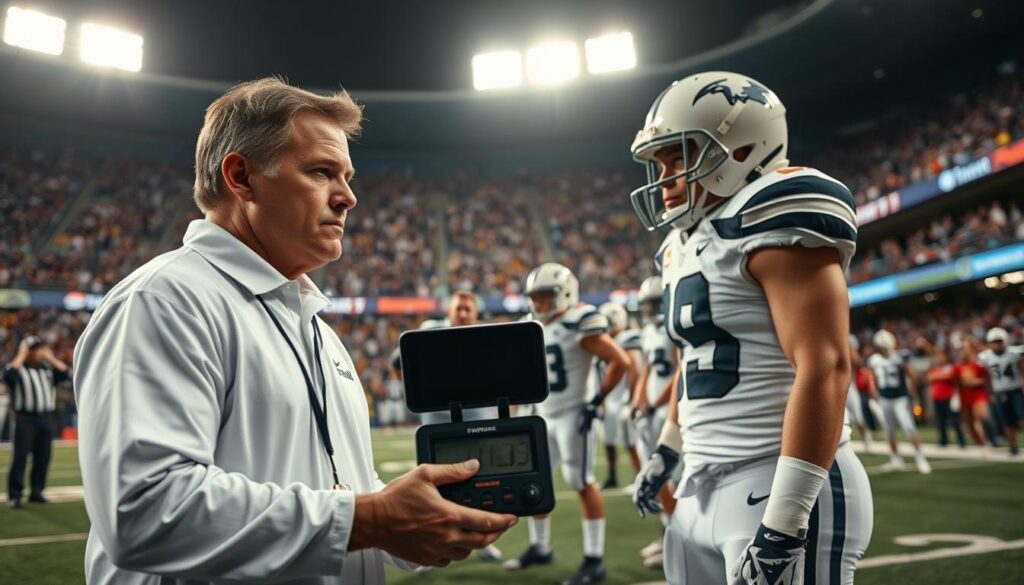
Referee enforcement and play clock interaction
Referee enforcement often centers on fairness between teams. Officials may hold the ball to let a defense match a late replacement. That hold can leave the play clock reading 20–25 seconds while the ball is not snapped.
Fans report referees waiting until defenders look set or until five seconds remain. That creates ambiguity for offenses that expect to snap when the visible clock allows it.
Impact on offensive tempo and clock strategy
When officials pause play, offensive tempo can stall. Fast-paced systems lose their edge if the snap is delayed after a substitution. Teams that plan clock strategy to save or burn seconds may need to use timeouts to avoid delay-of-game penalties.
These interruptions can force coaches to alter play calls late in a drive. Planned hurry-up sequences lose rhythm when substitutions trigger extra waiting.
Situations that mimic injury or purposeful delay
Slow exits and players taking extra time to leave the field create gray areas. Officials must judge whether a pause stems from a real injury or a tactic to buy seconds, often referred to by fans as injury-mimicking delays.
Defenses can exploit that uncertainty by slowing their own pace, while offenses risk penalties if they try to snap early. Clear application of sideline substitution rules would reduce gamesmanship and tighten clock control.
late substitution impact on competitive fairness and penalties
Late substitutions reshape how officials and teams manage the final seconds of a drive. Referees must balance fast-paced offenses with a defense’s right to respond. That balance touches competitive fairness, since inconsistent calls can swing a game’s momentum.
The rule exists to limit mismatch creation that comes when one side swaps personnel faster than the other can react. When officials vary in enforcement, an offense can gain an edge by creating advantageous matchups. Fans and coaches note how uneven application of the rule produces different outcomes across stadiums.
Mismatch creation and defensive adjustment time
Defenses need clear, predictable time to adjust personnel and assignments. A sudden offensive substitution can force hurried coverage changes or mismatches at key positions. League consistency helps teams plan substitutions and prevents exploitation of hurry-up tactics.
Officials signal readiness in several ways, with the umpire often standing over the ball until the referee gives permission to snap. This process is meant to stop quick-snaps that rob defenses of adjustment time. Teams that ignore that protocol risk drawing penalties or strategic losses.
Delay of game, false start, and substitution-related rulings
When a referee holds the ball while the defense substitutes, offenses can burn timeouts to avoid substitution penalties. That scenario leads to confusion about whether the pause is for injury, substitution, or another stoppage. Clear signals lower the chance of unnecessary false start or delay of game rulings.
Accurate application of delay of game rulings and false start calls depends on a shared understanding of when the play clock resumes. Officials, coaches, and players must read the sequence the same way for substitution penalties to be fair and predictable.
Calls for rule clarification and time limits
Many observers urge explicit time limits for substitutions and a written standard that separates injury stops from strategic delays. Proposals include a fixed window after the ball is spotted and unambiguous referee signals that indicate when the offense may snap.
A clearer rule that addresses substitution penalties and timing would standardize enforcement across venues and protect end-of-game integrity. For historical context and an example of enforcement, see this account of quick-substitution control by officials at Football Zebras.
- Establish a short, uniform substitution window after spotting the ball.
- Require explicit referee signals before the offense can snap.
- Limit gamesmanship by tying substitution penalties to clear timing rules.
Team dynamics and coaching strategy around late substitution tactics
Coaches craft a coaching strategy that treats substitution as a tactical layer. Small timing choices can disrupt an opponent’s rhythm, protect key players, and force timeouts. Teams that plan substitution tactics gain margins late in games by creating favorable matchups or by slowing an opponent that prefers a fast pace.

Coaches train lineups to vary how quickly they change personnel. A veteran head coach will script moments to delay or speed substitutions. Offensive staffs that rely on tempo must include contingency plans for official holds and have timeouts ready to preserve the clock.
Players must accept clear player responsibilities on when and how to enter or leave the field. Quick, confident movement reduces the risk of a penalty. Sideline communication must be crisp so officials, teammates, and opponents see that changes are legitimate and timely.
Teams use simple signals for sideline communication. Quarterbacks, captains, and position coaches call plays while a coordinator watches the substitution pattern. Visible cues help officials spot legal swaps and cut down on disputed stoppages.
Practice preparation should include timed substitution drills and no-huddle scenarios. Rehearsing with the clock running helps players learn to exit fast and to be ready when called. Coaches who simulate official holds teach field leaders when to let the clock run and when to stop the game.
- Run timed drills that mirror late-game stress.
- Assign backup players clear roles so replacements arrive promptly.
- Practice visible substitution signals for officials and opponents.
Regular practice preparation reduces confusion and improves execution. When coaching strategy, substitution tactics, sideline communication, and player responsibilities align, teams avoid costly delays and keep control of tempo during critical moments.
Broader implications for league policy, fan experience, and sports reporting
The recurring confusion around late substitution calls pushes league policy makers to act. NCAA, NFL, and state high school associations face calls for clearer officiating standards and explicit substitution time limits. A fixed window after a play is spotted or stricter injury-determination protocols could reduce gamesmanship while keeping player safety central to any rule change.
Fans notice when a game’s tempo shifts unpredictably because of held substitutions. That friction hurts the fan experience and raises doubts about officiating competence. Clear communication from leagues during broadcasts and in stadiums, plus consistent substitution enforcement, will restore trust and make late-game strategy easier to follow.
Sports reporting must do more than summarize final scores. Reporters and analysts should document substitution timing incidents, explain the rule context, and track how enforcement varies by team and crew. This coverage creates public pressure for reform and helps leagues weigh solutions that balance fairness, safety, and entertainment.
Although these issues are rooted in football, the lessons transfer to other timed team sports where substitutions, injuries, and clock management intersect. Thoughtful rule change and shared best practices can improve officiating standards and enhance the overall fan experience across multiple levels of play.

