
Sports audiences will watch more live events this season than at any point since 2019, according to industry tracking, and that surge is opening measurable windows for rising sports stars across broadcast and digital platforms.
As the sports media pipeline reshapes, traditional routes to prominence are changing. ESPN rising talent still emerges from familiar places—college networks, regional reporting and former-player transitions—but the pathways now include Snapchat shows, club activations and short-form streaming that give breakout broadcasters faster, lower-cost rep time.
Longtime incubators like ESPN have trimmed some flagship hours, yet networks are offsetting cuts with niche feeds such as the SEC Network and ACC Network, plus targeted digital series. That shift helps sports talent development by creating more frequent, if smaller, stages for voices like Malika Andrews, Chiney Ogwumike and Andrew Hawkins to grow national followings.
Outside broadcasters, major events and host-city brand work—seen in early FIFA World Cup 2026 planning in Toronto—create nontraditional platforms where local reporters and brand storytellers can scale their profiles globally. For many emerging personalities, those activations serve as fertile ground to convert short-term exposure into lasting career momentum.
Key Takeaways
- The packed event calendar produces more on-air and digital slots for rising sports stars.
- ESPN rising talent still follows mixed pathways: regional beats, college nets, player transitions and social-first work.
- Smaller, targeted shows on networks like the SEC Network act as practical training grounds for breakout broadcasters.
- City activations and major-event programming create nontraditional exposure that aids sports talent development.
- To capitalize, talent must combine traditional reporting chops with social and streaming skills.
How a Crowded Schedule Creates Windows for New Talent
Growing calendars across leagues, tournaments, and international play raise demand for on-air and event teams. That demand gives emerging hosts, sideline reporters, and analysts repeatable chances to work live. Live sports exposure becomes a practical training ground where newcomers learn pacing, cueing, and crowd rhythm under pressure.
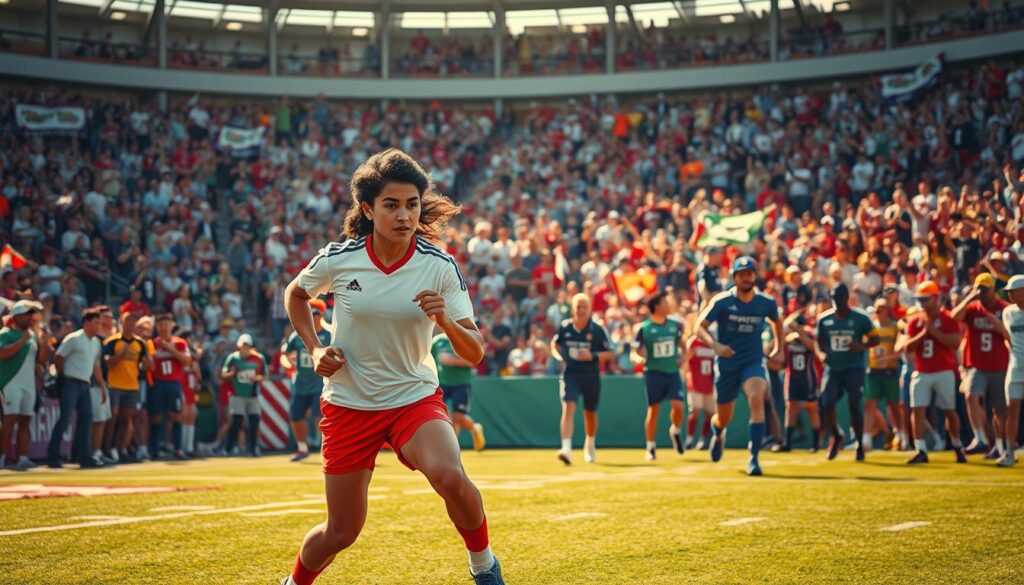
Networks and rights holders must staff multiple booths, secondary studio shifts, and in-venue roles. Those slots serve as launching pads for event-driven talent who can move from fill-in duties to regular assignments. Short-term hires and freelance gigs offer fast feedback loops for presenters who thrive in live settings.
More live events means more exposure
Alternate broadcast booths, pregame segments, and public viewing sites create visible, repeatable reps. Local content creators and regional reporters get screen time when national schedules are stacked. Streaming and social clips of these moments help candidates build a portfolio that showcases real event work.
Brand and city activations open nontraditional pathways
Mega-event activations in host cities provide platforms outside traditional TV. Programs tied to the FIFA World Cup 2026 planning in Toronto show how community-focused Fan Fest activations and supporter programs surface bilingual hosts and experiential storytellers. Brands hire on-site hosts, hospitality staff, and production suppliers, creating on-stage and backstage roles for unconventional talent.
Streaming, social and niche shows multiply rep opportunities
Digital platforms and conference networks widen the pool for on-air experience. Streaming sports careers now include condensed studio formats and vertical-native shows on apps like Snapchat. Conference channels such as the SEC Network and ACC Network give young hosts low-cost proving grounds to refine skills.
Social-first sports media and creator channels let journalists and former athletes build direct audiences. Strong followings on Instagram, TikTok, and podcasts convert viral moments into broadcast tryouts or sponsorship deals. That pathway rewards creators who can tell a story and engage fans across platforms.
rising sports stars: Profiles of Breakthrough Talent and Pathways

Breakthrough talent emerges where visibility meets initiative. Short-form clips, big-game reporting and niche studio shifts let young on-air pros scale quickly. These profiles show how varied routes create opportunity for new voices and how broadcaster career paths now include digital, conference and social-first platforms.
From regional reporting to national host
From regional reporting to national host
Reporters who cover high-profile beats can parlay that work into national roles. Malika Andrews moved from local NBA coverage to a flagship ESPN position after consistent scoops and immersive reporting. Covering trades, playoff stories and bubbles creates a narrative that network bosses can’t ignore.
College and conference networks as talent pipelines
College and conference networks as talent pipelines
SEC Network and ACC Network supply steady game-day experience and studio practice. Laura Rutledge used a Saturday morning pregame slot into bigger assignments, including major football broadcasts. Conference network talent often arrive at national gigs with live instincts and polished production chops.
Former players turned multi-platform personalities
Former players turned multi-platform personalities
Ex-players who build podcasts and social followings become multi-platform fixtures. Richard Jefferson moved from the NBA to top studio and finals assignments by pairing analysis with a strong podcast. Chiney Ogwumike combined playing proximity to Bristol and media initiative to expand into radio and TV roles.
Digital-native and social-first careers
Digital-native and social-first careers
Short-form and platform-first content can launch mainstream opportunities. Andrew Hawkins started on SportsCenter on Snapchat before broader TV work. Gary Striewski blends morning anchoring with behind-the-scenes social clips to grow audience reach. These social-first sports careers create new audition tapes for networks.
Analysts who leveraged unique resumes
Analysts who leveraged unique resumes
Specialized backgrounds speed a path to analyst desks. Dan Orlovsky used viral explainers and consistent NFL analysis to become a high-volume contributor. Greg McElroy translated quarterback experience into top college football roles. Those who frame a niche skill set win early trust from producers.
Cross-platform versatility remains a through line for rising stars profiles. Combining reporting, podcasting and social content amplifies presence. Networks look for talent that can move between studio sets, conferences and digital channels without losing voice or credibility.
Many athletes follow clear athlete media transitions from locker rooms to microphones. Olympic hopefuls and junior champions can use smaller assignments to test on-air work and build resumes. A shortlist of rising competitors and their media moves appears in the Irish Olympic shortlist for rising talent rising sports stars profiles, showing how athletic success feeds media interest.
- Practical game-day hosting builds live instincts.
- Podcasting proves depth and interview skill.
- Short videos demonstrate personality at scale.
These patterns make broadcaster career paths more diverse than before. Conference network talent, former athletes and digital natives now compete on equal footing. Editors and producers respond to measurable engagement and situational reporting when selecting their next on-air faces.
Strategies for Networks, Brands, and Talent to Maximize the Packed Season
Networks should expand low-cost original content and structured talent development strategies. Conference networks, short-form digital shows, social-first programs, podcasts and local radio create repeatable reps. ESPN’s history of promoting from within shows how a strong network talent pipeline prevents talent drain to competitors like TNT or independent creators.
Use event-driven staffing models to maximize live opportunities. Rotate hosts and analysts across booths, secondary studio shifts, pregame coverage and event-specific hosting so emerging talent gains repeated on-air experience. These emerging broadcaster strategies reduce the “one-off rep” problem while filling demand across linear, streaming and social platforms.
Brands and host cities should lean into brand activation sports and community programs. Fan Fest toolkits, Host City Supporter programs and hospitality donor arrangements help place multilingual presenters and grassroots storytellers on big stages. Prioritize multicultural storytelling and neighborhood activations to reach diverse audiences and uplift local hosts for long-term impact.
Talent must diversify output to maximize sports season value. Build short-form social video, podcasts, conference-network shifts, freelance event hosting, and niche reporting beats to compound visibility. Seize high-visibility moments — breaking trades, playoff narratives or viral explainers — and maintain a steady social presence to attract network attention.
All stakeholders should measure legacy and community impact as part of every plan. FIFA 2026-style investments in mini-pitches and youth programming show how infrastructure creates multi-year ecosystems for talent and brand storytelling. Practical steps include formal mentorship and rotational programs, investment in bilingual talent, and contracting community-driven hosts for festival activations.
When networks commit to structured reps, brands and cities provide experiential platforms, and talent builds multi-platform portfolios, the combined approach will maximize sports season opportunities and create a robust network talent pipeline for the next generation of broadcasters.

