
Sportsbooks reported that 78% of tickets on Sunday’s marquee NFL slate favored underdogs or the favorite’s alternative — a stark sign that public bias is tilting markets more than usual. That kind of imbalance matters because sharp money can quietly move lines when bet splits today show heavy ticket volume but concentrated dollars on the other side.
Betting against the public, often called fade the public, is a contrarian betting approach built on the idea that recreational bettors lose over time and sportsbooks earn the vig. It’s not a silver bullet: public bettors win on many games, and timing plus context decide whether sharp vs public signals offer real edge.
Betting splits — the percent of tickets and percent of dollars — are published by operators like DraftKings and Circa and by services such as VSiN, with some feeds updating every five minutes. Monitoring these feeds helps bettors spot lopsided betting matchups and judge where sharp money may be working behind the scenes.
This article synthesizes practical rules, NFL examples, and an actionable workflow so U.S. bettors can use bet splits to evaluate spreads, totals, and moneylines. Always cross-check splits across books: DraftKings and Circa often reflect different bettor bases and can point to contrasting sports betting trends.
Key Takeaways
- High ticket concentration with opposing dollar flow can signal sharp money despite public tilt.
- Fade the public can work, but requires timing and verification across multiple books.
- Use DraftKings, Circa, and VSiN feeds to track bet splits today and intraday movement.
- Look for reverse line movement and static lines during heavy ticket load as red flags for contrarian bettors.
- Focus on spreads, totals, and moneylines in U.S. markets and adjust for sportsbook-specific biases.
Understanding lopsided betting splits and what they reveal about public bias

Bet splits offer a quick snapshot of how a market divides between the public and larger bettors. When you check a game you will usually see two numbers: the percent of bets and the percent of money. Those figures help separate small-ticket volume from heavyweight wagers and show where public betting tendencies concentrate.
What bet splits measure: tickets versus dollars
Tickets track the number of wagers placed. This metric captures volume from casual bettors and often reflects fandom or short-term sentiment. Dollars, or handle, show the share of total money risked. That figure highlights where larger stakes land and can point to professional interest.
Reading tickets vs handle together lets you spot disparities. A market with 20% of bets but 75% of dollars signals a few big tickets moving the handle. The contrast between percent of bets vs percent of money is central to interpreting these splits.
Common public tendencies that create lopsided markets
The public tends to favor favorites and the Over in totals. Fan support for teams like the Dallas Cowboys or New York Yankees often skews ticket counts. Recency bias pushes bettors to overreact to the latest result, while primetime public bias concentrates casual action on marquee TV slots.
Home-team bias is visible in regional books. Local markets in Pennsylvania, for example, can show heavy Eagles action. These public patterns create predictable lopsided markets that sharp bettors watch for value.
Practical thresholds and rules of thumb
Use simple cutoffs to flag extremes. When one side takes 65% or more of tickets, you are seeing a strong public lean. If percent of dollars exceeds percent of bets by 10% or more, that suggests bigger wagers sit on that side — the phrase to remember is “low bets, higher dollars.”
Combine signals for higher confidence. A contrarian side with 35% or fewer tickets plus a money-vs-ticket gap of at least 10% is a stronger setup. Timing matters as well; sharps often act early while casual bettors wait until game day.
Limitations and context to avoid false signals
Not all sportsbooks and line-setting reflect the same clientele. DraftKings and FanDuel show broad retail flow. Circa and other high-limit books can register sharper action. Splits mirror each book’s customer base, so compare sources before reading too much into one set of numbers.
Low-volume markets make splits noisy. Small handles give misleading percent of money readings. Bet splits are signals, not guarantees; they do not replace injury reports, starting lineup news, or independent ratings. Keep line movement and reverse line movement in context to avoid false positives.
sharp vs public: spotting contrarian value with real-world game examples
This section breaks down how sharp money shows up in live markets and how bettors can read those signals. Look for mismatches between ticket counts and dollar weight to find contrarian edges. Use spread, totals, and moneyline context together for clearer reads.
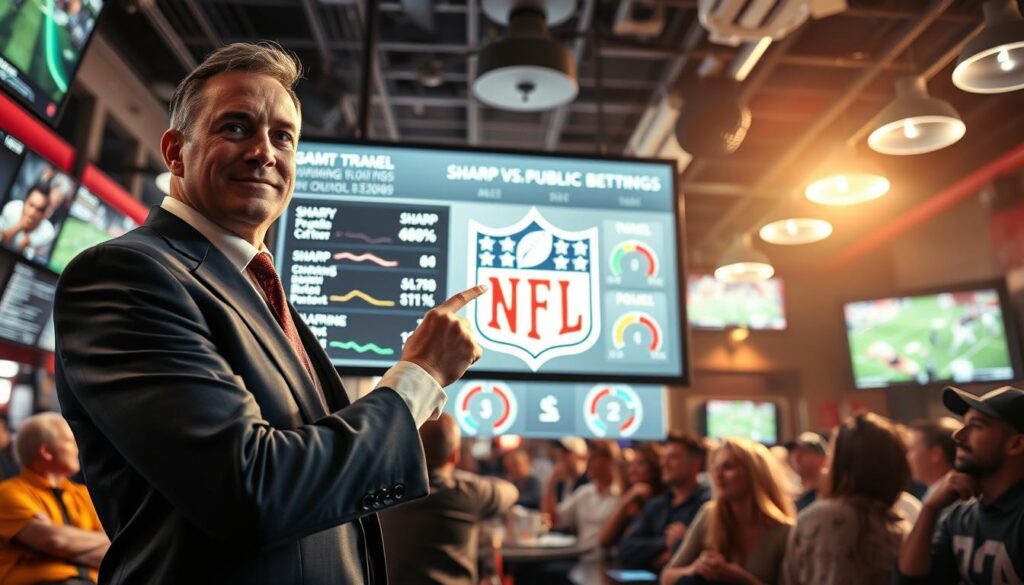
Interpreting low bets higher dollars in primetime NFL matchups
When a market shows low bets higher dollars, pros are often backing an unpopular side with big tickets. Circa data that lists 58% of spread tickets on Denver but 82% of spread dollars on Denver is a classic example. In primetime NFL contrarian plays, that pattern can point to sharps exploiting public biases and key-number teasers.
Primetime games generate larger, clearer volume than weekday spots. That makes low bets higher dollars easier to trust, especially on unders and underdogs that pros target more often in night games.
When reverse line movement signals pro money against the public
Reverse line movement happens when books initially move toward the public-heavy side, then pull the line back because pro bets hit the other side. An opening of Dallas -7.5 dropping to -5.5 while 75% of tickets remain on Dallas is textbook reverse line movement favoring Minnesota.
Use reverse line movement as a weighty indicator. Confirm with money percentages from sharps-friendly books to make the signal actionable.
How static lines despite lopsided tickets can indicate line freeze
A line that barely moves while tickets pour in suggests a line freeze or books protecting against sharp liability. If DraftKings shows Carolina getting 80% of spread bets and the number sits at -2.5, look for sharp money on New Orleans behind the scenes.
Line freeze often means books absorb public action while waiting for or matching professional dollars. That creates contrarian value at other shops where prices still react to public pressure.
Applying bet-split checks across spreads, totals, and moneylines
- Spread vs moneyline splits: Watch for a contrarian ticket share (≤35%) with a money delta ≥10% in favor of that side. That pattern favors taking the unpopular spread or the correlated moneyline.
- Totals splits: The public leans Overs. When totals splits show more dollars on the Under despite heavy Over tickets, the Under can carry sharp value.
- Moneyline checks: Underdog moneyline dollars outpacing tickets, such as 33% of tickets but 55% of dollars, signals pro underdog support and ML value.
Combine signals from spread, totals, and moneyline. When multiple markets point the same way, the contrarian read strengthens and warrants closer action.
Actionable workflow for bettors using bet splits to evaluate today’s lopsided matchups
Start with a simple betting checklist: scan the slate for games where one side has ≥65% tickets, then mark the minority side at ≤35% as the contrarian target. Next compute the money-minus-tickets percentage; a gap of +10 points or more often signals sharper interest. This bet splits workflow helps you separate public noise from where larger wagers are landing.
Cross-check splits across operators — DraftKings will show public lean, while Circa often reveals concentrated dollars — and monitor VSiN betting splits if available to confirm market direction. Always confirm context: injuries, lineup changes, weather, and timing can explain lopsided tickets or sudden dollar inflows. Use the linked explainer on bet splits for a quick refresher on tickets versus dollars and how pros interpret those gaps: bet splits vs. sharp action.
Apply the contrarian betting process by comparing the market line to your ratings or model. Look for reverse line movement, static lines despite heavy public action, or key-number effects before committing. Shop across books for the best price and limits; a half-point or a better juice line can swing expected value on a contrarian play.
Finally, treat this as a repeatable system: track closing line, outcome, and reasoning to refine your approach. Remember that bet splits are one signal among many — use this contrarian framework to evaluate betting splits responsibly, manage bankroll, and decide when to fade the public with conviction.

