
This guide lays out a practical, evidence-based approach to the 20 to 1000 betting challenge. It shows how to turn $20 into $1,000 using a disciplined small bankroll betting strategy that emphasizes line shopping, simple staking plans, and measured in-play choices.
The micro bankroll challenge is framed as a learning exercise, not a get-rich-quick scheme. Expect variance and the sportsbook vig to work against you; no system guarantees results. Instead, this betting strategy step-by-step roadmap borrows methods used by SportsLine experts: consistent unit sizing, targeted markets, and basic advanced metrics to find real value.
Readers will get a clear plan for bankroll protection, routines for shopping for the best lines, and guidance on when to lock in profit or reset after a loss. Practical tips include focusing on a few markets, using in-play opportunities carefully, and combining value bets with sensible stake progression.
For further background on challenge bets and practical examples you can use alongside this plan, see a focused discussion of challenge formats and staking rules at Challenge Bets. The sections that follow unpack bankroll rules, market selection, and a step-by-step staking plan built for U.S. small-stakes bettors.
Understanding the 20 to 1000 betting challenge
The 20 to 1000 betting challenge asks a bettor to grow a $20 stake into $1,000 through disciplined choices and steady risk control. This challenge overview frames the task: many positive expected-value decisions, strict unit sizing, and patience are required to have a real shot at success.
What the challenge entails and realistic expectations
The path depends on strategy mix and tolerance for swings. Realistic expectations betting means accepting long losing streaks and that even sharp picks can lose. SportsLine analysts stress there are no guarantees; the goal is to reduce the sportsbook edge and tilt long-term expected value toward the bettor.
Risk profile and time horizon for turning $20 into $1,000
A $20 start has a high betting risk profile because poor unit sizing leads to quick ruin. Time horizon varies with approach: aggressive parlays or long shots might reach the goal in days but risk fast busts. Conservative single bets extend the timeline to weeks or months while offering steadier growth.
Why no strategy guarantees success: house edge and variance
Sportsbooks collect vigorish and set efficient markets to protect profit margins. Shrinking the sportsbook edge requires line shopping and careful selection. Variance in betting can swamp skill in small samples, so even positive-EV plans can lose short term.
The challenge combines edge-seeking with disciplined bankroll control. Manage unit sizes, limit long-shot exposure, and accept that variance will shape the journey.
Bankroll management principles for small-stakes growth
Start with clear rules before you place a single wager. Good bankroll management turns random wins into measurable progress. This section lays out practical unit sizing, consistent staking habits, and checkpoints for when to lock in profits or reset your plan.
Setting an initial bankroll and unit sizing based on SportsLine experts
SportsLine bankroll advice favors percent-based units tied to your original bankroll. For single bets, experts often recommend 1–2% per unit. With small bankroll betting, $20 means theoretical units of $0.20–$0.40.
Many books force minimums above those amounts. Track fractional units mentally or in a simple ledger and place the smallest allowed wager that maps to your unit count. Save longer-shot plays for tiny fractions under your base unit.
Consistent unit sizing and why you should avoid jumping stake sizes
Stick to your defined unit. Micah Roberts and R.J. White stress that changing unit sizing after a run skews results and fuels emotional betting. Consistency makes performance easier to read.
Resist upping stakes for marquee events. Small bankroll betting magnifies variance. Fixed units reduce swing magnitude, protect capital, and let you learn which angles actually produce value.
When to lock in profits and when to reset bankroll assumptions
Set concrete profit targets and stop-loss rules before you start. One rule: if your bankroll doubles, recalculate unit sizing or set aside a portion of gains to lock in profits. That protects you from full drawdown on a bad streak.
Futures and long holds can tie up capital. Follow SportsLine bankroll advice and consider withdrawing a percentage of profits at key milestones. If the bankroll falls below a preset threshold, switch to lower-unit staking until recovery.
| Scenario | Action | Example for $20 start |
|---|---|---|
| Initial unit | Define 1%–2% of starting bankroll or use fractional units | Use $0.20 as one unit; group bets to meet sportsbook minimums |
| Consistent staking | Keep unit size steady; avoid escalate after wins | Place same unit across games; track wins in units, not emotion |
| Long-shot bets | Use much smaller fractions of a unit | Limit to $0.05–$0.10 equivalents per long shot |
| Profit milestone | Lock a portion of gains or recalc units | At $40, lock $10 and base new unit on $30 or keep original plan |
| Drawdown | Reset to lower unit sizing until recovery | If below $10, halve perceived unit size and reduce exposure |
Shop for the best lines and shop-around tactics
Line shopping separates long-term winners from casual bettors. Open accounts with several legal books so you can pounce on half-points, lower vig, and better moneylines the moment they appear.
How having multiple sportsbooks improves long-term edge
SportsLine analysts and Mike Tierney advise holding accounts at as many legal apps as your jurisdiction allows. With multiple sportsbooks you can capture half-point swings that turn pushes into wins.
Betting at -108 instead of -110 or getting -2.5 instead of -3 can compound into meaningful gains across a season. New Jersey players often see small vig differences that add up over hundreds of wagers.
Identifying key threshold lines and shaving juice
Key numbers matter more than market noise. NFL thresholds like 2.5 vs. 3.5 and 6.5 vs. 7.5 change payoff probability when a line crosses them.
Avoid paying extra vig when possible. Seek -108 or -105 prices over -110. Shave juice wherever you can; small edges matter with high volume.
Watch late movement, especially in the 15 minutes before kickoff. Micah Roberts notes sportsbooks sometimes nudge lines to protect liability. Those late half-point shifts create opportunities.
Tools and apps to compare real-time lines efficiently
Odds comparison tools let you scan spreads, moneylines, totals, and props across books in seconds. Use mobile sportsbook apps, aggregator alerts, and line trackers to get the best odds fast.
Create alerts for specific thresholds, for example spread
| Use | Benefit | Example |
|---|---|---|
| Odds comparison tools | View best odds across sites instantly | Find -105 instead of -110 on a moneyline |
| Mobile sportsbook apps | Place bets quickly when lines shift | Lock -2.5 spread before market moves to -3 |
| Line trackers & alerts | Monitor key numbers and late moves | Alert when total drops below 47.5 |
Bet selection framework: singles, live betting, and limited parlays
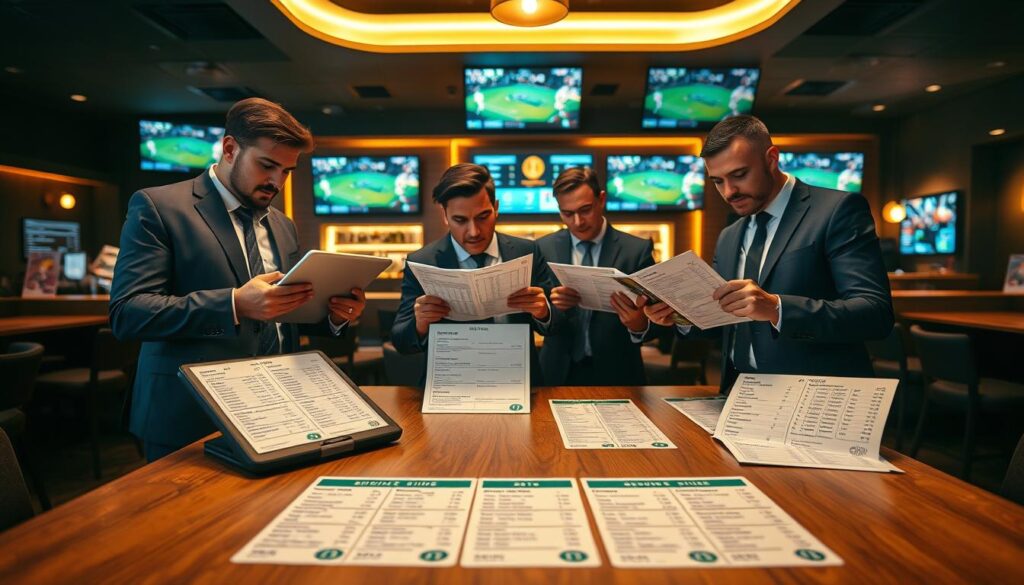
Start with a clear hierarchy for wagers. Prioritize single bets as your foundation because they are simpler to model and reduce compounded vig. SportsLine experts recommend making most plays singles to protect bankroll and build repeatable expected value.
Single bets work best for a $20 starting bankroll. They limit variance and let you scale unit size gradually. Use line shopping and implied probability conversions to spot pricing discrepancies before committing stake.
Live betting can quicken the path when pregame lines miss in-play developments. Experienced traders such as Erik Cohen have shown that favorites trailing early or totals shifting after an early score create live-edge opportunities.
Live betting demands discipline and focus. Track pregame prices, act fast, and avoid emotional plays. Cash-out features can lock gains but may erode long-term value if used impulsively.
Keep parlays small and purposeful. Limited parlays reduce the house edge compared with long-shot tickets. A two-leg parlay pays roughly +260 and is a reasonable tool for occasional upside when you truly find added value.
Adopt a strict parlay strategy: cap parlays, favor correlated legs only when edge exists, and treat them as sporadic accelerants rather than a core growth method. Combine this with bankroll rules like fractional Kelly or 1–3% unit sizing.
For further foundational concepts and bet-type definitions, consult the practical guide at how to bet on sports to align single bets, live betting, and limited parlays with solid staking and line-shopping practices.
Using advanced stats and sport-specific angles to find value
Start with a clear metric map for each sport. Advanced stats betting gives you a structured lens to compare teams and players. Pick two or three metrics to watch each week so your analysis stays focused and actionable.
Advanced metrics to prioritize by sport
In the NBA, emphasize pace and efficiency to spot totals and tempo-driven lines. Offensive and defensive efficiency trends reveal games that will drift toward over or under.
For MLB, platoon splits are critical. Monitor left/right matchups, bullpen usage, and recent reliever workload to exploit mismatches that public markets miss.
In football, use power ratings and key-number awareness to size moneyline and spread bets. Lookahead lines often reveal where sharps put pressure before public money arrives.
Sport-specific betting strategies that fit a $20 to $1,000 pathway
College football: target early-season home underdogs and Power Four vs Group of Five matchups. These games offer softer markets and better returns when you size bets carefully.
College basketball: avoid late-season small-conference chaos. Favor unders in tournament play when coaching and defense tighten and variance drops.
Golf: shop multiple books for outright and top-10 markets. Small-stake parlays can magnify returns, but keep leg count low to protect your bankroll.
MLB: hunt live underdogs and exploit clear signs of bullpen fatigue. Late-inning pitcher changes move lines quickly; that offers edge for nimble bettors.
Exploiting off-the-radar matchups and late line movement
Look for off-the-radar value in lesser-followed games. Markets for these matchups are slower to correct, which creates chances to grab better prices than on marquee events.
Track late line movement before kickoff, first pitch, or tipoff. Sharp early action often forces sportsbooks to adjust within minutes. That swing can be worth a half-point or more when you act fast.
Blend these approaches into a repeatable checklist. Combine advanced stats betting, pace and efficiency, platoon splits, and focused sport-specific betting strategies to hunt steady off-the-radar value while protecting a small bankroll.
Constructing a step-by-step staking plan for the 20 to 1000 betting challenge
Start with a clear staking plan that matches your temperament and time frame. A short, written roadmap helps you track wins and losses. Use simple rules so you can follow them under pressure.

Progressive units and fixed units both work for a $20 starting bankroll. Fixed units keep risk steady by defining a unit as a small percentage of the initial fund. This gives predictable variance and easier record keeping.
Progressive units increase as the bankroll grows. Use them to compound gains after hitting clear milestones. Be conservative with step-ups to avoid rapid drawdown during a losing run.
Below are three milestone betting plan tracks you can follow: conservative, balanced, and aggressive. Each track lists when to adjust unit size and which bet types to favor.
| Track | Unit rule | When to increase units | Preferred bets | Risk profile |
|---|---|---|---|---|
| Conservative | Fixed units at 1%–2% of starting bankroll | Increase only after 2x bankroll and banked profit set aside | Singles, tight line shopping | Low volatility, slow growth |
| Balanced | Start fixed, move to modest progressive units at milestones | Scale at 2x and 3x with partial profit lock | Singles, occasional two-leg parlays, selective live bets | Moderate volatility, steady compounding |
| Aggressive | Progressive units that increase at smaller milestones | Increase after 1.5x and 2.5x; keep strict stop-loss | Multi-leg parlays, longer-shot moneylines | High volatility, large swings |
Set explicit rules to adjust unit size. Increase units only after meeting profit milestones and reassessing variance. Consider putting a portion of gains into a locked reserve before enlarging stakes.
Cut unit size when the bankroll falls below a predefined threshold or when outside factors raise volatility. Examples include sudden injury news or congested schedules. Shrinking units protects capital and preserves optionality.
Track results weekly. If a pattern of unexpected losses emerges, revert to fixed units until you analyze the cause. Consistency and discipline trump gut reactions after a big win.
Bet-type tactics: totals, props, moneyline, futures tailored to the challenge
Choosing the right bet types helps a small bankroll grow without taking wild swings. Focus on options that offer steady edges and let you control stake size. Mix totals betting, player props strategy, and selective moneyline tactics to match your risk appetite while keeping futures betting limited to a tiny slice.
Why unders can be a repeatable source of value
Public bias pushes many markets toward the Over, which creates gaps books exploit. SportsLine analysts Eric Cohen and Thomas Casale point out that unders value often appears in college football and playoff basketball when teams tighten up late in games.
For a $20 start, totals betting and looking for unders value can deliver steady returns. These markets avoid some variance tied to point spreads and moneyline swings. Bet smaller units on carefully chosen totals to protect the bankroll while capitalizing on that public lean.
How to shop player prop lines and use props strategically
Player props shift a lot from book to book. Mike Tierney and Mike Barner recommend shopping numbers and targeting secondary players who receive more usage due to injuries. Small differences in a yard or point can flip a prop from a loss to a win.
Adopt a disciplined player props strategy by tracking usage trends, rotation changes, and minute projections. Compare lines across multiple sportsbooks to capture that extra edge. Use props to complement singles and short parlays rather than as the core of every stake.
Futures and long-term bets: capital lockup and sizing rules
Futures betting offers large upside but locks funds for months. Micah Roberts cautions against overcommitting when your bankroll is small. Allocate only a modest fraction of profits to long-term bets or pick shorter-dated futures to reduce capital lockup.
Weigh the tradeoff between upside and flexibility. If a futures ticket ties up money you could use on immediate EV plays, prefer cashing small gains into new, shorter-term opportunities. Keep futures as an occasional diversifier, not the backbone of the $20 to $1,000 plan.
| Bet Type | Role for $20 Start | Key Edge | Suggested Stake |
|---|---|---|---|
| Totals (Overs/Unders) | Primary steady-growth tool | Public bias to Over creates unders value | Small units, frequent plays |
| Player Props | Targeted edge opportunities | Line variance across books, usage shifts | Shop lines; size by confidence |
| Moneyline | High-clarity singles on favorites/underdogs | Simple outcome; avoids spread variance | Conservative units; use for clear mismatches |
| Futures | Occasional big upside | Large payout vs. time-locked capital | Very small portion or profit-funded |
Risk controls, common pitfalls, and behavioral discipline
Set hard stop-losses and profit targets before you place any bet. Decide how much of the bankroll you will risk in a session and when to pause. Use multiple books like DraftKings and BetMGM to shop lines and reduce vig, but avoid overtrading or forcing middles without clear expected value. Lock in gains at key milestones and consider withdrawing a percentage to preserve progress and reinforce betting discipline.
Watch for common betting mistakes: chasing losses by bumping unit size, loading up on parlays, or taking the worst number after a big line move. SportsLine experts caution against impulsive increases to unit size. Steer clear of teasers in sports where they underperform, such as NBA and major college football, unless you find specific value. If a market no longer offers edge, sit out rather than forcing action.
Behavioral discipline ties it all together. Stick to consistent unit sizing advocated by Micah Roberts and R.J. White and maintain a research routine that includes power ratings, game tape, and advanced metrics. Use the challenge as a commitment device—treat bankroll rules like the PILI Challenge framework to avoid impulsive bets and blunt common betting mistakes.
In short, the 20 to 1000 pathway relies on strict risk controls, sharp line shopping, sound bet selection, and understanding betting psychology. Respect sportsbook edge and variance, prioritize repeatable edges, and structure your plan to minimize ruin risk while maximizing opportunities to grow the bankroll steadily.
FAQ
What exactly is the 20 to 1000 betting challenge?
FAQ
What exactly is the 20 to 1000 betting challenge?
The 20 to 1000 betting challenge is a structured, disciplined plan to grow a bankroll to
FAQ
What exactly is the 20 to 1000 betting challenge?
The 20 to 1000 betting challenge is a structured, disciplined plan to grow a $20 bankroll to $1,000 through sports betting. It emphasizes strict bankroll rules, line shopping, reliance on advanced stats and sport-specific edges, a majority of single bets, and limited use of two-leg parlays. The challenge is a learning exercise in maximizing expected value (EV) while managing variance and the sportsbook’s vigorish; success is possible but not guaranteed.
How realistic is it to turn $20 into $1,000?
It’s possible but difficult. A $20 start requires many high-EV decisions and careful staking. Conservative paths prioritize singles and tiny mental units and will take weeks to months. Aggressive routes using parlays and long shots can reach $1,000 faster but carry a high risk of ruin. Expect long stretches of variance even with sound analysis.
Why can’t any betting strategy guarantee success?
Sportsbooks collect vigorish and set efficient markets. Short-term variance can overwhelm skill, so even positive-EV bets lose in small samples. Line-shopping and finding small edges help tilt the long-term expectation, but no method eliminates the house edge or randomness.
How should I size my units with only $20?
SportsLine experts recommend 1–2% of the bankroll as a single-bet unit. With $20, that equals $0.20–$0.40, which many books won’t accept. Use fractional unit accounting: track units mentally (or in a spreadsheet) and place the minimum allowed wager while maintaining proportional discipline. Keep long-shot bets much smaller than your base unit.
Should I change my unit size after a win or a loss?
Only if you hit predefined milestones. Increase units after concrete bankroll growth events (for example, after doubling and locking some profit aside) or decrease when the bankroll falls below a preset threshold. Avoid impulsive changes after single wins or losses—consistent unit sizing reduces emotional betting and variance spikes.
When should I lock in profits or withdraw money?
Define profit targets and stop-loss rules up front. Common approaches: withdraw a percentage after reaching major milestones, rebalance units when the bankroll doubles, or set a hard stop-loss that pauses betting if a certain drawdown is reached. Locking away winnings reduces the chance of full drawdown.
How many sportsbooks should I use and why?
Use as many legal, reputable sportsbooks as you can. Multiple books let you capture half-point edges and better juice that compound into meaningful EV gains. In competitive markets like New Jersey, shopping from DraftKings, FanDuel, BetMGM, PointsBet and others can turn small differences (e.g., -108 vs. -110 or -2.5 vs. -3) into repeatable value.
What are the “key threshold lines” I should watch?
Key numbers differ by sport but matter most in football: 2.5 vs. 3.5 and 6.5 vs. 7.5. Moving inside those thresholds can change the underlying win probability materially. Also watch moneyline juice differences (-105 vs. -110) and totals moving by half-points. Late movement before kickoff often signals exploitable shifts.
Which tools or apps help with line shopping and alerts?
Use odds-aggregation sites and apps that compare spreads, totals, and props across books. Mobile sportsbook apps with push alerts, line trackers, and odds-comparison tools let you jump on favorable prices quickly. Maintain funded accounts across multiple books so you’re ready when a valuable line appears.
Why should singles be the bulk of my bets?
Singles are repeatable, easier to model, and suffer less compounding vig than parlays. SportsLine experts recommend at least 90% singles for a small bankroll pathway; they keep variance manageable and let true edges compound slowly but steadily toward growth.
When is live betting appropriate for this challenge?
Live betting can accelerate growth by exploiting in-game mispricings—favorites that trail early, totals that swing after a score, or matchups revealing new edges. It demands pregame price familiarity, quick reactions, and strict discipline. Only use live bets when you can act calmly and with a clear edge; otherwise stick to pregame singles.
Are parlays ever a good idea on this roadmap?
Use parlays sparingly. If you do, limit them to two legs. Two-team parlays pay roughly +260 and are less punishing than larger parlays. Parlays should be occasional accelerants, not the core strategy. Relying on multi-leg parlays dramatically increases the house edge and bust risk.
Which advanced metrics should I prioritize by sport?
NBA: pace and offensive/defensive efficiency are key for totals and spread moves. MLB: platoon splits, bullpen usage, and home/road splits matter most. Football: power ratings, lookahead lines, and key-number awareness (2.5/3.5/6.5/7.5). Use these metrics to find edges in otherwise efficient markets.
What sport-specific strategies fit a $20 starting bankroll?
College football: target off-the-radar matchups and early-season inefficiencies. College basketball: favor unders in high-pressure tournament games. MLB: exploit bullpen fatigue and live underdog opportunities. Golf: shop outright and finishing-position markets; use small parlays sparingly. Tailor bet size to the liquidity and volatility of each sport.
How can I exploit off-the-radar matchups and late line moves?
Off-the-radar games are less efficient and often mispriced. Monitor late movement—lines that shift within minutes of kickoff or first pitch can indicate exploitable discrepancies. Maintain multiple books, set alerts for threshold moves, and be ready to act on half-point improvements or better juice.
Should I use a fixed-unit plan or a progressive staking plan?
For a $20 bankroll, a fixed-unit plan preserves capital and reduces ruin risk. Progressive plans can compound gains faster but increase volatility. If you use progression, tie increases to strict milestones (for example, only after 2x or 3x bankroll growth) and lock away a portion of gains before upping units.
Can you give example milestone tracks for the challenge?
Conservative: keep tiny mental units, focus on singles and steady line shopping; expect slow growth over months. Balanced: mostly singles, occasional two-leg parlays, modest unit bumps at 2x and 5x milestones. Aggressive: larger reliance on parlays and long shots for faster growth, but high bust risk. Each track must include rules for unit changes and stop-losses.
When should I increase or decrease unit size based on results?
Increase units only after hitting predefined profit milestones and after securing some profits. Decrease unit size if the bankroll drops below your reset threshold or volatility spikes due to injuries or schedule changes. Avoid emotional adjustments tied to single outcomes.
Why might totals and unders be a good source of value?
Public bias often skews toward the Over, leaving Unders underappreciated. In college games and late-season tournament play, scores often tighten, creating repeatable value on Unders. Totals also avoid key-number issues that affect spreads and can be easier to model with pace and efficiency metrics.
How should I approach player props with a small bankroll?
Shop props across books to capture small number edges. Target secondary players who see usage increases due to injuries. Small differences in lines (an extra rebound, assist, or yard) can flip outcomes. Keep prop wagers proportionally smaller and avoid emotional bets on star names.
Are futures worth playing with a tiny bankroll?
Futures tie up capital and reduce liquidity for immediate EV spots. For a $20 start, allocate only a tiny fraction to short-dated futures or wait to use conquered profit. Consider the tradeoff: higher upside versus inability to use that stake for immediate opportunities.
What risk controls should I set before starting the challenge?
Set hard stop-loss and profit targets, define unit sizes and reset thresholds, and decide withdrawal rules at milestones. Use multiple books for line shopping but avoid overtrading. Treat the plan as a commitment device and maintain a research routine to reduce impulsive betting.
What are the most common mistakes that cause failure?
Chasing losses by increasing stakes, overreliance on multi-leg parlays, playing lines after they’ve moved past value, neglecting line shopping, and ignoring stop-loss rules. Emotional betting and failing to track units or results are frequent causes of quick busts.
How should I manage behavior and discipline during the challenge?
Stick to predefined unit sizing, maintain a consistent research and review routine, use mental or spreadsheet unit tracking, and avoid betting marquee events at inflated stakes. Treat the challenge as a learning experiment: measure outcomes, refine models, and prioritize process over short-term results.
What should I expect in terms of time horizon to reach $1,000?
Time varies by strategy. Conservative single-bet approaches can take weeks to months. Balanced tracks may take weeks with disciplined line shopping. Aggressive parlay-driven paths can reach $1,000 quickly but have a much higher chance of busting. Plan for variance and set realistic timelines based on your chosen track.
Where does this guidance come from?
The framework synthesizes SportsLine expert tactics and advice on line shopping, bankroll sizing, live betting, advanced metrics, and sport-specific angles—plus practical behavioral and staking rules from experts such as Micah Roberts, Mike Tierney, Eric Cohen, Mike Barner, and R.J. White.
Any final operational tips before I start?
Fund multiple legal sportsbooks, set odds alerts for key thresholds, use odds-comparison tools, keep small and consistent mental units, prioritize singles, limit parlays to two legs, and record every bet. Reassess units at milestones, lock away profits, and always remember that skill helps but variance and the sportsbook’s edge remain.
,000 through sports betting. It emphasizes strict bankroll rules, line shopping, reliance on advanced stats and sport-specific edges, a majority of single bets, and limited use of two-leg parlays. The challenge is a learning exercise in maximizing expected value (EV) while managing variance and the sportsbook’s vigorish; success is possible but not guaranteed.
How realistic is it to turn into
FAQ
What exactly is the 20 to 1000 betting challenge?
The 20 to 1000 betting challenge is a structured, disciplined plan to grow a $20 bankroll to $1,000 through sports betting. It emphasizes strict bankroll rules, line shopping, reliance on advanced stats and sport-specific edges, a majority of single bets, and limited use of two-leg parlays. The challenge is a learning exercise in maximizing expected value (EV) while managing variance and the sportsbook’s vigorish; success is possible but not guaranteed.
How realistic is it to turn $20 into $1,000?
It’s possible but difficult. A $20 start requires many high-EV decisions and careful staking. Conservative paths prioritize singles and tiny mental units and will take weeks to months. Aggressive routes using parlays and long shots can reach $1,000 faster but carry a high risk of ruin. Expect long stretches of variance even with sound analysis.
Why can’t any betting strategy guarantee success?
Sportsbooks collect vigorish and set efficient markets. Short-term variance can overwhelm skill, so even positive-EV bets lose in small samples. Line-shopping and finding small edges help tilt the long-term expectation, but no method eliminates the house edge or randomness.
How should I size my units with only $20?
SportsLine experts recommend 1–2% of the bankroll as a single-bet unit. With $20, that equals $0.20–$0.40, which many books won’t accept. Use fractional unit accounting: track units mentally (or in a spreadsheet) and place the minimum allowed wager while maintaining proportional discipline. Keep long-shot bets much smaller than your base unit.
Should I change my unit size after a win or a loss?
Only if you hit predefined milestones. Increase units after concrete bankroll growth events (for example, after doubling and locking some profit aside) or decrease when the bankroll falls below a preset threshold. Avoid impulsive changes after single wins or losses—consistent unit sizing reduces emotional betting and variance spikes.
When should I lock in profits or withdraw money?
Define profit targets and stop-loss rules up front. Common approaches: withdraw a percentage after reaching major milestones, rebalance units when the bankroll doubles, or set a hard stop-loss that pauses betting if a certain drawdown is reached. Locking away winnings reduces the chance of full drawdown.
How many sportsbooks should I use and why?
Use as many legal, reputable sportsbooks as you can. Multiple books let you capture half-point edges and better juice that compound into meaningful EV gains. In competitive markets like New Jersey, shopping from DraftKings, FanDuel, BetMGM, PointsBet and others can turn small differences (e.g., -108 vs. -110 or -2.5 vs. -3) into repeatable value.
What are the “key threshold lines” I should watch?
Key numbers differ by sport but matter most in football: 2.5 vs. 3.5 and 6.5 vs. 7.5. Moving inside those thresholds can change the underlying win probability materially. Also watch moneyline juice differences (-105 vs. -110) and totals moving by half-points. Late movement before kickoff often signals exploitable shifts.
Which tools or apps help with line shopping and alerts?
Use odds-aggregation sites and apps that compare spreads, totals, and props across books. Mobile sportsbook apps with push alerts, line trackers, and odds-comparison tools let you jump on favorable prices quickly. Maintain funded accounts across multiple books so you’re ready when a valuable line appears.
Why should singles be the bulk of my bets?
Singles are repeatable, easier to model, and suffer less compounding vig than parlays. SportsLine experts recommend at least 90% singles for a small bankroll pathway; they keep variance manageable and let true edges compound slowly but steadily toward growth.
When is live betting appropriate for this challenge?
Live betting can accelerate growth by exploiting in-game mispricings—favorites that trail early, totals that swing after a score, or matchups revealing new edges. It demands pregame price familiarity, quick reactions, and strict discipline. Only use live bets when you can act calmly and with a clear edge; otherwise stick to pregame singles.
Are parlays ever a good idea on this roadmap?
Use parlays sparingly. If you do, limit them to two legs. Two-team parlays pay roughly +260 and are less punishing than larger parlays. Parlays should be occasional accelerants, not the core strategy. Relying on multi-leg parlays dramatically increases the house edge and bust risk.
Which advanced metrics should I prioritize by sport?
NBA: pace and offensive/defensive efficiency are key for totals and spread moves. MLB: platoon splits, bullpen usage, and home/road splits matter most. Football: power ratings, lookahead lines, and key-number awareness (2.5/3.5/6.5/7.5). Use these metrics to find edges in otherwise efficient markets.
What sport-specific strategies fit a $20 starting bankroll?
College football: target off-the-radar matchups and early-season inefficiencies. College basketball: favor unders in high-pressure tournament games. MLB: exploit bullpen fatigue and live underdog opportunities. Golf: shop outright and finishing-position markets; use small parlays sparingly. Tailor bet size to the liquidity and volatility of each sport.
How can I exploit off-the-radar matchups and late line moves?
Off-the-radar games are less efficient and often mispriced. Monitor late movement—lines that shift within minutes of kickoff or first pitch can indicate exploitable discrepancies. Maintain multiple books, set alerts for threshold moves, and be ready to act on half-point improvements or better juice.
Should I use a fixed-unit plan or a progressive staking plan?
For a $20 bankroll, a fixed-unit plan preserves capital and reduces ruin risk. Progressive plans can compound gains faster but increase volatility. If you use progression, tie increases to strict milestones (for example, only after 2x or 3x bankroll growth) and lock away a portion of gains before upping units.
Can you give example milestone tracks for the challenge?
Conservative: keep tiny mental units, focus on singles and steady line shopping; expect slow growth over months. Balanced: mostly singles, occasional two-leg parlays, modest unit bumps at 2x and 5x milestones. Aggressive: larger reliance on parlays and long shots for faster growth, but high bust risk. Each track must include rules for unit changes and stop-losses.
When should I increase or decrease unit size based on results?
Increase units only after hitting predefined profit milestones and after securing some profits. Decrease unit size if the bankroll drops below your reset threshold or volatility spikes due to injuries or schedule changes. Avoid emotional adjustments tied to single outcomes.
Why might totals and unders be a good source of value?
Public bias often skews toward the Over, leaving Unders underappreciated. In college games and late-season tournament play, scores often tighten, creating repeatable value on Unders. Totals also avoid key-number issues that affect spreads and can be easier to model with pace and efficiency metrics.
How should I approach player props with a small bankroll?
Shop props across books to capture small number edges. Target secondary players who see usage increases due to injuries. Small differences in lines (an extra rebound, assist, or yard) can flip outcomes. Keep prop wagers proportionally smaller and avoid emotional bets on star names.
Are futures worth playing with a tiny bankroll?
Futures tie up capital and reduce liquidity for immediate EV spots. For a $20 start, allocate only a tiny fraction to short-dated futures or wait to use conquered profit. Consider the tradeoff: higher upside versus inability to use that stake for immediate opportunities.
What risk controls should I set before starting the challenge?
Set hard stop-loss and profit targets, define unit sizes and reset thresholds, and decide withdrawal rules at milestones. Use multiple books for line shopping but avoid overtrading. Treat the plan as a commitment device and maintain a research routine to reduce impulsive betting.
What are the most common mistakes that cause failure?
Chasing losses by increasing stakes, overreliance on multi-leg parlays, playing lines after they’ve moved past value, neglecting line shopping, and ignoring stop-loss rules. Emotional betting and failing to track units or results are frequent causes of quick busts.
How should I manage behavior and discipline during the challenge?
Stick to predefined unit sizing, maintain a consistent research and review routine, use mental or spreadsheet unit tracking, and avoid betting marquee events at inflated stakes. Treat the challenge as a learning experiment: measure outcomes, refine models, and prioritize process over short-term results.
What should I expect in terms of time horizon to reach $1,000?
Time varies by strategy. Conservative single-bet approaches can take weeks to months. Balanced tracks may take weeks with disciplined line shopping. Aggressive parlay-driven paths can reach $1,000 quickly but have a much higher chance of busting. Plan for variance and set realistic timelines based on your chosen track.
Where does this guidance come from?
The framework synthesizes SportsLine expert tactics and advice on line shopping, bankroll sizing, live betting, advanced metrics, and sport-specific angles—plus practical behavioral and staking rules from experts such as Micah Roberts, Mike Tierney, Eric Cohen, Mike Barner, and R.J. White.
Any final operational tips before I start?
Fund multiple legal sportsbooks, set odds alerts for key thresholds, use odds-comparison tools, keep small and consistent mental units, prioritize singles, limit parlays to two legs, and record every bet. Reassess units at milestones, lock away profits, and always remember that skill helps but variance and the sportsbook’s edge remain.
What exactly is the 20 to 1000 betting challenge?
The 20 to 1000 betting challenge is a structured, disciplined plan to grow a $20 bankroll to $1,000 through sports betting. It emphasizes strict bankroll rules, line shopping, reliance on advanced stats and sport-specific edges, a majority of single bets, and limited use of two-leg parlays. The challenge is a learning exercise in maximizing expected value (EV) while managing variance and the sportsbook’s vigorish; success is possible but not guaranteed.
How realistic is it to turn $20 into $1,000?
It’s possible but difficult. A $20 start requires many high-EV decisions and careful staking. Conservative paths prioritize singles and tiny mental units and will take weeks to months. Aggressive routes using parlays and long shots can reach $1,000 faster but carry a high risk of ruin. Expect long stretches of variance even with sound analysis.
Why can’t any betting strategy guarantee success?
Sportsbooks collect vigorish and set efficient markets. Short-term variance can overwhelm skill, so even positive-EV bets lose in small samples. Line-shopping and finding small edges help tilt the long-term expectation, but no method eliminates the house edge or randomness.
How should I size my units with only $20?
SportsLine experts recommend 1–2% of the bankroll as a single-bet unit. With $20, that equals $0.20–$0.40, which many books won’t accept. Use fractional unit accounting: track units mentally (or in a spreadsheet) and place the minimum allowed wager while maintaining proportional discipline. Keep long-shot bets much smaller than your base unit.
Should I change my unit size after a win or a loss?
Only if you hit predefined milestones. Increase units after concrete bankroll growth events (for example, after doubling and locking some profit aside) or decrease when the bankroll falls below a preset threshold. Avoid impulsive changes after single wins or losses—consistent unit sizing reduces emotional betting and variance spikes.
When should I lock in profits or withdraw money?
Define profit targets and stop-loss rules up front. Common approaches: withdraw a percentage after reaching major milestones, rebalance units when the bankroll doubles, or set a hard stop-loss that pauses betting if a certain drawdown is reached. Locking away winnings reduces the chance of full drawdown.
How many sportsbooks should I use and why?
Use as many legal, reputable sportsbooks as you can. Multiple books let you capture half-point edges and better juice that compound into meaningful EV gains. In competitive markets like New Jersey, shopping from DraftKings, FanDuel, BetMGM, PointsBet and others can turn small differences (e.g., -108 vs. -110 or -2.5 vs. -3) into repeatable value.
What are the “key threshold lines” I should watch?
Key numbers differ by sport but matter most in football: 2.5 vs. 3.5 and 6.5 vs. 7.5. Moving inside those thresholds can change the underlying win probability materially. Also watch moneyline juice differences (-105 vs. -110) and totals moving by half-points. Late movement before kickoff often signals exploitable shifts.
Which tools or apps help with line shopping and alerts?
Use odds-aggregation sites and apps that compare spreads, totals, and props across books. Mobile sportsbook apps with push alerts, line trackers, and odds-comparison tools let you jump on favorable prices quickly. Maintain funded accounts across multiple books so you’re ready when a valuable line appears.
Why should singles be the bulk of my bets?
Singles are repeatable, easier to model, and suffer less compounding vig than parlays. SportsLine experts recommend at least 90% singles for a small bankroll pathway; they keep variance manageable and let true edges compound slowly but steadily toward growth.
When is live betting appropriate for this challenge?
Live betting can accelerate growth by exploiting in-game mispricings—favorites that trail early, totals that swing after a score, or matchups revealing new edges. It demands pregame price familiarity, quick reactions, and strict discipline. Only use live bets when you can act calmly and with a clear edge; otherwise stick to pregame singles.
Are parlays ever a good idea on this roadmap?
Use parlays sparingly. If you do, limit them to two legs. Two-team parlays pay roughly +260 and are less punishing than larger parlays. Parlays should be occasional accelerants, not the core strategy. Relying on multi-leg parlays dramatically increases the house edge and bust risk.
Which advanced metrics should I prioritize by sport?
NBA: pace and offensive/defensive efficiency are key for totals and spread moves. MLB: platoon splits, bullpen usage, and home/road splits matter most. Football: power ratings, lookahead lines, and key-number awareness (2.5/3.5/6.5/7.5). Use these metrics to find edges in otherwise efficient markets.
What sport-specific strategies fit a $20 starting bankroll?
College football: target off-the-radar matchups and early-season inefficiencies. College basketball: favor unders in high-pressure tournament games. MLB: exploit bullpen fatigue and live underdog opportunities. Golf: shop outright and finishing-position markets; use small parlays sparingly. Tailor bet size to the liquidity and volatility of each sport.
How can I exploit off-the-radar matchups and late line moves?
Off-the-radar games are less efficient and often mispriced. Monitor late movement—lines that shift within minutes of kickoff or first pitch can indicate exploitable discrepancies. Maintain multiple books, set alerts for threshold moves, and be ready to act on half-point improvements or better juice.
Should I use a fixed-unit plan or a progressive staking plan?
For a $20 bankroll, a fixed-unit plan preserves capital and reduces ruin risk. Progressive plans can compound gains faster but increase volatility. If you use progression, tie increases to strict milestones (for example, only after 2x or 3x bankroll growth) and lock away a portion of gains before upping units.
Can you give example milestone tracks for the challenge?
Conservative: keep tiny mental units, focus on singles and steady line shopping; expect slow growth over months. Balanced: mostly singles, occasional two-leg parlays, modest unit bumps at 2x and 5x milestones. Aggressive: larger reliance on parlays and long shots for faster growth, but high bust risk. Each track must include rules for unit changes and stop-losses.
When should I increase or decrease unit size based on results?
Increase units only after hitting predefined profit milestones and after securing some profits. Decrease unit size if the bankroll drops below your reset threshold or volatility spikes due to injuries or schedule changes. Avoid emotional adjustments tied to single outcomes.
Why might totals and unders be a good source of value?
Public bias often skews toward the Over, leaving Unders underappreciated. In college games and late-season tournament play, scores often tighten, creating repeatable value on Unders. Totals also avoid key-number issues that affect spreads and can be easier to model with pace and efficiency metrics.
How should I approach player props with a small bankroll?
Shop props across books to capture small number edges. Target secondary players who see usage increases due to injuries. Small differences in lines (an extra rebound, assist, or yard) can flip outcomes. Keep prop wagers proportionally smaller and avoid emotional bets on star names.
Are futures worth playing with a tiny bankroll?
Futures tie up capital and reduce liquidity for immediate EV spots. For a $20 start, allocate only a tiny fraction to short-dated futures or wait to use conquered profit. Consider the tradeoff: higher upside versus inability to use that stake for immediate opportunities.
What risk controls should I set before starting the challenge?
Set hard stop-loss and profit targets, define unit sizes and reset thresholds, and decide withdrawal rules at milestones. Use multiple books for line shopping but avoid overtrading. Treat the plan as a commitment device and maintain a research routine to reduce impulsive betting.
What are the most common mistakes that cause failure?
Chasing losses by increasing stakes, overreliance on multi-leg parlays, playing lines after they’ve moved past value, neglecting line shopping, and ignoring stop-loss rules. Emotional betting and failing to track units or results are frequent causes of quick busts.
How should I manage behavior and discipline during the challenge?
Stick to predefined unit sizing, maintain a consistent research and review routine, use mental or spreadsheet unit tracking, and avoid betting marquee events at inflated stakes. Treat the challenge as a learning experiment: measure outcomes, refine models, and prioritize process over short-term results.
What should I expect in terms of time horizon to reach $1,000?
Time varies by strategy. Conservative single-bet approaches can take weeks to months. Balanced tracks may take weeks with disciplined line shopping. Aggressive parlay-driven paths can reach $1,000 quickly but have a much higher chance of busting. Plan for variance and set realistic timelines based on your chosen track.
Where does this guidance come from?
The framework synthesizes SportsLine expert tactics and advice on line shopping, bankroll sizing, live betting, advanced metrics, and sport-specific angles—plus practical behavioral and staking rules from experts such as Micah Roberts, Mike Tierney, Eric Cohen, Mike Barner, and R.J. White.
Any final operational tips before I start?
Fund multiple legal sportsbooks, set odds alerts for key thresholds, use odds-comparison tools, keep small and consistent mental units, prioritize singles, limit parlays to two legs, and record every bet. Reassess units at milestones, lock away profits, and always remember that skill helps but variance and the sportsbook’s edge remain.
,000?
It’s possible but difficult. A start requires many high-EV decisions and careful staking. Conservative paths prioritize singles and tiny mental units and will take weeks to months. Aggressive routes using parlays and long shots can reach
FAQ
What exactly is the 20 to 1000 betting challenge?
The 20 to 1000 betting challenge is a structured, disciplined plan to grow a $20 bankroll to $1,000 through sports betting. It emphasizes strict bankroll rules, line shopping, reliance on advanced stats and sport-specific edges, a majority of single bets, and limited use of two-leg parlays. The challenge is a learning exercise in maximizing expected value (EV) while managing variance and the sportsbook’s vigorish; success is possible but not guaranteed.
How realistic is it to turn $20 into $1,000?
It’s possible but difficult. A $20 start requires many high-EV decisions and careful staking. Conservative paths prioritize singles and tiny mental units and will take weeks to months. Aggressive routes using parlays and long shots can reach $1,000 faster but carry a high risk of ruin. Expect long stretches of variance even with sound analysis.
Why can’t any betting strategy guarantee success?
Sportsbooks collect vigorish and set efficient markets. Short-term variance can overwhelm skill, so even positive-EV bets lose in small samples. Line-shopping and finding small edges help tilt the long-term expectation, but no method eliminates the house edge or randomness.
How should I size my units with only $20?
SportsLine experts recommend 1–2% of the bankroll as a single-bet unit. With $20, that equals $0.20–$0.40, which many books won’t accept. Use fractional unit accounting: track units mentally (or in a spreadsheet) and place the minimum allowed wager while maintaining proportional discipline. Keep long-shot bets much smaller than your base unit.
Should I change my unit size after a win or a loss?
Only if you hit predefined milestones. Increase units after concrete bankroll growth events (for example, after doubling and locking some profit aside) or decrease when the bankroll falls below a preset threshold. Avoid impulsive changes after single wins or losses—consistent unit sizing reduces emotional betting and variance spikes.
When should I lock in profits or withdraw money?
Define profit targets and stop-loss rules up front. Common approaches: withdraw a percentage after reaching major milestones, rebalance units when the bankroll doubles, or set a hard stop-loss that pauses betting if a certain drawdown is reached. Locking away winnings reduces the chance of full drawdown.
How many sportsbooks should I use and why?
Use as many legal, reputable sportsbooks as you can. Multiple books let you capture half-point edges and better juice that compound into meaningful EV gains. In competitive markets like New Jersey, shopping from DraftKings, FanDuel, BetMGM, PointsBet and others can turn small differences (e.g., -108 vs. -110 or -2.5 vs. -3) into repeatable value.
What are the “key threshold lines” I should watch?
Key numbers differ by sport but matter most in football: 2.5 vs. 3.5 and 6.5 vs. 7.5. Moving inside those thresholds can change the underlying win probability materially. Also watch moneyline juice differences (-105 vs. -110) and totals moving by half-points. Late movement before kickoff often signals exploitable shifts.
Which tools or apps help with line shopping and alerts?
Use odds-aggregation sites and apps that compare spreads, totals, and props across books. Mobile sportsbook apps with push alerts, line trackers, and odds-comparison tools let you jump on favorable prices quickly. Maintain funded accounts across multiple books so you’re ready when a valuable line appears.
Why should singles be the bulk of my bets?
Singles are repeatable, easier to model, and suffer less compounding vig than parlays. SportsLine experts recommend at least 90% singles for a small bankroll pathway; they keep variance manageable and let true edges compound slowly but steadily toward growth.
When is live betting appropriate for this challenge?
Live betting can accelerate growth by exploiting in-game mispricings—favorites that trail early, totals that swing after a score, or matchups revealing new edges. It demands pregame price familiarity, quick reactions, and strict discipline. Only use live bets when you can act calmly and with a clear edge; otherwise stick to pregame singles.
Are parlays ever a good idea on this roadmap?
Use parlays sparingly. If you do, limit them to two legs. Two-team parlays pay roughly +260 and are less punishing than larger parlays. Parlays should be occasional accelerants, not the core strategy. Relying on multi-leg parlays dramatically increases the house edge and bust risk.
Which advanced metrics should I prioritize by sport?
NBA: pace and offensive/defensive efficiency are key for totals and spread moves. MLB: platoon splits, bullpen usage, and home/road splits matter most. Football: power ratings, lookahead lines, and key-number awareness (2.5/3.5/6.5/7.5). Use these metrics to find edges in otherwise efficient markets.
What sport-specific strategies fit a $20 starting bankroll?
College football: target off-the-radar matchups and early-season inefficiencies. College basketball: favor unders in high-pressure tournament games. MLB: exploit bullpen fatigue and live underdog opportunities. Golf: shop outright and finishing-position markets; use small parlays sparingly. Tailor bet size to the liquidity and volatility of each sport.
How can I exploit off-the-radar matchups and late line moves?
Off-the-radar games are less efficient and often mispriced. Monitor late movement—lines that shift within minutes of kickoff or first pitch can indicate exploitable discrepancies. Maintain multiple books, set alerts for threshold moves, and be ready to act on half-point improvements or better juice.
Should I use a fixed-unit plan or a progressive staking plan?
For a $20 bankroll, a fixed-unit plan preserves capital and reduces ruin risk. Progressive plans can compound gains faster but increase volatility. If you use progression, tie increases to strict milestones (for example, only after 2x or 3x bankroll growth) and lock away a portion of gains before upping units.
Can you give example milestone tracks for the challenge?
Conservative: keep tiny mental units, focus on singles and steady line shopping; expect slow growth over months. Balanced: mostly singles, occasional two-leg parlays, modest unit bumps at 2x and 5x milestones. Aggressive: larger reliance on parlays and long shots for faster growth, but high bust risk. Each track must include rules for unit changes and stop-losses.
When should I increase or decrease unit size based on results?
Increase units only after hitting predefined profit milestones and after securing some profits. Decrease unit size if the bankroll drops below your reset threshold or volatility spikes due to injuries or schedule changes. Avoid emotional adjustments tied to single outcomes.
Why might totals and unders be a good source of value?
Public bias often skews toward the Over, leaving Unders underappreciated. In college games and late-season tournament play, scores often tighten, creating repeatable value on Unders. Totals also avoid key-number issues that affect spreads and can be easier to model with pace and efficiency metrics.
How should I approach player props with a small bankroll?
Shop props across books to capture small number edges. Target secondary players who see usage increases due to injuries. Small differences in lines (an extra rebound, assist, or yard) can flip outcomes. Keep prop wagers proportionally smaller and avoid emotional bets on star names.
Are futures worth playing with a tiny bankroll?
Futures tie up capital and reduce liquidity for immediate EV spots. For a $20 start, allocate only a tiny fraction to short-dated futures or wait to use conquered profit. Consider the tradeoff: higher upside versus inability to use that stake for immediate opportunities.
What risk controls should I set before starting the challenge?
Set hard stop-loss and profit targets, define unit sizes and reset thresholds, and decide withdrawal rules at milestones. Use multiple books for line shopping but avoid overtrading. Treat the plan as a commitment device and maintain a research routine to reduce impulsive betting.
What are the most common mistakes that cause failure?
Chasing losses by increasing stakes, overreliance on multi-leg parlays, playing lines after they’ve moved past value, neglecting line shopping, and ignoring stop-loss rules. Emotional betting and failing to track units or results are frequent causes of quick busts.
How should I manage behavior and discipline during the challenge?
Stick to predefined unit sizing, maintain a consistent research and review routine, use mental or spreadsheet unit tracking, and avoid betting marquee events at inflated stakes. Treat the challenge as a learning experiment: measure outcomes, refine models, and prioritize process over short-term results.
What should I expect in terms of time horizon to reach $1,000?
Time varies by strategy. Conservative single-bet approaches can take weeks to months. Balanced tracks may take weeks with disciplined line shopping. Aggressive parlay-driven paths can reach $1,000 quickly but have a much higher chance of busting. Plan for variance and set realistic timelines based on your chosen track.
Where does this guidance come from?
The framework synthesizes SportsLine expert tactics and advice on line shopping, bankroll sizing, live betting, advanced metrics, and sport-specific angles—plus practical behavioral and staking rules from experts such as Micah Roberts, Mike Tierney, Eric Cohen, Mike Barner, and R.J. White.
Any final operational tips before I start?
Fund multiple legal sportsbooks, set odds alerts for key thresholds, use odds-comparison tools, keep small and consistent mental units, prioritize singles, limit parlays to two legs, and record every bet. Reassess units at milestones, lock away profits, and always remember that skill helps but variance and the sportsbook’s edge remain.
,000 faster but carry a high risk of ruin. Expect long stretches of variance even with sound analysis.
Why can’t any betting strategy guarantee success?
Sportsbooks collect vigorish and set efficient markets. Short-term variance can overwhelm skill, so even positive-EV bets lose in small samples. Line-shopping and finding small edges help tilt the long-term expectation, but no method eliminates the house edge or randomness.
How should I size my units with only ?
SportsLine experts recommend 1–2% of the bankroll as a single-bet unit. With , that equals
FAQ
What exactly is the 20 to 1000 betting challenge?
The 20 to 1000 betting challenge is a structured, disciplined plan to grow a $20 bankroll to $1,000 through sports betting. It emphasizes strict bankroll rules, line shopping, reliance on advanced stats and sport-specific edges, a majority of single bets, and limited use of two-leg parlays. The challenge is a learning exercise in maximizing expected value (EV) while managing variance and the sportsbook’s vigorish; success is possible but not guaranteed.
How realistic is it to turn $20 into $1,000?
It’s possible but difficult. A $20 start requires many high-EV decisions and careful staking. Conservative paths prioritize singles and tiny mental units and will take weeks to months. Aggressive routes using parlays and long shots can reach $1,000 faster but carry a high risk of ruin. Expect long stretches of variance even with sound analysis.
Why can’t any betting strategy guarantee success?
Sportsbooks collect vigorish and set efficient markets. Short-term variance can overwhelm skill, so even positive-EV bets lose in small samples. Line-shopping and finding small edges help tilt the long-term expectation, but no method eliminates the house edge or randomness.
How should I size my units with only $20?
SportsLine experts recommend 1–2% of the bankroll as a single-bet unit. With $20, that equals $0.20–$0.40, which many books won’t accept. Use fractional unit accounting: track units mentally (or in a spreadsheet) and place the minimum allowed wager while maintaining proportional discipline. Keep long-shot bets much smaller than your base unit.
Should I change my unit size after a win or a loss?
Only if you hit predefined milestones. Increase units after concrete bankroll growth events (for example, after doubling and locking some profit aside) or decrease when the bankroll falls below a preset threshold. Avoid impulsive changes after single wins or losses—consistent unit sizing reduces emotional betting and variance spikes.
When should I lock in profits or withdraw money?
Define profit targets and stop-loss rules up front. Common approaches: withdraw a percentage after reaching major milestones, rebalance units when the bankroll doubles, or set a hard stop-loss that pauses betting if a certain drawdown is reached. Locking away winnings reduces the chance of full drawdown.
How many sportsbooks should I use and why?
Use as many legal, reputable sportsbooks as you can. Multiple books let you capture half-point edges and better juice that compound into meaningful EV gains. In competitive markets like New Jersey, shopping from DraftKings, FanDuel, BetMGM, PointsBet and others can turn small differences (e.g., -108 vs. -110 or -2.5 vs. -3) into repeatable value.
What are the “key threshold lines” I should watch?
Key numbers differ by sport but matter most in football: 2.5 vs. 3.5 and 6.5 vs. 7.5. Moving inside those thresholds can change the underlying win probability materially. Also watch moneyline juice differences (-105 vs. -110) and totals moving by half-points. Late movement before kickoff often signals exploitable shifts.
Which tools or apps help with line shopping and alerts?
Use odds-aggregation sites and apps that compare spreads, totals, and props across books. Mobile sportsbook apps with push alerts, line trackers, and odds-comparison tools let you jump on favorable prices quickly. Maintain funded accounts across multiple books so you’re ready when a valuable line appears.
Why should singles be the bulk of my bets?
Singles are repeatable, easier to model, and suffer less compounding vig than parlays. SportsLine experts recommend at least 90% singles for a small bankroll pathway; they keep variance manageable and let true edges compound slowly but steadily toward growth.
When is live betting appropriate for this challenge?
Live betting can accelerate growth by exploiting in-game mispricings—favorites that trail early, totals that swing after a score, or matchups revealing new edges. It demands pregame price familiarity, quick reactions, and strict discipline. Only use live bets when you can act calmly and with a clear edge; otherwise stick to pregame singles.
Are parlays ever a good idea on this roadmap?
Use parlays sparingly. If you do, limit them to two legs. Two-team parlays pay roughly +260 and are less punishing than larger parlays. Parlays should be occasional accelerants, not the core strategy. Relying on multi-leg parlays dramatically increases the house edge and bust risk.
Which advanced metrics should I prioritize by sport?
NBA: pace and offensive/defensive efficiency are key for totals and spread moves. MLB: platoon splits, bullpen usage, and home/road splits matter most. Football: power ratings, lookahead lines, and key-number awareness (2.5/3.5/6.5/7.5). Use these metrics to find edges in otherwise efficient markets.
What sport-specific strategies fit a $20 starting bankroll?
College football: target off-the-radar matchups and early-season inefficiencies. College basketball: favor unders in high-pressure tournament games. MLB: exploit bullpen fatigue and live underdog opportunities. Golf: shop outright and finishing-position markets; use small parlays sparingly. Tailor bet size to the liquidity and volatility of each sport.
How can I exploit off-the-radar matchups and late line moves?
Off-the-radar games are less efficient and often mispriced. Monitor late movement—lines that shift within minutes of kickoff or first pitch can indicate exploitable discrepancies. Maintain multiple books, set alerts for threshold moves, and be ready to act on half-point improvements or better juice.
Should I use a fixed-unit plan or a progressive staking plan?
For a $20 bankroll, a fixed-unit plan preserves capital and reduces ruin risk. Progressive plans can compound gains faster but increase volatility. If you use progression, tie increases to strict milestones (for example, only after 2x or 3x bankroll growth) and lock away a portion of gains before upping units.
Can you give example milestone tracks for the challenge?
Conservative: keep tiny mental units, focus on singles and steady line shopping; expect slow growth over months. Balanced: mostly singles, occasional two-leg parlays, modest unit bumps at 2x and 5x milestones. Aggressive: larger reliance on parlays and long shots for faster growth, but high bust risk. Each track must include rules for unit changes and stop-losses.
When should I increase or decrease unit size based on results?
Increase units only after hitting predefined profit milestones and after securing some profits. Decrease unit size if the bankroll drops below your reset threshold or volatility spikes due to injuries or schedule changes. Avoid emotional adjustments tied to single outcomes.
Why might totals and unders be a good source of value?
Public bias often skews toward the Over, leaving Unders underappreciated. In college games and late-season tournament play, scores often tighten, creating repeatable value on Unders. Totals also avoid key-number issues that affect spreads and can be easier to model with pace and efficiency metrics.
How should I approach player props with a small bankroll?
Shop props across books to capture small number edges. Target secondary players who see usage increases due to injuries. Small differences in lines (an extra rebound, assist, or yard) can flip outcomes. Keep prop wagers proportionally smaller and avoid emotional bets on star names.
Are futures worth playing with a tiny bankroll?
Futures tie up capital and reduce liquidity for immediate EV spots. For a $20 start, allocate only a tiny fraction to short-dated futures or wait to use conquered profit. Consider the tradeoff: higher upside versus inability to use that stake for immediate opportunities.
What risk controls should I set before starting the challenge?
Set hard stop-loss and profit targets, define unit sizes and reset thresholds, and decide withdrawal rules at milestones. Use multiple books for line shopping but avoid overtrading. Treat the plan as a commitment device and maintain a research routine to reduce impulsive betting.
What are the most common mistakes that cause failure?
Chasing losses by increasing stakes, overreliance on multi-leg parlays, playing lines after they’ve moved past value, neglecting line shopping, and ignoring stop-loss rules. Emotional betting and failing to track units or results are frequent causes of quick busts.
How should I manage behavior and discipline during the challenge?
Stick to predefined unit sizing, maintain a consistent research and review routine, use mental or spreadsheet unit tracking, and avoid betting marquee events at inflated stakes. Treat the challenge as a learning experiment: measure outcomes, refine models, and prioritize process over short-term results.
What should I expect in terms of time horizon to reach $1,000?
Time varies by strategy. Conservative single-bet approaches can take weeks to months. Balanced tracks may take weeks with disciplined line shopping. Aggressive parlay-driven paths can reach $1,000 quickly but have a much higher chance of busting. Plan for variance and set realistic timelines based on your chosen track.
Where does this guidance come from?
The framework synthesizes SportsLine expert tactics and advice on line shopping, bankroll sizing, live betting, advanced metrics, and sport-specific angles—plus practical behavioral and staking rules from experts such as Micah Roberts, Mike Tierney, Eric Cohen, Mike Barner, and R.J. White.
Any final operational tips before I start?
Fund multiple legal sportsbooks, set odds alerts for key thresholds, use odds-comparison tools, keep small and consistent mental units, prioritize singles, limit parlays to two legs, and record every bet. Reassess units at milestones, lock away profits, and always remember that skill helps but variance and the sportsbook’s edge remain.
FAQ
What exactly is the 20 to 1000 betting challenge?
The 20 to 1000 betting challenge is a structured, disciplined plan to grow a bankroll to
FAQ
What exactly is the 20 to 1000 betting challenge?
The 20 to 1000 betting challenge is a structured, disciplined plan to grow a $20 bankroll to $1,000 through sports betting. It emphasizes strict bankroll rules, line shopping, reliance on advanced stats and sport-specific edges, a majority of single bets, and limited use of two-leg parlays. The challenge is a learning exercise in maximizing expected value (EV) while managing variance and the sportsbook’s vigorish; success is possible but not guaranteed.
How realistic is it to turn $20 into $1,000?
It’s possible but difficult. A $20 start requires many high-EV decisions and careful staking. Conservative paths prioritize singles and tiny mental units and will take weeks to months. Aggressive routes using parlays and long shots can reach $1,000 faster but carry a high risk of ruin. Expect long stretches of variance even with sound analysis.
Why can’t any betting strategy guarantee success?
Sportsbooks collect vigorish and set efficient markets. Short-term variance can overwhelm skill, so even positive-EV bets lose in small samples. Line-shopping and finding small edges help tilt the long-term expectation, but no method eliminates the house edge or randomness.
How should I size my units with only $20?
SportsLine experts recommend 1–2% of the bankroll as a single-bet unit. With $20, that equals $0.20–$0.40, which many books won’t accept. Use fractional unit accounting: track units mentally (or in a spreadsheet) and place the minimum allowed wager while maintaining proportional discipline. Keep long-shot bets much smaller than your base unit.
Should I change my unit size after a win or a loss?
Only if you hit predefined milestones. Increase units after concrete bankroll growth events (for example, after doubling and locking some profit aside) or decrease when the bankroll falls below a preset threshold. Avoid impulsive changes after single wins or losses—consistent unit sizing reduces emotional betting and variance spikes.
When should I lock in profits or withdraw money?
Define profit targets and stop-loss rules up front. Common approaches: withdraw a percentage after reaching major milestones, rebalance units when the bankroll doubles, or set a hard stop-loss that pauses betting if a certain drawdown is reached. Locking away winnings reduces the chance of full drawdown.
How many sportsbooks should I use and why?
Use as many legal, reputable sportsbooks as you can. Multiple books let you capture half-point edges and better juice that compound into meaningful EV gains. In competitive markets like New Jersey, shopping from DraftKings, FanDuel, BetMGM, PointsBet and others can turn small differences (e.g., -108 vs. -110 or -2.5 vs. -3) into repeatable value.
What are the “key threshold lines” I should watch?
Key numbers differ by sport but matter most in football: 2.5 vs. 3.5 and 6.5 vs. 7.5. Moving inside those thresholds can change the underlying win probability materially. Also watch moneyline juice differences (-105 vs. -110) and totals moving by half-points. Late movement before kickoff often signals exploitable shifts.
Which tools or apps help with line shopping and alerts?
Use odds-aggregation sites and apps that compare spreads, totals, and props across books. Mobile sportsbook apps with push alerts, line trackers, and odds-comparison tools let you jump on favorable prices quickly. Maintain funded accounts across multiple books so you’re ready when a valuable line appears.
Why should singles be the bulk of my bets?
Singles are repeatable, easier to model, and suffer less compounding vig than parlays. SportsLine experts recommend at least 90% singles for a small bankroll pathway; they keep variance manageable and let true edges compound slowly but steadily toward growth.
When is live betting appropriate for this challenge?
Live betting can accelerate growth by exploiting in-game mispricings—favorites that trail early, totals that swing after a score, or matchups revealing new edges. It demands pregame price familiarity, quick reactions, and strict discipline. Only use live bets when you can act calmly and with a clear edge; otherwise stick to pregame singles.
Are parlays ever a good idea on this roadmap?
Use parlays sparingly. If you do, limit them to two legs. Two-team parlays pay roughly +260 and are less punishing than larger parlays. Parlays should be occasional accelerants, not the core strategy. Relying on multi-leg parlays dramatically increases the house edge and bust risk.
Which advanced metrics should I prioritize by sport?
NBA: pace and offensive/defensive efficiency are key for totals and spread moves. MLB: platoon splits, bullpen usage, and home/road splits matter most. Football: power ratings, lookahead lines, and key-number awareness (2.5/3.5/6.5/7.5). Use these metrics to find edges in otherwise efficient markets.
What sport-specific strategies fit a $20 starting bankroll?
College football: target off-the-radar matchups and early-season inefficiencies. College basketball: favor unders in high-pressure tournament games. MLB: exploit bullpen fatigue and live underdog opportunities. Golf: shop outright and finishing-position markets; use small parlays sparingly. Tailor bet size to the liquidity and volatility of each sport.
How can I exploit off-the-radar matchups and late line moves?
Off-the-radar games are less efficient and often mispriced. Monitor late movement—lines that shift within minutes of kickoff or first pitch can indicate exploitable discrepancies. Maintain multiple books, set alerts for threshold moves, and be ready to act on half-point improvements or better juice.
Should I use a fixed-unit plan or a progressive staking plan?
For a $20 bankroll, a fixed-unit plan preserves capital and reduces ruin risk. Progressive plans can compound gains faster but increase volatility. If you use progression, tie increases to strict milestones (for example, only after 2x or 3x bankroll growth) and lock away a portion of gains before upping units.
Can you give example milestone tracks for the challenge?
Conservative: keep tiny mental units, focus on singles and steady line shopping; expect slow growth over months. Balanced: mostly singles, occasional two-leg parlays, modest unit bumps at 2x and 5x milestones. Aggressive: larger reliance on parlays and long shots for faster growth, but high bust risk. Each track must include rules for unit changes and stop-losses.
When should I increase or decrease unit size based on results?
Increase units only after hitting predefined profit milestones and after securing some profits. Decrease unit size if the bankroll drops below your reset threshold or volatility spikes due to injuries or schedule changes. Avoid emotional adjustments tied to single outcomes.
Why might totals and unders be a good source of value?
Public bias often skews toward the Over, leaving Unders underappreciated. In college games and late-season tournament play, scores often tighten, creating repeatable value on Unders. Totals also avoid key-number issues that affect spreads and can be easier to model with pace and efficiency metrics.
How should I approach player props with a small bankroll?
Shop props across books to capture small number edges. Target secondary players who see usage increases due to injuries. Small differences in lines (an extra rebound, assist, or yard) can flip outcomes. Keep prop wagers proportionally smaller and avoid emotional bets on star names.
Are futures worth playing with a tiny bankroll?
Futures tie up capital and reduce liquidity for immediate EV spots. For a $20 start, allocate only a tiny fraction to short-dated futures or wait to use conquered profit. Consider the tradeoff: higher upside versus inability to use that stake for immediate opportunities.
What risk controls should I set before starting the challenge?
Set hard stop-loss and profit targets, define unit sizes and reset thresholds, and decide withdrawal rules at milestones. Use multiple books for line shopping but avoid overtrading. Treat the plan as a commitment device and maintain a research routine to reduce impulsive betting.
What are the most common mistakes that cause failure?
Chasing losses by increasing stakes, overreliance on multi-leg parlays, playing lines after they’ve moved past value, neglecting line shopping, and ignoring stop-loss rules. Emotional betting and failing to track units or results are frequent causes of quick busts.
How should I manage behavior and discipline during the challenge?
Stick to predefined unit sizing, maintain a consistent research and review routine, use mental or spreadsheet unit tracking, and avoid betting marquee events at inflated stakes. Treat the challenge as a learning experiment: measure outcomes, refine models, and prioritize process over short-term results.
What should I expect in terms of time horizon to reach $1,000?
Time varies by strategy. Conservative single-bet approaches can take weeks to months. Balanced tracks may take weeks with disciplined line shopping. Aggressive parlay-driven paths can reach $1,000 quickly but have a much higher chance of busting. Plan for variance and set realistic timelines based on your chosen track.
Where does this guidance come from?
The framework synthesizes SportsLine expert tactics and advice on line shopping, bankroll sizing, live betting, advanced metrics, and sport-specific angles—plus practical behavioral and staking rules from experts such as Micah Roberts, Mike Tierney, Eric Cohen, Mike Barner, and R.J. White.
Any final operational tips before I start?
Fund multiple legal sportsbooks, set odds alerts for key thresholds, use odds-comparison tools, keep small and consistent mental units, prioritize singles, limit parlays to two legs, and record every bet. Reassess units at milestones, lock away profits, and always remember that skill helps but variance and the sportsbook’s edge remain.
,000 through sports betting. It emphasizes strict bankroll rules, line shopping, reliance on advanced stats and sport-specific edges, a majority of single bets, and limited use of two-leg parlays. The challenge is a learning exercise in maximizing expected value (EV) while managing variance and the sportsbook’s vigorish; success is possible but not guaranteed.
How realistic is it to turn into
FAQ
What exactly is the 20 to 1000 betting challenge?
The 20 to 1000 betting challenge is a structured, disciplined plan to grow a $20 bankroll to $1,000 through sports betting. It emphasizes strict bankroll rules, line shopping, reliance on advanced stats and sport-specific edges, a majority of single bets, and limited use of two-leg parlays. The challenge is a learning exercise in maximizing expected value (EV) while managing variance and the sportsbook’s vigorish; success is possible but not guaranteed.
How realistic is it to turn $20 into $1,000?
It’s possible but difficult. A $20 start requires many high-EV decisions and careful staking. Conservative paths prioritize singles and tiny mental units and will take weeks to months. Aggressive routes using parlays and long shots can reach $1,000 faster but carry a high risk of ruin. Expect long stretches of variance even with sound analysis.
Why can’t any betting strategy guarantee success?
Sportsbooks collect vigorish and set efficient markets. Short-term variance can overwhelm skill, so even positive-EV bets lose in small samples. Line-shopping and finding small edges help tilt the long-term expectation, but no method eliminates the house edge or randomness.
How should I size my units with only $20?
SportsLine experts recommend 1–2% of the bankroll as a single-bet unit. With $20, that equals $0.20–$0.40, which many books won’t accept. Use fractional unit accounting: track units mentally (or in a spreadsheet) and place the minimum allowed wager while maintaining proportional discipline. Keep long-shot bets much smaller than your base unit.
Should I change my unit size after a win or a loss?
Only if you hit predefined milestones. Increase units after concrete bankroll growth events (for example, after doubling and locking some profit aside) or decrease when the bankroll falls below a preset threshold. Avoid impulsive changes after single wins or losses—consistent unit sizing reduces emotional betting and variance spikes.
When should I lock in profits or withdraw money?
Define profit targets and stop-loss rules up front. Common approaches: withdraw a percentage after reaching major milestones, rebalance units when the bankroll doubles, or set a hard stop-loss that pauses betting if a certain drawdown is reached. Locking away winnings reduces the chance of full drawdown.
How many sportsbooks should I use and why?
Use as many legal, reputable sportsbooks as you can. Multiple books let you capture half-point edges and better juice that compound into meaningful EV gains. In competitive markets like New Jersey, shopping from DraftKings, FanDuel, BetMGM, PointsBet and others can turn small differences (e.g., -108 vs. -110 or -2.5 vs. -3) into repeatable value.
What are the “key threshold lines” I should watch?
Key numbers differ by sport but matter most in football: 2.5 vs. 3.5 and 6.5 vs. 7.5. Moving inside those thresholds can change the underlying win probability materially. Also watch moneyline juice differences (-105 vs. -110) and totals moving by half-points. Late movement before kickoff often signals exploitable shifts.
Which tools or apps help with line shopping and alerts?
Use odds-aggregation sites and apps that compare spreads, totals, and props across books. Mobile sportsbook apps with push alerts, line trackers, and odds-comparison tools let you jump on favorable prices quickly. Maintain funded accounts across multiple books so you’re ready when a valuable line appears.
Why should singles be the bulk of my bets?
Singles are repeatable, easier to model, and suffer less compounding vig than parlays. SportsLine experts recommend at least 90% singles for a small bankroll pathway; they keep variance manageable and let true edges compound slowly but steadily toward growth.
When is live betting appropriate for this challenge?
Live betting can accelerate growth by exploiting in-game mispricings—favorites that trail early, totals that swing after a score, or matchups revealing new edges. It demands pregame price familiarity, quick reactions, and strict discipline. Only use live bets when you can act calmly and with a clear edge; otherwise stick to pregame singles.
Are parlays ever a good idea on this roadmap?
Use parlays sparingly. If you do, limit them to two legs. Two-team parlays pay roughly +260 and are less punishing than larger parlays. Parlays should be occasional accelerants, not the core strategy. Relying on multi-leg parlays dramatically increases the house edge and bust risk.
Which advanced metrics should I prioritize by sport?
NBA: pace and offensive/defensive efficiency are key for totals and spread moves. MLB: platoon splits, bullpen usage, and home/road splits matter most. Football: power ratings, lookahead lines, and key-number awareness (2.5/3.5/6.5/7.5). Use these metrics to find edges in otherwise efficient markets.
What sport-specific strategies fit a $20 starting bankroll?
College football: target off-the-radar matchups and early-season inefficiencies. College basketball: favor unders in high-pressure tournament games. MLB: exploit bullpen fatigue and live underdog opportunities. Golf: shop outright and finishing-position markets; use small parlays sparingly. Tailor bet size to the liquidity and volatility of each sport.
How can I exploit off-the-radar matchups and late line moves?
Off-the-radar games are less efficient and often mispriced. Monitor late movement—lines that shift within minutes of kickoff or first pitch can indicate exploitable discrepancies. Maintain multiple books, set alerts for threshold moves, and be ready to act on half-point improvements or better juice.
Should I use a fixed-unit plan or a progressive staking plan?
For a $20 bankroll, a fixed-unit plan preserves capital and reduces ruin risk. Progressive plans can compound gains faster but increase volatility. If you use progression, tie increases to strict milestones (for example, only after 2x or 3x bankroll growth) and lock away a portion of gains before upping units.
Can you give example milestone tracks for the challenge?
Conservative: keep tiny mental units, focus on singles and steady line shopping; expect slow growth over months. Balanced: mostly singles, occasional two-leg parlays, modest unit bumps at 2x and 5x milestones. Aggressive: larger reliance on parlays and long shots for faster growth, but high bust risk. Each track must include rules for unit changes and stop-losses.
When should I increase or decrease unit size based on results?
Increase units only after hitting predefined profit milestones and after securing some profits. Decrease unit size if the bankroll drops below your reset threshold or volatility spikes due to injuries or schedule changes. Avoid emotional adjustments tied to single outcomes.
Why might totals and unders be a good source of value?
Public bias often skews toward the Over, leaving Unders underappreciated. In college games and late-season tournament play, scores often tighten, creating repeatable value on Unders. Totals also avoid key-number issues that affect spreads and can be easier to model with pace and efficiency metrics.
How should I approach player props with a small bankroll?
Shop props across books to capture small number edges. Target secondary players who see usage increases due to injuries. Small differences in lines (an extra rebound, assist, or yard) can flip outcomes. Keep prop wagers proportionally smaller and avoid emotional bets on star names.
Are futures worth playing with a tiny bankroll?
Futures tie up capital and reduce liquidity for immediate EV spots. For a $20 start, allocate only a tiny fraction to short-dated futures or wait to use conquered profit. Consider the tradeoff: higher upside versus inability to use that stake for immediate opportunities.
What risk controls should I set before starting the challenge?
Set hard stop-loss and profit targets, define unit sizes and reset thresholds, and decide withdrawal rules at milestones. Use multiple books for line shopping but avoid overtrading. Treat the plan as a commitment device and maintain a research routine to reduce impulsive betting.
What are the most common mistakes that cause failure?
Chasing losses by increasing stakes, overreliance on multi-leg parlays, playing lines after they’ve moved past value, neglecting line shopping, and ignoring stop-loss rules. Emotional betting and failing to track units or results are frequent causes of quick busts.
How should I manage behavior and discipline during the challenge?
Stick to predefined unit sizing, maintain a consistent research and review routine, use mental or spreadsheet unit tracking, and avoid betting marquee events at inflated stakes. Treat the challenge as a learning experiment: measure outcomes, refine models, and prioritize process over short-term results.
What should I expect in terms of time horizon to reach $1,000?
Time varies by strategy. Conservative single-bet approaches can take weeks to months. Balanced tracks may take weeks with disciplined line shopping. Aggressive parlay-driven paths can reach $1,000 quickly but have a much higher chance of busting. Plan for variance and set realistic timelines based on your chosen track.
Where does this guidance come from?
The framework synthesizes SportsLine expert tactics and advice on line shopping, bankroll sizing, live betting, advanced metrics, and sport-specific angles—plus practical behavioral and staking rules from experts such as Micah Roberts, Mike Tierney, Eric Cohen, Mike Barner, and R.J. White.
Any final operational tips before I start?
Fund multiple legal sportsbooks, set odds alerts for key thresholds, use odds-comparison tools, keep small and consistent mental units, prioritize singles, limit parlays to two legs, and record every bet. Reassess units at milestones, lock away profits, and always remember that skill helps but variance and the sportsbook’s edge remain.
What exactly is the 20 to 1000 betting challenge?
The 20 to 1000 betting challenge is a structured, disciplined plan to grow a $20 bankroll to $1,000 through sports betting. It emphasizes strict bankroll rules, line shopping, reliance on advanced stats and sport-specific edges, a majority of single bets, and limited use of two-leg parlays. The challenge is a learning exercise in maximizing expected value (EV) while managing variance and the sportsbook’s vigorish; success is possible but not guaranteed.
How realistic is it to turn $20 into $1,000?
It’s possible but difficult. A $20 start requires many high-EV decisions and careful staking. Conservative paths prioritize singles and tiny mental units and will take weeks to months. Aggressive routes using parlays and long shots can reach $1,000 faster but carry a high risk of ruin. Expect long stretches of variance even with sound analysis.
Why can’t any betting strategy guarantee success?
Sportsbooks collect vigorish and set efficient markets. Short-term variance can overwhelm skill, so even positive-EV bets lose in small samples. Line-shopping and finding small edges help tilt the long-term expectation, but no method eliminates the house edge or randomness.
How should I size my units with only $20?
SportsLine experts recommend 1–2% of the bankroll as a single-bet unit. With $20, that equals $0.20–$0.40, which many books won’t accept. Use fractional unit accounting: track units mentally (or in a spreadsheet) and place the minimum allowed wager while maintaining proportional discipline. Keep long-shot bets much smaller than your base unit.
Should I change my unit size after a win or a loss?
Only if you hit predefined milestones. Increase units after concrete bankroll growth events (for example, after doubling and locking some profit aside) or decrease when the bankroll falls below a preset threshold. Avoid impulsive changes after single wins or losses—consistent unit sizing reduces emotional betting and variance spikes.
When should I lock in profits or withdraw money?
Define profit targets and stop-loss rules up front. Common approaches: withdraw a percentage after reaching major milestones, rebalance units when the bankroll doubles, or set a hard stop-loss that pauses betting if a certain drawdown is reached. Locking away winnings reduces the chance of full drawdown.
How many sportsbooks should I use and why?
Use as many legal, reputable sportsbooks as you can. Multiple books let you capture half-point edges and better juice that compound into meaningful EV gains. In competitive markets like New Jersey, shopping from DraftKings, FanDuel, BetMGM, PointsBet and others can turn small differences (e.g., -108 vs. -110 or -2.5 vs. -3) into repeatable value.
What are the “key threshold lines” I should watch?
Key numbers differ by sport but matter most in football: 2.5 vs. 3.5 and 6.5 vs. 7.5. Moving inside those thresholds can change the underlying win probability materially. Also watch moneyline juice differences (-105 vs. -110) and totals moving by half-points. Late movement before kickoff often signals exploitable shifts.
Which tools or apps help with line shopping and alerts?
Use odds-aggregation sites and apps that compare spreads, totals, and props across books. Mobile sportsbook apps with push alerts, line trackers, and odds-comparison tools let you jump on favorable prices quickly. Maintain funded accounts across multiple books so you’re ready when a valuable line appears.
Why should singles be the bulk of my bets?
Singles are repeatable, easier to model, and suffer less compounding vig than parlays. SportsLine experts recommend at least 90% singles for a small bankroll pathway; they keep variance manageable and let true edges compound slowly but steadily toward growth.
When is live betting appropriate for this challenge?
Live betting can accelerate growth by exploiting in-game mispricings—favorites that trail early, totals that swing after a score, or matchups revealing new edges. It demands pregame price familiarity, quick reactions, and strict discipline. Only use live bets when you can act calmly and with a clear edge; otherwise stick to pregame singles.
Are parlays ever a good idea on this roadmap?
Use parlays sparingly. If you do, limit them to two legs. Two-team parlays pay roughly +260 and are less punishing than larger parlays. Parlays should be occasional accelerants, not the core strategy. Relying on multi-leg parlays dramatically increases the house edge and bust risk.
Which advanced metrics should I prioritize by sport?
NBA: pace and offensive/defensive efficiency are key for totals and spread moves. MLB: platoon splits, bullpen usage, and home/road splits matter most. Football: power ratings, lookahead lines, and key-number awareness (2.5/3.5/6.5/7.5). Use these metrics to find edges in otherwise efficient markets.
What sport-specific strategies fit a $20 starting bankroll?
College football: target off-the-radar matchups and early-season inefficiencies. College basketball: favor unders in high-pressure tournament games. MLB: exploit bullpen fatigue and live underdog opportunities. Golf: shop outright and finishing-position markets; use small parlays sparingly. Tailor bet size to the liquidity and volatility of each sport.
How can I exploit off-the-radar matchups and late line moves?
Off-the-radar games are less efficient and often mispriced. Monitor late movement—lines that shift within minutes of kickoff or first pitch can indicate exploitable discrepancies. Maintain multiple books, set alerts for threshold moves, and be ready to act on half-point improvements or better juice.
Should I use a fixed-unit plan or a progressive staking plan?
For a $20 bankroll, a fixed-unit plan preserves capital and reduces ruin risk. Progressive plans can compound gains faster but increase volatility. If you use progression, tie increases to strict milestones (for example, only after 2x or 3x bankroll growth) and lock away a portion of gains before upping units.
Can you give example milestone tracks for the challenge?
Conservative: keep tiny mental units, focus on singles and steady line shopping; expect slow growth over months. Balanced: mostly singles, occasional two-leg parlays, modest unit bumps at 2x and 5x milestones. Aggressive: larger reliance on parlays and long shots for faster growth, but high bust risk. Each track must include rules for unit changes and stop-losses.
When should I increase or decrease unit size based on results?
Increase units only after hitting predefined profit milestones and after securing some profits. Decrease unit size if the bankroll drops below your reset threshold or volatility spikes due to injuries or schedule changes. Avoid emotional adjustments tied to single outcomes.
Why might totals and unders be a good source of value?
Public bias often skews toward the Over, leaving Unders underappreciated. In college games and late-season tournament play, scores often tighten, creating repeatable value on Unders. Totals also avoid key-number issues that affect spreads and can be easier to model with pace and efficiency metrics.
How should I approach player props with a small bankroll?
Shop props across books to capture small number edges. Target secondary players who see usage increases due to injuries. Small differences in lines (an extra rebound, assist, or yard) can flip outcomes. Keep prop wagers proportionally smaller and avoid emotional bets on star names.
Are futures worth playing with a tiny bankroll?
Futures tie up capital and reduce liquidity for immediate EV spots. For a $20 start, allocate only a tiny fraction to short-dated futures or wait to use conquered profit. Consider the tradeoff: higher upside versus inability to use that stake for immediate opportunities.
What risk controls should I set before starting the challenge?
Set hard stop-loss and profit targets, define unit sizes and reset thresholds, and decide withdrawal rules at milestones. Use multiple books for line shopping but avoid overtrading. Treat the plan as a commitment device and maintain a research routine to reduce impulsive betting.
What are the most common mistakes that cause failure?
Chasing losses by increasing stakes, overreliance on multi-leg parlays, playing lines after they’ve moved past value, neglecting line shopping, and ignoring stop-loss rules. Emotional betting and failing to track units or results are frequent causes of quick busts.
How should I manage behavior and discipline during the challenge?
Stick to predefined unit sizing, maintain a consistent research and review routine, use mental or spreadsheet unit tracking, and avoid betting marquee events at inflated stakes. Treat the challenge as a learning experiment: measure outcomes, refine models, and prioritize process over short-term results.
What should I expect in terms of time horizon to reach $1,000?
Time varies by strategy. Conservative single-bet approaches can take weeks to months. Balanced tracks may take weeks with disciplined line shopping. Aggressive parlay-driven paths can reach $1,000 quickly but have a much higher chance of busting. Plan for variance and set realistic timelines based on your chosen track.
Where does this guidance come from?
The framework synthesizes SportsLine expert tactics and advice on line shopping, bankroll sizing, live betting, advanced metrics, and sport-specific angles—plus practical behavioral and staking rules from experts such as Micah Roberts, Mike Tierney, Eric Cohen, Mike Barner, and R.J. White.
Any final operational tips before I start?
Fund multiple legal sportsbooks, set odds alerts for key thresholds, use odds-comparison tools, keep small and consistent mental units, prioritize singles, limit parlays to two legs, and record every bet. Reassess units at milestones, lock away profits, and always remember that skill helps but variance and the sportsbook’s edge remain.
,000?
It’s possible but difficult. A start requires many high-EV decisions and careful staking. Conservative paths prioritize singles and tiny mental units and will take weeks to months. Aggressive routes using parlays and long shots can reach
FAQ
What exactly is the 20 to 1000 betting challenge?
The 20 to 1000 betting challenge is a structured, disciplined plan to grow a $20 bankroll to $1,000 through sports betting. It emphasizes strict bankroll rules, line shopping, reliance on advanced stats and sport-specific edges, a majority of single bets, and limited use of two-leg parlays. The challenge is a learning exercise in maximizing expected value (EV) while managing variance and the sportsbook’s vigorish; success is possible but not guaranteed.
How realistic is it to turn $20 into $1,000?
It’s possible but difficult. A $20 start requires many high-EV decisions and careful staking. Conservative paths prioritize singles and tiny mental units and will take weeks to months. Aggressive routes using parlays and long shots can reach $1,000 faster but carry a high risk of ruin. Expect long stretches of variance even with sound analysis.
Why can’t any betting strategy guarantee success?
Sportsbooks collect vigorish and set efficient markets. Short-term variance can overwhelm skill, so even positive-EV bets lose in small samples. Line-shopping and finding small edges help tilt the long-term expectation, but no method eliminates the house edge or randomness.
How should I size my units with only $20?
SportsLine experts recommend 1–2% of the bankroll as a single-bet unit. With $20, that equals $0.20–$0.40, which many books won’t accept. Use fractional unit accounting: track units mentally (or in a spreadsheet) and place the minimum allowed wager while maintaining proportional discipline. Keep long-shot bets much smaller than your base unit.
Should I change my unit size after a win or a loss?
Only if you hit predefined milestones. Increase units after concrete bankroll growth events (for example, after doubling and locking some profit aside) or decrease when the bankroll falls below a preset threshold. Avoid impulsive changes after single wins or losses—consistent unit sizing reduces emotional betting and variance spikes.
When should I lock in profits or withdraw money?
Define profit targets and stop-loss rules up front. Common approaches: withdraw a percentage after reaching major milestones, rebalance units when the bankroll doubles, or set a hard stop-loss that pauses betting if a certain drawdown is reached. Locking away winnings reduces the chance of full drawdown.
How many sportsbooks should I use and why?
Use as many legal, reputable sportsbooks as you can. Multiple books let you capture half-point edges and better juice that compound into meaningful EV gains. In competitive markets like New Jersey, shopping from DraftKings, FanDuel, BetMGM, PointsBet and others can turn small differences (e.g., -108 vs. -110 or -2.5 vs. -3) into repeatable value.
What are the “key threshold lines” I should watch?
Key numbers differ by sport but matter most in football: 2.5 vs. 3.5 and 6.5 vs. 7.5. Moving inside those thresholds can change the underlying win probability materially. Also watch moneyline juice differences (-105 vs. -110) and totals moving by half-points. Late movement before kickoff often signals exploitable shifts.
Which tools or apps help with line shopping and alerts?
Use odds-aggregation sites and apps that compare spreads, totals, and props across books. Mobile sportsbook apps with push alerts, line trackers, and odds-comparison tools let you jump on favorable prices quickly. Maintain funded accounts across multiple books so you’re ready when a valuable line appears.
Why should singles be the bulk of my bets?
Singles are repeatable, easier to model, and suffer less compounding vig than parlays. SportsLine experts recommend at least 90% singles for a small bankroll pathway; they keep variance manageable and let true edges compound slowly but steadily toward growth.
When is live betting appropriate for this challenge?
Live betting can accelerate growth by exploiting in-game mispricings—favorites that trail early, totals that swing after a score, or matchups revealing new edges. It demands pregame price familiarity, quick reactions, and strict discipline. Only use live bets when you can act calmly and with a clear edge; otherwise stick to pregame singles.
Are parlays ever a good idea on this roadmap?
Use parlays sparingly. If you do, limit them to two legs. Two-team parlays pay roughly +260 and are less punishing than larger parlays. Parlays should be occasional accelerants, not the core strategy. Relying on multi-leg parlays dramatically increases the house edge and bust risk.
Which advanced metrics should I prioritize by sport?
NBA: pace and offensive/defensive efficiency are key for totals and spread moves. MLB: platoon splits, bullpen usage, and home/road splits matter most. Football: power ratings, lookahead lines, and key-number awareness (2.5/3.5/6.5/7.5). Use these metrics to find edges in otherwise efficient markets.
What sport-specific strategies fit a $20 starting bankroll?
College football: target off-the-radar matchups and early-season inefficiencies. College basketball: favor unders in high-pressure tournament games. MLB: exploit bullpen fatigue and live underdog opportunities. Golf: shop outright and finishing-position markets; use small parlays sparingly. Tailor bet size to the liquidity and volatility of each sport.
How can I exploit off-the-radar matchups and late line moves?
Off-the-radar games are less efficient and often mispriced. Monitor late movement—lines that shift within minutes of kickoff or first pitch can indicate exploitable discrepancies. Maintain multiple books, set alerts for threshold moves, and be ready to act on half-point improvements or better juice.
Should I use a fixed-unit plan or a progressive staking plan?
For a $20 bankroll, a fixed-unit plan preserves capital and reduces ruin risk. Progressive plans can compound gains faster but increase volatility. If you use progression, tie increases to strict milestones (for example, only after 2x or 3x bankroll growth) and lock away a portion of gains before upping units.
Can you give example milestone tracks for the challenge?
Conservative: keep tiny mental units, focus on singles and steady line shopping; expect slow growth over months. Balanced: mostly singles, occasional two-leg parlays, modest unit bumps at 2x and 5x milestones. Aggressive: larger reliance on parlays and long shots for faster growth, but high bust risk. Each track must include rules for unit changes and stop-losses.
When should I increase or decrease unit size based on results?
Increase units only after hitting predefined profit milestones and after securing some profits. Decrease unit size if the bankroll drops below your reset threshold or volatility spikes due to injuries or schedule changes. Avoid emotional adjustments tied to single outcomes.
Why might totals and unders be a good source of value?
Public bias often skews toward the Over, leaving Unders underappreciated. In college games and late-season tournament play, scores often tighten, creating repeatable value on Unders. Totals also avoid key-number issues that affect spreads and can be easier to model with pace and efficiency metrics.
How should I approach player props with a small bankroll?
Shop props across books to capture small number edges. Target secondary players who see usage increases due to injuries. Small differences in lines (an extra rebound, assist, or yard) can flip outcomes. Keep prop wagers proportionally smaller and avoid emotional bets on star names.
Are futures worth playing with a tiny bankroll?
Futures tie up capital and reduce liquidity for immediate EV spots. For a $20 start, allocate only a tiny fraction to short-dated futures or wait to use conquered profit. Consider the tradeoff: higher upside versus inability to use that stake for immediate opportunities.
What risk controls should I set before starting the challenge?
Set hard stop-loss and profit targets, define unit sizes and reset thresholds, and decide withdrawal rules at milestones. Use multiple books for line shopping but avoid overtrading. Treat the plan as a commitment device and maintain a research routine to reduce impulsive betting.
What are the most common mistakes that cause failure?
Chasing losses by increasing stakes, overreliance on multi-leg parlays, playing lines after they’ve moved past value, neglecting line shopping, and ignoring stop-loss rules. Emotional betting and failing to track units or results are frequent causes of quick busts.
How should I manage behavior and discipline during the challenge?
Stick to predefined unit sizing, maintain a consistent research and review routine, use mental or spreadsheet unit tracking, and avoid betting marquee events at inflated stakes. Treat the challenge as a learning experiment: measure outcomes, refine models, and prioritize process over short-term results.
What should I expect in terms of time horizon to reach $1,000?
Time varies by strategy. Conservative single-bet approaches can take weeks to months. Balanced tracks may take weeks with disciplined line shopping. Aggressive parlay-driven paths can reach $1,000 quickly but have a much higher chance of busting. Plan for variance and set realistic timelines based on your chosen track.
Where does this guidance come from?
The framework synthesizes SportsLine expert tactics and advice on line shopping, bankroll sizing, live betting, advanced metrics, and sport-specific angles—plus practical behavioral and staking rules from experts such as Micah Roberts, Mike Tierney, Eric Cohen, Mike Barner, and R.J. White.
Any final operational tips before I start?
Fund multiple legal sportsbooks, set odds alerts for key thresholds, use odds-comparison tools, keep small and consistent mental units, prioritize singles, limit parlays to two legs, and record every bet. Reassess units at milestones, lock away profits, and always remember that skill helps but variance and the sportsbook’s edge remain.
,000 faster but carry a high risk of ruin. Expect long stretches of variance even with sound analysis.
Why can’t any betting strategy guarantee success?
Sportsbooks collect vigorish and set efficient markets. Short-term variance can overwhelm skill, so even positive-EV bets lose in small samples. Line-shopping and finding small edges help tilt the long-term expectation, but no method eliminates the house edge or randomness.
How should I size my units with only ?
SportsLine experts recommend 1–2% of the bankroll as a single-bet unit. With , that equals
FAQ
What exactly is the 20 to 1000 betting challenge?
The 20 to 1000 betting challenge is a structured, disciplined plan to grow a $20 bankroll to $1,000 through sports betting. It emphasizes strict bankroll rules, line shopping, reliance on advanced stats and sport-specific edges, a majority of single bets, and limited use of two-leg parlays. The challenge is a learning exercise in maximizing expected value (EV) while managing variance and the sportsbook’s vigorish; success is possible but not guaranteed.
How realistic is it to turn $20 into $1,000?
It’s possible but difficult. A $20 start requires many high-EV decisions and careful staking. Conservative paths prioritize singles and tiny mental units and will take weeks to months. Aggressive routes using parlays and long shots can reach $1,000 faster but carry a high risk of ruin. Expect long stretches of variance even with sound analysis.
Why can’t any betting strategy guarantee success?
Sportsbooks collect vigorish and set efficient markets. Short-term variance can overwhelm skill, so even positive-EV bets lose in small samples. Line-shopping and finding small edges help tilt the long-term expectation, but no method eliminates the house edge or randomness.
How should I size my units with only $20?
SportsLine experts recommend 1–2% of the bankroll as a single-bet unit. With $20, that equals $0.20–$0.40, which many books won’t accept. Use fractional unit accounting: track units mentally (or in a spreadsheet) and place the minimum allowed wager while maintaining proportional discipline. Keep long-shot bets much smaller than your base unit.
Should I change my unit size after a win or a loss?
Only if you hit predefined milestones. Increase units after concrete bankroll growth events (for example, after doubling and locking some profit aside) or decrease when the bankroll falls below a preset threshold. Avoid impulsive changes after single wins or losses—consistent unit sizing reduces emotional betting and variance spikes.
When should I lock in profits or withdraw money?
Define profit targets and stop-loss rules up front. Common approaches: withdraw a percentage after reaching major milestones, rebalance units when the bankroll doubles, or set a hard stop-loss that pauses betting if a certain drawdown is reached. Locking away winnings reduces the chance of full drawdown.
How many sportsbooks should I use and why?
Use as many legal, reputable sportsbooks as you can. Multiple books let you capture half-point edges and better juice that compound into meaningful EV gains. In competitive markets like New Jersey, shopping from DraftKings, FanDuel, BetMGM, PointsBet and others can turn small differences (e.g., -108 vs. -110 or -2.5 vs. -3) into repeatable value.
What are the “key threshold lines” I should watch?
Key numbers differ by sport but matter most in football: 2.5 vs. 3.5 and 6.5 vs. 7.5. Moving inside those thresholds can change the underlying win probability materially. Also watch moneyline juice differences (-105 vs. -110) and totals moving by half-points. Late movement before kickoff often signals exploitable shifts.
Which tools or apps help with line shopping and alerts?
Use odds-aggregation sites and apps that compare spreads, totals, and props across books. Mobile sportsbook apps with push alerts, line trackers, and odds-comparison tools let you jump on favorable prices quickly. Maintain funded accounts across multiple books so you’re ready when a valuable line appears.
Why should singles be the bulk of my bets?
Singles are repeatable, easier to model, and suffer less compounding vig than parlays. SportsLine experts recommend at least 90% singles for a small bankroll pathway; they keep variance manageable and let true edges compound slowly but steadily toward growth.
When is live betting appropriate for this challenge?
Live betting can accelerate growth by exploiting in-game mispricings—favorites that trail early, totals that swing after a score, or matchups revealing new edges. It demands pregame price familiarity, quick reactions, and strict discipline. Only use live bets when you can act calmly and with a clear edge; otherwise stick to pregame singles.
Are parlays ever a good idea on this roadmap?
Use parlays sparingly. If you do, limit them to two legs. Two-team parlays pay roughly +260 and are less punishing than larger parlays. Parlays should be occasional accelerants, not the core strategy. Relying on multi-leg parlays dramatically increases the house edge and bust risk.
Which advanced metrics should I prioritize by sport?
NBA: pace and offensive/defensive efficiency are key for totals and spread moves. MLB: platoon splits, bullpen usage, and home/road splits matter most. Football: power ratings, lookahead lines, and key-number awareness (2.5/3.5/6.5/7.5). Use these metrics to find edges in otherwise efficient markets.
What sport-specific strategies fit a $20 starting bankroll?
College football: target off-the-radar matchups and early-season inefficiencies. College basketball: favor unders in high-pressure tournament games. MLB: exploit bullpen fatigue and live underdog opportunities. Golf: shop outright and finishing-position markets; use small parlays sparingly. Tailor bet size to the liquidity and volatility of each sport.
How can I exploit off-the-radar matchups and late line moves?
Off-the-radar games are less efficient and often mispriced. Monitor late movement—lines that shift within minutes of kickoff or first pitch can indicate exploitable discrepancies. Maintain multiple books, set alerts for threshold moves, and be ready to act on half-point improvements or better juice.
Should I use a fixed-unit plan or a progressive staking plan?
For a $20 bankroll, a fixed-unit plan preserves capital and reduces ruin risk. Progressive plans can compound gains faster but increase volatility. If you use progression, tie increases to strict milestones (for example, only after 2x or 3x bankroll growth) and lock away a portion of gains before upping units.
Can you give example milestone tracks for the challenge?
Conservative: keep tiny mental units, focus on singles and steady line shopping; expect slow growth over months. Balanced: mostly singles, occasional two-leg parlays, modest unit bumps at 2x and 5x milestones. Aggressive: larger reliance on parlays and long shots for faster growth, but high bust risk. Each track must include rules for unit changes and stop-losses.
When should I increase or decrease unit size based on results?
Increase units only after hitting predefined profit milestones and after securing some profits. Decrease unit size if the bankroll drops below your reset threshold or volatility spikes due to injuries or schedule changes. Avoid emotional adjustments tied to single outcomes.
Why might totals and unders be a good source of value?
Public bias often skews toward the Over, leaving Unders underappreciated. In college games and late-season tournament play, scores often tighten, creating repeatable value on Unders. Totals also avoid key-number issues that affect spreads and can be easier to model with pace and efficiency metrics.
How should I approach player props with a small bankroll?
Shop props across books to capture small number edges. Target secondary players who see usage increases due to injuries. Small differences in lines (an extra rebound, assist, or yard) can flip outcomes. Keep prop wagers proportionally smaller and avoid emotional bets on star names.
Are futures worth playing with a tiny bankroll?
Futures tie up capital and reduce liquidity for immediate EV spots. For a $20 start, allocate only a tiny fraction to short-dated futures or wait to use conquered profit. Consider the tradeoff: higher upside versus inability to use that stake for immediate opportunities.
What risk controls should I set before starting the challenge?
Set hard stop-loss and profit targets, define unit sizes and reset thresholds, and decide withdrawal rules at milestones. Use multiple books for line shopping but avoid overtrading. Treat the plan as a commitment device and maintain a research routine to reduce impulsive betting.
What are the most common mistakes that cause failure?
Chasing losses by increasing stakes, overreliance on multi-leg parlays, playing lines after they’ve moved past value, neglecting line shopping, and ignoring stop-loss rules. Emotional betting and failing to track units or results are frequent causes of quick busts.
How should I manage behavior and discipline during the challenge?
Stick to predefined unit sizing, maintain a consistent research and review routine, use mental or spreadsheet unit tracking, and avoid betting marquee events at inflated stakes. Treat the challenge as a learning experiment: measure outcomes, refine models, and prioritize process over short-term results.
What should I expect in terms of time horizon to reach $1,000?
Time varies by strategy. Conservative single-bet approaches can take weeks to months. Balanced tracks may take weeks with disciplined line shopping. Aggressive parlay-driven paths can reach $1,000 quickly but have a much higher chance of busting. Plan for variance and set realistic timelines based on your chosen track.
Where does this guidance come from?
The framework synthesizes SportsLine expert tactics and advice on line shopping, bankroll sizing, live betting, advanced metrics, and sport-specific angles—plus practical behavioral and staking rules from experts such as Micah Roberts, Mike Tierney, Eric Cohen, Mike Barner, and R.J. White.
Any final operational tips before I start?
Fund multiple legal sportsbooks, set odds alerts for key thresholds, use odds-comparison tools, keep small and consistent mental units, prioritize singles, limit parlays to two legs, and record every bet. Reassess units at milestones, lock away profits, and always remember that skill helps but variance and the sportsbook’s edge remain.
FAQ
What exactly is the 20 to 1000 betting challenge?
The 20 to 1000 betting challenge is a structured, disciplined plan to grow a bankroll to
FAQ
What exactly is the 20 to 1000 betting challenge?
The 20 to 1000 betting challenge is a structured, disciplined plan to grow a $20 bankroll to $1,000 through sports betting. It emphasizes strict bankroll rules, line shopping, reliance on advanced stats and sport-specific edges, a majority of single bets, and limited use of two-leg parlays. The challenge is a learning exercise in maximizing expected value (EV) while managing variance and the sportsbook’s vigorish; success is possible but not guaranteed.
How realistic is it to turn $20 into $1,000?
It’s possible but difficult. A $20 start requires many high-EV decisions and careful staking. Conservative paths prioritize singles and tiny mental units and will take weeks to months. Aggressive routes using parlays and long shots can reach $1,000 faster but carry a high risk of ruin. Expect long stretches of variance even with sound analysis.
Why can’t any betting strategy guarantee success?
Sportsbooks collect vigorish and set efficient markets. Short-term variance can overwhelm skill, so even positive-EV bets lose in small samples. Line-shopping and finding small edges help tilt the long-term expectation, but no method eliminates the house edge or randomness.
How should I size my units with only $20?
SportsLine experts recommend 1–2% of the bankroll as a single-bet unit. With $20, that equals $0.20–$0.40, which many books won’t accept. Use fractional unit accounting: track units mentally (or in a spreadsheet) and place the minimum allowed wager while maintaining proportional discipline. Keep long-shot bets much smaller than your base unit.
Should I change my unit size after a win or a loss?
Only if you hit predefined milestones. Increase units after concrete bankroll growth events (for example, after doubling and locking some profit aside) or decrease when the bankroll falls below a preset threshold. Avoid impulsive changes after single wins or losses—consistent unit sizing reduces emotional betting and variance spikes.
When should I lock in profits or withdraw money?
Define profit targets and stop-loss rules up front. Common approaches: withdraw a percentage after reaching major milestones, rebalance units when the bankroll doubles, or set a hard stop-loss that pauses betting if a certain drawdown is reached. Locking away winnings reduces the chance of full drawdown.
How many sportsbooks should I use and why?
Use as many legal, reputable sportsbooks as you can. Multiple books let you capture half-point edges and better juice that compound into meaningful EV gains. In competitive markets like New Jersey, shopping from DraftKings, FanDuel, BetMGM, PointsBet and others can turn small differences (e.g., -108 vs. -110 or -2.5 vs. -3) into repeatable value.
What are the “key threshold lines” I should watch?
Key numbers differ by sport but matter most in football: 2.5 vs. 3.5 and 6.5 vs. 7.5. Moving inside those thresholds can change the underlying win probability materially. Also watch moneyline juice differences (-105 vs. -110) and totals moving by half-points. Late movement before kickoff often signals exploitable shifts.
Which tools or apps help with line shopping and alerts?
Use odds-aggregation sites and apps that compare spreads, totals, and props across books. Mobile sportsbook apps with push alerts, line trackers, and odds-comparison tools let you jump on favorable prices quickly. Maintain funded accounts across multiple books so you’re ready when a valuable line appears.
Why should singles be the bulk of my bets?
Singles are repeatable, easier to model, and suffer less compounding vig than parlays. SportsLine experts recommend at least 90% singles for a small bankroll pathway; they keep variance manageable and let true edges compound slowly but steadily toward growth.
When is live betting appropriate for this challenge?
Live betting can accelerate growth by exploiting in-game mispricings—favorites that trail early, totals that swing after a score, or matchups revealing new edges. It demands pregame price familiarity, quick reactions, and strict discipline. Only use live bets when you can act calmly and with a clear edge; otherwise stick to pregame singles.
Are parlays ever a good idea on this roadmap?
Use parlays sparingly. If you do, limit them to two legs. Two-team parlays pay roughly +260 and are less punishing than larger parlays. Parlays should be occasional accelerants, not the core strategy. Relying on multi-leg parlays dramatically increases the house edge and bust risk.
Which advanced metrics should I prioritize by sport?
NBA: pace and offensive/defensive efficiency are key for totals and spread moves. MLB: platoon splits, bullpen usage, and home/road splits matter most. Football: power ratings, lookahead lines, and key-number awareness (2.5/3.5/6.5/7.5). Use these metrics to find edges in otherwise efficient markets.
What sport-specific strategies fit a $20 starting bankroll?
College football: target off-the-radar matchups and early-season inefficiencies. College basketball: favor unders in high-pressure tournament games. MLB: exploit bullpen fatigue and live underdog opportunities. Golf: shop outright and finishing-position markets; use small parlays sparingly. Tailor bet size to the liquidity and volatility of each sport.
How can I exploit off-the-radar matchups and late line moves?
Off-the-radar games are less efficient and often mispriced. Monitor late movement—lines that shift within minutes of kickoff or first pitch can indicate exploitable discrepancies. Maintain multiple books, set alerts for threshold moves, and be ready to act on half-point improvements or better juice.
Should I use a fixed-unit plan or a progressive staking plan?
For a $20 bankroll, a fixed-unit plan preserves capital and reduces ruin risk. Progressive plans can compound gains faster but increase volatility. If you use progression, tie increases to strict milestones (for example, only after 2x or 3x bankroll growth) and lock away a portion of gains before upping units.
Can you give example milestone tracks for the challenge?
Conservative: keep tiny mental units, focus on singles and steady line shopping; expect slow growth over months. Balanced: mostly singles, occasional two-leg parlays, modest unit bumps at 2x and 5x milestones. Aggressive: larger reliance on parlays and long shots for faster growth, but high bust risk. Each track must include rules for unit changes and stop-losses.
When should I increase or decrease unit size based on results?
Increase units only after hitting predefined profit milestones and after securing some profits. Decrease unit size if the bankroll drops below your reset threshold or volatility spikes due to injuries or schedule changes. Avoid emotional adjustments tied to single outcomes.
Why might totals and unders be a good source of value?
Public bias often skews toward the Over, leaving Unders underappreciated. In college games and late-season tournament play, scores often tighten, creating repeatable value on Unders. Totals also avoid key-number issues that affect spreads and can be easier to model with pace and efficiency metrics.
How should I approach player props with a small bankroll?
Shop props across books to capture small number edges. Target secondary players who see usage increases due to injuries. Small differences in lines (an extra rebound, assist, or yard) can flip outcomes. Keep prop wagers proportionally smaller and avoid emotional bets on star names.
Are futures worth playing with a tiny bankroll?
Futures tie up capital and reduce liquidity for immediate EV spots. For a $20 start, allocate only a tiny fraction to short-dated futures or wait to use conquered profit. Consider the tradeoff: higher upside versus inability to use that stake for immediate opportunities.
What risk controls should I set before starting the challenge?
Set hard stop-loss and profit targets, define unit sizes and reset thresholds, and decide withdrawal rules at milestones. Use multiple books for line shopping but avoid overtrading. Treat the plan as a commitment device and maintain a research routine to reduce impulsive betting.
What are the most common mistakes that cause failure?
Chasing losses by increasing stakes, overreliance on multi-leg parlays, playing lines after they’ve moved past value, neglecting line shopping, and ignoring stop-loss rules. Emotional betting and failing to track units or results are frequent causes of quick busts.
How should I manage behavior and discipline during the challenge?
Stick to predefined unit sizing, maintain a consistent research and review routine, use mental or spreadsheet unit tracking, and avoid betting marquee events at inflated stakes. Treat the challenge as a learning experiment: measure outcomes, refine models, and prioritize process over short-term results.
What should I expect in terms of time horizon to reach $1,000?
Time varies by strategy. Conservative single-bet approaches can take weeks to months. Balanced tracks may take weeks with disciplined line shopping. Aggressive parlay-driven paths can reach $1,000 quickly but have a much higher chance of busting. Plan for variance and set realistic timelines based on your chosen track.
Where does this guidance come from?
The framework synthesizes SportsLine expert tactics and advice on line shopping, bankroll sizing, live betting, advanced metrics, and sport-specific angles—plus practical behavioral and staking rules from experts such as Micah Roberts, Mike Tierney, Eric Cohen, Mike Barner, and R.J. White.
Any final operational tips before I start?
Fund multiple legal sportsbooks, set odds alerts for key thresholds, use odds-comparison tools, keep small and consistent mental units, prioritize singles, limit parlays to two legs, and record every bet. Reassess units at milestones, lock away profits, and always remember that skill helps but variance and the sportsbook’s edge remain.
,000 through sports betting. It emphasizes strict bankroll rules, line shopping, reliance on advanced stats and sport-specific edges, a majority of single bets, and limited use of two-leg parlays. The challenge is a learning exercise in maximizing expected value (EV) while managing variance and the sportsbook’s vigorish; success is possible but not guaranteed.
How realistic is it to turn into
FAQ
What exactly is the 20 to 1000 betting challenge?
The 20 to 1000 betting challenge is a structured, disciplined plan to grow a $20 bankroll to $1,000 through sports betting. It emphasizes strict bankroll rules, line shopping, reliance on advanced stats and sport-specific edges, a majority of single bets, and limited use of two-leg parlays. The challenge is a learning exercise in maximizing expected value (EV) while managing variance and the sportsbook’s vigorish; success is possible but not guaranteed.
How realistic is it to turn $20 into $1,000?
It’s possible but difficult. A $20 start requires many high-EV decisions and careful staking. Conservative paths prioritize singles and tiny mental units and will take weeks to months. Aggressive routes using parlays and long shots can reach $1,000 faster but carry a high risk of ruin. Expect long stretches of variance even with sound analysis.
Why can’t any betting strategy guarantee success?
Sportsbooks collect vigorish and set efficient markets. Short-term variance can overwhelm skill, so even positive-EV bets lose in small samples. Line-shopping and finding small edges help tilt the long-term expectation, but no method eliminates the house edge or randomness.
How should I size my units with only $20?
SportsLine experts recommend 1–2% of the bankroll as a single-bet unit. With $20, that equals $0.20–$0.40, which many books won’t accept. Use fractional unit accounting: track units mentally (or in a spreadsheet) and place the minimum allowed wager while maintaining proportional discipline. Keep long-shot bets much smaller than your base unit.
Should I change my unit size after a win or a loss?
Only if you hit predefined milestones. Increase units after concrete bankroll growth events (for example, after doubling and locking some profit aside) or decrease when the bankroll falls below a preset threshold. Avoid impulsive changes after single wins or losses—consistent unit sizing reduces emotional betting and variance spikes.
When should I lock in profits or withdraw money?
Define profit targets and stop-loss rules up front. Common approaches: withdraw a percentage after reaching major milestones, rebalance units when the bankroll doubles, or set a hard stop-loss that pauses betting if a certain drawdown is reached. Locking away winnings reduces the chance of full drawdown.
How many sportsbooks should I use and why?
Use as many legal, reputable sportsbooks as you can. Multiple books let you capture half-point edges and better juice that compound into meaningful EV gains. In competitive markets like New Jersey, shopping from DraftKings, FanDuel, BetMGM, PointsBet and others can turn small differences (e.g., -108 vs. -110 or -2.5 vs. -3) into repeatable value.
What are the “key threshold lines” I should watch?
Key numbers differ by sport but matter most in football: 2.5 vs. 3.5 and 6.5 vs. 7.5. Moving inside those thresholds can change the underlying win probability materially. Also watch moneyline juice differences (-105 vs. -110) and totals moving by half-points. Late movement before kickoff often signals exploitable shifts.
Which tools or apps help with line shopping and alerts?
Use odds-aggregation sites and apps that compare spreads, totals, and props across books. Mobile sportsbook apps with push alerts, line trackers, and odds-comparison tools let you jump on favorable prices quickly. Maintain funded accounts across multiple books so you’re ready when a valuable line appears.
Why should singles be the bulk of my bets?
Singles are repeatable, easier to model, and suffer less compounding vig than parlays. SportsLine experts recommend at least 90% singles for a small bankroll pathway; they keep variance manageable and let true edges compound slowly but steadily toward growth.
When is live betting appropriate for this challenge?
Live betting can accelerate growth by exploiting in-game mispricings—favorites that trail early, totals that swing after a score, or matchups revealing new edges. It demands pregame price familiarity, quick reactions, and strict discipline. Only use live bets when you can act calmly and with a clear edge; otherwise stick to pregame singles.
Are parlays ever a good idea on this roadmap?
Use parlays sparingly. If you do, limit them to two legs. Two-team parlays pay roughly +260 and are less punishing than larger parlays. Parlays should be occasional accelerants, not the core strategy. Relying on multi-leg parlays dramatically increases the house edge and bust risk.
Which advanced metrics should I prioritize by sport?
NBA: pace and offensive/defensive efficiency are key for totals and spread moves. MLB: platoon splits, bullpen usage, and home/road splits matter most. Football: power ratings, lookahead lines, and key-number awareness (2.5/3.5/6.5/7.5). Use these metrics to find edges in otherwise efficient markets.
What sport-specific strategies fit a $20 starting bankroll?
College football: target off-the-radar matchups and early-season inefficiencies. College basketball: favor unders in high-pressure tournament games. MLB: exploit bullpen fatigue and live underdog opportunities. Golf: shop outright and finishing-position markets; use small parlays sparingly. Tailor bet size to the liquidity and volatility of each sport.
How can I exploit off-the-radar matchups and late line moves?
Off-the-radar games are less efficient and often mispriced. Monitor late movement—lines that shift within minutes of kickoff or first pitch can indicate exploitable discrepancies. Maintain multiple books, set alerts for threshold moves, and be ready to act on half-point improvements or better juice.
Should I use a fixed-unit plan or a progressive staking plan?
For a $20 bankroll, a fixed-unit plan preserves capital and reduces ruin risk. Progressive plans can compound gains faster but increase volatility. If you use progression, tie increases to strict milestones (for example, only after 2x or 3x bankroll growth) and lock away a portion of gains before upping units.
Can you give example milestone tracks for the challenge?
Conservative: keep tiny mental units, focus on singles and steady line shopping; expect slow growth over months. Balanced: mostly singles, occasional two-leg parlays, modest unit bumps at 2x and 5x milestones. Aggressive: larger reliance on parlays and long shots for faster growth, but high bust risk. Each track must include rules for unit changes and stop-losses.
When should I increase or decrease unit size based on results?
Increase units only after hitting predefined profit milestones and after securing some profits. Decrease unit size if the bankroll drops below your reset threshold or volatility spikes due to injuries or schedule changes. Avoid emotional adjustments tied to single outcomes.
Why might totals and unders be a good source of value?
Public bias often skews toward the Over, leaving Unders underappreciated. In college games and late-season tournament play, scores often tighten, creating repeatable value on Unders. Totals also avoid key-number issues that affect spreads and can be easier to model with pace and efficiency metrics.
How should I approach player props with a small bankroll?
Shop props across books to capture small number edges. Target secondary players who see usage increases due to injuries. Small differences in lines (an extra rebound, assist, or yard) can flip outcomes. Keep prop wagers proportionally smaller and avoid emotional bets on star names.
Are futures worth playing with a tiny bankroll?
Futures tie up capital and reduce liquidity for immediate EV spots. For a $20 start, allocate only a tiny fraction to short-dated futures or wait to use conquered profit. Consider the tradeoff: higher upside versus inability to use that stake for immediate opportunities.
What risk controls should I set before starting the challenge?
Set hard stop-loss and profit targets, define unit sizes and reset thresholds, and decide withdrawal rules at milestones. Use multiple books for line shopping but avoid overtrading. Treat the plan as a commitment device and maintain a research routine to reduce impulsive betting.
What are the most common mistakes that cause failure?
Chasing losses by increasing stakes, overreliance on multi-leg parlays, playing lines after they’ve moved past value, neglecting line shopping, and ignoring stop-loss rules. Emotional betting and failing to track units or results are frequent causes of quick busts.
How should I manage behavior and discipline during the challenge?
Stick to predefined unit sizing, maintain a consistent research and review routine, use mental or spreadsheet unit tracking, and avoid betting marquee events at inflated stakes. Treat the challenge as a learning experiment: measure outcomes, refine models, and prioritize process over short-term results.
What should I expect in terms of time horizon to reach $1,000?
Time varies by strategy. Conservative single-bet approaches can take weeks to months. Balanced tracks may take weeks with disciplined line shopping. Aggressive parlay-driven paths can reach $1,000 quickly but have a much higher chance of busting. Plan for variance and set realistic timelines based on your chosen track.
Where does this guidance come from?
The framework synthesizes SportsLine expert tactics and advice on line shopping, bankroll sizing, live betting, advanced metrics, and sport-specific angles—plus practical behavioral and staking rules from experts such as Micah Roberts, Mike Tierney, Eric Cohen, Mike Barner, and R.J. White.
Any final operational tips before I start?
Fund multiple legal sportsbooks, set odds alerts for key thresholds, use odds-comparison tools, keep small and consistent mental units, prioritize singles, limit parlays to two legs, and record every bet. Reassess units at milestones, lock away profits, and always remember that skill helps but variance and the sportsbook’s edge remain.
What exactly is the 20 to 1000 betting challenge?
The 20 to 1000 betting challenge is a structured, disciplined plan to grow a $20 bankroll to $1,000 through sports betting. It emphasizes strict bankroll rules, line shopping, reliance on advanced stats and sport-specific edges, a majority of single bets, and limited use of two-leg parlays. The challenge is a learning exercise in maximizing expected value (EV) while managing variance and the sportsbook’s vigorish; success is possible but not guaranteed.
How realistic is it to turn $20 into $1,000?
It’s possible but difficult. A $20 start requires many high-EV decisions and careful staking. Conservative paths prioritize singles and tiny mental units and will take weeks to months. Aggressive routes using parlays and long shots can reach $1,000 faster but carry a high risk of ruin. Expect long stretches of variance even with sound analysis.
Why can’t any betting strategy guarantee success?
Sportsbooks collect vigorish and set efficient markets. Short-term variance can overwhelm skill, so even positive-EV bets lose in small samples. Line-shopping and finding small edges help tilt the long-term expectation, but no method eliminates the house edge or randomness.
How should I size my units with only $20?
SportsLine experts recommend 1–2% of the bankroll as a single-bet unit. With $20, that equals $0.20–$0.40, which many books won’t accept. Use fractional unit accounting: track units mentally (or in a spreadsheet) and place the minimum allowed wager while maintaining proportional discipline. Keep long-shot bets much smaller than your base unit.
Should I change my unit size after a win or a loss?
Only if you hit predefined milestones. Increase units after concrete bankroll growth events (for example, after doubling and locking some profit aside) or decrease when the bankroll falls below a preset threshold. Avoid impulsive changes after single wins or losses—consistent unit sizing reduces emotional betting and variance spikes.
When should I lock in profits or withdraw money?
Define profit targets and stop-loss rules up front. Common approaches: withdraw a percentage after reaching major milestones, rebalance units when the bankroll doubles, or set a hard stop-loss that pauses betting if a certain drawdown is reached. Locking away winnings reduces the chance of full drawdown.
How many sportsbooks should I use and why?
Use as many legal, reputable sportsbooks as you can. Multiple books let you capture half-point edges and better juice that compound into meaningful EV gains. In competitive markets like New Jersey, shopping from DraftKings, FanDuel, BetMGM, PointsBet and others can turn small differences (e.g., -108 vs. -110 or -2.5 vs. -3) into repeatable value.
What are the “key threshold lines” I should watch?
Key numbers differ by sport but matter most in football: 2.5 vs. 3.5 and 6.5 vs. 7.5. Moving inside those thresholds can change the underlying win probability materially. Also watch moneyline juice differences (-105 vs. -110) and totals moving by half-points. Late movement before kickoff often signals exploitable shifts.
Which tools or apps help with line shopping and alerts?
Use odds-aggregation sites and apps that compare spreads, totals, and props across books. Mobile sportsbook apps with push alerts, line trackers, and odds-comparison tools let you jump on favorable prices quickly. Maintain funded accounts across multiple books so you’re ready when a valuable line appears.
Why should singles be the bulk of my bets?
Singles are repeatable, easier to model, and suffer less compounding vig than parlays. SportsLine experts recommend at least 90% singles for a small bankroll pathway; they keep variance manageable and let true edges compound slowly but steadily toward growth.
When is live betting appropriate for this challenge?
Live betting can accelerate growth by exploiting in-game mispricings—favorites that trail early, totals that swing after a score, or matchups revealing new edges. It demands pregame price familiarity, quick reactions, and strict discipline. Only use live bets when you can act calmly and with a clear edge; otherwise stick to pregame singles.
Are parlays ever a good idea on this roadmap?
Use parlays sparingly. If you do, limit them to two legs. Two-team parlays pay roughly +260 and are less punishing than larger parlays. Parlays should be occasional accelerants, not the core strategy. Relying on multi-leg parlays dramatically increases the house edge and bust risk.
Which advanced metrics should I prioritize by sport?
NBA: pace and offensive/defensive efficiency are key for totals and spread moves. MLB: platoon splits, bullpen usage, and home/road splits matter most. Football: power ratings, lookahead lines, and key-number awareness (2.5/3.5/6.5/7.5). Use these metrics to find edges in otherwise efficient markets.
What sport-specific strategies fit a $20 starting bankroll?
College football: target off-the-radar matchups and early-season inefficiencies. College basketball: favor unders in high-pressure tournament games. MLB: exploit bullpen fatigue and live underdog opportunities. Golf: shop outright and finishing-position markets; use small parlays sparingly. Tailor bet size to the liquidity and volatility of each sport.
How can I exploit off-the-radar matchups and late line moves?
Off-the-radar games are less efficient and often mispriced. Monitor late movement—lines that shift within minutes of kickoff or first pitch can indicate exploitable discrepancies. Maintain multiple books, set alerts for threshold moves, and be ready to act on half-point improvements or better juice.
Should I use a fixed-unit plan or a progressive staking plan?
For a $20 bankroll, a fixed-unit plan preserves capital and reduces ruin risk. Progressive plans can compound gains faster but increase volatility. If you use progression, tie increases to strict milestones (for example, only after 2x or 3x bankroll growth) and lock away a portion of gains before upping units.
Can you give example milestone tracks for the challenge?
Conservative: keep tiny mental units, focus on singles and steady line shopping; expect slow growth over months. Balanced: mostly singles, occasional two-leg parlays, modest unit bumps at 2x and 5x milestones. Aggressive: larger reliance on parlays and long shots for faster growth, but high bust risk. Each track must include rules for unit changes and stop-losses.
When should I increase or decrease unit size based on results?
Increase units only after hitting predefined profit milestones and after securing some profits. Decrease unit size if the bankroll drops below your reset threshold or volatility spikes due to injuries or schedule changes. Avoid emotional adjustments tied to single outcomes.
Why might totals and unders be a good source of value?
Public bias often skews toward the Over, leaving Unders underappreciated. In college games and late-season tournament play, scores often tighten, creating repeatable value on Unders. Totals also avoid key-number issues that affect spreads and can be easier to model with pace and efficiency metrics.
How should I approach player props with a small bankroll?
Shop props across books to capture small number edges. Target secondary players who see usage increases due to injuries. Small differences in lines (an extra rebound, assist, or yard) can flip outcomes. Keep prop wagers proportionally smaller and avoid emotional bets on star names.
Are futures worth playing with a tiny bankroll?
Futures tie up capital and reduce liquidity for immediate EV spots. For a $20 start, allocate only a tiny fraction to short-dated futures or wait to use conquered profit. Consider the tradeoff: higher upside versus inability to use that stake for immediate opportunities.
What risk controls should I set before starting the challenge?
Set hard stop-loss and profit targets, define unit sizes and reset thresholds, and decide withdrawal rules at milestones. Use multiple books for line shopping but avoid overtrading. Treat the plan as a commitment device and maintain a research routine to reduce impulsive betting.
What are the most common mistakes that cause failure?
Chasing losses by increasing stakes, overreliance on multi-leg parlays, playing lines after they’ve moved past value, neglecting line shopping, and ignoring stop-loss rules. Emotional betting and failing to track units or results are frequent causes of quick busts.
How should I manage behavior and discipline during the challenge?
Stick to predefined unit sizing, maintain a consistent research and review routine, use mental or spreadsheet unit tracking, and avoid betting marquee events at inflated stakes. Treat the challenge as a learning experiment: measure outcomes, refine models, and prioritize process over short-term results.
What should I expect in terms of time horizon to reach $1,000?
Time varies by strategy. Conservative single-bet approaches can take weeks to months. Balanced tracks may take weeks with disciplined line shopping. Aggressive parlay-driven paths can reach $1,000 quickly but have a much higher chance of busting. Plan for variance and set realistic timelines based on your chosen track.
Where does this guidance come from?
The framework synthesizes SportsLine expert tactics and advice on line shopping, bankroll sizing, live betting, advanced metrics, and sport-specific angles—plus practical behavioral and staking rules from experts such as Micah Roberts, Mike Tierney, Eric Cohen, Mike Barner, and R.J. White.
Any final operational tips before I start?
Fund multiple legal sportsbooks, set odds alerts for key thresholds, use odds-comparison tools, keep small and consistent mental units, prioritize singles, limit parlays to two legs, and record every bet. Reassess units at milestones, lock away profits, and always remember that skill helps but variance and the sportsbook’s edge remain.
,000?
It’s possible but difficult. A start requires many high-EV decisions and careful staking. Conservative paths prioritize singles and tiny mental units and will take weeks to months. Aggressive routes using parlays and long shots can reach
FAQ
What exactly is the 20 to 1000 betting challenge?
The 20 to 1000 betting challenge is a structured, disciplined plan to grow a $20 bankroll to $1,000 through sports betting. It emphasizes strict bankroll rules, line shopping, reliance on advanced stats and sport-specific edges, a majority of single bets, and limited use of two-leg parlays. The challenge is a learning exercise in maximizing expected value (EV) while managing variance and the sportsbook’s vigorish; success is possible but not guaranteed.
How realistic is it to turn $20 into $1,000?
It’s possible but difficult. A $20 start requires many high-EV decisions and careful staking. Conservative paths prioritize singles and tiny mental units and will take weeks to months. Aggressive routes using parlays and long shots can reach $1,000 faster but carry a high risk of ruin. Expect long stretches of variance even with sound analysis.
Why can’t any betting strategy guarantee success?
Sportsbooks collect vigorish and set efficient markets. Short-term variance can overwhelm skill, so even positive-EV bets lose in small samples. Line-shopping and finding small edges help tilt the long-term expectation, but no method eliminates the house edge or randomness.
How should I size my units with only $20?
SportsLine experts recommend 1–2% of the bankroll as a single-bet unit. With $20, that equals $0.20–$0.40, which many books won’t accept. Use fractional unit accounting: track units mentally (or in a spreadsheet) and place the minimum allowed wager while maintaining proportional discipline. Keep long-shot bets much smaller than your base unit.
Should I change my unit size after a win or a loss?
Only if you hit predefined milestones. Increase units after concrete bankroll growth events (for example, after doubling and locking some profit aside) or decrease when the bankroll falls below a preset threshold. Avoid impulsive changes after single wins or losses—consistent unit sizing reduces emotional betting and variance spikes.
When should I lock in profits or withdraw money?
Define profit targets and stop-loss rules up front. Common approaches: withdraw a percentage after reaching major milestones, rebalance units when the bankroll doubles, or set a hard stop-loss that pauses betting if a certain drawdown is reached. Locking away winnings reduces the chance of full drawdown.
How many sportsbooks should I use and why?
Use as many legal, reputable sportsbooks as you can. Multiple books let you capture half-point edges and better juice that compound into meaningful EV gains. In competitive markets like New Jersey, shopping from DraftKings, FanDuel, BetMGM, PointsBet and others can turn small differences (e.g., -108 vs. -110 or -2.5 vs. -3) into repeatable value.
What are the “key threshold lines” I should watch?
Key numbers differ by sport but matter most in football: 2.5 vs. 3.5 and 6.5 vs. 7.5. Moving inside those thresholds can change the underlying win probability materially. Also watch moneyline juice differences (-105 vs. -110) and totals moving by half-points. Late movement before kickoff often signals exploitable shifts.
Which tools or apps help with line shopping and alerts?
Use odds-aggregation sites and apps that compare spreads, totals, and props across books. Mobile sportsbook apps with push alerts, line trackers, and odds-comparison tools let you jump on favorable prices quickly. Maintain funded accounts across multiple books so you’re ready when a valuable line appears.
Why should singles be the bulk of my bets?
Singles are repeatable, easier to model, and suffer less compounding vig than parlays. SportsLine experts recommend at least 90% singles for a small bankroll pathway; they keep variance manageable and let true edges compound slowly but steadily toward growth.
When is live betting appropriate for this challenge?
Live betting can accelerate growth by exploiting in-game mispricings—favorites that trail early, totals that swing after a score, or matchups revealing new edges. It demands pregame price familiarity, quick reactions, and strict discipline. Only use live bets when you can act calmly and with a clear edge; otherwise stick to pregame singles.
Are parlays ever a good idea on this roadmap?
Use parlays sparingly. If you do, limit them to two legs. Two-team parlays pay roughly +260 and are less punishing than larger parlays. Parlays should be occasional accelerants, not the core strategy. Relying on multi-leg parlays dramatically increases the house edge and bust risk.
Which advanced metrics should I prioritize by sport?
NBA: pace and offensive/defensive efficiency are key for totals and spread moves. MLB: platoon splits, bullpen usage, and home/road splits matter most. Football: power ratings, lookahead lines, and key-number awareness (2.5/3.5/6.5/7.5). Use these metrics to find edges in otherwise efficient markets.
What sport-specific strategies fit a $20 starting bankroll?
College football: target off-the-radar matchups and early-season inefficiencies. College basketball: favor unders in high-pressure tournament games. MLB: exploit bullpen fatigue and live underdog opportunities. Golf: shop outright and finishing-position markets; use small parlays sparingly. Tailor bet size to the liquidity and volatility of each sport.
How can I exploit off-the-radar matchups and late line moves?
Off-the-radar games are less efficient and often mispriced. Monitor late movement—lines that shift within minutes of kickoff or first pitch can indicate exploitable discrepancies. Maintain multiple books, set alerts for threshold moves, and be ready to act on half-point improvements or better juice.
Should I use a fixed-unit plan or a progressive staking plan?
For a $20 bankroll, a fixed-unit plan preserves capital and reduces ruin risk. Progressive plans can compound gains faster but increase volatility. If you use progression, tie increases to strict milestones (for example, only after 2x or 3x bankroll growth) and lock away a portion of gains before upping units.
Can you give example milestone tracks for the challenge?
Conservative: keep tiny mental units, focus on singles and steady line shopping; expect slow growth over months. Balanced: mostly singles, occasional two-leg parlays, modest unit bumps at 2x and 5x milestones. Aggressive: larger reliance on parlays and long shots for faster growth, but high bust risk. Each track must include rules for unit changes and stop-losses.
When should I increase or decrease unit size based on results?
Increase units only after hitting predefined profit milestones and after securing some profits. Decrease unit size if the bankroll drops below your reset threshold or volatility spikes due to injuries or schedule changes. Avoid emotional adjustments tied to single outcomes.
Why might totals and unders be a good source of value?
Public bias often skews toward the Over, leaving Unders underappreciated. In college games and late-season tournament play, scores often tighten, creating repeatable value on Unders. Totals also avoid key-number issues that affect spreads and can be easier to model with pace and efficiency metrics.
How should I approach player props with a small bankroll?
Shop props across books to capture small number edges. Target secondary players who see usage increases due to injuries. Small differences in lines (an extra rebound, assist, or yard) can flip outcomes. Keep prop wagers proportionally smaller and avoid emotional bets on star names.
Are futures worth playing with a tiny bankroll?
Futures tie up capital and reduce liquidity for immediate EV spots. For a $20 start, allocate only a tiny fraction to short-dated futures or wait to use conquered profit. Consider the tradeoff: higher upside versus inability to use that stake for immediate opportunities.
What risk controls should I set before starting the challenge?
Set hard stop-loss and profit targets, define unit sizes and reset thresholds, and decide withdrawal rules at milestones. Use multiple books for line shopping but avoid overtrading. Treat the plan as a commitment device and maintain a research routine to reduce impulsive betting.
What are the most common mistakes that cause failure?
Chasing losses by increasing stakes, overreliance on multi-leg parlays, playing lines after they’ve moved past value, neglecting line shopping, and ignoring stop-loss rules. Emotional betting and failing to track units or results are frequent causes of quick busts.
How should I manage behavior and discipline during the challenge?
Stick to predefined unit sizing, maintain a consistent research and review routine, use mental or spreadsheet unit tracking, and avoid betting marquee events at inflated stakes. Treat the challenge as a learning experiment: measure outcomes, refine models, and prioritize process over short-term results.
What should I expect in terms of time horizon to reach $1,000?
Time varies by strategy. Conservative single-bet approaches can take weeks to months. Balanced tracks may take weeks with disciplined line shopping. Aggressive parlay-driven paths can reach $1,000 quickly but have a much higher chance of busting. Plan for variance and set realistic timelines based on your chosen track.
Where does this guidance come from?
The framework synthesizes SportsLine expert tactics and advice on line shopping, bankroll sizing, live betting, advanced metrics, and sport-specific angles—plus practical behavioral and staking rules from experts such as Micah Roberts, Mike Tierney, Eric Cohen, Mike Barner, and R.J. White.
Any final operational tips before I start?
Fund multiple legal sportsbooks, set odds alerts for key thresholds, use odds-comparison tools, keep small and consistent mental units, prioritize singles, limit parlays to two legs, and record every bet. Reassess units at milestones, lock away profits, and always remember that skill helps but variance and the sportsbook’s edge remain.
,000 faster but carry a high risk of ruin. Expect long stretches of variance even with sound analysis.
Why can’t any betting strategy guarantee success?
Sportsbooks collect vigorish and set efficient markets. Short-term variance can overwhelm skill, so even positive-EV bets lose in small samples. Line-shopping and finding small edges help tilt the long-term expectation, but no method eliminates the house edge or randomness.
How should I size my units with only ?
SportsLine experts recommend 1–2% of the bankroll as a single-bet unit. With , that equals
FAQ
What exactly is the 20 to 1000 betting challenge?
The 20 to 1000 betting challenge is a structured, disciplined plan to grow a $20 bankroll to $1,000 through sports betting. It emphasizes strict bankroll rules, line shopping, reliance on advanced stats and sport-specific edges, a majority of single bets, and limited use of two-leg parlays. The challenge is a learning exercise in maximizing expected value (EV) while managing variance and the sportsbook’s vigorish; success is possible but not guaranteed.
How realistic is it to turn $20 into $1,000?
It’s possible but difficult. A $20 start requires many high-EV decisions and careful staking. Conservative paths prioritize singles and tiny mental units and will take weeks to months. Aggressive routes using parlays and long shots can reach $1,000 faster but carry a high risk of ruin. Expect long stretches of variance even with sound analysis.
Why can’t any betting strategy guarantee success?
Sportsbooks collect vigorish and set efficient markets. Short-term variance can overwhelm skill, so even positive-EV bets lose in small samples. Line-shopping and finding small edges help tilt the long-term expectation, but no method eliminates the house edge or randomness.
How should I size my units with only $20?
SportsLine experts recommend 1–2% of the bankroll as a single-bet unit. With $20, that equals $0.20–$0.40, which many books won’t accept. Use fractional unit accounting: track units mentally (or in a spreadsheet) and place the minimum allowed wager while maintaining proportional discipline. Keep long-shot bets much smaller than your base unit.
Should I change my unit size after a win or a loss?
Only if you hit predefined milestones. Increase units after concrete bankroll growth events (for example, after doubling and locking some profit aside) or decrease when the bankroll falls below a preset threshold. Avoid impulsive changes after single wins or losses—consistent unit sizing reduces emotional betting and variance spikes.
When should I lock in profits or withdraw money?
Define profit targets and stop-loss rules up front. Common approaches: withdraw a percentage after reaching major milestones, rebalance units when the bankroll doubles, or set a hard stop-loss that pauses betting if a certain drawdown is reached. Locking away winnings reduces the chance of full drawdown.
How many sportsbooks should I use and why?
Use as many legal, reputable sportsbooks as you can. Multiple books let you capture half-point edges and better juice that compound into meaningful EV gains. In competitive markets like New Jersey, shopping from DraftKings, FanDuel, BetMGM, PointsBet and others can turn small differences (e.g., -108 vs. -110 or -2.5 vs. -3) into repeatable value.
What are the “key threshold lines” I should watch?
Key numbers differ by sport but matter most in football: 2.5 vs. 3.5 and 6.5 vs. 7.5. Moving inside those thresholds can change the underlying win probability materially. Also watch moneyline juice differences (-105 vs. -110) and totals moving by half-points. Late movement before kickoff often signals exploitable shifts.
Which tools or apps help with line shopping and alerts?
Use odds-aggregation sites and apps that compare spreads, totals, and props across books. Mobile sportsbook apps with push alerts, line trackers, and odds-comparison tools let you jump on favorable prices quickly. Maintain funded accounts across multiple books so you’re ready when a valuable line appears.
Why should singles be the bulk of my bets?
Singles are repeatable, easier to model, and suffer less compounding vig than parlays. SportsLine experts recommend at least 90% singles for a small bankroll pathway; they keep variance manageable and let true edges compound slowly but steadily toward growth.
When is live betting appropriate for this challenge?
Live betting can accelerate growth by exploiting in-game mispricings—favorites that trail early, totals that swing after a score, or matchups revealing new edges. It demands pregame price familiarity, quick reactions, and strict discipline. Only use live bets when you can act calmly and with a clear edge; otherwise stick to pregame singles.
Are parlays ever a good idea on this roadmap?
Use parlays sparingly. If you do, limit them to two legs. Two-team parlays pay roughly +260 and are less punishing than larger parlays. Parlays should be occasional accelerants, not the core strategy. Relying on multi-leg parlays dramatically increases the house edge and bust risk.
Which advanced metrics should I prioritize by sport?
NBA: pace and offensive/defensive efficiency are key for totals and spread moves. MLB: platoon splits, bullpen usage, and home/road splits matter most. Football: power ratings, lookahead lines, and key-number awareness (2.5/3.5/6.5/7.5). Use these metrics to find edges in otherwise efficient markets.
What sport-specific strategies fit a $20 starting bankroll?
College football: target off-the-radar matchups and early-season inefficiencies. College basketball: favor unders in high-pressure tournament games. MLB: exploit bullpen fatigue and live underdog opportunities. Golf: shop outright and finishing-position markets; use small parlays sparingly. Tailor bet size to the liquidity and volatility of each sport.
How can I exploit off-the-radar matchups and late line moves?
Off-the-radar games are less efficient and often mispriced. Monitor late movement—lines that shift within minutes of kickoff or first pitch can indicate exploitable discrepancies. Maintain multiple books, set alerts for threshold moves, and be ready to act on half-point improvements or better juice.
Should I use a fixed-unit plan or a progressive staking plan?
For a $20 bankroll, a fixed-unit plan preserves capital and reduces ruin risk. Progressive plans can compound gains faster but increase volatility. If you use progression, tie increases to strict milestones (for example, only after 2x or 3x bankroll growth) and lock away a portion of gains before upping units.
Can you give example milestone tracks for the challenge?
Conservative: keep tiny mental units, focus on singles and steady line shopping; expect slow growth over months. Balanced: mostly singles, occasional two-leg parlays, modest unit bumps at 2x and 5x milestones. Aggressive: larger reliance on parlays and long shots for faster growth, but high bust risk. Each track must include rules for unit changes and stop-losses.
When should I increase or decrease unit size based on results?
Increase units only after hitting predefined profit milestones and after securing some profits. Decrease unit size if the bankroll drops below your reset threshold or volatility spikes due to injuries or schedule changes. Avoid emotional adjustments tied to single outcomes.
Why might totals and unders be a good source of value?
Public bias often skews toward the Over, leaving Unders underappreciated. In college games and late-season tournament play, scores often tighten, creating repeatable value on Unders. Totals also avoid key-number issues that affect spreads and can be easier to model with pace and efficiency metrics.
How should I approach player props with a small bankroll?
Shop props across books to capture small number edges. Target secondary players who see usage increases due to injuries. Small differences in lines (an extra rebound, assist, or yard) can flip outcomes. Keep prop wagers proportionally smaller and avoid emotional bets on star names.
Are futures worth playing with a tiny bankroll?
Futures tie up capital and reduce liquidity for immediate EV spots. For a $20 start, allocate only a tiny fraction to short-dated futures or wait to use conquered profit. Consider the tradeoff: higher upside versus inability to use that stake for immediate opportunities.
What risk controls should I set before starting the challenge?
Set hard stop-loss and profit targets, define unit sizes and reset thresholds, and decide withdrawal rules at milestones. Use multiple books for line shopping but avoid overtrading. Treat the plan as a commitment device and maintain a research routine to reduce impulsive betting.
What are the most common mistakes that cause failure?
Chasing losses by increasing stakes, overreliance on multi-leg parlays, playing lines after they’ve moved past value, neglecting line shopping, and ignoring stop-loss rules. Emotional betting and failing to track units or results are frequent causes of quick busts.
How should I manage behavior and discipline during the challenge?
Stick to predefined unit sizing, maintain a consistent research and review routine, use mental or spreadsheet unit tracking, and avoid betting marquee events at inflated stakes. Treat the challenge as a learning experiment: measure outcomes, refine models, and prioritize process over short-term results.
What should I expect in terms of time horizon to reach $1,000?
Time varies by strategy. Conservative single-bet approaches can take weeks to months. Balanced tracks may take weeks with disciplined line shopping. Aggressive parlay-driven paths can reach $1,000 quickly but have a much higher chance of busting. Plan for variance and set realistic timelines based on your chosen track.
Where does this guidance come from?
The framework synthesizes SportsLine expert tactics and advice on line shopping, bankroll sizing, live betting, advanced metrics, and sport-specific angles—plus practical behavioral and staking rules from experts such as Micah Roberts, Mike Tierney, Eric Cohen, Mike Barner, and R.J. White.
Any final operational tips before I start?
Fund multiple legal sportsbooks, set odds alerts for key thresholds, use odds-comparison tools, keep small and consistent mental units, prioritize singles, limit parlays to two legs, and record every bet. Reassess units at milestones, lock away profits, and always remember that skill helps but variance and the sportsbook’s edge remain.
FAQ
What exactly is the 20 to 1000 betting challenge?
The 20 to 1000 betting challenge is a structured, disciplined plan to grow a bankroll to
FAQ
What exactly is the 20 to 1000 betting challenge?
The 20 to 1000 betting challenge is a structured, disciplined plan to grow a $20 bankroll to $1,000 through sports betting. It emphasizes strict bankroll rules, line shopping, reliance on advanced stats and sport-specific edges, a majority of single bets, and limited use of two-leg parlays. The challenge is a learning exercise in maximizing expected value (EV) while managing variance and the sportsbook’s vigorish; success is possible but not guaranteed.
How realistic is it to turn $20 into $1,000?
It’s possible but difficult. A $20 start requires many high-EV decisions and careful staking. Conservative paths prioritize singles and tiny mental units and will take weeks to months. Aggressive routes using parlays and long shots can reach $1,000 faster but carry a high risk of ruin. Expect long stretches of variance even with sound analysis.
Why can’t any betting strategy guarantee success?
Sportsbooks collect vigorish and set efficient markets. Short-term variance can overwhelm skill, so even positive-EV bets lose in small samples. Line-shopping and finding small edges help tilt the long-term expectation, but no method eliminates the house edge or randomness.
How should I size my units with only $20?
SportsLine experts recommend 1–2% of the bankroll as a single-bet unit. With $20, that equals $0.20–$0.40, which many books won’t accept. Use fractional unit accounting: track units mentally (or in a spreadsheet) and place the minimum allowed wager while maintaining proportional discipline. Keep long-shot bets much smaller than your base unit.
Should I change my unit size after a win or a loss?
Only if you hit predefined milestones. Increase units after concrete bankroll growth events (for example, after doubling and locking some profit aside) or decrease when the bankroll falls below a preset threshold. Avoid impulsive changes after single wins or losses—consistent unit sizing reduces emotional betting and variance spikes.
When should I lock in profits or withdraw money?
Define profit targets and stop-loss rules up front. Common approaches: withdraw a percentage after reaching major milestones, rebalance units when the bankroll doubles, or set a hard stop-loss that pauses betting if a certain drawdown is reached. Locking away winnings reduces the chance of full drawdown.
How many sportsbooks should I use and why?
Use as many legal, reputable sportsbooks as you can. Multiple books let you capture half-point edges and better juice that compound into meaningful EV gains. In competitive markets like New Jersey, shopping from DraftKings, FanDuel, BetMGM, PointsBet and others can turn small differences (e.g., -108 vs. -110 or -2.5 vs. -3) into repeatable value.
What are the “key threshold lines” I should watch?
Key numbers differ by sport but matter most in football: 2.5 vs. 3.5 and 6.5 vs. 7.5. Moving inside those thresholds can change the underlying win probability materially. Also watch moneyline juice differences (-105 vs. -110) and totals moving by half-points. Late movement before kickoff often signals exploitable shifts.
Which tools or apps help with line shopping and alerts?
Use odds-aggregation sites and apps that compare spreads, totals, and props across books. Mobile sportsbook apps with push alerts, line trackers, and odds-comparison tools let you jump on favorable prices quickly. Maintain funded accounts across multiple books so you’re ready when a valuable line appears.
Why should singles be the bulk of my bets?
Singles are repeatable, easier to model, and suffer less compounding vig than parlays. SportsLine experts recommend at least 90% singles for a small bankroll pathway; they keep variance manageable and let true edges compound slowly but steadily toward growth.
When is live betting appropriate for this challenge?
Live betting can accelerate growth by exploiting in-game mispricings—favorites that trail early, totals that swing after a score, or matchups revealing new edges. It demands pregame price familiarity, quick reactions, and strict discipline. Only use live bets when you can act calmly and with a clear edge; otherwise stick to pregame singles.
Are parlays ever a good idea on this roadmap?
Use parlays sparingly. If you do, limit them to two legs. Two-team parlays pay roughly +260 and are less punishing than larger parlays. Parlays should be occasional accelerants, not the core strategy. Relying on multi-leg parlays dramatically increases the house edge and bust risk.
Which advanced metrics should I prioritize by sport?
NBA: pace and offensive/defensive efficiency are key for totals and spread moves. MLB: platoon splits, bullpen usage, and home/road splits matter most. Football: power ratings, lookahead lines, and key-number awareness (2.5/3.5/6.5/7.5). Use these metrics to find edges in otherwise efficient markets.
What sport-specific strategies fit a $20 starting bankroll?
College football: target off-the-radar matchups and early-season inefficiencies. College basketball: favor unders in high-pressure tournament games. MLB: exploit bullpen fatigue and live underdog opportunities. Golf: shop outright and finishing-position markets; use small parlays sparingly. Tailor bet size to the liquidity and volatility of each sport.
How can I exploit off-the-radar matchups and late line moves?
Off-the-radar games are less efficient and often mispriced. Monitor late movement—lines that shift within minutes of kickoff or first pitch can indicate exploitable discrepancies. Maintain multiple books, set alerts for threshold moves, and be ready to act on half-point improvements or better juice.
Should I use a fixed-unit plan or a progressive staking plan?
For a $20 bankroll, a fixed-unit plan preserves capital and reduces ruin risk. Progressive plans can compound gains faster but increase volatility. If you use progression, tie increases to strict milestones (for example, only after 2x or 3x bankroll growth) and lock away a portion of gains before upping units.
Can you give example milestone tracks for the challenge?
Conservative: keep tiny mental units, focus on singles and steady line shopping; expect slow growth over months. Balanced: mostly singles, occasional two-leg parlays, modest unit bumps at 2x and 5x milestones. Aggressive: larger reliance on parlays and long shots for faster growth, but high bust risk. Each track must include rules for unit changes and stop-losses.
When should I increase or decrease unit size based on results?
Increase units only after hitting predefined profit milestones and after securing some profits. Decrease unit size if the bankroll drops below your reset threshold or volatility spikes due to injuries or schedule changes. Avoid emotional adjustments tied to single outcomes.
Why might totals and unders be a good source of value?
Public bias often skews toward the Over, leaving Unders underappreciated. In college games and late-season tournament play, scores often tighten, creating repeatable value on Unders. Totals also avoid key-number issues that affect spreads and can be easier to model with pace and efficiency metrics.
How should I approach player props with a small bankroll?
Shop props across books to capture small number edges. Target secondary players who see usage increases due to injuries. Small differences in lines (an extra rebound, assist, or yard) can flip outcomes. Keep prop wagers proportionally smaller and avoid emotional bets on star names.
Are futures worth playing with a tiny bankroll?
Futures tie up capital and reduce liquidity for immediate EV spots. For a $20 start, allocate only a tiny fraction to short-dated futures or wait to use conquered profit. Consider the tradeoff: higher upside versus inability to use that stake for immediate opportunities.
What risk controls should I set before starting the challenge?
Set hard stop-loss and profit targets, define unit sizes and reset thresholds, and decide withdrawal rules at milestones. Use multiple books for line shopping but avoid overtrading. Treat the plan as a commitment device and maintain a research routine to reduce impulsive betting.
What are the most common mistakes that cause failure?
Chasing losses by increasing stakes, overreliance on multi-leg parlays, playing lines after they’ve moved past value, neglecting line shopping, and ignoring stop-loss rules. Emotional betting and failing to track units or results are frequent causes of quick busts.
How should I manage behavior and discipline during the challenge?
Stick to predefined unit sizing, maintain a consistent research and review routine, use mental or spreadsheet unit tracking, and avoid betting marquee events at inflated stakes. Treat the challenge as a learning experiment: measure outcomes, refine models, and prioritize process over short-term results.
What should I expect in terms of time horizon to reach $1,000?
Time varies by strategy. Conservative single-bet approaches can take weeks to months. Balanced tracks may take weeks with disciplined line shopping. Aggressive parlay-driven paths can reach $1,000 quickly but have a much higher chance of busting. Plan for variance and set realistic timelines based on your chosen track.
Where does this guidance come from?
The framework synthesizes SportsLine expert tactics and advice on line shopping, bankroll sizing, live betting, advanced metrics, and sport-specific angles—plus practical behavioral and staking rules from experts such as Micah Roberts, Mike Tierney, Eric Cohen, Mike Barner, and R.J. White.
Any final operational tips before I start?
Fund multiple legal sportsbooks, set odds alerts for key thresholds, use odds-comparison tools, keep small and consistent mental units, prioritize singles, limit parlays to two legs, and record every bet. Reassess units at milestones, lock away profits, and always remember that skill helps but variance and the sportsbook’s edge remain.
,000 through sports betting. It emphasizes strict bankroll rules, line shopping, reliance on advanced stats and sport-specific edges, a majority of single bets, and limited use of two-leg parlays. The challenge is a learning exercise in maximizing expected value (EV) while managing variance and the sportsbook’s vigorish; success is possible but not guaranteed.
How realistic is it to turn into
FAQ
What exactly is the 20 to 1000 betting challenge?
The 20 to 1000 betting challenge is a structured, disciplined plan to grow a $20 bankroll to $1,000 through sports betting. It emphasizes strict bankroll rules, line shopping, reliance on advanced stats and sport-specific edges, a majority of single bets, and limited use of two-leg parlays. The challenge is a learning exercise in maximizing expected value (EV) while managing variance and the sportsbook’s vigorish; success is possible but not guaranteed.
How realistic is it to turn $20 into $1,000?
It’s possible but difficult. A $20 start requires many high-EV decisions and careful staking. Conservative paths prioritize singles and tiny mental units and will take weeks to months. Aggressive routes using parlays and long shots can reach $1,000 faster but carry a high risk of ruin. Expect long stretches of variance even with sound analysis.
Why can’t any betting strategy guarantee success?
Sportsbooks collect vigorish and set efficient markets. Short-term variance can overwhelm skill, so even positive-EV bets lose in small samples. Line-shopping and finding small edges help tilt the long-term expectation, but no method eliminates the house edge or randomness.
How should I size my units with only $20?
SportsLine experts recommend 1–2% of the bankroll as a single-bet unit. With $20, that equals $0.20–$0.40, which many books won’t accept. Use fractional unit accounting: track units mentally (or in a spreadsheet) and place the minimum allowed wager while maintaining proportional discipline. Keep long-shot bets much smaller than your base unit.
Should I change my unit size after a win or a loss?
Only if you hit predefined milestones. Increase units after concrete bankroll growth events (for example, after doubling and locking some profit aside) or decrease when the bankroll falls below a preset threshold. Avoid impulsive changes after single wins or losses—consistent unit sizing reduces emotional betting and variance spikes.
When should I lock in profits or withdraw money?
Define profit targets and stop-loss rules up front. Common approaches: withdraw a percentage after reaching major milestones, rebalance units when the bankroll doubles, or set a hard stop-loss that pauses betting if a certain drawdown is reached. Locking away winnings reduces the chance of full drawdown.
How many sportsbooks should I use and why?
Use as many legal, reputable sportsbooks as you can. Multiple books let you capture half-point edges and better juice that compound into meaningful EV gains. In competitive markets like New Jersey, shopping from DraftKings, FanDuel, BetMGM, PointsBet and others can turn small differences (e.g., -108 vs. -110 or -2.5 vs. -3) into repeatable value.
What are the “key threshold lines” I should watch?
Key numbers differ by sport but matter most in football: 2.5 vs. 3.5 and 6.5 vs. 7.5. Moving inside those thresholds can change the underlying win probability materially. Also watch moneyline juice differences (-105 vs. -110) and totals moving by half-points. Late movement before kickoff often signals exploitable shifts.
Which tools or apps help with line shopping and alerts?
Use odds-aggregation sites and apps that compare spreads, totals, and props across books. Mobile sportsbook apps with push alerts, line trackers, and odds-comparison tools let you jump on favorable prices quickly. Maintain funded accounts across multiple books so you’re ready when a valuable line appears.
Why should singles be the bulk of my bets?
Singles are repeatable, easier to model, and suffer less compounding vig than parlays. SportsLine experts recommend at least 90% singles for a small bankroll pathway; they keep variance manageable and let true edges compound slowly but steadily toward growth.
When is live betting appropriate for this challenge?
Live betting can accelerate growth by exploiting in-game mispricings—favorites that trail early, totals that swing after a score, or matchups revealing new edges. It demands pregame price familiarity, quick reactions, and strict discipline. Only use live bets when you can act calmly and with a clear edge; otherwise stick to pregame singles.
Are parlays ever a good idea on this roadmap?
Use parlays sparingly. If you do, limit them to two legs. Two-team parlays pay roughly +260 and are less punishing than larger parlays. Parlays should be occasional accelerants, not the core strategy. Relying on multi-leg parlays dramatically increases the house edge and bust risk.
Which advanced metrics should I prioritize by sport?
NBA: pace and offensive/defensive efficiency are key for totals and spread moves. MLB: platoon splits, bullpen usage, and home/road splits matter most. Football: power ratings, lookahead lines, and key-number awareness (2.5/3.5/6.5/7.5). Use these metrics to find edges in otherwise efficient markets.
What sport-specific strategies fit a $20 starting bankroll?
College football: target off-the-radar matchups and early-season inefficiencies. College basketball: favor unders in high-pressure tournament games. MLB: exploit bullpen fatigue and live underdog opportunities. Golf: shop outright and finishing-position markets; use small parlays sparingly. Tailor bet size to the liquidity and volatility of each sport.
How can I exploit off-the-radar matchups and late line moves?
Off-the-radar games are less efficient and often mispriced. Monitor late movement—lines that shift within minutes of kickoff or first pitch can indicate exploitable discrepancies. Maintain multiple books, set alerts for threshold moves, and be ready to act on half-point improvements or better juice.
Should I use a fixed-unit plan or a progressive staking plan?
For a $20 bankroll, a fixed-unit plan preserves capital and reduces ruin risk. Progressive plans can compound gains faster but increase volatility. If you use progression, tie increases to strict milestones (for example, only after 2x or 3x bankroll growth) and lock away a portion of gains before upping units.
Can you give example milestone tracks for the challenge?
Conservative: keep tiny mental units, focus on singles and steady line shopping; expect slow growth over months. Balanced: mostly singles, occasional two-leg parlays, modest unit bumps at 2x and 5x milestones. Aggressive: larger reliance on parlays and long shots for faster growth, but high bust risk. Each track must include rules for unit changes and stop-losses.
When should I increase or decrease unit size based on results?
Increase units only after hitting predefined profit milestones and after securing some profits. Decrease unit size if the bankroll drops below your reset threshold or volatility spikes due to injuries or schedule changes. Avoid emotional adjustments tied to single outcomes.
Why might totals and unders be a good source of value?
Public bias often skews toward the Over, leaving Unders underappreciated. In college games and late-season tournament play, scores often tighten, creating repeatable value on Unders. Totals also avoid key-number issues that affect spreads and can be easier to model with pace and efficiency metrics.
How should I approach player props with a small bankroll?
Shop props across books to capture small number edges. Target secondary players who see usage increases due to injuries. Small differences in lines (an extra rebound, assist, or yard) can flip outcomes. Keep prop wagers proportionally smaller and avoid emotional bets on star names.
Are futures worth playing with a tiny bankroll?
Futures tie up capital and reduce liquidity for immediate EV spots. For a $20 start, allocate only a tiny fraction to short-dated futures or wait to use conquered profit. Consider the tradeoff: higher upside versus inability to use that stake for immediate opportunities.
What risk controls should I set before starting the challenge?
Set hard stop-loss and profit targets, define unit sizes and reset thresholds, and decide withdrawal rules at milestones. Use multiple books for line shopping but avoid overtrading. Treat the plan as a commitment device and maintain a research routine to reduce impulsive betting.
What are the most common mistakes that cause failure?
Chasing losses by increasing stakes, overreliance on multi-leg parlays, playing lines after they’ve moved past value, neglecting line shopping, and ignoring stop-loss rules. Emotional betting and failing to track units or results are frequent causes of quick busts.
How should I manage behavior and discipline during the challenge?
Stick to predefined unit sizing, maintain a consistent research and review routine, use mental or spreadsheet unit tracking, and avoid betting marquee events at inflated stakes. Treat the challenge as a learning experiment: measure outcomes, refine models, and prioritize process over short-term results.
What should I expect in terms of time horizon to reach $1,000?
Time varies by strategy. Conservative single-bet approaches can take weeks to months. Balanced tracks may take weeks with disciplined line shopping. Aggressive parlay-driven paths can reach $1,000 quickly but have a much higher chance of busting. Plan for variance and set realistic timelines based on your chosen track.
Where does this guidance come from?
The framework synthesizes SportsLine expert tactics and advice on line shopping, bankroll sizing, live betting, advanced metrics, and sport-specific angles—plus practical behavioral and staking rules from experts such as Micah Roberts, Mike Tierney, Eric Cohen, Mike Barner, and R.J. White.
Any final operational tips before I start?
Fund multiple legal sportsbooks, set odds alerts for key thresholds, use odds-comparison tools, keep small and consistent mental units, prioritize singles, limit parlays to two legs, and record every bet. Reassess units at milestones, lock away profits, and always remember that skill helps but variance and the sportsbook’s edge remain.
What exactly is the 20 to 1000 betting challenge?
The 20 to 1000 betting challenge is a structured, disciplined plan to grow a $20 bankroll to $1,000 through sports betting. It emphasizes strict bankroll rules, line shopping, reliance on advanced stats and sport-specific edges, a majority of single bets, and limited use of two-leg parlays. The challenge is a learning exercise in maximizing expected value (EV) while managing variance and the sportsbook’s vigorish; success is possible but not guaranteed.
How realistic is it to turn $20 into $1,000?
It’s possible but difficult. A $20 start requires many high-EV decisions and careful staking. Conservative paths prioritize singles and tiny mental units and will take weeks to months. Aggressive routes using parlays and long shots can reach $1,000 faster but carry a high risk of ruin. Expect long stretches of variance even with sound analysis.
Why can’t any betting strategy guarantee success?
Sportsbooks collect vigorish and set efficient markets. Short-term variance can overwhelm skill, so even positive-EV bets lose in small samples. Line-shopping and finding small edges help tilt the long-term expectation, but no method eliminates the house edge or randomness.
How should I size my units with only $20?
SportsLine experts recommend 1–2% of the bankroll as a single-bet unit. With $20, that equals $0.20–$0.40, which many books won’t accept. Use fractional unit accounting: track units mentally (or in a spreadsheet) and place the minimum allowed wager while maintaining proportional discipline. Keep long-shot bets much smaller than your base unit.
Should I change my unit size after a win or a loss?
Only if you hit predefined milestones. Increase units after concrete bankroll growth events (for example, after doubling and locking some profit aside) or decrease when the bankroll falls below a preset threshold. Avoid impulsive changes after single wins or losses—consistent unit sizing reduces emotional betting and variance spikes.
When should I lock in profits or withdraw money?
Define profit targets and stop-loss rules up front. Common approaches: withdraw a percentage after reaching major milestones, rebalance units when the bankroll doubles, or set a hard stop-loss that pauses betting if a certain drawdown is reached. Locking away winnings reduces the chance of full drawdown.
How many sportsbooks should I use and why?
Use as many legal, reputable sportsbooks as you can. Multiple books let you capture half-point edges and better juice that compound into meaningful EV gains. In competitive markets like New Jersey, shopping from DraftKings, FanDuel, BetMGM, PointsBet and others can turn small differences (e.g., -108 vs. -110 or -2.5 vs. -3) into repeatable value.
What are the “key threshold lines” I should watch?
Key numbers differ by sport but matter most in football: 2.5 vs. 3.5 and 6.5 vs. 7.5. Moving inside those thresholds can change the underlying win probability materially. Also watch moneyline juice differences (-105 vs. -110) and totals moving by half-points. Late movement before kickoff often signals exploitable shifts.
Which tools or apps help with line shopping and alerts?
Use odds-aggregation sites and apps that compare spreads, totals, and props across books. Mobile sportsbook apps with push alerts, line trackers, and odds-comparison tools let you jump on favorable prices quickly. Maintain funded accounts across multiple books so you’re ready when a valuable line appears.
Why should singles be the bulk of my bets?
Singles are repeatable, easier to model, and suffer less compounding vig than parlays. SportsLine experts recommend at least 90% singles for a small bankroll pathway; they keep variance manageable and let true edges compound slowly but steadily toward growth.
When is live betting appropriate for this challenge?
Live betting can accelerate growth by exploiting in-game mispricings—favorites that trail early, totals that swing after a score, or matchups revealing new edges. It demands pregame price familiarity, quick reactions, and strict discipline. Only use live bets when you can act calmly and with a clear edge; otherwise stick to pregame singles.
Are parlays ever a good idea on this roadmap?
Use parlays sparingly. If you do, limit them to two legs. Two-team parlays pay roughly +260 and are less punishing than larger parlays. Parlays should be occasional accelerants, not the core strategy. Relying on multi-leg parlays dramatically increases the house edge and bust risk.
Which advanced metrics should I prioritize by sport?
NBA: pace and offensive/defensive efficiency are key for totals and spread moves. MLB: platoon splits, bullpen usage, and home/road splits matter most. Football: power ratings, lookahead lines, and key-number awareness (2.5/3.5/6.5/7.5). Use these metrics to find edges in otherwise efficient markets.
What sport-specific strategies fit a $20 starting bankroll?
College football: target off-the-radar matchups and early-season inefficiencies. College basketball: favor unders in high-pressure tournament games. MLB: exploit bullpen fatigue and live underdog opportunities. Golf: shop outright and finishing-position markets; use small parlays sparingly. Tailor bet size to the liquidity and volatility of each sport.
How can I exploit off-the-radar matchups and late line moves?
Off-the-radar games are less efficient and often mispriced. Monitor late movement—lines that shift within minutes of kickoff or first pitch can indicate exploitable discrepancies. Maintain multiple books, set alerts for threshold moves, and be ready to act on half-point improvements or better juice.
Should I use a fixed-unit plan or a progressive staking plan?
For a $20 bankroll, a fixed-unit plan preserves capital and reduces ruin risk. Progressive plans can compound gains faster but increase volatility. If you use progression, tie increases to strict milestones (for example, only after 2x or 3x bankroll growth) and lock away a portion of gains before upping units.
Can you give example milestone tracks for the challenge?
Conservative: keep tiny mental units, focus on singles and steady line shopping; expect slow growth over months. Balanced: mostly singles, occasional two-leg parlays, modest unit bumps at 2x and 5x milestones. Aggressive: larger reliance on parlays and long shots for faster growth, but high bust risk. Each track must include rules for unit changes and stop-losses.
When should I increase or decrease unit size based on results?
Increase units only after hitting predefined profit milestones and after securing some profits. Decrease unit size if the bankroll drops below your reset threshold or volatility spikes due to injuries or schedule changes. Avoid emotional adjustments tied to single outcomes.
Why might totals and unders be a good source of value?
Public bias often skews toward the Over, leaving Unders underappreciated. In college games and late-season tournament play, scores often tighten, creating repeatable value on Unders. Totals also avoid key-number issues that affect spreads and can be easier to model with pace and efficiency metrics.
How should I approach player props with a small bankroll?
Shop props across books to capture small number edges. Target secondary players who see usage increases due to injuries. Small differences in lines (an extra rebound, assist, or yard) can flip outcomes. Keep prop wagers proportionally smaller and avoid emotional bets on star names.
Are futures worth playing with a tiny bankroll?
Futures tie up capital and reduce liquidity for immediate EV spots. For a $20 start, allocate only a tiny fraction to short-dated futures or wait to use conquered profit. Consider the tradeoff: higher upside versus inability to use that stake for immediate opportunities.
What risk controls should I set before starting the challenge?
Set hard stop-loss and profit targets, define unit sizes and reset thresholds, and decide withdrawal rules at milestones. Use multiple books for line shopping but avoid overtrading. Treat the plan as a commitment device and maintain a research routine to reduce impulsive betting.
What are the most common mistakes that cause failure?
Chasing losses by increasing stakes, overreliance on multi-leg parlays, playing lines after they’ve moved past value, neglecting line shopping, and ignoring stop-loss rules. Emotional betting and failing to track units or results are frequent causes of quick busts.
How should I manage behavior and discipline during the challenge?
Stick to predefined unit sizing, maintain a consistent research and review routine, use mental or spreadsheet unit tracking, and avoid betting marquee events at inflated stakes. Treat the challenge as a learning experiment: measure outcomes, refine models, and prioritize process over short-term results.
What should I expect in terms of time horizon to reach $1,000?
Time varies by strategy. Conservative single-bet approaches can take weeks to months. Balanced tracks may take weeks with disciplined line shopping. Aggressive parlay-driven paths can reach $1,000 quickly but have a much higher chance of busting. Plan for variance and set realistic timelines based on your chosen track.
Where does this guidance come from?
The framework synthesizes SportsLine expert tactics and advice on line shopping, bankroll sizing, live betting, advanced metrics, and sport-specific angles—plus practical behavioral and staking rules from experts such as Micah Roberts, Mike Tierney, Eric Cohen, Mike Barner, and R.J. White.
Any final operational tips before I start?
Fund multiple legal sportsbooks, set odds alerts for key thresholds, use odds-comparison tools, keep small and consistent mental units, prioritize singles, limit parlays to two legs, and record every bet. Reassess units at milestones, lock away profits, and always remember that skill helps but variance and the sportsbook’s edge remain.
,000?
It’s possible but difficult. A start requires many high-EV decisions and careful staking. Conservative paths prioritize singles and tiny mental units and will take weeks to months. Aggressive routes using parlays and long shots can reach
FAQ
What exactly is the 20 to 1000 betting challenge?
The 20 to 1000 betting challenge is a structured, disciplined plan to grow a $20 bankroll to $1,000 through sports betting. It emphasizes strict bankroll rules, line shopping, reliance on advanced stats and sport-specific edges, a majority of single bets, and limited use of two-leg parlays. The challenge is a learning exercise in maximizing expected value (EV) while managing variance and the sportsbook’s vigorish; success is possible but not guaranteed.
How realistic is it to turn $20 into $1,000?
It’s possible but difficult. A $20 start requires many high-EV decisions and careful staking. Conservative paths prioritize singles and tiny mental units and will take weeks to months. Aggressive routes using parlays and long shots can reach $1,000 faster but carry a high risk of ruin. Expect long stretches of variance even with sound analysis.
Why can’t any betting strategy guarantee success?
Sportsbooks collect vigorish and set efficient markets. Short-term variance can overwhelm skill, so even positive-EV bets lose in small samples. Line-shopping and finding small edges help tilt the long-term expectation, but no method eliminates the house edge or randomness.
How should I size my units with only $20?
SportsLine experts recommend 1–2% of the bankroll as a single-bet unit. With $20, that equals $0.20–$0.40, which many books won’t accept. Use fractional unit accounting: track units mentally (or in a spreadsheet) and place the minimum allowed wager while maintaining proportional discipline. Keep long-shot bets much smaller than your base unit.
Should I change my unit size after a win or a loss?
Only if you hit predefined milestones. Increase units after concrete bankroll growth events (for example, after doubling and locking some profit aside) or decrease when the bankroll falls below a preset threshold. Avoid impulsive changes after single wins or losses—consistent unit sizing reduces emotional betting and variance spikes.
When should I lock in profits or withdraw money?
Define profit targets and stop-loss rules up front. Common approaches: withdraw a percentage after reaching major milestones, rebalance units when the bankroll doubles, or set a hard stop-loss that pauses betting if a certain drawdown is reached. Locking away winnings reduces the chance of full drawdown.
How many sportsbooks should I use and why?
Use as many legal, reputable sportsbooks as you can. Multiple books let you capture half-point edges and better juice that compound into meaningful EV gains. In competitive markets like New Jersey, shopping from DraftKings, FanDuel, BetMGM, PointsBet and others can turn small differences (e.g., -108 vs. -110 or -2.5 vs. -3) into repeatable value.
What are the “key threshold lines” I should watch?
Key numbers differ by sport but matter most in football: 2.5 vs. 3.5 and 6.5 vs. 7.5. Moving inside those thresholds can change the underlying win probability materially. Also watch moneyline juice differences (-105 vs. -110) and totals moving by half-points. Late movement before kickoff often signals exploitable shifts.
Which tools or apps help with line shopping and alerts?
Use odds-aggregation sites and apps that compare spreads, totals, and props across books. Mobile sportsbook apps with push alerts, line trackers, and odds-comparison tools let you jump on favorable prices quickly. Maintain funded accounts across multiple books so you’re ready when a valuable line appears.
Why should singles be the bulk of my bets?
Singles are repeatable, easier to model, and suffer less compounding vig than parlays. SportsLine experts recommend at least 90% singles for a small bankroll pathway; they keep variance manageable and let true edges compound slowly but steadily toward growth.
When is live betting appropriate for this challenge?
Live betting can accelerate growth by exploiting in-game mispricings—favorites that trail early, totals that swing after a score, or matchups revealing new edges. It demands pregame price familiarity, quick reactions, and strict discipline. Only use live bets when you can act calmly and with a clear edge; otherwise stick to pregame singles.
Are parlays ever a good idea on this roadmap?
Use parlays sparingly. If you do, limit them to two legs. Two-team parlays pay roughly +260 and are less punishing than larger parlays. Parlays should be occasional accelerants, not the core strategy. Relying on multi-leg parlays dramatically increases the house edge and bust risk.
Which advanced metrics should I prioritize by sport?
NBA: pace and offensive/defensive efficiency are key for totals and spread moves. MLB: platoon splits, bullpen usage, and home/road splits matter most. Football: power ratings, lookahead lines, and key-number awareness (2.5/3.5/6.5/7.5). Use these metrics to find edges in otherwise efficient markets.
What sport-specific strategies fit a $20 starting bankroll?
College football: target off-the-radar matchups and early-season inefficiencies. College basketball: favor unders in high-pressure tournament games. MLB: exploit bullpen fatigue and live underdog opportunities. Golf: shop outright and finishing-position markets; use small parlays sparingly. Tailor bet size to the liquidity and volatility of each sport.
How can I exploit off-the-radar matchups and late line moves?
Off-the-radar games are less efficient and often mispriced. Monitor late movement—lines that shift within minutes of kickoff or first pitch can indicate exploitable discrepancies. Maintain multiple books, set alerts for threshold moves, and be ready to act on half-point improvements or better juice.
Should I use a fixed-unit plan or a progressive staking plan?
For a $20 bankroll, a fixed-unit plan preserves capital and reduces ruin risk. Progressive plans can compound gains faster but increase volatility. If you use progression, tie increases to strict milestones (for example, only after 2x or 3x bankroll growth) and lock away a portion of gains before upping units.
Can you give example milestone tracks for the challenge?
Conservative: keep tiny mental units, focus on singles and steady line shopping; expect slow growth over months. Balanced: mostly singles, occasional two-leg parlays, modest unit bumps at 2x and 5x milestones. Aggressive: larger reliance on parlays and long shots for faster growth, but high bust risk. Each track must include rules for unit changes and stop-losses.
When should I increase or decrease unit size based on results?
Increase units only after hitting predefined profit milestones and after securing some profits. Decrease unit size if the bankroll drops below your reset threshold or volatility spikes due to injuries or schedule changes. Avoid emotional adjustments tied to single outcomes.
Why might totals and unders be a good source of value?
Public bias often skews toward the Over, leaving Unders underappreciated. In college games and late-season tournament play, scores often tighten, creating repeatable value on Unders. Totals also avoid key-number issues that affect spreads and can be easier to model with pace and efficiency metrics.
How should I approach player props with a small bankroll?
Shop props across books to capture small number edges. Target secondary players who see usage increases due to injuries. Small differences in lines (an extra rebound, assist, or yard) can flip outcomes. Keep prop wagers proportionally smaller and avoid emotional bets on star names.
Are futures worth playing with a tiny bankroll?
Futures tie up capital and reduce liquidity for immediate EV spots. For a $20 start, allocate only a tiny fraction to short-dated futures or wait to use conquered profit. Consider the tradeoff: higher upside versus inability to use that stake for immediate opportunities.
What risk controls should I set before starting the challenge?
Set hard stop-loss and profit targets, define unit sizes and reset thresholds, and decide withdrawal rules at milestones. Use multiple books for line shopping but avoid overtrading. Treat the plan as a commitment device and maintain a research routine to reduce impulsive betting.
What are the most common mistakes that cause failure?
Chasing losses by increasing stakes, overreliance on multi-leg parlays, playing lines after they’ve moved past value, neglecting line shopping, and ignoring stop-loss rules. Emotional betting and failing to track units or results are frequent causes of quick busts.
How should I manage behavior and discipline during the challenge?
Stick to predefined unit sizing, maintain a consistent research and review routine, use mental or spreadsheet unit tracking, and avoid betting marquee events at inflated stakes. Treat the challenge as a learning experiment: measure outcomes, refine models, and prioritize process over short-term results.
What should I expect in terms of time horizon to reach $1,000?
Time varies by strategy. Conservative single-bet approaches can take weeks to months. Balanced tracks may take weeks with disciplined line shopping. Aggressive parlay-driven paths can reach $1,000 quickly but have a much higher chance of busting. Plan for variance and set realistic timelines based on your chosen track.
Where does this guidance come from?
The framework synthesizes SportsLine expert tactics and advice on line shopping, bankroll sizing, live betting, advanced metrics, and sport-specific angles—plus practical behavioral and staking rules from experts such as Micah Roberts, Mike Tierney, Eric Cohen, Mike Barner, and R.J. White.
Any final operational tips before I start?
Fund multiple legal sportsbooks, set odds alerts for key thresholds, use odds-comparison tools, keep small and consistent mental units, prioritize singles, limit parlays to two legs, and record every bet. Reassess units at milestones, lock away profits, and always remember that skill helps but variance and the sportsbook’s edge remain.
,000 faster but carry a high risk of ruin. Expect long stretches of variance even with sound analysis.
Why can’t any betting strategy guarantee success?
Sportsbooks collect vigorish and set efficient markets. Short-term variance can overwhelm skill, so even positive-EV bets lose in small samples. Line-shopping and finding small edges help tilt the long-term expectation, but no method eliminates the house edge or randomness.
How should I size my units with only ?
SportsLine experts recommend 1–2% of the bankroll as a single-bet unit. With , that equals
FAQ
What exactly is the 20 to 1000 betting challenge?
The 20 to 1000 betting challenge is a structured, disciplined plan to grow a $20 bankroll to $1,000 through sports betting. It emphasizes strict bankroll rules, line shopping, reliance on advanced stats and sport-specific edges, a majority of single bets, and limited use of two-leg parlays. The challenge is a learning exercise in maximizing expected value (EV) while managing variance and the sportsbook’s vigorish; success is possible but not guaranteed.
How realistic is it to turn $20 into $1,000?
It’s possible but difficult. A $20 start requires many high-EV decisions and careful staking. Conservative paths prioritize singles and tiny mental units and will take weeks to months. Aggressive routes using parlays and long shots can reach $1,000 faster but carry a high risk of ruin. Expect long stretches of variance even with sound analysis.
Why can’t any betting strategy guarantee success?
Sportsbooks collect vigorish and set efficient markets. Short-term variance can overwhelm skill, so even positive-EV bets lose in small samples. Line-shopping and finding small edges help tilt the long-term expectation, but no method eliminates the house edge or randomness.
How should I size my units with only $20?
SportsLine experts recommend 1–2% of the bankroll as a single-bet unit. With $20, that equals $0.20–$0.40, which many books won’t accept. Use fractional unit accounting: track units mentally (or in a spreadsheet) and place the minimum allowed wager while maintaining proportional discipline. Keep long-shot bets much smaller than your base unit.
Should I change my unit size after a win or a loss?
Only if you hit predefined milestones. Increase units after concrete bankroll growth events (for example, after doubling and locking some profit aside) or decrease when the bankroll falls below a preset threshold. Avoid impulsive changes after single wins or losses—consistent unit sizing reduces emotional betting and variance spikes.
When should I lock in profits or withdraw money?
Define profit targets and stop-loss rules up front. Common approaches: withdraw a percentage after reaching major milestones, rebalance units when the bankroll doubles, or set a hard stop-loss that pauses betting if a certain drawdown is reached. Locking away winnings reduces the chance of full drawdown.
How many sportsbooks should I use and why?
Use as many legal, reputable sportsbooks as you can. Multiple books let you capture half-point edges and better juice that compound into meaningful EV gains. In competitive markets like New Jersey, shopping from DraftKings, FanDuel, BetMGM, PointsBet and others can turn small differences (e.g., -108 vs. -110 or -2.5 vs. -3) into repeatable value.
What are the “key threshold lines” I should watch?
Key numbers differ by sport but matter most in football: 2.5 vs. 3.5 and 6.5 vs. 7.5. Moving inside those thresholds can change the underlying win probability materially. Also watch moneyline juice differences (-105 vs. -110) and totals moving by half-points. Late movement before kickoff often signals exploitable shifts.
Which tools or apps help with line shopping and alerts?
Use odds-aggregation sites and apps that compare spreads, totals, and props across books. Mobile sportsbook apps with push alerts, line trackers, and odds-comparison tools let you jump on favorable prices quickly. Maintain funded accounts across multiple books so you’re ready when a valuable line appears.
Why should singles be the bulk of my bets?
Singles are repeatable, easier to model, and suffer less compounding vig than parlays. SportsLine experts recommend at least 90% singles for a small bankroll pathway; they keep variance manageable and let true edges compound slowly but steadily toward growth.
When is live betting appropriate for this challenge?
Live betting can accelerate growth by exploiting in-game mispricings—favorites that trail early, totals that swing after a score, or matchups revealing new edges. It demands pregame price familiarity, quick reactions, and strict discipline. Only use live bets when you can act calmly and with a clear edge; otherwise stick to pregame singles.
Are parlays ever a good idea on this roadmap?
Use parlays sparingly. If you do, limit them to two legs. Two-team parlays pay roughly +260 and are less punishing than larger parlays. Parlays should be occasional accelerants, not the core strategy. Relying on multi-leg parlays dramatically increases the house edge and bust risk.
Which advanced metrics should I prioritize by sport?
NBA: pace and offensive/defensive efficiency are key for totals and spread moves. MLB: platoon splits, bullpen usage, and home/road splits matter most. Football: power ratings, lookahead lines, and key-number awareness (2.5/3.5/6.5/7.5). Use these metrics to find edges in otherwise efficient markets.
What sport-specific strategies fit a $20 starting bankroll?
College football: target off-the-radar matchups and early-season inefficiencies. College basketball: favor unders in high-pressure tournament games. MLB: exploit bullpen fatigue and live underdog opportunities. Golf: shop outright and finishing-position markets; use small parlays sparingly. Tailor bet size to the liquidity and volatility of each sport.
How can I exploit off-the-radar matchups and late line moves?
Off-the-radar games are less efficient and often mispriced. Monitor late movement—lines that shift within minutes of kickoff or first pitch can indicate exploitable discrepancies. Maintain multiple books, set alerts for threshold moves, and be ready to act on half-point improvements or better juice.
Should I use a fixed-unit plan or a progressive staking plan?
For a $20 bankroll, a fixed-unit plan preserves capital and reduces ruin risk. Progressive plans can compound gains faster but increase volatility. If you use progression, tie increases to strict milestones (for example, only after 2x or 3x bankroll growth) and lock away a portion of gains before upping units.
Can you give example milestone tracks for the challenge?
Conservative: keep tiny mental units, focus on singles and steady line shopping; expect slow growth over months. Balanced: mostly singles, occasional two-leg parlays, modest unit bumps at 2x and 5x milestones. Aggressive: larger reliance on parlays and long shots for faster growth, but high bust risk. Each track must include rules for unit changes and stop-losses.
When should I increase or decrease unit size based on results?
Increase units only after hitting predefined profit milestones and after securing some profits. Decrease unit size if the bankroll drops below your reset threshold or volatility spikes due to injuries or schedule changes. Avoid emotional adjustments tied to single outcomes.
Why might totals and unders be a good source of value?
Public bias often skews toward the Over, leaving Unders underappreciated. In college games and late-season tournament play, scores often tighten, creating repeatable value on Unders. Totals also avoid key-number issues that affect spreads and can be easier to model with pace and efficiency metrics.
How should I approach player props with a small bankroll?
Shop props across books to capture small number edges. Target secondary players who see usage increases due to injuries. Small differences in lines (an extra rebound, assist, or yard) can flip outcomes. Keep prop wagers proportionally smaller and avoid emotional bets on star names.
Are futures worth playing with a tiny bankroll?
Futures tie up capital and reduce liquidity for immediate EV spots. For a $20 start, allocate only a tiny fraction to short-dated futures or wait to use conquered profit. Consider the tradeoff: higher upside versus inability to use that stake for immediate opportunities.
What risk controls should I set before starting the challenge?
Set hard stop-loss and profit targets, define unit sizes and reset thresholds, and decide withdrawal rules at milestones. Use multiple books for line shopping but avoid overtrading. Treat the plan as a commitment device and maintain a research routine to reduce impulsive betting.
What are the most common mistakes that cause failure?
Chasing losses by increasing stakes, overreliance on multi-leg parlays, playing lines after they’ve moved past value, neglecting line shopping, and ignoring stop-loss rules. Emotional betting and failing to track units or results are frequent causes of quick busts.
How should I manage behavior and discipline during the challenge?
Stick to predefined unit sizing, maintain a consistent research and review routine, use mental or spreadsheet unit tracking, and avoid betting marquee events at inflated stakes. Treat the challenge as a learning experiment: measure outcomes, refine models, and prioritize process over short-term results.
What should I expect in terms of time horizon to reach $1,000?
Time varies by strategy. Conservative single-bet approaches can take weeks to months. Balanced tracks may take weeks with disciplined line shopping. Aggressive parlay-driven paths can reach $1,000 quickly but have a much higher chance of busting. Plan for variance and set realistic timelines based on your chosen track.
Where does this guidance come from?
The framework synthesizes SportsLine expert tactics and advice on line shopping, bankroll sizing, live betting, advanced metrics, and sport-specific angles—plus practical behavioral and staking rules from experts such as Micah Roberts, Mike Tierney, Eric Cohen, Mike Barner, and R.J. White.
Any final operational tips before I start?
Fund multiple legal sportsbooks, set odds alerts for key thresholds, use odds-comparison tools, keep small and consistent mental units, prioritize singles, limit parlays to two legs, and record every bet. Reassess units at milestones, lock away profits, and always remember that skill helps but variance and the sportsbook’s edge remain.
FAQ
What exactly is the 20 to 1000 betting challenge?
The 20 to 1000 betting challenge is a structured, disciplined plan to grow a bankroll to
FAQ
What exactly is the 20 to 1000 betting challenge?
The 20 to 1000 betting challenge is a structured, disciplined plan to grow a $20 bankroll to $1,000 through sports betting. It emphasizes strict bankroll rules, line shopping, reliance on advanced stats and sport-specific edges, a majority of single bets, and limited use of two-leg parlays. The challenge is a learning exercise in maximizing expected value (EV) while managing variance and the sportsbook’s vigorish; success is possible but not guaranteed.
How realistic is it to turn $20 into $1,000?
It’s possible but difficult. A $20 start requires many high-EV decisions and careful staking. Conservative paths prioritize singles and tiny mental units and will take weeks to months. Aggressive routes using parlays and long shots can reach $1,000 faster but carry a high risk of ruin. Expect long stretches of variance even with sound analysis.
Why can’t any betting strategy guarantee success?
Sportsbooks collect vigorish and set efficient markets. Short-term variance can overwhelm skill, so even positive-EV bets lose in small samples. Line-shopping and finding small edges help tilt the long-term expectation, but no method eliminates the house edge or randomness.
How should I size my units with only $20?
SportsLine experts recommend 1–2% of the bankroll as a single-bet unit. With $20, that equals $0.20–$0.40, which many books won’t accept. Use fractional unit accounting: track units mentally (or in a spreadsheet) and place the minimum allowed wager while maintaining proportional discipline. Keep long-shot bets much smaller than your base unit.
Should I change my unit size after a win or a loss?
Only if you hit predefined milestones. Increase units after concrete bankroll growth events (for example, after doubling and locking some profit aside) or decrease when the bankroll falls below a preset threshold. Avoid impulsive changes after single wins or losses—consistent unit sizing reduces emotional betting and variance spikes.
When should I lock in profits or withdraw money?
Define profit targets and stop-loss rules up front. Common approaches: withdraw a percentage after reaching major milestones, rebalance units when the bankroll doubles, or set a hard stop-loss that pauses betting if a certain drawdown is reached. Locking away winnings reduces the chance of full drawdown.
How many sportsbooks should I use and why?
Use as many legal, reputable sportsbooks as you can. Multiple books let you capture half-point edges and better juice that compound into meaningful EV gains. In competitive markets like New Jersey, shopping from DraftKings, FanDuel, BetMGM, PointsBet and others can turn small differences (e.g., -108 vs. -110 or -2.5 vs. -3) into repeatable value.
What are the “key threshold lines” I should watch?
Key numbers differ by sport but matter most in football: 2.5 vs. 3.5 and 6.5 vs. 7.5. Moving inside those thresholds can change the underlying win probability materially. Also watch moneyline juice differences (-105 vs. -110) and totals moving by half-points. Late movement before kickoff often signals exploitable shifts.
Which tools or apps help with line shopping and alerts?
Use odds-aggregation sites and apps that compare spreads, totals, and props across books. Mobile sportsbook apps with push alerts, line trackers, and odds-comparison tools let you jump on favorable prices quickly. Maintain funded accounts across multiple books so you’re ready when a valuable line appears.
Why should singles be the bulk of my bets?
Singles are repeatable, easier to model, and suffer less compounding vig than parlays. SportsLine experts recommend at least 90% singles for a small bankroll pathway; they keep variance manageable and let true edges compound slowly but steadily toward growth.
When is live betting appropriate for this challenge?
Live betting can accelerate growth by exploiting in-game mispricings—favorites that trail early, totals that swing after a score, or matchups revealing new edges. It demands pregame price familiarity, quick reactions, and strict discipline. Only use live bets when you can act calmly and with a clear edge; otherwise stick to pregame singles.
Are parlays ever a good idea on this roadmap?
Use parlays sparingly. If you do, limit them to two legs. Two-team parlays pay roughly +260 and are less punishing than larger parlays. Parlays should be occasional accelerants, not the core strategy. Relying on multi-leg parlays dramatically increases the house edge and bust risk.
Which advanced metrics should I prioritize by sport?
NBA: pace and offensive/defensive efficiency are key for totals and spread moves. MLB: platoon splits, bullpen usage, and home/road splits matter most. Football: power ratings, lookahead lines, and key-number awareness (2.5/3.5/6.5/7.5). Use these metrics to find edges in otherwise efficient markets.
What sport-specific strategies fit a $20 starting bankroll?
College football: target off-the-radar matchups and early-season inefficiencies. College basketball: favor unders in high-pressure tournament games. MLB: exploit bullpen fatigue and live underdog opportunities. Golf: shop outright and finishing-position markets; use small parlays sparingly. Tailor bet size to the liquidity and volatility of each sport.
How can I exploit off-the-radar matchups and late line moves?
Off-the-radar games are less efficient and often mispriced. Monitor late movement—lines that shift within minutes of kickoff or first pitch can indicate exploitable discrepancies. Maintain multiple books, set alerts for threshold moves, and be ready to act on half-point improvements or better juice.
Should I use a fixed-unit plan or a progressive staking plan?
For a $20 bankroll, a fixed-unit plan preserves capital and reduces ruin risk. Progressive plans can compound gains faster but increase volatility. If you use progression, tie increases to strict milestones (for example, only after 2x or 3x bankroll growth) and lock away a portion of gains before upping units.
Can you give example milestone tracks for the challenge?
Conservative: keep tiny mental units, focus on singles and steady line shopping; expect slow growth over months. Balanced: mostly singles, occasional two-leg parlays, modest unit bumps at 2x and 5x milestones. Aggressive: larger reliance on parlays and long shots for faster growth, but high bust risk. Each track must include rules for unit changes and stop-losses.
When should I increase or decrease unit size based on results?
Increase units only after hitting predefined profit milestones and after securing some profits. Decrease unit size if the bankroll drops below your reset threshold or volatility spikes due to injuries or schedule changes. Avoid emotional adjustments tied to single outcomes.
Why might totals and unders be a good source of value?
Public bias often skews toward the Over, leaving Unders underappreciated. In college games and late-season tournament play, scores often tighten, creating repeatable value on Unders. Totals also avoid key-number issues that affect spreads and can be easier to model with pace and efficiency metrics.
How should I approach player props with a small bankroll?
Shop props across books to capture small number edges. Target secondary players who see usage increases due to injuries. Small differences in lines (an extra rebound, assist, or yard) can flip outcomes. Keep prop wagers proportionally smaller and avoid emotional bets on star names.
Are futures worth playing with a tiny bankroll?
Futures tie up capital and reduce liquidity for immediate EV spots. For a $20 start, allocate only a tiny fraction to short-dated futures or wait to use conquered profit. Consider the tradeoff: higher upside versus inability to use that stake for immediate opportunities.
What risk controls should I set before starting the challenge?
Set hard stop-loss and profit targets, define unit sizes and reset thresholds, and decide withdrawal rules at milestones. Use multiple books for line shopping but avoid overtrading. Treat the plan as a commitment device and maintain a research routine to reduce impulsive betting.
What are the most common mistakes that cause failure?
Chasing losses by increasing stakes, overreliance on multi-leg parlays, playing lines after they’ve moved past value, neglecting line shopping, and ignoring stop-loss rules. Emotional betting and failing to track units or results are frequent causes of quick busts.
How should I manage behavior and discipline during the challenge?
Stick to predefined unit sizing, maintain a consistent research and review routine, use mental or spreadsheet unit tracking, and avoid betting marquee events at inflated stakes. Treat the challenge as a learning experiment: measure outcomes, refine models, and prioritize process over short-term results.
What should I expect in terms of time horizon to reach $1,000?
Time varies by strategy. Conservative single-bet approaches can take weeks to months. Balanced tracks may take weeks with disciplined line shopping. Aggressive parlay-driven paths can reach $1,000 quickly but have a much higher chance of busting. Plan for variance and set realistic timelines based on your chosen track.
Where does this guidance come from?
The framework synthesizes SportsLine expert tactics and advice on line shopping, bankroll sizing, live betting, advanced metrics, and sport-specific angles—plus practical behavioral and staking rules from experts such as Micah Roberts, Mike Tierney, Eric Cohen, Mike Barner, and R.J. White.
Any final operational tips before I start?
Fund multiple legal sportsbooks, set odds alerts for key thresholds, use odds-comparison tools, keep small and consistent mental units, prioritize singles, limit parlays to two legs, and record every bet. Reassess units at milestones, lock away profits, and always remember that skill helps but variance and the sportsbook’s edge remain.
,000 through sports betting. It emphasizes strict bankroll rules, line shopping, reliance on advanced stats and sport-specific edges, a majority of single bets, and limited use of two-leg parlays. The challenge is a learning exercise in maximizing expected value (EV) while managing variance and the sportsbook’s vigorish; success is possible but not guaranteed.
How realistic is it to turn into
FAQ
What exactly is the 20 to 1000 betting challenge?
The 20 to 1000 betting challenge is a structured, disciplined plan to grow a $20 bankroll to $1,000 through sports betting. It emphasizes strict bankroll rules, line shopping, reliance on advanced stats and sport-specific edges, a majority of single bets, and limited use of two-leg parlays. The challenge is a learning exercise in maximizing expected value (EV) while managing variance and the sportsbook’s vigorish; success is possible but not guaranteed.
How realistic is it to turn $20 into $1,000?
It’s possible but difficult. A $20 start requires many high-EV decisions and careful staking. Conservative paths prioritize singles and tiny mental units and will take weeks to months. Aggressive routes using parlays and long shots can reach $1,000 faster but carry a high risk of ruin. Expect long stretches of variance even with sound analysis.
Why can’t any betting strategy guarantee success?
Sportsbooks collect vigorish and set efficient markets. Short-term variance can overwhelm skill, so even positive-EV bets lose in small samples. Line-shopping and finding small edges help tilt the long-term expectation, but no method eliminates the house edge or randomness.
How should I size my units with only $20?
SportsLine experts recommend 1–2% of the bankroll as a single-bet unit. With $20, that equals $0.20–$0.40, which many books won’t accept. Use fractional unit accounting: track units mentally (or in a spreadsheet) and place the minimum allowed wager while maintaining proportional discipline. Keep long-shot bets much smaller than your base unit.
Should I change my unit size after a win or a loss?
Only if you hit predefined milestones. Increase units after concrete bankroll growth events (for example, after doubling and locking some profit aside) or decrease when the bankroll falls below a preset threshold. Avoid impulsive changes after single wins or losses—consistent unit sizing reduces emotional betting and variance spikes.
When should I lock in profits or withdraw money?
Define profit targets and stop-loss rules up front. Common approaches: withdraw a percentage after reaching major milestones, rebalance units when the bankroll doubles, or set a hard stop-loss that pauses betting if a certain drawdown is reached. Locking away winnings reduces the chance of full drawdown.
How many sportsbooks should I use and why?
Use as many legal, reputable sportsbooks as you can. Multiple books let you capture half-point edges and better juice that compound into meaningful EV gains. In competitive markets like New Jersey, shopping from DraftKings, FanDuel, BetMGM, PointsBet and others can turn small differences (e.g., -108 vs. -110 or -2.5 vs. -3) into repeatable value.
What are the “key threshold lines” I should watch?
Key numbers differ by sport but matter most in football: 2.5 vs. 3.5 and 6.5 vs. 7.5. Moving inside those thresholds can change the underlying win probability materially. Also watch moneyline juice differences (-105 vs. -110) and totals moving by half-points. Late movement before kickoff often signals exploitable shifts.
Which tools or apps help with line shopping and alerts?
Use odds-aggregation sites and apps that compare spreads, totals, and props across books. Mobile sportsbook apps with push alerts, line trackers, and odds-comparison tools let you jump on favorable prices quickly. Maintain funded accounts across multiple books so you’re ready when a valuable line appears.
Why should singles be the bulk of my bets?
Singles are repeatable, easier to model, and suffer less compounding vig than parlays. SportsLine experts recommend at least 90% singles for a small bankroll pathway; they keep variance manageable and let true edges compound slowly but steadily toward growth.
When is live betting appropriate for this challenge?
Live betting can accelerate growth by exploiting in-game mispricings—favorites that trail early, totals that swing after a score, or matchups revealing new edges. It demands pregame price familiarity, quick reactions, and strict discipline. Only use live bets when you can act calmly and with a clear edge; otherwise stick to pregame singles.
Are parlays ever a good idea on this roadmap?
Use parlays sparingly. If you do, limit them to two legs. Two-team parlays pay roughly +260 and are less punishing than larger parlays. Parlays should be occasional accelerants, not the core strategy. Relying on multi-leg parlays dramatically increases the house edge and bust risk.
Which advanced metrics should I prioritize by sport?
NBA: pace and offensive/defensive efficiency are key for totals and spread moves. MLB: platoon splits, bullpen usage, and home/road splits matter most. Football: power ratings, lookahead lines, and key-number awareness (2.5/3.5/6.5/7.5). Use these metrics to find edges in otherwise efficient markets.
What sport-specific strategies fit a $20 starting bankroll?
College football: target off-the-radar matchups and early-season inefficiencies. College basketball: favor unders in high-pressure tournament games. MLB: exploit bullpen fatigue and live underdog opportunities. Golf: shop outright and finishing-position markets; use small parlays sparingly. Tailor bet size to the liquidity and volatility of each sport.
How can I exploit off-the-radar matchups and late line moves?
Off-the-radar games are less efficient and often mispriced. Monitor late movement—lines that shift within minutes of kickoff or first pitch can indicate exploitable discrepancies. Maintain multiple books, set alerts for threshold moves, and be ready to act on half-point improvements or better juice.
Should I use a fixed-unit plan or a progressive staking plan?
For a $20 bankroll, a fixed-unit plan preserves capital and reduces ruin risk. Progressive plans can compound gains faster but increase volatility. If you use progression, tie increases to strict milestones (for example, only after 2x or 3x bankroll growth) and lock away a portion of gains before upping units.
Can you give example milestone tracks for the challenge?
Conservative: keep tiny mental units, focus on singles and steady line shopping; expect slow growth over months. Balanced: mostly singles, occasional two-leg parlays, modest unit bumps at 2x and 5x milestones. Aggressive: larger reliance on parlays and long shots for faster growth, but high bust risk. Each track must include rules for unit changes and stop-losses.
When should I increase or decrease unit size based on results?
Increase units only after hitting predefined profit milestones and after securing some profits. Decrease unit size if the bankroll drops below your reset threshold or volatility spikes due to injuries or schedule changes. Avoid emotional adjustments tied to single outcomes.
Why might totals and unders be a good source of value?
Public bias often skews toward the Over, leaving Unders underappreciated. In college games and late-season tournament play, scores often tighten, creating repeatable value on Unders. Totals also avoid key-number issues that affect spreads and can be easier to model with pace and efficiency metrics.
How should I approach player props with a small bankroll?
Shop props across books to capture small number edges. Target secondary players who see usage increases due to injuries. Small differences in lines (an extra rebound, assist, or yard) can flip outcomes. Keep prop wagers proportionally smaller and avoid emotional bets on star names.
Are futures worth playing with a tiny bankroll?
Futures tie up capital and reduce liquidity for immediate EV spots. For a $20 start, allocate only a tiny fraction to short-dated futures or wait to use conquered profit. Consider the tradeoff: higher upside versus inability to use that stake for immediate opportunities.
What risk controls should I set before starting the challenge?
Set hard stop-loss and profit targets, define unit sizes and reset thresholds, and decide withdrawal rules at milestones. Use multiple books for line shopping but avoid overtrading. Treat the plan as a commitment device and maintain a research routine to reduce impulsive betting.
What are the most common mistakes that cause failure?
Chasing losses by increasing stakes, overreliance on multi-leg parlays, playing lines after they’ve moved past value, neglecting line shopping, and ignoring stop-loss rules. Emotional betting and failing to track units or results are frequent causes of quick busts.
How should I manage behavior and discipline during the challenge?
Stick to predefined unit sizing, maintain a consistent research and review routine, use mental or spreadsheet unit tracking, and avoid betting marquee events at inflated stakes. Treat the challenge as a learning experiment: measure outcomes, refine models, and prioritize process over short-term results.
What should I expect in terms of time horizon to reach $1,000?
Time varies by strategy. Conservative single-bet approaches can take weeks to months. Balanced tracks may take weeks with disciplined line shopping. Aggressive parlay-driven paths can reach $1,000 quickly but have a much higher chance of busting. Plan for variance and set realistic timelines based on your chosen track.
Where does this guidance come from?
The framework synthesizes SportsLine expert tactics and advice on line shopping, bankroll sizing, live betting, advanced metrics, and sport-specific angles—plus practical behavioral and staking rules from experts such as Micah Roberts, Mike Tierney, Eric Cohen, Mike Barner, and R.J. White.
Any final operational tips before I start?
Fund multiple legal sportsbooks, set odds alerts for key thresholds, use odds-comparison tools, keep small and consistent mental units, prioritize singles, limit parlays to two legs, and record every bet. Reassess units at milestones, lock away profits, and always remember that skill helps but variance and the sportsbook’s edge remain.
What exactly is the 20 to 1000 betting challenge?
The 20 to 1000 betting challenge is a structured, disciplined plan to grow a $20 bankroll to $1,000 through sports betting. It emphasizes strict bankroll rules, line shopping, reliance on advanced stats and sport-specific edges, a majority of single bets, and limited use of two-leg parlays. The challenge is a learning exercise in maximizing expected value (EV) while managing variance and the sportsbook’s vigorish; success is possible but not guaranteed.
How realistic is it to turn $20 into $1,000?
It’s possible but difficult. A $20 start requires many high-EV decisions and careful staking. Conservative paths prioritize singles and tiny mental units and will take weeks to months. Aggressive routes using parlays and long shots can reach $1,000 faster but carry a high risk of ruin. Expect long stretches of variance even with sound analysis.
Why can’t any betting strategy guarantee success?
Sportsbooks collect vigorish and set efficient markets. Short-term variance can overwhelm skill, so even positive-EV bets lose in small samples. Line-shopping and finding small edges help tilt the long-term expectation, but no method eliminates the house edge or randomness.
How should I size my units with only $20?
SportsLine experts recommend 1–2% of the bankroll as a single-bet unit. With $20, that equals $0.20–$0.40, which many books won’t accept. Use fractional unit accounting: track units mentally (or in a spreadsheet) and place the minimum allowed wager while maintaining proportional discipline. Keep long-shot bets much smaller than your base unit.
Should I change my unit size after a win or a loss?
Only if you hit predefined milestones. Increase units after concrete bankroll growth events (for example, after doubling and locking some profit aside) or decrease when the bankroll falls below a preset threshold. Avoid impulsive changes after single wins or losses—consistent unit sizing reduces emotional betting and variance spikes.
When should I lock in profits or withdraw money?
Define profit targets and stop-loss rules up front. Common approaches: withdraw a percentage after reaching major milestones, rebalance units when the bankroll doubles, or set a hard stop-loss that pauses betting if a certain drawdown is reached. Locking away winnings reduces the chance of full drawdown.
How many sportsbooks should I use and why?
Use as many legal, reputable sportsbooks as you can. Multiple books let you capture half-point edges and better juice that compound into meaningful EV gains. In competitive markets like New Jersey, shopping from DraftKings, FanDuel, BetMGM, PointsBet and others can turn small differences (e.g., -108 vs. -110 or -2.5 vs. -3) into repeatable value.
What are the “key threshold lines” I should watch?
Key numbers differ by sport but matter most in football: 2.5 vs. 3.5 and 6.5 vs. 7.5. Moving inside those thresholds can change the underlying win probability materially. Also watch moneyline juice differences (-105 vs. -110) and totals moving by half-points. Late movement before kickoff often signals exploitable shifts.
Which tools or apps help with line shopping and alerts?
Use odds-aggregation sites and apps that compare spreads, totals, and props across books. Mobile sportsbook apps with push alerts, line trackers, and odds-comparison tools let you jump on favorable prices quickly. Maintain funded accounts across multiple books so you’re ready when a valuable line appears.
Why should singles be the bulk of my bets?
Singles are repeatable, easier to model, and suffer less compounding vig than parlays. SportsLine experts recommend at least 90% singles for a small bankroll pathway; they keep variance manageable and let true edges compound slowly but steadily toward growth.
When is live betting appropriate for this challenge?
Live betting can accelerate growth by exploiting in-game mispricings—favorites that trail early, totals that swing after a score, or matchups revealing new edges. It demands pregame price familiarity, quick reactions, and strict discipline. Only use live bets when you can act calmly and with a clear edge; otherwise stick to pregame singles.
Are parlays ever a good idea on this roadmap?
Use parlays sparingly. If you do, limit them to two legs. Two-team parlays pay roughly +260 and are less punishing than larger parlays. Parlays should be occasional accelerants, not the core strategy. Relying on multi-leg parlays dramatically increases the house edge and bust risk.
Which advanced metrics should I prioritize by sport?
NBA: pace and offensive/defensive efficiency are key for totals and spread moves. MLB: platoon splits, bullpen usage, and home/road splits matter most. Football: power ratings, lookahead lines, and key-number awareness (2.5/3.5/6.5/7.5). Use these metrics to find edges in otherwise efficient markets.
What sport-specific strategies fit a $20 starting bankroll?
College football: target off-the-radar matchups and early-season inefficiencies. College basketball: favor unders in high-pressure tournament games. MLB: exploit bullpen fatigue and live underdog opportunities. Golf: shop outright and finishing-position markets; use small parlays sparingly. Tailor bet size to the liquidity and volatility of each sport.
How can I exploit off-the-radar matchups and late line moves?
Off-the-radar games are less efficient and often mispriced. Monitor late movement—lines that shift within minutes of kickoff or first pitch can indicate exploitable discrepancies. Maintain multiple books, set alerts for threshold moves, and be ready to act on half-point improvements or better juice.
Should I use a fixed-unit plan or a progressive staking plan?
For a $20 bankroll, a fixed-unit plan preserves capital and reduces ruin risk. Progressive plans can compound gains faster but increase volatility. If you use progression, tie increases to strict milestones (for example, only after 2x or 3x bankroll growth) and lock away a portion of gains before upping units.
Can you give example milestone tracks for the challenge?
Conservative: keep tiny mental units, focus on singles and steady line shopping; expect slow growth over months. Balanced: mostly singles, occasional two-leg parlays, modest unit bumps at 2x and 5x milestones. Aggressive: larger reliance on parlays and long shots for faster growth, but high bust risk. Each track must include rules for unit changes and stop-losses.
When should I increase or decrease unit size based on results?
Increase units only after hitting predefined profit milestones and after securing some profits. Decrease unit size if the bankroll drops below your reset threshold or volatility spikes due to injuries or schedule changes. Avoid emotional adjustments tied to single outcomes.
Why might totals and unders be a good source of value?
Public bias often skews toward the Over, leaving Unders underappreciated. In college games and late-season tournament play, scores often tighten, creating repeatable value on Unders. Totals also avoid key-number issues that affect spreads and can be easier to model with pace and efficiency metrics.
How should I approach player props with a small bankroll?
Shop props across books to capture small number edges. Target secondary players who see usage increases due to injuries. Small differences in lines (an extra rebound, assist, or yard) can flip outcomes. Keep prop wagers proportionally smaller and avoid emotional bets on star names.
Are futures worth playing with a tiny bankroll?
Futures tie up capital and reduce liquidity for immediate EV spots. For a $20 start, allocate only a tiny fraction to short-dated futures or wait to use conquered profit. Consider the tradeoff: higher upside versus inability to use that stake for immediate opportunities.
What risk controls should I set before starting the challenge?
Set hard stop-loss and profit targets, define unit sizes and reset thresholds, and decide withdrawal rules at milestones. Use multiple books for line shopping but avoid overtrading. Treat the plan as a commitment device and maintain a research routine to reduce impulsive betting.
What are the most common mistakes that cause failure?
Chasing losses by increasing stakes, overreliance on multi-leg parlays, playing lines after they’ve moved past value, neglecting line shopping, and ignoring stop-loss rules. Emotional betting and failing to track units or results are frequent causes of quick busts.
How should I manage behavior and discipline during the challenge?
Stick to predefined unit sizing, maintain a consistent research and review routine, use mental or spreadsheet unit tracking, and avoid betting marquee events at inflated stakes. Treat the challenge as a learning experiment: measure outcomes, refine models, and prioritize process over short-term results.
What should I expect in terms of time horizon to reach $1,000?
Time varies by strategy. Conservative single-bet approaches can take weeks to months. Balanced tracks may take weeks with disciplined line shopping. Aggressive parlay-driven paths can reach $1,000 quickly but have a much higher chance of busting. Plan for variance and set realistic timelines based on your chosen track.
Where does this guidance come from?
The framework synthesizes SportsLine expert tactics and advice on line shopping, bankroll sizing, live betting, advanced metrics, and sport-specific angles—plus practical behavioral and staking rules from experts such as Micah Roberts, Mike Tierney, Eric Cohen, Mike Barner, and R.J. White.
Any final operational tips before I start?
Fund multiple legal sportsbooks, set odds alerts for key thresholds, use odds-comparison tools, keep small and consistent mental units, prioritize singles, limit parlays to two legs, and record every bet. Reassess units at milestones, lock away profits, and always remember that skill helps but variance and the sportsbook’s edge remain.
,000?
It’s possible but difficult. A start requires many high-EV decisions and careful staking. Conservative paths prioritize singles and tiny mental units and will take weeks to months. Aggressive routes using parlays and long shots can reach
FAQ
What exactly is the 20 to 1000 betting challenge?
The 20 to 1000 betting challenge is a structured, disciplined plan to grow a $20 bankroll to $1,000 through sports betting. It emphasizes strict bankroll rules, line shopping, reliance on advanced stats and sport-specific edges, a majority of single bets, and limited use of two-leg parlays. The challenge is a learning exercise in maximizing expected value (EV) while managing variance and the sportsbook’s vigorish; success is possible but not guaranteed.
How realistic is it to turn $20 into $1,000?
It’s possible but difficult. A $20 start requires many high-EV decisions and careful staking. Conservative paths prioritize singles and tiny mental units and will take weeks to months. Aggressive routes using parlays and long shots can reach $1,000 faster but carry a high risk of ruin. Expect long stretches of variance even with sound analysis.
Why can’t any betting strategy guarantee success?
Sportsbooks collect vigorish and set efficient markets. Short-term variance can overwhelm skill, so even positive-EV bets lose in small samples. Line-shopping and finding small edges help tilt the long-term expectation, but no method eliminates the house edge or randomness.
How should I size my units with only $20?
SportsLine experts recommend 1–2% of the bankroll as a single-bet unit. With $20, that equals $0.20–$0.40, which many books won’t accept. Use fractional unit accounting: track units mentally (or in a spreadsheet) and place the minimum allowed wager while maintaining proportional discipline. Keep long-shot bets much smaller than your base unit.
Should I change my unit size after a win or a loss?
Only if you hit predefined milestones. Increase units after concrete bankroll growth events (for example, after doubling and locking some profit aside) or decrease when the bankroll falls below a preset threshold. Avoid impulsive changes after single wins or losses—consistent unit sizing reduces emotional betting and variance spikes.
When should I lock in profits or withdraw money?
Define profit targets and stop-loss rules up front. Common approaches: withdraw a percentage after reaching major milestones, rebalance units when the bankroll doubles, or set a hard stop-loss that pauses betting if a certain drawdown is reached. Locking away winnings reduces the chance of full drawdown.
How many sportsbooks should I use and why?
Use as many legal, reputable sportsbooks as you can. Multiple books let you capture half-point edges and better juice that compound into meaningful EV gains. In competitive markets like New Jersey, shopping from DraftKings, FanDuel, BetMGM, PointsBet and others can turn small differences (e.g., -108 vs. -110 or -2.5 vs. -3) into repeatable value.
What are the “key threshold lines” I should watch?
Key numbers differ by sport but matter most in football: 2.5 vs. 3.5 and 6.5 vs. 7.5. Moving inside those thresholds can change the underlying win probability materially. Also watch moneyline juice differences (-105 vs. -110) and totals moving by half-points. Late movement before kickoff often signals exploitable shifts.
Which tools or apps help with line shopping and alerts?
Use odds-aggregation sites and apps that compare spreads, totals, and props across books. Mobile sportsbook apps with push alerts, line trackers, and odds-comparison tools let you jump on favorable prices quickly. Maintain funded accounts across multiple books so you’re ready when a valuable line appears.
Why should singles be the bulk of my bets?
Singles are repeatable, easier to model, and suffer less compounding vig than parlays. SportsLine experts recommend at least 90% singles for a small bankroll pathway; they keep variance manageable and let true edges compound slowly but steadily toward growth.
When is live betting appropriate for this challenge?
Live betting can accelerate growth by exploiting in-game mispricings—favorites that trail early, totals that swing after a score, or matchups revealing new edges. It demands pregame price familiarity, quick reactions, and strict discipline. Only use live bets when you can act calmly and with a clear edge; otherwise stick to pregame singles.
Are parlays ever a good idea on this roadmap?
Use parlays sparingly. If you do, limit them to two legs. Two-team parlays pay roughly +260 and are less punishing than larger parlays. Parlays should be occasional accelerants, not the core strategy. Relying on multi-leg parlays dramatically increases the house edge and bust risk.
Which advanced metrics should I prioritize by sport?
NBA: pace and offensive/defensive efficiency are key for totals and spread moves. MLB: platoon splits, bullpen usage, and home/road splits matter most. Football: power ratings, lookahead lines, and key-number awareness (2.5/3.5/6.5/7.5). Use these metrics to find edges in otherwise efficient markets.
What sport-specific strategies fit a $20 starting bankroll?
College football: target off-the-radar matchups and early-season inefficiencies. College basketball: favor unders in high-pressure tournament games. MLB: exploit bullpen fatigue and live underdog opportunities. Golf: shop outright and finishing-position markets; use small parlays sparingly. Tailor bet size to the liquidity and volatility of each sport.
How can I exploit off-the-radar matchups and late line moves?
Off-the-radar games are less efficient and often mispriced. Monitor late movement—lines that shift within minutes of kickoff or first pitch can indicate exploitable discrepancies. Maintain multiple books, set alerts for threshold moves, and be ready to act on half-point improvements or better juice.
Should I use a fixed-unit plan or a progressive staking plan?
For a $20 bankroll, a fixed-unit plan preserves capital and reduces ruin risk. Progressive plans can compound gains faster but increase volatility. If you use progression, tie increases to strict milestones (for example, only after 2x or 3x bankroll growth) and lock away a portion of gains before upping units.
Can you give example milestone tracks for the challenge?
Conservative: keep tiny mental units, focus on singles and steady line shopping; expect slow growth over months. Balanced: mostly singles, occasional two-leg parlays, modest unit bumps at 2x and 5x milestones. Aggressive: larger reliance on parlays and long shots for faster growth, but high bust risk. Each track must include rules for unit changes and stop-losses.
When should I increase or decrease unit size based on results?
Increase units only after hitting predefined profit milestones and after securing some profits. Decrease unit size if the bankroll drops below your reset threshold or volatility spikes due to injuries or schedule changes. Avoid emotional adjustments tied to single outcomes.
Why might totals and unders be a good source of value?
Public bias often skews toward the Over, leaving Unders underappreciated. In college games and late-season tournament play, scores often tighten, creating repeatable value on Unders. Totals also avoid key-number issues that affect spreads and can be easier to model with pace and efficiency metrics.
How should I approach player props with a small bankroll?
Shop props across books to capture small number edges. Target secondary players who see usage increases due to injuries. Small differences in lines (an extra rebound, assist, or yard) can flip outcomes. Keep prop wagers proportionally smaller and avoid emotional bets on star names.
Are futures worth playing with a tiny bankroll?
Futures tie up capital and reduce liquidity for immediate EV spots. For a $20 start, allocate only a tiny fraction to short-dated futures or wait to use conquered profit. Consider the tradeoff: higher upside versus inability to use that stake for immediate opportunities.
What risk controls should I set before starting the challenge?
Set hard stop-loss and profit targets, define unit sizes and reset thresholds, and decide withdrawal rules at milestones. Use multiple books for line shopping but avoid overtrading. Treat the plan as a commitment device and maintain a research routine to reduce impulsive betting.
What are the most common mistakes that cause failure?
Chasing losses by increasing stakes, overreliance on multi-leg parlays, playing lines after they’ve moved past value, neglecting line shopping, and ignoring stop-loss rules. Emotional betting and failing to track units or results are frequent causes of quick busts.
How should I manage behavior and discipline during the challenge?
Stick to predefined unit sizing, maintain a consistent research and review routine, use mental or spreadsheet unit tracking, and avoid betting marquee events at inflated stakes. Treat the challenge as a learning experiment: measure outcomes, refine models, and prioritize process over short-term results.
What should I expect in terms of time horizon to reach $1,000?
Time varies by strategy. Conservative single-bet approaches can take weeks to months. Balanced tracks may take weeks with disciplined line shopping. Aggressive parlay-driven paths can reach $1,000 quickly but have a much higher chance of busting. Plan for variance and set realistic timelines based on your chosen track.
Where does this guidance come from?
The framework synthesizes SportsLine expert tactics and advice on line shopping, bankroll sizing, live betting, advanced metrics, and sport-specific angles—plus practical behavioral and staking rules from experts such as Micah Roberts, Mike Tierney, Eric Cohen, Mike Barner, and R.J. White.
Any final operational tips before I start?
Fund multiple legal sportsbooks, set odds alerts for key thresholds, use odds-comparison tools, keep small and consistent mental units, prioritize singles, limit parlays to two legs, and record every bet. Reassess units at milestones, lock away profits, and always remember that skill helps but variance and the sportsbook’s edge remain.
,000 faster but carry a high risk of ruin. Expect long stretches of variance even with sound analysis.
Why can’t any betting strategy guarantee success?
Sportsbooks collect vigorish and set efficient markets. Short-term variance can overwhelm skill, so even positive-EV bets lose in small samples. Line-shopping and finding small edges help tilt the long-term expectation, but no method eliminates the house edge or randomness.
How should I size my units with only ?
SportsLine experts recommend 1–2% of the bankroll as a single-bet unit. With , that equals
FAQ
What exactly is the 20 to 1000 betting challenge?
The 20 to 1000 betting challenge is a structured, disciplined plan to grow a $20 bankroll to $1,000 through sports betting. It emphasizes strict bankroll rules, line shopping, reliance on advanced stats and sport-specific edges, a majority of single bets, and limited use of two-leg parlays. The challenge is a learning exercise in maximizing expected value (EV) while managing variance and the sportsbook’s vigorish; success is possible but not guaranteed.
How realistic is it to turn $20 into $1,000?
It’s possible but difficult. A $20 start requires many high-EV decisions and careful staking. Conservative paths prioritize singles and tiny mental units and will take weeks to months. Aggressive routes using parlays and long shots can reach $1,000 faster but carry a high risk of ruin. Expect long stretches of variance even with sound analysis.
Why can’t any betting strategy guarantee success?
Sportsbooks collect vigorish and set efficient markets. Short-term variance can overwhelm skill, so even positive-EV bets lose in small samples. Line-shopping and finding small edges help tilt the long-term expectation, but no method eliminates the house edge or randomness.
How should I size my units with only $20?
SportsLine experts recommend 1–2% of the bankroll as a single-bet unit. With $20, that equals $0.20–$0.40, which many books won’t accept. Use fractional unit accounting: track units mentally (or in a spreadsheet) and place the minimum allowed wager while maintaining proportional discipline. Keep long-shot bets much smaller than your base unit.
Should I change my unit size after a win or a loss?
Only if you hit predefined milestones. Increase units after concrete bankroll growth events (for example, after doubling and locking some profit aside) or decrease when the bankroll falls below a preset threshold. Avoid impulsive changes after single wins or losses—consistent unit sizing reduces emotional betting and variance spikes.
When should I lock in profits or withdraw money?
Define profit targets and stop-loss rules up front. Common approaches: withdraw a percentage after reaching major milestones, rebalance units when the bankroll doubles, or set a hard stop-loss that pauses betting if a certain drawdown is reached. Locking away winnings reduces the chance of full drawdown.
How many sportsbooks should I use and why?
Use as many legal, reputable sportsbooks as you can. Multiple books let you capture half-point edges and better juice that compound into meaningful EV gains. In competitive markets like New Jersey, shopping from DraftKings, FanDuel, BetMGM, PointsBet and others can turn small differences (e.g., -108 vs. -110 or -2.5 vs. -3) into repeatable value.
What are the “key threshold lines” I should watch?
Key numbers differ by sport but matter most in football: 2.5 vs. 3.5 and 6.5 vs. 7.5. Moving inside those thresholds can change the underlying win probability materially. Also watch moneyline juice differences (-105 vs. -110) and totals moving by half-points. Late movement before kickoff often signals exploitable shifts.
Which tools or apps help with line shopping and alerts?
Use odds-aggregation sites and apps that compare spreads, totals, and props across books. Mobile sportsbook apps with push alerts, line trackers, and odds-comparison tools let you jump on favorable prices quickly. Maintain funded accounts across multiple books so you’re ready when a valuable line appears.
Why should singles be the bulk of my bets?
Singles are repeatable, easier to model, and suffer less compounding vig than parlays. SportsLine experts recommend at least 90% singles for a small bankroll pathway; they keep variance manageable and let true edges compound slowly but steadily toward growth.
When is live betting appropriate for this challenge?
Live betting can accelerate growth by exploiting in-game mispricings—favorites that trail early, totals that swing after a score, or matchups revealing new edges. It demands pregame price familiarity, quick reactions, and strict discipline. Only use live bets when you can act calmly and with a clear edge; otherwise stick to pregame singles.
Are parlays ever a good idea on this roadmap?
Use parlays sparingly. If you do, limit them to two legs. Two-team parlays pay roughly +260 and are less punishing than larger parlays. Parlays should be occasional accelerants, not the core strategy. Relying on multi-leg parlays dramatically increases the house edge and bust risk.
Which advanced metrics should I prioritize by sport?
NBA: pace and offensive/defensive efficiency are key for totals and spread moves. MLB: platoon splits, bullpen usage, and home/road splits matter most. Football: power ratings, lookahead lines, and key-number awareness (2.5/3.5/6.5/7.5). Use these metrics to find edges in otherwise efficient markets.
What sport-specific strategies fit a $20 starting bankroll?
College football: target off-the-radar matchups and early-season inefficiencies. College basketball: favor unders in high-pressure tournament games. MLB: exploit bullpen fatigue and live underdog opportunities. Golf: shop outright and finishing-position markets; use small parlays sparingly. Tailor bet size to the liquidity and volatility of each sport.
How can I exploit off-the-radar matchups and late line moves?
Off-the-radar games are less efficient and often mispriced. Monitor late movement—lines that shift within minutes of kickoff or first pitch can indicate exploitable discrepancies. Maintain multiple books, set alerts for threshold moves, and be ready to act on half-point improvements or better juice.
Should I use a fixed-unit plan or a progressive staking plan?
For a $20 bankroll, a fixed-unit plan preserves capital and reduces ruin risk. Progressive plans can compound gains faster but increase volatility. If you use progression, tie increases to strict milestones (for example, only after 2x or 3x bankroll growth) and lock away a portion of gains before upping units.
Can you give example milestone tracks for the challenge?
Conservative: keep tiny mental units, focus on singles and steady line shopping; expect slow growth over months. Balanced: mostly singles, occasional two-leg parlays, modest unit bumps at 2x and 5x milestones. Aggressive: larger reliance on parlays and long shots for faster growth, but high bust risk. Each track must include rules for unit changes and stop-losses.
When should I increase or decrease unit size based on results?
Increase units only after hitting predefined profit milestones and after securing some profits. Decrease unit size if the bankroll drops below your reset threshold or volatility spikes due to injuries or schedule changes. Avoid emotional adjustments tied to single outcomes.
Why might totals and unders be a good source of value?
Public bias often skews toward the Over, leaving Unders underappreciated. In college games and late-season tournament play, scores often tighten, creating repeatable value on Unders. Totals also avoid key-number issues that affect spreads and can be easier to model with pace and efficiency metrics.
How should I approach player props with a small bankroll?
Shop props across books to capture small number edges. Target secondary players who see usage increases due to injuries. Small differences in lines (an extra rebound, assist, or yard) can flip outcomes. Keep prop wagers proportionally smaller and avoid emotional bets on star names.
Are futures worth playing with a tiny bankroll?
Futures tie up capital and reduce liquidity for immediate EV spots. For a $20 start, allocate only a tiny fraction to short-dated futures or wait to use conquered profit. Consider the tradeoff: higher upside versus inability to use that stake for immediate opportunities.
What risk controls should I set before starting the challenge?
Set hard stop-loss and profit targets, define unit sizes and reset thresholds, and decide withdrawal rules at milestones. Use multiple books for line shopping but avoid overtrading. Treat the plan as a commitment device and maintain a research routine to reduce impulsive betting.
What are the most common mistakes that cause failure?
Chasing losses by increasing stakes, overreliance on multi-leg parlays, playing lines after they’ve moved past value, neglecting line shopping, and ignoring stop-loss rules. Emotional betting and failing to track units or results are frequent causes of quick busts.
How should I manage behavior and discipline during the challenge?
Stick to predefined unit sizing, maintain a consistent research and review routine, use mental or spreadsheet unit tracking, and avoid betting marquee events at inflated stakes. Treat the challenge as a learning experiment: measure outcomes, refine models, and prioritize process over short-term results.
What should I expect in terms of time horizon to reach $1,000?
Time varies by strategy. Conservative single-bet approaches can take weeks to months. Balanced tracks may take weeks with disciplined line shopping. Aggressive parlay-driven paths can reach $1,000 quickly but have a much higher chance of busting. Plan for variance and set realistic timelines based on your chosen track.
Where does this guidance come from?
The framework synthesizes SportsLine expert tactics and advice on line shopping, bankroll sizing, live betting, advanced metrics, and sport-specific angles—plus practical behavioral and staking rules from experts such as Micah Roberts, Mike Tierney, Eric Cohen, Mike Barner, and R.J. White.
Any final operational tips before I start?
Fund multiple legal sportsbooks, set odds alerts for key thresholds, use odds-comparison tools, keep small and consistent mental units, prioritize singles, limit parlays to two legs, and record every bet. Reassess units at milestones, lock away profits, and always remember that skill helps but variance and the sportsbook’s edge remain.
FAQ
What exactly is the 20 to 1000 betting challenge?
The 20 to 1000 betting challenge is a structured, disciplined plan to grow a bankroll to
FAQ
What exactly is the 20 to 1000 betting challenge?
The 20 to 1000 betting challenge is a structured, disciplined plan to grow a $20 bankroll to $1,000 through sports betting. It emphasizes strict bankroll rules, line shopping, reliance on advanced stats and sport-specific edges, a majority of single bets, and limited use of two-leg parlays. The challenge is a learning exercise in maximizing expected value (EV) while managing variance and the sportsbook’s vigorish; success is possible but not guaranteed.
How realistic is it to turn $20 into $1,000?
It’s possible but difficult. A $20 start requires many high-EV decisions and careful staking. Conservative paths prioritize singles and tiny mental units and will take weeks to months. Aggressive routes using parlays and long shots can reach $1,000 faster but carry a high risk of ruin. Expect long stretches of variance even with sound analysis.
Why can’t any betting strategy guarantee success?
Sportsbooks collect vigorish and set efficient markets. Short-term variance can overwhelm skill, so even positive-EV bets lose in small samples. Line-shopping and finding small edges help tilt the long-term expectation, but no method eliminates the house edge or randomness.
How should I size my units with only $20?
SportsLine experts recommend 1–2% of the bankroll as a single-bet unit. With $20, that equals $0.20–$0.40, which many books won’t accept. Use fractional unit accounting: track units mentally (or in a spreadsheet) and place the minimum allowed wager while maintaining proportional discipline. Keep long-shot bets much smaller than your base unit.
Should I change my unit size after a win or a loss?
Only if you hit predefined milestones. Increase units after concrete bankroll growth events (for example, after doubling and locking some profit aside) or decrease when the bankroll falls below a preset threshold. Avoid impulsive changes after single wins or losses—consistent unit sizing reduces emotional betting and variance spikes.
When should I lock in profits or withdraw money?
Define profit targets and stop-loss rules up front. Common approaches: withdraw a percentage after reaching major milestones, rebalance units when the bankroll doubles, or set a hard stop-loss that pauses betting if a certain drawdown is reached. Locking away winnings reduces the chance of full drawdown.
How many sportsbooks should I use and why?
Use as many legal, reputable sportsbooks as you can. Multiple books let you capture half-point edges and better juice that compound into meaningful EV gains. In competitive markets like New Jersey, shopping from DraftKings, FanDuel, BetMGM, PointsBet and others can turn small differences (e.g., -108 vs. -110 or -2.5 vs. -3) into repeatable value.
What are the “key threshold lines” I should watch?
Key numbers differ by sport but matter most in football: 2.5 vs. 3.5 and 6.5 vs. 7.5. Moving inside those thresholds can change the underlying win probability materially. Also watch moneyline juice differences (-105 vs. -110) and totals moving by half-points. Late movement before kickoff often signals exploitable shifts.
Which tools or apps help with line shopping and alerts?
Use odds-aggregation sites and apps that compare spreads, totals, and props across books. Mobile sportsbook apps with push alerts, line trackers, and odds-comparison tools let you jump on favorable prices quickly. Maintain funded accounts across multiple books so you’re ready when a valuable line appears.
Why should singles be the bulk of my bets?
Singles are repeatable, easier to model, and suffer less compounding vig than parlays. SportsLine experts recommend at least 90% singles for a small bankroll pathway; they keep variance manageable and let true edges compound slowly but steadily toward growth.
When is live betting appropriate for this challenge?
Live betting can accelerate growth by exploiting in-game mispricings—favorites that trail early, totals that swing after a score, or matchups revealing new edges. It demands pregame price familiarity, quick reactions, and strict discipline. Only use live bets when you can act calmly and with a clear edge; otherwise stick to pregame singles.
Are parlays ever a good idea on this roadmap?
Use parlays sparingly. If you do, limit them to two legs. Two-team parlays pay roughly +260 and are less punishing than larger parlays. Parlays should be occasional accelerants, not the core strategy. Relying on multi-leg parlays dramatically increases the house edge and bust risk.
Which advanced metrics should I prioritize by sport?
NBA: pace and offensive/defensive efficiency are key for totals and spread moves. MLB: platoon splits, bullpen usage, and home/road splits matter most. Football: power ratings, lookahead lines, and key-number awareness (2.5/3.5/6.5/7.5). Use these metrics to find edges in otherwise efficient markets.
What sport-specific strategies fit a $20 starting bankroll?
College football: target off-the-radar matchups and early-season inefficiencies. College basketball: favor unders in high-pressure tournament games. MLB: exploit bullpen fatigue and live underdog opportunities. Golf: shop outright and finishing-position markets; use small parlays sparingly. Tailor bet size to the liquidity and volatility of each sport.
How can I exploit off-the-radar matchups and late line moves?
Off-the-radar games are less efficient and often mispriced. Monitor late movement—lines that shift within minutes of kickoff or first pitch can indicate exploitable discrepancies. Maintain multiple books, set alerts for threshold moves, and be ready to act on half-point improvements or better juice.
Should I use a fixed-unit plan or a progressive staking plan?
For a $20 bankroll, a fixed-unit plan preserves capital and reduces ruin risk. Progressive plans can compound gains faster but increase volatility. If you use progression, tie increases to strict milestones (for example, only after 2x or 3x bankroll growth) and lock away a portion of gains before upping units.
Can you give example milestone tracks for the challenge?
Conservative: keep tiny mental units, focus on singles and steady line shopping; expect slow growth over months. Balanced: mostly singles, occasional two-leg parlays, modest unit bumps at 2x and 5x milestones. Aggressive: larger reliance on parlays and long shots for faster growth, but high bust risk. Each track must include rules for unit changes and stop-losses.
When should I increase or decrease unit size based on results?
Increase units only after hitting predefined profit milestones and after securing some profits. Decrease unit size if the bankroll drops below your reset threshold or volatility spikes due to injuries or schedule changes. Avoid emotional adjustments tied to single outcomes.
Why might totals and unders be a good source of value?
Public bias often skews toward the Over, leaving Unders underappreciated. In college games and late-season tournament play, scores often tighten, creating repeatable value on Unders. Totals also avoid key-number issues that affect spreads and can be easier to model with pace and efficiency metrics.
How should I approach player props with a small bankroll?
Shop props across books to capture small number edges. Target secondary players who see usage increases due to injuries. Small differences in lines (an extra rebound, assist, or yard) can flip outcomes. Keep prop wagers proportionally smaller and avoid emotional bets on star names.
Are futures worth playing with a tiny bankroll?
Futures tie up capital and reduce liquidity for immediate EV spots. For a $20 start, allocate only a tiny fraction to short-dated futures or wait to use conquered profit. Consider the tradeoff: higher upside versus inability to use that stake for immediate opportunities.
What risk controls should I set before starting the challenge?
Set hard stop-loss and profit targets, define unit sizes and reset thresholds, and decide withdrawal rules at milestones. Use multiple books for line shopping but avoid overtrading. Treat the plan as a commitment device and maintain a research routine to reduce impulsive betting.
What are the most common mistakes that cause failure?
Chasing losses by increasing stakes, overreliance on multi-leg parlays, playing lines after they’ve moved past value, neglecting line shopping, and ignoring stop-loss rules. Emotional betting and failing to track units or results are frequent causes of quick busts.
How should I manage behavior and discipline during the challenge?
Stick to predefined unit sizing, maintain a consistent research and review routine, use mental or spreadsheet unit tracking, and avoid betting marquee events at inflated stakes. Treat the challenge as a learning experiment: measure outcomes, refine models, and prioritize process over short-term results.
What should I expect in terms of time horizon to reach $1,000?
Time varies by strategy. Conservative single-bet approaches can take weeks to months. Balanced tracks may take weeks with disciplined line shopping. Aggressive parlay-driven paths can reach $1,000 quickly but have a much higher chance of busting. Plan for variance and set realistic timelines based on your chosen track.
Where does this guidance come from?
The framework synthesizes SportsLine expert tactics and advice on line shopping, bankroll sizing, live betting, advanced metrics, and sport-specific angles—plus practical behavioral and staking rules from experts such as Micah Roberts, Mike Tierney, Eric Cohen, Mike Barner, and R.J. White.
Any final operational tips before I start?
Fund multiple legal sportsbooks, set odds alerts for key thresholds, use odds-comparison tools, keep small and consistent mental units, prioritize singles, limit parlays to two legs, and record every bet. Reassess units at milestones, lock away profits, and always remember that skill helps but variance and the sportsbook’s edge remain.
,000 through sports betting. It emphasizes strict bankroll rules, line shopping, reliance on advanced stats and sport-specific edges, a majority of single bets, and limited use of two-leg parlays. The challenge is a learning exercise in maximizing expected value (EV) while managing variance and the sportsbook’s vigorish; success is possible but not guaranteed.
How realistic is it to turn into
FAQ
What exactly is the 20 to 1000 betting challenge?
The 20 to 1000 betting challenge is a structured, disciplined plan to grow a $20 bankroll to $1,000 through sports betting. It emphasizes strict bankroll rules, line shopping, reliance on advanced stats and sport-specific edges, a majority of single bets, and limited use of two-leg parlays. The challenge is a learning exercise in maximizing expected value (EV) while managing variance and the sportsbook’s vigorish; success is possible but not guaranteed.
How realistic is it to turn $20 into $1,000?
It’s possible but difficult. A $20 start requires many high-EV decisions and careful staking. Conservative paths prioritize singles and tiny mental units and will take weeks to months. Aggressive routes using parlays and long shots can reach $1,000 faster but carry a high risk of ruin. Expect long stretches of variance even with sound analysis.
Why can’t any betting strategy guarantee success?
Sportsbooks collect vigorish and set efficient markets. Short-term variance can overwhelm skill, so even positive-EV bets lose in small samples. Line-shopping and finding small edges help tilt the long-term expectation, but no method eliminates the house edge or randomness.
How should I size my units with only $20?
SportsLine experts recommend 1–2% of the bankroll as a single-bet unit. With $20, that equals $0.20–$0.40, which many books won’t accept. Use fractional unit accounting: track units mentally (or in a spreadsheet) and place the minimum allowed wager while maintaining proportional discipline. Keep long-shot bets much smaller than your base unit.
Should I change my unit size after a win or a loss?
Only if you hit predefined milestones. Increase units after concrete bankroll growth events (for example, after doubling and locking some profit aside) or decrease when the bankroll falls below a preset threshold. Avoid impulsive changes after single wins or losses—consistent unit sizing reduces emotional betting and variance spikes.
When should I lock in profits or withdraw money?
Define profit targets and stop-loss rules up front. Common approaches: withdraw a percentage after reaching major milestones, rebalance units when the bankroll doubles, or set a hard stop-loss that pauses betting if a certain drawdown is reached. Locking away winnings reduces the chance of full drawdown.
How many sportsbooks should I use and why?
Use as many legal, reputable sportsbooks as you can. Multiple books let you capture half-point edges and better juice that compound into meaningful EV gains. In competitive markets like New Jersey, shopping from DraftKings, FanDuel, BetMGM, PointsBet and others can turn small differences (e.g., -108 vs. -110 or -2.5 vs. -3) into repeatable value.
What are the “key threshold lines” I should watch?
Key numbers differ by sport but matter most in football: 2.5 vs. 3.5 and 6.5 vs. 7.5. Moving inside those thresholds can change the underlying win probability materially. Also watch moneyline juice differences (-105 vs. -110) and totals moving by half-points. Late movement before kickoff often signals exploitable shifts.
Which tools or apps help with line shopping and alerts?
Use odds-aggregation sites and apps that compare spreads, totals, and props across books. Mobile sportsbook apps with push alerts, line trackers, and odds-comparison tools let you jump on favorable prices quickly. Maintain funded accounts across multiple books so you’re ready when a valuable line appears.
Why should singles be the bulk of my bets?
Singles are repeatable, easier to model, and suffer less compounding vig than parlays. SportsLine experts recommend at least 90% singles for a small bankroll pathway; they keep variance manageable and let true edges compound slowly but steadily toward growth.
When is live betting appropriate for this challenge?
Live betting can accelerate growth by exploiting in-game mispricings—favorites that trail early, totals that swing after a score, or matchups revealing new edges. It demands pregame price familiarity, quick reactions, and strict discipline. Only use live bets when you can act calmly and with a clear edge; otherwise stick to pregame singles.
Are parlays ever a good idea on this roadmap?
Use parlays sparingly. If you do, limit them to two legs. Two-team parlays pay roughly +260 and are less punishing than larger parlays. Parlays should be occasional accelerants, not the core strategy. Relying on multi-leg parlays dramatically increases the house edge and bust risk.
Which advanced metrics should I prioritize by sport?
NBA: pace and offensive/defensive efficiency are key for totals and spread moves. MLB: platoon splits, bullpen usage, and home/road splits matter most. Football: power ratings, lookahead lines, and key-number awareness (2.5/3.5/6.5/7.5). Use these metrics to find edges in otherwise efficient markets.
What sport-specific strategies fit a $20 starting bankroll?
College football: target off-the-radar matchups and early-season inefficiencies. College basketball: favor unders in high-pressure tournament games. MLB: exploit bullpen fatigue and live underdog opportunities. Golf: shop outright and finishing-position markets; use small parlays sparingly. Tailor bet size to the liquidity and volatility of each sport.
How can I exploit off-the-radar matchups and late line moves?
Off-the-radar games are less efficient and often mispriced. Monitor late movement—lines that shift within minutes of kickoff or first pitch can indicate exploitable discrepancies. Maintain multiple books, set alerts for threshold moves, and be ready to act on half-point improvements or better juice.
Should I use a fixed-unit plan or a progressive staking plan?
For a $20 bankroll, a fixed-unit plan preserves capital and reduces ruin risk. Progressive plans can compound gains faster but increase volatility. If you use progression, tie increases to strict milestones (for example, only after 2x or 3x bankroll growth) and lock away a portion of gains before upping units.
Can you give example milestone tracks for the challenge?
Conservative: keep tiny mental units, focus on singles and steady line shopping; expect slow growth over months. Balanced: mostly singles, occasional two-leg parlays, modest unit bumps at 2x and 5x milestones. Aggressive: larger reliance on parlays and long shots for faster growth, but high bust risk. Each track must include rules for unit changes and stop-losses.
When should I increase or decrease unit size based on results?
Increase units only after hitting predefined profit milestones and after securing some profits. Decrease unit size if the bankroll drops below your reset threshold or volatility spikes due to injuries or schedule changes. Avoid emotional adjustments tied to single outcomes.
Why might totals and unders be a good source of value?
Public bias often skews toward the Over, leaving Unders underappreciated. In college games and late-season tournament play, scores often tighten, creating repeatable value on Unders. Totals also avoid key-number issues that affect spreads and can be easier to model with pace and efficiency metrics.
How should I approach player props with a small bankroll?
Shop props across books to capture small number edges. Target secondary players who see usage increases due to injuries. Small differences in lines (an extra rebound, assist, or yard) can flip outcomes. Keep prop wagers proportionally smaller and avoid emotional bets on star names.
Are futures worth playing with a tiny bankroll?
Futures tie up capital and reduce liquidity for immediate EV spots. For a $20 start, allocate only a tiny fraction to short-dated futures or wait to use conquered profit. Consider the tradeoff: higher upside versus inability to use that stake for immediate opportunities.
What risk controls should I set before starting the challenge?
Set hard stop-loss and profit targets, define unit sizes and reset thresholds, and decide withdrawal rules at milestones. Use multiple books for line shopping but avoid overtrading. Treat the plan as a commitment device and maintain a research routine to reduce impulsive betting.
What are the most common mistakes that cause failure?
Chasing losses by increasing stakes, overreliance on multi-leg parlays, playing lines after they’ve moved past value, neglecting line shopping, and ignoring stop-loss rules. Emotional betting and failing to track units or results are frequent causes of quick busts.
How should I manage behavior and discipline during the challenge?
Stick to predefined unit sizing, maintain a consistent research and review routine, use mental or spreadsheet unit tracking, and avoid betting marquee events at inflated stakes. Treat the challenge as a learning experiment: measure outcomes, refine models, and prioritize process over short-term results.
What should I expect in terms of time horizon to reach $1,000?
Time varies by strategy. Conservative single-bet approaches can take weeks to months. Balanced tracks may take weeks with disciplined line shopping. Aggressive parlay-driven paths can reach $1,000 quickly but have a much higher chance of busting. Plan for variance and set realistic timelines based on your chosen track.
Where does this guidance come from?
The framework synthesizes SportsLine expert tactics and advice on line shopping, bankroll sizing, live betting, advanced metrics, and sport-specific angles—plus practical behavioral and staking rules from experts such as Micah Roberts, Mike Tierney, Eric Cohen, Mike Barner, and R.J. White.
Any final operational tips before I start?
Fund multiple legal sportsbooks, set odds alerts for key thresholds, use odds-comparison tools, keep small and consistent mental units, prioritize singles, limit parlays to two legs, and record every bet. Reassess units at milestones, lock away profits, and always remember that skill helps but variance and the sportsbook’s edge remain.
What exactly is the 20 to 1000 betting challenge?
The 20 to 1000 betting challenge is a structured, disciplined plan to grow a $20 bankroll to $1,000 through sports betting. It emphasizes strict bankroll rules, line shopping, reliance on advanced stats and sport-specific edges, a majority of single bets, and limited use of two-leg parlays. The challenge is a learning exercise in maximizing expected value (EV) while managing variance and the sportsbook’s vigorish; success is possible but not guaranteed.
How realistic is it to turn $20 into $1,000?
It’s possible but difficult. A $20 start requires many high-EV decisions and careful staking. Conservative paths prioritize singles and tiny mental units and will take weeks to months. Aggressive routes using parlays and long shots can reach $1,000 faster but carry a high risk of ruin. Expect long stretches of variance even with sound analysis.
Why can’t any betting strategy guarantee success?
Sportsbooks collect vigorish and set efficient markets. Short-term variance can overwhelm skill, so even positive-EV bets lose in small samples. Line-shopping and finding small edges help tilt the long-term expectation, but no method eliminates the house edge or randomness.
How should I size my units with only $20?
SportsLine experts recommend 1–2% of the bankroll as a single-bet unit. With $20, that equals $0.20–$0.40, which many books won’t accept. Use fractional unit accounting: track units mentally (or in a spreadsheet) and place the minimum allowed wager while maintaining proportional discipline. Keep long-shot bets much smaller than your base unit.
Should I change my unit size after a win or a loss?
Only if you hit predefined milestones. Increase units after concrete bankroll growth events (for example, after doubling and locking some profit aside) or decrease when the bankroll falls below a preset threshold. Avoid impulsive changes after single wins or losses—consistent unit sizing reduces emotional betting and variance spikes.
When should I lock in profits or withdraw money?
Define profit targets and stop-loss rules up front. Common approaches: withdraw a percentage after reaching major milestones, rebalance units when the bankroll doubles, or set a hard stop-loss that pauses betting if a certain drawdown is reached. Locking away winnings reduces the chance of full drawdown.
How many sportsbooks should I use and why?
Use as many legal, reputable sportsbooks as you can. Multiple books let you capture half-point edges and better juice that compound into meaningful EV gains. In competitive markets like New Jersey, shopping from DraftKings, FanDuel, BetMGM, PointsBet and others can turn small differences (e.g., -108 vs. -110 or -2.5 vs. -3) into repeatable value.
What are the “key threshold lines” I should watch?
Key numbers differ by sport but matter most in football: 2.5 vs. 3.5 and 6.5 vs. 7.5. Moving inside those thresholds can change the underlying win probability materially. Also watch moneyline juice differences (-105 vs. -110) and totals moving by half-points. Late movement before kickoff often signals exploitable shifts.
Which tools or apps help with line shopping and alerts?
Use odds-aggregation sites and apps that compare spreads, totals, and props across books. Mobile sportsbook apps with push alerts, line trackers, and odds-comparison tools let you jump on favorable prices quickly. Maintain funded accounts across multiple books so you’re ready when a valuable line appears.
Why should singles be the bulk of my bets?
Singles are repeatable, easier to model, and suffer less compounding vig than parlays. SportsLine experts recommend at least 90% singles for a small bankroll pathway; they keep variance manageable and let true edges compound slowly but steadily toward growth.
When is live betting appropriate for this challenge?
Live betting can accelerate growth by exploiting in-game mispricings—favorites that trail early, totals that swing after a score, or matchups revealing new edges. It demands pregame price familiarity, quick reactions, and strict discipline. Only use live bets when you can act calmly and with a clear edge; otherwise stick to pregame singles.
Are parlays ever a good idea on this roadmap?
Use parlays sparingly. If you do, limit them to two legs. Two-team parlays pay roughly +260 and are less punishing than larger parlays. Parlays should be occasional accelerants, not the core strategy. Relying on multi-leg parlays dramatically increases the house edge and bust risk.
Which advanced metrics should I prioritize by sport?
NBA: pace and offensive/defensive efficiency are key for totals and spread moves. MLB: platoon splits, bullpen usage, and home/road splits matter most. Football: power ratings, lookahead lines, and key-number awareness (2.5/3.5/6.5/7.5). Use these metrics to find edges in otherwise efficient markets.
What sport-specific strategies fit a $20 starting bankroll?
College football: target off-the-radar matchups and early-season inefficiencies. College basketball: favor unders in high-pressure tournament games. MLB: exploit bullpen fatigue and live underdog opportunities. Golf: shop outright and finishing-position markets; use small parlays sparingly. Tailor bet size to the liquidity and volatility of each sport.
How can I exploit off-the-radar matchups and late line moves?
Off-the-radar games are less efficient and often mispriced. Monitor late movement—lines that shift within minutes of kickoff or first pitch can indicate exploitable discrepancies. Maintain multiple books, set alerts for threshold moves, and be ready to act on half-point improvements or better juice.
Should I use a fixed-unit plan or a progressive staking plan?
For a $20 bankroll, a fixed-unit plan preserves capital and reduces ruin risk. Progressive plans can compound gains faster but increase volatility. If you use progression, tie increases to strict milestones (for example, only after 2x or 3x bankroll growth) and lock away a portion of gains before upping units.
Can you give example milestone tracks for the challenge?
Conservative: keep tiny mental units, focus on singles and steady line shopping; expect slow growth over months. Balanced: mostly singles, occasional two-leg parlays, modest unit bumps at 2x and 5x milestones. Aggressive: larger reliance on parlays and long shots for faster growth, but high bust risk. Each track must include rules for unit changes and stop-losses.
When should I increase or decrease unit size based on results?
Increase units only after hitting predefined profit milestones and after securing some profits. Decrease unit size if the bankroll drops below your reset threshold or volatility spikes due to injuries or schedule changes. Avoid emotional adjustments tied to single outcomes.
Why might totals and unders be a good source of value?
Public bias often skews toward the Over, leaving Unders underappreciated. In college games and late-season tournament play, scores often tighten, creating repeatable value on Unders. Totals also avoid key-number issues that affect spreads and can be easier to model with pace and efficiency metrics.
How should I approach player props with a small bankroll?
Shop props across books to capture small number edges. Target secondary players who see usage increases due to injuries. Small differences in lines (an extra rebound, assist, or yard) can flip outcomes. Keep prop wagers proportionally smaller and avoid emotional bets on star names.
Are futures worth playing with a tiny bankroll?
Futures tie up capital and reduce liquidity for immediate EV spots. For a $20 start, allocate only a tiny fraction to short-dated futures or wait to use conquered profit. Consider the tradeoff: higher upside versus inability to use that stake for immediate opportunities.
What risk controls should I set before starting the challenge?
Set hard stop-loss and profit targets, define unit sizes and reset thresholds, and decide withdrawal rules at milestones. Use multiple books for line shopping but avoid overtrading. Treat the plan as a commitment device and maintain a research routine to reduce impulsive betting.
What are the most common mistakes that cause failure?
Chasing losses by increasing stakes, overreliance on multi-leg parlays, playing lines after they’ve moved past value, neglecting line shopping, and ignoring stop-loss rules. Emotional betting and failing to track units or results are frequent causes of quick busts.
How should I manage behavior and discipline during the challenge?
Stick to predefined unit sizing, maintain a consistent research and review routine, use mental or spreadsheet unit tracking, and avoid betting marquee events at inflated stakes. Treat the challenge as a learning experiment: measure outcomes, refine models, and prioritize process over short-term results.
What should I expect in terms of time horizon to reach $1,000?
Time varies by strategy. Conservative single-bet approaches can take weeks to months. Balanced tracks may take weeks with disciplined line shopping. Aggressive parlay-driven paths can reach $1,000 quickly but have a much higher chance of busting. Plan for variance and set realistic timelines based on your chosen track.
Where does this guidance come from?
The framework synthesizes SportsLine expert tactics and advice on line shopping, bankroll sizing, live betting, advanced metrics, and sport-specific angles—plus practical behavioral and staking rules from experts such as Micah Roberts, Mike Tierney, Eric Cohen, Mike Barner, and R.J. White.
Any final operational tips before I start?
Fund multiple legal sportsbooks, set odds alerts for key thresholds, use odds-comparison tools, keep small and consistent mental units, prioritize singles, limit parlays to two legs, and record every bet. Reassess units at milestones, lock away profits, and always remember that skill helps but variance and the sportsbook’s edge remain.
,000?
It’s possible but difficult. A start requires many high-EV decisions and careful staking. Conservative paths prioritize singles and tiny mental units and will take weeks to months. Aggressive routes using parlays and long shots can reach
FAQ
What exactly is the 20 to 1000 betting challenge?
The 20 to 1000 betting challenge is a structured, disciplined plan to grow a $20 bankroll to $1,000 through sports betting. It emphasizes strict bankroll rules, line shopping, reliance on advanced stats and sport-specific edges, a majority of single bets, and limited use of two-leg parlays. The challenge is a learning exercise in maximizing expected value (EV) while managing variance and the sportsbook’s vigorish; success is possible but not guaranteed.
How realistic is it to turn $20 into $1,000?
It’s possible but difficult. A $20 start requires many high-EV decisions and careful staking. Conservative paths prioritize singles and tiny mental units and will take weeks to months. Aggressive routes using parlays and long shots can reach $1,000 faster but carry a high risk of ruin. Expect long stretches of variance even with sound analysis.
Why can’t any betting strategy guarantee success?
Sportsbooks collect vigorish and set efficient markets. Short-term variance can overwhelm skill, so even positive-EV bets lose in small samples. Line-shopping and finding small edges help tilt the long-term expectation, but no method eliminates the house edge or randomness.
How should I size my units with only $20?
SportsLine experts recommend 1–2% of the bankroll as a single-bet unit. With $20, that equals $0.20–$0.40, which many books won’t accept. Use fractional unit accounting: track units mentally (or in a spreadsheet) and place the minimum allowed wager while maintaining proportional discipline. Keep long-shot bets much smaller than your base unit.
Should I change my unit size after a win or a loss?
Only if you hit predefined milestones. Increase units after concrete bankroll growth events (for example, after doubling and locking some profit aside) or decrease when the bankroll falls below a preset threshold. Avoid impulsive changes after single wins or losses—consistent unit sizing reduces emotional betting and variance spikes.
When should I lock in profits or withdraw money?
Define profit targets and stop-loss rules up front. Common approaches: withdraw a percentage after reaching major milestones, rebalance units when the bankroll doubles, or set a hard stop-loss that pauses betting if a certain drawdown is reached. Locking away winnings reduces the chance of full drawdown.
How many sportsbooks should I use and why?
Use as many legal, reputable sportsbooks as you can. Multiple books let you capture half-point edges and better juice that compound into meaningful EV gains. In competitive markets like New Jersey, shopping from DraftKings, FanDuel, BetMGM, PointsBet and others can turn small differences (e.g., -108 vs. -110 or -2.5 vs. -3) into repeatable value.
What are the “key threshold lines” I should watch?
Key numbers differ by sport but matter most in football: 2.5 vs. 3.5 and 6.5 vs. 7.5. Moving inside those thresholds can change the underlying win probability materially. Also watch moneyline juice differences (-105 vs. -110) and totals moving by half-points. Late movement before kickoff often signals exploitable shifts.
Which tools or apps help with line shopping and alerts?
Use odds-aggregation sites and apps that compare spreads, totals, and props across books. Mobile sportsbook apps with push alerts, line trackers, and odds-comparison tools let you jump on favorable prices quickly. Maintain funded accounts across multiple books so you’re ready when a valuable line appears.
Why should singles be the bulk of my bets?
Singles are repeatable, easier to model, and suffer less compounding vig than parlays. SportsLine experts recommend at least 90% singles for a small bankroll pathway; they keep variance manageable and let true edges compound slowly but steadily toward growth.
When is live betting appropriate for this challenge?
Live betting can accelerate growth by exploiting in-game mispricings—favorites that trail early, totals that swing after a score, or matchups revealing new edges. It demands pregame price familiarity, quick reactions, and strict discipline. Only use live bets when you can act calmly and with a clear edge; otherwise stick to pregame singles.
Are parlays ever a good idea on this roadmap?
Use parlays sparingly. If you do, limit them to two legs. Two-team parlays pay roughly +260 and are less punishing than larger parlays. Parlays should be occasional accelerants, not the core strategy. Relying on multi-leg parlays dramatically increases the house edge and bust risk.
Which advanced metrics should I prioritize by sport?
NBA: pace and offensive/defensive efficiency are key for totals and spread moves. MLB: platoon splits, bullpen usage, and home/road splits matter most. Football: power ratings, lookahead lines, and key-number awareness (2.5/3.5/6.5/7.5). Use these metrics to find edges in otherwise efficient markets.
What sport-specific strategies fit a $20 starting bankroll?
College football: target off-the-radar matchups and early-season inefficiencies. College basketball: favor unders in high-pressure tournament games. MLB: exploit bullpen fatigue and live underdog opportunities. Golf: shop outright and finishing-position markets; use small parlays sparingly. Tailor bet size to the liquidity and volatility of each sport.
How can I exploit off-the-radar matchups and late line moves?
Off-the-radar games are less efficient and often mispriced. Monitor late movement—lines that shift within minutes of kickoff or first pitch can indicate exploitable discrepancies. Maintain multiple books, set alerts for threshold moves, and be ready to act on half-point improvements or better juice.
Should I use a fixed-unit plan or a progressive staking plan?
For a $20 bankroll, a fixed-unit plan preserves capital and reduces ruin risk. Progressive plans can compound gains faster but increase volatility. If you use progression, tie increases to strict milestones (for example, only after 2x or 3x bankroll growth) and lock away a portion of gains before upping units.
Can you give example milestone tracks for the challenge?
Conservative: keep tiny mental units, focus on singles and steady line shopping; expect slow growth over months. Balanced: mostly singles, occasional two-leg parlays, modest unit bumps at 2x and 5x milestones. Aggressive: larger reliance on parlays and long shots for faster growth, but high bust risk. Each track must include rules for unit changes and stop-losses.
When should I increase or decrease unit size based on results?
Increase units only after hitting predefined profit milestones and after securing some profits. Decrease unit size if the bankroll drops below your reset threshold or volatility spikes due to injuries or schedule changes. Avoid emotional adjustments tied to single outcomes.
Why might totals and unders be a good source of value?
Public bias often skews toward the Over, leaving Unders underappreciated. In college games and late-season tournament play, scores often tighten, creating repeatable value on Unders. Totals also avoid key-number issues that affect spreads and can be easier to model with pace and efficiency metrics.
How should I approach player props with a small bankroll?
Shop props across books to capture small number edges. Target secondary players who see usage increases due to injuries. Small differences in lines (an extra rebound, assist, or yard) can flip outcomes. Keep prop wagers proportionally smaller and avoid emotional bets on star names.
Are futures worth playing with a tiny bankroll?
Futures tie up capital and reduce liquidity for immediate EV spots. For a $20 start, allocate only a tiny fraction to short-dated futures or wait to use conquered profit. Consider the tradeoff: higher upside versus inability to use that stake for immediate opportunities.
What risk controls should I set before starting the challenge?
Set hard stop-loss and profit targets, define unit sizes and reset thresholds, and decide withdrawal rules at milestones. Use multiple books for line shopping but avoid overtrading. Treat the plan as a commitment device and maintain a research routine to reduce impulsive betting.
What are the most common mistakes that cause failure?
Chasing losses by increasing stakes, overreliance on multi-leg parlays, playing lines after they’ve moved past value, neglecting line shopping, and ignoring stop-loss rules. Emotional betting and failing to track units or results are frequent causes of quick busts.
How should I manage behavior and discipline during the challenge?
Stick to predefined unit sizing, maintain a consistent research and review routine, use mental or spreadsheet unit tracking, and avoid betting marquee events at inflated stakes. Treat the challenge as a learning experiment: measure outcomes, refine models, and prioritize process over short-term results.
What should I expect in terms of time horizon to reach $1,000?
Time varies by strategy. Conservative single-bet approaches can take weeks to months. Balanced tracks may take weeks with disciplined line shopping. Aggressive parlay-driven paths can reach $1,000 quickly but have a much higher chance of busting. Plan for variance and set realistic timelines based on your chosen track.
Where does this guidance come from?
The framework synthesizes SportsLine expert tactics and advice on line shopping, bankroll sizing, live betting, advanced metrics, and sport-specific angles—plus practical behavioral and staking rules from experts such as Micah Roberts, Mike Tierney, Eric Cohen, Mike Barner, and R.J. White.
Any final operational tips before I start?
Fund multiple legal sportsbooks, set odds alerts for key thresholds, use odds-comparison tools, keep small and consistent mental units, prioritize singles, limit parlays to two legs, and record every bet. Reassess units at milestones, lock away profits, and always remember that skill helps but variance and the sportsbook’s edge remain.
,000 faster but carry a high risk of ruin. Expect long stretches of variance even with sound analysis.
Why can’t any betting strategy guarantee success?
Sportsbooks collect vigorish and set efficient markets. Short-term variance can overwhelm skill, so even positive-EV bets lose in small samples. Line-shopping and finding small edges help tilt the long-term expectation, but no method eliminates the house edge or randomness.
How should I size my units with only ?
SportsLine experts recommend 1–2% of the bankroll as a single-bet unit. With , that equals
FAQ
What exactly is the 20 to 1000 betting challenge?
The 20 to 1000 betting challenge is a structured, disciplined plan to grow a $20 bankroll to $1,000 through sports betting. It emphasizes strict bankroll rules, line shopping, reliance on advanced stats and sport-specific edges, a majority of single bets, and limited use of two-leg parlays. The challenge is a learning exercise in maximizing expected value (EV) while managing variance and the sportsbook’s vigorish; success is possible but not guaranteed.
How realistic is it to turn $20 into $1,000?
It’s possible but difficult. A $20 start requires many high-EV decisions and careful staking. Conservative paths prioritize singles and tiny mental units and will take weeks to months. Aggressive routes using parlays and long shots can reach $1,000 faster but carry a high risk of ruin. Expect long stretches of variance even with sound analysis.
Why can’t any betting strategy guarantee success?
Sportsbooks collect vigorish and set efficient markets. Short-term variance can overwhelm skill, so even positive-EV bets lose in small samples. Line-shopping and finding small edges help tilt the long-term expectation, but no method eliminates the house edge or randomness.
How should I size my units with only $20?
SportsLine experts recommend 1–2% of the bankroll as a single-bet unit. With $20, that equals $0.20–$0.40, which many books won’t accept. Use fractional unit accounting: track units mentally (or in a spreadsheet) and place the minimum allowed wager while maintaining proportional discipline. Keep long-shot bets much smaller than your base unit.
Should I change my unit size after a win or a loss?
Only if you hit predefined milestones. Increase units after concrete bankroll growth events (for example, after doubling and locking some profit aside) or decrease when the bankroll falls below a preset threshold. Avoid impulsive changes after single wins or losses—consistent unit sizing reduces emotional betting and variance spikes.
When should I lock in profits or withdraw money?
Define profit targets and stop-loss rules up front. Common approaches: withdraw a percentage after reaching major milestones, rebalance units when the bankroll doubles, or set a hard stop-loss that pauses betting if a certain drawdown is reached. Locking away winnings reduces the chance of full drawdown.
How many sportsbooks should I use and why?
Use as many legal, reputable sportsbooks as you can. Multiple books let you capture half-point edges and better juice that compound into meaningful EV gains. In competitive markets like New Jersey, shopping from DraftKings, FanDuel, BetMGM, PointsBet and others can turn small differences (e.g., -108 vs. -110 or -2.5 vs. -3) into repeatable value.
What are the “key threshold lines” I should watch?
Key numbers differ by sport but matter most in football: 2.5 vs. 3.5 and 6.5 vs. 7.5. Moving inside those thresholds can change the underlying win probability materially. Also watch moneyline juice differences (-105 vs. -110) and totals moving by half-points. Late movement before kickoff often signals exploitable shifts.
Which tools or apps help with line shopping and alerts?
Use odds-aggregation sites and apps that compare spreads, totals, and props across books. Mobile sportsbook apps with push alerts, line trackers, and odds-comparison tools let you jump on favorable prices quickly. Maintain funded accounts across multiple books so you’re ready when a valuable line appears.
Why should singles be the bulk of my bets?
Singles are repeatable, easier to model, and suffer less compounding vig than parlays. SportsLine experts recommend at least 90% singles for a small bankroll pathway; they keep variance manageable and let true edges compound slowly but steadily toward growth.
When is live betting appropriate for this challenge?
Live betting can accelerate growth by exploiting in-game mispricings—favorites that trail early, totals that swing after a score, or matchups revealing new edges. It demands pregame price familiarity, quick reactions, and strict discipline. Only use live bets when you can act calmly and with a clear edge; otherwise stick to pregame singles.
Are parlays ever a good idea on this roadmap?
Use parlays sparingly. If you do, limit them to two legs. Two-team parlays pay roughly +260 and are less punishing than larger parlays. Parlays should be occasional accelerants, not the core strategy. Relying on multi-leg parlays dramatically increases the house edge and bust risk.
Which advanced metrics should I prioritize by sport?
NBA: pace and offensive/defensive efficiency are key for totals and spread moves. MLB: platoon splits, bullpen usage, and home/road splits matter most. Football: power ratings, lookahead lines, and key-number awareness (2.5/3.5/6.5/7.5). Use these metrics to find edges in otherwise efficient markets.
What sport-specific strategies fit a $20 starting bankroll?
College football: target off-the-radar matchups and early-season inefficiencies. College basketball: favor unders in high-pressure tournament games. MLB: exploit bullpen fatigue and live underdog opportunities. Golf: shop outright and finishing-position markets; use small parlays sparingly. Tailor bet size to the liquidity and volatility of each sport.
How can I exploit off-the-radar matchups and late line moves?
Off-the-radar games are less efficient and often mispriced. Monitor late movement—lines that shift within minutes of kickoff or first pitch can indicate exploitable discrepancies. Maintain multiple books, set alerts for threshold moves, and be ready to act on half-point improvements or better juice.
Should I use a fixed-unit plan or a progressive staking plan?
For a $20 bankroll, a fixed-unit plan preserves capital and reduces ruin risk. Progressive plans can compound gains faster but increase volatility. If you use progression, tie increases to strict milestones (for example, only after 2x or 3x bankroll growth) and lock away a portion of gains before upping units.
Can you give example milestone tracks for the challenge?
Conservative: keep tiny mental units, focus on singles and steady line shopping; expect slow growth over months. Balanced: mostly singles, occasional two-leg parlays, modest unit bumps at 2x and 5x milestones. Aggressive: larger reliance on parlays and long shots for faster growth, but high bust risk. Each track must include rules for unit changes and stop-losses.
When should I increase or decrease unit size based on results?
Increase units only after hitting predefined profit milestones and after securing some profits. Decrease unit size if the bankroll drops below your reset threshold or volatility spikes due to injuries or schedule changes. Avoid emotional adjustments tied to single outcomes.
Why might totals and unders be a good source of value?
Public bias often skews toward the Over, leaving Unders underappreciated. In college games and late-season tournament play, scores often tighten, creating repeatable value on Unders. Totals also avoid key-number issues that affect spreads and can be easier to model with pace and efficiency metrics.
How should I approach player props with a small bankroll?
Shop props across books to capture small number edges. Target secondary players who see usage increases due to injuries. Small differences in lines (an extra rebound, assist, or yard) can flip outcomes. Keep prop wagers proportionally smaller and avoid emotional bets on star names.
Are futures worth playing with a tiny bankroll?
Futures tie up capital and reduce liquidity for immediate EV spots. For a $20 start, allocate only a tiny fraction to short-dated futures or wait to use conquered profit. Consider the tradeoff: higher upside versus inability to use that stake for immediate opportunities.
What risk controls should I set before starting the challenge?
Set hard stop-loss and profit targets, define unit sizes and reset thresholds, and decide withdrawal rules at milestones. Use multiple books for line shopping but avoid overtrading. Treat the plan as a commitment device and maintain a research routine to reduce impulsive betting.
What are the most common mistakes that cause failure?
Chasing losses by increasing stakes, overreliance on multi-leg parlays, playing lines after they’ve moved past value, neglecting line shopping, and ignoring stop-loss rules. Emotional betting and failing to track units or results are frequent causes of quick busts.
How should I manage behavior and discipline during the challenge?
Stick to predefined unit sizing, maintain a consistent research and review routine, use mental or spreadsheet unit tracking, and avoid betting marquee events at inflated stakes. Treat the challenge as a learning experiment: measure outcomes, refine models, and prioritize process over short-term results.
What should I expect in terms of time horizon to reach $1,000?
Time varies by strategy. Conservative single-bet approaches can take weeks to months. Balanced tracks may take weeks with disciplined line shopping. Aggressive parlay-driven paths can reach $1,000 quickly but have a much higher chance of busting. Plan for variance and set realistic timelines based on your chosen track.
Where does this guidance come from?
The framework synthesizes SportsLine expert tactics and advice on line shopping, bankroll sizing, live betting, advanced metrics, and sport-specific angles—plus practical behavioral and staking rules from experts such as Micah Roberts, Mike Tierney, Eric Cohen, Mike Barner, and R.J. White.
Any final operational tips before I start?
Fund multiple legal sportsbooks, set odds alerts for key thresholds, use odds-comparison tools, keep small and consistent mental units, prioritize singles, limit parlays to two legs, and record every bet. Reassess units at milestones, lock away profits, and always remember that skill helps but variance and the sportsbook’s edge remain.
FAQ
What exactly is the 20 to 1000 betting challenge?
The 20 to 1000 betting challenge is a structured, disciplined plan to grow a bankroll to
FAQ
What exactly is the 20 to 1000 betting challenge?
The 20 to 1000 betting challenge is a structured, disciplined plan to grow a $20 bankroll to $1,000 through sports betting. It emphasizes strict bankroll rules, line shopping, reliance on advanced stats and sport-specific edges, a majority of single bets, and limited use of two-leg parlays. The challenge is a learning exercise in maximizing expected value (EV) while managing variance and the sportsbook’s vigorish; success is possible but not guaranteed.
How realistic is it to turn $20 into $1,000?
It’s possible but difficult. A $20 start requires many high-EV decisions and careful staking. Conservative paths prioritize singles and tiny mental units and will take weeks to months. Aggressive routes using parlays and long shots can reach $1,000 faster but carry a high risk of ruin. Expect long stretches of variance even with sound analysis.
Why can’t any betting strategy guarantee success?
Sportsbooks collect vigorish and set efficient markets. Short-term variance can overwhelm skill, so even positive-EV bets lose in small samples. Line-shopping and finding small edges help tilt the long-term expectation, but no method eliminates the house edge or randomness.
How should I size my units with only $20?
SportsLine experts recommend 1–2% of the bankroll as a single-bet unit. With $20, that equals $0.20–$0.40, which many books won’t accept. Use fractional unit accounting: track units mentally (or in a spreadsheet) and place the minimum allowed wager while maintaining proportional discipline. Keep long-shot bets much smaller than your base unit.
Should I change my unit size after a win or a loss?
Only if you hit predefined milestones. Increase units after concrete bankroll growth events (for example, after doubling and locking some profit aside) or decrease when the bankroll falls below a preset threshold. Avoid impulsive changes after single wins or losses—consistent unit sizing reduces emotional betting and variance spikes.
When should I lock in profits or withdraw money?
Define profit targets and stop-loss rules up front. Common approaches: withdraw a percentage after reaching major milestones, rebalance units when the bankroll doubles, or set a hard stop-loss that pauses betting if a certain drawdown is reached. Locking away winnings reduces the chance of full drawdown.
How many sportsbooks should I use and why?
Use as many legal, reputable sportsbooks as you can. Multiple books let you capture half-point edges and better juice that compound into meaningful EV gains. In competitive markets like New Jersey, shopping from DraftKings, FanDuel, BetMGM, PointsBet and others can turn small differences (e.g., -108 vs. -110 or -2.5 vs. -3) into repeatable value.
What are the “key threshold lines” I should watch?
Key numbers differ by sport but matter most in football: 2.5 vs. 3.5 and 6.5 vs. 7.5. Moving inside those thresholds can change the underlying win probability materially. Also watch moneyline juice differences (-105 vs. -110) and totals moving by half-points. Late movement before kickoff often signals exploitable shifts.
Which tools or apps help with line shopping and alerts?
Use odds-aggregation sites and apps that compare spreads, totals, and props across books. Mobile sportsbook apps with push alerts, line trackers, and odds-comparison tools let you jump on favorable prices quickly. Maintain funded accounts across multiple books so you’re ready when a valuable line appears.
Why should singles be the bulk of my bets?
Singles are repeatable, easier to model, and suffer less compounding vig than parlays. SportsLine experts recommend at least 90% singles for a small bankroll pathway; they keep variance manageable and let true edges compound slowly but steadily toward growth.
When is live betting appropriate for this challenge?
Live betting can accelerate growth by exploiting in-game mispricings—favorites that trail early, totals that swing after a score, or matchups revealing new edges. It demands pregame price familiarity, quick reactions, and strict discipline. Only use live bets when you can act calmly and with a clear edge; otherwise stick to pregame singles.
Are parlays ever a good idea on this roadmap?
Use parlays sparingly. If you do, limit them to two legs. Two-team parlays pay roughly +260 and are less punishing than larger parlays. Parlays should be occasional accelerants, not the core strategy. Relying on multi-leg parlays dramatically increases the house edge and bust risk.
Which advanced metrics should I prioritize by sport?
NBA: pace and offensive/defensive efficiency are key for totals and spread moves. MLB: platoon splits, bullpen usage, and home/road splits matter most. Football: power ratings, lookahead lines, and key-number awareness (2.5/3.5/6.5/7.5). Use these metrics to find edges in otherwise efficient markets.
What sport-specific strategies fit a $20 starting bankroll?
College football: target off-the-radar matchups and early-season inefficiencies. College basketball: favor unders in high-pressure tournament games. MLB: exploit bullpen fatigue and live underdog opportunities. Golf: shop outright and finishing-position markets; use small parlays sparingly. Tailor bet size to the liquidity and volatility of each sport.
How can I exploit off-the-radar matchups and late line moves?
Off-the-radar games are less efficient and often mispriced. Monitor late movement—lines that shift within minutes of kickoff or first pitch can indicate exploitable discrepancies. Maintain multiple books, set alerts for threshold moves, and be ready to act on half-point improvements or better juice.
Should I use a fixed-unit plan or a progressive staking plan?
For a $20 bankroll, a fixed-unit plan preserves capital and reduces ruin risk. Progressive plans can compound gains faster but increase volatility. If you use progression, tie increases to strict milestones (for example, only after 2x or 3x bankroll growth) and lock away a portion of gains before upping units.
Can you give example milestone tracks for the challenge?
Conservative: keep tiny mental units, focus on singles and steady line shopping; expect slow growth over months. Balanced: mostly singles, occasional two-leg parlays, modest unit bumps at 2x and 5x milestones. Aggressive: larger reliance on parlays and long shots for faster growth, but high bust risk. Each track must include rules for unit changes and stop-losses.
When should I increase or decrease unit size based on results?
Increase units only after hitting predefined profit milestones and after securing some profits. Decrease unit size if the bankroll drops below your reset threshold or volatility spikes due to injuries or schedule changes. Avoid emotional adjustments tied to single outcomes.
Why might totals and unders be a good source of value?
Public bias often skews toward the Over, leaving Unders underappreciated. In college games and late-season tournament play, scores often tighten, creating repeatable value on Unders. Totals also avoid key-number issues that affect spreads and can be easier to model with pace and efficiency metrics.
How should I approach player props with a small bankroll?
Shop props across books to capture small number edges. Target secondary players who see usage increases due to injuries. Small differences in lines (an extra rebound, assist, or yard) can flip outcomes. Keep prop wagers proportionally smaller and avoid emotional bets on star names.
Are futures worth playing with a tiny bankroll?
Futures tie up capital and reduce liquidity for immediate EV spots. For a $20 start, allocate only a tiny fraction to short-dated futures or wait to use conquered profit. Consider the tradeoff: higher upside versus inability to use that stake for immediate opportunities.
What risk controls should I set before starting the challenge?
Set hard stop-loss and profit targets, define unit sizes and reset thresholds, and decide withdrawal rules at milestones. Use multiple books for line shopping but avoid overtrading. Treat the plan as a commitment device and maintain a research routine to reduce impulsive betting.
What are the most common mistakes that cause failure?
Chasing losses by increasing stakes, overreliance on multi-leg parlays, playing lines after they’ve moved past value, neglecting line shopping, and ignoring stop-loss rules. Emotional betting and failing to track units or results are frequent causes of quick busts.
How should I manage behavior and discipline during the challenge?
Stick to predefined unit sizing, maintain a consistent research and review routine, use mental or spreadsheet unit tracking, and avoid betting marquee events at inflated stakes. Treat the challenge as a learning experiment: measure outcomes, refine models, and prioritize process over short-term results.
What should I expect in terms of time horizon to reach $1,000?
Time varies by strategy. Conservative single-bet approaches can take weeks to months. Balanced tracks may take weeks with disciplined line shopping. Aggressive parlay-driven paths can reach $1,000 quickly but have a much higher chance of busting. Plan for variance and set realistic timelines based on your chosen track.
Where does this guidance come from?
The framework synthesizes SportsLine expert tactics and advice on line shopping, bankroll sizing, live betting, advanced metrics, and sport-specific angles—plus practical behavioral and staking rules from experts such as Micah Roberts, Mike Tierney, Eric Cohen, Mike Barner, and R.J. White.
Any final operational tips before I start?
Fund multiple legal sportsbooks, set odds alerts for key thresholds, use odds-comparison tools, keep small and consistent mental units, prioritize singles, limit parlays to two legs, and record every bet. Reassess units at milestones, lock away profits, and always remember that skill helps but variance and the sportsbook’s edge remain.
,000 through sports betting. It emphasizes strict bankroll rules, line shopping, reliance on advanced stats and sport-specific edges, a majority of single bets, and limited use of two-leg parlays. The challenge is a learning exercise in maximizing expected value (EV) while managing variance and the sportsbook’s vigorish; success is possible but not guaranteed.
How realistic is it to turn into
FAQ
What exactly is the 20 to 1000 betting challenge?
The 20 to 1000 betting challenge is a structured, disciplined plan to grow a $20 bankroll to $1,000 through sports betting. It emphasizes strict bankroll rules, line shopping, reliance on advanced stats and sport-specific edges, a majority of single bets, and limited use of two-leg parlays. The challenge is a learning exercise in maximizing expected value (EV) while managing variance and the sportsbook’s vigorish; success is possible but not guaranteed.
How realistic is it to turn $20 into $1,000?
It’s possible but difficult. A $20 start requires many high-EV decisions and careful staking. Conservative paths prioritize singles and tiny mental units and will take weeks to months. Aggressive routes using parlays and long shots can reach $1,000 faster but carry a high risk of ruin. Expect long stretches of variance even with sound analysis.
Why can’t any betting strategy guarantee success?
Sportsbooks collect vigorish and set efficient markets. Short-term variance can overwhelm skill, so even positive-EV bets lose in small samples. Line-shopping and finding small edges help tilt the long-term expectation, but no method eliminates the house edge or randomness.
How should I size my units with only $20?
SportsLine experts recommend 1–2% of the bankroll as a single-bet unit. With $20, that equals $0.20–$0.40, which many books won’t accept. Use fractional unit accounting: track units mentally (or in a spreadsheet) and place the minimum allowed wager while maintaining proportional discipline. Keep long-shot bets much smaller than your base unit.
Should I change my unit size after a win or a loss?
Only if you hit predefined milestones. Increase units after concrete bankroll growth events (for example, after doubling and locking some profit aside) or decrease when the bankroll falls below a preset threshold. Avoid impulsive changes after single wins or losses—consistent unit sizing reduces emotional betting and variance spikes.
When should I lock in profits or withdraw money?
Define profit targets and stop-loss rules up front. Common approaches: withdraw a percentage after reaching major milestones, rebalance units when the bankroll doubles, or set a hard stop-loss that pauses betting if a certain drawdown is reached. Locking away winnings reduces the chance of full drawdown.
How many sportsbooks should I use and why?
Use as many legal, reputable sportsbooks as you can. Multiple books let you capture half-point edges and better juice that compound into meaningful EV gains. In competitive markets like New Jersey, shopping from DraftKings, FanDuel, BetMGM, PointsBet and others can turn small differences (e.g., -108 vs. -110 or -2.5 vs. -3) into repeatable value.
What are the “key threshold lines” I should watch?
Key numbers differ by sport but matter most in football: 2.5 vs. 3.5 and 6.5 vs. 7.5. Moving inside those thresholds can change the underlying win probability materially. Also watch moneyline juice differences (-105 vs. -110) and totals moving by half-points. Late movement before kickoff often signals exploitable shifts.
Which tools or apps help with line shopping and alerts?
Use odds-aggregation sites and apps that compare spreads, totals, and props across books. Mobile sportsbook apps with push alerts, line trackers, and odds-comparison tools let you jump on favorable prices quickly. Maintain funded accounts across multiple books so you’re ready when a valuable line appears.
Why should singles be the bulk of my bets?
Singles are repeatable, easier to model, and suffer less compounding vig than parlays. SportsLine experts recommend at least 90% singles for a small bankroll pathway; they keep variance manageable and let true edges compound slowly but steadily toward growth.
When is live betting appropriate for this challenge?
Live betting can accelerate growth by exploiting in-game mispricings—favorites that trail early, totals that swing after a score, or matchups revealing new edges. It demands pregame price familiarity, quick reactions, and strict discipline. Only use live bets when you can act calmly and with a clear edge; otherwise stick to pregame singles.
Are parlays ever a good idea on this roadmap?
Use parlays sparingly. If you do, limit them to two legs. Two-team parlays pay roughly +260 and are less punishing than larger parlays. Parlays should be occasional accelerants, not the core strategy. Relying on multi-leg parlays dramatically increases the house edge and bust risk.
Which advanced metrics should I prioritize by sport?
NBA: pace and offensive/defensive efficiency are key for totals and spread moves. MLB: platoon splits, bullpen usage, and home/road splits matter most. Football: power ratings, lookahead lines, and key-number awareness (2.5/3.5/6.5/7.5). Use these metrics to find edges in otherwise efficient markets.
What sport-specific strategies fit a $20 starting bankroll?
College football: target off-the-radar matchups and early-season inefficiencies. College basketball: favor unders in high-pressure tournament games. MLB: exploit bullpen fatigue and live underdog opportunities. Golf: shop outright and finishing-position markets; use small parlays sparingly. Tailor bet size to the liquidity and volatility of each sport.
How can I exploit off-the-radar matchups and late line moves?
Off-the-radar games are less efficient and often mispriced. Monitor late movement—lines that shift within minutes of kickoff or first pitch can indicate exploitable discrepancies. Maintain multiple books, set alerts for threshold moves, and be ready to act on half-point improvements or better juice.
Should I use a fixed-unit plan or a progressive staking plan?
For a $20 bankroll, a fixed-unit plan preserves capital and reduces ruin risk. Progressive plans can compound gains faster but increase volatility. If you use progression, tie increases to strict milestones (for example, only after 2x or 3x bankroll growth) and lock away a portion of gains before upping units.
Can you give example milestone tracks for the challenge?
Conservative: keep tiny mental units, focus on singles and steady line shopping; expect slow growth over months. Balanced: mostly singles, occasional two-leg parlays, modest unit bumps at 2x and 5x milestones. Aggressive: larger reliance on parlays and long shots for faster growth, but high bust risk. Each track must include rules for unit changes and stop-losses.
When should I increase or decrease unit size based on results?
Increase units only after hitting predefined profit milestones and after securing some profits. Decrease unit size if the bankroll drops below your reset threshold or volatility spikes due to injuries or schedule changes. Avoid emotional adjustments tied to single outcomes.
Why might totals and unders be a good source of value?
Public bias often skews toward the Over, leaving Unders underappreciated. In college games and late-season tournament play, scores often tighten, creating repeatable value on Unders. Totals also avoid key-number issues that affect spreads and can be easier to model with pace and efficiency metrics.
How should I approach player props with a small bankroll?
Shop props across books to capture small number edges. Target secondary players who see usage increases due to injuries. Small differences in lines (an extra rebound, assist, or yard) can flip outcomes. Keep prop wagers proportionally smaller and avoid emotional bets on star names.
Are futures worth playing with a tiny bankroll?
Futures tie up capital and reduce liquidity for immediate EV spots. For a $20 start, allocate only a tiny fraction to short-dated futures or wait to use conquered profit. Consider the tradeoff: higher upside versus inability to use that stake for immediate opportunities.
What risk controls should I set before starting the challenge?
Set hard stop-loss and profit targets, define unit sizes and reset thresholds, and decide withdrawal rules at milestones. Use multiple books for line shopping but avoid overtrading. Treat the plan as a commitment device and maintain a research routine to reduce impulsive betting.
What are the most common mistakes that cause failure?
Chasing losses by increasing stakes, overreliance on multi-leg parlays, playing lines after they’ve moved past value, neglecting line shopping, and ignoring stop-loss rules. Emotional betting and failing to track units or results are frequent causes of quick busts.
How should I manage behavior and discipline during the challenge?
Stick to predefined unit sizing, maintain a consistent research and review routine, use mental or spreadsheet unit tracking, and avoid betting marquee events at inflated stakes. Treat the challenge as a learning experiment: measure outcomes, refine models, and prioritize process over short-term results.
What should I expect in terms of time horizon to reach $1,000?
Time varies by strategy. Conservative single-bet approaches can take weeks to months. Balanced tracks may take weeks with disciplined line shopping. Aggressive parlay-driven paths can reach $1,000 quickly but have a much higher chance of busting. Plan for variance and set realistic timelines based on your chosen track.
Where does this guidance come from?
The framework synthesizes SportsLine expert tactics and advice on line shopping, bankroll sizing, live betting, advanced metrics, and sport-specific angles—plus practical behavioral and staking rules from experts such as Micah Roberts, Mike Tierney, Eric Cohen, Mike Barner, and R.J. White.
Any final operational tips before I start?
Fund multiple legal sportsbooks, set odds alerts for key thresholds, use odds-comparison tools, keep small and consistent mental units, prioritize singles, limit parlays to two legs, and record every bet. Reassess units at milestones, lock away profits, and always remember that skill helps but variance and the sportsbook’s edge remain.
What exactly is the 20 to 1000 betting challenge?
The 20 to 1000 betting challenge is a structured, disciplined plan to grow a $20 bankroll to $1,000 through sports betting. It emphasizes strict bankroll rules, line shopping, reliance on advanced stats and sport-specific edges, a majority of single bets, and limited use of two-leg parlays. The challenge is a learning exercise in maximizing expected value (EV) while managing variance and the sportsbook’s vigorish; success is possible but not guaranteed.
How realistic is it to turn $20 into $1,000?
It’s possible but difficult. A $20 start requires many high-EV decisions and careful staking. Conservative paths prioritize singles and tiny mental units and will take weeks to months. Aggressive routes using parlays and long shots can reach $1,000 faster but carry a high risk of ruin. Expect long stretches of variance even with sound analysis.
Why can’t any betting strategy guarantee success?
Sportsbooks collect vigorish and set efficient markets. Short-term variance can overwhelm skill, so even positive-EV bets lose in small samples. Line-shopping and finding small edges help tilt the long-term expectation, but no method eliminates the house edge or randomness.
How should I size my units with only $20?
SportsLine experts recommend 1–2% of the bankroll as a single-bet unit. With $20, that equals $0.20–$0.40, which many books won’t accept. Use fractional unit accounting: track units mentally (or in a spreadsheet) and place the minimum allowed wager while maintaining proportional discipline. Keep long-shot bets much smaller than your base unit.
Should I change my unit size after a win or a loss?
Only if you hit predefined milestones. Increase units after concrete bankroll growth events (for example, after doubling and locking some profit aside) or decrease when the bankroll falls below a preset threshold. Avoid impulsive changes after single wins or losses—consistent unit sizing reduces emotional betting and variance spikes.
When should I lock in profits or withdraw money?
Define profit targets and stop-loss rules up front. Common approaches: withdraw a percentage after reaching major milestones, rebalance units when the bankroll doubles, or set a hard stop-loss that pauses betting if a certain drawdown is reached. Locking away winnings reduces the chance of full drawdown.
How many sportsbooks should I use and why?
Use as many legal, reputable sportsbooks as you can. Multiple books let you capture half-point edges and better juice that compound into meaningful EV gains. In competitive markets like New Jersey, shopping from DraftKings, FanDuel, BetMGM, PointsBet and others can turn small differences (e.g., -108 vs. -110 or -2.5 vs. -3) into repeatable value.
What are the “key threshold lines” I should watch?
Key numbers differ by sport but matter most in football: 2.5 vs. 3.5 and 6.5 vs. 7.5. Moving inside those thresholds can change the underlying win probability materially. Also watch moneyline juice differences (-105 vs. -110) and totals moving by half-points. Late movement before kickoff often signals exploitable shifts.
Which tools or apps help with line shopping and alerts?
Use odds-aggregation sites and apps that compare spreads, totals, and props across books. Mobile sportsbook apps with push alerts, line trackers, and odds-comparison tools let you jump on favorable prices quickly. Maintain funded accounts across multiple books so you’re ready when a valuable line appears.
Why should singles be the bulk of my bets?
Singles are repeatable, easier to model, and suffer less compounding vig than parlays. SportsLine experts recommend at least 90% singles for a small bankroll pathway; they keep variance manageable and let true edges compound slowly but steadily toward growth.
When is live betting appropriate for this challenge?
Live betting can accelerate growth by exploiting in-game mispricings—favorites that trail early, totals that swing after a score, or matchups revealing new edges. It demands pregame price familiarity, quick reactions, and strict discipline. Only use live bets when you can act calmly and with a clear edge; otherwise stick to pregame singles.
Are parlays ever a good idea on this roadmap?
Use parlays sparingly. If you do, limit them to two legs. Two-team parlays pay roughly +260 and are less punishing than larger parlays. Parlays should be occasional accelerants, not the core strategy. Relying on multi-leg parlays dramatically increases the house edge and bust risk.
Which advanced metrics should I prioritize by sport?
NBA: pace and offensive/defensive efficiency are key for totals and spread moves. MLB: platoon splits, bullpen usage, and home/road splits matter most. Football: power ratings, lookahead lines, and key-number awareness (2.5/3.5/6.5/7.5). Use these metrics to find edges in otherwise efficient markets.
What sport-specific strategies fit a $20 starting bankroll?
College football: target off-the-radar matchups and early-season inefficiencies. College basketball: favor unders in high-pressure tournament games. MLB: exploit bullpen fatigue and live underdog opportunities. Golf: shop outright and finishing-position markets; use small parlays sparingly. Tailor bet size to the liquidity and volatility of each sport.
How can I exploit off-the-radar matchups and late line moves?
Off-the-radar games are less efficient and often mispriced. Monitor late movement—lines that shift within minutes of kickoff or first pitch can indicate exploitable discrepancies. Maintain multiple books, set alerts for threshold moves, and be ready to act on half-point improvements or better juice.
Should I use a fixed-unit plan or a progressive staking plan?
For a $20 bankroll, a fixed-unit plan preserves capital and reduces ruin risk. Progressive plans can compound gains faster but increase volatility. If you use progression, tie increases to strict milestones (for example, only after 2x or 3x bankroll growth) and lock away a portion of gains before upping units.
Can you give example milestone tracks for the challenge?
Conservative: keep tiny mental units, focus on singles and steady line shopping; expect slow growth over months. Balanced: mostly singles, occasional two-leg parlays, modest unit bumps at 2x and 5x milestones. Aggressive: larger reliance on parlays and long shots for faster growth, but high bust risk. Each track must include rules for unit changes and stop-losses.
When should I increase or decrease unit size based on results?
Increase units only after hitting predefined profit milestones and after securing some profits. Decrease unit size if the bankroll drops below your reset threshold or volatility spikes due to injuries or schedule changes. Avoid emotional adjustments tied to single outcomes.
Why might totals and unders be a good source of value?
Public bias often skews toward the Over, leaving Unders underappreciated. In college games and late-season tournament play, scores often tighten, creating repeatable value on Unders. Totals also avoid key-number issues that affect spreads and can be easier to model with pace and efficiency metrics.
How should I approach player props with a small bankroll?
Shop props across books to capture small number edges. Target secondary players who see usage increases due to injuries. Small differences in lines (an extra rebound, assist, or yard) can flip outcomes. Keep prop wagers proportionally smaller and avoid emotional bets on star names.
Are futures worth playing with a tiny bankroll?
Futures tie up capital and reduce liquidity for immediate EV spots. For a $20 start, allocate only a tiny fraction to short-dated futures or wait to use conquered profit. Consider the tradeoff: higher upside versus inability to use that stake for immediate opportunities.
What risk controls should I set before starting the challenge?
Set hard stop-loss and profit targets, define unit sizes and reset thresholds, and decide withdrawal rules at milestones. Use multiple books for line shopping but avoid overtrading. Treat the plan as a commitment device and maintain a research routine to reduce impulsive betting.
What are the most common mistakes that cause failure?
Chasing losses by increasing stakes, overreliance on multi-leg parlays, playing lines after they’ve moved past value, neglecting line shopping, and ignoring stop-loss rules. Emotional betting and failing to track units or results are frequent causes of quick busts.
How should I manage behavior and discipline during the challenge?
Stick to predefined unit sizing, maintain a consistent research and review routine, use mental or spreadsheet unit tracking, and avoid betting marquee events at inflated stakes. Treat the challenge as a learning experiment: measure outcomes, refine models, and prioritize process over short-term results.
What should I expect in terms of time horizon to reach $1,000?
Time varies by strategy. Conservative single-bet approaches can take weeks to months. Balanced tracks may take weeks with disciplined line shopping. Aggressive parlay-driven paths can reach $1,000 quickly but have a much higher chance of busting. Plan for variance and set realistic timelines based on your chosen track.
Where does this guidance come from?
The framework synthesizes SportsLine expert tactics and advice on line shopping, bankroll sizing, live betting, advanced metrics, and sport-specific angles—plus practical behavioral and staking rules from experts such as Micah Roberts, Mike Tierney, Eric Cohen, Mike Barner, and R.J. White.
Any final operational tips before I start?
Fund multiple legal sportsbooks, set odds alerts for key thresholds, use odds-comparison tools, keep small and consistent mental units, prioritize singles, limit parlays to two legs, and record every bet. Reassess units at milestones, lock away profits, and always remember that skill helps but variance and the sportsbook’s edge remain.
,000?
It’s possible but difficult. A start requires many high-EV decisions and careful staking. Conservative paths prioritize singles and tiny mental units and will take weeks to months. Aggressive routes using parlays and long shots can reach
FAQ
What exactly is the 20 to 1000 betting challenge?
The 20 to 1000 betting challenge is a structured, disciplined plan to grow a $20 bankroll to $1,000 through sports betting. It emphasizes strict bankroll rules, line shopping, reliance on advanced stats and sport-specific edges, a majority of single bets, and limited use of two-leg parlays. The challenge is a learning exercise in maximizing expected value (EV) while managing variance and the sportsbook’s vigorish; success is possible but not guaranteed.
How realistic is it to turn $20 into $1,000?
It’s possible but difficult. A $20 start requires many high-EV decisions and careful staking. Conservative paths prioritize singles and tiny mental units and will take weeks to months. Aggressive routes using parlays and long shots can reach $1,000 faster but carry a high risk of ruin. Expect long stretches of variance even with sound analysis.
Why can’t any betting strategy guarantee success?
Sportsbooks collect vigorish and set efficient markets. Short-term variance can overwhelm skill, so even positive-EV bets lose in small samples. Line-shopping and finding small edges help tilt the long-term expectation, but no method eliminates the house edge or randomness.
How should I size my units with only $20?
SportsLine experts recommend 1–2% of the bankroll as a single-bet unit. With $20, that equals $0.20–$0.40, which many books won’t accept. Use fractional unit accounting: track units mentally (or in a spreadsheet) and place the minimum allowed wager while maintaining proportional discipline. Keep long-shot bets much smaller than your base unit.
Should I change my unit size after a win or a loss?
Only if you hit predefined milestones. Increase units after concrete bankroll growth events (for example, after doubling and locking some profit aside) or decrease when the bankroll falls below a preset threshold. Avoid impulsive changes after single wins or losses—consistent unit sizing reduces emotional betting and variance spikes.
When should I lock in profits or withdraw money?
Define profit targets and stop-loss rules up front. Common approaches: withdraw a percentage after reaching major milestones, rebalance units when the bankroll doubles, or set a hard stop-loss that pauses betting if a certain drawdown is reached. Locking away winnings reduces the chance of full drawdown.
How many sportsbooks should I use and why?
Use as many legal, reputable sportsbooks as you can. Multiple books let you capture half-point edges and better juice that compound into meaningful EV gains. In competitive markets like New Jersey, shopping from DraftKings, FanDuel, BetMGM, PointsBet and others can turn small differences (e.g., -108 vs. -110 or -2.5 vs. -3) into repeatable value.
What are the “key threshold lines” I should watch?
Key numbers differ by sport but matter most in football: 2.5 vs. 3.5 and 6.5 vs. 7.5. Moving inside those thresholds can change the underlying win probability materially. Also watch moneyline juice differences (-105 vs. -110) and totals moving by half-points. Late movement before kickoff often signals exploitable shifts.
Which tools or apps help with line shopping and alerts?
Use odds-aggregation sites and apps that compare spreads, totals, and props across books. Mobile sportsbook apps with push alerts, line trackers, and odds-comparison tools let you jump on favorable prices quickly. Maintain funded accounts across multiple books so you’re ready when a valuable line appears.
Why should singles be the bulk of my bets?
Singles are repeatable, easier to model, and suffer less compounding vig than parlays. SportsLine experts recommend at least 90% singles for a small bankroll pathway; they keep variance manageable and let true edges compound slowly but steadily toward growth.
When is live betting appropriate for this challenge?
Live betting can accelerate growth by exploiting in-game mispricings—favorites that trail early, totals that swing after a score, or matchups revealing new edges. It demands pregame price familiarity, quick reactions, and strict discipline. Only use live bets when you can act calmly and with a clear edge; otherwise stick to pregame singles.
Are parlays ever a good idea on this roadmap?
Use parlays sparingly. If you do, limit them to two legs. Two-team parlays pay roughly +260 and are less punishing than larger parlays. Parlays should be occasional accelerants, not the core strategy. Relying on multi-leg parlays dramatically increases the house edge and bust risk.
Which advanced metrics should I prioritize by sport?
NBA: pace and offensive/defensive efficiency are key for totals and spread moves. MLB: platoon splits, bullpen usage, and home/road splits matter most. Football: power ratings, lookahead lines, and key-number awareness (2.5/3.5/6.5/7.5). Use these metrics to find edges in otherwise efficient markets.
What sport-specific strategies fit a $20 starting bankroll?
College football: target off-the-radar matchups and early-season inefficiencies. College basketball: favor unders in high-pressure tournament games. MLB: exploit bullpen fatigue and live underdog opportunities. Golf: shop outright and finishing-position markets; use small parlays sparingly. Tailor bet size to the liquidity and volatility of each sport.
How can I exploit off-the-radar matchups and late line moves?
Off-the-radar games are less efficient and often mispriced. Monitor late movement—lines that shift within minutes of kickoff or first pitch can indicate exploitable discrepancies. Maintain multiple books, set alerts for threshold moves, and be ready to act on half-point improvements or better juice.
Should I use a fixed-unit plan or a progressive staking plan?
For a $20 bankroll, a fixed-unit plan preserves capital and reduces ruin risk. Progressive plans can compound gains faster but increase volatility. If you use progression, tie increases to strict milestones (for example, only after 2x or 3x bankroll growth) and lock away a portion of gains before upping units.
Can you give example milestone tracks for the challenge?
Conservative: keep tiny mental units, focus on singles and steady line shopping; expect slow growth over months. Balanced: mostly singles, occasional two-leg parlays, modest unit bumps at 2x and 5x milestones. Aggressive: larger reliance on parlays and long shots for faster growth, but high bust risk. Each track must include rules for unit changes and stop-losses.
When should I increase or decrease unit size based on results?
Increase units only after hitting predefined profit milestones and after securing some profits. Decrease unit size if the bankroll drops below your reset threshold or volatility spikes due to injuries or schedule changes. Avoid emotional adjustments tied to single outcomes.
Why might totals and unders be a good source of value?
Public bias often skews toward the Over, leaving Unders underappreciated. In college games and late-season tournament play, scores often tighten, creating repeatable value on Unders. Totals also avoid key-number issues that affect spreads and can be easier to model with pace and efficiency metrics.
How should I approach player props with a small bankroll?
Shop props across books to capture small number edges. Target secondary players who see usage increases due to injuries. Small differences in lines (an extra rebound, assist, or yard) can flip outcomes. Keep prop wagers proportionally smaller and avoid emotional bets on star names.
Are futures worth playing with a tiny bankroll?
Futures tie up capital and reduce liquidity for immediate EV spots. For a $20 start, allocate only a tiny fraction to short-dated futures or wait to use conquered profit. Consider the tradeoff: higher upside versus inability to use that stake for immediate opportunities.
What risk controls should I set before starting the challenge?
Set hard stop-loss and profit targets, define unit sizes and reset thresholds, and decide withdrawal rules at milestones. Use multiple books for line shopping but avoid overtrading. Treat the plan as a commitment device and maintain a research routine to reduce impulsive betting.
What are the most common mistakes that cause failure?
Chasing losses by increasing stakes, overreliance on multi-leg parlays, playing lines after they’ve moved past value, neglecting line shopping, and ignoring stop-loss rules. Emotional betting and failing to track units or results are frequent causes of quick busts.
How should I manage behavior and discipline during the challenge?
Stick to predefined unit sizing, maintain a consistent research and review routine, use mental or spreadsheet unit tracking, and avoid betting marquee events at inflated stakes. Treat the challenge as a learning experiment: measure outcomes, refine models, and prioritize process over short-term results.
What should I expect in terms of time horizon to reach $1,000?
Time varies by strategy. Conservative single-bet approaches can take weeks to months. Balanced tracks may take weeks with disciplined line shopping. Aggressive parlay-driven paths can reach $1,000 quickly but have a much higher chance of busting. Plan for variance and set realistic timelines based on your chosen track.
Where does this guidance come from?
The framework synthesizes SportsLine expert tactics and advice on line shopping, bankroll sizing, live betting, advanced metrics, and sport-specific angles—plus practical behavioral and staking rules from experts such as Micah Roberts, Mike Tierney, Eric Cohen, Mike Barner, and R.J. White.
Any final operational tips before I start?
Fund multiple legal sportsbooks, set odds alerts for key thresholds, use odds-comparison tools, keep small and consistent mental units, prioritize singles, limit parlays to two legs, and record every bet. Reassess units at milestones, lock away profits, and always remember that skill helps but variance and the sportsbook’s edge remain.
,000 faster but carry a high risk of ruin. Expect long stretches of variance even with sound analysis.
Why can’t any betting strategy guarantee success?
Sportsbooks collect vigorish and set efficient markets. Short-term variance can overwhelm skill, so even positive-EV bets lose in small samples. Line-shopping and finding small edges help tilt the long-term expectation, but no method eliminates the house edge or randomness.
How should I size my units with only ?
SportsLine experts recommend 1–2% of the bankroll as a single-bet unit. With , that equals
FAQ
What exactly is the 20 to 1000 betting challenge?
The 20 to 1000 betting challenge is a structured, disciplined plan to grow a $20 bankroll to $1,000 through sports betting. It emphasizes strict bankroll rules, line shopping, reliance on advanced stats and sport-specific edges, a majority of single bets, and limited use of two-leg parlays. The challenge is a learning exercise in maximizing expected value (EV) while managing variance and the sportsbook’s vigorish; success is possible but not guaranteed.
How realistic is it to turn $20 into $1,000?
It’s possible but difficult. A $20 start requires many high-EV decisions and careful staking. Conservative paths prioritize singles and tiny mental units and will take weeks to months. Aggressive routes using parlays and long shots can reach $1,000 faster but carry a high risk of ruin. Expect long stretches of variance even with sound analysis.
Why can’t any betting strategy guarantee success?
Sportsbooks collect vigorish and set efficient markets. Short-term variance can overwhelm skill, so even positive-EV bets lose in small samples. Line-shopping and finding small edges help tilt the long-term expectation, but no method eliminates the house edge or randomness.
How should I size my units with only $20?
SportsLine experts recommend 1–2% of the bankroll as a single-bet unit. With $20, that equals $0.20–$0.40, which many books won’t accept. Use fractional unit accounting: track units mentally (or in a spreadsheet) and place the minimum allowed wager while maintaining proportional discipline. Keep long-shot bets much smaller than your base unit.
Should I change my unit size after a win or a loss?
Only if you hit predefined milestones. Increase units after concrete bankroll growth events (for example, after doubling and locking some profit aside) or decrease when the bankroll falls below a preset threshold. Avoid impulsive changes after single wins or losses—consistent unit sizing reduces emotional betting and variance spikes.
When should I lock in profits or withdraw money?
Define profit targets and stop-loss rules up front. Common approaches: withdraw a percentage after reaching major milestones, rebalance units when the bankroll doubles, or set a hard stop-loss that pauses betting if a certain drawdown is reached. Locking away winnings reduces the chance of full drawdown.
How many sportsbooks should I use and why?
Use as many legal, reputable sportsbooks as you can. Multiple books let you capture half-point edges and better juice that compound into meaningful EV gains. In competitive markets like New Jersey, shopping from DraftKings, FanDuel, BetMGM, PointsBet and others can turn small differences (e.g., -108 vs. -110 or -2.5 vs. -3) into repeatable value.
What are the “key threshold lines” I should watch?
Key numbers differ by sport but matter most in football: 2.5 vs. 3.5 and 6.5 vs. 7.5. Moving inside those thresholds can change the underlying win probability materially. Also watch moneyline juice differences (-105 vs. -110) and totals moving by half-points. Late movement before kickoff often signals exploitable shifts.
Which tools or apps help with line shopping and alerts?
Use odds-aggregation sites and apps that compare spreads, totals, and props across books. Mobile sportsbook apps with push alerts, line trackers, and odds-comparison tools let you jump on favorable prices quickly. Maintain funded accounts across multiple books so you’re ready when a valuable line appears.
Why should singles be the bulk of my bets?
Singles are repeatable, easier to model, and suffer less compounding vig than parlays. SportsLine experts recommend at least 90% singles for a small bankroll pathway; they keep variance manageable and let true edges compound slowly but steadily toward growth.
When is live betting appropriate for this challenge?
Live betting can accelerate growth by exploiting in-game mispricings—favorites that trail early, totals that swing after a score, or matchups revealing new edges. It demands pregame price familiarity, quick reactions, and strict discipline. Only use live bets when you can act calmly and with a clear edge; otherwise stick to pregame singles.
Are parlays ever a good idea on this roadmap?
Use parlays sparingly. If you do, limit them to two legs. Two-team parlays pay roughly +260 and are less punishing than larger parlays. Parlays should be occasional accelerants, not the core strategy. Relying on multi-leg parlays dramatically increases the house edge and bust risk.
Which advanced metrics should I prioritize by sport?
NBA: pace and offensive/defensive efficiency are key for totals and spread moves. MLB: platoon splits, bullpen usage, and home/road splits matter most. Football: power ratings, lookahead lines, and key-number awareness (2.5/3.5/6.5/7.5). Use these metrics to find edges in otherwise efficient markets.
What sport-specific strategies fit a $20 starting bankroll?
College football: target off-the-radar matchups and early-season inefficiencies. College basketball: favor unders in high-pressure tournament games. MLB: exploit bullpen fatigue and live underdog opportunities. Golf: shop outright and finishing-position markets; use small parlays sparingly. Tailor bet size to the liquidity and volatility of each sport.
How can I exploit off-the-radar matchups and late line moves?
Off-the-radar games are less efficient and often mispriced. Monitor late movement—lines that shift within minutes of kickoff or first pitch can indicate exploitable discrepancies. Maintain multiple books, set alerts for threshold moves, and be ready to act on half-point improvements or better juice.
Should I use a fixed-unit plan or a progressive staking plan?
For a $20 bankroll, a fixed-unit plan preserves capital and reduces ruin risk. Progressive plans can compound gains faster but increase volatility. If you use progression, tie increases to strict milestones (for example, only after 2x or 3x bankroll growth) and lock away a portion of gains before upping units.
Can you give example milestone tracks for the challenge?
Conservative: keep tiny mental units, focus on singles and steady line shopping; expect slow growth over months. Balanced: mostly singles, occasional two-leg parlays, modest unit bumps at 2x and 5x milestones. Aggressive: larger reliance on parlays and long shots for faster growth, but high bust risk. Each track must include rules for unit changes and stop-losses.
When should I increase or decrease unit size based on results?
Increase units only after hitting predefined profit milestones and after securing some profits. Decrease unit size if the bankroll drops below your reset threshold or volatility spikes due to injuries or schedule changes. Avoid emotional adjustments tied to single outcomes.
Why might totals and unders be a good source of value?
Public bias often skews toward the Over, leaving Unders underappreciated. In college games and late-season tournament play, scores often tighten, creating repeatable value on Unders. Totals also avoid key-number issues that affect spreads and can be easier to model with pace and efficiency metrics.
How should I approach player props with a small bankroll?
Shop props across books to capture small number edges. Target secondary players who see usage increases due to injuries. Small differences in lines (an extra rebound, assist, or yard) can flip outcomes. Keep prop wagers proportionally smaller and avoid emotional bets on star names.
Are futures worth playing with a tiny bankroll?
Futures tie up capital and reduce liquidity for immediate EV spots. For a $20 start, allocate only a tiny fraction to short-dated futures or wait to use conquered profit. Consider the tradeoff: higher upside versus inability to use that stake for immediate opportunities.
What risk controls should I set before starting the challenge?
Set hard stop-loss and profit targets, define unit sizes and reset thresholds, and decide withdrawal rules at milestones. Use multiple books for line shopping but avoid overtrading. Treat the plan as a commitment device and maintain a research routine to reduce impulsive betting.
What are the most common mistakes that cause failure?
Chasing losses by increasing stakes, overreliance on multi-leg parlays, playing lines after they’ve moved past value, neglecting line shopping, and ignoring stop-loss rules. Emotional betting and failing to track units or results are frequent causes of quick busts.
How should I manage behavior and discipline during the challenge?
Stick to predefined unit sizing, maintain a consistent research and review routine, use mental or spreadsheet unit tracking, and avoid betting marquee events at inflated stakes. Treat the challenge as a learning experiment: measure outcomes, refine models, and prioritize process over short-term results.
What should I expect in terms of time horizon to reach $1,000?
Time varies by strategy. Conservative single-bet approaches can take weeks to months. Balanced tracks may take weeks with disciplined line shopping. Aggressive parlay-driven paths can reach $1,000 quickly but have a much higher chance of busting. Plan for variance and set realistic timelines based on your chosen track.
Where does this guidance come from?
The framework synthesizes SportsLine expert tactics and advice on line shopping, bankroll sizing, live betting, advanced metrics, and sport-specific angles—plus practical behavioral and staking rules from experts such as Micah Roberts, Mike Tierney, Eric Cohen, Mike Barner, and R.J. White.
Any final operational tips before I start?
Fund multiple legal sportsbooks, set odds alerts for key thresholds, use odds-comparison tools, keep small and consistent mental units, prioritize singles, limit parlays to two legs, and record every bet. Reassess units at milestones, lock away profits, and always remember that skill helps but variance and the sportsbook’s edge remain.
How realistic is it to turn into
What exactly is the 20 to 1000 betting challenge?
The 20 to 1000 betting challenge is a structured, disciplined plan to grow a bankroll to
FAQ
What exactly is the 20 to 1000 betting challenge?
The 20 to 1000 betting challenge is a structured, disciplined plan to grow a bankroll to
FAQ
What exactly is the 20 to 1000 betting challenge?
The 20 to 1000 betting challenge is a structured, disciplined plan to grow a $20 bankroll to $1,000 through sports betting. It emphasizes strict bankroll rules, line shopping, reliance on advanced stats and sport-specific edges, a majority of single bets, and limited use of two-leg parlays. The challenge is a learning exercise in maximizing expected value (EV) while managing variance and the sportsbook’s vigorish; success is possible but not guaranteed.
How realistic is it to turn $20 into $1,000?
It’s possible but difficult. A $20 start requires many high-EV decisions and careful staking. Conservative paths prioritize singles and tiny mental units and will take weeks to months. Aggressive routes using parlays and long shots can reach $1,000 faster but carry a high risk of ruin. Expect long stretches of variance even with sound analysis.
Why can’t any betting strategy guarantee success?
Sportsbooks collect vigorish and set efficient markets. Short-term variance can overwhelm skill, so even positive-EV bets lose in small samples. Line-shopping and finding small edges help tilt the long-term expectation, but no method eliminates the house edge or randomness.
How should I size my units with only $20?
SportsLine experts recommend 1–2% of the bankroll as a single-bet unit. With $20, that equals $0.20–$0.40, which many books won’t accept. Use fractional unit accounting: track units mentally (or in a spreadsheet) and place the minimum allowed wager while maintaining proportional discipline. Keep long-shot bets much smaller than your base unit.
Should I change my unit size after a win or a loss?
Only if you hit predefined milestones. Increase units after concrete bankroll growth events (for example, after doubling and locking some profit aside) or decrease when the bankroll falls below a preset threshold. Avoid impulsive changes after single wins or losses—consistent unit sizing reduces emotional betting and variance spikes.
When should I lock in profits or withdraw money?
Define profit targets and stop-loss rules up front. Common approaches: withdraw a percentage after reaching major milestones, rebalance units when the bankroll doubles, or set a hard stop-loss that pauses betting if a certain drawdown is reached. Locking away winnings reduces the chance of full drawdown.
How many sportsbooks should I use and why?
Use as many legal, reputable sportsbooks as you can. Multiple books let you capture half-point edges and better juice that compound into meaningful EV gains. In competitive markets like New Jersey, shopping from DraftKings, FanDuel, BetMGM, PointsBet and others can turn small differences (e.g., -108 vs. -110 or -2.5 vs. -3) into repeatable value.
What are the “key threshold lines” I should watch?
Key numbers differ by sport but matter most in football: 2.5 vs. 3.5 and 6.5 vs. 7.5. Moving inside those thresholds can change the underlying win probability materially. Also watch moneyline juice differences (-105 vs. -110) and totals moving by half-points. Late movement before kickoff often signals exploitable shifts.
Which tools or apps help with line shopping and alerts?
Use odds-aggregation sites and apps that compare spreads, totals, and props across books. Mobile sportsbook apps with push alerts, line trackers, and odds-comparison tools let you jump on favorable prices quickly. Maintain funded accounts across multiple books so you’re ready when a valuable line appears.
Why should singles be the bulk of my bets?
Singles are repeatable, easier to model, and suffer less compounding vig than parlays. SportsLine experts recommend at least 90% singles for a small bankroll pathway; they keep variance manageable and let true edges compound slowly but steadily toward growth.
When is live betting appropriate for this challenge?
Live betting can accelerate growth by exploiting in-game mispricings—favorites that trail early, totals that swing after a score, or matchups revealing new edges. It demands pregame price familiarity, quick reactions, and strict discipline. Only use live bets when you can act calmly and with a clear edge; otherwise stick to pregame singles.
Are parlays ever a good idea on this roadmap?
Use parlays sparingly. If you do, limit them to two legs. Two-team parlays pay roughly +260 and are less punishing than larger parlays. Parlays should be occasional accelerants, not the core strategy. Relying on multi-leg parlays dramatically increases the house edge and bust risk.
Which advanced metrics should I prioritize by sport?
NBA: pace and offensive/defensive efficiency are key for totals and spread moves. MLB: platoon splits, bullpen usage, and home/road splits matter most. Football: power ratings, lookahead lines, and key-number awareness (2.5/3.5/6.5/7.5). Use these metrics to find edges in otherwise efficient markets.
What sport-specific strategies fit a $20 starting bankroll?
College football: target off-the-radar matchups and early-season inefficiencies. College basketball: favor unders in high-pressure tournament games. MLB: exploit bullpen fatigue and live underdog opportunities. Golf: shop outright and finishing-position markets; use small parlays sparingly. Tailor bet size to the liquidity and volatility of each sport.
How can I exploit off-the-radar matchups and late line moves?
Off-the-radar games are less efficient and often mispriced. Monitor late movement—lines that shift within minutes of kickoff or first pitch can indicate exploitable discrepancies. Maintain multiple books, set alerts for threshold moves, and be ready to act on half-point improvements or better juice.
Should I use a fixed-unit plan or a progressive staking plan?
For a $20 bankroll, a fixed-unit plan preserves capital and reduces ruin risk. Progressive plans can compound gains faster but increase volatility. If you use progression, tie increases to strict milestones (for example, only after 2x or 3x bankroll growth) and lock away a portion of gains before upping units.
Can you give example milestone tracks for the challenge?
Conservative: keep tiny mental units, focus on singles and steady line shopping; expect slow growth over months. Balanced: mostly singles, occasional two-leg parlays, modest unit bumps at 2x and 5x milestones. Aggressive: larger reliance on parlays and long shots for faster growth, but high bust risk. Each track must include rules for unit changes and stop-losses.
When should I increase or decrease unit size based on results?
Increase units only after hitting predefined profit milestones and after securing some profits. Decrease unit size if the bankroll drops below your reset threshold or volatility spikes due to injuries or schedule changes. Avoid emotional adjustments tied to single outcomes.
Why might totals and unders be a good source of value?
Public bias often skews toward the Over, leaving Unders underappreciated. In college games and late-season tournament play, scores often tighten, creating repeatable value on Unders. Totals also avoid key-number issues that affect spreads and can be easier to model with pace and efficiency metrics.
How should I approach player props with a small bankroll?
Shop props across books to capture small number edges. Target secondary players who see usage increases due to injuries. Small differences in lines (an extra rebound, assist, or yard) can flip outcomes. Keep prop wagers proportionally smaller and avoid emotional bets on star names.
Are futures worth playing with a tiny bankroll?
Futures tie up capital and reduce liquidity for immediate EV spots. For a $20 start, allocate only a tiny fraction to short-dated futures or wait to use conquered profit. Consider the tradeoff: higher upside versus inability to use that stake for immediate opportunities.
What risk controls should I set before starting the challenge?
Set hard stop-loss and profit targets, define unit sizes and reset thresholds, and decide withdrawal rules at milestones. Use multiple books for line shopping but avoid overtrading. Treat the plan as a commitment device and maintain a research routine to reduce impulsive betting.
What are the most common mistakes that cause failure?
Chasing losses by increasing stakes, overreliance on multi-leg parlays, playing lines after they’ve moved past value, neglecting line shopping, and ignoring stop-loss rules. Emotional betting and failing to track units or results are frequent causes of quick busts.
How should I manage behavior and discipline during the challenge?
Stick to predefined unit sizing, maintain a consistent research and review routine, use mental or spreadsheet unit tracking, and avoid betting marquee events at inflated stakes. Treat the challenge as a learning experiment: measure outcomes, refine models, and prioritize process over short-term results.
What should I expect in terms of time horizon to reach $1,000?
Time varies by strategy. Conservative single-bet approaches can take weeks to months. Balanced tracks may take weeks with disciplined line shopping. Aggressive parlay-driven paths can reach $1,000 quickly but have a much higher chance of busting. Plan for variance and set realistic timelines based on your chosen track.
Where does this guidance come from?
The framework synthesizes SportsLine expert tactics and advice on line shopping, bankroll sizing, live betting, advanced metrics, and sport-specific angles—plus practical behavioral and staking rules from experts such as Micah Roberts, Mike Tierney, Eric Cohen, Mike Barner, and R.J. White.
Any final operational tips before I start?
Fund multiple legal sportsbooks, set odds alerts for key thresholds, use odds-comparison tools, keep small and consistent mental units, prioritize singles, limit parlays to two legs, and record every bet. Reassess units at milestones, lock away profits, and always remember that skill helps but variance and the sportsbook’s edge remain.
,000 through sports betting. It emphasizes strict bankroll rules, line shopping, reliance on advanced stats and sport-specific edges, a majority of single bets, and limited use of two-leg parlays. The challenge is a learning exercise in maximizing expected value (EV) while managing variance and the sportsbook’s vigorish; success is possible but not guaranteed.
How realistic is it to turn into
FAQ
What exactly is the 20 to 1000 betting challenge?
The 20 to 1000 betting challenge is a structured, disciplined plan to grow a $20 bankroll to $1,000 through sports betting. It emphasizes strict bankroll rules, line shopping, reliance on advanced stats and sport-specific edges, a majority of single bets, and limited use of two-leg parlays. The challenge is a learning exercise in maximizing expected value (EV) while managing variance and the sportsbook’s vigorish; success is possible but not guaranteed.
How realistic is it to turn $20 into $1,000?
It’s possible but difficult. A $20 start requires many high-EV decisions and careful staking. Conservative paths prioritize singles and tiny mental units and will take weeks to months. Aggressive routes using parlays and long shots can reach $1,000 faster but carry a high risk of ruin. Expect long stretches of variance even with sound analysis.
Why can’t any betting strategy guarantee success?
Sportsbooks collect vigorish and set efficient markets. Short-term variance can overwhelm skill, so even positive-EV bets lose in small samples. Line-shopping and finding small edges help tilt the long-term expectation, but no method eliminates the house edge or randomness.
How should I size my units with only $20?
SportsLine experts recommend 1–2% of the bankroll as a single-bet unit. With $20, that equals $0.20–$0.40, which many books won’t accept. Use fractional unit accounting: track units mentally (or in a spreadsheet) and place the minimum allowed wager while maintaining proportional discipline. Keep long-shot bets much smaller than your base unit.
Should I change my unit size after a win or a loss?
Only if you hit predefined milestones. Increase units after concrete bankroll growth events (for example, after doubling and locking some profit aside) or decrease when the bankroll falls below a preset threshold. Avoid impulsive changes after single wins or losses—consistent unit sizing reduces emotional betting and variance spikes.
When should I lock in profits or withdraw money?
Define profit targets and stop-loss rules up front. Common approaches: withdraw a percentage after reaching major milestones, rebalance units when the bankroll doubles, or set a hard stop-loss that pauses betting if a certain drawdown is reached. Locking away winnings reduces the chance of full drawdown.
How many sportsbooks should I use and why?
Use as many legal, reputable sportsbooks as you can. Multiple books let you capture half-point edges and better juice that compound into meaningful EV gains. In competitive markets like New Jersey, shopping from DraftKings, FanDuel, BetMGM, PointsBet and others can turn small differences (e.g., -108 vs. -110 or -2.5 vs. -3) into repeatable value.
What are the “key threshold lines” I should watch?
Key numbers differ by sport but matter most in football: 2.5 vs. 3.5 and 6.5 vs. 7.5. Moving inside those thresholds can change the underlying win probability materially. Also watch moneyline juice differences (-105 vs. -110) and totals moving by half-points. Late movement before kickoff often signals exploitable shifts.
Which tools or apps help with line shopping and alerts?
Use odds-aggregation sites and apps that compare spreads, totals, and props across books. Mobile sportsbook apps with push alerts, line trackers, and odds-comparison tools let you jump on favorable prices quickly. Maintain funded accounts across multiple books so you’re ready when a valuable line appears.
Why should singles be the bulk of my bets?
Singles are repeatable, easier to model, and suffer less compounding vig than parlays. SportsLine experts recommend at least 90% singles for a small bankroll pathway; they keep variance manageable and let true edges compound slowly but steadily toward growth.
When is live betting appropriate for this challenge?
Live betting can accelerate growth by exploiting in-game mispricings—favorites that trail early, totals that swing after a score, or matchups revealing new edges. It demands pregame price familiarity, quick reactions, and strict discipline. Only use live bets when you can act calmly and with a clear edge; otherwise stick to pregame singles.
Are parlays ever a good idea on this roadmap?
Use parlays sparingly. If you do, limit them to two legs. Two-team parlays pay roughly +260 and are less punishing than larger parlays. Parlays should be occasional accelerants, not the core strategy. Relying on multi-leg parlays dramatically increases the house edge and bust risk.
Which advanced metrics should I prioritize by sport?
NBA: pace and offensive/defensive efficiency are key for totals and spread moves. MLB: platoon splits, bullpen usage, and home/road splits matter most. Football: power ratings, lookahead lines, and key-number awareness (2.5/3.5/6.5/7.5). Use these metrics to find edges in otherwise efficient markets.
What sport-specific strategies fit a $20 starting bankroll?
College football: target off-the-radar matchups and early-season inefficiencies. College basketball: favor unders in high-pressure tournament games. MLB: exploit bullpen fatigue and live underdog opportunities. Golf: shop outright and finishing-position markets; use small parlays sparingly. Tailor bet size to the liquidity and volatility of each sport.
How can I exploit off-the-radar matchups and late line moves?
Off-the-radar games are less efficient and often mispriced. Monitor late movement—lines that shift within minutes of kickoff or first pitch can indicate exploitable discrepancies. Maintain multiple books, set alerts for threshold moves, and be ready to act on half-point improvements or better juice.
Should I use a fixed-unit plan or a progressive staking plan?
For a $20 bankroll, a fixed-unit plan preserves capital and reduces ruin risk. Progressive plans can compound gains faster but increase volatility. If you use progression, tie increases to strict milestones (for example, only after 2x or 3x bankroll growth) and lock away a portion of gains before upping units.
Can you give example milestone tracks for the challenge?
Conservative: keep tiny mental units, focus on singles and steady line shopping; expect slow growth over months. Balanced: mostly singles, occasional two-leg parlays, modest unit bumps at 2x and 5x milestones. Aggressive: larger reliance on parlays and long shots for faster growth, but high bust risk. Each track must include rules for unit changes and stop-losses.
When should I increase or decrease unit size based on results?
Increase units only after hitting predefined profit milestones and after securing some profits. Decrease unit size if the bankroll drops below your reset threshold or volatility spikes due to injuries or schedule changes. Avoid emotional adjustments tied to single outcomes.
Why might totals and unders be a good source of value?
Public bias often skews toward the Over, leaving Unders underappreciated. In college games and late-season tournament play, scores often tighten, creating repeatable value on Unders. Totals also avoid key-number issues that affect spreads and can be easier to model with pace and efficiency metrics.
How should I approach player props with a small bankroll?
Shop props across books to capture small number edges. Target secondary players who see usage increases due to injuries. Small differences in lines (an extra rebound, assist, or yard) can flip outcomes. Keep prop wagers proportionally smaller and avoid emotional bets on star names.
Are futures worth playing with a tiny bankroll?
Futures tie up capital and reduce liquidity for immediate EV spots. For a $20 start, allocate only a tiny fraction to short-dated futures or wait to use conquered profit. Consider the tradeoff: higher upside versus inability to use that stake for immediate opportunities.
What risk controls should I set before starting the challenge?
Set hard stop-loss and profit targets, define unit sizes and reset thresholds, and decide withdrawal rules at milestones. Use multiple books for line shopping but avoid overtrading. Treat the plan as a commitment device and maintain a research routine to reduce impulsive betting.
What are the most common mistakes that cause failure?
Chasing losses by increasing stakes, overreliance on multi-leg parlays, playing lines after they’ve moved past value, neglecting line shopping, and ignoring stop-loss rules. Emotional betting and failing to track units or results are frequent causes of quick busts.
How should I manage behavior and discipline during the challenge?
Stick to predefined unit sizing, maintain a consistent research and review routine, use mental or spreadsheet unit tracking, and avoid betting marquee events at inflated stakes. Treat the challenge as a learning experiment: measure outcomes, refine models, and prioritize process over short-term results.
What should I expect in terms of time horizon to reach $1,000?
Time varies by strategy. Conservative single-bet approaches can take weeks to months. Balanced tracks may take weeks with disciplined line shopping. Aggressive parlay-driven paths can reach $1,000 quickly but have a much higher chance of busting. Plan for variance and set realistic timelines based on your chosen track.
Where does this guidance come from?
The framework synthesizes SportsLine expert tactics and advice on line shopping, bankroll sizing, live betting, advanced metrics, and sport-specific angles—plus practical behavioral and staking rules from experts such as Micah Roberts, Mike Tierney, Eric Cohen, Mike Barner, and R.J. White.
Any final operational tips before I start?
Fund multiple legal sportsbooks, set odds alerts for key thresholds, use odds-comparison tools, keep small and consistent mental units, prioritize singles, limit parlays to two legs, and record every bet. Reassess units at milestones, lock away profits, and always remember that skill helps but variance and the sportsbook’s edge remain.
,000?
It’s possible but difficult. A start requires many high-EV decisions and careful staking. Conservative paths prioritize singles and tiny mental units and will take weeks to months. Aggressive routes using parlays and long shots can reach
FAQ
What exactly is the 20 to 1000 betting challenge?
The 20 to 1000 betting challenge is a structured, disciplined plan to grow a $20 bankroll to $1,000 through sports betting. It emphasizes strict bankroll rules, line shopping, reliance on advanced stats and sport-specific edges, a majority of single bets, and limited use of two-leg parlays. The challenge is a learning exercise in maximizing expected value (EV) while managing variance and the sportsbook’s vigorish; success is possible but not guaranteed.
How realistic is it to turn $20 into $1,000?
It’s possible but difficult. A $20 start requires many high-EV decisions and careful staking. Conservative paths prioritize singles and tiny mental units and will take weeks to months. Aggressive routes using parlays and long shots can reach $1,000 faster but carry a high risk of ruin. Expect long stretches of variance even with sound analysis.
Why can’t any betting strategy guarantee success?
Sportsbooks collect vigorish and set efficient markets. Short-term variance can overwhelm skill, so even positive-EV bets lose in small samples. Line-shopping and finding small edges help tilt the long-term expectation, but no method eliminates the house edge or randomness.
How should I size my units with only $20?
SportsLine experts recommend 1–2% of the bankroll as a single-bet unit. With $20, that equals $0.20–$0.40, which many books won’t accept. Use fractional unit accounting: track units mentally (or in a spreadsheet) and place the minimum allowed wager while maintaining proportional discipline. Keep long-shot bets much smaller than your base unit.
Should I change my unit size after a win or a loss?
Only if you hit predefined milestones. Increase units after concrete bankroll growth events (for example, after doubling and locking some profit aside) or decrease when the bankroll falls below a preset threshold. Avoid impulsive changes after single wins or losses—consistent unit sizing reduces emotional betting and variance spikes.
When should I lock in profits or withdraw money?
Define profit targets and stop-loss rules up front. Common approaches: withdraw a percentage after reaching major milestones, rebalance units when the bankroll doubles, or set a hard stop-loss that pauses betting if a certain drawdown is reached. Locking away winnings reduces the chance of full drawdown.
How many sportsbooks should I use and why?
Use as many legal, reputable sportsbooks as you can. Multiple books let you capture half-point edges and better juice that compound into meaningful EV gains. In competitive markets like New Jersey, shopping from DraftKings, FanDuel, BetMGM, PointsBet and others can turn small differences (e.g., -108 vs. -110 or -2.5 vs. -3) into repeatable value.
What are the “key threshold lines” I should watch?
Key numbers differ by sport but matter most in football: 2.5 vs. 3.5 and 6.5 vs. 7.5. Moving inside those thresholds can change the underlying win probability materially. Also watch moneyline juice differences (-105 vs. -110) and totals moving by half-points. Late movement before kickoff often signals exploitable shifts.
Which tools or apps help with line shopping and alerts?
Use odds-aggregation sites and apps that compare spreads, totals, and props across books. Mobile sportsbook apps with push alerts, line trackers, and odds-comparison tools let you jump on favorable prices quickly. Maintain funded accounts across multiple books so you’re ready when a valuable line appears.
Why should singles be the bulk of my bets?
Singles are repeatable, easier to model, and suffer less compounding vig than parlays. SportsLine experts recommend at least 90% singles for a small bankroll pathway; they keep variance manageable and let true edges compound slowly but steadily toward growth.
When is live betting appropriate for this challenge?
Live betting can accelerate growth by exploiting in-game mispricings—favorites that trail early, totals that swing after a score, or matchups revealing new edges. It demands pregame price familiarity, quick reactions, and strict discipline. Only use live bets when you can act calmly and with a clear edge; otherwise stick to pregame singles.
Are parlays ever a good idea on this roadmap?
Use parlays sparingly. If you do, limit them to two legs. Two-team parlays pay roughly +260 and are less punishing than larger parlays. Parlays should be occasional accelerants, not the core strategy. Relying on multi-leg parlays dramatically increases the house edge and bust risk.
Which advanced metrics should I prioritize by sport?
NBA: pace and offensive/defensive efficiency are key for totals and spread moves. MLB: platoon splits, bullpen usage, and home/road splits matter most. Football: power ratings, lookahead lines, and key-number awareness (2.5/3.5/6.5/7.5). Use these metrics to find edges in otherwise efficient markets.
What sport-specific strategies fit a $20 starting bankroll?
College football: target off-the-radar matchups and early-season inefficiencies. College basketball: favor unders in high-pressure tournament games. MLB: exploit bullpen fatigue and live underdog opportunities. Golf: shop outright and finishing-position markets; use small parlays sparingly. Tailor bet size to the liquidity and volatility of each sport.
How can I exploit off-the-radar matchups and late line moves?
Off-the-radar games are less efficient and often mispriced. Monitor late movement—lines that shift within minutes of kickoff or first pitch can indicate exploitable discrepancies. Maintain multiple books, set alerts for threshold moves, and be ready to act on half-point improvements or better juice.
Should I use a fixed-unit plan or a progressive staking plan?
For a $20 bankroll, a fixed-unit plan preserves capital and reduces ruin risk. Progressive plans can compound gains faster but increase volatility. If you use progression, tie increases to strict milestones (for example, only after 2x or 3x bankroll growth) and lock away a portion of gains before upping units.
Can you give example milestone tracks for the challenge?
Conservative: keep tiny mental units, focus on singles and steady line shopping; expect slow growth over months. Balanced: mostly singles, occasional two-leg parlays, modest unit bumps at 2x and 5x milestones. Aggressive: larger reliance on parlays and long shots for faster growth, but high bust risk. Each track must include rules for unit changes and stop-losses.
When should I increase or decrease unit size based on results?
Increase units only after hitting predefined profit milestones and after securing some profits. Decrease unit size if the bankroll drops below your reset threshold or volatility spikes due to injuries or schedule changes. Avoid emotional adjustments tied to single outcomes.
Why might totals and unders be a good source of value?
Public bias often skews toward the Over, leaving Unders underappreciated. In college games and late-season tournament play, scores often tighten, creating repeatable value on Unders. Totals also avoid key-number issues that affect spreads and can be easier to model with pace and efficiency metrics.
How should I approach player props with a small bankroll?
Shop props across books to capture small number edges. Target secondary players who see usage increases due to injuries. Small differences in lines (an extra rebound, assist, or yard) can flip outcomes. Keep prop wagers proportionally smaller and avoid emotional bets on star names.
Are futures worth playing with a tiny bankroll?
Futures tie up capital and reduce liquidity for immediate EV spots. For a $20 start, allocate only a tiny fraction to short-dated futures or wait to use conquered profit. Consider the tradeoff: higher upside versus inability to use that stake for immediate opportunities.
What risk controls should I set before starting the challenge?
Set hard stop-loss and profit targets, define unit sizes and reset thresholds, and decide withdrawal rules at milestones. Use multiple books for line shopping but avoid overtrading. Treat the plan as a commitment device and maintain a research routine to reduce impulsive betting.
What are the most common mistakes that cause failure?
Chasing losses by increasing stakes, overreliance on multi-leg parlays, playing lines after they’ve moved past value, neglecting line shopping, and ignoring stop-loss rules. Emotional betting and failing to track units or results are frequent causes of quick busts.
How should I manage behavior and discipline during the challenge?
Stick to predefined unit sizing, maintain a consistent research and review routine, use mental or spreadsheet unit tracking, and avoid betting marquee events at inflated stakes. Treat the challenge as a learning experiment: measure outcomes, refine models, and prioritize process over short-term results.
What should I expect in terms of time horizon to reach $1,000?
Time varies by strategy. Conservative single-bet approaches can take weeks to months. Balanced tracks may take weeks with disciplined line shopping. Aggressive parlay-driven paths can reach $1,000 quickly but have a much higher chance of busting. Plan for variance and set realistic timelines based on your chosen track.
Where does this guidance come from?
The framework synthesizes SportsLine expert tactics and advice on line shopping, bankroll sizing, live betting, advanced metrics, and sport-specific angles—plus practical behavioral and staking rules from experts such as Micah Roberts, Mike Tierney, Eric Cohen, Mike Barner, and R.J. White.
Any final operational tips before I start?
Fund multiple legal sportsbooks, set odds alerts for key thresholds, use odds-comparison tools, keep small and consistent mental units, prioritize singles, limit parlays to two legs, and record every bet. Reassess units at milestones, lock away profits, and always remember that skill helps but variance and the sportsbook’s edge remain.
,000 faster but carry a high risk of ruin. Expect long stretches of variance even with sound analysis.
Why can’t any betting strategy guarantee success?
Sportsbooks collect vigorish and set efficient markets. Short-term variance can overwhelm skill, so even positive-EV bets lose in small samples. Line-shopping and finding small edges help tilt the long-term expectation, but no method eliminates the house edge or randomness.
How should I size my units with only ?
SportsLine experts recommend 1–2% of the bankroll as a single-bet unit. With , that equals
FAQ
What exactly is the 20 to 1000 betting challenge?
The 20 to 1000 betting challenge is a structured, disciplined plan to grow a $20 bankroll to $1,000 through sports betting. It emphasizes strict bankroll rules, line shopping, reliance on advanced stats and sport-specific edges, a majority of single bets, and limited use of two-leg parlays. The challenge is a learning exercise in maximizing expected value (EV) while managing variance and the sportsbook’s vigorish; success is possible but not guaranteed.
How realistic is it to turn $20 into $1,000?
It’s possible but difficult. A $20 start requires many high-EV decisions and careful staking. Conservative paths prioritize singles and tiny mental units and will take weeks to months. Aggressive routes using parlays and long shots can reach $1,000 faster but carry a high risk of ruin. Expect long stretches of variance even with sound analysis.
Why can’t any betting strategy guarantee success?
Sportsbooks collect vigorish and set efficient markets. Short-term variance can overwhelm skill, so even positive-EV bets lose in small samples. Line-shopping and finding small edges help tilt the long-term expectation, but no method eliminates the house edge or randomness.
How should I size my units with only $20?
SportsLine experts recommend 1–2% of the bankroll as a single-bet unit. With $20, that equals $0.20–$0.40, which many books won’t accept. Use fractional unit accounting: track units mentally (or in a spreadsheet) and place the minimum allowed wager while maintaining proportional discipline. Keep long-shot bets much smaller than your base unit.
Should I change my unit size after a win or a loss?
Only if you hit predefined milestones. Increase units after concrete bankroll growth events (for example, after doubling and locking some profit aside) or decrease when the bankroll falls below a preset threshold. Avoid impulsive changes after single wins or losses—consistent unit sizing reduces emotional betting and variance spikes.
When should I lock in profits or withdraw money?
Define profit targets and stop-loss rules up front. Common approaches: withdraw a percentage after reaching major milestones, rebalance units when the bankroll doubles, or set a hard stop-loss that pauses betting if a certain drawdown is reached. Locking away winnings reduces the chance of full drawdown.
How many sportsbooks should I use and why?
Use as many legal, reputable sportsbooks as you can. Multiple books let you capture half-point edges and better juice that compound into meaningful EV gains. In competitive markets like New Jersey, shopping from DraftKings, FanDuel, BetMGM, PointsBet and others can turn small differences (e.g., -108 vs. -110 or -2.5 vs. -3) into repeatable value.
What are the “key threshold lines” I should watch?
Key numbers differ by sport but matter most in football: 2.5 vs. 3.5 and 6.5 vs. 7.5. Moving inside those thresholds can change the underlying win probability materially. Also watch moneyline juice differences (-105 vs. -110) and totals moving by half-points. Late movement before kickoff often signals exploitable shifts.
Which tools or apps help with line shopping and alerts?
Use odds-aggregation sites and apps that compare spreads, totals, and props across books. Mobile sportsbook apps with push alerts, line trackers, and odds-comparison tools let you jump on favorable prices quickly. Maintain funded accounts across multiple books so you’re ready when a valuable line appears.
Why should singles be the bulk of my bets?
Singles are repeatable, easier to model, and suffer less compounding vig than parlays. SportsLine experts recommend at least 90% singles for a small bankroll pathway; they keep variance manageable and let true edges compound slowly but steadily toward growth.
When is live betting appropriate for this challenge?
Live betting can accelerate growth by exploiting in-game mispricings—favorites that trail early, totals that swing after a score, or matchups revealing new edges. It demands pregame price familiarity, quick reactions, and strict discipline. Only use live bets when you can act calmly and with a clear edge; otherwise stick to pregame singles.
Are parlays ever a good idea on this roadmap?
Use parlays sparingly. If you do, limit them to two legs. Two-team parlays pay roughly +260 and are less punishing than larger parlays. Parlays should be occasional accelerants, not the core strategy. Relying on multi-leg parlays dramatically increases the house edge and bust risk.
Which advanced metrics should I prioritize by sport?
NBA: pace and offensive/defensive efficiency are key for totals and spread moves. MLB: platoon splits, bullpen usage, and home/road splits matter most. Football: power ratings, lookahead lines, and key-number awareness (2.5/3.5/6.5/7.5). Use these metrics to find edges in otherwise efficient markets.
What sport-specific strategies fit a $20 starting bankroll?
College football: target off-the-radar matchups and early-season inefficiencies. College basketball: favor unders in high-pressure tournament games. MLB: exploit bullpen fatigue and live underdog opportunities. Golf: shop outright and finishing-position markets; use small parlays sparingly. Tailor bet size to the liquidity and volatility of each sport.
How can I exploit off-the-radar matchups and late line moves?
Off-the-radar games are less efficient and often mispriced. Monitor late movement—lines that shift within minutes of kickoff or first pitch can indicate exploitable discrepancies. Maintain multiple books, set alerts for threshold moves, and be ready to act on half-point improvements or better juice.
Should I use a fixed-unit plan or a progressive staking plan?
For a $20 bankroll, a fixed-unit plan preserves capital and reduces ruin risk. Progressive plans can compound gains faster but increase volatility. If you use progression, tie increases to strict milestones (for example, only after 2x or 3x bankroll growth) and lock away a portion of gains before upping units.
Can you give example milestone tracks for the challenge?
Conservative: keep tiny mental units, focus on singles and steady line shopping; expect slow growth over months. Balanced: mostly singles, occasional two-leg parlays, modest unit bumps at 2x and 5x milestones. Aggressive: larger reliance on parlays and long shots for faster growth, but high bust risk. Each track must include rules for unit changes and stop-losses.
When should I increase or decrease unit size based on results?
Increase units only after hitting predefined profit milestones and after securing some profits. Decrease unit size if the bankroll drops below your reset threshold or volatility spikes due to injuries or schedule changes. Avoid emotional adjustments tied to single outcomes.
Why might totals and unders be a good source of value?
Public bias often skews toward the Over, leaving Unders underappreciated. In college games and late-season tournament play, scores often tighten, creating repeatable value on Unders. Totals also avoid key-number issues that affect spreads and can be easier to model with pace and efficiency metrics.
How should I approach player props with a small bankroll?
Shop props across books to capture small number edges. Target secondary players who see usage increases due to injuries. Small differences in lines (an extra rebound, assist, or yard) can flip outcomes. Keep prop wagers proportionally smaller and avoid emotional bets on star names.
Are futures worth playing with a tiny bankroll?
Futures tie up capital and reduce liquidity for immediate EV spots. For a $20 start, allocate only a tiny fraction to short-dated futures or wait to use conquered profit. Consider the tradeoff: higher upside versus inability to use that stake for immediate opportunities.
What risk controls should I set before starting the challenge?
Set hard stop-loss and profit targets, define unit sizes and reset thresholds, and decide withdrawal rules at milestones. Use multiple books for line shopping but avoid overtrading. Treat the plan as a commitment device and maintain a research routine to reduce impulsive betting.
What are the most common mistakes that cause failure?
Chasing losses by increasing stakes, overreliance on multi-leg parlays, playing lines after they’ve moved past value, neglecting line shopping, and ignoring stop-loss rules. Emotional betting and failing to track units or results are frequent causes of quick busts.
How should I manage behavior and discipline during the challenge?
Stick to predefined unit sizing, maintain a consistent research and review routine, use mental or spreadsheet unit tracking, and avoid betting marquee events at inflated stakes. Treat the challenge as a learning experiment: measure outcomes, refine models, and prioritize process over short-term results.
What should I expect in terms of time horizon to reach $1,000?
Time varies by strategy. Conservative single-bet approaches can take weeks to months. Balanced tracks may take weeks with disciplined line shopping. Aggressive parlay-driven paths can reach $1,000 quickly but have a much higher chance of busting. Plan for variance and set realistic timelines based on your chosen track.
Where does this guidance come from?
The framework synthesizes SportsLine expert tactics and advice on line shopping, bankroll sizing, live betting, advanced metrics, and sport-specific angles—plus practical behavioral and staking rules from experts such as Micah Roberts, Mike Tierney, Eric Cohen, Mike Barner, and R.J. White.
Any final operational tips before I start?
Fund multiple legal sportsbooks, set odds alerts for key thresholds, use odds-comparison tools, keep small and consistent mental units, prioritize singles, limit parlays to two legs, and record every bet. Reassess units at milestones, lock away profits, and always remember that skill helps but variance and the sportsbook’s edge remain.
,000 through sports betting. It emphasizes strict bankroll rules, line shopping, reliance on advanced stats and sport-specific edges, a majority of single bets, and limited use of two-leg parlays. The challenge is a learning exercise in maximizing expected value (EV) while managing variance and the sportsbook’s vigorish; success is possible but not guaranteed.How realistic is it to turn into
FAQ
What exactly is the 20 to 1000 betting challenge?
The 20 to 1000 betting challenge is a structured, disciplined plan to grow a bankroll to
FAQ
What exactly is the 20 to 1000 betting challenge?
The 20 to 1000 betting challenge is a structured, disciplined plan to grow a $20 bankroll to $1,000 through sports betting. It emphasizes strict bankroll rules, line shopping, reliance on advanced stats and sport-specific edges, a majority of single bets, and limited use of two-leg parlays. The challenge is a learning exercise in maximizing expected value (EV) while managing variance and the sportsbook’s vigorish; success is possible but not guaranteed.
How realistic is it to turn $20 into $1,000?
It’s possible but difficult. A $20 start requires many high-EV decisions and careful staking. Conservative paths prioritize singles and tiny mental units and will take weeks to months. Aggressive routes using parlays and long shots can reach $1,000 faster but carry a high risk of ruin. Expect long stretches of variance even with sound analysis.
Why can’t any betting strategy guarantee success?
Sportsbooks collect vigorish and set efficient markets. Short-term variance can overwhelm skill, so even positive-EV bets lose in small samples. Line-shopping and finding small edges help tilt the long-term expectation, but no method eliminates the house edge or randomness.
How should I size my units with only $20?
SportsLine experts recommend 1–2% of the bankroll as a single-bet unit. With $20, that equals $0.20–$0.40, which many books won’t accept. Use fractional unit accounting: track units mentally (or in a spreadsheet) and place the minimum allowed wager while maintaining proportional discipline. Keep long-shot bets much smaller than your base unit.
Should I change my unit size after a win or a loss?
Only if you hit predefined milestones. Increase units after concrete bankroll growth events (for example, after doubling and locking some profit aside) or decrease when the bankroll falls below a preset threshold. Avoid impulsive changes after single wins or losses—consistent unit sizing reduces emotional betting and variance spikes.
When should I lock in profits or withdraw money?
Define profit targets and stop-loss rules up front. Common approaches: withdraw a percentage after reaching major milestones, rebalance units when the bankroll doubles, or set a hard stop-loss that pauses betting if a certain drawdown is reached. Locking away winnings reduces the chance of full drawdown.
How many sportsbooks should I use and why?
Use as many legal, reputable sportsbooks as you can. Multiple books let you capture half-point edges and better juice that compound into meaningful EV gains. In competitive markets like New Jersey, shopping from DraftKings, FanDuel, BetMGM, PointsBet and others can turn small differences (e.g., -108 vs. -110 or -2.5 vs. -3) into repeatable value.
What are the “key threshold lines” I should watch?
Key numbers differ by sport but matter most in football: 2.5 vs. 3.5 and 6.5 vs. 7.5. Moving inside those thresholds can change the underlying win probability materially. Also watch moneyline juice differences (-105 vs. -110) and totals moving by half-points. Late movement before kickoff often signals exploitable shifts.
Which tools or apps help with line shopping and alerts?
Use odds-aggregation sites and apps that compare spreads, totals, and props across books. Mobile sportsbook apps with push alerts, line trackers, and odds-comparison tools let you jump on favorable prices quickly. Maintain funded accounts across multiple books so you’re ready when a valuable line appears.
Why should singles be the bulk of my bets?
Singles are repeatable, easier to model, and suffer less compounding vig than parlays. SportsLine experts recommend at least 90% singles for a small bankroll pathway; they keep variance manageable and let true edges compound slowly but steadily toward growth.
When is live betting appropriate for this challenge?
Live betting can accelerate growth by exploiting in-game mispricings—favorites that trail early, totals that swing after a score, or matchups revealing new edges. It demands pregame price familiarity, quick reactions, and strict discipline. Only use live bets when you can act calmly and with a clear edge; otherwise stick to pregame singles.
Are parlays ever a good idea on this roadmap?
Use parlays sparingly. If you do, limit them to two legs. Two-team parlays pay roughly +260 and are less punishing than larger parlays. Parlays should be occasional accelerants, not the core strategy. Relying on multi-leg parlays dramatically increases the house edge and bust risk.
Which advanced metrics should I prioritize by sport?
NBA: pace and offensive/defensive efficiency are key for totals and spread moves. MLB: platoon splits, bullpen usage, and home/road splits matter most. Football: power ratings, lookahead lines, and key-number awareness (2.5/3.5/6.5/7.5). Use these metrics to find edges in otherwise efficient markets.
What sport-specific strategies fit a $20 starting bankroll?
College football: target off-the-radar matchups and early-season inefficiencies. College basketball: favor unders in high-pressure tournament games. MLB: exploit bullpen fatigue and live underdog opportunities. Golf: shop outright and finishing-position markets; use small parlays sparingly. Tailor bet size to the liquidity and volatility of each sport.
How can I exploit off-the-radar matchups and late line moves?
Off-the-radar games are less efficient and often mispriced. Monitor late movement—lines that shift within minutes of kickoff or first pitch can indicate exploitable discrepancies. Maintain multiple books, set alerts for threshold moves, and be ready to act on half-point improvements or better juice.
Should I use a fixed-unit plan or a progressive staking plan?
For a $20 bankroll, a fixed-unit plan preserves capital and reduces ruin risk. Progressive plans can compound gains faster but increase volatility. If you use progression, tie increases to strict milestones (for example, only after 2x or 3x bankroll growth) and lock away a portion of gains before upping units.
Can you give example milestone tracks for the challenge?
Conservative: keep tiny mental units, focus on singles and steady line shopping; expect slow growth over months. Balanced: mostly singles, occasional two-leg parlays, modest unit bumps at 2x and 5x milestones. Aggressive: larger reliance on parlays and long shots for faster growth, but high bust risk. Each track must include rules for unit changes and stop-losses.
When should I increase or decrease unit size based on results?
Increase units only after hitting predefined profit milestones and after securing some profits. Decrease unit size if the bankroll drops below your reset threshold or volatility spikes due to injuries or schedule changes. Avoid emotional adjustments tied to single outcomes.
Why might totals and unders be a good source of value?
Public bias often skews toward the Over, leaving Unders underappreciated. In college games and late-season tournament play, scores often tighten, creating repeatable value on Unders. Totals also avoid key-number issues that affect spreads and can be easier to model with pace and efficiency metrics.
How should I approach player props with a small bankroll?
Shop props across books to capture small number edges. Target secondary players who see usage increases due to injuries. Small differences in lines (an extra rebound, assist, or yard) can flip outcomes. Keep prop wagers proportionally smaller and avoid emotional bets on star names.
Are futures worth playing with a tiny bankroll?
Futures tie up capital and reduce liquidity for immediate EV spots. For a $20 start, allocate only a tiny fraction to short-dated futures or wait to use conquered profit. Consider the tradeoff: higher upside versus inability to use that stake for immediate opportunities.
What risk controls should I set before starting the challenge?
Set hard stop-loss and profit targets, define unit sizes and reset thresholds, and decide withdrawal rules at milestones. Use multiple books for line shopping but avoid overtrading. Treat the plan as a commitment device and maintain a research routine to reduce impulsive betting.
What are the most common mistakes that cause failure?
Chasing losses by increasing stakes, overreliance on multi-leg parlays, playing lines after they’ve moved past value, neglecting line shopping, and ignoring stop-loss rules. Emotional betting and failing to track units or results are frequent causes of quick busts.
How should I manage behavior and discipline during the challenge?
Stick to predefined unit sizing, maintain a consistent research and review routine, use mental or spreadsheet unit tracking, and avoid betting marquee events at inflated stakes. Treat the challenge as a learning experiment: measure outcomes, refine models, and prioritize process over short-term results.
What should I expect in terms of time horizon to reach $1,000?
Time varies by strategy. Conservative single-bet approaches can take weeks to months. Balanced tracks may take weeks with disciplined line shopping. Aggressive parlay-driven paths can reach $1,000 quickly but have a much higher chance of busting. Plan for variance and set realistic timelines based on your chosen track.
Where does this guidance come from?
The framework synthesizes SportsLine expert tactics and advice on line shopping, bankroll sizing, live betting, advanced metrics, and sport-specific angles—plus practical behavioral and staking rules from experts such as Micah Roberts, Mike Tierney, Eric Cohen, Mike Barner, and R.J. White.
Any final operational tips before I start?
Fund multiple legal sportsbooks, set odds alerts for key thresholds, use odds-comparison tools, keep small and consistent mental units, prioritize singles, limit parlays to two legs, and record every bet. Reassess units at milestones, lock away profits, and always remember that skill helps but variance and the sportsbook’s edge remain.
,000 through sports betting. It emphasizes strict bankroll rules, line shopping, reliance on advanced stats and sport-specific edges, a majority of single bets, and limited use of two-leg parlays. The challenge is a learning exercise in maximizing expected value (EV) while managing variance and the sportsbook’s vigorish; success is possible but not guaranteed.
How realistic is it to turn into
FAQ
What exactly is the 20 to 1000 betting challenge?
The 20 to 1000 betting challenge is a structured, disciplined plan to grow a $20 bankroll to $1,000 through sports betting. It emphasizes strict bankroll rules, line shopping, reliance on advanced stats and sport-specific edges, a majority of single bets, and limited use of two-leg parlays. The challenge is a learning exercise in maximizing expected value (EV) while managing variance and the sportsbook’s vigorish; success is possible but not guaranteed.
How realistic is it to turn $20 into $1,000?
It’s possible but difficult. A $20 start requires many high-EV decisions and careful staking. Conservative paths prioritize singles and tiny mental units and will take weeks to months. Aggressive routes using parlays and long shots can reach $1,000 faster but carry a high risk of ruin. Expect long stretches of variance even with sound analysis.
Why can’t any betting strategy guarantee success?
Sportsbooks collect vigorish and set efficient markets. Short-term variance can overwhelm skill, so even positive-EV bets lose in small samples. Line-shopping and finding small edges help tilt the long-term expectation, but no method eliminates the house edge or randomness.
How should I size my units with only $20?
SportsLine experts recommend 1–2% of the bankroll as a single-bet unit. With $20, that equals $0.20–$0.40, which many books won’t accept. Use fractional unit accounting: track units mentally (or in a spreadsheet) and place the minimum allowed wager while maintaining proportional discipline. Keep long-shot bets much smaller than your base unit.
Should I change my unit size after a win or a loss?
Only if you hit predefined milestones. Increase units after concrete bankroll growth events (for example, after doubling and locking some profit aside) or decrease when the bankroll falls below a preset threshold. Avoid impulsive changes after single wins or losses—consistent unit sizing reduces emotional betting and variance spikes.
When should I lock in profits or withdraw money?
Define profit targets and stop-loss rules up front. Common approaches: withdraw a percentage after reaching major milestones, rebalance units when the bankroll doubles, or set a hard stop-loss that pauses betting if a certain drawdown is reached. Locking away winnings reduces the chance of full drawdown.
How many sportsbooks should I use and why?
Use as many legal, reputable sportsbooks as you can. Multiple books let you capture half-point edges and better juice that compound into meaningful EV gains. In competitive markets like New Jersey, shopping from DraftKings, FanDuel, BetMGM, PointsBet and others can turn small differences (e.g., -108 vs. -110 or -2.5 vs. -3) into repeatable value.
What are the “key threshold lines” I should watch?
Key numbers differ by sport but matter most in football: 2.5 vs. 3.5 and 6.5 vs. 7.5. Moving inside those thresholds can change the underlying win probability materially. Also watch moneyline juice differences (-105 vs. -110) and totals moving by half-points. Late movement before kickoff often signals exploitable shifts.
Which tools or apps help with line shopping and alerts?
Use odds-aggregation sites and apps that compare spreads, totals, and props across books. Mobile sportsbook apps with push alerts, line trackers, and odds-comparison tools let you jump on favorable prices quickly. Maintain funded accounts across multiple books so you’re ready when a valuable line appears.
Why should singles be the bulk of my bets?
Singles are repeatable, easier to model, and suffer less compounding vig than parlays. SportsLine experts recommend at least 90% singles for a small bankroll pathway; they keep variance manageable and let true edges compound slowly but steadily toward growth.
When is live betting appropriate for this challenge?
Live betting can accelerate growth by exploiting in-game mispricings—favorites that trail early, totals that swing after a score, or matchups revealing new edges. It demands pregame price familiarity, quick reactions, and strict discipline. Only use live bets when you can act calmly and with a clear edge; otherwise stick to pregame singles.
Are parlays ever a good idea on this roadmap?
Use parlays sparingly. If you do, limit them to two legs. Two-team parlays pay roughly +260 and are less punishing than larger parlays. Parlays should be occasional accelerants, not the core strategy. Relying on multi-leg parlays dramatically increases the house edge and bust risk.
Which advanced metrics should I prioritize by sport?
NBA: pace and offensive/defensive efficiency are key for totals and spread moves. MLB: platoon splits, bullpen usage, and home/road splits matter most. Football: power ratings, lookahead lines, and key-number awareness (2.5/3.5/6.5/7.5). Use these metrics to find edges in otherwise efficient markets.
What sport-specific strategies fit a $20 starting bankroll?
College football: target off-the-radar matchups and early-season inefficiencies. College basketball: favor unders in high-pressure tournament games. MLB: exploit bullpen fatigue and live underdog opportunities. Golf: shop outright and finishing-position markets; use small parlays sparingly. Tailor bet size to the liquidity and volatility of each sport.
How can I exploit off-the-radar matchups and late line moves?
Off-the-radar games are less efficient and often mispriced. Monitor late movement—lines that shift within minutes of kickoff or first pitch can indicate exploitable discrepancies. Maintain multiple books, set alerts for threshold moves, and be ready to act on half-point improvements or better juice.
Should I use a fixed-unit plan or a progressive staking plan?
For a $20 bankroll, a fixed-unit plan preserves capital and reduces ruin risk. Progressive plans can compound gains faster but increase volatility. If you use progression, tie increases to strict milestones (for example, only after 2x or 3x bankroll growth) and lock away a portion of gains before upping units.
Can you give example milestone tracks for the challenge?
Conservative: keep tiny mental units, focus on singles and steady line shopping; expect slow growth over months. Balanced: mostly singles, occasional two-leg parlays, modest unit bumps at 2x and 5x milestones. Aggressive: larger reliance on parlays and long shots for faster growth, but high bust risk. Each track must include rules for unit changes and stop-losses.
When should I increase or decrease unit size based on results?
Increase units only after hitting predefined profit milestones and after securing some profits. Decrease unit size if the bankroll drops below your reset threshold or volatility spikes due to injuries or schedule changes. Avoid emotional adjustments tied to single outcomes.
Why might totals and unders be a good source of value?
Public bias often skews toward the Over, leaving Unders underappreciated. In college games and late-season tournament play, scores often tighten, creating repeatable value on Unders. Totals also avoid key-number issues that affect spreads and can be easier to model with pace and efficiency metrics.
How should I approach player props with a small bankroll?
Shop props across books to capture small number edges. Target secondary players who see usage increases due to injuries. Small differences in lines (an extra rebound, assist, or yard) can flip outcomes. Keep prop wagers proportionally smaller and avoid emotional bets on star names.
Are futures worth playing with a tiny bankroll?
Futures tie up capital and reduce liquidity for immediate EV spots. For a $20 start, allocate only a tiny fraction to short-dated futures or wait to use conquered profit. Consider the tradeoff: higher upside versus inability to use that stake for immediate opportunities.
What risk controls should I set before starting the challenge?
Set hard stop-loss and profit targets, define unit sizes and reset thresholds, and decide withdrawal rules at milestones. Use multiple books for line shopping but avoid overtrading. Treat the plan as a commitment device and maintain a research routine to reduce impulsive betting.
What are the most common mistakes that cause failure?
Chasing losses by increasing stakes, overreliance on multi-leg parlays, playing lines after they’ve moved past value, neglecting line shopping, and ignoring stop-loss rules. Emotional betting and failing to track units or results are frequent causes of quick busts.
How should I manage behavior and discipline during the challenge?
Stick to predefined unit sizing, maintain a consistent research and review routine, use mental or spreadsheet unit tracking, and avoid betting marquee events at inflated stakes. Treat the challenge as a learning experiment: measure outcomes, refine models, and prioritize process over short-term results.
What should I expect in terms of time horizon to reach $1,000?
Time varies by strategy. Conservative single-bet approaches can take weeks to months. Balanced tracks may take weeks with disciplined line shopping. Aggressive parlay-driven paths can reach $1,000 quickly but have a much higher chance of busting. Plan for variance and set realistic timelines based on your chosen track.
Where does this guidance come from?
The framework synthesizes SportsLine expert tactics and advice on line shopping, bankroll sizing, live betting, advanced metrics, and sport-specific angles—plus practical behavioral and staking rules from experts such as Micah Roberts, Mike Tierney, Eric Cohen, Mike Barner, and R.J. White.
Any final operational tips before I start?
Fund multiple legal sportsbooks, set odds alerts for key thresholds, use odds-comparison tools, keep small and consistent mental units, prioritize singles, limit parlays to two legs, and record every bet. Reassess units at milestones, lock away profits, and always remember that skill helps but variance and the sportsbook’s edge remain.
,000?
It’s possible but difficult. A start requires many high-EV decisions and careful staking. Conservative paths prioritize singles and tiny mental units and will take weeks to months. Aggressive routes using parlays and long shots can reach
FAQ
What exactly is the 20 to 1000 betting challenge?
The 20 to 1000 betting challenge is a structured, disciplined plan to grow a $20 bankroll to $1,000 through sports betting. It emphasizes strict bankroll rules, line shopping, reliance on advanced stats and sport-specific edges, a majority of single bets, and limited use of two-leg parlays. The challenge is a learning exercise in maximizing expected value (EV) while managing variance and the sportsbook’s vigorish; success is possible but not guaranteed.
How realistic is it to turn $20 into $1,000?
It’s possible but difficult. A $20 start requires many high-EV decisions and careful staking. Conservative paths prioritize singles and tiny mental units and will take weeks to months. Aggressive routes using parlays and long shots can reach $1,000 faster but carry a high risk of ruin. Expect long stretches of variance even with sound analysis.
Why can’t any betting strategy guarantee success?
Sportsbooks collect vigorish and set efficient markets. Short-term variance can overwhelm skill, so even positive-EV bets lose in small samples. Line-shopping and finding small edges help tilt the long-term expectation, but no method eliminates the house edge or randomness.
How should I size my units with only $20?
SportsLine experts recommend 1–2% of the bankroll as a single-bet unit. With $20, that equals $0.20–$0.40, which many books won’t accept. Use fractional unit accounting: track units mentally (or in a spreadsheet) and place the minimum allowed wager while maintaining proportional discipline. Keep long-shot bets much smaller than your base unit.
Should I change my unit size after a win or a loss?
Only if you hit predefined milestones. Increase units after concrete bankroll growth events (for example, after doubling and locking some profit aside) or decrease when the bankroll falls below a preset threshold. Avoid impulsive changes after single wins or losses—consistent unit sizing reduces emotional betting and variance spikes.
When should I lock in profits or withdraw money?
Define profit targets and stop-loss rules up front. Common approaches: withdraw a percentage after reaching major milestones, rebalance units when the bankroll doubles, or set a hard stop-loss that pauses betting if a certain drawdown is reached. Locking away winnings reduces the chance of full drawdown.
How many sportsbooks should I use and why?
Use as many legal, reputable sportsbooks as you can. Multiple books let you capture half-point edges and better juice that compound into meaningful EV gains. In competitive markets like New Jersey, shopping from DraftKings, FanDuel, BetMGM, PointsBet and others can turn small differences (e.g., -108 vs. -110 or -2.5 vs. -3) into repeatable value.
What are the “key threshold lines” I should watch?
Key numbers differ by sport but matter most in football: 2.5 vs. 3.5 and 6.5 vs. 7.5. Moving inside those thresholds can change the underlying win probability materially. Also watch moneyline juice differences (-105 vs. -110) and totals moving by half-points. Late movement before kickoff often signals exploitable shifts.
Which tools or apps help with line shopping and alerts?
Use odds-aggregation sites and apps that compare spreads, totals, and props across books. Mobile sportsbook apps with push alerts, line trackers, and odds-comparison tools let you jump on favorable prices quickly. Maintain funded accounts across multiple books so you’re ready when a valuable line appears.
Why should singles be the bulk of my bets?
Singles are repeatable, easier to model, and suffer less compounding vig than parlays. SportsLine experts recommend at least 90% singles for a small bankroll pathway; they keep variance manageable and let true edges compound slowly but steadily toward growth.
When is live betting appropriate for this challenge?
Live betting can accelerate growth by exploiting in-game mispricings—favorites that trail early, totals that swing after a score, or matchups revealing new edges. It demands pregame price familiarity, quick reactions, and strict discipline. Only use live bets when you can act calmly and with a clear edge; otherwise stick to pregame singles.
Are parlays ever a good idea on this roadmap?
Use parlays sparingly. If you do, limit them to two legs. Two-team parlays pay roughly +260 and are less punishing than larger parlays. Parlays should be occasional accelerants, not the core strategy. Relying on multi-leg parlays dramatically increases the house edge and bust risk.
Which advanced metrics should I prioritize by sport?
NBA: pace and offensive/defensive efficiency are key for totals and spread moves. MLB: platoon splits, bullpen usage, and home/road splits matter most. Football: power ratings, lookahead lines, and key-number awareness (2.5/3.5/6.5/7.5). Use these metrics to find edges in otherwise efficient markets.
What sport-specific strategies fit a $20 starting bankroll?
College football: target off-the-radar matchups and early-season inefficiencies. College basketball: favor unders in high-pressure tournament games. MLB: exploit bullpen fatigue and live underdog opportunities. Golf: shop outright and finishing-position markets; use small parlays sparingly. Tailor bet size to the liquidity and volatility of each sport.
How can I exploit off-the-radar matchups and late line moves?
Off-the-radar games are less efficient and often mispriced. Monitor late movement—lines that shift within minutes of kickoff or first pitch can indicate exploitable discrepancies. Maintain multiple books, set alerts for threshold moves, and be ready to act on half-point improvements or better juice.
Should I use a fixed-unit plan or a progressive staking plan?
For a $20 bankroll, a fixed-unit plan preserves capital and reduces ruin risk. Progressive plans can compound gains faster but increase volatility. If you use progression, tie increases to strict milestones (for example, only after 2x or 3x bankroll growth) and lock away a portion of gains before upping units.
Can you give example milestone tracks for the challenge?
Conservative: keep tiny mental units, focus on singles and steady line shopping; expect slow growth over months. Balanced: mostly singles, occasional two-leg parlays, modest unit bumps at 2x and 5x milestones. Aggressive: larger reliance on parlays and long shots for faster growth, but high bust risk. Each track must include rules for unit changes and stop-losses.
When should I increase or decrease unit size based on results?
Increase units only after hitting predefined profit milestones and after securing some profits. Decrease unit size if the bankroll drops below your reset threshold or volatility spikes due to injuries or schedule changes. Avoid emotional adjustments tied to single outcomes.
Why might totals and unders be a good source of value?
Public bias often skews toward the Over, leaving Unders underappreciated. In college games and late-season tournament play, scores often tighten, creating repeatable value on Unders. Totals also avoid key-number issues that affect spreads and can be easier to model with pace and efficiency metrics.
How should I approach player props with a small bankroll?
Shop props across books to capture small number edges. Target secondary players who see usage increases due to injuries. Small differences in lines (an extra rebound, assist, or yard) can flip outcomes. Keep prop wagers proportionally smaller and avoid emotional bets on star names.
Are futures worth playing with a tiny bankroll?
Futures tie up capital and reduce liquidity for immediate EV spots. For a $20 start, allocate only a tiny fraction to short-dated futures or wait to use conquered profit. Consider the tradeoff: higher upside versus inability to use that stake for immediate opportunities.
What risk controls should I set before starting the challenge?
Set hard stop-loss and profit targets, define unit sizes and reset thresholds, and decide withdrawal rules at milestones. Use multiple books for line shopping but avoid overtrading. Treat the plan as a commitment device and maintain a research routine to reduce impulsive betting.
What are the most common mistakes that cause failure?
Chasing losses by increasing stakes, overreliance on multi-leg parlays, playing lines after they’ve moved past value, neglecting line shopping, and ignoring stop-loss rules. Emotional betting and failing to track units or results are frequent causes of quick busts.
How should I manage behavior and discipline during the challenge?
Stick to predefined unit sizing, maintain a consistent research and review routine, use mental or spreadsheet unit tracking, and avoid betting marquee events at inflated stakes. Treat the challenge as a learning experiment: measure outcomes, refine models, and prioritize process over short-term results.
What should I expect in terms of time horizon to reach $1,000?
Time varies by strategy. Conservative single-bet approaches can take weeks to months. Balanced tracks may take weeks with disciplined line shopping. Aggressive parlay-driven paths can reach $1,000 quickly but have a much higher chance of busting. Plan for variance and set realistic timelines based on your chosen track.
Where does this guidance come from?
The framework synthesizes SportsLine expert tactics and advice on line shopping, bankroll sizing, live betting, advanced metrics, and sport-specific angles—plus practical behavioral and staking rules from experts such as Micah Roberts, Mike Tierney, Eric Cohen, Mike Barner, and R.J. White.
Any final operational tips before I start?
Fund multiple legal sportsbooks, set odds alerts for key thresholds, use odds-comparison tools, keep small and consistent mental units, prioritize singles, limit parlays to two legs, and record every bet. Reassess units at milestones, lock away profits, and always remember that skill helps but variance and the sportsbook’s edge remain.
,000 faster but carry a high risk of ruin. Expect long stretches of variance even with sound analysis.
Why can’t any betting strategy guarantee success?
Sportsbooks collect vigorish and set efficient markets. Short-term variance can overwhelm skill, so even positive-EV bets lose in small samples. Line-shopping and finding small edges help tilt the long-term expectation, but no method eliminates the house edge or randomness.
How should I size my units with only ?
SportsLine experts recommend 1–2% of the bankroll as a single-bet unit. With , that equals
FAQ
What exactly is the 20 to 1000 betting challenge?
The 20 to 1000 betting challenge is a structured, disciplined plan to grow a $20 bankroll to $1,000 through sports betting. It emphasizes strict bankroll rules, line shopping, reliance on advanced stats and sport-specific edges, a majority of single bets, and limited use of two-leg parlays. The challenge is a learning exercise in maximizing expected value (EV) while managing variance and the sportsbook’s vigorish; success is possible but not guaranteed.
How realistic is it to turn $20 into $1,000?
It’s possible but difficult. A $20 start requires many high-EV decisions and careful staking. Conservative paths prioritize singles and tiny mental units and will take weeks to months. Aggressive routes using parlays and long shots can reach $1,000 faster but carry a high risk of ruin. Expect long stretches of variance even with sound analysis.
Why can’t any betting strategy guarantee success?
Sportsbooks collect vigorish and set efficient markets. Short-term variance can overwhelm skill, so even positive-EV bets lose in small samples. Line-shopping and finding small edges help tilt the long-term expectation, but no method eliminates the house edge or randomness.
How should I size my units with only $20?
SportsLine experts recommend 1–2% of the bankroll as a single-bet unit. With $20, that equals $0.20–$0.40, which many books won’t accept. Use fractional unit accounting: track units mentally (or in a spreadsheet) and place the minimum allowed wager while maintaining proportional discipline. Keep long-shot bets much smaller than your base unit.
Should I change my unit size after a win or a loss?
Only if you hit predefined milestones. Increase units after concrete bankroll growth events (for example, after doubling and locking some profit aside) or decrease when the bankroll falls below a preset threshold. Avoid impulsive changes after single wins or losses—consistent unit sizing reduces emotional betting and variance spikes.
When should I lock in profits or withdraw money?
Define profit targets and stop-loss rules up front. Common approaches: withdraw a percentage after reaching major milestones, rebalance units when the bankroll doubles, or set a hard stop-loss that pauses betting if a certain drawdown is reached. Locking away winnings reduces the chance of full drawdown.
How many sportsbooks should I use and why?
Use as many legal, reputable sportsbooks as you can. Multiple books let you capture half-point edges and better juice that compound into meaningful EV gains. In competitive markets like New Jersey, shopping from DraftKings, FanDuel, BetMGM, PointsBet and others can turn small differences (e.g., -108 vs. -110 or -2.5 vs. -3) into repeatable value.
What are the “key threshold lines” I should watch?
Key numbers differ by sport but matter most in football: 2.5 vs. 3.5 and 6.5 vs. 7.5. Moving inside those thresholds can change the underlying win probability materially. Also watch moneyline juice differences (-105 vs. -110) and totals moving by half-points. Late movement before kickoff often signals exploitable shifts.
Which tools or apps help with line shopping and alerts?
Use odds-aggregation sites and apps that compare spreads, totals, and props across books. Mobile sportsbook apps with push alerts, line trackers, and odds-comparison tools let you jump on favorable prices quickly. Maintain funded accounts across multiple books so you’re ready when a valuable line appears.
Why should singles be the bulk of my bets?
Singles are repeatable, easier to model, and suffer less compounding vig than parlays. SportsLine experts recommend at least 90% singles for a small bankroll pathway; they keep variance manageable and let true edges compound slowly but steadily toward growth.
When is live betting appropriate for this challenge?
Live betting can accelerate growth by exploiting in-game mispricings—favorites that trail early, totals that swing after a score, or matchups revealing new edges. It demands pregame price familiarity, quick reactions, and strict discipline. Only use live bets when you can act calmly and with a clear edge; otherwise stick to pregame singles.
Are parlays ever a good idea on this roadmap?
Use parlays sparingly. If you do, limit them to two legs. Two-team parlays pay roughly +260 and are less punishing than larger parlays. Parlays should be occasional accelerants, not the core strategy. Relying on multi-leg parlays dramatically increases the house edge and bust risk.
Which advanced metrics should I prioritize by sport?
NBA: pace and offensive/defensive efficiency are key for totals and spread moves. MLB: platoon splits, bullpen usage, and home/road splits matter most. Football: power ratings, lookahead lines, and key-number awareness (2.5/3.5/6.5/7.5). Use these metrics to find edges in otherwise efficient markets.
What sport-specific strategies fit a $20 starting bankroll?
College football: target off-the-radar matchups and early-season inefficiencies. College basketball: favor unders in high-pressure tournament games. MLB: exploit bullpen fatigue and live underdog opportunities. Golf: shop outright and finishing-position markets; use small parlays sparingly. Tailor bet size to the liquidity and volatility of each sport.
How can I exploit off-the-radar matchups and late line moves?
Off-the-radar games are less efficient and often mispriced. Monitor late movement—lines that shift within minutes of kickoff or first pitch can indicate exploitable discrepancies. Maintain multiple books, set alerts for threshold moves, and be ready to act on half-point improvements or better juice.
Should I use a fixed-unit plan or a progressive staking plan?
For a $20 bankroll, a fixed-unit plan preserves capital and reduces ruin risk. Progressive plans can compound gains faster but increase volatility. If you use progression, tie increases to strict milestones (for example, only after 2x or 3x bankroll growth) and lock away a portion of gains before upping units.
Can you give example milestone tracks for the challenge?
Conservative: keep tiny mental units, focus on singles and steady line shopping; expect slow growth over months. Balanced: mostly singles, occasional two-leg parlays, modest unit bumps at 2x and 5x milestones. Aggressive: larger reliance on parlays and long shots for faster growth, but high bust risk. Each track must include rules for unit changes and stop-losses.
When should I increase or decrease unit size based on results?
Increase units only after hitting predefined profit milestones and after securing some profits. Decrease unit size if the bankroll drops below your reset threshold or volatility spikes due to injuries or schedule changes. Avoid emotional adjustments tied to single outcomes.
Why might totals and unders be a good source of value?
Public bias often skews toward the Over, leaving Unders underappreciated. In college games and late-season tournament play, scores often tighten, creating repeatable value on Unders. Totals also avoid key-number issues that affect spreads and can be easier to model with pace and efficiency metrics.
How should I approach player props with a small bankroll?
Shop props across books to capture small number edges. Target secondary players who see usage increases due to injuries. Small differences in lines (an extra rebound, assist, or yard) can flip outcomes. Keep prop wagers proportionally smaller and avoid emotional bets on star names.
Are futures worth playing with a tiny bankroll?
Futures tie up capital and reduce liquidity for immediate EV spots. For a $20 start, allocate only a tiny fraction to short-dated futures or wait to use conquered profit. Consider the tradeoff: higher upside versus inability to use that stake for immediate opportunities.
What risk controls should I set before starting the challenge?
Set hard stop-loss and profit targets, define unit sizes and reset thresholds, and decide withdrawal rules at milestones. Use multiple books for line shopping but avoid overtrading. Treat the plan as a commitment device and maintain a research routine to reduce impulsive betting.
What are the most common mistakes that cause failure?
Chasing losses by increasing stakes, overreliance on multi-leg parlays, playing lines after they’ve moved past value, neglecting line shopping, and ignoring stop-loss rules. Emotional betting and failing to track units or results are frequent causes of quick busts.
How should I manage behavior and discipline during the challenge?
Stick to predefined unit sizing, maintain a consistent research and review routine, use mental or spreadsheet unit tracking, and avoid betting marquee events at inflated stakes. Treat the challenge as a learning experiment: measure outcomes, refine models, and prioritize process over short-term results.
What should I expect in terms of time horizon to reach $1,000?
Time varies by strategy. Conservative single-bet approaches can take weeks to months. Balanced tracks may take weeks with disciplined line shopping. Aggressive parlay-driven paths can reach $1,000 quickly but have a much higher chance of busting. Plan for variance and set realistic timelines based on your chosen track.
Where does this guidance come from?
The framework synthesizes SportsLine expert tactics and advice on line shopping, bankroll sizing, live betting, advanced metrics, and sport-specific angles—plus practical behavioral and staking rules from experts such as Micah Roberts, Mike Tierney, Eric Cohen, Mike Barner, and R.J. White.
Any final operational tips before I start?
Fund multiple legal sportsbooks, set odds alerts for key thresholds, use odds-comparison tools, keep small and consistent mental units, prioritize singles, limit parlays to two legs, and record every bet. Reassess units at milestones, lock away profits, and always remember that skill helps but variance and the sportsbook’s edge remain.
,000?It’s possible but difficult. A start requires many high-EV decisions and careful staking. Conservative paths prioritize singles and tiny mental units and will take weeks to months. Aggressive routes using parlays and long shots can reach
FAQ
What exactly is the 20 to 1000 betting challenge?
The 20 to 1000 betting challenge is a structured, disciplined plan to grow a bankroll to
FAQ
What exactly is the 20 to 1000 betting challenge?
The 20 to 1000 betting challenge is a structured, disciplined plan to grow a $20 bankroll to $1,000 through sports betting. It emphasizes strict bankroll rules, line shopping, reliance on advanced stats and sport-specific edges, a majority of single bets, and limited use of two-leg parlays. The challenge is a learning exercise in maximizing expected value (EV) while managing variance and the sportsbook’s vigorish; success is possible but not guaranteed.
How realistic is it to turn $20 into $1,000?
It’s possible but difficult. A $20 start requires many high-EV decisions and careful staking. Conservative paths prioritize singles and tiny mental units and will take weeks to months. Aggressive routes using parlays and long shots can reach $1,000 faster but carry a high risk of ruin. Expect long stretches of variance even with sound analysis.
Why can’t any betting strategy guarantee success?
Sportsbooks collect vigorish and set efficient markets. Short-term variance can overwhelm skill, so even positive-EV bets lose in small samples. Line-shopping and finding small edges help tilt the long-term expectation, but no method eliminates the house edge or randomness.
How should I size my units with only $20?
SportsLine experts recommend 1–2% of the bankroll as a single-bet unit. With $20, that equals $0.20–$0.40, which many books won’t accept. Use fractional unit accounting: track units mentally (or in a spreadsheet) and place the minimum allowed wager while maintaining proportional discipline. Keep long-shot bets much smaller than your base unit.
Should I change my unit size after a win or a loss?
Only if you hit predefined milestones. Increase units after concrete bankroll growth events (for example, after doubling and locking some profit aside) or decrease when the bankroll falls below a preset threshold. Avoid impulsive changes after single wins or losses—consistent unit sizing reduces emotional betting and variance spikes.
When should I lock in profits or withdraw money?
Define profit targets and stop-loss rules up front. Common approaches: withdraw a percentage after reaching major milestones, rebalance units when the bankroll doubles, or set a hard stop-loss that pauses betting if a certain drawdown is reached. Locking away winnings reduces the chance of full drawdown.
How many sportsbooks should I use and why?
Use as many legal, reputable sportsbooks as you can. Multiple books let you capture half-point edges and better juice that compound into meaningful EV gains. In competitive markets like New Jersey, shopping from DraftKings, FanDuel, BetMGM, PointsBet and others can turn small differences (e.g., -108 vs. -110 or -2.5 vs. -3) into repeatable value.
What are the “key threshold lines” I should watch?
Key numbers differ by sport but matter most in football: 2.5 vs. 3.5 and 6.5 vs. 7.5. Moving inside those thresholds can change the underlying win probability materially. Also watch moneyline juice differences (-105 vs. -110) and totals moving by half-points. Late movement before kickoff often signals exploitable shifts.
Which tools or apps help with line shopping and alerts?
Use odds-aggregation sites and apps that compare spreads, totals, and props across books. Mobile sportsbook apps with push alerts, line trackers, and odds-comparison tools let you jump on favorable prices quickly. Maintain funded accounts across multiple books so you’re ready when a valuable line appears.
Why should singles be the bulk of my bets?
Singles are repeatable, easier to model, and suffer less compounding vig than parlays. SportsLine experts recommend at least 90% singles for a small bankroll pathway; they keep variance manageable and let true edges compound slowly but steadily toward growth.
When is live betting appropriate for this challenge?
Live betting can accelerate growth by exploiting in-game mispricings—favorites that trail early, totals that swing after a score, or matchups revealing new edges. It demands pregame price familiarity, quick reactions, and strict discipline. Only use live bets when you can act calmly and with a clear edge; otherwise stick to pregame singles.
Are parlays ever a good idea on this roadmap?
Use parlays sparingly. If you do, limit them to two legs. Two-team parlays pay roughly +260 and are less punishing than larger parlays. Parlays should be occasional accelerants, not the core strategy. Relying on multi-leg parlays dramatically increases the house edge and bust risk.
Which advanced metrics should I prioritize by sport?
NBA: pace and offensive/defensive efficiency are key for totals and spread moves. MLB: platoon splits, bullpen usage, and home/road splits matter most. Football: power ratings, lookahead lines, and key-number awareness (2.5/3.5/6.5/7.5). Use these metrics to find edges in otherwise efficient markets.
What sport-specific strategies fit a $20 starting bankroll?
College football: target off-the-radar matchups and early-season inefficiencies. College basketball: favor unders in high-pressure tournament games. MLB: exploit bullpen fatigue and live underdog opportunities. Golf: shop outright and finishing-position markets; use small parlays sparingly. Tailor bet size to the liquidity and volatility of each sport.
How can I exploit off-the-radar matchups and late line moves?
Off-the-radar games are less efficient and often mispriced. Monitor late movement—lines that shift within minutes of kickoff or first pitch can indicate exploitable discrepancies. Maintain multiple books, set alerts for threshold moves, and be ready to act on half-point improvements or better juice.
Should I use a fixed-unit plan or a progressive staking plan?
For a $20 bankroll, a fixed-unit plan preserves capital and reduces ruin risk. Progressive plans can compound gains faster but increase volatility. If you use progression, tie increases to strict milestones (for example, only after 2x or 3x bankroll growth) and lock away a portion of gains before upping units.
Can you give example milestone tracks for the challenge?
Conservative: keep tiny mental units, focus on singles and steady line shopping; expect slow growth over months. Balanced: mostly singles, occasional two-leg parlays, modest unit bumps at 2x and 5x milestones. Aggressive: larger reliance on parlays and long shots for faster growth, but high bust risk. Each track must include rules for unit changes and stop-losses.
When should I increase or decrease unit size based on results?
Increase units only after hitting predefined profit milestones and after securing some profits. Decrease unit size if the bankroll drops below your reset threshold or volatility spikes due to injuries or schedule changes. Avoid emotional adjustments tied to single outcomes.
Why might totals and unders be a good source of value?
Public bias often skews toward the Over, leaving Unders underappreciated. In college games and late-season tournament play, scores often tighten, creating repeatable value on Unders. Totals also avoid key-number issues that affect spreads and can be easier to model with pace and efficiency metrics.
How should I approach player props with a small bankroll?
Shop props across books to capture small number edges. Target secondary players who see usage increases due to injuries. Small differences in lines (an extra rebound, assist, or yard) can flip outcomes. Keep prop wagers proportionally smaller and avoid emotional bets on star names.
Are futures worth playing with a tiny bankroll?
Futures tie up capital and reduce liquidity for immediate EV spots. For a $20 start, allocate only a tiny fraction to short-dated futures or wait to use conquered profit. Consider the tradeoff: higher upside versus inability to use that stake for immediate opportunities.
What risk controls should I set before starting the challenge?
Set hard stop-loss and profit targets, define unit sizes and reset thresholds, and decide withdrawal rules at milestones. Use multiple books for line shopping but avoid overtrading. Treat the plan as a commitment device and maintain a research routine to reduce impulsive betting.
What are the most common mistakes that cause failure?
Chasing losses by increasing stakes, overreliance on multi-leg parlays, playing lines after they’ve moved past value, neglecting line shopping, and ignoring stop-loss rules. Emotional betting and failing to track units or results are frequent causes of quick busts.
How should I manage behavior and discipline during the challenge?
Stick to predefined unit sizing, maintain a consistent research and review routine, use mental or spreadsheet unit tracking, and avoid betting marquee events at inflated stakes. Treat the challenge as a learning experiment: measure outcomes, refine models, and prioritize process over short-term results.
What should I expect in terms of time horizon to reach $1,000?
Time varies by strategy. Conservative single-bet approaches can take weeks to months. Balanced tracks may take weeks with disciplined line shopping. Aggressive parlay-driven paths can reach $1,000 quickly but have a much higher chance of busting. Plan for variance and set realistic timelines based on your chosen track.
Where does this guidance come from?
The framework synthesizes SportsLine expert tactics and advice on line shopping, bankroll sizing, live betting, advanced metrics, and sport-specific angles—plus practical behavioral and staking rules from experts such as Micah Roberts, Mike Tierney, Eric Cohen, Mike Barner, and R.J. White.
Any final operational tips before I start?
Fund multiple legal sportsbooks, set odds alerts for key thresholds, use odds-comparison tools, keep small and consistent mental units, prioritize singles, limit parlays to two legs, and record every bet. Reassess units at milestones, lock away profits, and always remember that skill helps but variance and the sportsbook’s edge remain.
,000 through sports betting. It emphasizes strict bankroll rules, line shopping, reliance on advanced stats and sport-specific edges, a majority of single bets, and limited use of two-leg parlays. The challenge is a learning exercise in maximizing expected value (EV) while managing variance and the sportsbook’s vigorish; success is possible but not guaranteed.
How realistic is it to turn into
FAQ
What exactly is the 20 to 1000 betting challenge?
The 20 to 1000 betting challenge is a structured, disciplined plan to grow a $20 bankroll to $1,000 through sports betting. It emphasizes strict bankroll rules, line shopping, reliance on advanced stats and sport-specific edges, a majority of single bets, and limited use of two-leg parlays. The challenge is a learning exercise in maximizing expected value (EV) while managing variance and the sportsbook’s vigorish; success is possible but not guaranteed.
How realistic is it to turn $20 into $1,000?
It’s possible but difficult. A $20 start requires many high-EV decisions and careful staking. Conservative paths prioritize singles and tiny mental units and will take weeks to months. Aggressive routes using parlays and long shots can reach $1,000 faster but carry a high risk of ruin. Expect long stretches of variance even with sound analysis.
Why can’t any betting strategy guarantee success?
Sportsbooks collect vigorish and set efficient markets. Short-term variance can overwhelm skill, so even positive-EV bets lose in small samples. Line-shopping and finding small edges help tilt the long-term expectation, but no method eliminates the house edge or randomness.
How should I size my units with only $20?
SportsLine experts recommend 1–2% of the bankroll as a single-bet unit. With $20, that equals $0.20–$0.40, which many books won’t accept. Use fractional unit accounting: track units mentally (or in a spreadsheet) and place the minimum allowed wager while maintaining proportional discipline. Keep long-shot bets much smaller than your base unit.
Should I change my unit size after a win or a loss?
Only if you hit predefined milestones. Increase units after concrete bankroll growth events (for example, after doubling and locking some profit aside) or decrease when the bankroll falls below a preset threshold. Avoid impulsive changes after single wins or losses—consistent unit sizing reduces emotional betting and variance spikes.
When should I lock in profits or withdraw money?
Define profit targets and stop-loss rules up front. Common approaches: withdraw a percentage after reaching major milestones, rebalance units when the bankroll doubles, or set a hard stop-loss that pauses betting if a certain drawdown is reached. Locking away winnings reduces the chance of full drawdown.
How many sportsbooks should I use and why?
Use as many legal, reputable sportsbooks as you can. Multiple books let you capture half-point edges and better juice that compound into meaningful EV gains. In competitive markets like New Jersey, shopping from DraftKings, FanDuel, BetMGM, PointsBet and others can turn small differences (e.g., -108 vs. -110 or -2.5 vs. -3) into repeatable value.
What are the “key threshold lines” I should watch?
Key numbers differ by sport but matter most in football: 2.5 vs. 3.5 and 6.5 vs. 7.5. Moving inside those thresholds can change the underlying win probability materially. Also watch moneyline juice differences (-105 vs. -110) and totals moving by half-points. Late movement before kickoff often signals exploitable shifts.
Which tools or apps help with line shopping and alerts?
Use odds-aggregation sites and apps that compare spreads, totals, and props across books. Mobile sportsbook apps with push alerts, line trackers, and odds-comparison tools let you jump on favorable prices quickly. Maintain funded accounts across multiple books so you’re ready when a valuable line appears.
Why should singles be the bulk of my bets?
Singles are repeatable, easier to model, and suffer less compounding vig than parlays. SportsLine experts recommend at least 90% singles for a small bankroll pathway; they keep variance manageable and let true edges compound slowly but steadily toward growth.
When is live betting appropriate for this challenge?
Live betting can accelerate growth by exploiting in-game mispricings—favorites that trail early, totals that swing after a score, or matchups revealing new edges. It demands pregame price familiarity, quick reactions, and strict discipline. Only use live bets when you can act calmly and with a clear edge; otherwise stick to pregame singles.
Are parlays ever a good idea on this roadmap?
Use parlays sparingly. If you do, limit them to two legs. Two-team parlays pay roughly +260 and are less punishing than larger parlays. Parlays should be occasional accelerants, not the core strategy. Relying on multi-leg parlays dramatically increases the house edge and bust risk.
Which advanced metrics should I prioritize by sport?
NBA: pace and offensive/defensive efficiency are key for totals and spread moves. MLB: platoon splits, bullpen usage, and home/road splits matter most. Football: power ratings, lookahead lines, and key-number awareness (2.5/3.5/6.5/7.5). Use these metrics to find edges in otherwise efficient markets.
What sport-specific strategies fit a $20 starting bankroll?
College football: target off-the-radar matchups and early-season inefficiencies. College basketball: favor unders in high-pressure tournament games. MLB: exploit bullpen fatigue and live underdog opportunities. Golf: shop outright and finishing-position markets; use small parlays sparingly. Tailor bet size to the liquidity and volatility of each sport.
How can I exploit off-the-radar matchups and late line moves?
Off-the-radar games are less efficient and often mispriced. Monitor late movement—lines that shift within minutes of kickoff or first pitch can indicate exploitable discrepancies. Maintain multiple books, set alerts for threshold moves, and be ready to act on half-point improvements or better juice.
Should I use a fixed-unit plan or a progressive staking plan?
For a $20 bankroll, a fixed-unit plan preserves capital and reduces ruin risk. Progressive plans can compound gains faster but increase volatility. If you use progression, tie increases to strict milestones (for example, only after 2x or 3x bankroll growth) and lock away a portion of gains before upping units.
Can you give example milestone tracks for the challenge?
Conservative: keep tiny mental units, focus on singles and steady line shopping; expect slow growth over months. Balanced: mostly singles, occasional two-leg parlays, modest unit bumps at 2x and 5x milestones. Aggressive: larger reliance on parlays and long shots for faster growth, but high bust risk. Each track must include rules for unit changes and stop-losses.
When should I increase or decrease unit size based on results?
Increase units only after hitting predefined profit milestones and after securing some profits. Decrease unit size if the bankroll drops below your reset threshold or volatility spikes due to injuries or schedule changes. Avoid emotional adjustments tied to single outcomes.
Why might totals and unders be a good source of value?
Public bias often skews toward the Over, leaving Unders underappreciated. In college games and late-season tournament play, scores often tighten, creating repeatable value on Unders. Totals also avoid key-number issues that affect spreads and can be easier to model with pace and efficiency metrics.
How should I approach player props with a small bankroll?
Shop props across books to capture small number edges. Target secondary players who see usage increases due to injuries. Small differences in lines (an extra rebound, assist, or yard) can flip outcomes. Keep prop wagers proportionally smaller and avoid emotional bets on star names.
Are futures worth playing with a tiny bankroll?
Futures tie up capital and reduce liquidity for immediate EV spots. For a $20 start, allocate only a tiny fraction to short-dated futures or wait to use conquered profit. Consider the tradeoff: higher upside versus inability to use that stake for immediate opportunities.
What risk controls should I set before starting the challenge?
Set hard stop-loss and profit targets, define unit sizes and reset thresholds, and decide withdrawal rules at milestones. Use multiple books for line shopping but avoid overtrading. Treat the plan as a commitment device and maintain a research routine to reduce impulsive betting.
What are the most common mistakes that cause failure?
Chasing losses by increasing stakes, overreliance on multi-leg parlays, playing lines after they’ve moved past value, neglecting line shopping, and ignoring stop-loss rules. Emotional betting and failing to track units or results are frequent causes of quick busts.
How should I manage behavior and discipline during the challenge?
Stick to predefined unit sizing, maintain a consistent research and review routine, use mental or spreadsheet unit tracking, and avoid betting marquee events at inflated stakes. Treat the challenge as a learning experiment: measure outcomes, refine models, and prioritize process over short-term results.
What should I expect in terms of time horizon to reach $1,000?
Time varies by strategy. Conservative single-bet approaches can take weeks to months. Balanced tracks may take weeks with disciplined line shopping. Aggressive parlay-driven paths can reach $1,000 quickly but have a much higher chance of busting. Plan for variance and set realistic timelines based on your chosen track.
Where does this guidance come from?
The framework synthesizes SportsLine expert tactics and advice on line shopping, bankroll sizing, live betting, advanced metrics, and sport-specific angles—plus practical behavioral and staking rules from experts such as Micah Roberts, Mike Tierney, Eric Cohen, Mike Barner, and R.J. White.
Any final operational tips before I start?
Fund multiple legal sportsbooks, set odds alerts for key thresholds, use odds-comparison tools, keep small and consistent mental units, prioritize singles, limit parlays to two legs, and record every bet. Reassess units at milestones, lock away profits, and always remember that skill helps but variance and the sportsbook’s edge remain.
,000?
It’s possible but difficult. A start requires many high-EV decisions and careful staking. Conservative paths prioritize singles and tiny mental units and will take weeks to months. Aggressive routes using parlays and long shots can reach
FAQ
What exactly is the 20 to 1000 betting challenge?
The 20 to 1000 betting challenge is a structured, disciplined plan to grow a $20 bankroll to $1,000 through sports betting. It emphasizes strict bankroll rules, line shopping, reliance on advanced stats and sport-specific edges, a majority of single bets, and limited use of two-leg parlays. The challenge is a learning exercise in maximizing expected value (EV) while managing variance and the sportsbook’s vigorish; success is possible but not guaranteed.
How realistic is it to turn $20 into $1,000?
It’s possible but difficult. A $20 start requires many high-EV decisions and careful staking. Conservative paths prioritize singles and tiny mental units and will take weeks to months. Aggressive routes using parlays and long shots can reach $1,000 faster but carry a high risk of ruin. Expect long stretches of variance even with sound analysis.
Why can’t any betting strategy guarantee success?
Sportsbooks collect vigorish and set efficient markets. Short-term variance can overwhelm skill, so even positive-EV bets lose in small samples. Line-shopping and finding small edges help tilt the long-term expectation, but no method eliminates the house edge or randomness.
How should I size my units with only $20?
SportsLine experts recommend 1–2% of the bankroll as a single-bet unit. With $20, that equals $0.20–$0.40, which many books won’t accept. Use fractional unit accounting: track units mentally (or in a spreadsheet) and place the minimum allowed wager while maintaining proportional discipline. Keep long-shot bets much smaller than your base unit.
Should I change my unit size after a win or a loss?
Only if you hit predefined milestones. Increase units after concrete bankroll growth events (for example, after doubling and locking some profit aside) or decrease when the bankroll falls below a preset threshold. Avoid impulsive changes after single wins or losses—consistent unit sizing reduces emotional betting and variance spikes.
When should I lock in profits or withdraw money?
Define profit targets and stop-loss rules up front. Common approaches: withdraw a percentage after reaching major milestones, rebalance units when the bankroll doubles, or set a hard stop-loss that pauses betting if a certain drawdown is reached. Locking away winnings reduces the chance of full drawdown.
How many sportsbooks should I use and why?
Use as many legal, reputable sportsbooks as you can. Multiple books let you capture half-point edges and better juice that compound into meaningful EV gains. In competitive markets like New Jersey, shopping from DraftKings, FanDuel, BetMGM, PointsBet and others can turn small differences (e.g., -108 vs. -110 or -2.5 vs. -3) into repeatable value.
What are the “key threshold lines” I should watch?
Key numbers differ by sport but matter most in football: 2.5 vs. 3.5 and 6.5 vs. 7.5. Moving inside those thresholds can change the underlying win probability materially. Also watch moneyline juice differences (-105 vs. -110) and totals moving by half-points. Late movement before kickoff often signals exploitable shifts.
Which tools or apps help with line shopping and alerts?
Use odds-aggregation sites and apps that compare spreads, totals, and props across books. Mobile sportsbook apps with push alerts, line trackers, and odds-comparison tools let you jump on favorable prices quickly. Maintain funded accounts across multiple books so you’re ready when a valuable line appears.
Why should singles be the bulk of my bets?
Singles are repeatable, easier to model, and suffer less compounding vig than parlays. SportsLine experts recommend at least 90% singles for a small bankroll pathway; they keep variance manageable and let true edges compound slowly but steadily toward growth.
When is live betting appropriate for this challenge?
Live betting can accelerate growth by exploiting in-game mispricings—favorites that trail early, totals that swing after a score, or matchups revealing new edges. It demands pregame price familiarity, quick reactions, and strict discipline. Only use live bets when you can act calmly and with a clear edge; otherwise stick to pregame singles.
Are parlays ever a good idea on this roadmap?
Use parlays sparingly. If you do, limit them to two legs. Two-team parlays pay roughly +260 and are less punishing than larger parlays. Parlays should be occasional accelerants, not the core strategy. Relying on multi-leg parlays dramatically increases the house edge and bust risk.
Which advanced metrics should I prioritize by sport?
NBA: pace and offensive/defensive efficiency are key for totals and spread moves. MLB: platoon splits, bullpen usage, and home/road splits matter most. Football: power ratings, lookahead lines, and key-number awareness (2.5/3.5/6.5/7.5). Use these metrics to find edges in otherwise efficient markets.
What sport-specific strategies fit a $20 starting bankroll?
College football: target off-the-radar matchups and early-season inefficiencies. College basketball: favor unders in high-pressure tournament games. MLB: exploit bullpen fatigue and live underdog opportunities. Golf: shop outright and finishing-position markets; use small parlays sparingly. Tailor bet size to the liquidity and volatility of each sport.
How can I exploit off-the-radar matchups and late line moves?
Off-the-radar games are less efficient and often mispriced. Monitor late movement—lines that shift within minutes of kickoff or first pitch can indicate exploitable discrepancies. Maintain multiple books, set alerts for threshold moves, and be ready to act on half-point improvements or better juice.
Should I use a fixed-unit plan or a progressive staking plan?
For a $20 bankroll, a fixed-unit plan preserves capital and reduces ruin risk. Progressive plans can compound gains faster but increase volatility. If you use progression, tie increases to strict milestones (for example, only after 2x or 3x bankroll growth) and lock away a portion of gains before upping units.
Can you give example milestone tracks for the challenge?
Conservative: keep tiny mental units, focus on singles and steady line shopping; expect slow growth over months. Balanced: mostly singles, occasional two-leg parlays, modest unit bumps at 2x and 5x milestones. Aggressive: larger reliance on parlays and long shots for faster growth, but high bust risk. Each track must include rules for unit changes and stop-losses.
When should I increase or decrease unit size based on results?
Increase units only after hitting predefined profit milestones and after securing some profits. Decrease unit size if the bankroll drops below your reset threshold or volatility spikes due to injuries or schedule changes. Avoid emotional adjustments tied to single outcomes.
Why might totals and unders be a good source of value?
Public bias often skews toward the Over, leaving Unders underappreciated. In college games and late-season tournament play, scores often tighten, creating repeatable value on Unders. Totals also avoid key-number issues that affect spreads and can be easier to model with pace and efficiency metrics.
How should I approach player props with a small bankroll?
Shop props across books to capture small number edges. Target secondary players who see usage increases due to injuries. Small differences in lines (an extra rebound, assist, or yard) can flip outcomes. Keep prop wagers proportionally smaller and avoid emotional bets on star names.
Are futures worth playing with a tiny bankroll?
Futures tie up capital and reduce liquidity for immediate EV spots. For a $20 start, allocate only a tiny fraction to short-dated futures or wait to use conquered profit. Consider the tradeoff: higher upside versus inability to use that stake for immediate opportunities.
What risk controls should I set before starting the challenge?
Set hard stop-loss and profit targets, define unit sizes and reset thresholds, and decide withdrawal rules at milestones. Use multiple books for line shopping but avoid overtrading. Treat the plan as a commitment device and maintain a research routine to reduce impulsive betting.
What are the most common mistakes that cause failure?
Chasing losses by increasing stakes, overreliance on multi-leg parlays, playing lines after they’ve moved past value, neglecting line shopping, and ignoring stop-loss rules. Emotional betting and failing to track units or results are frequent causes of quick busts.
How should I manage behavior and discipline during the challenge?
Stick to predefined unit sizing, maintain a consistent research and review routine, use mental or spreadsheet unit tracking, and avoid betting marquee events at inflated stakes. Treat the challenge as a learning experiment: measure outcomes, refine models, and prioritize process over short-term results.
What should I expect in terms of time horizon to reach $1,000?
Time varies by strategy. Conservative single-bet approaches can take weeks to months. Balanced tracks may take weeks with disciplined line shopping. Aggressive parlay-driven paths can reach $1,000 quickly but have a much higher chance of busting. Plan for variance and set realistic timelines based on your chosen track.
Where does this guidance come from?
The framework synthesizes SportsLine expert tactics and advice on line shopping, bankroll sizing, live betting, advanced metrics, and sport-specific angles—plus practical behavioral and staking rules from experts such as Micah Roberts, Mike Tierney, Eric Cohen, Mike Barner, and R.J. White.
Any final operational tips before I start?
Fund multiple legal sportsbooks, set odds alerts for key thresholds, use odds-comparison tools, keep small and consistent mental units, prioritize singles, limit parlays to two legs, and record every bet. Reassess units at milestones, lock away profits, and always remember that skill helps but variance and the sportsbook’s edge remain.
,000 faster but carry a high risk of ruin. Expect long stretches of variance even with sound analysis.
Why can’t any betting strategy guarantee success?
Sportsbooks collect vigorish and set efficient markets. Short-term variance can overwhelm skill, so even positive-EV bets lose in small samples. Line-shopping and finding small edges help tilt the long-term expectation, but no method eliminates the house edge or randomness.
How should I size my units with only ?
SportsLine experts recommend 1–2% of the bankroll as a single-bet unit. With , that equals
FAQ
What exactly is the 20 to 1000 betting challenge?
The 20 to 1000 betting challenge is a structured, disciplined plan to grow a $20 bankroll to $1,000 through sports betting. It emphasizes strict bankroll rules, line shopping, reliance on advanced stats and sport-specific edges, a majority of single bets, and limited use of two-leg parlays. The challenge is a learning exercise in maximizing expected value (EV) while managing variance and the sportsbook’s vigorish; success is possible but not guaranteed.
How realistic is it to turn $20 into $1,000?
It’s possible but difficult. A $20 start requires many high-EV decisions and careful staking. Conservative paths prioritize singles and tiny mental units and will take weeks to months. Aggressive routes using parlays and long shots can reach $1,000 faster but carry a high risk of ruin. Expect long stretches of variance even with sound analysis.
Why can’t any betting strategy guarantee success?
Sportsbooks collect vigorish and set efficient markets. Short-term variance can overwhelm skill, so even positive-EV bets lose in small samples. Line-shopping and finding small edges help tilt the long-term expectation, but no method eliminates the house edge or randomness.
How should I size my units with only $20?
SportsLine experts recommend 1–2% of the bankroll as a single-bet unit. With $20, that equals $0.20–$0.40, which many books won’t accept. Use fractional unit accounting: track units mentally (or in a spreadsheet) and place the minimum allowed wager while maintaining proportional discipline. Keep long-shot bets much smaller than your base unit.
Should I change my unit size after a win or a loss?
Only if you hit predefined milestones. Increase units after concrete bankroll growth events (for example, after doubling and locking some profit aside) or decrease when the bankroll falls below a preset threshold. Avoid impulsive changes after single wins or losses—consistent unit sizing reduces emotional betting and variance spikes.
When should I lock in profits or withdraw money?
Define profit targets and stop-loss rules up front. Common approaches: withdraw a percentage after reaching major milestones, rebalance units when the bankroll doubles, or set a hard stop-loss that pauses betting if a certain drawdown is reached. Locking away winnings reduces the chance of full drawdown.
How many sportsbooks should I use and why?
Use as many legal, reputable sportsbooks as you can. Multiple books let you capture half-point edges and better juice that compound into meaningful EV gains. In competitive markets like New Jersey, shopping from DraftKings, FanDuel, BetMGM, PointsBet and others can turn small differences (e.g., -108 vs. -110 or -2.5 vs. -3) into repeatable value.
What are the “key threshold lines” I should watch?
Key numbers differ by sport but matter most in football: 2.5 vs. 3.5 and 6.5 vs. 7.5. Moving inside those thresholds can change the underlying win probability materially. Also watch moneyline juice differences (-105 vs. -110) and totals moving by half-points. Late movement before kickoff often signals exploitable shifts.
Which tools or apps help with line shopping and alerts?
Use odds-aggregation sites and apps that compare spreads, totals, and props across books. Mobile sportsbook apps with push alerts, line trackers, and odds-comparison tools let you jump on favorable prices quickly. Maintain funded accounts across multiple books so you’re ready when a valuable line appears.
Why should singles be the bulk of my bets?
Singles are repeatable, easier to model, and suffer less compounding vig than parlays. SportsLine experts recommend at least 90% singles for a small bankroll pathway; they keep variance manageable and let true edges compound slowly but steadily toward growth.
When is live betting appropriate for this challenge?
Live betting can accelerate growth by exploiting in-game mispricings—favorites that trail early, totals that swing after a score, or matchups revealing new edges. It demands pregame price familiarity, quick reactions, and strict discipline. Only use live bets when you can act calmly and with a clear edge; otherwise stick to pregame singles.
Are parlays ever a good idea on this roadmap?
Use parlays sparingly. If you do, limit them to two legs. Two-team parlays pay roughly +260 and are less punishing than larger parlays. Parlays should be occasional accelerants, not the core strategy. Relying on multi-leg parlays dramatically increases the house edge and bust risk.
Which advanced metrics should I prioritize by sport?
NBA: pace and offensive/defensive efficiency are key for totals and spread moves. MLB: platoon splits, bullpen usage, and home/road splits matter most. Football: power ratings, lookahead lines, and key-number awareness (2.5/3.5/6.5/7.5). Use these metrics to find edges in otherwise efficient markets.
What sport-specific strategies fit a $20 starting bankroll?
College football: target off-the-radar matchups and early-season inefficiencies. College basketball: favor unders in high-pressure tournament games. MLB: exploit bullpen fatigue and live underdog opportunities. Golf: shop outright and finishing-position markets; use small parlays sparingly. Tailor bet size to the liquidity and volatility of each sport.
How can I exploit off-the-radar matchups and late line moves?
Off-the-radar games are less efficient and often mispriced. Monitor late movement—lines that shift within minutes of kickoff or first pitch can indicate exploitable discrepancies. Maintain multiple books, set alerts for threshold moves, and be ready to act on half-point improvements or better juice.
Should I use a fixed-unit plan or a progressive staking plan?
For a $20 bankroll, a fixed-unit plan preserves capital and reduces ruin risk. Progressive plans can compound gains faster but increase volatility. If you use progression, tie increases to strict milestones (for example, only after 2x or 3x bankroll growth) and lock away a portion of gains before upping units.
Can you give example milestone tracks for the challenge?
Conservative: keep tiny mental units, focus on singles and steady line shopping; expect slow growth over months. Balanced: mostly singles, occasional two-leg parlays, modest unit bumps at 2x and 5x milestones. Aggressive: larger reliance on parlays and long shots for faster growth, but high bust risk. Each track must include rules for unit changes and stop-losses.
When should I increase or decrease unit size based on results?
Increase units only after hitting predefined profit milestones and after securing some profits. Decrease unit size if the bankroll drops below your reset threshold or volatility spikes due to injuries or schedule changes. Avoid emotional adjustments tied to single outcomes.
Why might totals and unders be a good source of value?
Public bias often skews toward the Over, leaving Unders underappreciated. In college games and late-season tournament play, scores often tighten, creating repeatable value on Unders. Totals also avoid key-number issues that affect spreads and can be easier to model with pace and efficiency metrics.
How should I approach player props with a small bankroll?
Shop props across books to capture small number edges. Target secondary players who see usage increases due to injuries. Small differences in lines (an extra rebound, assist, or yard) can flip outcomes. Keep prop wagers proportionally smaller and avoid emotional bets on star names.
Are futures worth playing with a tiny bankroll?
Futures tie up capital and reduce liquidity for immediate EV spots. For a $20 start, allocate only a tiny fraction to short-dated futures or wait to use conquered profit. Consider the tradeoff: higher upside versus inability to use that stake for immediate opportunities.
What risk controls should I set before starting the challenge?
Set hard stop-loss and profit targets, define unit sizes and reset thresholds, and decide withdrawal rules at milestones. Use multiple books for line shopping but avoid overtrading. Treat the plan as a commitment device and maintain a research routine to reduce impulsive betting.
What are the most common mistakes that cause failure?
Chasing losses by increasing stakes, overreliance on multi-leg parlays, playing lines after they’ve moved past value, neglecting line shopping, and ignoring stop-loss rules. Emotional betting and failing to track units or results are frequent causes of quick busts.
How should I manage behavior and discipline during the challenge?
Stick to predefined unit sizing, maintain a consistent research and review routine, use mental or spreadsheet unit tracking, and avoid betting marquee events at inflated stakes. Treat the challenge as a learning experiment: measure outcomes, refine models, and prioritize process over short-term results.
What should I expect in terms of time horizon to reach $1,000?
Time varies by strategy. Conservative single-bet approaches can take weeks to months. Balanced tracks may take weeks with disciplined line shopping. Aggressive parlay-driven paths can reach $1,000 quickly but have a much higher chance of busting. Plan for variance and set realistic timelines based on your chosen track.
Where does this guidance come from?
The framework synthesizes SportsLine expert tactics and advice on line shopping, bankroll sizing, live betting, advanced metrics, and sport-specific angles—plus practical behavioral and staking rules from experts such as Micah Roberts, Mike Tierney, Eric Cohen, Mike Barner, and R.J. White.
Any final operational tips before I start?
Fund multiple legal sportsbooks, set odds alerts for key thresholds, use odds-comparison tools, keep small and consistent mental units, prioritize singles, limit parlays to two legs, and record every bet. Reassess units at milestones, lock away profits, and always remember that skill helps but variance and the sportsbook’s edge remain.
,000 faster but carry a high risk of ruin. Expect long stretches of variance even with sound analysis.Why can’t any betting strategy guarantee success?Sportsbooks collect vigorish and set efficient markets. Short-term variance can overwhelm skill, so even positive-EV bets lose in small samples. Line-shopping and finding small edges help tilt the long-term expectation, but no method eliminates the house edge or randomness.How should I size my units with only ?SportsLine experts recommend 1–2% of the bankroll as a single-bet unit. With , that equals
FAQ
What exactly is the 20 to 1000 betting challenge?
The 20 to 1000 betting challenge is a structured, disciplined plan to grow a bankroll to
FAQ
What exactly is the 20 to 1000 betting challenge?
The 20 to 1000 betting challenge is a structured, disciplined plan to grow a $20 bankroll to $1,000 through sports betting. It emphasizes strict bankroll rules, line shopping, reliance on advanced stats and sport-specific edges, a majority of single bets, and limited use of two-leg parlays. The challenge is a learning exercise in maximizing expected value (EV) while managing variance and the sportsbook’s vigorish; success is possible but not guaranteed.
How realistic is it to turn $20 into $1,000?
It’s possible but difficult. A $20 start requires many high-EV decisions and careful staking. Conservative paths prioritize singles and tiny mental units and will take weeks to months. Aggressive routes using parlays and long shots can reach $1,000 faster but carry a high risk of ruin. Expect long stretches of variance even with sound analysis.
Why can’t any betting strategy guarantee success?
Sportsbooks collect vigorish and set efficient markets. Short-term variance can overwhelm skill, so even positive-EV bets lose in small samples. Line-shopping and finding small edges help tilt the long-term expectation, but no method eliminates the house edge or randomness.
How should I size my units with only $20?
SportsLine experts recommend 1–2% of the bankroll as a single-bet unit. With $20, that equals $0.20–$0.40, which many books won’t accept. Use fractional unit accounting: track units mentally (or in a spreadsheet) and place the minimum allowed wager while maintaining proportional discipline. Keep long-shot bets much smaller than your base unit.
Should I change my unit size after a win or a loss?
Only if you hit predefined milestones. Increase units after concrete bankroll growth events (for example, after doubling and locking some profit aside) or decrease when the bankroll falls below a preset threshold. Avoid impulsive changes after single wins or losses—consistent unit sizing reduces emotional betting and variance spikes.
When should I lock in profits or withdraw money?
Define profit targets and stop-loss rules up front. Common approaches: withdraw a percentage after reaching major milestones, rebalance units when the bankroll doubles, or set a hard stop-loss that pauses betting if a certain drawdown is reached. Locking away winnings reduces the chance of full drawdown.
How many sportsbooks should I use and why?
Use as many legal, reputable sportsbooks as you can. Multiple books let you capture half-point edges and better juice that compound into meaningful EV gains. In competitive markets like New Jersey, shopping from DraftKings, FanDuel, BetMGM, PointsBet and others can turn small differences (e.g., -108 vs. -110 or -2.5 vs. -3) into repeatable value.
What are the “key threshold lines” I should watch?
Key numbers differ by sport but matter most in football: 2.5 vs. 3.5 and 6.5 vs. 7.5. Moving inside those thresholds can change the underlying win probability materially. Also watch moneyline juice differences (-105 vs. -110) and totals moving by half-points. Late movement before kickoff often signals exploitable shifts.
Which tools or apps help with line shopping and alerts?
Use odds-aggregation sites and apps that compare spreads, totals, and props across books. Mobile sportsbook apps with push alerts, line trackers, and odds-comparison tools let you jump on favorable prices quickly. Maintain funded accounts across multiple books so you’re ready when a valuable line appears.
Why should singles be the bulk of my bets?
Singles are repeatable, easier to model, and suffer less compounding vig than parlays. SportsLine experts recommend at least 90% singles for a small bankroll pathway; they keep variance manageable and let true edges compound slowly but steadily toward growth.
When is live betting appropriate for this challenge?
Live betting can accelerate growth by exploiting in-game mispricings—favorites that trail early, totals that swing after a score, or matchups revealing new edges. It demands pregame price familiarity, quick reactions, and strict discipline. Only use live bets when you can act calmly and with a clear edge; otherwise stick to pregame singles.
Are parlays ever a good idea on this roadmap?
Use parlays sparingly. If you do, limit them to two legs. Two-team parlays pay roughly +260 and are less punishing than larger parlays. Parlays should be occasional accelerants, not the core strategy. Relying on multi-leg parlays dramatically increases the house edge and bust risk.
Which advanced metrics should I prioritize by sport?
NBA: pace and offensive/defensive efficiency are key for totals and spread moves. MLB: platoon splits, bullpen usage, and home/road splits matter most. Football: power ratings, lookahead lines, and key-number awareness (2.5/3.5/6.5/7.5). Use these metrics to find edges in otherwise efficient markets.
What sport-specific strategies fit a $20 starting bankroll?
College football: target off-the-radar matchups and early-season inefficiencies. College basketball: favor unders in high-pressure tournament games. MLB: exploit bullpen fatigue and live underdog opportunities. Golf: shop outright and finishing-position markets; use small parlays sparingly. Tailor bet size to the liquidity and volatility of each sport.
How can I exploit off-the-radar matchups and late line moves?
Off-the-radar games are less efficient and often mispriced. Monitor late movement—lines that shift within minutes of kickoff or first pitch can indicate exploitable discrepancies. Maintain multiple books, set alerts for threshold moves, and be ready to act on half-point improvements or better juice.
Should I use a fixed-unit plan or a progressive staking plan?
For a $20 bankroll, a fixed-unit plan preserves capital and reduces ruin risk. Progressive plans can compound gains faster but increase volatility. If you use progression, tie increases to strict milestones (for example, only after 2x or 3x bankroll growth) and lock away a portion of gains before upping units.
Can you give example milestone tracks for the challenge?
Conservative: keep tiny mental units, focus on singles and steady line shopping; expect slow growth over months. Balanced: mostly singles, occasional two-leg parlays, modest unit bumps at 2x and 5x milestones. Aggressive: larger reliance on parlays and long shots for faster growth, but high bust risk. Each track must include rules for unit changes and stop-losses.
When should I increase or decrease unit size based on results?
Increase units only after hitting predefined profit milestones and after securing some profits. Decrease unit size if the bankroll drops below your reset threshold or volatility spikes due to injuries or schedule changes. Avoid emotional adjustments tied to single outcomes.
Why might totals and unders be a good source of value?
Public bias often skews toward the Over, leaving Unders underappreciated. In college games and late-season tournament play, scores often tighten, creating repeatable value on Unders. Totals also avoid key-number issues that affect spreads and can be easier to model with pace and efficiency metrics.
How should I approach player props with a small bankroll?
Shop props across books to capture small number edges. Target secondary players who see usage increases due to injuries. Small differences in lines (an extra rebound, assist, or yard) can flip outcomes. Keep prop wagers proportionally smaller and avoid emotional bets on star names.
Are futures worth playing with a tiny bankroll?
Futures tie up capital and reduce liquidity for immediate EV spots. For a $20 start, allocate only a tiny fraction to short-dated futures or wait to use conquered profit. Consider the tradeoff: higher upside versus inability to use that stake for immediate opportunities.
What risk controls should I set before starting the challenge?
Set hard stop-loss and profit targets, define unit sizes and reset thresholds, and decide withdrawal rules at milestones. Use multiple books for line shopping but avoid overtrading. Treat the plan as a commitment device and maintain a research routine to reduce impulsive betting.
What are the most common mistakes that cause failure?
Chasing losses by increasing stakes, overreliance on multi-leg parlays, playing lines after they’ve moved past value, neglecting line shopping, and ignoring stop-loss rules. Emotional betting and failing to track units or results are frequent causes of quick busts.
How should I manage behavior and discipline during the challenge?
Stick to predefined unit sizing, maintain a consistent research and review routine, use mental or spreadsheet unit tracking, and avoid betting marquee events at inflated stakes. Treat the challenge as a learning experiment: measure outcomes, refine models, and prioritize process over short-term results.
What should I expect in terms of time horizon to reach $1,000?
Time varies by strategy. Conservative single-bet approaches can take weeks to months. Balanced tracks may take weeks with disciplined line shopping. Aggressive parlay-driven paths can reach $1,000 quickly but have a much higher chance of busting. Plan for variance and set realistic timelines based on your chosen track.
Where does this guidance come from?
The framework synthesizes SportsLine expert tactics and advice on line shopping, bankroll sizing, live betting, advanced metrics, and sport-specific angles—plus practical behavioral and staking rules from experts such as Micah Roberts, Mike Tierney, Eric Cohen, Mike Barner, and R.J. White.
Any final operational tips before I start?
Fund multiple legal sportsbooks, set odds alerts for key thresholds, use odds-comparison tools, keep small and consistent mental units, prioritize singles, limit parlays to two legs, and record every bet. Reassess units at milestones, lock away profits, and always remember that skill helps but variance and the sportsbook’s edge remain.
,000 through sports betting. It emphasizes strict bankroll rules, line shopping, reliance on advanced stats and sport-specific edges, a majority of single bets, and limited use of two-leg parlays. The challenge is a learning exercise in maximizing expected value (EV) while managing variance and the sportsbook’s vigorish; success is possible but not guaranteed.
How realistic is it to turn into
FAQ
What exactly is the 20 to 1000 betting challenge?
The 20 to 1000 betting challenge is a structured, disciplined plan to grow a $20 bankroll to $1,000 through sports betting. It emphasizes strict bankroll rules, line shopping, reliance on advanced stats and sport-specific edges, a majority of single bets, and limited use of two-leg parlays. The challenge is a learning exercise in maximizing expected value (EV) while managing variance and the sportsbook’s vigorish; success is possible but not guaranteed.
How realistic is it to turn $20 into $1,000?
It’s possible but difficult. A $20 start requires many high-EV decisions and careful staking. Conservative paths prioritize singles and tiny mental units and will take weeks to months. Aggressive routes using parlays and long shots can reach $1,000 faster but carry a high risk of ruin. Expect long stretches of variance even with sound analysis.
Why can’t any betting strategy guarantee success?
Sportsbooks collect vigorish and set efficient markets. Short-term variance can overwhelm skill, so even positive-EV bets lose in small samples. Line-shopping and finding small edges help tilt the long-term expectation, but no method eliminates the house edge or randomness.
How should I size my units with only $20?
SportsLine experts recommend 1–2% of the bankroll as a single-bet unit. With $20, that equals $0.20–$0.40, which many books won’t accept. Use fractional unit accounting: track units mentally (or in a spreadsheet) and place the minimum allowed wager while maintaining proportional discipline. Keep long-shot bets much smaller than your base unit.
Should I change my unit size after a win or a loss?
Only if you hit predefined milestones. Increase units after concrete bankroll growth events (for example, after doubling and locking some profit aside) or decrease when the bankroll falls below a preset threshold. Avoid impulsive changes after single wins or losses—consistent unit sizing reduces emotional betting and variance spikes.
When should I lock in profits or withdraw money?
Define profit targets and stop-loss rules up front. Common approaches: withdraw a percentage after reaching major milestones, rebalance units when the bankroll doubles, or set a hard stop-loss that pauses betting if a certain drawdown is reached. Locking away winnings reduces the chance of full drawdown.
How many sportsbooks should I use and why?
Use as many legal, reputable sportsbooks as you can. Multiple books let you capture half-point edges and better juice that compound into meaningful EV gains. In competitive markets like New Jersey, shopping from DraftKings, FanDuel, BetMGM, PointsBet and others can turn small differences (e.g., -108 vs. -110 or -2.5 vs. -3) into repeatable value.
What are the “key threshold lines” I should watch?
Key numbers differ by sport but matter most in football: 2.5 vs. 3.5 and 6.5 vs. 7.5. Moving inside those thresholds can change the underlying win probability materially. Also watch moneyline juice differences (-105 vs. -110) and totals moving by half-points. Late movement before kickoff often signals exploitable shifts.
Which tools or apps help with line shopping and alerts?
Use odds-aggregation sites and apps that compare spreads, totals, and props across books. Mobile sportsbook apps with push alerts, line trackers, and odds-comparison tools let you jump on favorable prices quickly. Maintain funded accounts across multiple books so you’re ready when a valuable line appears.
Why should singles be the bulk of my bets?
Singles are repeatable, easier to model, and suffer less compounding vig than parlays. SportsLine experts recommend at least 90% singles for a small bankroll pathway; they keep variance manageable and let true edges compound slowly but steadily toward growth.
When is live betting appropriate for this challenge?
Live betting can accelerate growth by exploiting in-game mispricings—favorites that trail early, totals that swing after a score, or matchups revealing new edges. It demands pregame price familiarity, quick reactions, and strict discipline. Only use live bets when you can act calmly and with a clear edge; otherwise stick to pregame singles.
Are parlays ever a good idea on this roadmap?
Use parlays sparingly. If you do, limit them to two legs. Two-team parlays pay roughly +260 and are less punishing than larger parlays. Parlays should be occasional accelerants, not the core strategy. Relying on multi-leg parlays dramatically increases the house edge and bust risk.
Which advanced metrics should I prioritize by sport?
NBA: pace and offensive/defensive efficiency are key for totals and spread moves. MLB: platoon splits, bullpen usage, and home/road splits matter most. Football: power ratings, lookahead lines, and key-number awareness (2.5/3.5/6.5/7.5). Use these metrics to find edges in otherwise efficient markets.
What sport-specific strategies fit a $20 starting bankroll?
College football: target off-the-radar matchups and early-season inefficiencies. College basketball: favor unders in high-pressure tournament games. MLB: exploit bullpen fatigue and live underdog opportunities. Golf: shop outright and finishing-position markets; use small parlays sparingly. Tailor bet size to the liquidity and volatility of each sport.
How can I exploit off-the-radar matchups and late line moves?
Off-the-radar games are less efficient and often mispriced. Monitor late movement—lines that shift within minutes of kickoff or first pitch can indicate exploitable discrepancies. Maintain multiple books, set alerts for threshold moves, and be ready to act on half-point improvements or better juice.
Should I use a fixed-unit plan or a progressive staking plan?
For a $20 bankroll, a fixed-unit plan preserves capital and reduces ruin risk. Progressive plans can compound gains faster but increase volatility. If you use progression, tie increases to strict milestones (for example, only after 2x or 3x bankroll growth) and lock away a portion of gains before upping units.
Can you give example milestone tracks for the challenge?
Conservative: keep tiny mental units, focus on singles and steady line shopping; expect slow growth over months. Balanced: mostly singles, occasional two-leg parlays, modest unit bumps at 2x and 5x milestones. Aggressive: larger reliance on parlays and long shots for faster growth, but high bust risk. Each track must include rules for unit changes and stop-losses.
When should I increase or decrease unit size based on results?
Increase units only after hitting predefined profit milestones and after securing some profits. Decrease unit size if the bankroll drops below your reset threshold or volatility spikes due to injuries or schedule changes. Avoid emotional adjustments tied to single outcomes.
Why might totals and unders be a good source of value?
Public bias often skews toward the Over, leaving Unders underappreciated. In college games and late-season tournament play, scores often tighten, creating repeatable value on Unders. Totals also avoid key-number issues that affect spreads and can be easier to model with pace and efficiency metrics.
How should I approach player props with a small bankroll?
Shop props across books to capture small number edges. Target secondary players who see usage increases due to injuries. Small differences in lines (an extra rebound, assist, or yard) can flip outcomes. Keep prop wagers proportionally smaller and avoid emotional bets on star names.
Are futures worth playing with a tiny bankroll?
Futures tie up capital and reduce liquidity for immediate EV spots. For a $20 start, allocate only a tiny fraction to short-dated futures or wait to use conquered profit. Consider the tradeoff: higher upside versus inability to use that stake for immediate opportunities.
What risk controls should I set before starting the challenge?
Set hard stop-loss and profit targets, define unit sizes and reset thresholds, and decide withdrawal rules at milestones. Use multiple books for line shopping but avoid overtrading. Treat the plan as a commitment device and maintain a research routine to reduce impulsive betting.
What are the most common mistakes that cause failure?
Chasing losses by increasing stakes, overreliance on multi-leg parlays, playing lines after they’ve moved past value, neglecting line shopping, and ignoring stop-loss rules. Emotional betting and failing to track units or results are frequent causes of quick busts.
How should I manage behavior and discipline during the challenge?
Stick to predefined unit sizing, maintain a consistent research and review routine, use mental or spreadsheet unit tracking, and avoid betting marquee events at inflated stakes. Treat the challenge as a learning experiment: measure outcomes, refine models, and prioritize process over short-term results.
What should I expect in terms of time horizon to reach $1,000?
Time varies by strategy. Conservative single-bet approaches can take weeks to months. Balanced tracks may take weeks with disciplined line shopping. Aggressive parlay-driven paths can reach $1,000 quickly but have a much higher chance of busting. Plan for variance and set realistic timelines based on your chosen track.
Where does this guidance come from?
The framework synthesizes SportsLine expert tactics and advice on line shopping, bankroll sizing, live betting, advanced metrics, and sport-specific angles—plus practical behavioral and staking rules from experts such as Micah Roberts, Mike Tierney, Eric Cohen, Mike Barner, and R.J. White.
Any final operational tips before I start?
Fund multiple legal sportsbooks, set odds alerts for key thresholds, use odds-comparison tools, keep small and consistent mental units, prioritize singles, limit parlays to two legs, and record every bet. Reassess units at milestones, lock away profits, and always remember that skill helps but variance and the sportsbook’s edge remain.
,000?
It’s possible but difficult. A start requires many high-EV decisions and careful staking. Conservative paths prioritize singles and tiny mental units and will take weeks to months. Aggressive routes using parlays and long shots can reach
FAQ
What exactly is the 20 to 1000 betting challenge?
The 20 to 1000 betting challenge is a structured, disciplined plan to grow a $20 bankroll to $1,000 through sports betting. It emphasizes strict bankroll rules, line shopping, reliance on advanced stats and sport-specific edges, a majority of single bets, and limited use of two-leg parlays. The challenge is a learning exercise in maximizing expected value (EV) while managing variance and the sportsbook’s vigorish; success is possible but not guaranteed.
How realistic is it to turn $20 into $1,000?
It’s possible but difficult. A $20 start requires many high-EV decisions and careful staking. Conservative paths prioritize singles and tiny mental units and will take weeks to months. Aggressive routes using parlays and long shots can reach $1,000 faster but carry a high risk of ruin. Expect long stretches of variance even with sound analysis.
Why can’t any betting strategy guarantee success?
Sportsbooks collect vigorish and set efficient markets. Short-term variance can overwhelm skill, so even positive-EV bets lose in small samples. Line-shopping and finding small edges help tilt the long-term expectation, but no method eliminates the house edge or randomness.
How should I size my units with only $20?
SportsLine experts recommend 1–2% of the bankroll as a single-bet unit. With $20, that equals $0.20–$0.40, which many books won’t accept. Use fractional unit accounting: track units mentally (or in a spreadsheet) and place the minimum allowed wager while maintaining proportional discipline. Keep long-shot bets much smaller than your base unit.
Should I change my unit size after a win or a loss?
Only if you hit predefined milestones. Increase units after concrete bankroll growth events (for example, after doubling and locking some profit aside) or decrease when the bankroll falls below a preset threshold. Avoid impulsive changes after single wins or losses—consistent unit sizing reduces emotional betting and variance spikes.
When should I lock in profits or withdraw money?
Define profit targets and stop-loss rules up front. Common approaches: withdraw a percentage after reaching major milestones, rebalance units when the bankroll doubles, or set a hard stop-loss that pauses betting if a certain drawdown is reached. Locking away winnings reduces the chance of full drawdown.
How many sportsbooks should I use and why?
Use as many legal, reputable sportsbooks as you can. Multiple books let you capture half-point edges and better juice that compound into meaningful EV gains. In competitive markets like New Jersey, shopping from DraftKings, FanDuel, BetMGM, PointsBet and others can turn small differences (e.g., -108 vs. -110 or -2.5 vs. -3) into repeatable value.
What are the “key threshold lines” I should watch?
Key numbers differ by sport but matter most in football: 2.5 vs. 3.5 and 6.5 vs. 7.5. Moving inside those thresholds can change the underlying win probability materially. Also watch moneyline juice differences (-105 vs. -110) and totals moving by half-points. Late movement before kickoff often signals exploitable shifts.
Which tools or apps help with line shopping and alerts?
Use odds-aggregation sites and apps that compare spreads, totals, and props across books. Mobile sportsbook apps with push alerts, line trackers, and odds-comparison tools let you jump on favorable prices quickly. Maintain funded accounts across multiple books so you’re ready when a valuable line appears.
Why should singles be the bulk of my bets?
Singles are repeatable, easier to model, and suffer less compounding vig than parlays. SportsLine experts recommend at least 90% singles for a small bankroll pathway; they keep variance manageable and let true edges compound slowly but steadily toward growth.
When is live betting appropriate for this challenge?
Live betting can accelerate growth by exploiting in-game mispricings—favorites that trail early, totals that swing after a score, or matchups revealing new edges. It demands pregame price familiarity, quick reactions, and strict discipline. Only use live bets when you can act calmly and with a clear edge; otherwise stick to pregame singles.
Are parlays ever a good idea on this roadmap?
Use parlays sparingly. If you do, limit them to two legs. Two-team parlays pay roughly +260 and are less punishing than larger parlays. Parlays should be occasional accelerants, not the core strategy. Relying on multi-leg parlays dramatically increases the house edge and bust risk.
Which advanced metrics should I prioritize by sport?
NBA: pace and offensive/defensive efficiency are key for totals and spread moves. MLB: platoon splits, bullpen usage, and home/road splits matter most. Football: power ratings, lookahead lines, and key-number awareness (2.5/3.5/6.5/7.5). Use these metrics to find edges in otherwise efficient markets.
What sport-specific strategies fit a $20 starting bankroll?
College football: target off-the-radar matchups and early-season inefficiencies. College basketball: favor unders in high-pressure tournament games. MLB: exploit bullpen fatigue and live underdog opportunities. Golf: shop outright and finishing-position markets; use small parlays sparingly. Tailor bet size to the liquidity and volatility of each sport.
How can I exploit off-the-radar matchups and late line moves?
Off-the-radar games are less efficient and often mispriced. Monitor late movement—lines that shift within minutes of kickoff or first pitch can indicate exploitable discrepancies. Maintain multiple books, set alerts for threshold moves, and be ready to act on half-point improvements or better juice.
Should I use a fixed-unit plan or a progressive staking plan?
For a $20 bankroll, a fixed-unit plan preserves capital and reduces ruin risk. Progressive plans can compound gains faster but increase volatility. If you use progression, tie increases to strict milestones (for example, only after 2x or 3x bankroll growth) and lock away a portion of gains before upping units.
Can you give example milestone tracks for the challenge?
Conservative: keep tiny mental units, focus on singles and steady line shopping; expect slow growth over months. Balanced: mostly singles, occasional two-leg parlays, modest unit bumps at 2x and 5x milestones. Aggressive: larger reliance on parlays and long shots for faster growth, but high bust risk. Each track must include rules for unit changes and stop-losses.
When should I increase or decrease unit size based on results?
Increase units only after hitting predefined profit milestones and after securing some profits. Decrease unit size if the bankroll drops below your reset threshold or volatility spikes due to injuries or schedule changes. Avoid emotional adjustments tied to single outcomes.
Why might totals and unders be a good source of value?
Public bias often skews toward the Over, leaving Unders underappreciated. In college games and late-season tournament play, scores often tighten, creating repeatable value on Unders. Totals also avoid key-number issues that affect spreads and can be easier to model with pace and efficiency metrics.
How should I approach player props with a small bankroll?
Shop props across books to capture small number edges. Target secondary players who see usage increases due to injuries. Small differences in lines (an extra rebound, assist, or yard) can flip outcomes. Keep prop wagers proportionally smaller and avoid emotional bets on star names.
Are futures worth playing with a tiny bankroll?
Futures tie up capital and reduce liquidity for immediate EV spots. For a $20 start, allocate only a tiny fraction to short-dated futures or wait to use conquered profit. Consider the tradeoff: higher upside versus inability to use that stake for immediate opportunities.
What risk controls should I set before starting the challenge?
Set hard stop-loss and profit targets, define unit sizes and reset thresholds, and decide withdrawal rules at milestones. Use multiple books for line shopping but avoid overtrading. Treat the plan as a commitment device and maintain a research routine to reduce impulsive betting.
What are the most common mistakes that cause failure?
Chasing losses by increasing stakes, overreliance on multi-leg parlays, playing lines after they’ve moved past value, neglecting line shopping, and ignoring stop-loss rules. Emotional betting and failing to track units or results are frequent causes of quick busts.
How should I manage behavior and discipline during the challenge?
Stick to predefined unit sizing, maintain a consistent research and review routine, use mental or spreadsheet unit tracking, and avoid betting marquee events at inflated stakes. Treat the challenge as a learning experiment: measure outcomes, refine models, and prioritize process over short-term results.
What should I expect in terms of time horizon to reach $1,000?
Time varies by strategy. Conservative single-bet approaches can take weeks to months. Balanced tracks may take weeks with disciplined line shopping. Aggressive parlay-driven paths can reach $1,000 quickly but have a much higher chance of busting. Plan for variance and set realistic timelines based on your chosen track.
Where does this guidance come from?
The framework synthesizes SportsLine expert tactics and advice on line shopping, bankroll sizing, live betting, advanced metrics, and sport-specific angles—plus practical behavioral and staking rules from experts such as Micah Roberts, Mike Tierney, Eric Cohen, Mike Barner, and R.J. White.
Any final operational tips before I start?
Fund multiple legal sportsbooks, set odds alerts for key thresholds, use odds-comparison tools, keep small and consistent mental units, prioritize singles, limit parlays to two legs, and record every bet. Reassess units at milestones, lock away profits, and always remember that skill helps but variance and the sportsbook’s edge remain.
,000 faster but carry a high risk of ruin. Expect long stretches of variance even with sound analysis.
Why can’t any betting strategy guarantee success?
Sportsbooks collect vigorish and set efficient markets. Short-term variance can overwhelm skill, so even positive-EV bets lose in small samples. Line-shopping and finding small edges help tilt the long-term expectation, but no method eliminates the house edge or randomness.
How should I size my units with only ?
SportsLine experts recommend 1–2% of the bankroll as a single-bet unit. With , that equals
FAQ
What exactly is the 20 to 1000 betting challenge?
The 20 to 1000 betting challenge is a structured, disciplined plan to grow a $20 bankroll to $1,000 through sports betting. It emphasizes strict bankroll rules, line shopping, reliance on advanced stats and sport-specific edges, a majority of single bets, and limited use of two-leg parlays. The challenge is a learning exercise in maximizing expected value (EV) while managing variance and the sportsbook’s vigorish; success is possible but not guaranteed.
How realistic is it to turn $20 into $1,000?
It’s possible but difficult. A $20 start requires many high-EV decisions and careful staking. Conservative paths prioritize singles and tiny mental units and will take weeks to months. Aggressive routes using parlays and long shots can reach $1,000 faster but carry a high risk of ruin. Expect long stretches of variance even with sound analysis.
Why can’t any betting strategy guarantee success?
Sportsbooks collect vigorish and set efficient markets. Short-term variance can overwhelm skill, so even positive-EV bets lose in small samples. Line-shopping and finding small edges help tilt the long-term expectation, but no method eliminates the house edge or randomness.
How should I size my units with only $20?
SportsLine experts recommend 1–2% of the bankroll as a single-bet unit. With $20, that equals $0.20–$0.40, which many books won’t accept. Use fractional unit accounting: track units mentally (or in a spreadsheet) and place the minimum allowed wager while maintaining proportional discipline. Keep long-shot bets much smaller than your base unit.
Should I change my unit size after a win or a loss?
Only if you hit predefined milestones. Increase units after concrete bankroll growth events (for example, after doubling and locking some profit aside) or decrease when the bankroll falls below a preset threshold. Avoid impulsive changes after single wins or losses—consistent unit sizing reduces emotional betting and variance spikes.
When should I lock in profits or withdraw money?
Define profit targets and stop-loss rules up front. Common approaches: withdraw a percentage after reaching major milestones, rebalance units when the bankroll doubles, or set a hard stop-loss that pauses betting if a certain drawdown is reached. Locking away winnings reduces the chance of full drawdown.
How many sportsbooks should I use and why?
Use as many legal, reputable sportsbooks as you can. Multiple books let you capture half-point edges and better juice that compound into meaningful EV gains. In competitive markets like New Jersey, shopping from DraftKings, FanDuel, BetMGM, PointsBet and others can turn small differences (e.g., -108 vs. -110 or -2.5 vs. -3) into repeatable value.
What are the “key threshold lines” I should watch?
Key numbers differ by sport but matter most in football: 2.5 vs. 3.5 and 6.5 vs. 7.5. Moving inside those thresholds can change the underlying win probability materially. Also watch moneyline juice differences (-105 vs. -110) and totals moving by half-points. Late movement before kickoff often signals exploitable shifts.
Which tools or apps help with line shopping and alerts?
Use odds-aggregation sites and apps that compare spreads, totals, and props across books. Mobile sportsbook apps with push alerts, line trackers, and odds-comparison tools let you jump on favorable prices quickly. Maintain funded accounts across multiple books so you’re ready when a valuable line appears.
Why should singles be the bulk of my bets?
Singles are repeatable, easier to model, and suffer less compounding vig than parlays. SportsLine experts recommend at least 90% singles for a small bankroll pathway; they keep variance manageable and let true edges compound slowly but steadily toward growth.
When is live betting appropriate for this challenge?
Live betting can accelerate growth by exploiting in-game mispricings—favorites that trail early, totals that swing after a score, or matchups revealing new edges. It demands pregame price familiarity, quick reactions, and strict discipline. Only use live bets when you can act calmly and with a clear edge; otherwise stick to pregame singles.
Are parlays ever a good idea on this roadmap?
Use parlays sparingly. If you do, limit them to two legs. Two-team parlays pay roughly +260 and are less punishing than larger parlays. Parlays should be occasional accelerants, not the core strategy. Relying on multi-leg parlays dramatically increases the house edge and bust risk.
Which advanced metrics should I prioritize by sport?
NBA: pace and offensive/defensive efficiency are key for totals and spread moves. MLB: platoon splits, bullpen usage, and home/road splits matter most. Football: power ratings, lookahead lines, and key-number awareness (2.5/3.5/6.5/7.5). Use these metrics to find edges in otherwise efficient markets.
What sport-specific strategies fit a $20 starting bankroll?
College football: target off-the-radar matchups and early-season inefficiencies. College basketball: favor unders in high-pressure tournament games. MLB: exploit bullpen fatigue and live underdog opportunities. Golf: shop outright and finishing-position markets; use small parlays sparingly. Tailor bet size to the liquidity and volatility of each sport.
How can I exploit off-the-radar matchups and late line moves?
Off-the-radar games are less efficient and often mispriced. Monitor late movement—lines that shift within minutes of kickoff or first pitch can indicate exploitable discrepancies. Maintain multiple books, set alerts for threshold moves, and be ready to act on half-point improvements or better juice.
Should I use a fixed-unit plan or a progressive staking plan?
For a $20 bankroll, a fixed-unit plan preserves capital and reduces ruin risk. Progressive plans can compound gains faster but increase volatility. If you use progression, tie increases to strict milestones (for example, only after 2x or 3x bankroll growth) and lock away a portion of gains before upping units.
Can you give example milestone tracks for the challenge?
Conservative: keep tiny mental units, focus on singles and steady line shopping; expect slow growth over months. Balanced: mostly singles, occasional two-leg parlays, modest unit bumps at 2x and 5x milestones. Aggressive: larger reliance on parlays and long shots for faster growth, but high bust risk. Each track must include rules for unit changes and stop-losses.
When should I increase or decrease unit size based on results?
Increase units only after hitting predefined profit milestones and after securing some profits. Decrease unit size if the bankroll drops below your reset threshold or volatility spikes due to injuries or schedule changes. Avoid emotional adjustments tied to single outcomes.
Why might totals and unders be a good source of value?
Public bias often skews toward the Over, leaving Unders underappreciated. In college games and late-season tournament play, scores often tighten, creating repeatable value on Unders. Totals also avoid key-number issues that affect spreads and can be easier to model with pace and efficiency metrics.
How should I approach player props with a small bankroll?
Shop props across books to capture small number edges. Target secondary players who see usage increases due to injuries. Small differences in lines (an extra rebound, assist, or yard) can flip outcomes. Keep prop wagers proportionally smaller and avoid emotional bets on star names.
Are futures worth playing with a tiny bankroll?
Futures tie up capital and reduce liquidity for immediate EV spots. For a $20 start, allocate only a tiny fraction to short-dated futures or wait to use conquered profit. Consider the tradeoff: higher upside versus inability to use that stake for immediate opportunities.
What risk controls should I set before starting the challenge?
Set hard stop-loss and profit targets, define unit sizes and reset thresholds, and decide withdrawal rules at milestones. Use multiple books for line shopping but avoid overtrading. Treat the plan as a commitment device and maintain a research routine to reduce impulsive betting.
What are the most common mistakes that cause failure?
Chasing losses by increasing stakes, overreliance on multi-leg parlays, playing lines after they’ve moved past value, neglecting line shopping, and ignoring stop-loss rules. Emotional betting and failing to track units or results are frequent causes of quick busts.
How should I manage behavior and discipline during the challenge?
Stick to predefined unit sizing, maintain a consistent research and review routine, use mental or spreadsheet unit tracking, and avoid betting marquee events at inflated stakes. Treat the challenge as a learning experiment: measure outcomes, refine models, and prioritize process over short-term results.
What should I expect in terms of time horizon to reach $1,000?
Time varies by strategy. Conservative single-bet approaches can take weeks to months. Balanced tracks may take weeks with disciplined line shopping. Aggressive parlay-driven paths can reach $1,000 quickly but have a much higher chance of busting. Plan for variance and set realistic timelines based on your chosen track.
Where does this guidance come from?
The framework synthesizes SportsLine expert tactics and advice on line shopping, bankroll sizing, live betting, advanced metrics, and sport-specific angles—plus practical behavioral and staking rules from experts such as Micah Roberts, Mike Tierney, Eric Cohen, Mike Barner, and R.J. White.
Any final operational tips before I start?
Fund multiple legal sportsbooks, set odds alerts for key thresholds, use odds-comparison tools, keep small and consistent mental units, prioritize singles, limit parlays to two legs, and record every bet. Reassess units at milestones, lock away profits, and always remember that skill helps but variance and the sportsbook’s edge remain.
.20–
FAQ
What exactly is the 20 to 1000 betting challenge?
The 20 to 1000 betting challenge is a structured, disciplined plan to grow a bankroll to
FAQ
What exactly is the 20 to 1000 betting challenge?
The 20 to 1000 betting challenge is a structured, disciplined plan to grow a $20 bankroll to $1,000 through sports betting. It emphasizes strict bankroll rules, line shopping, reliance on advanced stats and sport-specific edges, a majority of single bets, and limited use of two-leg parlays. The challenge is a learning exercise in maximizing expected value (EV) while managing variance and the sportsbook’s vigorish; success is possible but not guaranteed.
How realistic is it to turn $20 into $1,000?
It’s possible but difficult. A $20 start requires many high-EV decisions and careful staking. Conservative paths prioritize singles and tiny mental units and will take weeks to months. Aggressive routes using parlays and long shots can reach $1,000 faster but carry a high risk of ruin. Expect long stretches of variance even with sound analysis.
Why can’t any betting strategy guarantee success?
Sportsbooks collect vigorish and set efficient markets. Short-term variance can overwhelm skill, so even positive-EV bets lose in small samples. Line-shopping and finding small edges help tilt the long-term expectation, but no method eliminates the house edge or randomness.
How should I size my units with only $20?
SportsLine experts recommend 1–2% of the bankroll as a single-bet unit. With $20, that equals $0.20–$0.40, which many books won’t accept. Use fractional unit accounting: track units mentally (or in a spreadsheet) and place the minimum allowed wager while maintaining proportional discipline. Keep long-shot bets much smaller than your base unit.
Should I change my unit size after a win or a loss?
Only if you hit predefined milestones. Increase units after concrete bankroll growth events (for example, after doubling and locking some profit aside) or decrease when the bankroll falls below a preset threshold. Avoid impulsive changes after single wins or losses—consistent unit sizing reduces emotional betting and variance spikes.
When should I lock in profits or withdraw money?
Define profit targets and stop-loss rules up front. Common approaches: withdraw a percentage after reaching major milestones, rebalance units when the bankroll doubles, or set a hard stop-loss that pauses betting if a certain drawdown is reached. Locking away winnings reduces the chance of full drawdown.
How many sportsbooks should I use and why?
Use as many legal, reputable sportsbooks as you can. Multiple books let you capture half-point edges and better juice that compound into meaningful EV gains. In competitive markets like New Jersey, shopping from DraftKings, FanDuel, BetMGM, PointsBet and others can turn small differences (e.g., -108 vs. -110 or -2.5 vs. -3) into repeatable value.
What are the “key threshold lines” I should watch?
Key numbers differ by sport but matter most in football: 2.5 vs. 3.5 and 6.5 vs. 7.5. Moving inside those thresholds can change the underlying win probability materially. Also watch moneyline juice differences (-105 vs. -110) and totals moving by half-points. Late movement before kickoff often signals exploitable shifts.
Which tools or apps help with line shopping and alerts?
Use odds-aggregation sites and apps that compare spreads, totals, and props across books. Mobile sportsbook apps with push alerts, line trackers, and odds-comparison tools let you jump on favorable prices quickly. Maintain funded accounts across multiple books so you’re ready when a valuable line appears.
Why should singles be the bulk of my bets?
Singles are repeatable, easier to model, and suffer less compounding vig than parlays. SportsLine experts recommend at least 90% singles for a small bankroll pathway; they keep variance manageable and let true edges compound slowly but steadily toward growth.
When is live betting appropriate for this challenge?
Live betting can accelerate growth by exploiting in-game mispricings—favorites that trail early, totals that swing after a score, or matchups revealing new edges. It demands pregame price familiarity, quick reactions, and strict discipline. Only use live bets when you can act calmly and with a clear edge; otherwise stick to pregame singles.
Are parlays ever a good idea on this roadmap?
Use parlays sparingly. If you do, limit them to two legs. Two-team parlays pay roughly +260 and are less punishing than larger parlays. Parlays should be occasional accelerants, not the core strategy. Relying on multi-leg parlays dramatically increases the house edge and bust risk.
Which advanced metrics should I prioritize by sport?
NBA: pace and offensive/defensive efficiency are key for totals and spread moves. MLB: platoon splits, bullpen usage, and home/road splits matter most. Football: power ratings, lookahead lines, and key-number awareness (2.5/3.5/6.5/7.5). Use these metrics to find edges in otherwise efficient markets.
What sport-specific strategies fit a $20 starting bankroll?
College football: target off-the-radar matchups and early-season inefficiencies. College basketball: favor unders in high-pressure tournament games. MLB: exploit bullpen fatigue and live underdog opportunities. Golf: shop outright and finishing-position markets; use small parlays sparingly. Tailor bet size to the liquidity and volatility of each sport.
How can I exploit off-the-radar matchups and late line moves?
Off-the-radar games are less efficient and often mispriced. Monitor late movement—lines that shift within minutes of kickoff or first pitch can indicate exploitable discrepancies. Maintain multiple books, set alerts for threshold moves, and be ready to act on half-point improvements or better juice.
Should I use a fixed-unit plan or a progressive staking plan?
For a $20 bankroll, a fixed-unit plan preserves capital and reduces ruin risk. Progressive plans can compound gains faster but increase volatility. If you use progression, tie increases to strict milestones (for example, only after 2x or 3x bankroll growth) and lock away a portion of gains before upping units.
Can you give example milestone tracks for the challenge?
Conservative: keep tiny mental units, focus on singles and steady line shopping; expect slow growth over months. Balanced: mostly singles, occasional two-leg parlays, modest unit bumps at 2x and 5x milestones. Aggressive: larger reliance on parlays and long shots for faster growth, but high bust risk. Each track must include rules for unit changes and stop-losses.
When should I increase or decrease unit size based on results?
Increase units only after hitting predefined profit milestones and after securing some profits. Decrease unit size if the bankroll drops below your reset threshold or volatility spikes due to injuries or schedule changes. Avoid emotional adjustments tied to single outcomes.
Why might totals and unders be a good source of value?
Public bias often skews toward the Over, leaving Unders underappreciated. In college games and late-season tournament play, scores often tighten, creating repeatable value on Unders. Totals also avoid key-number issues that affect spreads and can be easier to model with pace and efficiency metrics.
How should I approach player props with a small bankroll?
Shop props across books to capture small number edges. Target secondary players who see usage increases due to injuries. Small differences in lines (an extra rebound, assist, or yard) can flip outcomes. Keep prop wagers proportionally smaller and avoid emotional bets on star names.
Are futures worth playing with a tiny bankroll?
Futures tie up capital and reduce liquidity for immediate EV spots. For a $20 start, allocate only a tiny fraction to short-dated futures or wait to use conquered profit. Consider the tradeoff: higher upside versus inability to use that stake for immediate opportunities.
What risk controls should I set before starting the challenge?
Set hard stop-loss and profit targets, define unit sizes and reset thresholds, and decide withdrawal rules at milestones. Use multiple books for line shopping but avoid overtrading. Treat the plan as a commitment device and maintain a research routine to reduce impulsive betting.
What are the most common mistakes that cause failure?
Chasing losses by increasing stakes, overreliance on multi-leg parlays, playing lines after they’ve moved past value, neglecting line shopping, and ignoring stop-loss rules. Emotional betting and failing to track units or results are frequent causes of quick busts.
How should I manage behavior and discipline during the challenge?
Stick to predefined unit sizing, maintain a consistent research and review routine, use mental or spreadsheet unit tracking, and avoid betting marquee events at inflated stakes. Treat the challenge as a learning experiment: measure outcomes, refine models, and prioritize process over short-term results.
What should I expect in terms of time horizon to reach $1,000?
Time varies by strategy. Conservative single-bet approaches can take weeks to months. Balanced tracks may take weeks with disciplined line shopping. Aggressive parlay-driven paths can reach $1,000 quickly but have a much higher chance of busting. Plan for variance and set realistic timelines based on your chosen track.
Where does this guidance come from?
The framework synthesizes SportsLine expert tactics and advice on line shopping, bankroll sizing, live betting, advanced metrics, and sport-specific angles—plus practical behavioral and staking rules from experts such as Micah Roberts, Mike Tierney, Eric Cohen, Mike Barner, and R.J. White.
Any final operational tips before I start?
Fund multiple legal sportsbooks, set odds alerts for key thresholds, use odds-comparison tools, keep small and consistent mental units, prioritize singles, limit parlays to two legs, and record every bet. Reassess units at milestones, lock away profits, and always remember that skill helps but variance and the sportsbook’s edge remain.
,000 through sports betting. It emphasizes strict bankroll rules, line shopping, reliance on advanced stats and sport-specific edges, a majority of single bets, and limited use of two-leg parlays. The challenge is a learning exercise in maximizing expected value (EV) while managing variance and the sportsbook’s vigorish; success is possible but not guaranteed.
How realistic is it to turn into
FAQ
What exactly is the 20 to 1000 betting challenge?
The 20 to 1000 betting challenge is a structured, disciplined plan to grow a $20 bankroll to $1,000 through sports betting. It emphasizes strict bankroll rules, line shopping, reliance on advanced stats and sport-specific edges, a majority of single bets, and limited use of two-leg parlays. The challenge is a learning exercise in maximizing expected value (EV) while managing variance and the sportsbook’s vigorish; success is possible but not guaranteed.
How realistic is it to turn $20 into $1,000?
It’s possible but difficult. A $20 start requires many high-EV decisions and careful staking. Conservative paths prioritize singles and tiny mental units and will take weeks to months. Aggressive routes using parlays and long shots can reach $1,000 faster but carry a high risk of ruin. Expect long stretches of variance even with sound analysis.
Why can’t any betting strategy guarantee success?
Sportsbooks collect vigorish and set efficient markets. Short-term variance can overwhelm skill, so even positive-EV bets lose in small samples. Line-shopping and finding small edges help tilt the long-term expectation, but no method eliminates the house edge or randomness.
How should I size my units with only $20?
SportsLine experts recommend 1–2% of the bankroll as a single-bet unit. With $20, that equals $0.20–$0.40, which many books won’t accept. Use fractional unit accounting: track units mentally (or in a spreadsheet) and place the minimum allowed wager while maintaining proportional discipline. Keep long-shot bets much smaller than your base unit.
Should I change my unit size after a win or a loss?
Only if you hit predefined milestones. Increase units after concrete bankroll growth events (for example, after doubling and locking some profit aside) or decrease when the bankroll falls below a preset threshold. Avoid impulsive changes after single wins or losses—consistent unit sizing reduces emotional betting and variance spikes.
When should I lock in profits or withdraw money?
Define profit targets and stop-loss rules up front. Common approaches: withdraw a percentage after reaching major milestones, rebalance units when the bankroll doubles, or set a hard stop-loss that pauses betting if a certain drawdown is reached. Locking away winnings reduces the chance of full drawdown.
How many sportsbooks should I use and why?
Use as many legal, reputable sportsbooks as you can. Multiple books let you capture half-point edges and better juice that compound into meaningful EV gains. In competitive markets like New Jersey, shopping from DraftKings, FanDuel, BetMGM, PointsBet and others can turn small differences (e.g., -108 vs. -110 or -2.5 vs. -3) into repeatable value.
What are the “key threshold lines” I should watch?
Key numbers differ by sport but matter most in football: 2.5 vs. 3.5 and 6.5 vs. 7.5. Moving inside those thresholds can change the underlying win probability materially. Also watch moneyline juice differences (-105 vs. -110) and totals moving by half-points. Late movement before kickoff often signals exploitable shifts.
Which tools or apps help with line shopping and alerts?
Use odds-aggregation sites and apps that compare spreads, totals, and props across books. Mobile sportsbook apps with push alerts, line trackers, and odds-comparison tools let you jump on favorable prices quickly. Maintain funded accounts across multiple books so you’re ready when a valuable line appears.
Why should singles be the bulk of my bets?
Singles are repeatable, easier to model, and suffer less compounding vig than parlays. SportsLine experts recommend at least 90% singles for a small bankroll pathway; they keep variance manageable and let true edges compound slowly but steadily toward growth.
When is live betting appropriate for this challenge?
Live betting can accelerate growth by exploiting in-game mispricings—favorites that trail early, totals that swing after a score, or matchups revealing new edges. It demands pregame price familiarity, quick reactions, and strict discipline. Only use live bets when you can act calmly and with a clear edge; otherwise stick to pregame singles.
Are parlays ever a good idea on this roadmap?
Use parlays sparingly. If you do, limit them to two legs. Two-team parlays pay roughly +260 and are less punishing than larger parlays. Parlays should be occasional accelerants, not the core strategy. Relying on multi-leg parlays dramatically increases the house edge and bust risk.
Which advanced metrics should I prioritize by sport?
NBA: pace and offensive/defensive efficiency are key for totals and spread moves. MLB: platoon splits, bullpen usage, and home/road splits matter most. Football: power ratings, lookahead lines, and key-number awareness (2.5/3.5/6.5/7.5). Use these metrics to find edges in otherwise efficient markets.
What sport-specific strategies fit a $20 starting bankroll?
College football: target off-the-radar matchups and early-season inefficiencies. College basketball: favor unders in high-pressure tournament games. MLB: exploit bullpen fatigue and live underdog opportunities. Golf: shop outright and finishing-position markets; use small parlays sparingly. Tailor bet size to the liquidity and volatility of each sport.
How can I exploit off-the-radar matchups and late line moves?
Off-the-radar games are less efficient and often mispriced. Monitor late movement—lines that shift within minutes of kickoff or first pitch can indicate exploitable discrepancies. Maintain multiple books, set alerts for threshold moves, and be ready to act on half-point improvements or better juice.
Should I use a fixed-unit plan or a progressive staking plan?
For a $20 bankroll, a fixed-unit plan preserves capital and reduces ruin risk. Progressive plans can compound gains faster but increase volatility. If you use progression, tie increases to strict milestones (for example, only after 2x or 3x bankroll growth) and lock away a portion of gains before upping units.
Can you give example milestone tracks for the challenge?
Conservative: keep tiny mental units, focus on singles and steady line shopping; expect slow growth over months. Balanced: mostly singles, occasional two-leg parlays, modest unit bumps at 2x and 5x milestones. Aggressive: larger reliance on parlays and long shots for faster growth, but high bust risk. Each track must include rules for unit changes and stop-losses.
When should I increase or decrease unit size based on results?
Increase units only after hitting predefined profit milestones and after securing some profits. Decrease unit size if the bankroll drops below your reset threshold or volatility spikes due to injuries or schedule changes. Avoid emotional adjustments tied to single outcomes.
Why might totals and unders be a good source of value?
Public bias often skews toward the Over, leaving Unders underappreciated. In college games and late-season tournament play, scores often tighten, creating repeatable value on Unders. Totals also avoid key-number issues that affect spreads and can be easier to model with pace and efficiency metrics.
How should I approach player props with a small bankroll?
Shop props across books to capture small number edges. Target secondary players who see usage increases due to injuries. Small differences in lines (an extra rebound, assist, or yard) can flip outcomes. Keep prop wagers proportionally smaller and avoid emotional bets on star names.
Are futures worth playing with a tiny bankroll?
Futures tie up capital and reduce liquidity for immediate EV spots. For a $20 start, allocate only a tiny fraction to short-dated futures or wait to use conquered profit. Consider the tradeoff: higher upside versus inability to use that stake for immediate opportunities.
What risk controls should I set before starting the challenge?
Set hard stop-loss and profit targets, define unit sizes and reset thresholds, and decide withdrawal rules at milestones. Use multiple books for line shopping but avoid overtrading. Treat the plan as a commitment device and maintain a research routine to reduce impulsive betting.
What are the most common mistakes that cause failure?
Chasing losses by increasing stakes, overreliance on multi-leg parlays, playing lines after they’ve moved past value, neglecting line shopping, and ignoring stop-loss rules. Emotional betting and failing to track units or results are frequent causes of quick busts.
How should I manage behavior and discipline during the challenge?
Stick to predefined unit sizing, maintain a consistent research and review routine, use mental or spreadsheet unit tracking, and avoid betting marquee events at inflated stakes. Treat the challenge as a learning experiment: measure outcomes, refine models, and prioritize process over short-term results.
What should I expect in terms of time horizon to reach $1,000?
Time varies by strategy. Conservative single-bet approaches can take weeks to months. Balanced tracks may take weeks with disciplined line shopping. Aggressive parlay-driven paths can reach $1,000 quickly but have a much higher chance of busting. Plan for variance and set realistic timelines based on your chosen track.
Where does this guidance come from?
The framework synthesizes SportsLine expert tactics and advice on line shopping, bankroll sizing, live betting, advanced metrics, and sport-specific angles—plus practical behavioral and staking rules from experts such as Micah Roberts, Mike Tierney, Eric Cohen, Mike Barner, and R.J. White.
Any final operational tips before I start?
Fund multiple legal sportsbooks, set odds alerts for key thresholds, use odds-comparison tools, keep small and consistent mental units, prioritize singles, limit parlays to two legs, and record every bet. Reassess units at milestones, lock away profits, and always remember that skill helps but variance and the sportsbook’s edge remain.
,000?
It’s possible but difficult. A start requires many high-EV decisions and careful staking. Conservative paths prioritize singles and tiny mental units and will take weeks to months. Aggressive routes using parlays and long shots can reach
FAQ
What exactly is the 20 to 1000 betting challenge?
The 20 to 1000 betting challenge is a structured, disciplined plan to grow a $20 bankroll to $1,000 through sports betting. It emphasizes strict bankroll rules, line shopping, reliance on advanced stats and sport-specific edges, a majority of single bets, and limited use of two-leg parlays. The challenge is a learning exercise in maximizing expected value (EV) while managing variance and the sportsbook’s vigorish; success is possible but not guaranteed.
How realistic is it to turn $20 into $1,000?
It’s possible but difficult. A $20 start requires many high-EV decisions and careful staking. Conservative paths prioritize singles and tiny mental units and will take weeks to months. Aggressive routes using parlays and long shots can reach $1,000 faster but carry a high risk of ruin. Expect long stretches of variance even with sound analysis.
Why can’t any betting strategy guarantee success?
Sportsbooks collect vigorish and set efficient markets. Short-term variance can overwhelm skill, so even positive-EV bets lose in small samples. Line-shopping and finding small edges help tilt the long-term expectation, but no method eliminates the house edge or randomness.
How should I size my units with only $20?
SportsLine experts recommend 1–2% of the bankroll as a single-bet unit. With $20, that equals $0.20–$0.40, which many books won’t accept. Use fractional unit accounting: track units mentally (or in a spreadsheet) and place the minimum allowed wager while maintaining proportional discipline. Keep long-shot bets much smaller than your base unit.
Should I change my unit size after a win or a loss?
Only if you hit predefined milestones. Increase units after concrete bankroll growth events (for example, after doubling and locking some profit aside) or decrease when the bankroll falls below a preset threshold. Avoid impulsive changes after single wins or losses—consistent unit sizing reduces emotional betting and variance spikes.
When should I lock in profits or withdraw money?
Define profit targets and stop-loss rules up front. Common approaches: withdraw a percentage after reaching major milestones, rebalance units when the bankroll doubles, or set a hard stop-loss that pauses betting if a certain drawdown is reached. Locking away winnings reduces the chance of full drawdown.
How many sportsbooks should I use and why?
Use as many legal, reputable sportsbooks as you can. Multiple books let you capture half-point edges and better juice that compound into meaningful EV gains. In competitive markets like New Jersey, shopping from DraftKings, FanDuel, BetMGM, PointsBet and others can turn small differences (e.g., -108 vs. -110 or -2.5 vs. -3) into repeatable value.
What are the “key threshold lines” I should watch?
Key numbers differ by sport but matter most in football: 2.5 vs. 3.5 and 6.5 vs. 7.5. Moving inside those thresholds can change the underlying win probability materially. Also watch moneyline juice differences (-105 vs. -110) and totals moving by half-points. Late movement before kickoff often signals exploitable shifts.
Which tools or apps help with line shopping and alerts?
Use odds-aggregation sites and apps that compare spreads, totals, and props across books. Mobile sportsbook apps with push alerts, line trackers, and odds-comparison tools let you jump on favorable prices quickly. Maintain funded accounts across multiple books so you’re ready when a valuable line appears.
Why should singles be the bulk of my bets?
Singles are repeatable, easier to model, and suffer less compounding vig than parlays. SportsLine experts recommend at least 90% singles for a small bankroll pathway; they keep variance manageable and let true edges compound slowly but steadily toward growth.
When is live betting appropriate for this challenge?
Live betting can accelerate growth by exploiting in-game mispricings—favorites that trail early, totals that swing after a score, or matchups revealing new edges. It demands pregame price familiarity, quick reactions, and strict discipline. Only use live bets when you can act calmly and with a clear edge; otherwise stick to pregame singles.
Are parlays ever a good idea on this roadmap?
Use parlays sparingly. If you do, limit them to two legs. Two-team parlays pay roughly +260 and are less punishing than larger parlays. Parlays should be occasional accelerants, not the core strategy. Relying on multi-leg parlays dramatically increases the house edge and bust risk.
Which advanced metrics should I prioritize by sport?
NBA: pace and offensive/defensive efficiency are key for totals and spread moves. MLB: platoon splits, bullpen usage, and home/road splits matter most. Football: power ratings, lookahead lines, and key-number awareness (2.5/3.5/6.5/7.5). Use these metrics to find edges in otherwise efficient markets.
What sport-specific strategies fit a $20 starting bankroll?
College football: target off-the-radar matchups and early-season inefficiencies. College basketball: favor unders in high-pressure tournament games. MLB: exploit bullpen fatigue and live underdog opportunities. Golf: shop outright and finishing-position markets; use small parlays sparingly. Tailor bet size to the liquidity and volatility of each sport.
How can I exploit off-the-radar matchups and late line moves?
Off-the-radar games are less efficient and often mispriced. Monitor late movement—lines that shift within minutes of kickoff or first pitch can indicate exploitable discrepancies. Maintain multiple books, set alerts for threshold moves, and be ready to act on half-point improvements or better juice.
Should I use a fixed-unit plan or a progressive staking plan?
For a $20 bankroll, a fixed-unit plan preserves capital and reduces ruin risk. Progressive plans can compound gains faster but increase volatility. If you use progression, tie increases to strict milestones (for example, only after 2x or 3x bankroll growth) and lock away a portion of gains before upping units.
Can you give example milestone tracks for the challenge?
Conservative: keep tiny mental units, focus on singles and steady line shopping; expect slow growth over months. Balanced: mostly singles, occasional two-leg parlays, modest unit bumps at 2x and 5x milestones. Aggressive: larger reliance on parlays and long shots for faster growth, but high bust risk. Each track must include rules for unit changes and stop-losses.
When should I increase or decrease unit size based on results?
Increase units only after hitting predefined profit milestones and after securing some profits. Decrease unit size if the bankroll drops below your reset threshold or volatility spikes due to injuries or schedule changes. Avoid emotional adjustments tied to single outcomes.
Why might totals and unders be a good source of value?
Public bias often skews toward the Over, leaving Unders underappreciated. In college games and late-season tournament play, scores often tighten, creating repeatable value on Unders. Totals also avoid key-number issues that affect spreads and can be easier to model with pace and efficiency metrics.
How should I approach player props with a small bankroll?
Shop props across books to capture small number edges. Target secondary players who see usage increases due to injuries. Small differences in lines (an extra rebound, assist, or yard) can flip outcomes. Keep prop wagers proportionally smaller and avoid emotional bets on star names.
Are futures worth playing with a tiny bankroll?
Futures tie up capital and reduce liquidity for immediate EV spots. For a $20 start, allocate only a tiny fraction to short-dated futures or wait to use conquered profit. Consider the tradeoff: higher upside versus inability to use that stake for immediate opportunities.
What risk controls should I set before starting the challenge?
Set hard stop-loss and profit targets, define unit sizes and reset thresholds, and decide withdrawal rules at milestones. Use multiple books for line shopping but avoid overtrading. Treat the plan as a commitment device and maintain a research routine to reduce impulsive betting.
What are the most common mistakes that cause failure?
Chasing losses by increasing stakes, overreliance on multi-leg parlays, playing lines after they’ve moved past value, neglecting line shopping, and ignoring stop-loss rules. Emotional betting and failing to track units or results are frequent causes of quick busts.
How should I manage behavior and discipline during the challenge?
Stick to predefined unit sizing, maintain a consistent research and review routine, use mental or spreadsheet unit tracking, and avoid betting marquee events at inflated stakes. Treat the challenge as a learning experiment: measure outcomes, refine models, and prioritize process over short-term results.
What should I expect in terms of time horizon to reach $1,000?
Time varies by strategy. Conservative single-bet approaches can take weeks to months. Balanced tracks may take weeks with disciplined line shopping. Aggressive parlay-driven paths can reach $1,000 quickly but have a much higher chance of busting. Plan for variance and set realistic timelines based on your chosen track.
Where does this guidance come from?
The framework synthesizes SportsLine expert tactics and advice on line shopping, bankroll sizing, live betting, advanced metrics, and sport-specific angles—plus practical behavioral and staking rules from experts such as Micah Roberts, Mike Tierney, Eric Cohen, Mike Barner, and R.J. White.
Any final operational tips before I start?
Fund multiple legal sportsbooks, set odds alerts for key thresholds, use odds-comparison tools, keep small and consistent mental units, prioritize singles, limit parlays to two legs, and record every bet. Reassess units at milestones, lock away profits, and always remember that skill helps but variance and the sportsbook’s edge remain.
,000 faster but carry a high risk of ruin. Expect long stretches of variance even with sound analysis.
Why can’t any betting strategy guarantee success?
Sportsbooks collect vigorish and set efficient markets. Short-term variance can overwhelm skill, so even positive-EV bets lose in small samples. Line-shopping and finding small edges help tilt the long-term expectation, but no method eliminates the house edge or randomness.
How should I size my units with only ?
SportsLine experts recommend 1–2% of the bankroll as a single-bet unit. With , that equals
FAQ
What exactly is the 20 to 1000 betting challenge?
The 20 to 1000 betting challenge is a structured, disciplined plan to grow a $20 bankroll to $1,000 through sports betting. It emphasizes strict bankroll rules, line shopping, reliance on advanced stats and sport-specific edges, a majority of single bets, and limited use of two-leg parlays. The challenge is a learning exercise in maximizing expected value (EV) while managing variance and the sportsbook’s vigorish; success is possible but not guaranteed.
How realistic is it to turn $20 into $1,000?
It’s possible but difficult. A $20 start requires many high-EV decisions and careful staking. Conservative paths prioritize singles and tiny mental units and will take weeks to months. Aggressive routes using parlays and long shots can reach $1,000 faster but carry a high risk of ruin. Expect long stretches of variance even with sound analysis.
Why can’t any betting strategy guarantee success?
Sportsbooks collect vigorish and set efficient markets. Short-term variance can overwhelm skill, so even positive-EV bets lose in small samples. Line-shopping and finding small edges help tilt the long-term expectation, but no method eliminates the house edge or randomness.
How should I size my units with only $20?
SportsLine experts recommend 1–2% of the bankroll as a single-bet unit. With $20, that equals $0.20–$0.40, which many books won’t accept. Use fractional unit accounting: track units mentally (or in a spreadsheet) and place the minimum allowed wager while maintaining proportional discipline. Keep long-shot bets much smaller than your base unit.
Should I change my unit size after a win or a loss?
Only if you hit predefined milestones. Increase units after concrete bankroll growth events (for example, after doubling and locking some profit aside) or decrease when the bankroll falls below a preset threshold. Avoid impulsive changes after single wins or losses—consistent unit sizing reduces emotional betting and variance spikes.
When should I lock in profits or withdraw money?
Define profit targets and stop-loss rules up front. Common approaches: withdraw a percentage after reaching major milestones, rebalance units when the bankroll doubles, or set a hard stop-loss that pauses betting if a certain drawdown is reached. Locking away winnings reduces the chance of full drawdown.
How many sportsbooks should I use and why?
Use as many legal, reputable sportsbooks as you can. Multiple books let you capture half-point edges and better juice that compound into meaningful EV gains. In competitive markets like New Jersey, shopping from DraftKings, FanDuel, BetMGM, PointsBet and others can turn small differences (e.g., -108 vs. -110 or -2.5 vs. -3) into repeatable value.
What are the “key threshold lines” I should watch?
Key numbers differ by sport but matter most in football: 2.5 vs. 3.5 and 6.5 vs. 7.5. Moving inside those thresholds can change the underlying win probability materially. Also watch moneyline juice differences (-105 vs. -110) and totals moving by half-points. Late movement before kickoff often signals exploitable shifts.
Which tools or apps help with line shopping and alerts?
Use odds-aggregation sites and apps that compare spreads, totals, and props across books. Mobile sportsbook apps with push alerts, line trackers, and odds-comparison tools let you jump on favorable prices quickly. Maintain funded accounts across multiple books so you’re ready when a valuable line appears.
Why should singles be the bulk of my bets?
Singles are repeatable, easier to model, and suffer less compounding vig than parlays. SportsLine experts recommend at least 90% singles for a small bankroll pathway; they keep variance manageable and let true edges compound slowly but steadily toward growth.
When is live betting appropriate for this challenge?
Live betting can accelerate growth by exploiting in-game mispricings—favorites that trail early, totals that swing after a score, or matchups revealing new edges. It demands pregame price familiarity, quick reactions, and strict discipline. Only use live bets when you can act calmly and with a clear edge; otherwise stick to pregame singles.
Are parlays ever a good idea on this roadmap?
Use parlays sparingly. If you do, limit them to two legs. Two-team parlays pay roughly +260 and are less punishing than larger parlays. Parlays should be occasional accelerants, not the core strategy. Relying on multi-leg parlays dramatically increases the house edge and bust risk.
Which advanced metrics should I prioritize by sport?
NBA: pace and offensive/defensive efficiency are key for totals and spread moves. MLB: platoon splits, bullpen usage, and home/road splits matter most. Football: power ratings, lookahead lines, and key-number awareness (2.5/3.5/6.5/7.5). Use these metrics to find edges in otherwise efficient markets.
What sport-specific strategies fit a $20 starting bankroll?
College football: target off-the-radar matchups and early-season inefficiencies. College basketball: favor unders in high-pressure tournament games. MLB: exploit bullpen fatigue and live underdog opportunities. Golf: shop outright and finishing-position markets; use small parlays sparingly. Tailor bet size to the liquidity and volatility of each sport.
How can I exploit off-the-radar matchups and late line moves?
Off-the-radar games are less efficient and often mispriced. Monitor late movement—lines that shift within minutes of kickoff or first pitch can indicate exploitable discrepancies. Maintain multiple books, set alerts for threshold moves, and be ready to act on half-point improvements or better juice.
Should I use a fixed-unit plan or a progressive staking plan?
For a $20 bankroll, a fixed-unit plan preserves capital and reduces ruin risk. Progressive plans can compound gains faster but increase volatility. If you use progression, tie increases to strict milestones (for example, only after 2x or 3x bankroll growth) and lock away a portion of gains before upping units.
Can you give example milestone tracks for the challenge?
Conservative: keep tiny mental units, focus on singles and steady line shopping; expect slow growth over months. Balanced: mostly singles, occasional two-leg parlays, modest unit bumps at 2x and 5x milestones. Aggressive: larger reliance on parlays and long shots for faster growth, but high bust risk. Each track must include rules for unit changes and stop-losses.
When should I increase or decrease unit size based on results?
Increase units only after hitting predefined profit milestones and after securing some profits. Decrease unit size if the bankroll drops below your reset threshold or volatility spikes due to injuries or schedule changes. Avoid emotional adjustments tied to single outcomes.
Why might totals and unders be a good source of value?
Public bias often skews toward the Over, leaving Unders underappreciated. In college games and late-season tournament play, scores often tighten, creating repeatable value on Unders. Totals also avoid key-number issues that affect spreads and can be easier to model with pace and efficiency metrics.
How should I approach player props with a small bankroll?
Shop props across books to capture small number edges. Target secondary players who see usage increases due to injuries. Small differences in lines (an extra rebound, assist, or yard) can flip outcomes. Keep prop wagers proportionally smaller and avoid emotional bets on star names.
Are futures worth playing with a tiny bankroll?
Futures tie up capital and reduce liquidity for immediate EV spots. For a $20 start, allocate only a tiny fraction to short-dated futures or wait to use conquered profit. Consider the tradeoff: higher upside versus inability to use that stake for immediate opportunities.
What risk controls should I set before starting the challenge?
Set hard stop-loss and profit targets, define unit sizes and reset thresholds, and decide withdrawal rules at milestones. Use multiple books for line shopping but avoid overtrading. Treat the plan as a commitment device and maintain a research routine to reduce impulsive betting.
What are the most common mistakes that cause failure?
Chasing losses by increasing stakes, overreliance on multi-leg parlays, playing lines after they’ve moved past value, neglecting line shopping, and ignoring stop-loss rules. Emotional betting and failing to track units or results are frequent causes of quick busts.
How should I manage behavior and discipline during the challenge?
Stick to predefined unit sizing, maintain a consistent research and review routine, use mental or spreadsheet unit tracking, and avoid betting marquee events at inflated stakes. Treat the challenge as a learning experiment: measure outcomes, refine models, and prioritize process over short-term results.
What should I expect in terms of time horizon to reach $1,000?
Time varies by strategy. Conservative single-bet approaches can take weeks to months. Balanced tracks may take weeks with disciplined line shopping. Aggressive parlay-driven paths can reach $1,000 quickly but have a much higher chance of busting. Plan for variance and set realistic timelines based on your chosen track.
Where does this guidance come from?
The framework synthesizes SportsLine expert tactics and advice on line shopping, bankroll sizing, live betting, advanced metrics, and sport-specific angles—plus practical behavioral and staking rules from experts such as Micah Roberts, Mike Tierney, Eric Cohen, Mike Barner, and R.J. White.
Any final operational tips before I start?
Fund multiple legal sportsbooks, set odds alerts for key thresholds, use odds-comparison tools, keep small and consistent mental units, prioritize singles, limit parlays to two legs, and record every bet. Reassess units at milestones, lock away profits, and always remember that skill helps but variance and the sportsbook’s edge remain.
.40, which many books won’t accept. Use fractional unit accounting: track units mentally (or in a spreadsheet) and place the minimum allowed wager while maintaining proportional discipline. Keep long-shot bets much smaller than your base unit.Should I change my unit size after a win or a loss?Only if you hit predefined milestones. Increase units after concrete bankroll growth events (for example, after doubling and locking some profit aside) or decrease when the bankroll falls below a preset threshold. Avoid impulsive changes after single wins or losses—consistent unit sizing reduces emotional betting and variance spikes.When should I lock in profits or withdraw money?Define profit targets and stop-loss rules up front. Common approaches: withdraw a percentage after reaching major milestones, rebalance units when the bankroll doubles, or set a hard stop-loss that pauses betting if a certain drawdown is reached. Locking away winnings reduces the chance of full drawdown.How many sportsbooks should I use and why?Use as many legal, reputable sportsbooks as you can. Multiple books let you capture half-point edges and better juice that compound into meaningful EV gains. In competitive markets like New Jersey, shopping from DraftKings, FanDuel, BetMGM, PointsBet and others can turn small differences (e.g., -108 vs. -110 or -2.5 vs. -3) into repeatable value.What are the “key threshold lines” I should watch?Key numbers differ by sport but matter most in football: 2.5 vs. 3.5 and 6.5 vs. 7.5. Moving inside those thresholds can change the underlying win probability materially. Also watch moneyline juice differences (-105 vs. -110) and totals moving by half-points. Late movement before kickoff often signals exploitable shifts.Which tools or apps help with line shopping and alerts?Use odds-aggregation sites and apps that compare spreads, totals, and props across books. Mobile sportsbook apps with push alerts, line trackers, and odds-comparison tools let you jump on favorable prices quickly. Maintain funded accounts across multiple books so you’re ready when a valuable line appears.Why should singles be the bulk of my bets?Singles are repeatable, easier to model, and suffer less compounding vig than parlays. SportsLine experts recommend at least 90% singles for a small bankroll pathway; they keep variance manageable and let true edges compound slowly but steadily toward growth.When is live betting appropriate for this challenge?Live betting can accelerate growth by exploiting in-game mispricings—favorites that trail early, totals that swing after a score, or matchups revealing new edges. It demands pregame price familiarity, quick reactions, and strict discipline. Only use live bets when you can act calmly and with a clear edge; otherwise stick to pregame singles.Are parlays ever a good idea on this roadmap?Use parlays sparingly. If you do, limit them to two legs. Two-team parlays pay roughly +260 and are less punishing than larger parlays. Parlays should be occasional accelerants, not the core strategy. Relying on multi-leg parlays dramatically increases the house edge and bust risk.Which advanced metrics should I prioritize by sport?NBA: pace and offensive/defensive efficiency are key for totals and spread moves. MLB: platoon splits, bullpen usage, and home/road splits matter most. Football: power ratings, lookahead lines, and key-number awareness (2.5/3.5/6.5/7.5). Use these metrics to find edges in otherwise efficient markets.What sport-specific strategies fit a starting bankroll?College football: target off-the-radar matchups and early-season inefficiencies. College basketball: favor unders in high-pressure tournament games. MLB: exploit bullpen fatigue and live underdog opportunities. Golf: shop outright and finishing-position markets; use small parlays sparingly. Tailor bet size to the liquidity and volatility of each sport.How can I exploit off-the-radar matchups and late line moves?Off-the-radar games are less efficient and often mispriced. Monitor late movement—lines that shift within minutes of kickoff or first pitch can indicate exploitable discrepancies. Maintain multiple books, set alerts for threshold moves, and be ready to act on half-point improvements or better juice.Should I use a fixed-unit plan or a progressive staking plan?For a bankroll, a fixed-unit plan preserves capital and reduces ruin risk. Progressive plans can compound gains faster but increase volatility. If you use progression, tie increases to strict milestones (for example, only after 2x or 3x bankroll growth) and lock away a portion of gains before upping units.Can you give example milestone tracks for the challenge?Conservative: keep tiny mental units, focus on singles and steady line shopping; expect slow growth over months. Balanced: mostly singles, occasional two-leg parlays, modest unit bumps at 2x and 5x milestones. Aggressive: larger reliance on parlays and long shots for faster growth, but high bust risk. Each track must include rules for unit changes and stop-losses.When should I increase or decrease unit size based on results?Increase units only after hitting predefined profit milestones and after securing some profits. Decrease unit size if the bankroll drops below your reset threshold or volatility spikes due to injuries or schedule changes. Avoid emotional adjustments tied to single outcomes.Why might totals and unders be a good source of value?Public bias often skews toward the Over, leaving Unders underappreciated. In college games and late-season tournament play, scores often tighten, creating repeatable value on Unders. Totals also avoid key-number issues that affect spreads and can be easier to model with pace and efficiency metrics.How should I approach player props with a small bankroll?Shop props across books to capture small number edges. Target secondary players who see usage increases due to injuries. Small differences in lines (an extra rebound, assist, or yard) can flip outcomes. Keep prop wagers proportionally smaller and avoid emotional bets on star names.Are futures worth playing with a tiny bankroll?Futures tie up capital and reduce liquidity for immediate EV spots. For a start, allocate only a tiny fraction to short-dated futures or wait to use conquered profit. Consider the tradeoff: higher upside versus inability to use that stake for immediate opportunities.What risk controls should I set before starting the challenge?Set hard stop-loss and profit targets, define unit sizes and reset thresholds, and decide withdrawal rules at milestones. Use multiple books for line shopping but avoid overtrading. Treat the plan as a commitment device and maintain a research routine to reduce impulsive betting.What are the most common mistakes that cause failure?Chasing losses by increasing stakes, overreliance on multi-leg parlays, playing lines after they’ve moved past value, neglecting line shopping, and ignoring stop-loss rules. Emotional betting and failing to track units or results are frequent causes of quick busts.How should I manage behavior and discipline during the challenge?Stick to predefined unit sizing, maintain a consistent research and review routine, use mental or spreadsheet unit tracking, and avoid betting marquee events at inflated stakes. Treat the challenge as a learning experiment: measure outcomes, refine models, and prioritize process over short-term results.What should I expect in terms of time horizon to reach
FAQ
What exactly is the 20 to 1000 betting challenge?
The 20 to 1000 betting challenge is a structured, disciplined plan to grow a bankroll to
FAQ
What exactly is the 20 to 1000 betting challenge?
The 20 to 1000 betting challenge is a structured, disciplined plan to grow a $20 bankroll to $1,000 through sports betting. It emphasizes strict bankroll rules, line shopping, reliance on advanced stats and sport-specific edges, a majority of single bets, and limited use of two-leg parlays. The challenge is a learning exercise in maximizing expected value (EV) while managing variance and the sportsbook’s vigorish; success is possible but not guaranteed.
How realistic is it to turn $20 into $1,000?
It’s possible but difficult. A $20 start requires many high-EV decisions and careful staking. Conservative paths prioritize singles and tiny mental units and will take weeks to months. Aggressive routes using parlays and long shots can reach $1,000 faster but carry a high risk of ruin. Expect long stretches of variance even with sound analysis.
Why can’t any betting strategy guarantee success?
Sportsbooks collect vigorish and set efficient markets. Short-term variance can overwhelm skill, so even positive-EV bets lose in small samples. Line-shopping and finding small edges help tilt the long-term expectation, but no method eliminates the house edge or randomness.
How should I size my units with only $20?
SportsLine experts recommend 1–2% of the bankroll as a single-bet unit. With $20, that equals $0.20–$0.40, which many books won’t accept. Use fractional unit accounting: track units mentally (or in a spreadsheet) and place the minimum allowed wager while maintaining proportional discipline. Keep long-shot bets much smaller than your base unit.
Should I change my unit size after a win or a loss?
Only if you hit predefined milestones. Increase units after concrete bankroll growth events (for example, after doubling and locking some profit aside) or decrease when the bankroll falls below a preset threshold. Avoid impulsive changes after single wins or losses—consistent unit sizing reduces emotional betting and variance spikes.
When should I lock in profits or withdraw money?
Define profit targets and stop-loss rules up front. Common approaches: withdraw a percentage after reaching major milestones, rebalance units when the bankroll doubles, or set a hard stop-loss that pauses betting if a certain drawdown is reached. Locking away winnings reduces the chance of full drawdown.
How many sportsbooks should I use and why?
Use as many legal, reputable sportsbooks as you can. Multiple books let you capture half-point edges and better juice that compound into meaningful EV gains. In competitive markets like New Jersey, shopping from DraftKings, FanDuel, BetMGM, PointsBet and others can turn small differences (e.g., -108 vs. -110 or -2.5 vs. -3) into repeatable value.
What are the “key threshold lines” I should watch?
Key numbers differ by sport but matter most in football: 2.5 vs. 3.5 and 6.5 vs. 7.5. Moving inside those thresholds can change the underlying win probability materially. Also watch moneyline juice differences (-105 vs. -110) and totals moving by half-points. Late movement before kickoff often signals exploitable shifts.
Which tools or apps help with line shopping and alerts?
Use odds-aggregation sites and apps that compare spreads, totals, and props across books. Mobile sportsbook apps with push alerts, line trackers, and odds-comparison tools let you jump on favorable prices quickly. Maintain funded accounts across multiple books so you’re ready when a valuable line appears.
Why should singles be the bulk of my bets?
Singles are repeatable, easier to model, and suffer less compounding vig than parlays. SportsLine experts recommend at least 90% singles for a small bankroll pathway; they keep variance manageable and let true edges compound slowly but steadily toward growth.
When is live betting appropriate for this challenge?
Live betting can accelerate growth by exploiting in-game mispricings—favorites that trail early, totals that swing after a score, or matchups revealing new edges. It demands pregame price familiarity, quick reactions, and strict discipline. Only use live bets when you can act calmly and with a clear edge; otherwise stick to pregame singles.
Are parlays ever a good idea on this roadmap?
Use parlays sparingly. If you do, limit them to two legs. Two-team parlays pay roughly +260 and are less punishing than larger parlays. Parlays should be occasional accelerants, not the core strategy. Relying on multi-leg parlays dramatically increases the house edge and bust risk.
Which advanced metrics should I prioritize by sport?
NBA: pace and offensive/defensive efficiency are key for totals and spread moves. MLB: platoon splits, bullpen usage, and home/road splits matter most. Football: power ratings, lookahead lines, and key-number awareness (2.5/3.5/6.5/7.5). Use these metrics to find edges in otherwise efficient markets.
What sport-specific strategies fit a $20 starting bankroll?
College football: target off-the-radar matchups and early-season inefficiencies. College basketball: favor unders in high-pressure tournament games. MLB: exploit bullpen fatigue and live underdog opportunities. Golf: shop outright and finishing-position markets; use small parlays sparingly. Tailor bet size to the liquidity and volatility of each sport.
How can I exploit off-the-radar matchups and late line moves?
Off-the-radar games are less efficient and often mispriced. Monitor late movement—lines that shift within minutes of kickoff or first pitch can indicate exploitable discrepancies. Maintain multiple books, set alerts for threshold moves, and be ready to act on half-point improvements or better juice.
Should I use a fixed-unit plan or a progressive staking plan?
For a $20 bankroll, a fixed-unit plan preserves capital and reduces ruin risk. Progressive plans can compound gains faster but increase volatility. If you use progression, tie increases to strict milestones (for example, only after 2x or 3x bankroll growth) and lock away a portion of gains before upping units.
Can you give example milestone tracks for the challenge?
Conservative: keep tiny mental units, focus on singles and steady line shopping; expect slow growth over months. Balanced: mostly singles, occasional two-leg parlays, modest unit bumps at 2x and 5x milestones. Aggressive: larger reliance on parlays and long shots for faster growth, but high bust risk. Each track must include rules for unit changes and stop-losses.
When should I increase or decrease unit size based on results?
Increase units only after hitting predefined profit milestones and after securing some profits. Decrease unit size if the bankroll drops below your reset threshold or volatility spikes due to injuries or schedule changes. Avoid emotional adjustments tied to single outcomes.
Why might totals and unders be a good source of value?
Public bias often skews toward the Over, leaving Unders underappreciated. In college games and late-season tournament play, scores often tighten, creating repeatable value on Unders. Totals also avoid key-number issues that affect spreads and can be easier to model with pace and efficiency metrics.
How should I approach player props with a small bankroll?
Shop props across books to capture small number edges. Target secondary players who see usage increases due to injuries. Small differences in lines (an extra rebound, assist, or yard) can flip outcomes. Keep prop wagers proportionally smaller and avoid emotional bets on star names.
Are futures worth playing with a tiny bankroll?
Futures tie up capital and reduce liquidity for immediate EV spots. For a $20 start, allocate only a tiny fraction to short-dated futures or wait to use conquered profit. Consider the tradeoff: higher upside versus inability to use that stake for immediate opportunities.
What risk controls should I set before starting the challenge?
Set hard stop-loss and profit targets, define unit sizes and reset thresholds, and decide withdrawal rules at milestones. Use multiple books for line shopping but avoid overtrading. Treat the plan as a commitment device and maintain a research routine to reduce impulsive betting.
What are the most common mistakes that cause failure?
Chasing losses by increasing stakes, overreliance on multi-leg parlays, playing lines after they’ve moved past value, neglecting line shopping, and ignoring stop-loss rules. Emotional betting and failing to track units or results are frequent causes of quick busts.
How should I manage behavior and discipline during the challenge?
Stick to predefined unit sizing, maintain a consistent research and review routine, use mental or spreadsheet unit tracking, and avoid betting marquee events at inflated stakes. Treat the challenge as a learning experiment: measure outcomes, refine models, and prioritize process over short-term results.
What should I expect in terms of time horizon to reach $1,000?
Time varies by strategy. Conservative single-bet approaches can take weeks to months. Balanced tracks may take weeks with disciplined line shopping. Aggressive parlay-driven paths can reach $1,000 quickly but have a much higher chance of busting. Plan for variance and set realistic timelines based on your chosen track.
Where does this guidance come from?
The framework synthesizes SportsLine expert tactics and advice on line shopping, bankroll sizing, live betting, advanced metrics, and sport-specific angles—plus practical behavioral and staking rules from experts such as Micah Roberts, Mike Tierney, Eric Cohen, Mike Barner, and R.J. White.
Any final operational tips before I start?
Fund multiple legal sportsbooks, set odds alerts for key thresholds, use odds-comparison tools, keep small and consistent mental units, prioritize singles, limit parlays to two legs, and record every bet. Reassess units at milestones, lock away profits, and always remember that skill helps but variance and the sportsbook’s edge remain.
,000 through sports betting. It emphasizes strict bankroll rules, line shopping, reliance on advanced stats and sport-specific edges, a majority of single bets, and limited use of two-leg parlays. The challenge is a learning exercise in maximizing expected value (EV) while managing variance and the sportsbook’s vigorish; success is possible but not guaranteed.
How realistic is it to turn into
FAQ
What exactly is the 20 to 1000 betting challenge?
The 20 to 1000 betting challenge is a structured, disciplined plan to grow a $20 bankroll to $1,000 through sports betting. It emphasizes strict bankroll rules, line shopping, reliance on advanced stats and sport-specific edges, a majority of single bets, and limited use of two-leg parlays. The challenge is a learning exercise in maximizing expected value (EV) while managing variance and the sportsbook’s vigorish; success is possible but not guaranteed.
How realistic is it to turn $20 into $1,000?
It’s possible but difficult. A $20 start requires many high-EV decisions and careful staking. Conservative paths prioritize singles and tiny mental units and will take weeks to months. Aggressive routes using parlays and long shots can reach $1,000 faster but carry a high risk of ruin. Expect long stretches of variance even with sound analysis.
Why can’t any betting strategy guarantee success?
Sportsbooks collect vigorish and set efficient markets. Short-term variance can overwhelm skill, so even positive-EV bets lose in small samples. Line-shopping and finding small edges help tilt the long-term expectation, but no method eliminates the house edge or randomness.
How should I size my units with only $20?
SportsLine experts recommend 1–2% of the bankroll as a single-bet unit. With $20, that equals $0.20–$0.40, which many books won’t accept. Use fractional unit accounting: track units mentally (or in a spreadsheet) and place the minimum allowed wager while maintaining proportional discipline. Keep long-shot bets much smaller than your base unit.
Should I change my unit size after a win or a loss?
Only if you hit predefined milestones. Increase units after concrete bankroll growth events (for example, after doubling and locking some profit aside) or decrease when the bankroll falls below a preset threshold. Avoid impulsive changes after single wins or losses—consistent unit sizing reduces emotional betting and variance spikes.
When should I lock in profits or withdraw money?
Define profit targets and stop-loss rules up front. Common approaches: withdraw a percentage after reaching major milestones, rebalance units when the bankroll doubles, or set a hard stop-loss that pauses betting if a certain drawdown is reached. Locking away winnings reduces the chance of full drawdown.
How many sportsbooks should I use and why?
Use as many legal, reputable sportsbooks as you can. Multiple books let you capture half-point edges and better juice that compound into meaningful EV gains. In competitive markets like New Jersey, shopping from DraftKings, FanDuel, BetMGM, PointsBet and others can turn small differences (e.g., -108 vs. -110 or -2.5 vs. -3) into repeatable value.
What are the “key threshold lines” I should watch?
Key numbers differ by sport but matter most in football: 2.5 vs. 3.5 and 6.5 vs. 7.5. Moving inside those thresholds can change the underlying win probability materially. Also watch moneyline juice differences (-105 vs. -110) and totals moving by half-points. Late movement before kickoff often signals exploitable shifts.
Which tools or apps help with line shopping and alerts?
Use odds-aggregation sites and apps that compare spreads, totals, and props across books. Mobile sportsbook apps with push alerts, line trackers, and odds-comparison tools let you jump on favorable prices quickly. Maintain funded accounts across multiple books so you’re ready when a valuable line appears.
Why should singles be the bulk of my bets?
Singles are repeatable, easier to model, and suffer less compounding vig than parlays. SportsLine experts recommend at least 90% singles for a small bankroll pathway; they keep variance manageable and let true edges compound slowly but steadily toward growth.
When is live betting appropriate for this challenge?
Live betting can accelerate growth by exploiting in-game mispricings—favorites that trail early, totals that swing after a score, or matchups revealing new edges. It demands pregame price familiarity, quick reactions, and strict discipline. Only use live bets when you can act calmly and with a clear edge; otherwise stick to pregame singles.
Are parlays ever a good idea on this roadmap?
Use parlays sparingly. If you do, limit them to two legs. Two-team parlays pay roughly +260 and are less punishing than larger parlays. Parlays should be occasional accelerants, not the core strategy. Relying on multi-leg parlays dramatically increases the house edge and bust risk.
Which advanced metrics should I prioritize by sport?
NBA: pace and offensive/defensive efficiency are key for totals and spread moves. MLB: platoon splits, bullpen usage, and home/road splits matter most. Football: power ratings, lookahead lines, and key-number awareness (2.5/3.5/6.5/7.5). Use these metrics to find edges in otherwise efficient markets.
What sport-specific strategies fit a $20 starting bankroll?
College football: target off-the-radar matchups and early-season inefficiencies. College basketball: favor unders in high-pressure tournament games. MLB: exploit bullpen fatigue and live underdog opportunities. Golf: shop outright and finishing-position markets; use small parlays sparingly. Tailor bet size to the liquidity and volatility of each sport.
How can I exploit off-the-radar matchups and late line moves?
Off-the-radar games are less efficient and often mispriced. Monitor late movement—lines that shift within minutes of kickoff or first pitch can indicate exploitable discrepancies. Maintain multiple books, set alerts for threshold moves, and be ready to act on half-point improvements or better juice.
Should I use a fixed-unit plan or a progressive staking plan?
For a $20 bankroll, a fixed-unit plan preserves capital and reduces ruin risk. Progressive plans can compound gains faster but increase volatility. If you use progression, tie increases to strict milestones (for example, only after 2x or 3x bankroll growth) and lock away a portion of gains before upping units.
Can you give example milestone tracks for the challenge?
Conservative: keep tiny mental units, focus on singles and steady line shopping; expect slow growth over months. Balanced: mostly singles, occasional two-leg parlays, modest unit bumps at 2x and 5x milestones. Aggressive: larger reliance on parlays and long shots for faster growth, but high bust risk. Each track must include rules for unit changes and stop-losses.
When should I increase or decrease unit size based on results?
Increase units only after hitting predefined profit milestones and after securing some profits. Decrease unit size if the bankroll drops below your reset threshold or volatility spikes due to injuries or schedule changes. Avoid emotional adjustments tied to single outcomes.
Why might totals and unders be a good source of value?
Public bias often skews toward the Over, leaving Unders underappreciated. In college games and late-season tournament play, scores often tighten, creating repeatable value on Unders. Totals also avoid key-number issues that affect spreads and can be easier to model with pace and efficiency metrics.
How should I approach player props with a small bankroll?
Shop props across books to capture small number edges. Target secondary players who see usage increases due to injuries. Small differences in lines (an extra rebound, assist, or yard) can flip outcomes. Keep prop wagers proportionally smaller and avoid emotional bets on star names.
Are futures worth playing with a tiny bankroll?
Futures tie up capital and reduce liquidity for immediate EV spots. For a $20 start, allocate only a tiny fraction to short-dated futures or wait to use conquered profit. Consider the tradeoff: higher upside versus inability to use that stake for immediate opportunities.
What risk controls should I set before starting the challenge?
Set hard stop-loss and profit targets, define unit sizes and reset thresholds, and decide withdrawal rules at milestones. Use multiple books for line shopping but avoid overtrading. Treat the plan as a commitment device and maintain a research routine to reduce impulsive betting.
What are the most common mistakes that cause failure?
Chasing losses by increasing stakes, overreliance on multi-leg parlays, playing lines after they’ve moved past value, neglecting line shopping, and ignoring stop-loss rules. Emotional betting and failing to track units or results are frequent causes of quick busts.
How should I manage behavior and discipline during the challenge?
Stick to predefined unit sizing, maintain a consistent research and review routine, use mental or spreadsheet unit tracking, and avoid betting marquee events at inflated stakes. Treat the challenge as a learning experiment: measure outcomes, refine models, and prioritize process over short-term results.
What should I expect in terms of time horizon to reach $1,000?
Time varies by strategy. Conservative single-bet approaches can take weeks to months. Balanced tracks may take weeks with disciplined line shopping. Aggressive parlay-driven paths can reach $1,000 quickly but have a much higher chance of busting. Plan for variance and set realistic timelines based on your chosen track.
Where does this guidance come from?
The framework synthesizes SportsLine expert tactics and advice on line shopping, bankroll sizing, live betting, advanced metrics, and sport-specific angles—plus practical behavioral and staking rules from experts such as Micah Roberts, Mike Tierney, Eric Cohen, Mike Barner, and R.J. White.
Any final operational tips before I start?
Fund multiple legal sportsbooks, set odds alerts for key thresholds, use odds-comparison tools, keep small and consistent mental units, prioritize singles, limit parlays to two legs, and record every bet. Reassess units at milestones, lock away profits, and always remember that skill helps but variance and the sportsbook’s edge remain.
,000?
It’s possible but difficult. A start requires many high-EV decisions and careful staking. Conservative paths prioritize singles and tiny mental units and will take weeks to months. Aggressive routes using parlays and long shots can reach
FAQ
What exactly is the 20 to 1000 betting challenge?
The 20 to 1000 betting challenge is a structured, disciplined plan to grow a $20 bankroll to $1,000 through sports betting. It emphasizes strict bankroll rules, line shopping, reliance on advanced stats and sport-specific edges, a majority of single bets, and limited use of two-leg parlays. The challenge is a learning exercise in maximizing expected value (EV) while managing variance and the sportsbook’s vigorish; success is possible but not guaranteed.
How realistic is it to turn $20 into $1,000?
It’s possible but difficult. A $20 start requires many high-EV decisions and careful staking. Conservative paths prioritize singles and tiny mental units and will take weeks to months. Aggressive routes using parlays and long shots can reach $1,000 faster but carry a high risk of ruin. Expect long stretches of variance even with sound analysis.
Why can’t any betting strategy guarantee success?
Sportsbooks collect vigorish and set efficient markets. Short-term variance can overwhelm skill, so even positive-EV bets lose in small samples. Line-shopping and finding small edges help tilt the long-term expectation, but no method eliminates the house edge or randomness.
How should I size my units with only $20?
SportsLine experts recommend 1–2% of the bankroll as a single-bet unit. With $20, that equals $0.20–$0.40, which many books won’t accept. Use fractional unit accounting: track units mentally (or in a spreadsheet) and place the minimum allowed wager while maintaining proportional discipline. Keep long-shot bets much smaller than your base unit.
Should I change my unit size after a win or a loss?
Only if you hit predefined milestones. Increase units after concrete bankroll growth events (for example, after doubling and locking some profit aside) or decrease when the bankroll falls below a preset threshold. Avoid impulsive changes after single wins or losses—consistent unit sizing reduces emotional betting and variance spikes.
When should I lock in profits or withdraw money?
Define profit targets and stop-loss rules up front. Common approaches: withdraw a percentage after reaching major milestones, rebalance units when the bankroll doubles, or set a hard stop-loss that pauses betting if a certain drawdown is reached. Locking away winnings reduces the chance of full drawdown.
How many sportsbooks should I use and why?
Use as many legal, reputable sportsbooks as you can. Multiple books let you capture half-point edges and better juice that compound into meaningful EV gains. In competitive markets like New Jersey, shopping from DraftKings, FanDuel, BetMGM, PointsBet and others can turn small differences (e.g., -108 vs. -110 or -2.5 vs. -3) into repeatable value.
What are the “key threshold lines” I should watch?
Key numbers differ by sport but matter most in football: 2.5 vs. 3.5 and 6.5 vs. 7.5. Moving inside those thresholds can change the underlying win probability materially. Also watch moneyline juice differences (-105 vs. -110) and totals moving by half-points. Late movement before kickoff often signals exploitable shifts.
Which tools or apps help with line shopping and alerts?
Use odds-aggregation sites and apps that compare spreads, totals, and props across books. Mobile sportsbook apps with push alerts, line trackers, and odds-comparison tools let you jump on favorable prices quickly. Maintain funded accounts across multiple books so you’re ready when a valuable line appears.
Why should singles be the bulk of my bets?
Singles are repeatable, easier to model, and suffer less compounding vig than parlays. SportsLine experts recommend at least 90% singles for a small bankroll pathway; they keep variance manageable and let true edges compound slowly but steadily toward growth.
When is live betting appropriate for this challenge?
Live betting can accelerate growth by exploiting in-game mispricings—favorites that trail early, totals that swing after a score, or matchups revealing new edges. It demands pregame price familiarity, quick reactions, and strict discipline. Only use live bets when you can act calmly and with a clear edge; otherwise stick to pregame singles.
Are parlays ever a good idea on this roadmap?
Use parlays sparingly. If you do, limit them to two legs. Two-team parlays pay roughly +260 and are less punishing than larger parlays. Parlays should be occasional accelerants, not the core strategy. Relying on multi-leg parlays dramatically increases the house edge and bust risk.
Which advanced metrics should I prioritize by sport?
NBA: pace and offensive/defensive efficiency are key for totals and spread moves. MLB: platoon splits, bullpen usage, and home/road splits matter most. Football: power ratings, lookahead lines, and key-number awareness (2.5/3.5/6.5/7.5). Use these metrics to find edges in otherwise efficient markets.
What sport-specific strategies fit a $20 starting bankroll?
College football: target off-the-radar matchups and early-season inefficiencies. College basketball: favor unders in high-pressure tournament games. MLB: exploit bullpen fatigue and live underdog opportunities. Golf: shop outright and finishing-position markets; use small parlays sparingly. Tailor bet size to the liquidity and volatility of each sport.
How can I exploit off-the-radar matchups and late line moves?
Off-the-radar games are less efficient and often mispriced. Monitor late movement—lines that shift within minutes of kickoff or first pitch can indicate exploitable discrepancies. Maintain multiple books, set alerts for threshold moves, and be ready to act on half-point improvements or better juice.
Should I use a fixed-unit plan or a progressive staking plan?
For a $20 bankroll, a fixed-unit plan preserves capital and reduces ruin risk. Progressive plans can compound gains faster but increase volatility. If you use progression, tie increases to strict milestones (for example, only after 2x or 3x bankroll growth) and lock away a portion of gains before upping units.
Can you give example milestone tracks for the challenge?
Conservative: keep tiny mental units, focus on singles and steady line shopping; expect slow growth over months. Balanced: mostly singles, occasional two-leg parlays, modest unit bumps at 2x and 5x milestones. Aggressive: larger reliance on parlays and long shots for faster growth, but high bust risk. Each track must include rules for unit changes and stop-losses.
When should I increase or decrease unit size based on results?
Increase units only after hitting predefined profit milestones and after securing some profits. Decrease unit size if the bankroll drops below your reset threshold or volatility spikes due to injuries or schedule changes. Avoid emotional adjustments tied to single outcomes.
Why might totals and unders be a good source of value?
Public bias often skews toward the Over, leaving Unders underappreciated. In college games and late-season tournament play, scores often tighten, creating repeatable value on Unders. Totals also avoid key-number issues that affect spreads and can be easier to model with pace and efficiency metrics.
How should I approach player props with a small bankroll?
Shop props across books to capture small number edges. Target secondary players who see usage increases due to injuries. Small differences in lines (an extra rebound, assist, or yard) can flip outcomes. Keep prop wagers proportionally smaller and avoid emotional bets on star names.
Are futures worth playing with a tiny bankroll?
Futures tie up capital and reduce liquidity for immediate EV spots. For a $20 start, allocate only a tiny fraction to short-dated futures or wait to use conquered profit. Consider the tradeoff: higher upside versus inability to use that stake for immediate opportunities.
What risk controls should I set before starting the challenge?
Set hard stop-loss and profit targets, define unit sizes and reset thresholds, and decide withdrawal rules at milestones. Use multiple books for line shopping but avoid overtrading. Treat the plan as a commitment device and maintain a research routine to reduce impulsive betting.
What are the most common mistakes that cause failure?
Chasing losses by increasing stakes, overreliance on multi-leg parlays, playing lines after they’ve moved past value, neglecting line shopping, and ignoring stop-loss rules. Emotional betting and failing to track units or results are frequent causes of quick busts.
How should I manage behavior and discipline during the challenge?
Stick to predefined unit sizing, maintain a consistent research and review routine, use mental or spreadsheet unit tracking, and avoid betting marquee events at inflated stakes. Treat the challenge as a learning experiment: measure outcomes, refine models, and prioritize process over short-term results.
What should I expect in terms of time horizon to reach $1,000?
Time varies by strategy. Conservative single-bet approaches can take weeks to months. Balanced tracks may take weeks with disciplined line shopping. Aggressive parlay-driven paths can reach $1,000 quickly but have a much higher chance of busting. Plan for variance and set realistic timelines based on your chosen track.
Where does this guidance come from?
The framework synthesizes SportsLine expert tactics and advice on line shopping, bankroll sizing, live betting, advanced metrics, and sport-specific angles—plus practical behavioral and staking rules from experts such as Micah Roberts, Mike Tierney, Eric Cohen, Mike Barner, and R.J. White.
Any final operational tips before I start?
Fund multiple legal sportsbooks, set odds alerts for key thresholds, use odds-comparison tools, keep small and consistent mental units, prioritize singles, limit parlays to two legs, and record every bet. Reassess units at milestones, lock away profits, and always remember that skill helps but variance and the sportsbook’s edge remain.
,000 faster but carry a high risk of ruin. Expect long stretches of variance even with sound analysis.
Why can’t any betting strategy guarantee success?
Sportsbooks collect vigorish and set efficient markets. Short-term variance can overwhelm skill, so even positive-EV bets lose in small samples. Line-shopping and finding small edges help tilt the long-term expectation, but no method eliminates the house edge or randomness.
How should I size my units with only ?
SportsLine experts recommend 1–2% of the bankroll as a single-bet unit. With , that equals
FAQ
What exactly is the 20 to 1000 betting challenge?
The 20 to 1000 betting challenge is a structured, disciplined plan to grow a $20 bankroll to $1,000 through sports betting. It emphasizes strict bankroll rules, line shopping, reliance on advanced stats and sport-specific edges, a majority of single bets, and limited use of two-leg parlays. The challenge is a learning exercise in maximizing expected value (EV) while managing variance and the sportsbook’s vigorish; success is possible but not guaranteed.
How realistic is it to turn $20 into $1,000?
It’s possible but difficult. A $20 start requires many high-EV decisions and careful staking. Conservative paths prioritize singles and tiny mental units and will take weeks to months. Aggressive routes using parlays and long shots can reach $1,000 faster but carry a high risk of ruin. Expect long stretches of variance even with sound analysis.
Why can’t any betting strategy guarantee success?
Sportsbooks collect vigorish and set efficient markets. Short-term variance can overwhelm skill, so even positive-EV bets lose in small samples. Line-shopping and finding small edges help tilt the long-term expectation, but no method eliminates the house edge or randomness.
How should I size my units with only $20?
SportsLine experts recommend 1–2% of the bankroll as a single-bet unit. With $20, that equals $0.20–$0.40, which many books won’t accept. Use fractional unit accounting: track units mentally (or in a spreadsheet) and place the minimum allowed wager while maintaining proportional discipline. Keep long-shot bets much smaller than your base unit.
Should I change my unit size after a win or a loss?
Only if you hit predefined milestones. Increase units after concrete bankroll growth events (for example, after doubling and locking some profit aside) or decrease when the bankroll falls below a preset threshold. Avoid impulsive changes after single wins or losses—consistent unit sizing reduces emotional betting and variance spikes.
When should I lock in profits or withdraw money?
Define profit targets and stop-loss rules up front. Common approaches: withdraw a percentage after reaching major milestones, rebalance units when the bankroll doubles, or set a hard stop-loss that pauses betting if a certain drawdown is reached. Locking away winnings reduces the chance of full drawdown.
How many sportsbooks should I use and why?
Use as many legal, reputable sportsbooks as you can. Multiple books let you capture half-point edges and better juice that compound into meaningful EV gains. In competitive markets like New Jersey, shopping from DraftKings, FanDuel, BetMGM, PointsBet and others can turn small differences (e.g., -108 vs. -110 or -2.5 vs. -3) into repeatable value.
What are the “key threshold lines” I should watch?
Key numbers differ by sport but matter most in football: 2.5 vs. 3.5 and 6.5 vs. 7.5. Moving inside those thresholds can change the underlying win probability materially. Also watch moneyline juice differences (-105 vs. -110) and totals moving by half-points. Late movement before kickoff often signals exploitable shifts.
Which tools or apps help with line shopping and alerts?
Use odds-aggregation sites and apps that compare spreads, totals, and props across books. Mobile sportsbook apps with push alerts, line trackers, and odds-comparison tools let you jump on favorable prices quickly. Maintain funded accounts across multiple books so you’re ready when a valuable line appears.
Why should singles be the bulk of my bets?
Singles are repeatable, easier to model, and suffer less compounding vig than parlays. SportsLine experts recommend at least 90% singles for a small bankroll pathway; they keep variance manageable and let true edges compound slowly but steadily toward growth.
When is live betting appropriate for this challenge?
Live betting can accelerate growth by exploiting in-game mispricings—favorites that trail early, totals that swing after a score, or matchups revealing new edges. It demands pregame price familiarity, quick reactions, and strict discipline. Only use live bets when you can act calmly and with a clear edge; otherwise stick to pregame singles.
Are parlays ever a good idea on this roadmap?
Use parlays sparingly. If you do, limit them to two legs. Two-team parlays pay roughly +260 and are less punishing than larger parlays. Parlays should be occasional accelerants, not the core strategy. Relying on multi-leg parlays dramatically increases the house edge and bust risk.
Which advanced metrics should I prioritize by sport?
NBA: pace and offensive/defensive efficiency are key for totals and spread moves. MLB: platoon splits, bullpen usage, and home/road splits matter most. Football: power ratings, lookahead lines, and key-number awareness (2.5/3.5/6.5/7.5). Use these metrics to find edges in otherwise efficient markets.
What sport-specific strategies fit a $20 starting bankroll?
College football: target off-the-radar matchups and early-season inefficiencies. College basketball: favor unders in high-pressure tournament games. MLB: exploit bullpen fatigue and live underdog opportunities. Golf: shop outright and finishing-position markets; use small parlays sparingly. Tailor bet size to the liquidity and volatility of each sport.
How can I exploit off-the-radar matchups and late line moves?
Off-the-radar games are less efficient and often mispriced. Monitor late movement—lines that shift within minutes of kickoff or first pitch can indicate exploitable discrepancies. Maintain multiple books, set alerts for threshold moves, and be ready to act on half-point improvements or better juice.
Should I use a fixed-unit plan or a progressive staking plan?
For a $20 bankroll, a fixed-unit plan preserves capital and reduces ruin risk. Progressive plans can compound gains faster but increase volatility. If you use progression, tie increases to strict milestones (for example, only after 2x or 3x bankroll growth) and lock away a portion of gains before upping units.
Can you give example milestone tracks for the challenge?
Conservative: keep tiny mental units, focus on singles and steady line shopping; expect slow growth over months. Balanced: mostly singles, occasional two-leg parlays, modest unit bumps at 2x and 5x milestones. Aggressive: larger reliance on parlays and long shots for faster growth, but high bust risk. Each track must include rules for unit changes and stop-losses.
When should I increase or decrease unit size based on results?
Increase units only after hitting predefined profit milestones and after securing some profits. Decrease unit size if the bankroll drops below your reset threshold or volatility spikes due to injuries or schedule changes. Avoid emotional adjustments tied to single outcomes.
Why might totals and unders be a good source of value?
Public bias often skews toward the Over, leaving Unders underappreciated. In college games and late-season tournament play, scores often tighten, creating repeatable value on Unders. Totals also avoid key-number issues that affect spreads and can be easier to model with pace and efficiency metrics.
How should I approach player props with a small bankroll?
Shop props across books to capture small number edges. Target secondary players who see usage increases due to injuries. Small differences in lines (an extra rebound, assist, or yard) can flip outcomes. Keep prop wagers proportionally smaller and avoid emotional bets on star names.
Are futures worth playing with a tiny bankroll?
Futures tie up capital and reduce liquidity for immediate EV spots. For a $20 start, allocate only a tiny fraction to short-dated futures or wait to use conquered profit. Consider the tradeoff: higher upside versus inability to use that stake for immediate opportunities.
What risk controls should I set before starting the challenge?
Set hard stop-loss and profit targets, define unit sizes and reset thresholds, and decide withdrawal rules at milestones. Use multiple books for line shopping but avoid overtrading. Treat the plan as a commitment device and maintain a research routine to reduce impulsive betting.
What are the most common mistakes that cause failure?
Chasing losses by increasing stakes, overreliance on multi-leg parlays, playing lines after they’ve moved past value, neglecting line shopping, and ignoring stop-loss rules. Emotional betting and failing to track units or results are frequent causes of quick busts.
How should I manage behavior and discipline during the challenge?
Stick to predefined unit sizing, maintain a consistent research and review routine, use mental or spreadsheet unit tracking, and avoid betting marquee events at inflated stakes. Treat the challenge as a learning experiment: measure outcomes, refine models, and prioritize process over short-term results.
What should I expect in terms of time horizon to reach $1,000?
Time varies by strategy. Conservative single-bet approaches can take weeks to months. Balanced tracks may take weeks with disciplined line shopping. Aggressive parlay-driven paths can reach $1,000 quickly but have a much higher chance of busting. Plan for variance and set realistic timelines based on your chosen track.
Where does this guidance come from?
The framework synthesizes SportsLine expert tactics and advice on line shopping, bankroll sizing, live betting, advanced metrics, and sport-specific angles—plus practical behavioral and staking rules from experts such as Micah Roberts, Mike Tierney, Eric Cohen, Mike Barner, and R.J. White.
Any final operational tips before I start?
Fund multiple legal sportsbooks, set odds alerts for key thresholds, use odds-comparison tools, keep small and consistent mental units, prioritize singles, limit parlays to two legs, and record every bet. Reassess units at milestones, lock away profits, and always remember that skill helps but variance and the sportsbook’s edge remain.
,000?Time varies by strategy. Conservative single-bet approaches can take weeks to months. Balanced tracks may take weeks with disciplined line shopping. Aggressive parlay-driven paths can reach
FAQ
What exactly is the 20 to 1000 betting challenge?
The 20 to 1000 betting challenge is a structured, disciplined plan to grow a bankroll to
FAQ
What exactly is the 20 to 1000 betting challenge?
The 20 to 1000 betting challenge is a structured, disciplined plan to grow a $20 bankroll to $1,000 through sports betting. It emphasizes strict bankroll rules, line shopping, reliance on advanced stats and sport-specific edges, a majority of single bets, and limited use of two-leg parlays. The challenge is a learning exercise in maximizing expected value (EV) while managing variance and the sportsbook’s vigorish; success is possible but not guaranteed.
How realistic is it to turn $20 into $1,000?
It’s possible but difficult. A $20 start requires many high-EV decisions and careful staking. Conservative paths prioritize singles and tiny mental units and will take weeks to months. Aggressive routes using parlays and long shots can reach $1,000 faster but carry a high risk of ruin. Expect long stretches of variance even with sound analysis.
Why can’t any betting strategy guarantee success?
Sportsbooks collect vigorish and set efficient markets. Short-term variance can overwhelm skill, so even positive-EV bets lose in small samples. Line-shopping and finding small edges help tilt the long-term expectation, but no method eliminates the house edge or randomness.
How should I size my units with only $20?
SportsLine experts recommend 1–2% of the bankroll as a single-bet unit. With $20, that equals $0.20–$0.40, which many books won’t accept. Use fractional unit accounting: track units mentally (or in a spreadsheet) and place the minimum allowed wager while maintaining proportional discipline. Keep long-shot bets much smaller than your base unit.
Should I change my unit size after a win or a loss?
Only if you hit predefined milestones. Increase units after concrete bankroll growth events (for example, after doubling and locking some profit aside) or decrease when the bankroll falls below a preset threshold. Avoid impulsive changes after single wins or losses—consistent unit sizing reduces emotional betting and variance spikes.
When should I lock in profits or withdraw money?
Define profit targets and stop-loss rules up front. Common approaches: withdraw a percentage after reaching major milestones, rebalance units when the bankroll doubles, or set a hard stop-loss that pauses betting if a certain drawdown is reached. Locking away winnings reduces the chance of full drawdown.
How many sportsbooks should I use and why?
Use as many legal, reputable sportsbooks as you can. Multiple books let you capture half-point edges and better juice that compound into meaningful EV gains. In competitive markets like New Jersey, shopping from DraftKings, FanDuel, BetMGM, PointsBet and others can turn small differences (e.g., -108 vs. -110 or -2.5 vs. -3) into repeatable value.
What are the “key threshold lines” I should watch?
Key numbers differ by sport but matter most in football: 2.5 vs. 3.5 and 6.5 vs. 7.5. Moving inside those thresholds can change the underlying win probability materially. Also watch moneyline juice differences (-105 vs. -110) and totals moving by half-points. Late movement before kickoff often signals exploitable shifts.
Which tools or apps help with line shopping and alerts?
Use odds-aggregation sites and apps that compare spreads, totals, and props across books. Mobile sportsbook apps with push alerts, line trackers, and odds-comparison tools let you jump on favorable prices quickly. Maintain funded accounts across multiple books so you’re ready when a valuable line appears.
Why should singles be the bulk of my bets?
Singles are repeatable, easier to model, and suffer less compounding vig than parlays. SportsLine experts recommend at least 90% singles for a small bankroll pathway; they keep variance manageable and let true edges compound slowly but steadily toward growth.
When is live betting appropriate for this challenge?
Live betting can accelerate growth by exploiting in-game mispricings—favorites that trail early, totals that swing after a score, or matchups revealing new edges. It demands pregame price familiarity, quick reactions, and strict discipline. Only use live bets when you can act calmly and with a clear edge; otherwise stick to pregame singles.
Are parlays ever a good idea on this roadmap?
Use parlays sparingly. If you do, limit them to two legs. Two-team parlays pay roughly +260 and are less punishing than larger parlays. Parlays should be occasional accelerants, not the core strategy. Relying on multi-leg parlays dramatically increases the house edge and bust risk.
Which advanced metrics should I prioritize by sport?
NBA: pace and offensive/defensive efficiency are key for totals and spread moves. MLB: platoon splits, bullpen usage, and home/road splits matter most. Football: power ratings, lookahead lines, and key-number awareness (2.5/3.5/6.5/7.5). Use these metrics to find edges in otherwise efficient markets.
What sport-specific strategies fit a $20 starting bankroll?
College football: target off-the-radar matchups and early-season inefficiencies. College basketball: favor unders in high-pressure tournament games. MLB: exploit bullpen fatigue and live underdog opportunities. Golf: shop outright and finishing-position markets; use small parlays sparingly. Tailor bet size to the liquidity and volatility of each sport.
How can I exploit off-the-radar matchups and late line moves?
Off-the-radar games are less efficient and often mispriced. Monitor late movement—lines that shift within minutes of kickoff or first pitch can indicate exploitable discrepancies. Maintain multiple books, set alerts for threshold moves, and be ready to act on half-point improvements or better juice.
Should I use a fixed-unit plan or a progressive staking plan?
For a $20 bankroll, a fixed-unit plan preserves capital and reduces ruin risk. Progressive plans can compound gains faster but increase volatility. If you use progression, tie increases to strict milestones (for example, only after 2x or 3x bankroll growth) and lock away a portion of gains before upping units.
Can you give example milestone tracks for the challenge?
Conservative: keep tiny mental units, focus on singles and steady line shopping; expect slow growth over months. Balanced: mostly singles, occasional two-leg parlays, modest unit bumps at 2x and 5x milestones. Aggressive: larger reliance on parlays and long shots for faster growth, but high bust risk. Each track must include rules for unit changes and stop-losses.
When should I increase or decrease unit size based on results?
Increase units only after hitting predefined profit milestones and after securing some profits. Decrease unit size if the bankroll drops below your reset threshold or volatility spikes due to injuries or schedule changes. Avoid emotional adjustments tied to single outcomes.
Why might totals and unders be a good source of value?
Public bias often skews toward the Over, leaving Unders underappreciated. In college games and late-season tournament play, scores often tighten, creating repeatable value on Unders. Totals also avoid key-number issues that affect spreads and can be easier to model with pace and efficiency metrics.
How should I approach player props with a small bankroll?
Shop props across books to capture small number edges. Target secondary players who see usage increases due to injuries. Small differences in lines (an extra rebound, assist, or yard) can flip outcomes. Keep prop wagers proportionally smaller and avoid emotional bets on star names.
Are futures worth playing with a tiny bankroll?
Futures tie up capital and reduce liquidity for immediate EV spots. For a $20 start, allocate only a tiny fraction to short-dated futures or wait to use conquered profit. Consider the tradeoff: higher upside versus inability to use that stake for immediate opportunities.
What risk controls should I set before starting the challenge?
Set hard stop-loss and profit targets, define unit sizes and reset thresholds, and decide withdrawal rules at milestones. Use multiple books for line shopping but avoid overtrading. Treat the plan as a commitment device and maintain a research routine to reduce impulsive betting.
What are the most common mistakes that cause failure?
Chasing losses by increasing stakes, overreliance on multi-leg parlays, playing lines after they’ve moved past value, neglecting line shopping, and ignoring stop-loss rules. Emotional betting and failing to track units or results are frequent causes of quick busts.
How should I manage behavior and discipline during the challenge?
Stick to predefined unit sizing, maintain a consistent research and review routine, use mental or spreadsheet unit tracking, and avoid betting marquee events at inflated stakes. Treat the challenge as a learning experiment: measure outcomes, refine models, and prioritize process over short-term results.
What should I expect in terms of time horizon to reach $1,000?
Time varies by strategy. Conservative single-bet approaches can take weeks to months. Balanced tracks may take weeks with disciplined line shopping. Aggressive parlay-driven paths can reach $1,000 quickly but have a much higher chance of busting. Plan for variance and set realistic timelines based on your chosen track.
Where does this guidance come from?
The framework synthesizes SportsLine expert tactics and advice on line shopping, bankroll sizing, live betting, advanced metrics, and sport-specific angles—plus practical behavioral and staking rules from experts such as Micah Roberts, Mike Tierney, Eric Cohen, Mike Barner, and R.J. White.
Any final operational tips before I start?
Fund multiple legal sportsbooks, set odds alerts for key thresholds, use odds-comparison tools, keep small and consistent mental units, prioritize singles, limit parlays to two legs, and record every bet. Reassess units at milestones, lock away profits, and always remember that skill helps but variance and the sportsbook’s edge remain.
,000 through sports betting. It emphasizes strict bankroll rules, line shopping, reliance on advanced stats and sport-specific edges, a majority of single bets, and limited use of two-leg parlays. The challenge is a learning exercise in maximizing expected value (EV) while managing variance and the sportsbook’s vigorish; success is possible but not guaranteed.
How realistic is it to turn into
FAQ
What exactly is the 20 to 1000 betting challenge?
The 20 to 1000 betting challenge is a structured, disciplined plan to grow a $20 bankroll to $1,000 through sports betting. It emphasizes strict bankroll rules, line shopping, reliance on advanced stats and sport-specific edges, a majority of single bets, and limited use of two-leg parlays. The challenge is a learning exercise in maximizing expected value (EV) while managing variance and the sportsbook’s vigorish; success is possible but not guaranteed.
How realistic is it to turn $20 into $1,000?
It’s possible but difficult. A $20 start requires many high-EV decisions and careful staking. Conservative paths prioritize singles and tiny mental units and will take weeks to months. Aggressive routes using parlays and long shots can reach $1,000 faster but carry a high risk of ruin. Expect long stretches of variance even with sound analysis.
Why can’t any betting strategy guarantee success?
Sportsbooks collect vigorish and set efficient markets. Short-term variance can overwhelm skill, so even positive-EV bets lose in small samples. Line-shopping and finding small edges help tilt the long-term expectation, but no method eliminates the house edge or randomness.
How should I size my units with only $20?
SportsLine experts recommend 1–2% of the bankroll as a single-bet unit. With $20, that equals $0.20–$0.40, which many books won’t accept. Use fractional unit accounting: track units mentally (or in a spreadsheet) and place the minimum allowed wager while maintaining proportional discipline. Keep long-shot bets much smaller than your base unit.
Should I change my unit size after a win or a loss?
Only if you hit predefined milestones. Increase units after concrete bankroll growth events (for example, after doubling and locking some profit aside) or decrease when the bankroll falls below a preset threshold. Avoid impulsive changes after single wins or losses—consistent unit sizing reduces emotional betting and variance spikes.
When should I lock in profits or withdraw money?
Define profit targets and stop-loss rules up front. Common approaches: withdraw a percentage after reaching major milestones, rebalance units when the bankroll doubles, or set a hard stop-loss that pauses betting if a certain drawdown is reached. Locking away winnings reduces the chance of full drawdown.
How many sportsbooks should I use and why?
Use as many legal, reputable sportsbooks as you can. Multiple books let you capture half-point edges and better juice that compound into meaningful EV gains. In competitive markets like New Jersey, shopping from DraftKings, FanDuel, BetMGM, PointsBet and others can turn small differences (e.g., -108 vs. -110 or -2.5 vs. -3) into repeatable value.
What are the “key threshold lines” I should watch?
Key numbers differ by sport but matter most in football: 2.5 vs. 3.5 and 6.5 vs. 7.5. Moving inside those thresholds can change the underlying win probability materially. Also watch moneyline juice differences (-105 vs. -110) and totals moving by half-points. Late movement before kickoff often signals exploitable shifts.
Which tools or apps help with line shopping and alerts?
Use odds-aggregation sites and apps that compare spreads, totals, and props across books. Mobile sportsbook apps with push alerts, line trackers, and odds-comparison tools let you jump on favorable prices quickly. Maintain funded accounts across multiple books so you’re ready when a valuable line appears.
Why should singles be the bulk of my bets?
Singles are repeatable, easier to model, and suffer less compounding vig than parlays. SportsLine experts recommend at least 90% singles for a small bankroll pathway; they keep variance manageable and let true edges compound slowly but steadily toward growth.
When is live betting appropriate for this challenge?
Live betting can accelerate growth by exploiting in-game mispricings—favorites that trail early, totals that swing after a score, or matchups revealing new edges. It demands pregame price familiarity, quick reactions, and strict discipline. Only use live bets when you can act calmly and with a clear edge; otherwise stick to pregame singles.
Are parlays ever a good idea on this roadmap?
Use parlays sparingly. If you do, limit them to two legs. Two-team parlays pay roughly +260 and are less punishing than larger parlays. Parlays should be occasional accelerants, not the core strategy. Relying on multi-leg parlays dramatically increases the house edge and bust risk.
Which advanced metrics should I prioritize by sport?
NBA: pace and offensive/defensive efficiency are key for totals and spread moves. MLB: platoon splits, bullpen usage, and home/road splits matter most. Football: power ratings, lookahead lines, and key-number awareness (2.5/3.5/6.5/7.5). Use these metrics to find edges in otherwise efficient markets.
What sport-specific strategies fit a $20 starting bankroll?
College football: target off-the-radar matchups and early-season inefficiencies. College basketball: favor unders in high-pressure tournament games. MLB: exploit bullpen fatigue and live underdog opportunities. Golf: shop outright and finishing-position markets; use small parlays sparingly. Tailor bet size to the liquidity and volatility of each sport.
How can I exploit off-the-radar matchups and late line moves?
Off-the-radar games are less efficient and often mispriced. Monitor late movement—lines that shift within minutes of kickoff or first pitch can indicate exploitable discrepancies. Maintain multiple books, set alerts for threshold moves, and be ready to act on half-point improvements or better juice.
Should I use a fixed-unit plan or a progressive staking plan?
For a $20 bankroll, a fixed-unit plan preserves capital and reduces ruin risk. Progressive plans can compound gains faster but increase volatility. If you use progression, tie increases to strict milestones (for example, only after 2x or 3x bankroll growth) and lock away a portion of gains before upping units.
Can you give example milestone tracks for the challenge?
Conservative: keep tiny mental units, focus on singles and steady line shopping; expect slow growth over months. Balanced: mostly singles, occasional two-leg parlays, modest unit bumps at 2x and 5x milestones. Aggressive: larger reliance on parlays and long shots for faster growth, but high bust risk. Each track must include rules for unit changes and stop-losses.
When should I increase or decrease unit size based on results?
Increase units only after hitting predefined profit milestones and after securing some profits. Decrease unit size if the bankroll drops below your reset threshold or volatility spikes due to injuries or schedule changes. Avoid emotional adjustments tied to single outcomes.
Why might totals and unders be a good source of value?
Public bias often skews toward the Over, leaving Unders underappreciated. In college games and late-season tournament play, scores often tighten, creating repeatable value on Unders. Totals also avoid key-number issues that affect spreads and can be easier to model with pace and efficiency metrics.
How should I approach player props with a small bankroll?
Shop props across books to capture small number edges. Target secondary players who see usage increases due to injuries. Small differences in lines (an extra rebound, assist, or yard) can flip outcomes. Keep prop wagers proportionally smaller and avoid emotional bets on star names.
Are futures worth playing with a tiny bankroll?
Futures tie up capital and reduce liquidity for immediate EV spots. For a $20 start, allocate only a tiny fraction to short-dated futures or wait to use conquered profit. Consider the tradeoff: higher upside versus inability to use that stake for immediate opportunities.
What risk controls should I set before starting the challenge?
Set hard stop-loss and profit targets, define unit sizes and reset thresholds, and decide withdrawal rules at milestones. Use multiple books for line shopping but avoid overtrading. Treat the plan as a commitment device and maintain a research routine to reduce impulsive betting.
What are the most common mistakes that cause failure?
Chasing losses by increasing stakes, overreliance on multi-leg parlays, playing lines after they’ve moved past value, neglecting line shopping, and ignoring stop-loss rules. Emotional betting and failing to track units or results are frequent causes of quick busts.
How should I manage behavior and discipline during the challenge?
Stick to predefined unit sizing, maintain a consistent research and review routine, use mental or spreadsheet unit tracking, and avoid betting marquee events at inflated stakes. Treat the challenge as a learning experiment: measure outcomes, refine models, and prioritize process over short-term results.
What should I expect in terms of time horizon to reach $1,000?
Time varies by strategy. Conservative single-bet approaches can take weeks to months. Balanced tracks may take weeks with disciplined line shopping. Aggressive parlay-driven paths can reach $1,000 quickly but have a much higher chance of busting. Plan for variance and set realistic timelines based on your chosen track.
Where does this guidance come from?
The framework synthesizes SportsLine expert tactics and advice on line shopping, bankroll sizing, live betting, advanced metrics, and sport-specific angles—plus practical behavioral and staking rules from experts such as Micah Roberts, Mike Tierney, Eric Cohen, Mike Barner, and R.J. White.
Any final operational tips before I start?
Fund multiple legal sportsbooks, set odds alerts for key thresholds, use odds-comparison tools, keep small and consistent mental units, prioritize singles, limit parlays to two legs, and record every bet. Reassess units at milestones, lock away profits, and always remember that skill helps but variance and the sportsbook’s edge remain.
,000?
It’s possible but difficult. A start requires many high-EV decisions and careful staking. Conservative paths prioritize singles and tiny mental units and will take weeks to months. Aggressive routes using parlays and long shots can reach
FAQ
What exactly is the 20 to 1000 betting challenge?
The 20 to 1000 betting challenge is a structured, disciplined plan to grow a $20 bankroll to $1,000 through sports betting. It emphasizes strict bankroll rules, line shopping, reliance on advanced stats and sport-specific edges, a majority of single bets, and limited use of two-leg parlays. The challenge is a learning exercise in maximizing expected value (EV) while managing variance and the sportsbook’s vigorish; success is possible but not guaranteed.
How realistic is it to turn $20 into $1,000?
It’s possible but difficult. A $20 start requires many high-EV decisions and careful staking. Conservative paths prioritize singles and tiny mental units and will take weeks to months. Aggressive routes using parlays and long shots can reach $1,000 faster but carry a high risk of ruin. Expect long stretches of variance even with sound analysis.
Why can’t any betting strategy guarantee success?
Sportsbooks collect vigorish and set efficient markets. Short-term variance can overwhelm skill, so even positive-EV bets lose in small samples. Line-shopping and finding small edges help tilt the long-term expectation, but no method eliminates the house edge or randomness.
How should I size my units with only $20?
SportsLine experts recommend 1–2% of the bankroll as a single-bet unit. With $20, that equals $0.20–$0.40, which many books won’t accept. Use fractional unit accounting: track units mentally (or in a spreadsheet) and place the minimum allowed wager while maintaining proportional discipline. Keep long-shot bets much smaller than your base unit.
Should I change my unit size after a win or a loss?
Only if you hit predefined milestones. Increase units after concrete bankroll growth events (for example, after doubling and locking some profit aside) or decrease when the bankroll falls below a preset threshold. Avoid impulsive changes after single wins or losses—consistent unit sizing reduces emotional betting and variance spikes.
When should I lock in profits or withdraw money?
Define profit targets and stop-loss rules up front. Common approaches: withdraw a percentage after reaching major milestones, rebalance units when the bankroll doubles, or set a hard stop-loss that pauses betting if a certain drawdown is reached. Locking away winnings reduces the chance of full drawdown.
How many sportsbooks should I use and why?
Use as many legal, reputable sportsbooks as you can. Multiple books let you capture half-point edges and better juice that compound into meaningful EV gains. In competitive markets like New Jersey, shopping from DraftKings, FanDuel, BetMGM, PointsBet and others can turn small differences (e.g., -108 vs. -110 or -2.5 vs. -3) into repeatable value.
What are the “key threshold lines” I should watch?
Key numbers differ by sport but matter most in football: 2.5 vs. 3.5 and 6.5 vs. 7.5. Moving inside those thresholds can change the underlying win probability materially. Also watch moneyline juice differences (-105 vs. -110) and totals moving by half-points. Late movement before kickoff often signals exploitable shifts.
Which tools or apps help with line shopping and alerts?
Use odds-aggregation sites and apps that compare spreads, totals, and props across books. Mobile sportsbook apps with push alerts, line trackers, and odds-comparison tools let you jump on favorable prices quickly. Maintain funded accounts across multiple books so you’re ready when a valuable line appears.
Why should singles be the bulk of my bets?
Singles are repeatable, easier to model, and suffer less compounding vig than parlays. SportsLine experts recommend at least 90% singles for a small bankroll pathway; they keep variance manageable and let true edges compound slowly but steadily toward growth.
When is live betting appropriate for this challenge?
Live betting can accelerate growth by exploiting in-game mispricings—favorites that trail early, totals that swing after a score, or matchups revealing new edges. It demands pregame price familiarity, quick reactions, and strict discipline. Only use live bets when you can act calmly and with a clear edge; otherwise stick to pregame singles.
Are parlays ever a good idea on this roadmap?
Use parlays sparingly. If you do, limit them to two legs. Two-team parlays pay roughly +260 and are less punishing than larger parlays. Parlays should be occasional accelerants, not the core strategy. Relying on multi-leg parlays dramatically increases the house edge and bust risk.
Which advanced metrics should I prioritize by sport?
NBA: pace and offensive/defensive efficiency are key for totals and spread moves. MLB: platoon splits, bullpen usage, and home/road splits matter most. Football: power ratings, lookahead lines, and key-number awareness (2.5/3.5/6.5/7.5). Use these metrics to find edges in otherwise efficient markets.
What sport-specific strategies fit a $20 starting bankroll?
College football: target off-the-radar matchups and early-season inefficiencies. College basketball: favor unders in high-pressure tournament games. MLB: exploit bullpen fatigue and live underdog opportunities. Golf: shop outright and finishing-position markets; use small parlays sparingly. Tailor bet size to the liquidity and volatility of each sport.
How can I exploit off-the-radar matchups and late line moves?
Off-the-radar games are less efficient and often mispriced. Monitor late movement—lines that shift within minutes of kickoff or first pitch can indicate exploitable discrepancies. Maintain multiple books, set alerts for threshold moves, and be ready to act on half-point improvements or better juice.
Should I use a fixed-unit plan or a progressive staking plan?
For a $20 bankroll, a fixed-unit plan preserves capital and reduces ruin risk. Progressive plans can compound gains faster but increase volatility. If you use progression, tie increases to strict milestones (for example, only after 2x or 3x bankroll growth) and lock away a portion of gains before upping units.
Can you give example milestone tracks for the challenge?
Conservative: keep tiny mental units, focus on singles and steady line shopping; expect slow growth over months. Balanced: mostly singles, occasional two-leg parlays, modest unit bumps at 2x and 5x milestones. Aggressive: larger reliance on parlays and long shots for faster growth, but high bust risk. Each track must include rules for unit changes and stop-losses.
When should I increase or decrease unit size based on results?
Increase units only after hitting predefined profit milestones and after securing some profits. Decrease unit size if the bankroll drops below your reset threshold or volatility spikes due to injuries or schedule changes. Avoid emotional adjustments tied to single outcomes.
Why might totals and unders be a good source of value?
Public bias often skews toward the Over, leaving Unders underappreciated. In college games and late-season tournament play, scores often tighten, creating repeatable value on Unders. Totals also avoid key-number issues that affect spreads and can be easier to model with pace and efficiency metrics.
How should I approach player props with a small bankroll?
Shop props across books to capture small number edges. Target secondary players who see usage increases due to injuries. Small differences in lines (an extra rebound, assist, or yard) can flip outcomes. Keep prop wagers proportionally smaller and avoid emotional bets on star names.
Are futures worth playing with a tiny bankroll?
Futures tie up capital and reduce liquidity for immediate EV spots. For a $20 start, allocate only a tiny fraction to short-dated futures or wait to use conquered profit. Consider the tradeoff: higher upside versus inability to use that stake for immediate opportunities.
What risk controls should I set before starting the challenge?
Set hard stop-loss and profit targets, define unit sizes and reset thresholds, and decide withdrawal rules at milestones. Use multiple books for line shopping but avoid overtrading. Treat the plan as a commitment device and maintain a research routine to reduce impulsive betting.
What are the most common mistakes that cause failure?
Chasing losses by increasing stakes, overreliance on multi-leg parlays, playing lines after they’ve moved past value, neglecting line shopping, and ignoring stop-loss rules. Emotional betting and failing to track units or results are frequent causes of quick busts.
How should I manage behavior and discipline during the challenge?
Stick to predefined unit sizing, maintain a consistent research and review routine, use mental or spreadsheet unit tracking, and avoid betting marquee events at inflated stakes. Treat the challenge as a learning experiment: measure outcomes, refine models, and prioritize process over short-term results.
What should I expect in terms of time horizon to reach $1,000?
Time varies by strategy. Conservative single-bet approaches can take weeks to months. Balanced tracks may take weeks with disciplined line shopping. Aggressive parlay-driven paths can reach $1,000 quickly but have a much higher chance of busting. Plan for variance and set realistic timelines based on your chosen track.
Where does this guidance come from?
The framework synthesizes SportsLine expert tactics and advice on line shopping, bankroll sizing, live betting, advanced metrics, and sport-specific angles—plus practical behavioral and staking rules from experts such as Micah Roberts, Mike Tierney, Eric Cohen, Mike Barner, and R.J. White.
Any final operational tips before I start?
Fund multiple legal sportsbooks, set odds alerts for key thresholds, use odds-comparison tools, keep small and consistent mental units, prioritize singles, limit parlays to two legs, and record every bet. Reassess units at milestones, lock away profits, and always remember that skill helps but variance and the sportsbook’s edge remain.
,000 faster but carry a high risk of ruin. Expect long stretches of variance even with sound analysis.
Why can’t any betting strategy guarantee success?
Sportsbooks collect vigorish and set efficient markets. Short-term variance can overwhelm skill, so even positive-EV bets lose in small samples. Line-shopping and finding small edges help tilt the long-term expectation, but no method eliminates the house edge or randomness.
How should I size my units with only ?
SportsLine experts recommend 1–2% of the bankroll as a single-bet unit. With , that equals
FAQ
What exactly is the 20 to 1000 betting challenge?
The 20 to 1000 betting challenge is a structured, disciplined plan to grow a $20 bankroll to $1,000 through sports betting. It emphasizes strict bankroll rules, line shopping, reliance on advanced stats and sport-specific edges, a majority of single bets, and limited use of two-leg parlays. The challenge is a learning exercise in maximizing expected value (EV) while managing variance and the sportsbook’s vigorish; success is possible but not guaranteed.
How realistic is it to turn $20 into $1,000?
It’s possible but difficult. A $20 start requires many high-EV decisions and careful staking. Conservative paths prioritize singles and tiny mental units and will take weeks to months. Aggressive routes using parlays and long shots can reach $1,000 faster but carry a high risk of ruin. Expect long stretches of variance even with sound analysis.
Why can’t any betting strategy guarantee success?
Sportsbooks collect vigorish and set efficient markets. Short-term variance can overwhelm skill, so even positive-EV bets lose in small samples. Line-shopping and finding small edges help tilt the long-term expectation, but no method eliminates the house edge or randomness.
How should I size my units with only $20?
SportsLine experts recommend 1–2% of the bankroll as a single-bet unit. With $20, that equals $0.20–$0.40, which many books won’t accept. Use fractional unit accounting: track units mentally (or in a spreadsheet) and place the minimum allowed wager while maintaining proportional discipline. Keep long-shot bets much smaller than your base unit.
Should I change my unit size after a win or a loss?
Only if you hit predefined milestones. Increase units after concrete bankroll growth events (for example, after doubling and locking some profit aside) or decrease when the bankroll falls below a preset threshold. Avoid impulsive changes after single wins or losses—consistent unit sizing reduces emotional betting and variance spikes.
When should I lock in profits or withdraw money?
Define profit targets and stop-loss rules up front. Common approaches: withdraw a percentage after reaching major milestones, rebalance units when the bankroll doubles, or set a hard stop-loss that pauses betting if a certain drawdown is reached. Locking away winnings reduces the chance of full drawdown.
How many sportsbooks should I use and why?
Use as many legal, reputable sportsbooks as you can. Multiple books let you capture half-point edges and better juice that compound into meaningful EV gains. In competitive markets like New Jersey, shopping from DraftKings, FanDuel, BetMGM, PointsBet and others can turn small differences (e.g., -108 vs. -110 or -2.5 vs. -3) into repeatable value.
What are the “key threshold lines” I should watch?
Key numbers differ by sport but matter most in football: 2.5 vs. 3.5 and 6.5 vs. 7.5. Moving inside those thresholds can change the underlying win probability materially. Also watch moneyline juice differences (-105 vs. -110) and totals moving by half-points. Late movement before kickoff often signals exploitable shifts.
Which tools or apps help with line shopping and alerts?
Use odds-aggregation sites and apps that compare spreads, totals, and props across books. Mobile sportsbook apps with push alerts, line trackers, and odds-comparison tools let you jump on favorable prices quickly. Maintain funded accounts across multiple books so you’re ready when a valuable line appears.
Why should singles be the bulk of my bets?
Singles are repeatable, easier to model, and suffer less compounding vig than parlays. SportsLine experts recommend at least 90% singles for a small bankroll pathway; they keep variance manageable and let true edges compound slowly but steadily toward growth.
When is live betting appropriate for this challenge?
Live betting can accelerate growth by exploiting in-game mispricings—favorites that trail early, totals that swing after a score, or matchups revealing new edges. It demands pregame price familiarity, quick reactions, and strict discipline. Only use live bets when you can act calmly and with a clear edge; otherwise stick to pregame singles.
Are parlays ever a good idea on this roadmap?
Use parlays sparingly. If you do, limit them to two legs. Two-team parlays pay roughly +260 and are less punishing than larger parlays. Parlays should be occasional accelerants, not the core strategy. Relying on multi-leg parlays dramatically increases the house edge and bust risk.
Which advanced metrics should I prioritize by sport?
NBA: pace and offensive/defensive efficiency are key for totals and spread moves. MLB: platoon splits, bullpen usage, and home/road splits matter most. Football: power ratings, lookahead lines, and key-number awareness (2.5/3.5/6.5/7.5). Use these metrics to find edges in otherwise efficient markets.
What sport-specific strategies fit a $20 starting bankroll?
College football: target off-the-radar matchups and early-season inefficiencies. College basketball: favor unders in high-pressure tournament games. MLB: exploit bullpen fatigue and live underdog opportunities. Golf: shop outright and finishing-position markets; use small parlays sparingly. Tailor bet size to the liquidity and volatility of each sport.
How can I exploit off-the-radar matchups and late line moves?
Off-the-radar games are less efficient and often mispriced. Monitor late movement—lines that shift within minutes of kickoff or first pitch can indicate exploitable discrepancies. Maintain multiple books, set alerts for threshold moves, and be ready to act on half-point improvements or better juice.
Should I use a fixed-unit plan or a progressive staking plan?
For a $20 bankroll, a fixed-unit plan preserves capital and reduces ruin risk. Progressive plans can compound gains faster but increase volatility. If you use progression, tie increases to strict milestones (for example, only after 2x or 3x bankroll growth) and lock away a portion of gains before upping units.
Can you give example milestone tracks for the challenge?
Conservative: keep tiny mental units, focus on singles and steady line shopping; expect slow growth over months. Balanced: mostly singles, occasional two-leg parlays, modest unit bumps at 2x and 5x milestones. Aggressive: larger reliance on parlays and long shots for faster growth, but high bust risk. Each track must include rules for unit changes and stop-losses.
When should I increase or decrease unit size based on results?
Increase units only after hitting predefined profit milestones and after securing some profits. Decrease unit size if the bankroll drops below your reset threshold or volatility spikes due to injuries or schedule changes. Avoid emotional adjustments tied to single outcomes.
Why might totals and unders be a good source of value?
Public bias often skews toward the Over, leaving Unders underappreciated. In college games and late-season tournament play, scores often tighten, creating repeatable value on Unders. Totals also avoid key-number issues that affect spreads and can be easier to model with pace and efficiency metrics.
How should I approach player props with a small bankroll?
Shop props across books to capture small number edges. Target secondary players who see usage increases due to injuries. Small differences in lines (an extra rebound, assist, or yard) can flip outcomes. Keep prop wagers proportionally smaller and avoid emotional bets on star names.
Are futures worth playing with a tiny bankroll?
Futures tie up capital and reduce liquidity for immediate EV spots. For a $20 start, allocate only a tiny fraction to short-dated futures or wait to use conquered profit. Consider the tradeoff: higher upside versus inability to use that stake for immediate opportunities.
What risk controls should I set before starting the challenge?
Set hard stop-loss and profit targets, define unit sizes and reset thresholds, and decide withdrawal rules at milestones. Use multiple books for line shopping but avoid overtrading. Treat the plan as a commitment device and maintain a research routine to reduce impulsive betting.
What are the most common mistakes that cause failure?
Chasing losses by increasing stakes, overreliance on multi-leg parlays, playing lines after they’ve moved past value, neglecting line shopping, and ignoring stop-loss rules. Emotional betting and failing to track units or results are frequent causes of quick busts.
How should I manage behavior and discipline during the challenge?
Stick to predefined unit sizing, maintain a consistent research and review routine, use mental or spreadsheet unit tracking, and avoid betting marquee events at inflated stakes. Treat the challenge as a learning experiment: measure outcomes, refine models, and prioritize process over short-term results.
What should I expect in terms of time horizon to reach $1,000?
Time varies by strategy. Conservative single-bet approaches can take weeks to months. Balanced tracks may take weeks with disciplined line shopping. Aggressive parlay-driven paths can reach $1,000 quickly but have a much higher chance of busting. Plan for variance and set realistic timelines based on your chosen track.
Where does this guidance come from?
The framework synthesizes SportsLine expert tactics and advice on line shopping, bankroll sizing, live betting, advanced metrics, and sport-specific angles—plus practical behavioral and staking rules from experts such as Micah Roberts, Mike Tierney, Eric Cohen, Mike Barner, and R.J. White.
Any final operational tips before I start?
Fund multiple legal sportsbooks, set odds alerts for key thresholds, use odds-comparison tools, keep small and consistent mental units, prioritize singles, limit parlays to two legs, and record every bet. Reassess units at milestones, lock away profits, and always remember that skill helps but variance and the sportsbook’s edge remain.
,000 quickly but have a much higher chance of busting. Plan for variance and set realistic timelines based on your chosen track.Where does this guidance come from?The framework synthesizes SportsLine expert tactics and advice on line shopping, bankroll sizing, live betting, advanced metrics, and sport-specific angles—plus practical behavioral and staking rules from experts such as Micah Roberts, Mike Tierney, Eric Cohen, Mike Barner, and R.J. White.Any final operational tips before I start?Fund multiple legal sportsbooks, set odds alerts for key thresholds, use odds-comparison tools, keep small and consistent mental units, prioritize singles, limit parlays to two legs, and record every bet. Reassess units at milestones, lock away profits, and always remember that skill helps but variance and the sportsbook’s edge remain.,000?It’s possible but difficult. A start requires many high-EV decisions and careful staking. Conservative paths prioritize singles and tiny mental units and will take weeks to months. Aggressive routes using parlays and long shots can reach What exactly is the 20 to 1000 betting challenge?The 20 to 1000 betting challenge is a structured, disciplined plan to grow a bankroll to
FAQ
What exactly is the 20 to 1000 betting challenge?
The 20 to 1000 betting challenge is a structured, disciplined plan to grow a bankroll to
FAQ
What exactly is the 20 to 1000 betting challenge?
The 20 to 1000 betting challenge is a structured, disciplined plan to grow a $20 bankroll to $1,000 through sports betting. It emphasizes strict bankroll rules, line shopping, reliance on advanced stats and sport-specific edges, a majority of single bets, and limited use of two-leg parlays. The challenge is a learning exercise in maximizing expected value (EV) while managing variance and the sportsbook’s vigorish; success is possible but not guaranteed.
How realistic is it to turn $20 into $1,000?
It’s possible but difficult. A $20 start requires many high-EV decisions and careful staking. Conservative paths prioritize singles and tiny mental units and will take weeks to months. Aggressive routes using parlays and long shots can reach $1,000 faster but carry a high risk of ruin. Expect long stretches of variance even with sound analysis.
Why can’t any betting strategy guarantee success?
Sportsbooks collect vigorish and set efficient markets. Short-term variance can overwhelm skill, so even positive-EV bets lose in small samples. Line-shopping and finding small edges help tilt the long-term expectation, but no method eliminates the house edge or randomness.
How should I size my units with only $20?
SportsLine experts recommend 1–2% of the bankroll as a single-bet unit. With $20, that equals $0.20–$0.40, which many books won’t accept. Use fractional unit accounting: track units mentally (or in a spreadsheet) and place the minimum allowed wager while maintaining proportional discipline. Keep long-shot bets much smaller than your base unit.
Should I change my unit size after a win or a loss?
Only if you hit predefined milestones. Increase units after concrete bankroll growth events (for example, after doubling and locking some profit aside) or decrease when the bankroll falls below a preset threshold. Avoid impulsive changes after single wins or losses—consistent unit sizing reduces emotional betting and variance spikes.
When should I lock in profits or withdraw money?
Define profit targets and stop-loss rules up front. Common approaches: withdraw a percentage after reaching major milestones, rebalance units when the bankroll doubles, or set a hard stop-loss that pauses betting if a certain drawdown is reached. Locking away winnings reduces the chance of full drawdown.
How many sportsbooks should I use and why?
Use as many legal, reputable sportsbooks as you can. Multiple books let you capture half-point edges and better juice that compound into meaningful EV gains. In competitive markets like New Jersey, shopping from DraftKings, FanDuel, BetMGM, PointsBet and others can turn small differences (e.g., -108 vs. -110 or -2.5 vs. -3) into repeatable value.
What are the “key threshold lines” I should watch?
Key numbers differ by sport but matter most in football: 2.5 vs. 3.5 and 6.5 vs. 7.5. Moving inside those thresholds can change the underlying win probability materially. Also watch moneyline juice differences (-105 vs. -110) and totals moving by half-points. Late movement before kickoff often signals exploitable shifts.
Which tools or apps help with line shopping and alerts?
Use odds-aggregation sites and apps that compare spreads, totals, and props across books. Mobile sportsbook apps with push alerts, line trackers, and odds-comparison tools let you jump on favorable prices quickly. Maintain funded accounts across multiple books so you’re ready when a valuable line appears.
Why should singles be the bulk of my bets?
Singles are repeatable, easier to model, and suffer less compounding vig than parlays. SportsLine experts recommend at least 90% singles for a small bankroll pathway; they keep variance manageable and let true edges compound slowly but steadily toward growth.
When is live betting appropriate for this challenge?
Live betting can accelerate growth by exploiting in-game mispricings—favorites that trail early, totals that swing after a score, or matchups revealing new edges. It demands pregame price familiarity, quick reactions, and strict discipline. Only use live bets when you can act calmly and with a clear edge; otherwise stick to pregame singles.
Are parlays ever a good idea on this roadmap?
Use parlays sparingly. If you do, limit them to two legs. Two-team parlays pay roughly +260 and are less punishing than larger parlays. Parlays should be occasional accelerants, not the core strategy. Relying on multi-leg parlays dramatically increases the house edge and bust risk.
Which advanced metrics should I prioritize by sport?
NBA: pace and offensive/defensive efficiency are key for totals and spread moves. MLB: platoon splits, bullpen usage, and home/road splits matter most. Football: power ratings, lookahead lines, and key-number awareness (2.5/3.5/6.5/7.5). Use these metrics to find edges in otherwise efficient markets.
What sport-specific strategies fit a $20 starting bankroll?
College football: target off-the-radar matchups and early-season inefficiencies. College basketball: favor unders in high-pressure tournament games. MLB: exploit bullpen fatigue and live underdog opportunities. Golf: shop outright and finishing-position markets; use small parlays sparingly. Tailor bet size to the liquidity and volatility of each sport.
How can I exploit off-the-radar matchups and late line moves?
Off-the-radar games are less efficient and often mispriced. Monitor late movement—lines that shift within minutes of kickoff or first pitch can indicate exploitable discrepancies. Maintain multiple books, set alerts for threshold moves, and be ready to act on half-point improvements or better juice.
Should I use a fixed-unit plan or a progressive staking plan?
For a $20 bankroll, a fixed-unit plan preserves capital and reduces ruin risk. Progressive plans can compound gains faster but increase volatility. If you use progression, tie increases to strict milestones (for example, only after 2x or 3x bankroll growth) and lock away a portion of gains before upping units.
Can you give example milestone tracks for the challenge?
Conservative: keep tiny mental units, focus on singles and steady line shopping; expect slow growth over months. Balanced: mostly singles, occasional two-leg parlays, modest unit bumps at 2x and 5x milestones. Aggressive: larger reliance on parlays and long shots for faster growth, but high bust risk. Each track must include rules for unit changes and stop-losses.
When should I increase or decrease unit size based on results?
Increase units only after hitting predefined profit milestones and after securing some profits. Decrease unit size if the bankroll drops below your reset threshold or volatility spikes due to injuries or schedule changes. Avoid emotional adjustments tied to single outcomes.
Why might totals and unders be a good source of value?
Public bias often skews toward the Over, leaving Unders underappreciated. In college games and late-season tournament play, scores often tighten, creating repeatable value on Unders. Totals also avoid key-number issues that affect spreads and can be easier to model with pace and efficiency metrics.
How should I approach player props with a small bankroll?
Shop props across books to capture small number edges. Target secondary players who see usage increases due to injuries. Small differences in lines (an extra rebound, assist, or yard) can flip outcomes. Keep prop wagers proportionally smaller and avoid emotional bets on star names.
Are futures worth playing with a tiny bankroll?
Futures tie up capital and reduce liquidity for immediate EV spots. For a $20 start, allocate only a tiny fraction to short-dated futures or wait to use conquered profit. Consider the tradeoff: higher upside versus inability to use that stake for immediate opportunities.
What risk controls should I set before starting the challenge?
Set hard stop-loss and profit targets, define unit sizes and reset thresholds, and decide withdrawal rules at milestones. Use multiple books for line shopping but avoid overtrading. Treat the plan as a commitment device and maintain a research routine to reduce impulsive betting.
What are the most common mistakes that cause failure?
Chasing losses by increasing stakes, overreliance on multi-leg parlays, playing lines after they’ve moved past value, neglecting line shopping, and ignoring stop-loss rules. Emotional betting and failing to track units or results are frequent causes of quick busts.
How should I manage behavior and discipline during the challenge?
Stick to predefined unit sizing, maintain a consistent research and review routine, use mental or spreadsheet unit tracking, and avoid betting marquee events at inflated stakes. Treat the challenge as a learning experiment: measure outcomes, refine models, and prioritize process over short-term results.
What should I expect in terms of time horizon to reach $1,000?
Time varies by strategy. Conservative single-bet approaches can take weeks to months. Balanced tracks may take weeks with disciplined line shopping. Aggressive parlay-driven paths can reach $1,000 quickly but have a much higher chance of busting. Plan for variance and set realistic timelines based on your chosen track.
Where does this guidance come from?
The framework synthesizes SportsLine expert tactics and advice on line shopping, bankroll sizing, live betting, advanced metrics, and sport-specific angles—plus practical behavioral and staking rules from experts such as Micah Roberts, Mike Tierney, Eric Cohen, Mike Barner, and R.J. White.
Any final operational tips before I start?
Fund multiple legal sportsbooks, set odds alerts for key thresholds, use odds-comparison tools, keep small and consistent mental units, prioritize singles, limit parlays to two legs, and record every bet. Reassess units at milestones, lock away profits, and always remember that skill helps but variance and the sportsbook’s edge remain.
,000 through sports betting. It emphasizes strict bankroll rules, line shopping, reliance on advanced stats and sport-specific edges, a majority of single bets, and limited use of two-leg parlays. The challenge is a learning exercise in maximizing expected value (EV) while managing variance and the sportsbook’s vigorish; success is possible but not guaranteed.
How realistic is it to turn into
FAQ
What exactly is the 20 to 1000 betting challenge?
The 20 to 1000 betting challenge is a structured, disciplined plan to grow a $20 bankroll to $1,000 through sports betting. It emphasizes strict bankroll rules, line shopping, reliance on advanced stats and sport-specific edges, a majority of single bets, and limited use of two-leg parlays. The challenge is a learning exercise in maximizing expected value (EV) while managing variance and the sportsbook’s vigorish; success is possible but not guaranteed.
How realistic is it to turn $20 into $1,000?
It’s possible but difficult. A $20 start requires many high-EV decisions and careful staking. Conservative paths prioritize singles and tiny mental units and will take weeks to months. Aggressive routes using parlays and long shots can reach $1,000 faster but carry a high risk of ruin. Expect long stretches of variance even with sound analysis.
Why can’t any betting strategy guarantee success?
Sportsbooks collect vigorish and set efficient markets. Short-term variance can overwhelm skill, so even positive-EV bets lose in small samples. Line-shopping and finding small edges help tilt the long-term expectation, but no method eliminates the house edge or randomness.
How should I size my units with only $20?
SportsLine experts recommend 1–2% of the bankroll as a single-bet unit. With $20, that equals $0.20–$0.40, which many books won’t accept. Use fractional unit accounting: track units mentally (or in a spreadsheet) and place the minimum allowed wager while maintaining proportional discipline. Keep long-shot bets much smaller than your base unit.
Should I change my unit size after a win or a loss?
Only if you hit predefined milestones. Increase units after concrete bankroll growth events (for example, after doubling and locking some profit aside) or decrease when the bankroll falls below a preset threshold. Avoid impulsive changes after single wins or losses—consistent unit sizing reduces emotional betting and variance spikes.
When should I lock in profits or withdraw money?
Define profit targets and stop-loss rules up front. Common approaches: withdraw a percentage after reaching major milestones, rebalance units when the bankroll doubles, or set a hard stop-loss that pauses betting if a certain drawdown is reached. Locking away winnings reduces the chance of full drawdown.
How many sportsbooks should I use and why?
Use as many legal, reputable sportsbooks as you can. Multiple books let you capture half-point edges and better juice that compound into meaningful EV gains. In competitive markets like New Jersey, shopping from DraftKings, FanDuel, BetMGM, PointsBet and others can turn small differences (e.g., -108 vs. -110 or -2.5 vs. -3) into repeatable value.
What are the “key threshold lines” I should watch?
Key numbers differ by sport but matter most in football: 2.5 vs. 3.5 and 6.5 vs. 7.5. Moving inside those thresholds can change the underlying win probability materially. Also watch moneyline juice differences (-105 vs. -110) and totals moving by half-points. Late movement before kickoff often signals exploitable shifts.
Which tools or apps help with line shopping and alerts?
Use odds-aggregation sites and apps that compare spreads, totals, and props across books. Mobile sportsbook apps with push alerts, line trackers, and odds-comparison tools let you jump on favorable prices quickly. Maintain funded accounts across multiple books so you’re ready when a valuable line appears.
Why should singles be the bulk of my bets?
Singles are repeatable, easier to model, and suffer less compounding vig than parlays. SportsLine experts recommend at least 90% singles for a small bankroll pathway; they keep variance manageable and let true edges compound slowly but steadily toward growth.
When is live betting appropriate for this challenge?
Live betting can accelerate growth by exploiting in-game mispricings—favorites that trail early, totals that swing after a score, or matchups revealing new edges. It demands pregame price familiarity, quick reactions, and strict discipline. Only use live bets when you can act calmly and with a clear edge; otherwise stick to pregame singles.
Are parlays ever a good idea on this roadmap?
Use parlays sparingly. If you do, limit them to two legs. Two-team parlays pay roughly +260 and are less punishing than larger parlays. Parlays should be occasional accelerants, not the core strategy. Relying on multi-leg parlays dramatically increases the house edge and bust risk.
Which advanced metrics should I prioritize by sport?
NBA: pace and offensive/defensive efficiency are key for totals and spread moves. MLB: platoon splits, bullpen usage, and home/road splits matter most. Football: power ratings, lookahead lines, and key-number awareness (2.5/3.5/6.5/7.5). Use these metrics to find edges in otherwise efficient markets.
What sport-specific strategies fit a $20 starting bankroll?
College football: target off-the-radar matchups and early-season inefficiencies. College basketball: favor unders in high-pressure tournament games. MLB: exploit bullpen fatigue and live underdog opportunities. Golf: shop outright and finishing-position markets; use small parlays sparingly. Tailor bet size to the liquidity and volatility of each sport.
How can I exploit off-the-radar matchups and late line moves?
Off-the-radar games are less efficient and often mispriced. Monitor late movement—lines that shift within minutes of kickoff or first pitch can indicate exploitable discrepancies. Maintain multiple books, set alerts for threshold moves, and be ready to act on half-point improvements or better juice.
Should I use a fixed-unit plan or a progressive staking plan?
For a $20 bankroll, a fixed-unit plan preserves capital and reduces ruin risk. Progressive plans can compound gains faster but increase volatility. If you use progression, tie increases to strict milestones (for example, only after 2x or 3x bankroll growth) and lock away a portion of gains before upping units.
Can you give example milestone tracks for the challenge?
Conservative: keep tiny mental units, focus on singles and steady line shopping; expect slow growth over months. Balanced: mostly singles, occasional two-leg parlays, modest unit bumps at 2x and 5x milestones. Aggressive: larger reliance on parlays and long shots for faster growth, but high bust risk. Each track must include rules for unit changes and stop-losses.
When should I increase or decrease unit size based on results?
Increase units only after hitting predefined profit milestones and after securing some profits. Decrease unit size if the bankroll drops below your reset threshold or volatility spikes due to injuries or schedule changes. Avoid emotional adjustments tied to single outcomes.
Why might totals and unders be a good source of value?
Public bias often skews toward the Over, leaving Unders underappreciated. In college games and late-season tournament play, scores often tighten, creating repeatable value on Unders. Totals also avoid key-number issues that affect spreads and can be easier to model with pace and efficiency metrics.
How should I approach player props with a small bankroll?
Shop props across books to capture small number edges. Target secondary players who see usage increases due to injuries. Small differences in lines (an extra rebound, assist, or yard) can flip outcomes. Keep prop wagers proportionally smaller and avoid emotional bets on star names.
Are futures worth playing with a tiny bankroll?
Futures tie up capital and reduce liquidity for immediate EV spots. For a $20 start, allocate only a tiny fraction to short-dated futures or wait to use conquered profit. Consider the tradeoff: higher upside versus inability to use that stake for immediate opportunities.
What risk controls should I set before starting the challenge?
Set hard stop-loss and profit targets, define unit sizes and reset thresholds, and decide withdrawal rules at milestones. Use multiple books for line shopping but avoid overtrading. Treat the plan as a commitment device and maintain a research routine to reduce impulsive betting.
What are the most common mistakes that cause failure?
Chasing losses by increasing stakes, overreliance on multi-leg parlays, playing lines after they’ve moved past value, neglecting line shopping, and ignoring stop-loss rules. Emotional betting and failing to track units or results are frequent causes of quick busts.
How should I manage behavior and discipline during the challenge?
Stick to predefined unit sizing, maintain a consistent research and review routine, use mental or spreadsheet unit tracking, and avoid betting marquee events at inflated stakes. Treat the challenge as a learning experiment: measure outcomes, refine models, and prioritize process over short-term results.
What should I expect in terms of time horizon to reach $1,000?
Time varies by strategy. Conservative single-bet approaches can take weeks to months. Balanced tracks may take weeks with disciplined line shopping. Aggressive parlay-driven paths can reach $1,000 quickly but have a much higher chance of busting. Plan for variance and set realistic timelines based on your chosen track.
Where does this guidance come from?
The framework synthesizes SportsLine expert tactics and advice on line shopping, bankroll sizing, live betting, advanced metrics, and sport-specific angles—plus practical behavioral and staking rules from experts such as Micah Roberts, Mike Tierney, Eric Cohen, Mike Barner, and R.J. White.
Any final operational tips before I start?
Fund multiple legal sportsbooks, set odds alerts for key thresholds, use odds-comparison tools, keep small and consistent mental units, prioritize singles, limit parlays to two legs, and record every bet. Reassess units at milestones, lock away profits, and always remember that skill helps but variance and the sportsbook’s edge remain.
,000?
It’s possible but difficult. A start requires many high-EV decisions and careful staking. Conservative paths prioritize singles and tiny mental units and will take weeks to months. Aggressive routes using parlays and long shots can reach
FAQ
What exactly is the 20 to 1000 betting challenge?
The 20 to 1000 betting challenge is a structured, disciplined plan to grow a $20 bankroll to $1,000 through sports betting. It emphasizes strict bankroll rules, line shopping, reliance on advanced stats and sport-specific edges, a majority of single bets, and limited use of two-leg parlays. The challenge is a learning exercise in maximizing expected value (EV) while managing variance and the sportsbook’s vigorish; success is possible but not guaranteed.
How realistic is it to turn $20 into $1,000?
It’s possible but difficult. A $20 start requires many high-EV decisions and careful staking. Conservative paths prioritize singles and tiny mental units and will take weeks to months. Aggressive routes using parlays and long shots can reach $1,000 faster but carry a high risk of ruin. Expect long stretches of variance even with sound analysis.
Why can’t any betting strategy guarantee success?
Sportsbooks collect vigorish and set efficient markets. Short-term variance can overwhelm skill, so even positive-EV bets lose in small samples. Line-shopping and finding small edges help tilt the long-term expectation, but no method eliminates the house edge or randomness.
How should I size my units with only $20?
SportsLine experts recommend 1–2% of the bankroll as a single-bet unit. With $20, that equals $0.20–$0.40, which many books won’t accept. Use fractional unit accounting: track units mentally (or in a spreadsheet) and place the minimum allowed wager while maintaining proportional discipline. Keep long-shot bets much smaller than your base unit.
Should I change my unit size after a win or a loss?
Only if you hit predefined milestones. Increase units after concrete bankroll growth events (for example, after doubling and locking some profit aside) or decrease when the bankroll falls below a preset threshold. Avoid impulsive changes after single wins or losses—consistent unit sizing reduces emotional betting and variance spikes.
When should I lock in profits or withdraw money?
Define profit targets and stop-loss rules up front. Common approaches: withdraw a percentage after reaching major milestones, rebalance units when the bankroll doubles, or set a hard stop-loss that pauses betting if a certain drawdown is reached. Locking away winnings reduces the chance of full drawdown.
How many sportsbooks should I use and why?
Use as many legal, reputable sportsbooks as you can. Multiple books let you capture half-point edges and better juice that compound into meaningful EV gains. In competitive markets like New Jersey, shopping from DraftKings, FanDuel, BetMGM, PointsBet and others can turn small differences (e.g., -108 vs. -110 or -2.5 vs. -3) into repeatable value.
What are the “key threshold lines” I should watch?
Key numbers differ by sport but matter most in football: 2.5 vs. 3.5 and 6.5 vs. 7.5. Moving inside those thresholds can change the underlying win probability materially. Also watch moneyline juice differences (-105 vs. -110) and totals moving by half-points. Late movement before kickoff often signals exploitable shifts.
Which tools or apps help with line shopping and alerts?
Use odds-aggregation sites and apps that compare spreads, totals, and props across books. Mobile sportsbook apps with push alerts, line trackers, and odds-comparison tools let you jump on favorable prices quickly. Maintain funded accounts across multiple books so you’re ready when a valuable line appears.
Why should singles be the bulk of my bets?
Singles are repeatable, easier to model, and suffer less compounding vig than parlays. SportsLine experts recommend at least 90% singles for a small bankroll pathway; they keep variance manageable and let true edges compound slowly but steadily toward growth.
When is live betting appropriate for this challenge?
Live betting can accelerate growth by exploiting in-game mispricings—favorites that trail early, totals that swing after a score, or matchups revealing new edges. It demands pregame price familiarity, quick reactions, and strict discipline. Only use live bets when you can act calmly and with a clear edge; otherwise stick to pregame singles.
Are parlays ever a good idea on this roadmap?
Use parlays sparingly. If you do, limit them to two legs. Two-team parlays pay roughly +260 and are less punishing than larger parlays. Parlays should be occasional accelerants, not the core strategy. Relying on multi-leg parlays dramatically increases the house edge and bust risk.
Which advanced metrics should I prioritize by sport?
NBA: pace and offensive/defensive efficiency are key for totals and spread moves. MLB: platoon splits, bullpen usage, and home/road splits matter most. Football: power ratings, lookahead lines, and key-number awareness (2.5/3.5/6.5/7.5). Use these metrics to find edges in otherwise efficient markets.
What sport-specific strategies fit a $20 starting bankroll?
College football: target off-the-radar matchups and early-season inefficiencies. College basketball: favor unders in high-pressure tournament games. MLB: exploit bullpen fatigue and live underdog opportunities. Golf: shop outright and finishing-position markets; use small parlays sparingly. Tailor bet size to the liquidity and volatility of each sport.
How can I exploit off-the-radar matchups and late line moves?
Off-the-radar games are less efficient and often mispriced. Monitor late movement—lines that shift within minutes of kickoff or first pitch can indicate exploitable discrepancies. Maintain multiple books, set alerts for threshold moves, and be ready to act on half-point improvements or better juice.
Should I use a fixed-unit plan or a progressive staking plan?
For a $20 bankroll, a fixed-unit plan preserves capital and reduces ruin risk. Progressive plans can compound gains faster but increase volatility. If you use progression, tie increases to strict milestones (for example, only after 2x or 3x bankroll growth) and lock away a portion of gains before upping units.
Can you give example milestone tracks for the challenge?
Conservative: keep tiny mental units, focus on singles and steady line shopping; expect slow growth over months. Balanced: mostly singles, occasional two-leg parlays, modest unit bumps at 2x and 5x milestones. Aggressive: larger reliance on parlays and long shots for faster growth, but high bust risk. Each track must include rules for unit changes and stop-losses.
When should I increase or decrease unit size based on results?
Increase units only after hitting predefined profit milestones and after securing some profits. Decrease unit size if the bankroll drops below your reset threshold or volatility spikes due to injuries or schedule changes. Avoid emotional adjustments tied to single outcomes.
Why might totals and unders be a good source of value?
Public bias often skews toward the Over, leaving Unders underappreciated. In college games and late-season tournament play, scores often tighten, creating repeatable value on Unders. Totals also avoid key-number issues that affect spreads and can be easier to model with pace and efficiency metrics.
How should I approach player props with a small bankroll?
Shop props across books to capture small number edges. Target secondary players who see usage increases due to injuries. Small differences in lines (an extra rebound, assist, or yard) can flip outcomes. Keep prop wagers proportionally smaller and avoid emotional bets on star names.
Are futures worth playing with a tiny bankroll?
Futures tie up capital and reduce liquidity for immediate EV spots. For a $20 start, allocate only a tiny fraction to short-dated futures or wait to use conquered profit. Consider the tradeoff: higher upside versus inability to use that stake for immediate opportunities.
What risk controls should I set before starting the challenge?
Set hard stop-loss and profit targets, define unit sizes and reset thresholds, and decide withdrawal rules at milestones. Use multiple books for line shopping but avoid overtrading. Treat the plan as a commitment device and maintain a research routine to reduce impulsive betting.
What are the most common mistakes that cause failure?
Chasing losses by increasing stakes, overreliance on multi-leg parlays, playing lines after they’ve moved past value, neglecting line shopping, and ignoring stop-loss rules. Emotional betting and failing to track units or results are frequent causes of quick busts.
How should I manage behavior and discipline during the challenge?
Stick to predefined unit sizing, maintain a consistent research and review routine, use mental or spreadsheet unit tracking, and avoid betting marquee events at inflated stakes. Treat the challenge as a learning experiment: measure outcomes, refine models, and prioritize process over short-term results.
What should I expect in terms of time horizon to reach $1,000?
Time varies by strategy. Conservative single-bet approaches can take weeks to months. Balanced tracks may take weeks with disciplined line shopping. Aggressive parlay-driven paths can reach $1,000 quickly but have a much higher chance of busting. Plan for variance and set realistic timelines based on your chosen track.
Where does this guidance come from?
The framework synthesizes SportsLine expert tactics and advice on line shopping, bankroll sizing, live betting, advanced metrics, and sport-specific angles—plus practical behavioral and staking rules from experts such as Micah Roberts, Mike Tierney, Eric Cohen, Mike Barner, and R.J. White.
Any final operational tips before I start?
Fund multiple legal sportsbooks, set odds alerts for key thresholds, use odds-comparison tools, keep small and consistent mental units, prioritize singles, limit parlays to two legs, and record every bet. Reassess units at milestones, lock away profits, and always remember that skill helps but variance and the sportsbook’s edge remain.
,000 faster but carry a high risk of ruin. Expect long stretches of variance even with sound analysis.
Why can’t any betting strategy guarantee success?
Sportsbooks collect vigorish and set efficient markets. Short-term variance can overwhelm skill, so even positive-EV bets lose in small samples. Line-shopping and finding small edges help tilt the long-term expectation, but no method eliminates the house edge or randomness.
How should I size my units with only ?
SportsLine experts recommend 1–2% of the bankroll as a single-bet unit. With , that equals
FAQ
What exactly is the 20 to 1000 betting challenge?
The 20 to 1000 betting challenge is a structured, disciplined plan to grow a $20 bankroll to $1,000 through sports betting. It emphasizes strict bankroll rules, line shopping, reliance on advanced stats and sport-specific edges, a majority of single bets, and limited use of two-leg parlays. The challenge is a learning exercise in maximizing expected value (EV) while managing variance and the sportsbook’s vigorish; success is possible but not guaranteed.
How realistic is it to turn $20 into $1,000?
It’s possible but difficult. A $20 start requires many high-EV decisions and careful staking. Conservative paths prioritize singles and tiny mental units and will take weeks to months. Aggressive routes using parlays and long shots can reach $1,000 faster but carry a high risk of ruin. Expect long stretches of variance even with sound analysis.
Why can’t any betting strategy guarantee success?
Sportsbooks collect vigorish and set efficient markets. Short-term variance can overwhelm skill, so even positive-EV bets lose in small samples. Line-shopping and finding small edges help tilt the long-term expectation, but no method eliminates the house edge or randomness.
How should I size my units with only $20?
SportsLine experts recommend 1–2% of the bankroll as a single-bet unit. With $20, that equals $0.20–$0.40, which many books won’t accept. Use fractional unit accounting: track units mentally (or in a spreadsheet) and place the minimum allowed wager while maintaining proportional discipline. Keep long-shot bets much smaller than your base unit.
Should I change my unit size after a win or a loss?
Only if you hit predefined milestones. Increase units after concrete bankroll growth events (for example, after doubling and locking some profit aside) or decrease when the bankroll falls below a preset threshold. Avoid impulsive changes after single wins or losses—consistent unit sizing reduces emotional betting and variance spikes.
When should I lock in profits or withdraw money?
Define profit targets and stop-loss rules up front. Common approaches: withdraw a percentage after reaching major milestones, rebalance units when the bankroll doubles, or set a hard stop-loss that pauses betting if a certain drawdown is reached. Locking away winnings reduces the chance of full drawdown.
How many sportsbooks should I use and why?
Use as many legal, reputable sportsbooks as you can. Multiple books let you capture half-point edges and better juice that compound into meaningful EV gains. In competitive markets like New Jersey, shopping from DraftKings, FanDuel, BetMGM, PointsBet and others can turn small differences (e.g., -108 vs. -110 or -2.5 vs. -3) into repeatable value.
What are the “key threshold lines” I should watch?
Key numbers differ by sport but matter most in football: 2.5 vs. 3.5 and 6.5 vs. 7.5. Moving inside those thresholds can change the underlying win probability materially. Also watch moneyline juice differences (-105 vs. -110) and totals moving by half-points. Late movement before kickoff often signals exploitable shifts.
Which tools or apps help with line shopping and alerts?
Use odds-aggregation sites and apps that compare spreads, totals, and props across books. Mobile sportsbook apps with push alerts, line trackers, and odds-comparison tools let you jump on favorable prices quickly. Maintain funded accounts across multiple books so you’re ready when a valuable line appears.
Why should singles be the bulk of my bets?
Singles are repeatable, easier to model, and suffer less compounding vig than parlays. SportsLine experts recommend at least 90% singles for a small bankroll pathway; they keep variance manageable and let true edges compound slowly but steadily toward growth.
When is live betting appropriate for this challenge?
Live betting can accelerate growth by exploiting in-game mispricings—favorites that trail early, totals that swing after a score, or matchups revealing new edges. It demands pregame price familiarity, quick reactions, and strict discipline. Only use live bets when you can act calmly and with a clear edge; otherwise stick to pregame singles.
Are parlays ever a good idea on this roadmap?
Use parlays sparingly. If you do, limit them to two legs. Two-team parlays pay roughly +260 and are less punishing than larger parlays. Parlays should be occasional accelerants, not the core strategy. Relying on multi-leg parlays dramatically increases the house edge and bust risk.
Which advanced metrics should I prioritize by sport?
NBA: pace and offensive/defensive efficiency are key for totals and spread moves. MLB: platoon splits, bullpen usage, and home/road splits matter most. Football: power ratings, lookahead lines, and key-number awareness (2.5/3.5/6.5/7.5). Use these metrics to find edges in otherwise efficient markets.
What sport-specific strategies fit a $20 starting bankroll?
College football: target off-the-radar matchups and early-season inefficiencies. College basketball: favor unders in high-pressure tournament games. MLB: exploit bullpen fatigue and live underdog opportunities. Golf: shop outright and finishing-position markets; use small parlays sparingly. Tailor bet size to the liquidity and volatility of each sport.
How can I exploit off-the-radar matchups and late line moves?
Off-the-radar games are less efficient and often mispriced. Monitor late movement—lines that shift within minutes of kickoff or first pitch can indicate exploitable discrepancies. Maintain multiple books, set alerts for threshold moves, and be ready to act on half-point improvements or better juice.
Should I use a fixed-unit plan or a progressive staking plan?
For a $20 bankroll, a fixed-unit plan preserves capital and reduces ruin risk. Progressive plans can compound gains faster but increase volatility. If you use progression, tie increases to strict milestones (for example, only after 2x or 3x bankroll growth) and lock away a portion of gains before upping units.
Can you give example milestone tracks for the challenge?
Conservative: keep tiny mental units, focus on singles and steady line shopping; expect slow growth over months. Balanced: mostly singles, occasional two-leg parlays, modest unit bumps at 2x and 5x milestones. Aggressive: larger reliance on parlays and long shots for faster growth, but high bust risk. Each track must include rules for unit changes and stop-losses.
When should I increase or decrease unit size based on results?
Increase units only after hitting predefined profit milestones and after securing some profits. Decrease unit size if the bankroll drops below your reset threshold or volatility spikes due to injuries or schedule changes. Avoid emotional adjustments tied to single outcomes.
Why might totals and unders be a good source of value?
Public bias often skews toward the Over, leaving Unders underappreciated. In college games and late-season tournament play, scores often tighten, creating repeatable value on Unders. Totals also avoid key-number issues that affect spreads and can be easier to model with pace and efficiency metrics.
How should I approach player props with a small bankroll?
Shop props across books to capture small number edges. Target secondary players who see usage increases due to injuries. Small differences in lines (an extra rebound, assist, or yard) can flip outcomes. Keep prop wagers proportionally smaller and avoid emotional bets on star names.
Are futures worth playing with a tiny bankroll?
Futures tie up capital and reduce liquidity for immediate EV spots. For a $20 start, allocate only a tiny fraction to short-dated futures or wait to use conquered profit. Consider the tradeoff: higher upside versus inability to use that stake for immediate opportunities.
What risk controls should I set before starting the challenge?
Set hard stop-loss and profit targets, define unit sizes and reset thresholds, and decide withdrawal rules at milestones. Use multiple books for line shopping but avoid overtrading. Treat the plan as a commitment device and maintain a research routine to reduce impulsive betting.
What are the most common mistakes that cause failure?
Chasing losses by increasing stakes, overreliance on multi-leg parlays, playing lines after they’ve moved past value, neglecting line shopping, and ignoring stop-loss rules. Emotional betting and failing to track units or results are frequent causes of quick busts.
How should I manage behavior and discipline during the challenge?
Stick to predefined unit sizing, maintain a consistent research and review routine, use mental or spreadsheet unit tracking, and avoid betting marquee events at inflated stakes. Treat the challenge as a learning experiment: measure outcomes, refine models, and prioritize process over short-term results.
What should I expect in terms of time horizon to reach $1,000?
Time varies by strategy. Conservative single-bet approaches can take weeks to months. Balanced tracks may take weeks with disciplined line shopping. Aggressive parlay-driven paths can reach $1,000 quickly but have a much higher chance of busting. Plan for variance and set realistic timelines based on your chosen track.
Where does this guidance come from?
The framework synthesizes SportsLine expert tactics and advice on line shopping, bankroll sizing, live betting, advanced metrics, and sport-specific angles—plus practical behavioral and staking rules from experts such as Micah Roberts, Mike Tierney, Eric Cohen, Mike Barner, and R.J. White.
Any final operational tips before I start?
Fund multiple legal sportsbooks, set odds alerts for key thresholds, use odds-comparison tools, keep small and consistent mental units, prioritize singles, limit parlays to two legs, and record every bet. Reassess units at milestones, lock away profits, and always remember that skill helps but variance and the sportsbook’s edge remain.
,000 through sports betting. It emphasizes strict bankroll rules, line shopping, reliance on advanced stats and sport-specific edges, a majority of single bets, and limited use of two-leg parlays. The challenge is a learning exercise in maximizing expected value (EV) while managing variance and the sportsbook’s vigorish; success is possible but not guaranteed.How realistic is it to turn into
FAQ
What exactly is the 20 to 1000 betting challenge?
The 20 to 1000 betting challenge is a structured, disciplined plan to grow a bankroll to
FAQ
What exactly is the 20 to 1000 betting challenge?
The 20 to 1000 betting challenge is a structured, disciplined plan to grow a $20 bankroll to $1,000 through sports betting. It emphasizes strict bankroll rules, line shopping, reliance on advanced stats and sport-specific edges, a majority of single bets, and limited use of two-leg parlays. The challenge is a learning exercise in maximizing expected value (EV) while managing variance and the sportsbook’s vigorish; success is possible but not guaranteed.
How realistic is it to turn $20 into $1,000?
It’s possible but difficult. A $20 start requires many high-EV decisions and careful staking. Conservative paths prioritize singles and tiny mental units and will take weeks to months. Aggressive routes using parlays and long shots can reach $1,000 faster but carry a high risk of ruin. Expect long stretches of variance even with sound analysis.
Why can’t any betting strategy guarantee success?
Sportsbooks collect vigorish and set efficient markets. Short-term variance can overwhelm skill, so even positive-EV bets lose in small samples. Line-shopping and finding small edges help tilt the long-term expectation, but no method eliminates the house edge or randomness.
How should I size my units with only $20?
SportsLine experts recommend 1–2% of the bankroll as a single-bet unit. With $20, that equals $0.20–$0.40, which many books won’t accept. Use fractional unit accounting: track units mentally (or in a spreadsheet) and place the minimum allowed wager while maintaining proportional discipline. Keep long-shot bets much smaller than your base unit.
Should I change my unit size after a win or a loss?
Only if you hit predefined milestones. Increase units after concrete bankroll growth events (for example, after doubling and locking some profit aside) or decrease when the bankroll falls below a preset threshold. Avoid impulsive changes after single wins or losses—consistent unit sizing reduces emotional betting and variance spikes.
When should I lock in profits or withdraw money?
Define profit targets and stop-loss rules up front. Common approaches: withdraw a percentage after reaching major milestones, rebalance units when the bankroll doubles, or set a hard stop-loss that pauses betting if a certain drawdown is reached. Locking away winnings reduces the chance of full drawdown.
How many sportsbooks should I use and why?
Use as many legal, reputable sportsbooks as you can. Multiple books let you capture half-point edges and better juice that compound into meaningful EV gains. In competitive markets like New Jersey, shopping from DraftKings, FanDuel, BetMGM, PointsBet and others can turn small differences (e.g., -108 vs. -110 or -2.5 vs. -3) into repeatable value.
What are the “key threshold lines” I should watch?
Key numbers differ by sport but matter most in football: 2.5 vs. 3.5 and 6.5 vs. 7.5. Moving inside those thresholds can change the underlying win probability materially. Also watch moneyline juice differences (-105 vs. -110) and totals moving by half-points. Late movement before kickoff often signals exploitable shifts.
Which tools or apps help with line shopping and alerts?
Use odds-aggregation sites and apps that compare spreads, totals, and props across books. Mobile sportsbook apps with push alerts, line trackers, and odds-comparison tools let you jump on favorable prices quickly. Maintain funded accounts across multiple books so you’re ready when a valuable line appears.
Why should singles be the bulk of my bets?
Singles are repeatable, easier to model, and suffer less compounding vig than parlays. SportsLine experts recommend at least 90% singles for a small bankroll pathway; they keep variance manageable and let true edges compound slowly but steadily toward growth.
When is live betting appropriate for this challenge?
Live betting can accelerate growth by exploiting in-game mispricings—favorites that trail early, totals that swing after a score, or matchups revealing new edges. It demands pregame price familiarity, quick reactions, and strict discipline. Only use live bets when you can act calmly and with a clear edge; otherwise stick to pregame singles.
Are parlays ever a good idea on this roadmap?
Use parlays sparingly. If you do, limit them to two legs. Two-team parlays pay roughly +260 and are less punishing than larger parlays. Parlays should be occasional accelerants, not the core strategy. Relying on multi-leg parlays dramatically increases the house edge and bust risk.
Which advanced metrics should I prioritize by sport?
NBA: pace and offensive/defensive efficiency are key for totals and spread moves. MLB: platoon splits, bullpen usage, and home/road splits matter most. Football: power ratings, lookahead lines, and key-number awareness (2.5/3.5/6.5/7.5). Use these metrics to find edges in otherwise efficient markets.
What sport-specific strategies fit a $20 starting bankroll?
College football: target off-the-radar matchups and early-season inefficiencies. College basketball: favor unders in high-pressure tournament games. MLB: exploit bullpen fatigue and live underdog opportunities. Golf: shop outright and finishing-position markets; use small parlays sparingly. Tailor bet size to the liquidity and volatility of each sport.
How can I exploit off-the-radar matchups and late line moves?
Off-the-radar games are less efficient and often mispriced. Monitor late movement—lines that shift within minutes of kickoff or first pitch can indicate exploitable discrepancies. Maintain multiple books, set alerts for threshold moves, and be ready to act on half-point improvements or better juice.
Should I use a fixed-unit plan or a progressive staking plan?
For a $20 bankroll, a fixed-unit plan preserves capital and reduces ruin risk. Progressive plans can compound gains faster but increase volatility. If you use progression, tie increases to strict milestones (for example, only after 2x or 3x bankroll growth) and lock away a portion of gains before upping units.
Can you give example milestone tracks for the challenge?
Conservative: keep tiny mental units, focus on singles and steady line shopping; expect slow growth over months. Balanced: mostly singles, occasional two-leg parlays, modest unit bumps at 2x and 5x milestones. Aggressive: larger reliance on parlays and long shots for faster growth, but high bust risk. Each track must include rules for unit changes and stop-losses.
When should I increase or decrease unit size based on results?
Increase units only after hitting predefined profit milestones and after securing some profits. Decrease unit size if the bankroll drops below your reset threshold or volatility spikes due to injuries or schedule changes. Avoid emotional adjustments tied to single outcomes.
Why might totals and unders be a good source of value?
Public bias often skews toward the Over, leaving Unders underappreciated. In college games and late-season tournament play, scores often tighten, creating repeatable value on Unders. Totals also avoid key-number issues that affect spreads and can be easier to model with pace and efficiency metrics.
How should I approach player props with a small bankroll?
Shop props across books to capture small number edges. Target secondary players who see usage increases due to injuries. Small differences in lines (an extra rebound, assist, or yard) can flip outcomes. Keep prop wagers proportionally smaller and avoid emotional bets on star names.
Are futures worth playing with a tiny bankroll?
Futures tie up capital and reduce liquidity for immediate EV spots. For a $20 start, allocate only a tiny fraction to short-dated futures or wait to use conquered profit. Consider the tradeoff: higher upside versus inability to use that stake for immediate opportunities.
What risk controls should I set before starting the challenge?
Set hard stop-loss and profit targets, define unit sizes and reset thresholds, and decide withdrawal rules at milestones. Use multiple books for line shopping but avoid overtrading. Treat the plan as a commitment device and maintain a research routine to reduce impulsive betting.
What are the most common mistakes that cause failure?
Chasing losses by increasing stakes, overreliance on multi-leg parlays, playing lines after they’ve moved past value, neglecting line shopping, and ignoring stop-loss rules. Emotional betting and failing to track units or results are frequent causes of quick busts.
How should I manage behavior and discipline during the challenge?
Stick to predefined unit sizing, maintain a consistent research and review routine, use mental or spreadsheet unit tracking, and avoid betting marquee events at inflated stakes. Treat the challenge as a learning experiment: measure outcomes, refine models, and prioritize process over short-term results.
What should I expect in terms of time horizon to reach $1,000?
Time varies by strategy. Conservative single-bet approaches can take weeks to months. Balanced tracks may take weeks with disciplined line shopping. Aggressive parlay-driven paths can reach $1,000 quickly but have a much higher chance of busting. Plan for variance and set realistic timelines based on your chosen track.
Where does this guidance come from?
The framework synthesizes SportsLine expert tactics and advice on line shopping, bankroll sizing, live betting, advanced metrics, and sport-specific angles—plus practical behavioral and staking rules from experts such as Micah Roberts, Mike Tierney, Eric Cohen, Mike Barner, and R.J. White.
Any final operational tips before I start?
Fund multiple legal sportsbooks, set odds alerts for key thresholds, use odds-comparison tools, keep small and consistent mental units, prioritize singles, limit parlays to two legs, and record every bet. Reassess units at milestones, lock away profits, and always remember that skill helps but variance and the sportsbook’s edge remain.
,000 through sports betting. It emphasizes strict bankroll rules, line shopping, reliance on advanced stats and sport-specific edges, a majority of single bets, and limited use of two-leg parlays. The challenge is a learning exercise in maximizing expected value (EV) while managing variance and the sportsbook’s vigorish; success is possible but not guaranteed.
How realistic is it to turn into
FAQ
What exactly is the 20 to 1000 betting challenge?
The 20 to 1000 betting challenge is a structured, disciplined plan to grow a $20 bankroll to $1,000 through sports betting. It emphasizes strict bankroll rules, line shopping, reliance on advanced stats and sport-specific edges, a majority of single bets, and limited use of two-leg parlays. The challenge is a learning exercise in maximizing expected value (EV) while managing variance and the sportsbook’s vigorish; success is possible but not guaranteed.
How realistic is it to turn $20 into $1,000?
It’s possible but difficult. A $20 start requires many high-EV decisions and careful staking. Conservative paths prioritize singles and tiny mental units and will take weeks to months. Aggressive routes using parlays and long shots can reach $1,000 faster but carry a high risk of ruin. Expect long stretches of variance even with sound analysis.
Why can’t any betting strategy guarantee success?
Sportsbooks collect vigorish and set efficient markets. Short-term variance can overwhelm skill, so even positive-EV bets lose in small samples. Line-shopping and finding small edges help tilt the long-term expectation, but no method eliminates the house edge or randomness.
How should I size my units with only $20?
SportsLine experts recommend 1–2% of the bankroll as a single-bet unit. With $20, that equals $0.20–$0.40, which many books won’t accept. Use fractional unit accounting: track units mentally (or in a spreadsheet) and place the minimum allowed wager while maintaining proportional discipline. Keep long-shot bets much smaller than your base unit.
Should I change my unit size after a win or a loss?
Only if you hit predefined milestones. Increase units after concrete bankroll growth events (for example, after doubling and locking some profit aside) or decrease when the bankroll falls below a preset threshold. Avoid impulsive changes after single wins or losses—consistent unit sizing reduces emotional betting and variance spikes.
When should I lock in profits or withdraw money?
Define profit targets and stop-loss rules up front. Common approaches: withdraw a percentage after reaching major milestones, rebalance units when the bankroll doubles, or set a hard stop-loss that pauses betting if a certain drawdown is reached. Locking away winnings reduces the chance of full drawdown.
How many sportsbooks should I use and why?
Use as many legal, reputable sportsbooks as you can. Multiple books let you capture half-point edges and better juice that compound into meaningful EV gains. In competitive markets like New Jersey, shopping from DraftKings, FanDuel, BetMGM, PointsBet and others can turn small differences (e.g., -108 vs. -110 or -2.5 vs. -3) into repeatable value.
What are the “key threshold lines” I should watch?
Key numbers differ by sport but matter most in football: 2.5 vs. 3.5 and 6.5 vs. 7.5. Moving inside those thresholds can change the underlying win probability materially. Also watch moneyline juice differences (-105 vs. -110) and totals moving by half-points. Late movement before kickoff often signals exploitable shifts.
Which tools or apps help with line shopping and alerts?
Use odds-aggregation sites and apps that compare spreads, totals, and props across books. Mobile sportsbook apps with push alerts, line trackers, and odds-comparison tools let you jump on favorable prices quickly. Maintain funded accounts across multiple books so you’re ready when a valuable line appears.
Why should singles be the bulk of my bets?
Singles are repeatable, easier to model, and suffer less compounding vig than parlays. SportsLine experts recommend at least 90% singles for a small bankroll pathway; they keep variance manageable and let true edges compound slowly but steadily toward growth.
When is live betting appropriate for this challenge?
Live betting can accelerate growth by exploiting in-game mispricings—favorites that trail early, totals that swing after a score, or matchups revealing new edges. It demands pregame price familiarity, quick reactions, and strict discipline. Only use live bets when you can act calmly and with a clear edge; otherwise stick to pregame singles.
Are parlays ever a good idea on this roadmap?
Use parlays sparingly. If you do, limit them to two legs. Two-team parlays pay roughly +260 and are less punishing than larger parlays. Parlays should be occasional accelerants, not the core strategy. Relying on multi-leg parlays dramatically increases the house edge and bust risk.
Which advanced metrics should I prioritize by sport?
NBA: pace and offensive/defensive efficiency are key for totals and spread moves. MLB: platoon splits, bullpen usage, and home/road splits matter most. Football: power ratings, lookahead lines, and key-number awareness (2.5/3.5/6.5/7.5). Use these metrics to find edges in otherwise efficient markets.
What sport-specific strategies fit a $20 starting bankroll?
College football: target off-the-radar matchups and early-season inefficiencies. College basketball: favor unders in high-pressure tournament games. MLB: exploit bullpen fatigue and live underdog opportunities. Golf: shop outright and finishing-position markets; use small parlays sparingly. Tailor bet size to the liquidity and volatility of each sport.
How can I exploit off-the-radar matchups and late line moves?
Off-the-radar games are less efficient and often mispriced. Monitor late movement—lines that shift within minutes of kickoff or first pitch can indicate exploitable discrepancies. Maintain multiple books, set alerts for threshold moves, and be ready to act on half-point improvements or better juice.
Should I use a fixed-unit plan or a progressive staking plan?
For a $20 bankroll, a fixed-unit plan preserves capital and reduces ruin risk. Progressive plans can compound gains faster but increase volatility. If you use progression, tie increases to strict milestones (for example, only after 2x or 3x bankroll growth) and lock away a portion of gains before upping units.
Can you give example milestone tracks for the challenge?
Conservative: keep tiny mental units, focus on singles and steady line shopping; expect slow growth over months. Balanced: mostly singles, occasional two-leg parlays, modest unit bumps at 2x and 5x milestones. Aggressive: larger reliance on parlays and long shots for faster growth, but high bust risk. Each track must include rules for unit changes and stop-losses.
When should I increase or decrease unit size based on results?
Increase units only after hitting predefined profit milestones and after securing some profits. Decrease unit size if the bankroll drops below your reset threshold or volatility spikes due to injuries or schedule changes. Avoid emotional adjustments tied to single outcomes.
Why might totals and unders be a good source of value?
Public bias often skews toward the Over, leaving Unders underappreciated. In college games and late-season tournament play, scores often tighten, creating repeatable value on Unders. Totals also avoid key-number issues that affect spreads and can be easier to model with pace and efficiency metrics.
How should I approach player props with a small bankroll?
Shop props across books to capture small number edges. Target secondary players who see usage increases due to injuries. Small differences in lines (an extra rebound, assist, or yard) can flip outcomes. Keep prop wagers proportionally smaller and avoid emotional bets on star names.
Are futures worth playing with a tiny bankroll?
Futures tie up capital and reduce liquidity for immediate EV spots. For a $20 start, allocate only a tiny fraction to short-dated futures or wait to use conquered profit. Consider the tradeoff: higher upside versus inability to use that stake for immediate opportunities.
What risk controls should I set before starting the challenge?
Set hard stop-loss and profit targets, define unit sizes and reset thresholds, and decide withdrawal rules at milestones. Use multiple books for line shopping but avoid overtrading. Treat the plan as a commitment device and maintain a research routine to reduce impulsive betting.
What are the most common mistakes that cause failure?
Chasing losses by increasing stakes, overreliance on multi-leg parlays, playing lines after they’ve moved past value, neglecting line shopping, and ignoring stop-loss rules. Emotional betting and failing to track units or results are frequent causes of quick busts.
How should I manage behavior and discipline during the challenge?
Stick to predefined unit sizing, maintain a consistent research and review routine, use mental or spreadsheet unit tracking, and avoid betting marquee events at inflated stakes. Treat the challenge as a learning experiment: measure outcomes, refine models, and prioritize process over short-term results.
What should I expect in terms of time horizon to reach $1,000?
Time varies by strategy. Conservative single-bet approaches can take weeks to months. Balanced tracks may take weeks with disciplined line shopping. Aggressive parlay-driven paths can reach $1,000 quickly but have a much higher chance of busting. Plan for variance and set realistic timelines based on your chosen track.
Where does this guidance come from?
The framework synthesizes SportsLine expert tactics and advice on line shopping, bankroll sizing, live betting, advanced metrics, and sport-specific angles—plus practical behavioral and staking rules from experts such as Micah Roberts, Mike Tierney, Eric Cohen, Mike Barner, and R.J. White.
Any final operational tips before I start?
Fund multiple legal sportsbooks, set odds alerts for key thresholds, use odds-comparison tools, keep small and consistent mental units, prioritize singles, limit parlays to two legs, and record every bet. Reassess units at milestones, lock away profits, and always remember that skill helps but variance and the sportsbook’s edge remain.
,000?
It’s possible but difficult. A start requires many high-EV decisions and careful staking. Conservative paths prioritize singles and tiny mental units and will take weeks to months. Aggressive routes using parlays and long shots can reach
FAQ
What exactly is the 20 to 1000 betting challenge?
The 20 to 1000 betting challenge is a structured, disciplined plan to grow a $20 bankroll to $1,000 through sports betting. It emphasizes strict bankroll rules, line shopping, reliance on advanced stats and sport-specific edges, a majority of single bets, and limited use of two-leg parlays. The challenge is a learning exercise in maximizing expected value (EV) while managing variance and the sportsbook’s vigorish; success is possible but not guaranteed.
How realistic is it to turn $20 into $1,000?
It’s possible but difficult. A $20 start requires many high-EV decisions and careful staking. Conservative paths prioritize singles and tiny mental units and will take weeks to months. Aggressive routes using parlays and long shots can reach $1,000 faster but carry a high risk of ruin. Expect long stretches of variance even with sound analysis.
Why can’t any betting strategy guarantee success?
Sportsbooks collect vigorish and set efficient markets. Short-term variance can overwhelm skill, so even positive-EV bets lose in small samples. Line-shopping and finding small edges help tilt the long-term expectation, but no method eliminates the house edge or randomness.
How should I size my units with only $20?
SportsLine experts recommend 1–2% of the bankroll as a single-bet unit. With $20, that equals $0.20–$0.40, which many books won’t accept. Use fractional unit accounting: track units mentally (or in a spreadsheet) and place the minimum allowed wager while maintaining proportional discipline. Keep long-shot bets much smaller than your base unit.
Should I change my unit size after a win or a loss?
Only if you hit predefined milestones. Increase units after concrete bankroll growth events (for example, after doubling and locking some profit aside) or decrease when the bankroll falls below a preset threshold. Avoid impulsive changes after single wins or losses—consistent unit sizing reduces emotional betting and variance spikes.
When should I lock in profits or withdraw money?
Define profit targets and stop-loss rules up front. Common approaches: withdraw a percentage after reaching major milestones, rebalance units when the bankroll doubles, or set a hard stop-loss that pauses betting if a certain drawdown is reached. Locking away winnings reduces the chance of full drawdown.
How many sportsbooks should I use and why?
Use as many legal, reputable sportsbooks as you can. Multiple books let you capture half-point edges and better juice that compound into meaningful EV gains. In competitive markets like New Jersey, shopping from DraftKings, FanDuel, BetMGM, PointsBet and others can turn small differences (e.g., -108 vs. -110 or -2.5 vs. -3) into repeatable value.
What are the “key threshold lines” I should watch?
Key numbers differ by sport but matter most in football: 2.5 vs. 3.5 and 6.5 vs. 7.5. Moving inside those thresholds can change the underlying win probability materially. Also watch moneyline juice differences (-105 vs. -110) and totals moving by half-points. Late movement before kickoff often signals exploitable shifts.
Which tools or apps help with line shopping and alerts?
Use odds-aggregation sites and apps that compare spreads, totals, and props across books. Mobile sportsbook apps with push alerts, line trackers, and odds-comparison tools let you jump on favorable prices quickly. Maintain funded accounts across multiple books so you’re ready when a valuable line appears.
Why should singles be the bulk of my bets?
Singles are repeatable, easier to model, and suffer less compounding vig than parlays. SportsLine experts recommend at least 90% singles for a small bankroll pathway; they keep variance manageable and let true edges compound slowly but steadily toward growth.
When is live betting appropriate for this challenge?
Live betting can accelerate growth by exploiting in-game mispricings—favorites that trail early, totals that swing after a score, or matchups revealing new edges. It demands pregame price familiarity, quick reactions, and strict discipline. Only use live bets when you can act calmly and with a clear edge; otherwise stick to pregame singles.
Are parlays ever a good idea on this roadmap?
Use parlays sparingly. If you do, limit them to two legs. Two-team parlays pay roughly +260 and are less punishing than larger parlays. Parlays should be occasional accelerants, not the core strategy. Relying on multi-leg parlays dramatically increases the house edge and bust risk.
Which advanced metrics should I prioritize by sport?
NBA: pace and offensive/defensive efficiency are key for totals and spread moves. MLB: platoon splits, bullpen usage, and home/road splits matter most. Football: power ratings, lookahead lines, and key-number awareness (2.5/3.5/6.5/7.5). Use these metrics to find edges in otherwise efficient markets.
What sport-specific strategies fit a $20 starting bankroll?
College football: target off-the-radar matchups and early-season inefficiencies. College basketball: favor unders in high-pressure tournament games. MLB: exploit bullpen fatigue and live underdog opportunities. Golf: shop outright and finishing-position markets; use small parlays sparingly. Tailor bet size to the liquidity and volatility of each sport.
How can I exploit off-the-radar matchups and late line moves?
Off-the-radar games are less efficient and often mispriced. Monitor late movement—lines that shift within minutes of kickoff or first pitch can indicate exploitable discrepancies. Maintain multiple books, set alerts for threshold moves, and be ready to act on half-point improvements or better juice.
Should I use a fixed-unit plan or a progressive staking plan?
For a $20 bankroll, a fixed-unit plan preserves capital and reduces ruin risk. Progressive plans can compound gains faster but increase volatility. If you use progression, tie increases to strict milestones (for example, only after 2x or 3x bankroll growth) and lock away a portion of gains before upping units.
Can you give example milestone tracks for the challenge?
Conservative: keep tiny mental units, focus on singles and steady line shopping; expect slow growth over months. Balanced: mostly singles, occasional two-leg parlays, modest unit bumps at 2x and 5x milestones. Aggressive: larger reliance on parlays and long shots for faster growth, but high bust risk. Each track must include rules for unit changes and stop-losses.
When should I increase or decrease unit size based on results?
Increase units only after hitting predefined profit milestones and after securing some profits. Decrease unit size if the bankroll drops below your reset threshold or volatility spikes due to injuries or schedule changes. Avoid emotional adjustments tied to single outcomes.
Why might totals and unders be a good source of value?
Public bias often skews toward the Over, leaving Unders underappreciated. In college games and late-season tournament play, scores often tighten, creating repeatable value on Unders. Totals also avoid key-number issues that affect spreads and can be easier to model with pace and efficiency metrics.
How should I approach player props with a small bankroll?
Shop props across books to capture small number edges. Target secondary players who see usage increases due to injuries. Small differences in lines (an extra rebound, assist, or yard) can flip outcomes. Keep prop wagers proportionally smaller and avoid emotional bets on star names.
Are futures worth playing with a tiny bankroll?
Futures tie up capital and reduce liquidity for immediate EV spots. For a $20 start, allocate only a tiny fraction to short-dated futures or wait to use conquered profit. Consider the tradeoff: higher upside versus inability to use that stake for immediate opportunities.
What risk controls should I set before starting the challenge?
Set hard stop-loss and profit targets, define unit sizes and reset thresholds, and decide withdrawal rules at milestones. Use multiple books for line shopping but avoid overtrading. Treat the plan as a commitment device and maintain a research routine to reduce impulsive betting.
What are the most common mistakes that cause failure?
Chasing losses by increasing stakes, overreliance on multi-leg parlays, playing lines after they’ve moved past value, neglecting line shopping, and ignoring stop-loss rules. Emotional betting and failing to track units or results are frequent causes of quick busts.
How should I manage behavior and discipline during the challenge?
Stick to predefined unit sizing, maintain a consistent research and review routine, use mental or spreadsheet unit tracking, and avoid betting marquee events at inflated stakes. Treat the challenge as a learning experiment: measure outcomes, refine models, and prioritize process over short-term results.
What should I expect in terms of time horizon to reach $1,000?
Time varies by strategy. Conservative single-bet approaches can take weeks to months. Balanced tracks may take weeks with disciplined line shopping. Aggressive parlay-driven paths can reach $1,000 quickly but have a much higher chance of busting. Plan for variance and set realistic timelines based on your chosen track.
Where does this guidance come from?
The framework synthesizes SportsLine expert tactics and advice on line shopping, bankroll sizing, live betting, advanced metrics, and sport-specific angles—plus practical behavioral and staking rules from experts such as Micah Roberts, Mike Tierney, Eric Cohen, Mike Barner, and R.J. White.
Any final operational tips before I start?
Fund multiple legal sportsbooks, set odds alerts for key thresholds, use odds-comparison tools, keep small and consistent mental units, prioritize singles, limit parlays to two legs, and record every bet. Reassess units at milestones, lock away profits, and always remember that skill helps but variance and the sportsbook’s edge remain.
,000 faster but carry a high risk of ruin. Expect long stretches of variance even with sound analysis.
Why can’t any betting strategy guarantee success?
Sportsbooks collect vigorish and set efficient markets. Short-term variance can overwhelm skill, so even positive-EV bets lose in small samples. Line-shopping and finding small edges help tilt the long-term expectation, but no method eliminates the house edge or randomness.
How should I size my units with only ?
SportsLine experts recommend 1–2% of the bankroll as a single-bet unit. With , that equals
FAQ
What exactly is the 20 to 1000 betting challenge?
The 20 to 1000 betting challenge is a structured, disciplined plan to grow a $20 bankroll to $1,000 through sports betting. It emphasizes strict bankroll rules, line shopping, reliance on advanced stats and sport-specific edges, a majority of single bets, and limited use of two-leg parlays. The challenge is a learning exercise in maximizing expected value (EV) while managing variance and the sportsbook’s vigorish; success is possible but not guaranteed.
How realistic is it to turn $20 into $1,000?
It’s possible but difficult. A $20 start requires many high-EV decisions and careful staking. Conservative paths prioritize singles and tiny mental units and will take weeks to months. Aggressive routes using parlays and long shots can reach $1,000 faster but carry a high risk of ruin. Expect long stretches of variance even with sound analysis.
Why can’t any betting strategy guarantee success?
Sportsbooks collect vigorish and set efficient markets. Short-term variance can overwhelm skill, so even positive-EV bets lose in small samples. Line-shopping and finding small edges help tilt the long-term expectation, but no method eliminates the house edge or randomness.
How should I size my units with only $20?
SportsLine experts recommend 1–2% of the bankroll as a single-bet unit. With $20, that equals $0.20–$0.40, which many books won’t accept. Use fractional unit accounting: track units mentally (or in a spreadsheet) and place the minimum allowed wager while maintaining proportional discipline. Keep long-shot bets much smaller than your base unit.
Should I change my unit size after a win or a loss?
Only if you hit predefined milestones. Increase units after concrete bankroll growth events (for example, after doubling and locking some profit aside) or decrease when the bankroll falls below a preset threshold. Avoid impulsive changes after single wins or losses—consistent unit sizing reduces emotional betting and variance spikes.
When should I lock in profits or withdraw money?
Define profit targets and stop-loss rules up front. Common approaches: withdraw a percentage after reaching major milestones, rebalance units when the bankroll doubles, or set a hard stop-loss that pauses betting if a certain drawdown is reached. Locking away winnings reduces the chance of full drawdown.
How many sportsbooks should I use and why?
Use as many legal, reputable sportsbooks as you can. Multiple books let you capture half-point edges and better juice that compound into meaningful EV gains. In competitive markets like New Jersey, shopping from DraftKings, FanDuel, BetMGM, PointsBet and others can turn small differences (e.g., -108 vs. -110 or -2.5 vs. -3) into repeatable value.
What are the “key threshold lines” I should watch?
Key numbers differ by sport but matter most in football: 2.5 vs. 3.5 and 6.5 vs. 7.5. Moving inside those thresholds can change the underlying win probability materially. Also watch moneyline juice differences (-105 vs. -110) and totals moving by half-points. Late movement before kickoff often signals exploitable shifts.
Which tools or apps help with line shopping and alerts?
Use odds-aggregation sites and apps that compare spreads, totals, and props across books. Mobile sportsbook apps with push alerts, line trackers, and odds-comparison tools let you jump on favorable prices quickly. Maintain funded accounts across multiple books so you’re ready when a valuable line appears.
Why should singles be the bulk of my bets?
Singles are repeatable, easier to model, and suffer less compounding vig than parlays. SportsLine experts recommend at least 90% singles for a small bankroll pathway; they keep variance manageable and let true edges compound slowly but steadily toward growth.
When is live betting appropriate for this challenge?
Live betting can accelerate growth by exploiting in-game mispricings—favorites that trail early, totals that swing after a score, or matchups revealing new edges. It demands pregame price familiarity, quick reactions, and strict discipline. Only use live bets when you can act calmly and with a clear edge; otherwise stick to pregame singles.
Are parlays ever a good idea on this roadmap?
Use parlays sparingly. If you do, limit them to two legs. Two-team parlays pay roughly +260 and are less punishing than larger parlays. Parlays should be occasional accelerants, not the core strategy. Relying on multi-leg parlays dramatically increases the house edge and bust risk.
Which advanced metrics should I prioritize by sport?
NBA: pace and offensive/defensive efficiency are key for totals and spread moves. MLB: platoon splits, bullpen usage, and home/road splits matter most. Football: power ratings, lookahead lines, and key-number awareness (2.5/3.5/6.5/7.5). Use these metrics to find edges in otherwise efficient markets.
What sport-specific strategies fit a $20 starting bankroll?
College football: target off-the-radar matchups and early-season inefficiencies. College basketball: favor unders in high-pressure tournament games. MLB: exploit bullpen fatigue and live underdog opportunities. Golf: shop outright and finishing-position markets; use small parlays sparingly. Tailor bet size to the liquidity and volatility of each sport.
How can I exploit off-the-radar matchups and late line moves?
Off-the-radar games are less efficient and often mispriced. Monitor late movement—lines that shift within minutes of kickoff or first pitch can indicate exploitable discrepancies. Maintain multiple books, set alerts for threshold moves, and be ready to act on half-point improvements or better juice.
Should I use a fixed-unit plan or a progressive staking plan?
For a $20 bankroll, a fixed-unit plan preserves capital and reduces ruin risk. Progressive plans can compound gains faster but increase volatility. If you use progression, tie increases to strict milestones (for example, only after 2x or 3x bankroll growth) and lock away a portion of gains before upping units.
Can you give example milestone tracks for the challenge?
Conservative: keep tiny mental units, focus on singles and steady line shopping; expect slow growth over months. Balanced: mostly singles, occasional two-leg parlays, modest unit bumps at 2x and 5x milestones. Aggressive: larger reliance on parlays and long shots for faster growth, but high bust risk. Each track must include rules for unit changes and stop-losses.
When should I increase or decrease unit size based on results?
Increase units only after hitting predefined profit milestones and after securing some profits. Decrease unit size if the bankroll drops below your reset threshold or volatility spikes due to injuries or schedule changes. Avoid emotional adjustments tied to single outcomes.
Why might totals and unders be a good source of value?
Public bias often skews toward the Over, leaving Unders underappreciated. In college games and late-season tournament play, scores often tighten, creating repeatable value on Unders. Totals also avoid key-number issues that affect spreads and can be easier to model with pace and efficiency metrics.
How should I approach player props with a small bankroll?
Shop props across books to capture small number edges. Target secondary players who see usage increases due to injuries. Small differences in lines (an extra rebound, assist, or yard) can flip outcomes. Keep prop wagers proportionally smaller and avoid emotional bets on star names.
Are futures worth playing with a tiny bankroll?
Futures tie up capital and reduce liquidity for immediate EV spots. For a $20 start, allocate only a tiny fraction to short-dated futures or wait to use conquered profit. Consider the tradeoff: higher upside versus inability to use that stake for immediate opportunities.
What risk controls should I set before starting the challenge?
Set hard stop-loss and profit targets, define unit sizes and reset thresholds, and decide withdrawal rules at milestones. Use multiple books for line shopping but avoid overtrading. Treat the plan as a commitment device and maintain a research routine to reduce impulsive betting.
What are the most common mistakes that cause failure?
Chasing losses by increasing stakes, overreliance on multi-leg parlays, playing lines after they’ve moved past value, neglecting line shopping, and ignoring stop-loss rules. Emotional betting and failing to track units or results are frequent causes of quick busts.
How should I manage behavior and discipline during the challenge?
Stick to predefined unit sizing, maintain a consistent research and review routine, use mental or spreadsheet unit tracking, and avoid betting marquee events at inflated stakes. Treat the challenge as a learning experiment: measure outcomes, refine models, and prioritize process over short-term results.
What should I expect in terms of time horizon to reach $1,000?
Time varies by strategy. Conservative single-bet approaches can take weeks to months. Balanced tracks may take weeks with disciplined line shopping. Aggressive parlay-driven paths can reach $1,000 quickly but have a much higher chance of busting. Plan for variance and set realistic timelines based on your chosen track.
Where does this guidance come from?
The framework synthesizes SportsLine expert tactics and advice on line shopping, bankroll sizing, live betting, advanced metrics, and sport-specific angles—plus practical behavioral and staking rules from experts such as Micah Roberts, Mike Tierney, Eric Cohen, Mike Barner, and R.J. White.
Any final operational tips before I start?
Fund multiple legal sportsbooks, set odds alerts for key thresholds, use odds-comparison tools, keep small and consistent mental units, prioritize singles, limit parlays to two legs, and record every bet. Reassess units at milestones, lock away profits, and always remember that skill helps but variance and the sportsbook’s edge remain.
,000?It’s possible but difficult. A start requires many high-EV decisions and careful staking. Conservative paths prioritize singles and tiny mental units and will take weeks to months. Aggressive routes using parlays and long shots can reach
FAQ
What exactly is the 20 to 1000 betting challenge?
The 20 to 1000 betting challenge is a structured, disciplined plan to grow a bankroll to
FAQ
What exactly is the 20 to 1000 betting challenge?
The 20 to 1000 betting challenge is a structured, disciplined plan to grow a $20 bankroll to $1,000 through sports betting. It emphasizes strict bankroll rules, line shopping, reliance on advanced stats and sport-specific edges, a majority of single bets, and limited use of two-leg parlays. The challenge is a learning exercise in maximizing expected value (EV) while managing variance and the sportsbook’s vigorish; success is possible but not guaranteed.
How realistic is it to turn $20 into $1,000?
It’s possible but difficult. A $20 start requires many high-EV decisions and careful staking. Conservative paths prioritize singles and tiny mental units and will take weeks to months. Aggressive routes using parlays and long shots can reach $1,000 faster but carry a high risk of ruin. Expect long stretches of variance even with sound analysis.
Why can’t any betting strategy guarantee success?
Sportsbooks collect vigorish and set efficient markets. Short-term variance can overwhelm skill, so even positive-EV bets lose in small samples. Line-shopping and finding small edges help tilt the long-term expectation, but no method eliminates the house edge or randomness.
How should I size my units with only $20?
SportsLine experts recommend 1–2% of the bankroll as a single-bet unit. With $20, that equals $0.20–$0.40, which many books won’t accept. Use fractional unit accounting: track units mentally (or in a spreadsheet) and place the minimum allowed wager while maintaining proportional discipline. Keep long-shot bets much smaller than your base unit.
Should I change my unit size after a win or a loss?
Only if you hit predefined milestones. Increase units after concrete bankroll growth events (for example, after doubling and locking some profit aside) or decrease when the bankroll falls below a preset threshold. Avoid impulsive changes after single wins or losses—consistent unit sizing reduces emotional betting and variance spikes.
When should I lock in profits or withdraw money?
Define profit targets and stop-loss rules up front. Common approaches: withdraw a percentage after reaching major milestones, rebalance units when the bankroll doubles, or set a hard stop-loss that pauses betting if a certain drawdown is reached. Locking away winnings reduces the chance of full drawdown.
How many sportsbooks should I use and why?
Use as many legal, reputable sportsbooks as you can. Multiple books let you capture half-point edges and better juice that compound into meaningful EV gains. In competitive markets like New Jersey, shopping from DraftKings, FanDuel, BetMGM, PointsBet and others can turn small differences (e.g., -108 vs. -110 or -2.5 vs. -3) into repeatable value.
What are the “key threshold lines” I should watch?
Key numbers differ by sport but matter most in football: 2.5 vs. 3.5 and 6.5 vs. 7.5. Moving inside those thresholds can change the underlying win probability materially. Also watch moneyline juice differences (-105 vs. -110) and totals moving by half-points. Late movement before kickoff often signals exploitable shifts.
Which tools or apps help with line shopping and alerts?
Use odds-aggregation sites and apps that compare spreads, totals, and props across books. Mobile sportsbook apps with push alerts, line trackers, and odds-comparison tools let you jump on favorable prices quickly. Maintain funded accounts across multiple books so you’re ready when a valuable line appears.
Why should singles be the bulk of my bets?
Singles are repeatable, easier to model, and suffer less compounding vig than parlays. SportsLine experts recommend at least 90% singles for a small bankroll pathway; they keep variance manageable and let true edges compound slowly but steadily toward growth.
When is live betting appropriate for this challenge?
Live betting can accelerate growth by exploiting in-game mispricings—favorites that trail early, totals that swing after a score, or matchups revealing new edges. It demands pregame price familiarity, quick reactions, and strict discipline. Only use live bets when you can act calmly and with a clear edge; otherwise stick to pregame singles.
Are parlays ever a good idea on this roadmap?
Use parlays sparingly. If you do, limit them to two legs. Two-team parlays pay roughly +260 and are less punishing than larger parlays. Parlays should be occasional accelerants, not the core strategy. Relying on multi-leg parlays dramatically increases the house edge and bust risk.
Which advanced metrics should I prioritize by sport?
NBA: pace and offensive/defensive efficiency are key for totals and spread moves. MLB: platoon splits, bullpen usage, and home/road splits matter most. Football: power ratings, lookahead lines, and key-number awareness (2.5/3.5/6.5/7.5). Use these metrics to find edges in otherwise efficient markets.
What sport-specific strategies fit a $20 starting bankroll?
College football: target off-the-radar matchups and early-season inefficiencies. College basketball: favor unders in high-pressure tournament games. MLB: exploit bullpen fatigue and live underdog opportunities. Golf: shop outright and finishing-position markets; use small parlays sparingly. Tailor bet size to the liquidity and volatility of each sport.
How can I exploit off-the-radar matchups and late line moves?
Off-the-radar games are less efficient and often mispriced. Monitor late movement—lines that shift within minutes of kickoff or first pitch can indicate exploitable discrepancies. Maintain multiple books, set alerts for threshold moves, and be ready to act on half-point improvements or better juice.
Should I use a fixed-unit plan or a progressive staking plan?
For a $20 bankroll, a fixed-unit plan preserves capital and reduces ruin risk. Progressive plans can compound gains faster but increase volatility. If you use progression, tie increases to strict milestones (for example, only after 2x or 3x bankroll growth) and lock away a portion of gains before upping units.
Can you give example milestone tracks for the challenge?
Conservative: keep tiny mental units, focus on singles and steady line shopping; expect slow growth over months. Balanced: mostly singles, occasional two-leg parlays, modest unit bumps at 2x and 5x milestones. Aggressive: larger reliance on parlays and long shots for faster growth, but high bust risk. Each track must include rules for unit changes and stop-losses.
When should I increase or decrease unit size based on results?
Increase units only after hitting predefined profit milestones and after securing some profits. Decrease unit size if the bankroll drops below your reset threshold or volatility spikes due to injuries or schedule changes. Avoid emotional adjustments tied to single outcomes.
Why might totals and unders be a good source of value?
Public bias often skews toward the Over, leaving Unders underappreciated. In college games and late-season tournament play, scores often tighten, creating repeatable value on Unders. Totals also avoid key-number issues that affect spreads and can be easier to model with pace and efficiency metrics.
How should I approach player props with a small bankroll?
Shop props across books to capture small number edges. Target secondary players who see usage increases due to injuries. Small differences in lines (an extra rebound, assist, or yard) can flip outcomes. Keep prop wagers proportionally smaller and avoid emotional bets on star names.
Are futures worth playing with a tiny bankroll?
Futures tie up capital and reduce liquidity for immediate EV spots. For a $20 start, allocate only a tiny fraction to short-dated futures or wait to use conquered profit. Consider the tradeoff: higher upside versus inability to use that stake for immediate opportunities.
What risk controls should I set before starting the challenge?
Set hard stop-loss and profit targets, define unit sizes and reset thresholds, and decide withdrawal rules at milestones. Use multiple books for line shopping but avoid overtrading. Treat the plan as a commitment device and maintain a research routine to reduce impulsive betting.
What are the most common mistakes that cause failure?
Chasing losses by increasing stakes, overreliance on multi-leg parlays, playing lines after they’ve moved past value, neglecting line shopping, and ignoring stop-loss rules. Emotional betting and failing to track units or results are frequent causes of quick busts.
How should I manage behavior and discipline during the challenge?
Stick to predefined unit sizing, maintain a consistent research and review routine, use mental or spreadsheet unit tracking, and avoid betting marquee events at inflated stakes. Treat the challenge as a learning experiment: measure outcomes, refine models, and prioritize process over short-term results.
What should I expect in terms of time horizon to reach $1,000?
Time varies by strategy. Conservative single-bet approaches can take weeks to months. Balanced tracks may take weeks with disciplined line shopping. Aggressive parlay-driven paths can reach $1,000 quickly but have a much higher chance of busting. Plan for variance and set realistic timelines based on your chosen track.
Where does this guidance come from?
The framework synthesizes SportsLine expert tactics and advice on line shopping, bankroll sizing, live betting, advanced metrics, and sport-specific angles—plus practical behavioral and staking rules from experts such as Micah Roberts, Mike Tierney, Eric Cohen, Mike Barner, and R.J. White.
Any final operational tips before I start?
Fund multiple legal sportsbooks, set odds alerts for key thresholds, use odds-comparison tools, keep small and consistent mental units, prioritize singles, limit parlays to two legs, and record every bet. Reassess units at milestones, lock away profits, and always remember that skill helps but variance and the sportsbook’s edge remain.
,000 through sports betting. It emphasizes strict bankroll rules, line shopping, reliance on advanced stats and sport-specific edges, a majority of single bets, and limited use of two-leg parlays. The challenge is a learning exercise in maximizing expected value (EV) while managing variance and the sportsbook’s vigorish; success is possible but not guaranteed.
How realistic is it to turn into
FAQ
What exactly is the 20 to 1000 betting challenge?
The 20 to 1000 betting challenge is a structured, disciplined plan to grow a $20 bankroll to $1,000 through sports betting. It emphasizes strict bankroll rules, line shopping, reliance on advanced stats and sport-specific edges, a majority of single bets, and limited use of two-leg parlays. The challenge is a learning exercise in maximizing expected value (EV) while managing variance and the sportsbook’s vigorish; success is possible but not guaranteed.
How realistic is it to turn $20 into $1,000?
It’s possible but difficult. A $20 start requires many high-EV decisions and careful staking. Conservative paths prioritize singles and tiny mental units and will take weeks to months. Aggressive routes using parlays and long shots can reach $1,000 faster but carry a high risk of ruin. Expect long stretches of variance even with sound analysis.
Why can’t any betting strategy guarantee success?
Sportsbooks collect vigorish and set efficient markets. Short-term variance can overwhelm skill, so even positive-EV bets lose in small samples. Line-shopping and finding small edges help tilt the long-term expectation, but no method eliminates the house edge or randomness.
How should I size my units with only $20?
SportsLine experts recommend 1–2% of the bankroll as a single-bet unit. With $20, that equals $0.20–$0.40, which many books won’t accept. Use fractional unit accounting: track units mentally (or in a spreadsheet) and place the minimum allowed wager while maintaining proportional discipline. Keep long-shot bets much smaller than your base unit.
Should I change my unit size after a win or a loss?
Only if you hit predefined milestones. Increase units after concrete bankroll growth events (for example, after doubling and locking some profit aside) or decrease when the bankroll falls below a preset threshold. Avoid impulsive changes after single wins or losses—consistent unit sizing reduces emotional betting and variance spikes.
When should I lock in profits or withdraw money?
Define profit targets and stop-loss rules up front. Common approaches: withdraw a percentage after reaching major milestones, rebalance units when the bankroll doubles, or set a hard stop-loss that pauses betting if a certain drawdown is reached. Locking away winnings reduces the chance of full drawdown.
How many sportsbooks should I use and why?
Use as many legal, reputable sportsbooks as you can. Multiple books let you capture half-point edges and better juice that compound into meaningful EV gains. In competitive markets like New Jersey, shopping from DraftKings, FanDuel, BetMGM, PointsBet and others can turn small differences (e.g., -108 vs. -110 or -2.5 vs. -3) into repeatable value.
What are the “key threshold lines” I should watch?
Key numbers differ by sport but matter most in football: 2.5 vs. 3.5 and 6.5 vs. 7.5. Moving inside those thresholds can change the underlying win probability materially. Also watch moneyline juice differences (-105 vs. -110) and totals moving by half-points. Late movement before kickoff often signals exploitable shifts.
Which tools or apps help with line shopping and alerts?
Use odds-aggregation sites and apps that compare spreads, totals, and props across books. Mobile sportsbook apps with push alerts, line trackers, and odds-comparison tools let you jump on favorable prices quickly. Maintain funded accounts across multiple books so you’re ready when a valuable line appears.
Why should singles be the bulk of my bets?
Singles are repeatable, easier to model, and suffer less compounding vig than parlays. SportsLine experts recommend at least 90% singles for a small bankroll pathway; they keep variance manageable and let true edges compound slowly but steadily toward growth.
When is live betting appropriate for this challenge?
Live betting can accelerate growth by exploiting in-game mispricings—favorites that trail early, totals that swing after a score, or matchups revealing new edges. It demands pregame price familiarity, quick reactions, and strict discipline. Only use live bets when you can act calmly and with a clear edge; otherwise stick to pregame singles.
Are parlays ever a good idea on this roadmap?
Use parlays sparingly. If you do, limit them to two legs. Two-team parlays pay roughly +260 and are less punishing than larger parlays. Parlays should be occasional accelerants, not the core strategy. Relying on multi-leg parlays dramatically increases the house edge and bust risk.
Which advanced metrics should I prioritize by sport?
NBA: pace and offensive/defensive efficiency are key for totals and spread moves. MLB: platoon splits, bullpen usage, and home/road splits matter most. Football: power ratings, lookahead lines, and key-number awareness (2.5/3.5/6.5/7.5). Use these metrics to find edges in otherwise efficient markets.
What sport-specific strategies fit a $20 starting bankroll?
College football: target off-the-radar matchups and early-season inefficiencies. College basketball: favor unders in high-pressure tournament games. MLB: exploit bullpen fatigue and live underdog opportunities. Golf: shop outright and finishing-position markets; use small parlays sparingly. Tailor bet size to the liquidity and volatility of each sport.
How can I exploit off-the-radar matchups and late line moves?
Off-the-radar games are less efficient and often mispriced. Monitor late movement—lines that shift within minutes of kickoff or first pitch can indicate exploitable discrepancies. Maintain multiple books, set alerts for threshold moves, and be ready to act on half-point improvements or better juice.
Should I use a fixed-unit plan or a progressive staking plan?
For a $20 bankroll, a fixed-unit plan preserves capital and reduces ruin risk. Progressive plans can compound gains faster but increase volatility. If you use progression, tie increases to strict milestones (for example, only after 2x or 3x bankroll growth) and lock away a portion of gains before upping units.
Can you give example milestone tracks for the challenge?
Conservative: keep tiny mental units, focus on singles and steady line shopping; expect slow growth over months. Balanced: mostly singles, occasional two-leg parlays, modest unit bumps at 2x and 5x milestones. Aggressive: larger reliance on parlays and long shots for faster growth, but high bust risk. Each track must include rules for unit changes and stop-losses.
When should I increase or decrease unit size based on results?
Increase units only after hitting predefined profit milestones and after securing some profits. Decrease unit size if the bankroll drops below your reset threshold or volatility spikes due to injuries or schedule changes. Avoid emotional adjustments tied to single outcomes.
Why might totals and unders be a good source of value?
Public bias often skews toward the Over, leaving Unders underappreciated. In college games and late-season tournament play, scores often tighten, creating repeatable value on Unders. Totals also avoid key-number issues that affect spreads and can be easier to model with pace and efficiency metrics.
How should I approach player props with a small bankroll?
Shop props across books to capture small number edges. Target secondary players who see usage increases due to injuries. Small differences in lines (an extra rebound, assist, or yard) can flip outcomes. Keep prop wagers proportionally smaller and avoid emotional bets on star names.
Are futures worth playing with a tiny bankroll?
Futures tie up capital and reduce liquidity for immediate EV spots. For a $20 start, allocate only a tiny fraction to short-dated futures or wait to use conquered profit. Consider the tradeoff: higher upside versus inability to use that stake for immediate opportunities.
What risk controls should I set before starting the challenge?
Set hard stop-loss and profit targets, define unit sizes and reset thresholds, and decide withdrawal rules at milestones. Use multiple books for line shopping but avoid overtrading. Treat the plan as a commitment device and maintain a research routine to reduce impulsive betting.
What are the most common mistakes that cause failure?
Chasing losses by increasing stakes, overreliance on multi-leg parlays, playing lines after they’ve moved past value, neglecting line shopping, and ignoring stop-loss rules. Emotional betting and failing to track units or results are frequent causes of quick busts.
How should I manage behavior and discipline during the challenge?
Stick to predefined unit sizing, maintain a consistent research and review routine, use mental or spreadsheet unit tracking, and avoid betting marquee events at inflated stakes. Treat the challenge as a learning experiment: measure outcomes, refine models, and prioritize process over short-term results.
What should I expect in terms of time horizon to reach $1,000?
Time varies by strategy. Conservative single-bet approaches can take weeks to months. Balanced tracks may take weeks with disciplined line shopping. Aggressive parlay-driven paths can reach $1,000 quickly but have a much higher chance of busting. Plan for variance and set realistic timelines based on your chosen track.
Where does this guidance come from?
The framework synthesizes SportsLine expert tactics and advice on line shopping, bankroll sizing, live betting, advanced metrics, and sport-specific angles—plus practical behavioral and staking rules from experts such as Micah Roberts, Mike Tierney, Eric Cohen, Mike Barner, and R.J. White.
Any final operational tips before I start?
Fund multiple legal sportsbooks, set odds alerts for key thresholds, use odds-comparison tools, keep small and consistent mental units, prioritize singles, limit parlays to two legs, and record every bet. Reassess units at milestones, lock away profits, and always remember that skill helps but variance and the sportsbook’s edge remain.
,000?
It’s possible but difficult. A start requires many high-EV decisions and careful staking. Conservative paths prioritize singles and tiny mental units and will take weeks to months. Aggressive routes using parlays and long shots can reach
FAQ
What exactly is the 20 to 1000 betting challenge?
The 20 to 1000 betting challenge is a structured, disciplined plan to grow a $20 bankroll to $1,000 through sports betting. It emphasizes strict bankroll rules, line shopping, reliance on advanced stats and sport-specific edges, a majority of single bets, and limited use of two-leg parlays. The challenge is a learning exercise in maximizing expected value (EV) while managing variance and the sportsbook’s vigorish; success is possible but not guaranteed.
How realistic is it to turn $20 into $1,000?
It’s possible but difficult. A $20 start requires many high-EV decisions and careful staking. Conservative paths prioritize singles and tiny mental units and will take weeks to months. Aggressive routes using parlays and long shots can reach $1,000 faster but carry a high risk of ruin. Expect long stretches of variance even with sound analysis.
Why can’t any betting strategy guarantee success?
Sportsbooks collect vigorish and set efficient markets. Short-term variance can overwhelm skill, so even positive-EV bets lose in small samples. Line-shopping and finding small edges help tilt the long-term expectation, but no method eliminates the house edge or randomness.
How should I size my units with only $20?
SportsLine experts recommend 1–2% of the bankroll as a single-bet unit. With $20, that equals $0.20–$0.40, which many books won’t accept. Use fractional unit accounting: track units mentally (or in a spreadsheet) and place the minimum allowed wager while maintaining proportional discipline. Keep long-shot bets much smaller than your base unit.
Should I change my unit size after a win or a loss?
Only if you hit predefined milestones. Increase units after concrete bankroll growth events (for example, after doubling and locking some profit aside) or decrease when the bankroll falls below a preset threshold. Avoid impulsive changes after single wins or losses—consistent unit sizing reduces emotional betting and variance spikes.
When should I lock in profits or withdraw money?
Define profit targets and stop-loss rules up front. Common approaches: withdraw a percentage after reaching major milestones, rebalance units when the bankroll doubles, or set a hard stop-loss that pauses betting if a certain drawdown is reached. Locking away winnings reduces the chance of full drawdown.
How many sportsbooks should I use and why?
Use as many legal, reputable sportsbooks as you can. Multiple books let you capture half-point edges and better juice that compound into meaningful EV gains. In competitive markets like New Jersey, shopping from DraftKings, FanDuel, BetMGM, PointsBet and others can turn small differences (e.g., -108 vs. -110 or -2.5 vs. -3) into repeatable value.
What are the “key threshold lines” I should watch?
Key numbers differ by sport but matter most in football: 2.5 vs. 3.5 and 6.5 vs. 7.5. Moving inside those thresholds can change the underlying win probability materially. Also watch moneyline juice differences (-105 vs. -110) and totals moving by half-points. Late movement before kickoff often signals exploitable shifts.
Which tools or apps help with line shopping and alerts?
Use odds-aggregation sites and apps that compare spreads, totals, and props across books. Mobile sportsbook apps with push alerts, line trackers, and odds-comparison tools let you jump on favorable prices quickly. Maintain funded accounts across multiple books so you’re ready when a valuable line appears.
Why should singles be the bulk of my bets?
Singles are repeatable, easier to model, and suffer less compounding vig than parlays. SportsLine experts recommend at least 90% singles for a small bankroll pathway; they keep variance manageable and let true edges compound slowly but steadily toward growth.
When is live betting appropriate for this challenge?
Live betting can accelerate growth by exploiting in-game mispricings—favorites that trail early, totals that swing after a score, or matchups revealing new edges. It demands pregame price familiarity, quick reactions, and strict discipline. Only use live bets when you can act calmly and with a clear edge; otherwise stick to pregame singles.
Are parlays ever a good idea on this roadmap?
Use parlays sparingly. If you do, limit them to two legs. Two-team parlays pay roughly +260 and are less punishing than larger parlays. Parlays should be occasional accelerants, not the core strategy. Relying on multi-leg parlays dramatically increases the house edge and bust risk.
Which advanced metrics should I prioritize by sport?
NBA: pace and offensive/defensive efficiency are key for totals and spread moves. MLB: platoon splits, bullpen usage, and home/road splits matter most. Football: power ratings, lookahead lines, and key-number awareness (2.5/3.5/6.5/7.5). Use these metrics to find edges in otherwise efficient markets.
What sport-specific strategies fit a $20 starting bankroll?
College football: target off-the-radar matchups and early-season inefficiencies. College basketball: favor unders in high-pressure tournament games. MLB: exploit bullpen fatigue and live underdog opportunities. Golf: shop outright and finishing-position markets; use small parlays sparingly. Tailor bet size to the liquidity and volatility of each sport.
How can I exploit off-the-radar matchups and late line moves?
Off-the-radar games are less efficient and often mispriced. Monitor late movement—lines that shift within minutes of kickoff or first pitch can indicate exploitable discrepancies. Maintain multiple books, set alerts for threshold moves, and be ready to act on half-point improvements or better juice.
Should I use a fixed-unit plan or a progressive staking plan?
For a $20 bankroll, a fixed-unit plan preserves capital and reduces ruin risk. Progressive plans can compound gains faster but increase volatility. If you use progression, tie increases to strict milestones (for example, only after 2x or 3x bankroll growth) and lock away a portion of gains before upping units.
Can you give example milestone tracks for the challenge?
Conservative: keep tiny mental units, focus on singles and steady line shopping; expect slow growth over months. Balanced: mostly singles, occasional two-leg parlays, modest unit bumps at 2x and 5x milestones. Aggressive: larger reliance on parlays and long shots for faster growth, but high bust risk. Each track must include rules for unit changes and stop-losses.
When should I increase or decrease unit size based on results?
Increase units only after hitting predefined profit milestones and after securing some profits. Decrease unit size if the bankroll drops below your reset threshold or volatility spikes due to injuries or schedule changes. Avoid emotional adjustments tied to single outcomes.
Why might totals and unders be a good source of value?
Public bias often skews toward the Over, leaving Unders underappreciated. In college games and late-season tournament play, scores often tighten, creating repeatable value on Unders. Totals also avoid key-number issues that affect spreads and can be easier to model with pace and efficiency metrics.
How should I approach player props with a small bankroll?
Shop props across books to capture small number edges. Target secondary players who see usage increases due to injuries. Small differences in lines (an extra rebound, assist, or yard) can flip outcomes. Keep prop wagers proportionally smaller and avoid emotional bets on star names.
Are futures worth playing with a tiny bankroll?
Futures tie up capital and reduce liquidity for immediate EV spots. For a $20 start, allocate only a tiny fraction to short-dated futures or wait to use conquered profit. Consider the tradeoff: higher upside versus inability to use that stake for immediate opportunities.
What risk controls should I set before starting the challenge?
Set hard stop-loss and profit targets, define unit sizes and reset thresholds, and decide withdrawal rules at milestones. Use multiple books for line shopping but avoid overtrading. Treat the plan as a commitment device and maintain a research routine to reduce impulsive betting.
What are the most common mistakes that cause failure?
Chasing losses by increasing stakes, overreliance on multi-leg parlays, playing lines after they’ve moved past value, neglecting line shopping, and ignoring stop-loss rules. Emotional betting and failing to track units or results are frequent causes of quick busts.
How should I manage behavior and discipline during the challenge?
Stick to predefined unit sizing, maintain a consistent research and review routine, use mental or spreadsheet unit tracking, and avoid betting marquee events at inflated stakes. Treat the challenge as a learning experiment: measure outcomes, refine models, and prioritize process over short-term results.
What should I expect in terms of time horizon to reach $1,000?
Time varies by strategy. Conservative single-bet approaches can take weeks to months. Balanced tracks may take weeks with disciplined line shopping. Aggressive parlay-driven paths can reach $1,000 quickly but have a much higher chance of busting. Plan for variance and set realistic timelines based on your chosen track.
Where does this guidance come from?
The framework synthesizes SportsLine expert tactics and advice on line shopping, bankroll sizing, live betting, advanced metrics, and sport-specific angles—plus practical behavioral and staking rules from experts such as Micah Roberts, Mike Tierney, Eric Cohen, Mike Barner, and R.J. White.
Any final operational tips before I start?
Fund multiple legal sportsbooks, set odds alerts for key thresholds, use odds-comparison tools, keep small and consistent mental units, prioritize singles, limit parlays to two legs, and record every bet. Reassess units at milestones, lock away profits, and always remember that skill helps but variance and the sportsbook’s edge remain.
,000 faster but carry a high risk of ruin. Expect long stretches of variance even with sound analysis.
Why can’t any betting strategy guarantee success?
Sportsbooks collect vigorish and set efficient markets. Short-term variance can overwhelm skill, so even positive-EV bets lose in small samples. Line-shopping and finding small edges help tilt the long-term expectation, but no method eliminates the house edge or randomness.
How should I size my units with only ?
SportsLine experts recommend 1–2% of the bankroll as a single-bet unit. With , that equals
FAQ
What exactly is the 20 to 1000 betting challenge?
The 20 to 1000 betting challenge is a structured, disciplined plan to grow a $20 bankroll to $1,000 through sports betting. It emphasizes strict bankroll rules, line shopping, reliance on advanced stats and sport-specific edges, a majority of single bets, and limited use of two-leg parlays. The challenge is a learning exercise in maximizing expected value (EV) while managing variance and the sportsbook’s vigorish; success is possible but not guaranteed.
How realistic is it to turn $20 into $1,000?
It’s possible but difficult. A $20 start requires many high-EV decisions and careful staking. Conservative paths prioritize singles and tiny mental units and will take weeks to months. Aggressive routes using parlays and long shots can reach $1,000 faster but carry a high risk of ruin. Expect long stretches of variance even with sound analysis.
Why can’t any betting strategy guarantee success?
Sportsbooks collect vigorish and set efficient markets. Short-term variance can overwhelm skill, so even positive-EV bets lose in small samples. Line-shopping and finding small edges help tilt the long-term expectation, but no method eliminates the house edge or randomness.
How should I size my units with only $20?
SportsLine experts recommend 1–2% of the bankroll as a single-bet unit. With $20, that equals $0.20–$0.40, which many books won’t accept. Use fractional unit accounting: track units mentally (or in a spreadsheet) and place the minimum allowed wager while maintaining proportional discipline. Keep long-shot bets much smaller than your base unit.
Should I change my unit size after a win or a loss?
Only if you hit predefined milestones. Increase units after concrete bankroll growth events (for example, after doubling and locking some profit aside) or decrease when the bankroll falls below a preset threshold. Avoid impulsive changes after single wins or losses—consistent unit sizing reduces emotional betting and variance spikes.
When should I lock in profits or withdraw money?
Define profit targets and stop-loss rules up front. Common approaches: withdraw a percentage after reaching major milestones, rebalance units when the bankroll doubles, or set a hard stop-loss that pauses betting if a certain drawdown is reached. Locking away winnings reduces the chance of full drawdown.
How many sportsbooks should I use and why?
Use as many legal, reputable sportsbooks as you can. Multiple books let you capture half-point edges and better juice that compound into meaningful EV gains. In competitive markets like New Jersey, shopping from DraftKings, FanDuel, BetMGM, PointsBet and others can turn small differences (e.g., -108 vs. -110 or -2.5 vs. -3) into repeatable value.
What are the “key threshold lines” I should watch?
Key numbers differ by sport but matter most in football: 2.5 vs. 3.5 and 6.5 vs. 7.5. Moving inside those thresholds can change the underlying win probability materially. Also watch moneyline juice differences (-105 vs. -110) and totals moving by half-points. Late movement before kickoff often signals exploitable shifts.
Which tools or apps help with line shopping and alerts?
Use odds-aggregation sites and apps that compare spreads, totals, and props across books. Mobile sportsbook apps with push alerts, line trackers, and odds-comparison tools let you jump on favorable prices quickly. Maintain funded accounts across multiple books so you’re ready when a valuable line appears.
Why should singles be the bulk of my bets?
Singles are repeatable, easier to model, and suffer less compounding vig than parlays. SportsLine experts recommend at least 90% singles for a small bankroll pathway; they keep variance manageable and let true edges compound slowly but steadily toward growth.
When is live betting appropriate for this challenge?
Live betting can accelerate growth by exploiting in-game mispricings—favorites that trail early, totals that swing after a score, or matchups revealing new edges. It demands pregame price familiarity, quick reactions, and strict discipline. Only use live bets when you can act calmly and with a clear edge; otherwise stick to pregame singles.
Are parlays ever a good idea on this roadmap?
Use parlays sparingly. If you do, limit them to two legs. Two-team parlays pay roughly +260 and are less punishing than larger parlays. Parlays should be occasional accelerants, not the core strategy. Relying on multi-leg parlays dramatically increases the house edge and bust risk.
Which advanced metrics should I prioritize by sport?
NBA: pace and offensive/defensive efficiency are key for totals and spread moves. MLB: platoon splits, bullpen usage, and home/road splits matter most. Football: power ratings, lookahead lines, and key-number awareness (2.5/3.5/6.5/7.5). Use these metrics to find edges in otherwise efficient markets.
What sport-specific strategies fit a $20 starting bankroll?
College football: target off-the-radar matchups and early-season inefficiencies. College basketball: favor unders in high-pressure tournament games. MLB: exploit bullpen fatigue and live underdog opportunities. Golf: shop outright and finishing-position markets; use small parlays sparingly. Tailor bet size to the liquidity and volatility of each sport.
How can I exploit off-the-radar matchups and late line moves?
Off-the-radar games are less efficient and often mispriced. Monitor late movement—lines that shift within minutes of kickoff or first pitch can indicate exploitable discrepancies. Maintain multiple books, set alerts for threshold moves, and be ready to act on half-point improvements or better juice.
Should I use a fixed-unit plan or a progressive staking plan?
For a $20 bankroll, a fixed-unit plan preserves capital and reduces ruin risk. Progressive plans can compound gains faster but increase volatility. If you use progression, tie increases to strict milestones (for example, only after 2x or 3x bankroll growth) and lock away a portion of gains before upping units.
Can you give example milestone tracks for the challenge?
Conservative: keep tiny mental units, focus on singles and steady line shopping; expect slow growth over months. Balanced: mostly singles, occasional two-leg parlays, modest unit bumps at 2x and 5x milestones. Aggressive: larger reliance on parlays and long shots for faster growth, but high bust risk. Each track must include rules for unit changes and stop-losses.
When should I increase or decrease unit size based on results?
Increase units only after hitting predefined profit milestones and after securing some profits. Decrease unit size if the bankroll drops below your reset threshold or volatility spikes due to injuries or schedule changes. Avoid emotional adjustments tied to single outcomes.
Why might totals and unders be a good source of value?
Public bias often skews toward the Over, leaving Unders underappreciated. In college games and late-season tournament play, scores often tighten, creating repeatable value on Unders. Totals also avoid key-number issues that affect spreads and can be easier to model with pace and efficiency metrics.
How should I approach player props with a small bankroll?
Shop props across books to capture small number edges. Target secondary players who see usage increases due to injuries. Small differences in lines (an extra rebound, assist, or yard) can flip outcomes. Keep prop wagers proportionally smaller and avoid emotional bets on star names.
Are futures worth playing with a tiny bankroll?
Futures tie up capital and reduce liquidity for immediate EV spots. For a $20 start, allocate only a tiny fraction to short-dated futures or wait to use conquered profit. Consider the tradeoff: higher upside versus inability to use that stake for immediate opportunities.
What risk controls should I set before starting the challenge?
Set hard stop-loss and profit targets, define unit sizes and reset thresholds, and decide withdrawal rules at milestones. Use multiple books for line shopping but avoid overtrading. Treat the plan as a commitment device and maintain a research routine to reduce impulsive betting.
What are the most common mistakes that cause failure?
Chasing losses by increasing stakes, overreliance on multi-leg parlays, playing lines after they’ve moved past value, neglecting line shopping, and ignoring stop-loss rules. Emotional betting and failing to track units or results are frequent causes of quick busts.
How should I manage behavior and discipline during the challenge?
Stick to predefined unit sizing, maintain a consistent research and review routine, use mental or spreadsheet unit tracking, and avoid betting marquee events at inflated stakes. Treat the challenge as a learning experiment: measure outcomes, refine models, and prioritize process over short-term results.
What should I expect in terms of time horizon to reach $1,000?
Time varies by strategy. Conservative single-bet approaches can take weeks to months. Balanced tracks may take weeks with disciplined line shopping. Aggressive parlay-driven paths can reach $1,000 quickly but have a much higher chance of busting. Plan for variance and set realistic timelines based on your chosen track.
Where does this guidance come from?
The framework synthesizes SportsLine expert tactics and advice on line shopping, bankroll sizing, live betting, advanced metrics, and sport-specific angles—plus practical behavioral and staking rules from experts such as Micah Roberts, Mike Tierney, Eric Cohen, Mike Barner, and R.J. White.
Any final operational tips before I start?
Fund multiple legal sportsbooks, set odds alerts for key thresholds, use odds-comparison tools, keep small and consistent mental units, prioritize singles, limit parlays to two legs, and record every bet. Reassess units at milestones, lock away profits, and always remember that skill helps but variance and the sportsbook’s edge remain.
,000 faster but carry a high risk of ruin. Expect long stretches of variance even with sound analysis.Why can’t any betting strategy guarantee success?Sportsbooks collect vigorish and set efficient markets. Short-term variance can overwhelm skill, so even positive-EV bets lose in small samples. Line-shopping and finding small edges help tilt the long-term expectation, but no method eliminates the house edge or randomness.How should I size my units with only ?SportsLine experts recommend 1–2% of the bankroll as a single-bet unit. With , that equals
FAQ
What exactly is the 20 to 1000 betting challenge?
The 20 to 1000 betting challenge is a structured, disciplined plan to grow a bankroll to
FAQ
What exactly is the 20 to 1000 betting challenge?
The 20 to 1000 betting challenge is a structured, disciplined plan to grow a $20 bankroll to $1,000 through sports betting. It emphasizes strict bankroll rules, line shopping, reliance on advanced stats and sport-specific edges, a majority of single bets, and limited use of two-leg parlays. The challenge is a learning exercise in maximizing expected value (EV) while managing variance and the sportsbook’s vigorish; success is possible but not guaranteed.
How realistic is it to turn $20 into $1,000?
It’s possible but difficult. A $20 start requires many high-EV decisions and careful staking. Conservative paths prioritize singles and tiny mental units and will take weeks to months. Aggressive routes using parlays and long shots can reach $1,000 faster but carry a high risk of ruin. Expect long stretches of variance even with sound analysis.
Why can’t any betting strategy guarantee success?
Sportsbooks collect vigorish and set efficient markets. Short-term variance can overwhelm skill, so even positive-EV bets lose in small samples. Line-shopping and finding small edges help tilt the long-term expectation, but no method eliminates the house edge or randomness.
How should I size my units with only $20?
SportsLine experts recommend 1–2% of the bankroll as a single-bet unit. With $20, that equals $0.20–$0.40, which many books won’t accept. Use fractional unit accounting: track units mentally (or in a spreadsheet) and place the minimum allowed wager while maintaining proportional discipline. Keep long-shot bets much smaller than your base unit.
Should I change my unit size after a win or a loss?
Only if you hit predefined milestones. Increase units after concrete bankroll growth events (for example, after doubling and locking some profit aside) or decrease when the bankroll falls below a preset threshold. Avoid impulsive changes after single wins or losses—consistent unit sizing reduces emotional betting and variance spikes.
When should I lock in profits or withdraw money?
Define profit targets and stop-loss rules up front. Common approaches: withdraw a percentage after reaching major milestones, rebalance units when the bankroll doubles, or set a hard stop-loss that pauses betting if a certain drawdown is reached. Locking away winnings reduces the chance of full drawdown.
How many sportsbooks should I use and why?
Use as many legal, reputable sportsbooks as you can. Multiple books let you capture half-point edges and better juice that compound into meaningful EV gains. In competitive markets like New Jersey, shopping from DraftKings, FanDuel, BetMGM, PointsBet and others can turn small differences (e.g., -108 vs. -110 or -2.5 vs. -3) into repeatable value.
What are the “key threshold lines” I should watch?
Key numbers differ by sport but matter most in football: 2.5 vs. 3.5 and 6.5 vs. 7.5. Moving inside those thresholds can change the underlying win probability materially. Also watch moneyline juice differences (-105 vs. -110) and totals moving by half-points. Late movement before kickoff often signals exploitable shifts.
Which tools or apps help with line shopping and alerts?
Use odds-aggregation sites and apps that compare spreads, totals, and props across books. Mobile sportsbook apps with push alerts, line trackers, and odds-comparison tools let you jump on favorable prices quickly. Maintain funded accounts across multiple books so you’re ready when a valuable line appears.
Why should singles be the bulk of my bets?
Singles are repeatable, easier to model, and suffer less compounding vig than parlays. SportsLine experts recommend at least 90% singles for a small bankroll pathway; they keep variance manageable and let true edges compound slowly but steadily toward growth.
When is live betting appropriate for this challenge?
Live betting can accelerate growth by exploiting in-game mispricings—favorites that trail early, totals that swing after a score, or matchups revealing new edges. It demands pregame price familiarity, quick reactions, and strict discipline. Only use live bets when you can act calmly and with a clear edge; otherwise stick to pregame singles.
Are parlays ever a good idea on this roadmap?
Use parlays sparingly. If you do, limit them to two legs. Two-team parlays pay roughly +260 and are less punishing than larger parlays. Parlays should be occasional accelerants, not the core strategy. Relying on multi-leg parlays dramatically increases the house edge and bust risk.
Which advanced metrics should I prioritize by sport?
NBA: pace and offensive/defensive efficiency are key for totals and spread moves. MLB: platoon splits, bullpen usage, and home/road splits matter most. Football: power ratings, lookahead lines, and key-number awareness (2.5/3.5/6.5/7.5). Use these metrics to find edges in otherwise efficient markets.
What sport-specific strategies fit a $20 starting bankroll?
College football: target off-the-radar matchups and early-season inefficiencies. College basketball: favor unders in high-pressure tournament games. MLB: exploit bullpen fatigue and live underdog opportunities. Golf: shop outright and finishing-position markets; use small parlays sparingly. Tailor bet size to the liquidity and volatility of each sport.
How can I exploit off-the-radar matchups and late line moves?
Off-the-radar games are less efficient and often mispriced. Monitor late movement—lines that shift within minutes of kickoff or first pitch can indicate exploitable discrepancies. Maintain multiple books, set alerts for threshold moves, and be ready to act on half-point improvements or better juice.
Should I use a fixed-unit plan or a progressive staking plan?
For a $20 bankroll, a fixed-unit plan preserves capital and reduces ruin risk. Progressive plans can compound gains faster but increase volatility. If you use progression, tie increases to strict milestones (for example, only after 2x or 3x bankroll growth) and lock away a portion of gains before upping units.
Can you give example milestone tracks for the challenge?
Conservative: keep tiny mental units, focus on singles and steady line shopping; expect slow growth over months. Balanced: mostly singles, occasional two-leg parlays, modest unit bumps at 2x and 5x milestones. Aggressive: larger reliance on parlays and long shots for faster growth, but high bust risk. Each track must include rules for unit changes and stop-losses.
When should I increase or decrease unit size based on results?
Increase units only after hitting predefined profit milestones and after securing some profits. Decrease unit size if the bankroll drops below your reset threshold or volatility spikes due to injuries or schedule changes. Avoid emotional adjustments tied to single outcomes.
Why might totals and unders be a good source of value?
Public bias often skews toward the Over, leaving Unders underappreciated. In college games and late-season tournament play, scores often tighten, creating repeatable value on Unders. Totals also avoid key-number issues that affect spreads and can be easier to model with pace and efficiency metrics.
How should I approach player props with a small bankroll?
Shop props across books to capture small number edges. Target secondary players who see usage increases due to injuries. Small differences in lines (an extra rebound, assist, or yard) can flip outcomes. Keep prop wagers proportionally smaller and avoid emotional bets on star names.
Are futures worth playing with a tiny bankroll?
Futures tie up capital and reduce liquidity for immediate EV spots. For a $20 start, allocate only a tiny fraction to short-dated futures or wait to use conquered profit. Consider the tradeoff: higher upside versus inability to use that stake for immediate opportunities.
What risk controls should I set before starting the challenge?
Set hard stop-loss and profit targets, define unit sizes and reset thresholds, and decide withdrawal rules at milestones. Use multiple books for line shopping but avoid overtrading. Treat the plan as a commitment device and maintain a research routine to reduce impulsive betting.
What are the most common mistakes that cause failure?
Chasing losses by increasing stakes, overreliance on multi-leg parlays, playing lines after they’ve moved past value, neglecting line shopping, and ignoring stop-loss rules. Emotional betting and failing to track units or results are frequent causes of quick busts.
How should I manage behavior and discipline during the challenge?
Stick to predefined unit sizing, maintain a consistent research and review routine, use mental or spreadsheet unit tracking, and avoid betting marquee events at inflated stakes. Treat the challenge as a learning experiment: measure outcomes, refine models, and prioritize process over short-term results.
What should I expect in terms of time horizon to reach $1,000?
Time varies by strategy. Conservative single-bet approaches can take weeks to months. Balanced tracks may take weeks with disciplined line shopping. Aggressive parlay-driven paths can reach $1,000 quickly but have a much higher chance of busting. Plan for variance and set realistic timelines based on your chosen track.
Where does this guidance come from?
The framework synthesizes SportsLine expert tactics and advice on line shopping, bankroll sizing, live betting, advanced metrics, and sport-specific angles—plus practical behavioral and staking rules from experts such as Micah Roberts, Mike Tierney, Eric Cohen, Mike Barner, and R.J. White.
Any final operational tips before I start?
Fund multiple legal sportsbooks, set odds alerts for key thresholds, use odds-comparison tools, keep small and consistent mental units, prioritize singles, limit parlays to two legs, and record every bet. Reassess units at milestones, lock away profits, and always remember that skill helps but variance and the sportsbook’s edge remain.
,000 through sports betting. It emphasizes strict bankroll rules, line shopping, reliance on advanced stats and sport-specific edges, a majority of single bets, and limited use of two-leg parlays. The challenge is a learning exercise in maximizing expected value (EV) while managing variance and the sportsbook’s vigorish; success is possible but not guaranteed.
How realistic is it to turn into
FAQ
What exactly is the 20 to 1000 betting challenge?
The 20 to 1000 betting challenge is a structured, disciplined plan to grow a $20 bankroll to $1,000 through sports betting. It emphasizes strict bankroll rules, line shopping, reliance on advanced stats and sport-specific edges, a majority of single bets, and limited use of two-leg parlays. The challenge is a learning exercise in maximizing expected value (EV) while managing variance and the sportsbook’s vigorish; success is possible but not guaranteed.
How realistic is it to turn $20 into $1,000?
It’s possible but difficult. A $20 start requires many high-EV decisions and careful staking. Conservative paths prioritize singles and tiny mental units and will take weeks to months. Aggressive routes using parlays and long shots can reach $1,000 faster but carry a high risk of ruin. Expect long stretches of variance even with sound analysis.
Why can’t any betting strategy guarantee success?
Sportsbooks collect vigorish and set efficient markets. Short-term variance can overwhelm skill, so even positive-EV bets lose in small samples. Line-shopping and finding small edges help tilt the long-term expectation, but no method eliminates the house edge or randomness.
How should I size my units with only $20?
SportsLine experts recommend 1–2% of the bankroll as a single-bet unit. With $20, that equals $0.20–$0.40, which many books won’t accept. Use fractional unit accounting: track units mentally (or in a spreadsheet) and place the minimum allowed wager while maintaining proportional discipline. Keep long-shot bets much smaller than your base unit.
Should I change my unit size after a win or a loss?
Only if you hit predefined milestones. Increase units after concrete bankroll growth events (for example, after doubling and locking some profit aside) or decrease when the bankroll falls below a preset threshold. Avoid impulsive changes after single wins or losses—consistent unit sizing reduces emotional betting and variance spikes.
When should I lock in profits or withdraw money?
Define profit targets and stop-loss rules up front. Common approaches: withdraw a percentage after reaching major milestones, rebalance units when the bankroll doubles, or set a hard stop-loss that pauses betting if a certain drawdown is reached. Locking away winnings reduces the chance of full drawdown.
How many sportsbooks should I use and why?
Use as many legal, reputable sportsbooks as you can. Multiple books let you capture half-point edges and better juice that compound into meaningful EV gains. In competitive markets like New Jersey, shopping from DraftKings, FanDuel, BetMGM, PointsBet and others can turn small differences (e.g., -108 vs. -110 or -2.5 vs. -3) into repeatable value.
What are the “key threshold lines” I should watch?
Key numbers differ by sport but matter most in football: 2.5 vs. 3.5 and 6.5 vs. 7.5. Moving inside those thresholds can change the underlying win probability materially. Also watch moneyline juice differences (-105 vs. -110) and totals moving by half-points. Late movement before kickoff often signals exploitable shifts.
Which tools or apps help with line shopping and alerts?
Use odds-aggregation sites and apps that compare spreads, totals, and props across books. Mobile sportsbook apps with push alerts, line trackers, and odds-comparison tools let you jump on favorable prices quickly. Maintain funded accounts across multiple books so you’re ready when a valuable line appears.
Why should singles be the bulk of my bets?
Singles are repeatable, easier to model, and suffer less compounding vig than parlays. SportsLine experts recommend at least 90% singles for a small bankroll pathway; they keep variance manageable and let true edges compound slowly but steadily toward growth.
When is live betting appropriate for this challenge?
Live betting can accelerate growth by exploiting in-game mispricings—favorites that trail early, totals that swing after a score, or matchups revealing new edges. It demands pregame price familiarity, quick reactions, and strict discipline. Only use live bets when you can act calmly and with a clear edge; otherwise stick to pregame singles.
Are parlays ever a good idea on this roadmap?
Use parlays sparingly. If you do, limit them to two legs. Two-team parlays pay roughly +260 and are less punishing than larger parlays. Parlays should be occasional accelerants, not the core strategy. Relying on multi-leg parlays dramatically increases the house edge and bust risk.
Which advanced metrics should I prioritize by sport?
NBA: pace and offensive/defensive efficiency are key for totals and spread moves. MLB: platoon splits, bullpen usage, and home/road splits matter most. Football: power ratings, lookahead lines, and key-number awareness (2.5/3.5/6.5/7.5). Use these metrics to find edges in otherwise efficient markets.
What sport-specific strategies fit a $20 starting bankroll?
College football: target off-the-radar matchups and early-season inefficiencies. College basketball: favor unders in high-pressure tournament games. MLB: exploit bullpen fatigue and live underdog opportunities. Golf: shop outright and finishing-position markets; use small parlays sparingly. Tailor bet size to the liquidity and volatility of each sport.
How can I exploit off-the-radar matchups and late line moves?
Off-the-radar games are less efficient and often mispriced. Monitor late movement—lines that shift within minutes of kickoff or first pitch can indicate exploitable discrepancies. Maintain multiple books, set alerts for threshold moves, and be ready to act on half-point improvements or better juice.
Should I use a fixed-unit plan or a progressive staking plan?
For a $20 bankroll, a fixed-unit plan preserves capital and reduces ruin risk. Progressive plans can compound gains faster but increase volatility. If you use progression, tie increases to strict milestones (for example, only after 2x or 3x bankroll growth) and lock away a portion of gains before upping units.
Can you give example milestone tracks for the challenge?
Conservative: keep tiny mental units, focus on singles and steady line shopping; expect slow growth over months. Balanced: mostly singles, occasional two-leg parlays, modest unit bumps at 2x and 5x milestones. Aggressive: larger reliance on parlays and long shots for faster growth, but high bust risk. Each track must include rules for unit changes and stop-losses.
When should I increase or decrease unit size based on results?
Increase units only after hitting predefined profit milestones and after securing some profits. Decrease unit size if the bankroll drops below your reset threshold or volatility spikes due to injuries or schedule changes. Avoid emotional adjustments tied to single outcomes.
Why might totals and unders be a good source of value?
Public bias often skews toward the Over, leaving Unders underappreciated. In college games and late-season tournament play, scores often tighten, creating repeatable value on Unders. Totals also avoid key-number issues that affect spreads and can be easier to model with pace and efficiency metrics.
How should I approach player props with a small bankroll?
Shop props across books to capture small number edges. Target secondary players who see usage increases due to injuries. Small differences in lines (an extra rebound, assist, or yard) can flip outcomes. Keep prop wagers proportionally smaller and avoid emotional bets on star names.
Are futures worth playing with a tiny bankroll?
Futures tie up capital and reduce liquidity for immediate EV spots. For a $20 start, allocate only a tiny fraction to short-dated futures or wait to use conquered profit. Consider the tradeoff: higher upside versus inability to use that stake for immediate opportunities.
What risk controls should I set before starting the challenge?
Set hard stop-loss and profit targets, define unit sizes and reset thresholds, and decide withdrawal rules at milestones. Use multiple books for line shopping but avoid overtrading. Treat the plan as a commitment device and maintain a research routine to reduce impulsive betting.
What are the most common mistakes that cause failure?
Chasing losses by increasing stakes, overreliance on multi-leg parlays, playing lines after they’ve moved past value, neglecting line shopping, and ignoring stop-loss rules. Emotional betting and failing to track units or results are frequent causes of quick busts.
How should I manage behavior and discipline during the challenge?
Stick to predefined unit sizing, maintain a consistent research and review routine, use mental or spreadsheet unit tracking, and avoid betting marquee events at inflated stakes. Treat the challenge as a learning experiment: measure outcomes, refine models, and prioritize process over short-term results.
What should I expect in terms of time horizon to reach $1,000?
Time varies by strategy. Conservative single-bet approaches can take weeks to months. Balanced tracks may take weeks with disciplined line shopping. Aggressive parlay-driven paths can reach $1,000 quickly but have a much higher chance of busting. Plan for variance and set realistic timelines based on your chosen track.
Where does this guidance come from?
The framework synthesizes SportsLine expert tactics and advice on line shopping, bankroll sizing, live betting, advanced metrics, and sport-specific angles—plus practical behavioral and staking rules from experts such as Micah Roberts, Mike Tierney, Eric Cohen, Mike Barner, and R.J. White.
Any final operational tips before I start?
Fund multiple legal sportsbooks, set odds alerts for key thresholds, use odds-comparison tools, keep small and consistent mental units, prioritize singles, limit parlays to two legs, and record every bet. Reassess units at milestones, lock away profits, and always remember that skill helps but variance and the sportsbook’s edge remain.
,000?
It’s possible but difficult. A start requires many high-EV decisions and careful staking. Conservative paths prioritize singles and tiny mental units and will take weeks to months. Aggressive routes using parlays and long shots can reach
FAQ
What exactly is the 20 to 1000 betting challenge?
The 20 to 1000 betting challenge is a structured, disciplined plan to grow a $20 bankroll to $1,000 through sports betting. It emphasizes strict bankroll rules, line shopping, reliance on advanced stats and sport-specific edges, a majority of single bets, and limited use of two-leg parlays. The challenge is a learning exercise in maximizing expected value (EV) while managing variance and the sportsbook’s vigorish; success is possible but not guaranteed.
How realistic is it to turn $20 into $1,000?
It’s possible but difficult. A $20 start requires many high-EV decisions and careful staking. Conservative paths prioritize singles and tiny mental units and will take weeks to months. Aggressive routes using parlays and long shots can reach $1,000 faster but carry a high risk of ruin. Expect long stretches of variance even with sound analysis.
Why can’t any betting strategy guarantee success?
Sportsbooks collect vigorish and set efficient markets. Short-term variance can overwhelm skill, so even positive-EV bets lose in small samples. Line-shopping and finding small edges help tilt the long-term expectation, but no method eliminates the house edge or randomness.
How should I size my units with only $20?
SportsLine experts recommend 1–2% of the bankroll as a single-bet unit. With $20, that equals $0.20–$0.40, which many books won’t accept. Use fractional unit accounting: track units mentally (or in a spreadsheet) and place the minimum allowed wager while maintaining proportional discipline. Keep long-shot bets much smaller than your base unit.
Should I change my unit size after a win or a loss?
Only if you hit predefined milestones. Increase units after concrete bankroll growth events (for example, after doubling and locking some profit aside) or decrease when the bankroll falls below a preset threshold. Avoid impulsive changes after single wins or losses—consistent unit sizing reduces emotional betting and variance spikes.
When should I lock in profits or withdraw money?
Define profit targets and stop-loss rules up front. Common approaches: withdraw a percentage after reaching major milestones, rebalance units when the bankroll doubles, or set a hard stop-loss that pauses betting if a certain drawdown is reached. Locking away winnings reduces the chance of full drawdown.
How many sportsbooks should I use and why?
Use as many legal, reputable sportsbooks as you can. Multiple books let you capture half-point edges and better juice that compound into meaningful EV gains. In competitive markets like New Jersey, shopping from DraftKings, FanDuel, BetMGM, PointsBet and others can turn small differences (e.g., -108 vs. -110 or -2.5 vs. -3) into repeatable value.
What are the “key threshold lines” I should watch?
Key numbers differ by sport but matter most in football: 2.5 vs. 3.5 and 6.5 vs. 7.5. Moving inside those thresholds can change the underlying win probability materially. Also watch moneyline juice differences (-105 vs. -110) and totals moving by half-points. Late movement before kickoff often signals exploitable shifts.
Which tools or apps help with line shopping and alerts?
Use odds-aggregation sites and apps that compare spreads, totals, and props across books. Mobile sportsbook apps with push alerts, line trackers, and odds-comparison tools let you jump on favorable prices quickly. Maintain funded accounts across multiple books so you’re ready when a valuable line appears.
Why should singles be the bulk of my bets?
Singles are repeatable, easier to model, and suffer less compounding vig than parlays. SportsLine experts recommend at least 90% singles for a small bankroll pathway; they keep variance manageable and let true edges compound slowly but steadily toward growth.
When is live betting appropriate for this challenge?
Live betting can accelerate growth by exploiting in-game mispricings—favorites that trail early, totals that swing after a score, or matchups revealing new edges. It demands pregame price familiarity, quick reactions, and strict discipline. Only use live bets when you can act calmly and with a clear edge; otherwise stick to pregame singles.
Are parlays ever a good idea on this roadmap?
Use parlays sparingly. If you do, limit them to two legs. Two-team parlays pay roughly +260 and are less punishing than larger parlays. Parlays should be occasional accelerants, not the core strategy. Relying on multi-leg parlays dramatically increases the house edge and bust risk.
Which advanced metrics should I prioritize by sport?
NBA: pace and offensive/defensive efficiency are key for totals and spread moves. MLB: platoon splits, bullpen usage, and home/road splits matter most. Football: power ratings, lookahead lines, and key-number awareness (2.5/3.5/6.5/7.5). Use these metrics to find edges in otherwise efficient markets.
What sport-specific strategies fit a $20 starting bankroll?
College football: target off-the-radar matchups and early-season inefficiencies. College basketball: favor unders in high-pressure tournament games. MLB: exploit bullpen fatigue and live underdog opportunities. Golf: shop outright and finishing-position markets; use small parlays sparingly. Tailor bet size to the liquidity and volatility of each sport.
How can I exploit off-the-radar matchups and late line moves?
Off-the-radar games are less efficient and often mispriced. Monitor late movement—lines that shift within minutes of kickoff or first pitch can indicate exploitable discrepancies. Maintain multiple books, set alerts for threshold moves, and be ready to act on half-point improvements or better juice.
Should I use a fixed-unit plan or a progressive staking plan?
For a $20 bankroll, a fixed-unit plan preserves capital and reduces ruin risk. Progressive plans can compound gains faster but increase volatility. If you use progression, tie increases to strict milestones (for example, only after 2x or 3x bankroll growth) and lock away a portion of gains before upping units.
Can you give example milestone tracks for the challenge?
Conservative: keep tiny mental units, focus on singles and steady line shopping; expect slow growth over months. Balanced: mostly singles, occasional two-leg parlays, modest unit bumps at 2x and 5x milestones. Aggressive: larger reliance on parlays and long shots for faster growth, but high bust risk. Each track must include rules for unit changes and stop-losses.
When should I increase or decrease unit size based on results?
Increase units only after hitting predefined profit milestones and after securing some profits. Decrease unit size if the bankroll drops below your reset threshold or volatility spikes due to injuries or schedule changes. Avoid emotional adjustments tied to single outcomes.
Why might totals and unders be a good source of value?
Public bias often skews toward the Over, leaving Unders underappreciated. In college games and late-season tournament play, scores often tighten, creating repeatable value on Unders. Totals also avoid key-number issues that affect spreads and can be easier to model with pace and efficiency metrics.
How should I approach player props with a small bankroll?
Shop props across books to capture small number edges. Target secondary players who see usage increases due to injuries. Small differences in lines (an extra rebound, assist, or yard) can flip outcomes. Keep prop wagers proportionally smaller and avoid emotional bets on star names.
Are futures worth playing with a tiny bankroll?
Futures tie up capital and reduce liquidity for immediate EV spots. For a $20 start, allocate only a tiny fraction to short-dated futures or wait to use conquered profit. Consider the tradeoff: higher upside versus inability to use that stake for immediate opportunities.
What risk controls should I set before starting the challenge?
Set hard stop-loss and profit targets, define unit sizes and reset thresholds, and decide withdrawal rules at milestones. Use multiple books for line shopping but avoid overtrading. Treat the plan as a commitment device and maintain a research routine to reduce impulsive betting.
What are the most common mistakes that cause failure?
Chasing losses by increasing stakes, overreliance on multi-leg parlays, playing lines after they’ve moved past value, neglecting line shopping, and ignoring stop-loss rules. Emotional betting and failing to track units or results are frequent causes of quick busts.
How should I manage behavior and discipline during the challenge?
Stick to predefined unit sizing, maintain a consistent research and review routine, use mental or spreadsheet unit tracking, and avoid betting marquee events at inflated stakes. Treat the challenge as a learning experiment: measure outcomes, refine models, and prioritize process over short-term results.
What should I expect in terms of time horizon to reach $1,000?
Time varies by strategy. Conservative single-bet approaches can take weeks to months. Balanced tracks may take weeks with disciplined line shopping. Aggressive parlay-driven paths can reach $1,000 quickly but have a much higher chance of busting. Plan for variance and set realistic timelines based on your chosen track.
Where does this guidance come from?
The framework synthesizes SportsLine expert tactics and advice on line shopping, bankroll sizing, live betting, advanced metrics, and sport-specific angles—plus practical behavioral and staking rules from experts such as Micah Roberts, Mike Tierney, Eric Cohen, Mike Barner, and R.J. White.
Any final operational tips before I start?
Fund multiple legal sportsbooks, set odds alerts for key thresholds, use odds-comparison tools, keep small and consistent mental units, prioritize singles, limit parlays to two legs, and record every bet. Reassess units at milestones, lock away profits, and always remember that skill helps but variance and the sportsbook’s edge remain.
,000 faster but carry a high risk of ruin. Expect long stretches of variance even with sound analysis.
Why can’t any betting strategy guarantee success?
Sportsbooks collect vigorish and set efficient markets. Short-term variance can overwhelm skill, so even positive-EV bets lose in small samples. Line-shopping and finding small edges help tilt the long-term expectation, but no method eliminates the house edge or randomness.
How should I size my units with only ?
SportsLine experts recommend 1–2% of the bankroll as a single-bet unit. With , that equals
FAQ
What exactly is the 20 to 1000 betting challenge?
The 20 to 1000 betting challenge is a structured, disciplined plan to grow a $20 bankroll to $1,000 through sports betting. It emphasizes strict bankroll rules, line shopping, reliance on advanced stats and sport-specific edges, a majority of single bets, and limited use of two-leg parlays. The challenge is a learning exercise in maximizing expected value (EV) while managing variance and the sportsbook’s vigorish; success is possible but not guaranteed.
How realistic is it to turn $20 into $1,000?
It’s possible but difficult. A $20 start requires many high-EV decisions and careful staking. Conservative paths prioritize singles and tiny mental units and will take weeks to months. Aggressive routes using parlays and long shots can reach $1,000 faster but carry a high risk of ruin. Expect long stretches of variance even with sound analysis.
Why can’t any betting strategy guarantee success?
Sportsbooks collect vigorish and set efficient markets. Short-term variance can overwhelm skill, so even positive-EV bets lose in small samples. Line-shopping and finding small edges help tilt the long-term expectation, but no method eliminates the house edge or randomness.
How should I size my units with only $20?
SportsLine experts recommend 1–2% of the bankroll as a single-bet unit. With $20, that equals $0.20–$0.40, which many books won’t accept. Use fractional unit accounting: track units mentally (or in a spreadsheet) and place the minimum allowed wager while maintaining proportional discipline. Keep long-shot bets much smaller than your base unit.
Should I change my unit size after a win or a loss?
Only if you hit predefined milestones. Increase units after concrete bankroll growth events (for example, after doubling and locking some profit aside) or decrease when the bankroll falls below a preset threshold. Avoid impulsive changes after single wins or losses—consistent unit sizing reduces emotional betting and variance spikes.
When should I lock in profits or withdraw money?
Define profit targets and stop-loss rules up front. Common approaches: withdraw a percentage after reaching major milestones, rebalance units when the bankroll doubles, or set a hard stop-loss that pauses betting if a certain drawdown is reached. Locking away winnings reduces the chance of full drawdown.
How many sportsbooks should I use and why?
Use as many legal, reputable sportsbooks as you can. Multiple books let you capture half-point edges and better juice that compound into meaningful EV gains. In competitive markets like New Jersey, shopping from DraftKings, FanDuel, BetMGM, PointsBet and others can turn small differences (e.g., -108 vs. -110 or -2.5 vs. -3) into repeatable value.
What are the “key threshold lines” I should watch?
Key numbers differ by sport but matter most in football: 2.5 vs. 3.5 and 6.5 vs. 7.5. Moving inside those thresholds can change the underlying win probability materially. Also watch moneyline juice differences (-105 vs. -110) and totals moving by half-points. Late movement before kickoff often signals exploitable shifts.
Which tools or apps help with line shopping and alerts?
Use odds-aggregation sites and apps that compare spreads, totals, and props across books. Mobile sportsbook apps with push alerts, line trackers, and odds-comparison tools let you jump on favorable prices quickly. Maintain funded accounts across multiple books so you’re ready when a valuable line appears.
Why should singles be the bulk of my bets?
Singles are repeatable, easier to model, and suffer less compounding vig than parlays. SportsLine experts recommend at least 90% singles for a small bankroll pathway; they keep variance manageable and let true edges compound slowly but steadily toward growth.
When is live betting appropriate for this challenge?
Live betting can accelerate growth by exploiting in-game mispricings—favorites that trail early, totals that swing after a score, or matchups revealing new edges. It demands pregame price familiarity, quick reactions, and strict discipline. Only use live bets when you can act calmly and with a clear edge; otherwise stick to pregame singles.
Are parlays ever a good idea on this roadmap?
Use parlays sparingly. If you do, limit them to two legs. Two-team parlays pay roughly +260 and are less punishing than larger parlays. Parlays should be occasional accelerants, not the core strategy. Relying on multi-leg parlays dramatically increases the house edge and bust risk.
Which advanced metrics should I prioritize by sport?
NBA: pace and offensive/defensive efficiency are key for totals and spread moves. MLB: platoon splits, bullpen usage, and home/road splits matter most. Football: power ratings, lookahead lines, and key-number awareness (2.5/3.5/6.5/7.5). Use these metrics to find edges in otherwise efficient markets.
What sport-specific strategies fit a $20 starting bankroll?
College football: target off-the-radar matchups and early-season inefficiencies. College basketball: favor unders in high-pressure tournament games. MLB: exploit bullpen fatigue and live underdog opportunities. Golf: shop outright and finishing-position markets; use small parlays sparingly. Tailor bet size to the liquidity and volatility of each sport.
How can I exploit off-the-radar matchups and late line moves?
Off-the-radar games are less efficient and often mispriced. Monitor late movement—lines that shift within minutes of kickoff or first pitch can indicate exploitable discrepancies. Maintain multiple books, set alerts for threshold moves, and be ready to act on half-point improvements or better juice.
Should I use a fixed-unit plan or a progressive staking plan?
For a $20 bankroll, a fixed-unit plan preserves capital and reduces ruin risk. Progressive plans can compound gains faster but increase volatility. If you use progression, tie increases to strict milestones (for example, only after 2x or 3x bankroll growth) and lock away a portion of gains before upping units.
Can you give example milestone tracks for the challenge?
Conservative: keep tiny mental units, focus on singles and steady line shopping; expect slow growth over months. Balanced: mostly singles, occasional two-leg parlays, modest unit bumps at 2x and 5x milestones. Aggressive: larger reliance on parlays and long shots for faster growth, but high bust risk. Each track must include rules for unit changes and stop-losses.
When should I increase or decrease unit size based on results?
Increase units only after hitting predefined profit milestones and after securing some profits. Decrease unit size if the bankroll drops below your reset threshold or volatility spikes due to injuries or schedule changes. Avoid emotional adjustments tied to single outcomes.
Why might totals and unders be a good source of value?
Public bias often skews toward the Over, leaving Unders underappreciated. In college games and late-season tournament play, scores often tighten, creating repeatable value on Unders. Totals also avoid key-number issues that affect spreads and can be easier to model with pace and efficiency metrics.
How should I approach player props with a small bankroll?
Shop props across books to capture small number edges. Target secondary players who see usage increases due to injuries. Small differences in lines (an extra rebound, assist, or yard) can flip outcomes. Keep prop wagers proportionally smaller and avoid emotional bets on star names.
Are futures worth playing with a tiny bankroll?
Futures tie up capital and reduce liquidity for immediate EV spots. For a $20 start, allocate only a tiny fraction to short-dated futures or wait to use conquered profit. Consider the tradeoff: higher upside versus inability to use that stake for immediate opportunities.
What risk controls should I set before starting the challenge?
Set hard stop-loss and profit targets, define unit sizes and reset thresholds, and decide withdrawal rules at milestones. Use multiple books for line shopping but avoid overtrading. Treat the plan as a commitment device and maintain a research routine to reduce impulsive betting.
What are the most common mistakes that cause failure?
Chasing losses by increasing stakes, overreliance on multi-leg parlays, playing lines after they’ve moved past value, neglecting line shopping, and ignoring stop-loss rules. Emotional betting and failing to track units or results are frequent causes of quick busts.
How should I manage behavior and discipline during the challenge?
Stick to predefined unit sizing, maintain a consistent research and review routine, use mental or spreadsheet unit tracking, and avoid betting marquee events at inflated stakes. Treat the challenge as a learning experiment: measure outcomes, refine models, and prioritize process over short-term results.
What should I expect in terms of time horizon to reach $1,000?
Time varies by strategy. Conservative single-bet approaches can take weeks to months. Balanced tracks may take weeks with disciplined line shopping. Aggressive parlay-driven paths can reach $1,000 quickly but have a much higher chance of busting. Plan for variance and set realistic timelines based on your chosen track.
Where does this guidance come from?
The framework synthesizes SportsLine expert tactics and advice on line shopping, bankroll sizing, live betting, advanced metrics, and sport-specific angles—plus practical behavioral and staking rules from experts such as Micah Roberts, Mike Tierney, Eric Cohen, Mike Barner, and R.J. White.
Any final operational tips before I start?
Fund multiple legal sportsbooks, set odds alerts for key thresholds, use odds-comparison tools, keep small and consistent mental units, prioritize singles, limit parlays to two legs, and record every bet. Reassess units at milestones, lock away profits, and always remember that skill helps but variance and the sportsbook’s edge remain.
.20–
FAQ
What exactly is the 20 to 1000 betting challenge?
The 20 to 1000 betting challenge is a structured, disciplined plan to grow a bankroll to
FAQ
What exactly is the 20 to 1000 betting challenge?
The 20 to 1000 betting challenge is a structured, disciplined plan to grow a $20 bankroll to $1,000 through sports betting. It emphasizes strict bankroll rules, line shopping, reliance on advanced stats and sport-specific edges, a majority of single bets, and limited use of two-leg parlays. The challenge is a learning exercise in maximizing expected value (EV) while managing variance and the sportsbook’s vigorish; success is possible but not guaranteed.
How realistic is it to turn $20 into $1,000?
It’s possible but difficult. A $20 start requires many high-EV decisions and careful staking. Conservative paths prioritize singles and tiny mental units and will take weeks to months. Aggressive routes using parlays and long shots can reach $1,000 faster but carry a high risk of ruin. Expect long stretches of variance even with sound analysis.
Why can’t any betting strategy guarantee success?
Sportsbooks collect vigorish and set efficient markets. Short-term variance can overwhelm skill, so even positive-EV bets lose in small samples. Line-shopping and finding small edges help tilt the long-term expectation, but no method eliminates the house edge or randomness.
How should I size my units with only $20?
SportsLine experts recommend 1–2% of the bankroll as a single-bet unit. With $20, that equals $0.20–$0.40, which many books won’t accept. Use fractional unit accounting: track units mentally (or in a spreadsheet) and place the minimum allowed wager while maintaining proportional discipline. Keep long-shot bets much smaller than your base unit.
Should I change my unit size after a win or a loss?
Only if you hit predefined milestones. Increase units after concrete bankroll growth events (for example, after doubling and locking some profit aside) or decrease when the bankroll falls below a preset threshold. Avoid impulsive changes after single wins or losses—consistent unit sizing reduces emotional betting and variance spikes.
When should I lock in profits or withdraw money?
Define profit targets and stop-loss rules up front. Common approaches: withdraw a percentage after reaching major milestones, rebalance units when the bankroll doubles, or set a hard stop-loss that pauses betting if a certain drawdown is reached. Locking away winnings reduces the chance of full drawdown.
How many sportsbooks should I use and why?
Use as many legal, reputable sportsbooks as you can. Multiple books let you capture half-point edges and better juice that compound into meaningful EV gains. In competitive markets like New Jersey, shopping from DraftKings, FanDuel, BetMGM, PointsBet and others can turn small differences (e.g., -108 vs. -110 or -2.5 vs. -3) into repeatable value.
What are the “key threshold lines” I should watch?
Key numbers differ by sport but matter most in football: 2.5 vs. 3.5 and 6.5 vs. 7.5. Moving inside those thresholds can change the underlying win probability materially. Also watch moneyline juice differences (-105 vs. -110) and totals moving by half-points. Late movement before kickoff often signals exploitable shifts.
Which tools or apps help with line shopping and alerts?
Use odds-aggregation sites and apps that compare spreads, totals, and props across books. Mobile sportsbook apps with push alerts, line trackers, and odds-comparison tools let you jump on favorable prices quickly. Maintain funded accounts across multiple books so you’re ready when a valuable line appears.
Why should singles be the bulk of my bets?
Singles are repeatable, easier to model, and suffer less compounding vig than parlays. SportsLine experts recommend at least 90% singles for a small bankroll pathway; they keep variance manageable and let true edges compound slowly but steadily toward growth.
When is live betting appropriate for this challenge?
Live betting can accelerate growth by exploiting in-game mispricings—favorites that trail early, totals that swing after a score, or matchups revealing new edges. It demands pregame price familiarity, quick reactions, and strict discipline. Only use live bets when you can act calmly and with a clear edge; otherwise stick to pregame singles.
Are parlays ever a good idea on this roadmap?
Use parlays sparingly. If you do, limit them to two legs. Two-team parlays pay roughly +260 and are less punishing than larger parlays. Parlays should be occasional accelerants, not the core strategy. Relying on multi-leg parlays dramatically increases the house edge and bust risk.
Which advanced metrics should I prioritize by sport?
NBA: pace and offensive/defensive efficiency are key for totals and spread moves. MLB: platoon splits, bullpen usage, and home/road splits matter most. Football: power ratings, lookahead lines, and key-number awareness (2.5/3.5/6.5/7.5). Use these metrics to find edges in otherwise efficient markets.
What sport-specific strategies fit a $20 starting bankroll?
College football: target off-the-radar matchups and early-season inefficiencies. College basketball: favor unders in high-pressure tournament games. MLB: exploit bullpen fatigue and live underdog opportunities. Golf: shop outright and finishing-position markets; use small parlays sparingly. Tailor bet size to the liquidity and volatility of each sport.
How can I exploit off-the-radar matchups and late line moves?
Off-the-radar games are less efficient and often mispriced. Monitor late movement—lines that shift within minutes of kickoff or first pitch can indicate exploitable discrepancies. Maintain multiple books, set alerts for threshold moves, and be ready to act on half-point improvements or better juice.
Should I use a fixed-unit plan or a progressive staking plan?
For a $20 bankroll, a fixed-unit plan preserves capital and reduces ruin risk. Progressive plans can compound gains faster but increase volatility. If you use progression, tie increases to strict milestones (for example, only after 2x or 3x bankroll growth) and lock away a portion of gains before upping units.
Can you give example milestone tracks for the challenge?
Conservative: keep tiny mental units, focus on singles and steady line shopping; expect slow growth over months. Balanced: mostly singles, occasional two-leg parlays, modest unit bumps at 2x and 5x milestones. Aggressive: larger reliance on parlays and long shots for faster growth, but high bust risk. Each track must include rules for unit changes and stop-losses.
When should I increase or decrease unit size based on results?
Increase units only after hitting predefined profit milestones and after securing some profits. Decrease unit size if the bankroll drops below your reset threshold or volatility spikes due to injuries or schedule changes. Avoid emotional adjustments tied to single outcomes.
Why might totals and unders be a good source of value?
Public bias often skews toward the Over, leaving Unders underappreciated. In college games and late-season tournament play, scores often tighten, creating repeatable value on Unders. Totals also avoid key-number issues that affect spreads and can be easier to model with pace and efficiency metrics.
How should I approach player props with a small bankroll?
Shop props across books to capture small number edges. Target secondary players who see usage increases due to injuries. Small differences in lines (an extra rebound, assist, or yard) can flip outcomes. Keep prop wagers proportionally smaller and avoid emotional bets on star names.
Are futures worth playing with a tiny bankroll?
Futures tie up capital and reduce liquidity for immediate EV spots. For a $20 start, allocate only a tiny fraction to short-dated futures or wait to use conquered profit. Consider the tradeoff: higher upside versus inability to use that stake for immediate opportunities.
What risk controls should I set before starting the challenge?
Set hard stop-loss and profit targets, define unit sizes and reset thresholds, and decide withdrawal rules at milestones. Use multiple books for line shopping but avoid overtrading. Treat the plan as a commitment device and maintain a research routine to reduce impulsive betting.
What are the most common mistakes that cause failure?
Chasing losses by increasing stakes, overreliance on multi-leg parlays, playing lines after they’ve moved past value, neglecting line shopping, and ignoring stop-loss rules. Emotional betting and failing to track units or results are frequent causes of quick busts.
How should I manage behavior and discipline during the challenge?
Stick to predefined unit sizing, maintain a consistent research and review routine, use mental or spreadsheet unit tracking, and avoid betting marquee events at inflated stakes. Treat the challenge as a learning experiment: measure outcomes, refine models, and prioritize process over short-term results.
What should I expect in terms of time horizon to reach $1,000?
Time varies by strategy. Conservative single-bet approaches can take weeks to months. Balanced tracks may take weeks with disciplined line shopping. Aggressive parlay-driven paths can reach $1,000 quickly but have a much higher chance of busting. Plan for variance and set realistic timelines based on your chosen track.
Where does this guidance come from?
The framework synthesizes SportsLine expert tactics and advice on line shopping, bankroll sizing, live betting, advanced metrics, and sport-specific angles—plus practical behavioral and staking rules from experts such as Micah Roberts, Mike Tierney, Eric Cohen, Mike Barner, and R.J. White.
Any final operational tips before I start?
Fund multiple legal sportsbooks, set odds alerts for key thresholds, use odds-comparison tools, keep small and consistent mental units, prioritize singles, limit parlays to two legs, and record every bet. Reassess units at milestones, lock away profits, and always remember that skill helps but variance and the sportsbook’s edge remain.
,000 through sports betting. It emphasizes strict bankroll rules, line shopping, reliance on advanced stats and sport-specific edges, a majority of single bets, and limited use of two-leg parlays. The challenge is a learning exercise in maximizing expected value (EV) while managing variance and the sportsbook’s vigorish; success is possible but not guaranteed.
How realistic is it to turn into
FAQ
What exactly is the 20 to 1000 betting challenge?
The 20 to 1000 betting challenge is a structured, disciplined plan to grow a $20 bankroll to $1,000 through sports betting. It emphasizes strict bankroll rules, line shopping, reliance on advanced stats and sport-specific edges, a majority of single bets, and limited use of two-leg parlays. The challenge is a learning exercise in maximizing expected value (EV) while managing variance and the sportsbook’s vigorish; success is possible but not guaranteed.
How realistic is it to turn $20 into $1,000?
It’s possible but difficult. A $20 start requires many high-EV decisions and careful staking. Conservative paths prioritize singles and tiny mental units and will take weeks to months. Aggressive routes using parlays and long shots can reach $1,000 faster but carry a high risk of ruin. Expect long stretches of variance even with sound analysis.
Why can’t any betting strategy guarantee success?
Sportsbooks collect vigorish and set efficient markets. Short-term variance can overwhelm skill, so even positive-EV bets lose in small samples. Line-shopping and finding small edges help tilt the long-term expectation, but no method eliminates the house edge or randomness.
How should I size my units with only $20?
SportsLine experts recommend 1–2% of the bankroll as a single-bet unit. With $20, that equals $0.20–$0.40, which many books won’t accept. Use fractional unit accounting: track units mentally (or in a spreadsheet) and place the minimum allowed wager while maintaining proportional discipline. Keep long-shot bets much smaller than your base unit.
Should I change my unit size after a win or a loss?
Only if you hit predefined milestones. Increase units after concrete bankroll growth events (for example, after doubling and locking some profit aside) or decrease when the bankroll falls below a preset threshold. Avoid impulsive changes after single wins or losses—consistent unit sizing reduces emotional betting and variance spikes.
When should I lock in profits or withdraw money?
Define profit targets and stop-loss rules up front. Common approaches: withdraw a percentage after reaching major milestones, rebalance units when the bankroll doubles, or set a hard stop-loss that pauses betting if a certain drawdown is reached. Locking away winnings reduces the chance of full drawdown.
How many sportsbooks should I use and why?
Use as many legal, reputable sportsbooks as you can. Multiple books let you capture half-point edges and better juice that compound into meaningful EV gains. In competitive markets like New Jersey, shopping from DraftKings, FanDuel, BetMGM, PointsBet and others can turn small differences (e.g., -108 vs. -110 or -2.5 vs. -3) into repeatable value.
What are the “key threshold lines” I should watch?
Key numbers differ by sport but matter most in football: 2.5 vs. 3.5 and 6.5 vs. 7.5. Moving inside those thresholds can change the underlying win probability materially. Also watch moneyline juice differences (-105 vs. -110) and totals moving by half-points. Late movement before kickoff often signals exploitable shifts.
Which tools or apps help with line shopping and alerts?
Use odds-aggregation sites and apps that compare spreads, totals, and props across books. Mobile sportsbook apps with push alerts, line trackers, and odds-comparison tools let you jump on favorable prices quickly. Maintain funded accounts across multiple books so you’re ready when a valuable line appears.
Why should singles be the bulk of my bets?
Singles are repeatable, easier to model, and suffer less compounding vig than parlays. SportsLine experts recommend at least 90% singles for a small bankroll pathway; they keep variance manageable and let true edges compound slowly but steadily toward growth.
When is live betting appropriate for this challenge?
Live betting can accelerate growth by exploiting in-game mispricings—favorites that trail early, totals that swing after a score, or matchups revealing new edges. It demands pregame price familiarity, quick reactions, and strict discipline. Only use live bets when you can act calmly and with a clear edge; otherwise stick to pregame singles.
Are parlays ever a good idea on this roadmap?
Use parlays sparingly. If you do, limit them to two legs. Two-team parlays pay roughly +260 and are less punishing than larger parlays. Parlays should be occasional accelerants, not the core strategy. Relying on multi-leg parlays dramatically increases the house edge and bust risk.
Which advanced metrics should I prioritize by sport?
NBA: pace and offensive/defensive efficiency are key for totals and spread moves. MLB: platoon splits, bullpen usage, and home/road splits matter most. Football: power ratings, lookahead lines, and key-number awareness (2.5/3.5/6.5/7.5). Use these metrics to find edges in otherwise efficient markets.
What sport-specific strategies fit a $20 starting bankroll?
College football: target off-the-radar matchups and early-season inefficiencies. College basketball: favor unders in high-pressure tournament games. MLB: exploit bullpen fatigue and live underdog opportunities. Golf: shop outright and finishing-position markets; use small parlays sparingly. Tailor bet size to the liquidity and volatility of each sport.
How can I exploit off-the-radar matchups and late line moves?
Off-the-radar games are less efficient and often mispriced. Monitor late movement—lines that shift within minutes of kickoff or first pitch can indicate exploitable discrepancies. Maintain multiple books, set alerts for threshold moves, and be ready to act on half-point improvements or better juice.
Should I use a fixed-unit plan or a progressive staking plan?
For a $20 bankroll, a fixed-unit plan preserves capital and reduces ruin risk. Progressive plans can compound gains faster but increase volatility. If you use progression, tie increases to strict milestones (for example, only after 2x or 3x bankroll growth) and lock away a portion of gains before upping units.
Can you give example milestone tracks for the challenge?
Conservative: keep tiny mental units, focus on singles and steady line shopping; expect slow growth over months. Balanced: mostly singles, occasional two-leg parlays, modest unit bumps at 2x and 5x milestones. Aggressive: larger reliance on parlays and long shots for faster growth, but high bust risk. Each track must include rules for unit changes and stop-losses.
When should I increase or decrease unit size based on results?
Increase units only after hitting predefined profit milestones and after securing some profits. Decrease unit size if the bankroll drops below your reset threshold or volatility spikes due to injuries or schedule changes. Avoid emotional adjustments tied to single outcomes.
Why might totals and unders be a good source of value?
Public bias often skews toward the Over, leaving Unders underappreciated. In college games and late-season tournament play, scores often tighten, creating repeatable value on Unders. Totals also avoid key-number issues that affect spreads and can be easier to model with pace and efficiency metrics.
How should I approach player props with a small bankroll?
Shop props across books to capture small number edges. Target secondary players who see usage increases due to injuries. Small differences in lines (an extra rebound, assist, or yard) can flip outcomes. Keep prop wagers proportionally smaller and avoid emotional bets on star names.
Are futures worth playing with a tiny bankroll?
Futures tie up capital and reduce liquidity for immediate EV spots. For a $20 start, allocate only a tiny fraction to short-dated futures or wait to use conquered profit. Consider the tradeoff: higher upside versus inability to use that stake for immediate opportunities.
What risk controls should I set before starting the challenge?
Set hard stop-loss and profit targets, define unit sizes and reset thresholds, and decide withdrawal rules at milestones. Use multiple books for line shopping but avoid overtrading. Treat the plan as a commitment device and maintain a research routine to reduce impulsive betting.
What are the most common mistakes that cause failure?
Chasing losses by increasing stakes, overreliance on multi-leg parlays, playing lines after they’ve moved past value, neglecting line shopping, and ignoring stop-loss rules. Emotional betting and failing to track units or results are frequent causes of quick busts.
How should I manage behavior and discipline during the challenge?
Stick to predefined unit sizing, maintain a consistent research and review routine, use mental or spreadsheet unit tracking, and avoid betting marquee events at inflated stakes. Treat the challenge as a learning experiment: measure outcomes, refine models, and prioritize process over short-term results.
What should I expect in terms of time horizon to reach $1,000?
Time varies by strategy. Conservative single-bet approaches can take weeks to months. Balanced tracks may take weeks with disciplined line shopping. Aggressive parlay-driven paths can reach $1,000 quickly but have a much higher chance of busting. Plan for variance and set realistic timelines based on your chosen track.
Where does this guidance come from?
The framework synthesizes SportsLine expert tactics and advice on line shopping, bankroll sizing, live betting, advanced metrics, and sport-specific angles—plus practical behavioral and staking rules from experts such as Micah Roberts, Mike Tierney, Eric Cohen, Mike Barner, and R.J. White.
Any final operational tips before I start?
Fund multiple legal sportsbooks, set odds alerts for key thresholds, use odds-comparison tools, keep small and consistent mental units, prioritize singles, limit parlays to two legs, and record every bet. Reassess units at milestones, lock away profits, and always remember that skill helps but variance and the sportsbook’s edge remain.
,000?
It’s possible but difficult. A start requires many high-EV decisions and careful staking. Conservative paths prioritize singles and tiny mental units and will take weeks to months. Aggressive routes using parlays and long shots can reach
FAQ
What exactly is the 20 to 1000 betting challenge?
The 20 to 1000 betting challenge is a structured, disciplined plan to grow a $20 bankroll to $1,000 through sports betting. It emphasizes strict bankroll rules, line shopping, reliance on advanced stats and sport-specific edges, a majority of single bets, and limited use of two-leg parlays. The challenge is a learning exercise in maximizing expected value (EV) while managing variance and the sportsbook’s vigorish; success is possible but not guaranteed.
How realistic is it to turn $20 into $1,000?
It’s possible but difficult. A $20 start requires many high-EV decisions and careful staking. Conservative paths prioritize singles and tiny mental units and will take weeks to months. Aggressive routes using parlays and long shots can reach $1,000 faster but carry a high risk of ruin. Expect long stretches of variance even with sound analysis.
Why can’t any betting strategy guarantee success?
Sportsbooks collect vigorish and set efficient markets. Short-term variance can overwhelm skill, so even positive-EV bets lose in small samples. Line-shopping and finding small edges help tilt the long-term expectation, but no method eliminates the house edge or randomness.
How should I size my units with only $20?
SportsLine experts recommend 1–2% of the bankroll as a single-bet unit. With $20, that equals $0.20–$0.40, which many books won’t accept. Use fractional unit accounting: track units mentally (or in a spreadsheet) and place the minimum allowed wager while maintaining proportional discipline. Keep long-shot bets much smaller than your base unit.
Should I change my unit size after a win or a loss?
Only if you hit predefined milestones. Increase units after concrete bankroll growth events (for example, after doubling and locking some profit aside) or decrease when the bankroll falls below a preset threshold. Avoid impulsive changes after single wins or losses—consistent unit sizing reduces emotional betting and variance spikes.
When should I lock in profits or withdraw money?
Define profit targets and stop-loss rules up front. Common approaches: withdraw a percentage after reaching major milestones, rebalance units when the bankroll doubles, or set a hard stop-loss that pauses betting if a certain drawdown is reached. Locking away winnings reduces the chance of full drawdown.
How many sportsbooks should I use and why?
Use as many legal, reputable sportsbooks as you can. Multiple books let you capture half-point edges and better juice that compound into meaningful EV gains. In competitive markets like New Jersey, shopping from DraftKings, FanDuel, BetMGM, PointsBet and others can turn small differences (e.g., -108 vs. -110 or -2.5 vs. -3) into repeatable value.
What are the “key threshold lines” I should watch?
Key numbers differ by sport but matter most in football: 2.5 vs. 3.5 and 6.5 vs. 7.5. Moving inside those thresholds can change the underlying win probability materially. Also watch moneyline juice differences (-105 vs. -110) and totals moving by half-points. Late movement before kickoff often signals exploitable shifts.
Which tools or apps help with line shopping and alerts?
Use odds-aggregation sites and apps that compare spreads, totals, and props across books. Mobile sportsbook apps with push alerts, line trackers, and odds-comparison tools let you jump on favorable prices quickly. Maintain funded accounts across multiple books so you’re ready when a valuable line appears.
Why should singles be the bulk of my bets?
Singles are repeatable, easier to model, and suffer less compounding vig than parlays. SportsLine experts recommend at least 90% singles for a small bankroll pathway; they keep variance manageable and let true edges compound slowly but steadily toward growth.
When is live betting appropriate for this challenge?
Live betting can accelerate growth by exploiting in-game mispricings—favorites that trail early, totals that swing after a score, or matchups revealing new edges. It demands pregame price familiarity, quick reactions, and strict discipline. Only use live bets when you can act calmly and with a clear edge; otherwise stick to pregame singles.
Are parlays ever a good idea on this roadmap?
Use parlays sparingly. If you do, limit them to two legs. Two-team parlays pay roughly +260 and are less punishing than larger parlays. Parlays should be occasional accelerants, not the core strategy. Relying on multi-leg parlays dramatically increases the house edge and bust risk.
Which advanced metrics should I prioritize by sport?
NBA: pace and offensive/defensive efficiency are key for totals and spread moves. MLB: platoon splits, bullpen usage, and home/road splits matter most. Football: power ratings, lookahead lines, and key-number awareness (2.5/3.5/6.5/7.5). Use these metrics to find edges in otherwise efficient markets.
What sport-specific strategies fit a $20 starting bankroll?
College football: target off-the-radar matchups and early-season inefficiencies. College basketball: favor unders in high-pressure tournament games. MLB: exploit bullpen fatigue and live underdog opportunities. Golf: shop outright and finishing-position markets; use small parlays sparingly. Tailor bet size to the liquidity and volatility of each sport.
How can I exploit off-the-radar matchups and late line moves?
Off-the-radar games are less efficient and often mispriced. Monitor late movement—lines that shift within minutes of kickoff or first pitch can indicate exploitable discrepancies. Maintain multiple books, set alerts for threshold moves, and be ready to act on half-point improvements or better juice.
Should I use a fixed-unit plan or a progressive staking plan?
For a $20 bankroll, a fixed-unit plan preserves capital and reduces ruin risk. Progressive plans can compound gains faster but increase volatility. If you use progression, tie increases to strict milestones (for example, only after 2x or 3x bankroll growth) and lock away a portion of gains before upping units.
Can you give example milestone tracks for the challenge?
Conservative: keep tiny mental units, focus on singles and steady line shopping; expect slow growth over months. Balanced: mostly singles, occasional two-leg parlays, modest unit bumps at 2x and 5x milestones. Aggressive: larger reliance on parlays and long shots for faster growth, but high bust risk. Each track must include rules for unit changes and stop-losses.
When should I increase or decrease unit size based on results?
Increase units only after hitting predefined profit milestones and after securing some profits. Decrease unit size if the bankroll drops below your reset threshold or volatility spikes due to injuries or schedule changes. Avoid emotional adjustments tied to single outcomes.
Why might totals and unders be a good source of value?
Public bias often skews toward the Over, leaving Unders underappreciated. In college games and late-season tournament play, scores often tighten, creating repeatable value on Unders. Totals also avoid key-number issues that affect spreads and can be easier to model with pace and efficiency metrics.
How should I approach player props with a small bankroll?
Shop props across books to capture small number edges. Target secondary players who see usage increases due to injuries. Small differences in lines (an extra rebound, assist, or yard) can flip outcomes. Keep prop wagers proportionally smaller and avoid emotional bets on star names.
Are futures worth playing with a tiny bankroll?
Futures tie up capital and reduce liquidity for immediate EV spots. For a $20 start, allocate only a tiny fraction to short-dated futures or wait to use conquered profit. Consider the tradeoff: higher upside versus inability to use that stake for immediate opportunities.
What risk controls should I set before starting the challenge?
Set hard stop-loss and profit targets, define unit sizes and reset thresholds, and decide withdrawal rules at milestones. Use multiple books for line shopping but avoid overtrading. Treat the plan as a commitment device and maintain a research routine to reduce impulsive betting.
What are the most common mistakes that cause failure?
Chasing losses by increasing stakes, overreliance on multi-leg parlays, playing lines after they’ve moved past value, neglecting line shopping, and ignoring stop-loss rules. Emotional betting and failing to track units or results are frequent causes of quick busts.
How should I manage behavior and discipline during the challenge?
Stick to predefined unit sizing, maintain a consistent research and review routine, use mental or spreadsheet unit tracking, and avoid betting marquee events at inflated stakes. Treat the challenge as a learning experiment: measure outcomes, refine models, and prioritize process over short-term results.
What should I expect in terms of time horizon to reach $1,000?
Time varies by strategy. Conservative single-bet approaches can take weeks to months. Balanced tracks may take weeks with disciplined line shopping. Aggressive parlay-driven paths can reach $1,000 quickly but have a much higher chance of busting. Plan for variance and set realistic timelines based on your chosen track.
Where does this guidance come from?
The framework synthesizes SportsLine expert tactics and advice on line shopping, bankroll sizing, live betting, advanced metrics, and sport-specific angles—plus practical behavioral and staking rules from experts such as Micah Roberts, Mike Tierney, Eric Cohen, Mike Barner, and R.J. White.
Any final operational tips before I start?
Fund multiple legal sportsbooks, set odds alerts for key thresholds, use odds-comparison tools, keep small and consistent mental units, prioritize singles, limit parlays to two legs, and record every bet. Reassess units at milestones, lock away profits, and always remember that skill helps but variance and the sportsbook’s edge remain.
,000 faster but carry a high risk of ruin. Expect long stretches of variance even with sound analysis.
Why can’t any betting strategy guarantee success?
Sportsbooks collect vigorish and set efficient markets. Short-term variance can overwhelm skill, so even positive-EV bets lose in small samples. Line-shopping and finding small edges help tilt the long-term expectation, but no method eliminates the house edge or randomness.
How should I size my units with only ?
SportsLine experts recommend 1–2% of the bankroll as a single-bet unit. With , that equals
FAQ
What exactly is the 20 to 1000 betting challenge?
The 20 to 1000 betting challenge is a structured, disciplined plan to grow a $20 bankroll to $1,000 through sports betting. It emphasizes strict bankroll rules, line shopping, reliance on advanced stats and sport-specific edges, a majority of single bets, and limited use of two-leg parlays. The challenge is a learning exercise in maximizing expected value (EV) while managing variance and the sportsbook’s vigorish; success is possible but not guaranteed.
How realistic is it to turn $20 into $1,000?
It’s possible but difficult. A $20 start requires many high-EV decisions and careful staking. Conservative paths prioritize singles and tiny mental units and will take weeks to months. Aggressive routes using parlays and long shots can reach $1,000 faster but carry a high risk of ruin. Expect long stretches of variance even with sound analysis.
Why can’t any betting strategy guarantee success?
Sportsbooks collect vigorish and set efficient markets. Short-term variance can overwhelm skill, so even positive-EV bets lose in small samples. Line-shopping and finding small edges help tilt the long-term expectation, but no method eliminates the house edge or randomness.
How should I size my units with only $20?
SportsLine experts recommend 1–2% of the bankroll as a single-bet unit. With $20, that equals $0.20–$0.40, which many books won’t accept. Use fractional unit accounting: track units mentally (or in a spreadsheet) and place the minimum allowed wager while maintaining proportional discipline. Keep long-shot bets much smaller than your base unit.
Should I change my unit size after a win or a loss?
Only if you hit predefined milestones. Increase units after concrete bankroll growth events (for example, after doubling and locking some profit aside) or decrease when the bankroll falls below a preset threshold. Avoid impulsive changes after single wins or losses—consistent unit sizing reduces emotional betting and variance spikes.
When should I lock in profits or withdraw money?
Define profit targets and stop-loss rules up front. Common approaches: withdraw a percentage after reaching major milestones, rebalance units when the bankroll doubles, or set a hard stop-loss that pauses betting if a certain drawdown is reached. Locking away winnings reduces the chance of full drawdown.
How many sportsbooks should I use and why?
Use as many legal, reputable sportsbooks as you can. Multiple books let you capture half-point edges and better juice that compound into meaningful EV gains. In competitive markets like New Jersey, shopping from DraftKings, FanDuel, BetMGM, PointsBet and others can turn small differences (e.g., -108 vs. -110 or -2.5 vs. -3) into repeatable value.
What are the “key threshold lines” I should watch?
Key numbers differ by sport but matter most in football: 2.5 vs. 3.5 and 6.5 vs. 7.5. Moving inside those thresholds can change the underlying win probability materially. Also watch moneyline juice differences (-105 vs. -110) and totals moving by half-points. Late movement before kickoff often signals exploitable shifts.
Which tools or apps help with line shopping and alerts?
Use odds-aggregation sites and apps that compare spreads, totals, and props across books. Mobile sportsbook apps with push alerts, line trackers, and odds-comparison tools let you jump on favorable prices quickly. Maintain funded accounts across multiple books so you’re ready when a valuable line appears.
Why should singles be the bulk of my bets?
Singles are repeatable, easier to model, and suffer less compounding vig than parlays. SportsLine experts recommend at least 90% singles for a small bankroll pathway; they keep variance manageable and let true edges compound slowly but steadily toward growth.
When is live betting appropriate for this challenge?
Live betting can accelerate growth by exploiting in-game mispricings—favorites that trail early, totals that swing after a score, or matchups revealing new edges. It demands pregame price familiarity, quick reactions, and strict discipline. Only use live bets when you can act calmly and with a clear edge; otherwise stick to pregame singles.
Are parlays ever a good idea on this roadmap?
Use parlays sparingly. If you do, limit them to two legs. Two-team parlays pay roughly +260 and are less punishing than larger parlays. Parlays should be occasional accelerants, not the core strategy. Relying on multi-leg parlays dramatically increases the house edge and bust risk.
Which advanced metrics should I prioritize by sport?
NBA: pace and offensive/defensive efficiency are key for totals and spread moves. MLB: platoon splits, bullpen usage, and home/road splits matter most. Football: power ratings, lookahead lines, and key-number awareness (2.5/3.5/6.5/7.5). Use these metrics to find edges in otherwise efficient markets.
What sport-specific strategies fit a $20 starting bankroll?
College football: target off-the-radar matchups and early-season inefficiencies. College basketball: favor unders in high-pressure tournament games. MLB: exploit bullpen fatigue and live underdog opportunities. Golf: shop outright and finishing-position markets; use small parlays sparingly. Tailor bet size to the liquidity and volatility of each sport.
How can I exploit off-the-radar matchups and late line moves?
Off-the-radar games are less efficient and often mispriced. Monitor late movement—lines that shift within minutes of kickoff or first pitch can indicate exploitable discrepancies. Maintain multiple books, set alerts for threshold moves, and be ready to act on half-point improvements or better juice.
Should I use a fixed-unit plan or a progressive staking plan?
For a $20 bankroll, a fixed-unit plan preserves capital and reduces ruin risk. Progressive plans can compound gains faster but increase volatility. If you use progression, tie increases to strict milestones (for example, only after 2x or 3x bankroll growth) and lock away a portion of gains before upping units.
Can you give example milestone tracks for the challenge?
Conservative: keep tiny mental units, focus on singles and steady line shopping; expect slow growth over months. Balanced: mostly singles, occasional two-leg parlays, modest unit bumps at 2x and 5x milestones. Aggressive: larger reliance on parlays and long shots for faster growth, but high bust risk. Each track must include rules for unit changes and stop-losses.
When should I increase or decrease unit size based on results?
Increase units only after hitting predefined profit milestones and after securing some profits. Decrease unit size if the bankroll drops below your reset threshold or volatility spikes due to injuries or schedule changes. Avoid emotional adjustments tied to single outcomes.
Why might totals and unders be a good source of value?
Public bias often skews toward the Over, leaving Unders underappreciated. In college games and late-season tournament play, scores often tighten, creating repeatable value on Unders. Totals also avoid key-number issues that affect spreads and can be easier to model with pace and efficiency metrics.
How should I approach player props with a small bankroll?
Shop props across books to capture small number edges. Target secondary players who see usage increases due to injuries. Small differences in lines (an extra rebound, assist, or yard) can flip outcomes. Keep prop wagers proportionally smaller and avoid emotional bets on star names.
Are futures worth playing with a tiny bankroll?
Futures tie up capital and reduce liquidity for immediate EV spots. For a $20 start, allocate only a tiny fraction to short-dated futures or wait to use conquered profit. Consider the tradeoff: higher upside versus inability to use that stake for immediate opportunities.
What risk controls should I set before starting the challenge?
Set hard stop-loss and profit targets, define unit sizes and reset thresholds, and decide withdrawal rules at milestones. Use multiple books for line shopping but avoid overtrading. Treat the plan as a commitment device and maintain a research routine to reduce impulsive betting.
What are the most common mistakes that cause failure?
Chasing losses by increasing stakes, overreliance on multi-leg parlays, playing lines after they’ve moved past value, neglecting line shopping, and ignoring stop-loss rules. Emotional betting and failing to track units or results are frequent causes of quick busts.
How should I manage behavior and discipline during the challenge?
Stick to predefined unit sizing, maintain a consistent research and review routine, use mental or spreadsheet unit tracking, and avoid betting marquee events at inflated stakes. Treat the challenge as a learning experiment: measure outcomes, refine models, and prioritize process over short-term results.
What should I expect in terms of time horizon to reach $1,000?
Time varies by strategy. Conservative single-bet approaches can take weeks to months. Balanced tracks may take weeks with disciplined line shopping. Aggressive parlay-driven paths can reach $1,000 quickly but have a much higher chance of busting. Plan for variance and set realistic timelines based on your chosen track.
Where does this guidance come from?
The framework synthesizes SportsLine expert tactics and advice on line shopping, bankroll sizing, live betting, advanced metrics, and sport-specific angles—plus practical behavioral and staking rules from experts such as Micah Roberts, Mike Tierney, Eric Cohen, Mike Barner, and R.J. White.
Any final operational tips before I start?
Fund multiple legal sportsbooks, set odds alerts for key thresholds, use odds-comparison tools, keep small and consistent mental units, prioritize singles, limit parlays to two legs, and record every bet. Reassess units at milestones, lock away profits, and always remember that skill helps but variance and the sportsbook’s edge remain.
.40, which many books won’t accept. Use fractional unit accounting: track units mentally (or in a spreadsheet) and place the minimum allowed wager while maintaining proportional discipline. Keep long-shot bets much smaller than your base unit.Should I change my unit size after a win or a loss?Only if you hit predefined milestones. Increase units after concrete bankroll growth events (for example, after doubling and locking some profit aside) or decrease when the bankroll falls below a preset threshold. Avoid impulsive changes after single wins or losses—consistent unit sizing reduces emotional betting and variance spikes.When should I lock in profits or withdraw money?Define profit targets and stop-loss rules up front. Common approaches: withdraw a percentage after reaching major milestones, rebalance units when the bankroll doubles, or set a hard stop-loss that pauses betting if a certain drawdown is reached. Locking away winnings reduces the chance of full drawdown.How many sportsbooks should I use and why?Use as many legal, reputable sportsbooks as you can. Multiple books let you capture half-point edges and better juice that compound into meaningful EV gains. In competitive markets like New Jersey, shopping from DraftKings, FanDuel, BetMGM, PointsBet and others can turn small differences (e.g., -108 vs. -110 or -2.5 vs. -3) into repeatable value.What are the “key threshold lines” I should watch?Key numbers differ by sport but matter most in football: 2.5 vs. 3.5 and 6.5 vs. 7.5. Moving inside those thresholds can change the underlying win probability materially. Also watch moneyline juice differences (-105 vs. -110) and totals moving by half-points. Late movement before kickoff often signals exploitable shifts.Which tools or apps help with line shopping and alerts?Use odds-aggregation sites and apps that compare spreads, totals, and props across books. Mobile sportsbook apps with push alerts, line trackers, and odds-comparison tools let you jump on favorable prices quickly. Maintain funded accounts across multiple books so you’re ready when a valuable line appears.Why should singles be the bulk of my bets?Singles are repeatable, easier to model, and suffer less compounding vig than parlays. SportsLine experts recommend at least 90% singles for a small bankroll pathway; they keep variance manageable and let true edges compound slowly but steadily toward growth.When is live betting appropriate for this challenge?Live betting can accelerate growth by exploiting in-game mispricings—favorites that trail early, totals that swing after a score, or matchups revealing new edges. It demands pregame price familiarity, quick reactions, and strict discipline. Only use live bets when you can act calmly and with a clear edge; otherwise stick to pregame singles.Are parlays ever a good idea on this roadmap?Use parlays sparingly. If you do, limit them to two legs. Two-team parlays pay roughly +260 and are less punishing than larger parlays. Parlays should be occasional accelerants, not the core strategy. Relying on multi-leg parlays dramatically increases the house edge and bust risk.Which advanced metrics should I prioritize by sport?NBA: pace and offensive/defensive efficiency are key for totals and spread moves. MLB: platoon splits, bullpen usage, and home/road splits matter most. Football: power ratings, lookahead lines, and key-number awareness (2.5/3.5/6.5/7.5). Use these metrics to find edges in otherwise efficient markets.What sport-specific strategies fit a starting bankroll?College football: target off-the-radar matchups and early-season inefficiencies. College basketball: favor unders in high-pressure tournament games. MLB: exploit bullpen fatigue and live underdog opportunities. Golf: shop outright and finishing-position markets; use small parlays sparingly. Tailor bet size to the liquidity and volatility of each sport.How can I exploit off-the-radar matchups and late line moves?Off-the-radar games are less efficient and often mispriced. Monitor late movement—lines that shift within minutes of kickoff or first pitch can indicate exploitable discrepancies. Maintain multiple books, set alerts for threshold moves, and be ready to act on half-point improvements or better juice.Should I use a fixed-unit plan or a progressive staking plan?For a bankroll, a fixed-unit plan preserves capital and reduces ruin risk. Progressive plans can compound gains faster but increase volatility. If you use progression, tie increases to strict milestones (for example, only after 2x or 3x bankroll growth) and lock away a portion of gains before upping units.Can you give example milestone tracks for the challenge?Conservative: keep tiny mental units, focus on singles and steady line shopping; expect slow growth over months. Balanced: mostly singles, occasional two-leg parlays, modest unit bumps at 2x and 5x milestones. Aggressive: larger reliance on parlays and long shots for faster growth, but high bust risk. Each track must include rules for unit changes and stop-losses.When should I increase or decrease unit size based on results?Increase units only after hitting predefined profit milestones and after securing some profits. Decrease unit size if the bankroll drops below your reset threshold or volatility spikes due to injuries or schedule changes. Avoid emotional adjustments tied to single outcomes.Why might totals and unders be a good source of value?Public bias often skews toward the Over, leaving Unders underappreciated. In college games and late-season tournament play, scores often tighten, creating repeatable value on Unders. Totals also avoid key-number issues that affect spreads and can be easier to model with pace and efficiency metrics.How should I approach player props with a small bankroll?Shop props across books to capture small number edges. Target secondary players who see usage increases due to injuries. Small differences in lines (an extra rebound, assist, or yard) can flip outcomes. Keep prop wagers proportionally smaller and avoid emotional bets on star names.Are futures worth playing with a tiny bankroll?Futures tie up capital and reduce liquidity for immediate EV spots. For a start, allocate only a tiny fraction to short-dated futures or wait to use conquered profit. Consider the tradeoff: higher upside versus inability to use that stake for immediate opportunities.What risk controls should I set before starting the challenge?Set hard stop-loss and profit targets, define unit sizes and reset thresholds, and decide withdrawal rules at milestones. Use multiple books for line shopping but avoid overtrading. Treat the plan as a commitment device and maintain a research routine to reduce impulsive betting.What are the most common mistakes that cause failure?Chasing losses by increasing stakes, overreliance on multi-leg parlays, playing lines after they’ve moved past value, neglecting line shopping, and ignoring stop-loss rules. Emotional betting and failing to track units or results are frequent causes of quick busts.How should I manage behavior and discipline during the challenge?Stick to predefined unit sizing, maintain a consistent research and review routine, use mental or spreadsheet unit tracking, and avoid betting marquee events at inflated stakes. Treat the challenge as a learning experiment: measure outcomes, refine models, and prioritize process over short-term results.What should I expect in terms of time horizon to reach
FAQ
What exactly is the 20 to 1000 betting challenge?
The 20 to 1000 betting challenge is a structured, disciplined plan to grow a bankroll to
FAQ
What exactly is the 20 to 1000 betting challenge?
The 20 to 1000 betting challenge is a structured, disciplined plan to grow a $20 bankroll to $1,000 through sports betting. It emphasizes strict bankroll rules, line shopping, reliance on advanced stats and sport-specific edges, a majority of single bets, and limited use of two-leg parlays. The challenge is a learning exercise in maximizing expected value (EV) while managing variance and the sportsbook’s vigorish; success is possible but not guaranteed.
How realistic is it to turn $20 into $1,000?
It’s possible but difficult. A $20 start requires many high-EV decisions and careful staking. Conservative paths prioritize singles and tiny mental units and will take weeks to months. Aggressive routes using parlays and long shots can reach $1,000 faster but carry a high risk of ruin. Expect long stretches of variance even with sound analysis.
Why can’t any betting strategy guarantee success?
Sportsbooks collect vigorish and set efficient markets. Short-term variance can overwhelm skill, so even positive-EV bets lose in small samples. Line-shopping and finding small edges help tilt the long-term expectation, but no method eliminates the house edge or randomness.
How should I size my units with only $20?
SportsLine experts recommend 1–2% of the bankroll as a single-bet unit. With $20, that equals $0.20–$0.40, which many books won’t accept. Use fractional unit accounting: track units mentally (or in a spreadsheet) and place the minimum allowed wager while maintaining proportional discipline. Keep long-shot bets much smaller than your base unit.
Should I change my unit size after a win or a loss?
Only if you hit predefined milestones. Increase units after concrete bankroll growth events (for example, after doubling and locking some profit aside) or decrease when the bankroll falls below a preset threshold. Avoid impulsive changes after single wins or losses—consistent unit sizing reduces emotional betting and variance spikes.
When should I lock in profits or withdraw money?
Define profit targets and stop-loss rules up front. Common approaches: withdraw a percentage after reaching major milestones, rebalance units when the bankroll doubles, or set a hard stop-loss that pauses betting if a certain drawdown is reached. Locking away winnings reduces the chance of full drawdown.
How many sportsbooks should I use and why?
Use as many legal, reputable sportsbooks as you can. Multiple books let you capture half-point edges and better juice that compound into meaningful EV gains. In competitive markets like New Jersey, shopping from DraftKings, FanDuel, BetMGM, PointsBet and others can turn small differences (e.g., -108 vs. -110 or -2.5 vs. -3) into repeatable value.
What are the “key threshold lines” I should watch?
Key numbers differ by sport but matter most in football: 2.5 vs. 3.5 and 6.5 vs. 7.5. Moving inside those thresholds can change the underlying win probability materially. Also watch moneyline juice differences (-105 vs. -110) and totals moving by half-points. Late movement before kickoff often signals exploitable shifts.
Which tools or apps help with line shopping and alerts?
Use odds-aggregation sites and apps that compare spreads, totals, and props across books. Mobile sportsbook apps with push alerts, line trackers, and odds-comparison tools let you jump on favorable prices quickly. Maintain funded accounts across multiple books so you’re ready when a valuable line appears.
Why should singles be the bulk of my bets?
Singles are repeatable, easier to model, and suffer less compounding vig than parlays. SportsLine experts recommend at least 90% singles for a small bankroll pathway; they keep variance manageable and let true edges compound slowly but steadily toward growth.
When is live betting appropriate for this challenge?
Live betting can accelerate growth by exploiting in-game mispricings—favorites that trail early, totals that swing after a score, or matchups revealing new edges. It demands pregame price familiarity, quick reactions, and strict discipline. Only use live bets when you can act calmly and with a clear edge; otherwise stick to pregame singles.
Are parlays ever a good idea on this roadmap?
Use parlays sparingly. If you do, limit them to two legs. Two-team parlays pay roughly +260 and are less punishing than larger parlays. Parlays should be occasional accelerants, not the core strategy. Relying on multi-leg parlays dramatically increases the house edge and bust risk.
Which advanced metrics should I prioritize by sport?
NBA: pace and offensive/defensive efficiency are key for totals and spread moves. MLB: platoon splits, bullpen usage, and home/road splits matter most. Football: power ratings, lookahead lines, and key-number awareness (2.5/3.5/6.5/7.5). Use these metrics to find edges in otherwise efficient markets.
What sport-specific strategies fit a $20 starting bankroll?
College football: target off-the-radar matchups and early-season inefficiencies. College basketball: favor unders in high-pressure tournament games. MLB: exploit bullpen fatigue and live underdog opportunities. Golf: shop outright and finishing-position markets; use small parlays sparingly. Tailor bet size to the liquidity and volatility of each sport.
How can I exploit off-the-radar matchups and late line moves?
Off-the-radar games are less efficient and often mispriced. Monitor late movement—lines that shift within minutes of kickoff or first pitch can indicate exploitable discrepancies. Maintain multiple books, set alerts for threshold moves, and be ready to act on half-point improvements or better juice.
Should I use a fixed-unit plan or a progressive staking plan?
For a $20 bankroll, a fixed-unit plan preserves capital and reduces ruin risk. Progressive plans can compound gains faster but increase volatility. If you use progression, tie increases to strict milestones (for example, only after 2x or 3x bankroll growth) and lock away a portion of gains before upping units.
Can you give example milestone tracks for the challenge?
Conservative: keep tiny mental units, focus on singles and steady line shopping; expect slow growth over months. Balanced: mostly singles, occasional two-leg parlays, modest unit bumps at 2x and 5x milestones. Aggressive: larger reliance on parlays and long shots for faster growth, but high bust risk. Each track must include rules for unit changes and stop-losses.
When should I increase or decrease unit size based on results?
Increase units only after hitting predefined profit milestones and after securing some profits. Decrease unit size if the bankroll drops below your reset threshold or volatility spikes due to injuries or schedule changes. Avoid emotional adjustments tied to single outcomes.
Why might totals and unders be a good source of value?
Public bias often skews toward the Over, leaving Unders underappreciated. In college games and late-season tournament play, scores often tighten, creating repeatable value on Unders. Totals also avoid key-number issues that affect spreads and can be easier to model with pace and efficiency metrics.
How should I approach player props with a small bankroll?
Shop props across books to capture small number edges. Target secondary players who see usage increases due to injuries. Small differences in lines (an extra rebound, assist, or yard) can flip outcomes. Keep prop wagers proportionally smaller and avoid emotional bets on star names.
Are futures worth playing with a tiny bankroll?
Futures tie up capital and reduce liquidity for immediate EV spots. For a $20 start, allocate only a tiny fraction to short-dated futures or wait to use conquered profit. Consider the tradeoff: higher upside versus inability to use that stake for immediate opportunities.
What risk controls should I set before starting the challenge?
Set hard stop-loss and profit targets, define unit sizes and reset thresholds, and decide withdrawal rules at milestones. Use multiple books for line shopping but avoid overtrading. Treat the plan as a commitment device and maintain a research routine to reduce impulsive betting.
What are the most common mistakes that cause failure?
Chasing losses by increasing stakes, overreliance on multi-leg parlays, playing lines after they’ve moved past value, neglecting line shopping, and ignoring stop-loss rules. Emotional betting and failing to track units or results are frequent causes of quick busts.
How should I manage behavior and discipline during the challenge?
Stick to predefined unit sizing, maintain a consistent research and review routine, use mental or spreadsheet unit tracking, and avoid betting marquee events at inflated stakes. Treat the challenge as a learning experiment: measure outcomes, refine models, and prioritize process over short-term results.
What should I expect in terms of time horizon to reach $1,000?
Time varies by strategy. Conservative single-bet approaches can take weeks to months. Balanced tracks may take weeks with disciplined line shopping. Aggressive parlay-driven paths can reach $1,000 quickly but have a much higher chance of busting. Plan for variance and set realistic timelines based on your chosen track.
Where does this guidance come from?
The framework synthesizes SportsLine expert tactics and advice on line shopping, bankroll sizing, live betting, advanced metrics, and sport-specific angles—plus practical behavioral and staking rules from experts such as Micah Roberts, Mike Tierney, Eric Cohen, Mike Barner, and R.J. White.
Any final operational tips before I start?
Fund multiple legal sportsbooks, set odds alerts for key thresholds, use odds-comparison tools, keep small and consistent mental units, prioritize singles, limit parlays to two legs, and record every bet. Reassess units at milestones, lock away profits, and always remember that skill helps but variance and the sportsbook’s edge remain.
,000 through sports betting. It emphasizes strict bankroll rules, line shopping, reliance on advanced stats and sport-specific edges, a majority of single bets, and limited use of two-leg parlays. The challenge is a learning exercise in maximizing expected value (EV) while managing variance and the sportsbook’s vigorish; success is possible but not guaranteed.
How realistic is it to turn into
FAQ
What exactly is the 20 to 1000 betting challenge?
The 20 to 1000 betting challenge is a structured, disciplined plan to grow a $20 bankroll to $1,000 through sports betting. It emphasizes strict bankroll rules, line shopping, reliance on advanced stats and sport-specific edges, a majority of single bets, and limited use of two-leg parlays. The challenge is a learning exercise in maximizing expected value (EV) while managing variance and the sportsbook’s vigorish; success is possible but not guaranteed.
How realistic is it to turn $20 into $1,000?
It’s possible but difficult. A $20 start requires many high-EV decisions and careful staking. Conservative paths prioritize singles and tiny mental units and will take weeks to months. Aggressive routes using parlays and long shots can reach $1,000 faster but carry a high risk of ruin. Expect long stretches of variance even with sound analysis.
Why can’t any betting strategy guarantee success?
Sportsbooks collect vigorish and set efficient markets. Short-term variance can overwhelm skill, so even positive-EV bets lose in small samples. Line-shopping and finding small edges help tilt the long-term expectation, but no method eliminates the house edge or randomness.
How should I size my units with only $20?
SportsLine experts recommend 1–2% of the bankroll as a single-bet unit. With $20, that equals $0.20–$0.40, which many books won’t accept. Use fractional unit accounting: track units mentally (or in a spreadsheet) and place the minimum allowed wager while maintaining proportional discipline. Keep long-shot bets much smaller than your base unit.
Should I change my unit size after a win or a loss?
Only if you hit predefined milestones. Increase units after concrete bankroll growth events (for example, after doubling and locking some profit aside) or decrease when the bankroll falls below a preset threshold. Avoid impulsive changes after single wins or losses—consistent unit sizing reduces emotional betting and variance spikes.
When should I lock in profits or withdraw money?
Define profit targets and stop-loss rules up front. Common approaches: withdraw a percentage after reaching major milestones, rebalance units when the bankroll doubles, or set a hard stop-loss that pauses betting if a certain drawdown is reached. Locking away winnings reduces the chance of full drawdown.
How many sportsbooks should I use and why?
Use as many legal, reputable sportsbooks as you can. Multiple books let you capture half-point edges and better juice that compound into meaningful EV gains. In competitive markets like New Jersey, shopping from DraftKings, FanDuel, BetMGM, PointsBet and others can turn small differences (e.g., -108 vs. -110 or -2.5 vs. -3) into repeatable value.
What are the “key threshold lines” I should watch?
Key numbers differ by sport but matter most in football: 2.5 vs. 3.5 and 6.5 vs. 7.5. Moving inside those thresholds can change the underlying win probability materially. Also watch moneyline juice differences (-105 vs. -110) and totals moving by half-points. Late movement before kickoff often signals exploitable shifts.
Which tools or apps help with line shopping and alerts?
Use odds-aggregation sites and apps that compare spreads, totals, and props across books. Mobile sportsbook apps with push alerts, line trackers, and odds-comparison tools let you jump on favorable prices quickly. Maintain funded accounts across multiple books so you’re ready when a valuable line appears.
Why should singles be the bulk of my bets?
Singles are repeatable, easier to model, and suffer less compounding vig than parlays. SportsLine experts recommend at least 90% singles for a small bankroll pathway; they keep variance manageable and let true edges compound slowly but steadily toward growth.
When is live betting appropriate for this challenge?
Live betting can accelerate growth by exploiting in-game mispricings—favorites that trail early, totals that swing after a score, or matchups revealing new edges. It demands pregame price familiarity, quick reactions, and strict discipline. Only use live bets when you can act calmly and with a clear edge; otherwise stick to pregame singles.
Are parlays ever a good idea on this roadmap?
Use parlays sparingly. If you do, limit them to two legs. Two-team parlays pay roughly +260 and are less punishing than larger parlays. Parlays should be occasional accelerants, not the core strategy. Relying on multi-leg parlays dramatically increases the house edge and bust risk.
Which advanced metrics should I prioritize by sport?
NBA: pace and offensive/defensive efficiency are key for totals and spread moves. MLB: platoon splits, bullpen usage, and home/road splits matter most. Football: power ratings, lookahead lines, and key-number awareness (2.5/3.5/6.5/7.5). Use these metrics to find edges in otherwise efficient markets.
What sport-specific strategies fit a $20 starting bankroll?
College football: target off-the-radar matchups and early-season inefficiencies. College basketball: favor unders in high-pressure tournament games. MLB: exploit bullpen fatigue and live underdog opportunities. Golf: shop outright and finishing-position markets; use small parlays sparingly. Tailor bet size to the liquidity and volatility of each sport.
How can I exploit off-the-radar matchups and late line moves?
Off-the-radar games are less efficient and often mispriced. Monitor late movement—lines that shift within minutes of kickoff or first pitch can indicate exploitable discrepancies. Maintain multiple books, set alerts for threshold moves, and be ready to act on half-point improvements or better juice.
Should I use a fixed-unit plan or a progressive staking plan?
For a $20 bankroll, a fixed-unit plan preserves capital and reduces ruin risk. Progressive plans can compound gains faster but increase volatility. If you use progression, tie increases to strict milestones (for example, only after 2x or 3x bankroll growth) and lock away a portion of gains before upping units.
Can you give example milestone tracks for the challenge?
Conservative: keep tiny mental units, focus on singles and steady line shopping; expect slow growth over months. Balanced: mostly singles, occasional two-leg parlays, modest unit bumps at 2x and 5x milestones. Aggressive: larger reliance on parlays and long shots for faster growth, but high bust risk. Each track must include rules for unit changes and stop-losses.
When should I increase or decrease unit size based on results?
Increase units only after hitting predefined profit milestones and after securing some profits. Decrease unit size if the bankroll drops below your reset threshold or volatility spikes due to injuries or schedule changes. Avoid emotional adjustments tied to single outcomes.
Why might totals and unders be a good source of value?
Public bias often skews toward the Over, leaving Unders underappreciated. In college games and late-season tournament play, scores often tighten, creating repeatable value on Unders. Totals also avoid key-number issues that affect spreads and can be easier to model with pace and efficiency metrics.
How should I approach player props with a small bankroll?
Shop props across books to capture small number edges. Target secondary players who see usage increases due to injuries. Small differences in lines (an extra rebound, assist, or yard) can flip outcomes. Keep prop wagers proportionally smaller and avoid emotional bets on star names.
Are futures worth playing with a tiny bankroll?
Futures tie up capital and reduce liquidity for immediate EV spots. For a $20 start, allocate only a tiny fraction to short-dated futures or wait to use conquered profit. Consider the tradeoff: higher upside versus inability to use that stake for immediate opportunities.
What risk controls should I set before starting the challenge?
Set hard stop-loss and profit targets, define unit sizes and reset thresholds, and decide withdrawal rules at milestones. Use multiple books for line shopping but avoid overtrading. Treat the plan as a commitment device and maintain a research routine to reduce impulsive betting.
What are the most common mistakes that cause failure?
Chasing losses by increasing stakes, overreliance on multi-leg parlays, playing lines after they’ve moved past value, neglecting line shopping, and ignoring stop-loss rules. Emotional betting and failing to track units or results are frequent causes of quick busts.
How should I manage behavior and discipline during the challenge?
Stick to predefined unit sizing, maintain a consistent research and review routine, use mental or spreadsheet unit tracking, and avoid betting marquee events at inflated stakes. Treat the challenge as a learning experiment: measure outcomes, refine models, and prioritize process over short-term results.
What should I expect in terms of time horizon to reach $1,000?
Time varies by strategy. Conservative single-bet approaches can take weeks to months. Balanced tracks may take weeks with disciplined line shopping. Aggressive parlay-driven paths can reach $1,000 quickly but have a much higher chance of busting. Plan for variance and set realistic timelines based on your chosen track.
Where does this guidance come from?
The framework synthesizes SportsLine expert tactics and advice on line shopping, bankroll sizing, live betting, advanced metrics, and sport-specific angles—plus practical behavioral and staking rules from experts such as Micah Roberts, Mike Tierney, Eric Cohen, Mike Barner, and R.J. White.
Any final operational tips before I start?
Fund multiple legal sportsbooks, set odds alerts for key thresholds, use odds-comparison tools, keep small and consistent mental units, prioritize singles, limit parlays to two legs, and record every bet. Reassess units at milestones, lock away profits, and always remember that skill helps but variance and the sportsbook’s edge remain.
,000?
It’s possible but difficult. A start requires many high-EV decisions and careful staking. Conservative paths prioritize singles and tiny mental units and will take weeks to months. Aggressive routes using parlays and long shots can reach
FAQ
What exactly is the 20 to 1000 betting challenge?
The 20 to 1000 betting challenge is a structured, disciplined plan to grow a $20 bankroll to $1,000 through sports betting. It emphasizes strict bankroll rules, line shopping, reliance on advanced stats and sport-specific edges, a majority of single bets, and limited use of two-leg parlays. The challenge is a learning exercise in maximizing expected value (EV) while managing variance and the sportsbook’s vigorish; success is possible but not guaranteed.
How realistic is it to turn $20 into $1,000?
It’s possible but difficult. A $20 start requires many high-EV decisions and careful staking. Conservative paths prioritize singles and tiny mental units and will take weeks to months. Aggressive routes using parlays and long shots can reach $1,000 faster but carry a high risk of ruin. Expect long stretches of variance even with sound analysis.
Why can’t any betting strategy guarantee success?
Sportsbooks collect vigorish and set efficient markets. Short-term variance can overwhelm skill, so even positive-EV bets lose in small samples. Line-shopping and finding small edges help tilt the long-term expectation, but no method eliminates the house edge or randomness.
How should I size my units with only $20?
SportsLine experts recommend 1–2% of the bankroll as a single-bet unit. With $20, that equals $0.20–$0.40, which many books won’t accept. Use fractional unit accounting: track units mentally (or in a spreadsheet) and place the minimum allowed wager while maintaining proportional discipline. Keep long-shot bets much smaller than your base unit.
Should I change my unit size after a win or a loss?
Only if you hit predefined milestones. Increase units after concrete bankroll growth events (for example, after doubling and locking some profit aside) or decrease when the bankroll falls below a preset threshold. Avoid impulsive changes after single wins or losses—consistent unit sizing reduces emotional betting and variance spikes.
When should I lock in profits or withdraw money?
Define profit targets and stop-loss rules up front. Common approaches: withdraw a percentage after reaching major milestones, rebalance units when the bankroll doubles, or set a hard stop-loss that pauses betting if a certain drawdown is reached. Locking away winnings reduces the chance of full drawdown.
How many sportsbooks should I use and why?
Use as many legal, reputable sportsbooks as you can. Multiple books let you capture half-point edges and better juice that compound into meaningful EV gains. In competitive markets like New Jersey, shopping from DraftKings, FanDuel, BetMGM, PointsBet and others can turn small differences (e.g., -108 vs. -110 or -2.5 vs. -3) into repeatable value.
What are the “key threshold lines” I should watch?
Key numbers differ by sport but matter most in football: 2.5 vs. 3.5 and 6.5 vs. 7.5. Moving inside those thresholds can change the underlying win probability materially. Also watch moneyline juice differences (-105 vs. -110) and totals moving by half-points. Late movement before kickoff often signals exploitable shifts.
Which tools or apps help with line shopping and alerts?
Use odds-aggregation sites and apps that compare spreads, totals, and props across books. Mobile sportsbook apps with push alerts, line trackers, and odds-comparison tools let you jump on favorable prices quickly. Maintain funded accounts across multiple books so you’re ready when a valuable line appears.
Why should singles be the bulk of my bets?
Singles are repeatable, easier to model, and suffer less compounding vig than parlays. SportsLine experts recommend at least 90% singles for a small bankroll pathway; they keep variance manageable and let true edges compound slowly but steadily toward growth.
When is live betting appropriate for this challenge?
Live betting can accelerate growth by exploiting in-game mispricings—favorites that trail early, totals that swing after a score, or matchups revealing new edges. It demands pregame price familiarity, quick reactions, and strict discipline. Only use live bets when you can act calmly and with a clear edge; otherwise stick to pregame singles.
Are parlays ever a good idea on this roadmap?
Use parlays sparingly. If you do, limit them to two legs. Two-team parlays pay roughly +260 and are less punishing than larger parlays. Parlays should be occasional accelerants, not the core strategy. Relying on multi-leg parlays dramatically increases the house edge and bust risk.
Which advanced metrics should I prioritize by sport?
NBA: pace and offensive/defensive efficiency are key for totals and spread moves. MLB: platoon splits, bullpen usage, and home/road splits matter most. Football: power ratings, lookahead lines, and key-number awareness (2.5/3.5/6.5/7.5). Use these metrics to find edges in otherwise efficient markets.
What sport-specific strategies fit a $20 starting bankroll?
College football: target off-the-radar matchups and early-season inefficiencies. College basketball: favor unders in high-pressure tournament games. MLB: exploit bullpen fatigue and live underdog opportunities. Golf: shop outright and finishing-position markets; use small parlays sparingly. Tailor bet size to the liquidity and volatility of each sport.
How can I exploit off-the-radar matchups and late line moves?
Off-the-radar games are less efficient and often mispriced. Monitor late movement—lines that shift within minutes of kickoff or first pitch can indicate exploitable discrepancies. Maintain multiple books, set alerts for threshold moves, and be ready to act on half-point improvements or better juice.
Should I use a fixed-unit plan or a progressive staking plan?
For a $20 bankroll, a fixed-unit plan preserves capital and reduces ruin risk. Progressive plans can compound gains faster but increase volatility. If you use progression, tie increases to strict milestones (for example, only after 2x or 3x bankroll growth) and lock away a portion of gains before upping units.
Can you give example milestone tracks for the challenge?
Conservative: keep tiny mental units, focus on singles and steady line shopping; expect slow growth over months. Balanced: mostly singles, occasional two-leg parlays, modest unit bumps at 2x and 5x milestones. Aggressive: larger reliance on parlays and long shots for faster growth, but high bust risk. Each track must include rules for unit changes and stop-losses.
When should I increase or decrease unit size based on results?
Increase units only after hitting predefined profit milestones and after securing some profits. Decrease unit size if the bankroll drops below your reset threshold or volatility spikes due to injuries or schedule changes. Avoid emotional adjustments tied to single outcomes.
Why might totals and unders be a good source of value?
Public bias often skews toward the Over, leaving Unders underappreciated. In college games and late-season tournament play, scores often tighten, creating repeatable value on Unders. Totals also avoid key-number issues that affect spreads and can be easier to model with pace and efficiency metrics.
How should I approach player props with a small bankroll?
Shop props across books to capture small number edges. Target secondary players who see usage increases due to injuries. Small differences in lines (an extra rebound, assist, or yard) can flip outcomes. Keep prop wagers proportionally smaller and avoid emotional bets on star names.
Are futures worth playing with a tiny bankroll?
Futures tie up capital and reduce liquidity for immediate EV spots. For a $20 start, allocate only a tiny fraction to short-dated futures or wait to use conquered profit. Consider the tradeoff: higher upside versus inability to use that stake for immediate opportunities.
What risk controls should I set before starting the challenge?
Set hard stop-loss and profit targets, define unit sizes and reset thresholds, and decide withdrawal rules at milestones. Use multiple books for line shopping but avoid overtrading. Treat the plan as a commitment device and maintain a research routine to reduce impulsive betting.
What are the most common mistakes that cause failure?
Chasing losses by increasing stakes, overreliance on multi-leg parlays, playing lines after they’ve moved past value, neglecting line shopping, and ignoring stop-loss rules. Emotional betting and failing to track units or results are frequent causes of quick busts.
How should I manage behavior and discipline during the challenge?
Stick to predefined unit sizing, maintain a consistent research and review routine, use mental or spreadsheet unit tracking, and avoid betting marquee events at inflated stakes. Treat the challenge as a learning experiment: measure outcomes, refine models, and prioritize process over short-term results.
What should I expect in terms of time horizon to reach $1,000?
Time varies by strategy. Conservative single-bet approaches can take weeks to months. Balanced tracks may take weeks with disciplined line shopping. Aggressive parlay-driven paths can reach $1,000 quickly but have a much higher chance of busting. Plan for variance and set realistic timelines based on your chosen track.
Where does this guidance come from?
The framework synthesizes SportsLine expert tactics and advice on line shopping, bankroll sizing, live betting, advanced metrics, and sport-specific angles—plus practical behavioral and staking rules from experts such as Micah Roberts, Mike Tierney, Eric Cohen, Mike Barner, and R.J. White.
Any final operational tips before I start?
Fund multiple legal sportsbooks, set odds alerts for key thresholds, use odds-comparison tools, keep small and consistent mental units, prioritize singles, limit parlays to two legs, and record every bet. Reassess units at milestones, lock away profits, and always remember that skill helps but variance and the sportsbook’s edge remain.
,000 faster but carry a high risk of ruin. Expect long stretches of variance even with sound analysis.
Why can’t any betting strategy guarantee success?
Sportsbooks collect vigorish and set efficient markets. Short-term variance can overwhelm skill, so even positive-EV bets lose in small samples. Line-shopping and finding small edges help tilt the long-term expectation, but no method eliminates the house edge or randomness.
How should I size my units with only ?
SportsLine experts recommend 1–2% of the bankroll as a single-bet unit. With , that equals
FAQ
What exactly is the 20 to 1000 betting challenge?
The 20 to 1000 betting challenge is a structured, disciplined plan to grow a $20 bankroll to $1,000 through sports betting. It emphasizes strict bankroll rules, line shopping, reliance on advanced stats and sport-specific edges, a majority of single bets, and limited use of two-leg parlays. The challenge is a learning exercise in maximizing expected value (EV) while managing variance and the sportsbook’s vigorish; success is possible but not guaranteed.
How realistic is it to turn $20 into $1,000?
It’s possible but difficult. A $20 start requires many high-EV decisions and careful staking. Conservative paths prioritize singles and tiny mental units and will take weeks to months. Aggressive routes using parlays and long shots can reach $1,000 faster but carry a high risk of ruin. Expect long stretches of variance even with sound analysis.
Why can’t any betting strategy guarantee success?
Sportsbooks collect vigorish and set efficient markets. Short-term variance can overwhelm skill, so even positive-EV bets lose in small samples. Line-shopping and finding small edges help tilt the long-term expectation, but no method eliminates the house edge or randomness.
How should I size my units with only $20?
SportsLine experts recommend 1–2% of the bankroll as a single-bet unit. With $20, that equals $0.20–$0.40, which many books won’t accept. Use fractional unit accounting: track units mentally (or in a spreadsheet) and place the minimum allowed wager while maintaining proportional discipline. Keep long-shot bets much smaller than your base unit.
Should I change my unit size after a win or a loss?
Only if you hit predefined milestones. Increase units after concrete bankroll growth events (for example, after doubling and locking some profit aside) or decrease when the bankroll falls below a preset threshold. Avoid impulsive changes after single wins or losses—consistent unit sizing reduces emotional betting and variance spikes.
When should I lock in profits or withdraw money?
Define profit targets and stop-loss rules up front. Common approaches: withdraw a percentage after reaching major milestones, rebalance units when the bankroll doubles, or set a hard stop-loss that pauses betting if a certain drawdown is reached. Locking away winnings reduces the chance of full drawdown.
How many sportsbooks should I use and why?
Use as many legal, reputable sportsbooks as you can. Multiple books let you capture half-point edges and better juice that compound into meaningful EV gains. In competitive markets like New Jersey, shopping from DraftKings, FanDuel, BetMGM, PointsBet and others can turn small differences (e.g., -108 vs. -110 or -2.5 vs. -3) into repeatable value.
What are the “key threshold lines” I should watch?
Key numbers differ by sport but matter most in football: 2.5 vs. 3.5 and 6.5 vs. 7.5. Moving inside those thresholds can change the underlying win probability materially. Also watch moneyline juice differences (-105 vs. -110) and totals moving by half-points. Late movement before kickoff often signals exploitable shifts.
Which tools or apps help with line shopping and alerts?
Use odds-aggregation sites and apps that compare spreads, totals, and props across books. Mobile sportsbook apps with push alerts, line trackers, and odds-comparison tools let you jump on favorable prices quickly. Maintain funded accounts across multiple books so you’re ready when a valuable line appears.
Why should singles be the bulk of my bets?
Singles are repeatable, easier to model, and suffer less compounding vig than parlays. SportsLine experts recommend at least 90% singles for a small bankroll pathway; they keep variance manageable and let true edges compound slowly but steadily toward growth.
When is live betting appropriate for this challenge?
Live betting can accelerate growth by exploiting in-game mispricings—favorites that trail early, totals that swing after a score, or matchups revealing new edges. It demands pregame price familiarity, quick reactions, and strict discipline. Only use live bets when you can act calmly and with a clear edge; otherwise stick to pregame singles.
Are parlays ever a good idea on this roadmap?
Use parlays sparingly. If you do, limit them to two legs. Two-team parlays pay roughly +260 and are less punishing than larger parlays. Parlays should be occasional accelerants, not the core strategy. Relying on multi-leg parlays dramatically increases the house edge and bust risk.
Which advanced metrics should I prioritize by sport?
NBA: pace and offensive/defensive efficiency are key for totals and spread moves. MLB: platoon splits, bullpen usage, and home/road splits matter most. Football: power ratings, lookahead lines, and key-number awareness (2.5/3.5/6.5/7.5). Use these metrics to find edges in otherwise efficient markets.
What sport-specific strategies fit a $20 starting bankroll?
College football: target off-the-radar matchups and early-season inefficiencies. College basketball: favor unders in high-pressure tournament games. MLB: exploit bullpen fatigue and live underdog opportunities. Golf: shop outright and finishing-position markets; use small parlays sparingly. Tailor bet size to the liquidity and volatility of each sport.
How can I exploit off-the-radar matchups and late line moves?
Off-the-radar games are less efficient and often mispriced. Monitor late movement—lines that shift within minutes of kickoff or first pitch can indicate exploitable discrepancies. Maintain multiple books, set alerts for threshold moves, and be ready to act on half-point improvements or better juice.
Should I use a fixed-unit plan or a progressive staking plan?
For a $20 bankroll, a fixed-unit plan preserves capital and reduces ruin risk. Progressive plans can compound gains faster but increase volatility. If you use progression, tie increases to strict milestones (for example, only after 2x or 3x bankroll growth) and lock away a portion of gains before upping units.
Can you give example milestone tracks for the challenge?
Conservative: keep tiny mental units, focus on singles and steady line shopping; expect slow growth over months. Balanced: mostly singles, occasional two-leg parlays, modest unit bumps at 2x and 5x milestones. Aggressive: larger reliance on parlays and long shots for faster growth, but high bust risk. Each track must include rules for unit changes and stop-losses.
When should I increase or decrease unit size based on results?
Increase units only after hitting predefined profit milestones and after securing some profits. Decrease unit size if the bankroll drops below your reset threshold or volatility spikes due to injuries or schedule changes. Avoid emotional adjustments tied to single outcomes.
Why might totals and unders be a good source of value?
Public bias often skews toward the Over, leaving Unders underappreciated. In college games and late-season tournament play, scores often tighten, creating repeatable value on Unders. Totals also avoid key-number issues that affect spreads and can be easier to model with pace and efficiency metrics.
How should I approach player props with a small bankroll?
Shop props across books to capture small number edges. Target secondary players who see usage increases due to injuries. Small differences in lines (an extra rebound, assist, or yard) can flip outcomes. Keep prop wagers proportionally smaller and avoid emotional bets on star names.
Are futures worth playing with a tiny bankroll?
Futures tie up capital and reduce liquidity for immediate EV spots. For a $20 start, allocate only a tiny fraction to short-dated futures or wait to use conquered profit. Consider the tradeoff: higher upside versus inability to use that stake for immediate opportunities.
What risk controls should I set before starting the challenge?
Set hard stop-loss and profit targets, define unit sizes and reset thresholds, and decide withdrawal rules at milestones. Use multiple books for line shopping but avoid overtrading. Treat the plan as a commitment device and maintain a research routine to reduce impulsive betting.
What are the most common mistakes that cause failure?
Chasing losses by increasing stakes, overreliance on multi-leg parlays, playing lines after they’ve moved past value, neglecting line shopping, and ignoring stop-loss rules. Emotional betting and failing to track units or results are frequent causes of quick busts.
How should I manage behavior and discipline during the challenge?
Stick to predefined unit sizing, maintain a consistent research and review routine, use mental or spreadsheet unit tracking, and avoid betting marquee events at inflated stakes. Treat the challenge as a learning experiment: measure outcomes, refine models, and prioritize process over short-term results.
What should I expect in terms of time horizon to reach $1,000?
Time varies by strategy. Conservative single-bet approaches can take weeks to months. Balanced tracks may take weeks with disciplined line shopping. Aggressive parlay-driven paths can reach $1,000 quickly but have a much higher chance of busting. Plan for variance and set realistic timelines based on your chosen track.
Where does this guidance come from?
The framework synthesizes SportsLine expert tactics and advice on line shopping, bankroll sizing, live betting, advanced metrics, and sport-specific angles—plus practical behavioral and staking rules from experts such as Micah Roberts, Mike Tierney, Eric Cohen, Mike Barner, and R.J. White.
Any final operational tips before I start?
Fund multiple legal sportsbooks, set odds alerts for key thresholds, use odds-comparison tools, keep small and consistent mental units, prioritize singles, limit parlays to two legs, and record every bet. Reassess units at milestones, lock away profits, and always remember that skill helps but variance and the sportsbook’s edge remain.
,000?Time varies by strategy. Conservative single-bet approaches can take weeks to months. Balanced tracks may take weeks with disciplined line shopping. Aggressive parlay-driven paths can reach
FAQ
What exactly is the 20 to 1000 betting challenge?
The 20 to 1000 betting challenge is a structured, disciplined plan to grow a bankroll to
FAQ
What exactly is the 20 to 1000 betting challenge?
The 20 to 1000 betting challenge is a structured, disciplined plan to grow a $20 bankroll to $1,000 through sports betting. It emphasizes strict bankroll rules, line shopping, reliance on advanced stats and sport-specific edges, a majority of single bets, and limited use of two-leg parlays. The challenge is a learning exercise in maximizing expected value (EV) while managing variance and the sportsbook’s vigorish; success is possible but not guaranteed.
How realistic is it to turn $20 into $1,000?
It’s possible but difficult. A $20 start requires many high-EV decisions and careful staking. Conservative paths prioritize singles and tiny mental units and will take weeks to months. Aggressive routes using parlays and long shots can reach $1,000 faster but carry a high risk of ruin. Expect long stretches of variance even with sound analysis.
Why can’t any betting strategy guarantee success?
Sportsbooks collect vigorish and set efficient markets. Short-term variance can overwhelm skill, so even positive-EV bets lose in small samples. Line-shopping and finding small edges help tilt the long-term expectation, but no method eliminates the house edge or randomness.
How should I size my units with only $20?
SportsLine experts recommend 1–2% of the bankroll as a single-bet unit. With $20, that equals $0.20–$0.40, which many books won’t accept. Use fractional unit accounting: track units mentally (or in a spreadsheet) and place the minimum allowed wager while maintaining proportional discipline. Keep long-shot bets much smaller than your base unit.
Should I change my unit size after a win or a loss?
Only if you hit predefined milestones. Increase units after concrete bankroll growth events (for example, after doubling and locking some profit aside) or decrease when the bankroll falls below a preset threshold. Avoid impulsive changes after single wins or losses—consistent unit sizing reduces emotional betting and variance spikes.
When should I lock in profits or withdraw money?
Define profit targets and stop-loss rules up front. Common approaches: withdraw a percentage after reaching major milestones, rebalance units when the bankroll doubles, or set a hard stop-loss that pauses betting if a certain drawdown is reached. Locking away winnings reduces the chance of full drawdown.
How many sportsbooks should I use and why?
Use as many legal, reputable sportsbooks as you can. Multiple books let you capture half-point edges and better juice that compound into meaningful EV gains. In competitive markets like New Jersey, shopping from DraftKings, FanDuel, BetMGM, PointsBet and others can turn small differences (e.g., -108 vs. -110 or -2.5 vs. -3) into repeatable value.
What are the “key threshold lines” I should watch?
Key numbers differ by sport but matter most in football: 2.5 vs. 3.5 and 6.5 vs. 7.5. Moving inside those thresholds can change the underlying win probability materially. Also watch moneyline juice differences (-105 vs. -110) and totals moving by half-points. Late movement before kickoff often signals exploitable shifts.
Which tools or apps help with line shopping and alerts?
Use odds-aggregation sites and apps that compare spreads, totals, and props across books. Mobile sportsbook apps with push alerts, line trackers, and odds-comparison tools let you jump on favorable prices quickly. Maintain funded accounts across multiple books so you’re ready when a valuable line appears.
Why should singles be the bulk of my bets?
Singles are repeatable, easier to model, and suffer less compounding vig than parlays. SportsLine experts recommend at least 90% singles for a small bankroll pathway; they keep variance manageable and let true edges compound slowly but steadily toward growth.
When is live betting appropriate for this challenge?
Live betting can accelerate growth by exploiting in-game mispricings—favorites that trail early, totals that swing after a score, or matchups revealing new edges. It demands pregame price familiarity, quick reactions, and strict discipline. Only use live bets when you can act calmly and with a clear edge; otherwise stick to pregame singles.
Are parlays ever a good idea on this roadmap?
Use parlays sparingly. If you do, limit them to two legs. Two-team parlays pay roughly +260 and are less punishing than larger parlays. Parlays should be occasional accelerants, not the core strategy. Relying on multi-leg parlays dramatically increases the house edge and bust risk.
Which advanced metrics should I prioritize by sport?
NBA: pace and offensive/defensive efficiency are key for totals and spread moves. MLB: platoon splits, bullpen usage, and home/road splits matter most. Football: power ratings, lookahead lines, and key-number awareness (2.5/3.5/6.5/7.5). Use these metrics to find edges in otherwise efficient markets.
What sport-specific strategies fit a $20 starting bankroll?
College football: target off-the-radar matchups and early-season inefficiencies. College basketball: favor unders in high-pressure tournament games. MLB: exploit bullpen fatigue and live underdog opportunities. Golf: shop outright and finishing-position markets; use small parlays sparingly. Tailor bet size to the liquidity and volatility of each sport.
How can I exploit off-the-radar matchups and late line moves?
Off-the-radar games are less efficient and often mispriced. Monitor late movement—lines that shift within minutes of kickoff or first pitch can indicate exploitable discrepancies. Maintain multiple books, set alerts for threshold moves, and be ready to act on half-point improvements or better juice.
Should I use a fixed-unit plan or a progressive staking plan?
For a $20 bankroll, a fixed-unit plan preserves capital and reduces ruin risk. Progressive plans can compound gains faster but increase volatility. If you use progression, tie increases to strict milestones (for example, only after 2x or 3x bankroll growth) and lock away a portion of gains before upping units.
Can you give example milestone tracks for the challenge?
Conservative: keep tiny mental units, focus on singles and steady line shopping; expect slow growth over months. Balanced: mostly singles, occasional two-leg parlays, modest unit bumps at 2x and 5x milestones. Aggressive: larger reliance on parlays and long shots for faster growth, but high bust risk. Each track must include rules for unit changes and stop-losses.
When should I increase or decrease unit size based on results?
Increase units only after hitting predefined profit milestones and after securing some profits. Decrease unit size if the bankroll drops below your reset threshold or volatility spikes due to injuries or schedule changes. Avoid emotional adjustments tied to single outcomes.
Why might totals and unders be a good source of value?
Public bias often skews toward the Over, leaving Unders underappreciated. In college games and late-season tournament play, scores often tighten, creating repeatable value on Unders. Totals also avoid key-number issues that affect spreads and can be easier to model with pace and efficiency metrics.
How should I approach player props with a small bankroll?
Shop props across books to capture small number edges. Target secondary players who see usage increases due to injuries. Small differences in lines (an extra rebound, assist, or yard) can flip outcomes. Keep prop wagers proportionally smaller and avoid emotional bets on star names.
Are futures worth playing with a tiny bankroll?
Futures tie up capital and reduce liquidity for immediate EV spots. For a $20 start, allocate only a tiny fraction to short-dated futures or wait to use conquered profit. Consider the tradeoff: higher upside versus inability to use that stake for immediate opportunities.
What risk controls should I set before starting the challenge?
Set hard stop-loss and profit targets, define unit sizes and reset thresholds, and decide withdrawal rules at milestones. Use multiple books for line shopping but avoid overtrading. Treat the plan as a commitment device and maintain a research routine to reduce impulsive betting.
What are the most common mistakes that cause failure?
Chasing losses by increasing stakes, overreliance on multi-leg parlays, playing lines after they’ve moved past value, neglecting line shopping, and ignoring stop-loss rules. Emotional betting and failing to track units or results are frequent causes of quick busts.
How should I manage behavior and discipline during the challenge?
Stick to predefined unit sizing, maintain a consistent research and review routine, use mental or spreadsheet unit tracking, and avoid betting marquee events at inflated stakes. Treat the challenge as a learning experiment: measure outcomes, refine models, and prioritize process over short-term results.
What should I expect in terms of time horizon to reach $1,000?
Time varies by strategy. Conservative single-bet approaches can take weeks to months. Balanced tracks may take weeks with disciplined line shopping. Aggressive parlay-driven paths can reach $1,000 quickly but have a much higher chance of busting. Plan for variance and set realistic timelines based on your chosen track.
Where does this guidance come from?
The framework synthesizes SportsLine expert tactics and advice on line shopping, bankroll sizing, live betting, advanced metrics, and sport-specific angles—plus practical behavioral and staking rules from experts such as Micah Roberts, Mike Tierney, Eric Cohen, Mike Barner, and R.J. White.
Any final operational tips before I start?
Fund multiple legal sportsbooks, set odds alerts for key thresholds, use odds-comparison tools, keep small and consistent mental units, prioritize singles, limit parlays to two legs, and record every bet. Reassess units at milestones, lock away profits, and always remember that skill helps but variance and the sportsbook’s edge remain.
,000 through sports betting. It emphasizes strict bankroll rules, line shopping, reliance on advanced stats and sport-specific edges, a majority of single bets, and limited use of two-leg parlays. The challenge is a learning exercise in maximizing expected value (EV) while managing variance and the sportsbook’s vigorish; success is possible but not guaranteed.
How realistic is it to turn into
FAQ
What exactly is the 20 to 1000 betting challenge?
The 20 to 1000 betting challenge is a structured, disciplined plan to grow a $20 bankroll to $1,000 through sports betting. It emphasizes strict bankroll rules, line shopping, reliance on advanced stats and sport-specific edges, a majority of single bets, and limited use of two-leg parlays. The challenge is a learning exercise in maximizing expected value (EV) while managing variance and the sportsbook’s vigorish; success is possible but not guaranteed.
How realistic is it to turn $20 into $1,000?
It’s possible but difficult. A $20 start requires many high-EV decisions and careful staking. Conservative paths prioritize singles and tiny mental units and will take weeks to months. Aggressive routes using parlays and long shots can reach $1,000 faster but carry a high risk of ruin. Expect long stretches of variance even with sound analysis.
Why can’t any betting strategy guarantee success?
Sportsbooks collect vigorish and set efficient markets. Short-term variance can overwhelm skill, so even positive-EV bets lose in small samples. Line-shopping and finding small edges help tilt the long-term expectation, but no method eliminates the house edge or randomness.
How should I size my units with only $20?
SportsLine experts recommend 1–2% of the bankroll as a single-bet unit. With $20, that equals $0.20–$0.40, which many books won’t accept. Use fractional unit accounting: track units mentally (or in a spreadsheet) and place the minimum allowed wager while maintaining proportional discipline. Keep long-shot bets much smaller than your base unit.
Should I change my unit size after a win or a loss?
Only if you hit predefined milestones. Increase units after concrete bankroll growth events (for example, after doubling and locking some profit aside) or decrease when the bankroll falls below a preset threshold. Avoid impulsive changes after single wins or losses—consistent unit sizing reduces emotional betting and variance spikes.
When should I lock in profits or withdraw money?
Define profit targets and stop-loss rules up front. Common approaches: withdraw a percentage after reaching major milestones, rebalance units when the bankroll doubles, or set a hard stop-loss that pauses betting if a certain drawdown is reached. Locking away winnings reduces the chance of full drawdown.
How many sportsbooks should I use and why?
Use as many legal, reputable sportsbooks as you can. Multiple books let you capture half-point edges and better juice that compound into meaningful EV gains. In competitive markets like New Jersey, shopping from DraftKings, FanDuel, BetMGM, PointsBet and others can turn small differences (e.g., -108 vs. -110 or -2.5 vs. -3) into repeatable value.
What are the “key threshold lines” I should watch?
Key numbers differ by sport but matter most in football: 2.5 vs. 3.5 and 6.5 vs. 7.5. Moving inside those thresholds can change the underlying win probability materially. Also watch moneyline juice differences (-105 vs. -110) and totals moving by half-points. Late movement before kickoff often signals exploitable shifts.
Which tools or apps help with line shopping and alerts?
Use odds-aggregation sites and apps that compare spreads, totals, and props across books. Mobile sportsbook apps with push alerts, line trackers, and odds-comparison tools let you jump on favorable prices quickly. Maintain funded accounts across multiple books so you’re ready when a valuable line appears.
Why should singles be the bulk of my bets?
Singles are repeatable, easier to model, and suffer less compounding vig than parlays. SportsLine experts recommend at least 90% singles for a small bankroll pathway; they keep variance manageable and let true edges compound slowly but steadily toward growth.
When is live betting appropriate for this challenge?
Live betting can accelerate growth by exploiting in-game mispricings—favorites that trail early, totals that swing after a score, or matchups revealing new edges. It demands pregame price familiarity, quick reactions, and strict discipline. Only use live bets when you can act calmly and with a clear edge; otherwise stick to pregame singles.
Are parlays ever a good idea on this roadmap?
Use parlays sparingly. If you do, limit them to two legs. Two-team parlays pay roughly +260 and are less punishing than larger parlays. Parlays should be occasional accelerants, not the core strategy. Relying on multi-leg parlays dramatically increases the house edge and bust risk.
Which advanced metrics should I prioritize by sport?
NBA: pace and offensive/defensive efficiency are key for totals and spread moves. MLB: platoon splits, bullpen usage, and home/road splits matter most. Football: power ratings, lookahead lines, and key-number awareness (2.5/3.5/6.5/7.5). Use these metrics to find edges in otherwise efficient markets.
What sport-specific strategies fit a $20 starting bankroll?
College football: target off-the-radar matchups and early-season inefficiencies. College basketball: favor unders in high-pressure tournament games. MLB: exploit bullpen fatigue and live underdog opportunities. Golf: shop outright and finishing-position markets; use small parlays sparingly. Tailor bet size to the liquidity and volatility of each sport.
How can I exploit off-the-radar matchups and late line moves?
Off-the-radar games are less efficient and often mispriced. Monitor late movement—lines that shift within minutes of kickoff or first pitch can indicate exploitable discrepancies. Maintain multiple books, set alerts for threshold moves, and be ready to act on half-point improvements or better juice.
Should I use a fixed-unit plan or a progressive staking plan?
For a $20 bankroll, a fixed-unit plan preserves capital and reduces ruin risk. Progressive plans can compound gains faster but increase volatility. If you use progression, tie increases to strict milestones (for example, only after 2x or 3x bankroll growth) and lock away a portion of gains before upping units.
Can you give example milestone tracks for the challenge?
Conservative: keep tiny mental units, focus on singles and steady line shopping; expect slow growth over months. Balanced: mostly singles, occasional two-leg parlays, modest unit bumps at 2x and 5x milestones. Aggressive: larger reliance on parlays and long shots for faster growth, but high bust risk. Each track must include rules for unit changes and stop-losses.
When should I increase or decrease unit size based on results?
Increase units only after hitting predefined profit milestones and after securing some profits. Decrease unit size if the bankroll drops below your reset threshold or volatility spikes due to injuries or schedule changes. Avoid emotional adjustments tied to single outcomes.
Why might totals and unders be a good source of value?
Public bias often skews toward the Over, leaving Unders underappreciated. In college games and late-season tournament play, scores often tighten, creating repeatable value on Unders. Totals also avoid key-number issues that affect spreads and can be easier to model with pace and efficiency metrics.
How should I approach player props with a small bankroll?
Shop props across books to capture small number edges. Target secondary players who see usage increases due to injuries. Small differences in lines (an extra rebound, assist, or yard) can flip outcomes. Keep prop wagers proportionally smaller and avoid emotional bets on star names.
Are futures worth playing with a tiny bankroll?
Futures tie up capital and reduce liquidity for immediate EV spots. For a $20 start, allocate only a tiny fraction to short-dated futures or wait to use conquered profit. Consider the tradeoff: higher upside versus inability to use that stake for immediate opportunities.
What risk controls should I set before starting the challenge?
Set hard stop-loss and profit targets, define unit sizes and reset thresholds, and decide withdrawal rules at milestones. Use multiple books for line shopping but avoid overtrading. Treat the plan as a commitment device and maintain a research routine to reduce impulsive betting.
What are the most common mistakes that cause failure?
Chasing losses by increasing stakes, overreliance on multi-leg parlays, playing lines after they’ve moved past value, neglecting line shopping, and ignoring stop-loss rules. Emotional betting and failing to track units or results are frequent causes of quick busts.
How should I manage behavior and discipline during the challenge?
Stick to predefined unit sizing, maintain a consistent research and review routine, use mental or spreadsheet unit tracking, and avoid betting marquee events at inflated stakes. Treat the challenge as a learning experiment: measure outcomes, refine models, and prioritize process over short-term results.
What should I expect in terms of time horizon to reach $1,000?
Time varies by strategy. Conservative single-bet approaches can take weeks to months. Balanced tracks may take weeks with disciplined line shopping. Aggressive parlay-driven paths can reach $1,000 quickly but have a much higher chance of busting. Plan for variance and set realistic timelines based on your chosen track.
Where does this guidance come from?
The framework synthesizes SportsLine expert tactics and advice on line shopping, bankroll sizing, live betting, advanced metrics, and sport-specific angles—plus practical behavioral and staking rules from experts such as Micah Roberts, Mike Tierney, Eric Cohen, Mike Barner, and R.J. White.
Any final operational tips before I start?
Fund multiple legal sportsbooks, set odds alerts for key thresholds, use odds-comparison tools, keep small and consistent mental units, prioritize singles, limit parlays to two legs, and record every bet. Reassess units at milestones, lock away profits, and always remember that skill helps but variance and the sportsbook’s edge remain.
,000?
It’s possible but difficult. A start requires many high-EV decisions and careful staking. Conservative paths prioritize singles and tiny mental units and will take weeks to months. Aggressive routes using parlays and long shots can reach
FAQ
What exactly is the 20 to 1000 betting challenge?
The 20 to 1000 betting challenge is a structured, disciplined plan to grow a $20 bankroll to $1,000 through sports betting. It emphasizes strict bankroll rules, line shopping, reliance on advanced stats and sport-specific edges, a majority of single bets, and limited use of two-leg parlays. The challenge is a learning exercise in maximizing expected value (EV) while managing variance and the sportsbook’s vigorish; success is possible but not guaranteed.
How realistic is it to turn $20 into $1,000?
It’s possible but difficult. A $20 start requires many high-EV decisions and careful staking. Conservative paths prioritize singles and tiny mental units and will take weeks to months. Aggressive routes using parlays and long shots can reach $1,000 faster but carry a high risk of ruin. Expect long stretches of variance even with sound analysis.
Why can’t any betting strategy guarantee success?
Sportsbooks collect vigorish and set efficient markets. Short-term variance can overwhelm skill, so even positive-EV bets lose in small samples. Line-shopping and finding small edges help tilt the long-term expectation, but no method eliminates the house edge or randomness.
How should I size my units with only $20?
SportsLine experts recommend 1–2% of the bankroll as a single-bet unit. With $20, that equals $0.20–$0.40, which many books won’t accept. Use fractional unit accounting: track units mentally (or in a spreadsheet) and place the minimum allowed wager while maintaining proportional discipline. Keep long-shot bets much smaller than your base unit.
Should I change my unit size after a win or a loss?
Only if you hit predefined milestones. Increase units after concrete bankroll growth events (for example, after doubling and locking some profit aside) or decrease when the bankroll falls below a preset threshold. Avoid impulsive changes after single wins or losses—consistent unit sizing reduces emotional betting and variance spikes.
When should I lock in profits or withdraw money?
Define profit targets and stop-loss rules up front. Common approaches: withdraw a percentage after reaching major milestones, rebalance units when the bankroll doubles, or set a hard stop-loss that pauses betting if a certain drawdown is reached. Locking away winnings reduces the chance of full drawdown.
How many sportsbooks should I use and why?
Use as many legal, reputable sportsbooks as you can. Multiple books let you capture half-point edges and better juice that compound into meaningful EV gains. In competitive markets like New Jersey, shopping from DraftKings, FanDuel, BetMGM, PointsBet and others can turn small differences (e.g., -108 vs. -110 or -2.5 vs. -3) into repeatable value.
What are the “key threshold lines” I should watch?
Key numbers differ by sport but matter most in football: 2.5 vs. 3.5 and 6.5 vs. 7.5. Moving inside those thresholds can change the underlying win probability materially. Also watch moneyline juice differences (-105 vs. -110) and totals moving by half-points. Late movement before kickoff often signals exploitable shifts.
Which tools or apps help with line shopping and alerts?
Use odds-aggregation sites and apps that compare spreads, totals, and props across books. Mobile sportsbook apps with push alerts, line trackers, and odds-comparison tools let you jump on favorable prices quickly. Maintain funded accounts across multiple books so you’re ready when a valuable line appears.
Why should singles be the bulk of my bets?
Singles are repeatable, easier to model, and suffer less compounding vig than parlays. SportsLine experts recommend at least 90% singles for a small bankroll pathway; they keep variance manageable and let true edges compound slowly but steadily toward growth.
When is live betting appropriate for this challenge?
Live betting can accelerate growth by exploiting in-game mispricings—favorites that trail early, totals that swing after a score, or matchups revealing new edges. It demands pregame price familiarity, quick reactions, and strict discipline. Only use live bets when you can act calmly and with a clear edge; otherwise stick to pregame singles.
Are parlays ever a good idea on this roadmap?
Use parlays sparingly. If you do, limit them to two legs. Two-team parlays pay roughly +260 and are less punishing than larger parlays. Parlays should be occasional accelerants, not the core strategy. Relying on multi-leg parlays dramatically increases the house edge and bust risk.
Which advanced metrics should I prioritize by sport?
NBA: pace and offensive/defensive efficiency are key for totals and spread moves. MLB: platoon splits, bullpen usage, and home/road splits matter most. Football: power ratings, lookahead lines, and key-number awareness (2.5/3.5/6.5/7.5). Use these metrics to find edges in otherwise efficient markets.
What sport-specific strategies fit a $20 starting bankroll?
College football: target off-the-radar matchups and early-season inefficiencies. College basketball: favor unders in high-pressure tournament games. MLB: exploit bullpen fatigue and live underdog opportunities. Golf: shop outright and finishing-position markets; use small parlays sparingly. Tailor bet size to the liquidity and volatility of each sport.
How can I exploit off-the-radar matchups and late line moves?
Off-the-radar games are less efficient and often mispriced. Monitor late movement—lines that shift within minutes of kickoff or first pitch can indicate exploitable discrepancies. Maintain multiple books, set alerts for threshold moves, and be ready to act on half-point improvements or better juice.
Should I use a fixed-unit plan or a progressive staking plan?
For a $20 bankroll, a fixed-unit plan preserves capital and reduces ruin risk. Progressive plans can compound gains faster but increase volatility. If you use progression, tie increases to strict milestones (for example, only after 2x or 3x bankroll growth) and lock away a portion of gains before upping units.
Can you give example milestone tracks for the challenge?
Conservative: keep tiny mental units, focus on singles and steady line shopping; expect slow growth over months. Balanced: mostly singles, occasional two-leg parlays, modest unit bumps at 2x and 5x milestones. Aggressive: larger reliance on parlays and long shots for faster growth, but high bust risk. Each track must include rules for unit changes and stop-losses.
When should I increase or decrease unit size based on results?
Increase units only after hitting predefined profit milestones and after securing some profits. Decrease unit size if the bankroll drops below your reset threshold or volatility spikes due to injuries or schedule changes. Avoid emotional adjustments tied to single outcomes.
Why might totals and unders be a good source of value?
Public bias often skews toward the Over, leaving Unders underappreciated. In college games and late-season tournament play, scores often tighten, creating repeatable value on Unders. Totals also avoid key-number issues that affect spreads and can be easier to model with pace and efficiency metrics.
How should I approach player props with a small bankroll?
Shop props across books to capture small number edges. Target secondary players who see usage increases due to injuries. Small differences in lines (an extra rebound, assist, or yard) can flip outcomes. Keep prop wagers proportionally smaller and avoid emotional bets on star names.
Are futures worth playing with a tiny bankroll?
Futures tie up capital and reduce liquidity for immediate EV spots. For a $20 start, allocate only a tiny fraction to short-dated futures or wait to use conquered profit. Consider the tradeoff: higher upside versus inability to use that stake for immediate opportunities.
What risk controls should I set before starting the challenge?
Set hard stop-loss and profit targets, define unit sizes and reset thresholds, and decide withdrawal rules at milestones. Use multiple books for line shopping but avoid overtrading. Treat the plan as a commitment device and maintain a research routine to reduce impulsive betting.
What are the most common mistakes that cause failure?
Chasing losses by increasing stakes, overreliance on multi-leg parlays, playing lines after they’ve moved past value, neglecting line shopping, and ignoring stop-loss rules. Emotional betting and failing to track units or results are frequent causes of quick busts.
How should I manage behavior and discipline during the challenge?
Stick to predefined unit sizing, maintain a consistent research and review routine, use mental or spreadsheet unit tracking, and avoid betting marquee events at inflated stakes. Treat the challenge as a learning experiment: measure outcomes, refine models, and prioritize process over short-term results.
What should I expect in terms of time horizon to reach $1,000?
Time varies by strategy. Conservative single-bet approaches can take weeks to months. Balanced tracks may take weeks with disciplined line shopping. Aggressive parlay-driven paths can reach $1,000 quickly but have a much higher chance of busting. Plan for variance and set realistic timelines based on your chosen track.
Where does this guidance come from?
The framework synthesizes SportsLine expert tactics and advice on line shopping, bankroll sizing, live betting, advanced metrics, and sport-specific angles—plus practical behavioral and staking rules from experts such as Micah Roberts, Mike Tierney, Eric Cohen, Mike Barner, and R.J. White.
Any final operational tips before I start?
Fund multiple legal sportsbooks, set odds alerts for key thresholds, use odds-comparison tools, keep small and consistent mental units, prioritize singles, limit parlays to two legs, and record every bet. Reassess units at milestones, lock away profits, and always remember that skill helps but variance and the sportsbook’s edge remain.
,000 faster but carry a high risk of ruin. Expect long stretches of variance even with sound analysis.
Why can’t any betting strategy guarantee success?
Sportsbooks collect vigorish and set efficient markets. Short-term variance can overwhelm skill, so even positive-EV bets lose in small samples. Line-shopping and finding small edges help tilt the long-term expectation, but no method eliminates the house edge or randomness.
How should I size my units with only ?
SportsLine experts recommend 1–2% of the bankroll as a single-bet unit. With , that equals
FAQ
What exactly is the 20 to 1000 betting challenge?
The 20 to 1000 betting challenge is a structured, disciplined plan to grow a $20 bankroll to $1,000 through sports betting. It emphasizes strict bankroll rules, line shopping, reliance on advanced stats and sport-specific edges, a majority of single bets, and limited use of two-leg parlays. The challenge is a learning exercise in maximizing expected value (EV) while managing variance and the sportsbook’s vigorish; success is possible but not guaranteed.
How realistic is it to turn $20 into $1,000?
It’s possible but difficult. A $20 start requires many high-EV decisions and careful staking. Conservative paths prioritize singles and tiny mental units and will take weeks to months. Aggressive routes using parlays and long shots can reach $1,000 faster but carry a high risk of ruin. Expect long stretches of variance even with sound analysis.
Why can’t any betting strategy guarantee success?
Sportsbooks collect vigorish and set efficient markets. Short-term variance can overwhelm skill, so even positive-EV bets lose in small samples. Line-shopping and finding small edges help tilt the long-term expectation, but no method eliminates the house edge or randomness.
How should I size my units with only $20?
SportsLine experts recommend 1–2% of the bankroll as a single-bet unit. With $20, that equals $0.20–$0.40, which many books won’t accept. Use fractional unit accounting: track units mentally (or in a spreadsheet) and place the minimum allowed wager while maintaining proportional discipline. Keep long-shot bets much smaller than your base unit.
Should I change my unit size after a win or a loss?
Only if you hit predefined milestones. Increase units after concrete bankroll growth events (for example, after doubling and locking some profit aside) or decrease when the bankroll falls below a preset threshold. Avoid impulsive changes after single wins or losses—consistent unit sizing reduces emotional betting and variance spikes.
When should I lock in profits or withdraw money?
Define profit targets and stop-loss rules up front. Common approaches: withdraw a percentage after reaching major milestones, rebalance units when the bankroll doubles, or set a hard stop-loss that pauses betting if a certain drawdown is reached. Locking away winnings reduces the chance of full drawdown.
How many sportsbooks should I use and why?
Use as many legal, reputable sportsbooks as you can. Multiple books let you capture half-point edges and better juice that compound into meaningful EV gains. In competitive markets like New Jersey, shopping from DraftKings, FanDuel, BetMGM, PointsBet and others can turn small differences (e.g., -108 vs. -110 or -2.5 vs. -3) into repeatable value.
What are the “key threshold lines” I should watch?
Key numbers differ by sport but matter most in football: 2.5 vs. 3.5 and 6.5 vs. 7.5. Moving inside those thresholds can change the underlying win probability materially. Also watch moneyline juice differences (-105 vs. -110) and totals moving by half-points. Late movement before kickoff often signals exploitable shifts.
Which tools or apps help with line shopping and alerts?
Use odds-aggregation sites and apps that compare spreads, totals, and props across books. Mobile sportsbook apps with push alerts, line trackers, and odds-comparison tools let you jump on favorable prices quickly. Maintain funded accounts across multiple books so you’re ready when a valuable line appears.
Why should singles be the bulk of my bets?
Singles are repeatable, easier to model, and suffer less compounding vig than parlays. SportsLine experts recommend at least 90% singles for a small bankroll pathway; they keep variance manageable and let true edges compound slowly but steadily toward growth.
When is live betting appropriate for this challenge?
Live betting can accelerate growth by exploiting in-game mispricings—favorites that trail early, totals that swing after a score, or matchups revealing new edges. It demands pregame price familiarity, quick reactions, and strict discipline. Only use live bets when you can act calmly and with a clear edge; otherwise stick to pregame singles.
Are parlays ever a good idea on this roadmap?
Use parlays sparingly. If you do, limit them to two legs. Two-team parlays pay roughly +260 and are less punishing than larger parlays. Parlays should be occasional accelerants, not the core strategy. Relying on multi-leg parlays dramatically increases the house edge and bust risk.
Which advanced metrics should I prioritize by sport?
NBA: pace and offensive/defensive efficiency are key for totals and spread moves. MLB: platoon splits, bullpen usage, and home/road splits matter most. Football: power ratings, lookahead lines, and key-number awareness (2.5/3.5/6.5/7.5). Use these metrics to find edges in otherwise efficient markets.
What sport-specific strategies fit a $20 starting bankroll?
College football: target off-the-radar matchups and early-season inefficiencies. College basketball: favor unders in high-pressure tournament games. MLB: exploit bullpen fatigue and live underdog opportunities. Golf: shop outright and finishing-position markets; use small parlays sparingly. Tailor bet size to the liquidity and volatility of each sport.
How can I exploit off-the-radar matchups and late line moves?
Off-the-radar games are less efficient and often mispriced. Monitor late movement—lines that shift within minutes of kickoff or first pitch can indicate exploitable discrepancies. Maintain multiple books, set alerts for threshold moves, and be ready to act on half-point improvements or better juice.
Should I use a fixed-unit plan or a progressive staking plan?
For a $20 bankroll, a fixed-unit plan preserves capital and reduces ruin risk. Progressive plans can compound gains faster but increase volatility. If you use progression, tie increases to strict milestones (for example, only after 2x or 3x bankroll growth) and lock away a portion of gains before upping units.
Can you give example milestone tracks for the challenge?
Conservative: keep tiny mental units, focus on singles and steady line shopping; expect slow growth over months. Balanced: mostly singles, occasional two-leg parlays, modest unit bumps at 2x and 5x milestones. Aggressive: larger reliance on parlays and long shots for faster growth, but high bust risk. Each track must include rules for unit changes and stop-losses.
When should I increase or decrease unit size based on results?
Increase units only after hitting predefined profit milestones and after securing some profits. Decrease unit size if the bankroll drops below your reset threshold or volatility spikes due to injuries or schedule changes. Avoid emotional adjustments tied to single outcomes.
Why might totals and unders be a good source of value?
Public bias often skews toward the Over, leaving Unders underappreciated. In college games and late-season tournament play, scores often tighten, creating repeatable value on Unders. Totals also avoid key-number issues that affect spreads and can be easier to model with pace and efficiency metrics.
How should I approach player props with a small bankroll?
Shop props across books to capture small number edges. Target secondary players who see usage increases due to injuries. Small differences in lines (an extra rebound, assist, or yard) can flip outcomes. Keep prop wagers proportionally smaller and avoid emotional bets on star names.
Are futures worth playing with a tiny bankroll?
Futures tie up capital and reduce liquidity for immediate EV spots. For a $20 start, allocate only a tiny fraction to short-dated futures or wait to use conquered profit. Consider the tradeoff: higher upside versus inability to use that stake for immediate opportunities.
What risk controls should I set before starting the challenge?
Set hard stop-loss and profit targets, define unit sizes and reset thresholds, and decide withdrawal rules at milestones. Use multiple books for line shopping but avoid overtrading. Treat the plan as a commitment device and maintain a research routine to reduce impulsive betting.
What are the most common mistakes that cause failure?
Chasing losses by increasing stakes, overreliance on multi-leg parlays, playing lines after they’ve moved past value, neglecting line shopping, and ignoring stop-loss rules. Emotional betting and failing to track units or results are frequent causes of quick busts.
How should I manage behavior and discipline during the challenge?
Stick to predefined unit sizing, maintain a consistent research and review routine, use mental or spreadsheet unit tracking, and avoid betting marquee events at inflated stakes. Treat the challenge as a learning experiment: measure outcomes, refine models, and prioritize process over short-term results.
What should I expect in terms of time horizon to reach $1,000?
Time varies by strategy. Conservative single-bet approaches can take weeks to months. Balanced tracks may take weeks with disciplined line shopping. Aggressive parlay-driven paths can reach $1,000 quickly but have a much higher chance of busting. Plan for variance and set realistic timelines based on your chosen track.
Where does this guidance come from?
The framework synthesizes SportsLine expert tactics and advice on line shopping, bankroll sizing, live betting, advanced metrics, and sport-specific angles—plus practical behavioral and staking rules from experts such as Micah Roberts, Mike Tierney, Eric Cohen, Mike Barner, and R.J. White.
Any final operational tips before I start?
Fund multiple legal sportsbooks, set odds alerts for key thresholds, use odds-comparison tools, keep small and consistent mental units, prioritize singles, limit parlays to two legs, and record every bet. Reassess units at milestones, lock away profits, and always remember that skill helps but variance and the sportsbook’s edge remain.
,000 quickly but have a much higher chance of busting. Plan for variance and set realistic timelines based on your chosen track.Where does this guidance come from?The framework synthesizes SportsLine expert tactics and advice on line shopping, bankroll sizing, live betting, advanced metrics, and sport-specific angles—plus practical behavioral and staking rules from experts such as Micah Roberts, Mike Tierney, Eric Cohen, Mike Barner, and R.J. White.Any final operational tips before I start?Fund multiple legal sportsbooks, set odds alerts for key thresholds, use odds-comparison tools, keep small and consistent mental units, prioritize singles, limit parlays to two legs, and record every bet. Reassess units at milestones, lock away profits, and always remember that skill helps but variance and the sportsbook’s edge remain.,000 faster but carry a high risk of ruin. Expect long stretches of variance even with sound analysis. Why can’t any betting strategy guarantee success?
Sportsbooks collect vigorish and set efficient markets. Short-term variance can overwhelm skill, so even positive-EV bets lose in small samples. Line-shopping and finding small edges help tilt the long-term expectation, but no method eliminates the house edge or randomness.How should I size my units with only ?
SportsLine experts recommend 1–2% of the bankroll as a single-bet unit. With , that equals What exactly is the 20 to 1000 betting challenge?The 20 to 1000 betting challenge is a structured, disciplined plan to grow a bankroll to
FAQ
What exactly is the 20 to 1000 betting challenge?
The 20 to 1000 betting challenge is a structured, disciplined plan to grow a bankroll to
FAQ
What exactly is the 20 to 1000 betting challenge?
The 20 to 1000 betting challenge is a structured, disciplined plan to grow a $20 bankroll to $1,000 through sports betting. It emphasizes strict bankroll rules, line shopping, reliance on advanced stats and sport-specific edges, a majority of single bets, and limited use of two-leg parlays. The challenge is a learning exercise in maximizing expected value (EV) while managing variance and the sportsbook’s vigorish; success is possible but not guaranteed.
How realistic is it to turn $20 into $1,000?
It’s possible but difficult. A $20 start requires many high-EV decisions and careful staking. Conservative paths prioritize singles and tiny mental units and will take weeks to months. Aggressive routes using parlays and long shots can reach $1,000 faster but carry a high risk of ruin. Expect long stretches of variance even with sound analysis.
Why can’t any betting strategy guarantee success?
Sportsbooks collect vigorish and set efficient markets. Short-term variance can overwhelm skill, so even positive-EV bets lose in small samples. Line-shopping and finding small edges help tilt the long-term expectation, but no method eliminates the house edge or randomness.
How should I size my units with only $20?
SportsLine experts recommend 1–2% of the bankroll as a single-bet unit. With $20, that equals $0.20–$0.40, which many books won’t accept. Use fractional unit accounting: track units mentally (or in a spreadsheet) and place the minimum allowed wager while maintaining proportional discipline. Keep long-shot bets much smaller than your base unit.
Should I change my unit size after a win or a loss?
Only if you hit predefined milestones. Increase units after concrete bankroll growth events (for example, after doubling and locking some profit aside) or decrease when the bankroll falls below a preset threshold. Avoid impulsive changes after single wins or losses—consistent unit sizing reduces emotional betting and variance spikes.
When should I lock in profits or withdraw money?
Define profit targets and stop-loss rules up front. Common approaches: withdraw a percentage after reaching major milestones, rebalance units when the bankroll doubles, or set a hard stop-loss that pauses betting if a certain drawdown is reached. Locking away winnings reduces the chance of full drawdown.
How many sportsbooks should I use and why?
Use as many legal, reputable sportsbooks as you can. Multiple books let you capture half-point edges and better juice that compound into meaningful EV gains. In competitive markets like New Jersey, shopping from DraftKings, FanDuel, BetMGM, PointsBet and others can turn small differences (e.g., -108 vs. -110 or -2.5 vs. -3) into repeatable value.
What are the “key threshold lines” I should watch?
Key numbers differ by sport but matter most in football: 2.5 vs. 3.5 and 6.5 vs. 7.5. Moving inside those thresholds can change the underlying win probability materially. Also watch moneyline juice differences (-105 vs. -110) and totals moving by half-points. Late movement before kickoff often signals exploitable shifts.
Which tools or apps help with line shopping and alerts?
Use odds-aggregation sites and apps that compare spreads, totals, and props across books. Mobile sportsbook apps with push alerts, line trackers, and odds-comparison tools let you jump on favorable prices quickly. Maintain funded accounts across multiple books so you’re ready when a valuable line appears.
Why should singles be the bulk of my bets?
Singles are repeatable, easier to model, and suffer less compounding vig than parlays. SportsLine experts recommend at least 90% singles for a small bankroll pathway; they keep variance manageable and let true edges compound slowly but steadily toward growth.
When is live betting appropriate for this challenge?
Live betting can accelerate growth by exploiting in-game mispricings—favorites that trail early, totals that swing after a score, or matchups revealing new edges. It demands pregame price familiarity, quick reactions, and strict discipline. Only use live bets when you can act calmly and with a clear edge; otherwise stick to pregame singles.
Are parlays ever a good idea on this roadmap?
Use parlays sparingly. If you do, limit them to two legs. Two-team parlays pay roughly +260 and are less punishing than larger parlays. Parlays should be occasional accelerants, not the core strategy. Relying on multi-leg parlays dramatically increases the house edge and bust risk.
Which advanced metrics should I prioritize by sport?
NBA: pace and offensive/defensive efficiency are key for totals and spread moves. MLB: platoon splits, bullpen usage, and home/road splits matter most. Football: power ratings, lookahead lines, and key-number awareness (2.5/3.5/6.5/7.5). Use these metrics to find edges in otherwise efficient markets.
What sport-specific strategies fit a $20 starting bankroll?
College football: target off-the-radar matchups and early-season inefficiencies. College basketball: favor unders in high-pressure tournament games. MLB: exploit bullpen fatigue and live underdog opportunities. Golf: shop outright and finishing-position markets; use small parlays sparingly. Tailor bet size to the liquidity and volatility of each sport.
How can I exploit off-the-radar matchups and late line moves?
Off-the-radar games are less efficient and often mispriced. Monitor late movement—lines that shift within minutes of kickoff or first pitch can indicate exploitable discrepancies. Maintain multiple books, set alerts for threshold moves, and be ready to act on half-point improvements or better juice.
Should I use a fixed-unit plan or a progressive staking plan?
For a $20 bankroll, a fixed-unit plan preserves capital and reduces ruin risk. Progressive plans can compound gains faster but increase volatility. If you use progression, tie increases to strict milestones (for example, only after 2x or 3x bankroll growth) and lock away a portion of gains before upping units.
Can you give example milestone tracks for the challenge?
Conservative: keep tiny mental units, focus on singles and steady line shopping; expect slow growth over months. Balanced: mostly singles, occasional two-leg parlays, modest unit bumps at 2x and 5x milestones. Aggressive: larger reliance on parlays and long shots for faster growth, but high bust risk. Each track must include rules for unit changes and stop-losses.
When should I increase or decrease unit size based on results?
Increase units only after hitting predefined profit milestones and after securing some profits. Decrease unit size if the bankroll drops below your reset threshold or volatility spikes due to injuries or schedule changes. Avoid emotional adjustments tied to single outcomes.
Why might totals and unders be a good source of value?
Public bias often skews toward the Over, leaving Unders underappreciated. In college games and late-season tournament play, scores often tighten, creating repeatable value on Unders. Totals also avoid key-number issues that affect spreads and can be easier to model with pace and efficiency metrics.
How should I approach player props with a small bankroll?
Shop props across books to capture small number edges. Target secondary players who see usage increases due to injuries. Small differences in lines (an extra rebound, assist, or yard) can flip outcomes. Keep prop wagers proportionally smaller and avoid emotional bets on star names.
Are futures worth playing with a tiny bankroll?
Futures tie up capital and reduce liquidity for immediate EV spots. For a $20 start, allocate only a tiny fraction to short-dated futures or wait to use conquered profit. Consider the tradeoff: higher upside versus inability to use that stake for immediate opportunities.
What risk controls should I set before starting the challenge?
Set hard stop-loss and profit targets, define unit sizes and reset thresholds, and decide withdrawal rules at milestones. Use multiple books for line shopping but avoid overtrading. Treat the plan as a commitment device and maintain a research routine to reduce impulsive betting.
What are the most common mistakes that cause failure?
Chasing losses by increasing stakes, overreliance on multi-leg parlays, playing lines after they’ve moved past value, neglecting line shopping, and ignoring stop-loss rules. Emotional betting and failing to track units or results are frequent causes of quick busts.
How should I manage behavior and discipline during the challenge?
Stick to predefined unit sizing, maintain a consistent research and review routine, use mental or spreadsheet unit tracking, and avoid betting marquee events at inflated stakes. Treat the challenge as a learning experiment: measure outcomes, refine models, and prioritize process over short-term results.
What should I expect in terms of time horizon to reach $1,000?
Time varies by strategy. Conservative single-bet approaches can take weeks to months. Balanced tracks may take weeks with disciplined line shopping. Aggressive parlay-driven paths can reach $1,000 quickly but have a much higher chance of busting. Plan for variance and set realistic timelines based on your chosen track.
Where does this guidance come from?
The framework synthesizes SportsLine expert tactics and advice on line shopping, bankroll sizing, live betting, advanced metrics, and sport-specific angles—plus practical behavioral and staking rules from experts such as Micah Roberts, Mike Tierney, Eric Cohen, Mike Barner, and R.J. White.
Any final operational tips before I start?
Fund multiple legal sportsbooks, set odds alerts for key thresholds, use odds-comparison tools, keep small and consistent mental units, prioritize singles, limit parlays to two legs, and record every bet. Reassess units at milestones, lock away profits, and always remember that skill helps but variance and the sportsbook’s edge remain.
,000 through sports betting. It emphasizes strict bankroll rules, line shopping, reliance on advanced stats and sport-specific edges, a majority of single bets, and limited use of two-leg parlays. The challenge is a learning exercise in maximizing expected value (EV) while managing variance and the sportsbook’s vigorish; success is possible but not guaranteed.
How realistic is it to turn into
FAQ
What exactly is the 20 to 1000 betting challenge?
The 20 to 1000 betting challenge is a structured, disciplined plan to grow a $20 bankroll to $1,000 through sports betting. It emphasizes strict bankroll rules, line shopping, reliance on advanced stats and sport-specific edges, a majority of single bets, and limited use of two-leg parlays. The challenge is a learning exercise in maximizing expected value (EV) while managing variance and the sportsbook’s vigorish; success is possible but not guaranteed.
How realistic is it to turn $20 into $1,000?
It’s possible but difficult. A $20 start requires many high-EV decisions and careful staking. Conservative paths prioritize singles and tiny mental units and will take weeks to months. Aggressive routes using parlays and long shots can reach $1,000 faster but carry a high risk of ruin. Expect long stretches of variance even with sound analysis.
Why can’t any betting strategy guarantee success?
Sportsbooks collect vigorish and set efficient markets. Short-term variance can overwhelm skill, so even positive-EV bets lose in small samples. Line-shopping and finding small edges help tilt the long-term expectation, but no method eliminates the house edge or randomness.
How should I size my units with only $20?
SportsLine experts recommend 1–2% of the bankroll as a single-bet unit. With $20, that equals $0.20–$0.40, which many books won’t accept. Use fractional unit accounting: track units mentally (or in a spreadsheet) and place the minimum allowed wager while maintaining proportional discipline. Keep long-shot bets much smaller than your base unit.
Should I change my unit size after a win or a loss?
Only if you hit predefined milestones. Increase units after concrete bankroll growth events (for example, after doubling and locking some profit aside) or decrease when the bankroll falls below a preset threshold. Avoid impulsive changes after single wins or losses—consistent unit sizing reduces emotional betting and variance spikes.
When should I lock in profits or withdraw money?
Define profit targets and stop-loss rules up front. Common approaches: withdraw a percentage after reaching major milestones, rebalance units when the bankroll doubles, or set a hard stop-loss that pauses betting if a certain drawdown is reached. Locking away winnings reduces the chance of full drawdown.
How many sportsbooks should I use and why?
Use as many legal, reputable sportsbooks as you can. Multiple books let you capture half-point edges and better juice that compound into meaningful EV gains. In competitive markets like New Jersey, shopping from DraftKings, FanDuel, BetMGM, PointsBet and others can turn small differences (e.g., -108 vs. -110 or -2.5 vs. -3) into repeatable value.
What are the “key threshold lines” I should watch?
Key numbers differ by sport but matter most in football: 2.5 vs. 3.5 and 6.5 vs. 7.5. Moving inside those thresholds can change the underlying win probability materially. Also watch moneyline juice differences (-105 vs. -110) and totals moving by half-points. Late movement before kickoff often signals exploitable shifts.
Which tools or apps help with line shopping and alerts?
Use odds-aggregation sites and apps that compare spreads, totals, and props across books. Mobile sportsbook apps with push alerts, line trackers, and odds-comparison tools let you jump on favorable prices quickly. Maintain funded accounts across multiple books so you’re ready when a valuable line appears.
Why should singles be the bulk of my bets?
Singles are repeatable, easier to model, and suffer less compounding vig than parlays. SportsLine experts recommend at least 90% singles for a small bankroll pathway; they keep variance manageable and let true edges compound slowly but steadily toward growth.
When is live betting appropriate for this challenge?
Live betting can accelerate growth by exploiting in-game mispricings—favorites that trail early, totals that swing after a score, or matchups revealing new edges. It demands pregame price familiarity, quick reactions, and strict discipline. Only use live bets when you can act calmly and with a clear edge; otherwise stick to pregame singles.
Are parlays ever a good idea on this roadmap?
Use parlays sparingly. If you do, limit them to two legs. Two-team parlays pay roughly +260 and are less punishing than larger parlays. Parlays should be occasional accelerants, not the core strategy. Relying on multi-leg parlays dramatically increases the house edge and bust risk.
Which advanced metrics should I prioritize by sport?
NBA: pace and offensive/defensive efficiency are key for totals and spread moves. MLB: platoon splits, bullpen usage, and home/road splits matter most. Football: power ratings, lookahead lines, and key-number awareness (2.5/3.5/6.5/7.5). Use these metrics to find edges in otherwise efficient markets.
What sport-specific strategies fit a $20 starting bankroll?
College football: target off-the-radar matchups and early-season inefficiencies. College basketball: favor unders in high-pressure tournament games. MLB: exploit bullpen fatigue and live underdog opportunities. Golf: shop outright and finishing-position markets; use small parlays sparingly. Tailor bet size to the liquidity and volatility of each sport.
How can I exploit off-the-radar matchups and late line moves?
Off-the-radar games are less efficient and often mispriced. Monitor late movement—lines that shift within minutes of kickoff or first pitch can indicate exploitable discrepancies. Maintain multiple books, set alerts for threshold moves, and be ready to act on half-point improvements or better juice.
Should I use a fixed-unit plan or a progressive staking plan?
For a $20 bankroll, a fixed-unit plan preserves capital and reduces ruin risk. Progressive plans can compound gains faster but increase volatility. If you use progression, tie increases to strict milestones (for example, only after 2x or 3x bankroll growth) and lock away a portion of gains before upping units.
Can you give example milestone tracks for the challenge?
Conservative: keep tiny mental units, focus on singles and steady line shopping; expect slow growth over months. Balanced: mostly singles, occasional two-leg parlays, modest unit bumps at 2x and 5x milestones. Aggressive: larger reliance on parlays and long shots for faster growth, but high bust risk. Each track must include rules for unit changes and stop-losses.
When should I increase or decrease unit size based on results?
Increase units only after hitting predefined profit milestones and after securing some profits. Decrease unit size if the bankroll drops below your reset threshold or volatility spikes due to injuries or schedule changes. Avoid emotional adjustments tied to single outcomes.
Why might totals and unders be a good source of value?
Public bias often skews toward the Over, leaving Unders underappreciated. In college games and late-season tournament play, scores often tighten, creating repeatable value on Unders. Totals also avoid key-number issues that affect spreads and can be easier to model with pace and efficiency metrics.
How should I approach player props with a small bankroll?
Shop props across books to capture small number edges. Target secondary players who see usage increases due to injuries. Small differences in lines (an extra rebound, assist, or yard) can flip outcomes. Keep prop wagers proportionally smaller and avoid emotional bets on star names.
Are futures worth playing with a tiny bankroll?
Futures tie up capital and reduce liquidity for immediate EV spots. For a $20 start, allocate only a tiny fraction to short-dated futures or wait to use conquered profit. Consider the tradeoff: higher upside versus inability to use that stake for immediate opportunities.
What risk controls should I set before starting the challenge?
Set hard stop-loss and profit targets, define unit sizes and reset thresholds, and decide withdrawal rules at milestones. Use multiple books for line shopping but avoid overtrading. Treat the plan as a commitment device and maintain a research routine to reduce impulsive betting.
What are the most common mistakes that cause failure?
Chasing losses by increasing stakes, overreliance on multi-leg parlays, playing lines after they’ve moved past value, neglecting line shopping, and ignoring stop-loss rules. Emotional betting and failing to track units or results are frequent causes of quick busts.
How should I manage behavior and discipline during the challenge?
Stick to predefined unit sizing, maintain a consistent research and review routine, use mental or spreadsheet unit tracking, and avoid betting marquee events at inflated stakes. Treat the challenge as a learning experiment: measure outcomes, refine models, and prioritize process over short-term results.
What should I expect in terms of time horizon to reach $1,000?
Time varies by strategy. Conservative single-bet approaches can take weeks to months. Balanced tracks may take weeks with disciplined line shopping. Aggressive parlay-driven paths can reach $1,000 quickly but have a much higher chance of busting. Plan for variance and set realistic timelines based on your chosen track.
Where does this guidance come from?
The framework synthesizes SportsLine expert tactics and advice on line shopping, bankroll sizing, live betting, advanced metrics, and sport-specific angles—plus practical behavioral and staking rules from experts such as Micah Roberts, Mike Tierney, Eric Cohen, Mike Barner, and R.J. White.
Any final operational tips before I start?
Fund multiple legal sportsbooks, set odds alerts for key thresholds, use odds-comparison tools, keep small and consistent mental units, prioritize singles, limit parlays to two legs, and record every bet. Reassess units at milestones, lock away profits, and always remember that skill helps but variance and the sportsbook’s edge remain.
,000?
It’s possible but difficult. A start requires many high-EV decisions and careful staking. Conservative paths prioritize singles and tiny mental units and will take weeks to months. Aggressive routes using parlays and long shots can reach
FAQ
What exactly is the 20 to 1000 betting challenge?
The 20 to 1000 betting challenge is a structured, disciplined plan to grow a $20 bankroll to $1,000 through sports betting. It emphasizes strict bankroll rules, line shopping, reliance on advanced stats and sport-specific edges, a majority of single bets, and limited use of two-leg parlays. The challenge is a learning exercise in maximizing expected value (EV) while managing variance and the sportsbook’s vigorish; success is possible but not guaranteed.
How realistic is it to turn $20 into $1,000?
It’s possible but difficult. A $20 start requires many high-EV decisions and careful staking. Conservative paths prioritize singles and tiny mental units and will take weeks to months. Aggressive routes using parlays and long shots can reach $1,000 faster but carry a high risk of ruin. Expect long stretches of variance even with sound analysis.
Why can’t any betting strategy guarantee success?
Sportsbooks collect vigorish and set efficient markets. Short-term variance can overwhelm skill, so even positive-EV bets lose in small samples. Line-shopping and finding small edges help tilt the long-term expectation, but no method eliminates the house edge or randomness.
How should I size my units with only $20?
SportsLine experts recommend 1–2% of the bankroll as a single-bet unit. With $20, that equals $0.20–$0.40, which many books won’t accept. Use fractional unit accounting: track units mentally (or in a spreadsheet) and place the minimum allowed wager while maintaining proportional discipline. Keep long-shot bets much smaller than your base unit.
Should I change my unit size after a win or a loss?
Only if you hit predefined milestones. Increase units after concrete bankroll growth events (for example, after doubling and locking some profit aside) or decrease when the bankroll falls below a preset threshold. Avoid impulsive changes after single wins or losses—consistent unit sizing reduces emotional betting and variance spikes.
When should I lock in profits or withdraw money?
Define profit targets and stop-loss rules up front. Common approaches: withdraw a percentage after reaching major milestones, rebalance units when the bankroll doubles, or set a hard stop-loss that pauses betting if a certain drawdown is reached. Locking away winnings reduces the chance of full drawdown.
How many sportsbooks should I use and why?
Use as many legal, reputable sportsbooks as you can. Multiple books let you capture half-point edges and better juice that compound into meaningful EV gains. In competitive markets like New Jersey, shopping from DraftKings, FanDuel, BetMGM, PointsBet and others can turn small differences (e.g., -108 vs. -110 or -2.5 vs. -3) into repeatable value.
What are the “key threshold lines” I should watch?
Key numbers differ by sport but matter most in football: 2.5 vs. 3.5 and 6.5 vs. 7.5. Moving inside those thresholds can change the underlying win probability materially. Also watch moneyline juice differences (-105 vs. -110) and totals moving by half-points. Late movement before kickoff often signals exploitable shifts.
Which tools or apps help with line shopping and alerts?
Use odds-aggregation sites and apps that compare spreads, totals, and props across books. Mobile sportsbook apps with push alerts, line trackers, and odds-comparison tools let you jump on favorable prices quickly. Maintain funded accounts across multiple books so you’re ready when a valuable line appears.
Why should singles be the bulk of my bets?
Singles are repeatable, easier to model, and suffer less compounding vig than parlays. SportsLine experts recommend at least 90% singles for a small bankroll pathway; they keep variance manageable and let true edges compound slowly but steadily toward growth.
When is live betting appropriate for this challenge?
Live betting can accelerate growth by exploiting in-game mispricings—favorites that trail early, totals that swing after a score, or matchups revealing new edges. It demands pregame price familiarity, quick reactions, and strict discipline. Only use live bets when you can act calmly and with a clear edge; otherwise stick to pregame singles.
Are parlays ever a good idea on this roadmap?
Use parlays sparingly. If you do, limit them to two legs. Two-team parlays pay roughly +260 and are less punishing than larger parlays. Parlays should be occasional accelerants, not the core strategy. Relying on multi-leg parlays dramatically increases the house edge and bust risk.
Which advanced metrics should I prioritize by sport?
NBA: pace and offensive/defensive efficiency are key for totals and spread moves. MLB: platoon splits, bullpen usage, and home/road splits matter most. Football: power ratings, lookahead lines, and key-number awareness (2.5/3.5/6.5/7.5). Use these metrics to find edges in otherwise efficient markets.
What sport-specific strategies fit a $20 starting bankroll?
College football: target off-the-radar matchups and early-season inefficiencies. College basketball: favor unders in high-pressure tournament games. MLB: exploit bullpen fatigue and live underdog opportunities. Golf: shop outright and finishing-position markets; use small parlays sparingly. Tailor bet size to the liquidity and volatility of each sport.
How can I exploit off-the-radar matchups and late line moves?
Off-the-radar games are less efficient and often mispriced. Monitor late movement—lines that shift within minutes of kickoff or first pitch can indicate exploitable discrepancies. Maintain multiple books, set alerts for threshold moves, and be ready to act on half-point improvements or better juice.
Should I use a fixed-unit plan or a progressive staking plan?
For a $20 bankroll, a fixed-unit plan preserves capital and reduces ruin risk. Progressive plans can compound gains faster but increase volatility. If you use progression, tie increases to strict milestones (for example, only after 2x or 3x bankroll growth) and lock away a portion of gains before upping units.
Can you give example milestone tracks for the challenge?
Conservative: keep tiny mental units, focus on singles and steady line shopping; expect slow growth over months. Balanced: mostly singles, occasional two-leg parlays, modest unit bumps at 2x and 5x milestones. Aggressive: larger reliance on parlays and long shots for faster growth, but high bust risk. Each track must include rules for unit changes and stop-losses.
When should I increase or decrease unit size based on results?
Increase units only after hitting predefined profit milestones and after securing some profits. Decrease unit size if the bankroll drops below your reset threshold or volatility spikes due to injuries or schedule changes. Avoid emotional adjustments tied to single outcomes.
Why might totals and unders be a good source of value?
Public bias often skews toward the Over, leaving Unders underappreciated. In college games and late-season tournament play, scores often tighten, creating repeatable value on Unders. Totals also avoid key-number issues that affect spreads and can be easier to model with pace and efficiency metrics.
How should I approach player props with a small bankroll?
Shop props across books to capture small number edges. Target secondary players who see usage increases due to injuries. Small differences in lines (an extra rebound, assist, or yard) can flip outcomes. Keep prop wagers proportionally smaller and avoid emotional bets on star names.
Are futures worth playing with a tiny bankroll?
Futures tie up capital and reduce liquidity for immediate EV spots. For a $20 start, allocate only a tiny fraction to short-dated futures or wait to use conquered profit. Consider the tradeoff: higher upside versus inability to use that stake for immediate opportunities.
What risk controls should I set before starting the challenge?
Set hard stop-loss and profit targets, define unit sizes and reset thresholds, and decide withdrawal rules at milestones. Use multiple books for line shopping but avoid overtrading. Treat the plan as a commitment device and maintain a research routine to reduce impulsive betting.
What are the most common mistakes that cause failure?
Chasing losses by increasing stakes, overreliance on multi-leg parlays, playing lines after they’ve moved past value, neglecting line shopping, and ignoring stop-loss rules. Emotional betting and failing to track units or results are frequent causes of quick busts.
How should I manage behavior and discipline during the challenge?
Stick to predefined unit sizing, maintain a consistent research and review routine, use mental or spreadsheet unit tracking, and avoid betting marquee events at inflated stakes. Treat the challenge as a learning experiment: measure outcomes, refine models, and prioritize process over short-term results.
What should I expect in terms of time horizon to reach $1,000?
Time varies by strategy. Conservative single-bet approaches can take weeks to months. Balanced tracks may take weeks with disciplined line shopping. Aggressive parlay-driven paths can reach $1,000 quickly but have a much higher chance of busting. Plan for variance and set realistic timelines based on your chosen track.
Where does this guidance come from?
The framework synthesizes SportsLine expert tactics and advice on line shopping, bankroll sizing, live betting, advanced metrics, and sport-specific angles—plus practical behavioral and staking rules from experts such as Micah Roberts, Mike Tierney, Eric Cohen, Mike Barner, and R.J. White.
Any final operational tips before I start?
Fund multiple legal sportsbooks, set odds alerts for key thresholds, use odds-comparison tools, keep small and consistent mental units, prioritize singles, limit parlays to two legs, and record every bet. Reassess units at milestones, lock away profits, and always remember that skill helps but variance and the sportsbook’s edge remain.
,000 faster but carry a high risk of ruin. Expect long stretches of variance even with sound analysis.
Why can’t any betting strategy guarantee success?
Sportsbooks collect vigorish and set efficient markets. Short-term variance can overwhelm skill, so even positive-EV bets lose in small samples. Line-shopping and finding small edges help tilt the long-term expectation, but no method eliminates the house edge or randomness.
How should I size my units with only ?
SportsLine experts recommend 1–2% of the bankroll as a single-bet unit. With , that equals
FAQ
What exactly is the 20 to 1000 betting challenge?
The 20 to 1000 betting challenge is a structured, disciplined plan to grow a $20 bankroll to $1,000 through sports betting. It emphasizes strict bankroll rules, line shopping, reliance on advanced stats and sport-specific edges, a majority of single bets, and limited use of two-leg parlays. The challenge is a learning exercise in maximizing expected value (EV) while managing variance and the sportsbook’s vigorish; success is possible but not guaranteed.
How realistic is it to turn $20 into $1,000?
It’s possible but difficult. A $20 start requires many high-EV decisions and careful staking. Conservative paths prioritize singles and tiny mental units and will take weeks to months. Aggressive routes using parlays and long shots can reach $1,000 faster but carry a high risk of ruin. Expect long stretches of variance even with sound analysis.
Why can’t any betting strategy guarantee success?
Sportsbooks collect vigorish and set efficient markets. Short-term variance can overwhelm skill, so even positive-EV bets lose in small samples. Line-shopping and finding small edges help tilt the long-term expectation, but no method eliminates the house edge or randomness.
How should I size my units with only $20?
SportsLine experts recommend 1–2% of the bankroll as a single-bet unit. With $20, that equals $0.20–$0.40, which many books won’t accept. Use fractional unit accounting: track units mentally (or in a spreadsheet) and place the minimum allowed wager while maintaining proportional discipline. Keep long-shot bets much smaller than your base unit.
Should I change my unit size after a win or a loss?
Only if you hit predefined milestones. Increase units after concrete bankroll growth events (for example, after doubling and locking some profit aside) or decrease when the bankroll falls below a preset threshold. Avoid impulsive changes after single wins or losses—consistent unit sizing reduces emotional betting and variance spikes.
When should I lock in profits or withdraw money?
Define profit targets and stop-loss rules up front. Common approaches: withdraw a percentage after reaching major milestones, rebalance units when the bankroll doubles, or set a hard stop-loss that pauses betting if a certain drawdown is reached. Locking away winnings reduces the chance of full drawdown.
How many sportsbooks should I use and why?
Use as many legal, reputable sportsbooks as you can. Multiple books let you capture half-point edges and better juice that compound into meaningful EV gains. In competitive markets like New Jersey, shopping from DraftKings, FanDuel, BetMGM, PointsBet and others can turn small differences (e.g., -108 vs. -110 or -2.5 vs. -3) into repeatable value.
What are the “key threshold lines” I should watch?
Key numbers differ by sport but matter most in football: 2.5 vs. 3.5 and 6.5 vs. 7.5. Moving inside those thresholds can change the underlying win probability materially. Also watch moneyline juice differences (-105 vs. -110) and totals moving by half-points. Late movement before kickoff often signals exploitable shifts.
Which tools or apps help with line shopping and alerts?
Use odds-aggregation sites and apps that compare spreads, totals, and props across books. Mobile sportsbook apps with push alerts, line trackers, and odds-comparison tools let you jump on favorable prices quickly. Maintain funded accounts across multiple books so you’re ready when a valuable line appears.
Why should singles be the bulk of my bets?
Singles are repeatable, easier to model, and suffer less compounding vig than parlays. SportsLine experts recommend at least 90% singles for a small bankroll pathway; they keep variance manageable and let true edges compound slowly but steadily toward growth.
When is live betting appropriate for this challenge?
Live betting can accelerate growth by exploiting in-game mispricings—favorites that trail early, totals that swing after a score, or matchups revealing new edges. It demands pregame price familiarity, quick reactions, and strict discipline. Only use live bets when you can act calmly and with a clear edge; otherwise stick to pregame singles.
Are parlays ever a good idea on this roadmap?
Use parlays sparingly. If you do, limit them to two legs. Two-team parlays pay roughly +260 and are less punishing than larger parlays. Parlays should be occasional accelerants, not the core strategy. Relying on multi-leg parlays dramatically increases the house edge and bust risk.
Which advanced metrics should I prioritize by sport?
NBA: pace and offensive/defensive efficiency are key for totals and spread moves. MLB: platoon splits, bullpen usage, and home/road splits matter most. Football: power ratings, lookahead lines, and key-number awareness (2.5/3.5/6.5/7.5). Use these metrics to find edges in otherwise efficient markets.
What sport-specific strategies fit a $20 starting bankroll?
College football: target off-the-radar matchups and early-season inefficiencies. College basketball: favor unders in high-pressure tournament games. MLB: exploit bullpen fatigue and live underdog opportunities. Golf: shop outright and finishing-position markets; use small parlays sparingly. Tailor bet size to the liquidity and volatility of each sport.
How can I exploit off-the-radar matchups and late line moves?
Off-the-radar games are less efficient and often mispriced. Monitor late movement—lines that shift within minutes of kickoff or first pitch can indicate exploitable discrepancies. Maintain multiple books, set alerts for threshold moves, and be ready to act on half-point improvements or better juice.
Should I use a fixed-unit plan or a progressive staking plan?
For a $20 bankroll, a fixed-unit plan preserves capital and reduces ruin risk. Progressive plans can compound gains faster but increase volatility. If you use progression, tie increases to strict milestones (for example, only after 2x or 3x bankroll growth) and lock away a portion of gains before upping units.
Can you give example milestone tracks for the challenge?
Conservative: keep tiny mental units, focus on singles and steady line shopping; expect slow growth over months. Balanced: mostly singles, occasional two-leg parlays, modest unit bumps at 2x and 5x milestones. Aggressive: larger reliance on parlays and long shots for faster growth, but high bust risk. Each track must include rules for unit changes and stop-losses.
When should I increase or decrease unit size based on results?
Increase units only after hitting predefined profit milestones and after securing some profits. Decrease unit size if the bankroll drops below your reset threshold or volatility spikes due to injuries or schedule changes. Avoid emotional adjustments tied to single outcomes.
Why might totals and unders be a good source of value?
Public bias often skews toward the Over, leaving Unders underappreciated. In college games and late-season tournament play, scores often tighten, creating repeatable value on Unders. Totals also avoid key-number issues that affect spreads and can be easier to model with pace and efficiency metrics.
How should I approach player props with a small bankroll?
Shop props across books to capture small number edges. Target secondary players who see usage increases due to injuries. Small differences in lines (an extra rebound, assist, or yard) can flip outcomes. Keep prop wagers proportionally smaller and avoid emotional bets on star names.
Are futures worth playing with a tiny bankroll?
Futures tie up capital and reduce liquidity for immediate EV spots. For a $20 start, allocate only a tiny fraction to short-dated futures or wait to use conquered profit. Consider the tradeoff: higher upside versus inability to use that stake for immediate opportunities.
What risk controls should I set before starting the challenge?
Set hard stop-loss and profit targets, define unit sizes and reset thresholds, and decide withdrawal rules at milestones. Use multiple books for line shopping but avoid overtrading. Treat the plan as a commitment device and maintain a research routine to reduce impulsive betting.
What are the most common mistakes that cause failure?
Chasing losses by increasing stakes, overreliance on multi-leg parlays, playing lines after they’ve moved past value, neglecting line shopping, and ignoring stop-loss rules. Emotional betting and failing to track units or results are frequent causes of quick busts.
How should I manage behavior and discipline during the challenge?
Stick to predefined unit sizing, maintain a consistent research and review routine, use mental or spreadsheet unit tracking, and avoid betting marquee events at inflated stakes. Treat the challenge as a learning experiment: measure outcomes, refine models, and prioritize process over short-term results.
What should I expect in terms of time horizon to reach $1,000?
Time varies by strategy. Conservative single-bet approaches can take weeks to months. Balanced tracks may take weeks with disciplined line shopping. Aggressive parlay-driven paths can reach $1,000 quickly but have a much higher chance of busting. Plan for variance and set realistic timelines based on your chosen track.
Where does this guidance come from?
The framework synthesizes SportsLine expert tactics and advice on line shopping, bankroll sizing, live betting, advanced metrics, and sport-specific angles—plus practical behavioral and staking rules from experts such as Micah Roberts, Mike Tierney, Eric Cohen, Mike Barner, and R.J. White.
Any final operational tips before I start?
Fund multiple legal sportsbooks, set odds alerts for key thresholds, use odds-comparison tools, keep small and consistent mental units, prioritize singles, limit parlays to two legs, and record every bet. Reassess units at milestones, lock away profits, and always remember that skill helps but variance and the sportsbook’s edge remain.
,000 through sports betting. It emphasizes strict bankroll rules, line shopping, reliance on advanced stats and sport-specific edges, a majority of single bets, and limited use of two-leg parlays. The challenge is a learning exercise in maximizing expected value (EV) while managing variance and the sportsbook’s vigorish; success is possible but not guaranteed.How realistic is it to turn into
FAQ
What exactly is the 20 to 1000 betting challenge?
The 20 to 1000 betting challenge is a structured, disciplined plan to grow a bankroll to
FAQ
What exactly is the 20 to 1000 betting challenge?
The 20 to 1000 betting challenge is a structured, disciplined plan to grow a $20 bankroll to $1,000 through sports betting. It emphasizes strict bankroll rules, line shopping, reliance on advanced stats and sport-specific edges, a majority of single bets, and limited use of two-leg parlays. The challenge is a learning exercise in maximizing expected value (EV) while managing variance and the sportsbook’s vigorish; success is possible but not guaranteed.
How realistic is it to turn $20 into $1,000?
It’s possible but difficult. A $20 start requires many high-EV decisions and careful staking. Conservative paths prioritize singles and tiny mental units and will take weeks to months. Aggressive routes using parlays and long shots can reach $1,000 faster but carry a high risk of ruin. Expect long stretches of variance even with sound analysis.
Why can’t any betting strategy guarantee success?
Sportsbooks collect vigorish and set efficient markets. Short-term variance can overwhelm skill, so even positive-EV bets lose in small samples. Line-shopping and finding small edges help tilt the long-term expectation, but no method eliminates the house edge or randomness.
How should I size my units with only $20?
SportsLine experts recommend 1–2% of the bankroll as a single-bet unit. With $20, that equals $0.20–$0.40, which many books won’t accept. Use fractional unit accounting: track units mentally (or in a spreadsheet) and place the minimum allowed wager while maintaining proportional discipline. Keep long-shot bets much smaller than your base unit.
Should I change my unit size after a win or a loss?
Only if you hit predefined milestones. Increase units after concrete bankroll growth events (for example, after doubling and locking some profit aside) or decrease when the bankroll falls below a preset threshold. Avoid impulsive changes after single wins or losses—consistent unit sizing reduces emotional betting and variance spikes.
When should I lock in profits or withdraw money?
Define profit targets and stop-loss rules up front. Common approaches: withdraw a percentage after reaching major milestones, rebalance units when the bankroll doubles, or set a hard stop-loss that pauses betting if a certain drawdown is reached. Locking away winnings reduces the chance of full drawdown.
How many sportsbooks should I use and why?
Use as many legal, reputable sportsbooks as you can. Multiple books let you capture half-point edges and better juice that compound into meaningful EV gains. In competitive markets like New Jersey, shopping from DraftKings, FanDuel, BetMGM, PointsBet and others can turn small differences (e.g., -108 vs. -110 or -2.5 vs. -3) into repeatable value.
What are the “key threshold lines” I should watch?
Key numbers differ by sport but matter most in football: 2.5 vs. 3.5 and 6.5 vs. 7.5. Moving inside those thresholds can change the underlying win probability materially. Also watch moneyline juice differences (-105 vs. -110) and totals moving by half-points. Late movement before kickoff often signals exploitable shifts.
Which tools or apps help with line shopping and alerts?
Use odds-aggregation sites and apps that compare spreads, totals, and props across books. Mobile sportsbook apps with push alerts, line trackers, and odds-comparison tools let you jump on favorable prices quickly. Maintain funded accounts across multiple books so you’re ready when a valuable line appears.
Why should singles be the bulk of my bets?
Singles are repeatable, easier to model, and suffer less compounding vig than parlays. SportsLine experts recommend at least 90% singles for a small bankroll pathway; they keep variance manageable and let true edges compound slowly but steadily toward growth.
When is live betting appropriate for this challenge?
Live betting can accelerate growth by exploiting in-game mispricings—favorites that trail early, totals that swing after a score, or matchups revealing new edges. It demands pregame price familiarity, quick reactions, and strict discipline. Only use live bets when you can act calmly and with a clear edge; otherwise stick to pregame singles.
Are parlays ever a good idea on this roadmap?
Use parlays sparingly. If you do, limit them to two legs. Two-team parlays pay roughly +260 and are less punishing than larger parlays. Parlays should be occasional accelerants, not the core strategy. Relying on multi-leg parlays dramatically increases the house edge and bust risk.
Which advanced metrics should I prioritize by sport?
NBA: pace and offensive/defensive efficiency are key for totals and spread moves. MLB: platoon splits, bullpen usage, and home/road splits matter most. Football: power ratings, lookahead lines, and key-number awareness (2.5/3.5/6.5/7.5). Use these metrics to find edges in otherwise efficient markets.
What sport-specific strategies fit a $20 starting bankroll?
College football: target off-the-radar matchups and early-season inefficiencies. College basketball: favor unders in high-pressure tournament games. MLB: exploit bullpen fatigue and live underdog opportunities. Golf: shop outright and finishing-position markets; use small parlays sparingly. Tailor bet size to the liquidity and volatility of each sport.
How can I exploit off-the-radar matchups and late line moves?
Off-the-radar games are less efficient and often mispriced. Monitor late movement—lines that shift within minutes of kickoff or first pitch can indicate exploitable discrepancies. Maintain multiple books, set alerts for threshold moves, and be ready to act on half-point improvements or better juice.
Should I use a fixed-unit plan or a progressive staking plan?
For a $20 bankroll, a fixed-unit plan preserves capital and reduces ruin risk. Progressive plans can compound gains faster but increase volatility. If you use progression, tie increases to strict milestones (for example, only after 2x or 3x bankroll growth) and lock away a portion of gains before upping units.
Can you give example milestone tracks for the challenge?
Conservative: keep tiny mental units, focus on singles and steady line shopping; expect slow growth over months. Balanced: mostly singles, occasional two-leg parlays, modest unit bumps at 2x and 5x milestones. Aggressive: larger reliance on parlays and long shots for faster growth, but high bust risk. Each track must include rules for unit changes and stop-losses.
When should I increase or decrease unit size based on results?
Increase units only after hitting predefined profit milestones and after securing some profits. Decrease unit size if the bankroll drops below your reset threshold or volatility spikes due to injuries or schedule changes. Avoid emotional adjustments tied to single outcomes.
Why might totals and unders be a good source of value?
Public bias often skews toward the Over, leaving Unders underappreciated. In college games and late-season tournament play, scores often tighten, creating repeatable value on Unders. Totals also avoid key-number issues that affect spreads and can be easier to model with pace and efficiency metrics.
How should I approach player props with a small bankroll?
Shop props across books to capture small number edges. Target secondary players who see usage increases due to injuries. Small differences in lines (an extra rebound, assist, or yard) can flip outcomes. Keep prop wagers proportionally smaller and avoid emotional bets on star names.
Are futures worth playing with a tiny bankroll?
Futures tie up capital and reduce liquidity for immediate EV spots. For a $20 start, allocate only a tiny fraction to short-dated futures or wait to use conquered profit. Consider the tradeoff: higher upside versus inability to use that stake for immediate opportunities.
What risk controls should I set before starting the challenge?
Set hard stop-loss and profit targets, define unit sizes and reset thresholds, and decide withdrawal rules at milestones. Use multiple books for line shopping but avoid overtrading. Treat the plan as a commitment device and maintain a research routine to reduce impulsive betting.
What are the most common mistakes that cause failure?
Chasing losses by increasing stakes, overreliance on multi-leg parlays, playing lines after they’ve moved past value, neglecting line shopping, and ignoring stop-loss rules. Emotional betting and failing to track units or results are frequent causes of quick busts.
How should I manage behavior and discipline during the challenge?
Stick to predefined unit sizing, maintain a consistent research and review routine, use mental or spreadsheet unit tracking, and avoid betting marquee events at inflated stakes. Treat the challenge as a learning experiment: measure outcomes, refine models, and prioritize process over short-term results.
What should I expect in terms of time horizon to reach $1,000?
Time varies by strategy. Conservative single-bet approaches can take weeks to months. Balanced tracks may take weeks with disciplined line shopping. Aggressive parlay-driven paths can reach $1,000 quickly but have a much higher chance of busting. Plan for variance and set realistic timelines based on your chosen track.
Where does this guidance come from?
The framework synthesizes SportsLine expert tactics and advice on line shopping, bankroll sizing, live betting, advanced metrics, and sport-specific angles—plus practical behavioral and staking rules from experts such as Micah Roberts, Mike Tierney, Eric Cohen, Mike Barner, and R.J. White.
Any final operational tips before I start?
Fund multiple legal sportsbooks, set odds alerts for key thresholds, use odds-comparison tools, keep small and consistent mental units, prioritize singles, limit parlays to two legs, and record every bet. Reassess units at milestones, lock away profits, and always remember that skill helps but variance and the sportsbook’s edge remain.
,000 through sports betting. It emphasizes strict bankroll rules, line shopping, reliance on advanced stats and sport-specific edges, a majority of single bets, and limited use of two-leg parlays. The challenge is a learning exercise in maximizing expected value (EV) while managing variance and the sportsbook’s vigorish; success is possible but not guaranteed.
How realistic is it to turn into
FAQ
What exactly is the 20 to 1000 betting challenge?
The 20 to 1000 betting challenge is a structured, disciplined plan to grow a $20 bankroll to $1,000 through sports betting. It emphasizes strict bankroll rules, line shopping, reliance on advanced stats and sport-specific edges, a majority of single bets, and limited use of two-leg parlays. The challenge is a learning exercise in maximizing expected value (EV) while managing variance and the sportsbook’s vigorish; success is possible but not guaranteed.
How realistic is it to turn $20 into $1,000?
It’s possible but difficult. A $20 start requires many high-EV decisions and careful staking. Conservative paths prioritize singles and tiny mental units and will take weeks to months. Aggressive routes using parlays and long shots can reach $1,000 faster but carry a high risk of ruin. Expect long stretches of variance even with sound analysis.
Why can’t any betting strategy guarantee success?
Sportsbooks collect vigorish and set efficient markets. Short-term variance can overwhelm skill, so even positive-EV bets lose in small samples. Line-shopping and finding small edges help tilt the long-term expectation, but no method eliminates the house edge or randomness.
How should I size my units with only $20?
SportsLine experts recommend 1–2% of the bankroll as a single-bet unit. With $20, that equals $0.20–$0.40, which many books won’t accept. Use fractional unit accounting: track units mentally (or in a spreadsheet) and place the minimum allowed wager while maintaining proportional discipline. Keep long-shot bets much smaller than your base unit.
Should I change my unit size after a win or a loss?
Only if you hit predefined milestones. Increase units after concrete bankroll growth events (for example, after doubling and locking some profit aside) or decrease when the bankroll falls below a preset threshold. Avoid impulsive changes after single wins or losses—consistent unit sizing reduces emotional betting and variance spikes.
When should I lock in profits or withdraw money?
Define profit targets and stop-loss rules up front. Common approaches: withdraw a percentage after reaching major milestones, rebalance units when the bankroll doubles, or set a hard stop-loss that pauses betting if a certain drawdown is reached. Locking away winnings reduces the chance of full drawdown.
How many sportsbooks should I use and why?
Use as many legal, reputable sportsbooks as you can. Multiple books let you capture half-point edges and better juice that compound into meaningful EV gains. In competitive markets like New Jersey, shopping from DraftKings, FanDuel, BetMGM, PointsBet and others can turn small differences (e.g., -108 vs. -110 or -2.5 vs. -3) into repeatable value.
What are the “key threshold lines” I should watch?
Key numbers differ by sport but matter most in football: 2.5 vs. 3.5 and 6.5 vs. 7.5. Moving inside those thresholds can change the underlying win probability materially. Also watch moneyline juice differences (-105 vs. -110) and totals moving by half-points. Late movement before kickoff often signals exploitable shifts.
Which tools or apps help with line shopping and alerts?
Use odds-aggregation sites and apps that compare spreads, totals, and props across books. Mobile sportsbook apps with push alerts, line trackers, and odds-comparison tools let you jump on favorable prices quickly. Maintain funded accounts across multiple books so you’re ready when a valuable line appears.
Why should singles be the bulk of my bets?
Singles are repeatable, easier to model, and suffer less compounding vig than parlays. SportsLine experts recommend at least 90% singles for a small bankroll pathway; they keep variance manageable and let true edges compound slowly but steadily toward growth.
When is live betting appropriate for this challenge?
Live betting can accelerate growth by exploiting in-game mispricings—favorites that trail early, totals that swing after a score, or matchups revealing new edges. It demands pregame price familiarity, quick reactions, and strict discipline. Only use live bets when you can act calmly and with a clear edge; otherwise stick to pregame singles.
Are parlays ever a good idea on this roadmap?
Use parlays sparingly. If you do, limit them to two legs. Two-team parlays pay roughly +260 and are less punishing than larger parlays. Parlays should be occasional accelerants, not the core strategy. Relying on multi-leg parlays dramatically increases the house edge and bust risk.
Which advanced metrics should I prioritize by sport?
NBA: pace and offensive/defensive efficiency are key for totals and spread moves. MLB: platoon splits, bullpen usage, and home/road splits matter most. Football: power ratings, lookahead lines, and key-number awareness (2.5/3.5/6.5/7.5). Use these metrics to find edges in otherwise efficient markets.
What sport-specific strategies fit a $20 starting bankroll?
College football: target off-the-radar matchups and early-season inefficiencies. College basketball: favor unders in high-pressure tournament games. MLB: exploit bullpen fatigue and live underdog opportunities. Golf: shop outright and finishing-position markets; use small parlays sparingly. Tailor bet size to the liquidity and volatility of each sport.
How can I exploit off-the-radar matchups and late line moves?
Off-the-radar games are less efficient and often mispriced. Monitor late movement—lines that shift within minutes of kickoff or first pitch can indicate exploitable discrepancies. Maintain multiple books, set alerts for threshold moves, and be ready to act on half-point improvements or better juice.
Should I use a fixed-unit plan or a progressive staking plan?
For a $20 bankroll, a fixed-unit plan preserves capital and reduces ruin risk. Progressive plans can compound gains faster but increase volatility. If you use progression, tie increases to strict milestones (for example, only after 2x or 3x bankroll growth) and lock away a portion of gains before upping units.
Can you give example milestone tracks for the challenge?
Conservative: keep tiny mental units, focus on singles and steady line shopping; expect slow growth over months. Balanced: mostly singles, occasional two-leg parlays, modest unit bumps at 2x and 5x milestones. Aggressive: larger reliance on parlays and long shots for faster growth, but high bust risk. Each track must include rules for unit changes and stop-losses.
When should I increase or decrease unit size based on results?
Increase units only after hitting predefined profit milestones and after securing some profits. Decrease unit size if the bankroll drops below your reset threshold or volatility spikes due to injuries or schedule changes. Avoid emotional adjustments tied to single outcomes.
Why might totals and unders be a good source of value?
Public bias often skews toward the Over, leaving Unders underappreciated. In college games and late-season tournament play, scores often tighten, creating repeatable value on Unders. Totals also avoid key-number issues that affect spreads and can be easier to model with pace and efficiency metrics.
How should I approach player props with a small bankroll?
Shop props across books to capture small number edges. Target secondary players who see usage increases due to injuries. Small differences in lines (an extra rebound, assist, or yard) can flip outcomes. Keep prop wagers proportionally smaller and avoid emotional bets on star names.
Are futures worth playing with a tiny bankroll?
Futures tie up capital and reduce liquidity for immediate EV spots. For a $20 start, allocate only a tiny fraction to short-dated futures or wait to use conquered profit. Consider the tradeoff: higher upside versus inability to use that stake for immediate opportunities.
What risk controls should I set before starting the challenge?
Set hard stop-loss and profit targets, define unit sizes and reset thresholds, and decide withdrawal rules at milestones. Use multiple books for line shopping but avoid overtrading. Treat the plan as a commitment device and maintain a research routine to reduce impulsive betting.
What are the most common mistakes that cause failure?
Chasing losses by increasing stakes, overreliance on multi-leg parlays, playing lines after they’ve moved past value, neglecting line shopping, and ignoring stop-loss rules. Emotional betting and failing to track units or results are frequent causes of quick busts.
How should I manage behavior and discipline during the challenge?
Stick to predefined unit sizing, maintain a consistent research and review routine, use mental or spreadsheet unit tracking, and avoid betting marquee events at inflated stakes. Treat the challenge as a learning experiment: measure outcomes, refine models, and prioritize process over short-term results.
What should I expect in terms of time horizon to reach $1,000?
Time varies by strategy. Conservative single-bet approaches can take weeks to months. Balanced tracks may take weeks with disciplined line shopping. Aggressive parlay-driven paths can reach $1,000 quickly but have a much higher chance of busting. Plan for variance and set realistic timelines based on your chosen track.
Where does this guidance come from?
The framework synthesizes SportsLine expert tactics and advice on line shopping, bankroll sizing, live betting, advanced metrics, and sport-specific angles—plus practical behavioral and staking rules from experts such as Micah Roberts, Mike Tierney, Eric Cohen, Mike Barner, and R.J. White.
Any final operational tips before I start?
Fund multiple legal sportsbooks, set odds alerts for key thresholds, use odds-comparison tools, keep small and consistent mental units, prioritize singles, limit parlays to two legs, and record every bet. Reassess units at milestones, lock away profits, and always remember that skill helps but variance and the sportsbook’s edge remain.
,000?
It’s possible but difficult. A start requires many high-EV decisions and careful staking. Conservative paths prioritize singles and tiny mental units and will take weeks to months. Aggressive routes using parlays and long shots can reach
FAQ
What exactly is the 20 to 1000 betting challenge?
The 20 to 1000 betting challenge is a structured, disciplined plan to grow a $20 bankroll to $1,000 through sports betting. It emphasizes strict bankroll rules, line shopping, reliance on advanced stats and sport-specific edges, a majority of single bets, and limited use of two-leg parlays. The challenge is a learning exercise in maximizing expected value (EV) while managing variance and the sportsbook’s vigorish; success is possible but not guaranteed.
How realistic is it to turn $20 into $1,000?
It’s possible but difficult. A $20 start requires many high-EV decisions and careful staking. Conservative paths prioritize singles and tiny mental units and will take weeks to months. Aggressive routes using parlays and long shots can reach $1,000 faster but carry a high risk of ruin. Expect long stretches of variance even with sound analysis.
Why can’t any betting strategy guarantee success?
Sportsbooks collect vigorish and set efficient markets. Short-term variance can overwhelm skill, so even positive-EV bets lose in small samples. Line-shopping and finding small edges help tilt the long-term expectation, but no method eliminates the house edge or randomness.
How should I size my units with only $20?
SportsLine experts recommend 1–2% of the bankroll as a single-bet unit. With $20, that equals $0.20–$0.40, which many books won’t accept. Use fractional unit accounting: track units mentally (or in a spreadsheet) and place the minimum allowed wager while maintaining proportional discipline. Keep long-shot bets much smaller than your base unit.
Should I change my unit size after a win or a loss?
Only if you hit predefined milestones. Increase units after concrete bankroll growth events (for example, after doubling and locking some profit aside) or decrease when the bankroll falls below a preset threshold. Avoid impulsive changes after single wins or losses—consistent unit sizing reduces emotional betting and variance spikes.
When should I lock in profits or withdraw money?
Define profit targets and stop-loss rules up front. Common approaches: withdraw a percentage after reaching major milestones, rebalance units when the bankroll doubles, or set a hard stop-loss that pauses betting if a certain drawdown is reached. Locking away winnings reduces the chance of full drawdown.
How many sportsbooks should I use and why?
Use as many legal, reputable sportsbooks as you can. Multiple books let you capture half-point edges and better juice that compound into meaningful EV gains. In competitive markets like New Jersey, shopping from DraftKings, FanDuel, BetMGM, PointsBet and others can turn small differences (e.g., -108 vs. -110 or -2.5 vs. -3) into repeatable value.
What are the “key threshold lines” I should watch?
Key numbers differ by sport but matter most in football: 2.5 vs. 3.5 and 6.5 vs. 7.5. Moving inside those thresholds can change the underlying win probability materially. Also watch moneyline juice differences (-105 vs. -110) and totals moving by half-points. Late movement before kickoff often signals exploitable shifts.
Which tools or apps help with line shopping and alerts?
Use odds-aggregation sites and apps that compare spreads, totals, and props across books. Mobile sportsbook apps with push alerts, line trackers, and odds-comparison tools let you jump on favorable prices quickly. Maintain funded accounts across multiple books so you’re ready when a valuable line appears.
Why should singles be the bulk of my bets?
Singles are repeatable, easier to model, and suffer less compounding vig than parlays. SportsLine experts recommend at least 90% singles for a small bankroll pathway; they keep variance manageable and let true edges compound slowly but steadily toward growth.
When is live betting appropriate for this challenge?
Live betting can accelerate growth by exploiting in-game mispricings—favorites that trail early, totals that swing after a score, or matchups revealing new edges. It demands pregame price familiarity, quick reactions, and strict discipline. Only use live bets when you can act calmly and with a clear edge; otherwise stick to pregame singles.
Are parlays ever a good idea on this roadmap?
Use parlays sparingly. If you do, limit them to two legs. Two-team parlays pay roughly +260 and are less punishing than larger parlays. Parlays should be occasional accelerants, not the core strategy. Relying on multi-leg parlays dramatically increases the house edge and bust risk.
Which advanced metrics should I prioritize by sport?
NBA: pace and offensive/defensive efficiency are key for totals and spread moves. MLB: platoon splits, bullpen usage, and home/road splits matter most. Football: power ratings, lookahead lines, and key-number awareness (2.5/3.5/6.5/7.5). Use these metrics to find edges in otherwise efficient markets.
What sport-specific strategies fit a $20 starting bankroll?
College football: target off-the-radar matchups and early-season inefficiencies. College basketball: favor unders in high-pressure tournament games. MLB: exploit bullpen fatigue and live underdog opportunities. Golf: shop outright and finishing-position markets; use small parlays sparingly. Tailor bet size to the liquidity and volatility of each sport.
How can I exploit off-the-radar matchups and late line moves?
Off-the-radar games are less efficient and often mispriced. Monitor late movement—lines that shift within minutes of kickoff or first pitch can indicate exploitable discrepancies. Maintain multiple books, set alerts for threshold moves, and be ready to act on half-point improvements or better juice.
Should I use a fixed-unit plan or a progressive staking plan?
For a $20 bankroll, a fixed-unit plan preserves capital and reduces ruin risk. Progressive plans can compound gains faster but increase volatility. If you use progression, tie increases to strict milestones (for example, only after 2x or 3x bankroll growth) and lock away a portion of gains before upping units.
Can you give example milestone tracks for the challenge?
Conservative: keep tiny mental units, focus on singles and steady line shopping; expect slow growth over months. Balanced: mostly singles, occasional two-leg parlays, modest unit bumps at 2x and 5x milestones. Aggressive: larger reliance on parlays and long shots for faster growth, but high bust risk. Each track must include rules for unit changes and stop-losses.
When should I increase or decrease unit size based on results?
Increase units only after hitting predefined profit milestones and after securing some profits. Decrease unit size if the bankroll drops below your reset threshold or volatility spikes due to injuries or schedule changes. Avoid emotional adjustments tied to single outcomes.
Why might totals and unders be a good source of value?
Public bias often skews toward the Over, leaving Unders underappreciated. In college games and late-season tournament play, scores often tighten, creating repeatable value on Unders. Totals also avoid key-number issues that affect spreads and can be easier to model with pace and efficiency metrics.
How should I approach player props with a small bankroll?
Shop props across books to capture small number edges. Target secondary players who see usage increases due to injuries. Small differences in lines (an extra rebound, assist, or yard) can flip outcomes. Keep prop wagers proportionally smaller and avoid emotional bets on star names.
Are futures worth playing with a tiny bankroll?
Futures tie up capital and reduce liquidity for immediate EV spots. For a $20 start, allocate only a tiny fraction to short-dated futures or wait to use conquered profit. Consider the tradeoff: higher upside versus inability to use that stake for immediate opportunities.
What risk controls should I set before starting the challenge?
Set hard stop-loss and profit targets, define unit sizes and reset thresholds, and decide withdrawal rules at milestones. Use multiple books for line shopping but avoid overtrading. Treat the plan as a commitment device and maintain a research routine to reduce impulsive betting.
What are the most common mistakes that cause failure?
Chasing losses by increasing stakes, overreliance on multi-leg parlays, playing lines after they’ve moved past value, neglecting line shopping, and ignoring stop-loss rules. Emotional betting and failing to track units or results are frequent causes of quick busts.
How should I manage behavior and discipline during the challenge?
Stick to predefined unit sizing, maintain a consistent research and review routine, use mental or spreadsheet unit tracking, and avoid betting marquee events at inflated stakes. Treat the challenge as a learning experiment: measure outcomes, refine models, and prioritize process over short-term results.
What should I expect in terms of time horizon to reach $1,000?
Time varies by strategy. Conservative single-bet approaches can take weeks to months. Balanced tracks may take weeks with disciplined line shopping. Aggressive parlay-driven paths can reach $1,000 quickly but have a much higher chance of busting. Plan for variance and set realistic timelines based on your chosen track.
Where does this guidance come from?
The framework synthesizes SportsLine expert tactics and advice on line shopping, bankroll sizing, live betting, advanced metrics, and sport-specific angles—plus practical behavioral and staking rules from experts such as Micah Roberts, Mike Tierney, Eric Cohen, Mike Barner, and R.J. White.
Any final operational tips before I start?
Fund multiple legal sportsbooks, set odds alerts for key thresholds, use odds-comparison tools, keep small and consistent mental units, prioritize singles, limit parlays to two legs, and record every bet. Reassess units at milestones, lock away profits, and always remember that skill helps but variance and the sportsbook’s edge remain.
,000 faster but carry a high risk of ruin. Expect long stretches of variance even with sound analysis.
Why can’t any betting strategy guarantee success?
Sportsbooks collect vigorish and set efficient markets. Short-term variance can overwhelm skill, so even positive-EV bets lose in small samples. Line-shopping and finding small edges help tilt the long-term expectation, but no method eliminates the house edge or randomness.
How should I size my units with only ?
SportsLine experts recommend 1–2% of the bankroll as a single-bet unit. With , that equals
FAQ
What exactly is the 20 to 1000 betting challenge?
The 20 to 1000 betting challenge is a structured, disciplined plan to grow a $20 bankroll to $1,000 through sports betting. It emphasizes strict bankroll rules, line shopping, reliance on advanced stats and sport-specific edges, a majority of single bets, and limited use of two-leg parlays. The challenge is a learning exercise in maximizing expected value (EV) while managing variance and the sportsbook’s vigorish; success is possible but not guaranteed.
How realistic is it to turn $20 into $1,000?
It’s possible but difficult. A $20 start requires many high-EV decisions and careful staking. Conservative paths prioritize singles and tiny mental units and will take weeks to months. Aggressive routes using parlays and long shots can reach $1,000 faster but carry a high risk of ruin. Expect long stretches of variance even with sound analysis.
Why can’t any betting strategy guarantee success?
Sportsbooks collect vigorish and set efficient markets. Short-term variance can overwhelm skill, so even positive-EV bets lose in small samples. Line-shopping and finding small edges help tilt the long-term expectation, but no method eliminates the house edge or randomness.
How should I size my units with only $20?
SportsLine experts recommend 1–2% of the bankroll as a single-bet unit. With $20, that equals $0.20–$0.40, which many books won’t accept. Use fractional unit accounting: track units mentally (or in a spreadsheet) and place the minimum allowed wager while maintaining proportional discipline. Keep long-shot bets much smaller than your base unit.
Should I change my unit size after a win or a loss?
Only if you hit predefined milestones. Increase units after concrete bankroll growth events (for example, after doubling and locking some profit aside) or decrease when the bankroll falls below a preset threshold. Avoid impulsive changes after single wins or losses—consistent unit sizing reduces emotional betting and variance spikes.
When should I lock in profits or withdraw money?
Define profit targets and stop-loss rules up front. Common approaches: withdraw a percentage after reaching major milestones, rebalance units when the bankroll doubles, or set a hard stop-loss that pauses betting if a certain drawdown is reached. Locking away winnings reduces the chance of full drawdown.
How many sportsbooks should I use and why?
Use as many legal, reputable sportsbooks as you can. Multiple books let you capture half-point edges and better juice that compound into meaningful EV gains. In competitive markets like New Jersey, shopping from DraftKings, FanDuel, BetMGM, PointsBet and others can turn small differences (e.g., -108 vs. -110 or -2.5 vs. -3) into repeatable value.
What are the “key threshold lines” I should watch?
Key numbers differ by sport but matter most in football: 2.5 vs. 3.5 and 6.5 vs. 7.5. Moving inside those thresholds can change the underlying win probability materially. Also watch moneyline juice differences (-105 vs. -110) and totals moving by half-points. Late movement before kickoff often signals exploitable shifts.
Which tools or apps help with line shopping and alerts?
Use odds-aggregation sites and apps that compare spreads, totals, and props across books. Mobile sportsbook apps with push alerts, line trackers, and odds-comparison tools let you jump on favorable prices quickly. Maintain funded accounts across multiple books so you’re ready when a valuable line appears.
Why should singles be the bulk of my bets?
Singles are repeatable, easier to model, and suffer less compounding vig than parlays. SportsLine experts recommend at least 90% singles for a small bankroll pathway; they keep variance manageable and let true edges compound slowly but steadily toward growth.
When is live betting appropriate for this challenge?
Live betting can accelerate growth by exploiting in-game mispricings—favorites that trail early, totals that swing after a score, or matchups revealing new edges. It demands pregame price familiarity, quick reactions, and strict discipline. Only use live bets when you can act calmly and with a clear edge; otherwise stick to pregame singles.
Are parlays ever a good idea on this roadmap?
Use parlays sparingly. If you do, limit them to two legs. Two-team parlays pay roughly +260 and are less punishing than larger parlays. Parlays should be occasional accelerants, not the core strategy. Relying on multi-leg parlays dramatically increases the house edge and bust risk.
Which advanced metrics should I prioritize by sport?
NBA: pace and offensive/defensive efficiency are key for totals and spread moves. MLB: platoon splits, bullpen usage, and home/road splits matter most. Football: power ratings, lookahead lines, and key-number awareness (2.5/3.5/6.5/7.5). Use these metrics to find edges in otherwise efficient markets.
What sport-specific strategies fit a $20 starting bankroll?
College football: target off-the-radar matchups and early-season inefficiencies. College basketball: favor unders in high-pressure tournament games. MLB: exploit bullpen fatigue and live underdog opportunities. Golf: shop outright and finishing-position markets; use small parlays sparingly. Tailor bet size to the liquidity and volatility of each sport.
How can I exploit off-the-radar matchups and late line moves?
Off-the-radar games are less efficient and often mispriced. Monitor late movement—lines that shift within minutes of kickoff or first pitch can indicate exploitable discrepancies. Maintain multiple books, set alerts for threshold moves, and be ready to act on half-point improvements or better juice.
Should I use a fixed-unit plan or a progressive staking plan?
For a $20 bankroll, a fixed-unit plan preserves capital and reduces ruin risk. Progressive plans can compound gains faster but increase volatility. If you use progression, tie increases to strict milestones (for example, only after 2x or 3x bankroll growth) and lock away a portion of gains before upping units.
Can you give example milestone tracks for the challenge?
Conservative: keep tiny mental units, focus on singles and steady line shopping; expect slow growth over months. Balanced: mostly singles, occasional two-leg parlays, modest unit bumps at 2x and 5x milestones. Aggressive: larger reliance on parlays and long shots for faster growth, but high bust risk. Each track must include rules for unit changes and stop-losses.
When should I increase or decrease unit size based on results?
Increase units only after hitting predefined profit milestones and after securing some profits. Decrease unit size if the bankroll drops below your reset threshold or volatility spikes due to injuries or schedule changes. Avoid emotional adjustments tied to single outcomes.
Why might totals and unders be a good source of value?
Public bias often skews toward the Over, leaving Unders underappreciated. In college games and late-season tournament play, scores often tighten, creating repeatable value on Unders. Totals also avoid key-number issues that affect spreads and can be easier to model with pace and efficiency metrics.
How should I approach player props with a small bankroll?
Shop props across books to capture small number edges. Target secondary players who see usage increases due to injuries. Small differences in lines (an extra rebound, assist, or yard) can flip outcomes. Keep prop wagers proportionally smaller and avoid emotional bets on star names.
Are futures worth playing with a tiny bankroll?
Futures tie up capital and reduce liquidity for immediate EV spots. For a $20 start, allocate only a tiny fraction to short-dated futures or wait to use conquered profit. Consider the tradeoff: higher upside versus inability to use that stake for immediate opportunities.
What risk controls should I set before starting the challenge?
Set hard stop-loss and profit targets, define unit sizes and reset thresholds, and decide withdrawal rules at milestones. Use multiple books for line shopping but avoid overtrading. Treat the plan as a commitment device and maintain a research routine to reduce impulsive betting.
What are the most common mistakes that cause failure?
Chasing losses by increasing stakes, overreliance on multi-leg parlays, playing lines after they’ve moved past value, neglecting line shopping, and ignoring stop-loss rules. Emotional betting and failing to track units or results are frequent causes of quick busts.
How should I manage behavior and discipline during the challenge?
Stick to predefined unit sizing, maintain a consistent research and review routine, use mental or spreadsheet unit tracking, and avoid betting marquee events at inflated stakes. Treat the challenge as a learning experiment: measure outcomes, refine models, and prioritize process over short-term results.
What should I expect in terms of time horizon to reach $1,000?
Time varies by strategy. Conservative single-bet approaches can take weeks to months. Balanced tracks may take weeks with disciplined line shopping. Aggressive parlay-driven paths can reach $1,000 quickly but have a much higher chance of busting. Plan for variance and set realistic timelines based on your chosen track.
Where does this guidance come from?
The framework synthesizes SportsLine expert tactics and advice on line shopping, bankroll sizing, live betting, advanced metrics, and sport-specific angles—plus practical behavioral and staking rules from experts such as Micah Roberts, Mike Tierney, Eric Cohen, Mike Barner, and R.J. White.
Any final operational tips before I start?
Fund multiple legal sportsbooks, set odds alerts for key thresholds, use odds-comparison tools, keep small and consistent mental units, prioritize singles, limit parlays to two legs, and record every bet. Reassess units at milestones, lock away profits, and always remember that skill helps but variance and the sportsbook’s edge remain.
,000?It’s possible but difficult. A start requires many high-EV decisions and careful staking. Conservative paths prioritize singles and tiny mental units and will take weeks to months. Aggressive routes using parlays and long shots can reach
FAQ
What exactly is the 20 to 1000 betting challenge?
The 20 to 1000 betting challenge is a structured, disciplined plan to grow a bankroll to
FAQ
What exactly is the 20 to 1000 betting challenge?
The 20 to 1000 betting challenge is a structured, disciplined plan to grow a $20 bankroll to $1,000 through sports betting. It emphasizes strict bankroll rules, line shopping, reliance on advanced stats and sport-specific edges, a majority of single bets, and limited use of two-leg parlays. The challenge is a learning exercise in maximizing expected value (EV) while managing variance and the sportsbook’s vigorish; success is possible but not guaranteed.
How realistic is it to turn $20 into $1,000?
It’s possible but difficult. A $20 start requires many high-EV decisions and careful staking. Conservative paths prioritize singles and tiny mental units and will take weeks to months. Aggressive routes using parlays and long shots can reach $1,000 faster but carry a high risk of ruin. Expect long stretches of variance even with sound analysis.
Why can’t any betting strategy guarantee success?
Sportsbooks collect vigorish and set efficient markets. Short-term variance can overwhelm skill, so even positive-EV bets lose in small samples. Line-shopping and finding small edges help tilt the long-term expectation, but no method eliminates the house edge or randomness.
How should I size my units with only $20?
SportsLine experts recommend 1–2% of the bankroll as a single-bet unit. With $20, that equals $0.20–$0.40, which many books won’t accept. Use fractional unit accounting: track units mentally (or in a spreadsheet) and place the minimum allowed wager while maintaining proportional discipline. Keep long-shot bets much smaller than your base unit.
Should I change my unit size after a win or a loss?
Only if you hit predefined milestones. Increase units after concrete bankroll growth events (for example, after doubling and locking some profit aside) or decrease when the bankroll falls below a preset threshold. Avoid impulsive changes after single wins or losses—consistent unit sizing reduces emotional betting and variance spikes.
When should I lock in profits or withdraw money?
Define profit targets and stop-loss rules up front. Common approaches: withdraw a percentage after reaching major milestones, rebalance units when the bankroll doubles, or set a hard stop-loss that pauses betting if a certain drawdown is reached. Locking away winnings reduces the chance of full drawdown.
How many sportsbooks should I use and why?
Use as many legal, reputable sportsbooks as you can. Multiple books let you capture half-point edges and better juice that compound into meaningful EV gains. In competitive markets like New Jersey, shopping from DraftKings, FanDuel, BetMGM, PointsBet and others can turn small differences (e.g., -108 vs. -110 or -2.5 vs. -3) into repeatable value.
What are the “key threshold lines” I should watch?
Key numbers differ by sport but matter most in football: 2.5 vs. 3.5 and 6.5 vs. 7.5. Moving inside those thresholds can change the underlying win probability materially. Also watch moneyline juice differences (-105 vs. -110) and totals moving by half-points. Late movement before kickoff often signals exploitable shifts.
Which tools or apps help with line shopping and alerts?
Use odds-aggregation sites and apps that compare spreads, totals, and props across books. Mobile sportsbook apps with push alerts, line trackers, and odds-comparison tools let you jump on favorable prices quickly. Maintain funded accounts across multiple books so you’re ready when a valuable line appears.
Why should singles be the bulk of my bets?
Singles are repeatable, easier to model, and suffer less compounding vig than parlays. SportsLine experts recommend at least 90% singles for a small bankroll pathway; they keep variance manageable and let true edges compound slowly but steadily toward growth.
When is live betting appropriate for this challenge?
Live betting can accelerate growth by exploiting in-game mispricings—favorites that trail early, totals that swing after a score, or matchups revealing new edges. It demands pregame price familiarity, quick reactions, and strict discipline. Only use live bets when you can act calmly and with a clear edge; otherwise stick to pregame singles.
Are parlays ever a good idea on this roadmap?
Use parlays sparingly. If you do, limit them to two legs. Two-team parlays pay roughly +260 and are less punishing than larger parlays. Parlays should be occasional accelerants, not the core strategy. Relying on multi-leg parlays dramatically increases the house edge and bust risk.
Which advanced metrics should I prioritize by sport?
NBA: pace and offensive/defensive efficiency are key for totals and spread moves. MLB: platoon splits, bullpen usage, and home/road splits matter most. Football: power ratings, lookahead lines, and key-number awareness (2.5/3.5/6.5/7.5). Use these metrics to find edges in otherwise efficient markets.
What sport-specific strategies fit a $20 starting bankroll?
College football: target off-the-radar matchups and early-season inefficiencies. College basketball: favor unders in high-pressure tournament games. MLB: exploit bullpen fatigue and live underdog opportunities. Golf: shop outright and finishing-position markets; use small parlays sparingly. Tailor bet size to the liquidity and volatility of each sport.
How can I exploit off-the-radar matchups and late line moves?
Off-the-radar games are less efficient and often mispriced. Monitor late movement—lines that shift within minutes of kickoff or first pitch can indicate exploitable discrepancies. Maintain multiple books, set alerts for threshold moves, and be ready to act on half-point improvements or better juice.
Should I use a fixed-unit plan or a progressive staking plan?
For a $20 bankroll, a fixed-unit plan preserves capital and reduces ruin risk. Progressive plans can compound gains faster but increase volatility. If you use progression, tie increases to strict milestones (for example, only after 2x or 3x bankroll growth) and lock away a portion of gains before upping units.
Can you give example milestone tracks for the challenge?
Conservative: keep tiny mental units, focus on singles and steady line shopping; expect slow growth over months. Balanced: mostly singles, occasional two-leg parlays, modest unit bumps at 2x and 5x milestones. Aggressive: larger reliance on parlays and long shots for faster growth, but high bust risk. Each track must include rules for unit changes and stop-losses.
When should I increase or decrease unit size based on results?
Increase units only after hitting predefined profit milestones and after securing some profits. Decrease unit size if the bankroll drops below your reset threshold or volatility spikes due to injuries or schedule changes. Avoid emotional adjustments tied to single outcomes.
Why might totals and unders be a good source of value?
Public bias often skews toward the Over, leaving Unders underappreciated. In college games and late-season tournament play, scores often tighten, creating repeatable value on Unders. Totals also avoid key-number issues that affect spreads and can be easier to model with pace and efficiency metrics.
How should I approach player props with a small bankroll?
Shop props across books to capture small number edges. Target secondary players who see usage increases due to injuries. Small differences in lines (an extra rebound, assist, or yard) can flip outcomes. Keep prop wagers proportionally smaller and avoid emotional bets on star names.
Are futures worth playing with a tiny bankroll?
Futures tie up capital and reduce liquidity for immediate EV spots. For a $20 start, allocate only a tiny fraction to short-dated futures or wait to use conquered profit. Consider the tradeoff: higher upside versus inability to use that stake for immediate opportunities.
What risk controls should I set before starting the challenge?
Set hard stop-loss and profit targets, define unit sizes and reset thresholds, and decide withdrawal rules at milestones. Use multiple books for line shopping but avoid overtrading. Treat the plan as a commitment device and maintain a research routine to reduce impulsive betting.
What are the most common mistakes that cause failure?
Chasing losses by increasing stakes, overreliance on multi-leg parlays, playing lines after they’ve moved past value, neglecting line shopping, and ignoring stop-loss rules. Emotional betting and failing to track units or results are frequent causes of quick busts.
How should I manage behavior and discipline during the challenge?
Stick to predefined unit sizing, maintain a consistent research and review routine, use mental or spreadsheet unit tracking, and avoid betting marquee events at inflated stakes. Treat the challenge as a learning experiment: measure outcomes, refine models, and prioritize process over short-term results.
What should I expect in terms of time horizon to reach $1,000?
Time varies by strategy. Conservative single-bet approaches can take weeks to months. Balanced tracks may take weeks with disciplined line shopping. Aggressive parlay-driven paths can reach $1,000 quickly but have a much higher chance of busting. Plan for variance and set realistic timelines based on your chosen track.
Where does this guidance come from?
The framework synthesizes SportsLine expert tactics and advice on line shopping, bankroll sizing, live betting, advanced metrics, and sport-specific angles—plus practical behavioral and staking rules from experts such as Micah Roberts, Mike Tierney, Eric Cohen, Mike Barner, and R.J. White.
Any final operational tips before I start?
Fund multiple legal sportsbooks, set odds alerts for key thresholds, use odds-comparison tools, keep small and consistent mental units, prioritize singles, limit parlays to two legs, and record every bet. Reassess units at milestones, lock away profits, and always remember that skill helps but variance and the sportsbook’s edge remain.
,000 through sports betting. It emphasizes strict bankroll rules, line shopping, reliance on advanced stats and sport-specific edges, a majority of single bets, and limited use of two-leg parlays. The challenge is a learning exercise in maximizing expected value (EV) while managing variance and the sportsbook’s vigorish; success is possible but not guaranteed.
How realistic is it to turn into
FAQ
What exactly is the 20 to 1000 betting challenge?
The 20 to 1000 betting challenge is a structured, disciplined plan to grow a $20 bankroll to $1,000 through sports betting. It emphasizes strict bankroll rules, line shopping, reliance on advanced stats and sport-specific edges, a majority of single bets, and limited use of two-leg parlays. The challenge is a learning exercise in maximizing expected value (EV) while managing variance and the sportsbook’s vigorish; success is possible but not guaranteed.
How realistic is it to turn $20 into $1,000?
It’s possible but difficult. A $20 start requires many high-EV decisions and careful staking. Conservative paths prioritize singles and tiny mental units and will take weeks to months. Aggressive routes using parlays and long shots can reach $1,000 faster but carry a high risk of ruin. Expect long stretches of variance even with sound analysis.
Why can’t any betting strategy guarantee success?
Sportsbooks collect vigorish and set efficient markets. Short-term variance can overwhelm skill, so even positive-EV bets lose in small samples. Line-shopping and finding small edges help tilt the long-term expectation, but no method eliminates the house edge or randomness.
How should I size my units with only $20?
SportsLine experts recommend 1–2% of the bankroll as a single-bet unit. With $20, that equals $0.20–$0.40, which many books won’t accept. Use fractional unit accounting: track units mentally (or in a spreadsheet) and place the minimum allowed wager while maintaining proportional discipline. Keep long-shot bets much smaller than your base unit.
Should I change my unit size after a win or a loss?
Only if you hit predefined milestones. Increase units after concrete bankroll growth events (for example, after doubling and locking some profit aside) or decrease when the bankroll falls below a preset threshold. Avoid impulsive changes after single wins or losses—consistent unit sizing reduces emotional betting and variance spikes.
When should I lock in profits or withdraw money?
Define profit targets and stop-loss rules up front. Common approaches: withdraw a percentage after reaching major milestones, rebalance units when the bankroll doubles, or set a hard stop-loss that pauses betting if a certain drawdown is reached. Locking away winnings reduces the chance of full drawdown.
How many sportsbooks should I use and why?
Use as many legal, reputable sportsbooks as you can. Multiple books let you capture half-point edges and better juice that compound into meaningful EV gains. In competitive markets like New Jersey, shopping from DraftKings, FanDuel, BetMGM, PointsBet and others can turn small differences (e.g., -108 vs. -110 or -2.5 vs. -3) into repeatable value.
What are the “key threshold lines” I should watch?
Key numbers differ by sport but matter most in football: 2.5 vs. 3.5 and 6.5 vs. 7.5. Moving inside those thresholds can change the underlying win probability materially. Also watch moneyline juice differences (-105 vs. -110) and totals moving by half-points. Late movement before kickoff often signals exploitable shifts.
Which tools or apps help with line shopping and alerts?
Use odds-aggregation sites and apps that compare spreads, totals, and props across books. Mobile sportsbook apps with push alerts, line trackers, and odds-comparison tools let you jump on favorable prices quickly. Maintain funded accounts across multiple books so you’re ready when a valuable line appears.
Why should singles be the bulk of my bets?
Singles are repeatable, easier to model, and suffer less compounding vig than parlays. SportsLine experts recommend at least 90% singles for a small bankroll pathway; they keep variance manageable and let true edges compound slowly but steadily toward growth.
When is live betting appropriate for this challenge?
Live betting can accelerate growth by exploiting in-game mispricings—favorites that trail early, totals that swing after a score, or matchups revealing new edges. It demands pregame price familiarity, quick reactions, and strict discipline. Only use live bets when you can act calmly and with a clear edge; otherwise stick to pregame singles.
Are parlays ever a good idea on this roadmap?
Use parlays sparingly. If you do, limit them to two legs. Two-team parlays pay roughly +260 and are less punishing than larger parlays. Parlays should be occasional accelerants, not the core strategy. Relying on multi-leg parlays dramatically increases the house edge and bust risk.
Which advanced metrics should I prioritize by sport?
NBA: pace and offensive/defensive efficiency are key for totals and spread moves. MLB: platoon splits, bullpen usage, and home/road splits matter most. Football: power ratings, lookahead lines, and key-number awareness (2.5/3.5/6.5/7.5). Use these metrics to find edges in otherwise efficient markets.
What sport-specific strategies fit a $20 starting bankroll?
College football: target off-the-radar matchups and early-season inefficiencies. College basketball: favor unders in high-pressure tournament games. MLB: exploit bullpen fatigue and live underdog opportunities. Golf: shop outright and finishing-position markets; use small parlays sparingly. Tailor bet size to the liquidity and volatility of each sport.
How can I exploit off-the-radar matchups and late line moves?
Off-the-radar games are less efficient and often mispriced. Monitor late movement—lines that shift within minutes of kickoff or first pitch can indicate exploitable discrepancies. Maintain multiple books, set alerts for threshold moves, and be ready to act on half-point improvements or better juice.
Should I use a fixed-unit plan or a progressive staking plan?
For a $20 bankroll, a fixed-unit plan preserves capital and reduces ruin risk. Progressive plans can compound gains faster but increase volatility. If you use progression, tie increases to strict milestones (for example, only after 2x or 3x bankroll growth) and lock away a portion of gains before upping units.
Can you give example milestone tracks for the challenge?
Conservative: keep tiny mental units, focus on singles and steady line shopping; expect slow growth over months. Balanced: mostly singles, occasional two-leg parlays, modest unit bumps at 2x and 5x milestones. Aggressive: larger reliance on parlays and long shots for faster growth, but high bust risk. Each track must include rules for unit changes and stop-losses.
When should I increase or decrease unit size based on results?
Increase units only after hitting predefined profit milestones and after securing some profits. Decrease unit size if the bankroll drops below your reset threshold or volatility spikes due to injuries or schedule changes. Avoid emotional adjustments tied to single outcomes.
Why might totals and unders be a good source of value?
Public bias often skews toward the Over, leaving Unders underappreciated. In college games and late-season tournament play, scores often tighten, creating repeatable value on Unders. Totals also avoid key-number issues that affect spreads and can be easier to model with pace and efficiency metrics.
How should I approach player props with a small bankroll?
Shop props across books to capture small number edges. Target secondary players who see usage increases due to injuries. Small differences in lines (an extra rebound, assist, or yard) can flip outcomes. Keep prop wagers proportionally smaller and avoid emotional bets on star names.
Are futures worth playing with a tiny bankroll?
Futures tie up capital and reduce liquidity for immediate EV spots. For a $20 start, allocate only a tiny fraction to short-dated futures or wait to use conquered profit. Consider the tradeoff: higher upside versus inability to use that stake for immediate opportunities.
What risk controls should I set before starting the challenge?
Set hard stop-loss and profit targets, define unit sizes and reset thresholds, and decide withdrawal rules at milestones. Use multiple books for line shopping but avoid overtrading. Treat the plan as a commitment device and maintain a research routine to reduce impulsive betting.
What are the most common mistakes that cause failure?
Chasing losses by increasing stakes, overreliance on multi-leg parlays, playing lines after they’ve moved past value, neglecting line shopping, and ignoring stop-loss rules. Emotional betting and failing to track units or results are frequent causes of quick busts.
How should I manage behavior and discipline during the challenge?
Stick to predefined unit sizing, maintain a consistent research and review routine, use mental or spreadsheet unit tracking, and avoid betting marquee events at inflated stakes. Treat the challenge as a learning experiment: measure outcomes, refine models, and prioritize process over short-term results.
What should I expect in terms of time horizon to reach $1,000?
Time varies by strategy. Conservative single-bet approaches can take weeks to months. Balanced tracks may take weeks with disciplined line shopping. Aggressive parlay-driven paths can reach $1,000 quickly but have a much higher chance of busting. Plan for variance and set realistic timelines based on your chosen track.
Where does this guidance come from?
The framework synthesizes SportsLine expert tactics and advice on line shopping, bankroll sizing, live betting, advanced metrics, and sport-specific angles—plus practical behavioral and staking rules from experts such as Micah Roberts, Mike Tierney, Eric Cohen, Mike Barner, and R.J. White.
Any final operational tips before I start?
Fund multiple legal sportsbooks, set odds alerts for key thresholds, use odds-comparison tools, keep small and consistent mental units, prioritize singles, limit parlays to two legs, and record every bet. Reassess units at milestones, lock away profits, and always remember that skill helps but variance and the sportsbook’s edge remain.
,000?
It’s possible but difficult. A start requires many high-EV decisions and careful staking. Conservative paths prioritize singles and tiny mental units and will take weeks to months. Aggressive routes using parlays and long shots can reach
FAQ
What exactly is the 20 to 1000 betting challenge?
The 20 to 1000 betting challenge is a structured, disciplined plan to grow a $20 bankroll to $1,000 through sports betting. It emphasizes strict bankroll rules, line shopping, reliance on advanced stats and sport-specific edges, a majority of single bets, and limited use of two-leg parlays. The challenge is a learning exercise in maximizing expected value (EV) while managing variance and the sportsbook’s vigorish; success is possible but not guaranteed.
How realistic is it to turn $20 into $1,000?
It’s possible but difficult. A $20 start requires many high-EV decisions and careful staking. Conservative paths prioritize singles and tiny mental units and will take weeks to months. Aggressive routes using parlays and long shots can reach $1,000 faster but carry a high risk of ruin. Expect long stretches of variance even with sound analysis.
Why can’t any betting strategy guarantee success?
Sportsbooks collect vigorish and set efficient markets. Short-term variance can overwhelm skill, so even positive-EV bets lose in small samples. Line-shopping and finding small edges help tilt the long-term expectation, but no method eliminates the house edge or randomness.
How should I size my units with only $20?
SportsLine experts recommend 1–2% of the bankroll as a single-bet unit. With $20, that equals $0.20–$0.40, which many books won’t accept. Use fractional unit accounting: track units mentally (or in a spreadsheet) and place the minimum allowed wager while maintaining proportional discipline. Keep long-shot bets much smaller than your base unit.
Should I change my unit size after a win or a loss?
Only if you hit predefined milestones. Increase units after concrete bankroll growth events (for example, after doubling and locking some profit aside) or decrease when the bankroll falls below a preset threshold. Avoid impulsive changes after single wins or losses—consistent unit sizing reduces emotional betting and variance spikes.
When should I lock in profits or withdraw money?
Define profit targets and stop-loss rules up front. Common approaches: withdraw a percentage after reaching major milestones, rebalance units when the bankroll doubles, or set a hard stop-loss that pauses betting if a certain drawdown is reached. Locking away winnings reduces the chance of full drawdown.
How many sportsbooks should I use and why?
Use as many legal, reputable sportsbooks as you can. Multiple books let you capture half-point edges and better juice that compound into meaningful EV gains. In competitive markets like New Jersey, shopping from DraftKings, FanDuel, BetMGM, PointsBet and others can turn small differences (e.g., -108 vs. -110 or -2.5 vs. -3) into repeatable value.
What are the “key threshold lines” I should watch?
Key numbers differ by sport but matter most in football: 2.5 vs. 3.5 and 6.5 vs. 7.5. Moving inside those thresholds can change the underlying win probability materially. Also watch moneyline juice differences (-105 vs. -110) and totals moving by half-points. Late movement before kickoff often signals exploitable shifts.
Which tools or apps help with line shopping and alerts?
Use odds-aggregation sites and apps that compare spreads, totals, and props across books. Mobile sportsbook apps with push alerts, line trackers, and odds-comparison tools let you jump on favorable prices quickly. Maintain funded accounts across multiple books so you’re ready when a valuable line appears.
Why should singles be the bulk of my bets?
Singles are repeatable, easier to model, and suffer less compounding vig than parlays. SportsLine experts recommend at least 90% singles for a small bankroll pathway; they keep variance manageable and let true edges compound slowly but steadily toward growth.
When is live betting appropriate for this challenge?
Live betting can accelerate growth by exploiting in-game mispricings—favorites that trail early, totals that swing after a score, or matchups revealing new edges. It demands pregame price familiarity, quick reactions, and strict discipline. Only use live bets when you can act calmly and with a clear edge; otherwise stick to pregame singles.
Are parlays ever a good idea on this roadmap?
Use parlays sparingly. If you do, limit them to two legs. Two-team parlays pay roughly +260 and are less punishing than larger parlays. Parlays should be occasional accelerants, not the core strategy. Relying on multi-leg parlays dramatically increases the house edge and bust risk.
Which advanced metrics should I prioritize by sport?
NBA: pace and offensive/defensive efficiency are key for totals and spread moves. MLB: platoon splits, bullpen usage, and home/road splits matter most. Football: power ratings, lookahead lines, and key-number awareness (2.5/3.5/6.5/7.5). Use these metrics to find edges in otherwise efficient markets.
What sport-specific strategies fit a $20 starting bankroll?
College football: target off-the-radar matchups and early-season inefficiencies. College basketball: favor unders in high-pressure tournament games. MLB: exploit bullpen fatigue and live underdog opportunities. Golf: shop outright and finishing-position markets; use small parlays sparingly. Tailor bet size to the liquidity and volatility of each sport.
How can I exploit off-the-radar matchups and late line moves?
Off-the-radar games are less efficient and often mispriced. Monitor late movement—lines that shift within minutes of kickoff or first pitch can indicate exploitable discrepancies. Maintain multiple books, set alerts for threshold moves, and be ready to act on half-point improvements or better juice.
Should I use a fixed-unit plan or a progressive staking plan?
For a $20 bankroll, a fixed-unit plan preserves capital and reduces ruin risk. Progressive plans can compound gains faster but increase volatility. If you use progression, tie increases to strict milestones (for example, only after 2x or 3x bankroll growth) and lock away a portion of gains before upping units.
Can you give example milestone tracks for the challenge?
Conservative: keep tiny mental units, focus on singles and steady line shopping; expect slow growth over months. Balanced: mostly singles, occasional two-leg parlays, modest unit bumps at 2x and 5x milestones. Aggressive: larger reliance on parlays and long shots for faster growth, but high bust risk. Each track must include rules for unit changes and stop-losses.
When should I increase or decrease unit size based on results?
Increase units only after hitting predefined profit milestones and after securing some profits. Decrease unit size if the bankroll drops below your reset threshold or volatility spikes due to injuries or schedule changes. Avoid emotional adjustments tied to single outcomes.
Why might totals and unders be a good source of value?
Public bias often skews toward the Over, leaving Unders underappreciated. In college games and late-season tournament play, scores often tighten, creating repeatable value on Unders. Totals also avoid key-number issues that affect spreads and can be easier to model with pace and efficiency metrics.
How should I approach player props with a small bankroll?
Shop props across books to capture small number edges. Target secondary players who see usage increases due to injuries. Small differences in lines (an extra rebound, assist, or yard) can flip outcomes. Keep prop wagers proportionally smaller and avoid emotional bets on star names.
Are futures worth playing with a tiny bankroll?
Futures tie up capital and reduce liquidity for immediate EV spots. For a $20 start, allocate only a tiny fraction to short-dated futures or wait to use conquered profit. Consider the tradeoff: higher upside versus inability to use that stake for immediate opportunities.
What risk controls should I set before starting the challenge?
Set hard stop-loss and profit targets, define unit sizes and reset thresholds, and decide withdrawal rules at milestones. Use multiple books for line shopping but avoid overtrading. Treat the plan as a commitment device and maintain a research routine to reduce impulsive betting.
What are the most common mistakes that cause failure?
Chasing losses by increasing stakes, overreliance on multi-leg parlays, playing lines after they’ve moved past value, neglecting line shopping, and ignoring stop-loss rules. Emotional betting and failing to track units or results are frequent causes of quick busts.
How should I manage behavior and discipline during the challenge?
Stick to predefined unit sizing, maintain a consistent research and review routine, use mental or spreadsheet unit tracking, and avoid betting marquee events at inflated stakes. Treat the challenge as a learning experiment: measure outcomes, refine models, and prioritize process over short-term results.
What should I expect in terms of time horizon to reach $1,000?
Time varies by strategy. Conservative single-bet approaches can take weeks to months. Balanced tracks may take weeks with disciplined line shopping. Aggressive parlay-driven paths can reach $1,000 quickly but have a much higher chance of busting. Plan for variance and set realistic timelines based on your chosen track.
Where does this guidance come from?
The framework synthesizes SportsLine expert tactics and advice on line shopping, bankroll sizing, live betting, advanced metrics, and sport-specific angles—plus practical behavioral and staking rules from experts such as Micah Roberts, Mike Tierney, Eric Cohen, Mike Barner, and R.J. White.
Any final operational tips before I start?
Fund multiple legal sportsbooks, set odds alerts for key thresholds, use odds-comparison tools, keep small and consistent mental units, prioritize singles, limit parlays to two legs, and record every bet. Reassess units at milestones, lock away profits, and always remember that skill helps but variance and the sportsbook’s edge remain.
,000 faster but carry a high risk of ruin. Expect long stretches of variance even with sound analysis.
Why can’t any betting strategy guarantee success?
Sportsbooks collect vigorish and set efficient markets. Short-term variance can overwhelm skill, so even positive-EV bets lose in small samples. Line-shopping and finding small edges help tilt the long-term expectation, but no method eliminates the house edge or randomness.
How should I size my units with only ?
SportsLine experts recommend 1–2% of the bankroll as a single-bet unit. With , that equals
FAQ
What exactly is the 20 to 1000 betting challenge?
The 20 to 1000 betting challenge is a structured, disciplined plan to grow a $20 bankroll to $1,000 through sports betting. It emphasizes strict bankroll rules, line shopping, reliance on advanced stats and sport-specific edges, a majority of single bets, and limited use of two-leg parlays. The challenge is a learning exercise in maximizing expected value (EV) while managing variance and the sportsbook’s vigorish; success is possible but not guaranteed.
How realistic is it to turn $20 into $1,000?
It’s possible but difficult. A $20 start requires many high-EV decisions and careful staking. Conservative paths prioritize singles and tiny mental units and will take weeks to months. Aggressive routes using parlays and long shots can reach $1,000 faster but carry a high risk of ruin. Expect long stretches of variance even with sound analysis.
Why can’t any betting strategy guarantee success?
Sportsbooks collect vigorish and set efficient markets. Short-term variance can overwhelm skill, so even positive-EV bets lose in small samples. Line-shopping and finding small edges help tilt the long-term expectation, but no method eliminates the house edge or randomness.
How should I size my units with only $20?
SportsLine experts recommend 1–2% of the bankroll as a single-bet unit. With $20, that equals $0.20–$0.40, which many books won’t accept. Use fractional unit accounting: track units mentally (or in a spreadsheet) and place the minimum allowed wager while maintaining proportional discipline. Keep long-shot bets much smaller than your base unit.
Should I change my unit size after a win or a loss?
Only if you hit predefined milestones. Increase units after concrete bankroll growth events (for example, after doubling and locking some profit aside) or decrease when the bankroll falls below a preset threshold. Avoid impulsive changes after single wins or losses—consistent unit sizing reduces emotional betting and variance spikes.
When should I lock in profits or withdraw money?
Define profit targets and stop-loss rules up front. Common approaches: withdraw a percentage after reaching major milestones, rebalance units when the bankroll doubles, or set a hard stop-loss that pauses betting if a certain drawdown is reached. Locking away winnings reduces the chance of full drawdown.
How many sportsbooks should I use and why?
Use as many legal, reputable sportsbooks as you can. Multiple books let you capture half-point edges and better juice that compound into meaningful EV gains. In competitive markets like New Jersey, shopping from DraftKings, FanDuel, BetMGM, PointsBet and others can turn small differences (e.g., -108 vs. -110 or -2.5 vs. -3) into repeatable value.
What are the “key threshold lines” I should watch?
Key numbers differ by sport but matter most in football: 2.5 vs. 3.5 and 6.5 vs. 7.5. Moving inside those thresholds can change the underlying win probability materially. Also watch moneyline juice differences (-105 vs. -110) and totals moving by half-points. Late movement before kickoff often signals exploitable shifts.
Which tools or apps help with line shopping and alerts?
Use odds-aggregation sites and apps that compare spreads, totals, and props across books. Mobile sportsbook apps with push alerts, line trackers, and odds-comparison tools let you jump on favorable prices quickly. Maintain funded accounts across multiple books so you’re ready when a valuable line appears.
Why should singles be the bulk of my bets?
Singles are repeatable, easier to model, and suffer less compounding vig than parlays. SportsLine experts recommend at least 90% singles for a small bankroll pathway; they keep variance manageable and let true edges compound slowly but steadily toward growth.
When is live betting appropriate for this challenge?
Live betting can accelerate growth by exploiting in-game mispricings—favorites that trail early, totals that swing after a score, or matchups revealing new edges. It demands pregame price familiarity, quick reactions, and strict discipline. Only use live bets when you can act calmly and with a clear edge; otherwise stick to pregame singles.
Are parlays ever a good idea on this roadmap?
Use parlays sparingly. If you do, limit them to two legs. Two-team parlays pay roughly +260 and are less punishing than larger parlays. Parlays should be occasional accelerants, not the core strategy. Relying on multi-leg parlays dramatically increases the house edge and bust risk.
Which advanced metrics should I prioritize by sport?
NBA: pace and offensive/defensive efficiency are key for totals and spread moves. MLB: platoon splits, bullpen usage, and home/road splits matter most. Football: power ratings, lookahead lines, and key-number awareness (2.5/3.5/6.5/7.5). Use these metrics to find edges in otherwise efficient markets.
What sport-specific strategies fit a $20 starting bankroll?
College football: target off-the-radar matchups and early-season inefficiencies. College basketball: favor unders in high-pressure tournament games. MLB: exploit bullpen fatigue and live underdog opportunities. Golf: shop outright and finishing-position markets; use small parlays sparingly. Tailor bet size to the liquidity and volatility of each sport.
How can I exploit off-the-radar matchups and late line moves?
Off-the-radar games are less efficient and often mispriced. Monitor late movement—lines that shift within minutes of kickoff or first pitch can indicate exploitable discrepancies. Maintain multiple books, set alerts for threshold moves, and be ready to act on half-point improvements or better juice.
Should I use a fixed-unit plan or a progressive staking plan?
For a $20 bankroll, a fixed-unit plan preserves capital and reduces ruin risk. Progressive plans can compound gains faster but increase volatility. If you use progression, tie increases to strict milestones (for example, only after 2x or 3x bankroll growth) and lock away a portion of gains before upping units.
Can you give example milestone tracks for the challenge?
Conservative: keep tiny mental units, focus on singles and steady line shopping; expect slow growth over months. Balanced: mostly singles, occasional two-leg parlays, modest unit bumps at 2x and 5x milestones. Aggressive: larger reliance on parlays and long shots for faster growth, but high bust risk. Each track must include rules for unit changes and stop-losses.
When should I increase or decrease unit size based on results?
Increase units only after hitting predefined profit milestones and after securing some profits. Decrease unit size if the bankroll drops below your reset threshold or volatility spikes due to injuries or schedule changes. Avoid emotional adjustments tied to single outcomes.
Why might totals and unders be a good source of value?
Public bias often skews toward the Over, leaving Unders underappreciated. In college games and late-season tournament play, scores often tighten, creating repeatable value on Unders. Totals also avoid key-number issues that affect spreads and can be easier to model with pace and efficiency metrics.
How should I approach player props with a small bankroll?
Shop props across books to capture small number edges. Target secondary players who see usage increases due to injuries. Small differences in lines (an extra rebound, assist, or yard) can flip outcomes. Keep prop wagers proportionally smaller and avoid emotional bets on star names.
Are futures worth playing with a tiny bankroll?
Futures tie up capital and reduce liquidity for immediate EV spots. For a $20 start, allocate only a tiny fraction to short-dated futures or wait to use conquered profit. Consider the tradeoff: higher upside versus inability to use that stake for immediate opportunities.
What risk controls should I set before starting the challenge?
Set hard stop-loss and profit targets, define unit sizes and reset thresholds, and decide withdrawal rules at milestones. Use multiple books for line shopping but avoid overtrading. Treat the plan as a commitment device and maintain a research routine to reduce impulsive betting.
What are the most common mistakes that cause failure?
Chasing losses by increasing stakes, overreliance on multi-leg parlays, playing lines after they’ve moved past value, neglecting line shopping, and ignoring stop-loss rules. Emotional betting and failing to track units or results are frequent causes of quick busts.
How should I manage behavior and discipline during the challenge?
Stick to predefined unit sizing, maintain a consistent research and review routine, use mental or spreadsheet unit tracking, and avoid betting marquee events at inflated stakes. Treat the challenge as a learning experiment: measure outcomes, refine models, and prioritize process over short-term results.
What should I expect in terms of time horizon to reach $1,000?
Time varies by strategy. Conservative single-bet approaches can take weeks to months. Balanced tracks may take weeks with disciplined line shopping. Aggressive parlay-driven paths can reach $1,000 quickly but have a much higher chance of busting. Plan for variance and set realistic timelines based on your chosen track.
Where does this guidance come from?
The framework synthesizes SportsLine expert tactics and advice on line shopping, bankroll sizing, live betting, advanced metrics, and sport-specific angles—plus practical behavioral and staking rules from experts such as Micah Roberts, Mike Tierney, Eric Cohen, Mike Barner, and R.J. White.
Any final operational tips before I start?
Fund multiple legal sportsbooks, set odds alerts for key thresholds, use odds-comparison tools, keep small and consistent mental units, prioritize singles, limit parlays to two legs, and record every bet. Reassess units at milestones, lock away profits, and always remember that skill helps but variance and the sportsbook’s edge remain.
,000 faster but carry a high risk of ruin. Expect long stretches of variance even with sound analysis.Why can’t any betting strategy guarantee success?Sportsbooks collect vigorish and set efficient markets. Short-term variance can overwhelm skill, so even positive-EV bets lose in small samples. Line-shopping and finding small edges help tilt the long-term expectation, but no method eliminates the house edge or randomness.How should I size my units with only ?SportsLine experts recommend 1–2% of the bankroll as a single-bet unit. With , that equals
FAQ
What exactly is the 20 to 1000 betting challenge?
The 20 to 1000 betting challenge is a structured, disciplined plan to grow a bankroll to
FAQ
What exactly is the 20 to 1000 betting challenge?
The 20 to 1000 betting challenge is a structured, disciplined plan to grow a $20 bankroll to $1,000 through sports betting. It emphasizes strict bankroll rules, line shopping, reliance on advanced stats and sport-specific edges, a majority of single bets, and limited use of two-leg parlays. The challenge is a learning exercise in maximizing expected value (EV) while managing variance and the sportsbook’s vigorish; success is possible but not guaranteed.
How realistic is it to turn $20 into $1,000?
It’s possible but difficult. A $20 start requires many high-EV decisions and careful staking. Conservative paths prioritize singles and tiny mental units and will take weeks to months. Aggressive routes using parlays and long shots can reach $1,000 faster but carry a high risk of ruin. Expect long stretches of variance even with sound analysis.
Why can’t any betting strategy guarantee success?
Sportsbooks collect vigorish and set efficient markets. Short-term variance can overwhelm skill, so even positive-EV bets lose in small samples. Line-shopping and finding small edges help tilt the long-term expectation, but no method eliminates the house edge or randomness.
How should I size my units with only $20?
SportsLine experts recommend 1–2% of the bankroll as a single-bet unit. With $20, that equals $0.20–$0.40, which many books won’t accept. Use fractional unit accounting: track units mentally (or in a spreadsheet) and place the minimum allowed wager while maintaining proportional discipline. Keep long-shot bets much smaller than your base unit.
Should I change my unit size after a win or a loss?
Only if you hit predefined milestones. Increase units after concrete bankroll growth events (for example, after doubling and locking some profit aside) or decrease when the bankroll falls below a preset threshold. Avoid impulsive changes after single wins or losses—consistent unit sizing reduces emotional betting and variance spikes.
When should I lock in profits or withdraw money?
Define profit targets and stop-loss rules up front. Common approaches: withdraw a percentage after reaching major milestones, rebalance units when the bankroll doubles, or set a hard stop-loss that pauses betting if a certain drawdown is reached. Locking away winnings reduces the chance of full drawdown.
How many sportsbooks should I use and why?
Use as many legal, reputable sportsbooks as you can. Multiple books let you capture half-point edges and better juice that compound into meaningful EV gains. In competitive markets like New Jersey, shopping from DraftKings, FanDuel, BetMGM, PointsBet and others can turn small differences (e.g., -108 vs. -110 or -2.5 vs. -3) into repeatable value.
What are the “key threshold lines” I should watch?
Key numbers differ by sport but matter most in football: 2.5 vs. 3.5 and 6.5 vs. 7.5. Moving inside those thresholds can change the underlying win probability materially. Also watch moneyline juice differences (-105 vs. -110) and totals moving by half-points. Late movement before kickoff often signals exploitable shifts.
Which tools or apps help with line shopping and alerts?
Use odds-aggregation sites and apps that compare spreads, totals, and props across books. Mobile sportsbook apps with push alerts, line trackers, and odds-comparison tools let you jump on favorable prices quickly. Maintain funded accounts across multiple books so you’re ready when a valuable line appears.
Why should singles be the bulk of my bets?
Singles are repeatable, easier to model, and suffer less compounding vig than parlays. SportsLine experts recommend at least 90% singles for a small bankroll pathway; they keep variance manageable and let true edges compound slowly but steadily toward growth.
When is live betting appropriate for this challenge?
Live betting can accelerate growth by exploiting in-game mispricings—favorites that trail early, totals that swing after a score, or matchups revealing new edges. It demands pregame price familiarity, quick reactions, and strict discipline. Only use live bets when you can act calmly and with a clear edge; otherwise stick to pregame singles.
Are parlays ever a good idea on this roadmap?
Use parlays sparingly. If you do, limit them to two legs. Two-team parlays pay roughly +260 and are less punishing than larger parlays. Parlays should be occasional accelerants, not the core strategy. Relying on multi-leg parlays dramatically increases the house edge and bust risk.
Which advanced metrics should I prioritize by sport?
NBA: pace and offensive/defensive efficiency are key for totals and spread moves. MLB: platoon splits, bullpen usage, and home/road splits matter most. Football: power ratings, lookahead lines, and key-number awareness (2.5/3.5/6.5/7.5). Use these metrics to find edges in otherwise efficient markets.
What sport-specific strategies fit a $20 starting bankroll?
College football: target off-the-radar matchups and early-season inefficiencies. College basketball: favor unders in high-pressure tournament games. MLB: exploit bullpen fatigue and live underdog opportunities. Golf: shop outright and finishing-position markets; use small parlays sparingly. Tailor bet size to the liquidity and volatility of each sport.
How can I exploit off-the-radar matchups and late line moves?
Off-the-radar games are less efficient and often mispriced. Monitor late movement—lines that shift within minutes of kickoff or first pitch can indicate exploitable discrepancies. Maintain multiple books, set alerts for threshold moves, and be ready to act on half-point improvements or better juice.
Should I use a fixed-unit plan or a progressive staking plan?
For a $20 bankroll, a fixed-unit plan preserves capital and reduces ruin risk. Progressive plans can compound gains faster but increase volatility. If you use progression, tie increases to strict milestones (for example, only after 2x or 3x bankroll growth) and lock away a portion of gains before upping units.
Can you give example milestone tracks for the challenge?
Conservative: keep tiny mental units, focus on singles and steady line shopping; expect slow growth over months. Balanced: mostly singles, occasional two-leg parlays, modest unit bumps at 2x and 5x milestones. Aggressive: larger reliance on parlays and long shots for faster growth, but high bust risk. Each track must include rules for unit changes and stop-losses.
When should I increase or decrease unit size based on results?
Increase units only after hitting predefined profit milestones and after securing some profits. Decrease unit size if the bankroll drops below your reset threshold or volatility spikes due to injuries or schedule changes. Avoid emotional adjustments tied to single outcomes.
Why might totals and unders be a good source of value?
Public bias often skews toward the Over, leaving Unders underappreciated. In college games and late-season tournament play, scores often tighten, creating repeatable value on Unders. Totals also avoid key-number issues that affect spreads and can be easier to model with pace and efficiency metrics.
How should I approach player props with a small bankroll?
Shop props across books to capture small number edges. Target secondary players who see usage increases due to injuries. Small differences in lines (an extra rebound, assist, or yard) can flip outcomes. Keep prop wagers proportionally smaller and avoid emotional bets on star names.
Are futures worth playing with a tiny bankroll?
Futures tie up capital and reduce liquidity for immediate EV spots. For a $20 start, allocate only a tiny fraction to short-dated futures or wait to use conquered profit. Consider the tradeoff: higher upside versus inability to use that stake for immediate opportunities.
What risk controls should I set before starting the challenge?
Set hard stop-loss and profit targets, define unit sizes and reset thresholds, and decide withdrawal rules at milestones. Use multiple books for line shopping but avoid overtrading. Treat the plan as a commitment device and maintain a research routine to reduce impulsive betting.
What are the most common mistakes that cause failure?
Chasing losses by increasing stakes, overreliance on multi-leg parlays, playing lines after they’ve moved past value, neglecting line shopping, and ignoring stop-loss rules. Emotional betting and failing to track units or results are frequent causes of quick busts.
How should I manage behavior and discipline during the challenge?
Stick to predefined unit sizing, maintain a consistent research and review routine, use mental or spreadsheet unit tracking, and avoid betting marquee events at inflated stakes. Treat the challenge as a learning experiment: measure outcomes, refine models, and prioritize process over short-term results.
What should I expect in terms of time horizon to reach $1,000?
Time varies by strategy. Conservative single-bet approaches can take weeks to months. Balanced tracks may take weeks with disciplined line shopping. Aggressive parlay-driven paths can reach $1,000 quickly but have a much higher chance of busting. Plan for variance and set realistic timelines based on your chosen track.
Where does this guidance come from?
The framework synthesizes SportsLine expert tactics and advice on line shopping, bankroll sizing, live betting, advanced metrics, and sport-specific angles—plus practical behavioral and staking rules from experts such as Micah Roberts, Mike Tierney, Eric Cohen, Mike Barner, and R.J. White.
Any final operational tips before I start?
Fund multiple legal sportsbooks, set odds alerts for key thresholds, use odds-comparison tools, keep small and consistent mental units, prioritize singles, limit parlays to two legs, and record every bet. Reassess units at milestones, lock away profits, and always remember that skill helps but variance and the sportsbook’s edge remain.
,000 through sports betting. It emphasizes strict bankroll rules, line shopping, reliance on advanced stats and sport-specific edges, a majority of single bets, and limited use of two-leg parlays. The challenge is a learning exercise in maximizing expected value (EV) while managing variance and the sportsbook’s vigorish; success is possible but not guaranteed.
How realistic is it to turn into
FAQ
What exactly is the 20 to 1000 betting challenge?
The 20 to 1000 betting challenge is a structured, disciplined plan to grow a $20 bankroll to $1,000 through sports betting. It emphasizes strict bankroll rules, line shopping, reliance on advanced stats and sport-specific edges, a majority of single bets, and limited use of two-leg parlays. The challenge is a learning exercise in maximizing expected value (EV) while managing variance and the sportsbook’s vigorish; success is possible but not guaranteed.
How realistic is it to turn $20 into $1,000?
It’s possible but difficult. A $20 start requires many high-EV decisions and careful staking. Conservative paths prioritize singles and tiny mental units and will take weeks to months. Aggressive routes using parlays and long shots can reach $1,000 faster but carry a high risk of ruin. Expect long stretches of variance even with sound analysis.
Why can’t any betting strategy guarantee success?
Sportsbooks collect vigorish and set efficient markets. Short-term variance can overwhelm skill, so even positive-EV bets lose in small samples. Line-shopping and finding small edges help tilt the long-term expectation, but no method eliminates the house edge or randomness.
How should I size my units with only $20?
SportsLine experts recommend 1–2% of the bankroll as a single-bet unit. With $20, that equals $0.20–$0.40, which many books won’t accept. Use fractional unit accounting: track units mentally (or in a spreadsheet) and place the minimum allowed wager while maintaining proportional discipline. Keep long-shot bets much smaller than your base unit.
Should I change my unit size after a win or a loss?
Only if you hit predefined milestones. Increase units after concrete bankroll growth events (for example, after doubling and locking some profit aside) or decrease when the bankroll falls below a preset threshold. Avoid impulsive changes after single wins or losses—consistent unit sizing reduces emotional betting and variance spikes.
When should I lock in profits or withdraw money?
Define profit targets and stop-loss rules up front. Common approaches: withdraw a percentage after reaching major milestones, rebalance units when the bankroll doubles, or set a hard stop-loss that pauses betting if a certain drawdown is reached. Locking away winnings reduces the chance of full drawdown.
How many sportsbooks should I use and why?
Use as many legal, reputable sportsbooks as you can. Multiple books let you capture half-point edges and better juice that compound into meaningful EV gains. In competitive markets like New Jersey, shopping from DraftKings, FanDuel, BetMGM, PointsBet and others can turn small differences (e.g., -108 vs. -110 or -2.5 vs. -3) into repeatable value.
What are the “key threshold lines” I should watch?
Key numbers differ by sport but matter most in football: 2.5 vs. 3.5 and 6.5 vs. 7.5. Moving inside those thresholds can change the underlying win probability materially. Also watch moneyline juice differences (-105 vs. -110) and totals moving by half-points. Late movement before kickoff often signals exploitable shifts.
Which tools or apps help with line shopping and alerts?
Use odds-aggregation sites and apps that compare spreads, totals, and props across books. Mobile sportsbook apps with push alerts, line trackers, and odds-comparison tools let you jump on favorable prices quickly. Maintain funded accounts across multiple books so you’re ready when a valuable line appears.
Why should singles be the bulk of my bets?
Singles are repeatable, easier to model, and suffer less compounding vig than parlays. SportsLine experts recommend at least 90% singles for a small bankroll pathway; they keep variance manageable and let true edges compound slowly but steadily toward growth.
When is live betting appropriate for this challenge?
Live betting can accelerate growth by exploiting in-game mispricings—favorites that trail early, totals that swing after a score, or matchups revealing new edges. It demands pregame price familiarity, quick reactions, and strict discipline. Only use live bets when you can act calmly and with a clear edge; otherwise stick to pregame singles.
Are parlays ever a good idea on this roadmap?
Use parlays sparingly. If you do, limit them to two legs. Two-team parlays pay roughly +260 and are less punishing than larger parlays. Parlays should be occasional accelerants, not the core strategy. Relying on multi-leg parlays dramatically increases the house edge and bust risk.
Which advanced metrics should I prioritize by sport?
NBA: pace and offensive/defensive efficiency are key for totals and spread moves. MLB: platoon splits, bullpen usage, and home/road splits matter most. Football: power ratings, lookahead lines, and key-number awareness (2.5/3.5/6.5/7.5). Use these metrics to find edges in otherwise efficient markets.
What sport-specific strategies fit a $20 starting bankroll?
College football: target off-the-radar matchups and early-season inefficiencies. College basketball: favor unders in high-pressure tournament games. MLB: exploit bullpen fatigue and live underdog opportunities. Golf: shop outright and finishing-position markets; use small parlays sparingly. Tailor bet size to the liquidity and volatility of each sport.
How can I exploit off-the-radar matchups and late line moves?
Off-the-radar games are less efficient and often mispriced. Monitor late movement—lines that shift within minutes of kickoff or first pitch can indicate exploitable discrepancies. Maintain multiple books, set alerts for threshold moves, and be ready to act on half-point improvements or better juice.
Should I use a fixed-unit plan or a progressive staking plan?
For a $20 bankroll, a fixed-unit plan preserves capital and reduces ruin risk. Progressive plans can compound gains faster but increase volatility. If you use progression, tie increases to strict milestones (for example, only after 2x or 3x bankroll growth) and lock away a portion of gains before upping units.
Can you give example milestone tracks for the challenge?
Conservative: keep tiny mental units, focus on singles and steady line shopping; expect slow growth over months. Balanced: mostly singles, occasional two-leg parlays, modest unit bumps at 2x and 5x milestones. Aggressive: larger reliance on parlays and long shots for faster growth, but high bust risk. Each track must include rules for unit changes and stop-losses.
When should I increase or decrease unit size based on results?
Increase units only after hitting predefined profit milestones and after securing some profits. Decrease unit size if the bankroll drops below your reset threshold or volatility spikes due to injuries or schedule changes. Avoid emotional adjustments tied to single outcomes.
Why might totals and unders be a good source of value?
Public bias often skews toward the Over, leaving Unders underappreciated. In college games and late-season tournament play, scores often tighten, creating repeatable value on Unders. Totals also avoid key-number issues that affect spreads and can be easier to model with pace and efficiency metrics.
How should I approach player props with a small bankroll?
Shop props across books to capture small number edges. Target secondary players who see usage increases due to injuries. Small differences in lines (an extra rebound, assist, or yard) can flip outcomes. Keep prop wagers proportionally smaller and avoid emotional bets on star names.
Are futures worth playing with a tiny bankroll?
Futures tie up capital and reduce liquidity for immediate EV spots. For a $20 start, allocate only a tiny fraction to short-dated futures or wait to use conquered profit. Consider the tradeoff: higher upside versus inability to use that stake for immediate opportunities.
What risk controls should I set before starting the challenge?
Set hard stop-loss and profit targets, define unit sizes and reset thresholds, and decide withdrawal rules at milestones. Use multiple books for line shopping but avoid overtrading. Treat the plan as a commitment device and maintain a research routine to reduce impulsive betting.
What are the most common mistakes that cause failure?
Chasing losses by increasing stakes, overreliance on multi-leg parlays, playing lines after they’ve moved past value, neglecting line shopping, and ignoring stop-loss rules. Emotional betting and failing to track units or results are frequent causes of quick busts.
How should I manage behavior and discipline during the challenge?
Stick to predefined unit sizing, maintain a consistent research and review routine, use mental or spreadsheet unit tracking, and avoid betting marquee events at inflated stakes. Treat the challenge as a learning experiment: measure outcomes, refine models, and prioritize process over short-term results.
What should I expect in terms of time horizon to reach $1,000?
Time varies by strategy. Conservative single-bet approaches can take weeks to months. Balanced tracks may take weeks with disciplined line shopping. Aggressive parlay-driven paths can reach $1,000 quickly but have a much higher chance of busting. Plan for variance and set realistic timelines based on your chosen track.
Where does this guidance come from?
The framework synthesizes SportsLine expert tactics and advice on line shopping, bankroll sizing, live betting, advanced metrics, and sport-specific angles—plus practical behavioral and staking rules from experts such as Micah Roberts, Mike Tierney, Eric Cohen, Mike Barner, and R.J. White.
Any final operational tips before I start?
Fund multiple legal sportsbooks, set odds alerts for key thresholds, use odds-comparison tools, keep small and consistent mental units, prioritize singles, limit parlays to two legs, and record every bet. Reassess units at milestones, lock away profits, and always remember that skill helps but variance and the sportsbook’s edge remain.
,000?
It’s possible but difficult. A start requires many high-EV decisions and careful staking. Conservative paths prioritize singles and tiny mental units and will take weeks to months. Aggressive routes using parlays and long shots can reach
FAQ
What exactly is the 20 to 1000 betting challenge?
The 20 to 1000 betting challenge is a structured, disciplined plan to grow a $20 bankroll to $1,000 through sports betting. It emphasizes strict bankroll rules, line shopping, reliance on advanced stats and sport-specific edges, a majority of single bets, and limited use of two-leg parlays. The challenge is a learning exercise in maximizing expected value (EV) while managing variance and the sportsbook’s vigorish; success is possible but not guaranteed.
How realistic is it to turn $20 into $1,000?
It’s possible but difficult. A $20 start requires many high-EV decisions and careful staking. Conservative paths prioritize singles and tiny mental units and will take weeks to months. Aggressive routes using parlays and long shots can reach $1,000 faster but carry a high risk of ruin. Expect long stretches of variance even with sound analysis.
Why can’t any betting strategy guarantee success?
Sportsbooks collect vigorish and set efficient markets. Short-term variance can overwhelm skill, so even positive-EV bets lose in small samples. Line-shopping and finding small edges help tilt the long-term expectation, but no method eliminates the house edge or randomness.
How should I size my units with only $20?
SportsLine experts recommend 1–2% of the bankroll as a single-bet unit. With $20, that equals $0.20–$0.40, which many books won’t accept. Use fractional unit accounting: track units mentally (or in a spreadsheet) and place the minimum allowed wager while maintaining proportional discipline. Keep long-shot bets much smaller than your base unit.
Should I change my unit size after a win or a loss?
Only if you hit predefined milestones. Increase units after concrete bankroll growth events (for example, after doubling and locking some profit aside) or decrease when the bankroll falls below a preset threshold. Avoid impulsive changes after single wins or losses—consistent unit sizing reduces emotional betting and variance spikes.
When should I lock in profits or withdraw money?
Define profit targets and stop-loss rules up front. Common approaches: withdraw a percentage after reaching major milestones, rebalance units when the bankroll doubles, or set a hard stop-loss that pauses betting if a certain drawdown is reached. Locking away winnings reduces the chance of full drawdown.
How many sportsbooks should I use and why?
Use as many legal, reputable sportsbooks as you can. Multiple books let you capture half-point edges and better juice that compound into meaningful EV gains. In competitive markets like New Jersey, shopping from DraftKings, FanDuel, BetMGM, PointsBet and others can turn small differences (e.g., -108 vs. -110 or -2.5 vs. -3) into repeatable value.
What are the “key threshold lines” I should watch?
Key numbers differ by sport but matter most in football: 2.5 vs. 3.5 and 6.5 vs. 7.5. Moving inside those thresholds can change the underlying win probability materially. Also watch moneyline juice differences (-105 vs. -110) and totals moving by half-points. Late movement before kickoff often signals exploitable shifts.
Which tools or apps help with line shopping and alerts?
Use odds-aggregation sites and apps that compare spreads, totals, and props across books. Mobile sportsbook apps with push alerts, line trackers, and odds-comparison tools let you jump on favorable prices quickly. Maintain funded accounts across multiple books so you’re ready when a valuable line appears.
Why should singles be the bulk of my bets?
Singles are repeatable, easier to model, and suffer less compounding vig than parlays. SportsLine experts recommend at least 90% singles for a small bankroll pathway; they keep variance manageable and let true edges compound slowly but steadily toward growth.
When is live betting appropriate for this challenge?
Live betting can accelerate growth by exploiting in-game mispricings—favorites that trail early, totals that swing after a score, or matchups revealing new edges. It demands pregame price familiarity, quick reactions, and strict discipline. Only use live bets when you can act calmly and with a clear edge; otherwise stick to pregame singles.
Are parlays ever a good idea on this roadmap?
Use parlays sparingly. If you do, limit them to two legs. Two-team parlays pay roughly +260 and are less punishing than larger parlays. Parlays should be occasional accelerants, not the core strategy. Relying on multi-leg parlays dramatically increases the house edge and bust risk.
Which advanced metrics should I prioritize by sport?
NBA: pace and offensive/defensive efficiency are key for totals and spread moves. MLB: platoon splits, bullpen usage, and home/road splits matter most. Football: power ratings, lookahead lines, and key-number awareness (2.5/3.5/6.5/7.5). Use these metrics to find edges in otherwise efficient markets.
What sport-specific strategies fit a $20 starting bankroll?
College football: target off-the-radar matchups and early-season inefficiencies. College basketball: favor unders in high-pressure tournament games. MLB: exploit bullpen fatigue and live underdog opportunities. Golf: shop outright and finishing-position markets; use small parlays sparingly. Tailor bet size to the liquidity and volatility of each sport.
How can I exploit off-the-radar matchups and late line moves?
Off-the-radar games are less efficient and often mispriced. Monitor late movement—lines that shift within minutes of kickoff or first pitch can indicate exploitable discrepancies. Maintain multiple books, set alerts for threshold moves, and be ready to act on half-point improvements or better juice.
Should I use a fixed-unit plan or a progressive staking plan?
For a $20 bankroll, a fixed-unit plan preserves capital and reduces ruin risk. Progressive plans can compound gains faster but increase volatility. If you use progression, tie increases to strict milestones (for example, only after 2x or 3x bankroll growth) and lock away a portion of gains before upping units.
Can you give example milestone tracks for the challenge?
Conservative: keep tiny mental units, focus on singles and steady line shopping; expect slow growth over months. Balanced: mostly singles, occasional two-leg parlays, modest unit bumps at 2x and 5x milestones. Aggressive: larger reliance on parlays and long shots for faster growth, but high bust risk. Each track must include rules for unit changes and stop-losses.
When should I increase or decrease unit size based on results?
Increase units only after hitting predefined profit milestones and after securing some profits. Decrease unit size if the bankroll drops below your reset threshold or volatility spikes due to injuries or schedule changes. Avoid emotional adjustments tied to single outcomes.
Why might totals and unders be a good source of value?
Public bias often skews toward the Over, leaving Unders underappreciated. In college games and late-season tournament play, scores often tighten, creating repeatable value on Unders. Totals also avoid key-number issues that affect spreads and can be easier to model with pace and efficiency metrics.
How should I approach player props with a small bankroll?
Shop props across books to capture small number edges. Target secondary players who see usage increases due to injuries. Small differences in lines (an extra rebound, assist, or yard) can flip outcomes. Keep prop wagers proportionally smaller and avoid emotional bets on star names.
Are futures worth playing with a tiny bankroll?
Futures tie up capital and reduce liquidity for immediate EV spots. For a $20 start, allocate only a tiny fraction to short-dated futures or wait to use conquered profit. Consider the tradeoff: higher upside versus inability to use that stake for immediate opportunities.
What risk controls should I set before starting the challenge?
Set hard stop-loss and profit targets, define unit sizes and reset thresholds, and decide withdrawal rules at milestones. Use multiple books for line shopping but avoid overtrading. Treat the plan as a commitment device and maintain a research routine to reduce impulsive betting.
What are the most common mistakes that cause failure?
Chasing losses by increasing stakes, overreliance on multi-leg parlays, playing lines after they’ve moved past value, neglecting line shopping, and ignoring stop-loss rules. Emotional betting and failing to track units or results are frequent causes of quick busts.
How should I manage behavior and discipline during the challenge?
Stick to predefined unit sizing, maintain a consistent research and review routine, use mental or spreadsheet unit tracking, and avoid betting marquee events at inflated stakes. Treat the challenge as a learning experiment: measure outcomes, refine models, and prioritize process over short-term results.
What should I expect in terms of time horizon to reach $1,000?
Time varies by strategy. Conservative single-bet approaches can take weeks to months. Balanced tracks may take weeks with disciplined line shopping. Aggressive parlay-driven paths can reach $1,000 quickly but have a much higher chance of busting. Plan for variance and set realistic timelines based on your chosen track.
Where does this guidance come from?
The framework synthesizes SportsLine expert tactics and advice on line shopping, bankroll sizing, live betting, advanced metrics, and sport-specific angles—plus practical behavioral and staking rules from experts such as Micah Roberts, Mike Tierney, Eric Cohen, Mike Barner, and R.J. White.
Any final operational tips before I start?
Fund multiple legal sportsbooks, set odds alerts for key thresholds, use odds-comparison tools, keep small and consistent mental units, prioritize singles, limit parlays to two legs, and record every bet. Reassess units at milestones, lock away profits, and always remember that skill helps but variance and the sportsbook’s edge remain.
,000 faster but carry a high risk of ruin. Expect long stretches of variance even with sound analysis.
Why can’t any betting strategy guarantee success?
Sportsbooks collect vigorish and set efficient markets. Short-term variance can overwhelm skill, so even positive-EV bets lose in small samples. Line-shopping and finding small edges help tilt the long-term expectation, but no method eliminates the house edge or randomness.
How should I size my units with only ?
SportsLine experts recommend 1–2% of the bankroll as a single-bet unit. With , that equals
FAQ
What exactly is the 20 to 1000 betting challenge?
The 20 to 1000 betting challenge is a structured, disciplined plan to grow a $20 bankroll to $1,000 through sports betting. It emphasizes strict bankroll rules, line shopping, reliance on advanced stats and sport-specific edges, a majority of single bets, and limited use of two-leg parlays. The challenge is a learning exercise in maximizing expected value (EV) while managing variance and the sportsbook’s vigorish; success is possible but not guaranteed.
How realistic is it to turn $20 into $1,000?
It’s possible but difficult. A $20 start requires many high-EV decisions and careful staking. Conservative paths prioritize singles and tiny mental units and will take weeks to months. Aggressive routes using parlays and long shots can reach $1,000 faster but carry a high risk of ruin. Expect long stretches of variance even with sound analysis.
Why can’t any betting strategy guarantee success?
Sportsbooks collect vigorish and set efficient markets. Short-term variance can overwhelm skill, so even positive-EV bets lose in small samples. Line-shopping and finding small edges help tilt the long-term expectation, but no method eliminates the house edge or randomness.
How should I size my units with only $20?
SportsLine experts recommend 1–2% of the bankroll as a single-bet unit. With $20, that equals $0.20–$0.40, which many books won’t accept. Use fractional unit accounting: track units mentally (or in a spreadsheet) and place the minimum allowed wager while maintaining proportional discipline. Keep long-shot bets much smaller than your base unit.
Should I change my unit size after a win or a loss?
Only if you hit predefined milestones. Increase units after concrete bankroll growth events (for example, after doubling and locking some profit aside) or decrease when the bankroll falls below a preset threshold. Avoid impulsive changes after single wins or losses—consistent unit sizing reduces emotional betting and variance spikes.
When should I lock in profits or withdraw money?
Define profit targets and stop-loss rules up front. Common approaches: withdraw a percentage after reaching major milestones, rebalance units when the bankroll doubles, or set a hard stop-loss that pauses betting if a certain drawdown is reached. Locking away winnings reduces the chance of full drawdown.
How many sportsbooks should I use and why?
Use as many legal, reputable sportsbooks as you can. Multiple books let you capture half-point edges and better juice that compound into meaningful EV gains. In competitive markets like New Jersey, shopping from DraftKings, FanDuel, BetMGM, PointsBet and others can turn small differences (e.g., -108 vs. -110 or -2.5 vs. -3) into repeatable value.
What are the “key threshold lines” I should watch?
Key numbers differ by sport but matter most in football: 2.5 vs. 3.5 and 6.5 vs. 7.5. Moving inside those thresholds can change the underlying win probability materially. Also watch moneyline juice differences (-105 vs. -110) and totals moving by half-points. Late movement before kickoff often signals exploitable shifts.
Which tools or apps help with line shopping and alerts?
Use odds-aggregation sites and apps that compare spreads, totals, and props across books. Mobile sportsbook apps with push alerts, line trackers, and odds-comparison tools let you jump on favorable prices quickly. Maintain funded accounts across multiple books so you’re ready when a valuable line appears.
Why should singles be the bulk of my bets?
Singles are repeatable, easier to model, and suffer less compounding vig than parlays. SportsLine experts recommend at least 90% singles for a small bankroll pathway; they keep variance manageable and let true edges compound slowly but steadily toward growth.
When is live betting appropriate for this challenge?
Live betting can accelerate growth by exploiting in-game mispricings—favorites that trail early, totals that swing after a score, or matchups revealing new edges. It demands pregame price familiarity, quick reactions, and strict discipline. Only use live bets when you can act calmly and with a clear edge; otherwise stick to pregame singles.
Are parlays ever a good idea on this roadmap?
Use parlays sparingly. If you do, limit them to two legs. Two-team parlays pay roughly +260 and are less punishing than larger parlays. Parlays should be occasional accelerants, not the core strategy. Relying on multi-leg parlays dramatically increases the house edge and bust risk.
Which advanced metrics should I prioritize by sport?
NBA: pace and offensive/defensive efficiency are key for totals and spread moves. MLB: platoon splits, bullpen usage, and home/road splits matter most. Football: power ratings, lookahead lines, and key-number awareness (2.5/3.5/6.5/7.5). Use these metrics to find edges in otherwise efficient markets.
What sport-specific strategies fit a $20 starting bankroll?
College football: target off-the-radar matchups and early-season inefficiencies. College basketball: favor unders in high-pressure tournament games. MLB: exploit bullpen fatigue and live underdog opportunities. Golf: shop outright and finishing-position markets; use small parlays sparingly. Tailor bet size to the liquidity and volatility of each sport.
How can I exploit off-the-radar matchups and late line moves?
Off-the-radar games are less efficient and often mispriced. Monitor late movement—lines that shift within minutes of kickoff or first pitch can indicate exploitable discrepancies. Maintain multiple books, set alerts for threshold moves, and be ready to act on half-point improvements or better juice.
Should I use a fixed-unit plan or a progressive staking plan?
For a $20 bankroll, a fixed-unit plan preserves capital and reduces ruin risk. Progressive plans can compound gains faster but increase volatility. If you use progression, tie increases to strict milestones (for example, only after 2x or 3x bankroll growth) and lock away a portion of gains before upping units.
Can you give example milestone tracks for the challenge?
Conservative: keep tiny mental units, focus on singles and steady line shopping; expect slow growth over months. Balanced: mostly singles, occasional two-leg parlays, modest unit bumps at 2x and 5x milestones. Aggressive: larger reliance on parlays and long shots for faster growth, but high bust risk. Each track must include rules for unit changes and stop-losses.
When should I increase or decrease unit size based on results?
Increase units only after hitting predefined profit milestones and after securing some profits. Decrease unit size if the bankroll drops below your reset threshold or volatility spikes due to injuries or schedule changes. Avoid emotional adjustments tied to single outcomes.
Why might totals and unders be a good source of value?
Public bias often skews toward the Over, leaving Unders underappreciated. In college games and late-season tournament play, scores often tighten, creating repeatable value on Unders. Totals also avoid key-number issues that affect spreads and can be easier to model with pace and efficiency metrics.
How should I approach player props with a small bankroll?
Shop props across books to capture small number edges. Target secondary players who see usage increases due to injuries. Small differences in lines (an extra rebound, assist, or yard) can flip outcomes. Keep prop wagers proportionally smaller and avoid emotional bets on star names.
Are futures worth playing with a tiny bankroll?
Futures tie up capital and reduce liquidity for immediate EV spots. For a $20 start, allocate only a tiny fraction to short-dated futures or wait to use conquered profit. Consider the tradeoff: higher upside versus inability to use that stake for immediate opportunities.
What risk controls should I set before starting the challenge?
Set hard stop-loss and profit targets, define unit sizes and reset thresholds, and decide withdrawal rules at milestones. Use multiple books for line shopping but avoid overtrading. Treat the plan as a commitment device and maintain a research routine to reduce impulsive betting.
What are the most common mistakes that cause failure?
Chasing losses by increasing stakes, overreliance on multi-leg parlays, playing lines after they’ve moved past value, neglecting line shopping, and ignoring stop-loss rules. Emotional betting and failing to track units or results are frequent causes of quick busts.
How should I manage behavior and discipline during the challenge?
Stick to predefined unit sizing, maintain a consistent research and review routine, use mental or spreadsheet unit tracking, and avoid betting marquee events at inflated stakes. Treat the challenge as a learning experiment: measure outcomes, refine models, and prioritize process over short-term results.
What should I expect in terms of time horizon to reach $1,000?
Time varies by strategy. Conservative single-bet approaches can take weeks to months. Balanced tracks may take weeks with disciplined line shopping. Aggressive parlay-driven paths can reach $1,000 quickly but have a much higher chance of busting. Plan for variance and set realistic timelines based on your chosen track.
Where does this guidance come from?
The framework synthesizes SportsLine expert tactics and advice on line shopping, bankroll sizing, live betting, advanced metrics, and sport-specific angles—plus practical behavioral and staking rules from experts such as Micah Roberts, Mike Tierney, Eric Cohen, Mike Barner, and R.J. White.
Any final operational tips before I start?
Fund multiple legal sportsbooks, set odds alerts for key thresholds, use odds-comparison tools, keep small and consistent mental units, prioritize singles, limit parlays to two legs, and record every bet. Reassess units at milestones, lock away profits, and always remember that skill helps but variance and the sportsbook’s edge remain.
.20–
FAQ
What exactly is the 20 to 1000 betting challenge?
The 20 to 1000 betting challenge is a structured, disciplined plan to grow a bankroll to
FAQ
What exactly is the 20 to 1000 betting challenge?
The 20 to 1000 betting challenge is a structured, disciplined plan to grow a $20 bankroll to $1,000 through sports betting. It emphasizes strict bankroll rules, line shopping, reliance on advanced stats and sport-specific edges, a majority of single bets, and limited use of two-leg parlays. The challenge is a learning exercise in maximizing expected value (EV) while managing variance and the sportsbook’s vigorish; success is possible but not guaranteed.
How realistic is it to turn $20 into $1,000?
It’s possible but difficult. A $20 start requires many high-EV decisions and careful staking. Conservative paths prioritize singles and tiny mental units and will take weeks to months. Aggressive routes using parlays and long shots can reach $1,000 faster but carry a high risk of ruin. Expect long stretches of variance even with sound analysis.
Why can’t any betting strategy guarantee success?
Sportsbooks collect vigorish and set efficient markets. Short-term variance can overwhelm skill, so even positive-EV bets lose in small samples. Line-shopping and finding small edges help tilt the long-term expectation, but no method eliminates the house edge or randomness.
How should I size my units with only $20?
SportsLine experts recommend 1–2% of the bankroll as a single-bet unit. With $20, that equals $0.20–$0.40, which many books won’t accept. Use fractional unit accounting: track units mentally (or in a spreadsheet) and place the minimum allowed wager while maintaining proportional discipline. Keep long-shot bets much smaller than your base unit.
Should I change my unit size after a win or a loss?
Only if you hit predefined milestones. Increase units after concrete bankroll growth events (for example, after doubling and locking some profit aside) or decrease when the bankroll falls below a preset threshold. Avoid impulsive changes after single wins or losses—consistent unit sizing reduces emotional betting and variance spikes.
When should I lock in profits or withdraw money?
Define profit targets and stop-loss rules up front. Common approaches: withdraw a percentage after reaching major milestones, rebalance units when the bankroll doubles, or set a hard stop-loss that pauses betting if a certain drawdown is reached. Locking away winnings reduces the chance of full drawdown.
How many sportsbooks should I use and why?
Use as many legal, reputable sportsbooks as you can. Multiple books let you capture half-point edges and better juice that compound into meaningful EV gains. In competitive markets like New Jersey, shopping from DraftKings, FanDuel, BetMGM, PointsBet and others can turn small differences (e.g., -108 vs. -110 or -2.5 vs. -3) into repeatable value.
What are the “key threshold lines” I should watch?
Key numbers differ by sport but matter most in football: 2.5 vs. 3.5 and 6.5 vs. 7.5. Moving inside those thresholds can change the underlying win probability materially. Also watch moneyline juice differences (-105 vs. -110) and totals moving by half-points. Late movement before kickoff often signals exploitable shifts.
Which tools or apps help with line shopping and alerts?
Use odds-aggregation sites and apps that compare spreads, totals, and props across books. Mobile sportsbook apps with push alerts, line trackers, and odds-comparison tools let you jump on favorable prices quickly. Maintain funded accounts across multiple books so you’re ready when a valuable line appears.
Why should singles be the bulk of my bets?
Singles are repeatable, easier to model, and suffer less compounding vig than parlays. SportsLine experts recommend at least 90% singles for a small bankroll pathway; they keep variance manageable and let true edges compound slowly but steadily toward growth.
When is live betting appropriate for this challenge?
Live betting can accelerate growth by exploiting in-game mispricings—favorites that trail early, totals that swing after a score, or matchups revealing new edges. It demands pregame price familiarity, quick reactions, and strict discipline. Only use live bets when you can act calmly and with a clear edge; otherwise stick to pregame singles.
Are parlays ever a good idea on this roadmap?
Use parlays sparingly. If you do, limit them to two legs. Two-team parlays pay roughly +260 and are less punishing than larger parlays. Parlays should be occasional accelerants, not the core strategy. Relying on multi-leg parlays dramatically increases the house edge and bust risk.
Which advanced metrics should I prioritize by sport?
NBA: pace and offensive/defensive efficiency are key for totals and spread moves. MLB: platoon splits, bullpen usage, and home/road splits matter most. Football: power ratings, lookahead lines, and key-number awareness (2.5/3.5/6.5/7.5). Use these metrics to find edges in otherwise efficient markets.
What sport-specific strategies fit a $20 starting bankroll?
College football: target off-the-radar matchups and early-season inefficiencies. College basketball: favor unders in high-pressure tournament games. MLB: exploit bullpen fatigue and live underdog opportunities. Golf: shop outright and finishing-position markets; use small parlays sparingly. Tailor bet size to the liquidity and volatility of each sport.
How can I exploit off-the-radar matchups and late line moves?
Off-the-radar games are less efficient and often mispriced. Monitor late movement—lines that shift within minutes of kickoff or first pitch can indicate exploitable discrepancies. Maintain multiple books, set alerts for threshold moves, and be ready to act on half-point improvements or better juice.
Should I use a fixed-unit plan or a progressive staking plan?
For a $20 bankroll, a fixed-unit plan preserves capital and reduces ruin risk. Progressive plans can compound gains faster but increase volatility. If you use progression, tie increases to strict milestones (for example, only after 2x or 3x bankroll growth) and lock away a portion of gains before upping units.
Can you give example milestone tracks for the challenge?
Conservative: keep tiny mental units, focus on singles and steady line shopping; expect slow growth over months. Balanced: mostly singles, occasional two-leg parlays, modest unit bumps at 2x and 5x milestones. Aggressive: larger reliance on parlays and long shots for faster growth, but high bust risk. Each track must include rules for unit changes and stop-losses.
When should I increase or decrease unit size based on results?
Increase units only after hitting predefined profit milestones and after securing some profits. Decrease unit size if the bankroll drops below your reset threshold or volatility spikes due to injuries or schedule changes. Avoid emotional adjustments tied to single outcomes.
Why might totals and unders be a good source of value?
Public bias often skews toward the Over, leaving Unders underappreciated. In college games and late-season tournament play, scores often tighten, creating repeatable value on Unders. Totals also avoid key-number issues that affect spreads and can be easier to model with pace and efficiency metrics.
How should I approach player props with a small bankroll?
Shop props across books to capture small number edges. Target secondary players who see usage increases due to injuries. Small differences in lines (an extra rebound, assist, or yard) can flip outcomes. Keep prop wagers proportionally smaller and avoid emotional bets on star names.
Are futures worth playing with a tiny bankroll?
Futures tie up capital and reduce liquidity for immediate EV spots. For a $20 start, allocate only a tiny fraction to short-dated futures or wait to use conquered profit. Consider the tradeoff: higher upside versus inability to use that stake for immediate opportunities.
What risk controls should I set before starting the challenge?
Set hard stop-loss and profit targets, define unit sizes and reset thresholds, and decide withdrawal rules at milestones. Use multiple books for line shopping but avoid overtrading. Treat the plan as a commitment device and maintain a research routine to reduce impulsive betting.
What are the most common mistakes that cause failure?
Chasing losses by increasing stakes, overreliance on multi-leg parlays, playing lines after they’ve moved past value, neglecting line shopping, and ignoring stop-loss rules. Emotional betting and failing to track units or results are frequent causes of quick busts.
How should I manage behavior and discipline during the challenge?
Stick to predefined unit sizing, maintain a consistent research and review routine, use mental or spreadsheet unit tracking, and avoid betting marquee events at inflated stakes. Treat the challenge as a learning experiment: measure outcomes, refine models, and prioritize process over short-term results.
What should I expect in terms of time horizon to reach $1,000?
Time varies by strategy. Conservative single-bet approaches can take weeks to months. Balanced tracks may take weeks with disciplined line shopping. Aggressive parlay-driven paths can reach $1,000 quickly but have a much higher chance of busting. Plan for variance and set realistic timelines based on your chosen track.
Where does this guidance come from?
The framework synthesizes SportsLine expert tactics and advice on line shopping, bankroll sizing, live betting, advanced metrics, and sport-specific angles—plus practical behavioral and staking rules from experts such as Micah Roberts, Mike Tierney, Eric Cohen, Mike Barner, and R.J. White.
Any final operational tips before I start?
Fund multiple legal sportsbooks, set odds alerts for key thresholds, use odds-comparison tools, keep small and consistent mental units, prioritize singles, limit parlays to two legs, and record every bet. Reassess units at milestones, lock away profits, and always remember that skill helps but variance and the sportsbook’s edge remain.
,000 through sports betting. It emphasizes strict bankroll rules, line shopping, reliance on advanced stats and sport-specific edges, a majority of single bets, and limited use of two-leg parlays. The challenge is a learning exercise in maximizing expected value (EV) while managing variance and the sportsbook’s vigorish; success is possible but not guaranteed.
How realistic is it to turn into
FAQ
What exactly is the 20 to 1000 betting challenge?
The 20 to 1000 betting challenge is a structured, disciplined plan to grow a $20 bankroll to $1,000 through sports betting. It emphasizes strict bankroll rules, line shopping, reliance on advanced stats and sport-specific edges, a majority of single bets, and limited use of two-leg parlays. The challenge is a learning exercise in maximizing expected value (EV) while managing variance and the sportsbook’s vigorish; success is possible but not guaranteed.
How realistic is it to turn $20 into $1,000?
It’s possible but difficult. A $20 start requires many high-EV decisions and careful staking. Conservative paths prioritize singles and tiny mental units and will take weeks to months. Aggressive routes using parlays and long shots can reach $1,000 faster but carry a high risk of ruin. Expect long stretches of variance even with sound analysis.
Why can’t any betting strategy guarantee success?
Sportsbooks collect vigorish and set efficient markets. Short-term variance can overwhelm skill, so even positive-EV bets lose in small samples. Line-shopping and finding small edges help tilt the long-term expectation, but no method eliminates the house edge or randomness.
How should I size my units with only $20?
SportsLine experts recommend 1–2% of the bankroll as a single-bet unit. With $20, that equals $0.20–$0.40, which many books won’t accept. Use fractional unit accounting: track units mentally (or in a spreadsheet) and place the minimum allowed wager while maintaining proportional discipline. Keep long-shot bets much smaller than your base unit.
Should I change my unit size after a win or a loss?
Only if you hit predefined milestones. Increase units after concrete bankroll growth events (for example, after doubling and locking some profit aside) or decrease when the bankroll falls below a preset threshold. Avoid impulsive changes after single wins or losses—consistent unit sizing reduces emotional betting and variance spikes.
When should I lock in profits or withdraw money?
Define profit targets and stop-loss rules up front. Common approaches: withdraw a percentage after reaching major milestones, rebalance units when the bankroll doubles, or set a hard stop-loss that pauses betting if a certain drawdown is reached. Locking away winnings reduces the chance of full drawdown.
How many sportsbooks should I use and why?
Use as many legal, reputable sportsbooks as you can. Multiple books let you capture half-point edges and better juice that compound into meaningful EV gains. In competitive markets like New Jersey, shopping from DraftKings, FanDuel, BetMGM, PointsBet and others can turn small differences (e.g., -108 vs. -110 or -2.5 vs. -3) into repeatable value.
What are the “key threshold lines” I should watch?
Key numbers differ by sport but matter most in football: 2.5 vs. 3.5 and 6.5 vs. 7.5. Moving inside those thresholds can change the underlying win probability materially. Also watch moneyline juice differences (-105 vs. -110) and totals moving by half-points. Late movement before kickoff often signals exploitable shifts.
Which tools or apps help with line shopping and alerts?
Use odds-aggregation sites and apps that compare spreads, totals, and props across books. Mobile sportsbook apps with push alerts, line trackers, and odds-comparison tools let you jump on favorable prices quickly. Maintain funded accounts across multiple books so you’re ready when a valuable line appears.
Why should singles be the bulk of my bets?
Singles are repeatable, easier to model, and suffer less compounding vig than parlays. SportsLine experts recommend at least 90% singles for a small bankroll pathway; they keep variance manageable and let true edges compound slowly but steadily toward growth.
When is live betting appropriate for this challenge?
Live betting can accelerate growth by exploiting in-game mispricings—favorites that trail early, totals that swing after a score, or matchups revealing new edges. It demands pregame price familiarity, quick reactions, and strict discipline. Only use live bets when you can act calmly and with a clear edge; otherwise stick to pregame singles.
Are parlays ever a good idea on this roadmap?
Use parlays sparingly. If you do, limit them to two legs. Two-team parlays pay roughly +260 and are less punishing than larger parlays. Parlays should be occasional accelerants, not the core strategy. Relying on multi-leg parlays dramatically increases the house edge and bust risk.
Which advanced metrics should I prioritize by sport?
NBA: pace and offensive/defensive efficiency are key for totals and spread moves. MLB: platoon splits, bullpen usage, and home/road splits matter most. Football: power ratings, lookahead lines, and key-number awareness (2.5/3.5/6.5/7.5). Use these metrics to find edges in otherwise efficient markets.
What sport-specific strategies fit a $20 starting bankroll?
College football: target off-the-radar matchups and early-season inefficiencies. College basketball: favor unders in high-pressure tournament games. MLB: exploit bullpen fatigue and live underdog opportunities. Golf: shop outright and finishing-position markets; use small parlays sparingly. Tailor bet size to the liquidity and volatility of each sport.
How can I exploit off-the-radar matchups and late line moves?
Off-the-radar games are less efficient and often mispriced. Monitor late movement—lines that shift within minutes of kickoff or first pitch can indicate exploitable discrepancies. Maintain multiple books, set alerts for threshold moves, and be ready to act on half-point improvements or better juice.
Should I use a fixed-unit plan or a progressive staking plan?
For a $20 bankroll, a fixed-unit plan preserves capital and reduces ruin risk. Progressive plans can compound gains faster but increase volatility. If you use progression, tie increases to strict milestones (for example, only after 2x or 3x bankroll growth) and lock away a portion of gains before upping units.
Can you give example milestone tracks for the challenge?
Conservative: keep tiny mental units, focus on singles and steady line shopping; expect slow growth over months. Balanced: mostly singles, occasional two-leg parlays, modest unit bumps at 2x and 5x milestones. Aggressive: larger reliance on parlays and long shots for faster growth, but high bust risk. Each track must include rules for unit changes and stop-losses.
When should I increase or decrease unit size based on results?
Increase units only after hitting predefined profit milestones and after securing some profits. Decrease unit size if the bankroll drops below your reset threshold or volatility spikes due to injuries or schedule changes. Avoid emotional adjustments tied to single outcomes.
Why might totals and unders be a good source of value?
Public bias often skews toward the Over, leaving Unders underappreciated. In college games and late-season tournament play, scores often tighten, creating repeatable value on Unders. Totals also avoid key-number issues that affect spreads and can be easier to model with pace and efficiency metrics.
How should I approach player props with a small bankroll?
Shop props across books to capture small number edges. Target secondary players who see usage increases due to injuries. Small differences in lines (an extra rebound, assist, or yard) can flip outcomes. Keep prop wagers proportionally smaller and avoid emotional bets on star names.
Are futures worth playing with a tiny bankroll?
Futures tie up capital and reduce liquidity for immediate EV spots. For a $20 start, allocate only a tiny fraction to short-dated futures or wait to use conquered profit. Consider the tradeoff: higher upside versus inability to use that stake for immediate opportunities.
What risk controls should I set before starting the challenge?
Set hard stop-loss and profit targets, define unit sizes and reset thresholds, and decide withdrawal rules at milestones. Use multiple books for line shopping but avoid overtrading. Treat the plan as a commitment device and maintain a research routine to reduce impulsive betting.
What are the most common mistakes that cause failure?
Chasing losses by increasing stakes, overreliance on multi-leg parlays, playing lines after they’ve moved past value, neglecting line shopping, and ignoring stop-loss rules. Emotional betting and failing to track units or results are frequent causes of quick busts.
How should I manage behavior and discipline during the challenge?
Stick to predefined unit sizing, maintain a consistent research and review routine, use mental or spreadsheet unit tracking, and avoid betting marquee events at inflated stakes. Treat the challenge as a learning experiment: measure outcomes, refine models, and prioritize process over short-term results.
What should I expect in terms of time horizon to reach $1,000?
Time varies by strategy. Conservative single-bet approaches can take weeks to months. Balanced tracks may take weeks with disciplined line shopping. Aggressive parlay-driven paths can reach $1,000 quickly but have a much higher chance of busting. Plan for variance and set realistic timelines based on your chosen track.
Where does this guidance come from?
The framework synthesizes SportsLine expert tactics and advice on line shopping, bankroll sizing, live betting, advanced metrics, and sport-specific angles—plus practical behavioral and staking rules from experts such as Micah Roberts, Mike Tierney, Eric Cohen, Mike Barner, and R.J. White.
Any final operational tips before I start?
Fund multiple legal sportsbooks, set odds alerts for key thresholds, use odds-comparison tools, keep small and consistent mental units, prioritize singles, limit parlays to two legs, and record every bet. Reassess units at milestones, lock away profits, and always remember that skill helps but variance and the sportsbook’s edge remain.
,000?
It’s possible but difficult. A start requires many high-EV decisions and careful staking. Conservative paths prioritize singles and tiny mental units and will take weeks to months. Aggressive routes using parlays and long shots can reach
FAQ
What exactly is the 20 to 1000 betting challenge?
The 20 to 1000 betting challenge is a structured, disciplined plan to grow a $20 bankroll to $1,000 through sports betting. It emphasizes strict bankroll rules, line shopping, reliance on advanced stats and sport-specific edges, a majority of single bets, and limited use of two-leg parlays. The challenge is a learning exercise in maximizing expected value (EV) while managing variance and the sportsbook’s vigorish; success is possible but not guaranteed.
How realistic is it to turn $20 into $1,000?
It’s possible but difficult. A $20 start requires many high-EV decisions and careful staking. Conservative paths prioritize singles and tiny mental units and will take weeks to months. Aggressive routes using parlays and long shots can reach $1,000 faster but carry a high risk of ruin. Expect long stretches of variance even with sound analysis.
Why can’t any betting strategy guarantee success?
Sportsbooks collect vigorish and set efficient markets. Short-term variance can overwhelm skill, so even positive-EV bets lose in small samples. Line-shopping and finding small edges help tilt the long-term expectation, but no method eliminates the house edge or randomness.
How should I size my units with only $20?
SportsLine experts recommend 1–2% of the bankroll as a single-bet unit. With $20, that equals $0.20–$0.40, which many books won’t accept. Use fractional unit accounting: track units mentally (or in a spreadsheet) and place the minimum allowed wager while maintaining proportional discipline. Keep long-shot bets much smaller than your base unit.
Should I change my unit size after a win or a loss?
Only if you hit predefined milestones. Increase units after concrete bankroll growth events (for example, after doubling and locking some profit aside) or decrease when the bankroll falls below a preset threshold. Avoid impulsive changes after single wins or losses—consistent unit sizing reduces emotional betting and variance spikes.
When should I lock in profits or withdraw money?
Define profit targets and stop-loss rules up front. Common approaches: withdraw a percentage after reaching major milestones, rebalance units when the bankroll doubles, or set a hard stop-loss that pauses betting if a certain drawdown is reached. Locking away winnings reduces the chance of full drawdown.
How many sportsbooks should I use and why?
Use as many legal, reputable sportsbooks as you can. Multiple books let you capture half-point edges and better juice that compound into meaningful EV gains. In competitive markets like New Jersey, shopping from DraftKings, FanDuel, BetMGM, PointsBet and others can turn small differences (e.g., -108 vs. -110 or -2.5 vs. -3) into repeatable value.
What are the “key threshold lines” I should watch?
Key numbers differ by sport but matter most in football: 2.5 vs. 3.5 and 6.5 vs. 7.5. Moving inside those thresholds can change the underlying win probability materially. Also watch moneyline juice differences (-105 vs. -110) and totals moving by half-points. Late movement before kickoff often signals exploitable shifts.
Which tools or apps help with line shopping and alerts?
Use odds-aggregation sites and apps that compare spreads, totals, and props across books. Mobile sportsbook apps with push alerts, line trackers, and odds-comparison tools let you jump on favorable prices quickly. Maintain funded accounts across multiple books so you’re ready when a valuable line appears.
Why should singles be the bulk of my bets?
Singles are repeatable, easier to model, and suffer less compounding vig than parlays. SportsLine experts recommend at least 90% singles for a small bankroll pathway; they keep variance manageable and let true edges compound slowly but steadily toward growth.
When is live betting appropriate for this challenge?
Live betting can accelerate growth by exploiting in-game mispricings—favorites that trail early, totals that swing after a score, or matchups revealing new edges. It demands pregame price familiarity, quick reactions, and strict discipline. Only use live bets when you can act calmly and with a clear edge; otherwise stick to pregame singles.
Are parlays ever a good idea on this roadmap?
Use parlays sparingly. If you do, limit them to two legs. Two-team parlays pay roughly +260 and are less punishing than larger parlays. Parlays should be occasional accelerants, not the core strategy. Relying on multi-leg parlays dramatically increases the house edge and bust risk.
Which advanced metrics should I prioritize by sport?
NBA: pace and offensive/defensive efficiency are key for totals and spread moves. MLB: platoon splits, bullpen usage, and home/road splits matter most. Football: power ratings, lookahead lines, and key-number awareness (2.5/3.5/6.5/7.5). Use these metrics to find edges in otherwise efficient markets.
What sport-specific strategies fit a $20 starting bankroll?
College football: target off-the-radar matchups and early-season inefficiencies. College basketball: favor unders in high-pressure tournament games. MLB: exploit bullpen fatigue and live underdog opportunities. Golf: shop outright and finishing-position markets; use small parlays sparingly. Tailor bet size to the liquidity and volatility of each sport.
How can I exploit off-the-radar matchups and late line moves?
Off-the-radar games are less efficient and often mispriced. Monitor late movement—lines that shift within minutes of kickoff or first pitch can indicate exploitable discrepancies. Maintain multiple books, set alerts for threshold moves, and be ready to act on half-point improvements or better juice.
Should I use a fixed-unit plan or a progressive staking plan?
For a $20 bankroll, a fixed-unit plan preserves capital and reduces ruin risk. Progressive plans can compound gains faster but increase volatility. If you use progression, tie increases to strict milestones (for example, only after 2x or 3x bankroll growth) and lock away a portion of gains before upping units.
Can you give example milestone tracks for the challenge?
Conservative: keep tiny mental units, focus on singles and steady line shopping; expect slow growth over months. Balanced: mostly singles, occasional two-leg parlays, modest unit bumps at 2x and 5x milestones. Aggressive: larger reliance on parlays and long shots for faster growth, but high bust risk. Each track must include rules for unit changes and stop-losses.
When should I increase or decrease unit size based on results?
Increase units only after hitting predefined profit milestones and after securing some profits. Decrease unit size if the bankroll drops below your reset threshold or volatility spikes due to injuries or schedule changes. Avoid emotional adjustments tied to single outcomes.
Why might totals and unders be a good source of value?
Public bias often skews toward the Over, leaving Unders underappreciated. In college games and late-season tournament play, scores often tighten, creating repeatable value on Unders. Totals also avoid key-number issues that affect spreads and can be easier to model with pace and efficiency metrics.
How should I approach player props with a small bankroll?
Shop props across books to capture small number edges. Target secondary players who see usage increases due to injuries. Small differences in lines (an extra rebound, assist, or yard) can flip outcomes. Keep prop wagers proportionally smaller and avoid emotional bets on star names.
Are futures worth playing with a tiny bankroll?
Futures tie up capital and reduce liquidity for immediate EV spots. For a $20 start, allocate only a tiny fraction to short-dated futures or wait to use conquered profit. Consider the tradeoff: higher upside versus inability to use that stake for immediate opportunities.
What risk controls should I set before starting the challenge?
Set hard stop-loss and profit targets, define unit sizes and reset thresholds, and decide withdrawal rules at milestones. Use multiple books for line shopping but avoid overtrading. Treat the plan as a commitment device and maintain a research routine to reduce impulsive betting.
What are the most common mistakes that cause failure?
Chasing losses by increasing stakes, overreliance on multi-leg parlays, playing lines after they’ve moved past value, neglecting line shopping, and ignoring stop-loss rules. Emotional betting and failing to track units or results are frequent causes of quick busts.
How should I manage behavior and discipline during the challenge?
Stick to predefined unit sizing, maintain a consistent research and review routine, use mental or spreadsheet unit tracking, and avoid betting marquee events at inflated stakes. Treat the challenge as a learning experiment: measure outcomes, refine models, and prioritize process over short-term results.
What should I expect in terms of time horizon to reach $1,000?
Time varies by strategy. Conservative single-bet approaches can take weeks to months. Balanced tracks may take weeks with disciplined line shopping. Aggressive parlay-driven paths can reach $1,000 quickly but have a much higher chance of busting. Plan for variance and set realistic timelines based on your chosen track.
Where does this guidance come from?
The framework synthesizes SportsLine expert tactics and advice on line shopping, bankroll sizing, live betting, advanced metrics, and sport-specific angles—plus practical behavioral and staking rules from experts such as Micah Roberts, Mike Tierney, Eric Cohen, Mike Barner, and R.J. White.
Any final operational tips before I start?
Fund multiple legal sportsbooks, set odds alerts for key thresholds, use odds-comparison tools, keep small and consistent mental units, prioritize singles, limit parlays to two legs, and record every bet. Reassess units at milestones, lock away profits, and always remember that skill helps but variance and the sportsbook’s edge remain.
,000 faster but carry a high risk of ruin. Expect long stretches of variance even with sound analysis.
Why can’t any betting strategy guarantee success?
Sportsbooks collect vigorish and set efficient markets. Short-term variance can overwhelm skill, so even positive-EV bets lose in small samples. Line-shopping and finding small edges help tilt the long-term expectation, but no method eliminates the house edge or randomness.
How should I size my units with only ?
SportsLine experts recommend 1–2% of the bankroll as a single-bet unit. With , that equals
FAQ
What exactly is the 20 to 1000 betting challenge?
The 20 to 1000 betting challenge is a structured, disciplined plan to grow a $20 bankroll to $1,000 through sports betting. It emphasizes strict bankroll rules, line shopping, reliance on advanced stats and sport-specific edges, a majority of single bets, and limited use of two-leg parlays. The challenge is a learning exercise in maximizing expected value (EV) while managing variance and the sportsbook’s vigorish; success is possible but not guaranteed.
How realistic is it to turn $20 into $1,000?
It’s possible but difficult. A $20 start requires many high-EV decisions and careful staking. Conservative paths prioritize singles and tiny mental units and will take weeks to months. Aggressive routes using parlays and long shots can reach $1,000 faster but carry a high risk of ruin. Expect long stretches of variance even with sound analysis.
Why can’t any betting strategy guarantee success?
Sportsbooks collect vigorish and set efficient markets. Short-term variance can overwhelm skill, so even positive-EV bets lose in small samples. Line-shopping and finding small edges help tilt the long-term expectation, but no method eliminates the house edge or randomness.
How should I size my units with only $20?
SportsLine experts recommend 1–2% of the bankroll as a single-bet unit. With $20, that equals $0.20–$0.40, which many books won’t accept. Use fractional unit accounting: track units mentally (or in a spreadsheet) and place the minimum allowed wager while maintaining proportional discipline. Keep long-shot bets much smaller than your base unit.
Should I change my unit size after a win or a loss?
Only if you hit predefined milestones. Increase units after concrete bankroll growth events (for example, after doubling and locking some profit aside) or decrease when the bankroll falls below a preset threshold. Avoid impulsive changes after single wins or losses—consistent unit sizing reduces emotional betting and variance spikes.
When should I lock in profits or withdraw money?
Define profit targets and stop-loss rules up front. Common approaches: withdraw a percentage after reaching major milestones, rebalance units when the bankroll doubles, or set a hard stop-loss that pauses betting if a certain drawdown is reached. Locking away winnings reduces the chance of full drawdown.
How many sportsbooks should I use and why?
Use as many legal, reputable sportsbooks as you can. Multiple books let you capture half-point edges and better juice that compound into meaningful EV gains. In competitive markets like New Jersey, shopping from DraftKings, FanDuel, BetMGM, PointsBet and others can turn small differences (e.g., -108 vs. -110 or -2.5 vs. -3) into repeatable value.
What are the “key threshold lines” I should watch?
Key numbers differ by sport but matter most in football: 2.5 vs. 3.5 and 6.5 vs. 7.5. Moving inside those thresholds can change the underlying win probability materially. Also watch moneyline juice differences (-105 vs. -110) and totals moving by half-points. Late movement before kickoff often signals exploitable shifts.
Which tools or apps help with line shopping and alerts?
Use odds-aggregation sites and apps that compare spreads, totals, and props across books. Mobile sportsbook apps with push alerts, line trackers, and odds-comparison tools let you jump on favorable prices quickly. Maintain funded accounts across multiple books so you’re ready when a valuable line appears.
Why should singles be the bulk of my bets?
Singles are repeatable, easier to model, and suffer less compounding vig than parlays. SportsLine experts recommend at least 90% singles for a small bankroll pathway; they keep variance manageable and let true edges compound slowly but steadily toward growth.
When is live betting appropriate for this challenge?
Live betting can accelerate growth by exploiting in-game mispricings—favorites that trail early, totals that swing after a score, or matchups revealing new edges. It demands pregame price familiarity, quick reactions, and strict discipline. Only use live bets when you can act calmly and with a clear edge; otherwise stick to pregame singles.
Are parlays ever a good idea on this roadmap?
Use parlays sparingly. If you do, limit them to two legs. Two-team parlays pay roughly +260 and are less punishing than larger parlays. Parlays should be occasional accelerants, not the core strategy. Relying on multi-leg parlays dramatically increases the house edge and bust risk.
Which advanced metrics should I prioritize by sport?
NBA: pace and offensive/defensive efficiency are key for totals and spread moves. MLB: platoon splits, bullpen usage, and home/road splits matter most. Football: power ratings, lookahead lines, and key-number awareness (2.5/3.5/6.5/7.5). Use these metrics to find edges in otherwise efficient markets.
What sport-specific strategies fit a $20 starting bankroll?
College football: target off-the-radar matchups and early-season inefficiencies. College basketball: favor unders in high-pressure tournament games. MLB: exploit bullpen fatigue and live underdog opportunities. Golf: shop outright and finishing-position markets; use small parlays sparingly. Tailor bet size to the liquidity and volatility of each sport.
How can I exploit off-the-radar matchups and late line moves?
Off-the-radar games are less efficient and often mispriced. Monitor late movement—lines that shift within minutes of kickoff or first pitch can indicate exploitable discrepancies. Maintain multiple books, set alerts for threshold moves, and be ready to act on half-point improvements or better juice.
Should I use a fixed-unit plan or a progressive staking plan?
For a $20 bankroll, a fixed-unit plan preserves capital and reduces ruin risk. Progressive plans can compound gains faster but increase volatility. If you use progression, tie increases to strict milestones (for example, only after 2x or 3x bankroll growth) and lock away a portion of gains before upping units.
Can you give example milestone tracks for the challenge?
Conservative: keep tiny mental units, focus on singles and steady line shopping; expect slow growth over months. Balanced: mostly singles, occasional two-leg parlays, modest unit bumps at 2x and 5x milestones. Aggressive: larger reliance on parlays and long shots for faster growth, but high bust risk. Each track must include rules for unit changes and stop-losses.
When should I increase or decrease unit size based on results?
Increase units only after hitting predefined profit milestones and after securing some profits. Decrease unit size if the bankroll drops below your reset threshold or volatility spikes due to injuries or schedule changes. Avoid emotional adjustments tied to single outcomes.
Why might totals and unders be a good source of value?
Public bias often skews toward the Over, leaving Unders underappreciated. In college games and late-season tournament play, scores often tighten, creating repeatable value on Unders. Totals also avoid key-number issues that affect spreads and can be easier to model with pace and efficiency metrics.
How should I approach player props with a small bankroll?
Shop props across books to capture small number edges. Target secondary players who see usage increases due to injuries. Small differences in lines (an extra rebound, assist, or yard) can flip outcomes. Keep prop wagers proportionally smaller and avoid emotional bets on star names.
Are futures worth playing with a tiny bankroll?
Futures tie up capital and reduce liquidity for immediate EV spots. For a $20 start, allocate only a tiny fraction to short-dated futures or wait to use conquered profit. Consider the tradeoff: higher upside versus inability to use that stake for immediate opportunities.
What risk controls should I set before starting the challenge?
Set hard stop-loss and profit targets, define unit sizes and reset thresholds, and decide withdrawal rules at milestones. Use multiple books for line shopping but avoid overtrading. Treat the plan as a commitment device and maintain a research routine to reduce impulsive betting.
What are the most common mistakes that cause failure?
Chasing losses by increasing stakes, overreliance on multi-leg parlays, playing lines after they’ve moved past value, neglecting line shopping, and ignoring stop-loss rules. Emotional betting and failing to track units or results are frequent causes of quick busts.
How should I manage behavior and discipline during the challenge?
Stick to predefined unit sizing, maintain a consistent research and review routine, use mental or spreadsheet unit tracking, and avoid betting marquee events at inflated stakes. Treat the challenge as a learning experiment: measure outcomes, refine models, and prioritize process over short-term results.
What should I expect in terms of time horizon to reach $1,000?
Time varies by strategy. Conservative single-bet approaches can take weeks to months. Balanced tracks may take weeks with disciplined line shopping. Aggressive parlay-driven paths can reach $1,000 quickly but have a much higher chance of busting. Plan for variance and set realistic timelines based on your chosen track.
Where does this guidance come from?
The framework synthesizes SportsLine expert tactics and advice on line shopping, bankroll sizing, live betting, advanced metrics, and sport-specific angles—plus practical behavioral and staking rules from experts such as Micah Roberts, Mike Tierney, Eric Cohen, Mike Barner, and R.J. White.
Any final operational tips before I start?
Fund multiple legal sportsbooks, set odds alerts for key thresholds, use odds-comparison tools, keep small and consistent mental units, prioritize singles, limit parlays to two legs, and record every bet. Reassess units at milestones, lock away profits, and always remember that skill helps but variance and the sportsbook’s edge remain.
.40, which many books won’t accept. Use fractional unit accounting: track units mentally (or in a spreadsheet) and place the minimum allowed wager while maintaining proportional discipline. Keep long-shot bets much smaller than your base unit.Should I change my unit size after a win or a loss?Only if you hit predefined milestones. Increase units after concrete bankroll growth events (for example, after doubling and locking some profit aside) or decrease when the bankroll falls below a preset threshold. Avoid impulsive changes after single wins or losses—consistent unit sizing reduces emotional betting and variance spikes.When should I lock in profits or withdraw money?Define profit targets and stop-loss rules up front. Common approaches: withdraw a percentage after reaching major milestones, rebalance units when the bankroll doubles, or set a hard stop-loss that pauses betting if a certain drawdown is reached. Locking away winnings reduces the chance of full drawdown.How many sportsbooks should I use and why?Use as many legal, reputable sportsbooks as you can. Multiple books let you capture half-point edges and better juice that compound into meaningful EV gains. In competitive markets like New Jersey, shopping from DraftKings, FanDuel, BetMGM, PointsBet and others can turn small differences (e.g., -108 vs. -110 or -2.5 vs. -3) into repeatable value.What are the “key threshold lines” I should watch?Key numbers differ by sport but matter most in football: 2.5 vs. 3.5 and 6.5 vs. 7.5. Moving inside those thresholds can change the underlying win probability materially. Also watch moneyline juice differences (-105 vs. -110) and totals moving by half-points. Late movement before kickoff often signals exploitable shifts.Which tools or apps help with line shopping and alerts?Use odds-aggregation sites and apps that compare spreads, totals, and props across books. Mobile sportsbook apps with push alerts, line trackers, and odds-comparison tools let you jump on favorable prices quickly. Maintain funded accounts across multiple books so you’re ready when a valuable line appears.Why should singles be the bulk of my bets?Singles are repeatable, easier to model, and suffer less compounding vig than parlays. SportsLine experts recommend at least 90% singles for a small bankroll pathway; they keep variance manageable and let true edges compound slowly but steadily toward growth.When is live betting appropriate for this challenge?Live betting can accelerate growth by exploiting in-game mispricings—favorites that trail early, totals that swing after a score, or matchups revealing new edges. It demands pregame price familiarity, quick reactions, and strict discipline. Only use live bets when you can act calmly and with a clear edge; otherwise stick to pregame singles.Are parlays ever a good idea on this roadmap?Use parlays sparingly. If you do, limit them to two legs. Two-team parlays pay roughly +260 and are less punishing than larger parlays. Parlays should be occasional accelerants, not the core strategy. Relying on multi-leg parlays dramatically increases the house edge and bust risk.Which advanced metrics should I prioritize by sport?NBA: pace and offensive/defensive efficiency are key for totals and spread moves. MLB: platoon splits, bullpen usage, and home/road splits matter most. Football: power ratings, lookahead lines, and key-number awareness (2.5/3.5/6.5/7.5). Use these metrics to find edges in otherwise efficient markets.What sport-specific strategies fit a starting bankroll?College football: target off-the-radar matchups and early-season inefficiencies. College basketball: favor unders in high-pressure tournament games. MLB: exploit bullpen fatigue and live underdog opportunities. Golf: shop outright and finishing-position markets; use small parlays sparingly. Tailor bet size to the liquidity and volatility of each sport.How can I exploit off-the-radar matchups and late line moves?Off-the-radar games are less efficient and often mispriced. Monitor late movement—lines that shift within minutes of kickoff or first pitch can indicate exploitable discrepancies. Maintain multiple books, set alerts for threshold moves, and be ready to act on half-point improvements or better juice.Should I use a fixed-unit plan or a progressive staking plan?For a bankroll, a fixed-unit plan preserves capital and reduces ruin risk. Progressive plans can compound gains faster but increase volatility. If you use progression, tie increases to strict milestones (for example, only after 2x or 3x bankroll growth) and lock away a portion of gains before upping units.Can you give example milestone tracks for the challenge?Conservative: keep tiny mental units, focus on singles and steady line shopping; expect slow growth over months. Balanced: mostly singles, occasional two-leg parlays, modest unit bumps at 2x and 5x milestones. Aggressive: larger reliance on parlays and long shots for faster growth, but high bust risk. Each track must include rules for unit changes and stop-losses.When should I increase or decrease unit size based on results?Increase units only after hitting predefined profit milestones and after securing some profits. Decrease unit size if the bankroll drops below your reset threshold or volatility spikes due to injuries or schedule changes. Avoid emotional adjustments tied to single outcomes.Why might totals and unders be a good source of value?Public bias often skews toward the Over, leaving Unders underappreciated. In college games and late-season tournament play, scores often tighten, creating repeatable value on Unders. Totals also avoid key-number issues that affect spreads and can be easier to model with pace and efficiency metrics.How should I approach player props with a small bankroll?Shop props across books to capture small number edges. Target secondary players who see usage increases due to injuries. Small differences in lines (an extra rebound, assist, or yard) can flip outcomes. Keep prop wagers proportionally smaller and avoid emotional bets on star names.Are futures worth playing with a tiny bankroll?Futures tie up capital and reduce liquidity for immediate EV spots. For a start, allocate only a tiny fraction to short-dated futures or wait to use conquered profit. Consider the tradeoff: higher upside versus inability to use that stake for immediate opportunities.What risk controls should I set before starting the challenge?Set hard stop-loss and profit targets, define unit sizes and reset thresholds, and decide withdrawal rules at milestones. Use multiple books for line shopping but avoid overtrading. Treat the plan as a commitment device and maintain a research routine to reduce impulsive betting.What are the most common mistakes that cause failure?Chasing losses by increasing stakes, overreliance on multi-leg parlays, playing lines after they’ve moved past value, neglecting line shopping, and ignoring stop-loss rules. Emotional betting and failing to track units or results are frequent causes of quick busts.How should I manage behavior and discipline during the challenge?Stick to predefined unit sizing, maintain a consistent research and review routine, use mental or spreadsheet unit tracking, and avoid betting marquee events at inflated stakes. Treat the challenge as a learning experiment: measure outcomes, refine models, and prioritize process over short-term results.What should I expect in terms of time horizon to reach
FAQ
What exactly is the 20 to 1000 betting challenge?
The 20 to 1000 betting challenge is a structured, disciplined plan to grow a bankroll to
FAQ
What exactly is the 20 to 1000 betting challenge?
The 20 to 1000 betting challenge is a structured, disciplined plan to grow a $20 bankroll to $1,000 through sports betting. It emphasizes strict bankroll rules, line shopping, reliance on advanced stats and sport-specific edges, a majority of single bets, and limited use of two-leg parlays. The challenge is a learning exercise in maximizing expected value (EV) while managing variance and the sportsbook’s vigorish; success is possible but not guaranteed.
How realistic is it to turn $20 into $1,000?
It’s possible but difficult. A $20 start requires many high-EV decisions and careful staking. Conservative paths prioritize singles and tiny mental units and will take weeks to months. Aggressive routes using parlays and long shots can reach $1,000 faster but carry a high risk of ruin. Expect long stretches of variance even with sound analysis.
Why can’t any betting strategy guarantee success?
Sportsbooks collect vigorish and set efficient markets. Short-term variance can overwhelm skill, so even positive-EV bets lose in small samples. Line-shopping and finding small edges help tilt the long-term expectation, but no method eliminates the house edge or randomness.
How should I size my units with only $20?
SportsLine experts recommend 1–2% of the bankroll as a single-bet unit. With $20, that equals $0.20–$0.40, which many books won’t accept. Use fractional unit accounting: track units mentally (or in a spreadsheet) and place the minimum allowed wager while maintaining proportional discipline. Keep long-shot bets much smaller than your base unit.
Should I change my unit size after a win or a loss?
Only if you hit predefined milestones. Increase units after concrete bankroll growth events (for example, after doubling and locking some profit aside) or decrease when the bankroll falls below a preset threshold. Avoid impulsive changes after single wins or losses—consistent unit sizing reduces emotional betting and variance spikes.
When should I lock in profits or withdraw money?
Define profit targets and stop-loss rules up front. Common approaches: withdraw a percentage after reaching major milestones, rebalance units when the bankroll doubles, or set a hard stop-loss that pauses betting if a certain drawdown is reached. Locking away winnings reduces the chance of full drawdown.
How many sportsbooks should I use and why?
Use as many legal, reputable sportsbooks as you can. Multiple books let you capture half-point edges and better juice that compound into meaningful EV gains. In competitive markets like New Jersey, shopping from DraftKings, FanDuel, BetMGM, PointsBet and others can turn small differences (e.g., -108 vs. -110 or -2.5 vs. -3) into repeatable value.
What are the “key threshold lines” I should watch?
Key numbers differ by sport but matter most in football: 2.5 vs. 3.5 and 6.5 vs. 7.5. Moving inside those thresholds can change the underlying win probability materially. Also watch moneyline juice differences (-105 vs. -110) and totals moving by half-points. Late movement before kickoff often signals exploitable shifts.
Which tools or apps help with line shopping and alerts?
Use odds-aggregation sites and apps that compare spreads, totals, and props across books. Mobile sportsbook apps with push alerts, line trackers, and odds-comparison tools let you jump on favorable prices quickly. Maintain funded accounts across multiple books so you’re ready when a valuable line appears.
Why should singles be the bulk of my bets?
Singles are repeatable, easier to model, and suffer less compounding vig than parlays. SportsLine experts recommend at least 90% singles for a small bankroll pathway; they keep variance manageable and let true edges compound slowly but steadily toward growth.
When is live betting appropriate for this challenge?
Live betting can accelerate growth by exploiting in-game mispricings—favorites that trail early, totals that swing after a score, or matchups revealing new edges. It demands pregame price familiarity, quick reactions, and strict discipline. Only use live bets when you can act calmly and with a clear edge; otherwise stick to pregame singles.
Are parlays ever a good idea on this roadmap?
Use parlays sparingly. If you do, limit them to two legs. Two-team parlays pay roughly +260 and are less punishing than larger parlays. Parlays should be occasional accelerants, not the core strategy. Relying on multi-leg parlays dramatically increases the house edge and bust risk.
Which advanced metrics should I prioritize by sport?
NBA: pace and offensive/defensive efficiency are key for totals and spread moves. MLB: platoon splits, bullpen usage, and home/road splits matter most. Football: power ratings, lookahead lines, and key-number awareness (2.5/3.5/6.5/7.5). Use these metrics to find edges in otherwise efficient markets.
What sport-specific strategies fit a $20 starting bankroll?
College football: target off-the-radar matchups and early-season inefficiencies. College basketball: favor unders in high-pressure tournament games. MLB: exploit bullpen fatigue and live underdog opportunities. Golf: shop outright and finishing-position markets; use small parlays sparingly. Tailor bet size to the liquidity and volatility of each sport.
How can I exploit off-the-radar matchups and late line moves?
Off-the-radar games are less efficient and often mispriced. Monitor late movement—lines that shift within minutes of kickoff or first pitch can indicate exploitable discrepancies. Maintain multiple books, set alerts for threshold moves, and be ready to act on half-point improvements or better juice.
Should I use a fixed-unit plan or a progressive staking plan?
For a $20 bankroll, a fixed-unit plan preserves capital and reduces ruin risk. Progressive plans can compound gains faster but increase volatility. If you use progression, tie increases to strict milestones (for example, only after 2x or 3x bankroll growth) and lock away a portion of gains before upping units.
Can you give example milestone tracks for the challenge?
Conservative: keep tiny mental units, focus on singles and steady line shopping; expect slow growth over months. Balanced: mostly singles, occasional two-leg parlays, modest unit bumps at 2x and 5x milestones. Aggressive: larger reliance on parlays and long shots for faster growth, but high bust risk. Each track must include rules for unit changes and stop-losses.
When should I increase or decrease unit size based on results?
Increase units only after hitting predefined profit milestones and after securing some profits. Decrease unit size if the bankroll drops below your reset threshold or volatility spikes due to injuries or schedule changes. Avoid emotional adjustments tied to single outcomes.
Why might totals and unders be a good source of value?
Public bias often skews toward the Over, leaving Unders underappreciated. In college games and late-season tournament play, scores often tighten, creating repeatable value on Unders. Totals also avoid key-number issues that affect spreads and can be easier to model with pace and efficiency metrics.
How should I approach player props with a small bankroll?
Shop props across books to capture small number edges. Target secondary players who see usage increases due to injuries. Small differences in lines (an extra rebound, assist, or yard) can flip outcomes. Keep prop wagers proportionally smaller and avoid emotional bets on star names.
Are futures worth playing with a tiny bankroll?
Futures tie up capital and reduce liquidity for immediate EV spots. For a $20 start, allocate only a tiny fraction to short-dated futures or wait to use conquered profit. Consider the tradeoff: higher upside versus inability to use that stake for immediate opportunities.
What risk controls should I set before starting the challenge?
Set hard stop-loss and profit targets, define unit sizes and reset thresholds, and decide withdrawal rules at milestones. Use multiple books for line shopping but avoid overtrading. Treat the plan as a commitment device and maintain a research routine to reduce impulsive betting.
What are the most common mistakes that cause failure?
Chasing losses by increasing stakes, overreliance on multi-leg parlays, playing lines after they’ve moved past value, neglecting line shopping, and ignoring stop-loss rules. Emotional betting and failing to track units or results are frequent causes of quick busts.
How should I manage behavior and discipline during the challenge?
Stick to predefined unit sizing, maintain a consistent research and review routine, use mental or spreadsheet unit tracking, and avoid betting marquee events at inflated stakes. Treat the challenge as a learning experiment: measure outcomes, refine models, and prioritize process over short-term results.
What should I expect in terms of time horizon to reach $1,000?
Time varies by strategy. Conservative single-bet approaches can take weeks to months. Balanced tracks may take weeks with disciplined line shopping. Aggressive parlay-driven paths can reach $1,000 quickly but have a much higher chance of busting. Plan for variance and set realistic timelines based on your chosen track.
Where does this guidance come from?
The framework synthesizes SportsLine expert tactics and advice on line shopping, bankroll sizing, live betting, advanced metrics, and sport-specific angles—plus practical behavioral and staking rules from experts such as Micah Roberts, Mike Tierney, Eric Cohen, Mike Barner, and R.J. White.
Any final operational tips before I start?
Fund multiple legal sportsbooks, set odds alerts for key thresholds, use odds-comparison tools, keep small and consistent mental units, prioritize singles, limit parlays to two legs, and record every bet. Reassess units at milestones, lock away profits, and always remember that skill helps but variance and the sportsbook’s edge remain.
,000 through sports betting. It emphasizes strict bankroll rules, line shopping, reliance on advanced stats and sport-specific edges, a majority of single bets, and limited use of two-leg parlays. The challenge is a learning exercise in maximizing expected value (EV) while managing variance and the sportsbook’s vigorish; success is possible but not guaranteed.
How realistic is it to turn into
FAQ
What exactly is the 20 to 1000 betting challenge?
The 20 to 1000 betting challenge is a structured, disciplined plan to grow a $20 bankroll to $1,000 through sports betting. It emphasizes strict bankroll rules, line shopping, reliance on advanced stats and sport-specific edges, a majority of single bets, and limited use of two-leg parlays. The challenge is a learning exercise in maximizing expected value (EV) while managing variance and the sportsbook’s vigorish; success is possible but not guaranteed.
How realistic is it to turn $20 into $1,000?
It’s possible but difficult. A $20 start requires many high-EV decisions and careful staking. Conservative paths prioritize singles and tiny mental units and will take weeks to months. Aggressive routes using parlays and long shots can reach $1,000 faster but carry a high risk of ruin. Expect long stretches of variance even with sound analysis.
Why can’t any betting strategy guarantee success?
Sportsbooks collect vigorish and set efficient markets. Short-term variance can overwhelm skill, so even positive-EV bets lose in small samples. Line-shopping and finding small edges help tilt the long-term expectation, but no method eliminates the house edge or randomness.
How should I size my units with only $20?
SportsLine experts recommend 1–2% of the bankroll as a single-bet unit. With $20, that equals $0.20–$0.40, which many books won’t accept. Use fractional unit accounting: track units mentally (or in a spreadsheet) and place the minimum allowed wager while maintaining proportional discipline. Keep long-shot bets much smaller than your base unit.
Should I change my unit size after a win or a loss?
Only if you hit predefined milestones. Increase units after concrete bankroll growth events (for example, after doubling and locking some profit aside) or decrease when the bankroll falls below a preset threshold. Avoid impulsive changes after single wins or losses—consistent unit sizing reduces emotional betting and variance spikes.
When should I lock in profits or withdraw money?
Define profit targets and stop-loss rules up front. Common approaches: withdraw a percentage after reaching major milestones, rebalance units when the bankroll doubles, or set a hard stop-loss that pauses betting if a certain drawdown is reached. Locking away winnings reduces the chance of full drawdown.
How many sportsbooks should I use and why?
Use as many legal, reputable sportsbooks as you can. Multiple books let you capture half-point edges and better juice that compound into meaningful EV gains. In competitive markets like New Jersey, shopping from DraftKings, FanDuel, BetMGM, PointsBet and others can turn small differences (e.g., -108 vs. -110 or -2.5 vs. -3) into repeatable value.
What are the “key threshold lines” I should watch?
Key numbers differ by sport but matter most in football: 2.5 vs. 3.5 and 6.5 vs. 7.5. Moving inside those thresholds can change the underlying win probability materially. Also watch moneyline juice differences (-105 vs. -110) and totals moving by half-points. Late movement before kickoff often signals exploitable shifts.
Which tools or apps help with line shopping and alerts?
Use odds-aggregation sites and apps that compare spreads, totals, and props across books. Mobile sportsbook apps with push alerts, line trackers, and odds-comparison tools let you jump on favorable prices quickly. Maintain funded accounts across multiple books so you’re ready when a valuable line appears.
Why should singles be the bulk of my bets?
Singles are repeatable, easier to model, and suffer less compounding vig than parlays. SportsLine experts recommend at least 90% singles for a small bankroll pathway; they keep variance manageable and let true edges compound slowly but steadily toward growth.
When is live betting appropriate for this challenge?
Live betting can accelerate growth by exploiting in-game mispricings—favorites that trail early, totals that swing after a score, or matchups revealing new edges. It demands pregame price familiarity, quick reactions, and strict discipline. Only use live bets when you can act calmly and with a clear edge; otherwise stick to pregame singles.
Are parlays ever a good idea on this roadmap?
Use parlays sparingly. If you do, limit them to two legs. Two-team parlays pay roughly +260 and are less punishing than larger parlays. Parlays should be occasional accelerants, not the core strategy. Relying on multi-leg parlays dramatically increases the house edge and bust risk.
Which advanced metrics should I prioritize by sport?
NBA: pace and offensive/defensive efficiency are key for totals and spread moves. MLB: platoon splits, bullpen usage, and home/road splits matter most. Football: power ratings, lookahead lines, and key-number awareness (2.5/3.5/6.5/7.5). Use these metrics to find edges in otherwise efficient markets.
What sport-specific strategies fit a $20 starting bankroll?
College football: target off-the-radar matchups and early-season inefficiencies. College basketball: favor unders in high-pressure tournament games. MLB: exploit bullpen fatigue and live underdog opportunities. Golf: shop outright and finishing-position markets; use small parlays sparingly. Tailor bet size to the liquidity and volatility of each sport.
How can I exploit off-the-radar matchups and late line moves?
Off-the-radar games are less efficient and often mispriced. Monitor late movement—lines that shift within minutes of kickoff or first pitch can indicate exploitable discrepancies. Maintain multiple books, set alerts for threshold moves, and be ready to act on half-point improvements or better juice.
Should I use a fixed-unit plan or a progressive staking plan?
For a $20 bankroll, a fixed-unit plan preserves capital and reduces ruin risk. Progressive plans can compound gains faster but increase volatility. If you use progression, tie increases to strict milestones (for example, only after 2x or 3x bankroll growth) and lock away a portion of gains before upping units.
Can you give example milestone tracks for the challenge?
Conservative: keep tiny mental units, focus on singles and steady line shopping; expect slow growth over months. Balanced: mostly singles, occasional two-leg parlays, modest unit bumps at 2x and 5x milestones. Aggressive: larger reliance on parlays and long shots for faster growth, but high bust risk. Each track must include rules for unit changes and stop-losses.
When should I increase or decrease unit size based on results?
Increase units only after hitting predefined profit milestones and after securing some profits. Decrease unit size if the bankroll drops below your reset threshold or volatility spikes due to injuries or schedule changes. Avoid emotional adjustments tied to single outcomes.
Why might totals and unders be a good source of value?
Public bias often skews toward the Over, leaving Unders underappreciated. In college games and late-season tournament play, scores often tighten, creating repeatable value on Unders. Totals also avoid key-number issues that affect spreads and can be easier to model with pace and efficiency metrics.
How should I approach player props with a small bankroll?
Shop props across books to capture small number edges. Target secondary players who see usage increases due to injuries. Small differences in lines (an extra rebound, assist, or yard) can flip outcomes. Keep prop wagers proportionally smaller and avoid emotional bets on star names.
Are futures worth playing with a tiny bankroll?
Futures tie up capital and reduce liquidity for immediate EV spots. For a $20 start, allocate only a tiny fraction to short-dated futures or wait to use conquered profit. Consider the tradeoff: higher upside versus inability to use that stake for immediate opportunities.
What risk controls should I set before starting the challenge?
Set hard stop-loss and profit targets, define unit sizes and reset thresholds, and decide withdrawal rules at milestones. Use multiple books for line shopping but avoid overtrading. Treat the plan as a commitment device and maintain a research routine to reduce impulsive betting.
What are the most common mistakes that cause failure?
Chasing losses by increasing stakes, overreliance on multi-leg parlays, playing lines after they’ve moved past value, neglecting line shopping, and ignoring stop-loss rules. Emotional betting and failing to track units or results are frequent causes of quick busts.
How should I manage behavior and discipline during the challenge?
Stick to predefined unit sizing, maintain a consistent research and review routine, use mental or spreadsheet unit tracking, and avoid betting marquee events at inflated stakes. Treat the challenge as a learning experiment: measure outcomes, refine models, and prioritize process over short-term results.
What should I expect in terms of time horizon to reach $1,000?
Time varies by strategy. Conservative single-bet approaches can take weeks to months. Balanced tracks may take weeks with disciplined line shopping. Aggressive parlay-driven paths can reach $1,000 quickly but have a much higher chance of busting. Plan for variance and set realistic timelines based on your chosen track.
Where does this guidance come from?
The framework synthesizes SportsLine expert tactics and advice on line shopping, bankroll sizing, live betting, advanced metrics, and sport-specific angles—plus practical behavioral and staking rules from experts such as Micah Roberts, Mike Tierney, Eric Cohen, Mike Barner, and R.J. White.
Any final operational tips before I start?
Fund multiple legal sportsbooks, set odds alerts for key thresholds, use odds-comparison tools, keep small and consistent mental units, prioritize singles, limit parlays to two legs, and record every bet. Reassess units at milestones, lock away profits, and always remember that skill helps but variance and the sportsbook’s edge remain.
,000?
It’s possible but difficult. A start requires many high-EV decisions and careful staking. Conservative paths prioritize singles and tiny mental units and will take weeks to months. Aggressive routes using parlays and long shots can reach
FAQ
What exactly is the 20 to 1000 betting challenge?
The 20 to 1000 betting challenge is a structured, disciplined plan to grow a $20 bankroll to $1,000 through sports betting. It emphasizes strict bankroll rules, line shopping, reliance on advanced stats and sport-specific edges, a majority of single bets, and limited use of two-leg parlays. The challenge is a learning exercise in maximizing expected value (EV) while managing variance and the sportsbook’s vigorish; success is possible but not guaranteed.
How realistic is it to turn $20 into $1,000?
It’s possible but difficult. A $20 start requires many high-EV decisions and careful staking. Conservative paths prioritize singles and tiny mental units and will take weeks to months. Aggressive routes using parlays and long shots can reach $1,000 faster but carry a high risk of ruin. Expect long stretches of variance even with sound analysis.
Why can’t any betting strategy guarantee success?
Sportsbooks collect vigorish and set efficient markets. Short-term variance can overwhelm skill, so even positive-EV bets lose in small samples. Line-shopping and finding small edges help tilt the long-term expectation, but no method eliminates the house edge or randomness.
How should I size my units with only $20?
SportsLine experts recommend 1–2% of the bankroll as a single-bet unit. With $20, that equals $0.20–$0.40, which many books won’t accept. Use fractional unit accounting: track units mentally (or in a spreadsheet) and place the minimum allowed wager while maintaining proportional discipline. Keep long-shot bets much smaller than your base unit.
Should I change my unit size after a win or a loss?
Only if you hit predefined milestones. Increase units after concrete bankroll growth events (for example, after doubling and locking some profit aside) or decrease when the bankroll falls below a preset threshold. Avoid impulsive changes after single wins or losses—consistent unit sizing reduces emotional betting and variance spikes.
When should I lock in profits or withdraw money?
Define profit targets and stop-loss rules up front. Common approaches: withdraw a percentage after reaching major milestones, rebalance units when the bankroll doubles, or set a hard stop-loss that pauses betting if a certain drawdown is reached. Locking away winnings reduces the chance of full drawdown.
How many sportsbooks should I use and why?
Use as many legal, reputable sportsbooks as you can. Multiple books let you capture half-point edges and better juice that compound into meaningful EV gains. In competitive markets like New Jersey, shopping from DraftKings, FanDuel, BetMGM, PointsBet and others can turn small differences (e.g., -108 vs. -110 or -2.5 vs. -3) into repeatable value.
What are the “key threshold lines” I should watch?
Key numbers differ by sport but matter most in football: 2.5 vs. 3.5 and 6.5 vs. 7.5. Moving inside those thresholds can change the underlying win probability materially. Also watch moneyline juice differences (-105 vs. -110) and totals moving by half-points. Late movement before kickoff often signals exploitable shifts.
Which tools or apps help with line shopping and alerts?
Use odds-aggregation sites and apps that compare spreads, totals, and props across books. Mobile sportsbook apps with push alerts, line trackers, and odds-comparison tools let you jump on favorable prices quickly. Maintain funded accounts across multiple books so you’re ready when a valuable line appears.
Why should singles be the bulk of my bets?
Singles are repeatable, easier to model, and suffer less compounding vig than parlays. SportsLine experts recommend at least 90% singles for a small bankroll pathway; they keep variance manageable and let true edges compound slowly but steadily toward growth.
When is live betting appropriate for this challenge?
Live betting can accelerate growth by exploiting in-game mispricings—favorites that trail early, totals that swing after a score, or matchups revealing new edges. It demands pregame price familiarity, quick reactions, and strict discipline. Only use live bets when you can act calmly and with a clear edge; otherwise stick to pregame singles.
Are parlays ever a good idea on this roadmap?
Use parlays sparingly. If you do, limit them to two legs. Two-team parlays pay roughly +260 and are less punishing than larger parlays. Parlays should be occasional accelerants, not the core strategy. Relying on multi-leg parlays dramatically increases the house edge and bust risk.
Which advanced metrics should I prioritize by sport?
NBA: pace and offensive/defensive efficiency are key for totals and spread moves. MLB: platoon splits, bullpen usage, and home/road splits matter most. Football: power ratings, lookahead lines, and key-number awareness (2.5/3.5/6.5/7.5). Use these metrics to find edges in otherwise efficient markets.
What sport-specific strategies fit a $20 starting bankroll?
College football: target off-the-radar matchups and early-season inefficiencies. College basketball: favor unders in high-pressure tournament games. MLB: exploit bullpen fatigue and live underdog opportunities. Golf: shop outright and finishing-position markets; use small parlays sparingly. Tailor bet size to the liquidity and volatility of each sport.
How can I exploit off-the-radar matchups and late line moves?
Off-the-radar games are less efficient and often mispriced. Monitor late movement—lines that shift within minutes of kickoff or first pitch can indicate exploitable discrepancies. Maintain multiple books, set alerts for threshold moves, and be ready to act on half-point improvements or better juice.
Should I use a fixed-unit plan or a progressive staking plan?
For a $20 bankroll, a fixed-unit plan preserves capital and reduces ruin risk. Progressive plans can compound gains faster but increase volatility. If you use progression, tie increases to strict milestones (for example, only after 2x or 3x bankroll growth) and lock away a portion of gains before upping units.
Can you give example milestone tracks for the challenge?
Conservative: keep tiny mental units, focus on singles and steady line shopping; expect slow growth over months. Balanced: mostly singles, occasional two-leg parlays, modest unit bumps at 2x and 5x milestones. Aggressive: larger reliance on parlays and long shots for faster growth, but high bust risk. Each track must include rules for unit changes and stop-losses.
When should I increase or decrease unit size based on results?
Increase units only after hitting predefined profit milestones and after securing some profits. Decrease unit size if the bankroll drops below your reset threshold or volatility spikes due to injuries or schedule changes. Avoid emotional adjustments tied to single outcomes.
Why might totals and unders be a good source of value?
Public bias often skews toward the Over, leaving Unders underappreciated. In college games and late-season tournament play, scores often tighten, creating repeatable value on Unders. Totals also avoid key-number issues that affect spreads and can be easier to model with pace and efficiency metrics.
How should I approach player props with a small bankroll?
Shop props across books to capture small number edges. Target secondary players who see usage increases due to injuries. Small differences in lines (an extra rebound, assist, or yard) can flip outcomes. Keep prop wagers proportionally smaller and avoid emotional bets on star names.
Are futures worth playing with a tiny bankroll?
Futures tie up capital and reduce liquidity for immediate EV spots. For a $20 start, allocate only a tiny fraction to short-dated futures or wait to use conquered profit. Consider the tradeoff: higher upside versus inability to use that stake for immediate opportunities.
What risk controls should I set before starting the challenge?
Set hard stop-loss and profit targets, define unit sizes and reset thresholds, and decide withdrawal rules at milestones. Use multiple books for line shopping but avoid overtrading. Treat the plan as a commitment device and maintain a research routine to reduce impulsive betting.
What are the most common mistakes that cause failure?
Chasing losses by increasing stakes, overreliance on multi-leg parlays, playing lines after they’ve moved past value, neglecting line shopping, and ignoring stop-loss rules. Emotional betting and failing to track units or results are frequent causes of quick busts.
How should I manage behavior and discipline during the challenge?
Stick to predefined unit sizing, maintain a consistent research and review routine, use mental or spreadsheet unit tracking, and avoid betting marquee events at inflated stakes. Treat the challenge as a learning experiment: measure outcomes, refine models, and prioritize process over short-term results.
What should I expect in terms of time horizon to reach $1,000?
Time varies by strategy. Conservative single-bet approaches can take weeks to months. Balanced tracks may take weeks with disciplined line shopping. Aggressive parlay-driven paths can reach $1,000 quickly but have a much higher chance of busting. Plan for variance and set realistic timelines based on your chosen track.
Where does this guidance come from?
The framework synthesizes SportsLine expert tactics and advice on line shopping, bankroll sizing, live betting, advanced metrics, and sport-specific angles—plus practical behavioral and staking rules from experts such as Micah Roberts, Mike Tierney, Eric Cohen, Mike Barner, and R.J. White.
Any final operational tips before I start?
Fund multiple legal sportsbooks, set odds alerts for key thresholds, use odds-comparison tools, keep small and consistent mental units, prioritize singles, limit parlays to two legs, and record every bet. Reassess units at milestones, lock away profits, and always remember that skill helps but variance and the sportsbook’s edge remain.
,000 faster but carry a high risk of ruin. Expect long stretches of variance even with sound analysis.
Why can’t any betting strategy guarantee success?
Sportsbooks collect vigorish and set efficient markets. Short-term variance can overwhelm skill, so even positive-EV bets lose in small samples. Line-shopping and finding small edges help tilt the long-term expectation, but no method eliminates the house edge or randomness.
How should I size my units with only ?
SportsLine experts recommend 1–2% of the bankroll as a single-bet unit. With , that equals
FAQ
What exactly is the 20 to 1000 betting challenge?
The 20 to 1000 betting challenge is a structured, disciplined plan to grow a $20 bankroll to $1,000 through sports betting. It emphasizes strict bankroll rules, line shopping, reliance on advanced stats and sport-specific edges, a majority of single bets, and limited use of two-leg parlays. The challenge is a learning exercise in maximizing expected value (EV) while managing variance and the sportsbook’s vigorish; success is possible but not guaranteed.
How realistic is it to turn $20 into $1,000?
It’s possible but difficult. A $20 start requires many high-EV decisions and careful staking. Conservative paths prioritize singles and tiny mental units and will take weeks to months. Aggressive routes using parlays and long shots can reach $1,000 faster but carry a high risk of ruin. Expect long stretches of variance even with sound analysis.
Why can’t any betting strategy guarantee success?
Sportsbooks collect vigorish and set efficient markets. Short-term variance can overwhelm skill, so even positive-EV bets lose in small samples. Line-shopping and finding small edges help tilt the long-term expectation, but no method eliminates the house edge or randomness.
How should I size my units with only $20?
SportsLine experts recommend 1–2% of the bankroll as a single-bet unit. With $20, that equals $0.20–$0.40, which many books won’t accept. Use fractional unit accounting: track units mentally (or in a spreadsheet) and place the minimum allowed wager while maintaining proportional discipline. Keep long-shot bets much smaller than your base unit.
Should I change my unit size after a win or a loss?
Only if you hit predefined milestones. Increase units after concrete bankroll growth events (for example, after doubling and locking some profit aside) or decrease when the bankroll falls below a preset threshold. Avoid impulsive changes after single wins or losses—consistent unit sizing reduces emotional betting and variance spikes.
When should I lock in profits or withdraw money?
Define profit targets and stop-loss rules up front. Common approaches: withdraw a percentage after reaching major milestones, rebalance units when the bankroll doubles, or set a hard stop-loss that pauses betting if a certain drawdown is reached. Locking away winnings reduces the chance of full drawdown.
How many sportsbooks should I use and why?
Use as many legal, reputable sportsbooks as you can. Multiple books let you capture half-point edges and better juice that compound into meaningful EV gains. In competitive markets like New Jersey, shopping from DraftKings, FanDuel, BetMGM, PointsBet and others can turn small differences (e.g., -108 vs. -110 or -2.5 vs. -3) into repeatable value.
What are the “key threshold lines” I should watch?
Key numbers differ by sport but matter most in football: 2.5 vs. 3.5 and 6.5 vs. 7.5. Moving inside those thresholds can change the underlying win probability materially. Also watch moneyline juice differences (-105 vs. -110) and totals moving by half-points. Late movement before kickoff often signals exploitable shifts.
Which tools or apps help with line shopping and alerts?
Use odds-aggregation sites and apps that compare spreads, totals, and props across books. Mobile sportsbook apps with push alerts, line trackers, and odds-comparison tools let you jump on favorable prices quickly. Maintain funded accounts across multiple books so you’re ready when a valuable line appears.
Why should singles be the bulk of my bets?
Singles are repeatable, easier to model, and suffer less compounding vig than parlays. SportsLine experts recommend at least 90% singles for a small bankroll pathway; they keep variance manageable and let true edges compound slowly but steadily toward growth.
When is live betting appropriate for this challenge?
Live betting can accelerate growth by exploiting in-game mispricings—favorites that trail early, totals that swing after a score, or matchups revealing new edges. It demands pregame price familiarity, quick reactions, and strict discipline. Only use live bets when you can act calmly and with a clear edge; otherwise stick to pregame singles.
Are parlays ever a good idea on this roadmap?
Use parlays sparingly. If you do, limit them to two legs. Two-team parlays pay roughly +260 and are less punishing than larger parlays. Parlays should be occasional accelerants, not the core strategy. Relying on multi-leg parlays dramatically increases the house edge and bust risk.
Which advanced metrics should I prioritize by sport?
NBA: pace and offensive/defensive efficiency are key for totals and spread moves. MLB: platoon splits, bullpen usage, and home/road splits matter most. Football: power ratings, lookahead lines, and key-number awareness (2.5/3.5/6.5/7.5). Use these metrics to find edges in otherwise efficient markets.
What sport-specific strategies fit a $20 starting bankroll?
College football: target off-the-radar matchups and early-season inefficiencies. College basketball: favor unders in high-pressure tournament games. MLB: exploit bullpen fatigue and live underdog opportunities. Golf: shop outright and finishing-position markets; use small parlays sparingly. Tailor bet size to the liquidity and volatility of each sport.
How can I exploit off-the-radar matchups and late line moves?
Off-the-radar games are less efficient and often mispriced. Monitor late movement—lines that shift within minutes of kickoff or first pitch can indicate exploitable discrepancies. Maintain multiple books, set alerts for threshold moves, and be ready to act on half-point improvements or better juice.
Should I use a fixed-unit plan or a progressive staking plan?
For a $20 bankroll, a fixed-unit plan preserves capital and reduces ruin risk. Progressive plans can compound gains faster but increase volatility. If you use progression, tie increases to strict milestones (for example, only after 2x or 3x bankroll growth) and lock away a portion of gains before upping units.
Can you give example milestone tracks for the challenge?
Conservative: keep tiny mental units, focus on singles and steady line shopping; expect slow growth over months. Balanced: mostly singles, occasional two-leg parlays, modest unit bumps at 2x and 5x milestones. Aggressive: larger reliance on parlays and long shots for faster growth, but high bust risk. Each track must include rules for unit changes and stop-losses.
When should I increase or decrease unit size based on results?
Increase units only after hitting predefined profit milestones and after securing some profits. Decrease unit size if the bankroll drops below your reset threshold or volatility spikes due to injuries or schedule changes. Avoid emotional adjustments tied to single outcomes.
Why might totals and unders be a good source of value?
Public bias often skews toward the Over, leaving Unders underappreciated. In college games and late-season tournament play, scores often tighten, creating repeatable value on Unders. Totals also avoid key-number issues that affect spreads and can be easier to model with pace and efficiency metrics.
How should I approach player props with a small bankroll?
Shop props across books to capture small number edges. Target secondary players who see usage increases due to injuries. Small differences in lines (an extra rebound, assist, or yard) can flip outcomes. Keep prop wagers proportionally smaller and avoid emotional bets on star names.
Are futures worth playing with a tiny bankroll?
Futures tie up capital and reduce liquidity for immediate EV spots. For a $20 start, allocate only a tiny fraction to short-dated futures or wait to use conquered profit. Consider the tradeoff: higher upside versus inability to use that stake for immediate opportunities.
What risk controls should I set before starting the challenge?
Set hard stop-loss and profit targets, define unit sizes and reset thresholds, and decide withdrawal rules at milestones. Use multiple books for line shopping but avoid overtrading. Treat the plan as a commitment device and maintain a research routine to reduce impulsive betting.
What are the most common mistakes that cause failure?
Chasing losses by increasing stakes, overreliance on multi-leg parlays, playing lines after they’ve moved past value, neglecting line shopping, and ignoring stop-loss rules. Emotional betting and failing to track units or results are frequent causes of quick busts.
How should I manage behavior and discipline during the challenge?
Stick to predefined unit sizing, maintain a consistent research and review routine, use mental or spreadsheet unit tracking, and avoid betting marquee events at inflated stakes. Treat the challenge as a learning experiment: measure outcomes, refine models, and prioritize process over short-term results.
What should I expect in terms of time horizon to reach $1,000?
Time varies by strategy. Conservative single-bet approaches can take weeks to months. Balanced tracks may take weeks with disciplined line shopping. Aggressive parlay-driven paths can reach $1,000 quickly but have a much higher chance of busting. Plan for variance and set realistic timelines based on your chosen track.
Where does this guidance come from?
The framework synthesizes SportsLine expert tactics and advice on line shopping, bankroll sizing, live betting, advanced metrics, and sport-specific angles—plus practical behavioral and staking rules from experts such as Micah Roberts, Mike Tierney, Eric Cohen, Mike Barner, and R.J. White.
Any final operational tips before I start?
Fund multiple legal sportsbooks, set odds alerts for key thresholds, use odds-comparison tools, keep small and consistent mental units, prioritize singles, limit parlays to two legs, and record every bet. Reassess units at milestones, lock away profits, and always remember that skill helps but variance and the sportsbook’s edge remain.
,000?Time varies by strategy. Conservative single-bet approaches can take weeks to months. Balanced tracks may take weeks with disciplined line shopping. Aggressive parlay-driven paths can reach
FAQ
What exactly is the 20 to 1000 betting challenge?
The 20 to 1000 betting challenge is a structured, disciplined plan to grow a bankroll to
FAQ
What exactly is the 20 to 1000 betting challenge?
The 20 to 1000 betting challenge is a structured, disciplined plan to grow a $20 bankroll to $1,000 through sports betting. It emphasizes strict bankroll rules, line shopping, reliance on advanced stats and sport-specific edges, a majority of single bets, and limited use of two-leg parlays. The challenge is a learning exercise in maximizing expected value (EV) while managing variance and the sportsbook’s vigorish; success is possible but not guaranteed.
How realistic is it to turn $20 into $1,000?
It’s possible but difficult. A $20 start requires many high-EV decisions and careful staking. Conservative paths prioritize singles and tiny mental units and will take weeks to months. Aggressive routes using parlays and long shots can reach $1,000 faster but carry a high risk of ruin. Expect long stretches of variance even with sound analysis.
Why can’t any betting strategy guarantee success?
Sportsbooks collect vigorish and set efficient markets. Short-term variance can overwhelm skill, so even positive-EV bets lose in small samples. Line-shopping and finding small edges help tilt the long-term expectation, but no method eliminates the house edge or randomness.
How should I size my units with only $20?
SportsLine experts recommend 1–2% of the bankroll as a single-bet unit. With $20, that equals $0.20–$0.40, which many books won’t accept. Use fractional unit accounting: track units mentally (or in a spreadsheet) and place the minimum allowed wager while maintaining proportional discipline. Keep long-shot bets much smaller than your base unit.
Should I change my unit size after a win or a loss?
Only if you hit predefined milestones. Increase units after concrete bankroll growth events (for example, after doubling and locking some profit aside) or decrease when the bankroll falls below a preset threshold. Avoid impulsive changes after single wins or losses—consistent unit sizing reduces emotional betting and variance spikes.
When should I lock in profits or withdraw money?
Define profit targets and stop-loss rules up front. Common approaches: withdraw a percentage after reaching major milestones, rebalance units when the bankroll doubles, or set a hard stop-loss that pauses betting if a certain drawdown is reached. Locking away winnings reduces the chance of full drawdown.
How many sportsbooks should I use and why?
Use as many legal, reputable sportsbooks as you can. Multiple books let you capture half-point edges and better juice that compound into meaningful EV gains. In competitive markets like New Jersey, shopping from DraftKings, FanDuel, BetMGM, PointsBet and others can turn small differences (e.g., -108 vs. -110 or -2.5 vs. -3) into repeatable value.
What are the “key threshold lines” I should watch?
Key numbers differ by sport but matter most in football: 2.5 vs. 3.5 and 6.5 vs. 7.5. Moving inside those thresholds can change the underlying win probability materially. Also watch moneyline juice differences (-105 vs. -110) and totals moving by half-points. Late movement before kickoff often signals exploitable shifts.
Which tools or apps help with line shopping and alerts?
Use odds-aggregation sites and apps that compare spreads, totals, and props across books. Mobile sportsbook apps with push alerts, line trackers, and odds-comparison tools let you jump on favorable prices quickly. Maintain funded accounts across multiple books so you’re ready when a valuable line appears.
Why should singles be the bulk of my bets?
Singles are repeatable, easier to model, and suffer less compounding vig than parlays. SportsLine experts recommend at least 90% singles for a small bankroll pathway; they keep variance manageable and let true edges compound slowly but steadily toward growth.
When is live betting appropriate for this challenge?
Live betting can accelerate growth by exploiting in-game mispricings—favorites that trail early, totals that swing after a score, or matchups revealing new edges. It demands pregame price familiarity, quick reactions, and strict discipline. Only use live bets when you can act calmly and with a clear edge; otherwise stick to pregame singles.
Are parlays ever a good idea on this roadmap?
Use parlays sparingly. If you do, limit them to two legs. Two-team parlays pay roughly +260 and are less punishing than larger parlays. Parlays should be occasional accelerants, not the core strategy. Relying on multi-leg parlays dramatically increases the house edge and bust risk.
Which advanced metrics should I prioritize by sport?
NBA: pace and offensive/defensive efficiency are key for totals and spread moves. MLB: platoon splits, bullpen usage, and home/road splits matter most. Football: power ratings, lookahead lines, and key-number awareness (2.5/3.5/6.5/7.5). Use these metrics to find edges in otherwise efficient markets.
What sport-specific strategies fit a $20 starting bankroll?
College football: target off-the-radar matchups and early-season inefficiencies. College basketball: favor unders in high-pressure tournament games. MLB: exploit bullpen fatigue and live underdog opportunities. Golf: shop outright and finishing-position markets; use small parlays sparingly. Tailor bet size to the liquidity and volatility of each sport.
How can I exploit off-the-radar matchups and late line moves?
Off-the-radar games are less efficient and often mispriced. Monitor late movement—lines that shift within minutes of kickoff or first pitch can indicate exploitable discrepancies. Maintain multiple books, set alerts for threshold moves, and be ready to act on half-point improvements or better juice.
Should I use a fixed-unit plan or a progressive staking plan?
For a $20 bankroll, a fixed-unit plan preserves capital and reduces ruin risk. Progressive plans can compound gains faster but increase volatility. If you use progression, tie increases to strict milestones (for example, only after 2x or 3x bankroll growth) and lock away a portion of gains before upping units.
Can you give example milestone tracks for the challenge?
Conservative: keep tiny mental units, focus on singles and steady line shopping; expect slow growth over months. Balanced: mostly singles, occasional two-leg parlays, modest unit bumps at 2x and 5x milestones. Aggressive: larger reliance on parlays and long shots for faster growth, but high bust risk. Each track must include rules for unit changes and stop-losses.
When should I increase or decrease unit size based on results?
Increase units only after hitting predefined profit milestones and after securing some profits. Decrease unit size if the bankroll drops below your reset threshold or volatility spikes due to injuries or schedule changes. Avoid emotional adjustments tied to single outcomes.
Why might totals and unders be a good source of value?
Public bias often skews toward the Over, leaving Unders underappreciated. In college games and late-season tournament play, scores often tighten, creating repeatable value on Unders. Totals also avoid key-number issues that affect spreads and can be easier to model with pace and efficiency metrics.
How should I approach player props with a small bankroll?
Shop props across books to capture small number edges. Target secondary players who see usage increases due to injuries. Small differences in lines (an extra rebound, assist, or yard) can flip outcomes. Keep prop wagers proportionally smaller and avoid emotional bets on star names.
Are futures worth playing with a tiny bankroll?
Futures tie up capital and reduce liquidity for immediate EV spots. For a $20 start, allocate only a tiny fraction to short-dated futures or wait to use conquered profit. Consider the tradeoff: higher upside versus inability to use that stake for immediate opportunities.
What risk controls should I set before starting the challenge?
Set hard stop-loss and profit targets, define unit sizes and reset thresholds, and decide withdrawal rules at milestones. Use multiple books for line shopping but avoid overtrading. Treat the plan as a commitment device and maintain a research routine to reduce impulsive betting.
What are the most common mistakes that cause failure?
Chasing losses by increasing stakes, overreliance on multi-leg parlays, playing lines after they’ve moved past value, neglecting line shopping, and ignoring stop-loss rules. Emotional betting and failing to track units or results are frequent causes of quick busts.
How should I manage behavior and discipline during the challenge?
Stick to predefined unit sizing, maintain a consistent research and review routine, use mental or spreadsheet unit tracking, and avoid betting marquee events at inflated stakes. Treat the challenge as a learning experiment: measure outcomes, refine models, and prioritize process over short-term results.
What should I expect in terms of time horizon to reach $1,000?
Time varies by strategy. Conservative single-bet approaches can take weeks to months. Balanced tracks may take weeks with disciplined line shopping. Aggressive parlay-driven paths can reach $1,000 quickly but have a much higher chance of busting. Plan for variance and set realistic timelines based on your chosen track.
Where does this guidance come from?
The framework synthesizes SportsLine expert tactics and advice on line shopping, bankroll sizing, live betting, advanced metrics, and sport-specific angles—plus practical behavioral and staking rules from experts such as Micah Roberts, Mike Tierney, Eric Cohen, Mike Barner, and R.J. White.
Any final operational tips before I start?
Fund multiple legal sportsbooks, set odds alerts for key thresholds, use odds-comparison tools, keep small and consistent mental units, prioritize singles, limit parlays to two legs, and record every bet. Reassess units at milestones, lock away profits, and always remember that skill helps but variance and the sportsbook’s edge remain.
,000 through sports betting. It emphasizes strict bankroll rules, line shopping, reliance on advanced stats and sport-specific edges, a majority of single bets, and limited use of two-leg parlays. The challenge is a learning exercise in maximizing expected value (EV) while managing variance and the sportsbook’s vigorish; success is possible but not guaranteed.
How realistic is it to turn into
FAQ
What exactly is the 20 to 1000 betting challenge?
The 20 to 1000 betting challenge is a structured, disciplined plan to grow a $20 bankroll to $1,000 through sports betting. It emphasizes strict bankroll rules, line shopping, reliance on advanced stats and sport-specific edges, a majority of single bets, and limited use of two-leg parlays. The challenge is a learning exercise in maximizing expected value (EV) while managing variance and the sportsbook’s vigorish; success is possible but not guaranteed.
How realistic is it to turn $20 into $1,000?
It’s possible but difficult. A $20 start requires many high-EV decisions and careful staking. Conservative paths prioritize singles and tiny mental units and will take weeks to months. Aggressive routes using parlays and long shots can reach $1,000 faster but carry a high risk of ruin. Expect long stretches of variance even with sound analysis.
Why can’t any betting strategy guarantee success?
Sportsbooks collect vigorish and set efficient markets. Short-term variance can overwhelm skill, so even positive-EV bets lose in small samples. Line-shopping and finding small edges help tilt the long-term expectation, but no method eliminates the house edge or randomness.
How should I size my units with only $20?
SportsLine experts recommend 1–2% of the bankroll as a single-bet unit. With $20, that equals $0.20–$0.40, which many books won’t accept. Use fractional unit accounting: track units mentally (or in a spreadsheet) and place the minimum allowed wager while maintaining proportional discipline. Keep long-shot bets much smaller than your base unit.
Should I change my unit size after a win or a loss?
Only if you hit predefined milestones. Increase units after concrete bankroll growth events (for example, after doubling and locking some profit aside) or decrease when the bankroll falls below a preset threshold. Avoid impulsive changes after single wins or losses—consistent unit sizing reduces emotional betting and variance spikes.
When should I lock in profits or withdraw money?
Define profit targets and stop-loss rules up front. Common approaches: withdraw a percentage after reaching major milestones, rebalance units when the bankroll doubles, or set a hard stop-loss that pauses betting if a certain drawdown is reached. Locking away winnings reduces the chance of full drawdown.
How many sportsbooks should I use and why?
Use as many legal, reputable sportsbooks as you can. Multiple books let you capture half-point edges and better juice that compound into meaningful EV gains. In competitive markets like New Jersey, shopping from DraftKings, FanDuel, BetMGM, PointsBet and others can turn small differences (e.g., -108 vs. -110 or -2.5 vs. -3) into repeatable value.
What are the “key threshold lines” I should watch?
Key numbers differ by sport but matter most in football: 2.5 vs. 3.5 and 6.5 vs. 7.5. Moving inside those thresholds can change the underlying win probability materially. Also watch moneyline juice differences (-105 vs. -110) and totals moving by half-points. Late movement before kickoff often signals exploitable shifts.
Which tools or apps help with line shopping and alerts?
Use odds-aggregation sites and apps that compare spreads, totals, and props across books. Mobile sportsbook apps with push alerts, line trackers, and odds-comparison tools let you jump on favorable prices quickly. Maintain funded accounts across multiple books so you’re ready when a valuable line appears.
Why should singles be the bulk of my bets?
Singles are repeatable, easier to model, and suffer less compounding vig than parlays. SportsLine experts recommend at least 90% singles for a small bankroll pathway; they keep variance manageable and let true edges compound slowly but steadily toward growth.
When is live betting appropriate for this challenge?
Live betting can accelerate growth by exploiting in-game mispricings—favorites that trail early, totals that swing after a score, or matchups revealing new edges. It demands pregame price familiarity, quick reactions, and strict discipline. Only use live bets when you can act calmly and with a clear edge; otherwise stick to pregame singles.
Are parlays ever a good idea on this roadmap?
Use parlays sparingly. If you do, limit them to two legs. Two-team parlays pay roughly +260 and are less punishing than larger parlays. Parlays should be occasional accelerants, not the core strategy. Relying on multi-leg parlays dramatically increases the house edge and bust risk.
Which advanced metrics should I prioritize by sport?
NBA: pace and offensive/defensive efficiency are key for totals and spread moves. MLB: platoon splits, bullpen usage, and home/road splits matter most. Football: power ratings, lookahead lines, and key-number awareness (2.5/3.5/6.5/7.5). Use these metrics to find edges in otherwise efficient markets.
What sport-specific strategies fit a $20 starting bankroll?
College football: target off-the-radar matchups and early-season inefficiencies. College basketball: favor unders in high-pressure tournament games. MLB: exploit bullpen fatigue and live underdog opportunities. Golf: shop outright and finishing-position markets; use small parlays sparingly. Tailor bet size to the liquidity and volatility of each sport.
How can I exploit off-the-radar matchups and late line moves?
Off-the-radar games are less efficient and often mispriced. Monitor late movement—lines that shift within minutes of kickoff or first pitch can indicate exploitable discrepancies. Maintain multiple books, set alerts for threshold moves, and be ready to act on half-point improvements or better juice.
Should I use a fixed-unit plan or a progressive staking plan?
For a $20 bankroll, a fixed-unit plan preserves capital and reduces ruin risk. Progressive plans can compound gains faster but increase volatility. If you use progression, tie increases to strict milestones (for example, only after 2x or 3x bankroll growth) and lock away a portion of gains before upping units.
Can you give example milestone tracks for the challenge?
Conservative: keep tiny mental units, focus on singles and steady line shopping; expect slow growth over months. Balanced: mostly singles, occasional two-leg parlays, modest unit bumps at 2x and 5x milestones. Aggressive: larger reliance on parlays and long shots for faster growth, but high bust risk. Each track must include rules for unit changes and stop-losses.
When should I increase or decrease unit size based on results?
Increase units only after hitting predefined profit milestones and after securing some profits. Decrease unit size if the bankroll drops below your reset threshold or volatility spikes due to injuries or schedule changes. Avoid emotional adjustments tied to single outcomes.
Why might totals and unders be a good source of value?
Public bias often skews toward the Over, leaving Unders underappreciated. In college games and late-season tournament play, scores often tighten, creating repeatable value on Unders. Totals also avoid key-number issues that affect spreads and can be easier to model with pace and efficiency metrics.
How should I approach player props with a small bankroll?
Shop props across books to capture small number edges. Target secondary players who see usage increases due to injuries. Small differences in lines (an extra rebound, assist, or yard) can flip outcomes. Keep prop wagers proportionally smaller and avoid emotional bets on star names.
Are futures worth playing with a tiny bankroll?
Futures tie up capital and reduce liquidity for immediate EV spots. For a $20 start, allocate only a tiny fraction to short-dated futures or wait to use conquered profit. Consider the tradeoff: higher upside versus inability to use that stake for immediate opportunities.
What risk controls should I set before starting the challenge?
Set hard stop-loss and profit targets, define unit sizes and reset thresholds, and decide withdrawal rules at milestones. Use multiple books for line shopping but avoid overtrading. Treat the plan as a commitment device and maintain a research routine to reduce impulsive betting.
What are the most common mistakes that cause failure?
Chasing losses by increasing stakes, overreliance on multi-leg parlays, playing lines after they’ve moved past value, neglecting line shopping, and ignoring stop-loss rules. Emotional betting and failing to track units or results are frequent causes of quick busts.
How should I manage behavior and discipline during the challenge?
Stick to predefined unit sizing, maintain a consistent research and review routine, use mental or spreadsheet unit tracking, and avoid betting marquee events at inflated stakes. Treat the challenge as a learning experiment: measure outcomes, refine models, and prioritize process over short-term results.
What should I expect in terms of time horizon to reach $1,000?
Time varies by strategy. Conservative single-bet approaches can take weeks to months. Balanced tracks may take weeks with disciplined line shopping. Aggressive parlay-driven paths can reach $1,000 quickly but have a much higher chance of busting. Plan for variance and set realistic timelines based on your chosen track.
Where does this guidance come from?
The framework synthesizes SportsLine expert tactics and advice on line shopping, bankroll sizing, live betting, advanced metrics, and sport-specific angles—plus practical behavioral and staking rules from experts such as Micah Roberts, Mike Tierney, Eric Cohen, Mike Barner, and R.J. White.
Any final operational tips before I start?
Fund multiple legal sportsbooks, set odds alerts for key thresholds, use odds-comparison tools, keep small and consistent mental units, prioritize singles, limit parlays to two legs, and record every bet. Reassess units at milestones, lock away profits, and always remember that skill helps but variance and the sportsbook’s edge remain.
,000?
It’s possible but difficult. A start requires many high-EV decisions and careful staking. Conservative paths prioritize singles and tiny mental units and will take weeks to months. Aggressive routes using parlays and long shots can reach
FAQ
What exactly is the 20 to 1000 betting challenge?
The 20 to 1000 betting challenge is a structured, disciplined plan to grow a $20 bankroll to $1,000 through sports betting. It emphasizes strict bankroll rules, line shopping, reliance on advanced stats and sport-specific edges, a majority of single bets, and limited use of two-leg parlays. The challenge is a learning exercise in maximizing expected value (EV) while managing variance and the sportsbook’s vigorish; success is possible but not guaranteed.
How realistic is it to turn $20 into $1,000?
It’s possible but difficult. A $20 start requires many high-EV decisions and careful staking. Conservative paths prioritize singles and tiny mental units and will take weeks to months. Aggressive routes using parlays and long shots can reach $1,000 faster but carry a high risk of ruin. Expect long stretches of variance even with sound analysis.
Why can’t any betting strategy guarantee success?
Sportsbooks collect vigorish and set efficient markets. Short-term variance can overwhelm skill, so even positive-EV bets lose in small samples. Line-shopping and finding small edges help tilt the long-term expectation, but no method eliminates the house edge or randomness.
How should I size my units with only $20?
SportsLine experts recommend 1–2% of the bankroll as a single-bet unit. With $20, that equals $0.20–$0.40, which many books won’t accept. Use fractional unit accounting: track units mentally (or in a spreadsheet) and place the minimum allowed wager while maintaining proportional discipline. Keep long-shot bets much smaller than your base unit.
Should I change my unit size after a win or a loss?
Only if you hit predefined milestones. Increase units after concrete bankroll growth events (for example, after doubling and locking some profit aside) or decrease when the bankroll falls below a preset threshold. Avoid impulsive changes after single wins or losses—consistent unit sizing reduces emotional betting and variance spikes.
When should I lock in profits or withdraw money?
Define profit targets and stop-loss rules up front. Common approaches: withdraw a percentage after reaching major milestones, rebalance units when the bankroll doubles, or set a hard stop-loss that pauses betting if a certain drawdown is reached. Locking away winnings reduces the chance of full drawdown.
How many sportsbooks should I use and why?
Use as many legal, reputable sportsbooks as you can. Multiple books let you capture half-point edges and better juice that compound into meaningful EV gains. In competitive markets like New Jersey, shopping from DraftKings, FanDuel, BetMGM, PointsBet and others can turn small differences (e.g., -108 vs. -110 or -2.5 vs. -3) into repeatable value.
What are the “key threshold lines” I should watch?
Key numbers differ by sport but matter most in football: 2.5 vs. 3.5 and 6.5 vs. 7.5. Moving inside those thresholds can change the underlying win probability materially. Also watch moneyline juice differences (-105 vs. -110) and totals moving by half-points. Late movement before kickoff often signals exploitable shifts.
Which tools or apps help with line shopping and alerts?
Use odds-aggregation sites and apps that compare spreads, totals, and props across books. Mobile sportsbook apps with push alerts, line trackers, and odds-comparison tools let you jump on favorable prices quickly. Maintain funded accounts across multiple books so you’re ready when a valuable line appears.
Why should singles be the bulk of my bets?
Singles are repeatable, easier to model, and suffer less compounding vig than parlays. SportsLine experts recommend at least 90% singles for a small bankroll pathway; they keep variance manageable and let true edges compound slowly but steadily toward growth.
When is live betting appropriate for this challenge?
Live betting can accelerate growth by exploiting in-game mispricings—favorites that trail early, totals that swing after a score, or matchups revealing new edges. It demands pregame price familiarity, quick reactions, and strict discipline. Only use live bets when you can act calmly and with a clear edge; otherwise stick to pregame singles.
Are parlays ever a good idea on this roadmap?
Use parlays sparingly. If you do, limit them to two legs. Two-team parlays pay roughly +260 and are less punishing than larger parlays. Parlays should be occasional accelerants, not the core strategy. Relying on multi-leg parlays dramatically increases the house edge and bust risk.
Which advanced metrics should I prioritize by sport?
NBA: pace and offensive/defensive efficiency are key for totals and spread moves. MLB: platoon splits, bullpen usage, and home/road splits matter most. Football: power ratings, lookahead lines, and key-number awareness (2.5/3.5/6.5/7.5). Use these metrics to find edges in otherwise efficient markets.
What sport-specific strategies fit a $20 starting bankroll?
College football: target off-the-radar matchups and early-season inefficiencies. College basketball: favor unders in high-pressure tournament games. MLB: exploit bullpen fatigue and live underdog opportunities. Golf: shop outright and finishing-position markets; use small parlays sparingly. Tailor bet size to the liquidity and volatility of each sport.
How can I exploit off-the-radar matchups and late line moves?
Off-the-radar games are less efficient and often mispriced. Monitor late movement—lines that shift within minutes of kickoff or first pitch can indicate exploitable discrepancies. Maintain multiple books, set alerts for threshold moves, and be ready to act on half-point improvements or better juice.
Should I use a fixed-unit plan or a progressive staking plan?
For a $20 bankroll, a fixed-unit plan preserves capital and reduces ruin risk. Progressive plans can compound gains faster but increase volatility. If you use progression, tie increases to strict milestones (for example, only after 2x or 3x bankroll growth) and lock away a portion of gains before upping units.
Can you give example milestone tracks for the challenge?
Conservative: keep tiny mental units, focus on singles and steady line shopping; expect slow growth over months. Balanced: mostly singles, occasional two-leg parlays, modest unit bumps at 2x and 5x milestones. Aggressive: larger reliance on parlays and long shots for faster growth, but high bust risk. Each track must include rules for unit changes and stop-losses.
When should I increase or decrease unit size based on results?
Increase units only after hitting predefined profit milestones and after securing some profits. Decrease unit size if the bankroll drops below your reset threshold or volatility spikes due to injuries or schedule changes. Avoid emotional adjustments tied to single outcomes.
Why might totals and unders be a good source of value?
Public bias often skews toward the Over, leaving Unders underappreciated. In college games and late-season tournament play, scores often tighten, creating repeatable value on Unders. Totals also avoid key-number issues that affect spreads and can be easier to model with pace and efficiency metrics.
How should I approach player props with a small bankroll?
Shop props across books to capture small number edges. Target secondary players who see usage increases due to injuries. Small differences in lines (an extra rebound, assist, or yard) can flip outcomes. Keep prop wagers proportionally smaller and avoid emotional bets on star names.
Are futures worth playing with a tiny bankroll?
Futures tie up capital and reduce liquidity for immediate EV spots. For a $20 start, allocate only a tiny fraction to short-dated futures or wait to use conquered profit. Consider the tradeoff: higher upside versus inability to use that stake for immediate opportunities.
What risk controls should I set before starting the challenge?
Set hard stop-loss and profit targets, define unit sizes and reset thresholds, and decide withdrawal rules at milestones. Use multiple books for line shopping but avoid overtrading. Treat the plan as a commitment device and maintain a research routine to reduce impulsive betting.
What are the most common mistakes that cause failure?
Chasing losses by increasing stakes, overreliance on multi-leg parlays, playing lines after they’ve moved past value, neglecting line shopping, and ignoring stop-loss rules. Emotional betting and failing to track units or results are frequent causes of quick busts.
How should I manage behavior and discipline during the challenge?
Stick to predefined unit sizing, maintain a consistent research and review routine, use mental or spreadsheet unit tracking, and avoid betting marquee events at inflated stakes. Treat the challenge as a learning experiment: measure outcomes, refine models, and prioritize process over short-term results.
What should I expect in terms of time horizon to reach $1,000?
Time varies by strategy. Conservative single-bet approaches can take weeks to months. Balanced tracks may take weeks with disciplined line shopping. Aggressive parlay-driven paths can reach $1,000 quickly but have a much higher chance of busting. Plan for variance and set realistic timelines based on your chosen track.
Where does this guidance come from?
The framework synthesizes SportsLine expert tactics and advice on line shopping, bankroll sizing, live betting, advanced metrics, and sport-specific angles—plus practical behavioral and staking rules from experts such as Micah Roberts, Mike Tierney, Eric Cohen, Mike Barner, and R.J. White.
Any final operational tips before I start?
Fund multiple legal sportsbooks, set odds alerts for key thresholds, use odds-comparison tools, keep small and consistent mental units, prioritize singles, limit parlays to two legs, and record every bet. Reassess units at milestones, lock away profits, and always remember that skill helps but variance and the sportsbook’s edge remain.
,000 faster but carry a high risk of ruin. Expect long stretches of variance even with sound analysis.
Why can’t any betting strategy guarantee success?
Sportsbooks collect vigorish and set efficient markets. Short-term variance can overwhelm skill, so even positive-EV bets lose in small samples. Line-shopping and finding small edges help tilt the long-term expectation, but no method eliminates the house edge or randomness.
How should I size my units with only ?
SportsLine experts recommend 1–2% of the bankroll as a single-bet unit. With , that equals
FAQ
What exactly is the 20 to 1000 betting challenge?
The 20 to 1000 betting challenge is a structured, disciplined plan to grow a $20 bankroll to $1,000 through sports betting. It emphasizes strict bankroll rules, line shopping, reliance on advanced stats and sport-specific edges, a majority of single bets, and limited use of two-leg parlays. The challenge is a learning exercise in maximizing expected value (EV) while managing variance and the sportsbook’s vigorish; success is possible but not guaranteed.
How realistic is it to turn $20 into $1,000?
It’s possible but difficult. A $20 start requires many high-EV decisions and careful staking. Conservative paths prioritize singles and tiny mental units and will take weeks to months. Aggressive routes using parlays and long shots can reach $1,000 faster but carry a high risk of ruin. Expect long stretches of variance even with sound analysis.
Why can’t any betting strategy guarantee success?
Sportsbooks collect vigorish and set efficient markets. Short-term variance can overwhelm skill, so even positive-EV bets lose in small samples. Line-shopping and finding small edges help tilt the long-term expectation, but no method eliminates the house edge or randomness.
How should I size my units with only $20?
SportsLine experts recommend 1–2% of the bankroll as a single-bet unit. With $20, that equals $0.20–$0.40, which many books won’t accept. Use fractional unit accounting: track units mentally (or in a spreadsheet) and place the minimum allowed wager while maintaining proportional discipline. Keep long-shot bets much smaller than your base unit.
Should I change my unit size after a win or a loss?
Only if you hit predefined milestones. Increase units after concrete bankroll growth events (for example, after doubling and locking some profit aside) or decrease when the bankroll falls below a preset threshold. Avoid impulsive changes after single wins or losses—consistent unit sizing reduces emotional betting and variance spikes.
When should I lock in profits or withdraw money?
Define profit targets and stop-loss rules up front. Common approaches: withdraw a percentage after reaching major milestones, rebalance units when the bankroll doubles, or set a hard stop-loss that pauses betting if a certain drawdown is reached. Locking away winnings reduces the chance of full drawdown.
How many sportsbooks should I use and why?
Use as many legal, reputable sportsbooks as you can. Multiple books let you capture half-point edges and better juice that compound into meaningful EV gains. In competitive markets like New Jersey, shopping from DraftKings, FanDuel, BetMGM, PointsBet and others can turn small differences (e.g., -108 vs. -110 or -2.5 vs. -3) into repeatable value.
What are the “key threshold lines” I should watch?
Key numbers differ by sport but matter most in football: 2.5 vs. 3.5 and 6.5 vs. 7.5. Moving inside those thresholds can change the underlying win probability materially. Also watch moneyline juice differences (-105 vs. -110) and totals moving by half-points. Late movement before kickoff often signals exploitable shifts.
Which tools or apps help with line shopping and alerts?
Use odds-aggregation sites and apps that compare spreads, totals, and props across books. Mobile sportsbook apps with push alerts, line trackers, and odds-comparison tools let you jump on favorable prices quickly. Maintain funded accounts across multiple books so you’re ready when a valuable line appears.
Why should singles be the bulk of my bets?
Singles are repeatable, easier to model, and suffer less compounding vig than parlays. SportsLine experts recommend at least 90% singles for a small bankroll pathway; they keep variance manageable and let true edges compound slowly but steadily toward growth.
When is live betting appropriate for this challenge?
Live betting can accelerate growth by exploiting in-game mispricings—favorites that trail early, totals that swing after a score, or matchups revealing new edges. It demands pregame price familiarity, quick reactions, and strict discipline. Only use live bets when you can act calmly and with a clear edge; otherwise stick to pregame singles.
Are parlays ever a good idea on this roadmap?
Use parlays sparingly. If you do, limit them to two legs. Two-team parlays pay roughly +260 and are less punishing than larger parlays. Parlays should be occasional accelerants, not the core strategy. Relying on multi-leg parlays dramatically increases the house edge and bust risk.
Which advanced metrics should I prioritize by sport?
NBA: pace and offensive/defensive efficiency are key for totals and spread moves. MLB: platoon splits, bullpen usage, and home/road splits matter most. Football: power ratings, lookahead lines, and key-number awareness (2.5/3.5/6.5/7.5). Use these metrics to find edges in otherwise efficient markets.
What sport-specific strategies fit a $20 starting bankroll?
College football: target off-the-radar matchups and early-season inefficiencies. College basketball: favor unders in high-pressure tournament games. MLB: exploit bullpen fatigue and live underdog opportunities. Golf: shop outright and finishing-position markets; use small parlays sparingly. Tailor bet size to the liquidity and volatility of each sport.
How can I exploit off-the-radar matchups and late line moves?
Off-the-radar games are less efficient and often mispriced. Monitor late movement—lines that shift within minutes of kickoff or first pitch can indicate exploitable discrepancies. Maintain multiple books, set alerts for threshold moves, and be ready to act on half-point improvements or better juice.
Should I use a fixed-unit plan or a progressive staking plan?
For a $20 bankroll, a fixed-unit plan preserves capital and reduces ruin risk. Progressive plans can compound gains faster but increase volatility. If you use progression, tie increases to strict milestones (for example, only after 2x or 3x bankroll growth) and lock away a portion of gains before upping units.
Can you give example milestone tracks for the challenge?
Conservative: keep tiny mental units, focus on singles and steady line shopping; expect slow growth over months. Balanced: mostly singles, occasional two-leg parlays, modest unit bumps at 2x and 5x milestones. Aggressive: larger reliance on parlays and long shots for faster growth, but high bust risk. Each track must include rules for unit changes and stop-losses.
When should I increase or decrease unit size based on results?
Increase units only after hitting predefined profit milestones and after securing some profits. Decrease unit size if the bankroll drops below your reset threshold or volatility spikes due to injuries or schedule changes. Avoid emotional adjustments tied to single outcomes.
Why might totals and unders be a good source of value?
Public bias often skews toward the Over, leaving Unders underappreciated. In college games and late-season tournament play, scores often tighten, creating repeatable value on Unders. Totals also avoid key-number issues that affect spreads and can be easier to model with pace and efficiency metrics.
How should I approach player props with a small bankroll?
Shop props across books to capture small number edges. Target secondary players who see usage increases due to injuries. Small differences in lines (an extra rebound, assist, or yard) can flip outcomes. Keep prop wagers proportionally smaller and avoid emotional bets on star names.
Are futures worth playing with a tiny bankroll?
Futures tie up capital and reduce liquidity for immediate EV spots. For a $20 start, allocate only a tiny fraction to short-dated futures or wait to use conquered profit. Consider the tradeoff: higher upside versus inability to use that stake for immediate opportunities.
What risk controls should I set before starting the challenge?
Set hard stop-loss and profit targets, define unit sizes and reset thresholds, and decide withdrawal rules at milestones. Use multiple books for line shopping but avoid overtrading. Treat the plan as a commitment device and maintain a research routine to reduce impulsive betting.
What are the most common mistakes that cause failure?
Chasing losses by increasing stakes, overreliance on multi-leg parlays, playing lines after they’ve moved past value, neglecting line shopping, and ignoring stop-loss rules. Emotional betting and failing to track units or results are frequent causes of quick busts.
How should I manage behavior and discipline during the challenge?
Stick to predefined unit sizing, maintain a consistent research and review routine, use mental or spreadsheet unit tracking, and avoid betting marquee events at inflated stakes. Treat the challenge as a learning experiment: measure outcomes, refine models, and prioritize process over short-term results.
What should I expect in terms of time horizon to reach $1,000?
Time varies by strategy. Conservative single-bet approaches can take weeks to months. Balanced tracks may take weeks with disciplined line shopping. Aggressive parlay-driven paths can reach $1,000 quickly but have a much higher chance of busting. Plan for variance and set realistic timelines based on your chosen track.
Where does this guidance come from?
The framework synthesizes SportsLine expert tactics and advice on line shopping, bankroll sizing, live betting, advanced metrics, and sport-specific angles—plus practical behavioral and staking rules from experts such as Micah Roberts, Mike Tierney, Eric Cohen, Mike Barner, and R.J. White.
Any final operational tips before I start?
Fund multiple legal sportsbooks, set odds alerts for key thresholds, use odds-comparison tools, keep small and consistent mental units, prioritize singles, limit parlays to two legs, and record every bet. Reassess units at milestones, lock away profits, and always remember that skill helps but variance and the sportsbook’s edge remain.
,000 quickly but have a much higher chance of busting. Plan for variance and set realistic timelines based on your chosen track.Where does this guidance come from?The framework synthesizes SportsLine expert tactics and advice on line shopping, bankroll sizing, live betting, advanced metrics, and sport-specific angles—plus practical behavioral and staking rules from experts such as Micah Roberts, Mike Tierney, Eric Cohen, Mike Barner, and R.J. White.Any final operational tips before I start?Fund multiple legal sportsbooks, set odds alerts for key thresholds, use odds-comparison tools, keep small and consistent mental units, prioritize singles, limit parlays to two legs, and record every bet. Reassess units at milestones, lock away profits, and always remember that skill helps but variance and the sportsbook’s edge remain.
.20–
FAQ
What exactly is the 20 to 1000 betting challenge?
The 20 to 1000 betting challenge is a structured, disciplined plan to grow a $20 bankroll to $1,000 through sports betting. It emphasizes strict bankroll rules, line shopping, reliance on advanced stats and sport-specific edges, a majority of single bets, and limited use of two-leg parlays. The challenge is a learning exercise in maximizing expected value (EV) while managing variance and the sportsbook’s vigorish; success is possible but not guaranteed.
How realistic is it to turn $20 into $1,000?
It’s possible but difficult. A $20 start requires many high-EV decisions and careful staking. Conservative paths prioritize singles and tiny mental units and will take weeks to months. Aggressive routes using parlays and long shots can reach $1,000 faster but carry a high risk of ruin. Expect long stretches of variance even with sound analysis.
Why can’t any betting strategy guarantee success?
Sportsbooks collect vigorish and set efficient markets. Short-term variance can overwhelm skill, so even positive-EV bets lose in small samples. Line-shopping and finding small edges help tilt the long-term expectation, but no method eliminates the house edge or randomness.
How should I size my units with only $20?
SportsLine experts recommend 1–2% of the bankroll as a single-bet unit. With $20, that equals $0.20–$0.40, which many books won’t accept. Use fractional unit accounting: track units mentally (or in a spreadsheet) and place the minimum allowed wager while maintaining proportional discipline. Keep long-shot bets much smaller than your base unit.
Should I change my unit size after a win or a loss?
Only if you hit predefined milestones. Increase units after concrete bankroll growth events (for example, after doubling and locking some profit aside) or decrease when the bankroll falls below a preset threshold. Avoid impulsive changes after single wins or losses—consistent unit sizing reduces emotional betting and variance spikes.
When should I lock in profits or withdraw money?
Define profit targets and stop-loss rules up front. Common approaches: withdraw a percentage after reaching major milestones, rebalance units when the bankroll doubles, or set a hard stop-loss that pauses betting if a certain drawdown is reached. Locking away winnings reduces the chance of full drawdown.
How many sportsbooks should I use and why?
Use as many legal, reputable sportsbooks as you can. Multiple books let you capture half-point edges and better juice that compound into meaningful EV gains. In competitive markets like New Jersey, shopping from DraftKings, FanDuel, BetMGM, PointsBet and others can turn small differences (e.g., -108 vs. -110 or -2.5 vs. -3) into repeatable value.
What are the “key threshold lines” I should watch?
Key numbers differ by sport but matter most in football: 2.5 vs. 3.5 and 6.5 vs. 7.5. Moving inside those thresholds can change the underlying win probability materially. Also watch moneyline juice differences (-105 vs. -110) and totals moving by half-points. Late movement before kickoff often signals exploitable shifts.
Which tools or apps help with line shopping and alerts?
Use odds-aggregation sites and apps that compare spreads, totals, and props across books. Mobile sportsbook apps with push alerts, line trackers, and odds-comparison tools let you jump on favorable prices quickly. Maintain funded accounts across multiple books so you’re ready when a valuable line appears.
Why should singles be the bulk of my bets?
Singles are repeatable, easier to model, and suffer less compounding vig than parlays. SportsLine experts recommend at least 90% singles for a small bankroll pathway; they keep variance manageable and let true edges compound slowly but steadily toward growth.
When is live betting appropriate for this challenge?
Live betting can accelerate growth by exploiting in-game mispricings—favorites that trail early, totals that swing after a score, or matchups revealing new edges. It demands pregame price familiarity, quick reactions, and strict discipline. Only use live bets when you can act calmly and with a clear edge; otherwise stick to pregame singles.
Are parlays ever a good idea on this roadmap?
Use parlays sparingly. If you do, limit them to two legs. Two-team parlays pay roughly +260 and are less punishing than larger parlays. Parlays should be occasional accelerants, not the core strategy. Relying on multi-leg parlays dramatically increases the house edge and bust risk.
Which advanced metrics should I prioritize by sport?
NBA: pace and offensive/defensive efficiency are key for totals and spread moves. MLB: platoon splits, bullpen usage, and home/road splits matter most. Football: power ratings, lookahead lines, and key-number awareness (2.5/3.5/6.5/7.5). Use these metrics to find edges in otherwise efficient markets.
What sport-specific strategies fit a $20 starting bankroll?
College football: target off-the-radar matchups and early-season inefficiencies. College basketball: favor unders in high-pressure tournament games. MLB: exploit bullpen fatigue and live underdog opportunities. Golf: shop outright and finishing-position markets; use small parlays sparingly. Tailor bet size to the liquidity and volatility of each sport.
How can I exploit off-the-radar matchups and late line moves?
Off-the-radar games are less efficient and often mispriced. Monitor late movement—lines that shift within minutes of kickoff or first pitch can indicate exploitable discrepancies. Maintain multiple books, set alerts for threshold moves, and be ready to act on half-point improvements or better juice.
Should I use a fixed-unit plan or a progressive staking plan?
For a $20 bankroll, a fixed-unit plan preserves capital and reduces ruin risk. Progressive plans can compound gains faster but increase volatility. If you use progression, tie increases to strict milestones (for example, only after 2x or 3x bankroll growth) and lock away a portion of gains before upping units.
Can you give example milestone tracks for the challenge?
Conservative: keep tiny mental units, focus on singles and steady line shopping; expect slow growth over months. Balanced: mostly singles, occasional two-leg parlays, modest unit bumps at 2x and 5x milestones. Aggressive: larger reliance on parlays and long shots for faster growth, but high bust risk. Each track must include rules for unit changes and stop-losses.
When should I increase or decrease unit size based on results?
Increase units only after hitting predefined profit milestones and after securing some profits. Decrease unit size if the bankroll drops below your reset threshold or volatility spikes due to injuries or schedule changes. Avoid emotional adjustments tied to single outcomes.
Why might totals and unders be a good source of value?
Public bias often skews toward the Over, leaving Unders underappreciated. In college games and late-season tournament play, scores often tighten, creating repeatable value on Unders. Totals also avoid key-number issues that affect spreads and can be easier to model with pace and efficiency metrics.
How should I approach player props with a small bankroll?
Shop props across books to capture small number edges. Target secondary players who see usage increases due to injuries. Small differences in lines (an extra rebound, assist, or yard) can flip outcomes. Keep prop wagers proportionally smaller and avoid emotional bets on star names.
Are futures worth playing with a tiny bankroll?
Futures tie up capital and reduce liquidity for immediate EV spots. For a $20 start, allocate only a tiny fraction to short-dated futures or wait to use conquered profit. Consider the tradeoff: higher upside versus inability to use that stake for immediate opportunities.
What risk controls should I set before starting the challenge?
Set hard stop-loss and profit targets, define unit sizes and reset thresholds, and decide withdrawal rules at milestones. Use multiple books for line shopping but avoid overtrading. Treat the plan as a commitment device and maintain a research routine to reduce impulsive betting.
What are the most common mistakes that cause failure?
Chasing losses by increasing stakes, overreliance on multi-leg parlays, playing lines after they’ve moved past value, neglecting line shopping, and ignoring stop-loss rules. Emotional betting and failing to track units or results are frequent causes of quick busts.
How should I manage behavior and discipline during the challenge?
Stick to predefined unit sizing, maintain a consistent research and review routine, use mental or spreadsheet unit tracking, and avoid betting marquee events at inflated stakes. Treat the challenge as a learning experiment: measure outcomes, refine models, and prioritize process over short-term results.
What should I expect in terms of time horizon to reach $1,000?
Time varies by strategy. Conservative single-bet approaches can take weeks to months. Balanced tracks may take weeks with disciplined line shopping. Aggressive parlay-driven paths can reach $1,000 quickly but have a much higher chance of busting. Plan for variance and set realistic timelines based on your chosen track.
Where does this guidance come from?
The framework synthesizes SportsLine expert tactics and advice on line shopping, bankroll sizing, live betting, advanced metrics, and sport-specific angles—plus practical behavioral and staking rules from experts such as Micah Roberts, Mike Tierney, Eric Cohen, Mike Barner, and R.J. White.
Any final operational tips before I start?
Fund multiple legal sportsbooks, set odds alerts for key thresholds, use odds-comparison tools, keep small and consistent mental units, prioritize singles, limit parlays to two legs, and record every bet. Reassess units at milestones, lock away profits, and always remember that skill helps but variance and the sportsbook’s edge remain.
.40, which many books won’t accept. Use fractional unit accounting: track units mentally (or in a spreadsheet) and place the minimum allowed wager while maintaining proportional discipline. Keep long-shot bets much smaller than your base unit.
Should I change my unit size after a win or a loss?
Only if you hit predefined milestones. Increase units after concrete bankroll growth events (for example, after doubling and locking some profit aside) or decrease when the bankroll falls below a preset threshold. Avoid impulsive changes after single wins or losses—consistent unit sizing reduces emotional betting and variance spikes.
When should I lock in profits or withdraw money?
Define profit targets and stop-loss rules up front. Common approaches: withdraw a percentage after reaching major milestones, rebalance units when the bankroll doubles, or set a hard stop-loss that pauses betting if a certain drawdown is reached. Locking away winnings reduces the chance of full drawdown.
How many sportsbooks should I use and why?
Use as many legal, reputable sportsbooks as you can. Multiple books let you capture half-point edges and better juice that compound into meaningful EV gains. In competitive markets like New Jersey, shopping from DraftKings, FanDuel, BetMGM, PointsBet and others can turn small differences (e.g., -108 vs. -110 or -2.5 vs. -3) into repeatable value.
What are the “key threshold lines” I should watch?
Key numbers differ by sport but matter most in football: 2.5 vs. 3.5 and 6.5 vs. 7.5. Moving inside those thresholds can change the underlying win probability materially. Also watch moneyline juice differences (-105 vs. -110) and totals moving by half-points. Late movement before kickoff often signals exploitable shifts.
Which tools or apps help with line shopping and alerts?
Use odds-aggregation sites and apps that compare spreads, totals, and props across books. Mobile sportsbook apps with push alerts, line trackers, and odds-comparison tools let you jump on favorable prices quickly. Maintain funded accounts across multiple books so you’re ready when a valuable line appears.
Why should singles be the bulk of my bets?
Singles are repeatable, easier to model, and suffer less compounding vig than parlays. SportsLine experts recommend at least 90% singles for a small bankroll pathway; they keep variance manageable and let true edges compound slowly but steadily toward growth.
When is live betting appropriate for this challenge?
Live betting can accelerate growth by exploiting in-game mispricings—favorites that trail early, totals that swing after a score, or matchups revealing new edges. It demands pregame price familiarity, quick reactions, and strict discipline. Only use live bets when you can act calmly and with a clear edge; otherwise stick to pregame singles.
Are parlays ever a good idea on this roadmap?
Use parlays sparingly. If you do, limit them to two legs. Two-team parlays pay roughly +260 and are less punishing than larger parlays. Parlays should be occasional accelerants, not the core strategy. Relying on multi-leg parlays dramatically increases the house edge and bust risk.
Which advanced metrics should I prioritize by sport?
NBA: pace and offensive/defensive efficiency are key for totals and spread moves. MLB: platoon splits, bullpen usage, and home/road splits matter most. Football: power ratings, lookahead lines, and key-number awareness (2.5/3.5/6.5/7.5). Use these metrics to find edges in otherwise efficient markets.
What sport-specific strategies fit a starting bankroll?
College football: target off-the-radar matchups and early-season inefficiencies. College basketball: favor unders in high-pressure tournament games. MLB: exploit bullpen fatigue and live underdog opportunities. Golf: shop outright and finishing-position markets; use small parlays sparingly. Tailor bet size to the liquidity and volatility of each sport.
How can I exploit off-the-radar matchups and late line moves?
Off-the-radar games are less efficient and often mispriced. Monitor late movement—lines that shift within minutes of kickoff or first pitch can indicate exploitable discrepancies. Maintain multiple books, set alerts for threshold moves, and be ready to act on half-point improvements or better juice.
Should I use a fixed-unit plan or a progressive staking plan?
For a bankroll, a fixed-unit plan preserves capital and reduces ruin risk. Progressive plans can compound gains faster but increase volatility. If you use progression, tie increases to strict milestones (for example, only after 2x or 3x bankroll growth) and lock away a portion of gains before upping units.
Can you give example milestone tracks for the challenge?
Conservative: keep tiny mental units, focus on singles and steady line shopping; expect slow growth over months. Balanced: mostly singles, occasional two-leg parlays, modest unit bumps at 2x and 5x milestones. Aggressive: larger reliance on parlays and long shots for faster growth, but high bust risk. Each track must include rules for unit changes and stop-losses.
When should I increase or decrease unit size based on results?
Increase units only after hitting predefined profit milestones and after securing some profits. Decrease unit size if the bankroll drops below your reset threshold or volatility spikes due to injuries or schedule changes. Avoid emotional adjustments tied to single outcomes.
Why might totals and unders be a good source of value?
Public bias often skews toward the Over, leaving Unders underappreciated. In college games and late-season tournament play, scores often tighten, creating repeatable value on Unders. Totals also avoid key-number issues that affect spreads and can be easier to model with pace and efficiency metrics.
How should I approach player props with a small bankroll?
Shop props across books to capture small number edges. Target secondary players who see usage increases due to injuries. Small differences in lines (an extra rebound, assist, or yard) can flip outcomes. Keep prop wagers proportionally smaller and avoid emotional bets on star names.
Are futures worth playing with a tiny bankroll?
Futures tie up capital and reduce liquidity for immediate EV spots. For a start, allocate only a tiny fraction to short-dated futures or wait to use conquered profit. Consider the tradeoff: higher upside versus inability to use that stake for immediate opportunities.
What risk controls should I set before starting the challenge?
Set hard stop-loss and profit targets, define unit sizes and reset thresholds, and decide withdrawal rules at milestones. Use multiple books for line shopping but avoid overtrading. Treat the plan as a commitment device and maintain a research routine to reduce impulsive betting.
What are the most common mistakes that cause failure?
Chasing losses by increasing stakes, overreliance on multi-leg parlays, playing lines after they’ve moved past value, neglecting line shopping, and ignoring stop-loss rules. Emotional betting and failing to track units or results are frequent causes of quick busts.
How should I manage behavior and discipline during the challenge?
Stick to predefined unit sizing, maintain a consistent research and review routine, use mental or spreadsheet unit tracking, and avoid betting marquee events at inflated stakes. Treat the challenge as a learning experiment: measure outcomes, refine models, and prioritize process over short-term results.
What should I expect in terms of time horizon to reach
FAQ
What exactly is the 20 to 1000 betting challenge?
The 20 to 1000 betting challenge is a structured, disciplined plan to grow a $20 bankroll to $1,000 through sports betting. It emphasizes strict bankroll rules, line shopping, reliance on advanced stats and sport-specific edges, a majority of single bets, and limited use of two-leg parlays. The challenge is a learning exercise in maximizing expected value (EV) while managing variance and the sportsbook’s vigorish; success is possible but not guaranteed.
How realistic is it to turn $20 into $1,000?
It’s possible but difficult. A $20 start requires many high-EV decisions and careful staking. Conservative paths prioritize singles and tiny mental units and will take weeks to months. Aggressive routes using parlays and long shots can reach $1,000 faster but carry a high risk of ruin. Expect long stretches of variance even with sound analysis.
Why can’t any betting strategy guarantee success?
Sportsbooks collect vigorish and set efficient markets. Short-term variance can overwhelm skill, so even positive-EV bets lose in small samples. Line-shopping and finding small edges help tilt the long-term expectation, but no method eliminates the house edge or randomness.
How should I size my units with only $20?
SportsLine experts recommend 1–2% of the bankroll as a single-bet unit. With $20, that equals $0.20–$0.40, which many books won’t accept. Use fractional unit accounting: track units mentally (or in a spreadsheet) and place the minimum allowed wager while maintaining proportional discipline. Keep long-shot bets much smaller than your base unit.
Should I change my unit size after a win or a loss?
Only if you hit predefined milestones. Increase units after concrete bankroll growth events (for example, after doubling and locking some profit aside) or decrease when the bankroll falls below a preset threshold. Avoid impulsive changes after single wins or losses—consistent unit sizing reduces emotional betting and variance spikes.
When should I lock in profits or withdraw money?
Define profit targets and stop-loss rules up front. Common approaches: withdraw a percentage after reaching major milestones, rebalance units when the bankroll doubles, or set a hard stop-loss that pauses betting if a certain drawdown is reached. Locking away winnings reduces the chance of full drawdown.
How many sportsbooks should I use and why?
Use as many legal, reputable sportsbooks as you can. Multiple books let you capture half-point edges and better juice that compound into meaningful EV gains. In competitive markets like New Jersey, shopping from DraftKings, FanDuel, BetMGM, PointsBet and others can turn small differences (e.g., -108 vs. -110 or -2.5 vs. -3) into repeatable value.
What are the “key threshold lines” I should watch?
Key numbers differ by sport but matter most in football: 2.5 vs. 3.5 and 6.5 vs. 7.5. Moving inside those thresholds can change the underlying win probability materially. Also watch moneyline juice differences (-105 vs. -110) and totals moving by half-points. Late movement before kickoff often signals exploitable shifts.
Which tools or apps help with line shopping and alerts?
Use odds-aggregation sites and apps that compare spreads, totals, and props across books. Mobile sportsbook apps with push alerts, line trackers, and odds-comparison tools let you jump on favorable prices quickly. Maintain funded accounts across multiple books so you’re ready when a valuable line appears.
Why should singles be the bulk of my bets?
Singles are repeatable, easier to model, and suffer less compounding vig than parlays. SportsLine experts recommend at least 90% singles for a small bankroll pathway; they keep variance manageable and let true edges compound slowly but steadily toward growth.
When is live betting appropriate for this challenge?
Live betting can accelerate growth by exploiting in-game mispricings—favorites that trail early, totals that swing after a score, or matchups revealing new edges. It demands pregame price familiarity, quick reactions, and strict discipline. Only use live bets when you can act calmly and with a clear edge; otherwise stick to pregame singles.
Are parlays ever a good idea on this roadmap?
Use parlays sparingly. If you do, limit them to two legs. Two-team parlays pay roughly +260 and are less punishing than larger parlays. Parlays should be occasional accelerants, not the core strategy. Relying on multi-leg parlays dramatically increases the house edge and bust risk.
Which advanced metrics should I prioritize by sport?
NBA: pace and offensive/defensive efficiency are key for totals and spread moves. MLB: platoon splits, bullpen usage, and home/road splits matter most. Football: power ratings, lookahead lines, and key-number awareness (2.5/3.5/6.5/7.5). Use these metrics to find edges in otherwise efficient markets.
What sport-specific strategies fit a $20 starting bankroll?
College football: target off-the-radar matchups and early-season inefficiencies. College basketball: favor unders in high-pressure tournament games. MLB: exploit bullpen fatigue and live underdog opportunities. Golf: shop outright and finishing-position markets; use small parlays sparingly. Tailor bet size to the liquidity and volatility of each sport.
How can I exploit off-the-radar matchups and late line moves?
Off-the-radar games are less efficient and often mispriced. Monitor late movement—lines that shift within minutes of kickoff or first pitch can indicate exploitable discrepancies. Maintain multiple books, set alerts for threshold moves, and be ready to act on half-point improvements or better juice.
Should I use a fixed-unit plan or a progressive staking plan?
For a $20 bankroll, a fixed-unit plan preserves capital and reduces ruin risk. Progressive plans can compound gains faster but increase volatility. If you use progression, tie increases to strict milestones (for example, only after 2x or 3x bankroll growth) and lock away a portion of gains before upping units.
Can you give example milestone tracks for the challenge?
Conservative: keep tiny mental units, focus on singles and steady line shopping; expect slow growth over months. Balanced: mostly singles, occasional two-leg parlays, modest unit bumps at 2x and 5x milestones. Aggressive: larger reliance on parlays and long shots for faster growth, but high bust risk. Each track must include rules for unit changes and stop-losses.
When should I increase or decrease unit size based on results?
Increase units only after hitting predefined profit milestones and after securing some profits. Decrease unit size if the bankroll drops below your reset threshold or volatility spikes due to injuries or schedule changes. Avoid emotional adjustments tied to single outcomes.
Why might totals and unders be a good source of value?
Public bias often skews toward the Over, leaving Unders underappreciated. In college games and late-season tournament play, scores often tighten, creating repeatable value on Unders. Totals also avoid key-number issues that affect spreads and can be easier to model with pace and efficiency metrics.
How should I approach player props with a small bankroll?
Shop props across books to capture small number edges. Target secondary players who see usage increases due to injuries. Small differences in lines (an extra rebound, assist, or yard) can flip outcomes. Keep prop wagers proportionally smaller and avoid emotional bets on star names.
Are futures worth playing with a tiny bankroll?
Futures tie up capital and reduce liquidity for immediate EV spots. For a $20 start, allocate only a tiny fraction to short-dated futures or wait to use conquered profit. Consider the tradeoff: higher upside versus inability to use that stake for immediate opportunities.
What risk controls should I set before starting the challenge?
Set hard stop-loss and profit targets, define unit sizes and reset thresholds, and decide withdrawal rules at milestones. Use multiple books for line shopping but avoid overtrading. Treat the plan as a commitment device and maintain a research routine to reduce impulsive betting.
What are the most common mistakes that cause failure?
Chasing losses by increasing stakes, overreliance on multi-leg parlays, playing lines after they’ve moved past value, neglecting line shopping, and ignoring stop-loss rules. Emotional betting and failing to track units or results are frequent causes of quick busts.
How should I manage behavior and discipline during the challenge?
Stick to predefined unit sizing, maintain a consistent research and review routine, use mental or spreadsheet unit tracking, and avoid betting marquee events at inflated stakes. Treat the challenge as a learning experiment: measure outcomes, refine models, and prioritize process over short-term results.
What should I expect in terms of time horizon to reach $1,000?
Time varies by strategy. Conservative single-bet approaches can take weeks to months. Balanced tracks may take weeks with disciplined line shopping. Aggressive parlay-driven paths can reach $1,000 quickly but have a much higher chance of busting. Plan for variance and set realistic timelines based on your chosen track.
Where does this guidance come from?
The framework synthesizes SportsLine expert tactics and advice on line shopping, bankroll sizing, live betting, advanced metrics, and sport-specific angles—plus practical behavioral and staking rules from experts such as Micah Roberts, Mike Tierney, Eric Cohen, Mike Barner, and R.J. White.
Any final operational tips before I start?
Fund multiple legal sportsbooks, set odds alerts for key thresholds, use odds-comparison tools, keep small and consistent mental units, prioritize singles, limit parlays to two legs, and record every bet. Reassess units at milestones, lock away profits, and always remember that skill helps but variance and the sportsbook’s edge remain.
,000?
Time varies by strategy. Conservative single-bet approaches can take weeks to months. Balanced tracks may take weeks with disciplined line shopping. Aggressive parlay-driven paths can reach
FAQ
What exactly is the 20 to 1000 betting challenge?
The 20 to 1000 betting challenge is a structured, disciplined plan to grow a $20 bankroll to $1,000 through sports betting. It emphasizes strict bankroll rules, line shopping, reliance on advanced stats and sport-specific edges, a majority of single bets, and limited use of two-leg parlays. The challenge is a learning exercise in maximizing expected value (EV) while managing variance and the sportsbook’s vigorish; success is possible but not guaranteed.
How realistic is it to turn $20 into $1,000?
It’s possible but difficult. A $20 start requires many high-EV decisions and careful staking. Conservative paths prioritize singles and tiny mental units and will take weeks to months. Aggressive routes using parlays and long shots can reach $1,000 faster but carry a high risk of ruin. Expect long stretches of variance even with sound analysis.
Why can’t any betting strategy guarantee success?
Sportsbooks collect vigorish and set efficient markets. Short-term variance can overwhelm skill, so even positive-EV bets lose in small samples. Line-shopping and finding small edges help tilt the long-term expectation, but no method eliminates the house edge or randomness.
How should I size my units with only $20?
SportsLine experts recommend 1–2% of the bankroll as a single-bet unit. With $20, that equals $0.20–$0.40, which many books won’t accept. Use fractional unit accounting: track units mentally (or in a spreadsheet) and place the minimum allowed wager while maintaining proportional discipline. Keep long-shot bets much smaller than your base unit.
Should I change my unit size after a win or a loss?
Only if you hit predefined milestones. Increase units after concrete bankroll growth events (for example, after doubling and locking some profit aside) or decrease when the bankroll falls below a preset threshold. Avoid impulsive changes after single wins or losses—consistent unit sizing reduces emotional betting and variance spikes.
When should I lock in profits or withdraw money?
Define profit targets and stop-loss rules up front. Common approaches: withdraw a percentage after reaching major milestones, rebalance units when the bankroll doubles, or set a hard stop-loss that pauses betting if a certain drawdown is reached. Locking away winnings reduces the chance of full drawdown.
How many sportsbooks should I use and why?
Use as many legal, reputable sportsbooks as you can. Multiple books let you capture half-point edges and better juice that compound into meaningful EV gains. In competitive markets like New Jersey, shopping from DraftKings, FanDuel, BetMGM, PointsBet and others can turn small differences (e.g., -108 vs. -110 or -2.5 vs. -3) into repeatable value.
What are the “key threshold lines” I should watch?
Key numbers differ by sport but matter most in football: 2.5 vs. 3.5 and 6.5 vs. 7.5. Moving inside those thresholds can change the underlying win probability materially. Also watch moneyline juice differences (-105 vs. -110) and totals moving by half-points. Late movement before kickoff often signals exploitable shifts.
Which tools or apps help with line shopping and alerts?
Use odds-aggregation sites and apps that compare spreads, totals, and props across books. Mobile sportsbook apps with push alerts, line trackers, and odds-comparison tools let you jump on favorable prices quickly. Maintain funded accounts across multiple books so you’re ready when a valuable line appears.
Why should singles be the bulk of my bets?
Singles are repeatable, easier to model, and suffer less compounding vig than parlays. SportsLine experts recommend at least 90% singles for a small bankroll pathway; they keep variance manageable and let true edges compound slowly but steadily toward growth.
When is live betting appropriate for this challenge?
Live betting can accelerate growth by exploiting in-game mispricings—favorites that trail early, totals that swing after a score, or matchups revealing new edges. It demands pregame price familiarity, quick reactions, and strict discipline. Only use live bets when you can act calmly and with a clear edge; otherwise stick to pregame singles.
Are parlays ever a good idea on this roadmap?
Use parlays sparingly. If you do, limit them to two legs. Two-team parlays pay roughly +260 and are less punishing than larger parlays. Parlays should be occasional accelerants, not the core strategy. Relying on multi-leg parlays dramatically increases the house edge and bust risk.
Which advanced metrics should I prioritize by sport?
NBA: pace and offensive/defensive efficiency are key for totals and spread moves. MLB: platoon splits, bullpen usage, and home/road splits matter most. Football: power ratings, lookahead lines, and key-number awareness (2.5/3.5/6.5/7.5). Use these metrics to find edges in otherwise efficient markets.
What sport-specific strategies fit a $20 starting bankroll?
College football: target off-the-radar matchups and early-season inefficiencies. College basketball: favor unders in high-pressure tournament games. MLB: exploit bullpen fatigue and live underdog opportunities. Golf: shop outright and finishing-position markets; use small parlays sparingly. Tailor bet size to the liquidity and volatility of each sport.
How can I exploit off-the-radar matchups and late line moves?
Off-the-radar games are less efficient and often mispriced. Monitor late movement—lines that shift within minutes of kickoff or first pitch can indicate exploitable discrepancies. Maintain multiple books, set alerts for threshold moves, and be ready to act on half-point improvements or better juice.
Should I use a fixed-unit plan or a progressive staking plan?
For a $20 bankroll, a fixed-unit plan preserves capital and reduces ruin risk. Progressive plans can compound gains faster but increase volatility. If you use progression, tie increases to strict milestones (for example, only after 2x or 3x bankroll growth) and lock away a portion of gains before upping units.
Can you give example milestone tracks for the challenge?
Conservative: keep tiny mental units, focus on singles and steady line shopping; expect slow growth over months. Balanced: mostly singles, occasional two-leg parlays, modest unit bumps at 2x and 5x milestones. Aggressive: larger reliance on parlays and long shots for faster growth, but high bust risk. Each track must include rules for unit changes and stop-losses.
When should I increase or decrease unit size based on results?
Increase units only after hitting predefined profit milestones and after securing some profits. Decrease unit size if the bankroll drops below your reset threshold or volatility spikes due to injuries or schedule changes. Avoid emotional adjustments tied to single outcomes.
Why might totals and unders be a good source of value?
Public bias often skews toward the Over, leaving Unders underappreciated. In college games and late-season tournament play, scores often tighten, creating repeatable value on Unders. Totals also avoid key-number issues that affect spreads and can be easier to model with pace and efficiency metrics.
How should I approach player props with a small bankroll?
Shop props across books to capture small number edges. Target secondary players who see usage increases due to injuries. Small differences in lines (an extra rebound, assist, or yard) can flip outcomes. Keep prop wagers proportionally smaller and avoid emotional bets on star names.
Are futures worth playing with a tiny bankroll?
Futures tie up capital and reduce liquidity for immediate EV spots. For a $20 start, allocate only a tiny fraction to short-dated futures or wait to use conquered profit. Consider the tradeoff: higher upside versus inability to use that stake for immediate opportunities.
What risk controls should I set before starting the challenge?
Set hard stop-loss and profit targets, define unit sizes and reset thresholds, and decide withdrawal rules at milestones. Use multiple books for line shopping but avoid overtrading. Treat the plan as a commitment device and maintain a research routine to reduce impulsive betting.
What are the most common mistakes that cause failure?
Chasing losses by increasing stakes, overreliance on multi-leg parlays, playing lines after they’ve moved past value, neglecting line shopping, and ignoring stop-loss rules. Emotional betting and failing to track units or results are frequent causes of quick busts.
How should I manage behavior and discipline during the challenge?
Stick to predefined unit sizing, maintain a consistent research and review routine, use mental or spreadsheet unit tracking, and avoid betting marquee events at inflated stakes. Treat the challenge as a learning experiment: measure outcomes, refine models, and prioritize process over short-term results.
What should I expect in terms of time horizon to reach $1,000?
Time varies by strategy. Conservative single-bet approaches can take weeks to months. Balanced tracks may take weeks with disciplined line shopping. Aggressive parlay-driven paths can reach $1,000 quickly but have a much higher chance of busting. Plan for variance and set realistic timelines based on your chosen track.
Where does this guidance come from?
The framework synthesizes SportsLine expert tactics and advice on line shopping, bankroll sizing, live betting, advanced metrics, and sport-specific angles—plus practical behavioral and staking rules from experts such as Micah Roberts, Mike Tierney, Eric Cohen, Mike Barner, and R.J. White.
Any final operational tips before I start?
Fund multiple legal sportsbooks, set odds alerts for key thresholds, use odds-comparison tools, keep small and consistent mental units, prioritize singles, limit parlays to two legs, and record every bet. Reassess units at milestones, lock away profits, and always remember that skill helps but variance and the sportsbook’s edge remain.
,000 quickly but have a much higher chance of busting. Plan for variance and set realistic timelines based on your chosen track.
Where does this guidance come from?
The framework synthesizes SportsLine expert tactics and advice on line shopping, bankroll sizing, live betting, advanced metrics, and sport-specific angles—plus practical behavioral and staking rules from experts such as Micah Roberts, Mike Tierney, Eric Cohen, Mike Barner, and R.J. White.
Any final operational tips before I start?
Fund multiple legal sportsbooks, set odds alerts for key thresholds, use odds-comparison tools, keep small and consistent mental units, prioritize singles, limit parlays to two legs, and record every bet. Reassess units at milestones, lock away profits, and always remember that skill helps but variance and the sportsbook’s edge remain.
FAQ
What exactly is the 20 to 1000 betting challenge?
The 20 to 1000 betting challenge is a structured, disciplined plan to grow a bankroll to
FAQ
What exactly is the 20 to 1000 betting challenge?
The 20 to 1000 betting challenge is a structured, disciplined plan to grow a $20 bankroll to $1,000 through sports betting. It emphasizes strict bankroll rules, line shopping, reliance on advanced stats and sport-specific edges, a majority of single bets, and limited use of two-leg parlays. The challenge is a learning exercise in maximizing expected value (EV) while managing variance and the sportsbook’s vigorish; success is possible but not guaranteed.
How realistic is it to turn $20 into $1,000?
It’s possible but difficult. A $20 start requires many high-EV decisions and careful staking. Conservative paths prioritize singles and tiny mental units and will take weeks to months. Aggressive routes using parlays and long shots can reach $1,000 faster but carry a high risk of ruin. Expect long stretches of variance even with sound analysis.
Why can’t any betting strategy guarantee success?
Sportsbooks collect vigorish and set efficient markets. Short-term variance can overwhelm skill, so even positive-EV bets lose in small samples. Line-shopping and finding small edges help tilt the long-term expectation, but no method eliminates the house edge or randomness.
How should I size my units with only $20?
SportsLine experts recommend 1–2% of the bankroll as a single-bet unit. With $20, that equals $0.20–$0.40, which many books won’t accept. Use fractional unit accounting: track units mentally (or in a spreadsheet) and place the minimum allowed wager while maintaining proportional discipline. Keep long-shot bets much smaller than your base unit.
Should I change my unit size after a win or a loss?
Only if you hit predefined milestones. Increase units after concrete bankroll growth events (for example, after doubling and locking some profit aside) or decrease when the bankroll falls below a preset threshold. Avoid impulsive changes after single wins or losses—consistent unit sizing reduces emotional betting and variance spikes.
When should I lock in profits or withdraw money?
Define profit targets and stop-loss rules up front. Common approaches: withdraw a percentage after reaching major milestones, rebalance units when the bankroll doubles, or set a hard stop-loss that pauses betting if a certain drawdown is reached. Locking away winnings reduces the chance of full drawdown.
How many sportsbooks should I use and why?
Use as many legal, reputable sportsbooks as you can. Multiple books let you capture half-point edges and better juice that compound into meaningful EV gains. In competitive markets like New Jersey, shopping from DraftKings, FanDuel, BetMGM, PointsBet and others can turn small differences (e.g., -108 vs. -110 or -2.5 vs. -3) into repeatable value.
What are the “key threshold lines” I should watch?
Key numbers differ by sport but matter most in football: 2.5 vs. 3.5 and 6.5 vs. 7.5. Moving inside those thresholds can change the underlying win probability materially. Also watch moneyline juice differences (-105 vs. -110) and totals moving by half-points. Late movement before kickoff often signals exploitable shifts.
Which tools or apps help with line shopping and alerts?
Use odds-aggregation sites and apps that compare spreads, totals, and props across books. Mobile sportsbook apps with push alerts, line trackers, and odds-comparison tools let you jump on favorable prices quickly. Maintain funded accounts across multiple books so you’re ready when a valuable line appears.
Why should singles be the bulk of my bets?
Singles are repeatable, easier to model, and suffer less compounding vig than parlays. SportsLine experts recommend at least 90% singles for a small bankroll pathway; they keep variance manageable and let true edges compound slowly but steadily toward growth.
When is live betting appropriate for this challenge?
Live betting can accelerate growth by exploiting in-game mispricings—favorites that trail early, totals that swing after a score, or matchups revealing new edges. It demands pregame price familiarity, quick reactions, and strict discipline. Only use live bets when you can act calmly and with a clear edge; otherwise stick to pregame singles.
Are parlays ever a good idea on this roadmap?
Use parlays sparingly. If you do, limit them to two legs. Two-team parlays pay roughly +260 and are less punishing than larger parlays. Parlays should be occasional accelerants, not the core strategy. Relying on multi-leg parlays dramatically increases the house edge and bust risk.
Which advanced metrics should I prioritize by sport?
NBA: pace and offensive/defensive efficiency are key for totals and spread moves. MLB: platoon splits, bullpen usage, and home/road splits matter most. Football: power ratings, lookahead lines, and key-number awareness (2.5/3.5/6.5/7.5). Use these metrics to find edges in otherwise efficient markets.
What sport-specific strategies fit a $20 starting bankroll?
College football: target off-the-radar matchups and early-season inefficiencies. College basketball: favor unders in high-pressure tournament games. MLB: exploit bullpen fatigue and live underdog opportunities. Golf: shop outright and finishing-position markets; use small parlays sparingly. Tailor bet size to the liquidity and volatility of each sport.
How can I exploit off-the-radar matchups and late line moves?
Off-the-radar games are less efficient and often mispriced. Monitor late movement—lines that shift within minutes of kickoff or first pitch can indicate exploitable discrepancies. Maintain multiple books, set alerts for threshold moves, and be ready to act on half-point improvements or better juice.
Should I use a fixed-unit plan or a progressive staking plan?
For a $20 bankroll, a fixed-unit plan preserves capital and reduces ruin risk. Progressive plans can compound gains faster but increase volatility. If you use progression, tie increases to strict milestones (for example, only after 2x or 3x bankroll growth) and lock away a portion of gains before upping units.
Can you give example milestone tracks for the challenge?
Conservative: keep tiny mental units, focus on singles and steady line shopping; expect slow growth over months. Balanced: mostly singles, occasional two-leg parlays, modest unit bumps at 2x and 5x milestones. Aggressive: larger reliance on parlays and long shots for faster growth, but high bust risk. Each track must include rules for unit changes and stop-losses.
When should I increase or decrease unit size based on results?
Increase units only after hitting predefined profit milestones and after securing some profits. Decrease unit size if the bankroll drops below your reset threshold or volatility spikes due to injuries or schedule changes. Avoid emotional adjustments tied to single outcomes.
Why might totals and unders be a good source of value?
Public bias often skews toward the Over, leaving Unders underappreciated. In college games and late-season tournament play, scores often tighten, creating repeatable value on Unders. Totals also avoid key-number issues that affect spreads and can be easier to model with pace and efficiency metrics.
How should I approach player props with a small bankroll?
Shop props across books to capture small number edges. Target secondary players who see usage increases due to injuries. Small differences in lines (an extra rebound, assist, or yard) can flip outcomes. Keep prop wagers proportionally smaller and avoid emotional bets on star names.
Are futures worth playing with a tiny bankroll?
Futures tie up capital and reduce liquidity for immediate EV spots. For a $20 start, allocate only a tiny fraction to short-dated futures or wait to use conquered profit. Consider the tradeoff: higher upside versus inability to use that stake for immediate opportunities.
What risk controls should I set before starting the challenge?
Set hard stop-loss and profit targets, define unit sizes and reset thresholds, and decide withdrawal rules at milestones. Use multiple books for line shopping but avoid overtrading. Treat the plan as a commitment device and maintain a research routine to reduce impulsive betting.
What are the most common mistakes that cause failure?
Chasing losses by increasing stakes, overreliance on multi-leg parlays, playing lines after they’ve moved past value, neglecting line shopping, and ignoring stop-loss rules. Emotional betting and failing to track units or results are frequent causes of quick busts.
How should I manage behavior and discipline during the challenge?
Stick to predefined unit sizing, maintain a consistent research and review routine, use mental or spreadsheet unit tracking, and avoid betting marquee events at inflated stakes. Treat the challenge as a learning experiment: measure outcomes, refine models, and prioritize process over short-term results.
What should I expect in terms of time horizon to reach $1,000?
Time varies by strategy. Conservative single-bet approaches can take weeks to months. Balanced tracks may take weeks with disciplined line shopping. Aggressive parlay-driven paths can reach $1,000 quickly but have a much higher chance of busting. Plan for variance and set realistic timelines based on your chosen track.
Where does this guidance come from?
The framework synthesizes SportsLine expert tactics and advice on line shopping, bankroll sizing, live betting, advanced metrics, and sport-specific angles—plus practical behavioral and staking rules from experts such as Micah Roberts, Mike Tierney, Eric Cohen, Mike Barner, and R.J. White.
Any final operational tips before I start?
Fund multiple legal sportsbooks, set odds alerts for key thresholds, use odds-comparison tools, keep small and consistent mental units, prioritize singles, limit parlays to two legs, and record every bet. Reassess units at milestones, lock away profits, and always remember that skill helps but variance and the sportsbook’s edge remain.
,000 through sports betting. It emphasizes strict bankroll rules, line shopping, reliance on advanced stats and sport-specific edges, a majority of single bets, and limited use of two-leg parlays. The challenge is a learning exercise in maximizing expected value (EV) while managing variance and the sportsbook’s vigorish; success is possible but not guaranteed.
How realistic is it to turn into
FAQ
What exactly is the 20 to 1000 betting challenge?
The 20 to 1000 betting challenge is a structured, disciplined plan to grow a $20 bankroll to $1,000 through sports betting. It emphasizes strict bankroll rules, line shopping, reliance on advanced stats and sport-specific edges, a majority of single bets, and limited use of two-leg parlays. The challenge is a learning exercise in maximizing expected value (EV) while managing variance and the sportsbook’s vigorish; success is possible but not guaranteed.
How realistic is it to turn $20 into $1,000?
It’s possible but difficult. A $20 start requires many high-EV decisions and careful staking. Conservative paths prioritize singles and tiny mental units and will take weeks to months. Aggressive routes using parlays and long shots can reach $1,000 faster but carry a high risk of ruin. Expect long stretches of variance even with sound analysis.
Why can’t any betting strategy guarantee success?
Sportsbooks collect vigorish and set efficient markets. Short-term variance can overwhelm skill, so even positive-EV bets lose in small samples. Line-shopping and finding small edges help tilt the long-term expectation, but no method eliminates the house edge or randomness.
How should I size my units with only $20?
SportsLine experts recommend 1–2% of the bankroll as a single-bet unit. With $20, that equals $0.20–$0.40, which many books won’t accept. Use fractional unit accounting: track units mentally (or in a spreadsheet) and place the minimum allowed wager while maintaining proportional discipline. Keep long-shot bets much smaller than your base unit.
Should I change my unit size after a win or a loss?
Only if you hit predefined milestones. Increase units after concrete bankroll growth events (for example, after doubling and locking some profit aside) or decrease when the bankroll falls below a preset threshold. Avoid impulsive changes after single wins or losses—consistent unit sizing reduces emotional betting and variance spikes.
When should I lock in profits or withdraw money?
Define profit targets and stop-loss rules up front. Common approaches: withdraw a percentage after reaching major milestones, rebalance units when the bankroll doubles, or set a hard stop-loss that pauses betting if a certain drawdown is reached. Locking away winnings reduces the chance of full drawdown.
How many sportsbooks should I use and why?
Use as many legal, reputable sportsbooks as you can. Multiple books let you capture half-point edges and better juice that compound into meaningful EV gains. In competitive markets like New Jersey, shopping from DraftKings, FanDuel, BetMGM, PointsBet and others can turn small differences (e.g., -108 vs. -110 or -2.5 vs. -3) into repeatable value.
What are the “key threshold lines” I should watch?
Key numbers differ by sport but matter most in football: 2.5 vs. 3.5 and 6.5 vs. 7.5. Moving inside those thresholds can change the underlying win probability materially. Also watch moneyline juice differences (-105 vs. -110) and totals moving by half-points. Late movement before kickoff often signals exploitable shifts.
Which tools or apps help with line shopping and alerts?
Use odds-aggregation sites and apps that compare spreads, totals, and props across books. Mobile sportsbook apps with push alerts, line trackers, and odds-comparison tools let you jump on favorable prices quickly. Maintain funded accounts across multiple books so you’re ready when a valuable line appears.
Why should singles be the bulk of my bets?
Singles are repeatable, easier to model, and suffer less compounding vig than parlays. SportsLine experts recommend at least 90% singles for a small bankroll pathway; they keep variance manageable and let true edges compound slowly but steadily toward growth.
When is live betting appropriate for this challenge?
Live betting can accelerate growth by exploiting in-game mispricings—favorites that trail early, totals that swing after a score, or matchups revealing new edges. It demands pregame price familiarity, quick reactions, and strict discipline. Only use live bets when you can act calmly and with a clear edge; otherwise stick to pregame singles.
Are parlays ever a good idea on this roadmap?
Use parlays sparingly. If you do, limit them to two legs. Two-team parlays pay roughly +260 and are less punishing than larger parlays. Parlays should be occasional accelerants, not the core strategy. Relying on multi-leg parlays dramatically increases the house edge and bust risk.
Which advanced metrics should I prioritize by sport?
NBA: pace and offensive/defensive efficiency are key for totals and spread moves. MLB: platoon splits, bullpen usage, and home/road splits matter most. Football: power ratings, lookahead lines, and key-number awareness (2.5/3.5/6.5/7.5). Use these metrics to find edges in otherwise efficient markets.
What sport-specific strategies fit a $20 starting bankroll?
College football: target off-the-radar matchups and early-season inefficiencies. College basketball: favor unders in high-pressure tournament games. MLB: exploit bullpen fatigue and live underdog opportunities. Golf: shop outright and finishing-position markets; use small parlays sparingly. Tailor bet size to the liquidity and volatility of each sport.
How can I exploit off-the-radar matchups and late line moves?
Off-the-radar games are less efficient and often mispriced. Monitor late movement—lines that shift within minutes of kickoff or first pitch can indicate exploitable discrepancies. Maintain multiple books, set alerts for threshold moves, and be ready to act on half-point improvements or better juice.
Should I use a fixed-unit plan or a progressive staking plan?
For a $20 bankroll, a fixed-unit plan preserves capital and reduces ruin risk. Progressive plans can compound gains faster but increase volatility. If you use progression, tie increases to strict milestones (for example, only after 2x or 3x bankroll growth) and lock away a portion of gains before upping units.
Can you give example milestone tracks for the challenge?
Conservative: keep tiny mental units, focus on singles and steady line shopping; expect slow growth over months. Balanced: mostly singles, occasional two-leg parlays, modest unit bumps at 2x and 5x milestones. Aggressive: larger reliance on parlays and long shots for faster growth, but high bust risk. Each track must include rules for unit changes and stop-losses.
When should I increase or decrease unit size based on results?
Increase units only after hitting predefined profit milestones and after securing some profits. Decrease unit size if the bankroll drops below your reset threshold or volatility spikes due to injuries or schedule changes. Avoid emotional adjustments tied to single outcomes.
Why might totals and unders be a good source of value?
Public bias often skews toward the Over, leaving Unders underappreciated. In college games and late-season tournament play, scores often tighten, creating repeatable value on Unders. Totals also avoid key-number issues that affect spreads and can be easier to model with pace and efficiency metrics.
How should I approach player props with a small bankroll?
Shop props across books to capture small number edges. Target secondary players who see usage increases due to injuries. Small differences in lines (an extra rebound, assist, or yard) can flip outcomes. Keep prop wagers proportionally smaller and avoid emotional bets on star names.
Are futures worth playing with a tiny bankroll?
Futures tie up capital and reduce liquidity for immediate EV spots. For a $20 start, allocate only a tiny fraction to short-dated futures or wait to use conquered profit. Consider the tradeoff: higher upside versus inability to use that stake for immediate opportunities.
What risk controls should I set before starting the challenge?
Set hard stop-loss and profit targets, define unit sizes and reset thresholds, and decide withdrawal rules at milestones. Use multiple books for line shopping but avoid overtrading. Treat the plan as a commitment device and maintain a research routine to reduce impulsive betting.
What are the most common mistakes that cause failure?
Chasing losses by increasing stakes, overreliance on multi-leg parlays, playing lines after they’ve moved past value, neglecting line shopping, and ignoring stop-loss rules. Emotional betting and failing to track units or results are frequent causes of quick busts.
How should I manage behavior and discipline during the challenge?
Stick to predefined unit sizing, maintain a consistent research and review routine, use mental or spreadsheet unit tracking, and avoid betting marquee events at inflated stakes. Treat the challenge as a learning experiment: measure outcomes, refine models, and prioritize process over short-term results.
What should I expect in terms of time horizon to reach $1,000?
Time varies by strategy. Conservative single-bet approaches can take weeks to months. Balanced tracks may take weeks with disciplined line shopping. Aggressive parlay-driven paths can reach $1,000 quickly but have a much higher chance of busting. Plan for variance and set realistic timelines based on your chosen track.
Where does this guidance come from?
The framework synthesizes SportsLine expert tactics and advice on line shopping, bankroll sizing, live betting, advanced metrics, and sport-specific angles—plus practical behavioral and staking rules from experts such as Micah Roberts, Mike Tierney, Eric Cohen, Mike Barner, and R.J. White.
Any final operational tips before I start?
Fund multiple legal sportsbooks, set odds alerts for key thresholds, use odds-comparison tools, keep small and consistent mental units, prioritize singles, limit parlays to two legs, and record every bet. Reassess units at milestones, lock away profits, and always remember that skill helps but variance and the sportsbook’s edge remain.
What exactly is the 20 to 1000 betting challenge?
The 20 to 1000 betting challenge is a structured, disciplined plan to grow a $20 bankroll to $1,000 through sports betting. It emphasizes strict bankroll rules, line shopping, reliance on advanced stats and sport-specific edges, a majority of single bets, and limited use of two-leg parlays. The challenge is a learning exercise in maximizing expected value (EV) while managing variance and the sportsbook’s vigorish; success is possible but not guaranteed.
How realistic is it to turn $20 into $1,000?
It’s possible but difficult. A $20 start requires many high-EV decisions and careful staking. Conservative paths prioritize singles and tiny mental units and will take weeks to months. Aggressive routes using parlays and long shots can reach $1,000 faster but carry a high risk of ruin. Expect long stretches of variance even with sound analysis.
Why can’t any betting strategy guarantee success?
Sportsbooks collect vigorish and set efficient markets. Short-term variance can overwhelm skill, so even positive-EV bets lose in small samples. Line-shopping and finding small edges help tilt the long-term expectation, but no method eliminates the house edge or randomness.
How should I size my units with only $20?
SportsLine experts recommend 1–2% of the bankroll as a single-bet unit. With $20, that equals $0.20–$0.40, which many books won’t accept. Use fractional unit accounting: track units mentally (or in a spreadsheet) and place the minimum allowed wager while maintaining proportional discipline. Keep long-shot bets much smaller than your base unit.
Should I change my unit size after a win or a loss?
Only if you hit predefined milestones. Increase units after concrete bankroll growth events (for example, after doubling and locking some profit aside) or decrease when the bankroll falls below a preset threshold. Avoid impulsive changes after single wins or losses—consistent unit sizing reduces emotional betting and variance spikes.
When should I lock in profits or withdraw money?
Define profit targets and stop-loss rules up front. Common approaches: withdraw a percentage after reaching major milestones, rebalance units when the bankroll doubles, or set a hard stop-loss that pauses betting if a certain drawdown is reached. Locking away winnings reduces the chance of full drawdown.
How many sportsbooks should I use and why?
Use as many legal, reputable sportsbooks as you can. Multiple books let you capture half-point edges and better juice that compound into meaningful EV gains. In competitive markets like New Jersey, shopping from DraftKings, FanDuel, BetMGM, PointsBet and others can turn small differences (e.g., -108 vs. -110 or -2.5 vs. -3) into repeatable value.
What are the “key threshold lines” I should watch?
Key numbers differ by sport but matter most in football: 2.5 vs. 3.5 and 6.5 vs. 7.5. Moving inside those thresholds can change the underlying win probability materially. Also watch moneyline juice differences (-105 vs. -110) and totals moving by half-points. Late movement before kickoff often signals exploitable shifts.
Which tools or apps help with line shopping and alerts?
Use odds-aggregation sites and apps that compare spreads, totals, and props across books. Mobile sportsbook apps with push alerts, line trackers, and odds-comparison tools let you jump on favorable prices quickly. Maintain funded accounts across multiple books so you’re ready when a valuable line appears.
Why should singles be the bulk of my bets?
Singles are repeatable, easier to model, and suffer less compounding vig than parlays. SportsLine experts recommend at least 90% singles for a small bankroll pathway; they keep variance manageable and let true edges compound slowly but steadily toward growth.
When is live betting appropriate for this challenge?
Live betting can accelerate growth by exploiting in-game mispricings—favorites that trail early, totals that swing after a score, or matchups revealing new edges. It demands pregame price familiarity, quick reactions, and strict discipline. Only use live bets when you can act calmly and with a clear edge; otherwise stick to pregame singles.
Are parlays ever a good idea on this roadmap?
Use parlays sparingly. If you do, limit them to two legs. Two-team parlays pay roughly +260 and are less punishing than larger parlays. Parlays should be occasional accelerants, not the core strategy. Relying on multi-leg parlays dramatically increases the house edge and bust risk.
Which advanced metrics should I prioritize by sport?
NBA: pace and offensive/defensive efficiency are key for totals and spread moves. MLB: platoon splits, bullpen usage, and home/road splits matter most. Football: power ratings, lookahead lines, and key-number awareness (2.5/3.5/6.5/7.5). Use these metrics to find edges in otherwise efficient markets.
What sport-specific strategies fit a $20 starting bankroll?
College football: target off-the-radar matchups and early-season inefficiencies. College basketball: favor unders in high-pressure tournament games. MLB: exploit bullpen fatigue and live underdog opportunities. Golf: shop outright and finishing-position markets; use small parlays sparingly. Tailor bet size to the liquidity and volatility of each sport.
How can I exploit off-the-radar matchups and late line moves?
Off-the-radar games are less efficient and often mispriced. Monitor late movement—lines that shift within minutes of kickoff or first pitch can indicate exploitable discrepancies. Maintain multiple books, set alerts for threshold moves, and be ready to act on half-point improvements or better juice.
Should I use a fixed-unit plan or a progressive staking plan?
For a $20 bankroll, a fixed-unit plan preserves capital and reduces ruin risk. Progressive plans can compound gains faster but increase volatility. If you use progression, tie increases to strict milestones (for example, only after 2x or 3x bankroll growth) and lock away a portion of gains before upping units.
Can you give example milestone tracks for the challenge?
Conservative: keep tiny mental units, focus on singles and steady line shopping; expect slow growth over months. Balanced: mostly singles, occasional two-leg parlays, modest unit bumps at 2x and 5x milestones. Aggressive: larger reliance on parlays and long shots for faster growth, but high bust risk. Each track must include rules for unit changes and stop-losses.
When should I increase or decrease unit size based on results?
Increase units only after hitting predefined profit milestones and after securing some profits. Decrease unit size if the bankroll drops below your reset threshold or volatility spikes due to injuries or schedule changes. Avoid emotional adjustments tied to single outcomes.
Why might totals and unders be a good source of value?
Public bias often skews toward the Over, leaving Unders underappreciated. In college games and late-season tournament play, scores often tighten, creating repeatable value on Unders. Totals also avoid key-number issues that affect spreads and can be easier to model with pace and efficiency metrics.
How should I approach player props with a small bankroll?
Shop props across books to capture small number edges. Target secondary players who see usage increases due to injuries. Small differences in lines (an extra rebound, assist, or yard) can flip outcomes. Keep prop wagers proportionally smaller and avoid emotional bets on star names.
Are futures worth playing with a tiny bankroll?
Futures tie up capital and reduce liquidity for immediate EV spots. For a $20 start, allocate only a tiny fraction to short-dated futures or wait to use conquered profit. Consider the tradeoff: higher upside versus inability to use that stake for immediate opportunities.
What risk controls should I set before starting the challenge?
Set hard stop-loss and profit targets, define unit sizes and reset thresholds, and decide withdrawal rules at milestones. Use multiple books for line shopping but avoid overtrading. Treat the plan as a commitment device and maintain a research routine to reduce impulsive betting.
What are the most common mistakes that cause failure?
Chasing losses by increasing stakes, overreliance on multi-leg parlays, playing lines after they’ve moved past value, neglecting line shopping, and ignoring stop-loss rules. Emotional betting and failing to track units or results are frequent causes of quick busts.
How should I manage behavior and discipline during the challenge?
Stick to predefined unit sizing, maintain a consistent research and review routine, use mental or spreadsheet unit tracking, and avoid betting marquee events at inflated stakes. Treat the challenge as a learning experiment: measure outcomes, refine models, and prioritize process over short-term results.
What should I expect in terms of time horizon to reach $1,000?
Time varies by strategy. Conservative single-bet approaches can take weeks to months. Balanced tracks may take weeks with disciplined line shopping. Aggressive parlay-driven paths can reach $1,000 quickly but have a much higher chance of busting. Plan for variance and set realistic timelines based on your chosen track.
Where does this guidance come from?
The framework synthesizes SportsLine expert tactics and advice on line shopping, bankroll sizing, live betting, advanced metrics, and sport-specific angles—plus practical behavioral and staking rules from experts such as Micah Roberts, Mike Tierney, Eric Cohen, Mike Barner, and R.J. White.
Any final operational tips before I start?
Fund multiple legal sportsbooks, set odds alerts for key thresholds, use odds-comparison tools, keep small and consistent mental units, prioritize singles, limit parlays to two legs, and record every bet. Reassess units at milestones, lock away profits, and always remember that skill helps but variance and the sportsbook’s edge remain.
,000?
It’s possible but difficult. A start requires many high-EV decisions and careful staking. Conservative paths prioritize singles and tiny mental units and will take weeks to months. Aggressive routes using parlays and long shots can reach
FAQ
What exactly is the 20 to 1000 betting challenge?
The 20 to 1000 betting challenge is a structured, disciplined plan to grow a $20 bankroll to $1,000 through sports betting. It emphasizes strict bankroll rules, line shopping, reliance on advanced stats and sport-specific edges, a majority of single bets, and limited use of two-leg parlays. The challenge is a learning exercise in maximizing expected value (EV) while managing variance and the sportsbook’s vigorish; success is possible but not guaranteed.
How realistic is it to turn $20 into $1,000?
It’s possible but difficult. A $20 start requires many high-EV decisions and careful staking. Conservative paths prioritize singles and tiny mental units and will take weeks to months. Aggressive routes using parlays and long shots can reach $1,000 faster but carry a high risk of ruin. Expect long stretches of variance even with sound analysis.
Why can’t any betting strategy guarantee success?
Sportsbooks collect vigorish and set efficient markets. Short-term variance can overwhelm skill, so even positive-EV bets lose in small samples. Line-shopping and finding small edges help tilt the long-term expectation, but no method eliminates the house edge or randomness.
How should I size my units with only $20?
SportsLine experts recommend 1–2% of the bankroll as a single-bet unit. With $20, that equals $0.20–$0.40, which many books won’t accept. Use fractional unit accounting: track units mentally (or in a spreadsheet) and place the minimum allowed wager while maintaining proportional discipline. Keep long-shot bets much smaller than your base unit.
Should I change my unit size after a win or a loss?
Only if you hit predefined milestones. Increase units after concrete bankroll growth events (for example, after doubling and locking some profit aside) or decrease when the bankroll falls below a preset threshold. Avoid impulsive changes after single wins or losses—consistent unit sizing reduces emotional betting and variance spikes.
When should I lock in profits or withdraw money?
Define profit targets and stop-loss rules up front. Common approaches: withdraw a percentage after reaching major milestones, rebalance units when the bankroll doubles, or set a hard stop-loss that pauses betting if a certain drawdown is reached. Locking away winnings reduces the chance of full drawdown.
How many sportsbooks should I use and why?
Use as many legal, reputable sportsbooks as you can. Multiple books let you capture half-point edges and better juice that compound into meaningful EV gains. In competitive markets like New Jersey, shopping from DraftKings, FanDuel, BetMGM, PointsBet and others can turn small differences (e.g., -108 vs. -110 or -2.5 vs. -3) into repeatable value.
What are the “key threshold lines” I should watch?
Key numbers differ by sport but matter most in football: 2.5 vs. 3.5 and 6.5 vs. 7.5. Moving inside those thresholds can change the underlying win probability materially. Also watch moneyline juice differences (-105 vs. -110) and totals moving by half-points. Late movement before kickoff often signals exploitable shifts.
Which tools or apps help with line shopping and alerts?
Use odds-aggregation sites and apps that compare spreads, totals, and props across books. Mobile sportsbook apps with push alerts, line trackers, and odds-comparison tools let you jump on favorable prices quickly. Maintain funded accounts across multiple books so you’re ready when a valuable line appears.
Why should singles be the bulk of my bets?
Singles are repeatable, easier to model, and suffer less compounding vig than parlays. SportsLine experts recommend at least 90% singles for a small bankroll pathway; they keep variance manageable and let true edges compound slowly but steadily toward growth.
When is live betting appropriate for this challenge?
Live betting can accelerate growth by exploiting in-game mispricings—favorites that trail early, totals that swing after a score, or matchups revealing new edges. It demands pregame price familiarity, quick reactions, and strict discipline. Only use live bets when you can act calmly and with a clear edge; otherwise stick to pregame singles.
Are parlays ever a good idea on this roadmap?
Use parlays sparingly. If you do, limit them to two legs. Two-team parlays pay roughly +260 and are less punishing than larger parlays. Parlays should be occasional accelerants, not the core strategy. Relying on multi-leg parlays dramatically increases the house edge and bust risk.
Which advanced metrics should I prioritize by sport?
NBA: pace and offensive/defensive efficiency are key for totals and spread moves. MLB: platoon splits, bullpen usage, and home/road splits matter most. Football: power ratings, lookahead lines, and key-number awareness (2.5/3.5/6.5/7.5). Use these metrics to find edges in otherwise efficient markets.
What sport-specific strategies fit a $20 starting bankroll?
College football: target off-the-radar matchups and early-season inefficiencies. College basketball: favor unders in high-pressure tournament games. MLB: exploit bullpen fatigue and live underdog opportunities. Golf: shop outright and finishing-position markets; use small parlays sparingly. Tailor bet size to the liquidity and volatility of each sport.
How can I exploit off-the-radar matchups and late line moves?
Off-the-radar games are less efficient and often mispriced. Monitor late movement—lines that shift within minutes of kickoff or first pitch can indicate exploitable discrepancies. Maintain multiple books, set alerts for threshold moves, and be ready to act on half-point improvements or better juice.
Should I use a fixed-unit plan or a progressive staking plan?
For a $20 bankroll, a fixed-unit plan preserves capital and reduces ruin risk. Progressive plans can compound gains faster but increase volatility. If you use progression, tie increases to strict milestones (for example, only after 2x or 3x bankroll growth) and lock away a portion of gains before upping units.
Can you give example milestone tracks for the challenge?
Conservative: keep tiny mental units, focus on singles and steady line shopping; expect slow growth over months. Balanced: mostly singles, occasional two-leg parlays, modest unit bumps at 2x and 5x milestones. Aggressive: larger reliance on parlays and long shots for faster growth, but high bust risk. Each track must include rules for unit changes and stop-losses.
When should I increase or decrease unit size based on results?
Increase units only after hitting predefined profit milestones and after securing some profits. Decrease unit size if the bankroll drops below your reset threshold or volatility spikes due to injuries or schedule changes. Avoid emotional adjustments tied to single outcomes.
Why might totals and unders be a good source of value?
Public bias often skews toward the Over, leaving Unders underappreciated. In college games and late-season tournament play, scores often tighten, creating repeatable value on Unders. Totals also avoid key-number issues that affect spreads and can be easier to model with pace and efficiency metrics.
How should I approach player props with a small bankroll?
Shop props across books to capture small number edges. Target secondary players who see usage increases due to injuries. Small differences in lines (an extra rebound, assist, or yard) can flip outcomes. Keep prop wagers proportionally smaller and avoid emotional bets on star names.
Are futures worth playing with a tiny bankroll?
Futures tie up capital and reduce liquidity for immediate EV spots. For a $20 start, allocate only a tiny fraction to short-dated futures or wait to use conquered profit. Consider the tradeoff: higher upside versus inability to use that stake for immediate opportunities.
What risk controls should I set before starting the challenge?
Set hard stop-loss and profit targets, define unit sizes and reset thresholds, and decide withdrawal rules at milestones. Use multiple books for line shopping but avoid overtrading. Treat the plan as a commitment device and maintain a research routine to reduce impulsive betting.
What are the most common mistakes that cause failure?
Chasing losses by increasing stakes, overreliance on multi-leg parlays, playing lines after they’ve moved past value, neglecting line shopping, and ignoring stop-loss rules. Emotional betting and failing to track units or results are frequent causes of quick busts.
How should I manage behavior and discipline during the challenge?
Stick to predefined unit sizing, maintain a consistent research and review routine, use mental or spreadsheet unit tracking, and avoid betting marquee events at inflated stakes. Treat the challenge as a learning experiment: measure outcomes, refine models, and prioritize process over short-term results.
What should I expect in terms of time horizon to reach $1,000?
Time varies by strategy. Conservative single-bet approaches can take weeks to months. Balanced tracks may take weeks with disciplined line shopping. Aggressive parlay-driven paths can reach $1,000 quickly but have a much higher chance of busting. Plan for variance and set realistic timelines based on your chosen track.
Where does this guidance come from?
The framework synthesizes SportsLine expert tactics and advice on line shopping, bankroll sizing, live betting, advanced metrics, and sport-specific angles—plus practical behavioral and staking rules from experts such as Micah Roberts, Mike Tierney, Eric Cohen, Mike Barner, and R.J. White.
Any final operational tips before I start?
Fund multiple legal sportsbooks, set odds alerts for key thresholds, use odds-comparison tools, keep small and consistent mental units, prioritize singles, limit parlays to two legs, and record every bet. Reassess units at milestones, lock away profits, and always remember that skill helps but variance and the sportsbook’s edge remain.
,000 faster but carry a high risk of ruin. Expect long stretches of variance even with sound analysis.
Why can’t any betting strategy guarantee success?
Sportsbooks collect vigorish and set efficient markets. Short-term variance can overwhelm skill, so even positive-EV bets lose in small samples. Line-shopping and finding small edges help tilt the long-term expectation, but no method eliminates the house edge or randomness.
How should I size my units with only ?
SportsLine experts recommend 1–2% of the bankroll as a single-bet unit. With , that equals
FAQ
What exactly is the 20 to 1000 betting challenge?
The 20 to 1000 betting challenge is a structured, disciplined plan to grow a $20 bankroll to $1,000 through sports betting. It emphasizes strict bankroll rules, line shopping, reliance on advanced stats and sport-specific edges, a majority of single bets, and limited use of two-leg parlays. The challenge is a learning exercise in maximizing expected value (EV) while managing variance and the sportsbook’s vigorish; success is possible but not guaranteed.
How realistic is it to turn $20 into $1,000?
It’s possible but difficult. A $20 start requires many high-EV decisions and careful staking. Conservative paths prioritize singles and tiny mental units and will take weeks to months. Aggressive routes using parlays and long shots can reach $1,000 faster but carry a high risk of ruin. Expect long stretches of variance even with sound analysis.
Why can’t any betting strategy guarantee success?
Sportsbooks collect vigorish and set efficient markets. Short-term variance can overwhelm skill, so even positive-EV bets lose in small samples. Line-shopping and finding small edges help tilt the long-term expectation, but no method eliminates the house edge or randomness.
How should I size my units with only $20?
SportsLine experts recommend 1–2% of the bankroll as a single-bet unit. With $20, that equals $0.20–$0.40, which many books won’t accept. Use fractional unit accounting: track units mentally (or in a spreadsheet) and place the minimum allowed wager while maintaining proportional discipline. Keep long-shot bets much smaller than your base unit.
Should I change my unit size after a win or a loss?
Only if you hit predefined milestones. Increase units after concrete bankroll growth events (for example, after doubling and locking some profit aside) or decrease when the bankroll falls below a preset threshold. Avoid impulsive changes after single wins or losses—consistent unit sizing reduces emotional betting and variance spikes.
When should I lock in profits or withdraw money?
Define profit targets and stop-loss rules up front. Common approaches: withdraw a percentage after reaching major milestones, rebalance units when the bankroll doubles, or set a hard stop-loss that pauses betting if a certain drawdown is reached. Locking away winnings reduces the chance of full drawdown.
How many sportsbooks should I use and why?
Use as many legal, reputable sportsbooks as you can. Multiple books let you capture half-point edges and better juice that compound into meaningful EV gains. In competitive markets like New Jersey, shopping from DraftKings, FanDuel, BetMGM, PointsBet and others can turn small differences (e.g., -108 vs. -110 or -2.5 vs. -3) into repeatable value.
What are the “key threshold lines” I should watch?
Key numbers differ by sport but matter most in football: 2.5 vs. 3.5 and 6.5 vs. 7.5. Moving inside those thresholds can change the underlying win probability materially. Also watch moneyline juice differences (-105 vs. -110) and totals moving by half-points. Late movement before kickoff often signals exploitable shifts.
Which tools or apps help with line shopping and alerts?
Use odds-aggregation sites and apps that compare spreads, totals, and props across books. Mobile sportsbook apps with push alerts, line trackers, and odds-comparison tools let you jump on favorable prices quickly. Maintain funded accounts across multiple books so you’re ready when a valuable line appears.
Why should singles be the bulk of my bets?
Singles are repeatable, easier to model, and suffer less compounding vig than parlays. SportsLine experts recommend at least 90% singles for a small bankroll pathway; they keep variance manageable and let true edges compound slowly but steadily toward growth.
When is live betting appropriate for this challenge?
Live betting can accelerate growth by exploiting in-game mispricings—favorites that trail early, totals that swing after a score, or matchups revealing new edges. It demands pregame price familiarity, quick reactions, and strict discipline. Only use live bets when you can act calmly and with a clear edge; otherwise stick to pregame singles.
Are parlays ever a good idea on this roadmap?
Use parlays sparingly. If you do, limit them to two legs. Two-team parlays pay roughly +260 and are less punishing than larger parlays. Parlays should be occasional accelerants, not the core strategy. Relying on multi-leg parlays dramatically increases the house edge and bust risk.
Which advanced metrics should I prioritize by sport?
NBA: pace and offensive/defensive efficiency are key for totals and spread moves. MLB: platoon splits, bullpen usage, and home/road splits matter most. Football: power ratings, lookahead lines, and key-number awareness (2.5/3.5/6.5/7.5). Use these metrics to find edges in otherwise efficient markets.
What sport-specific strategies fit a $20 starting bankroll?
College football: target off-the-radar matchups and early-season inefficiencies. College basketball: favor unders in high-pressure tournament games. MLB: exploit bullpen fatigue and live underdog opportunities. Golf: shop outright and finishing-position markets; use small parlays sparingly. Tailor bet size to the liquidity and volatility of each sport.
How can I exploit off-the-radar matchups and late line moves?
Off-the-radar games are less efficient and often mispriced. Monitor late movement—lines that shift within minutes of kickoff or first pitch can indicate exploitable discrepancies. Maintain multiple books, set alerts for threshold moves, and be ready to act on half-point improvements or better juice.
Should I use a fixed-unit plan or a progressive staking plan?
For a $20 bankroll, a fixed-unit plan preserves capital and reduces ruin risk. Progressive plans can compound gains faster but increase volatility. If you use progression, tie increases to strict milestones (for example, only after 2x or 3x bankroll growth) and lock away a portion of gains before upping units.
Can you give example milestone tracks for the challenge?
Conservative: keep tiny mental units, focus on singles and steady line shopping; expect slow growth over months. Balanced: mostly singles, occasional two-leg parlays, modest unit bumps at 2x and 5x milestones. Aggressive: larger reliance on parlays and long shots for faster growth, but high bust risk. Each track must include rules for unit changes and stop-losses.
When should I increase or decrease unit size based on results?
Increase units only after hitting predefined profit milestones and after securing some profits. Decrease unit size if the bankroll drops below your reset threshold or volatility spikes due to injuries or schedule changes. Avoid emotional adjustments tied to single outcomes.
Why might totals and unders be a good source of value?
Public bias often skews toward the Over, leaving Unders underappreciated. In college games and late-season tournament play, scores often tighten, creating repeatable value on Unders. Totals also avoid key-number issues that affect spreads and can be easier to model with pace and efficiency metrics.
How should I approach player props with a small bankroll?
Shop props across books to capture small number edges. Target secondary players who see usage increases due to injuries. Small differences in lines (an extra rebound, assist, or yard) can flip outcomes. Keep prop wagers proportionally smaller and avoid emotional bets on star names.
Are futures worth playing with a tiny bankroll?
Futures tie up capital and reduce liquidity for immediate EV spots. For a $20 start, allocate only a tiny fraction to short-dated futures or wait to use conquered profit. Consider the tradeoff: higher upside versus inability to use that stake for immediate opportunities.
What risk controls should I set before starting the challenge?
Set hard stop-loss and profit targets, define unit sizes and reset thresholds, and decide withdrawal rules at milestones. Use multiple books for line shopping but avoid overtrading. Treat the plan as a commitment device and maintain a research routine to reduce impulsive betting.
What are the most common mistakes that cause failure?
Chasing losses by increasing stakes, overreliance on multi-leg parlays, playing lines after they’ve moved past value, neglecting line shopping, and ignoring stop-loss rules. Emotional betting and failing to track units or results are frequent causes of quick busts.
How should I manage behavior and discipline during the challenge?
Stick to predefined unit sizing, maintain a consistent research and review routine, use mental or spreadsheet unit tracking, and avoid betting marquee events at inflated stakes. Treat the challenge as a learning experiment: measure outcomes, refine models, and prioritize process over short-term results.
What should I expect in terms of time horizon to reach $1,000?
Time varies by strategy. Conservative single-bet approaches can take weeks to months. Balanced tracks may take weeks with disciplined line shopping. Aggressive parlay-driven paths can reach $1,000 quickly but have a much higher chance of busting. Plan for variance and set realistic timelines based on your chosen track.
Where does this guidance come from?
The framework synthesizes SportsLine expert tactics and advice on line shopping, bankroll sizing, live betting, advanced metrics, and sport-specific angles—plus practical behavioral and staking rules from experts such as Micah Roberts, Mike Tierney, Eric Cohen, Mike Barner, and R.J. White.
Any final operational tips before I start?
Fund multiple legal sportsbooks, set odds alerts for key thresholds, use odds-comparison tools, keep small and consistent mental units, prioritize singles, limit parlays to two legs, and record every bet. Reassess units at milestones, lock away profits, and always remember that skill helps but variance and the sportsbook’s edge remain.
FAQ
What exactly is the 20 to 1000 betting challenge?
The 20 to 1000 betting challenge is a structured, disciplined plan to grow a bankroll to
FAQ
What exactly is the 20 to 1000 betting challenge?
The 20 to 1000 betting challenge is a structured, disciplined plan to grow a $20 bankroll to $1,000 through sports betting. It emphasizes strict bankroll rules, line shopping, reliance on advanced stats and sport-specific edges, a majority of single bets, and limited use of two-leg parlays. The challenge is a learning exercise in maximizing expected value (EV) while managing variance and the sportsbook’s vigorish; success is possible but not guaranteed.
How realistic is it to turn $20 into $1,000?
It’s possible but difficult. A $20 start requires many high-EV decisions and careful staking. Conservative paths prioritize singles and tiny mental units and will take weeks to months. Aggressive routes using parlays and long shots can reach $1,000 faster but carry a high risk of ruin. Expect long stretches of variance even with sound analysis.
Why can’t any betting strategy guarantee success?
Sportsbooks collect vigorish and set efficient markets. Short-term variance can overwhelm skill, so even positive-EV bets lose in small samples. Line-shopping and finding small edges help tilt the long-term expectation, but no method eliminates the house edge or randomness.
How should I size my units with only $20?
SportsLine experts recommend 1–2% of the bankroll as a single-bet unit. With $20, that equals $0.20–$0.40, which many books won’t accept. Use fractional unit accounting: track units mentally (or in a spreadsheet) and place the minimum allowed wager while maintaining proportional discipline. Keep long-shot bets much smaller than your base unit.
Should I change my unit size after a win or a loss?
Only if you hit predefined milestones. Increase units after concrete bankroll growth events (for example, after doubling and locking some profit aside) or decrease when the bankroll falls below a preset threshold. Avoid impulsive changes after single wins or losses—consistent unit sizing reduces emotional betting and variance spikes.
When should I lock in profits or withdraw money?
Define profit targets and stop-loss rules up front. Common approaches: withdraw a percentage after reaching major milestones, rebalance units when the bankroll doubles, or set a hard stop-loss that pauses betting if a certain drawdown is reached. Locking away winnings reduces the chance of full drawdown.
How many sportsbooks should I use and why?
Use as many legal, reputable sportsbooks as you can. Multiple books let you capture half-point edges and better juice that compound into meaningful EV gains. In competitive markets like New Jersey, shopping from DraftKings, FanDuel, BetMGM, PointsBet and others can turn small differences (e.g., -108 vs. -110 or -2.5 vs. -3) into repeatable value.
What are the “key threshold lines” I should watch?
Key numbers differ by sport but matter most in football: 2.5 vs. 3.5 and 6.5 vs. 7.5. Moving inside those thresholds can change the underlying win probability materially. Also watch moneyline juice differences (-105 vs. -110) and totals moving by half-points. Late movement before kickoff often signals exploitable shifts.
Which tools or apps help with line shopping and alerts?
Use odds-aggregation sites and apps that compare spreads, totals, and props across books. Mobile sportsbook apps with push alerts, line trackers, and odds-comparison tools let you jump on favorable prices quickly. Maintain funded accounts across multiple books so you’re ready when a valuable line appears.
Why should singles be the bulk of my bets?
Singles are repeatable, easier to model, and suffer less compounding vig than parlays. SportsLine experts recommend at least 90% singles for a small bankroll pathway; they keep variance manageable and let true edges compound slowly but steadily toward growth.
When is live betting appropriate for this challenge?
Live betting can accelerate growth by exploiting in-game mispricings—favorites that trail early, totals that swing after a score, or matchups revealing new edges. It demands pregame price familiarity, quick reactions, and strict discipline. Only use live bets when you can act calmly and with a clear edge; otherwise stick to pregame singles.
Are parlays ever a good idea on this roadmap?
Use parlays sparingly. If you do, limit them to two legs. Two-team parlays pay roughly +260 and are less punishing than larger parlays. Parlays should be occasional accelerants, not the core strategy. Relying on multi-leg parlays dramatically increases the house edge and bust risk.
Which advanced metrics should I prioritize by sport?
NBA: pace and offensive/defensive efficiency are key for totals and spread moves. MLB: platoon splits, bullpen usage, and home/road splits matter most. Football: power ratings, lookahead lines, and key-number awareness (2.5/3.5/6.5/7.5). Use these metrics to find edges in otherwise efficient markets.
What sport-specific strategies fit a $20 starting bankroll?
College football: target off-the-radar matchups and early-season inefficiencies. College basketball: favor unders in high-pressure tournament games. MLB: exploit bullpen fatigue and live underdog opportunities. Golf: shop outright and finishing-position markets; use small parlays sparingly. Tailor bet size to the liquidity and volatility of each sport.
How can I exploit off-the-radar matchups and late line moves?
Off-the-radar games are less efficient and often mispriced. Monitor late movement—lines that shift within minutes of kickoff or first pitch can indicate exploitable discrepancies. Maintain multiple books, set alerts for threshold moves, and be ready to act on half-point improvements or better juice.
Should I use a fixed-unit plan or a progressive staking plan?
For a $20 bankroll, a fixed-unit plan preserves capital and reduces ruin risk. Progressive plans can compound gains faster but increase volatility. If you use progression, tie increases to strict milestones (for example, only after 2x or 3x bankroll growth) and lock away a portion of gains before upping units.
Can you give example milestone tracks for the challenge?
Conservative: keep tiny mental units, focus on singles and steady line shopping; expect slow growth over months. Balanced: mostly singles, occasional two-leg parlays, modest unit bumps at 2x and 5x milestones. Aggressive: larger reliance on parlays and long shots for faster growth, but high bust risk. Each track must include rules for unit changes and stop-losses.
When should I increase or decrease unit size based on results?
Increase units only after hitting predefined profit milestones and after securing some profits. Decrease unit size if the bankroll drops below your reset threshold or volatility spikes due to injuries or schedule changes. Avoid emotional adjustments tied to single outcomes.
Why might totals and unders be a good source of value?
Public bias often skews toward the Over, leaving Unders underappreciated. In college games and late-season tournament play, scores often tighten, creating repeatable value on Unders. Totals also avoid key-number issues that affect spreads and can be easier to model with pace and efficiency metrics.
How should I approach player props with a small bankroll?
Shop props across books to capture small number edges. Target secondary players who see usage increases due to injuries. Small differences in lines (an extra rebound, assist, or yard) can flip outcomes. Keep prop wagers proportionally smaller and avoid emotional bets on star names.
Are futures worth playing with a tiny bankroll?
Futures tie up capital and reduce liquidity for immediate EV spots. For a $20 start, allocate only a tiny fraction to short-dated futures or wait to use conquered profit. Consider the tradeoff: higher upside versus inability to use that stake for immediate opportunities.
What risk controls should I set before starting the challenge?
Set hard stop-loss and profit targets, define unit sizes and reset thresholds, and decide withdrawal rules at milestones. Use multiple books for line shopping but avoid overtrading. Treat the plan as a commitment device and maintain a research routine to reduce impulsive betting.
What are the most common mistakes that cause failure?
Chasing losses by increasing stakes, overreliance on multi-leg parlays, playing lines after they’ve moved past value, neglecting line shopping, and ignoring stop-loss rules. Emotional betting and failing to track units or results are frequent causes of quick busts.
How should I manage behavior and discipline during the challenge?
Stick to predefined unit sizing, maintain a consistent research and review routine, use mental or spreadsheet unit tracking, and avoid betting marquee events at inflated stakes. Treat the challenge as a learning experiment: measure outcomes, refine models, and prioritize process over short-term results.
What should I expect in terms of time horizon to reach $1,000?
Time varies by strategy. Conservative single-bet approaches can take weeks to months. Balanced tracks may take weeks with disciplined line shopping. Aggressive parlay-driven paths can reach $1,000 quickly but have a much higher chance of busting. Plan for variance and set realistic timelines based on your chosen track.
Where does this guidance come from?
The framework synthesizes SportsLine expert tactics and advice on line shopping, bankroll sizing, live betting, advanced metrics, and sport-specific angles—plus practical behavioral and staking rules from experts such as Micah Roberts, Mike Tierney, Eric Cohen, Mike Barner, and R.J. White.
Any final operational tips before I start?
Fund multiple legal sportsbooks, set odds alerts for key thresholds, use odds-comparison tools, keep small and consistent mental units, prioritize singles, limit parlays to two legs, and record every bet. Reassess units at milestones, lock away profits, and always remember that skill helps but variance and the sportsbook’s edge remain.
,000 through sports betting. It emphasizes strict bankroll rules, line shopping, reliance on advanced stats and sport-specific edges, a majority of single bets, and limited use of two-leg parlays. The challenge is a learning exercise in maximizing expected value (EV) while managing variance and the sportsbook’s vigorish; success is possible but not guaranteed.
How realistic is it to turn into
FAQ
What exactly is the 20 to 1000 betting challenge?
The 20 to 1000 betting challenge is a structured, disciplined plan to grow a $20 bankroll to $1,000 through sports betting. It emphasizes strict bankroll rules, line shopping, reliance on advanced stats and sport-specific edges, a majority of single bets, and limited use of two-leg parlays. The challenge is a learning exercise in maximizing expected value (EV) while managing variance and the sportsbook’s vigorish; success is possible but not guaranteed.
How realistic is it to turn $20 into $1,000?
It’s possible but difficult. A $20 start requires many high-EV decisions and careful staking. Conservative paths prioritize singles and tiny mental units and will take weeks to months. Aggressive routes using parlays and long shots can reach $1,000 faster but carry a high risk of ruin. Expect long stretches of variance even with sound analysis.
Why can’t any betting strategy guarantee success?
Sportsbooks collect vigorish and set efficient markets. Short-term variance can overwhelm skill, so even positive-EV bets lose in small samples. Line-shopping and finding small edges help tilt the long-term expectation, but no method eliminates the house edge or randomness.
How should I size my units with only $20?
SportsLine experts recommend 1–2% of the bankroll as a single-bet unit. With $20, that equals $0.20–$0.40, which many books won’t accept. Use fractional unit accounting: track units mentally (or in a spreadsheet) and place the minimum allowed wager while maintaining proportional discipline. Keep long-shot bets much smaller than your base unit.
Should I change my unit size after a win or a loss?
Only if you hit predefined milestones. Increase units after concrete bankroll growth events (for example, after doubling and locking some profit aside) or decrease when the bankroll falls below a preset threshold. Avoid impulsive changes after single wins or losses—consistent unit sizing reduces emotional betting and variance spikes.
When should I lock in profits or withdraw money?
Define profit targets and stop-loss rules up front. Common approaches: withdraw a percentage after reaching major milestones, rebalance units when the bankroll doubles, or set a hard stop-loss that pauses betting if a certain drawdown is reached. Locking away winnings reduces the chance of full drawdown.
How many sportsbooks should I use and why?
Use as many legal, reputable sportsbooks as you can. Multiple books let you capture half-point edges and better juice that compound into meaningful EV gains. In competitive markets like New Jersey, shopping from DraftKings, FanDuel, BetMGM, PointsBet and others can turn small differences (e.g., -108 vs. -110 or -2.5 vs. -3) into repeatable value.
What are the “key threshold lines” I should watch?
Key numbers differ by sport but matter most in football: 2.5 vs. 3.5 and 6.5 vs. 7.5. Moving inside those thresholds can change the underlying win probability materially. Also watch moneyline juice differences (-105 vs. -110) and totals moving by half-points. Late movement before kickoff often signals exploitable shifts.
Which tools or apps help with line shopping and alerts?
Use odds-aggregation sites and apps that compare spreads, totals, and props across books. Mobile sportsbook apps with push alerts, line trackers, and odds-comparison tools let you jump on favorable prices quickly. Maintain funded accounts across multiple books so you’re ready when a valuable line appears.
Why should singles be the bulk of my bets?
Singles are repeatable, easier to model, and suffer less compounding vig than parlays. SportsLine experts recommend at least 90% singles for a small bankroll pathway; they keep variance manageable and let true edges compound slowly but steadily toward growth.
When is live betting appropriate for this challenge?
Live betting can accelerate growth by exploiting in-game mispricings—favorites that trail early, totals that swing after a score, or matchups revealing new edges. It demands pregame price familiarity, quick reactions, and strict discipline. Only use live bets when you can act calmly and with a clear edge; otherwise stick to pregame singles.
Are parlays ever a good idea on this roadmap?
Use parlays sparingly. If you do, limit them to two legs. Two-team parlays pay roughly +260 and are less punishing than larger parlays. Parlays should be occasional accelerants, not the core strategy. Relying on multi-leg parlays dramatically increases the house edge and bust risk.
Which advanced metrics should I prioritize by sport?
NBA: pace and offensive/defensive efficiency are key for totals and spread moves. MLB: platoon splits, bullpen usage, and home/road splits matter most. Football: power ratings, lookahead lines, and key-number awareness (2.5/3.5/6.5/7.5). Use these metrics to find edges in otherwise efficient markets.
What sport-specific strategies fit a $20 starting bankroll?
College football: target off-the-radar matchups and early-season inefficiencies. College basketball: favor unders in high-pressure tournament games. MLB: exploit bullpen fatigue and live underdog opportunities. Golf: shop outright and finishing-position markets; use small parlays sparingly. Tailor bet size to the liquidity and volatility of each sport.
How can I exploit off-the-radar matchups and late line moves?
Off-the-radar games are less efficient and often mispriced. Monitor late movement—lines that shift within minutes of kickoff or first pitch can indicate exploitable discrepancies. Maintain multiple books, set alerts for threshold moves, and be ready to act on half-point improvements or better juice.
Should I use a fixed-unit plan or a progressive staking plan?
For a $20 bankroll, a fixed-unit plan preserves capital and reduces ruin risk. Progressive plans can compound gains faster but increase volatility. If you use progression, tie increases to strict milestones (for example, only after 2x or 3x bankroll growth) and lock away a portion of gains before upping units.
Can you give example milestone tracks for the challenge?
Conservative: keep tiny mental units, focus on singles and steady line shopping; expect slow growth over months. Balanced: mostly singles, occasional two-leg parlays, modest unit bumps at 2x and 5x milestones. Aggressive: larger reliance on parlays and long shots for faster growth, but high bust risk. Each track must include rules for unit changes and stop-losses.
When should I increase or decrease unit size based on results?
Increase units only after hitting predefined profit milestones and after securing some profits. Decrease unit size if the bankroll drops below your reset threshold or volatility spikes due to injuries or schedule changes. Avoid emotional adjustments tied to single outcomes.
Why might totals and unders be a good source of value?
Public bias often skews toward the Over, leaving Unders underappreciated. In college games and late-season tournament play, scores often tighten, creating repeatable value on Unders. Totals also avoid key-number issues that affect spreads and can be easier to model with pace and efficiency metrics.
How should I approach player props with a small bankroll?
Shop props across books to capture small number edges. Target secondary players who see usage increases due to injuries. Small differences in lines (an extra rebound, assist, or yard) can flip outcomes. Keep prop wagers proportionally smaller and avoid emotional bets on star names.
Are futures worth playing with a tiny bankroll?
Futures tie up capital and reduce liquidity for immediate EV spots. For a $20 start, allocate only a tiny fraction to short-dated futures or wait to use conquered profit. Consider the tradeoff: higher upside versus inability to use that stake for immediate opportunities.
What risk controls should I set before starting the challenge?
Set hard stop-loss and profit targets, define unit sizes and reset thresholds, and decide withdrawal rules at milestones. Use multiple books for line shopping but avoid overtrading. Treat the plan as a commitment device and maintain a research routine to reduce impulsive betting.
What are the most common mistakes that cause failure?
Chasing losses by increasing stakes, overreliance on multi-leg parlays, playing lines after they’ve moved past value, neglecting line shopping, and ignoring stop-loss rules. Emotional betting and failing to track units or results are frequent causes of quick busts.
How should I manage behavior and discipline during the challenge?
Stick to predefined unit sizing, maintain a consistent research and review routine, use mental or spreadsheet unit tracking, and avoid betting marquee events at inflated stakes. Treat the challenge as a learning experiment: measure outcomes, refine models, and prioritize process over short-term results.
What should I expect in terms of time horizon to reach $1,000?
Time varies by strategy. Conservative single-bet approaches can take weeks to months. Balanced tracks may take weeks with disciplined line shopping. Aggressive parlay-driven paths can reach $1,000 quickly but have a much higher chance of busting. Plan for variance and set realistic timelines based on your chosen track.
Where does this guidance come from?
The framework synthesizes SportsLine expert tactics and advice on line shopping, bankroll sizing, live betting, advanced metrics, and sport-specific angles—plus practical behavioral and staking rules from experts such as Micah Roberts, Mike Tierney, Eric Cohen, Mike Barner, and R.J. White.
Any final operational tips before I start?
Fund multiple legal sportsbooks, set odds alerts for key thresholds, use odds-comparison tools, keep small and consistent mental units, prioritize singles, limit parlays to two legs, and record every bet. Reassess units at milestones, lock away profits, and always remember that skill helps but variance and the sportsbook’s edge remain.
What exactly is the 20 to 1000 betting challenge?
The 20 to 1000 betting challenge is a structured, disciplined plan to grow a $20 bankroll to $1,000 through sports betting. It emphasizes strict bankroll rules, line shopping, reliance on advanced stats and sport-specific edges, a majority of single bets, and limited use of two-leg parlays. The challenge is a learning exercise in maximizing expected value (EV) while managing variance and the sportsbook’s vigorish; success is possible but not guaranteed.
How realistic is it to turn $20 into $1,000?
It’s possible but difficult. A $20 start requires many high-EV decisions and careful staking. Conservative paths prioritize singles and tiny mental units and will take weeks to months. Aggressive routes using parlays and long shots can reach $1,000 faster but carry a high risk of ruin. Expect long stretches of variance even with sound analysis.
Why can’t any betting strategy guarantee success?
Sportsbooks collect vigorish and set efficient markets. Short-term variance can overwhelm skill, so even positive-EV bets lose in small samples. Line-shopping and finding small edges help tilt the long-term expectation, but no method eliminates the house edge or randomness.
How should I size my units with only $20?
SportsLine experts recommend 1–2% of the bankroll as a single-bet unit. With $20, that equals $0.20–$0.40, which many books won’t accept. Use fractional unit accounting: track units mentally (or in a spreadsheet) and place the minimum allowed wager while maintaining proportional discipline. Keep long-shot bets much smaller than your base unit.
Should I change my unit size after a win or a loss?
Only if you hit predefined milestones. Increase units after concrete bankroll growth events (for example, after doubling and locking some profit aside) or decrease when the bankroll falls below a preset threshold. Avoid impulsive changes after single wins or losses—consistent unit sizing reduces emotional betting and variance spikes.
When should I lock in profits or withdraw money?
Define profit targets and stop-loss rules up front. Common approaches: withdraw a percentage after reaching major milestones, rebalance units when the bankroll doubles, or set a hard stop-loss that pauses betting if a certain drawdown is reached. Locking away winnings reduces the chance of full drawdown.
How many sportsbooks should I use and why?
Use as many legal, reputable sportsbooks as you can. Multiple books let you capture half-point edges and better juice that compound into meaningful EV gains. In competitive markets like New Jersey, shopping from DraftKings, FanDuel, BetMGM, PointsBet and others can turn small differences (e.g., -108 vs. -110 or -2.5 vs. -3) into repeatable value.
What are the “key threshold lines” I should watch?
Key numbers differ by sport but matter most in football: 2.5 vs. 3.5 and 6.5 vs. 7.5. Moving inside those thresholds can change the underlying win probability materially. Also watch moneyline juice differences (-105 vs. -110) and totals moving by half-points. Late movement before kickoff often signals exploitable shifts.
Which tools or apps help with line shopping and alerts?
Use odds-aggregation sites and apps that compare spreads, totals, and props across books. Mobile sportsbook apps with push alerts, line trackers, and odds-comparison tools let you jump on favorable prices quickly. Maintain funded accounts across multiple books so you’re ready when a valuable line appears.
Why should singles be the bulk of my bets?
Singles are repeatable, easier to model, and suffer less compounding vig than parlays. SportsLine experts recommend at least 90% singles for a small bankroll pathway; they keep variance manageable and let true edges compound slowly but steadily toward growth.
When is live betting appropriate for this challenge?
Live betting can accelerate growth by exploiting in-game mispricings—favorites that trail early, totals that swing after a score, or matchups revealing new edges. It demands pregame price familiarity, quick reactions, and strict discipline. Only use live bets when you can act calmly and with a clear edge; otherwise stick to pregame singles.
Are parlays ever a good idea on this roadmap?
Use parlays sparingly. If you do, limit them to two legs. Two-team parlays pay roughly +260 and are less punishing than larger parlays. Parlays should be occasional accelerants, not the core strategy. Relying on multi-leg parlays dramatically increases the house edge and bust risk.
Which advanced metrics should I prioritize by sport?
NBA: pace and offensive/defensive efficiency are key for totals and spread moves. MLB: platoon splits, bullpen usage, and home/road splits matter most. Football: power ratings, lookahead lines, and key-number awareness (2.5/3.5/6.5/7.5). Use these metrics to find edges in otherwise efficient markets.
What sport-specific strategies fit a $20 starting bankroll?
College football: target off-the-radar matchups and early-season inefficiencies. College basketball: favor unders in high-pressure tournament games. MLB: exploit bullpen fatigue and live underdog opportunities. Golf: shop outright and finishing-position markets; use small parlays sparingly. Tailor bet size to the liquidity and volatility of each sport.
How can I exploit off-the-radar matchups and late line moves?
Off-the-radar games are less efficient and often mispriced. Monitor late movement—lines that shift within minutes of kickoff or first pitch can indicate exploitable discrepancies. Maintain multiple books, set alerts for threshold moves, and be ready to act on half-point improvements or better juice.
Should I use a fixed-unit plan or a progressive staking plan?
For a $20 bankroll, a fixed-unit plan preserves capital and reduces ruin risk. Progressive plans can compound gains faster but increase volatility. If you use progression, tie increases to strict milestones (for example, only after 2x or 3x bankroll growth) and lock away a portion of gains before upping units.
Can you give example milestone tracks for the challenge?
Conservative: keep tiny mental units, focus on singles and steady line shopping; expect slow growth over months. Balanced: mostly singles, occasional two-leg parlays, modest unit bumps at 2x and 5x milestones. Aggressive: larger reliance on parlays and long shots for faster growth, but high bust risk. Each track must include rules for unit changes and stop-losses.
When should I increase or decrease unit size based on results?
Increase units only after hitting predefined profit milestones and after securing some profits. Decrease unit size if the bankroll drops below your reset threshold or volatility spikes due to injuries or schedule changes. Avoid emotional adjustments tied to single outcomes.
Why might totals and unders be a good source of value?
Public bias often skews toward the Over, leaving Unders underappreciated. In college games and late-season tournament play, scores often tighten, creating repeatable value on Unders. Totals also avoid key-number issues that affect spreads and can be easier to model with pace and efficiency metrics.
How should I approach player props with a small bankroll?
Shop props across books to capture small number edges. Target secondary players who see usage increases due to injuries. Small differences in lines (an extra rebound, assist, or yard) can flip outcomes. Keep prop wagers proportionally smaller and avoid emotional bets on star names.
Are futures worth playing with a tiny bankroll?
Futures tie up capital and reduce liquidity for immediate EV spots. For a $20 start, allocate only a tiny fraction to short-dated futures or wait to use conquered profit. Consider the tradeoff: higher upside versus inability to use that stake for immediate opportunities.
What risk controls should I set before starting the challenge?
Set hard stop-loss and profit targets, define unit sizes and reset thresholds, and decide withdrawal rules at milestones. Use multiple books for line shopping but avoid overtrading. Treat the plan as a commitment device and maintain a research routine to reduce impulsive betting.
What are the most common mistakes that cause failure?
Chasing losses by increasing stakes, overreliance on multi-leg parlays, playing lines after they’ve moved past value, neglecting line shopping, and ignoring stop-loss rules. Emotional betting and failing to track units or results are frequent causes of quick busts.
How should I manage behavior and discipline during the challenge?
Stick to predefined unit sizing, maintain a consistent research and review routine, use mental or spreadsheet unit tracking, and avoid betting marquee events at inflated stakes. Treat the challenge as a learning experiment: measure outcomes, refine models, and prioritize process over short-term results.
What should I expect in terms of time horizon to reach $1,000?
Time varies by strategy. Conservative single-bet approaches can take weeks to months. Balanced tracks may take weeks with disciplined line shopping. Aggressive parlay-driven paths can reach $1,000 quickly but have a much higher chance of busting. Plan for variance and set realistic timelines based on your chosen track.
Where does this guidance come from?
The framework synthesizes SportsLine expert tactics and advice on line shopping, bankroll sizing, live betting, advanced metrics, and sport-specific angles—plus practical behavioral and staking rules from experts such as Micah Roberts, Mike Tierney, Eric Cohen, Mike Barner, and R.J. White.
Any final operational tips before I start?
Fund multiple legal sportsbooks, set odds alerts for key thresholds, use odds-comparison tools, keep small and consistent mental units, prioritize singles, limit parlays to two legs, and record every bet. Reassess units at milestones, lock away profits, and always remember that skill helps but variance and the sportsbook’s edge remain.
,000?
It’s possible but difficult. A start requires many high-EV decisions and careful staking. Conservative paths prioritize singles and tiny mental units and will take weeks to months. Aggressive routes using parlays and long shots can reach
FAQ
What exactly is the 20 to 1000 betting challenge?
The 20 to 1000 betting challenge is a structured, disciplined plan to grow a $20 bankroll to $1,000 through sports betting. It emphasizes strict bankroll rules, line shopping, reliance on advanced stats and sport-specific edges, a majority of single bets, and limited use of two-leg parlays. The challenge is a learning exercise in maximizing expected value (EV) while managing variance and the sportsbook’s vigorish; success is possible but not guaranteed.
How realistic is it to turn $20 into $1,000?
It’s possible but difficult. A $20 start requires many high-EV decisions and careful staking. Conservative paths prioritize singles and tiny mental units and will take weeks to months. Aggressive routes using parlays and long shots can reach $1,000 faster but carry a high risk of ruin. Expect long stretches of variance even with sound analysis.
Why can’t any betting strategy guarantee success?
Sportsbooks collect vigorish and set efficient markets. Short-term variance can overwhelm skill, so even positive-EV bets lose in small samples. Line-shopping and finding small edges help tilt the long-term expectation, but no method eliminates the house edge or randomness.
How should I size my units with only $20?
SportsLine experts recommend 1–2% of the bankroll as a single-bet unit. With $20, that equals $0.20–$0.40, which many books won’t accept. Use fractional unit accounting: track units mentally (or in a spreadsheet) and place the minimum allowed wager while maintaining proportional discipline. Keep long-shot bets much smaller than your base unit.
Should I change my unit size after a win or a loss?
Only if you hit predefined milestones. Increase units after concrete bankroll growth events (for example, after doubling and locking some profit aside) or decrease when the bankroll falls below a preset threshold. Avoid impulsive changes after single wins or losses—consistent unit sizing reduces emotional betting and variance spikes.
When should I lock in profits or withdraw money?
Define profit targets and stop-loss rules up front. Common approaches: withdraw a percentage after reaching major milestones, rebalance units when the bankroll doubles, or set a hard stop-loss that pauses betting if a certain drawdown is reached. Locking away winnings reduces the chance of full drawdown.
How many sportsbooks should I use and why?
Use as many legal, reputable sportsbooks as you can. Multiple books let you capture half-point edges and better juice that compound into meaningful EV gains. In competitive markets like New Jersey, shopping from DraftKings, FanDuel, BetMGM, PointsBet and others can turn small differences (e.g., -108 vs. -110 or -2.5 vs. -3) into repeatable value.
What are the “key threshold lines” I should watch?
Key numbers differ by sport but matter most in football: 2.5 vs. 3.5 and 6.5 vs. 7.5. Moving inside those thresholds can change the underlying win probability materially. Also watch moneyline juice differences (-105 vs. -110) and totals moving by half-points. Late movement before kickoff often signals exploitable shifts.
Which tools or apps help with line shopping and alerts?
Use odds-aggregation sites and apps that compare spreads, totals, and props across books. Mobile sportsbook apps with push alerts, line trackers, and odds-comparison tools let you jump on favorable prices quickly. Maintain funded accounts across multiple books so you’re ready when a valuable line appears.
Why should singles be the bulk of my bets?
Singles are repeatable, easier to model, and suffer less compounding vig than parlays. SportsLine experts recommend at least 90% singles for a small bankroll pathway; they keep variance manageable and let true edges compound slowly but steadily toward growth.
When is live betting appropriate for this challenge?
Live betting can accelerate growth by exploiting in-game mispricings—favorites that trail early, totals that swing after a score, or matchups revealing new edges. It demands pregame price familiarity, quick reactions, and strict discipline. Only use live bets when you can act calmly and with a clear edge; otherwise stick to pregame singles.
Are parlays ever a good idea on this roadmap?
Use parlays sparingly. If you do, limit them to two legs. Two-team parlays pay roughly +260 and are less punishing than larger parlays. Parlays should be occasional accelerants, not the core strategy. Relying on multi-leg parlays dramatically increases the house edge and bust risk.
Which advanced metrics should I prioritize by sport?
NBA: pace and offensive/defensive efficiency are key for totals and spread moves. MLB: platoon splits, bullpen usage, and home/road splits matter most. Football: power ratings, lookahead lines, and key-number awareness (2.5/3.5/6.5/7.5). Use these metrics to find edges in otherwise efficient markets.
What sport-specific strategies fit a $20 starting bankroll?
College football: target off-the-radar matchups and early-season inefficiencies. College basketball: favor unders in high-pressure tournament games. MLB: exploit bullpen fatigue and live underdog opportunities. Golf: shop outright and finishing-position markets; use small parlays sparingly. Tailor bet size to the liquidity and volatility of each sport.
How can I exploit off-the-radar matchups and late line moves?
Off-the-radar games are less efficient and often mispriced. Monitor late movement—lines that shift within minutes of kickoff or first pitch can indicate exploitable discrepancies. Maintain multiple books, set alerts for threshold moves, and be ready to act on half-point improvements or better juice.
Should I use a fixed-unit plan or a progressive staking plan?
For a $20 bankroll, a fixed-unit plan preserves capital and reduces ruin risk. Progressive plans can compound gains faster but increase volatility. If you use progression, tie increases to strict milestones (for example, only after 2x or 3x bankroll growth) and lock away a portion of gains before upping units.
Can you give example milestone tracks for the challenge?
Conservative: keep tiny mental units, focus on singles and steady line shopping; expect slow growth over months. Balanced: mostly singles, occasional two-leg parlays, modest unit bumps at 2x and 5x milestones. Aggressive: larger reliance on parlays and long shots for faster growth, but high bust risk. Each track must include rules for unit changes and stop-losses.
When should I increase or decrease unit size based on results?
Increase units only after hitting predefined profit milestones and after securing some profits. Decrease unit size if the bankroll drops below your reset threshold or volatility spikes due to injuries or schedule changes. Avoid emotional adjustments tied to single outcomes.
Why might totals and unders be a good source of value?
Public bias often skews toward the Over, leaving Unders underappreciated. In college games and late-season tournament play, scores often tighten, creating repeatable value on Unders. Totals also avoid key-number issues that affect spreads and can be easier to model with pace and efficiency metrics.
How should I approach player props with a small bankroll?
Shop props across books to capture small number edges. Target secondary players who see usage increases due to injuries. Small differences in lines (an extra rebound, assist, or yard) can flip outcomes. Keep prop wagers proportionally smaller and avoid emotional bets on star names.
Are futures worth playing with a tiny bankroll?
Futures tie up capital and reduce liquidity for immediate EV spots. For a $20 start, allocate only a tiny fraction to short-dated futures or wait to use conquered profit. Consider the tradeoff: higher upside versus inability to use that stake for immediate opportunities.
What risk controls should I set before starting the challenge?
Set hard stop-loss and profit targets, define unit sizes and reset thresholds, and decide withdrawal rules at milestones. Use multiple books for line shopping but avoid overtrading. Treat the plan as a commitment device and maintain a research routine to reduce impulsive betting.
What are the most common mistakes that cause failure?
Chasing losses by increasing stakes, overreliance on multi-leg parlays, playing lines after they’ve moved past value, neglecting line shopping, and ignoring stop-loss rules. Emotional betting and failing to track units or results are frequent causes of quick busts.
How should I manage behavior and discipline during the challenge?
Stick to predefined unit sizing, maintain a consistent research and review routine, use mental or spreadsheet unit tracking, and avoid betting marquee events at inflated stakes. Treat the challenge as a learning experiment: measure outcomes, refine models, and prioritize process over short-term results.
What should I expect in terms of time horizon to reach $1,000?
Time varies by strategy. Conservative single-bet approaches can take weeks to months. Balanced tracks may take weeks with disciplined line shopping. Aggressive parlay-driven paths can reach $1,000 quickly but have a much higher chance of busting. Plan for variance and set realistic timelines based on your chosen track.
Where does this guidance come from?
The framework synthesizes SportsLine expert tactics and advice on line shopping, bankroll sizing, live betting, advanced metrics, and sport-specific angles—plus practical behavioral and staking rules from experts such as Micah Roberts, Mike Tierney, Eric Cohen, Mike Barner, and R.J. White.
Any final operational tips before I start?
Fund multiple legal sportsbooks, set odds alerts for key thresholds, use odds-comparison tools, keep small and consistent mental units, prioritize singles, limit parlays to two legs, and record every bet. Reassess units at milestones, lock away profits, and always remember that skill helps but variance and the sportsbook’s edge remain.
,000 faster but carry a high risk of ruin. Expect long stretches of variance even with sound analysis.
Why can’t any betting strategy guarantee success?
Sportsbooks collect vigorish and set efficient markets. Short-term variance can overwhelm skill, so even positive-EV bets lose in small samples. Line-shopping and finding small edges help tilt the long-term expectation, but no method eliminates the house edge or randomness.
How should I size my units with only ?
SportsLine experts recommend 1–2% of the bankroll as a single-bet unit. With , that equals
FAQ
What exactly is the 20 to 1000 betting challenge?
The 20 to 1000 betting challenge is a structured, disciplined plan to grow a $20 bankroll to $1,000 through sports betting. It emphasizes strict bankroll rules, line shopping, reliance on advanced stats and sport-specific edges, a majority of single bets, and limited use of two-leg parlays. The challenge is a learning exercise in maximizing expected value (EV) while managing variance and the sportsbook’s vigorish; success is possible but not guaranteed.
How realistic is it to turn $20 into $1,000?
It’s possible but difficult. A $20 start requires many high-EV decisions and careful staking. Conservative paths prioritize singles and tiny mental units and will take weeks to months. Aggressive routes using parlays and long shots can reach $1,000 faster but carry a high risk of ruin. Expect long stretches of variance even with sound analysis.
Why can’t any betting strategy guarantee success?
Sportsbooks collect vigorish and set efficient markets. Short-term variance can overwhelm skill, so even positive-EV bets lose in small samples. Line-shopping and finding small edges help tilt the long-term expectation, but no method eliminates the house edge or randomness.
How should I size my units with only $20?
SportsLine experts recommend 1–2% of the bankroll as a single-bet unit. With $20, that equals $0.20–$0.40, which many books won’t accept. Use fractional unit accounting: track units mentally (or in a spreadsheet) and place the minimum allowed wager while maintaining proportional discipline. Keep long-shot bets much smaller than your base unit.
Should I change my unit size after a win or a loss?
Only if you hit predefined milestones. Increase units after concrete bankroll growth events (for example, after doubling and locking some profit aside) or decrease when the bankroll falls below a preset threshold. Avoid impulsive changes after single wins or losses—consistent unit sizing reduces emotional betting and variance spikes.
When should I lock in profits or withdraw money?
Define profit targets and stop-loss rules up front. Common approaches: withdraw a percentage after reaching major milestones, rebalance units when the bankroll doubles, or set a hard stop-loss that pauses betting if a certain drawdown is reached. Locking away winnings reduces the chance of full drawdown.
How many sportsbooks should I use and why?
Use as many legal, reputable sportsbooks as you can. Multiple books let you capture half-point edges and better juice that compound into meaningful EV gains. In competitive markets like New Jersey, shopping from DraftKings, FanDuel, BetMGM, PointsBet and others can turn small differences (e.g., -108 vs. -110 or -2.5 vs. -3) into repeatable value.
What are the “key threshold lines” I should watch?
Key numbers differ by sport but matter most in football: 2.5 vs. 3.5 and 6.5 vs. 7.5. Moving inside those thresholds can change the underlying win probability materially. Also watch moneyline juice differences (-105 vs. -110) and totals moving by half-points. Late movement before kickoff often signals exploitable shifts.
Which tools or apps help with line shopping and alerts?
Use odds-aggregation sites and apps that compare spreads, totals, and props across books. Mobile sportsbook apps with push alerts, line trackers, and odds-comparison tools let you jump on favorable prices quickly. Maintain funded accounts across multiple books so you’re ready when a valuable line appears.
Why should singles be the bulk of my bets?
Singles are repeatable, easier to model, and suffer less compounding vig than parlays. SportsLine experts recommend at least 90% singles for a small bankroll pathway; they keep variance manageable and let true edges compound slowly but steadily toward growth.
When is live betting appropriate for this challenge?
Live betting can accelerate growth by exploiting in-game mispricings—favorites that trail early, totals that swing after a score, or matchups revealing new edges. It demands pregame price familiarity, quick reactions, and strict discipline. Only use live bets when you can act calmly and with a clear edge; otherwise stick to pregame singles.
Are parlays ever a good idea on this roadmap?
Use parlays sparingly. If you do, limit them to two legs. Two-team parlays pay roughly +260 and are less punishing than larger parlays. Parlays should be occasional accelerants, not the core strategy. Relying on multi-leg parlays dramatically increases the house edge and bust risk.
Which advanced metrics should I prioritize by sport?
NBA: pace and offensive/defensive efficiency are key for totals and spread moves. MLB: platoon splits, bullpen usage, and home/road splits matter most. Football: power ratings, lookahead lines, and key-number awareness (2.5/3.5/6.5/7.5). Use these metrics to find edges in otherwise efficient markets.
What sport-specific strategies fit a $20 starting bankroll?
College football: target off-the-radar matchups and early-season inefficiencies. College basketball: favor unders in high-pressure tournament games. MLB: exploit bullpen fatigue and live underdog opportunities. Golf: shop outright and finishing-position markets; use small parlays sparingly. Tailor bet size to the liquidity and volatility of each sport.
How can I exploit off-the-radar matchups and late line moves?
Off-the-radar games are less efficient and often mispriced. Monitor late movement—lines that shift within minutes of kickoff or first pitch can indicate exploitable discrepancies. Maintain multiple books, set alerts for threshold moves, and be ready to act on half-point improvements or better juice.
Should I use a fixed-unit plan or a progressive staking plan?
For a $20 bankroll, a fixed-unit plan preserves capital and reduces ruin risk. Progressive plans can compound gains faster but increase volatility. If you use progression, tie increases to strict milestones (for example, only after 2x or 3x bankroll growth) and lock away a portion of gains before upping units.
Can you give example milestone tracks for the challenge?
Conservative: keep tiny mental units, focus on singles and steady line shopping; expect slow growth over months. Balanced: mostly singles, occasional two-leg parlays, modest unit bumps at 2x and 5x milestones. Aggressive: larger reliance on parlays and long shots for faster growth, but high bust risk. Each track must include rules for unit changes and stop-losses.
When should I increase or decrease unit size based on results?
Increase units only after hitting predefined profit milestones and after securing some profits. Decrease unit size if the bankroll drops below your reset threshold or volatility spikes due to injuries or schedule changes. Avoid emotional adjustments tied to single outcomes.
Why might totals and unders be a good source of value?
Public bias often skews toward the Over, leaving Unders underappreciated. In college games and late-season tournament play, scores often tighten, creating repeatable value on Unders. Totals also avoid key-number issues that affect spreads and can be easier to model with pace and efficiency metrics.
How should I approach player props with a small bankroll?
Shop props across books to capture small number edges. Target secondary players who see usage increases due to injuries. Small differences in lines (an extra rebound, assist, or yard) can flip outcomes. Keep prop wagers proportionally smaller and avoid emotional bets on star names.
Are futures worth playing with a tiny bankroll?
Futures tie up capital and reduce liquidity for immediate EV spots. For a $20 start, allocate only a tiny fraction to short-dated futures or wait to use conquered profit. Consider the tradeoff: higher upside versus inability to use that stake for immediate opportunities.
What risk controls should I set before starting the challenge?
Set hard stop-loss and profit targets, define unit sizes and reset thresholds, and decide withdrawal rules at milestones. Use multiple books for line shopping but avoid overtrading. Treat the plan as a commitment device and maintain a research routine to reduce impulsive betting.
What are the most common mistakes that cause failure?
Chasing losses by increasing stakes, overreliance on multi-leg parlays, playing lines after they’ve moved past value, neglecting line shopping, and ignoring stop-loss rules. Emotional betting and failing to track units or results are frequent causes of quick busts.
How should I manage behavior and discipline during the challenge?
Stick to predefined unit sizing, maintain a consistent research and review routine, use mental or spreadsheet unit tracking, and avoid betting marquee events at inflated stakes. Treat the challenge as a learning experiment: measure outcomes, refine models, and prioritize process over short-term results.
What should I expect in terms of time horizon to reach $1,000?
Time varies by strategy. Conservative single-bet approaches can take weeks to months. Balanced tracks may take weeks with disciplined line shopping. Aggressive parlay-driven paths can reach $1,000 quickly but have a much higher chance of busting. Plan for variance and set realistic timelines based on your chosen track.
Where does this guidance come from?
The framework synthesizes SportsLine expert tactics and advice on line shopping, bankroll sizing, live betting, advanced metrics, and sport-specific angles—plus practical behavioral and staking rules from experts such as Micah Roberts, Mike Tierney, Eric Cohen, Mike Barner, and R.J. White.
Any final operational tips before I start?
Fund multiple legal sportsbooks, set odds alerts for key thresholds, use odds-comparison tools, keep small and consistent mental units, prioritize singles, limit parlays to two legs, and record every bet. Reassess units at milestones, lock away profits, and always remember that skill helps but variance and the sportsbook’s edge remain.
FAQ
What exactly is the 20 to 1000 betting challenge?
The 20 to 1000 betting challenge is a structured, disciplined plan to grow a bankroll to
FAQ
What exactly is the 20 to 1000 betting challenge?
The 20 to 1000 betting challenge is a structured, disciplined plan to grow a $20 bankroll to $1,000 through sports betting. It emphasizes strict bankroll rules, line shopping, reliance on advanced stats and sport-specific edges, a majority of single bets, and limited use of two-leg parlays. The challenge is a learning exercise in maximizing expected value (EV) while managing variance and the sportsbook’s vigorish; success is possible but not guaranteed.
How realistic is it to turn $20 into $1,000?
It’s possible but difficult. A $20 start requires many high-EV decisions and careful staking. Conservative paths prioritize singles and tiny mental units and will take weeks to months. Aggressive routes using parlays and long shots can reach $1,000 faster but carry a high risk of ruin. Expect long stretches of variance even with sound analysis.
Why can’t any betting strategy guarantee success?
Sportsbooks collect vigorish and set efficient markets. Short-term variance can overwhelm skill, so even positive-EV bets lose in small samples. Line-shopping and finding small edges help tilt the long-term expectation, but no method eliminates the house edge or randomness.
How should I size my units with only $20?
SportsLine experts recommend 1–2% of the bankroll as a single-bet unit. With $20, that equals $0.20–$0.40, which many books won’t accept. Use fractional unit accounting: track units mentally (or in a spreadsheet) and place the minimum allowed wager while maintaining proportional discipline. Keep long-shot bets much smaller than your base unit.
Should I change my unit size after a win or a loss?
Only if you hit predefined milestones. Increase units after concrete bankroll growth events (for example, after doubling and locking some profit aside) or decrease when the bankroll falls below a preset threshold. Avoid impulsive changes after single wins or losses—consistent unit sizing reduces emotional betting and variance spikes.
When should I lock in profits or withdraw money?
Define profit targets and stop-loss rules up front. Common approaches: withdraw a percentage after reaching major milestones, rebalance units when the bankroll doubles, or set a hard stop-loss that pauses betting if a certain drawdown is reached. Locking away winnings reduces the chance of full drawdown.
How many sportsbooks should I use and why?
Use as many legal, reputable sportsbooks as you can. Multiple books let you capture half-point edges and better juice that compound into meaningful EV gains. In competitive markets like New Jersey, shopping from DraftKings, FanDuel, BetMGM, PointsBet and others can turn small differences (e.g., -108 vs. -110 or -2.5 vs. -3) into repeatable value.
What are the “key threshold lines” I should watch?
Key numbers differ by sport but matter most in football: 2.5 vs. 3.5 and 6.5 vs. 7.5. Moving inside those thresholds can change the underlying win probability materially. Also watch moneyline juice differences (-105 vs. -110) and totals moving by half-points. Late movement before kickoff often signals exploitable shifts.
Which tools or apps help with line shopping and alerts?
Use odds-aggregation sites and apps that compare spreads, totals, and props across books. Mobile sportsbook apps with push alerts, line trackers, and odds-comparison tools let you jump on favorable prices quickly. Maintain funded accounts across multiple books so you’re ready when a valuable line appears.
Why should singles be the bulk of my bets?
Singles are repeatable, easier to model, and suffer less compounding vig than parlays. SportsLine experts recommend at least 90% singles for a small bankroll pathway; they keep variance manageable and let true edges compound slowly but steadily toward growth.
When is live betting appropriate for this challenge?
Live betting can accelerate growth by exploiting in-game mispricings—favorites that trail early, totals that swing after a score, or matchups revealing new edges. It demands pregame price familiarity, quick reactions, and strict discipline. Only use live bets when you can act calmly and with a clear edge; otherwise stick to pregame singles.
Are parlays ever a good idea on this roadmap?
Use parlays sparingly. If you do, limit them to two legs. Two-team parlays pay roughly +260 and are less punishing than larger parlays. Parlays should be occasional accelerants, not the core strategy. Relying on multi-leg parlays dramatically increases the house edge and bust risk.
Which advanced metrics should I prioritize by sport?
NBA: pace and offensive/defensive efficiency are key for totals and spread moves. MLB: platoon splits, bullpen usage, and home/road splits matter most. Football: power ratings, lookahead lines, and key-number awareness (2.5/3.5/6.5/7.5). Use these metrics to find edges in otherwise efficient markets.
What sport-specific strategies fit a $20 starting bankroll?
College football: target off-the-radar matchups and early-season inefficiencies. College basketball: favor unders in high-pressure tournament games. MLB: exploit bullpen fatigue and live underdog opportunities. Golf: shop outright and finishing-position markets; use small parlays sparingly. Tailor bet size to the liquidity and volatility of each sport.
How can I exploit off-the-radar matchups and late line moves?
Off-the-radar games are less efficient and often mispriced. Monitor late movement—lines that shift within minutes of kickoff or first pitch can indicate exploitable discrepancies. Maintain multiple books, set alerts for threshold moves, and be ready to act on half-point improvements or better juice.
Should I use a fixed-unit plan or a progressive staking plan?
For a $20 bankroll, a fixed-unit plan preserves capital and reduces ruin risk. Progressive plans can compound gains faster but increase volatility. If you use progression, tie increases to strict milestones (for example, only after 2x or 3x bankroll growth) and lock away a portion of gains before upping units.
Can you give example milestone tracks for the challenge?
Conservative: keep tiny mental units, focus on singles and steady line shopping; expect slow growth over months. Balanced: mostly singles, occasional two-leg parlays, modest unit bumps at 2x and 5x milestones. Aggressive: larger reliance on parlays and long shots for faster growth, but high bust risk. Each track must include rules for unit changes and stop-losses.
When should I increase or decrease unit size based on results?
Increase units only after hitting predefined profit milestones and after securing some profits. Decrease unit size if the bankroll drops below your reset threshold or volatility spikes due to injuries or schedule changes. Avoid emotional adjustments tied to single outcomes.
Why might totals and unders be a good source of value?
Public bias often skews toward the Over, leaving Unders underappreciated. In college games and late-season tournament play, scores often tighten, creating repeatable value on Unders. Totals also avoid key-number issues that affect spreads and can be easier to model with pace and efficiency metrics.
How should I approach player props with a small bankroll?
Shop props across books to capture small number edges. Target secondary players who see usage increases due to injuries. Small differences in lines (an extra rebound, assist, or yard) can flip outcomes. Keep prop wagers proportionally smaller and avoid emotional bets on star names.
Are futures worth playing with a tiny bankroll?
Futures tie up capital and reduce liquidity for immediate EV spots. For a $20 start, allocate only a tiny fraction to short-dated futures or wait to use conquered profit. Consider the tradeoff: higher upside versus inability to use that stake for immediate opportunities.
What risk controls should I set before starting the challenge?
Set hard stop-loss and profit targets, define unit sizes and reset thresholds, and decide withdrawal rules at milestones. Use multiple books for line shopping but avoid overtrading. Treat the plan as a commitment device and maintain a research routine to reduce impulsive betting.
What are the most common mistakes that cause failure?
Chasing losses by increasing stakes, overreliance on multi-leg parlays, playing lines after they’ve moved past value, neglecting line shopping, and ignoring stop-loss rules. Emotional betting and failing to track units or results are frequent causes of quick busts.
How should I manage behavior and discipline during the challenge?
Stick to predefined unit sizing, maintain a consistent research and review routine, use mental or spreadsheet unit tracking, and avoid betting marquee events at inflated stakes. Treat the challenge as a learning experiment: measure outcomes, refine models, and prioritize process over short-term results.
What should I expect in terms of time horizon to reach $1,000?
Time varies by strategy. Conservative single-bet approaches can take weeks to months. Balanced tracks may take weeks with disciplined line shopping. Aggressive parlay-driven paths can reach $1,000 quickly but have a much higher chance of busting. Plan for variance and set realistic timelines based on your chosen track.
Where does this guidance come from?
The framework synthesizes SportsLine expert tactics and advice on line shopping, bankroll sizing, live betting, advanced metrics, and sport-specific angles—plus practical behavioral and staking rules from experts such as Micah Roberts, Mike Tierney, Eric Cohen, Mike Barner, and R.J. White.
Any final operational tips before I start?
Fund multiple legal sportsbooks, set odds alerts for key thresholds, use odds-comparison tools, keep small and consistent mental units, prioritize singles, limit parlays to two legs, and record every bet. Reassess units at milestones, lock away profits, and always remember that skill helps but variance and the sportsbook’s edge remain.
,000 through sports betting. It emphasizes strict bankroll rules, line shopping, reliance on advanced stats and sport-specific edges, a majority of single bets, and limited use of two-leg parlays. The challenge is a learning exercise in maximizing expected value (EV) while managing variance and the sportsbook’s vigorish; success is possible but not guaranteed.
How realistic is it to turn into
FAQ
What exactly is the 20 to 1000 betting challenge?
The 20 to 1000 betting challenge is a structured, disciplined plan to grow a $20 bankroll to $1,000 through sports betting. It emphasizes strict bankroll rules, line shopping, reliance on advanced stats and sport-specific edges, a majority of single bets, and limited use of two-leg parlays. The challenge is a learning exercise in maximizing expected value (EV) while managing variance and the sportsbook’s vigorish; success is possible but not guaranteed.
How realistic is it to turn $20 into $1,000?
It’s possible but difficult. A $20 start requires many high-EV decisions and careful staking. Conservative paths prioritize singles and tiny mental units and will take weeks to months. Aggressive routes using parlays and long shots can reach $1,000 faster but carry a high risk of ruin. Expect long stretches of variance even with sound analysis.
Why can’t any betting strategy guarantee success?
Sportsbooks collect vigorish and set efficient markets. Short-term variance can overwhelm skill, so even positive-EV bets lose in small samples. Line-shopping and finding small edges help tilt the long-term expectation, but no method eliminates the house edge or randomness.
How should I size my units with only $20?
SportsLine experts recommend 1–2% of the bankroll as a single-bet unit. With $20, that equals $0.20–$0.40, which many books won’t accept. Use fractional unit accounting: track units mentally (or in a spreadsheet) and place the minimum allowed wager while maintaining proportional discipline. Keep long-shot bets much smaller than your base unit.
Should I change my unit size after a win or a loss?
Only if you hit predefined milestones. Increase units after concrete bankroll growth events (for example, after doubling and locking some profit aside) or decrease when the bankroll falls below a preset threshold. Avoid impulsive changes after single wins or losses—consistent unit sizing reduces emotional betting and variance spikes.
When should I lock in profits or withdraw money?
Define profit targets and stop-loss rules up front. Common approaches: withdraw a percentage after reaching major milestones, rebalance units when the bankroll doubles, or set a hard stop-loss that pauses betting if a certain drawdown is reached. Locking away winnings reduces the chance of full drawdown.
How many sportsbooks should I use and why?
Use as many legal, reputable sportsbooks as you can. Multiple books let you capture half-point edges and better juice that compound into meaningful EV gains. In competitive markets like New Jersey, shopping from DraftKings, FanDuel, BetMGM, PointsBet and others can turn small differences (e.g., -108 vs. -110 or -2.5 vs. -3) into repeatable value.
What are the “key threshold lines” I should watch?
Key numbers differ by sport but matter most in football: 2.5 vs. 3.5 and 6.5 vs. 7.5. Moving inside those thresholds can change the underlying win probability materially. Also watch moneyline juice differences (-105 vs. -110) and totals moving by half-points. Late movement before kickoff often signals exploitable shifts.
Which tools or apps help with line shopping and alerts?
Use odds-aggregation sites and apps that compare spreads, totals, and props across books. Mobile sportsbook apps with push alerts, line trackers, and odds-comparison tools let you jump on favorable prices quickly. Maintain funded accounts across multiple books so you’re ready when a valuable line appears.
Why should singles be the bulk of my bets?
Singles are repeatable, easier to model, and suffer less compounding vig than parlays. SportsLine experts recommend at least 90% singles for a small bankroll pathway; they keep variance manageable and let true edges compound slowly but steadily toward growth.
When is live betting appropriate for this challenge?
Live betting can accelerate growth by exploiting in-game mispricings—favorites that trail early, totals that swing after a score, or matchups revealing new edges. It demands pregame price familiarity, quick reactions, and strict discipline. Only use live bets when you can act calmly and with a clear edge; otherwise stick to pregame singles.
Are parlays ever a good idea on this roadmap?
Use parlays sparingly. If you do, limit them to two legs. Two-team parlays pay roughly +260 and are less punishing than larger parlays. Parlays should be occasional accelerants, not the core strategy. Relying on multi-leg parlays dramatically increases the house edge and bust risk.
Which advanced metrics should I prioritize by sport?
NBA: pace and offensive/defensive efficiency are key for totals and spread moves. MLB: platoon splits, bullpen usage, and home/road splits matter most. Football: power ratings, lookahead lines, and key-number awareness (2.5/3.5/6.5/7.5). Use these metrics to find edges in otherwise efficient markets.
What sport-specific strategies fit a $20 starting bankroll?
College football: target off-the-radar matchups and early-season inefficiencies. College basketball: favor unders in high-pressure tournament games. MLB: exploit bullpen fatigue and live underdog opportunities. Golf: shop outright and finishing-position markets; use small parlays sparingly. Tailor bet size to the liquidity and volatility of each sport.
How can I exploit off-the-radar matchups and late line moves?
Off-the-radar games are less efficient and often mispriced. Monitor late movement—lines that shift within minutes of kickoff or first pitch can indicate exploitable discrepancies. Maintain multiple books, set alerts for threshold moves, and be ready to act on half-point improvements or better juice.
Should I use a fixed-unit plan or a progressive staking plan?
For a $20 bankroll, a fixed-unit plan preserves capital and reduces ruin risk. Progressive plans can compound gains faster but increase volatility. If you use progression, tie increases to strict milestones (for example, only after 2x or 3x bankroll growth) and lock away a portion of gains before upping units.
Can you give example milestone tracks for the challenge?
Conservative: keep tiny mental units, focus on singles and steady line shopping; expect slow growth over months. Balanced: mostly singles, occasional two-leg parlays, modest unit bumps at 2x and 5x milestones. Aggressive: larger reliance on parlays and long shots for faster growth, but high bust risk. Each track must include rules for unit changes and stop-losses.
When should I increase or decrease unit size based on results?
Increase units only after hitting predefined profit milestones and after securing some profits. Decrease unit size if the bankroll drops below your reset threshold or volatility spikes due to injuries or schedule changes. Avoid emotional adjustments tied to single outcomes.
Why might totals and unders be a good source of value?
Public bias often skews toward the Over, leaving Unders underappreciated. In college games and late-season tournament play, scores often tighten, creating repeatable value on Unders. Totals also avoid key-number issues that affect spreads and can be easier to model with pace and efficiency metrics.
How should I approach player props with a small bankroll?
Shop props across books to capture small number edges. Target secondary players who see usage increases due to injuries. Small differences in lines (an extra rebound, assist, or yard) can flip outcomes. Keep prop wagers proportionally smaller and avoid emotional bets on star names.
Are futures worth playing with a tiny bankroll?
Futures tie up capital and reduce liquidity for immediate EV spots. For a $20 start, allocate only a tiny fraction to short-dated futures or wait to use conquered profit. Consider the tradeoff: higher upside versus inability to use that stake for immediate opportunities.
What risk controls should I set before starting the challenge?
Set hard stop-loss and profit targets, define unit sizes and reset thresholds, and decide withdrawal rules at milestones. Use multiple books for line shopping but avoid overtrading. Treat the plan as a commitment device and maintain a research routine to reduce impulsive betting.
What are the most common mistakes that cause failure?
Chasing losses by increasing stakes, overreliance on multi-leg parlays, playing lines after they’ve moved past value, neglecting line shopping, and ignoring stop-loss rules. Emotional betting and failing to track units or results are frequent causes of quick busts.
How should I manage behavior and discipline during the challenge?
Stick to predefined unit sizing, maintain a consistent research and review routine, use mental or spreadsheet unit tracking, and avoid betting marquee events at inflated stakes. Treat the challenge as a learning experiment: measure outcomes, refine models, and prioritize process over short-term results.
What should I expect in terms of time horizon to reach $1,000?
Time varies by strategy. Conservative single-bet approaches can take weeks to months. Balanced tracks may take weeks with disciplined line shopping. Aggressive parlay-driven paths can reach $1,000 quickly but have a much higher chance of busting. Plan for variance and set realistic timelines based on your chosen track.
Where does this guidance come from?
The framework synthesizes SportsLine expert tactics and advice on line shopping, bankroll sizing, live betting, advanced metrics, and sport-specific angles—plus practical behavioral and staking rules from experts such as Micah Roberts, Mike Tierney, Eric Cohen, Mike Barner, and R.J. White.
Any final operational tips before I start?
Fund multiple legal sportsbooks, set odds alerts for key thresholds, use odds-comparison tools, keep small and consistent mental units, prioritize singles, limit parlays to two legs, and record every bet. Reassess units at milestones, lock away profits, and always remember that skill helps but variance and the sportsbook’s edge remain.
What exactly is the 20 to 1000 betting challenge?
The 20 to 1000 betting challenge is a structured, disciplined plan to grow a $20 bankroll to $1,000 through sports betting. It emphasizes strict bankroll rules, line shopping, reliance on advanced stats and sport-specific edges, a majority of single bets, and limited use of two-leg parlays. The challenge is a learning exercise in maximizing expected value (EV) while managing variance and the sportsbook’s vigorish; success is possible but not guaranteed.
How realistic is it to turn $20 into $1,000?
It’s possible but difficult. A $20 start requires many high-EV decisions and careful staking. Conservative paths prioritize singles and tiny mental units and will take weeks to months. Aggressive routes using parlays and long shots can reach $1,000 faster but carry a high risk of ruin. Expect long stretches of variance even with sound analysis.
Why can’t any betting strategy guarantee success?
Sportsbooks collect vigorish and set efficient markets. Short-term variance can overwhelm skill, so even positive-EV bets lose in small samples. Line-shopping and finding small edges help tilt the long-term expectation, but no method eliminates the house edge or randomness.
How should I size my units with only $20?
SportsLine experts recommend 1–2% of the bankroll as a single-bet unit. With $20, that equals $0.20–$0.40, which many books won’t accept. Use fractional unit accounting: track units mentally (or in a spreadsheet) and place the minimum allowed wager while maintaining proportional discipline. Keep long-shot bets much smaller than your base unit.
Should I change my unit size after a win or a loss?
Only if you hit predefined milestones. Increase units after concrete bankroll growth events (for example, after doubling and locking some profit aside) or decrease when the bankroll falls below a preset threshold. Avoid impulsive changes after single wins or losses—consistent unit sizing reduces emotional betting and variance spikes.
When should I lock in profits or withdraw money?
Define profit targets and stop-loss rules up front. Common approaches: withdraw a percentage after reaching major milestones, rebalance units when the bankroll doubles, or set a hard stop-loss that pauses betting if a certain drawdown is reached. Locking away winnings reduces the chance of full drawdown.
How many sportsbooks should I use and why?
Use as many legal, reputable sportsbooks as you can. Multiple books let you capture half-point edges and better juice that compound into meaningful EV gains. In competitive markets like New Jersey, shopping from DraftKings, FanDuel, BetMGM, PointsBet and others can turn small differences (e.g., -108 vs. -110 or -2.5 vs. -3) into repeatable value.
What are the “key threshold lines” I should watch?
Key numbers differ by sport but matter most in football: 2.5 vs. 3.5 and 6.5 vs. 7.5. Moving inside those thresholds can change the underlying win probability materially. Also watch moneyline juice differences (-105 vs. -110) and totals moving by half-points. Late movement before kickoff often signals exploitable shifts.
Which tools or apps help with line shopping and alerts?
Use odds-aggregation sites and apps that compare spreads, totals, and props across books. Mobile sportsbook apps with push alerts, line trackers, and odds-comparison tools let you jump on favorable prices quickly. Maintain funded accounts across multiple books so you’re ready when a valuable line appears.
Why should singles be the bulk of my bets?
Singles are repeatable, easier to model, and suffer less compounding vig than parlays. SportsLine experts recommend at least 90% singles for a small bankroll pathway; they keep variance manageable and let true edges compound slowly but steadily toward growth.
When is live betting appropriate for this challenge?
Live betting can accelerate growth by exploiting in-game mispricings—favorites that trail early, totals that swing after a score, or matchups revealing new edges. It demands pregame price familiarity, quick reactions, and strict discipline. Only use live bets when you can act calmly and with a clear edge; otherwise stick to pregame singles.
Are parlays ever a good idea on this roadmap?
Use parlays sparingly. If you do, limit them to two legs. Two-team parlays pay roughly +260 and are less punishing than larger parlays. Parlays should be occasional accelerants, not the core strategy. Relying on multi-leg parlays dramatically increases the house edge and bust risk.
Which advanced metrics should I prioritize by sport?
NBA: pace and offensive/defensive efficiency are key for totals and spread moves. MLB: platoon splits, bullpen usage, and home/road splits matter most. Football: power ratings, lookahead lines, and key-number awareness (2.5/3.5/6.5/7.5). Use these metrics to find edges in otherwise efficient markets.
What sport-specific strategies fit a $20 starting bankroll?
College football: target off-the-radar matchups and early-season inefficiencies. College basketball: favor unders in high-pressure tournament games. MLB: exploit bullpen fatigue and live underdog opportunities. Golf: shop outright and finishing-position markets; use small parlays sparingly. Tailor bet size to the liquidity and volatility of each sport.
How can I exploit off-the-radar matchups and late line moves?
Off-the-radar games are less efficient and often mispriced. Monitor late movement—lines that shift within minutes of kickoff or first pitch can indicate exploitable discrepancies. Maintain multiple books, set alerts for threshold moves, and be ready to act on half-point improvements or better juice.
Should I use a fixed-unit plan or a progressive staking plan?
For a $20 bankroll, a fixed-unit plan preserves capital and reduces ruin risk. Progressive plans can compound gains faster but increase volatility. If you use progression, tie increases to strict milestones (for example, only after 2x or 3x bankroll growth) and lock away a portion of gains before upping units.
Can you give example milestone tracks for the challenge?
Conservative: keep tiny mental units, focus on singles and steady line shopping; expect slow growth over months. Balanced: mostly singles, occasional two-leg parlays, modest unit bumps at 2x and 5x milestones. Aggressive: larger reliance on parlays and long shots for faster growth, but high bust risk. Each track must include rules for unit changes and stop-losses.
When should I increase or decrease unit size based on results?
Increase units only after hitting predefined profit milestones and after securing some profits. Decrease unit size if the bankroll drops below your reset threshold or volatility spikes due to injuries or schedule changes. Avoid emotional adjustments tied to single outcomes.
Why might totals and unders be a good source of value?
Public bias often skews toward the Over, leaving Unders underappreciated. In college games and late-season tournament play, scores often tighten, creating repeatable value on Unders. Totals also avoid key-number issues that affect spreads and can be easier to model with pace and efficiency metrics.
How should I approach player props with a small bankroll?
Shop props across books to capture small number edges. Target secondary players who see usage increases due to injuries. Small differences in lines (an extra rebound, assist, or yard) can flip outcomes. Keep prop wagers proportionally smaller and avoid emotional bets on star names.
Are futures worth playing with a tiny bankroll?
Futures tie up capital and reduce liquidity for immediate EV spots. For a $20 start, allocate only a tiny fraction to short-dated futures or wait to use conquered profit. Consider the tradeoff: higher upside versus inability to use that stake for immediate opportunities.
What risk controls should I set before starting the challenge?
Set hard stop-loss and profit targets, define unit sizes and reset thresholds, and decide withdrawal rules at milestones. Use multiple books for line shopping but avoid overtrading. Treat the plan as a commitment device and maintain a research routine to reduce impulsive betting.
What are the most common mistakes that cause failure?
Chasing losses by increasing stakes, overreliance on multi-leg parlays, playing lines after they’ve moved past value, neglecting line shopping, and ignoring stop-loss rules. Emotional betting and failing to track units or results are frequent causes of quick busts.
How should I manage behavior and discipline during the challenge?
Stick to predefined unit sizing, maintain a consistent research and review routine, use mental or spreadsheet unit tracking, and avoid betting marquee events at inflated stakes. Treat the challenge as a learning experiment: measure outcomes, refine models, and prioritize process over short-term results.
What should I expect in terms of time horizon to reach $1,000?
Time varies by strategy. Conservative single-bet approaches can take weeks to months. Balanced tracks may take weeks with disciplined line shopping. Aggressive parlay-driven paths can reach $1,000 quickly but have a much higher chance of busting. Plan for variance and set realistic timelines based on your chosen track.
Where does this guidance come from?
The framework synthesizes SportsLine expert tactics and advice on line shopping, bankroll sizing, live betting, advanced metrics, and sport-specific angles—plus practical behavioral and staking rules from experts such as Micah Roberts, Mike Tierney, Eric Cohen, Mike Barner, and R.J. White.
Any final operational tips before I start?
Fund multiple legal sportsbooks, set odds alerts for key thresholds, use odds-comparison tools, keep small and consistent mental units, prioritize singles, limit parlays to two legs, and record every bet. Reassess units at milestones, lock away profits, and always remember that skill helps but variance and the sportsbook’s edge remain.
,000?
It’s possible but difficult. A start requires many high-EV decisions and careful staking. Conservative paths prioritize singles and tiny mental units and will take weeks to months. Aggressive routes using parlays and long shots can reach
FAQ
What exactly is the 20 to 1000 betting challenge?
The 20 to 1000 betting challenge is a structured, disciplined plan to grow a $20 bankroll to $1,000 through sports betting. It emphasizes strict bankroll rules, line shopping, reliance on advanced stats and sport-specific edges, a majority of single bets, and limited use of two-leg parlays. The challenge is a learning exercise in maximizing expected value (EV) while managing variance and the sportsbook’s vigorish; success is possible but not guaranteed.
How realistic is it to turn $20 into $1,000?
It’s possible but difficult. A $20 start requires many high-EV decisions and careful staking. Conservative paths prioritize singles and tiny mental units and will take weeks to months. Aggressive routes using parlays and long shots can reach $1,000 faster but carry a high risk of ruin. Expect long stretches of variance even with sound analysis.
Why can’t any betting strategy guarantee success?
Sportsbooks collect vigorish and set efficient markets. Short-term variance can overwhelm skill, so even positive-EV bets lose in small samples. Line-shopping and finding small edges help tilt the long-term expectation, but no method eliminates the house edge or randomness.
How should I size my units with only $20?
SportsLine experts recommend 1–2% of the bankroll as a single-bet unit. With $20, that equals $0.20–$0.40, which many books won’t accept. Use fractional unit accounting: track units mentally (or in a spreadsheet) and place the minimum allowed wager while maintaining proportional discipline. Keep long-shot bets much smaller than your base unit.
Should I change my unit size after a win or a loss?
Only if you hit predefined milestones. Increase units after concrete bankroll growth events (for example, after doubling and locking some profit aside) or decrease when the bankroll falls below a preset threshold. Avoid impulsive changes after single wins or losses—consistent unit sizing reduces emotional betting and variance spikes.
When should I lock in profits or withdraw money?
Define profit targets and stop-loss rules up front. Common approaches: withdraw a percentage after reaching major milestones, rebalance units when the bankroll doubles, or set a hard stop-loss that pauses betting if a certain drawdown is reached. Locking away winnings reduces the chance of full drawdown.
How many sportsbooks should I use and why?
Use as many legal, reputable sportsbooks as you can. Multiple books let you capture half-point edges and better juice that compound into meaningful EV gains. In competitive markets like New Jersey, shopping from DraftKings, FanDuel, BetMGM, PointsBet and others can turn small differences (e.g., -108 vs. -110 or -2.5 vs. -3) into repeatable value.
What are the “key threshold lines” I should watch?
Key numbers differ by sport but matter most in football: 2.5 vs. 3.5 and 6.5 vs. 7.5. Moving inside those thresholds can change the underlying win probability materially. Also watch moneyline juice differences (-105 vs. -110) and totals moving by half-points. Late movement before kickoff often signals exploitable shifts.
Which tools or apps help with line shopping and alerts?
Use odds-aggregation sites and apps that compare spreads, totals, and props across books. Mobile sportsbook apps with push alerts, line trackers, and odds-comparison tools let you jump on favorable prices quickly. Maintain funded accounts across multiple books so you’re ready when a valuable line appears.
Why should singles be the bulk of my bets?
Singles are repeatable, easier to model, and suffer less compounding vig than parlays. SportsLine experts recommend at least 90% singles for a small bankroll pathway; they keep variance manageable and let true edges compound slowly but steadily toward growth.
When is live betting appropriate for this challenge?
Live betting can accelerate growth by exploiting in-game mispricings—favorites that trail early, totals that swing after a score, or matchups revealing new edges. It demands pregame price familiarity, quick reactions, and strict discipline. Only use live bets when you can act calmly and with a clear edge; otherwise stick to pregame singles.
Are parlays ever a good idea on this roadmap?
Use parlays sparingly. If you do, limit them to two legs. Two-team parlays pay roughly +260 and are less punishing than larger parlays. Parlays should be occasional accelerants, not the core strategy. Relying on multi-leg parlays dramatically increases the house edge and bust risk.
Which advanced metrics should I prioritize by sport?
NBA: pace and offensive/defensive efficiency are key for totals and spread moves. MLB: platoon splits, bullpen usage, and home/road splits matter most. Football: power ratings, lookahead lines, and key-number awareness (2.5/3.5/6.5/7.5). Use these metrics to find edges in otherwise efficient markets.
What sport-specific strategies fit a $20 starting bankroll?
College football: target off-the-radar matchups and early-season inefficiencies. College basketball: favor unders in high-pressure tournament games. MLB: exploit bullpen fatigue and live underdog opportunities. Golf: shop outright and finishing-position markets; use small parlays sparingly. Tailor bet size to the liquidity and volatility of each sport.
How can I exploit off-the-radar matchups and late line moves?
Off-the-radar games are less efficient and often mispriced. Monitor late movement—lines that shift within minutes of kickoff or first pitch can indicate exploitable discrepancies. Maintain multiple books, set alerts for threshold moves, and be ready to act on half-point improvements or better juice.
Should I use a fixed-unit plan or a progressive staking plan?
For a $20 bankroll, a fixed-unit plan preserves capital and reduces ruin risk. Progressive plans can compound gains faster but increase volatility. If you use progression, tie increases to strict milestones (for example, only after 2x or 3x bankroll growth) and lock away a portion of gains before upping units.
Can you give example milestone tracks for the challenge?
Conservative: keep tiny mental units, focus on singles and steady line shopping; expect slow growth over months. Balanced: mostly singles, occasional two-leg parlays, modest unit bumps at 2x and 5x milestones. Aggressive: larger reliance on parlays and long shots for faster growth, but high bust risk. Each track must include rules for unit changes and stop-losses.
When should I increase or decrease unit size based on results?
Increase units only after hitting predefined profit milestones and after securing some profits. Decrease unit size if the bankroll drops below your reset threshold or volatility spikes due to injuries or schedule changes. Avoid emotional adjustments tied to single outcomes.
Why might totals and unders be a good source of value?
Public bias often skews toward the Over, leaving Unders underappreciated. In college games and late-season tournament play, scores often tighten, creating repeatable value on Unders. Totals also avoid key-number issues that affect spreads and can be easier to model with pace and efficiency metrics.
How should I approach player props with a small bankroll?
Shop props across books to capture small number edges. Target secondary players who see usage increases due to injuries. Small differences in lines (an extra rebound, assist, or yard) can flip outcomes. Keep prop wagers proportionally smaller and avoid emotional bets on star names.
Are futures worth playing with a tiny bankroll?
Futures tie up capital and reduce liquidity for immediate EV spots. For a $20 start, allocate only a tiny fraction to short-dated futures or wait to use conquered profit. Consider the tradeoff: higher upside versus inability to use that stake for immediate opportunities.
What risk controls should I set before starting the challenge?
Set hard stop-loss and profit targets, define unit sizes and reset thresholds, and decide withdrawal rules at milestones. Use multiple books for line shopping but avoid overtrading. Treat the plan as a commitment device and maintain a research routine to reduce impulsive betting.
What are the most common mistakes that cause failure?
Chasing losses by increasing stakes, overreliance on multi-leg parlays, playing lines after they’ve moved past value, neglecting line shopping, and ignoring stop-loss rules. Emotional betting and failing to track units or results are frequent causes of quick busts.
How should I manage behavior and discipline during the challenge?
Stick to predefined unit sizing, maintain a consistent research and review routine, use mental or spreadsheet unit tracking, and avoid betting marquee events at inflated stakes. Treat the challenge as a learning experiment: measure outcomes, refine models, and prioritize process over short-term results.
What should I expect in terms of time horizon to reach $1,000?
Time varies by strategy. Conservative single-bet approaches can take weeks to months. Balanced tracks may take weeks with disciplined line shopping. Aggressive parlay-driven paths can reach $1,000 quickly but have a much higher chance of busting. Plan for variance and set realistic timelines based on your chosen track.
Where does this guidance come from?
The framework synthesizes SportsLine expert tactics and advice on line shopping, bankroll sizing, live betting, advanced metrics, and sport-specific angles—plus practical behavioral and staking rules from experts such as Micah Roberts, Mike Tierney, Eric Cohen, Mike Barner, and R.J. White.
Any final operational tips before I start?
Fund multiple legal sportsbooks, set odds alerts for key thresholds, use odds-comparison tools, keep small and consistent mental units, prioritize singles, limit parlays to two legs, and record every bet. Reassess units at milestones, lock away profits, and always remember that skill helps but variance and the sportsbook’s edge remain.
,000 faster but carry a high risk of ruin. Expect long stretches of variance even with sound analysis.
Why can’t any betting strategy guarantee success?
Sportsbooks collect vigorish and set efficient markets. Short-term variance can overwhelm skill, so even positive-EV bets lose in small samples. Line-shopping and finding small edges help tilt the long-term expectation, but no method eliminates the house edge or randomness.
How should I size my units with only ?
SportsLine experts recommend 1–2% of the bankroll as a single-bet unit. With , that equals
FAQ
What exactly is the 20 to 1000 betting challenge?
The 20 to 1000 betting challenge is a structured, disciplined plan to grow a $20 bankroll to $1,000 through sports betting. It emphasizes strict bankroll rules, line shopping, reliance on advanced stats and sport-specific edges, a majority of single bets, and limited use of two-leg parlays. The challenge is a learning exercise in maximizing expected value (EV) while managing variance and the sportsbook’s vigorish; success is possible but not guaranteed.
How realistic is it to turn $20 into $1,000?
It’s possible but difficult. A $20 start requires many high-EV decisions and careful staking. Conservative paths prioritize singles and tiny mental units and will take weeks to months. Aggressive routes using parlays and long shots can reach $1,000 faster but carry a high risk of ruin. Expect long stretches of variance even with sound analysis.
Why can’t any betting strategy guarantee success?
Sportsbooks collect vigorish and set efficient markets. Short-term variance can overwhelm skill, so even positive-EV bets lose in small samples. Line-shopping and finding small edges help tilt the long-term expectation, but no method eliminates the house edge or randomness.
How should I size my units with only $20?
SportsLine experts recommend 1–2% of the bankroll as a single-bet unit. With $20, that equals $0.20–$0.40, which many books won’t accept. Use fractional unit accounting: track units mentally (or in a spreadsheet) and place the minimum allowed wager while maintaining proportional discipline. Keep long-shot bets much smaller than your base unit.
Should I change my unit size after a win or a loss?
Only if you hit predefined milestones. Increase units after concrete bankroll growth events (for example, after doubling and locking some profit aside) or decrease when the bankroll falls below a preset threshold. Avoid impulsive changes after single wins or losses—consistent unit sizing reduces emotional betting and variance spikes.
When should I lock in profits or withdraw money?
Define profit targets and stop-loss rules up front. Common approaches: withdraw a percentage after reaching major milestones, rebalance units when the bankroll doubles, or set a hard stop-loss that pauses betting if a certain drawdown is reached. Locking away winnings reduces the chance of full drawdown.
How many sportsbooks should I use and why?
Use as many legal, reputable sportsbooks as you can. Multiple books let you capture half-point edges and better juice that compound into meaningful EV gains. In competitive markets like New Jersey, shopping from DraftKings, FanDuel, BetMGM, PointsBet and others can turn small differences (e.g., -108 vs. -110 or -2.5 vs. -3) into repeatable value.
What are the “key threshold lines” I should watch?
Key numbers differ by sport but matter most in football: 2.5 vs. 3.5 and 6.5 vs. 7.5. Moving inside those thresholds can change the underlying win probability materially. Also watch moneyline juice differences (-105 vs. -110) and totals moving by half-points. Late movement before kickoff often signals exploitable shifts.
Which tools or apps help with line shopping and alerts?
Use odds-aggregation sites and apps that compare spreads, totals, and props across books. Mobile sportsbook apps with push alerts, line trackers, and odds-comparison tools let you jump on favorable prices quickly. Maintain funded accounts across multiple books so you’re ready when a valuable line appears.
Why should singles be the bulk of my bets?
Singles are repeatable, easier to model, and suffer less compounding vig than parlays. SportsLine experts recommend at least 90% singles for a small bankroll pathway; they keep variance manageable and let true edges compound slowly but steadily toward growth.
When is live betting appropriate for this challenge?
Live betting can accelerate growth by exploiting in-game mispricings—favorites that trail early, totals that swing after a score, or matchups revealing new edges. It demands pregame price familiarity, quick reactions, and strict discipline. Only use live bets when you can act calmly and with a clear edge; otherwise stick to pregame singles.
Are parlays ever a good idea on this roadmap?
Use parlays sparingly. If you do, limit them to two legs. Two-team parlays pay roughly +260 and are less punishing than larger parlays. Parlays should be occasional accelerants, not the core strategy. Relying on multi-leg parlays dramatically increases the house edge and bust risk.
Which advanced metrics should I prioritize by sport?
NBA: pace and offensive/defensive efficiency are key for totals and spread moves. MLB: platoon splits, bullpen usage, and home/road splits matter most. Football: power ratings, lookahead lines, and key-number awareness (2.5/3.5/6.5/7.5). Use these metrics to find edges in otherwise efficient markets.
What sport-specific strategies fit a $20 starting bankroll?
College football: target off-the-radar matchups and early-season inefficiencies. College basketball: favor unders in high-pressure tournament games. MLB: exploit bullpen fatigue and live underdog opportunities. Golf: shop outright and finishing-position markets; use small parlays sparingly. Tailor bet size to the liquidity and volatility of each sport.
How can I exploit off-the-radar matchups and late line moves?
Off-the-radar games are less efficient and often mispriced. Monitor late movement—lines that shift within minutes of kickoff or first pitch can indicate exploitable discrepancies. Maintain multiple books, set alerts for threshold moves, and be ready to act on half-point improvements or better juice.
Should I use a fixed-unit plan or a progressive staking plan?
For a $20 bankroll, a fixed-unit plan preserves capital and reduces ruin risk. Progressive plans can compound gains faster but increase volatility. If you use progression, tie increases to strict milestones (for example, only after 2x or 3x bankroll growth) and lock away a portion of gains before upping units.
Can you give example milestone tracks for the challenge?
Conservative: keep tiny mental units, focus on singles and steady line shopping; expect slow growth over months. Balanced: mostly singles, occasional two-leg parlays, modest unit bumps at 2x and 5x milestones. Aggressive: larger reliance on parlays and long shots for faster growth, but high bust risk. Each track must include rules for unit changes and stop-losses.
When should I increase or decrease unit size based on results?
Increase units only after hitting predefined profit milestones and after securing some profits. Decrease unit size if the bankroll drops below your reset threshold or volatility spikes due to injuries or schedule changes. Avoid emotional adjustments tied to single outcomes.
Why might totals and unders be a good source of value?
Public bias often skews toward the Over, leaving Unders underappreciated. In college games and late-season tournament play, scores often tighten, creating repeatable value on Unders. Totals also avoid key-number issues that affect spreads and can be easier to model with pace and efficiency metrics.
How should I approach player props with a small bankroll?
Shop props across books to capture small number edges. Target secondary players who see usage increases due to injuries. Small differences in lines (an extra rebound, assist, or yard) can flip outcomes. Keep prop wagers proportionally smaller and avoid emotional bets on star names.
Are futures worth playing with a tiny bankroll?
Futures tie up capital and reduce liquidity for immediate EV spots. For a $20 start, allocate only a tiny fraction to short-dated futures or wait to use conquered profit. Consider the tradeoff: higher upside versus inability to use that stake for immediate opportunities.
What risk controls should I set before starting the challenge?
Set hard stop-loss and profit targets, define unit sizes and reset thresholds, and decide withdrawal rules at milestones. Use multiple books for line shopping but avoid overtrading. Treat the plan as a commitment device and maintain a research routine to reduce impulsive betting.
What are the most common mistakes that cause failure?
Chasing losses by increasing stakes, overreliance on multi-leg parlays, playing lines after they’ve moved past value, neglecting line shopping, and ignoring stop-loss rules. Emotional betting and failing to track units or results are frequent causes of quick busts.
How should I manage behavior and discipline during the challenge?
Stick to predefined unit sizing, maintain a consistent research and review routine, use mental or spreadsheet unit tracking, and avoid betting marquee events at inflated stakes. Treat the challenge as a learning experiment: measure outcomes, refine models, and prioritize process over short-term results.
What should I expect in terms of time horizon to reach $1,000?
Time varies by strategy. Conservative single-bet approaches can take weeks to months. Balanced tracks may take weeks with disciplined line shopping. Aggressive parlay-driven paths can reach $1,000 quickly but have a much higher chance of busting. Plan for variance and set realistic timelines based on your chosen track.
Where does this guidance come from?
The framework synthesizes SportsLine expert tactics and advice on line shopping, bankroll sizing, live betting, advanced metrics, and sport-specific angles—plus practical behavioral and staking rules from experts such as Micah Roberts, Mike Tierney, Eric Cohen, Mike Barner, and R.J. White.
Any final operational tips before I start?
Fund multiple legal sportsbooks, set odds alerts for key thresholds, use odds-comparison tools, keep small and consistent mental units, prioritize singles, limit parlays to two legs, and record every bet. Reassess units at milestones, lock away profits, and always remember that skill helps but variance and the sportsbook’s edge remain.
FAQ
What exactly is the 20 to 1000 betting challenge?
The 20 to 1000 betting challenge is a structured, disciplined plan to grow a bankroll to
FAQ
What exactly is the 20 to 1000 betting challenge?
The 20 to 1000 betting challenge is a structured, disciplined plan to grow a $20 bankroll to $1,000 through sports betting. It emphasizes strict bankroll rules, line shopping, reliance on advanced stats and sport-specific edges, a majority of single bets, and limited use of two-leg parlays. The challenge is a learning exercise in maximizing expected value (EV) while managing variance and the sportsbook’s vigorish; success is possible but not guaranteed.
How realistic is it to turn $20 into $1,000?
It’s possible but difficult. A $20 start requires many high-EV decisions and careful staking. Conservative paths prioritize singles and tiny mental units and will take weeks to months. Aggressive routes using parlays and long shots can reach $1,000 faster but carry a high risk of ruin. Expect long stretches of variance even with sound analysis.
Why can’t any betting strategy guarantee success?
Sportsbooks collect vigorish and set efficient markets. Short-term variance can overwhelm skill, so even positive-EV bets lose in small samples. Line-shopping and finding small edges help tilt the long-term expectation, but no method eliminates the house edge or randomness.
How should I size my units with only $20?
SportsLine experts recommend 1–2% of the bankroll as a single-bet unit. With $20, that equals $0.20–$0.40, which many books won’t accept. Use fractional unit accounting: track units mentally (or in a spreadsheet) and place the minimum allowed wager while maintaining proportional discipline. Keep long-shot bets much smaller than your base unit.
Should I change my unit size after a win or a loss?
Only if you hit predefined milestones. Increase units after concrete bankroll growth events (for example, after doubling and locking some profit aside) or decrease when the bankroll falls below a preset threshold. Avoid impulsive changes after single wins or losses—consistent unit sizing reduces emotional betting and variance spikes.
When should I lock in profits or withdraw money?
Define profit targets and stop-loss rules up front. Common approaches: withdraw a percentage after reaching major milestones, rebalance units when the bankroll doubles, or set a hard stop-loss that pauses betting if a certain drawdown is reached. Locking away winnings reduces the chance of full drawdown.
How many sportsbooks should I use and why?
Use as many legal, reputable sportsbooks as you can. Multiple books let you capture half-point edges and better juice that compound into meaningful EV gains. In competitive markets like New Jersey, shopping from DraftKings, FanDuel, BetMGM, PointsBet and others can turn small differences (e.g., -108 vs. -110 or -2.5 vs. -3) into repeatable value.
What are the “key threshold lines” I should watch?
Key numbers differ by sport but matter most in football: 2.5 vs. 3.5 and 6.5 vs. 7.5. Moving inside those thresholds can change the underlying win probability materially. Also watch moneyline juice differences (-105 vs. -110) and totals moving by half-points. Late movement before kickoff often signals exploitable shifts.
Which tools or apps help with line shopping and alerts?
Use odds-aggregation sites and apps that compare spreads, totals, and props across books. Mobile sportsbook apps with push alerts, line trackers, and odds-comparison tools let you jump on favorable prices quickly. Maintain funded accounts across multiple books so you’re ready when a valuable line appears.
Why should singles be the bulk of my bets?
Singles are repeatable, easier to model, and suffer less compounding vig than parlays. SportsLine experts recommend at least 90% singles for a small bankroll pathway; they keep variance manageable and let true edges compound slowly but steadily toward growth.
When is live betting appropriate for this challenge?
Live betting can accelerate growth by exploiting in-game mispricings—favorites that trail early, totals that swing after a score, or matchups revealing new edges. It demands pregame price familiarity, quick reactions, and strict discipline. Only use live bets when you can act calmly and with a clear edge; otherwise stick to pregame singles.
Are parlays ever a good idea on this roadmap?
Use parlays sparingly. If you do, limit them to two legs. Two-team parlays pay roughly +260 and are less punishing than larger parlays. Parlays should be occasional accelerants, not the core strategy. Relying on multi-leg parlays dramatically increases the house edge and bust risk.
Which advanced metrics should I prioritize by sport?
NBA: pace and offensive/defensive efficiency are key for totals and spread moves. MLB: platoon splits, bullpen usage, and home/road splits matter most. Football: power ratings, lookahead lines, and key-number awareness (2.5/3.5/6.5/7.5). Use these metrics to find edges in otherwise efficient markets.
What sport-specific strategies fit a $20 starting bankroll?
College football: target off-the-radar matchups and early-season inefficiencies. College basketball: favor unders in high-pressure tournament games. MLB: exploit bullpen fatigue and live underdog opportunities. Golf: shop outright and finishing-position markets; use small parlays sparingly. Tailor bet size to the liquidity and volatility of each sport.
How can I exploit off-the-radar matchups and late line moves?
Off-the-radar games are less efficient and often mispriced. Monitor late movement—lines that shift within minutes of kickoff or first pitch can indicate exploitable discrepancies. Maintain multiple books, set alerts for threshold moves, and be ready to act on half-point improvements or better juice.
Should I use a fixed-unit plan or a progressive staking plan?
For a $20 bankroll, a fixed-unit plan preserves capital and reduces ruin risk. Progressive plans can compound gains faster but increase volatility. If you use progression, tie increases to strict milestones (for example, only after 2x or 3x bankroll growth) and lock away a portion of gains before upping units.
Can you give example milestone tracks for the challenge?
Conservative: keep tiny mental units, focus on singles and steady line shopping; expect slow growth over months. Balanced: mostly singles, occasional two-leg parlays, modest unit bumps at 2x and 5x milestones. Aggressive: larger reliance on parlays and long shots for faster growth, but high bust risk. Each track must include rules for unit changes and stop-losses.
When should I increase or decrease unit size based on results?
Increase units only after hitting predefined profit milestones and after securing some profits. Decrease unit size if the bankroll drops below your reset threshold or volatility spikes due to injuries or schedule changes. Avoid emotional adjustments tied to single outcomes.
Why might totals and unders be a good source of value?
Public bias often skews toward the Over, leaving Unders underappreciated. In college games and late-season tournament play, scores often tighten, creating repeatable value on Unders. Totals also avoid key-number issues that affect spreads and can be easier to model with pace and efficiency metrics.
How should I approach player props with a small bankroll?
Shop props across books to capture small number edges. Target secondary players who see usage increases due to injuries. Small differences in lines (an extra rebound, assist, or yard) can flip outcomes. Keep prop wagers proportionally smaller and avoid emotional bets on star names.
Are futures worth playing with a tiny bankroll?
Futures tie up capital and reduce liquidity for immediate EV spots. For a $20 start, allocate only a tiny fraction to short-dated futures or wait to use conquered profit. Consider the tradeoff: higher upside versus inability to use that stake for immediate opportunities.
What risk controls should I set before starting the challenge?
Set hard stop-loss and profit targets, define unit sizes and reset thresholds, and decide withdrawal rules at milestones. Use multiple books for line shopping but avoid overtrading. Treat the plan as a commitment device and maintain a research routine to reduce impulsive betting.
What are the most common mistakes that cause failure?
Chasing losses by increasing stakes, overreliance on multi-leg parlays, playing lines after they’ve moved past value, neglecting line shopping, and ignoring stop-loss rules. Emotional betting and failing to track units or results are frequent causes of quick busts.
How should I manage behavior and discipline during the challenge?
Stick to predefined unit sizing, maintain a consistent research and review routine, use mental or spreadsheet unit tracking, and avoid betting marquee events at inflated stakes. Treat the challenge as a learning experiment: measure outcomes, refine models, and prioritize process over short-term results.
What should I expect in terms of time horizon to reach $1,000?
Time varies by strategy. Conservative single-bet approaches can take weeks to months. Balanced tracks may take weeks with disciplined line shopping. Aggressive parlay-driven paths can reach $1,000 quickly but have a much higher chance of busting. Plan for variance and set realistic timelines based on your chosen track.
Where does this guidance come from?
The framework synthesizes SportsLine expert tactics and advice on line shopping, bankroll sizing, live betting, advanced metrics, and sport-specific angles—plus practical behavioral and staking rules from experts such as Micah Roberts, Mike Tierney, Eric Cohen, Mike Barner, and R.J. White.
Any final operational tips before I start?
Fund multiple legal sportsbooks, set odds alerts for key thresholds, use odds-comparison tools, keep small and consistent mental units, prioritize singles, limit parlays to two legs, and record every bet. Reassess units at milestones, lock away profits, and always remember that skill helps but variance and the sportsbook’s edge remain.
,000 through sports betting. It emphasizes strict bankroll rules, line shopping, reliance on advanced stats and sport-specific edges, a majority of single bets, and limited use of two-leg parlays. The challenge is a learning exercise in maximizing expected value (EV) while managing variance and the sportsbook’s vigorish; success is possible but not guaranteed.
How realistic is it to turn into
FAQ
What exactly is the 20 to 1000 betting challenge?
The 20 to 1000 betting challenge is a structured, disciplined plan to grow a $20 bankroll to $1,000 through sports betting. It emphasizes strict bankroll rules, line shopping, reliance on advanced stats and sport-specific edges, a majority of single bets, and limited use of two-leg parlays. The challenge is a learning exercise in maximizing expected value (EV) while managing variance and the sportsbook’s vigorish; success is possible but not guaranteed.
How realistic is it to turn $20 into $1,000?
It’s possible but difficult. A $20 start requires many high-EV decisions and careful staking. Conservative paths prioritize singles and tiny mental units and will take weeks to months. Aggressive routes using parlays and long shots can reach $1,000 faster but carry a high risk of ruin. Expect long stretches of variance even with sound analysis.
Why can’t any betting strategy guarantee success?
Sportsbooks collect vigorish and set efficient markets. Short-term variance can overwhelm skill, so even positive-EV bets lose in small samples. Line-shopping and finding small edges help tilt the long-term expectation, but no method eliminates the house edge or randomness.
How should I size my units with only $20?
SportsLine experts recommend 1–2% of the bankroll as a single-bet unit. With $20, that equals $0.20–$0.40, which many books won’t accept. Use fractional unit accounting: track units mentally (or in a spreadsheet) and place the minimum allowed wager while maintaining proportional discipline. Keep long-shot bets much smaller than your base unit.
Should I change my unit size after a win or a loss?
Only if you hit predefined milestones. Increase units after concrete bankroll growth events (for example, after doubling and locking some profit aside) or decrease when the bankroll falls below a preset threshold. Avoid impulsive changes after single wins or losses—consistent unit sizing reduces emotional betting and variance spikes.
When should I lock in profits or withdraw money?
Define profit targets and stop-loss rules up front. Common approaches: withdraw a percentage after reaching major milestones, rebalance units when the bankroll doubles, or set a hard stop-loss that pauses betting if a certain drawdown is reached. Locking away winnings reduces the chance of full drawdown.
How many sportsbooks should I use and why?
Use as many legal, reputable sportsbooks as you can. Multiple books let you capture half-point edges and better juice that compound into meaningful EV gains. In competitive markets like New Jersey, shopping from DraftKings, FanDuel, BetMGM, PointsBet and others can turn small differences (e.g., -108 vs. -110 or -2.5 vs. -3) into repeatable value.
What are the “key threshold lines” I should watch?
Key numbers differ by sport but matter most in football: 2.5 vs. 3.5 and 6.5 vs. 7.5. Moving inside those thresholds can change the underlying win probability materially. Also watch moneyline juice differences (-105 vs. -110) and totals moving by half-points. Late movement before kickoff often signals exploitable shifts.
Which tools or apps help with line shopping and alerts?
Use odds-aggregation sites and apps that compare spreads, totals, and props across books. Mobile sportsbook apps with push alerts, line trackers, and odds-comparison tools let you jump on favorable prices quickly. Maintain funded accounts across multiple books so you’re ready when a valuable line appears.
Why should singles be the bulk of my bets?
Singles are repeatable, easier to model, and suffer less compounding vig than parlays. SportsLine experts recommend at least 90% singles for a small bankroll pathway; they keep variance manageable and let true edges compound slowly but steadily toward growth.
When is live betting appropriate for this challenge?
Live betting can accelerate growth by exploiting in-game mispricings—favorites that trail early, totals that swing after a score, or matchups revealing new edges. It demands pregame price familiarity, quick reactions, and strict discipline. Only use live bets when you can act calmly and with a clear edge; otherwise stick to pregame singles.
Are parlays ever a good idea on this roadmap?
Use parlays sparingly. If you do, limit them to two legs. Two-team parlays pay roughly +260 and are less punishing than larger parlays. Parlays should be occasional accelerants, not the core strategy. Relying on multi-leg parlays dramatically increases the house edge and bust risk.
Which advanced metrics should I prioritize by sport?
NBA: pace and offensive/defensive efficiency are key for totals and spread moves. MLB: platoon splits, bullpen usage, and home/road splits matter most. Football: power ratings, lookahead lines, and key-number awareness (2.5/3.5/6.5/7.5). Use these metrics to find edges in otherwise efficient markets.
What sport-specific strategies fit a $20 starting bankroll?
College football: target off-the-radar matchups and early-season inefficiencies. College basketball: favor unders in high-pressure tournament games. MLB: exploit bullpen fatigue and live underdog opportunities. Golf: shop outright and finishing-position markets; use small parlays sparingly. Tailor bet size to the liquidity and volatility of each sport.
How can I exploit off-the-radar matchups and late line moves?
Off-the-radar games are less efficient and often mispriced. Monitor late movement—lines that shift within minutes of kickoff or first pitch can indicate exploitable discrepancies. Maintain multiple books, set alerts for threshold moves, and be ready to act on half-point improvements or better juice.
Should I use a fixed-unit plan or a progressive staking plan?
For a $20 bankroll, a fixed-unit plan preserves capital and reduces ruin risk. Progressive plans can compound gains faster but increase volatility. If you use progression, tie increases to strict milestones (for example, only after 2x or 3x bankroll growth) and lock away a portion of gains before upping units.
Can you give example milestone tracks for the challenge?
Conservative: keep tiny mental units, focus on singles and steady line shopping; expect slow growth over months. Balanced: mostly singles, occasional two-leg parlays, modest unit bumps at 2x and 5x milestones. Aggressive: larger reliance on parlays and long shots for faster growth, but high bust risk. Each track must include rules for unit changes and stop-losses.
When should I increase or decrease unit size based on results?
Increase units only after hitting predefined profit milestones and after securing some profits. Decrease unit size if the bankroll drops below your reset threshold or volatility spikes due to injuries or schedule changes. Avoid emotional adjustments tied to single outcomes.
Why might totals and unders be a good source of value?
Public bias often skews toward the Over, leaving Unders underappreciated. In college games and late-season tournament play, scores often tighten, creating repeatable value on Unders. Totals also avoid key-number issues that affect spreads and can be easier to model with pace and efficiency metrics.
How should I approach player props with a small bankroll?
Shop props across books to capture small number edges. Target secondary players who see usage increases due to injuries. Small differences in lines (an extra rebound, assist, or yard) can flip outcomes. Keep prop wagers proportionally smaller and avoid emotional bets on star names.
Are futures worth playing with a tiny bankroll?
Futures tie up capital and reduce liquidity for immediate EV spots. For a $20 start, allocate only a tiny fraction to short-dated futures or wait to use conquered profit. Consider the tradeoff: higher upside versus inability to use that stake for immediate opportunities.
What risk controls should I set before starting the challenge?
Set hard stop-loss and profit targets, define unit sizes and reset thresholds, and decide withdrawal rules at milestones. Use multiple books for line shopping but avoid overtrading. Treat the plan as a commitment device and maintain a research routine to reduce impulsive betting.
What are the most common mistakes that cause failure?
Chasing losses by increasing stakes, overreliance on multi-leg parlays, playing lines after they’ve moved past value, neglecting line shopping, and ignoring stop-loss rules. Emotional betting and failing to track units or results are frequent causes of quick busts.
How should I manage behavior and discipline during the challenge?
Stick to predefined unit sizing, maintain a consistent research and review routine, use mental or spreadsheet unit tracking, and avoid betting marquee events at inflated stakes. Treat the challenge as a learning experiment: measure outcomes, refine models, and prioritize process over short-term results.
What should I expect in terms of time horizon to reach $1,000?
Time varies by strategy. Conservative single-bet approaches can take weeks to months. Balanced tracks may take weeks with disciplined line shopping. Aggressive parlay-driven paths can reach $1,000 quickly but have a much higher chance of busting. Plan for variance and set realistic timelines based on your chosen track.
Where does this guidance come from?
The framework synthesizes SportsLine expert tactics and advice on line shopping, bankroll sizing, live betting, advanced metrics, and sport-specific angles—plus practical behavioral and staking rules from experts such as Micah Roberts, Mike Tierney, Eric Cohen, Mike Barner, and R.J. White.
Any final operational tips before I start?
Fund multiple legal sportsbooks, set odds alerts for key thresholds, use odds-comparison tools, keep small and consistent mental units, prioritize singles, limit parlays to two legs, and record every bet. Reassess units at milestones, lock away profits, and always remember that skill helps but variance and the sportsbook’s edge remain.
What exactly is the 20 to 1000 betting challenge?
The 20 to 1000 betting challenge is a structured, disciplined plan to grow a $20 bankroll to $1,000 through sports betting. It emphasizes strict bankroll rules, line shopping, reliance on advanced stats and sport-specific edges, a majority of single bets, and limited use of two-leg parlays. The challenge is a learning exercise in maximizing expected value (EV) while managing variance and the sportsbook’s vigorish; success is possible but not guaranteed.
How realistic is it to turn $20 into $1,000?
It’s possible but difficult. A $20 start requires many high-EV decisions and careful staking. Conservative paths prioritize singles and tiny mental units and will take weeks to months. Aggressive routes using parlays and long shots can reach $1,000 faster but carry a high risk of ruin. Expect long stretches of variance even with sound analysis.
Why can’t any betting strategy guarantee success?
Sportsbooks collect vigorish and set efficient markets. Short-term variance can overwhelm skill, so even positive-EV bets lose in small samples. Line-shopping and finding small edges help tilt the long-term expectation, but no method eliminates the house edge or randomness.
How should I size my units with only $20?
SportsLine experts recommend 1–2% of the bankroll as a single-bet unit. With $20, that equals $0.20–$0.40, which many books won’t accept. Use fractional unit accounting: track units mentally (or in a spreadsheet) and place the minimum allowed wager while maintaining proportional discipline. Keep long-shot bets much smaller than your base unit.
Should I change my unit size after a win or a loss?
Only if you hit predefined milestones. Increase units after concrete bankroll growth events (for example, after doubling and locking some profit aside) or decrease when the bankroll falls below a preset threshold. Avoid impulsive changes after single wins or losses—consistent unit sizing reduces emotional betting and variance spikes.
When should I lock in profits or withdraw money?
Define profit targets and stop-loss rules up front. Common approaches: withdraw a percentage after reaching major milestones, rebalance units when the bankroll doubles, or set a hard stop-loss that pauses betting if a certain drawdown is reached. Locking away winnings reduces the chance of full drawdown.
How many sportsbooks should I use and why?
Use as many legal, reputable sportsbooks as you can. Multiple books let you capture half-point edges and better juice that compound into meaningful EV gains. In competitive markets like New Jersey, shopping from DraftKings, FanDuel, BetMGM, PointsBet and others can turn small differences (e.g., -108 vs. -110 or -2.5 vs. -3) into repeatable value.
What are the “key threshold lines” I should watch?
Key numbers differ by sport but matter most in football: 2.5 vs. 3.5 and 6.5 vs. 7.5. Moving inside those thresholds can change the underlying win probability materially. Also watch moneyline juice differences (-105 vs. -110) and totals moving by half-points. Late movement before kickoff often signals exploitable shifts.
Which tools or apps help with line shopping and alerts?
Use odds-aggregation sites and apps that compare spreads, totals, and props across books. Mobile sportsbook apps with push alerts, line trackers, and odds-comparison tools let you jump on favorable prices quickly. Maintain funded accounts across multiple books so you’re ready when a valuable line appears.
Why should singles be the bulk of my bets?
Singles are repeatable, easier to model, and suffer less compounding vig than parlays. SportsLine experts recommend at least 90% singles for a small bankroll pathway; they keep variance manageable and let true edges compound slowly but steadily toward growth.
When is live betting appropriate for this challenge?
Live betting can accelerate growth by exploiting in-game mispricings—favorites that trail early, totals that swing after a score, or matchups revealing new edges. It demands pregame price familiarity, quick reactions, and strict discipline. Only use live bets when you can act calmly and with a clear edge; otherwise stick to pregame singles.
Are parlays ever a good idea on this roadmap?
Use parlays sparingly. If you do, limit them to two legs. Two-team parlays pay roughly +260 and are less punishing than larger parlays. Parlays should be occasional accelerants, not the core strategy. Relying on multi-leg parlays dramatically increases the house edge and bust risk.
Which advanced metrics should I prioritize by sport?
NBA: pace and offensive/defensive efficiency are key for totals and spread moves. MLB: platoon splits, bullpen usage, and home/road splits matter most. Football: power ratings, lookahead lines, and key-number awareness (2.5/3.5/6.5/7.5). Use these metrics to find edges in otherwise efficient markets.
What sport-specific strategies fit a $20 starting bankroll?
College football: target off-the-radar matchups and early-season inefficiencies. College basketball: favor unders in high-pressure tournament games. MLB: exploit bullpen fatigue and live underdog opportunities. Golf: shop outright and finishing-position markets; use small parlays sparingly. Tailor bet size to the liquidity and volatility of each sport.
How can I exploit off-the-radar matchups and late line moves?
Off-the-radar games are less efficient and often mispriced. Monitor late movement—lines that shift within minutes of kickoff or first pitch can indicate exploitable discrepancies. Maintain multiple books, set alerts for threshold moves, and be ready to act on half-point improvements or better juice.
Should I use a fixed-unit plan or a progressive staking plan?
For a $20 bankroll, a fixed-unit plan preserves capital and reduces ruin risk. Progressive plans can compound gains faster but increase volatility. If you use progression, tie increases to strict milestones (for example, only after 2x or 3x bankroll growth) and lock away a portion of gains before upping units.
Can you give example milestone tracks for the challenge?
Conservative: keep tiny mental units, focus on singles and steady line shopping; expect slow growth over months. Balanced: mostly singles, occasional two-leg parlays, modest unit bumps at 2x and 5x milestones. Aggressive: larger reliance on parlays and long shots for faster growth, but high bust risk. Each track must include rules for unit changes and stop-losses.
When should I increase or decrease unit size based on results?
Increase units only after hitting predefined profit milestones and after securing some profits. Decrease unit size if the bankroll drops below your reset threshold or volatility spikes due to injuries or schedule changes. Avoid emotional adjustments tied to single outcomes.
Why might totals and unders be a good source of value?
Public bias often skews toward the Over, leaving Unders underappreciated. In college games and late-season tournament play, scores often tighten, creating repeatable value on Unders. Totals also avoid key-number issues that affect spreads and can be easier to model with pace and efficiency metrics.
How should I approach player props with a small bankroll?
Shop props across books to capture small number edges. Target secondary players who see usage increases due to injuries. Small differences in lines (an extra rebound, assist, or yard) can flip outcomes. Keep prop wagers proportionally smaller and avoid emotional bets on star names.
Are futures worth playing with a tiny bankroll?
Futures tie up capital and reduce liquidity for immediate EV spots. For a $20 start, allocate only a tiny fraction to short-dated futures or wait to use conquered profit. Consider the tradeoff: higher upside versus inability to use that stake for immediate opportunities.
What risk controls should I set before starting the challenge?
Set hard stop-loss and profit targets, define unit sizes and reset thresholds, and decide withdrawal rules at milestones. Use multiple books for line shopping but avoid overtrading. Treat the plan as a commitment device and maintain a research routine to reduce impulsive betting.
What are the most common mistakes that cause failure?
Chasing losses by increasing stakes, overreliance on multi-leg parlays, playing lines after they’ve moved past value, neglecting line shopping, and ignoring stop-loss rules. Emotional betting and failing to track units or results are frequent causes of quick busts.
How should I manage behavior and discipline during the challenge?
Stick to predefined unit sizing, maintain a consistent research and review routine, use mental or spreadsheet unit tracking, and avoid betting marquee events at inflated stakes. Treat the challenge as a learning experiment: measure outcomes, refine models, and prioritize process over short-term results.
What should I expect in terms of time horizon to reach $1,000?
Time varies by strategy. Conservative single-bet approaches can take weeks to months. Balanced tracks may take weeks with disciplined line shopping. Aggressive parlay-driven paths can reach $1,000 quickly but have a much higher chance of busting. Plan for variance and set realistic timelines based on your chosen track.
Where does this guidance come from?
The framework synthesizes SportsLine expert tactics and advice on line shopping, bankroll sizing, live betting, advanced metrics, and sport-specific angles—plus practical behavioral and staking rules from experts such as Micah Roberts, Mike Tierney, Eric Cohen, Mike Barner, and R.J. White.
Any final operational tips before I start?
Fund multiple legal sportsbooks, set odds alerts for key thresholds, use odds-comparison tools, keep small and consistent mental units, prioritize singles, limit parlays to two legs, and record every bet. Reassess units at milestones, lock away profits, and always remember that skill helps but variance and the sportsbook’s edge remain.
,000?
It’s possible but difficult. A start requires many high-EV decisions and careful staking. Conservative paths prioritize singles and tiny mental units and will take weeks to months. Aggressive routes using parlays and long shots can reach
FAQ
What exactly is the 20 to 1000 betting challenge?
The 20 to 1000 betting challenge is a structured, disciplined plan to grow a $20 bankroll to $1,000 through sports betting. It emphasizes strict bankroll rules, line shopping, reliance on advanced stats and sport-specific edges, a majority of single bets, and limited use of two-leg parlays. The challenge is a learning exercise in maximizing expected value (EV) while managing variance and the sportsbook’s vigorish; success is possible but not guaranteed.
How realistic is it to turn $20 into $1,000?
It’s possible but difficult. A $20 start requires many high-EV decisions and careful staking. Conservative paths prioritize singles and tiny mental units and will take weeks to months. Aggressive routes using parlays and long shots can reach $1,000 faster but carry a high risk of ruin. Expect long stretches of variance even with sound analysis.
Why can’t any betting strategy guarantee success?
Sportsbooks collect vigorish and set efficient markets. Short-term variance can overwhelm skill, so even positive-EV bets lose in small samples. Line-shopping and finding small edges help tilt the long-term expectation, but no method eliminates the house edge or randomness.
How should I size my units with only $20?
SportsLine experts recommend 1–2% of the bankroll as a single-bet unit. With $20, that equals $0.20–$0.40, which many books won’t accept. Use fractional unit accounting: track units mentally (or in a spreadsheet) and place the minimum allowed wager while maintaining proportional discipline. Keep long-shot bets much smaller than your base unit.
Should I change my unit size after a win or a loss?
Only if you hit predefined milestones. Increase units after concrete bankroll growth events (for example, after doubling and locking some profit aside) or decrease when the bankroll falls below a preset threshold. Avoid impulsive changes after single wins or losses—consistent unit sizing reduces emotional betting and variance spikes.
When should I lock in profits or withdraw money?
Define profit targets and stop-loss rules up front. Common approaches: withdraw a percentage after reaching major milestones, rebalance units when the bankroll doubles, or set a hard stop-loss that pauses betting if a certain drawdown is reached. Locking away winnings reduces the chance of full drawdown.
How many sportsbooks should I use and why?
Use as many legal, reputable sportsbooks as you can. Multiple books let you capture half-point edges and better juice that compound into meaningful EV gains. In competitive markets like New Jersey, shopping from DraftKings, FanDuel, BetMGM, PointsBet and others can turn small differences (e.g., -108 vs. -110 or -2.5 vs. -3) into repeatable value.
What are the “key threshold lines” I should watch?
Key numbers differ by sport but matter most in football: 2.5 vs. 3.5 and 6.5 vs. 7.5. Moving inside those thresholds can change the underlying win probability materially. Also watch moneyline juice differences (-105 vs. -110) and totals moving by half-points. Late movement before kickoff often signals exploitable shifts.
Which tools or apps help with line shopping and alerts?
Use odds-aggregation sites and apps that compare spreads, totals, and props across books. Mobile sportsbook apps with push alerts, line trackers, and odds-comparison tools let you jump on favorable prices quickly. Maintain funded accounts across multiple books so you’re ready when a valuable line appears.
Why should singles be the bulk of my bets?
Singles are repeatable, easier to model, and suffer less compounding vig than parlays. SportsLine experts recommend at least 90% singles for a small bankroll pathway; they keep variance manageable and let true edges compound slowly but steadily toward growth.
When is live betting appropriate for this challenge?
Live betting can accelerate growth by exploiting in-game mispricings—favorites that trail early, totals that swing after a score, or matchups revealing new edges. It demands pregame price familiarity, quick reactions, and strict discipline. Only use live bets when you can act calmly and with a clear edge; otherwise stick to pregame singles.
Are parlays ever a good idea on this roadmap?
Use parlays sparingly. If you do, limit them to two legs. Two-team parlays pay roughly +260 and are less punishing than larger parlays. Parlays should be occasional accelerants, not the core strategy. Relying on multi-leg parlays dramatically increases the house edge and bust risk.
Which advanced metrics should I prioritize by sport?
NBA: pace and offensive/defensive efficiency are key for totals and spread moves. MLB: platoon splits, bullpen usage, and home/road splits matter most. Football: power ratings, lookahead lines, and key-number awareness (2.5/3.5/6.5/7.5). Use these metrics to find edges in otherwise efficient markets.
What sport-specific strategies fit a $20 starting bankroll?
College football: target off-the-radar matchups and early-season inefficiencies. College basketball: favor unders in high-pressure tournament games. MLB: exploit bullpen fatigue and live underdog opportunities. Golf: shop outright and finishing-position markets; use small parlays sparingly. Tailor bet size to the liquidity and volatility of each sport.
How can I exploit off-the-radar matchups and late line moves?
Off-the-radar games are less efficient and often mispriced. Monitor late movement—lines that shift within minutes of kickoff or first pitch can indicate exploitable discrepancies. Maintain multiple books, set alerts for threshold moves, and be ready to act on half-point improvements or better juice.
Should I use a fixed-unit plan or a progressive staking plan?
For a $20 bankroll, a fixed-unit plan preserves capital and reduces ruin risk. Progressive plans can compound gains faster but increase volatility. If you use progression, tie increases to strict milestones (for example, only after 2x or 3x bankroll growth) and lock away a portion of gains before upping units.
Can you give example milestone tracks for the challenge?
Conservative: keep tiny mental units, focus on singles and steady line shopping; expect slow growth over months. Balanced: mostly singles, occasional two-leg parlays, modest unit bumps at 2x and 5x milestones. Aggressive: larger reliance on parlays and long shots for faster growth, but high bust risk. Each track must include rules for unit changes and stop-losses.
When should I increase or decrease unit size based on results?
Increase units only after hitting predefined profit milestones and after securing some profits. Decrease unit size if the bankroll drops below your reset threshold or volatility spikes due to injuries or schedule changes. Avoid emotional adjustments tied to single outcomes.
Why might totals and unders be a good source of value?
Public bias often skews toward the Over, leaving Unders underappreciated. In college games and late-season tournament play, scores often tighten, creating repeatable value on Unders. Totals also avoid key-number issues that affect spreads and can be easier to model with pace and efficiency metrics.
How should I approach player props with a small bankroll?
Shop props across books to capture small number edges. Target secondary players who see usage increases due to injuries. Small differences in lines (an extra rebound, assist, or yard) can flip outcomes. Keep prop wagers proportionally smaller and avoid emotional bets on star names.
Are futures worth playing with a tiny bankroll?
Futures tie up capital and reduce liquidity for immediate EV spots. For a $20 start, allocate only a tiny fraction to short-dated futures or wait to use conquered profit. Consider the tradeoff: higher upside versus inability to use that stake for immediate opportunities.
What risk controls should I set before starting the challenge?
Set hard stop-loss and profit targets, define unit sizes and reset thresholds, and decide withdrawal rules at milestones. Use multiple books for line shopping but avoid overtrading. Treat the plan as a commitment device and maintain a research routine to reduce impulsive betting.
What are the most common mistakes that cause failure?
Chasing losses by increasing stakes, overreliance on multi-leg parlays, playing lines after they’ve moved past value, neglecting line shopping, and ignoring stop-loss rules. Emotional betting and failing to track units or results are frequent causes of quick busts.
How should I manage behavior and discipline during the challenge?
Stick to predefined unit sizing, maintain a consistent research and review routine, use mental or spreadsheet unit tracking, and avoid betting marquee events at inflated stakes. Treat the challenge as a learning experiment: measure outcomes, refine models, and prioritize process over short-term results.
What should I expect in terms of time horizon to reach $1,000?
Time varies by strategy. Conservative single-bet approaches can take weeks to months. Balanced tracks may take weeks with disciplined line shopping. Aggressive parlay-driven paths can reach $1,000 quickly but have a much higher chance of busting. Plan for variance and set realistic timelines based on your chosen track.
Where does this guidance come from?
The framework synthesizes SportsLine expert tactics and advice on line shopping, bankroll sizing, live betting, advanced metrics, and sport-specific angles—plus practical behavioral and staking rules from experts such as Micah Roberts, Mike Tierney, Eric Cohen, Mike Barner, and R.J. White.
Any final operational tips before I start?
Fund multiple legal sportsbooks, set odds alerts for key thresholds, use odds-comparison tools, keep small and consistent mental units, prioritize singles, limit parlays to two legs, and record every bet. Reassess units at milestones, lock away profits, and always remember that skill helps but variance and the sportsbook’s edge remain.
,000 faster but carry a high risk of ruin. Expect long stretches of variance even with sound analysis.
Why can’t any betting strategy guarantee success?
Sportsbooks collect vigorish and set efficient markets. Short-term variance can overwhelm skill, so even positive-EV bets lose in small samples. Line-shopping and finding small edges help tilt the long-term expectation, but no method eliminates the house edge or randomness.
How should I size my units with only ?
SportsLine experts recommend 1–2% of the bankroll as a single-bet unit. With , that equals
FAQ
What exactly is the 20 to 1000 betting challenge?
The 20 to 1000 betting challenge is a structured, disciplined plan to grow a $20 bankroll to $1,000 through sports betting. It emphasizes strict bankroll rules, line shopping, reliance on advanced stats and sport-specific edges, a majority of single bets, and limited use of two-leg parlays. The challenge is a learning exercise in maximizing expected value (EV) while managing variance and the sportsbook’s vigorish; success is possible but not guaranteed.
How realistic is it to turn $20 into $1,000?
It’s possible but difficult. A $20 start requires many high-EV decisions and careful staking. Conservative paths prioritize singles and tiny mental units and will take weeks to months. Aggressive routes using parlays and long shots can reach $1,000 faster but carry a high risk of ruin. Expect long stretches of variance even with sound analysis.
Why can’t any betting strategy guarantee success?
Sportsbooks collect vigorish and set efficient markets. Short-term variance can overwhelm skill, so even positive-EV bets lose in small samples. Line-shopping and finding small edges help tilt the long-term expectation, but no method eliminates the house edge or randomness.
How should I size my units with only $20?
SportsLine experts recommend 1–2% of the bankroll as a single-bet unit. With $20, that equals $0.20–$0.40, which many books won’t accept. Use fractional unit accounting: track units mentally (or in a spreadsheet) and place the minimum allowed wager while maintaining proportional discipline. Keep long-shot bets much smaller than your base unit.
Should I change my unit size after a win or a loss?
Only if you hit predefined milestones. Increase units after concrete bankroll growth events (for example, after doubling and locking some profit aside) or decrease when the bankroll falls below a preset threshold. Avoid impulsive changes after single wins or losses—consistent unit sizing reduces emotional betting and variance spikes.
When should I lock in profits or withdraw money?
Define profit targets and stop-loss rules up front. Common approaches: withdraw a percentage after reaching major milestones, rebalance units when the bankroll doubles, or set a hard stop-loss that pauses betting if a certain drawdown is reached. Locking away winnings reduces the chance of full drawdown.
How many sportsbooks should I use and why?
Use as many legal, reputable sportsbooks as you can. Multiple books let you capture half-point edges and better juice that compound into meaningful EV gains. In competitive markets like New Jersey, shopping from DraftKings, FanDuel, BetMGM, PointsBet and others can turn small differences (e.g., -108 vs. -110 or -2.5 vs. -3) into repeatable value.
What are the “key threshold lines” I should watch?
Key numbers differ by sport but matter most in football: 2.5 vs. 3.5 and 6.5 vs. 7.5. Moving inside those thresholds can change the underlying win probability materially. Also watch moneyline juice differences (-105 vs. -110) and totals moving by half-points. Late movement before kickoff often signals exploitable shifts.
Which tools or apps help with line shopping and alerts?
Use odds-aggregation sites and apps that compare spreads, totals, and props across books. Mobile sportsbook apps with push alerts, line trackers, and odds-comparison tools let you jump on favorable prices quickly. Maintain funded accounts across multiple books so you’re ready when a valuable line appears.
Why should singles be the bulk of my bets?
Singles are repeatable, easier to model, and suffer less compounding vig than parlays. SportsLine experts recommend at least 90% singles for a small bankroll pathway; they keep variance manageable and let true edges compound slowly but steadily toward growth.
When is live betting appropriate for this challenge?
Live betting can accelerate growth by exploiting in-game mispricings—favorites that trail early, totals that swing after a score, or matchups revealing new edges. It demands pregame price familiarity, quick reactions, and strict discipline. Only use live bets when you can act calmly and with a clear edge; otherwise stick to pregame singles.
Are parlays ever a good idea on this roadmap?
Use parlays sparingly. If you do, limit them to two legs. Two-team parlays pay roughly +260 and are less punishing than larger parlays. Parlays should be occasional accelerants, not the core strategy. Relying on multi-leg parlays dramatically increases the house edge and bust risk.
Which advanced metrics should I prioritize by sport?
NBA: pace and offensive/defensive efficiency are key for totals and spread moves. MLB: platoon splits, bullpen usage, and home/road splits matter most. Football: power ratings, lookahead lines, and key-number awareness (2.5/3.5/6.5/7.5). Use these metrics to find edges in otherwise efficient markets.
What sport-specific strategies fit a $20 starting bankroll?
College football: target off-the-radar matchups and early-season inefficiencies. College basketball: favor unders in high-pressure tournament games. MLB: exploit bullpen fatigue and live underdog opportunities. Golf: shop outright and finishing-position markets; use small parlays sparingly. Tailor bet size to the liquidity and volatility of each sport.
How can I exploit off-the-radar matchups and late line moves?
Off-the-radar games are less efficient and often mispriced. Monitor late movement—lines that shift within minutes of kickoff or first pitch can indicate exploitable discrepancies. Maintain multiple books, set alerts for threshold moves, and be ready to act on half-point improvements or better juice.
Should I use a fixed-unit plan or a progressive staking plan?
For a $20 bankroll, a fixed-unit plan preserves capital and reduces ruin risk. Progressive plans can compound gains faster but increase volatility. If you use progression, tie increases to strict milestones (for example, only after 2x or 3x bankroll growth) and lock away a portion of gains before upping units.
Can you give example milestone tracks for the challenge?
Conservative: keep tiny mental units, focus on singles and steady line shopping; expect slow growth over months. Balanced: mostly singles, occasional two-leg parlays, modest unit bumps at 2x and 5x milestones. Aggressive: larger reliance on parlays and long shots for faster growth, but high bust risk. Each track must include rules for unit changes and stop-losses.
When should I increase or decrease unit size based on results?
Increase units only after hitting predefined profit milestones and after securing some profits. Decrease unit size if the bankroll drops below your reset threshold or volatility spikes due to injuries or schedule changes. Avoid emotional adjustments tied to single outcomes.
Why might totals and unders be a good source of value?
Public bias often skews toward the Over, leaving Unders underappreciated. In college games and late-season tournament play, scores often tighten, creating repeatable value on Unders. Totals also avoid key-number issues that affect spreads and can be easier to model with pace and efficiency metrics.
How should I approach player props with a small bankroll?
Shop props across books to capture small number edges. Target secondary players who see usage increases due to injuries. Small differences in lines (an extra rebound, assist, or yard) can flip outcomes. Keep prop wagers proportionally smaller and avoid emotional bets on star names.
Are futures worth playing with a tiny bankroll?
Futures tie up capital and reduce liquidity for immediate EV spots. For a $20 start, allocate only a tiny fraction to short-dated futures or wait to use conquered profit. Consider the tradeoff: higher upside versus inability to use that stake for immediate opportunities.
What risk controls should I set before starting the challenge?
Set hard stop-loss and profit targets, define unit sizes and reset thresholds, and decide withdrawal rules at milestones. Use multiple books for line shopping but avoid overtrading. Treat the plan as a commitment device and maintain a research routine to reduce impulsive betting.
What are the most common mistakes that cause failure?
Chasing losses by increasing stakes, overreliance on multi-leg parlays, playing lines after they’ve moved past value, neglecting line shopping, and ignoring stop-loss rules. Emotional betting and failing to track units or results are frequent causes of quick busts.
How should I manage behavior and discipline during the challenge?
Stick to predefined unit sizing, maintain a consistent research and review routine, use mental or spreadsheet unit tracking, and avoid betting marquee events at inflated stakes. Treat the challenge as a learning experiment: measure outcomes, refine models, and prioritize process over short-term results.
What should I expect in terms of time horizon to reach $1,000?
Time varies by strategy. Conservative single-bet approaches can take weeks to months. Balanced tracks may take weeks with disciplined line shopping. Aggressive parlay-driven paths can reach $1,000 quickly but have a much higher chance of busting. Plan for variance and set realistic timelines based on your chosen track.
Where does this guidance come from?
The framework synthesizes SportsLine expert tactics and advice on line shopping, bankroll sizing, live betting, advanced metrics, and sport-specific angles—plus practical behavioral and staking rules from experts such as Micah Roberts, Mike Tierney, Eric Cohen, Mike Barner, and R.J. White.
Any final operational tips before I start?
Fund multiple legal sportsbooks, set odds alerts for key thresholds, use odds-comparison tools, keep small and consistent mental units, prioritize singles, limit parlays to two legs, and record every bet. Reassess units at milestones, lock away profits, and always remember that skill helps but variance and the sportsbook’s edge remain.
FAQ
What exactly is the 20 to 1000 betting challenge?
The 20 to 1000 betting challenge is a structured, disciplined plan to grow a bankroll to
FAQ
What exactly is the 20 to 1000 betting challenge?
The 20 to 1000 betting challenge is a structured, disciplined plan to grow a $20 bankroll to $1,000 through sports betting. It emphasizes strict bankroll rules, line shopping, reliance on advanced stats and sport-specific edges, a majority of single bets, and limited use of two-leg parlays. The challenge is a learning exercise in maximizing expected value (EV) while managing variance and the sportsbook’s vigorish; success is possible but not guaranteed.
How realistic is it to turn $20 into $1,000?
It’s possible but difficult. A $20 start requires many high-EV decisions and careful staking. Conservative paths prioritize singles and tiny mental units and will take weeks to months. Aggressive routes using parlays and long shots can reach $1,000 faster but carry a high risk of ruin. Expect long stretches of variance even with sound analysis.
Why can’t any betting strategy guarantee success?
Sportsbooks collect vigorish and set efficient markets. Short-term variance can overwhelm skill, so even positive-EV bets lose in small samples. Line-shopping and finding small edges help tilt the long-term expectation, but no method eliminates the house edge or randomness.
How should I size my units with only $20?
SportsLine experts recommend 1–2% of the bankroll as a single-bet unit. With $20, that equals $0.20–$0.40, which many books won’t accept. Use fractional unit accounting: track units mentally (or in a spreadsheet) and place the minimum allowed wager while maintaining proportional discipline. Keep long-shot bets much smaller than your base unit.
Should I change my unit size after a win or a loss?
Only if you hit predefined milestones. Increase units after concrete bankroll growth events (for example, after doubling and locking some profit aside) or decrease when the bankroll falls below a preset threshold. Avoid impulsive changes after single wins or losses—consistent unit sizing reduces emotional betting and variance spikes.
When should I lock in profits or withdraw money?
Define profit targets and stop-loss rules up front. Common approaches: withdraw a percentage after reaching major milestones, rebalance units when the bankroll doubles, or set a hard stop-loss that pauses betting if a certain drawdown is reached. Locking away winnings reduces the chance of full drawdown.
How many sportsbooks should I use and why?
Use as many legal, reputable sportsbooks as you can. Multiple books let you capture half-point edges and better juice that compound into meaningful EV gains. In competitive markets like New Jersey, shopping from DraftKings, FanDuel, BetMGM, PointsBet and others can turn small differences (e.g., -108 vs. -110 or -2.5 vs. -3) into repeatable value.
What are the “key threshold lines” I should watch?
Key numbers differ by sport but matter most in football: 2.5 vs. 3.5 and 6.5 vs. 7.5. Moving inside those thresholds can change the underlying win probability materially. Also watch moneyline juice differences (-105 vs. -110) and totals moving by half-points. Late movement before kickoff often signals exploitable shifts.
Which tools or apps help with line shopping and alerts?
Use odds-aggregation sites and apps that compare spreads, totals, and props across books. Mobile sportsbook apps with push alerts, line trackers, and odds-comparison tools let you jump on favorable prices quickly. Maintain funded accounts across multiple books so you’re ready when a valuable line appears.
Why should singles be the bulk of my bets?
Singles are repeatable, easier to model, and suffer less compounding vig than parlays. SportsLine experts recommend at least 90% singles for a small bankroll pathway; they keep variance manageable and let true edges compound slowly but steadily toward growth.
When is live betting appropriate for this challenge?
Live betting can accelerate growth by exploiting in-game mispricings—favorites that trail early, totals that swing after a score, or matchups revealing new edges. It demands pregame price familiarity, quick reactions, and strict discipline. Only use live bets when you can act calmly and with a clear edge; otherwise stick to pregame singles.
Are parlays ever a good idea on this roadmap?
Use parlays sparingly. If you do, limit them to two legs. Two-team parlays pay roughly +260 and are less punishing than larger parlays. Parlays should be occasional accelerants, not the core strategy. Relying on multi-leg parlays dramatically increases the house edge and bust risk.
Which advanced metrics should I prioritize by sport?
NBA: pace and offensive/defensive efficiency are key for totals and spread moves. MLB: platoon splits, bullpen usage, and home/road splits matter most. Football: power ratings, lookahead lines, and key-number awareness (2.5/3.5/6.5/7.5). Use these metrics to find edges in otherwise efficient markets.
What sport-specific strategies fit a $20 starting bankroll?
College football: target off-the-radar matchups and early-season inefficiencies. College basketball: favor unders in high-pressure tournament games. MLB: exploit bullpen fatigue and live underdog opportunities. Golf: shop outright and finishing-position markets; use small parlays sparingly. Tailor bet size to the liquidity and volatility of each sport.
How can I exploit off-the-radar matchups and late line moves?
Off-the-radar games are less efficient and often mispriced. Monitor late movement—lines that shift within minutes of kickoff or first pitch can indicate exploitable discrepancies. Maintain multiple books, set alerts for threshold moves, and be ready to act on half-point improvements or better juice.
Should I use a fixed-unit plan or a progressive staking plan?
For a $20 bankroll, a fixed-unit plan preserves capital and reduces ruin risk. Progressive plans can compound gains faster but increase volatility. If you use progression, tie increases to strict milestones (for example, only after 2x or 3x bankroll growth) and lock away a portion of gains before upping units.
Can you give example milestone tracks for the challenge?
Conservative: keep tiny mental units, focus on singles and steady line shopping; expect slow growth over months. Balanced: mostly singles, occasional two-leg parlays, modest unit bumps at 2x and 5x milestones. Aggressive: larger reliance on parlays and long shots for faster growth, but high bust risk. Each track must include rules for unit changes and stop-losses.
When should I increase or decrease unit size based on results?
Increase units only after hitting predefined profit milestones and after securing some profits. Decrease unit size if the bankroll drops below your reset threshold or volatility spikes due to injuries or schedule changes. Avoid emotional adjustments tied to single outcomes.
Why might totals and unders be a good source of value?
Public bias often skews toward the Over, leaving Unders underappreciated. In college games and late-season tournament play, scores often tighten, creating repeatable value on Unders. Totals also avoid key-number issues that affect spreads and can be easier to model with pace and efficiency metrics.
How should I approach player props with a small bankroll?
Shop props across books to capture small number edges. Target secondary players who see usage increases due to injuries. Small differences in lines (an extra rebound, assist, or yard) can flip outcomes. Keep prop wagers proportionally smaller and avoid emotional bets on star names.
Are futures worth playing with a tiny bankroll?
Futures tie up capital and reduce liquidity for immediate EV spots. For a $20 start, allocate only a tiny fraction to short-dated futures or wait to use conquered profit. Consider the tradeoff: higher upside versus inability to use that stake for immediate opportunities.
What risk controls should I set before starting the challenge?
Set hard stop-loss and profit targets, define unit sizes and reset thresholds, and decide withdrawal rules at milestones. Use multiple books for line shopping but avoid overtrading. Treat the plan as a commitment device and maintain a research routine to reduce impulsive betting.
What are the most common mistakes that cause failure?
Chasing losses by increasing stakes, overreliance on multi-leg parlays, playing lines after they’ve moved past value, neglecting line shopping, and ignoring stop-loss rules. Emotional betting and failing to track units or results are frequent causes of quick busts.
How should I manage behavior and discipline during the challenge?
Stick to predefined unit sizing, maintain a consistent research and review routine, use mental or spreadsheet unit tracking, and avoid betting marquee events at inflated stakes. Treat the challenge as a learning experiment: measure outcomes, refine models, and prioritize process over short-term results.
What should I expect in terms of time horizon to reach $1,000?
Time varies by strategy. Conservative single-bet approaches can take weeks to months. Balanced tracks may take weeks with disciplined line shopping. Aggressive parlay-driven paths can reach $1,000 quickly but have a much higher chance of busting. Plan for variance and set realistic timelines based on your chosen track.
Where does this guidance come from?
The framework synthesizes SportsLine expert tactics and advice on line shopping, bankroll sizing, live betting, advanced metrics, and sport-specific angles—plus practical behavioral and staking rules from experts such as Micah Roberts, Mike Tierney, Eric Cohen, Mike Barner, and R.J. White.
Any final operational tips before I start?
Fund multiple legal sportsbooks, set odds alerts for key thresholds, use odds-comparison tools, keep small and consistent mental units, prioritize singles, limit parlays to two legs, and record every bet. Reassess units at milestones, lock away profits, and always remember that skill helps but variance and the sportsbook’s edge remain.
,000 through sports betting. It emphasizes strict bankroll rules, line shopping, reliance on advanced stats and sport-specific edges, a majority of single bets, and limited use of two-leg parlays. The challenge is a learning exercise in maximizing expected value (EV) while managing variance and the sportsbook’s vigorish; success is possible but not guaranteed.
How realistic is it to turn into
FAQ
What exactly is the 20 to 1000 betting challenge?
The 20 to 1000 betting challenge is a structured, disciplined plan to grow a $20 bankroll to $1,000 through sports betting. It emphasizes strict bankroll rules, line shopping, reliance on advanced stats and sport-specific edges, a majority of single bets, and limited use of two-leg parlays. The challenge is a learning exercise in maximizing expected value (EV) while managing variance and the sportsbook’s vigorish; success is possible but not guaranteed.
How realistic is it to turn $20 into $1,000?
It’s possible but difficult. A $20 start requires many high-EV decisions and careful staking. Conservative paths prioritize singles and tiny mental units and will take weeks to months. Aggressive routes using parlays and long shots can reach $1,000 faster but carry a high risk of ruin. Expect long stretches of variance even with sound analysis.
Why can’t any betting strategy guarantee success?
Sportsbooks collect vigorish and set efficient markets. Short-term variance can overwhelm skill, so even positive-EV bets lose in small samples. Line-shopping and finding small edges help tilt the long-term expectation, but no method eliminates the house edge or randomness.
How should I size my units with only $20?
SportsLine experts recommend 1–2% of the bankroll as a single-bet unit. With $20, that equals $0.20–$0.40, which many books won’t accept. Use fractional unit accounting: track units mentally (or in a spreadsheet) and place the minimum allowed wager while maintaining proportional discipline. Keep long-shot bets much smaller than your base unit.
Should I change my unit size after a win or a loss?
Only if you hit predefined milestones. Increase units after concrete bankroll growth events (for example, after doubling and locking some profit aside) or decrease when the bankroll falls below a preset threshold. Avoid impulsive changes after single wins or losses—consistent unit sizing reduces emotional betting and variance spikes.
When should I lock in profits or withdraw money?
Define profit targets and stop-loss rules up front. Common approaches: withdraw a percentage after reaching major milestones, rebalance units when the bankroll doubles, or set a hard stop-loss that pauses betting if a certain drawdown is reached. Locking away winnings reduces the chance of full drawdown.
How many sportsbooks should I use and why?
Use as many legal, reputable sportsbooks as you can. Multiple books let you capture half-point edges and better juice that compound into meaningful EV gains. In competitive markets like New Jersey, shopping from DraftKings, FanDuel, BetMGM, PointsBet and others can turn small differences (e.g., -108 vs. -110 or -2.5 vs. -3) into repeatable value.
What are the “key threshold lines” I should watch?
Key numbers differ by sport but matter most in football: 2.5 vs. 3.5 and 6.5 vs. 7.5. Moving inside those thresholds can change the underlying win probability materially. Also watch moneyline juice differences (-105 vs. -110) and totals moving by half-points. Late movement before kickoff often signals exploitable shifts.
Which tools or apps help with line shopping and alerts?
Use odds-aggregation sites and apps that compare spreads, totals, and props across books. Mobile sportsbook apps with push alerts, line trackers, and odds-comparison tools let you jump on favorable prices quickly. Maintain funded accounts across multiple books so you’re ready when a valuable line appears.
Why should singles be the bulk of my bets?
Singles are repeatable, easier to model, and suffer less compounding vig than parlays. SportsLine experts recommend at least 90% singles for a small bankroll pathway; they keep variance manageable and let true edges compound slowly but steadily toward growth.
When is live betting appropriate for this challenge?
Live betting can accelerate growth by exploiting in-game mispricings—favorites that trail early, totals that swing after a score, or matchups revealing new edges. It demands pregame price familiarity, quick reactions, and strict discipline. Only use live bets when you can act calmly and with a clear edge; otherwise stick to pregame singles.
Are parlays ever a good idea on this roadmap?
Use parlays sparingly. If you do, limit them to two legs. Two-team parlays pay roughly +260 and are less punishing than larger parlays. Parlays should be occasional accelerants, not the core strategy. Relying on multi-leg parlays dramatically increases the house edge and bust risk.
Which advanced metrics should I prioritize by sport?
NBA: pace and offensive/defensive efficiency are key for totals and spread moves. MLB: platoon splits, bullpen usage, and home/road splits matter most. Football: power ratings, lookahead lines, and key-number awareness (2.5/3.5/6.5/7.5). Use these metrics to find edges in otherwise efficient markets.
What sport-specific strategies fit a $20 starting bankroll?
College football: target off-the-radar matchups and early-season inefficiencies. College basketball: favor unders in high-pressure tournament games. MLB: exploit bullpen fatigue and live underdog opportunities. Golf: shop outright and finishing-position markets; use small parlays sparingly. Tailor bet size to the liquidity and volatility of each sport.
How can I exploit off-the-radar matchups and late line moves?
Off-the-radar games are less efficient and often mispriced. Monitor late movement—lines that shift within minutes of kickoff or first pitch can indicate exploitable discrepancies. Maintain multiple books, set alerts for threshold moves, and be ready to act on half-point improvements or better juice.
Should I use a fixed-unit plan or a progressive staking plan?
For a $20 bankroll, a fixed-unit plan preserves capital and reduces ruin risk. Progressive plans can compound gains faster but increase volatility. If you use progression, tie increases to strict milestones (for example, only after 2x or 3x bankroll growth) and lock away a portion of gains before upping units.
Can you give example milestone tracks for the challenge?
Conservative: keep tiny mental units, focus on singles and steady line shopping; expect slow growth over months. Balanced: mostly singles, occasional two-leg parlays, modest unit bumps at 2x and 5x milestones. Aggressive: larger reliance on parlays and long shots for faster growth, but high bust risk. Each track must include rules for unit changes and stop-losses.
When should I increase or decrease unit size based on results?
Increase units only after hitting predefined profit milestones and after securing some profits. Decrease unit size if the bankroll drops below your reset threshold or volatility spikes due to injuries or schedule changes. Avoid emotional adjustments tied to single outcomes.
Why might totals and unders be a good source of value?
Public bias often skews toward the Over, leaving Unders underappreciated. In college games and late-season tournament play, scores often tighten, creating repeatable value on Unders. Totals also avoid key-number issues that affect spreads and can be easier to model with pace and efficiency metrics.
How should I approach player props with a small bankroll?
Shop props across books to capture small number edges. Target secondary players who see usage increases due to injuries. Small differences in lines (an extra rebound, assist, or yard) can flip outcomes. Keep prop wagers proportionally smaller and avoid emotional bets on star names.
Are futures worth playing with a tiny bankroll?
Futures tie up capital and reduce liquidity for immediate EV spots. For a $20 start, allocate only a tiny fraction to short-dated futures or wait to use conquered profit. Consider the tradeoff: higher upside versus inability to use that stake for immediate opportunities.
What risk controls should I set before starting the challenge?
Set hard stop-loss and profit targets, define unit sizes and reset thresholds, and decide withdrawal rules at milestones. Use multiple books for line shopping but avoid overtrading. Treat the plan as a commitment device and maintain a research routine to reduce impulsive betting.
What are the most common mistakes that cause failure?
Chasing losses by increasing stakes, overreliance on multi-leg parlays, playing lines after they’ve moved past value, neglecting line shopping, and ignoring stop-loss rules. Emotional betting and failing to track units or results are frequent causes of quick busts.
How should I manage behavior and discipline during the challenge?
Stick to predefined unit sizing, maintain a consistent research and review routine, use mental or spreadsheet unit tracking, and avoid betting marquee events at inflated stakes. Treat the challenge as a learning experiment: measure outcomes, refine models, and prioritize process over short-term results.
What should I expect in terms of time horizon to reach $1,000?
Time varies by strategy. Conservative single-bet approaches can take weeks to months. Balanced tracks may take weeks with disciplined line shopping. Aggressive parlay-driven paths can reach $1,000 quickly but have a much higher chance of busting. Plan for variance and set realistic timelines based on your chosen track.
Where does this guidance come from?
The framework synthesizes SportsLine expert tactics and advice on line shopping, bankroll sizing, live betting, advanced metrics, and sport-specific angles—plus practical behavioral and staking rules from experts such as Micah Roberts, Mike Tierney, Eric Cohen, Mike Barner, and R.J. White.
Any final operational tips before I start?
Fund multiple legal sportsbooks, set odds alerts for key thresholds, use odds-comparison tools, keep small and consistent mental units, prioritize singles, limit parlays to two legs, and record every bet. Reassess units at milestones, lock away profits, and always remember that skill helps but variance and the sportsbook’s edge remain.
What exactly is the 20 to 1000 betting challenge?
The 20 to 1000 betting challenge is a structured, disciplined plan to grow a $20 bankroll to $1,000 through sports betting. It emphasizes strict bankroll rules, line shopping, reliance on advanced stats and sport-specific edges, a majority of single bets, and limited use of two-leg parlays. The challenge is a learning exercise in maximizing expected value (EV) while managing variance and the sportsbook’s vigorish; success is possible but not guaranteed.
How realistic is it to turn $20 into $1,000?
It’s possible but difficult. A $20 start requires many high-EV decisions and careful staking. Conservative paths prioritize singles and tiny mental units and will take weeks to months. Aggressive routes using parlays and long shots can reach $1,000 faster but carry a high risk of ruin. Expect long stretches of variance even with sound analysis.
Why can’t any betting strategy guarantee success?
Sportsbooks collect vigorish and set efficient markets. Short-term variance can overwhelm skill, so even positive-EV bets lose in small samples. Line-shopping and finding small edges help tilt the long-term expectation, but no method eliminates the house edge or randomness.
How should I size my units with only $20?
SportsLine experts recommend 1–2% of the bankroll as a single-bet unit. With $20, that equals $0.20–$0.40, which many books won’t accept. Use fractional unit accounting: track units mentally (or in a spreadsheet) and place the minimum allowed wager while maintaining proportional discipline. Keep long-shot bets much smaller than your base unit.
Should I change my unit size after a win or a loss?
Only if you hit predefined milestones. Increase units after concrete bankroll growth events (for example, after doubling and locking some profit aside) or decrease when the bankroll falls below a preset threshold. Avoid impulsive changes after single wins or losses—consistent unit sizing reduces emotional betting and variance spikes.
When should I lock in profits or withdraw money?
Define profit targets and stop-loss rules up front. Common approaches: withdraw a percentage after reaching major milestones, rebalance units when the bankroll doubles, or set a hard stop-loss that pauses betting if a certain drawdown is reached. Locking away winnings reduces the chance of full drawdown.
How many sportsbooks should I use and why?
Use as many legal, reputable sportsbooks as you can. Multiple books let you capture half-point edges and better juice that compound into meaningful EV gains. In competitive markets like New Jersey, shopping from DraftKings, FanDuel, BetMGM, PointsBet and others can turn small differences (e.g., -108 vs. -110 or -2.5 vs. -3) into repeatable value.
What are the “key threshold lines” I should watch?
Key numbers differ by sport but matter most in football: 2.5 vs. 3.5 and 6.5 vs. 7.5. Moving inside those thresholds can change the underlying win probability materially. Also watch moneyline juice differences (-105 vs. -110) and totals moving by half-points. Late movement before kickoff often signals exploitable shifts.
Which tools or apps help with line shopping and alerts?
Use odds-aggregation sites and apps that compare spreads, totals, and props across books. Mobile sportsbook apps with push alerts, line trackers, and odds-comparison tools let you jump on favorable prices quickly. Maintain funded accounts across multiple books so you’re ready when a valuable line appears.
Why should singles be the bulk of my bets?
Singles are repeatable, easier to model, and suffer less compounding vig than parlays. SportsLine experts recommend at least 90% singles for a small bankroll pathway; they keep variance manageable and let true edges compound slowly but steadily toward growth.
When is live betting appropriate for this challenge?
Live betting can accelerate growth by exploiting in-game mispricings—favorites that trail early, totals that swing after a score, or matchups revealing new edges. It demands pregame price familiarity, quick reactions, and strict discipline. Only use live bets when you can act calmly and with a clear edge; otherwise stick to pregame singles.
Are parlays ever a good idea on this roadmap?
Use parlays sparingly. If you do, limit them to two legs. Two-team parlays pay roughly +260 and are less punishing than larger parlays. Parlays should be occasional accelerants, not the core strategy. Relying on multi-leg parlays dramatically increases the house edge and bust risk.
Which advanced metrics should I prioritize by sport?
NBA: pace and offensive/defensive efficiency are key for totals and spread moves. MLB: platoon splits, bullpen usage, and home/road splits matter most. Football: power ratings, lookahead lines, and key-number awareness (2.5/3.5/6.5/7.5). Use these metrics to find edges in otherwise efficient markets.
What sport-specific strategies fit a $20 starting bankroll?
College football: target off-the-radar matchups and early-season inefficiencies. College basketball: favor unders in high-pressure tournament games. MLB: exploit bullpen fatigue and live underdog opportunities. Golf: shop outright and finishing-position markets; use small parlays sparingly. Tailor bet size to the liquidity and volatility of each sport.
How can I exploit off-the-radar matchups and late line moves?
Off-the-radar games are less efficient and often mispriced. Monitor late movement—lines that shift within minutes of kickoff or first pitch can indicate exploitable discrepancies. Maintain multiple books, set alerts for threshold moves, and be ready to act on half-point improvements or better juice.
Should I use a fixed-unit plan or a progressive staking plan?
For a $20 bankroll, a fixed-unit plan preserves capital and reduces ruin risk. Progressive plans can compound gains faster but increase volatility. If you use progression, tie increases to strict milestones (for example, only after 2x or 3x bankroll growth) and lock away a portion of gains before upping units.
Can you give example milestone tracks for the challenge?
Conservative: keep tiny mental units, focus on singles and steady line shopping; expect slow growth over months. Balanced: mostly singles, occasional two-leg parlays, modest unit bumps at 2x and 5x milestones. Aggressive: larger reliance on parlays and long shots for faster growth, but high bust risk. Each track must include rules for unit changes and stop-losses.
When should I increase or decrease unit size based on results?
Increase units only after hitting predefined profit milestones and after securing some profits. Decrease unit size if the bankroll drops below your reset threshold or volatility spikes due to injuries or schedule changes. Avoid emotional adjustments tied to single outcomes.
Why might totals and unders be a good source of value?
Public bias often skews toward the Over, leaving Unders underappreciated. In college games and late-season tournament play, scores often tighten, creating repeatable value on Unders. Totals also avoid key-number issues that affect spreads and can be easier to model with pace and efficiency metrics.
How should I approach player props with a small bankroll?
Shop props across books to capture small number edges. Target secondary players who see usage increases due to injuries. Small differences in lines (an extra rebound, assist, or yard) can flip outcomes. Keep prop wagers proportionally smaller and avoid emotional bets on star names.
Are futures worth playing with a tiny bankroll?
Futures tie up capital and reduce liquidity for immediate EV spots. For a $20 start, allocate only a tiny fraction to short-dated futures or wait to use conquered profit. Consider the tradeoff: higher upside versus inability to use that stake for immediate opportunities.
What risk controls should I set before starting the challenge?
Set hard stop-loss and profit targets, define unit sizes and reset thresholds, and decide withdrawal rules at milestones. Use multiple books for line shopping but avoid overtrading. Treat the plan as a commitment device and maintain a research routine to reduce impulsive betting.
What are the most common mistakes that cause failure?
Chasing losses by increasing stakes, overreliance on multi-leg parlays, playing lines after they’ve moved past value, neglecting line shopping, and ignoring stop-loss rules. Emotional betting and failing to track units or results are frequent causes of quick busts.
How should I manage behavior and discipline during the challenge?
Stick to predefined unit sizing, maintain a consistent research and review routine, use mental or spreadsheet unit tracking, and avoid betting marquee events at inflated stakes. Treat the challenge as a learning experiment: measure outcomes, refine models, and prioritize process over short-term results.
What should I expect in terms of time horizon to reach $1,000?
Time varies by strategy. Conservative single-bet approaches can take weeks to months. Balanced tracks may take weeks with disciplined line shopping. Aggressive parlay-driven paths can reach $1,000 quickly but have a much higher chance of busting. Plan for variance and set realistic timelines based on your chosen track.
Where does this guidance come from?
The framework synthesizes SportsLine expert tactics and advice on line shopping, bankroll sizing, live betting, advanced metrics, and sport-specific angles—plus practical behavioral and staking rules from experts such as Micah Roberts, Mike Tierney, Eric Cohen, Mike Barner, and R.J. White.
Any final operational tips before I start?
Fund multiple legal sportsbooks, set odds alerts for key thresholds, use odds-comparison tools, keep small and consistent mental units, prioritize singles, limit parlays to two legs, and record every bet. Reassess units at milestones, lock away profits, and always remember that skill helps but variance and the sportsbook’s edge remain.
,000?
It’s possible but difficult. A start requires many high-EV decisions and careful staking. Conservative paths prioritize singles and tiny mental units and will take weeks to months. Aggressive routes using parlays and long shots can reach
FAQ
What exactly is the 20 to 1000 betting challenge?
The 20 to 1000 betting challenge is a structured, disciplined plan to grow a $20 bankroll to $1,000 through sports betting. It emphasizes strict bankroll rules, line shopping, reliance on advanced stats and sport-specific edges, a majority of single bets, and limited use of two-leg parlays. The challenge is a learning exercise in maximizing expected value (EV) while managing variance and the sportsbook’s vigorish; success is possible but not guaranteed.
How realistic is it to turn $20 into $1,000?
It’s possible but difficult. A $20 start requires many high-EV decisions and careful staking. Conservative paths prioritize singles and tiny mental units and will take weeks to months. Aggressive routes using parlays and long shots can reach $1,000 faster but carry a high risk of ruin. Expect long stretches of variance even with sound analysis.
Why can’t any betting strategy guarantee success?
Sportsbooks collect vigorish and set efficient markets. Short-term variance can overwhelm skill, so even positive-EV bets lose in small samples. Line-shopping and finding small edges help tilt the long-term expectation, but no method eliminates the house edge or randomness.
How should I size my units with only $20?
SportsLine experts recommend 1–2% of the bankroll as a single-bet unit. With $20, that equals $0.20–$0.40, which many books won’t accept. Use fractional unit accounting: track units mentally (or in a spreadsheet) and place the minimum allowed wager while maintaining proportional discipline. Keep long-shot bets much smaller than your base unit.
Should I change my unit size after a win or a loss?
Only if you hit predefined milestones. Increase units after concrete bankroll growth events (for example, after doubling and locking some profit aside) or decrease when the bankroll falls below a preset threshold. Avoid impulsive changes after single wins or losses—consistent unit sizing reduces emotional betting and variance spikes.
When should I lock in profits or withdraw money?
Define profit targets and stop-loss rules up front. Common approaches: withdraw a percentage after reaching major milestones, rebalance units when the bankroll doubles, or set a hard stop-loss that pauses betting if a certain drawdown is reached. Locking away winnings reduces the chance of full drawdown.
How many sportsbooks should I use and why?
Use as many legal, reputable sportsbooks as you can. Multiple books let you capture half-point edges and better juice that compound into meaningful EV gains. In competitive markets like New Jersey, shopping from DraftKings, FanDuel, BetMGM, PointsBet and others can turn small differences (e.g., -108 vs. -110 or -2.5 vs. -3) into repeatable value.
What are the “key threshold lines” I should watch?
Key numbers differ by sport but matter most in football: 2.5 vs. 3.5 and 6.5 vs. 7.5. Moving inside those thresholds can change the underlying win probability materially. Also watch moneyline juice differences (-105 vs. -110) and totals moving by half-points. Late movement before kickoff often signals exploitable shifts.
Which tools or apps help with line shopping and alerts?
Use odds-aggregation sites and apps that compare spreads, totals, and props across books. Mobile sportsbook apps with push alerts, line trackers, and odds-comparison tools let you jump on favorable prices quickly. Maintain funded accounts across multiple books so you’re ready when a valuable line appears.
Why should singles be the bulk of my bets?
Singles are repeatable, easier to model, and suffer less compounding vig than parlays. SportsLine experts recommend at least 90% singles for a small bankroll pathway; they keep variance manageable and let true edges compound slowly but steadily toward growth.
When is live betting appropriate for this challenge?
Live betting can accelerate growth by exploiting in-game mispricings—favorites that trail early, totals that swing after a score, or matchups revealing new edges. It demands pregame price familiarity, quick reactions, and strict discipline. Only use live bets when you can act calmly and with a clear edge; otherwise stick to pregame singles.
Are parlays ever a good idea on this roadmap?
Use parlays sparingly. If you do, limit them to two legs. Two-team parlays pay roughly +260 and are less punishing than larger parlays. Parlays should be occasional accelerants, not the core strategy. Relying on multi-leg parlays dramatically increases the house edge and bust risk.
Which advanced metrics should I prioritize by sport?
NBA: pace and offensive/defensive efficiency are key for totals and spread moves. MLB: platoon splits, bullpen usage, and home/road splits matter most. Football: power ratings, lookahead lines, and key-number awareness (2.5/3.5/6.5/7.5). Use these metrics to find edges in otherwise efficient markets.
What sport-specific strategies fit a $20 starting bankroll?
College football: target off-the-radar matchups and early-season inefficiencies. College basketball: favor unders in high-pressure tournament games. MLB: exploit bullpen fatigue and live underdog opportunities. Golf: shop outright and finishing-position markets; use small parlays sparingly. Tailor bet size to the liquidity and volatility of each sport.
How can I exploit off-the-radar matchups and late line moves?
Off-the-radar games are less efficient and often mispriced. Monitor late movement—lines that shift within minutes of kickoff or first pitch can indicate exploitable discrepancies. Maintain multiple books, set alerts for threshold moves, and be ready to act on half-point improvements or better juice.
Should I use a fixed-unit plan or a progressive staking plan?
For a $20 bankroll, a fixed-unit plan preserves capital and reduces ruin risk. Progressive plans can compound gains faster but increase volatility. If you use progression, tie increases to strict milestones (for example, only after 2x or 3x bankroll growth) and lock away a portion of gains before upping units.
Can you give example milestone tracks for the challenge?
Conservative: keep tiny mental units, focus on singles and steady line shopping; expect slow growth over months. Balanced: mostly singles, occasional two-leg parlays, modest unit bumps at 2x and 5x milestones. Aggressive: larger reliance on parlays and long shots for faster growth, but high bust risk. Each track must include rules for unit changes and stop-losses.
When should I increase or decrease unit size based on results?
Increase units only after hitting predefined profit milestones and after securing some profits. Decrease unit size if the bankroll drops below your reset threshold or volatility spikes due to injuries or schedule changes. Avoid emotional adjustments tied to single outcomes.
Why might totals and unders be a good source of value?
Public bias often skews toward the Over, leaving Unders underappreciated. In college games and late-season tournament play, scores often tighten, creating repeatable value on Unders. Totals also avoid key-number issues that affect spreads and can be easier to model with pace and efficiency metrics.
How should I approach player props with a small bankroll?
Shop props across books to capture small number edges. Target secondary players who see usage increases due to injuries. Small differences in lines (an extra rebound, assist, or yard) can flip outcomes. Keep prop wagers proportionally smaller and avoid emotional bets on star names.
Are futures worth playing with a tiny bankroll?
Futures tie up capital and reduce liquidity for immediate EV spots. For a $20 start, allocate only a tiny fraction to short-dated futures or wait to use conquered profit. Consider the tradeoff: higher upside versus inability to use that stake for immediate opportunities.
What risk controls should I set before starting the challenge?
Set hard stop-loss and profit targets, define unit sizes and reset thresholds, and decide withdrawal rules at milestones. Use multiple books for line shopping but avoid overtrading. Treat the plan as a commitment device and maintain a research routine to reduce impulsive betting.
What are the most common mistakes that cause failure?
Chasing losses by increasing stakes, overreliance on multi-leg parlays, playing lines after they’ve moved past value, neglecting line shopping, and ignoring stop-loss rules. Emotional betting and failing to track units or results are frequent causes of quick busts.
How should I manage behavior and discipline during the challenge?
Stick to predefined unit sizing, maintain a consistent research and review routine, use mental or spreadsheet unit tracking, and avoid betting marquee events at inflated stakes. Treat the challenge as a learning experiment: measure outcomes, refine models, and prioritize process over short-term results.
What should I expect in terms of time horizon to reach $1,000?
Time varies by strategy. Conservative single-bet approaches can take weeks to months. Balanced tracks may take weeks with disciplined line shopping. Aggressive parlay-driven paths can reach $1,000 quickly but have a much higher chance of busting. Plan for variance and set realistic timelines based on your chosen track.
Where does this guidance come from?
The framework synthesizes SportsLine expert tactics and advice on line shopping, bankroll sizing, live betting, advanced metrics, and sport-specific angles—plus practical behavioral and staking rules from experts such as Micah Roberts, Mike Tierney, Eric Cohen, Mike Barner, and R.J. White.
Any final operational tips before I start?
Fund multiple legal sportsbooks, set odds alerts for key thresholds, use odds-comparison tools, keep small and consistent mental units, prioritize singles, limit parlays to two legs, and record every bet. Reassess units at milestones, lock away profits, and always remember that skill helps but variance and the sportsbook’s edge remain.
,000 faster but carry a high risk of ruin. Expect long stretches of variance even with sound analysis.
Why can’t any betting strategy guarantee success?
Sportsbooks collect vigorish and set efficient markets. Short-term variance can overwhelm skill, so even positive-EV bets lose in small samples. Line-shopping and finding small edges help tilt the long-term expectation, but no method eliminates the house edge or randomness.
How should I size my units with only ?
SportsLine experts recommend 1–2% of the bankroll as a single-bet unit. With , that equals
FAQ
What exactly is the 20 to 1000 betting challenge?
The 20 to 1000 betting challenge is a structured, disciplined plan to grow a $20 bankroll to $1,000 through sports betting. It emphasizes strict bankroll rules, line shopping, reliance on advanced stats and sport-specific edges, a majority of single bets, and limited use of two-leg parlays. The challenge is a learning exercise in maximizing expected value (EV) while managing variance and the sportsbook’s vigorish; success is possible but not guaranteed.
How realistic is it to turn $20 into $1,000?
It’s possible but difficult. A $20 start requires many high-EV decisions and careful staking. Conservative paths prioritize singles and tiny mental units and will take weeks to months. Aggressive routes using parlays and long shots can reach $1,000 faster but carry a high risk of ruin. Expect long stretches of variance even with sound analysis.
Why can’t any betting strategy guarantee success?
Sportsbooks collect vigorish and set efficient markets. Short-term variance can overwhelm skill, so even positive-EV bets lose in small samples. Line-shopping and finding small edges help tilt the long-term expectation, but no method eliminates the house edge or randomness.
How should I size my units with only $20?
SportsLine experts recommend 1–2% of the bankroll as a single-bet unit. With $20, that equals $0.20–$0.40, which many books won’t accept. Use fractional unit accounting: track units mentally (or in a spreadsheet) and place the minimum allowed wager while maintaining proportional discipline. Keep long-shot bets much smaller than your base unit.
Should I change my unit size after a win or a loss?
Only if you hit predefined milestones. Increase units after concrete bankroll growth events (for example, after doubling and locking some profit aside) or decrease when the bankroll falls below a preset threshold. Avoid impulsive changes after single wins or losses—consistent unit sizing reduces emotional betting and variance spikes.
When should I lock in profits or withdraw money?
Define profit targets and stop-loss rules up front. Common approaches: withdraw a percentage after reaching major milestones, rebalance units when the bankroll doubles, or set a hard stop-loss that pauses betting if a certain drawdown is reached. Locking away winnings reduces the chance of full drawdown.
How many sportsbooks should I use and why?
Use as many legal, reputable sportsbooks as you can. Multiple books let you capture half-point edges and better juice that compound into meaningful EV gains. In competitive markets like New Jersey, shopping from DraftKings, FanDuel, BetMGM, PointsBet and others can turn small differences (e.g., -108 vs. -110 or -2.5 vs. -3) into repeatable value.
What are the “key threshold lines” I should watch?
Key numbers differ by sport but matter most in football: 2.5 vs. 3.5 and 6.5 vs. 7.5. Moving inside those thresholds can change the underlying win probability materially. Also watch moneyline juice differences (-105 vs. -110) and totals moving by half-points. Late movement before kickoff often signals exploitable shifts.
Which tools or apps help with line shopping and alerts?
Use odds-aggregation sites and apps that compare spreads, totals, and props across books. Mobile sportsbook apps with push alerts, line trackers, and odds-comparison tools let you jump on favorable prices quickly. Maintain funded accounts across multiple books so you’re ready when a valuable line appears.
Why should singles be the bulk of my bets?
Singles are repeatable, easier to model, and suffer less compounding vig than parlays. SportsLine experts recommend at least 90% singles for a small bankroll pathway; they keep variance manageable and let true edges compound slowly but steadily toward growth.
When is live betting appropriate for this challenge?
Live betting can accelerate growth by exploiting in-game mispricings—favorites that trail early, totals that swing after a score, or matchups revealing new edges. It demands pregame price familiarity, quick reactions, and strict discipline. Only use live bets when you can act calmly and with a clear edge; otherwise stick to pregame singles.
Are parlays ever a good idea on this roadmap?
Use parlays sparingly. If you do, limit them to two legs. Two-team parlays pay roughly +260 and are less punishing than larger parlays. Parlays should be occasional accelerants, not the core strategy. Relying on multi-leg parlays dramatically increases the house edge and bust risk.
Which advanced metrics should I prioritize by sport?
NBA: pace and offensive/defensive efficiency are key for totals and spread moves. MLB: platoon splits, bullpen usage, and home/road splits matter most. Football: power ratings, lookahead lines, and key-number awareness (2.5/3.5/6.5/7.5). Use these metrics to find edges in otherwise efficient markets.
What sport-specific strategies fit a $20 starting bankroll?
College football: target off-the-radar matchups and early-season inefficiencies. College basketball: favor unders in high-pressure tournament games. MLB: exploit bullpen fatigue and live underdog opportunities. Golf: shop outright and finishing-position markets; use small parlays sparingly. Tailor bet size to the liquidity and volatility of each sport.
How can I exploit off-the-radar matchups and late line moves?
Off-the-radar games are less efficient and often mispriced. Monitor late movement—lines that shift within minutes of kickoff or first pitch can indicate exploitable discrepancies. Maintain multiple books, set alerts for threshold moves, and be ready to act on half-point improvements or better juice.
Should I use a fixed-unit plan or a progressive staking plan?
For a $20 bankroll, a fixed-unit plan preserves capital and reduces ruin risk. Progressive plans can compound gains faster but increase volatility. If you use progression, tie increases to strict milestones (for example, only after 2x or 3x bankroll growth) and lock away a portion of gains before upping units.
Can you give example milestone tracks for the challenge?
Conservative: keep tiny mental units, focus on singles and steady line shopping; expect slow growth over months. Balanced: mostly singles, occasional two-leg parlays, modest unit bumps at 2x and 5x milestones. Aggressive: larger reliance on parlays and long shots for faster growth, but high bust risk. Each track must include rules for unit changes and stop-losses.
When should I increase or decrease unit size based on results?
Increase units only after hitting predefined profit milestones and after securing some profits. Decrease unit size if the bankroll drops below your reset threshold or volatility spikes due to injuries or schedule changes. Avoid emotional adjustments tied to single outcomes.
Why might totals and unders be a good source of value?
Public bias often skews toward the Over, leaving Unders underappreciated. In college games and late-season tournament play, scores often tighten, creating repeatable value on Unders. Totals also avoid key-number issues that affect spreads and can be easier to model with pace and efficiency metrics.
How should I approach player props with a small bankroll?
Shop props across books to capture small number edges. Target secondary players who see usage increases due to injuries. Small differences in lines (an extra rebound, assist, or yard) can flip outcomes. Keep prop wagers proportionally smaller and avoid emotional bets on star names.
Are futures worth playing with a tiny bankroll?
Futures tie up capital and reduce liquidity for immediate EV spots. For a $20 start, allocate only a tiny fraction to short-dated futures or wait to use conquered profit. Consider the tradeoff: higher upside versus inability to use that stake for immediate opportunities.
What risk controls should I set before starting the challenge?
Set hard stop-loss and profit targets, define unit sizes and reset thresholds, and decide withdrawal rules at milestones. Use multiple books for line shopping but avoid overtrading. Treat the plan as a commitment device and maintain a research routine to reduce impulsive betting.
What are the most common mistakes that cause failure?
Chasing losses by increasing stakes, overreliance on multi-leg parlays, playing lines after they’ve moved past value, neglecting line shopping, and ignoring stop-loss rules. Emotional betting and failing to track units or results are frequent causes of quick busts.
How should I manage behavior and discipline during the challenge?
Stick to predefined unit sizing, maintain a consistent research and review routine, use mental or spreadsheet unit tracking, and avoid betting marquee events at inflated stakes. Treat the challenge as a learning experiment: measure outcomes, refine models, and prioritize process over short-term results.
What should I expect in terms of time horizon to reach $1,000?
Time varies by strategy. Conservative single-bet approaches can take weeks to months. Balanced tracks may take weeks with disciplined line shopping. Aggressive parlay-driven paths can reach $1,000 quickly but have a much higher chance of busting. Plan for variance and set realistic timelines based on your chosen track.
Where does this guidance come from?
The framework synthesizes SportsLine expert tactics and advice on line shopping, bankroll sizing, live betting, advanced metrics, and sport-specific angles—plus practical behavioral and staking rules from experts such as Micah Roberts, Mike Tierney, Eric Cohen, Mike Barner, and R.J. White.
Any final operational tips before I start?
Fund multiple legal sportsbooks, set odds alerts for key thresholds, use odds-comparison tools, keep small and consistent mental units, prioritize singles, limit parlays to two legs, and record every bet. Reassess units at milestones, lock away profits, and always remember that skill helps but variance and the sportsbook’s edge remain.
FAQ
What exactly is the 20 to 1000 betting challenge?
The 20 to 1000 betting challenge is a structured, disciplined plan to grow a bankroll to
FAQ
What exactly is the 20 to 1000 betting challenge?
The 20 to 1000 betting challenge is a structured, disciplined plan to grow a $20 bankroll to $1,000 through sports betting. It emphasizes strict bankroll rules, line shopping, reliance on advanced stats and sport-specific edges, a majority of single bets, and limited use of two-leg parlays. The challenge is a learning exercise in maximizing expected value (EV) while managing variance and the sportsbook’s vigorish; success is possible but not guaranteed.
How realistic is it to turn $20 into $1,000?
It’s possible but difficult. A $20 start requires many high-EV decisions and careful staking. Conservative paths prioritize singles and tiny mental units and will take weeks to months. Aggressive routes using parlays and long shots can reach $1,000 faster but carry a high risk of ruin. Expect long stretches of variance even with sound analysis.
Why can’t any betting strategy guarantee success?
Sportsbooks collect vigorish and set efficient markets. Short-term variance can overwhelm skill, so even positive-EV bets lose in small samples. Line-shopping and finding small edges help tilt the long-term expectation, but no method eliminates the house edge or randomness.
How should I size my units with only $20?
SportsLine experts recommend 1–2% of the bankroll as a single-bet unit. With $20, that equals $0.20–$0.40, which many books won’t accept. Use fractional unit accounting: track units mentally (or in a spreadsheet) and place the minimum allowed wager while maintaining proportional discipline. Keep long-shot bets much smaller than your base unit.
Should I change my unit size after a win or a loss?
Only if you hit predefined milestones. Increase units after concrete bankroll growth events (for example, after doubling and locking some profit aside) or decrease when the bankroll falls below a preset threshold. Avoid impulsive changes after single wins or losses—consistent unit sizing reduces emotional betting and variance spikes.
When should I lock in profits or withdraw money?
Define profit targets and stop-loss rules up front. Common approaches: withdraw a percentage after reaching major milestones, rebalance units when the bankroll doubles, or set a hard stop-loss that pauses betting if a certain drawdown is reached. Locking away winnings reduces the chance of full drawdown.
How many sportsbooks should I use and why?
Use as many legal, reputable sportsbooks as you can. Multiple books let you capture half-point edges and better juice that compound into meaningful EV gains. In competitive markets like New Jersey, shopping from DraftKings, FanDuel, BetMGM, PointsBet and others can turn small differences (e.g., -108 vs. -110 or -2.5 vs. -3) into repeatable value.
What are the “key threshold lines” I should watch?
Key numbers differ by sport but matter most in football: 2.5 vs. 3.5 and 6.5 vs. 7.5. Moving inside those thresholds can change the underlying win probability materially. Also watch moneyline juice differences (-105 vs. -110) and totals moving by half-points. Late movement before kickoff often signals exploitable shifts.
Which tools or apps help with line shopping and alerts?
Use odds-aggregation sites and apps that compare spreads, totals, and props across books. Mobile sportsbook apps with push alerts, line trackers, and odds-comparison tools let you jump on favorable prices quickly. Maintain funded accounts across multiple books so you’re ready when a valuable line appears.
Why should singles be the bulk of my bets?
Singles are repeatable, easier to model, and suffer less compounding vig than parlays. SportsLine experts recommend at least 90% singles for a small bankroll pathway; they keep variance manageable and let true edges compound slowly but steadily toward growth.
When is live betting appropriate for this challenge?
Live betting can accelerate growth by exploiting in-game mispricings—favorites that trail early, totals that swing after a score, or matchups revealing new edges. It demands pregame price familiarity, quick reactions, and strict discipline. Only use live bets when you can act calmly and with a clear edge; otherwise stick to pregame singles.
Are parlays ever a good idea on this roadmap?
Use parlays sparingly. If you do, limit them to two legs. Two-team parlays pay roughly +260 and are less punishing than larger parlays. Parlays should be occasional accelerants, not the core strategy. Relying on multi-leg parlays dramatically increases the house edge and bust risk.
Which advanced metrics should I prioritize by sport?
NBA: pace and offensive/defensive efficiency are key for totals and spread moves. MLB: platoon splits, bullpen usage, and home/road splits matter most. Football: power ratings, lookahead lines, and key-number awareness (2.5/3.5/6.5/7.5). Use these metrics to find edges in otherwise efficient markets.
What sport-specific strategies fit a $20 starting bankroll?
College football: target off-the-radar matchups and early-season inefficiencies. College basketball: favor unders in high-pressure tournament games. MLB: exploit bullpen fatigue and live underdog opportunities. Golf: shop outright and finishing-position markets; use small parlays sparingly. Tailor bet size to the liquidity and volatility of each sport.
How can I exploit off-the-radar matchups and late line moves?
Off-the-radar games are less efficient and often mispriced. Monitor late movement—lines that shift within minutes of kickoff or first pitch can indicate exploitable discrepancies. Maintain multiple books, set alerts for threshold moves, and be ready to act on half-point improvements or better juice.
Should I use a fixed-unit plan or a progressive staking plan?
For a $20 bankroll, a fixed-unit plan preserves capital and reduces ruin risk. Progressive plans can compound gains faster but increase volatility. If you use progression, tie increases to strict milestones (for example, only after 2x or 3x bankroll growth) and lock away a portion of gains before upping units.
Can you give example milestone tracks for the challenge?
Conservative: keep tiny mental units, focus on singles and steady line shopping; expect slow growth over months. Balanced: mostly singles, occasional two-leg parlays, modest unit bumps at 2x and 5x milestones. Aggressive: larger reliance on parlays and long shots for faster growth, but high bust risk. Each track must include rules for unit changes and stop-losses.
When should I increase or decrease unit size based on results?
Increase units only after hitting predefined profit milestones and after securing some profits. Decrease unit size if the bankroll drops below your reset threshold or volatility spikes due to injuries or schedule changes. Avoid emotional adjustments tied to single outcomes.
Why might totals and unders be a good source of value?
Public bias often skews toward the Over, leaving Unders underappreciated. In college games and late-season tournament play, scores often tighten, creating repeatable value on Unders. Totals also avoid key-number issues that affect spreads and can be easier to model with pace and efficiency metrics.
How should I approach player props with a small bankroll?
Shop props across books to capture small number edges. Target secondary players who see usage increases due to injuries. Small differences in lines (an extra rebound, assist, or yard) can flip outcomes. Keep prop wagers proportionally smaller and avoid emotional bets on star names.
Are futures worth playing with a tiny bankroll?
Futures tie up capital and reduce liquidity for immediate EV spots. For a $20 start, allocate only a tiny fraction to short-dated futures or wait to use conquered profit. Consider the tradeoff: higher upside versus inability to use that stake for immediate opportunities.
What risk controls should I set before starting the challenge?
Set hard stop-loss and profit targets, define unit sizes and reset thresholds, and decide withdrawal rules at milestones. Use multiple books for line shopping but avoid overtrading. Treat the plan as a commitment device and maintain a research routine to reduce impulsive betting.
What are the most common mistakes that cause failure?
Chasing losses by increasing stakes, overreliance on multi-leg parlays, playing lines after they’ve moved past value, neglecting line shopping, and ignoring stop-loss rules. Emotional betting and failing to track units or results are frequent causes of quick busts.
How should I manage behavior and discipline during the challenge?
Stick to predefined unit sizing, maintain a consistent research and review routine, use mental or spreadsheet unit tracking, and avoid betting marquee events at inflated stakes. Treat the challenge as a learning experiment: measure outcomes, refine models, and prioritize process over short-term results.
What should I expect in terms of time horizon to reach $1,000?
Time varies by strategy. Conservative single-bet approaches can take weeks to months. Balanced tracks may take weeks with disciplined line shopping. Aggressive parlay-driven paths can reach $1,000 quickly but have a much higher chance of busting. Plan for variance and set realistic timelines based on your chosen track.
Where does this guidance come from?
The framework synthesizes SportsLine expert tactics and advice on line shopping, bankroll sizing, live betting, advanced metrics, and sport-specific angles—plus practical behavioral and staking rules from experts such as Micah Roberts, Mike Tierney, Eric Cohen, Mike Barner, and R.J. White.
Any final operational tips before I start?
Fund multiple legal sportsbooks, set odds alerts for key thresholds, use odds-comparison tools, keep small and consistent mental units, prioritize singles, limit parlays to two legs, and record every bet. Reassess units at milestones, lock away profits, and always remember that skill helps but variance and the sportsbook’s edge remain.
,000 through sports betting. It emphasizes strict bankroll rules, line shopping, reliance on advanced stats and sport-specific edges, a majority of single bets, and limited use of two-leg parlays. The challenge is a learning exercise in maximizing expected value (EV) while managing variance and the sportsbook’s vigorish; success is possible but not guaranteed.
How realistic is it to turn into
FAQ
What exactly is the 20 to 1000 betting challenge?
The 20 to 1000 betting challenge is a structured, disciplined plan to grow a $20 bankroll to $1,000 through sports betting. It emphasizes strict bankroll rules, line shopping, reliance on advanced stats and sport-specific edges, a majority of single bets, and limited use of two-leg parlays. The challenge is a learning exercise in maximizing expected value (EV) while managing variance and the sportsbook’s vigorish; success is possible but not guaranteed.
How realistic is it to turn $20 into $1,000?
It’s possible but difficult. A $20 start requires many high-EV decisions and careful staking. Conservative paths prioritize singles and tiny mental units and will take weeks to months. Aggressive routes using parlays and long shots can reach $1,000 faster but carry a high risk of ruin. Expect long stretches of variance even with sound analysis.
Why can’t any betting strategy guarantee success?
Sportsbooks collect vigorish and set efficient markets. Short-term variance can overwhelm skill, so even positive-EV bets lose in small samples. Line-shopping and finding small edges help tilt the long-term expectation, but no method eliminates the house edge or randomness.
How should I size my units with only $20?
SportsLine experts recommend 1–2% of the bankroll as a single-bet unit. With $20, that equals $0.20–$0.40, which many books won’t accept. Use fractional unit accounting: track units mentally (or in a spreadsheet) and place the minimum allowed wager while maintaining proportional discipline. Keep long-shot bets much smaller than your base unit.
Should I change my unit size after a win or a loss?
Only if you hit predefined milestones. Increase units after concrete bankroll growth events (for example, after doubling and locking some profit aside) or decrease when the bankroll falls below a preset threshold. Avoid impulsive changes after single wins or losses—consistent unit sizing reduces emotional betting and variance spikes.
When should I lock in profits or withdraw money?
Define profit targets and stop-loss rules up front. Common approaches: withdraw a percentage after reaching major milestones, rebalance units when the bankroll doubles, or set a hard stop-loss that pauses betting if a certain drawdown is reached. Locking away winnings reduces the chance of full drawdown.
How many sportsbooks should I use and why?
Use as many legal, reputable sportsbooks as you can. Multiple books let you capture half-point edges and better juice that compound into meaningful EV gains. In competitive markets like New Jersey, shopping from DraftKings, FanDuel, BetMGM, PointsBet and others can turn small differences (e.g., -108 vs. -110 or -2.5 vs. -3) into repeatable value.
What are the “key threshold lines” I should watch?
Key numbers differ by sport but matter most in football: 2.5 vs. 3.5 and 6.5 vs. 7.5. Moving inside those thresholds can change the underlying win probability materially. Also watch moneyline juice differences (-105 vs. -110) and totals moving by half-points. Late movement before kickoff often signals exploitable shifts.
Which tools or apps help with line shopping and alerts?
Use odds-aggregation sites and apps that compare spreads, totals, and props across books. Mobile sportsbook apps with push alerts, line trackers, and odds-comparison tools let you jump on favorable prices quickly. Maintain funded accounts across multiple books so you’re ready when a valuable line appears.
Why should singles be the bulk of my bets?
Singles are repeatable, easier to model, and suffer less compounding vig than parlays. SportsLine experts recommend at least 90% singles for a small bankroll pathway; they keep variance manageable and let true edges compound slowly but steadily toward growth.
When is live betting appropriate for this challenge?
Live betting can accelerate growth by exploiting in-game mispricings—favorites that trail early, totals that swing after a score, or matchups revealing new edges. It demands pregame price familiarity, quick reactions, and strict discipline. Only use live bets when you can act calmly and with a clear edge; otherwise stick to pregame singles.
Are parlays ever a good idea on this roadmap?
Use parlays sparingly. If you do, limit them to two legs. Two-team parlays pay roughly +260 and are less punishing than larger parlays. Parlays should be occasional accelerants, not the core strategy. Relying on multi-leg parlays dramatically increases the house edge and bust risk.
Which advanced metrics should I prioritize by sport?
NBA: pace and offensive/defensive efficiency are key for totals and spread moves. MLB: platoon splits, bullpen usage, and home/road splits matter most. Football: power ratings, lookahead lines, and key-number awareness (2.5/3.5/6.5/7.5). Use these metrics to find edges in otherwise efficient markets.
What sport-specific strategies fit a $20 starting bankroll?
College football: target off-the-radar matchups and early-season inefficiencies. College basketball: favor unders in high-pressure tournament games. MLB: exploit bullpen fatigue and live underdog opportunities. Golf: shop outright and finishing-position markets; use small parlays sparingly. Tailor bet size to the liquidity and volatility of each sport.
How can I exploit off-the-radar matchups and late line moves?
Off-the-radar games are less efficient and often mispriced. Monitor late movement—lines that shift within minutes of kickoff or first pitch can indicate exploitable discrepancies. Maintain multiple books, set alerts for threshold moves, and be ready to act on half-point improvements or better juice.
Should I use a fixed-unit plan or a progressive staking plan?
For a $20 bankroll, a fixed-unit plan preserves capital and reduces ruin risk. Progressive plans can compound gains faster but increase volatility. If you use progression, tie increases to strict milestones (for example, only after 2x or 3x bankroll growth) and lock away a portion of gains before upping units.
Can you give example milestone tracks for the challenge?
Conservative: keep tiny mental units, focus on singles and steady line shopping; expect slow growth over months. Balanced: mostly singles, occasional two-leg parlays, modest unit bumps at 2x and 5x milestones. Aggressive: larger reliance on parlays and long shots for faster growth, but high bust risk. Each track must include rules for unit changes and stop-losses.
When should I increase or decrease unit size based on results?
Increase units only after hitting predefined profit milestones and after securing some profits. Decrease unit size if the bankroll drops below your reset threshold or volatility spikes due to injuries or schedule changes. Avoid emotional adjustments tied to single outcomes.
Why might totals and unders be a good source of value?
Public bias often skews toward the Over, leaving Unders underappreciated. In college games and late-season tournament play, scores often tighten, creating repeatable value on Unders. Totals also avoid key-number issues that affect spreads and can be easier to model with pace and efficiency metrics.
How should I approach player props with a small bankroll?
Shop props across books to capture small number edges. Target secondary players who see usage increases due to injuries. Small differences in lines (an extra rebound, assist, or yard) can flip outcomes. Keep prop wagers proportionally smaller and avoid emotional bets on star names.
Are futures worth playing with a tiny bankroll?
Futures tie up capital and reduce liquidity for immediate EV spots. For a $20 start, allocate only a tiny fraction to short-dated futures or wait to use conquered profit. Consider the tradeoff: higher upside versus inability to use that stake for immediate opportunities.
What risk controls should I set before starting the challenge?
Set hard stop-loss and profit targets, define unit sizes and reset thresholds, and decide withdrawal rules at milestones. Use multiple books for line shopping but avoid overtrading. Treat the plan as a commitment device and maintain a research routine to reduce impulsive betting.
What are the most common mistakes that cause failure?
Chasing losses by increasing stakes, overreliance on multi-leg parlays, playing lines after they’ve moved past value, neglecting line shopping, and ignoring stop-loss rules. Emotional betting and failing to track units or results are frequent causes of quick busts.
How should I manage behavior and discipline during the challenge?
Stick to predefined unit sizing, maintain a consistent research and review routine, use mental or spreadsheet unit tracking, and avoid betting marquee events at inflated stakes. Treat the challenge as a learning experiment: measure outcomes, refine models, and prioritize process over short-term results.
What should I expect in terms of time horizon to reach $1,000?
Time varies by strategy. Conservative single-bet approaches can take weeks to months. Balanced tracks may take weeks with disciplined line shopping. Aggressive parlay-driven paths can reach $1,000 quickly but have a much higher chance of busting. Plan for variance and set realistic timelines based on your chosen track.
Where does this guidance come from?
The framework synthesizes SportsLine expert tactics and advice on line shopping, bankroll sizing, live betting, advanced metrics, and sport-specific angles—plus practical behavioral and staking rules from experts such as Micah Roberts, Mike Tierney, Eric Cohen, Mike Barner, and R.J. White.
Any final operational tips before I start?
Fund multiple legal sportsbooks, set odds alerts for key thresholds, use odds-comparison tools, keep small and consistent mental units, prioritize singles, limit parlays to two legs, and record every bet. Reassess units at milestones, lock away profits, and always remember that skill helps but variance and the sportsbook’s edge remain.
What exactly is the 20 to 1000 betting challenge?
The 20 to 1000 betting challenge is a structured, disciplined plan to grow a $20 bankroll to $1,000 through sports betting. It emphasizes strict bankroll rules, line shopping, reliance on advanced stats and sport-specific edges, a majority of single bets, and limited use of two-leg parlays. The challenge is a learning exercise in maximizing expected value (EV) while managing variance and the sportsbook’s vigorish; success is possible but not guaranteed.
How realistic is it to turn $20 into $1,000?
It’s possible but difficult. A $20 start requires many high-EV decisions and careful staking. Conservative paths prioritize singles and tiny mental units and will take weeks to months. Aggressive routes using parlays and long shots can reach $1,000 faster but carry a high risk of ruin. Expect long stretches of variance even with sound analysis.
Why can’t any betting strategy guarantee success?
Sportsbooks collect vigorish and set efficient markets. Short-term variance can overwhelm skill, so even positive-EV bets lose in small samples. Line-shopping and finding small edges help tilt the long-term expectation, but no method eliminates the house edge or randomness.
How should I size my units with only $20?
SportsLine experts recommend 1–2% of the bankroll as a single-bet unit. With $20, that equals $0.20–$0.40, which many books won’t accept. Use fractional unit accounting: track units mentally (or in a spreadsheet) and place the minimum allowed wager while maintaining proportional discipline. Keep long-shot bets much smaller than your base unit.
Should I change my unit size after a win or a loss?
Only if you hit predefined milestones. Increase units after concrete bankroll growth events (for example, after doubling and locking some profit aside) or decrease when the bankroll falls below a preset threshold. Avoid impulsive changes after single wins or losses—consistent unit sizing reduces emotional betting and variance spikes.
When should I lock in profits or withdraw money?
Define profit targets and stop-loss rules up front. Common approaches: withdraw a percentage after reaching major milestones, rebalance units when the bankroll doubles, or set a hard stop-loss that pauses betting if a certain drawdown is reached. Locking away winnings reduces the chance of full drawdown.
How many sportsbooks should I use and why?
Use as many legal, reputable sportsbooks as you can. Multiple books let you capture half-point edges and better juice that compound into meaningful EV gains. In competitive markets like New Jersey, shopping from DraftKings, FanDuel, BetMGM, PointsBet and others can turn small differences (e.g., -108 vs. -110 or -2.5 vs. -3) into repeatable value.
What are the “key threshold lines” I should watch?
Key numbers differ by sport but matter most in football: 2.5 vs. 3.5 and 6.5 vs. 7.5. Moving inside those thresholds can change the underlying win probability materially. Also watch moneyline juice differences (-105 vs. -110) and totals moving by half-points. Late movement before kickoff often signals exploitable shifts.
Which tools or apps help with line shopping and alerts?
Use odds-aggregation sites and apps that compare spreads, totals, and props across books. Mobile sportsbook apps with push alerts, line trackers, and odds-comparison tools let you jump on favorable prices quickly. Maintain funded accounts across multiple books so you’re ready when a valuable line appears.
Why should singles be the bulk of my bets?
Singles are repeatable, easier to model, and suffer less compounding vig than parlays. SportsLine experts recommend at least 90% singles for a small bankroll pathway; they keep variance manageable and let true edges compound slowly but steadily toward growth.
When is live betting appropriate for this challenge?
Live betting can accelerate growth by exploiting in-game mispricings—favorites that trail early, totals that swing after a score, or matchups revealing new edges. It demands pregame price familiarity, quick reactions, and strict discipline. Only use live bets when you can act calmly and with a clear edge; otherwise stick to pregame singles.
Are parlays ever a good idea on this roadmap?
Use parlays sparingly. If you do, limit them to two legs. Two-team parlays pay roughly +260 and are less punishing than larger parlays. Parlays should be occasional accelerants, not the core strategy. Relying on multi-leg parlays dramatically increases the house edge and bust risk.
Which advanced metrics should I prioritize by sport?
NBA: pace and offensive/defensive efficiency are key for totals and spread moves. MLB: platoon splits, bullpen usage, and home/road splits matter most. Football: power ratings, lookahead lines, and key-number awareness (2.5/3.5/6.5/7.5). Use these metrics to find edges in otherwise efficient markets.
What sport-specific strategies fit a $20 starting bankroll?
College football: target off-the-radar matchups and early-season inefficiencies. College basketball: favor unders in high-pressure tournament games. MLB: exploit bullpen fatigue and live underdog opportunities. Golf: shop outright and finishing-position markets; use small parlays sparingly. Tailor bet size to the liquidity and volatility of each sport.
How can I exploit off-the-radar matchups and late line moves?
Off-the-radar games are less efficient and often mispriced. Monitor late movement—lines that shift within minutes of kickoff or first pitch can indicate exploitable discrepancies. Maintain multiple books, set alerts for threshold moves, and be ready to act on half-point improvements or better juice.
Should I use a fixed-unit plan or a progressive staking plan?
For a $20 bankroll, a fixed-unit plan preserves capital and reduces ruin risk. Progressive plans can compound gains faster but increase volatility. If you use progression, tie increases to strict milestones (for example, only after 2x or 3x bankroll growth) and lock away a portion of gains before upping units.
Can you give example milestone tracks for the challenge?
Conservative: keep tiny mental units, focus on singles and steady line shopping; expect slow growth over months. Balanced: mostly singles, occasional two-leg parlays, modest unit bumps at 2x and 5x milestones. Aggressive: larger reliance on parlays and long shots for faster growth, but high bust risk. Each track must include rules for unit changes and stop-losses.
When should I increase or decrease unit size based on results?
Increase units only after hitting predefined profit milestones and after securing some profits. Decrease unit size if the bankroll drops below your reset threshold or volatility spikes due to injuries or schedule changes. Avoid emotional adjustments tied to single outcomes.
Why might totals and unders be a good source of value?
Public bias often skews toward the Over, leaving Unders underappreciated. In college games and late-season tournament play, scores often tighten, creating repeatable value on Unders. Totals also avoid key-number issues that affect spreads and can be easier to model with pace and efficiency metrics.
How should I approach player props with a small bankroll?
Shop props across books to capture small number edges. Target secondary players who see usage increases due to injuries. Small differences in lines (an extra rebound, assist, or yard) can flip outcomes. Keep prop wagers proportionally smaller and avoid emotional bets on star names.
Are futures worth playing with a tiny bankroll?
Futures tie up capital and reduce liquidity for immediate EV spots. For a $20 start, allocate only a tiny fraction to short-dated futures or wait to use conquered profit. Consider the tradeoff: higher upside versus inability to use that stake for immediate opportunities.
What risk controls should I set before starting the challenge?
Set hard stop-loss and profit targets, define unit sizes and reset thresholds, and decide withdrawal rules at milestones. Use multiple books for line shopping but avoid overtrading. Treat the plan as a commitment device and maintain a research routine to reduce impulsive betting.
What are the most common mistakes that cause failure?
Chasing losses by increasing stakes, overreliance on multi-leg parlays, playing lines after they’ve moved past value, neglecting line shopping, and ignoring stop-loss rules. Emotional betting and failing to track units or results are frequent causes of quick busts.
How should I manage behavior and discipline during the challenge?
Stick to predefined unit sizing, maintain a consistent research and review routine, use mental or spreadsheet unit tracking, and avoid betting marquee events at inflated stakes. Treat the challenge as a learning experiment: measure outcomes, refine models, and prioritize process over short-term results.
What should I expect in terms of time horizon to reach $1,000?
Time varies by strategy. Conservative single-bet approaches can take weeks to months. Balanced tracks may take weeks with disciplined line shopping. Aggressive parlay-driven paths can reach $1,000 quickly but have a much higher chance of busting. Plan for variance and set realistic timelines based on your chosen track.
Where does this guidance come from?
The framework synthesizes SportsLine expert tactics and advice on line shopping, bankroll sizing, live betting, advanced metrics, and sport-specific angles—plus practical behavioral and staking rules from experts such as Micah Roberts, Mike Tierney, Eric Cohen, Mike Barner, and R.J. White.
Any final operational tips before I start?
Fund multiple legal sportsbooks, set odds alerts for key thresholds, use odds-comparison tools, keep small and consistent mental units, prioritize singles, limit parlays to two legs, and record every bet. Reassess units at milestones, lock away profits, and always remember that skill helps but variance and the sportsbook’s edge remain.
,000?
It’s possible but difficult. A start requires many high-EV decisions and careful staking. Conservative paths prioritize singles and tiny mental units and will take weeks to months. Aggressive routes using parlays and long shots can reach
FAQ
What exactly is the 20 to 1000 betting challenge?
The 20 to 1000 betting challenge is a structured, disciplined plan to grow a $20 bankroll to $1,000 through sports betting. It emphasizes strict bankroll rules, line shopping, reliance on advanced stats and sport-specific edges, a majority of single bets, and limited use of two-leg parlays. The challenge is a learning exercise in maximizing expected value (EV) while managing variance and the sportsbook’s vigorish; success is possible but not guaranteed.
How realistic is it to turn $20 into $1,000?
It’s possible but difficult. A $20 start requires many high-EV decisions and careful staking. Conservative paths prioritize singles and tiny mental units and will take weeks to months. Aggressive routes using parlays and long shots can reach $1,000 faster but carry a high risk of ruin. Expect long stretches of variance even with sound analysis.
Why can’t any betting strategy guarantee success?
Sportsbooks collect vigorish and set efficient markets. Short-term variance can overwhelm skill, so even positive-EV bets lose in small samples. Line-shopping and finding small edges help tilt the long-term expectation, but no method eliminates the house edge or randomness.
How should I size my units with only $20?
SportsLine experts recommend 1–2% of the bankroll as a single-bet unit. With $20, that equals $0.20–$0.40, which many books won’t accept. Use fractional unit accounting: track units mentally (or in a spreadsheet) and place the minimum allowed wager while maintaining proportional discipline. Keep long-shot bets much smaller than your base unit.
Should I change my unit size after a win or a loss?
Only if you hit predefined milestones. Increase units after concrete bankroll growth events (for example, after doubling and locking some profit aside) or decrease when the bankroll falls below a preset threshold. Avoid impulsive changes after single wins or losses—consistent unit sizing reduces emotional betting and variance spikes.
When should I lock in profits or withdraw money?
Define profit targets and stop-loss rules up front. Common approaches: withdraw a percentage after reaching major milestones, rebalance units when the bankroll doubles, or set a hard stop-loss that pauses betting if a certain drawdown is reached. Locking away winnings reduces the chance of full drawdown.
How many sportsbooks should I use and why?
Use as many legal, reputable sportsbooks as you can. Multiple books let you capture half-point edges and better juice that compound into meaningful EV gains. In competitive markets like New Jersey, shopping from DraftKings, FanDuel, BetMGM, PointsBet and others can turn small differences (e.g., -108 vs. -110 or -2.5 vs. -3) into repeatable value.
What are the “key threshold lines” I should watch?
Key numbers differ by sport but matter most in football: 2.5 vs. 3.5 and 6.5 vs. 7.5. Moving inside those thresholds can change the underlying win probability materially. Also watch moneyline juice differences (-105 vs. -110) and totals moving by half-points. Late movement before kickoff often signals exploitable shifts.
Which tools or apps help with line shopping and alerts?
Use odds-aggregation sites and apps that compare spreads, totals, and props across books. Mobile sportsbook apps with push alerts, line trackers, and odds-comparison tools let you jump on favorable prices quickly. Maintain funded accounts across multiple books so you’re ready when a valuable line appears.
Why should singles be the bulk of my bets?
Singles are repeatable, easier to model, and suffer less compounding vig than parlays. SportsLine experts recommend at least 90% singles for a small bankroll pathway; they keep variance manageable and let true edges compound slowly but steadily toward growth.
When is live betting appropriate for this challenge?
Live betting can accelerate growth by exploiting in-game mispricings—favorites that trail early, totals that swing after a score, or matchups revealing new edges. It demands pregame price familiarity, quick reactions, and strict discipline. Only use live bets when you can act calmly and with a clear edge; otherwise stick to pregame singles.
Are parlays ever a good idea on this roadmap?
Use parlays sparingly. If you do, limit them to two legs. Two-team parlays pay roughly +260 and are less punishing than larger parlays. Parlays should be occasional accelerants, not the core strategy. Relying on multi-leg parlays dramatically increases the house edge and bust risk.
Which advanced metrics should I prioritize by sport?
NBA: pace and offensive/defensive efficiency are key for totals and spread moves. MLB: platoon splits, bullpen usage, and home/road splits matter most. Football: power ratings, lookahead lines, and key-number awareness (2.5/3.5/6.5/7.5). Use these metrics to find edges in otherwise efficient markets.
What sport-specific strategies fit a $20 starting bankroll?
College football: target off-the-radar matchups and early-season inefficiencies. College basketball: favor unders in high-pressure tournament games. MLB: exploit bullpen fatigue and live underdog opportunities. Golf: shop outright and finishing-position markets; use small parlays sparingly. Tailor bet size to the liquidity and volatility of each sport.
How can I exploit off-the-radar matchups and late line moves?
Off-the-radar games are less efficient and often mispriced. Monitor late movement—lines that shift within minutes of kickoff or first pitch can indicate exploitable discrepancies. Maintain multiple books, set alerts for threshold moves, and be ready to act on half-point improvements or better juice.
Should I use a fixed-unit plan or a progressive staking plan?
For a $20 bankroll, a fixed-unit plan preserves capital and reduces ruin risk. Progressive plans can compound gains faster but increase volatility. If you use progression, tie increases to strict milestones (for example, only after 2x or 3x bankroll growth) and lock away a portion of gains before upping units.
Can you give example milestone tracks for the challenge?
Conservative: keep tiny mental units, focus on singles and steady line shopping; expect slow growth over months. Balanced: mostly singles, occasional two-leg parlays, modest unit bumps at 2x and 5x milestones. Aggressive: larger reliance on parlays and long shots for faster growth, but high bust risk. Each track must include rules for unit changes and stop-losses.
When should I increase or decrease unit size based on results?
Increase units only after hitting predefined profit milestones and after securing some profits. Decrease unit size if the bankroll drops below your reset threshold or volatility spikes due to injuries or schedule changes. Avoid emotional adjustments tied to single outcomes.
Why might totals and unders be a good source of value?
Public bias often skews toward the Over, leaving Unders underappreciated. In college games and late-season tournament play, scores often tighten, creating repeatable value on Unders. Totals also avoid key-number issues that affect spreads and can be easier to model with pace and efficiency metrics.
How should I approach player props with a small bankroll?
Shop props across books to capture small number edges. Target secondary players who see usage increases due to injuries. Small differences in lines (an extra rebound, assist, or yard) can flip outcomes. Keep prop wagers proportionally smaller and avoid emotional bets on star names.
Are futures worth playing with a tiny bankroll?
Futures tie up capital and reduce liquidity for immediate EV spots. For a $20 start, allocate only a tiny fraction to short-dated futures or wait to use conquered profit. Consider the tradeoff: higher upside versus inability to use that stake for immediate opportunities.
What risk controls should I set before starting the challenge?
Set hard stop-loss and profit targets, define unit sizes and reset thresholds, and decide withdrawal rules at milestones. Use multiple books for line shopping but avoid overtrading. Treat the plan as a commitment device and maintain a research routine to reduce impulsive betting.
What are the most common mistakes that cause failure?
Chasing losses by increasing stakes, overreliance on multi-leg parlays, playing lines after they’ve moved past value, neglecting line shopping, and ignoring stop-loss rules. Emotional betting and failing to track units or results are frequent causes of quick busts.
How should I manage behavior and discipline during the challenge?
Stick to predefined unit sizing, maintain a consistent research and review routine, use mental or spreadsheet unit tracking, and avoid betting marquee events at inflated stakes. Treat the challenge as a learning experiment: measure outcomes, refine models, and prioritize process over short-term results.
What should I expect in terms of time horizon to reach $1,000?
Time varies by strategy. Conservative single-bet approaches can take weeks to months. Balanced tracks may take weeks with disciplined line shopping. Aggressive parlay-driven paths can reach $1,000 quickly but have a much higher chance of busting. Plan for variance and set realistic timelines based on your chosen track.
Where does this guidance come from?
The framework synthesizes SportsLine expert tactics and advice on line shopping, bankroll sizing, live betting, advanced metrics, and sport-specific angles—plus practical behavioral and staking rules from experts such as Micah Roberts, Mike Tierney, Eric Cohen, Mike Barner, and R.J. White.
Any final operational tips before I start?
Fund multiple legal sportsbooks, set odds alerts for key thresholds, use odds-comparison tools, keep small and consistent mental units, prioritize singles, limit parlays to two legs, and record every bet. Reassess units at milestones, lock away profits, and always remember that skill helps but variance and the sportsbook’s edge remain.
,000 faster but carry a high risk of ruin. Expect long stretches of variance even with sound analysis.
Why can’t any betting strategy guarantee success?
Sportsbooks collect vigorish and set efficient markets. Short-term variance can overwhelm skill, so even positive-EV bets lose in small samples. Line-shopping and finding small edges help tilt the long-term expectation, but no method eliminates the house edge or randomness.
How should I size my units with only ?
SportsLine experts recommend 1–2% of the bankroll as a single-bet unit. With , that equals
FAQ
What exactly is the 20 to 1000 betting challenge?
The 20 to 1000 betting challenge is a structured, disciplined plan to grow a $20 bankroll to $1,000 through sports betting. It emphasizes strict bankroll rules, line shopping, reliance on advanced stats and sport-specific edges, a majority of single bets, and limited use of two-leg parlays. The challenge is a learning exercise in maximizing expected value (EV) while managing variance and the sportsbook’s vigorish; success is possible but not guaranteed.
How realistic is it to turn $20 into $1,000?
It’s possible but difficult. A $20 start requires many high-EV decisions and careful staking. Conservative paths prioritize singles and tiny mental units and will take weeks to months. Aggressive routes using parlays and long shots can reach $1,000 faster but carry a high risk of ruin. Expect long stretches of variance even with sound analysis.
Why can’t any betting strategy guarantee success?
Sportsbooks collect vigorish and set efficient markets. Short-term variance can overwhelm skill, so even positive-EV bets lose in small samples. Line-shopping and finding small edges help tilt the long-term expectation, but no method eliminates the house edge or randomness.
How should I size my units with only $20?
SportsLine experts recommend 1–2% of the bankroll as a single-bet unit. With $20, that equals $0.20–$0.40, which many books won’t accept. Use fractional unit accounting: track units mentally (or in a spreadsheet) and place the minimum allowed wager while maintaining proportional discipline. Keep long-shot bets much smaller than your base unit.
Should I change my unit size after a win or a loss?
Only if you hit predefined milestones. Increase units after concrete bankroll growth events (for example, after doubling and locking some profit aside) or decrease when the bankroll falls below a preset threshold. Avoid impulsive changes after single wins or losses—consistent unit sizing reduces emotional betting and variance spikes.
When should I lock in profits or withdraw money?
Define profit targets and stop-loss rules up front. Common approaches: withdraw a percentage after reaching major milestones, rebalance units when the bankroll doubles, or set a hard stop-loss that pauses betting if a certain drawdown is reached. Locking away winnings reduces the chance of full drawdown.
How many sportsbooks should I use and why?
Use as many legal, reputable sportsbooks as you can. Multiple books let you capture half-point edges and better juice that compound into meaningful EV gains. In competitive markets like New Jersey, shopping from DraftKings, FanDuel, BetMGM, PointsBet and others can turn small differences (e.g., -108 vs. -110 or -2.5 vs. -3) into repeatable value.
What are the “key threshold lines” I should watch?
Key numbers differ by sport but matter most in football: 2.5 vs. 3.5 and 6.5 vs. 7.5. Moving inside those thresholds can change the underlying win probability materially. Also watch moneyline juice differences (-105 vs. -110) and totals moving by half-points. Late movement before kickoff often signals exploitable shifts.
Which tools or apps help with line shopping and alerts?
Use odds-aggregation sites and apps that compare spreads, totals, and props across books. Mobile sportsbook apps with push alerts, line trackers, and odds-comparison tools let you jump on favorable prices quickly. Maintain funded accounts across multiple books so you’re ready when a valuable line appears.
Why should singles be the bulk of my bets?
Singles are repeatable, easier to model, and suffer less compounding vig than parlays. SportsLine experts recommend at least 90% singles for a small bankroll pathway; they keep variance manageable and let true edges compound slowly but steadily toward growth.
When is live betting appropriate for this challenge?
Live betting can accelerate growth by exploiting in-game mispricings—favorites that trail early, totals that swing after a score, or matchups revealing new edges. It demands pregame price familiarity, quick reactions, and strict discipline. Only use live bets when you can act calmly and with a clear edge; otherwise stick to pregame singles.
Are parlays ever a good idea on this roadmap?
Use parlays sparingly. If you do, limit them to two legs. Two-team parlays pay roughly +260 and are less punishing than larger parlays. Parlays should be occasional accelerants, not the core strategy. Relying on multi-leg parlays dramatically increases the house edge and bust risk.
Which advanced metrics should I prioritize by sport?
NBA: pace and offensive/defensive efficiency are key for totals and spread moves. MLB: platoon splits, bullpen usage, and home/road splits matter most. Football: power ratings, lookahead lines, and key-number awareness (2.5/3.5/6.5/7.5). Use these metrics to find edges in otherwise efficient markets.
What sport-specific strategies fit a $20 starting bankroll?
College football: target off-the-radar matchups and early-season inefficiencies. College basketball: favor unders in high-pressure tournament games. MLB: exploit bullpen fatigue and live underdog opportunities. Golf: shop outright and finishing-position markets; use small parlays sparingly. Tailor bet size to the liquidity and volatility of each sport.
How can I exploit off-the-radar matchups and late line moves?
Off-the-radar games are less efficient and often mispriced. Monitor late movement—lines that shift within minutes of kickoff or first pitch can indicate exploitable discrepancies. Maintain multiple books, set alerts for threshold moves, and be ready to act on half-point improvements or better juice.
Should I use a fixed-unit plan or a progressive staking plan?
For a $20 bankroll, a fixed-unit plan preserves capital and reduces ruin risk. Progressive plans can compound gains faster but increase volatility. If you use progression, tie increases to strict milestones (for example, only after 2x or 3x bankroll growth) and lock away a portion of gains before upping units.
Can you give example milestone tracks for the challenge?
Conservative: keep tiny mental units, focus on singles and steady line shopping; expect slow growth over months. Balanced: mostly singles, occasional two-leg parlays, modest unit bumps at 2x and 5x milestones. Aggressive: larger reliance on parlays and long shots for faster growth, but high bust risk. Each track must include rules for unit changes and stop-losses.
When should I increase or decrease unit size based on results?
Increase units only after hitting predefined profit milestones and after securing some profits. Decrease unit size if the bankroll drops below your reset threshold or volatility spikes due to injuries or schedule changes. Avoid emotional adjustments tied to single outcomes.
Why might totals and unders be a good source of value?
Public bias often skews toward the Over, leaving Unders underappreciated. In college games and late-season tournament play, scores often tighten, creating repeatable value on Unders. Totals also avoid key-number issues that affect spreads and can be easier to model with pace and efficiency metrics.
How should I approach player props with a small bankroll?
Shop props across books to capture small number edges. Target secondary players who see usage increases due to injuries. Small differences in lines (an extra rebound, assist, or yard) can flip outcomes. Keep prop wagers proportionally smaller and avoid emotional bets on star names.
Are futures worth playing with a tiny bankroll?
Futures tie up capital and reduce liquidity for immediate EV spots. For a $20 start, allocate only a tiny fraction to short-dated futures or wait to use conquered profit. Consider the tradeoff: higher upside versus inability to use that stake for immediate opportunities.
What risk controls should I set before starting the challenge?
Set hard stop-loss and profit targets, define unit sizes and reset thresholds, and decide withdrawal rules at milestones. Use multiple books for line shopping but avoid overtrading. Treat the plan as a commitment device and maintain a research routine to reduce impulsive betting.
What are the most common mistakes that cause failure?
Chasing losses by increasing stakes, overreliance on multi-leg parlays, playing lines after they’ve moved past value, neglecting line shopping, and ignoring stop-loss rules. Emotional betting and failing to track units or results are frequent causes of quick busts.
How should I manage behavior and discipline during the challenge?
Stick to predefined unit sizing, maintain a consistent research and review routine, use mental or spreadsheet unit tracking, and avoid betting marquee events at inflated stakes. Treat the challenge as a learning experiment: measure outcomes, refine models, and prioritize process over short-term results.
What should I expect in terms of time horizon to reach $1,000?
Time varies by strategy. Conservative single-bet approaches can take weeks to months. Balanced tracks may take weeks with disciplined line shopping. Aggressive parlay-driven paths can reach $1,000 quickly but have a much higher chance of busting. Plan for variance and set realistic timelines based on your chosen track.
Where does this guidance come from?
The framework synthesizes SportsLine expert tactics and advice on line shopping, bankroll sizing, live betting, advanced metrics, and sport-specific angles—plus practical behavioral and staking rules from experts such as Micah Roberts, Mike Tierney, Eric Cohen, Mike Barner, and R.J. White.
Any final operational tips before I start?
Fund multiple legal sportsbooks, set odds alerts for key thresholds, use odds-comparison tools, keep small and consistent mental units, prioritize singles, limit parlays to two legs, and record every bet. Reassess units at milestones, lock away profits, and always remember that skill helps but variance and the sportsbook’s edge remain.
FAQ
What exactly is the 20 to 1000 betting challenge?
The 20 to 1000 betting challenge is a structured, disciplined plan to grow a bankroll to
FAQ
What exactly is the 20 to 1000 betting challenge?
The 20 to 1000 betting challenge is a structured, disciplined plan to grow a $20 bankroll to $1,000 through sports betting. It emphasizes strict bankroll rules, line shopping, reliance on advanced stats and sport-specific edges, a majority of single bets, and limited use of two-leg parlays. The challenge is a learning exercise in maximizing expected value (EV) while managing variance and the sportsbook’s vigorish; success is possible but not guaranteed.
How realistic is it to turn $20 into $1,000?
It’s possible but difficult. A $20 start requires many high-EV decisions and careful staking. Conservative paths prioritize singles and tiny mental units and will take weeks to months. Aggressive routes using parlays and long shots can reach $1,000 faster but carry a high risk of ruin. Expect long stretches of variance even with sound analysis.
Why can’t any betting strategy guarantee success?
Sportsbooks collect vigorish and set efficient markets. Short-term variance can overwhelm skill, so even positive-EV bets lose in small samples. Line-shopping and finding small edges help tilt the long-term expectation, but no method eliminates the house edge or randomness.
How should I size my units with only $20?
SportsLine experts recommend 1–2% of the bankroll as a single-bet unit. With $20, that equals $0.20–$0.40, which many books won’t accept. Use fractional unit accounting: track units mentally (or in a spreadsheet) and place the minimum allowed wager while maintaining proportional discipline. Keep long-shot bets much smaller than your base unit.
Should I change my unit size after a win or a loss?
Only if you hit predefined milestones. Increase units after concrete bankroll growth events (for example, after doubling and locking some profit aside) or decrease when the bankroll falls below a preset threshold. Avoid impulsive changes after single wins or losses—consistent unit sizing reduces emotional betting and variance spikes.
When should I lock in profits or withdraw money?
Define profit targets and stop-loss rules up front. Common approaches: withdraw a percentage after reaching major milestones, rebalance units when the bankroll doubles, or set a hard stop-loss that pauses betting if a certain drawdown is reached. Locking away winnings reduces the chance of full drawdown.
How many sportsbooks should I use and why?
Use as many legal, reputable sportsbooks as you can. Multiple books let you capture half-point edges and better juice that compound into meaningful EV gains. In competitive markets like New Jersey, shopping from DraftKings, FanDuel, BetMGM, PointsBet and others can turn small differences (e.g., -108 vs. -110 or -2.5 vs. -3) into repeatable value.
What are the “key threshold lines” I should watch?
Key numbers differ by sport but matter most in football: 2.5 vs. 3.5 and 6.5 vs. 7.5. Moving inside those thresholds can change the underlying win probability materially. Also watch moneyline juice differences (-105 vs. -110) and totals moving by half-points. Late movement before kickoff often signals exploitable shifts.
Which tools or apps help with line shopping and alerts?
Use odds-aggregation sites and apps that compare spreads, totals, and props across books. Mobile sportsbook apps with push alerts, line trackers, and odds-comparison tools let you jump on favorable prices quickly. Maintain funded accounts across multiple books so you’re ready when a valuable line appears.
Why should singles be the bulk of my bets?
Singles are repeatable, easier to model, and suffer less compounding vig than parlays. SportsLine experts recommend at least 90% singles for a small bankroll pathway; they keep variance manageable and let true edges compound slowly but steadily toward growth.
When is live betting appropriate for this challenge?
Live betting can accelerate growth by exploiting in-game mispricings—favorites that trail early, totals that swing after a score, or matchups revealing new edges. It demands pregame price familiarity, quick reactions, and strict discipline. Only use live bets when you can act calmly and with a clear edge; otherwise stick to pregame singles.
Are parlays ever a good idea on this roadmap?
Use parlays sparingly. If you do, limit them to two legs. Two-team parlays pay roughly +260 and are less punishing than larger parlays. Parlays should be occasional accelerants, not the core strategy. Relying on multi-leg parlays dramatically increases the house edge and bust risk.
Which advanced metrics should I prioritize by sport?
NBA: pace and offensive/defensive efficiency are key for totals and spread moves. MLB: platoon splits, bullpen usage, and home/road splits matter most. Football: power ratings, lookahead lines, and key-number awareness (2.5/3.5/6.5/7.5). Use these metrics to find edges in otherwise efficient markets.
What sport-specific strategies fit a $20 starting bankroll?
College football: target off-the-radar matchups and early-season inefficiencies. College basketball: favor unders in high-pressure tournament games. MLB: exploit bullpen fatigue and live underdog opportunities. Golf: shop outright and finishing-position markets; use small parlays sparingly. Tailor bet size to the liquidity and volatility of each sport.
How can I exploit off-the-radar matchups and late line moves?
Off-the-radar games are less efficient and often mispriced. Monitor late movement—lines that shift within minutes of kickoff or first pitch can indicate exploitable discrepancies. Maintain multiple books, set alerts for threshold moves, and be ready to act on half-point improvements or better juice.
Should I use a fixed-unit plan or a progressive staking plan?
For a $20 bankroll, a fixed-unit plan preserves capital and reduces ruin risk. Progressive plans can compound gains faster but increase volatility. If you use progression, tie increases to strict milestones (for example, only after 2x or 3x bankroll growth) and lock away a portion of gains before upping units.
Can you give example milestone tracks for the challenge?
Conservative: keep tiny mental units, focus on singles and steady line shopping; expect slow growth over months. Balanced: mostly singles, occasional two-leg parlays, modest unit bumps at 2x and 5x milestones. Aggressive: larger reliance on parlays and long shots for faster growth, but high bust risk. Each track must include rules for unit changes and stop-losses.
When should I increase or decrease unit size based on results?
Increase units only after hitting predefined profit milestones and after securing some profits. Decrease unit size if the bankroll drops below your reset threshold or volatility spikes due to injuries or schedule changes. Avoid emotional adjustments tied to single outcomes.
Why might totals and unders be a good source of value?
Public bias often skews toward the Over, leaving Unders underappreciated. In college games and late-season tournament play, scores often tighten, creating repeatable value on Unders. Totals also avoid key-number issues that affect spreads and can be easier to model with pace and efficiency metrics.
How should I approach player props with a small bankroll?
Shop props across books to capture small number edges. Target secondary players who see usage increases due to injuries. Small differences in lines (an extra rebound, assist, or yard) can flip outcomes. Keep prop wagers proportionally smaller and avoid emotional bets on star names.
Are futures worth playing with a tiny bankroll?
Futures tie up capital and reduce liquidity for immediate EV spots. For a $20 start, allocate only a tiny fraction to short-dated futures or wait to use conquered profit. Consider the tradeoff: higher upside versus inability to use that stake for immediate opportunities.
What risk controls should I set before starting the challenge?
Set hard stop-loss and profit targets, define unit sizes and reset thresholds, and decide withdrawal rules at milestones. Use multiple books for line shopping but avoid overtrading. Treat the plan as a commitment device and maintain a research routine to reduce impulsive betting.
What are the most common mistakes that cause failure?
Chasing losses by increasing stakes, overreliance on multi-leg parlays, playing lines after they’ve moved past value, neglecting line shopping, and ignoring stop-loss rules. Emotional betting and failing to track units or results are frequent causes of quick busts.
How should I manage behavior and discipline during the challenge?
Stick to predefined unit sizing, maintain a consistent research and review routine, use mental or spreadsheet unit tracking, and avoid betting marquee events at inflated stakes. Treat the challenge as a learning experiment: measure outcomes, refine models, and prioritize process over short-term results.
What should I expect in terms of time horizon to reach $1,000?
Time varies by strategy. Conservative single-bet approaches can take weeks to months. Balanced tracks may take weeks with disciplined line shopping. Aggressive parlay-driven paths can reach $1,000 quickly but have a much higher chance of busting. Plan for variance and set realistic timelines based on your chosen track.
Where does this guidance come from?
The framework synthesizes SportsLine expert tactics and advice on line shopping, bankroll sizing, live betting, advanced metrics, and sport-specific angles—plus practical behavioral and staking rules from experts such as Micah Roberts, Mike Tierney, Eric Cohen, Mike Barner, and R.J. White.
Any final operational tips before I start?
Fund multiple legal sportsbooks, set odds alerts for key thresholds, use odds-comparison tools, keep small and consistent mental units, prioritize singles, limit parlays to two legs, and record every bet. Reassess units at milestones, lock away profits, and always remember that skill helps but variance and the sportsbook’s edge remain.
,000 through sports betting. It emphasizes strict bankroll rules, line shopping, reliance on advanced stats and sport-specific edges, a majority of single bets, and limited use of two-leg parlays. The challenge is a learning exercise in maximizing expected value (EV) while managing variance and the sportsbook’s vigorish; success is possible but not guaranteed.
How realistic is it to turn into
FAQ
What exactly is the 20 to 1000 betting challenge?
The 20 to 1000 betting challenge is a structured, disciplined plan to grow a $20 bankroll to $1,000 through sports betting. It emphasizes strict bankroll rules, line shopping, reliance on advanced stats and sport-specific edges, a majority of single bets, and limited use of two-leg parlays. The challenge is a learning exercise in maximizing expected value (EV) while managing variance and the sportsbook’s vigorish; success is possible but not guaranteed.
How realistic is it to turn $20 into $1,000?
It’s possible but difficult. A $20 start requires many high-EV decisions and careful staking. Conservative paths prioritize singles and tiny mental units and will take weeks to months. Aggressive routes using parlays and long shots can reach $1,000 faster but carry a high risk of ruin. Expect long stretches of variance even with sound analysis.
Why can’t any betting strategy guarantee success?
Sportsbooks collect vigorish and set efficient markets. Short-term variance can overwhelm skill, so even positive-EV bets lose in small samples. Line-shopping and finding small edges help tilt the long-term expectation, but no method eliminates the house edge or randomness.
How should I size my units with only $20?
SportsLine experts recommend 1–2% of the bankroll as a single-bet unit. With $20, that equals $0.20–$0.40, which many books won’t accept. Use fractional unit accounting: track units mentally (or in a spreadsheet) and place the minimum allowed wager while maintaining proportional discipline. Keep long-shot bets much smaller than your base unit.
Should I change my unit size after a win or a loss?
Only if you hit predefined milestones. Increase units after concrete bankroll growth events (for example, after doubling and locking some profit aside) or decrease when the bankroll falls below a preset threshold. Avoid impulsive changes after single wins or losses—consistent unit sizing reduces emotional betting and variance spikes.
When should I lock in profits or withdraw money?
Define profit targets and stop-loss rules up front. Common approaches: withdraw a percentage after reaching major milestones, rebalance units when the bankroll doubles, or set a hard stop-loss that pauses betting if a certain drawdown is reached. Locking away winnings reduces the chance of full drawdown.
How many sportsbooks should I use and why?
Use as many legal, reputable sportsbooks as you can. Multiple books let you capture half-point edges and better juice that compound into meaningful EV gains. In competitive markets like New Jersey, shopping from DraftKings, FanDuel, BetMGM, PointsBet and others can turn small differences (e.g., -108 vs. -110 or -2.5 vs. -3) into repeatable value.
What are the “key threshold lines” I should watch?
Key numbers differ by sport but matter most in football: 2.5 vs. 3.5 and 6.5 vs. 7.5. Moving inside those thresholds can change the underlying win probability materially. Also watch moneyline juice differences (-105 vs. -110) and totals moving by half-points. Late movement before kickoff often signals exploitable shifts.
Which tools or apps help with line shopping and alerts?
Use odds-aggregation sites and apps that compare spreads, totals, and props across books. Mobile sportsbook apps with push alerts, line trackers, and odds-comparison tools let you jump on favorable prices quickly. Maintain funded accounts across multiple books so you’re ready when a valuable line appears.
Why should singles be the bulk of my bets?
Singles are repeatable, easier to model, and suffer less compounding vig than parlays. SportsLine experts recommend at least 90% singles for a small bankroll pathway; they keep variance manageable and let true edges compound slowly but steadily toward growth.
When is live betting appropriate for this challenge?
Live betting can accelerate growth by exploiting in-game mispricings—favorites that trail early, totals that swing after a score, or matchups revealing new edges. It demands pregame price familiarity, quick reactions, and strict discipline. Only use live bets when you can act calmly and with a clear edge; otherwise stick to pregame singles.
Are parlays ever a good idea on this roadmap?
Use parlays sparingly. If you do, limit them to two legs. Two-team parlays pay roughly +260 and are less punishing than larger parlays. Parlays should be occasional accelerants, not the core strategy. Relying on multi-leg parlays dramatically increases the house edge and bust risk.
Which advanced metrics should I prioritize by sport?
NBA: pace and offensive/defensive efficiency are key for totals and spread moves. MLB: platoon splits, bullpen usage, and home/road splits matter most. Football: power ratings, lookahead lines, and key-number awareness (2.5/3.5/6.5/7.5). Use these metrics to find edges in otherwise efficient markets.
What sport-specific strategies fit a $20 starting bankroll?
College football: target off-the-radar matchups and early-season inefficiencies. College basketball: favor unders in high-pressure tournament games. MLB: exploit bullpen fatigue and live underdog opportunities. Golf: shop outright and finishing-position markets; use small parlays sparingly. Tailor bet size to the liquidity and volatility of each sport.
How can I exploit off-the-radar matchups and late line moves?
Off-the-radar games are less efficient and often mispriced. Monitor late movement—lines that shift within minutes of kickoff or first pitch can indicate exploitable discrepancies. Maintain multiple books, set alerts for threshold moves, and be ready to act on half-point improvements or better juice.
Should I use a fixed-unit plan or a progressive staking plan?
For a $20 bankroll, a fixed-unit plan preserves capital and reduces ruin risk. Progressive plans can compound gains faster but increase volatility. If you use progression, tie increases to strict milestones (for example, only after 2x or 3x bankroll growth) and lock away a portion of gains before upping units.
Can you give example milestone tracks for the challenge?
Conservative: keep tiny mental units, focus on singles and steady line shopping; expect slow growth over months. Balanced: mostly singles, occasional two-leg parlays, modest unit bumps at 2x and 5x milestones. Aggressive: larger reliance on parlays and long shots for faster growth, but high bust risk. Each track must include rules for unit changes and stop-losses.
When should I increase or decrease unit size based on results?
Increase units only after hitting predefined profit milestones and after securing some profits. Decrease unit size if the bankroll drops below your reset threshold or volatility spikes due to injuries or schedule changes. Avoid emotional adjustments tied to single outcomes.
Why might totals and unders be a good source of value?
Public bias often skews toward the Over, leaving Unders underappreciated. In college games and late-season tournament play, scores often tighten, creating repeatable value on Unders. Totals also avoid key-number issues that affect spreads and can be easier to model with pace and efficiency metrics.
How should I approach player props with a small bankroll?
Shop props across books to capture small number edges. Target secondary players who see usage increases due to injuries. Small differences in lines (an extra rebound, assist, or yard) can flip outcomes. Keep prop wagers proportionally smaller and avoid emotional bets on star names.
Are futures worth playing with a tiny bankroll?
Futures tie up capital and reduce liquidity for immediate EV spots. For a $20 start, allocate only a tiny fraction to short-dated futures or wait to use conquered profit. Consider the tradeoff: higher upside versus inability to use that stake for immediate opportunities.
What risk controls should I set before starting the challenge?
Set hard stop-loss and profit targets, define unit sizes and reset thresholds, and decide withdrawal rules at milestones. Use multiple books for line shopping but avoid overtrading. Treat the plan as a commitment device and maintain a research routine to reduce impulsive betting.
What are the most common mistakes that cause failure?
Chasing losses by increasing stakes, overreliance on multi-leg parlays, playing lines after they’ve moved past value, neglecting line shopping, and ignoring stop-loss rules. Emotional betting and failing to track units or results are frequent causes of quick busts.
How should I manage behavior and discipline during the challenge?
Stick to predefined unit sizing, maintain a consistent research and review routine, use mental or spreadsheet unit tracking, and avoid betting marquee events at inflated stakes. Treat the challenge as a learning experiment: measure outcomes, refine models, and prioritize process over short-term results.
What should I expect in terms of time horizon to reach $1,000?
Time varies by strategy. Conservative single-bet approaches can take weeks to months. Balanced tracks may take weeks with disciplined line shopping. Aggressive parlay-driven paths can reach $1,000 quickly but have a much higher chance of busting. Plan for variance and set realistic timelines based on your chosen track.
Where does this guidance come from?
The framework synthesizes SportsLine expert tactics and advice on line shopping, bankroll sizing, live betting, advanced metrics, and sport-specific angles—plus practical behavioral and staking rules from experts such as Micah Roberts, Mike Tierney, Eric Cohen, Mike Barner, and R.J. White.
Any final operational tips before I start?
Fund multiple legal sportsbooks, set odds alerts for key thresholds, use odds-comparison tools, keep small and consistent mental units, prioritize singles, limit parlays to two legs, and record every bet. Reassess units at milestones, lock away profits, and always remember that skill helps but variance and the sportsbook’s edge remain.
What exactly is the 20 to 1000 betting challenge?
The 20 to 1000 betting challenge is a structured, disciplined plan to grow a $20 bankroll to $1,000 through sports betting. It emphasizes strict bankroll rules, line shopping, reliance on advanced stats and sport-specific edges, a majority of single bets, and limited use of two-leg parlays. The challenge is a learning exercise in maximizing expected value (EV) while managing variance and the sportsbook’s vigorish; success is possible but not guaranteed.
How realistic is it to turn $20 into $1,000?
It’s possible but difficult. A $20 start requires many high-EV decisions and careful staking. Conservative paths prioritize singles and tiny mental units and will take weeks to months. Aggressive routes using parlays and long shots can reach $1,000 faster but carry a high risk of ruin. Expect long stretches of variance even with sound analysis.
Why can’t any betting strategy guarantee success?
Sportsbooks collect vigorish and set efficient markets. Short-term variance can overwhelm skill, so even positive-EV bets lose in small samples. Line-shopping and finding small edges help tilt the long-term expectation, but no method eliminates the house edge or randomness.
How should I size my units with only $20?
SportsLine experts recommend 1–2% of the bankroll as a single-bet unit. With $20, that equals $0.20–$0.40, which many books won’t accept. Use fractional unit accounting: track units mentally (or in a spreadsheet) and place the minimum allowed wager while maintaining proportional discipline. Keep long-shot bets much smaller than your base unit.
Should I change my unit size after a win or a loss?
Only if you hit predefined milestones. Increase units after concrete bankroll growth events (for example, after doubling and locking some profit aside) or decrease when the bankroll falls below a preset threshold. Avoid impulsive changes after single wins or losses—consistent unit sizing reduces emotional betting and variance spikes.
When should I lock in profits or withdraw money?
Define profit targets and stop-loss rules up front. Common approaches: withdraw a percentage after reaching major milestones, rebalance units when the bankroll doubles, or set a hard stop-loss that pauses betting if a certain drawdown is reached. Locking away winnings reduces the chance of full drawdown.
How many sportsbooks should I use and why?
Use as many legal, reputable sportsbooks as you can. Multiple books let you capture half-point edges and better juice that compound into meaningful EV gains. In competitive markets like New Jersey, shopping from DraftKings, FanDuel, BetMGM, PointsBet and others can turn small differences (e.g., -108 vs. -110 or -2.5 vs. -3) into repeatable value.
What are the “key threshold lines” I should watch?
Key numbers differ by sport but matter most in football: 2.5 vs. 3.5 and 6.5 vs. 7.5. Moving inside those thresholds can change the underlying win probability materially. Also watch moneyline juice differences (-105 vs. -110) and totals moving by half-points. Late movement before kickoff often signals exploitable shifts.
Which tools or apps help with line shopping and alerts?
Use odds-aggregation sites and apps that compare spreads, totals, and props across books. Mobile sportsbook apps with push alerts, line trackers, and odds-comparison tools let you jump on favorable prices quickly. Maintain funded accounts across multiple books so you’re ready when a valuable line appears.
Why should singles be the bulk of my bets?
Singles are repeatable, easier to model, and suffer less compounding vig than parlays. SportsLine experts recommend at least 90% singles for a small bankroll pathway; they keep variance manageable and let true edges compound slowly but steadily toward growth.
When is live betting appropriate for this challenge?
Live betting can accelerate growth by exploiting in-game mispricings—favorites that trail early, totals that swing after a score, or matchups revealing new edges. It demands pregame price familiarity, quick reactions, and strict discipline. Only use live bets when you can act calmly and with a clear edge; otherwise stick to pregame singles.
Are parlays ever a good idea on this roadmap?
Use parlays sparingly. If you do, limit them to two legs. Two-team parlays pay roughly +260 and are less punishing than larger parlays. Parlays should be occasional accelerants, not the core strategy. Relying on multi-leg parlays dramatically increases the house edge and bust risk.
Which advanced metrics should I prioritize by sport?
NBA: pace and offensive/defensive efficiency are key for totals and spread moves. MLB: platoon splits, bullpen usage, and home/road splits matter most. Football: power ratings, lookahead lines, and key-number awareness (2.5/3.5/6.5/7.5). Use these metrics to find edges in otherwise efficient markets.
What sport-specific strategies fit a $20 starting bankroll?
College football: target off-the-radar matchups and early-season inefficiencies. College basketball: favor unders in high-pressure tournament games. MLB: exploit bullpen fatigue and live underdog opportunities. Golf: shop outright and finishing-position markets; use small parlays sparingly. Tailor bet size to the liquidity and volatility of each sport.
How can I exploit off-the-radar matchups and late line moves?
Off-the-radar games are less efficient and often mispriced. Monitor late movement—lines that shift within minutes of kickoff or first pitch can indicate exploitable discrepancies. Maintain multiple books, set alerts for threshold moves, and be ready to act on half-point improvements or better juice.
Should I use a fixed-unit plan or a progressive staking plan?
For a $20 bankroll, a fixed-unit plan preserves capital and reduces ruin risk. Progressive plans can compound gains faster but increase volatility. If you use progression, tie increases to strict milestones (for example, only after 2x or 3x bankroll growth) and lock away a portion of gains before upping units.
Can you give example milestone tracks for the challenge?
Conservative: keep tiny mental units, focus on singles and steady line shopping; expect slow growth over months. Balanced: mostly singles, occasional two-leg parlays, modest unit bumps at 2x and 5x milestones. Aggressive: larger reliance on parlays and long shots for faster growth, but high bust risk. Each track must include rules for unit changes and stop-losses.
When should I increase or decrease unit size based on results?
Increase units only after hitting predefined profit milestones and after securing some profits. Decrease unit size if the bankroll drops below your reset threshold or volatility spikes due to injuries or schedule changes. Avoid emotional adjustments tied to single outcomes.
Why might totals and unders be a good source of value?
Public bias often skews toward the Over, leaving Unders underappreciated. In college games and late-season tournament play, scores often tighten, creating repeatable value on Unders. Totals also avoid key-number issues that affect spreads and can be easier to model with pace and efficiency metrics.
How should I approach player props with a small bankroll?
Shop props across books to capture small number edges. Target secondary players who see usage increases due to injuries. Small differences in lines (an extra rebound, assist, or yard) can flip outcomes. Keep prop wagers proportionally smaller and avoid emotional bets on star names.
Are futures worth playing with a tiny bankroll?
Futures tie up capital and reduce liquidity for immediate EV spots. For a $20 start, allocate only a tiny fraction to short-dated futures or wait to use conquered profit. Consider the tradeoff: higher upside versus inability to use that stake for immediate opportunities.
What risk controls should I set before starting the challenge?
Set hard stop-loss and profit targets, define unit sizes and reset thresholds, and decide withdrawal rules at milestones. Use multiple books for line shopping but avoid overtrading. Treat the plan as a commitment device and maintain a research routine to reduce impulsive betting.
What are the most common mistakes that cause failure?
Chasing losses by increasing stakes, overreliance on multi-leg parlays, playing lines after they’ve moved past value, neglecting line shopping, and ignoring stop-loss rules. Emotional betting and failing to track units or results are frequent causes of quick busts.
How should I manage behavior and discipline during the challenge?
Stick to predefined unit sizing, maintain a consistent research and review routine, use mental or spreadsheet unit tracking, and avoid betting marquee events at inflated stakes. Treat the challenge as a learning experiment: measure outcomes, refine models, and prioritize process over short-term results.
What should I expect in terms of time horizon to reach $1,000?
Time varies by strategy. Conservative single-bet approaches can take weeks to months. Balanced tracks may take weeks with disciplined line shopping. Aggressive parlay-driven paths can reach $1,000 quickly but have a much higher chance of busting. Plan for variance and set realistic timelines based on your chosen track.
Where does this guidance come from?
The framework synthesizes SportsLine expert tactics and advice on line shopping, bankroll sizing, live betting, advanced metrics, and sport-specific angles—plus practical behavioral and staking rules from experts such as Micah Roberts, Mike Tierney, Eric Cohen, Mike Barner, and R.J. White.
Any final operational tips before I start?
Fund multiple legal sportsbooks, set odds alerts for key thresholds, use odds-comparison tools, keep small and consistent mental units, prioritize singles, limit parlays to two legs, and record every bet. Reassess units at milestones, lock away profits, and always remember that skill helps but variance and the sportsbook’s edge remain.
,000?
It’s possible but difficult. A start requires many high-EV decisions and careful staking. Conservative paths prioritize singles and tiny mental units and will take weeks to months. Aggressive routes using parlays and long shots can reach
FAQ
What exactly is the 20 to 1000 betting challenge?
The 20 to 1000 betting challenge is a structured, disciplined plan to grow a $20 bankroll to $1,000 through sports betting. It emphasizes strict bankroll rules, line shopping, reliance on advanced stats and sport-specific edges, a majority of single bets, and limited use of two-leg parlays. The challenge is a learning exercise in maximizing expected value (EV) while managing variance and the sportsbook’s vigorish; success is possible but not guaranteed.
How realistic is it to turn $20 into $1,000?
It’s possible but difficult. A $20 start requires many high-EV decisions and careful staking. Conservative paths prioritize singles and tiny mental units and will take weeks to months. Aggressive routes using parlays and long shots can reach $1,000 faster but carry a high risk of ruin. Expect long stretches of variance even with sound analysis.
Why can’t any betting strategy guarantee success?
Sportsbooks collect vigorish and set efficient markets. Short-term variance can overwhelm skill, so even positive-EV bets lose in small samples. Line-shopping and finding small edges help tilt the long-term expectation, but no method eliminates the house edge or randomness.
How should I size my units with only $20?
SportsLine experts recommend 1–2% of the bankroll as a single-bet unit. With $20, that equals $0.20–$0.40, which many books won’t accept. Use fractional unit accounting: track units mentally (or in a spreadsheet) and place the minimum allowed wager while maintaining proportional discipline. Keep long-shot bets much smaller than your base unit.
Should I change my unit size after a win or a loss?
Only if you hit predefined milestones. Increase units after concrete bankroll growth events (for example, after doubling and locking some profit aside) or decrease when the bankroll falls below a preset threshold. Avoid impulsive changes after single wins or losses—consistent unit sizing reduces emotional betting and variance spikes.
When should I lock in profits or withdraw money?
Define profit targets and stop-loss rules up front. Common approaches: withdraw a percentage after reaching major milestones, rebalance units when the bankroll doubles, or set a hard stop-loss that pauses betting if a certain drawdown is reached. Locking away winnings reduces the chance of full drawdown.
How many sportsbooks should I use and why?
Use as many legal, reputable sportsbooks as you can. Multiple books let you capture half-point edges and better juice that compound into meaningful EV gains. In competitive markets like New Jersey, shopping from DraftKings, FanDuel, BetMGM, PointsBet and others can turn small differences (e.g., -108 vs. -110 or -2.5 vs. -3) into repeatable value.
What are the “key threshold lines” I should watch?
Key numbers differ by sport but matter most in football: 2.5 vs. 3.5 and 6.5 vs. 7.5. Moving inside those thresholds can change the underlying win probability materially. Also watch moneyline juice differences (-105 vs. -110) and totals moving by half-points. Late movement before kickoff often signals exploitable shifts.
Which tools or apps help with line shopping and alerts?
Use odds-aggregation sites and apps that compare spreads, totals, and props across books. Mobile sportsbook apps with push alerts, line trackers, and odds-comparison tools let you jump on favorable prices quickly. Maintain funded accounts across multiple books so you’re ready when a valuable line appears.
Why should singles be the bulk of my bets?
Singles are repeatable, easier to model, and suffer less compounding vig than parlays. SportsLine experts recommend at least 90% singles for a small bankroll pathway; they keep variance manageable and let true edges compound slowly but steadily toward growth.
When is live betting appropriate for this challenge?
Live betting can accelerate growth by exploiting in-game mispricings—favorites that trail early, totals that swing after a score, or matchups revealing new edges. It demands pregame price familiarity, quick reactions, and strict discipline. Only use live bets when you can act calmly and with a clear edge; otherwise stick to pregame singles.
Are parlays ever a good idea on this roadmap?
Use parlays sparingly. If you do, limit them to two legs. Two-team parlays pay roughly +260 and are less punishing than larger parlays. Parlays should be occasional accelerants, not the core strategy. Relying on multi-leg parlays dramatically increases the house edge and bust risk.
Which advanced metrics should I prioritize by sport?
NBA: pace and offensive/defensive efficiency are key for totals and spread moves. MLB: platoon splits, bullpen usage, and home/road splits matter most. Football: power ratings, lookahead lines, and key-number awareness (2.5/3.5/6.5/7.5). Use these metrics to find edges in otherwise efficient markets.
What sport-specific strategies fit a $20 starting bankroll?
College football: target off-the-radar matchups and early-season inefficiencies. College basketball: favor unders in high-pressure tournament games. MLB: exploit bullpen fatigue and live underdog opportunities. Golf: shop outright and finishing-position markets; use small parlays sparingly. Tailor bet size to the liquidity and volatility of each sport.
How can I exploit off-the-radar matchups and late line moves?
Off-the-radar games are less efficient and often mispriced. Monitor late movement—lines that shift within minutes of kickoff or first pitch can indicate exploitable discrepancies. Maintain multiple books, set alerts for threshold moves, and be ready to act on half-point improvements or better juice.
Should I use a fixed-unit plan or a progressive staking plan?
For a $20 bankroll, a fixed-unit plan preserves capital and reduces ruin risk. Progressive plans can compound gains faster but increase volatility. If you use progression, tie increases to strict milestones (for example, only after 2x or 3x bankroll growth) and lock away a portion of gains before upping units.
Can you give example milestone tracks for the challenge?
Conservative: keep tiny mental units, focus on singles and steady line shopping; expect slow growth over months. Balanced: mostly singles, occasional two-leg parlays, modest unit bumps at 2x and 5x milestones. Aggressive: larger reliance on parlays and long shots for faster growth, but high bust risk. Each track must include rules for unit changes and stop-losses.
When should I increase or decrease unit size based on results?
Increase units only after hitting predefined profit milestones and after securing some profits. Decrease unit size if the bankroll drops below your reset threshold or volatility spikes due to injuries or schedule changes. Avoid emotional adjustments tied to single outcomes.
Why might totals and unders be a good source of value?
Public bias often skews toward the Over, leaving Unders underappreciated. In college games and late-season tournament play, scores often tighten, creating repeatable value on Unders. Totals also avoid key-number issues that affect spreads and can be easier to model with pace and efficiency metrics.
How should I approach player props with a small bankroll?
Shop props across books to capture small number edges. Target secondary players who see usage increases due to injuries. Small differences in lines (an extra rebound, assist, or yard) can flip outcomes. Keep prop wagers proportionally smaller and avoid emotional bets on star names.
Are futures worth playing with a tiny bankroll?
Futures tie up capital and reduce liquidity for immediate EV spots. For a $20 start, allocate only a tiny fraction to short-dated futures or wait to use conquered profit. Consider the tradeoff: higher upside versus inability to use that stake for immediate opportunities.
What risk controls should I set before starting the challenge?
Set hard stop-loss and profit targets, define unit sizes and reset thresholds, and decide withdrawal rules at milestones. Use multiple books for line shopping but avoid overtrading. Treat the plan as a commitment device and maintain a research routine to reduce impulsive betting.
What are the most common mistakes that cause failure?
Chasing losses by increasing stakes, overreliance on multi-leg parlays, playing lines after they’ve moved past value, neglecting line shopping, and ignoring stop-loss rules. Emotional betting and failing to track units or results are frequent causes of quick busts.
How should I manage behavior and discipline during the challenge?
Stick to predefined unit sizing, maintain a consistent research and review routine, use mental or spreadsheet unit tracking, and avoid betting marquee events at inflated stakes. Treat the challenge as a learning experiment: measure outcomes, refine models, and prioritize process over short-term results.
What should I expect in terms of time horizon to reach $1,000?
Time varies by strategy. Conservative single-bet approaches can take weeks to months. Balanced tracks may take weeks with disciplined line shopping. Aggressive parlay-driven paths can reach $1,000 quickly but have a much higher chance of busting. Plan for variance and set realistic timelines based on your chosen track.
Where does this guidance come from?
The framework synthesizes SportsLine expert tactics and advice on line shopping, bankroll sizing, live betting, advanced metrics, and sport-specific angles—plus practical behavioral and staking rules from experts such as Micah Roberts, Mike Tierney, Eric Cohen, Mike Barner, and R.J. White.
Any final operational tips before I start?
Fund multiple legal sportsbooks, set odds alerts for key thresholds, use odds-comparison tools, keep small and consistent mental units, prioritize singles, limit parlays to two legs, and record every bet. Reassess units at milestones, lock away profits, and always remember that skill helps but variance and the sportsbook’s edge remain.
,000 faster but carry a high risk of ruin. Expect long stretches of variance even with sound analysis.
Why can’t any betting strategy guarantee success?
Sportsbooks collect vigorish and set efficient markets. Short-term variance can overwhelm skill, so even positive-EV bets lose in small samples. Line-shopping and finding small edges help tilt the long-term expectation, but no method eliminates the house edge or randomness.
How should I size my units with only ?
SportsLine experts recommend 1–2% of the bankroll as a single-bet unit. With , that equals
FAQ
What exactly is the 20 to 1000 betting challenge?
The 20 to 1000 betting challenge is a structured, disciplined plan to grow a $20 bankroll to $1,000 through sports betting. It emphasizes strict bankroll rules, line shopping, reliance on advanced stats and sport-specific edges, a majority of single bets, and limited use of two-leg parlays. The challenge is a learning exercise in maximizing expected value (EV) while managing variance and the sportsbook’s vigorish; success is possible but not guaranteed.
How realistic is it to turn $20 into $1,000?
It’s possible but difficult. A $20 start requires many high-EV decisions and careful staking. Conservative paths prioritize singles and tiny mental units and will take weeks to months. Aggressive routes using parlays and long shots can reach $1,000 faster but carry a high risk of ruin. Expect long stretches of variance even with sound analysis.
Why can’t any betting strategy guarantee success?
Sportsbooks collect vigorish and set efficient markets. Short-term variance can overwhelm skill, so even positive-EV bets lose in small samples. Line-shopping and finding small edges help tilt the long-term expectation, but no method eliminates the house edge or randomness.
How should I size my units with only $20?
SportsLine experts recommend 1–2% of the bankroll as a single-bet unit. With $20, that equals $0.20–$0.40, which many books won’t accept. Use fractional unit accounting: track units mentally (or in a spreadsheet) and place the minimum allowed wager while maintaining proportional discipline. Keep long-shot bets much smaller than your base unit.
Should I change my unit size after a win or a loss?
Only if you hit predefined milestones. Increase units after concrete bankroll growth events (for example, after doubling and locking some profit aside) or decrease when the bankroll falls below a preset threshold. Avoid impulsive changes after single wins or losses—consistent unit sizing reduces emotional betting and variance spikes.
When should I lock in profits or withdraw money?
Define profit targets and stop-loss rules up front. Common approaches: withdraw a percentage after reaching major milestones, rebalance units when the bankroll doubles, or set a hard stop-loss that pauses betting if a certain drawdown is reached. Locking away winnings reduces the chance of full drawdown.
How many sportsbooks should I use and why?
Use as many legal, reputable sportsbooks as you can. Multiple books let you capture half-point edges and better juice that compound into meaningful EV gains. In competitive markets like New Jersey, shopping from DraftKings, FanDuel, BetMGM, PointsBet and others can turn small differences (e.g., -108 vs. -110 or -2.5 vs. -3) into repeatable value.
What are the “key threshold lines” I should watch?
Key numbers differ by sport but matter most in football: 2.5 vs. 3.5 and 6.5 vs. 7.5. Moving inside those thresholds can change the underlying win probability materially. Also watch moneyline juice differences (-105 vs. -110) and totals moving by half-points. Late movement before kickoff often signals exploitable shifts.
Which tools or apps help with line shopping and alerts?
Use odds-aggregation sites and apps that compare spreads, totals, and props across books. Mobile sportsbook apps with push alerts, line trackers, and odds-comparison tools let you jump on favorable prices quickly. Maintain funded accounts across multiple books so you’re ready when a valuable line appears.
Why should singles be the bulk of my bets?
Singles are repeatable, easier to model, and suffer less compounding vig than parlays. SportsLine experts recommend at least 90% singles for a small bankroll pathway; they keep variance manageable and let true edges compound slowly but steadily toward growth.
When is live betting appropriate for this challenge?
Live betting can accelerate growth by exploiting in-game mispricings—favorites that trail early, totals that swing after a score, or matchups revealing new edges. It demands pregame price familiarity, quick reactions, and strict discipline. Only use live bets when you can act calmly and with a clear edge; otherwise stick to pregame singles.
Are parlays ever a good idea on this roadmap?
Use parlays sparingly. If you do, limit them to two legs. Two-team parlays pay roughly +260 and are less punishing than larger parlays. Parlays should be occasional accelerants, not the core strategy. Relying on multi-leg parlays dramatically increases the house edge and bust risk.
Which advanced metrics should I prioritize by sport?
NBA: pace and offensive/defensive efficiency are key for totals and spread moves. MLB: platoon splits, bullpen usage, and home/road splits matter most. Football: power ratings, lookahead lines, and key-number awareness (2.5/3.5/6.5/7.5). Use these metrics to find edges in otherwise efficient markets.
What sport-specific strategies fit a $20 starting bankroll?
College football: target off-the-radar matchups and early-season inefficiencies. College basketball: favor unders in high-pressure tournament games. MLB: exploit bullpen fatigue and live underdog opportunities. Golf: shop outright and finishing-position markets; use small parlays sparingly. Tailor bet size to the liquidity and volatility of each sport.
How can I exploit off-the-radar matchups and late line moves?
Off-the-radar games are less efficient and often mispriced. Monitor late movement—lines that shift within minutes of kickoff or first pitch can indicate exploitable discrepancies. Maintain multiple books, set alerts for threshold moves, and be ready to act on half-point improvements or better juice.
Should I use a fixed-unit plan or a progressive staking plan?
For a $20 bankroll, a fixed-unit plan preserves capital and reduces ruin risk. Progressive plans can compound gains faster but increase volatility. If you use progression, tie increases to strict milestones (for example, only after 2x or 3x bankroll growth) and lock away a portion of gains before upping units.
Can you give example milestone tracks for the challenge?
Conservative: keep tiny mental units, focus on singles and steady line shopping; expect slow growth over months. Balanced: mostly singles, occasional two-leg parlays, modest unit bumps at 2x and 5x milestones. Aggressive: larger reliance on parlays and long shots for faster growth, but high bust risk. Each track must include rules for unit changes and stop-losses.
When should I increase or decrease unit size based on results?
Increase units only after hitting predefined profit milestones and after securing some profits. Decrease unit size if the bankroll drops below your reset threshold or volatility spikes due to injuries or schedule changes. Avoid emotional adjustments tied to single outcomes.
Why might totals and unders be a good source of value?
Public bias often skews toward the Over, leaving Unders underappreciated. In college games and late-season tournament play, scores often tighten, creating repeatable value on Unders. Totals also avoid key-number issues that affect spreads and can be easier to model with pace and efficiency metrics.
How should I approach player props with a small bankroll?
Shop props across books to capture small number edges. Target secondary players who see usage increases due to injuries. Small differences in lines (an extra rebound, assist, or yard) can flip outcomes. Keep prop wagers proportionally smaller and avoid emotional bets on star names.
Are futures worth playing with a tiny bankroll?
Futures tie up capital and reduce liquidity for immediate EV spots. For a $20 start, allocate only a tiny fraction to short-dated futures or wait to use conquered profit. Consider the tradeoff: higher upside versus inability to use that stake for immediate opportunities.
What risk controls should I set before starting the challenge?
Set hard stop-loss and profit targets, define unit sizes and reset thresholds, and decide withdrawal rules at milestones. Use multiple books for line shopping but avoid overtrading. Treat the plan as a commitment device and maintain a research routine to reduce impulsive betting.
What are the most common mistakes that cause failure?
Chasing losses by increasing stakes, overreliance on multi-leg parlays, playing lines after they’ve moved past value, neglecting line shopping, and ignoring stop-loss rules. Emotional betting and failing to track units or results are frequent causes of quick busts.
How should I manage behavior and discipline during the challenge?
Stick to predefined unit sizing, maintain a consistent research and review routine, use mental or spreadsheet unit tracking, and avoid betting marquee events at inflated stakes. Treat the challenge as a learning experiment: measure outcomes, refine models, and prioritize process over short-term results.
What should I expect in terms of time horizon to reach $1,000?
Time varies by strategy. Conservative single-bet approaches can take weeks to months. Balanced tracks may take weeks with disciplined line shopping. Aggressive parlay-driven paths can reach $1,000 quickly but have a much higher chance of busting. Plan for variance and set realistic timelines based on your chosen track.
Where does this guidance come from?
The framework synthesizes SportsLine expert tactics and advice on line shopping, bankroll sizing, live betting, advanced metrics, and sport-specific angles—plus practical behavioral and staking rules from experts such as Micah Roberts, Mike Tierney, Eric Cohen, Mike Barner, and R.J. White.
Any final operational tips before I start?
Fund multiple legal sportsbooks, set odds alerts for key thresholds, use odds-comparison tools, keep small and consistent mental units, prioritize singles, limit parlays to two legs, and record every bet. Reassess units at milestones, lock away profits, and always remember that skill helps but variance and the sportsbook’s edge remain.
FAQ
What exactly is the 20 to 1000 betting challenge?
The 20 to 1000 betting challenge is a structured, disciplined plan to grow a bankroll to
FAQ
What exactly is the 20 to 1000 betting challenge?
The 20 to 1000 betting challenge is a structured, disciplined plan to grow a $20 bankroll to $1,000 through sports betting. It emphasizes strict bankroll rules, line shopping, reliance on advanced stats and sport-specific edges, a majority of single bets, and limited use of two-leg parlays. The challenge is a learning exercise in maximizing expected value (EV) while managing variance and the sportsbook’s vigorish; success is possible but not guaranteed.
How realistic is it to turn $20 into $1,000?
It’s possible but difficult. A $20 start requires many high-EV decisions and careful staking. Conservative paths prioritize singles and tiny mental units and will take weeks to months. Aggressive routes using parlays and long shots can reach $1,000 faster but carry a high risk of ruin. Expect long stretches of variance even with sound analysis.
Why can’t any betting strategy guarantee success?
Sportsbooks collect vigorish and set efficient markets. Short-term variance can overwhelm skill, so even positive-EV bets lose in small samples. Line-shopping and finding small edges help tilt the long-term expectation, but no method eliminates the house edge or randomness.
How should I size my units with only $20?
SportsLine experts recommend 1–2% of the bankroll as a single-bet unit. With $20, that equals $0.20–$0.40, which many books won’t accept. Use fractional unit accounting: track units mentally (or in a spreadsheet) and place the minimum allowed wager while maintaining proportional discipline. Keep long-shot bets much smaller than your base unit.
Should I change my unit size after a win or a loss?
Only if you hit predefined milestones. Increase units after concrete bankroll growth events (for example, after doubling and locking some profit aside) or decrease when the bankroll falls below a preset threshold. Avoid impulsive changes after single wins or losses—consistent unit sizing reduces emotional betting and variance spikes.
When should I lock in profits or withdraw money?
Define profit targets and stop-loss rules up front. Common approaches: withdraw a percentage after reaching major milestones, rebalance units when the bankroll doubles, or set a hard stop-loss that pauses betting if a certain drawdown is reached. Locking away winnings reduces the chance of full drawdown.
How many sportsbooks should I use and why?
Use as many legal, reputable sportsbooks as you can. Multiple books let you capture half-point edges and better juice that compound into meaningful EV gains. In competitive markets like New Jersey, shopping from DraftKings, FanDuel, BetMGM, PointsBet and others can turn small differences (e.g., -108 vs. -110 or -2.5 vs. -3) into repeatable value.
What are the “key threshold lines” I should watch?
Key numbers differ by sport but matter most in football: 2.5 vs. 3.5 and 6.5 vs. 7.5. Moving inside those thresholds can change the underlying win probability materially. Also watch moneyline juice differences (-105 vs. -110) and totals moving by half-points. Late movement before kickoff often signals exploitable shifts.
Which tools or apps help with line shopping and alerts?
Use odds-aggregation sites and apps that compare spreads, totals, and props across books. Mobile sportsbook apps with push alerts, line trackers, and odds-comparison tools let you jump on favorable prices quickly. Maintain funded accounts across multiple books so you’re ready when a valuable line appears.
Why should singles be the bulk of my bets?
Singles are repeatable, easier to model, and suffer less compounding vig than parlays. SportsLine experts recommend at least 90% singles for a small bankroll pathway; they keep variance manageable and let true edges compound slowly but steadily toward growth.
When is live betting appropriate for this challenge?
Live betting can accelerate growth by exploiting in-game mispricings—favorites that trail early, totals that swing after a score, or matchups revealing new edges. It demands pregame price familiarity, quick reactions, and strict discipline. Only use live bets when you can act calmly and with a clear edge; otherwise stick to pregame singles.
Are parlays ever a good idea on this roadmap?
Use parlays sparingly. If you do, limit them to two legs. Two-team parlays pay roughly +260 and are less punishing than larger parlays. Parlays should be occasional accelerants, not the core strategy. Relying on multi-leg parlays dramatically increases the house edge and bust risk.
Which advanced metrics should I prioritize by sport?
NBA: pace and offensive/defensive efficiency are key for totals and spread moves. MLB: platoon splits, bullpen usage, and home/road splits matter most. Football: power ratings, lookahead lines, and key-number awareness (2.5/3.5/6.5/7.5). Use these metrics to find edges in otherwise efficient markets.
What sport-specific strategies fit a $20 starting bankroll?
College football: target off-the-radar matchups and early-season inefficiencies. College basketball: favor unders in high-pressure tournament games. MLB: exploit bullpen fatigue and live underdog opportunities. Golf: shop outright and finishing-position markets; use small parlays sparingly. Tailor bet size to the liquidity and volatility of each sport.
How can I exploit off-the-radar matchups and late line moves?
Off-the-radar games are less efficient and often mispriced. Monitor late movement—lines that shift within minutes of kickoff or first pitch can indicate exploitable discrepancies. Maintain multiple books, set alerts for threshold moves, and be ready to act on half-point improvements or better juice.
Should I use a fixed-unit plan or a progressive staking plan?
For a $20 bankroll, a fixed-unit plan preserves capital and reduces ruin risk. Progressive plans can compound gains faster but increase volatility. If you use progression, tie increases to strict milestones (for example, only after 2x or 3x bankroll growth) and lock away a portion of gains before upping units.
Can you give example milestone tracks for the challenge?
Conservative: keep tiny mental units, focus on singles and steady line shopping; expect slow growth over months. Balanced: mostly singles, occasional two-leg parlays, modest unit bumps at 2x and 5x milestones. Aggressive: larger reliance on parlays and long shots for faster growth, but high bust risk. Each track must include rules for unit changes and stop-losses.
When should I increase or decrease unit size based on results?
Increase units only after hitting predefined profit milestones and after securing some profits. Decrease unit size if the bankroll drops below your reset threshold or volatility spikes due to injuries or schedule changes. Avoid emotional adjustments tied to single outcomes.
Why might totals and unders be a good source of value?
Public bias often skews toward the Over, leaving Unders underappreciated. In college games and late-season tournament play, scores often tighten, creating repeatable value on Unders. Totals also avoid key-number issues that affect spreads and can be easier to model with pace and efficiency metrics.
How should I approach player props with a small bankroll?
Shop props across books to capture small number edges. Target secondary players who see usage increases due to injuries. Small differences in lines (an extra rebound, assist, or yard) can flip outcomes. Keep prop wagers proportionally smaller and avoid emotional bets on star names.
Are futures worth playing with a tiny bankroll?
Futures tie up capital and reduce liquidity for immediate EV spots. For a $20 start, allocate only a tiny fraction to short-dated futures or wait to use conquered profit. Consider the tradeoff: higher upside versus inability to use that stake for immediate opportunities.
What risk controls should I set before starting the challenge?
Set hard stop-loss and profit targets, define unit sizes and reset thresholds, and decide withdrawal rules at milestones. Use multiple books for line shopping but avoid overtrading. Treat the plan as a commitment device and maintain a research routine to reduce impulsive betting.
What are the most common mistakes that cause failure?
Chasing losses by increasing stakes, overreliance on multi-leg parlays, playing lines after they’ve moved past value, neglecting line shopping, and ignoring stop-loss rules. Emotional betting and failing to track units or results are frequent causes of quick busts.
How should I manage behavior and discipline during the challenge?
Stick to predefined unit sizing, maintain a consistent research and review routine, use mental or spreadsheet unit tracking, and avoid betting marquee events at inflated stakes. Treat the challenge as a learning experiment: measure outcomes, refine models, and prioritize process over short-term results.
What should I expect in terms of time horizon to reach $1,000?
Time varies by strategy. Conservative single-bet approaches can take weeks to months. Balanced tracks may take weeks with disciplined line shopping. Aggressive parlay-driven paths can reach $1,000 quickly but have a much higher chance of busting. Plan for variance and set realistic timelines based on your chosen track.
Where does this guidance come from?
The framework synthesizes SportsLine expert tactics and advice on line shopping, bankroll sizing, live betting, advanced metrics, and sport-specific angles—plus practical behavioral and staking rules from experts such as Micah Roberts, Mike Tierney, Eric Cohen, Mike Barner, and R.J. White.
Any final operational tips before I start?
Fund multiple legal sportsbooks, set odds alerts for key thresholds, use odds-comparison tools, keep small and consistent mental units, prioritize singles, limit parlays to two legs, and record every bet. Reassess units at milestones, lock away profits, and always remember that skill helps but variance and the sportsbook’s edge remain.
,000 through sports betting. It emphasizes strict bankroll rules, line shopping, reliance on advanced stats and sport-specific edges, a majority of single bets, and limited use of two-leg parlays. The challenge is a learning exercise in maximizing expected value (EV) while managing variance and the sportsbook’s vigorish; success is possible but not guaranteed.
How realistic is it to turn into
FAQ
What exactly is the 20 to 1000 betting challenge?
The 20 to 1000 betting challenge is a structured, disciplined plan to grow a $20 bankroll to $1,000 through sports betting. It emphasizes strict bankroll rules, line shopping, reliance on advanced stats and sport-specific edges, a majority of single bets, and limited use of two-leg parlays. The challenge is a learning exercise in maximizing expected value (EV) while managing variance and the sportsbook’s vigorish; success is possible but not guaranteed.
How realistic is it to turn $20 into $1,000?
It’s possible but difficult. A $20 start requires many high-EV decisions and careful staking. Conservative paths prioritize singles and tiny mental units and will take weeks to months. Aggressive routes using parlays and long shots can reach $1,000 faster but carry a high risk of ruin. Expect long stretches of variance even with sound analysis.
Why can’t any betting strategy guarantee success?
Sportsbooks collect vigorish and set efficient markets. Short-term variance can overwhelm skill, so even positive-EV bets lose in small samples. Line-shopping and finding small edges help tilt the long-term expectation, but no method eliminates the house edge or randomness.
How should I size my units with only $20?
SportsLine experts recommend 1–2% of the bankroll as a single-bet unit. With $20, that equals $0.20–$0.40, which many books won’t accept. Use fractional unit accounting: track units mentally (or in a spreadsheet) and place the minimum allowed wager while maintaining proportional discipline. Keep long-shot bets much smaller than your base unit.
Should I change my unit size after a win or a loss?
Only if you hit predefined milestones. Increase units after concrete bankroll growth events (for example, after doubling and locking some profit aside) or decrease when the bankroll falls below a preset threshold. Avoid impulsive changes after single wins or losses—consistent unit sizing reduces emotional betting and variance spikes.
When should I lock in profits or withdraw money?
Define profit targets and stop-loss rules up front. Common approaches: withdraw a percentage after reaching major milestones, rebalance units when the bankroll doubles, or set a hard stop-loss that pauses betting if a certain drawdown is reached. Locking away winnings reduces the chance of full drawdown.
How many sportsbooks should I use and why?
Use as many legal, reputable sportsbooks as you can. Multiple books let you capture half-point edges and better juice that compound into meaningful EV gains. In competitive markets like New Jersey, shopping from DraftKings, FanDuel, BetMGM, PointsBet and others can turn small differences (e.g., -108 vs. -110 or -2.5 vs. -3) into repeatable value.
What are the “key threshold lines” I should watch?
Key numbers differ by sport but matter most in football: 2.5 vs. 3.5 and 6.5 vs. 7.5. Moving inside those thresholds can change the underlying win probability materially. Also watch moneyline juice differences (-105 vs. -110) and totals moving by half-points. Late movement before kickoff often signals exploitable shifts.
Which tools or apps help with line shopping and alerts?
Use odds-aggregation sites and apps that compare spreads, totals, and props across books. Mobile sportsbook apps with push alerts, line trackers, and odds-comparison tools let you jump on favorable prices quickly. Maintain funded accounts across multiple books so you’re ready when a valuable line appears.
Why should singles be the bulk of my bets?
Singles are repeatable, easier to model, and suffer less compounding vig than parlays. SportsLine experts recommend at least 90% singles for a small bankroll pathway; they keep variance manageable and let true edges compound slowly but steadily toward growth.
When is live betting appropriate for this challenge?
Live betting can accelerate growth by exploiting in-game mispricings—favorites that trail early, totals that swing after a score, or matchups revealing new edges. It demands pregame price familiarity, quick reactions, and strict discipline. Only use live bets when you can act calmly and with a clear edge; otherwise stick to pregame singles.
Are parlays ever a good idea on this roadmap?
Use parlays sparingly. If you do, limit them to two legs. Two-team parlays pay roughly +260 and are less punishing than larger parlays. Parlays should be occasional accelerants, not the core strategy. Relying on multi-leg parlays dramatically increases the house edge and bust risk.
Which advanced metrics should I prioritize by sport?
NBA: pace and offensive/defensive efficiency are key for totals and spread moves. MLB: platoon splits, bullpen usage, and home/road splits matter most. Football: power ratings, lookahead lines, and key-number awareness (2.5/3.5/6.5/7.5). Use these metrics to find edges in otherwise efficient markets.
What sport-specific strategies fit a $20 starting bankroll?
College football: target off-the-radar matchups and early-season inefficiencies. College basketball: favor unders in high-pressure tournament games. MLB: exploit bullpen fatigue and live underdog opportunities. Golf: shop outright and finishing-position markets; use small parlays sparingly. Tailor bet size to the liquidity and volatility of each sport.
How can I exploit off-the-radar matchups and late line moves?
Off-the-radar games are less efficient and often mispriced. Monitor late movement—lines that shift within minutes of kickoff or first pitch can indicate exploitable discrepancies. Maintain multiple books, set alerts for threshold moves, and be ready to act on half-point improvements or better juice.
Should I use a fixed-unit plan or a progressive staking plan?
For a $20 bankroll, a fixed-unit plan preserves capital and reduces ruin risk. Progressive plans can compound gains faster but increase volatility. If you use progression, tie increases to strict milestones (for example, only after 2x or 3x bankroll growth) and lock away a portion of gains before upping units.
Can you give example milestone tracks for the challenge?
Conservative: keep tiny mental units, focus on singles and steady line shopping; expect slow growth over months. Balanced: mostly singles, occasional two-leg parlays, modest unit bumps at 2x and 5x milestones. Aggressive: larger reliance on parlays and long shots for faster growth, but high bust risk. Each track must include rules for unit changes and stop-losses.
When should I increase or decrease unit size based on results?
Increase units only after hitting predefined profit milestones and after securing some profits. Decrease unit size if the bankroll drops below your reset threshold or volatility spikes due to injuries or schedule changes. Avoid emotional adjustments tied to single outcomes.
Why might totals and unders be a good source of value?
Public bias often skews toward the Over, leaving Unders underappreciated. In college games and late-season tournament play, scores often tighten, creating repeatable value on Unders. Totals also avoid key-number issues that affect spreads and can be easier to model with pace and efficiency metrics.
How should I approach player props with a small bankroll?
Shop props across books to capture small number edges. Target secondary players who see usage increases due to injuries. Small differences in lines (an extra rebound, assist, or yard) can flip outcomes. Keep prop wagers proportionally smaller and avoid emotional bets on star names.
Are futures worth playing with a tiny bankroll?
Futures tie up capital and reduce liquidity for immediate EV spots. For a $20 start, allocate only a tiny fraction to short-dated futures or wait to use conquered profit. Consider the tradeoff: higher upside versus inability to use that stake for immediate opportunities.
What risk controls should I set before starting the challenge?
Set hard stop-loss and profit targets, define unit sizes and reset thresholds, and decide withdrawal rules at milestones. Use multiple books for line shopping but avoid overtrading. Treat the plan as a commitment device and maintain a research routine to reduce impulsive betting.
What are the most common mistakes that cause failure?
Chasing losses by increasing stakes, overreliance on multi-leg parlays, playing lines after they’ve moved past value, neglecting line shopping, and ignoring stop-loss rules. Emotional betting and failing to track units or results are frequent causes of quick busts.
How should I manage behavior and discipline during the challenge?
Stick to predefined unit sizing, maintain a consistent research and review routine, use mental or spreadsheet unit tracking, and avoid betting marquee events at inflated stakes. Treat the challenge as a learning experiment: measure outcomes, refine models, and prioritize process over short-term results.
What should I expect in terms of time horizon to reach $1,000?
Time varies by strategy. Conservative single-bet approaches can take weeks to months. Balanced tracks may take weeks with disciplined line shopping. Aggressive parlay-driven paths can reach $1,000 quickly but have a much higher chance of busting. Plan for variance and set realistic timelines based on your chosen track.
Where does this guidance come from?
The framework synthesizes SportsLine expert tactics and advice on line shopping, bankroll sizing, live betting, advanced metrics, and sport-specific angles—plus practical behavioral and staking rules from experts such as Micah Roberts, Mike Tierney, Eric Cohen, Mike Barner, and R.J. White.
Any final operational tips before I start?
Fund multiple legal sportsbooks, set odds alerts for key thresholds, use odds-comparison tools, keep small and consistent mental units, prioritize singles, limit parlays to two legs, and record every bet. Reassess units at milestones, lock away profits, and always remember that skill helps but variance and the sportsbook’s edge remain.
What exactly is the 20 to 1000 betting challenge?
The 20 to 1000 betting challenge is a structured, disciplined plan to grow a $20 bankroll to $1,000 through sports betting. It emphasizes strict bankroll rules, line shopping, reliance on advanced stats and sport-specific edges, a majority of single bets, and limited use of two-leg parlays. The challenge is a learning exercise in maximizing expected value (EV) while managing variance and the sportsbook’s vigorish; success is possible but not guaranteed.
How realistic is it to turn $20 into $1,000?
It’s possible but difficult. A $20 start requires many high-EV decisions and careful staking. Conservative paths prioritize singles and tiny mental units and will take weeks to months. Aggressive routes using parlays and long shots can reach $1,000 faster but carry a high risk of ruin. Expect long stretches of variance even with sound analysis.
Why can’t any betting strategy guarantee success?
Sportsbooks collect vigorish and set efficient markets. Short-term variance can overwhelm skill, so even positive-EV bets lose in small samples. Line-shopping and finding small edges help tilt the long-term expectation, but no method eliminates the house edge or randomness.
How should I size my units with only $20?
SportsLine experts recommend 1–2% of the bankroll as a single-bet unit. With $20, that equals $0.20–$0.40, which many books won’t accept. Use fractional unit accounting: track units mentally (or in a spreadsheet) and place the minimum allowed wager while maintaining proportional discipline. Keep long-shot bets much smaller than your base unit.
Should I change my unit size after a win or a loss?
Only if you hit predefined milestones. Increase units after concrete bankroll growth events (for example, after doubling and locking some profit aside) or decrease when the bankroll falls below a preset threshold. Avoid impulsive changes after single wins or losses—consistent unit sizing reduces emotional betting and variance spikes.
When should I lock in profits or withdraw money?
Define profit targets and stop-loss rules up front. Common approaches: withdraw a percentage after reaching major milestones, rebalance units when the bankroll doubles, or set a hard stop-loss that pauses betting if a certain drawdown is reached. Locking away winnings reduces the chance of full drawdown.
How many sportsbooks should I use and why?
Use as many legal, reputable sportsbooks as you can. Multiple books let you capture half-point edges and better juice that compound into meaningful EV gains. In competitive markets like New Jersey, shopping from DraftKings, FanDuel, BetMGM, PointsBet and others can turn small differences (e.g., -108 vs. -110 or -2.5 vs. -3) into repeatable value.
What are the “key threshold lines” I should watch?
Key numbers differ by sport but matter most in football: 2.5 vs. 3.5 and 6.5 vs. 7.5. Moving inside those thresholds can change the underlying win probability materially. Also watch moneyline juice differences (-105 vs. -110) and totals moving by half-points. Late movement before kickoff often signals exploitable shifts.
Which tools or apps help with line shopping and alerts?
Use odds-aggregation sites and apps that compare spreads, totals, and props across books. Mobile sportsbook apps with push alerts, line trackers, and odds-comparison tools let you jump on favorable prices quickly. Maintain funded accounts across multiple books so you’re ready when a valuable line appears.
Why should singles be the bulk of my bets?
Singles are repeatable, easier to model, and suffer less compounding vig than parlays. SportsLine experts recommend at least 90% singles for a small bankroll pathway; they keep variance manageable and let true edges compound slowly but steadily toward growth.
When is live betting appropriate for this challenge?
Live betting can accelerate growth by exploiting in-game mispricings—favorites that trail early, totals that swing after a score, or matchups revealing new edges. It demands pregame price familiarity, quick reactions, and strict discipline. Only use live bets when you can act calmly and with a clear edge; otherwise stick to pregame singles.
Are parlays ever a good idea on this roadmap?
Use parlays sparingly. If you do, limit them to two legs. Two-team parlays pay roughly +260 and are less punishing than larger parlays. Parlays should be occasional accelerants, not the core strategy. Relying on multi-leg parlays dramatically increases the house edge and bust risk.
Which advanced metrics should I prioritize by sport?
NBA: pace and offensive/defensive efficiency are key for totals and spread moves. MLB: platoon splits, bullpen usage, and home/road splits matter most. Football: power ratings, lookahead lines, and key-number awareness (2.5/3.5/6.5/7.5). Use these metrics to find edges in otherwise efficient markets.
What sport-specific strategies fit a $20 starting bankroll?
College football: target off-the-radar matchups and early-season inefficiencies. College basketball: favor unders in high-pressure tournament games. MLB: exploit bullpen fatigue and live underdog opportunities. Golf: shop outright and finishing-position markets; use small parlays sparingly. Tailor bet size to the liquidity and volatility of each sport.
How can I exploit off-the-radar matchups and late line moves?
Off-the-radar games are less efficient and often mispriced. Monitor late movement—lines that shift within minutes of kickoff or first pitch can indicate exploitable discrepancies. Maintain multiple books, set alerts for threshold moves, and be ready to act on half-point improvements or better juice.
Should I use a fixed-unit plan or a progressive staking plan?
For a $20 bankroll, a fixed-unit plan preserves capital and reduces ruin risk. Progressive plans can compound gains faster but increase volatility. If you use progression, tie increases to strict milestones (for example, only after 2x or 3x bankroll growth) and lock away a portion of gains before upping units.
Can you give example milestone tracks for the challenge?
Conservative: keep tiny mental units, focus on singles and steady line shopping; expect slow growth over months. Balanced: mostly singles, occasional two-leg parlays, modest unit bumps at 2x and 5x milestones. Aggressive: larger reliance on parlays and long shots for faster growth, but high bust risk. Each track must include rules for unit changes and stop-losses.
When should I increase or decrease unit size based on results?
Increase units only after hitting predefined profit milestones and after securing some profits. Decrease unit size if the bankroll drops below your reset threshold or volatility spikes due to injuries or schedule changes. Avoid emotional adjustments tied to single outcomes.
Why might totals and unders be a good source of value?
Public bias often skews toward the Over, leaving Unders underappreciated. In college games and late-season tournament play, scores often tighten, creating repeatable value on Unders. Totals also avoid key-number issues that affect spreads and can be easier to model with pace and efficiency metrics.
How should I approach player props with a small bankroll?
Shop props across books to capture small number edges. Target secondary players who see usage increases due to injuries. Small differences in lines (an extra rebound, assist, or yard) can flip outcomes. Keep prop wagers proportionally smaller and avoid emotional bets on star names.
Are futures worth playing with a tiny bankroll?
Futures tie up capital and reduce liquidity for immediate EV spots. For a $20 start, allocate only a tiny fraction to short-dated futures or wait to use conquered profit. Consider the tradeoff: higher upside versus inability to use that stake for immediate opportunities.
What risk controls should I set before starting the challenge?
Set hard stop-loss and profit targets, define unit sizes and reset thresholds, and decide withdrawal rules at milestones. Use multiple books for line shopping but avoid overtrading. Treat the plan as a commitment device and maintain a research routine to reduce impulsive betting.
What are the most common mistakes that cause failure?
Chasing losses by increasing stakes, overreliance on multi-leg parlays, playing lines after they’ve moved past value, neglecting line shopping, and ignoring stop-loss rules. Emotional betting and failing to track units or results are frequent causes of quick busts.
How should I manage behavior and discipline during the challenge?
Stick to predefined unit sizing, maintain a consistent research and review routine, use mental or spreadsheet unit tracking, and avoid betting marquee events at inflated stakes. Treat the challenge as a learning experiment: measure outcomes, refine models, and prioritize process over short-term results.
What should I expect in terms of time horizon to reach $1,000?
Time varies by strategy. Conservative single-bet approaches can take weeks to months. Balanced tracks may take weeks with disciplined line shopping. Aggressive parlay-driven paths can reach $1,000 quickly but have a much higher chance of busting. Plan for variance and set realistic timelines based on your chosen track.
Where does this guidance come from?
The framework synthesizes SportsLine expert tactics and advice on line shopping, bankroll sizing, live betting, advanced metrics, and sport-specific angles—plus practical behavioral and staking rules from experts such as Micah Roberts, Mike Tierney, Eric Cohen, Mike Barner, and R.J. White.
Any final operational tips before I start?
Fund multiple legal sportsbooks, set odds alerts for key thresholds, use odds-comparison tools, keep small and consistent mental units, prioritize singles, limit parlays to two legs, and record every bet. Reassess units at milestones, lock away profits, and always remember that skill helps but variance and the sportsbook’s edge remain.
,000?
It’s possible but difficult. A start requires many high-EV decisions and careful staking. Conservative paths prioritize singles and tiny mental units and will take weeks to months. Aggressive routes using parlays and long shots can reach
FAQ
What exactly is the 20 to 1000 betting challenge?
The 20 to 1000 betting challenge is a structured, disciplined plan to grow a $20 bankroll to $1,000 through sports betting. It emphasizes strict bankroll rules, line shopping, reliance on advanced stats and sport-specific edges, a majority of single bets, and limited use of two-leg parlays. The challenge is a learning exercise in maximizing expected value (EV) while managing variance and the sportsbook’s vigorish; success is possible but not guaranteed.
How realistic is it to turn $20 into $1,000?
It’s possible but difficult. A $20 start requires many high-EV decisions and careful staking. Conservative paths prioritize singles and tiny mental units and will take weeks to months. Aggressive routes using parlays and long shots can reach $1,000 faster but carry a high risk of ruin. Expect long stretches of variance even with sound analysis.
Why can’t any betting strategy guarantee success?
Sportsbooks collect vigorish and set efficient markets. Short-term variance can overwhelm skill, so even positive-EV bets lose in small samples. Line-shopping and finding small edges help tilt the long-term expectation, but no method eliminates the house edge or randomness.
How should I size my units with only $20?
SportsLine experts recommend 1–2% of the bankroll as a single-bet unit. With $20, that equals $0.20–$0.40, which many books won’t accept. Use fractional unit accounting: track units mentally (or in a spreadsheet) and place the minimum allowed wager while maintaining proportional discipline. Keep long-shot bets much smaller than your base unit.
Should I change my unit size after a win or a loss?
Only if you hit predefined milestones. Increase units after concrete bankroll growth events (for example, after doubling and locking some profit aside) or decrease when the bankroll falls below a preset threshold. Avoid impulsive changes after single wins or losses—consistent unit sizing reduces emotional betting and variance spikes.
When should I lock in profits or withdraw money?
Define profit targets and stop-loss rules up front. Common approaches: withdraw a percentage after reaching major milestones, rebalance units when the bankroll doubles, or set a hard stop-loss that pauses betting if a certain drawdown is reached. Locking away winnings reduces the chance of full drawdown.
How many sportsbooks should I use and why?
Use as many legal, reputable sportsbooks as you can. Multiple books let you capture half-point edges and better juice that compound into meaningful EV gains. In competitive markets like New Jersey, shopping from DraftKings, FanDuel, BetMGM, PointsBet and others can turn small differences (e.g., -108 vs. -110 or -2.5 vs. -3) into repeatable value.
What are the “key threshold lines” I should watch?
Key numbers differ by sport but matter most in football: 2.5 vs. 3.5 and 6.5 vs. 7.5. Moving inside those thresholds can change the underlying win probability materially. Also watch moneyline juice differences (-105 vs. -110) and totals moving by half-points. Late movement before kickoff often signals exploitable shifts.
Which tools or apps help with line shopping and alerts?
Use odds-aggregation sites and apps that compare spreads, totals, and props across books. Mobile sportsbook apps with push alerts, line trackers, and odds-comparison tools let you jump on favorable prices quickly. Maintain funded accounts across multiple books so you’re ready when a valuable line appears.
Why should singles be the bulk of my bets?
Singles are repeatable, easier to model, and suffer less compounding vig than parlays. SportsLine experts recommend at least 90% singles for a small bankroll pathway; they keep variance manageable and let true edges compound slowly but steadily toward growth.
When is live betting appropriate for this challenge?
Live betting can accelerate growth by exploiting in-game mispricings—favorites that trail early, totals that swing after a score, or matchups revealing new edges. It demands pregame price familiarity, quick reactions, and strict discipline. Only use live bets when you can act calmly and with a clear edge; otherwise stick to pregame singles.
Are parlays ever a good idea on this roadmap?
Use parlays sparingly. If you do, limit them to two legs. Two-team parlays pay roughly +260 and are less punishing than larger parlays. Parlays should be occasional accelerants, not the core strategy. Relying on multi-leg parlays dramatically increases the house edge and bust risk.
Which advanced metrics should I prioritize by sport?
NBA: pace and offensive/defensive efficiency are key for totals and spread moves. MLB: platoon splits, bullpen usage, and home/road splits matter most. Football: power ratings, lookahead lines, and key-number awareness (2.5/3.5/6.5/7.5). Use these metrics to find edges in otherwise efficient markets.
What sport-specific strategies fit a $20 starting bankroll?
College football: target off-the-radar matchups and early-season inefficiencies. College basketball: favor unders in high-pressure tournament games. MLB: exploit bullpen fatigue and live underdog opportunities. Golf: shop outright and finishing-position markets; use small parlays sparingly. Tailor bet size to the liquidity and volatility of each sport.
How can I exploit off-the-radar matchups and late line moves?
Off-the-radar games are less efficient and often mispriced. Monitor late movement—lines that shift within minutes of kickoff or first pitch can indicate exploitable discrepancies. Maintain multiple books, set alerts for threshold moves, and be ready to act on half-point improvements or better juice.
Should I use a fixed-unit plan or a progressive staking plan?
For a $20 bankroll, a fixed-unit plan preserves capital and reduces ruin risk. Progressive plans can compound gains faster but increase volatility. If you use progression, tie increases to strict milestones (for example, only after 2x or 3x bankroll growth) and lock away a portion of gains before upping units.
Can you give example milestone tracks for the challenge?
Conservative: keep tiny mental units, focus on singles and steady line shopping; expect slow growth over months. Balanced: mostly singles, occasional two-leg parlays, modest unit bumps at 2x and 5x milestones. Aggressive: larger reliance on parlays and long shots for faster growth, but high bust risk. Each track must include rules for unit changes and stop-losses.
When should I increase or decrease unit size based on results?
Increase units only after hitting predefined profit milestones and after securing some profits. Decrease unit size if the bankroll drops below your reset threshold or volatility spikes due to injuries or schedule changes. Avoid emotional adjustments tied to single outcomes.
Why might totals and unders be a good source of value?
Public bias often skews toward the Over, leaving Unders underappreciated. In college games and late-season tournament play, scores often tighten, creating repeatable value on Unders. Totals also avoid key-number issues that affect spreads and can be easier to model with pace and efficiency metrics.
How should I approach player props with a small bankroll?
Shop props across books to capture small number edges. Target secondary players who see usage increases due to injuries. Small differences in lines (an extra rebound, assist, or yard) can flip outcomes. Keep prop wagers proportionally smaller and avoid emotional bets on star names.
Are futures worth playing with a tiny bankroll?
Futures tie up capital and reduce liquidity for immediate EV spots. For a $20 start, allocate only a tiny fraction to short-dated futures or wait to use conquered profit. Consider the tradeoff: higher upside versus inability to use that stake for immediate opportunities.
What risk controls should I set before starting the challenge?
Set hard stop-loss and profit targets, define unit sizes and reset thresholds, and decide withdrawal rules at milestones. Use multiple books for line shopping but avoid overtrading. Treat the plan as a commitment device and maintain a research routine to reduce impulsive betting.
What are the most common mistakes that cause failure?
Chasing losses by increasing stakes, overreliance on multi-leg parlays, playing lines after they’ve moved past value, neglecting line shopping, and ignoring stop-loss rules. Emotional betting and failing to track units or results are frequent causes of quick busts.
How should I manage behavior and discipline during the challenge?
Stick to predefined unit sizing, maintain a consistent research and review routine, use mental or spreadsheet unit tracking, and avoid betting marquee events at inflated stakes. Treat the challenge as a learning experiment: measure outcomes, refine models, and prioritize process over short-term results.
What should I expect in terms of time horizon to reach $1,000?
Time varies by strategy. Conservative single-bet approaches can take weeks to months. Balanced tracks may take weeks with disciplined line shopping. Aggressive parlay-driven paths can reach $1,000 quickly but have a much higher chance of busting. Plan for variance and set realistic timelines based on your chosen track.
Where does this guidance come from?
The framework synthesizes SportsLine expert tactics and advice on line shopping, bankroll sizing, live betting, advanced metrics, and sport-specific angles—plus practical behavioral and staking rules from experts such as Micah Roberts, Mike Tierney, Eric Cohen, Mike Barner, and R.J. White.
Any final operational tips before I start?
Fund multiple legal sportsbooks, set odds alerts for key thresholds, use odds-comparison tools, keep small and consistent mental units, prioritize singles, limit parlays to two legs, and record every bet. Reassess units at milestones, lock away profits, and always remember that skill helps but variance and the sportsbook’s edge remain.
,000 faster but carry a high risk of ruin. Expect long stretches of variance even with sound analysis.
Why can’t any betting strategy guarantee success?
Sportsbooks collect vigorish and set efficient markets. Short-term variance can overwhelm skill, so even positive-EV bets lose in small samples. Line-shopping and finding small edges help tilt the long-term expectation, but no method eliminates the house edge or randomness.
How should I size my units with only ?
SportsLine experts recommend 1–2% of the bankroll as a single-bet unit. With , that equals
FAQ
What exactly is the 20 to 1000 betting challenge?
The 20 to 1000 betting challenge is a structured, disciplined plan to grow a $20 bankroll to $1,000 through sports betting. It emphasizes strict bankroll rules, line shopping, reliance on advanced stats and sport-specific edges, a majority of single bets, and limited use of two-leg parlays. The challenge is a learning exercise in maximizing expected value (EV) while managing variance and the sportsbook’s vigorish; success is possible but not guaranteed.
How realistic is it to turn $20 into $1,000?
It’s possible but difficult. A $20 start requires many high-EV decisions and careful staking. Conservative paths prioritize singles and tiny mental units and will take weeks to months. Aggressive routes using parlays and long shots can reach $1,000 faster but carry a high risk of ruin. Expect long stretches of variance even with sound analysis.
Why can’t any betting strategy guarantee success?
Sportsbooks collect vigorish and set efficient markets. Short-term variance can overwhelm skill, so even positive-EV bets lose in small samples. Line-shopping and finding small edges help tilt the long-term expectation, but no method eliminates the house edge or randomness.
How should I size my units with only $20?
SportsLine experts recommend 1–2% of the bankroll as a single-bet unit. With $20, that equals $0.20–$0.40, which many books won’t accept. Use fractional unit accounting: track units mentally (or in a spreadsheet) and place the minimum allowed wager while maintaining proportional discipline. Keep long-shot bets much smaller than your base unit.
Should I change my unit size after a win or a loss?
Only if you hit predefined milestones. Increase units after concrete bankroll growth events (for example, after doubling and locking some profit aside) or decrease when the bankroll falls below a preset threshold. Avoid impulsive changes after single wins or losses—consistent unit sizing reduces emotional betting and variance spikes.
When should I lock in profits or withdraw money?
Define profit targets and stop-loss rules up front. Common approaches: withdraw a percentage after reaching major milestones, rebalance units when the bankroll doubles, or set a hard stop-loss that pauses betting if a certain drawdown is reached. Locking away winnings reduces the chance of full drawdown.
How many sportsbooks should I use and why?
Use as many legal, reputable sportsbooks as you can. Multiple books let you capture half-point edges and better juice that compound into meaningful EV gains. In competitive markets like New Jersey, shopping from DraftKings, FanDuel, BetMGM, PointsBet and others can turn small differences (e.g., -108 vs. -110 or -2.5 vs. -3) into repeatable value.
What are the “key threshold lines” I should watch?
Key numbers differ by sport but matter most in football: 2.5 vs. 3.5 and 6.5 vs. 7.5. Moving inside those thresholds can change the underlying win probability materially. Also watch moneyline juice differences (-105 vs. -110) and totals moving by half-points. Late movement before kickoff often signals exploitable shifts.
Which tools or apps help with line shopping and alerts?
Use odds-aggregation sites and apps that compare spreads, totals, and props across books. Mobile sportsbook apps with push alerts, line trackers, and odds-comparison tools let you jump on favorable prices quickly. Maintain funded accounts across multiple books so you’re ready when a valuable line appears.
Why should singles be the bulk of my bets?
Singles are repeatable, easier to model, and suffer less compounding vig than parlays. SportsLine experts recommend at least 90% singles for a small bankroll pathway; they keep variance manageable and let true edges compound slowly but steadily toward growth.
When is live betting appropriate for this challenge?
Live betting can accelerate growth by exploiting in-game mispricings—favorites that trail early, totals that swing after a score, or matchups revealing new edges. It demands pregame price familiarity, quick reactions, and strict discipline. Only use live bets when you can act calmly and with a clear edge; otherwise stick to pregame singles.
Are parlays ever a good idea on this roadmap?
Use parlays sparingly. If you do, limit them to two legs. Two-team parlays pay roughly +260 and are less punishing than larger parlays. Parlays should be occasional accelerants, not the core strategy. Relying on multi-leg parlays dramatically increases the house edge and bust risk.
Which advanced metrics should I prioritize by sport?
NBA: pace and offensive/defensive efficiency are key for totals and spread moves. MLB: platoon splits, bullpen usage, and home/road splits matter most. Football: power ratings, lookahead lines, and key-number awareness (2.5/3.5/6.5/7.5). Use these metrics to find edges in otherwise efficient markets.
What sport-specific strategies fit a $20 starting bankroll?
College football: target off-the-radar matchups and early-season inefficiencies. College basketball: favor unders in high-pressure tournament games. MLB: exploit bullpen fatigue and live underdog opportunities. Golf: shop outright and finishing-position markets; use small parlays sparingly. Tailor bet size to the liquidity and volatility of each sport.
How can I exploit off-the-radar matchups and late line moves?
Off-the-radar games are less efficient and often mispriced. Monitor late movement—lines that shift within minutes of kickoff or first pitch can indicate exploitable discrepancies. Maintain multiple books, set alerts for threshold moves, and be ready to act on half-point improvements or better juice.
Should I use a fixed-unit plan or a progressive staking plan?
For a $20 bankroll, a fixed-unit plan preserves capital and reduces ruin risk. Progressive plans can compound gains faster but increase volatility. If you use progression, tie increases to strict milestones (for example, only after 2x or 3x bankroll growth) and lock away a portion of gains before upping units.
Can you give example milestone tracks for the challenge?
Conservative: keep tiny mental units, focus on singles and steady line shopping; expect slow growth over months. Balanced: mostly singles, occasional two-leg parlays, modest unit bumps at 2x and 5x milestones. Aggressive: larger reliance on parlays and long shots for faster growth, but high bust risk. Each track must include rules for unit changes and stop-losses.
When should I increase or decrease unit size based on results?
Increase units only after hitting predefined profit milestones and after securing some profits. Decrease unit size if the bankroll drops below your reset threshold or volatility spikes due to injuries or schedule changes. Avoid emotional adjustments tied to single outcomes.
Why might totals and unders be a good source of value?
Public bias often skews toward the Over, leaving Unders underappreciated. In college games and late-season tournament play, scores often tighten, creating repeatable value on Unders. Totals also avoid key-number issues that affect spreads and can be easier to model with pace and efficiency metrics.
How should I approach player props with a small bankroll?
Shop props across books to capture small number edges. Target secondary players who see usage increases due to injuries. Small differences in lines (an extra rebound, assist, or yard) can flip outcomes. Keep prop wagers proportionally smaller and avoid emotional bets on star names.
Are futures worth playing with a tiny bankroll?
Futures tie up capital and reduce liquidity for immediate EV spots. For a $20 start, allocate only a tiny fraction to short-dated futures or wait to use conquered profit. Consider the tradeoff: higher upside versus inability to use that stake for immediate opportunities.
What risk controls should I set before starting the challenge?
Set hard stop-loss and profit targets, define unit sizes and reset thresholds, and decide withdrawal rules at milestones. Use multiple books for line shopping but avoid overtrading. Treat the plan as a commitment device and maintain a research routine to reduce impulsive betting.
What are the most common mistakes that cause failure?
Chasing losses by increasing stakes, overreliance on multi-leg parlays, playing lines after they’ve moved past value, neglecting line shopping, and ignoring stop-loss rules. Emotional betting and failing to track units or results are frequent causes of quick busts.
How should I manage behavior and discipline during the challenge?
Stick to predefined unit sizing, maintain a consistent research and review routine, use mental or spreadsheet unit tracking, and avoid betting marquee events at inflated stakes. Treat the challenge as a learning experiment: measure outcomes, refine models, and prioritize process over short-term results.
What should I expect in terms of time horizon to reach $1,000?
Time varies by strategy. Conservative single-bet approaches can take weeks to months. Balanced tracks may take weeks with disciplined line shopping. Aggressive parlay-driven paths can reach $1,000 quickly but have a much higher chance of busting. Plan for variance and set realistic timelines based on your chosen track.
Where does this guidance come from?
The framework synthesizes SportsLine expert tactics and advice on line shopping, bankroll sizing, live betting, advanced metrics, and sport-specific angles—plus practical behavioral and staking rules from experts such as Micah Roberts, Mike Tierney, Eric Cohen, Mike Barner, and R.J. White.
Any final operational tips before I start?
Fund multiple legal sportsbooks, set odds alerts for key thresholds, use odds-comparison tools, keep small and consistent mental units, prioritize singles, limit parlays to two legs, and record every bet. Reassess units at milestones, lock away profits, and always remember that skill helps but variance and the sportsbook’s edge remain.
FAQ
What exactly is the 20 to 1000 betting challenge?
The 20 to 1000 betting challenge is a structured, disciplined plan to grow a bankroll to
FAQ
What exactly is the 20 to 1000 betting challenge?
The 20 to 1000 betting challenge is a structured, disciplined plan to grow a $20 bankroll to $1,000 through sports betting. It emphasizes strict bankroll rules, line shopping, reliance on advanced stats and sport-specific edges, a majority of single bets, and limited use of two-leg parlays. The challenge is a learning exercise in maximizing expected value (EV) while managing variance and the sportsbook’s vigorish; success is possible but not guaranteed.
How realistic is it to turn $20 into $1,000?
It’s possible but difficult. A $20 start requires many high-EV decisions and careful staking. Conservative paths prioritize singles and tiny mental units and will take weeks to months. Aggressive routes using parlays and long shots can reach $1,000 faster but carry a high risk of ruin. Expect long stretches of variance even with sound analysis.
Why can’t any betting strategy guarantee success?
Sportsbooks collect vigorish and set efficient markets. Short-term variance can overwhelm skill, so even positive-EV bets lose in small samples. Line-shopping and finding small edges help tilt the long-term expectation, but no method eliminates the house edge or randomness.
How should I size my units with only $20?
SportsLine experts recommend 1–2% of the bankroll as a single-bet unit. With $20, that equals $0.20–$0.40, which many books won’t accept. Use fractional unit accounting: track units mentally (or in a spreadsheet) and place the minimum allowed wager while maintaining proportional discipline. Keep long-shot bets much smaller than your base unit.
Should I change my unit size after a win or a loss?
Only if you hit predefined milestones. Increase units after concrete bankroll growth events (for example, after doubling and locking some profit aside) or decrease when the bankroll falls below a preset threshold. Avoid impulsive changes after single wins or losses—consistent unit sizing reduces emotional betting and variance spikes.
When should I lock in profits or withdraw money?
Define profit targets and stop-loss rules up front. Common approaches: withdraw a percentage after reaching major milestones, rebalance units when the bankroll doubles, or set a hard stop-loss that pauses betting if a certain drawdown is reached. Locking away winnings reduces the chance of full drawdown.
How many sportsbooks should I use and why?
Use as many legal, reputable sportsbooks as you can. Multiple books let you capture half-point edges and better juice that compound into meaningful EV gains. In competitive markets like New Jersey, shopping from DraftKings, FanDuel, BetMGM, PointsBet and others can turn small differences (e.g., -108 vs. -110 or -2.5 vs. -3) into repeatable value.
What are the “key threshold lines” I should watch?
Key numbers differ by sport but matter most in football: 2.5 vs. 3.5 and 6.5 vs. 7.5. Moving inside those thresholds can change the underlying win probability materially. Also watch moneyline juice differences (-105 vs. -110) and totals moving by half-points. Late movement before kickoff often signals exploitable shifts.
Which tools or apps help with line shopping and alerts?
Use odds-aggregation sites and apps that compare spreads, totals, and props across books. Mobile sportsbook apps with push alerts, line trackers, and odds-comparison tools let you jump on favorable prices quickly. Maintain funded accounts across multiple books so you’re ready when a valuable line appears.
Why should singles be the bulk of my bets?
Singles are repeatable, easier to model, and suffer less compounding vig than parlays. SportsLine experts recommend at least 90% singles for a small bankroll pathway; they keep variance manageable and let true edges compound slowly but steadily toward growth.
When is live betting appropriate for this challenge?
Live betting can accelerate growth by exploiting in-game mispricings—favorites that trail early, totals that swing after a score, or matchups revealing new edges. It demands pregame price familiarity, quick reactions, and strict discipline. Only use live bets when you can act calmly and with a clear edge; otherwise stick to pregame singles.
Are parlays ever a good idea on this roadmap?
Use parlays sparingly. If you do, limit them to two legs. Two-team parlays pay roughly +260 and are less punishing than larger parlays. Parlays should be occasional accelerants, not the core strategy. Relying on multi-leg parlays dramatically increases the house edge and bust risk.
Which advanced metrics should I prioritize by sport?
NBA: pace and offensive/defensive efficiency are key for totals and spread moves. MLB: platoon splits, bullpen usage, and home/road splits matter most. Football: power ratings, lookahead lines, and key-number awareness (2.5/3.5/6.5/7.5). Use these metrics to find edges in otherwise efficient markets.
What sport-specific strategies fit a $20 starting bankroll?
College football: target off-the-radar matchups and early-season inefficiencies. College basketball: favor unders in high-pressure tournament games. MLB: exploit bullpen fatigue and live underdog opportunities. Golf: shop outright and finishing-position markets; use small parlays sparingly. Tailor bet size to the liquidity and volatility of each sport.
How can I exploit off-the-radar matchups and late line moves?
Off-the-radar games are less efficient and often mispriced. Monitor late movement—lines that shift within minutes of kickoff or first pitch can indicate exploitable discrepancies. Maintain multiple books, set alerts for threshold moves, and be ready to act on half-point improvements or better juice.
Should I use a fixed-unit plan or a progressive staking plan?
For a $20 bankroll, a fixed-unit plan preserves capital and reduces ruin risk. Progressive plans can compound gains faster but increase volatility. If you use progression, tie increases to strict milestones (for example, only after 2x or 3x bankroll growth) and lock away a portion of gains before upping units.
Can you give example milestone tracks for the challenge?
Conservative: keep tiny mental units, focus on singles and steady line shopping; expect slow growth over months. Balanced: mostly singles, occasional two-leg parlays, modest unit bumps at 2x and 5x milestones. Aggressive: larger reliance on parlays and long shots for faster growth, but high bust risk. Each track must include rules for unit changes and stop-losses.
When should I increase or decrease unit size based on results?
Increase units only after hitting predefined profit milestones and after securing some profits. Decrease unit size if the bankroll drops below your reset threshold or volatility spikes due to injuries or schedule changes. Avoid emotional adjustments tied to single outcomes.
Why might totals and unders be a good source of value?
Public bias often skews toward the Over, leaving Unders underappreciated. In college games and late-season tournament play, scores often tighten, creating repeatable value on Unders. Totals also avoid key-number issues that affect spreads and can be easier to model with pace and efficiency metrics.
How should I approach player props with a small bankroll?
Shop props across books to capture small number edges. Target secondary players who see usage increases due to injuries. Small differences in lines (an extra rebound, assist, or yard) can flip outcomes. Keep prop wagers proportionally smaller and avoid emotional bets on star names.
Are futures worth playing with a tiny bankroll?
Futures tie up capital and reduce liquidity for immediate EV spots. For a $20 start, allocate only a tiny fraction to short-dated futures or wait to use conquered profit. Consider the tradeoff: higher upside versus inability to use that stake for immediate opportunities.
What risk controls should I set before starting the challenge?
Set hard stop-loss and profit targets, define unit sizes and reset thresholds, and decide withdrawal rules at milestones. Use multiple books for line shopping but avoid overtrading. Treat the plan as a commitment device and maintain a research routine to reduce impulsive betting.
What are the most common mistakes that cause failure?
Chasing losses by increasing stakes, overreliance on multi-leg parlays, playing lines after they’ve moved past value, neglecting line shopping, and ignoring stop-loss rules. Emotional betting and failing to track units or results are frequent causes of quick busts.
How should I manage behavior and discipline during the challenge?
Stick to predefined unit sizing, maintain a consistent research and review routine, use mental or spreadsheet unit tracking, and avoid betting marquee events at inflated stakes. Treat the challenge as a learning experiment: measure outcomes, refine models, and prioritize process over short-term results.
What should I expect in terms of time horizon to reach $1,000?
Time varies by strategy. Conservative single-bet approaches can take weeks to months. Balanced tracks may take weeks with disciplined line shopping. Aggressive parlay-driven paths can reach $1,000 quickly but have a much higher chance of busting. Plan for variance and set realistic timelines based on your chosen track.
Where does this guidance come from?
The framework synthesizes SportsLine expert tactics and advice on line shopping, bankroll sizing, live betting, advanced metrics, and sport-specific angles—plus practical behavioral and staking rules from experts such as Micah Roberts, Mike Tierney, Eric Cohen, Mike Barner, and R.J. White.
Any final operational tips before I start?
Fund multiple legal sportsbooks, set odds alerts for key thresholds, use odds-comparison tools, keep small and consistent mental units, prioritize singles, limit parlays to two legs, and record every bet. Reassess units at milestones, lock away profits, and always remember that skill helps but variance and the sportsbook’s edge remain.
,000 through sports betting. It emphasizes strict bankroll rules, line shopping, reliance on advanced stats and sport-specific edges, a majority of single bets, and limited use of two-leg parlays. The challenge is a learning exercise in maximizing expected value (EV) while managing variance and the sportsbook’s vigorish; success is possible but not guaranteed.
How realistic is it to turn into
FAQ
What exactly is the 20 to 1000 betting challenge?
The 20 to 1000 betting challenge is a structured, disciplined plan to grow a $20 bankroll to $1,000 through sports betting. It emphasizes strict bankroll rules, line shopping, reliance on advanced stats and sport-specific edges, a majority of single bets, and limited use of two-leg parlays. The challenge is a learning exercise in maximizing expected value (EV) while managing variance and the sportsbook’s vigorish; success is possible but not guaranteed.
How realistic is it to turn $20 into $1,000?
It’s possible but difficult. A $20 start requires many high-EV decisions and careful staking. Conservative paths prioritize singles and tiny mental units and will take weeks to months. Aggressive routes using parlays and long shots can reach $1,000 faster but carry a high risk of ruin. Expect long stretches of variance even with sound analysis.
Why can’t any betting strategy guarantee success?
Sportsbooks collect vigorish and set efficient markets. Short-term variance can overwhelm skill, so even positive-EV bets lose in small samples. Line-shopping and finding small edges help tilt the long-term expectation, but no method eliminates the house edge or randomness.
How should I size my units with only $20?
SportsLine experts recommend 1–2% of the bankroll as a single-bet unit. With $20, that equals $0.20–$0.40, which many books won’t accept. Use fractional unit accounting: track units mentally (or in a spreadsheet) and place the minimum allowed wager while maintaining proportional discipline. Keep long-shot bets much smaller than your base unit.
Should I change my unit size after a win or a loss?
Only if you hit predefined milestones. Increase units after concrete bankroll growth events (for example, after doubling and locking some profit aside) or decrease when the bankroll falls below a preset threshold. Avoid impulsive changes after single wins or losses—consistent unit sizing reduces emotional betting and variance spikes.
When should I lock in profits or withdraw money?
Define profit targets and stop-loss rules up front. Common approaches: withdraw a percentage after reaching major milestones, rebalance units when the bankroll doubles, or set a hard stop-loss that pauses betting if a certain drawdown is reached. Locking away winnings reduces the chance of full drawdown.
How many sportsbooks should I use and why?
Use as many legal, reputable sportsbooks as you can. Multiple books let you capture half-point edges and better juice that compound into meaningful EV gains. In competitive markets like New Jersey, shopping from DraftKings, FanDuel, BetMGM, PointsBet and others can turn small differences (e.g., -108 vs. -110 or -2.5 vs. -3) into repeatable value.
What are the “key threshold lines” I should watch?
Key numbers differ by sport but matter most in football: 2.5 vs. 3.5 and 6.5 vs. 7.5. Moving inside those thresholds can change the underlying win probability materially. Also watch moneyline juice differences (-105 vs. -110) and totals moving by half-points. Late movement before kickoff often signals exploitable shifts.
Which tools or apps help with line shopping and alerts?
Use odds-aggregation sites and apps that compare spreads, totals, and props across books. Mobile sportsbook apps with push alerts, line trackers, and odds-comparison tools let you jump on favorable prices quickly. Maintain funded accounts across multiple books so you’re ready when a valuable line appears.
Why should singles be the bulk of my bets?
Singles are repeatable, easier to model, and suffer less compounding vig than parlays. SportsLine experts recommend at least 90% singles for a small bankroll pathway; they keep variance manageable and let true edges compound slowly but steadily toward growth.
When is live betting appropriate for this challenge?
Live betting can accelerate growth by exploiting in-game mispricings—favorites that trail early, totals that swing after a score, or matchups revealing new edges. It demands pregame price familiarity, quick reactions, and strict discipline. Only use live bets when you can act calmly and with a clear edge; otherwise stick to pregame singles.
Are parlays ever a good idea on this roadmap?
Use parlays sparingly. If you do, limit them to two legs. Two-team parlays pay roughly +260 and are less punishing than larger parlays. Parlays should be occasional accelerants, not the core strategy. Relying on multi-leg parlays dramatically increases the house edge and bust risk.
Which advanced metrics should I prioritize by sport?
NBA: pace and offensive/defensive efficiency are key for totals and spread moves. MLB: platoon splits, bullpen usage, and home/road splits matter most. Football: power ratings, lookahead lines, and key-number awareness (2.5/3.5/6.5/7.5). Use these metrics to find edges in otherwise efficient markets.
What sport-specific strategies fit a $20 starting bankroll?
College football: target off-the-radar matchups and early-season inefficiencies. College basketball: favor unders in high-pressure tournament games. MLB: exploit bullpen fatigue and live underdog opportunities. Golf: shop outright and finishing-position markets; use small parlays sparingly. Tailor bet size to the liquidity and volatility of each sport.
How can I exploit off-the-radar matchups and late line moves?
Off-the-radar games are less efficient and often mispriced. Monitor late movement—lines that shift within minutes of kickoff or first pitch can indicate exploitable discrepancies. Maintain multiple books, set alerts for threshold moves, and be ready to act on half-point improvements or better juice.
Should I use a fixed-unit plan or a progressive staking plan?
For a $20 bankroll, a fixed-unit plan preserves capital and reduces ruin risk. Progressive plans can compound gains faster but increase volatility. If you use progression, tie increases to strict milestones (for example, only after 2x or 3x bankroll growth) and lock away a portion of gains before upping units.
Can you give example milestone tracks for the challenge?
Conservative: keep tiny mental units, focus on singles and steady line shopping; expect slow growth over months. Balanced: mostly singles, occasional two-leg parlays, modest unit bumps at 2x and 5x milestones. Aggressive: larger reliance on parlays and long shots for faster growth, but high bust risk. Each track must include rules for unit changes and stop-losses.
When should I increase or decrease unit size based on results?
Increase units only after hitting predefined profit milestones and after securing some profits. Decrease unit size if the bankroll drops below your reset threshold or volatility spikes due to injuries or schedule changes. Avoid emotional adjustments tied to single outcomes.
Why might totals and unders be a good source of value?
Public bias often skews toward the Over, leaving Unders underappreciated. In college games and late-season tournament play, scores often tighten, creating repeatable value on Unders. Totals also avoid key-number issues that affect spreads and can be easier to model with pace and efficiency metrics.
How should I approach player props with a small bankroll?
Shop props across books to capture small number edges. Target secondary players who see usage increases due to injuries. Small differences in lines (an extra rebound, assist, or yard) can flip outcomes. Keep prop wagers proportionally smaller and avoid emotional bets on star names.
Are futures worth playing with a tiny bankroll?
Futures tie up capital and reduce liquidity for immediate EV spots. For a $20 start, allocate only a tiny fraction to short-dated futures or wait to use conquered profit. Consider the tradeoff: higher upside versus inability to use that stake for immediate opportunities.
What risk controls should I set before starting the challenge?
Set hard stop-loss and profit targets, define unit sizes and reset thresholds, and decide withdrawal rules at milestones. Use multiple books for line shopping but avoid overtrading. Treat the plan as a commitment device and maintain a research routine to reduce impulsive betting.
What are the most common mistakes that cause failure?
Chasing losses by increasing stakes, overreliance on multi-leg parlays, playing lines after they’ve moved past value, neglecting line shopping, and ignoring stop-loss rules. Emotional betting and failing to track units or results are frequent causes of quick busts.
How should I manage behavior and discipline during the challenge?
Stick to predefined unit sizing, maintain a consistent research and review routine, use mental or spreadsheet unit tracking, and avoid betting marquee events at inflated stakes. Treat the challenge as a learning experiment: measure outcomes, refine models, and prioritize process over short-term results.
What should I expect in terms of time horizon to reach $1,000?
Time varies by strategy. Conservative single-bet approaches can take weeks to months. Balanced tracks may take weeks with disciplined line shopping. Aggressive parlay-driven paths can reach $1,000 quickly but have a much higher chance of busting. Plan for variance and set realistic timelines based on your chosen track.
Where does this guidance come from?
The framework synthesizes SportsLine expert tactics and advice on line shopping, bankroll sizing, live betting, advanced metrics, and sport-specific angles—plus practical behavioral and staking rules from experts such as Micah Roberts, Mike Tierney, Eric Cohen, Mike Barner, and R.J. White.
Any final operational tips before I start?
Fund multiple legal sportsbooks, set odds alerts for key thresholds, use odds-comparison tools, keep small and consistent mental units, prioritize singles, limit parlays to two legs, and record every bet. Reassess units at milestones, lock away profits, and always remember that skill helps but variance and the sportsbook’s edge remain.
What exactly is the 20 to 1000 betting challenge?
The 20 to 1000 betting challenge is a structured, disciplined plan to grow a $20 bankroll to $1,000 through sports betting. It emphasizes strict bankroll rules, line shopping, reliance on advanced stats and sport-specific edges, a majority of single bets, and limited use of two-leg parlays. The challenge is a learning exercise in maximizing expected value (EV) while managing variance and the sportsbook’s vigorish; success is possible but not guaranteed.
How realistic is it to turn $20 into $1,000?
It’s possible but difficult. A $20 start requires many high-EV decisions and careful staking. Conservative paths prioritize singles and tiny mental units and will take weeks to months. Aggressive routes using parlays and long shots can reach $1,000 faster but carry a high risk of ruin. Expect long stretches of variance even with sound analysis.
Why can’t any betting strategy guarantee success?
Sportsbooks collect vigorish and set efficient markets. Short-term variance can overwhelm skill, so even positive-EV bets lose in small samples. Line-shopping and finding small edges help tilt the long-term expectation, but no method eliminates the house edge or randomness.
How should I size my units with only $20?
SportsLine experts recommend 1–2% of the bankroll as a single-bet unit. With $20, that equals $0.20–$0.40, which many books won’t accept. Use fractional unit accounting: track units mentally (or in a spreadsheet) and place the minimum allowed wager while maintaining proportional discipline. Keep long-shot bets much smaller than your base unit.
Should I change my unit size after a win or a loss?
Only if you hit predefined milestones. Increase units after concrete bankroll growth events (for example, after doubling and locking some profit aside) or decrease when the bankroll falls below a preset threshold. Avoid impulsive changes after single wins or losses—consistent unit sizing reduces emotional betting and variance spikes.
When should I lock in profits or withdraw money?
Define profit targets and stop-loss rules up front. Common approaches: withdraw a percentage after reaching major milestones, rebalance units when the bankroll doubles, or set a hard stop-loss that pauses betting if a certain drawdown is reached. Locking away winnings reduces the chance of full drawdown.
How many sportsbooks should I use and why?
Use as many legal, reputable sportsbooks as you can. Multiple books let you capture half-point edges and better juice that compound into meaningful EV gains. In competitive markets like New Jersey, shopping from DraftKings, FanDuel, BetMGM, PointsBet and others can turn small differences (e.g., -108 vs. -110 or -2.5 vs. -3) into repeatable value.
What are the “key threshold lines” I should watch?
Key numbers differ by sport but matter most in football: 2.5 vs. 3.5 and 6.5 vs. 7.5. Moving inside those thresholds can change the underlying win probability materially. Also watch moneyline juice differences (-105 vs. -110) and totals moving by half-points. Late movement before kickoff often signals exploitable shifts.
Which tools or apps help with line shopping and alerts?
Use odds-aggregation sites and apps that compare spreads, totals, and props across books. Mobile sportsbook apps with push alerts, line trackers, and odds-comparison tools let you jump on favorable prices quickly. Maintain funded accounts across multiple books so you’re ready when a valuable line appears.
Why should singles be the bulk of my bets?
Singles are repeatable, easier to model, and suffer less compounding vig than parlays. SportsLine experts recommend at least 90% singles for a small bankroll pathway; they keep variance manageable and let true edges compound slowly but steadily toward growth.
When is live betting appropriate for this challenge?
Live betting can accelerate growth by exploiting in-game mispricings—favorites that trail early, totals that swing after a score, or matchups revealing new edges. It demands pregame price familiarity, quick reactions, and strict discipline. Only use live bets when you can act calmly and with a clear edge; otherwise stick to pregame singles.
Are parlays ever a good idea on this roadmap?
Use parlays sparingly. If you do, limit them to two legs. Two-team parlays pay roughly +260 and are less punishing than larger parlays. Parlays should be occasional accelerants, not the core strategy. Relying on multi-leg parlays dramatically increases the house edge and bust risk.
Which advanced metrics should I prioritize by sport?
NBA: pace and offensive/defensive efficiency are key for totals and spread moves. MLB: platoon splits, bullpen usage, and home/road splits matter most. Football: power ratings, lookahead lines, and key-number awareness (2.5/3.5/6.5/7.5). Use these metrics to find edges in otherwise efficient markets.
What sport-specific strategies fit a $20 starting bankroll?
College football: target off-the-radar matchups and early-season inefficiencies. College basketball: favor unders in high-pressure tournament games. MLB: exploit bullpen fatigue and live underdog opportunities. Golf: shop outright and finishing-position markets; use small parlays sparingly. Tailor bet size to the liquidity and volatility of each sport.
How can I exploit off-the-radar matchups and late line moves?
Off-the-radar games are less efficient and often mispriced. Monitor late movement—lines that shift within minutes of kickoff or first pitch can indicate exploitable discrepancies. Maintain multiple books, set alerts for threshold moves, and be ready to act on half-point improvements or better juice.
Should I use a fixed-unit plan or a progressive staking plan?
For a $20 bankroll, a fixed-unit plan preserves capital and reduces ruin risk. Progressive plans can compound gains faster but increase volatility. If you use progression, tie increases to strict milestones (for example, only after 2x or 3x bankroll growth) and lock away a portion of gains before upping units.
Can you give example milestone tracks for the challenge?
Conservative: keep tiny mental units, focus on singles and steady line shopping; expect slow growth over months. Balanced: mostly singles, occasional two-leg parlays, modest unit bumps at 2x and 5x milestones. Aggressive: larger reliance on parlays and long shots for faster growth, but high bust risk. Each track must include rules for unit changes and stop-losses.
When should I increase or decrease unit size based on results?
Increase units only after hitting predefined profit milestones and after securing some profits. Decrease unit size if the bankroll drops below your reset threshold or volatility spikes due to injuries or schedule changes. Avoid emotional adjustments tied to single outcomes.
Why might totals and unders be a good source of value?
Public bias often skews toward the Over, leaving Unders underappreciated. In college games and late-season tournament play, scores often tighten, creating repeatable value on Unders. Totals also avoid key-number issues that affect spreads and can be easier to model with pace and efficiency metrics.
How should I approach player props with a small bankroll?
Shop props across books to capture small number edges. Target secondary players who see usage increases due to injuries. Small differences in lines (an extra rebound, assist, or yard) can flip outcomes. Keep prop wagers proportionally smaller and avoid emotional bets on star names.
Are futures worth playing with a tiny bankroll?
Futures tie up capital and reduce liquidity for immediate EV spots. For a $20 start, allocate only a tiny fraction to short-dated futures or wait to use conquered profit. Consider the tradeoff: higher upside versus inability to use that stake for immediate opportunities.
What risk controls should I set before starting the challenge?
Set hard stop-loss and profit targets, define unit sizes and reset thresholds, and decide withdrawal rules at milestones. Use multiple books for line shopping but avoid overtrading. Treat the plan as a commitment device and maintain a research routine to reduce impulsive betting.
What are the most common mistakes that cause failure?
Chasing losses by increasing stakes, overreliance on multi-leg parlays, playing lines after they’ve moved past value, neglecting line shopping, and ignoring stop-loss rules. Emotional betting and failing to track units or results are frequent causes of quick busts.
How should I manage behavior and discipline during the challenge?
Stick to predefined unit sizing, maintain a consistent research and review routine, use mental or spreadsheet unit tracking, and avoid betting marquee events at inflated stakes. Treat the challenge as a learning experiment: measure outcomes, refine models, and prioritize process over short-term results.
What should I expect in terms of time horizon to reach $1,000?
Time varies by strategy. Conservative single-bet approaches can take weeks to months. Balanced tracks may take weeks with disciplined line shopping. Aggressive parlay-driven paths can reach $1,000 quickly but have a much higher chance of busting. Plan for variance and set realistic timelines based on your chosen track.
Where does this guidance come from?
The framework synthesizes SportsLine expert tactics and advice on line shopping, bankroll sizing, live betting, advanced metrics, and sport-specific angles—plus practical behavioral and staking rules from experts such as Micah Roberts, Mike Tierney, Eric Cohen, Mike Barner, and R.J. White.
Any final operational tips before I start?
Fund multiple legal sportsbooks, set odds alerts for key thresholds, use odds-comparison tools, keep small and consistent mental units, prioritize singles, limit parlays to two legs, and record every bet. Reassess units at milestones, lock away profits, and always remember that skill helps but variance and the sportsbook’s edge remain.
,000?
It’s possible but difficult. A start requires many high-EV decisions and careful staking. Conservative paths prioritize singles and tiny mental units and will take weeks to months. Aggressive routes using parlays and long shots can reach
FAQ
What exactly is the 20 to 1000 betting challenge?
The 20 to 1000 betting challenge is a structured, disciplined plan to grow a $20 bankroll to $1,000 through sports betting. It emphasizes strict bankroll rules, line shopping, reliance on advanced stats and sport-specific edges, a majority of single bets, and limited use of two-leg parlays. The challenge is a learning exercise in maximizing expected value (EV) while managing variance and the sportsbook’s vigorish; success is possible but not guaranteed.
How realistic is it to turn $20 into $1,000?
It’s possible but difficult. A $20 start requires many high-EV decisions and careful staking. Conservative paths prioritize singles and tiny mental units and will take weeks to months. Aggressive routes using parlays and long shots can reach $1,000 faster but carry a high risk of ruin. Expect long stretches of variance even with sound analysis.
Why can’t any betting strategy guarantee success?
Sportsbooks collect vigorish and set efficient markets. Short-term variance can overwhelm skill, so even positive-EV bets lose in small samples. Line-shopping and finding small edges help tilt the long-term expectation, but no method eliminates the house edge or randomness.
How should I size my units with only $20?
SportsLine experts recommend 1–2% of the bankroll as a single-bet unit. With $20, that equals $0.20–$0.40, which many books won’t accept. Use fractional unit accounting: track units mentally (or in a spreadsheet) and place the minimum allowed wager while maintaining proportional discipline. Keep long-shot bets much smaller than your base unit.
Should I change my unit size after a win or a loss?
Only if you hit predefined milestones. Increase units after concrete bankroll growth events (for example, after doubling and locking some profit aside) or decrease when the bankroll falls below a preset threshold. Avoid impulsive changes after single wins or losses—consistent unit sizing reduces emotional betting and variance spikes.
When should I lock in profits or withdraw money?
Define profit targets and stop-loss rules up front. Common approaches: withdraw a percentage after reaching major milestones, rebalance units when the bankroll doubles, or set a hard stop-loss that pauses betting if a certain drawdown is reached. Locking away winnings reduces the chance of full drawdown.
How many sportsbooks should I use and why?
Use as many legal, reputable sportsbooks as you can. Multiple books let you capture half-point edges and better juice that compound into meaningful EV gains. In competitive markets like New Jersey, shopping from DraftKings, FanDuel, BetMGM, PointsBet and others can turn small differences (e.g., -108 vs. -110 or -2.5 vs. -3) into repeatable value.
What are the “key threshold lines” I should watch?
Key numbers differ by sport but matter most in football: 2.5 vs. 3.5 and 6.5 vs. 7.5. Moving inside those thresholds can change the underlying win probability materially. Also watch moneyline juice differences (-105 vs. -110) and totals moving by half-points. Late movement before kickoff often signals exploitable shifts.
Which tools or apps help with line shopping and alerts?
Use odds-aggregation sites and apps that compare spreads, totals, and props across books. Mobile sportsbook apps with push alerts, line trackers, and odds-comparison tools let you jump on favorable prices quickly. Maintain funded accounts across multiple books so you’re ready when a valuable line appears.
Why should singles be the bulk of my bets?
Singles are repeatable, easier to model, and suffer less compounding vig than parlays. SportsLine experts recommend at least 90% singles for a small bankroll pathway; they keep variance manageable and let true edges compound slowly but steadily toward growth.
When is live betting appropriate for this challenge?
Live betting can accelerate growth by exploiting in-game mispricings—favorites that trail early, totals that swing after a score, or matchups revealing new edges. It demands pregame price familiarity, quick reactions, and strict discipline. Only use live bets when you can act calmly and with a clear edge; otherwise stick to pregame singles.
Are parlays ever a good idea on this roadmap?
Use parlays sparingly. If you do, limit them to two legs. Two-team parlays pay roughly +260 and are less punishing than larger parlays. Parlays should be occasional accelerants, not the core strategy. Relying on multi-leg parlays dramatically increases the house edge and bust risk.
Which advanced metrics should I prioritize by sport?
NBA: pace and offensive/defensive efficiency are key for totals and spread moves. MLB: platoon splits, bullpen usage, and home/road splits matter most. Football: power ratings, lookahead lines, and key-number awareness (2.5/3.5/6.5/7.5). Use these metrics to find edges in otherwise efficient markets.
What sport-specific strategies fit a $20 starting bankroll?
College football: target off-the-radar matchups and early-season inefficiencies. College basketball: favor unders in high-pressure tournament games. MLB: exploit bullpen fatigue and live underdog opportunities. Golf: shop outright and finishing-position markets; use small parlays sparingly. Tailor bet size to the liquidity and volatility of each sport.
How can I exploit off-the-radar matchups and late line moves?
Off-the-radar games are less efficient and often mispriced. Monitor late movement—lines that shift within minutes of kickoff or first pitch can indicate exploitable discrepancies. Maintain multiple books, set alerts for threshold moves, and be ready to act on half-point improvements or better juice.
Should I use a fixed-unit plan or a progressive staking plan?
For a $20 bankroll, a fixed-unit plan preserves capital and reduces ruin risk. Progressive plans can compound gains faster but increase volatility. If you use progression, tie increases to strict milestones (for example, only after 2x or 3x bankroll growth) and lock away a portion of gains before upping units.
Can you give example milestone tracks for the challenge?
Conservative: keep tiny mental units, focus on singles and steady line shopping; expect slow growth over months. Balanced: mostly singles, occasional two-leg parlays, modest unit bumps at 2x and 5x milestones. Aggressive: larger reliance on parlays and long shots for faster growth, but high bust risk. Each track must include rules for unit changes and stop-losses.
When should I increase or decrease unit size based on results?
Increase units only after hitting predefined profit milestones and after securing some profits. Decrease unit size if the bankroll drops below your reset threshold or volatility spikes due to injuries or schedule changes. Avoid emotional adjustments tied to single outcomes.
Why might totals and unders be a good source of value?
Public bias often skews toward the Over, leaving Unders underappreciated. In college games and late-season tournament play, scores often tighten, creating repeatable value on Unders. Totals also avoid key-number issues that affect spreads and can be easier to model with pace and efficiency metrics.
How should I approach player props with a small bankroll?
Shop props across books to capture small number edges. Target secondary players who see usage increases due to injuries. Small differences in lines (an extra rebound, assist, or yard) can flip outcomes. Keep prop wagers proportionally smaller and avoid emotional bets on star names.
Are futures worth playing with a tiny bankroll?
Futures tie up capital and reduce liquidity for immediate EV spots. For a $20 start, allocate only a tiny fraction to short-dated futures or wait to use conquered profit. Consider the tradeoff: higher upside versus inability to use that stake for immediate opportunities.
What risk controls should I set before starting the challenge?
Set hard stop-loss and profit targets, define unit sizes and reset thresholds, and decide withdrawal rules at milestones. Use multiple books for line shopping but avoid overtrading. Treat the plan as a commitment device and maintain a research routine to reduce impulsive betting.
What are the most common mistakes that cause failure?
Chasing losses by increasing stakes, overreliance on multi-leg parlays, playing lines after they’ve moved past value, neglecting line shopping, and ignoring stop-loss rules. Emotional betting and failing to track units or results are frequent causes of quick busts.
How should I manage behavior and discipline during the challenge?
Stick to predefined unit sizing, maintain a consistent research and review routine, use mental or spreadsheet unit tracking, and avoid betting marquee events at inflated stakes. Treat the challenge as a learning experiment: measure outcomes, refine models, and prioritize process over short-term results.
What should I expect in terms of time horizon to reach $1,000?
Time varies by strategy. Conservative single-bet approaches can take weeks to months. Balanced tracks may take weeks with disciplined line shopping. Aggressive parlay-driven paths can reach $1,000 quickly but have a much higher chance of busting. Plan for variance and set realistic timelines based on your chosen track.
Where does this guidance come from?
The framework synthesizes SportsLine expert tactics and advice on line shopping, bankroll sizing, live betting, advanced metrics, and sport-specific angles—plus practical behavioral and staking rules from experts such as Micah Roberts, Mike Tierney, Eric Cohen, Mike Barner, and R.J. White.
Any final operational tips before I start?
Fund multiple legal sportsbooks, set odds alerts for key thresholds, use odds-comparison tools, keep small and consistent mental units, prioritize singles, limit parlays to two legs, and record every bet. Reassess units at milestones, lock away profits, and always remember that skill helps but variance and the sportsbook’s edge remain.
,000 faster but carry a high risk of ruin. Expect long stretches of variance even with sound analysis.
Why can’t any betting strategy guarantee success?
Sportsbooks collect vigorish and set efficient markets. Short-term variance can overwhelm skill, so even positive-EV bets lose in small samples. Line-shopping and finding small edges help tilt the long-term expectation, but no method eliminates the house edge or randomness.
How should I size my units with only ?
SportsLine experts recommend 1–2% of the bankroll as a single-bet unit. With , that equals
FAQ
What exactly is the 20 to 1000 betting challenge?
The 20 to 1000 betting challenge is a structured, disciplined plan to grow a $20 bankroll to $1,000 through sports betting. It emphasizes strict bankroll rules, line shopping, reliance on advanced stats and sport-specific edges, a majority of single bets, and limited use of two-leg parlays. The challenge is a learning exercise in maximizing expected value (EV) while managing variance and the sportsbook’s vigorish; success is possible but not guaranteed.
How realistic is it to turn $20 into $1,000?
It’s possible but difficult. A $20 start requires many high-EV decisions and careful staking. Conservative paths prioritize singles and tiny mental units and will take weeks to months. Aggressive routes using parlays and long shots can reach $1,000 faster but carry a high risk of ruin. Expect long stretches of variance even with sound analysis.
Why can’t any betting strategy guarantee success?
Sportsbooks collect vigorish and set efficient markets. Short-term variance can overwhelm skill, so even positive-EV bets lose in small samples. Line-shopping and finding small edges help tilt the long-term expectation, but no method eliminates the house edge or randomness.
How should I size my units with only $20?
SportsLine experts recommend 1–2% of the bankroll as a single-bet unit. With $20, that equals $0.20–$0.40, which many books won’t accept. Use fractional unit accounting: track units mentally (or in a spreadsheet) and place the minimum allowed wager while maintaining proportional discipline. Keep long-shot bets much smaller than your base unit.
Should I change my unit size after a win or a loss?
Only if you hit predefined milestones. Increase units after concrete bankroll growth events (for example, after doubling and locking some profit aside) or decrease when the bankroll falls below a preset threshold. Avoid impulsive changes after single wins or losses—consistent unit sizing reduces emotional betting and variance spikes.
When should I lock in profits or withdraw money?
Define profit targets and stop-loss rules up front. Common approaches: withdraw a percentage after reaching major milestones, rebalance units when the bankroll doubles, or set a hard stop-loss that pauses betting if a certain drawdown is reached. Locking away winnings reduces the chance of full drawdown.
How many sportsbooks should I use and why?
Use as many legal, reputable sportsbooks as you can. Multiple books let you capture half-point edges and better juice that compound into meaningful EV gains. In competitive markets like New Jersey, shopping from DraftKings, FanDuel, BetMGM, PointsBet and others can turn small differences (e.g., -108 vs. -110 or -2.5 vs. -3) into repeatable value.
What are the “key threshold lines” I should watch?
Key numbers differ by sport but matter most in football: 2.5 vs. 3.5 and 6.5 vs. 7.5. Moving inside those thresholds can change the underlying win probability materially. Also watch moneyline juice differences (-105 vs. -110) and totals moving by half-points. Late movement before kickoff often signals exploitable shifts.
Which tools or apps help with line shopping and alerts?
Use odds-aggregation sites and apps that compare spreads, totals, and props across books. Mobile sportsbook apps with push alerts, line trackers, and odds-comparison tools let you jump on favorable prices quickly. Maintain funded accounts across multiple books so you’re ready when a valuable line appears.
Why should singles be the bulk of my bets?
Singles are repeatable, easier to model, and suffer less compounding vig than parlays. SportsLine experts recommend at least 90% singles for a small bankroll pathway; they keep variance manageable and let true edges compound slowly but steadily toward growth.
When is live betting appropriate for this challenge?
Live betting can accelerate growth by exploiting in-game mispricings—favorites that trail early, totals that swing after a score, or matchups revealing new edges. It demands pregame price familiarity, quick reactions, and strict discipline. Only use live bets when you can act calmly and with a clear edge; otherwise stick to pregame singles.
Are parlays ever a good idea on this roadmap?
Use parlays sparingly. If you do, limit them to two legs. Two-team parlays pay roughly +260 and are less punishing than larger parlays. Parlays should be occasional accelerants, not the core strategy. Relying on multi-leg parlays dramatically increases the house edge and bust risk.
Which advanced metrics should I prioritize by sport?
NBA: pace and offensive/defensive efficiency are key for totals and spread moves. MLB: platoon splits, bullpen usage, and home/road splits matter most. Football: power ratings, lookahead lines, and key-number awareness (2.5/3.5/6.5/7.5). Use these metrics to find edges in otherwise efficient markets.
What sport-specific strategies fit a $20 starting bankroll?
College football: target off-the-radar matchups and early-season inefficiencies. College basketball: favor unders in high-pressure tournament games. MLB: exploit bullpen fatigue and live underdog opportunities. Golf: shop outright and finishing-position markets; use small parlays sparingly. Tailor bet size to the liquidity and volatility of each sport.
How can I exploit off-the-radar matchups and late line moves?
Off-the-radar games are less efficient and often mispriced. Monitor late movement—lines that shift within minutes of kickoff or first pitch can indicate exploitable discrepancies. Maintain multiple books, set alerts for threshold moves, and be ready to act on half-point improvements or better juice.
Should I use a fixed-unit plan or a progressive staking plan?
For a $20 bankroll, a fixed-unit plan preserves capital and reduces ruin risk. Progressive plans can compound gains faster but increase volatility. If you use progression, tie increases to strict milestones (for example, only after 2x or 3x bankroll growth) and lock away a portion of gains before upping units.
Can you give example milestone tracks for the challenge?
Conservative: keep tiny mental units, focus on singles and steady line shopping; expect slow growth over months. Balanced: mostly singles, occasional two-leg parlays, modest unit bumps at 2x and 5x milestones. Aggressive: larger reliance on parlays and long shots for faster growth, but high bust risk. Each track must include rules for unit changes and stop-losses.
When should I increase or decrease unit size based on results?
Increase units only after hitting predefined profit milestones and after securing some profits. Decrease unit size if the bankroll drops below your reset threshold or volatility spikes due to injuries or schedule changes. Avoid emotional adjustments tied to single outcomes.
Why might totals and unders be a good source of value?
Public bias often skews toward the Over, leaving Unders underappreciated. In college games and late-season tournament play, scores often tighten, creating repeatable value on Unders. Totals also avoid key-number issues that affect spreads and can be easier to model with pace and efficiency metrics.
How should I approach player props with a small bankroll?
Shop props across books to capture small number edges. Target secondary players who see usage increases due to injuries. Small differences in lines (an extra rebound, assist, or yard) can flip outcomes. Keep prop wagers proportionally smaller and avoid emotional bets on star names.
Are futures worth playing with a tiny bankroll?
Futures tie up capital and reduce liquidity for immediate EV spots. For a $20 start, allocate only a tiny fraction to short-dated futures or wait to use conquered profit. Consider the tradeoff: higher upside versus inability to use that stake for immediate opportunities.
What risk controls should I set before starting the challenge?
Set hard stop-loss and profit targets, define unit sizes and reset thresholds, and decide withdrawal rules at milestones. Use multiple books for line shopping but avoid overtrading. Treat the plan as a commitment device and maintain a research routine to reduce impulsive betting.
What are the most common mistakes that cause failure?
Chasing losses by increasing stakes, overreliance on multi-leg parlays, playing lines after they’ve moved past value, neglecting line shopping, and ignoring stop-loss rules. Emotional betting and failing to track units or results are frequent causes of quick busts.
How should I manage behavior and discipline during the challenge?
Stick to predefined unit sizing, maintain a consistent research and review routine, use mental or spreadsheet unit tracking, and avoid betting marquee events at inflated stakes. Treat the challenge as a learning experiment: measure outcomes, refine models, and prioritize process over short-term results.
What should I expect in terms of time horizon to reach $1,000?
Time varies by strategy. Conservative single-bet approaches can take weeks to months. Balanced tracks may take weeks with disciplined line shopping. Aggressive parlay-driven paths can reach $1,000 quickly but have a much higher chance of busting. Plan for variance and set realistic timelines based on your chosen track.
Where does this guidance come from?
The framework synthesizes SportsLine expert tactics and advice on line shopping, bankroll sizing, live betting, advanced metrics, and sport-specific angles—plus practical behavioral and staking rules from experts such as Micah Roberts, Mike Tierney, Eric Cohen, Mike Barner, and R.J. White.
Any final operational tips before I start?
Fund multiple legal sportsbooks, set odds alerts for key thresholds, use odds-comparison tools, keep small and consistent mental units, prioritize singles, limit parlays to two legs, and record every bet. Reassess units at milestones, lock away profits, and always remember that skill helps but variance and the sportsbook’s edge remain.
FAQ
What exactly is the 20 to 1000 betting challenge?
The 20 to 1000 betting challenge is a structured, disciplined plan to grow a bankroll to
FAQ
What exactly is the 20 to 1000 betting challenge?
The 20 to 1000 betting challenge is a structured, disciplined plan to grow a $20 bankroll to $1,000 through sports betting. It emphasizes strict bankroll rules, line shopping, reliance on advanced stats and sport-specific edges, a majority of single bets, and limited use of two-leg parlays. The challenge is a learning exercise in maximizing expected value (EV) while managing variance and the sportsbook’s vigorish; success is possible but not guaranteed.
How realistic is it to turn $20 into $1,000?
It’s possible but difficult. A $20 start requires many high-EV decisions and careful staking. Conservative paths prioritize singles and tiny mental units and will take weeks to months. Aggressive routes using parlays and long shots can reach $1,000 faster but carry a high risk of ruin. Expect long stretches of variance even with sound analysis.
Why can’t any betting strategy guarantee success?
Sportsbooks collect vigorish and set efficient markets. Short-term variance can overwhelm skill, so even positive-EV bets lose in small samples. Line-shopping and finding small edges help tilt the long-term expectation, but no method eliminates the house edge or randomness.
How should I size my units with only $20?
SportsLine experts recommend 1–2% of the bankroll as a single-bet unit. With $20, that equals $0.20–$0.40, which many books won’t accept. Use fractional unit accounting: track units mentally (or in a spreadsheet) and place the minimum allowed wager while maintaining proportional discipline. Keep long-shot bets much smaller than your base unit.
Should I change my unit size after a win or a loss?
Only if you hit predefined milestones. Increase units after concrete bankroll growth events (for example, after doubling and locking some profit aside) or decrease when the bankroll falls below a preset threshold. Avoid impulsive changes after single wins or losses—consistent unit sizing reduces emotional betting and variance spikes.
When should I lock in profits or withdraw money?
Define profit targets and stop-loss rules up front. Common approaches: withdraw a percentage after reaching major milestones, rebalance units when the bankroll doubles, or set a hard stop-loss that pauses betting if a certain drawdown is reached. Locking away winnings reduces the chance of full drawdown.
How many sportsbooks should I use and why?
Use as many legal, reputable sportsbooks as you can. Multiple books let you capture half-point edges and better juice that compound into meaningful EV gains. In competitive markets like New Jersey, shopping from DraftKings, FanDuel, BetMGM, PointsBet and others can turn small differences (e.g., -108 vs. -110 or -2.5 vs. -3) into repeatable value.
What are the “key threshold lines” I should watch?
Key numbers differ by sport but matter most in football: 2.5 vs. 3.5 and 6.5 vs. 7.5. Moving inside those thresholds can change the underlying win probability materially. Also watch moneyline juice differences (-105 vs. -110) and totals moving by half-points. Late movement before kickoff often signals exploitable shifts.
Which tools or apps help with line shopping and alerts?
Use odds-aggregation sites and apps that compare spreads, totals, and props across books. Mobile sportsbook apps with push alerts, line trackers, and odds-comparison tools let you jump on favorable prices quickly. Maintain funded accounts across multiple books so you’re ready when a valuable line appears.
Why should singles be the bulk of my bets?
Singles are repeatable, easier to model, and suffer less compounding vig than parlays. SportsLine experts recommend at least 90% singles for a small bankroll pathway; they keep variance manageable and let true edges compound slowly but steadily toward growth.
When is live betting appropriate for this challenge?
Live betting can accelerate growth by exploiting in-game mispricings—favorites that trail early, totals that swing after a score, or matchups revealing new edges. It demands pregame price familiarity, quick reactions, and strict discipline. Only use live bets when you can act calmly and with a clear edge; otherwise stick to pregame singles.
Are parlays ever a good idea on this roadmap?
Use parlays sparingly. If you do, limit them to two legs. Two-team parlays pay roughly +260 and are less punishing than larger parlays. Parlays should be occasional accelerants, not the core strategy. Relying on multi-leg parlays dramatically increases the house edge and bust risk.
Which advanced metrics should I prioritize by sport?
NBA: pace and offensive/defensive efficiency are key for totals and spread moves. MLB: platoon splits, bullpen usage, and home/road splits matter most. Football: power ratings, lookahead lines, and key-number awareness (2.5/3.5/6.5/7.5). Use these metrics to find edges in otherwise efficient markets.
What sport-specific strategies fit a $20 starting bankroll?
College football: target off-the-radar matchups and early-season inefficiencies. College basketball: favor unders in high-pressure tournament games. MLB: exploit bullpen fatigue and live underdog opportunities. Golf: shop outright and finishing-position markets; use small parlays sparingly. Tailor bet size to the liquidity and volatility of each sport.
How can I exploit off-the-radar matchups and late line moves?
Off-the-radar games are less efficient and often mispriced. Monitor late movement—lines that shift within minutes of kickoff or first pitch can indicate exploitable discrepancies. Maintain multiple books, set alerts for threshold moves, and be ready to act on half-point improvements or better juice.
Should I use a fixed-unit plan or a progressive staking plan?
For a $20 bankroll, a fixed-unit plan preserves capital and reduces ruin risk. Progressive plans can compound gains faster but increase volatility. If you use progression, tie increases to strict milestones (for example, only after 2x or 3x bankroll growth) and lock away a portion of gains before upping units.
Can you give example milestone tracks for the challenge?
Conservative: keep tiny mental units, focus on singles and steady line shopping; expect slow growth over months. Balanced: mostly singles, occasional two-leg parlays, modest unit bumps at 2x and 5x milestones. Aggressive: larger reliance on parlays and long shots for faster growth, but high bust risk. Each track must include rules for unit changes and stop-losses.
When should I increase or decrease unit size based on results?
Increase units only after hitting predefined profit milestones and after securing some profits. Decrease unit size if the bankroll drops below your reset threshold or volatility spikes due to injuries or schedule changes. Avoid emotional adjustments tied to single outcomes.
Why might totals and unders be a good source of value?
Public bias often skews toward the Over, leaving Unders underappreciated. In college games and late-season tournament play, scores often tighten, creating repeatable value on Unders. Totals also avoid key-number issues that affect spreads and can be easier to model with pace and efficiency metrics.
How should I approach player props with a small bankroll?
Shop props across books to capture small number edges. Target secondary players who see usage increases due to injuries. Small differences in lines (an extra rebound, assist, or yard) can flip outcomes. Keep prop wagers proportionally smaller and avoid emotional bets on star names.
Are futures worth playing with a tiny bankroll?
Futures tie up capital and reduce liquidity for immediate EV spots. For a $20 start, allocate only a tiny fraction to short-dated futures or wait to use conquered profit. Consider the tradeoff: higher upside versus inability to use that stake for immediate opportunities.
What risk controls should I set before starting the challenge?
Set hard stop-loss and profit targets, define unit sizes and reset thresholds, and decide withdrawal rules at milestones. Use multiple books for line shopping but avoid overtrading. Treat the plan as a commitment device and maintain a research routine to reduce impulsive betting.
What are the most common mistakes that cause failure?
Chasing losses by increasing stakes, overreliance on multi-leg parlays, playing lines after they’ve moved past value, neglecting line shopping, and ignoring stop-loss rules. Emotional betting and failing to track units or results are frequent causes of quick busts.
How should I manage behavior and discipline during the challenge?
Stick to predefined unit sizing, maintain a consistent research and review routine, use mental or spreadsheet unit tracking, and avoid betting marquee events at inflated stakes. Treat the challenge as a learning experiment: measure outcomes, refine models, and prioritize process over short-term results.
What should I expect in terms of time horizon to reach $1,000?
Time varies by strategy. Conservative single-bet approaches can take weeks to months. Balanced tracks may take weeks with disciplined line shopping. Aggressive parlay-driven paths can reach $1,000 quickly but have a much higher chance of busting. Plan for variance and set realistic timelines based on your chosen track.
Where does this guidance come from?
The framework synthesizes SportsLine expert tactics and advice on line shopping, bankroll sizing, live betting, advanced metrics, and sport-specific angles—plus practical behavioral and staking rules from experts such as Micah Roberts, Mike Tierney, Eric Cohen, Mike Barner, and R.J. White.
Any final operational tips before I start?
Fund multiple legal sportsbooks, set odds alerts for key thresholds, use odds-comparison tools, keep small and consistent mental units, prioritize singles, limit parlays to two legs, and record every bet. Reassess units at milestones, lock away profits, and always remember that skill helps but variance and the sportsbook’s edge remain.
,000 through sports betting. It emphasizes strict bankroll rules, line shopping, reliance on advanced stats and sport-specific edges, a majority of single bets, and limited use of two-leg parlays. The challenge is a learning exercise in maximizing expected value (EV) while managing variance and the sportsbook’s vigorish; success is possible but not guaranteed.
How realistic is it to turn into
FAQ
What exactly is the 20 to 1000 betting challenge?
The 20 to 1000 betting challenge is a structured, disciplined plan to grow a $20 bankroll to $1,000 through sports betting. It emphasizes strict bankroll rules, line shopping, reliance on advanced stats and sport-specific edges, a majority of single bets, and limited use of two-leg parlays. The challenge is a learning exercise in maximizing expected value (EV) while managing variance and the sportsbook’s vigorish; success is possible but not guaranteed.
How realistic is it to turn $20 into $1,000?
It’s possible but difficult. A $20 start requires many high-EV decisions and careful staking. Conservative paths prioritize singles and tiny mental units and will take weeks to months. Aggressive routes using parlays and long shots can reach $1,000 faster but carry a high risk of ruin. Expect long stretches of variance even with sound analysis.
Why can’t any betting strategy guarantee success?
Sportsbooks collect vigorish and set efficient markets. Short-term variance can overwhelm skill, so even positive-EV bets lose in small samples. Line-shopping and finding small edges help tilt the long-term expectation, but no method eliminates the house edge or randomness.
How should I size my units with only $20?
SportsLine experts recommend 1–2% of the bankroll as a single-bet unit. With $20, that equals $0.20–$0.40, which many books won’t accept. Use fractional unit accounting: track units mentally (or in a spreadsheet) and place the minimum allowed wager while maintaining proportional discipline. Keep long-shot bets much smaller than your base unit.
Should I change my unit size after a win or a loss?
Only if you hit predefined milestones. Increase units after concrete bankroll growth events (for example, after doubling and locking some profit aside) or decrease when the bankroll falls below a preset threshold. Avoid impulsive changes after single wins or losses—consistent unit sizing reduces emotional betting and variance spikes.
When should I lock in profits or withdraw money?
Define profit targets and stop-loss rules up front. Common approaches: withdraw a percentage after reaching major milestones, rebalance units when the bankroll doubles, or set a hard stop-loss that pauses betting if a certain drawdown is reached. Locking away winnings reduces the chance of full drawdown.
How many sportsbooks should I use and why?
Use as many legal, reputable sportsbooks as you can. Multiple books let you capture half-point edges and better juice that compound into meaningful EV gains. In competitive markets like New Jersey, shopping from DraftKings, FanDuel, BetMGM, PointsBet and others can turn small differences (e.g., -108 vs. -110 or -2.5 vs. -3) into repeatable value.
What are the “key threshold lines” I should watch?
Key numbers differ by sport but matter most in football: 2.5 vs. 3.5 and 6.5 vs. 7.5. Moving inside those thresholds can change the underlying win probability materially. Also watch moneyline juice differences (-105 vs. -110) and totals moving by half-points. Late movement before kickoff often signals exploitable shifts.
Which tools or apps help with line shopping and alerts?
Use odds-aggregation sites and apps that compare spreads, totals, and props across books. Mobile sportsbook apps with push alerts, line trackers, and odds-comparison tools let you jump on favorable prices quickly. Maintain funded accounts across multiple books so you’re ready when a valuable line appears.
Why should singles be the bulk of my bets?
Singles are repeatable, easier to model, and suffer less compounding vig than parlays. SportsLine experts recommend at least 90% singles for a small bankroll pathway; they keep variance manageable and let true edges compound slowly but steadily toward growth.
When is live betting appropriate for this challenge?
Live betting can accelerate growth by exploiting in-game mispricings—favorites that trail early, totals that swing after a score, or matchups revealing new edges. It demands pregame price familiarity, quick reactions, and strict discipline. Only use live bets when you can act calmly and with a clear edge; otherwise stick to pregame singles.
Are parlays ever a good idea on this roadmap?
Use parlays sparingly. If you do, limit them to two legs. Two-team parlays pay roughly +260 and are less punishing than larger parlays. Parlays should be occasional accelerants, not the core strategy. Relying on multi-leg parlays dramatically increases the house edge and bust risk.
Which advanced metrics should I prioritize by sport?
NBA: pace and offensive/defensive efficiency are key for totals and spread moves. MLB: platoon splits, bullpen usage, and home/road splits matter most. Football: power ratings, lookahead lines, and key-number awareness (2.5/3.5/6.5/7.5). Use these metrics to find edges in otherwise efficient markets.
What sport-specific strategies fit a $20 starting bankroll?
College football: target off-the-radar matchups and early-season inefficiencies. College basketball: favor unders in high-pressure tournament games. MLB: exploit bullpen fatigue and live underdog opportunities. Golf: shop outright and finishing-position markets; use small parlays sparingly. Tailor bet size to the liquidity and volatility of each sport.
How can I exploit off-the-radar matchups and late line moves?
Off-the-radar games are less efficient and often mispriced. Monitor late movement—lines that shift within minutes of kickoff or first pitch can indicate exploitable discrepancies. Maintain multiple books, set alerts for threshold moves, and be ready to act on half-point improvements or better juice.
Should I use a fixed-unit plan or a progressive staking plan?
For a $20 bankroll, a fixed-unit plan preserves capital and reduces ruin risk. Progressive plans can compound gains faster but increase volatility. If you use progression, tie increases to strict milestones (for example, only after 2x or 3x bankroll growth) and lock away a portion of gains before upping units.
Can you give example milestone tracks for the challenge?
Conservative: keep tiny mental units, focus on singles and steady line shopping; expect slow growth over months. Balanced: mostly singles, occasional two-leg parlays, modest unit bumps at 2x and 5x milestones. Aggressive: larger reliance on parlays and long shots for faster growth, but high bust risk. Each track must include rules for unit changes and stop-losses.
When should I increase or decrease unit size based on results?
Increase units only after hitting predefined profit milestones and after securing some profits. Decrease unit size if the bankroll drops below your reset threshold or volatility spikes due to injuries or schedule changes. Avoid emotional adjustments tied to single outcomes.
Why might totals and unders be a good source of value?
Public bias often skews toward the Over, leaving Unders underappreciated. In college games and late-season tournament play, scores often tighten, creating repeatable value on Unders. Totals also avoid key-number issues that affect spreads and can be easier to model with pace and efficiency metrics.
How should I approach player props with a small bankroll?
Shop props across books to capture small number edges. Target secondary players who see usage increases due to injuries. Small differences in lines (an extra rebound, assist, or yard) can flip outcomes. Keep prop wagers proportionally smaller and avoid emotional bets on star names.
Are futures worth playing with a tiny bankroll?
Futures tie up capital and reduce liquidity for immediate EV spots. For a $20 start, allocate only a tiny fraction to short-dated futures or wait to use conquered profit. Consider the tradeoff: higher upside versus inability to use that stake for immediate opportunities.
What risk controls should I set before starting the challenge?
Set hard stop-loss and profit targets, define unit sizes and reset thresholds, and decide withdrawal rules at milestones. Use multiple books for line shopping but avoid overtrading. Treat the plan as a commitment device and maintain a research routine to reduce impulsive betting.
What are the most common mistakes that cause failure?
Chasing losses by increasing stakes, overreliance on multi-leg parlays, playing lines after they’ve moved past value, neglecting line shopping, and ignoring stop-loss rules. Emotional betting and failing to track units or results are frequent causes of quick busts.
How should I manage behavior and discipline during the challenge?
Stick to predefined unit sizing, maintain a consistent research and review routine, use mental or spreadsheet unit tracking, and avoid betting marquee events at inflated stakes. Treat the challenge as a learning experiment: measure outcomes, refine models, and prioritize process over short-term results.
What should I expect in terms of time horizon to reach $1,000?
Time varies by strategy. Conservative single-bet approaches can take weeks to months. Balanced tracks may take weeks with disciplined line shopping. Aggressive parlay-driven paths can reach $1,000 quickly but have a much higher chance of busting. Plan for variance and set realistic timelines based on your chosen track.
Where does this guidance come from?
The framework synthesizes SportsLine expert tactics and advice on line shopping, bankroll sizing, live betting, advanced metrics, and sport-specific angles—plus practical behavioral and staking rules from experts such as Micah Roberts, Mike Tierney, Eric Cohen, Mike Barner, and R.J. White.
Any final operational tips before I start?
Fund multiple legal sportsbooks, set odds alerts for key thresholds, use odds-comparison tools, keep small and consistent mental units, prioritize singles, limit parlays to two legs, and record every bet. Reassess units at milestones, lock away profits, and always remember that skill helps but variance and the sportsbook’s edge remain.
What exactly is the 20 to 1000 betting challenge?
The 20 to 1000 betting challenge is a structured, disciplined plan to grow a $20 bankroll to $1,000 through sports betting. It emphasizes strict bankroll rules, line shopping, reliance on advanced stats and sport-specific edges, a majority of single bets, and limited use of two-leg parlays. The challenge is a learning exercise in maximizing expected value (EV) while managing variance and the sportsbook’s vigorish; success is possible but not guaranteed.
How realistic is it to turn $20 into $1,000?
It’s possible but difficult. A $20 start requires many high-EV decisions and careful staking. Conservative paths prioritize singles and tiny mental units and will take weeks to months. Aggressive routes using parlays and long shots can reach $1,000 faster but carry a high risk of ruin. Expect long stretches of variance even with sound analysis.
Why can’t any betting strategy guarantee success?
Sportsbooks collect vigorish and set efficient markets. Short-term variance can overwhelm skill, so even positive-EV bets lose in small samples. Line-shopping and finding small edges help tilt the long-term expectation, but no method eliminates the house edge or randomness.
How should I size my units with only $20?
SportsLine experts recommend 1–2% of the bankroll as a single-bet unit. With $20, that equals $0.20–$0.40, which many books won’t accept. Use fractional unit accounting: track units mentally (or in a spreadsheet) and place the minimum allowed wager while maintaining proportional discipline. Keep long-shot bets much smaller than your base unit.
Should I change my unit size after a win or a loss?
Only if you hit predefined milestones. Increase units after concrete bankroll growth events (for example, after doubling and locking some profit aside) or decrease when the bankroll falls below a preset threshold. Avoid impulsive changes after single wins or losses—consistent unit sizing reduces emotional betting and variance spikes.
When should I lock in profits or withdraw money?
Define profit targets and stop-loss rules up front. Common approaches: withdraw a percentage after reaching major milestones, rebalance units when the bankroll doubles, or set a hard stop-loss that pauses betting if a certain drawdown is reached. Locking away winnings reduces the chance of full drawdown.
How many sportsbooks should I use and why?
Use as many legal, reputable sportsbooks as you can. Multiple books let you capture half-point edges and better juice that compound into meaningful EV gains. In competitive markets like New Jersey, shopping from DraftKings, FanDuel, BetMGM, PointsBet and others can turn small differences (e.g., -108 vs. -110 or -2.5 vs. -3) into repeatable value.
What are the “key threshold lines” I should watch?
Key numbers differ by sport but matter most in football: 2.5 vs. 3.5 and 6.5 vs. 7.5. Moving inside those thresholds can change the underlying win probability materially. Also watch moneyline juice differences (-105 vs. -110) and totals moving by half-points. Late movement before kickoff often signals exploitable shifts.
Which tools or apps help with line shopping and alerts?
Use odds-aggregation sites and apps that compare spreads, totals, and props across books. Mobile sportsbook apps with push alerts, line trackers, and odds-comparison tools let you jump on favorable prices quickly. Maintain funded accounts across multiple books so you’re ready when a valuable line appears.
Why should singles be the bulk of my bets?
Singles are repeatable, easier to model, and suffer less compounding vig than parlays. SportsLine experts recommend at least 90% singles for a small bankroll pathway; they keep variance manageable and let true edges compound slowly but steadily toward growth.
When is live betting appropriate for this challenge?
Live betting can accelerate growth by exploiting in-game mispricings—favorites that trail early, totals that swing after a score, or matchups revealing new edges. It demands pregame price familiarity, quick reactions, and strict discipline. Only use live bets when you can act calmly and with a clear edge; otherwise stick to pregame singles.
Are parlays ever a good idea on this roadmap?
Use parlays sparingly. If you do, limit them to two legs. Two-team parlays pay roughly +260 and are less punishing than larger parlays. Parlays should be occasional accelerants, not the core strategy. Relying on multi-leg parlays dramatically increases the house edge and bust risk.
Which advanced metrics should I prioritize by sport?
NBA: pace and offensive/defensive efficiency are key for totals and spread moves. MLB: platoon splits, bullpen usage, and home/road splits matter most. Football: power ratings, lookahead lines, and key-number awareness (2.5/3.5/6.5/7.5). Use these metrics to find edges in otherwise efficient markets.
What sport-specific strategies fit a $20 starting bankroll?
College football: target off-the-radar matchups and early-season inefficiencies. College basketball: favor unders in high-pressure tournament games. MLB: exploit bullpen fatigue and live underdog opportunities. Golf: shop outright and finishing-position markets; use small parlays sparingly. Tailor bet size to the liquidity and volatility of each sport.
How can I exploit off-the-radar matchups and late line moves?
Off-the-radar games are less efficient and often mispriced. Monitor late movement—lines that shift within minutes of kickoff or first pitch can indicate exploitable discrepancies. Maintain multiple books, set alerts for threshold moves, and be ready to act on half-point improvements or better juice.
Should I use a fixed-unit plan or a progressive staking plan?
For a $20 bankroll, a fixed-unit plan preserves capital and reduces ruin risk. Progressive plans can compound gains faster but increase volatility. If you use progression, tie increases to strict milestones (for example, only after 2x or 3x bankroll growth) and lock away a portion of gains before upping units.
Can you give example milestone tracks for the challenge?
Conservative: keep tiny mental units, focus on singles and steady line shopping; expect slow growth over months. Balanced: mostly singles, occasional two-leg parlays, modest unit bumps at 2x and 5x milestones. Aggressive: larger reliance on parlays and long shots for faster growth, but high bust risk. Each track must include rules for unit changes and stop-losses.
When should I increase or decrease unit size based on results?
Increase units only after hitting predefined profit milestones and after securing some profits. Decrease unit size if the bankroll drops below your reset threshold or volatility spikes due to injuries or schedule changes. Avoid emotional adjustments tied to single outcomes.
Why might totals and unders be a good source of value?
Public bias often skews toward the Over, leaving Unders underappreciated. In college games and late-season tournament play, scores often tighten, creating repeatable value on Unders. Totals also avoid key-number issues that affect spreads and can be easier to model with pace and efficiency metrics.
How should I approach player props with a small bankroll?
Shop props across books to capture small number edges. Target secondary players who see usage increases due to injuries. Small differences in lines (an extra rebound, assist, or yard) can flip outcomes. Keep prop wagers proportionally smaller and avoid emotional bets on star names.
Are futures worth playing with a tiny bankroll?
Futures tie up capital and reduce liquidity for immediate EV spots. For a $20 start, allocate only a tiny fraction to short-dated futures or wait to use conquered profit. Consider the tradeoff: higher upside versus inability to use that stake for immediate opportunities.
What risk controls should I set before starting the challenge?
Set hard stop-loss and profit targets, define unit sizes and reset thresholds, and decide withdrawal rules at milestones. Use multiple books for line shopping but avoid overtrading. Treat the plan as a commitment device and maintain a research routine to reduce impulsive betting.
What are the most common mistakes that cause failure?
Chasing losses by increasing stakes, overreliance on multi-leg parlays, playing lines after they’ve moved past value, neglecting line shopping, and ignoring stop-loss rules. Emotional betting and failing to track units or results are frequent causes of quick busts.
How should I manage behavior and discipline during the challenge?
Stick to predefined unit sizing, maintain a consistent research and review routine, use mental or spreadsheet unit tracking, and avoid betting marquee events at inflated stakes. Treat the challenge as a learning experiment: measure outcomes, refine models, and prioritize process over short-term results.
What should I expect in terms of time horizon to reach $1,000?
Time varies by strategy. Conservative single-bet approaches can take weeks to months. Balanced tracks may take weeks with disciplined line shopping. Aggressive parlay-driven paths can reach $1,000 quickly but have a much higher chance of busting. Plan for variance and set realistic timelines based on your chosen track.
Where does this guidance come from?
The framework synthesizes SportsLine expert tactics and advice on line shopping, bankroll sizing, live betting, advanced metrics, and sport-specific angles—plus practical behavioral and staking rules from experts such as Micah Roberts, Mike Tierney, Eric Cohen, Mike Barner, and R.J. White.
Any final operational tips before I start?
Fund multiple legal sportsbooks, set odds alerts for key thresholds, use odds-comparison tools, keep small and consistent mental units, prioritize singles, limit parlays to two legs, and record every bet. Reassess units at milestones, lock away profits, and always remember that skill helps but variance and the sportsbook’s edge remain.
,000?
It’s possible but difficult. A start requires many high-EV decisions and careful staking. Conservative paths prioritize singles and tiny mental units and will take weeks to months. Aggressive routes using parlays and long shots can reach
FAQ
What exactly is the 20 to 1000 betting challenge?
The 20 to 1000 betting challenge is a structured, disciplined plan to grow a $20 bankroll to $1,000 through sports betting. It emphasizes strict bankroll rules, line shopping, reliance on advanced stats and sport-specific edges, a majority of single bets, and limited use of two-leg parlays. The challenge is a learning exercise in maximizing expected value (EV) while managing variance and the sportsbook’s vigorish; success is possible but not guaranteed.
How realistic is it to turn $20 into $1,000?
It’s possible but difficult. A $20 start requires many high-EV decisions and careful staking. Conservative paths prioritize singles and tiny mental units and will take weeks to months. Aggressive routes using parlays and long shots can reach $1,000 faster but carry a high risk of ruin. Expect long stretches of variance even with sound analysis.
Why can’t any betting strategy guarantee success?
Sportsbooks collect vigorish and set efficient markets. Short-term variance can overwhelm skill, so even positive-EV bets lose in small samples. Line-shopping and finding small edges help tilt the long-term expectation, but no method eliminates the house edge or randomness.
How should I size my units with only $20?
SportsLine experts recommend 1–2% of the bankroll as a single-bet unit. With $20, that equals $0.20–$0.40, which many books won’t accept. Use fractional unit accounting: track units mentally (or in a spreadsheet) and place the minimum allowed wager while maintaining proportional discipline. Keep long-shot bets much smaller than your base unit.
Should I change my unit size after a win or a loss?
Only if you hit predefined milestones. Increase units after concrete bankroll growth events (for example, after doubling and locking some profit aside) or decrease when the bankroll falls below a preset threshold. Avoid impulsive changes after single wins or losses—consistent unit sizing reduces emotional betting and variance spikes.
When should I lock in profits or withdraw money?
Define profit targets and stop-loss rules up front. Common approaches: withdraw a percentage after reaching major milestones, rebalance units when the bankroll doubles, or set a hard stop-loss that pauses betting if a certain drawdown is reached. Locking away winnings reduces the chance of full drawdown.
How many sportsbooks should I use and why?
Use as many legal, reputable sportsbooks as you can. Multiple books let you capture half-point edges and better juice that compound into meaningful EV gains. In competitive markets like New Jersey, shopping from DraftKings, FanDuel, BetMGM, PointsBet and others can turn small differences (e.g., -108 vs. -110 or -2.5 vs. -3) into repeatable value.
What are the “key threshold lines” I should watch?
Key numbers differ by sport but matter most in football: 2.5 vs. 3.5 and 6.5 vs. 7.5. Moving inside those thresholds can change the underlying win probability materially. Also watch moneyline juice differences (-105 vs. -110) and totals moving by half-points. Late movement before kickoff often signals exploitable shifts.
Which tools or apps help with line shopping and alerts?
Use odds-aggregation sites and apps that compare spreads, totals, and props across books. Mobile sportsbook apps with push alerts, line trackers, and odds-comparison tools let you jump on favorable prices quickly. Maintain funded accounts across multiple books so you’re ready when a valuable line appears.
Why should singles be the bulk of my bets?
Singles are repeatable, easier to model, and suffer less compounding vig than parlays. SportsLine experts recommend at least 90% singles for a small bankroll pathway; they keep variance manageable and let true edges compound slowly but steadily toward growth.
When is live betting appropriate for this challenge?
Live betting can accelerate growth by exploiting in-game mispricings—favorites that trail early, totals that swing after a score, or matchups revealing new edges. It demands pregame price familiarity, quick reactions, and strict discipline. Only use live bets when you can act calmly and with a clear edge; otherwise stick to pregame singles.
Are parlays ever a good idea on this roadmap?
Use parlays sparingly. If you do, limit them to two legs. Two-team parlays pay roughly +260 and are less punishing than larger parlays. Parlays should be occasional accelerants, not the core strategy. Relying on multi-leg parlays dramatically increases the house edge and bust risk.
Which advanced metrics should I prioritize by sport?
NBA: pace and offensive/defensive efficiency are key for totals and spread moves. MLB: platoon splits, bullpen usage, and home/road splits matter most. Football: power ratings, lookahead lines, and key-number awareness (2.5/3.5/6.5/7.5). Use these metrics to find edges in otherwise efficient markets.
What sport-specific strategies fit a $20 starting bankroll?
College football: target off-the-radar matchups and early-season inefficiencies. College basketball: favor unders in high-pressure tournament games. MLB: exploit bullpen fatigue and live underdog opportunities. Golf: shop outright and finishing-position markets; use small parlays sparingly. Tailor bet size to the liquidity and volatility of each sport.
How can I exploit off-the-radar matchups and late line moves?
Off-the-radar games are less efficient and often mispriced. Monitor late movement—lines that shift within minutes of kickoff or first pitch can indicate exploitable discrepancies. Maintain multiple books, set alerts for threshold moves, and be ready to act on half-point improvements or better juice.
Should I use a fixed-unit plan or a progressive staking plan?
For a $20 bankroll, a fixed-unit plan preserves capital and reduces ruin risk. Progressive plans can compound gains faster but increase volatility. If you use progression, tie increases to strict milestones (for example, only after 2x or 3x bankroll growth) and lock away a portion of gains before upping units.
Can you give example milestone tracks for the challenge?
Conservative: keep tiny mental units, focus on singles and steady line shopping; expect slow growth over months. Balanced: mostly singles, occasional two-leg parlays, modest unit bumps at 2x and 5x milestones. Aggressive: larger reliance on parlays and long shots for faster growth, but high bust risk. Each track must include rules for unit changes and stop-losses.
When should I increase or decrease unit size based on results?
Increase units only after hitting predefined profit milestones and after securing some profits. Decrease unit size if the bankroll drops below your reset threshold or volatility spikes due to injuries or schedule changes. Avoid emotional adjustments tied to single outcomes.
Why might totals and unders be a good source of value?
Public bias often skews toward the Over, leaving Unders underappreciated. In college games and late-season tournament play, scores often tighten, creating repeatable value on Unders. Totals also avoid key-number issues that affect spreads and can be easier to model with pace and efficiency metrics.
How should I approach player props with a small bankroll?
Shop props across books to capture small number edges. Target secondary players who see usage increases due to injuries. Small differences in lines (an extra rebound, assist, or yard) can flip outcomes. Keep prop wagers proportionally smaller and avoid emotional bets on star names.
Are futures worth playing with a tiny bankroll?
Futures tie up capital and reduce liquidity for immediate EV spots. For a $20 start, allocate only a tiny fraction to short-dated futures or wait to use conquered profit. Consider the tradeoff: higher upside versus inability to use that stake for immediate opportunities.
What risk controls should I set before starting the challenge?
Set hard stop-loss and profit targets, define unit sizes and reset thresholds, and decide withdrawal rules at milestones. Use multiple books for line shopping but avoid overtrading. Treat the plan as a commitment device and maintain a research routine to reduce impulsive betting.
What are the most common mistakes that cause failure?
Chasing losses by increasing stakes, overreliance on multi-leg parlays, playing lines after they’ve moved past value, neglecting line shopping, and ignoring stop-loss rules. Emotional betting and failing to track units or results are frequent causes of quick busts.
How should I manage behavior and discipline during the challenge?
Stick to predefined unit sizing, maintain a consistent research and review routine, use mental or spreadsheet unit tracking, and avoid betting marquee events at inflated stakes. Treat the challenge as a learning experiment: measure outcomes, refine models, and prioritize process over short-term results.
What should I expect in terms of time horizon to reach $1,000?
Time varies by strategy. Conservative single-bet approaches can take weeks to months. Balanced tracks may take weeks with disciplined line shopping. Aggressive parlay-driven paths can reach $1,000 quickly but have a much higher chance of busting. Plan for variance and set realistic timelines based on your chosen track.
Where does this guidance come from?
The framework synthesizes SportsLine expert tactics and advice on line shopping, bankroll sizing, live betting, advanced metrics, and sport-specific angles—plus practical behavioral and staking rules from experts such as Micah Roberts, Mike Tierney, Eric Cohen, Mike Barner, and R.J. White.
Any final operational tips before I start?
Fund multiple legal sportsbooks, set odds alerts for key thresholds, use odds-comparison tools, keep small and consistent mental units, prioritize singles, limit parlays to two legs, and record every bet. Reassess units at milestones, lock away profits, and always remember that skill helps but variance and the sportsbook’s edge remain.
,000 faster but carry a high risk of ruin. Expect long stretches of variance even with sound analysis.
Why can’t any betting strategy guarantee success?
Sportsbooks collect vigorish and set efficient markets. Short-term variance can overwhelm skill, so even positive-EV bets lose in small samples. Line-shopping and finding small edges help tilt the long-term expectation, but no method eliminates the house edge or randomness.
How should I size my units with only ?
SportsLine experts recommend 1–2% of the bankroll as a single-bet unit. With , that equals
FAQ
What exactly is the 20 to 1000 betting challenge?
The 20 to 1000 betting challenge is a structured, disciplined plan to grow a $20 bankroll to $1,000 through sports betting. It emphasizes strict bankroll rules, line shopping, reliance on advanced stats and sport-specific edges, a majority of single bets, and limited use of two-leg parlays. The challenge is a learning exercise in maximizing expected value (EV) while managing variance and the sportsbook’s vigorish; success is possible but not guaranteed.
How realistic is it to turn $20 into $1,000?
It’s possible but difficult. A $20 start requires many high-EV decisions and careful staking. Conservative paths prioritize singles and tiny mental units and will take weeks to months. Aggressive routes using parlays and long shots can reach $1,000 faster but carry a high risk of ruin. Expect long stretches of variance even with sound analysis.
Why can’t any betting strategy guarantee success?
Sportsbooks collect vigorish and set efficient markets. Short-term variance can overwhelm skill, so even positive-EV bets lose in small samples. Line-shopping and finding small edges help tilt the long-term expectation, but no method eliminates the house edge or randomness.
How should I size my units with only $20?
SportsLine experts recommend 1–2% of the bankroll as a single-bet unit. With $20, that equals $0.20–$0.40, which many books won’t accept. Use fractional unit accounting: track units mentally (or in a spreadsheet) and place the minimum allowed wager while maintaining proportional discipline. Keep long-shot bets much smaller than your base unit.
Should I change my unit size after a win or a loss?
Only if you hit predefined milestones. Increase units after concrete bankroll growth events (for example, after doubling and locking some profit aside) or decrease when the bankroll falls below a preset threshold. Avoid impulsive changes after single wins or losses—consistent unit sizing reduces emotional betting and variance spikes.
When should I lock in profits or withdraw money?
Define profit targets and stop-loss rules up front. Common approaches: withdraw a percentage after reaching major milestones, rebalance units when the bankroll doubles, or set a hard stop-loss that pauses betting if a certain drawdown is reached. Locking away winnings reduces the chance of full drawdown.
How many sportsbooks should I use and why?
Use as many legal, reputable sportsbooks as you can. Multiple books let you capture half-point edges and better juice that compound into meaningful EV gains. In competitive markets like New Jersey, shopping from DraftKings, FanDuel, BetMGM, PointsBet and others can turn small differences (e.g., -108 vs. -110 or -2.5 vs. -3) into repeatable value.
What are the “key threshold lines” I should watch?
Key numbers differ by sport but matter most in football: 2.5 vs. 3.5 and 6.5 vs. 7.5. Moving inside those thresholds can change the underlying win probability materially. Also watch moneyline juice differences (-105 vs. -110) and totals moving by half-points. Late movement before kickoff often signals exploitable shifts.
Which tools or apps help with line shopping and alerts?
Use odds-aggregation sites and apps that compare spreads, totals, and props across books. Mobile sportsbook apps with push alerts, line trackers, and odds-comparison tools let you jump on favorable prices quickly. Maintain funded accounts across multiple books so you’re ready when a valuable line appears.
Why should singles be the bulk of my bets?
Singles are repeatable, easier to model, and suffer less compounding vig than parlays. SportsLine experts recommend at least 90% singles for a small bankroll pathway; they keep variance manageable and let true edges compound slowly but steadily toward growth.
When is live betting appropriate for this challenge?
Live betting can accelerate growth by exploiting in-game mispricings—favorites that trail early, totals that swing after a score, or matchups revealing new edges. It demands pregame price familiarity, quick reactions, and strict discipline. Only use live bets when you can act calmly and with a clear edge; otherwise stick to pregame singles.
Are parlays ever a good idea on this roadmap?
Use parlays sparingly. If you do, limit them to two legs. Two-team parlays pay roughly +260 and are less punishing than larger parlays. Parlays should be occasional accelerants, not the core strategy. Relying on multi-leg parlays dramatically increases the house edge and bust risk.
Which advanced metrics should I prioritize by sport?
NBA: pace and offensive/defensive efficiency are key for totals and spread moves. MLB: platoon splits, bullpen usage, and home/road splits matter most. Football: power ratings, lookahead lines, and key-number awareness (2.5/3.5/6.5/7.5). Use these metrics to find edges in otherwise efficient markets.
What sport-specific strategies fit a $20 starting bankroll?
College football: target off-the-radar matchups and early-season inefficiencies. College basketball: favor unders in high-pressure tournament games. MLB: exploit bullpen fatigue and live underdog opportunities. Golf: shop outright and finishing-position markets; use small parlays sparingly. Tailor bet size to the liquidity and volatility of each sport.
How can I exploit off-the-radar matchups and late line moves?
Off-the-radar games are less efficient and often mispriced. Monitor late movement—lines that shift within minutes of kickoff or first pitch can indicate exploitable discrepancies. Maintain multiple books, set alerts for threshold moves, and be ready to act on half-point improvements or better juice.
Should I use a fixed-unit plan or a progressive staking plan?
For a $20 bankroll, a fixed-unit plan preserves capital and reduces ruin risk. Progressive plans can compound gains faster but increase volatility. If you use progression, tie increases to strict milestones (for example, only after 2x or 3x bankroll growth) and lock away a portion of gains before upping units.
Can you give example milestone tracks for the challenge?
Conservative: keep tiny mental units, focus on singles and steady line shopping; expect slow growth over months. Balanced: mostly singles, occasional two-leg parlays, modest unit bumps at 2x and 5x milestones. Aggressive: larger reliance on parlays and long shots for faster growth, but high bust risk. Each track must include rules for unit changes and stop-losses.
When should I increase or decrease unit size based on results?
Increase units only after hitting predefined profit milestones and after securing some profits. Decrease unit size if the bankroll drops below your reset threshold or volatility spikes due to injuries or schedule changes. Avoid emotional adjustments tied to single outcomes.
Why might totals and unders be a good source of value?
Public bias often skews toward the Over, leaving Unders underappreciated. In college games and late-season tournament play, scores often tighten, creating repeatable value on Unders. Totals also avoid key-number issues that affect spreads and can be easier to model with pace and efficiency metrics.
How should I approach player props with a small bankroll?
Shop props across books to capture small number edges. Target secondary players who see usage increases due to injuries. Small differences in lines (an extra rebound, assist, or yard) can flip outcomes. Keep prop wagers proportionally smaller and avoid emotional bets on star names.
Are futures worth playing with a tiny bankroll?
Futures tie up capital and reduce liquidity for immediate EV spots. For a $20 start, allocate only a tiny fraction to short-dated futures or wait to use conquered profit. Consider the tradeoff: higher upside versus inability to use that stake for immediate opportunities.
What risk controls should I set before starting the challenge?
Set hard stop-loss and profit targets, define unit sizes and reset thresholds, and decide withdrawal rules at milestones. Use multiple books for line shopping but avoid overtrading. Treat the plan as a commitment device and maintain a research routine to reduce impulsive betting.
What are the most common mistakes that cause failure?
Chasing losses by increasing stakes, overreliance on multi-leg parlays, playing lines after they’ve moved past value, neglecting line shopping, and ignoring stop-loss rules. Emotional betting and failing to track units or results are frequent causes of quick busts.
How should I manage behavior and discipline during the challenge?
Stick to predefined unit sizing, maintain a consistent research and review routine, use mental or spreadsheet unit tracking, and avoid betting marquee events at inflated stakes. Treat the challenge as a learning experiment: measure outcomes, refine models, and prioritize process over short-term results.
What should I expect in terms of time horizon to reach $1,000?
Time varies by strategy. Conservative single-bet approaches can take weeks to months. Balanced tracks may take weeks with disciplined line shopping. Aggressive parlay-driven paths can reach $1,000 quickly but have a much higher chance of busting. Plan for variance and set realistic timelines based on your chosen track.
Where does this guidance come from?
The framework synthesizes SportsLine expert tactics and advice on line shopping, bankroll sizing, live betting, advanced metrics, and sport-specific angles—plus practical behavioral and staking rules from experts such as Micah Roberts, Mike Tierney, Eric Cohen, Mike Barner, and R.J. White.
Any final operational tips before I start?
Fund multiple legal sportsbooks, set odds alerts for key thresholds, use odds-comparison tools, keep small and consistent mental units, prioritize singles, limit parlays to two legs, and record every bet. Reassess units at milestones, lock away profits, and always remember that skill helps but variance and the sportsbook’s edge remain.
FAQ
What exactly is the 20 to 1000 betting challenge?
The 20 to 1000 betting challenge is a structured, disciplined plan to grow a bankroll to
FAQ
What exactly is the 20 to 1000 betting challenge?
The 20 to 1000 betting challenge is a structured, disciplined plan to grow a $20 bankroll to $1,000 through sports betting. It emphasizes strict bankroll rules, line shopping, reliance on advanced stats and sport-specific edges, a majority of single bets, and limited use of two-leg parlays. The challenge is a learning exercise in maximizing expected value (EV) while managing variance and the sportsbook’s vigorish; success is possible but not guaranteed.
How realistic is it to turn $20 into $1,000?
It’s possible but difficult. A $20 start requires many high-EV decisions and careful staking. Conservative paths prioritize singles and tiny mental units and will take weeks to months. Aggressive routes using parlays and long shots can reach $1,000 faster but carry a high risk of ruin. Expect long stretches of variance even with sound analysis.
Why can’t any betting strategy guarantee success?
Sportsbooks collect vigorish and set efficient markets. Short-term variance can overwhelm skill, so even positive-EV bets lose in small samples. Line-shopping and finding small edges help tilt the long-term expectation, but no method eliminates the house edge or randomness.
How should I size my units with only $20?
SportsLine experts recommend 1–2% of the bankroll as a single-bet unit. With $20, that equals $0.20–$0.40, which many books won’t accept. Use fractional unit accounting: track units mentally (or in a spreadsheet) and place the minimum allowed wager while maintaining proportional discipline. Keep long-shot bets much smaller than your base unit.
Should I change my unit size after a win or a loss?
Only if you hit predefined milestones. Increase units after concrete bankroll growth events (for example, after doubling and locking some profit aside) or decrease when the bankroll falls below a preset threshold. Avoid impulsive changes after single wins or losses—consistent unit sizing reduces emotional betting and variance spikes.
When should I lock in profits or withdraw money?
Define profit targets and stop-loss rules up front. Common approaches: withdraw a percentage after reaching major milestones, rebalance units when the bankroll doubles, or set a hard stop-loss that pauses betting if a certain drawdown is reached. Locking away winnings reduces the chance of full drawdown.
How many sportsbooks should I use and why?
Use as many legal, reputable sportsbooks as you can. Multiple books let you capture half-point edges and better juice that compound into meaningful EV gains. In competitive markets like New Jersey, shopping from DraftKings, FanDuel, BetMGM, PointsBet and others can turn small differences (e.g., -108 vs. -110 or -2.5 vs. -3) into repeatable value.
What are the “key threshold lines” I should watch?
Key numbers differ by sport but matter most in football: 2.5 vs. 3.5 and 6.5 vs. 7.5. Moving inside those thresholds can change the underlying win probability materially. Also watch moneyline juice differences (-105 vs. -110) and totals moving by half-points. Late movement before kickoff often signals exploitable shifts.
Which tools or apps help with line shopping and alerts?
Use odds-aggregation sites and apps that compare spreads, totals, and props across books. Mobile sportsbook apps with push alerts, line trackers, and odds-comparison tools let you jump on favorable prices quickly. Maintain funded accounts across multiple books so you’re ready when a valuable line appears.
Why should singles be the bulk of my bets?
Singles are repeatable, easier to model, and suffer less compounding vig than parlays. SportsLine experts recommend at least 90% singles for a small bankroll pathway; they keep variance manageable and let true edges compound slowly but steadily toward growth.
When is live betting appropriate for this challenge?
Live betting can accelerate growth by exploiting in-game mispricings—favorites that trail early, totals that swing after a score, or matchups revealing new edges. It demands pregame price familiarity, quick reactions, and strict discipline. Only use live bets when you can act calmly and with a clear edge; otherwise stick to pregame singles.
Are parlays ever a good idea on this roadmap?
Use parlays sparingly. If you do, limit them to two legs. Two-team parlays pay roughly +260 and are less punishing than larger parlays. Parlays should be occasional accelerants, not the core strategy. Relying on multi-leg parlays dramatically increases the house edge and bust risk.
Which advanced metrics should I prioritize by sport?
NBA: pace and offensive/defensive efficiency are key for totals and spread moves. MLB: platoon splits, bullpen usage, and home/road splits matter most. Football: power ratings, lookahead lines, and key-number awareness (2.5/3.5/6.5/7.5). Use these metrics to find edges in otherwise efficient markets.
What sport-specific strategies fit a $20 starting bankroll?
College football: target off-the-radar matchups and early-season inefficiencies. College basketball: favor unders in high-pressure tournament games. MLB: exploit bullpen fatigue and live underdog opportunities. Golf: shop outright and finishing-position markets; use small parlays sparingly. Tailor bet size to the liquidity and volatility of each sport.
How can I exploit off-the-radar matchups and late line moves?
Off-the-radar games are less efficient and often mispriced. Monitor late movement—lines that shift within minutes of kickoff or first pitch can indicate exploitable discrepancies. Maintain multiple books, set alerts for threshold moves, and be ready to act on half-point improvements or better juice.
Should I use a fixed-unit plan or a progressive staking plan?
For a $20 bankroll, a fixed-unit plan preserves capital and reduces ruin risk. Progressive plans can compound gains faster but increase volatility. If you use progression, tie increases to strict milestones (for example, only after 2x or 3x bankroll growth) and lock away a portion of gains before upping units.
Can you give example milestone tracks for the challenge?
Conservative: keep tiny mental units, focus on singles and steady line shopping; expect slow growth over months. Balanced: mostly singles, occasional two-leg parlays, modest unit bumps at 2x and 5x milestones. Aggressive: larger reliance on parlays and long shots for faster growth, but high bust risk. Each track must include rules for unit changes and stop-losses.
When should I increase or decrease unit size based on results?
Increase units only after hitting predefined profit milestones and after securing some profits. Decrease unit size if the bankroll drops below your reset threshold or volatility spikes due to injuries or schedule changes. Avoid emotional adjustments tied to single outcomes.
Why might totals and unders be a good source of value?
Public bias often skews toward the Over, leaving Unders underappreciated. In college games and late-season tournament play, scores often tighten, creating repeatable value on Unders. Totals also avoid key-number issues that affect spreads and can be easier to model with pace and efficiency metrics.
How should I approach player props with a small bankroll?
Shop props across books to capture small number edges. Target secondary players who see usage increases due to injuries. Small differences in lines (an extra rebound, assist, or yard) can flip outcomes. Keep prop wagers proportionally smaller and avoid emotional bets on star names.
Are futures worth playing with a tiny bankroll?
Futures tie up capital and reduce liquidity for immediate EV spots. For a $20 start, allocate only a tiny fraction to short-dated futures or wait to use conquered profit. Consider the tradeoff: higher upside versus inability to use that stake for immediate opportunities.
What risk controls should I set before starting the challenge?
Set hard stop-loss and profit targets, define unit sizes and reset thresholds, and decide withdrawal rules at milestones. Use multiple books for line shopping but avoid overtrading. Treat the plan as a commitment device and maintain a research routine to reduce impulsive betting.
What are the most common mistakes that cause failure?
Chasing losses by increasing stakes, overreliance on multi-leg parlays, playing lines after they’ve moved past value, neglecting line shopping, and ignoring stop-loss rules. Emotional betting and failing to track units or results are frequent causes of quick busts.
How should I manage behavior and discipline during the challenge?
Stick to predefined unit sizing, maintain a consistent research and review routine, use mental or spreadsheet unit tracking, and avoid betting marquee events at inflated stakes. Treat the challenge as a learning experiment: measure outcomes, refine models, and prioritize process over short-term results.
What should I expect in terms of time horizon to reach $1,000?
Time varies by strategy. Conservative single-bet approaches can take weeks to months. Balanced tracks may take weeks with disciplined line shopping. Aggressive parlay-driven paths can reach $1,000 quickly but have a much higher chance of busting. Plan for variance and set realistic timelines based on your chosen track.
Where does this guidance come from?
The framework synthesizes SportsLine expert tactics and advice on line shopping, bankroll sizing, live betting, advanced metrics, and sport-specific angles—plus practical behavioral and staking rules from experts such as Micah Roberts, Mike Tierney, Eric Cohen, Mike Barner, and R.J. White.
Any final operational tips before I start?
Fund multiple legal sportsbooks, set odds alerts for key thresholds, use odds-comparison tools, keep small and consistent mental units, prioritize singles, limit parlays to two legs, and record every bet. Reassess units at milestones, lock away profits, and always remember that skill helps but variance and the sportsbook’s edge remain.
,000 through sports betting. It emphasizes strict bankroll rules, line shopping, reliance on advanced stats and sport-specific edges, a majority of single bets, and limited use of two-leg parlays. The challenge is a learning exercise in maximizing expected value (EV) while managing variance and the sportsbook’s vigorish; success is possible but not guaranteed.
How realistic is it to turn into
FAQ
What exactly is the 20 to 1000 betting challenge?
The 20 to 1000 betting challenge is a structured, disciplined plan to grow a $20 bankroll to $1,000 through sports betting. It emphasizes strict bankroll rules, line shopping, reliance on advanced stats and sport-specific edges, a majority of single bets, and limited use of two-leg parlays. The challenge is a learning exercise in maximizing expected value (EV) while managing variance and the sportsbook’s vigorish; success is possible but not guaranteed.
How realistic is it to turn $20 into $1,000?
It’s possible but difficult. A $20 start requires many high-EV decisions and careful staking. Conservative paths prioritize singles and tiny mental units and will take weeks to months. Aggressive routes using parlays and long shots can reach $1,000 faster but carry a high risk of ruin. Expect long stretches of variance even with sound analysis.
Why can’t any betting strategy guarantee success?
Sportsbooks collect vigorish and set efficient markets. Short-term variance can overwhelm skill, so even positive-EV bets lose in small samples. Line-shopping and finding small edges help tilt the long-term expectation, but no method eliminates the house edge or randomness.
How should I size my units with only $20?
SportsLine experts recommend 1–2% of the bankroll as a single-bet unit. With $20, that equals $0.20–$0.40, which many books won’t accept. Use fractional unit accounting: track units mentally (or in a spreadsheet) and place the minimum allowed wager while maintaining proportional discipline. Keep long-shot bets much smaller than your base unit.
Should I change my unit size after a win or a loss?
Only if you hit predefined milestones. Increase units after concrete bankroll growth events (for example, after doubling and locking some profit aside) or decrease when the bankroll falls below a preset threshold. Avoid impulsive changes after single wins or losses—consistent unit sizing reduces emotional betting and variance spikes.
When should I lock in profits or withdraw money?
Define profit targets and stop-loss rules up front. Common approaches: withdraw a percentage after reaching major milestones, rebalance units when the bankroll doubles, or set a hard stop-loss that pauses betting if a certain drawdown is reached. Locking away winnings reduces the chance of full drawdown.
How many sportsbooks should I use and why?
Use as many legal, reputable sportsbooks as you can. Multiple books let you capture half-point edges and better juice that compound into meaningful EV gains. In competitive markets like New Jersey, shopping from DraftKings, FanDuel, BetMGM, PointsBet and others can turn small differences (e.g., -108 vs. -110 or -2.5 vs. -3) into repeatable value.
What are the “key threshold lines” I should watch?
Key numbers differ by sport but matter most in football: 2.5 vs. 3.5 and 6.5 vs. 7.5. Moving inside those thresholds can change the underlying win probability materially. Also watch moneyline juice differences (-105 vs. -110) and totals moving by half-points. Late movement before kickoff often signals exploitable shifts.
Which tools or apps help with line shopping and alerts?
Use odds-aggregation sites and apps that compare spreads, totals, and props across books. Mobile sportsbook apps with push alerts, line trackers, and odds-comparison tools let you jump on favorable prices quickly. Maintain funded accounts across multiple books so you’re ready when a valuable line appears.
Why should singles be the bulk of my bets?
Singles are repeatable, easier to model, and suffer less compounding vig than parlays. SportsLine experts recommend at least 90% singles for a small bankroll pathway; they keep variance manageable and let true edges compound slowly but steadily toward growth.
When is live betting appropriate for this challenge?
Live betting can accelerate growth by exploiting in-game mispricings—favorites that trail early, totals that swing after a score, or matchups revealing new edges. It demands pregame price familiarity, quick reactions, and strict discipline. Only use live bets when you can act calmly and with a clear edge; otherwise stick to pregame singles.
Are parlays ever a good idea on this roadmap?
Use parlays sparingly. If you do, limit them to two legs. Two-team parlays pay roughly +260 and are less punishing than larger parlays. Parlays should be occasional accelerants, not the core strategy. Relying on multi-leg parlays dramatically increases the house edge and bust risk.
Which advanced metrics should I prioritize by sport?
NBA: pace and offensive/defensive efficiency are key for totals and spread moves. MLB: platoon splits, bullpen usage, and home/road splits matter most. Football: power ratings, lookahead lines, and key-number awareness (2.5/3.5/6.5/7.5). Use these metrics to find edges in otherwise efficient markets.
What sport-specific strategies fit a $20 starting bankroll?
College football: target off-the-radar matchups and early-season inefficiencies. College basketball: favor unders in high-pressure tournament games. MLB: exploit bullpen fatigue and live underdog opportunities. Golf: shop outright and finishing-position markets; use small parlays sparingly. Tailor bet size to the liquidity and volatility of each sport.
How can I exploit off-the-radar matchups and late line moves?
Off-the-radar games are less efficient and often mispriced. Monitor late movement—lines that shift within minutes of kickoff or first pitch can indicate exploitable discrepancies. Maintain multiple books, set alerts for threshold moves, and be ready to act on half-point improvements or better juice.
Should I use a fixed-unit plan or a progressive staking plan?
For a $20 bankroll, a fixed-unit plan preserves capital and reduces ruin risk. Progressive plans can compound gains faster but increase volatility. If you use progression, tie increases to strict milestones (for example, only after 2x or 3x bankroll growth) and lock away a portion of gains before upping units.
Can you give example milestone tracks for the challenge?
Conservative: keep tiny mental units, focus on singles and steady line shopping; expect slow growth over months. Balanced: mostly singles, occasional two-leg parlays, modest unit bumps at 2x and 5x milestones. Aggressive: larger reliance on parlays and long shots for faster growth, but high bust risk. Each track must include rules for unit changes and stop-losses.
When should I increase or decrease unit size based on results?
Increase units only after hitting predefined profit milestones and after securing some profits. Decrease unit size if the bankroll drops below your reset threshold or volatility spikes due to injuries or schedule changes. Avoid emotional adjustments tied to single outcomes.
Why might totals and unders be a good source of value?
Public bias often skews toward the Over, leaving Unders underappreciated. In college games and late-season tournament play, scores often tighten, creating repeatable value on Unders. Totals also avoid key-number issues that affect spreads and can be easier to model with pace and efficiency metrics.
How should I approach player props with a small bankroll?
Shop props across books to capture small number edges. Target secondary players who see usage increases due to injuries. Small differences in lines (an extra rebound, assist, or yard) can flip outcomes. Keep prop wagers proportionally smaller and avoid emotional bets on star names.
Are futures worth playing with a tiny bankroll?
Futures tie up capital and reduce liquidity for immediate EV spots. For a $20 start, allocate only a tiny fraction to short-dated futures or wait to use conquered profit. Consider the tradeoff: higher upside versus inability to use that stake for immediate opportunities.
What risk controls should I set before starting the challenge?
Set hard stop-loss and profit targets, define unit sizes and reset thresholds, and decide withdrawal rules at milestones. Use multiple books for line shopping but avoid overtrading. Treat the plan as a commitment device and maintain a research routine to reduce impulsive betting.
What are the most common mistakes that cause failure?
Chasing losses by increasing stakes, overreliance on multi-leg parlays, playing lines after they’ve moved past value, neglecting line shopping, and ignoring stop-loss rules. Emotional betting and failing to track units or results are frequent causes of quick busts.
How should I manage behavior and discipline during the challenge?
Stick to predefined unit sizing, maintain a consistent research and review routine, use mental or spreadsheet unit tracking, and avoid betting marquee events at inflated stakes. Treat the challenge as a learning experiment: measure outcomes, refine models, and prioritize process over short-term results.
What should I expect in terms of time horizon to reach $1,000?
Time varies by strategy. Conservative single-bet approaches can take weeks to months. Balanced tracks may take weeks with disciplined line shopping. Aggressive parlay-driven paths can reach $1,000 quickly but have a much higher chance of busting. Plan for variance and set realistic timelines based on your chosen track.
Where does this guidance come from?
The framework synthesizes SportsLine expert tactics and advice on line shopping, bankroll sizing, live betting, advanced metrics, and sport-specific angles—plus practical behavioral and staking rules from experts such as Micah Roberts, Mike Tierney, Eric Cohen, Mike Barner, and R.J. White.
Any final operational tips before I start?
Fund multiple legal sportsbooks, set odds alerts for key thresholds, use odds-comparison tools, keep small and consistent mental units, prioritize singles, limit parlays to two legs, and record every bet. Reassess units at milestones, lock away profits, and always remember that skill helps but variance and the sportsbook’s edge remain.
What exactly is the 20 to 1000 betting challenge?
The 20 to 1000 betting challenge is a structured, disciplined plan to grow a $20 bankroll to $1,000 through sports betting. It emphasizes strict bankroll rules, line shopping, reliance on advanced stats and sport-specific edges, a majority of single bets, and limited use of two-leg parlays. The challenge is a learning exercise in maximizing expected value (EV) while managing variance and the sportsbook’s vigorish; success is possible but not guaranteed.
How realistic is it to turn $20 into $1,000?
It’s possible but difficult. A $20 start requires many high-EV decisions and careful staking. Conservative paths prioritize singles and tiny mental units and will take weeks to months. Aggressive routes using parlays and long shots can reach $1,000 faster but carry a high risk of ruin. Expect long stretches of variance even with sound analysis.
Why can’t any betting strategy guarantee success?
Sportsbooks collect vigorish and set efficient markets. Short-term variance can overwhelm skill, so even positive-EV bets lose in small samples. Line-shopping and finding small edges help tilt the long-term expectation, but no method eliminates the house edge or randomness.
How should I size my units with only $20?
SportsLine experts recommend 1–2% of the bankroll as a single-bet unit. With $20, that equals $0.20–$0.40, which many books won’t accept. Use fractional unit accounting: track units mentally (or in a spreadsheet) and place the minimum allowed wager while maintaining proportional discipline. Keep long-shot bets much smaller than your base unit.
Should I change my unit size after a win or a loss?
Only if you hit predefined milestones. Increase units after concrete bankroll growth events (for example, after doubling and locking some profit aside) or decrease when the bankroll falls below a preset threshold. Avoid impulsive changes after single wins or losses—consistent unit sizing reduces emotional betting and variance spikes.
When should I lock in profits or withdraw money?
Define profit targets and stop-loss rules up front. Common approaches: withdraw a percentage after reaching major milestones, rebalance units when the bankroll doubles, or set a hard stop-loss that pauses betting if a certain drawdown is reached. Locking away winnings reduces the chance of full drawdown.
How many sportsbooks should I use and why?
Use as many legal, reputable sportsbooks as you can. Multiple books let you capture half-point edges and better juice that compound into meaningful EV gains. In competitive markets like New Jersey, shopping from DraftKings, FanDuel, BetMGM, PointsBet and others can turn small differences (e.g., -108 vs. -110 or -2.5 vs. -3) into repeatable value.
What are the “key threshold lines” I should watch?
Key numbers differ by sport but matter most in football: 2.5 vs. 3.5 and 6.5 vs. 7.5. Moving inside those thresholds can change the underlying win probability materially. Also watch moneyline juice differences (-105 vs. -110) and totals moving by half-points. Late movement before kickoff often signals exploitable shifts.
Which tools or apps help with line shopping and alerts?
Use odds-aggregation sites and apps that compare spreads, totals, and props across books. Mobile sportsbook apps with push alerts, line trackers, and odds-comparison tools let you jump on favorable prices quickly. Maintain funded accounts across multiple books so you’re ready when a valuable line appears.
Why should singles be the bulk of my bets?
Singles are repeatable, easier to model, and suffer less compounding vig than parlays. SportsLine experts recommend at least 90% singles for a small bankroll pathway; they keep variance manageable and let true edges compound slowly but steadily toward growth.
When is live betting appropriate for this challenge?
Live betting can accelerate growth by exploiting in-game mispricings—favorites that trail early, totals that swing after a score, or matchups revealing new edges. It demands pregame price familiarity, quick reactions, and strict discipline. Only use live bets when you can act calmly and with a clear edge; otherwise stick to pregame singles.
Are parlays ever a good idea on this roadmap?
Use parlays sparingly. If you do, limit them to two legs. Two-team parlays pay roughly +260 and are less punishing than larger parlays. Parlays should be occasional accelerants, not the core strategy. Relying on multi-leg parlays dramatically increases the house edge and bust risk.
Which advanced metrics should I prioritize by sport?
NBA: pace and offensive/defensive efficiency are key for totals and spread moves. MLB: platoon splits, bullpen usage, and home/road splits matter most. Football: power ratings, lookahead lines, and key-number awareness (2.5/3.5/6.5/7.5). Use these metrics to find edges in otherwise efficient markets.
What sport-specific strategies fit a $20 starting bankroll?
College football: target off-the-radar matchups and early-season inefficiencies. College basketball: favor unders in high-pressure tournament games. MLB: exploit bullpen fatigue and live underdog opportunities. Golf: shop outright and finishing-position markets; use small parlays sparingly. Tailor bet size to the liquidity and volatility of each sport.
How can I exploit off-the-radar matchups and late line moves?
Off-the-radar games are less efficient and often mispriced. Monitor late movement—lines that shift within minutes of kickoff or first pitch can indicate exploitable discrepancies. Maintain multiple books, set alerts for threshold moves, and be ready to act on half-point improvements or better juice.
Should I use a fixed-unit plan or a progressive staking plan?
For a $20 bankroll, a fixed-unit plan preserves capital and reduces ruin risk. Progressive plans can compound gains faster but increase volatility. If you use progression, tie increases to strict milestones (for example, only after 2x or 3x bankroll growth) and lock away a portion of gains before upping units.
Can you give example milestone tracks for the challenge?
Conservative: keep tiny mental units, focus on singles and steady line shopping; expect slow growth over months. Balanced: mostly singles, occasional two-leg parlays, modest unit bumps at 2x and 5x milestones. Aggressive: larger reliance on parlays and long shots for faster growth, but high bust risk. Each track must include rules for unit changes and stop-losses.
When should I increase or decrease unit size based on results?
Increase units only after hitting predefined profit milestones and after securing some profits. Decrease unit size if the bankroll drops below your reset threshold or volatility spikes due to injuries or schedule changes. Avoid emotional adjustments tied to single outcomes.
Why might totals and unders be a good source of value?
Public bias often skews toward the Over, leaving Unders underappreciated. In college games and late-season tournament play, scores often tighten, creating repeatable value on Unders. Totals also avoid key-number issues that affect spreads and can be easier to model with pace and efficiency metrics.
How should I approach player props with a small bankroll?
Shop props across books to capture small number edges. Target secondary players who see usage increases due to injuries. Small differences in lines (an extra rebound, assist, or yard) can flip outcomes. Keep prop wagers proportionally smaller and avoid emotional bets on star names.
Are futures worth playing with a tiny bankroll?
Futures tie up capital and reduce liquidity for immediate EV spots. For a $20 start, allocate only a tiny fraction to short-dated futures or wait to use conquered profit. Consider the tradeoff: higher upside versus inability to use that stake for immediate opportunities.
What risk controls should I set before starting the challenge?
Set hard stop-loss and profit targets, define unit sizes and reset thresholds, and decide withdrawal rules at milestones. Use multiple books for line shopping but avoid overtrading. Treat the plan as a commitment device and maintain a research routine to reduce impulsive betting.
What are the most common mistakes that cause failure?
Chasing losses by increasing stakes, overreliance on multi-leg parlays, playing lines after they’ve moved past value, neglecting line shopping, and ignoring stop-loss rules. Emotional betting and failing to track units or results are frequent causes of quick busts.
How should I manage behavior and discipline during the challenge?
Stick to predefined unit sizing, maintain a consistent research and review routine, use mental or spreadsheet unit tracking, and avoid betting marquee events at inflated stakes. Treat the challenge as a learning experiment: measure outcomes, refine models, and prioritize process over short-term results.
What should I expect in terms of time horizon to reach $1,000?
Time varies by strategy. Conservative single-bet approaches can take weeks to months. Balanced tracks may take weeks with disciplined line shopping. Aggressive parlay-driven paths can reach $1,000 quickly but have a much higher chance of busting. Plan for variance and set realistic timelines based on your chosen track.
Where does this guidance come from?
The framework synthesizes SportsLine expert tactics and advice on line shopping, bankroll sizing, live betting, advanced metrics, and sport-specific angles—plus practical behavioral and staking rules from experts such as Micah Roberts, Mike Tierney, Eric Cohen, Mike Barner, and R.J. White.
Any final operational tips before I start?
Fund multiple legal sportsbooks, set odds alerts for key thresholds, use odds-comparison tools, keep small and consistent mental units, prioritize singles, limit parlays to two legs, and record every bet. Reassess units at milestones, lock away profits, and always remember that skill helps but variance and the sportsbook’s edge remain.
,000?
It’s possible but difficult. A start requires many high-EV decisions and careful staking. Conservative paths prioritize singles and tiny mental units and will take weeks to months. Aggressive routes using parlays and long shots can reach
FAQ
What exactly is the 20 to 1000 betting challenge?
The 20 to 1000 betting challenge is a structured, disciplined plan to grow a $20 bankroll to $1,000 through sports betting. It emphasizes strict bankroll rules, line shopping, reliance on advanced stats and sport-specific edges, a majority of single bets, and limited use of two-leg parlays. The challenge is a learning exercise in maximizing expected value (EV) while managing variance and the sportsbook’s vigorish; success is possible but not guaranteed.
How realistic is it to turn $20 into $1,000?
It’s possible but difficult. A $20 start requires many high-EV decisions and careful staking. Conservative paths prioritize singles and tiny mental units and will take weeks to months. Aggressive routes using parlays and long shots can reach $1,000 faster but carry a high risk of ruin. Expect long stretches of variance even with sound analysis.
Why can’t any betting strategy guarantee success?
Sportsbooks collect vigorish and set efficient markets. Short-term variance can overwhelm skill, so even positive-EV bets lose in small samples. Line-shopping and finding small edges help tilt the long-term expectation, but no method eliminates the house edge or randomness.
How should I size my units with only $20?
SportsLine experts recommend 1–2% of the bankroll as a single-bet unit. With $20, that equals $0.20–$0.40, which many books won’t accept. Use fractional unit accounting: track units mentally (or in a spreadsheet) and place the minimum allowed wager while maintaining proportional discipline. Keep long-shot bets much smaller than your base unit.
Should I change my unit size after a win or a loss?
Only if you hit predefined milestones. Increase units after concrete bankroll growth events (for example, after doubling and locking some profit aside) or decrease when the bankroll falls below a preset threshold. Avoid impulsive changes after single wins or losses—consistent unit sizing reduces emotional betting and variance spikes.
When should I lock in profits or withdraw money?
Define profit targets and stop-loss rules up front. Common approaches: withdraw a percentage after reaching major milestones, rebalance units when the bankroll doubles, or set a hard stop-loss that pauses betting if a certain drawdown is reached. Locking away winnings reduces the chance of full drawdown.
How many sportsbooks should I use and why?
Use as many legal, reputable sportsbooks as you can. Multiple books let you capture half-point edges and better juice that compound into meaningful EV gains. In competitive markets like New Jersey, shopping from DraftKings, FanDuel, BetMGM, PointsBet and others can turn small differences (e.g., -108 vs. -110 or -2.5 vs. -3) into repeatable value.
What are the “key threshold lines” I should watch?
Key numbers differ by sport but matter most in football: 2.5 vs. 3.5 and 6.5 vs. 7.5. Moving inside those thresholds can change the underlying win probability materially. Also watch moneyline juice differences (-105 vs. -110) and totals moving by half-points. Late movement before kickoff often signals exploitable shifts.
Which tools or apps help with line shopping and alerts?
Use odds-aggregation sites and apps that compare spreads, totals, and props across books. Mobile sportsbook apps with push alerts, line trackers, and odds-comparison tools let you jump on favorable prices quickly. Maintain funded accounts across multiple books so you’re ready when a valuable line appears.
Why should singles be the bulk of my bets?
Singles are repeatable, easier to model, and suffer less compounding vig than parlays. SportsLine experts recommend at least 90% singles for a small bankroll pathway; they keep variance manageable and let true edges compound slowly but steadily toward growth.
When is live betting appropriate for this challenge?
Live betting can accelerate growth by exploiting in-game mispricings—favorites that trail early, totals that swing after a score, or matchups revealing new edges. It demands pregame price familiarity, quick reactions, and strict discipline. Only use live bets when you can act calmly and with a clear edge; otherwise stick to pregame singles.
Are parlays ever a good idea on this roadmap?
Use parlays sparingly. If you do, limit them to two legs. Two-team parlays pay roughly +260 and are less punishing than larger parlays. Parlays should be occasional accelerants, not the core strategy. Relying on multi-leg parlays dramatically increases the house edge and bust risk.
Which advanced metrics should I prioritize by sport?
NBA: pace and offensive/defensive efficiency are key for totals and spread moves. MLB: platoon splits, bullpen usage, and home/road splits matter most. Football: power ratings, lookahead lines, and key-number awareness (2.5/3.5/6.5/7.5). Use these metrics to find edges in otherwise efficient markets.
What sport-specific strategies fit a $20 starting bankroll?
College football: target off-the-radar matchups and early-season inefficiencies. College basketball: favor unders in high-pressure tournament games. MLB: exploit bullpen fatigue and live underdog opportunities. Golf: shop outright and finishing-position markets; use small parlays sparingly. Tailor bet size to the liquidity and volatility of each sport.
How can I exploit off-the-radar matchups and late line moves?
Off-the-radar games are less efficient and often mispriced. Monitor late movement—lines that shift within minutes of kickoff or first pitch can indicate exploitable discrepancies. Maintain multiple books, set alerts for threshold moves, and be ready to act on half-point improvements or better juice.
Should I use a fixed-unit plan or a progressive staking plan?
For a $20 bankroll, a fixed-unit plan preserves capital and reduces ruin risk. Progressive plans can compound gains faster but increase volatility. If you use progression, tie increases to strict milestones (for example, only after 2x or 3x bankroll growth) and lock away a portion of gains before upping units.
Can you give example milestone tracks for the challenge?
Conservative: keep tiny mental units, focus on singles and steady line shopping; expect slow growth over months. Balanced: mostly singles, occasional two-leg parlays, modest unit bumps at 2x and 5x milestones. Aggressive: larger reliance on parlays and long shots for faster growth, but high bust risk. Each track must include rules for unit changes and stop-losses.
When should I increase or decrease unit size based on results?
Increase units only after hitting predefined profit milestones and after securing some profits. Decrease unit size if the bankroll drops below your reset threshold or volatility spikes due to injuries or schedule changes. Avoid emotional adjustments tied to single outcomes.
Why might totals and unders be a good source of value?
Public bias often skews toward the Over, leaving Unders underappreciated. In college games and late-season tournament play, scores often tighten, creating repeatable value on Unders. Totals also avoid key-number issues that affect spreads and can be easier to model with pace and efficiency metrics.
How should I approach player props with a small bankroll?
Shop props across books to capture small number edges. Target secondary players who see usage increases due to injuries. Small differences in lines (an extra rebound, assist, or yard) can flip outcomes. Keep prop wagers proportionally smaller and avoid emotional bets on star names.
Are futures worth playing with a tiny bankroll?
Futures tie up capital and reduce liquidity for immediate EV spots. For a $20 start, allocate only a tiny fraction to short-dated futures or wait to use conquered profit. Consider the tradeoff: higher upside versus inability to use that stake for immediate opportunities.
What risk controls should I set before starting the challenge?
Set hard stop-loss and profit targets, define unit sizes and reset thresholds, and decide withdrawal rules at milestones. Use multiple books for line shopping but avoid overtrading. Treat the plan as a commitment device and maintain a research routine to reduce impulsive betting.
What are the most common mistakes that cause failure?
Chasing losses by increasing stakes, overreliance on multi-leg parlays, playing lines after they’ve moved past value, neglecting line shopping, and ignoring stop-loss rules. Emotional betting and failing to track units or results are frequent causes of quick busts.
How should I manage behavior and discipline during the challenge?
Stick to predefined unit sizing, maintain a consistent research and review routine, use mental or spreadsheet unit tracking, and avoid betting marquee events at inflated stakes. Treat the challenge as a learning experiment: measure outcomes, refine models, and prioritize process over short-term results.
What should I expect in terms of time horizon to reach $1,000?
Time varies by strategy. Conservative single-bet approaches can take weeks to months. Balanced tracks may take weeks with disciplined line shopping. Aggressive parlay-driven paths can reach $1,000 quickly but have a much higher chance of busting. Plan for variance and set realistic timelines based on your chosen track.
Where does this guidance come from?
The framework synthesizes SportsLine expert tactics and advice on line shopping, bankroll sizing, live betting, advanced metrics, and sport-specific angles—plus practical behavioral and staking rules from experts such as Micah Roberts, Mike Tierney, Eric Cohen, Mike Barner, and R.J. White.
Any final operational tips before I start?
Fund multiple legal sportsbooks, set odds alerts for key thresholds, use odds-comparison tools, keep small and consistent mental units, prioritize singles, limit parlays to two legs, and record every bet. Reassess units at milestones, lock away profits, and always remember that skill helps but variance and the sportsbook’s edge remain.
,000 faster but carry a high risk of ruin. Expect long stretches of variance even with sound analysis.
Why can’t any betting strategy guarantee success?
Sportsbooks collect vigorish and set efficient markets. Short-term variance can overwhelm skill, so even positive-EV bets lose in small samples. Line-shopping and finding small edges help tilt the long-term expectation, but no method eliminates the house edge or randomness.
How should I size my units with only ?
SportsLine experts recommend 1–2% of the bankroll as a single-bet unit. With , that equals
FAQ
What exactly is the 20 to 1000 betting challenge?
The 20 to 1000 betting challenge is a structured, disciplined plan to grow a $20 bankroll to $1,000 through sports betting. It emphasizes strict bankroll rules, line shopping, reliance on advanced stats and sport-specific edges, a majority of single bets, and limited use of two-leg parlays. The challenge is a learning exercise in maximizing expected value (EV) while managing variance and the sportsbook’s vigorish; success is possible but not guaranteed.
How realistic is it to turn $20 into $1,000?
It’s possible but difficult. A $20 start requires many high-EV decisions and careful staking. Conservative paths prioritize singles and tiny mental units and will take weeks to months. Aggressive routes using parlays and long shots can reach $1,000 faster but carry a high risk of ruin. Expect long stretches of variance even with sound analysis.
Why can’t any betting strategy guarantee success?
Sportsbooks collect vigorish and set efficient markets. Short-term variance can overwhelm skill, so even positive-EV bets lose in small samples. Line-shopping and finding small edges help tilt the long-term expectation, but no method eliminates the house edge or randomness.
How should I size my units with only $20?
SportsLine experts recommend 1–2% of the bankroll as a single-bet unit. With $20, that equals $0.20–$0.40, which many books won’t accept. Use fractional unit accounting: track units mentally (or in a spreadsheet) and place the minimum allowed wager while maintaining proportional discipline. Keep long-shot bets much smaller than your base unit.
Should I change my unit size after a win or a loss?
Only if you hit predefined milestones. Increase units after concrete bankroll growth events (for example, after doubling and locking some profit aside) or decrease when the bankroll falls below a preset threshold. Avoid impulsive changes after single wins or losses—consistent unit sizing reduces emotional betting and variance spikes.
When should I lock in profits or withdraw money?
Define profit targets and stop-loss rules up front. Common approaches: withdraw a percentage after reaching major milestones, rebalance units when the bankroll doubles, or set a hard stop-loss that pauses betting if a certain drawdown is reached. Locking away winnings reduces the chance of full drawdown.
How many sportsbooks should I use and why?
Use as many legal, reputable sportsbooks as you can. Multiple books let you capture half-point edges and better juice that compound into meaningful EV gains. In competitive markets like New Jersey, shopping from DraftKings, FanDuel, BetMGM, PointsBet and others can turn small differences (e.g., -108 vs. -110 or -2.5 vs. -3) into repeatable value.
What are the “key threshold lines” I should watch?
Key numbers differ by sport but matter most in football: 2.5 vs. 3.5 and 6.5 vs. 7.5. Moving inside those thresholds can change the underlying win probability materially. Also watch moneyline juice differences (-105 vs. -110) and totals moving by half-points. Late movement before kickoff often signals exploitable shifts.
Which tools or apps help with line shopping and alerts?
Use odds-aggregation sites and apps that compare spreads, totals, and props across books. Mobile sportsbook apps with push alerts, line trackers, and odds-comparison tools let you jump on favorable prices quickly. Maintain funded accounts across multiple books so you’re ready when a valuable line appears.
Why should singles be the bulk of my bets?
Singles are repeatable, easier to model, and suffer less compounding vig than parlays. SportsLine experts recommend at least 90% singles for a small bankroll pathway; they keep variance manageable and let true edges compound slowly but steadily toward growth.
When is live betting appropriate for this challenge?
Live betting can accelerate growth by exploiting in-game mispricings—favorites that trail early, totals that swing after a score, or matchups revealing new edges. It demands pregame price familiarity, quick reactions, and strict discipline. Only use live bets when you can act calmly and with a clear edge; otherwise stick to pregame singles.
Are parlays ever a good idea on this roadmap?
Use parlays sparingly. If you do, limit them to two legs. Two-team parlays pay roughly +260 and are less punishing than larger parlays. Parlays should be occasional accelerants, not the core strategy. Relying on multi-leg parlays dramatically increases the house edge and bust risk.
Which advanced metrics should I prioritize by sport?
NBA: pace and offensive/defensive efficiency are key for totals and spread moves. MLB: platoon splits, bullpen usage, and home/road splits matter most. Football: power ratings, lookahead lines, and key-number awareness (2.5/3.5/6.5/7.5). Use these metrics to find edges in otherwise efficient markets.
What sport-specific strategies fit a $20 starting bankroll?
College football: target off-the-radar matchups and early-season inefficiencies. College basketball: favor unders in high-pressure tournament games. MLB: exploit bullpen fatigue and live underdog opportunities. Golf: shop outright and finishing-position markets; use small parlays sparingly. Tailor bet size to the liquidity and volatility of each sport.
How can I exploit off-the-radar matchups and late line moves?
Off-the-radar games are less efficient and often mispriced. Monitor late movement—lines that shift within minutes of kickoff or first pitch can indicate exploitable discrepancies. Maintain multiple books, set alerts for threshold moves, and be ready to act on half-point improvements or better juice.
Should I use a fixed-unit plan or a progressive staking plan?
For a $20 bankroll, a fixed-unit plan preserves capital and reduces ruin risk. Progressive plans can compound gains faster but increase volatility. If you use progression, tie increases to strict milestones (for example, only after 2x or 3x bankroll growth) and lock away a portion of gains before upping units.
Can you give example milestone tracks for the challenge?
Conservative: keep tiny mental units, focus on singles and steady line shopping; expect slow growth over months. Balanced: mostly singles, occasional two-leg parlays, modest unit bumps at 2x and 5x milestones. Aggressive: larger reliance on parlays and long shots for faster growth, but high bust risk. Each track must include rules for unit changes and stop-losses.
When should I increase or decrease unit size based on results?
Increase units only after hitting predefined profit milestones and after securing some profits. Decrease unit size if the bankroll drops below your reset threshold or volatility spikes due to injuries or schedule changes. Avoid emotional adjustments tied to single outcomes.
Why might totals and unders be a good source of value?
Public bias often skews toward the Over, leaving Unders underappreciated. In college games and late-season tournament play, scores often tighten, creating repeatable value on Unders. Totals also avoid key-number issues that affect spreads and can be easier to model with pace and efficiency metrics.
How should I approach player props with a small bankroll?
Shop props across books to capture small number edges. Target secondary players who see usage increases due to injuries. Small differences in lines (an extra rebound, assist, or yard) can flip outcomes. Keep prop wagers proportionally smaller and avoid emotional bets on star names.
Are futures worth playing with a tiny bankroll?
Futures tie up capital and reduce liquidity for immediate EV spots. For a $20 start, allocate only a tiny fraction to short-dated futures or wait to use conquered profit. Consider the tradeoff: higher upside versus inability to use that stake for immediate opportunities.
What risk controls should I set before starting the challenge?
Set hard stop-loss and profit targets, define unit sizes and reset thresholds, and decide withdrawal rules at milestones. Use multiple books for line shopping but avoid overtrading. Treat the plan as a commitment device and maintain a research routine to reduce impulsive betting.
What are the most common mistakes that cause failure?
Chasing losses by increasing stakes, overreliance on multi-leg parlays, playing lines after they’ve moved past value, neglecting line shopping, and ignoring stop-loss rules. Emotional betting and failing to track units or results are frequent causes of quick busts.
How should I manage behavior and discipline during the challenge?
Stick to predefined unit sizing, maintain a consistent research and review routine, use mental or spreadsheet unit tracking, and avoid betting marquee events at inflated stakes. Treat the challenge as a learning experiment: measure outcomes, refine models, and prioritize process over short-term results.
What should I expect in terms of time horizon to reach $1,000?
Time varies by strategy. Conservative single-bet approaches can take weeks to months. Balanced tracks may take weeks with disciplined line shopping. Aggressive parlay-driven paths can reach $1,000 quickly but have a much higher chance of busting. Plan for variance and set realistic timelines based on your chosen track.
Where does this guidance come from?
The framework synthesizes SportsLine expert tactics and advice on line shopping, bankroll sizing, live betting, advanced metrics, and sport-specific angles—plus practical behavioral and staking rules from experts such as Micah Roberts, Mike Tierney, Eric Cohen, Mike Barner, and R.J. White.
Any final operational tips before I start?
Fund multiple legal sportsbooks, set odds alerts for key thresholds, use odds-comparison tools, keep small and consistent mental units, prioritize singles, limit parlays to two legs, and record every bet. Reassess units at milestones, lock away profits, and always remember that skill helps but variance and the sportsbook’s edge remain.
FAQ
What exactly is the 20 to 1000 betting challenge?
The 20 to 1000 betting challenge is a structured, disciplined plan to grow a bankroll to
FAQ
What exactly is the 20 to 1000 betting challenge?
The 20 to 1000 betting challenge is a structured, disciplined plan to grow a $20 bankroll to $1,000 through sports betting. It emphasizes strict bankroll rules, line shopping, reliance on advanced stats and sport-specific edges, a majority of single bets, and limited use of two-leg parlays. The challenge is a learning exercise in maximizing expected value (EV) while managing variance and the sportsbook’s vigorish; success is possible but not guaranteed.
How realistic is it to turn $20 into $1,000?
It’s possible but difficult. A $20 start requires many high-EV decisions and careful staking. Conservative paths prioritize singles and tiny mental units and will take weeks to months. Aggressive routes using parlays and long shots can reach $1,000 faster but carry a high risk of ruin. Expect long stretches of variance even with sound analysis.
Why can’t any betting strategy guarantee success?
Sportsbooks collect vigorish and set efficient markets. Short-term variance can overwhelm skill, so even positive-EV bets lose in small samples. Line-shopping and finding small edges help tilt the long-term expectation, but no method eliminates the house edge or randomness.
How should I size my units with only $20?
SportsLine experts recommend 1–2% of the bankroll as a single-bet unit. With $20, that equals $0.20–$0.40, which many books won’t accept. Use fractional unit accounting: track units mentally (or in a spreadsheet) and place the minimum allowed wager while maintaining proportional discipline. Keep long-shot bets much smaller than your base unit.
Should I change my unit size after a win or a loss?
Only if you hit predefined milestones. Increase units after concrete bankroll growth events (for example, after doubling and locking some profit aside) or decrease when the bankroll falls below a preset threshold. Avoid impulsive changes after single wins or losses—consistent unit sizing reduces emotional betting and variance spikes.
When should I lock in profits or withdraw money?
Define profit targets and stop-loss rules up front. Common approaches: withdraw a percentage after reaching major milestones, rebalance units when the bankroll doubles, or set a hard stop-loss that pauses betting if a certain drawdown is reached. Locking away winnings reduces the chance of full drawdown.
How many sportsbooks should I use and why?
Use as many legal, reputable sportsbooks as you can. Multiple books let you capture half-point edges and better juice that compound into meaningful EV gains. In competitive markets like New Jersey, shopping from DraftKings, FanDuel, BetMGM, PointsBet and others can turn small differences (e.g., -108 vs. -110 or -2.5 vs. -3) into repeatable value.
What are the “key threshold lines” I should watch?
Key numbers differ by sport but matter most in football: 2.5 vs. 3.5 and 6.5 vs. 7.5. Moving inside those thresholds can change the underlying win probability materially. Also watch moneyline juice differences (-105 vs. -110) and totals moving by half-points. Late movement before kickoff often signals exploitable shifts.
Which tools or apps help with line shopping and alerts?
Use odds-aggregation sites and apps that compare spreads, totals, and props across books. Mobile sportsbook apps with push alerts, line trackers, and odds-comparison tools let you jump on favorable prices quickly. Maintain funded accounts across multiple books so you’re ready when a valuable line appears.
Why should singles be the bulk of my bets?
Singles are repeatable, easier to model, and suffer less compounding vig than parlays. SportsLine experts recommend at least 90% singles for a small bankroll pathway; they keep variance manageable and let true edges compound slowly but steadily toward growth.
When is live betting appropriate for this challenge?
Live betting can accelerate growth by exploiting in-game mispricings—favorites that trail early, totals that swing after a score, or matchups revealing new edges. It demands pregame price familiarity, quick reactions, and strict discipline. Only use live bets when you can act calmly and with a clear edge; otherwise stick to pregame singles.
Are parlays ever a good idea on this roadmap?
Use parlays sparingly. If you do, limit them to two legs. Two-team parlays pay roughly +260 and are less punishing than larger parlays. Parlays should be occasional accelerants, not the core strategy. Relying on multi-leg parlays dramatically increases the house edge and bust risk.
Which advanced metrics should I prioritize by sport?
NBA: pace and offensive/defensive efficiency are key for totals and spread moves. MLB: platoon splits, bullpen usage, and home/road splits matter most. Football: power ratings, lookahead lines, and key-number awareness (2.5/3.5/6.5/7.5). Use these metrics to find edges in otherwise efficient markets.
What sport-specific strategies fit a $20 starting bankroll?
College football: target off-the-radar matchups and early-season inefficiencies. College basketball: favor unders in high-pressure tournament games. MLB: exploit bullpen fatigue and live underdog opportunities. Golf: shop outright and finishing-position markets; use small parlays sparingly. Tailor bet size to the liquidity and volatility of each sport.
How can I exploit off-the-radar matchups and late line moves?
Off-the-radar games are less efficient and often mispriced. Monitor late movement—lines that shift within minutes of kickoff or first pitch can indicate exploitable discrepancies. Maintain multiple books, set alerts for threshold moves, and be ready to act on half-point improvements or better juice.
Should I use a fixed-unit plan or a progressive staking plan?
For a $20 bankroll, a fixed-unit plan preserves capital and reduces ruin risk. Progressive plans can compound gains faster but increase volatility. If you use progression, tie increases to strict milestones (for example, only after 2x or 3x bankroll growth) and lock away a portion of gains before upping units.
Can you give example milestone tracks for the challenge?
Conservative: keep tiny mental units, focus on singles and steady line shopping; expect slow growth over months. Balanced: mostly singles, occasional two-leg parlays, modest unit bumps at 2x and 5x milestones. Aggressive: larger reliance on parlays and long shots for faster growth, but high bust risk. Each track must include rules for unit changes and stop-losses.
When should I increase or decrease unit size based on results?
Increase units only after hitting predefined profit milestones and after securing some profits. Decrease unit size if the bankroll drops below your reset threshold or volatility spikes due to injuries or schedule changes. Avoid emotional adjustments tied to single outcomes.
Why might totals and unders be a good source of value?
Public bias often skews toward the Over, leaving Unders underappreciated. In college games and late-season tournament play, scores often tighten, creating repeatable value on Unders. Totals also avoid key-number issues that affect spreads and can be easier to model with pace and efficiency metrics.
How should I approach player props with a small bankroll?
Shop props across books to capture small number edges. Target secondary players who see usage increases due to injuries. Small differences in lines (an extra rebound, assist, or yard) can flip outcomes. Keep prop wagers proportionally smaller and avoid emotional bets on star names.
Are futures worth playing with a tiny bankroll?
Futures tie up capital and reduce liquidity for immediate EV spots. For a $20 start, allocate only a tiny fraction to short-dated futures or wait to use conquered profit. Consider the tradeoff: higher upside versus inability to use that stake for immediate opportunities.
What risk controls should I set before starting the challenge?
Set hard stop-loss and profit targets, define unit sizes and reset thresholds, and decide withdrawal rules at milestones. Use multiple books for line shopping but avoid overtrading. Treat the plan as a commitment device and maintain a research routine to reduce impulsive betting.
What are the most common mistakes that cause failure?
Chasing losses by increasing stakes, overreliance on multi-leg parlays, playing lines after they’ve moved past value, neglecting line shopping, and ignoring stop-loss rules. Emotional betting and failing to track units or results are frequent causes of quick busts.
How should I manage behavior and discipline during the challenge?
Stick to predefined unit sizing, maintain a consistent research and review routine, use mental or spreadsheet unit tracking, and avoid betting marquee events at inflated stakes. Treat the challenge as a learning experiment: measure outcomes, refine models, and prioritize process over short-term results.
What should I expect in terms of time horizon to reach $1,000?
Time varies by strategy. Conservative single-bet approaches can take weeks to months. Balanced tracks may take weeks with disciplined line shopping. Aggressive parlay-driven paths can reach $1,000 quickly but have a much higher chance of busting. Plan for variance and set realistic timelines based on your chosen track.
Where does this guidance come from?
The framework synthesizes SportsLine expert tactics and advice on line shopping, bankroll sizing, live betting, advanced metrics, and sport-specific angles—plus practical behavioral and staking rules from experts such as Micah Roberts, Mike Tierney, Eric Cohen, Mike Barner, and R.J. White.
Any final operational tips before I start?
Fund multiple legal sportsbooks, set odds alerts for key thresholds, use odds-comparison tools, keep small and consistent mental units, prioritize singles, limit parlays to two legs, and record every bet. Reassess units at milestones, lock away profits, and always remember that skill helps but variance and the sportsbook’s edge remain.
,000 through sports betting. It emphasizes strict bankroll rules, line shopping, reliance on advanced stats and sport-specific edges, a majority of single bets, and limited use of two-leg parlays. The challenge is a learning exercise in maximizing expected value (EV) while managing variance and the sportsbook’s vigorish; success is possible but not guaranteed.
How realistic is it to turn into
FAQ
What exactly is the 20 to 1000 betting challenge?
The 20 to 1000 betting challenge is a structured, disciplined plan to grow a $20 bankroll to $1,000 through sports betting. It emphasizes strict bankroll rules, line shopping, reliance on advanced stats and sport-specific edges, a majority of single bets, and limited use of two-leg parlays. The challenge is a learning exercise in maximizing expected value (EV) while managing variance and the sportsbook’s vigorish; success is possible but not guaranteed.
How realistic is it to turn $20 into $1,000?
It’s possible but difficult. A $20 start requires many high-EV decisions and careful staking. Conservative paths prioritize singles and tiny mental units and will take weeks to months. Aggressive routes using parlays and long shots can reach $1,000 faster but carry a high risk of ruin. Expect long stretches of variance even with sound analysis.
Why can’t any betting strategy guarantee success?
Sportsbooks collect vigorish and set efficient markets. Short-term variance can overwhelm skill, so even positive-EV bets lose in small samples. Line-shopping and finding small edges help tilt the long-term expectation, but no method eliminates the house edge or randomness.
How should I size my units with only $20?
SportsLine experts recommend 1–2% of the bankroll as a single-bet unit. With $20, that equals $0.20–$0.40, which many books won’t accept. Use fractional unit accounting: track units mentally (or in a spreadsheet) and place the minimum allowed wager while maintaining proportional discipline. Keep long-shot bets much smaller than your base unit.
Should I change my unit size after a win or a loss?
Only if you hit predefined milestones. Increase units after concrete bankroll growth events (for example, after doubling and locking some profit aside) or decrease when the bankroll falls below a preset threshold. Avoid impulsive changes after single wins or losses—consistent unit sizing reduces emotional betting and variance spikes.
When should I lock in profits or withdraw money?
Define profit targets and stop-loss rules up front. Common approaches: withdraw a percentage after reaching major milestones, rebalance units when the bankroll doubles, or set a hard stop-loss that pauses betting if a certain drawdown is reached. Locking away winnings reduces the chance of full drawdown.
How many sportsbooks should I use and why?
Use as many legal, reputable sportsbooks as you can. Multiple books let you capture half-point edges and better juice that compound into meaningful EV gains. In competitive markets like New Jersey, shopping from DraftKings, FanDuel, BetMGM, PointsBet and others can turn small differences (e.g., -108 vs. -110 or -2.5 vs. -3) into repeatable value.
What are the “key threshold lines” I should watch?
Key numbers differ by sport but matter most in football: 2.5 vs. 3.5 and 6.5 vs. 7.5. Moving inside those thresholds can change the underlying win probability materially. Also watch moneyline juice differences (-105 vs. -110) and totals moving by half-points. Late movement before kickoff often signals exploitable shifts.
Which tools or apps help with line shopping and alerts?
Use odds-aggregation sites and apps that compare spreads, totals, and props across books. Mobile sportsbook apps with push alerts, line trackers, and odds-comparison tools let you jump on favorable prices quickly. Maintain funded accounts across multiple books so you’re ready when a valuable line appears.
Why should singles be the bulk of my bets?
Singles are repeatable, easier to model, and suffer less compounding vig than parlays. SportsLine experts recommend at least 90% singles for a small bankroll pathway; they keep variance manageable and let true edges compound slowly but steadily toward growth.
When is live betting appropriate for this challenge?
Live betting can accelerate growth by exploiting in-game mispricings—favorites that trail early, totals that swing after a score, or matchups revealing new edges. It demands pregame price familiarity, quick reactions, and strict discipline. Only use live bets when you can act calmly and with a clear edge; otherwise stick to pregame singles.
Are parlays ever a good idea on this roadmap?
Use parlays sparingly. If you do, limit them to two legs. Two-team parlays pay roughly +260 and are less punishing than larger parlays. Parlays should be occasional accelerants, not the core strategy. Relying on multi-leg parlays dramatically increases the house edge and bust risk.
Which advanced metrics should I prioritize by sport?
NBA: pace and offensive/defensive efficiency are key for totals and spread moves. MLB: platoon splits, bullpen usage, and home/road splits matter most. Football: power ratings, lookahead lines, and key-number awareness (2.5/3.5/6.5/7.5). Use these metrics to find edges in otherwise efficient markets.
What sport-specific strategies fit a $20 starting bankroll?
College football: target off-the-radar matchups and early-season inefficiencies. College basketball: favor unders in high-pressure tournament games. MLB: exploit bullpen fatigue and live underdog opportunities. Golf: shop outright and finishing-position markets; use small parlays sparingly. Tailor bet size to the liquidity and volatility of each sport.
How can I exploit off-the-radar matchups and late line moves?
Off-the-radar games are less efficient and often mispriced. Monitor late movement—lines that shift within minutes of kickoff or first pitch can indicate exploitable discrepancies. Maintain multiple books, set alerts for threshold moves, and be ready to act on half-point improvements or better juice.
Should I use a fixed-unit plan or a progressive staking plan?
For a $20 bankroll, a fixed-unit plan preserves capital and reduces ruin risk. Progressive plans can compound gains faster but increase volatility. If you use progression, tie increases to strict milestones (for example, only after 2x or 3x bankroll growth) and lock away a portion of gains before upping units.
Can you give example milestone tracks for the challenge?
Conservative: keep tiny mental units, focus on singles and steady line shopping; expect slow growth over months. Balanced: mostly singles, occasional two-leg parlays, modest unit bumps at 2x and 5x milestones. Aggressive: larger reliance on parlays and long shots for faster growth, but high bust risk. Each track must include rules for unit changes and stop-losses.
When should I increase or decrease unit size based on results?
Increase units only after hitting predefined profit milestones and after securing some profits. Decrease unit size if the bankroll drops below your reset threshold or volatility spikes due to injuries or schedule changes. Avoid emotional adjustments tied to single outcomes.
Why might totals and unders be a good source of value?
Public bias often skews toward the Over, leaving Unders underappreciated. In college games and late-season tournament play, scores often tighten, creating repeatable value on Unders. Totals also avoid key-number issues that affect spreads and can be easier to model with pace and efficiency metrics.
How should I approach player props with a small bankroll?
Shop props across books to capture small number edges. Target secondary players who see usage increases due to injuries. Small differences in lines (an extra rebound, assist, or yard) can flip outcomes. Keep prop wagers proportionally smaller and avoid emotional bets on star names.
Are futures worth playing with a tiny bankroll?
Futures tie up capital and reduce liquidity for immediate EV spots. For a $20 start, allocate only a tiny fraction to short-dated futures or wait to use conquered profit. Consider the tradeoff: higher upside versus inability to use that stake for immediate opportunities.
What risk controls should I set before starting the challenge?
Set hard stop-loss and profit targets, define unit sizes and reset thresholds, and decide withdrawal rules at milestones. Use multiple books for line shopping but avoid overtrading. Treat the plan as a commitment device and maintain a research routine to reduce impulsive betting.
What are the most common mistakes that cause failure?
Chasing losses by increasing stakes, overreliance on multi-leg parlays, playing lines after they’ve moved past value, neglecting line shopping, and ignoring stop-loss rules. Emotional betting and failing to track units or results are frequent causes of quick busts.
How should I manage behavior and discipline during the challenge?
Stick to predefined unit sizing, maintain a consistent research and review routine, use mental or spreadsheet unit tracking, and avoid betting marquee events at inflated stakes. Treat the challenge as a learning experiment: measure outcomes, refine models, and prioritize process over short-term results.
What should I expect in terms of time horizon to reach $1,000?
Time varies by strategy. Conservative single-bet approaches can take weeks to months. Balanced tracks may take weeks with disciplined line shopping. Aggressive parlay-driven paths can reach $1,000 quickly but have a much higher chance of busting. Plan for variance and set realistic timelines based on your chosen track.
Where does this guidance come from?
The framework synthesizes SportsLine expert tactics and advice on line shopping, bankroll sizing, live betting, advanced metrics, and sport-specific angles—plus practical behavioral and staking rules from experts such as Micah Roberts, Mike Tierney, Eric Cohen, Mike Barner, and R.J. White.
Any final operational tips before I start?
Fund multiple legal sportsbooks, set odds alerts for key thresholds, use odds-comparison tools, keep small and consistent mental units, prioritize singles, limit parlays to two legs, and record every bet. Reassess units at milestones, lock away profits, and always remember that skill helps but variance and the sportsbook’s edge remain.
What exactly is the 20 to 1000 betting challenge?
The 20 to 1000 betting challenge is a structured, disciplined plan to grow a $20 bankroll to $1,000 through sports betting. It emphasizes strict bankroll rules, line shopping, reliance on advanced stats and sport-specific edges, a majority of single bets, and limited use of two-leg parlays. The challenge is a learning exercise in maximizing expected value (EV) while managing variance and the sportsbook’s vigorish; success is possible but not guaranteed.
How realistic is it to turn $20 into $1,000?
It’s possible but difficult. A $20 start requires many high-EV decisions and careful staking. Conservative paths prioritize singles and tiny mental units and will take weeks to months. Aggressive routes using parlays and long shots can reach $1,000 faster but carry a high risk of ruin. Expect long stretches of variance even with sound analysis.
Why can’t any betting strategy guarantee success?
Sportsbooks collect vigorish and set efficient markets. Short-term variance can overwhelm skill, so even positive-EV bets lose in small samples. Line-shopping and finding small edges help tilt the long-term expectation, but no method eliminates the house edge or randomness.
How should I size my units with only $20?
SportsLine experts recommend 1–2% of the bankroll as a single-bet unit. With $20, that equals $0.20–$0.40, which many books won’t accept. Use fractional unit accounting: track units mentally (or in a spreadsheet) and place the minimum allowed wager while maintaining proportional discipline. Keep long-shot bets much smaller than your base unit.
Should I change my unit size after a win or a loss?
Only if you hit predefined milestones. Increase units after concrete bankroll growth events (for example, after doubling and locking some profit aside) or decrease when the bankroll falls below a preset threshold. Avoid impulsive changes after single wins or losses—consistent unit sizing reduces emotional betting and variance spikes.
When should I lock in profits or withdraw money?
Define profit targets and stop-loss rules up front. Common approaches: withdraw a percentage after reaching major milestones, rebalance units when the bankroll doubles, or set a hard stop-loss that pauses betting if a certain drawdown is reached. Locking away winnings reduces the chance of full drawdown.
How many sportsbooks should I use and why?
Use as many legal, reputable sportsbooks as you can. Multiple books let you capture half-point edges and better juice that compound into meaningful EV gains. In competitive markets like New Jersey, shopping from DraftKings, FanDuel, BetMGM, PointsBet and others can turn small differences (e.g., -108 vs. -110 or -2.5 vs. -3) into repeatable value.
What are the “key threshold lines” I should watch?
Key numbers differ by sport but matter most in football: 2.5 vs. 3.5 and 6.5 vs. 7.5. Moving inside those thresholds can change the underlying win probability materially. Also watch moneyline juice differences (-105 vs. -110) and totals moving by half-points. Late movement before kickoff often signals exploitable shifts.
Which tools or apps help with line shopping and alerts?
Use odds-aggregation sites and apps that compare spreads, totals, and props across books. Mobile sportsbook apps with push alerts, line trackers, and odds-comparison tools let you jump on favorable prices quickly. Maintain funded accounts across multiple books so you’re ready when a valuable line appears.
Why should singles be the bulk of my bets?
Singles are repeatable, easier to model, and suffer less compounding vig than parlays. SportsLine experts recommend at least 90% singles for a small bankroll pathway; they keep variance manageable and let true edges compound slowly but steadily toward growth.
When is live betting appropriate for this challenge?
Live betting can accelerate growth by exploiting in-game mispricings—favorites that trail early, totals that swing after a score, or matchups revealing new edges. It demands pregame price familiarity, quick reactions, and strict discipline. Only use live bets when you can act calmly and with a clear edge; otherwise stick to pregame singles.
Are parlays ever a good idea on this roadmap?
Use parlays sparingly. If you do, limit them to two legs. Two-team parlays pay roughly +260 and are less punishing than larger parlays. Parlays should be occasional accelerants, not the core strategy. Relying on multi-leg parlays dramatically increases the house edge and bust risk.
Which advanced metrics should I prioritize by sport?
NBA: pace and offensive/defensive efficiency are key for totals and spread moves. MLB: platoon splits, bullpen usage, and home/road splits matter most. Football: power ratings, lookahead lines, and key-number awareness (2.5/3.5/6.5/7.5). Use these metrics to find edges in otherwise efficient markets.
What sport-specific strategies fit a $20 starting bankroll?
College football: target off-the-radar matchups and early-season inefficiencies. College basketball: favor unders in high-pressure tournament games. MLB: exploit bullpen fatigue and live underdog opportunities. Golf: shop outright and finishing-position markets; use small parlays sparingly. Tailor bet size to the liquidity and volatility of each sport.
How can I exploit off-the-radar matchups and late line moves?
Off-the-radar games are less efficient and often mispriced. Monitor late movement—lines that shift within minutes of kickoff or first pitch can indicate exploitable discrepancies. Maintain multiple books, set alerts for threshold moves, and be ready to act on half-point improvements or better juice.
Should I use a fixed-unit plan or a progressive staking plan?
For a $20 bankroll, a fixed-unit plan preserves capital and reduces ruin risk. Progressive plans can compound gains faster but increase volatility. If you use progression, tie increases to strict milestones (for example, only after 2x or 3x bankroll growth) and lock away a portion of gains before upping units.
Can you give example milestone tracks for the challenge?
Conservative: keep tiny mental units, focus on singles and steady line shopping; expect slow growth over months. Balanced: mostly singles, occasional two-leg parlays, modest unit bumps at 2x and 5x milestones. Aggressive: larger reliance on parlays and long shots for faster growth, but high bust risk. Each track must include rules for unit changes and stop-losses.
When should I increase or decrease unit size based on results?
Increase units only after hitting predefined profit milestones and after securing some profits. Decrease unit size if the bankroll drops below your reset threshold or volatility spikes due to injuries or schedule changes. Avoid emotional adjustments tied to single outcomes.
Why might totals and unders be a good source of value?
Public bias often skews toward the Over, leaving Unders underappreciated. In college games and late-season tournament play, scores often tighten, creating repeatable value on Unders. Totals also avoid key-number issues that affect spreads and can be easier to model with pace and efficiency metrics.
How should I approach player props with a small bankroll?
Shop props across books to capture small number edges. Target secondary players who see usage increases due to injuries. Small differences in lines (an extra rebound, assist, or yard) can flip outcomes. Keep prop wagers proportionally smaller and avoid emotional bets on star names.
Are futures worth playing with a tiny bankroll?
Futures tie up capital and reduce liquidity for immediate EV spots. For a $20 start, allocate only a tiny fraction to short-dated futures or wait to use conquered profit. Consider the tradeoff: higher upside versus inability to use that stake for immediate opportunities.
What risk controls should I set before starting the challenge?
Set hard stop-loss and profit targets, define unit sizes and reset thresholds, and decide withdrawal rules at milestones. Use multiple books for line shopping but avoid overtrading. Treat the plan as a commitment device and maintain a research routine to reduce impulsive betting.
What are the most common mistakes that cause failure?
Chasing losses by increasing stakes, overreliance on multi-leg parlays, playing lines after they’ve moved past value, neglecting line shopping, and ignoring stop-loss rules. Emotional betting and failing to track units or results are frequent causes of quick busts.
How should I manage behavior and discipline during the challenge?
Stick to predefined unit sizing, maintain a consistent research and review routine, use mental or spreadsheet unit tracking, and avoid betting marquee events at inflated stakes. Treat the challenge as a learning experiment: measure outcomes, refine models, and prioritize process over short-term results.
What should I expect in terms of time horizon to reach $1,000?
Time varies by strategy. Conservative single-bet approaches can take weeks to months. Balanced tracks may take weeks with disciplined line shopping. Aggressive parlay-driven paths can reach $1,000 quickly but have a much higher chance of busting. Plan for variance and set realistic timelines based on your chosen track.
Where does this guidance come from?
The framework synthesizes SportsLine expert tactics and advice on line shopping, bankroll sizing, live betting, advanced metrics, and sport-specific angles—plus practical behavioral and staking rules from experts such as Micah Roberts, Mike Tierney, Eric Cohen, Mike Barner, and R.J. White.
Any final operational tips before I start?
Fund multiple legal sportsbooks, set odds alerts for key thresholds, use odds-comparison tools, keep small and consistent mental units, prioritize singles, limit parlays to two legs, and record every bet. Reassess units at milestones, lock away profits, and always remember that skill helps but variance and the sportsbook’s edge remain.
,000?
It’s possible but difficult. A start requires many high-EV decisions and careful staking. Conservative paths prioritize singles and tiny mental units and will take weeks to months. Aggressive routes using parlays and long shots can reach
FAQ
What exactly is the 20 to 1000 betting challenge?
The 20 to 1000 betting challenge is a structured, disciplined plan to grow a $20 bankroll to $1,000 through sports betting. It emphasizes strict bankroll rules, line shopping, reliance on advanced stats and sport-specific edges, a majority of single bets, and limited use of two-leg parlays. The challenge is a learning exercise in maximizing expected value (EV) while managing variance and the sportsbook’s vigorish; success is possible but not guaranteed.
How realistic is it to turn $20 into $1,000?
It’s possible but difficult. A $20 start requires many high-EV decisions and careful staking. Conservative paths prioritize singles and tiny mental units and will take weeks to months. Aggressive routes using parlays and long shots can reach $1,000 faster but carry a high risk of ruin. Expect long stretches of variance even with sound analysis.
Why can’t any betting strategy guarantee success?
Sportsbooks collect vigorish and set efficient markets. Short-term variance can overwhelm skill, so even positive-EV bets lose in small samples. Line-shopping and finding small edges help tilt the long-term expectation, but no method eliminates the house edge or randomness.
How should I size my units with only $20?
SportsLine experts recommend 1–2% of the bankroll as a single-bet unit. With $20, that equals $0.20–$0.40, which many books won’t accept. Use fractional unit accounting: track units mentally (or in a spreadsheet) and place the minimum allowed wager while maintaining proportional discipline. Keep long-shot bets much smaller than your base unit.
Should I change my unit size after a win or a loss?
Only if you hit predefined milestones. Increase units after concrete bankroll growth events (for example, after doubling and locking some profit aside) or decrease when the bankroll falls below a preset threshold. Avoid impulsive changes after single wins or losses—consistent unit sizing reduces emotional betting and variance spikes.
When should I lock in profits or withdraw money?
Define profit targets and stop-loss rules up front. Common approaches: withdraw a percentage after reaching major milestones, rebalance units when the bankroll doubles, or set a hard stop-loss that pauses betting if a certain drawdown is reached. Locking away winnings reduces the chance of full drawdown.
How many sportsbooks should I use and why?
Use as many legal, reputable sportsbooks as you can. Multiple books let you capture half-point edges and better juice that compound into meaningful EV gains. In competitive markets like New Jersey, shopping from DraftKings, FanDuel, BetMGM, PointsBet and others can turn small differences (e.g., -108 vs. -110 or -2.5 vs. -3) into repeatable value.
What are the “key threshold lines” I should watch?
Key numbers differ by sport but matter most in football: 2.5 vs. 3.5 and 6.5 vs. 7.5. Moving inside those thresholds can change the underlying win probability materially. Also watch moneyline juice differences (-105 vs. -110) and totals moving by half-points. Late movement before kickoff often signals exploitable shifts.
Which tools or apps help with line shopping and alerts?
Use odds-aggregation sites and apps that compare spreads, totals, and props across books. Mobile sportsbook apps with push alerts, line trackers, and odds-comparison tools let you jump on favorable prices quickly. Maintain funded accounts across multiple books so you’re ready when a valuable line appears.
Why should singles be the bulk of my bets?
Singles are repeatable, easier to model, and suffer less compounding vig than parlays. SportsLine experts recommend at least 90% singles for a small bankroll pathway; they keep variance manageable and let true edges compound slowly but steadily toward growth.
When is live betting appropriate for this challenge?
Live betting can accelerate growth by exploiting in-game mispricings—favorites that trail early, totals that swing after a score, or matchups revealing new edges. It demands pregame price familiarity, quick reactions, and strict discipline. Only use live bets when you can act calmly and with a clear edge; otherwise stick to pregame singles.
Are parlays ever a good idea on this roadmap?
Use parlays sparingly. If you do, limit them to two legs. Two-team parlays pay roughly +260 and are less punishing than larger parlays. Parlays should be occasional accelerants, not the core strategy. Relying on multi-leg parlays dramatically increases the house edge and bust risk.
Which advanced metrics should I prioritize by sport?
NBA: pace and offensive/defensive efficiency are key for totals and spread moves. MLB: platoon splits, bullpen usage, and home/road splits matter most. Football: power ratings, lookahead lines, and key-number awareness (2.5/3.5/6.5/7.5). Use these metrics to find edges in otherwise efficient markets.
What sport-specific strategies fit a $20 starting bankroll?
College football: target off-the-radar matchups and early-season inefficiencies. College basketball: favor unders in high-pressure tournament games. MLB: exploit bullpen fatigue and live underdog opportunities. Golf: shop outright and finishing-position markets; use small parlays sparingly. Tailor bet size to the liquidity and volatility of each sport.
How can I exploit off-the-radar matchups and late line moves?
Off-the-radar games are less efficient and often mispriced. Monitor late movement—lines that shift within minutes of kickoff or first pitch can indicate exploitable discrepancies. Maintain multiple books, set alerts for threshold moves, and be ready to act on half-point improvements or better juice.
Should I use a fixed-unit plan or a progressive staking plan?
For a $20 bankroll, a fixed-unit plan preserves capital and reduces ruin risk. Progressive plans can compound gains faster but increase volatility. If you use progression, tie increases to strict milestones (for example, only after 2x or 3x bankroll growth) and lock away a portion of gains before upping units.
Can you give example milestone tracks for the challenge?
Conservative: keep tiny mental units, focus on singles and steady line shopping; expect slow growth over months. Balanced: mostly singles, occasional two-leg parlays, modest unit bumps at 2x and 5x milestones. Aggressive: larger reliance on parlays and long shots for faster growth, but high bust risk. Each track must include rules for unit changes and stop-losses.
When should I increase or decrease unit size based on results?
Increase units only after hitting predefined profit milestones and after securing some profits. Decrease unit size if the bankroll drops below your reset threshold or volatility spikes due to injuries or schedule changes. Avoid emotional adjustments tied to single outcomes.
Why might totals and unders be a good source of value?
Public bias often skews toward the Over, leaving Unders underappreciated. In college games and late-season tournament play, scores often tighten, creating repeatable value on Unders. Totals also avoid key-number issues that affect spreads and can be easier to model with pace and efficiency metrics.
How should I approach player props with a small bankroll?
Shop props across books to capture small number edges. Target secondary players who see usage increases due to injuries. Small differences in lines (an extra rebound, assist, or yard) can flip outcomes. Keep prop wagers proportionally smaller and avoid emotional bets on star names.
Are futures worth playing with a tiny bankroll?
Futures tie up capital and reduce liquidity for immediate EV spots. For a $20 start, allocate only a tiny fraction to short-dated futures or wait to use conquered profit. Consider the tradeoff: higher upside versus inability to use that stake for immediate opportunities.
What risk controls should I set before starting the challenge?
Set hard stop-loss and profit targets, define unit sizes and reset thresholds, and decide withdrawal rules at milestones. Use multiple books for line shopping but avoid overtrading. Treat the plan as a commitment device and maintain a research routine to reduce impulsive betting.
What are the most common mistakes that cause failure?
Chasing losses by increasing stakes, overreliance on multi-leg parlays, playing lines after they’ve moved past value, neglecting line shopping, and ignoring stop-loss rules. Emotional betting and failing to track units or results are frequent causes of quick busts.
How should I manage behavior and discipline during the challenge?
Stick to predefined unit sizing, maintain a consistent research and review routine, use mental or spreadsheet unit tracking, and avoid betting marquee events at inflated stakes. Treat the challenge as a learning experiment: measure outcomes, refine models, and prioritize process over short-term results.
What should I expect in terms of time horizon to reach $1,000?
Time varies by strategy. Conservative single-bet approaches can take weeks to months. Balanced tracks may take weeks with disciplined line shopping. Aggressive parlay-driven paths can reach $1,000 quickly but have a much higher chance of busting. Plan for variance and set realistic timelines based on your chosen track.
Where does this guidance come from?
The framework synthesizes SportsLine expert tactics and advice on line shopping, bankroll sizing, live betting, advanced metrics, and sport-specific angles—plus practical behavioral and staking rules from experts such as Micah Roberts, Mike Tierney, Eric Cohen, Mike Barner, and R.J. White.
Any final operational tips before I start?
Fund multiple legal sportsbooks, set odds alerts for key thresholds, use odds-comparison tools, keep small and consistent mental units, prioritize singles, limit parlays to two legs, and record every bet. Reassess units at milestones, lock away profits, and always remember that skill helps but variance and the sportsbook’s edge remain.
,000 faster but carry a high risk of ruin. Expect long stretches of variance even with sound analysis.
Why can’t any betting strategy guarantee success?
Sportsbooks collect vigorish and set efficient markets. Short-term variance can overwhelm skill, so even positive-EV bets lose in small samples. Line-shopping and finding small edges help tilt the long-term expectation, but no method eliminates the house edge or randomness.
How should I size my units with only ?
SportsLine experts recommend 1–2% of the bankroll as a single-bet unit. With , that equals
FAQ
What exactly is the 20 to 1000 betting challenge?
The 20 to 1000 betting challenge is a structured, disciplined plan to grow a $20 bankroll to $1,000 through sports betting. It emphasizes strict bankroll rules, line shopping, reliance on advanced stats and sport-specific edges, a majority of single bets, and limited use of two-leg parlays. The challenge is a learning exercise in maximizing expected value (EV) while managing variance and the sportsbook’s vigorish; success is possible but not guaranteed.
How realistic is it to turn $20 into $1,000?
It’s possible but difficult. A $20 start requires many high-EV decisions and careful staking. Conservative paths prioritize singles and tiny mental units and will take weeks to months. Aggressive routes using parlays and long shots can reach $1,000 faster but carry a high risk of ruin. Expect long stretches of variance even with sound analysis.
Why can’t any betting strategy guarantee success?
Sportsbooks collect vigorish and set efficient markets. Short-term variance can overwhelm skill, so even positive-EV bets lose in small samples. Line-shopping and finding small edges help tilt the long-term expectation, but no method eliminates the house edge or randomness.
How should I size my units with only $20?
SportsLine experts recommend 1–2% of the bankroll as a single-bet unit. With $20, that equals $0.20–$0.40, which many books won’t accept. Use fractional unit accounting: track units mentally (or in a spreadsheet) and place the minimum allowed wager while maintaining proportional discipline. Keep long-shot bets much smaller than your base unit.
Should I change my unit size after a win or a loss?
Only if you hit predefined milestones. Increase units after concrete bankroll growth events (for example, after doubling and locking some profit aside) or decrease when the bankroll falls below a preset threshold. Avoid impulsive changes after single wins or losses—consistent unit sizing reduces emotional betting and variance spikes.
When should I lock in profits or withdraw money?
Define profit targets and stop-loss rules up front. Common approaches: withdraw a percentage after reaching major milestones, rebalance units when the bankroll doubles, or set a hard stop-loss that pauses betting if a certain drawdown is reached. Locking away winnings reduces the chance of full drawdown.
How many sportsbooks should I use and why?
Use as many legal, reputable sportsbooks as you can. Multiple books let you capture half-point edges and better juice that compound into meaningful EV gains. In competitive markets like New Jersey, shopping from DraftKings, FanDuel, BetMGM, PointsBet and others can turn small differences (e.g., -108 vs. -110 or -2.5 vs. -3) into repeatable value.
What are the “key threshold lines” I should watch?
Key numbers differ by sport but matter most in football: 2.5 vs. 3.5 and 6.5 vs. 7.5. Moving inside those thresholds can change the underlying win probability materially. Also watch moneyline juice differences (-105 vs. -110) and totals moving by half-points. Late movement before kickoff often signals exploitable shifts.
Which tools or apps help with line shopping and alerts?
Use odds-aggregation sites and apps that compare spreads, totals, and props across books. Mobile sportsbook apps with push alerts, line trackers, and odds-comparison tools let you jump on favorable prices quickly. Maintain funded accounts across multiple books so you’re ready when a valuable line appears.
Why should singles be the bulk of my bets?
Singles are repeatable, easier to model, and suffer less compounding vig than parlays. SportsLine experts recommend at least 90% singles for a small bankroll pathway; they keep variance manageable and let true edges compound slowly but steadily toward growth.
When is live betting appropriate for this challenge?
Live betting can accelerate growth by exploiting in-game mispricings—favorites that trail early, totals that swing after a score, or matchups revealing new edges. It demands pregame price familiarity, quick reactions, and strict discipline. Only use live bets when you can act calmly and with a clear edge; otherwise stick to pregame singles.
Are parlays ever a good idea on this roadmap?
Use parlays sparingly. If you do, limit them to two legs. Two-team parlays pay roughly +260 and are less punishing than larger parlays. Parlays should be occasional accelerants, not the core strategy. Relying on multi-leg parlays dramatically increases the house edge and bust risk.
Which advanced metrics should I prioritize by sport?
NBA: pace and offensive/defensive efficiency are key for totals and spread moves. MLB: platoon splits, bullpen usage, and home/road splits matter most. Football: power ratings, lookahead lines, and key-number awareness (2.5/3.5/6.5/7.5). Use these metrics to find edges in otherwise efficient markets.
What sport-specific strategies fit a $20 starting bankroll?
College football: target off-the-radar matchups and early-season inefficiencies. College basketball: favor unders in high-pressure tournament games. MLB: exploit bullpen fatigue and live underdog opportunities. Golf: shop outright and finishing-position markets; use small parlays sparingly. Tailor bet size to the liquidity and volatility of each sport.
How can I exploit off-the-radar matchups and late line moves?
Off-the-radar games are less efficient and often mispriced. Monitor late movement—lines that shift within minutes of kickoff or first pitch can indicate exploitable discrepancies. Maintain multiple books, set alerts for threshold moves, and be ready to act on half-point improvements or better juice.
Should I use a fixed-unit plan or a progressive staking plan?
For a $20 bankroll, a fixed-unit plan preserves capital and reduces ruin risk. Progressive plans can compound gains faster but increase volatility. If you use progression, tie increases to strict milestones (for example, only after 2x or 3x bankroll growth) and lock away a portion of gains before upping units.
Can you give example milestone tracks for the challenge?
Conservative: keep tiny mental units, focus on singles and steady line shopping; expect slow growth over months. Balanced: mostly singles, occasional two-leg parlays, modest unit bumps at 2x and 5x milestones. Aggressive: larger reliance on parlays and long shots for faster growth, but high bust risk. Each track must include rules for unit changes and stop-losses.
When should I increase or decrease unit size based on results?
Increase units only after hitting predefined profit milestones and after securing some profits. Decrease unit size if the bankroll drops below your reset threshold or volatility spikes due to injuries or schedule changes. Avoid emotional adjustments tied to single outcomes.
Why might totals and unders be a good source of value?
Public bias often skews toward the Over, leaving Unders underappreciated. In college games and late-season tournament play, scores often tighten, creating repeatable value on Unders. Totals also avoid key-number issues that affect spreads and can be easier to model with pace and efficiency metrics.
How should I approach player props with a small bankroll?
Shop props across books to capture small number edges. Target secondary players who see usage increases due to injuries. Small differences in lines (an extra rebound, assist, or yard) can flip outcomes. Keep prop wagers proportionally smaller and avoid emotional bets on star names.
Are futures worth playing with a tiny bankroll?
Futures tie up capital and reduce liquidity for immediate EV spots. For a $20 start, allocate only a tiny fraction to short-dated futures or wait to use conquered profit. Consider the tradeoff: higher upside versus inability to use that stake for immediate opportunities.
What risk controls should I set before starting the challenge?
Set hard stop-loss and profit targets, define unit sizes and reset thresholds, and decide withdrawal rules at milestones. Use multiple books for line shopping but avoid overtrading. Treat the plan as a commitment device and maintain a research routine to reduce impulsive betting.
What are the most common mistakes that cause failure?
Chasing losses by increasing stakes, overreliance on multi-leg parlays, playing lines after they’ve moved past value, neglecting line shopping, and ignoring stop-loss rules. Emotional betting and failing to track units or results are frequent causes of quick busts.
How should I manage behavior and discipline during the challenge?
Stick to predefined unit sizing, maintain a consistent research and review routine, use mental or spreadsheet unit tracking, and avoid betting marquee events at inflated stakes. Treat the challenge as a learning experiment: measure outcomes, refine models, and prioritize process over short-term results.
What should I expect in terms of time horizon to reach $1,000?
Time varies by strategy. Conservative single-bet approaches can take weeks to months. Balanced tracks may take weeks with disciplined line shopping. Aggressive parlay-driven paths can reach $1,000 quickly but have a much higher chance of busting. Plan for variance and set realistic timelines based on your chosen track.
Where does this guidance come from?
The framework synthesizes SportsLine expert tactics and advice on line shopping, bankroll sizing, live betting, advanced metrics, and sport-specific angles—plus practical behavioral and staking rules from experts such as Micah Roberts, Mike Tierney, Eric Cohen, Mike Barner, and R.J. White.
Any final operational tips before I start?
Fund multiple legal sportsbooks, set odds alerts for key thresholds, use odds-comparison tools, keep small and consistent mental units, prioritize singles, limit parlays to two legs, and record every bet. Reassess units at milestones, lock away profits, and always remember that skill helps but variance and the sportsbook’s edge remain.
FAQ
What exactly is the 20 to 1000 betting challenge?
The 20 to 1000 betting challenge is a structured, disciplined plan to grow a bankroll to
FAQ
What exactly is the 20 to 1000 betting challenge?
The 20 to 1000 betting challenge is a structured, disciplined plan to grow a $20 bankroll to $1,000 through sports betting. It emphasizes strict bankroll rules, line shopping, reliance on advanced stats and sport-specific edges, a majority of single bets, and limited use of two-leg parlays. The challenge is a learning exercise in maximizing expected value (EV) while managing variance and the sportsbook’s vigorish; success is possible but not guaranteed.
How realistic is it to turn $20 into $1,000?
It’s possible but difficult. A $20 start requires many high-EV decisions and careful staking. Conservative paths prioritize singles and tiny mental units and will take weeks to months. Aggressive routes using parlays and long shots can reach $1,000 faster but carry a high risk of ruin. Expect long stretches of variance even with sound analysis.
Why can’t any betting strategy guarantee success?
Sportsbooks collect vigorish and set efficient markets. Short-term variance can overwhelm skill, so even positive-EV bets lose in small samples. Line-shopping and finding small edges help tilt the long-term expectation, but no method eliminates the house edge or randomness.
How should I size my units with only $20?
SportsLine experts recommend 1–2% of the bankroll as a single-bet unit. With $20, that equals $0.20–$0.40, which many books won’t accept. Use fractional unit accounting: track units mentally (or in a spreadsheet) and place the minimum allowed wager while maintaining proportional discipline. Keep long-shot bets much smaller than your base unit.
Should I change my unit size after a win or a loss?
Only if you hit predefined milestones. Increase units after concrete bankroll growth events (for example, after doubling and locking some profit aside) or decrease when the bankroll falls below a preset threshold. Avoid impulsive changes after single wins or losses—consistent unit sizing reduces emotional betting and variance spikes.
When should I lock in profits or withdraw money?
Define profit targets and stop-loss rules up front. Common approaches: withdraw a percentage after reaching major milestones, rebalance units when the bankroll doubles, or set a hard stop-loss that pauses betting if a certain drawdown is reached. Locking away winnings reduces the chance of full drawdown.
How many sportsbooks should I use and why?
Use as many legal, reputable sportsbooks as you can. Multiple books let you capture half-point edges and better juice that compound into meaningful EV gains. In competitive markets like New Jersey, shopping from DraftKings, FanDuel, BetMGM, PointsBet and others can turn small differences (e.g., -108 vs. -110 or -2.5 vs. -3) into repeatable value.
What are the “key threshold lines” I should watch?
Key numbers differ by sport but matter most in football: 2.5 vs. 3.5 and 6.5 vs. 7.5. Moving inside those thresholds can change the underlying win probability materially. Also watch moneyline juice differences (-105 vs. -110) and totals moving by half-points. Late movement before kickoff often signals exploitable shifts.
Which tools or apps help with line shopping and alerts?
Use odds-aggregation sites and apps that compare spreads, totals, and props across books. Mobile sportsbook apps with push alerts, line trackers, and odds-comparison tools let you jump on favorable prices quickly. Maintain funded accounts across multiple books so you’re ready when a valuable line appears.
Why should singles be the bulk of my bets?
Singles are repeatable, easier to model, and suffer less compounding vig than parlays. SportsLine experts recommend at least 90% singles for a small bankroll pathway; they keep variance manageable and let true edges compound slowly but steadily toward growth.
When is live betting appropriate for this challenge?
Live betting can accelerate growth by exploiting in-game mispricings—favorites that trail early, totals that swing after a score, or matchups revealing new edges. It demands pregame price familiarity, quick reactions, and strict discipline. Only use live bets when you can act calmly and with a clear edge; otherwise stick to pregame singles.
Are parlays ever a good idea on this roadmap?
Use parlays sparingly. If you do, limit them to two legs. Two-team parlays pay roughly +260 and are less punishing than larger parlays. Parlays should be occasional accelerants, not the core strategy. Relying on multi-leg parlays dramatically increases the house edge and bust risk.
Which advanced metrics should I prioritize by sport?
NBA: pace and offensive/defensive efficiency are key for totals and spread moves. MLB: platoon splits, bullpen usage, and home/road splits matter most. Football: power ratings, lookahead lines, and key-number awareness (2.5/3.5/6.5/7.5). Use these metrics to find edges in otherwise efficient markets.
What sport-specific strategies fit a $20 starting bankroll?
College football: target off-the-radar matchups and early-season inefficiencies. College basketball: favor unders in high-pressure tournament games. MLB: exploit bullpen fatigue and live underdog opportunities. Golf: shop outright and finishing-position markets; use small parlays sparingly. Tailor bet size to the liquidity and volatility of each sport.
How can I exploit off-the-radar matchups and late line moves?
Off-the-radar games are less efficient and often mispriced. Monitor late movement—lines that shift within minutes of kickoff or first pitch can indicate exploitable discrepancies. Maintain multiple books, set alerts for threshold moves, and be ready to act on half-point improvements or better juice.
Should I use a fixed-unit plan or a progressive staking plan?
For a $20 bankroll, a fixed-unit plan preserves capital and reduces ruin risk. Progressive plans can compound gains faster but increase volatility. If you use progression, tie increases to strict milestones (for example, only after 2x or 3x bankroll growth) and lock away a portion of gains before upping units.
Can you give example milestone tracks for the challenge?
Conservative: keep tiny mental units, focus on singles and steady line shopping; expect slow growth over months. Balanced: mostly singles, occasional two-leg parlays, modest unit bumps at 2x and 5x milestones. Aggressive: larger reliance on parlays and long shots for faster growth, but high bust risk. Each track must include rules for unit changes and stop-losses.
When should I increase or decrease unit size based on results?
Increase units only after hitting predefined profit milestones and after securing some profits. Decrease unit size if the bankroll drops below your reset threshold or volatility spikes due to injuries or schedule changes. Avoid emotional adjustments tied to single outcomes.
Why might totals and unders be a good source of value?
Public bias often skews toward the Over, leaving Unders underappreciated. In college games and late-season tournament play, scores often tighten, creating repeatable value on Unders. Totals also avoid key-number issues that affect spreads and can be easier to model with pace and efficiency metrics.
How should I approach player props with a small bankroll?
Shop props across books to capture small number edges. Target secondary players who see usage increases due to injuries. Small differences in lines (an extra rebound, assist, or yard) can flip outcomes. Keep prop wagers proportionally smaller and avoid emotional bets on star names.
Are futures worth playing with a tiny bankroll?
Futures tie up capital and reduce liquidity for immediate EV spots. For a $20 start, allocate only a tiny fraction to short-dated futures or wait to use conquered profit. Consider the tradeoff: higher upside versus inability to use that stake for immediate opportunities.
What risk controls should I set before starting the challenge?
Set hard stop-loss and profit targets, define unit sizes and reset thresholds, and decide withdrawal rules at milestones. Use multiple books for line shopping but avoid overtrading. Treat the plan as a commitment device and maintain a research routine to reduce impulsive betting.
What are the most common mistakes that cause failure?
Chasing losses by increasing stakes, overreliance on multi-leg parlays, playing lines after they’ve moved past value, neglecting line shopping, and ignoring stop-loss rules. Emotional betting and failing to track units or results are frequent causes of quick busts.
How should I manage behavior and discipline during the challenge?
Stick to predefined unit sizing, maintain a consistent research and review routine, use mental or spreadsheet unit tracking, and avoid betting marquee events at inflated stakes. Treat the challenge as a learning experiment: measure outcomes, refine models, and prioritize process over short-term results.
What should I expect in terms of time horizon to reach $1,000?
Time varies by strategy. Conservative single-bet approaches can take weeks to months. Balanced tracks may take weeks with disciplined line shopping. Aggressive parlay-driven paths can reach $1,000 quickly but have a much higher chance of busting. Plan for variance and set realistic timelines based on your chosen track.
Where does this guidance come from?
The framework synthesizes SportsLine expert tactics and advice on line shopping, bankroll sizing, live betting, advanced metrics, and sport-specific angles—plus practical behavioral and staking rules from experts such as Micah Roberts, Mike Tierney, Eric Cohen, Mike Barner, and R.J. White.
Any final operational tips before I start?
Fund multiple legal sportsbooks, set odds alerts for key thresholds, use odds-comparison tools, keep small and consistent mental units, prioritize singles, limit parlays to two legs, and record every bet. Reassess units at milestones, lock away profits, and always remember that skill helps but variance and the sportsbook’s edge remain.
,000 through sports betting. It emphasizes strict bankroll rules, line shopping, reliance on advanced stats and sport-specific edges, a majority of single bets, and limited use of two-leg parlays. The challenge is a learning exercise in maximizing expected value (EV) while managing variance and the sportsbook’s vigorish; success is possible but not guaranteed.
How realistic is it to turn into
FAQ
What exactly is the 20 to 1000 betting challenge?
The 20 to 1000 betting challenge is a structured, disciplined plan to grow a $20 bankroll to $1,000 through sports betting. It emphasizes strict bankroll rules, line shopping, reliance on advanced stats and sport-specific edges, a majority of single bets, and limited use of two-leg parlays. The challenge is a learning exercise in maximizing expected value (EV) while managing variance and the sportsbook’s vigorish; success is possible but not guaranteed.
How realistic is it to turn $20 into $1,000?
It’s possible but difficult. A $20 start requires many high-EV decisions and careful staking. Conservative paths prioritize singles and tiny mental units and will take weeks to months. Aggressive routes using parlays and long shots can reach $1,000 faster but carry a high risk of ruin. Expect long stretches of variance even with sound analysis.
Why can’t any betting strategy guarantee success?
Sportsbooks collect vigorish and set efficient markets. Short-term variance can overwhelm skill, so even positive-EV bets lose in small samples. Line-shopping and finding small edges help tilt the long-term expectation, but no method eliminates the house edge or randomness.
How should I size my units with only $20?
SportsLine experts recommend 1–2% of the bankroll as a single-bet unit. With $20, that equals $0.20–$0.40, which many books won’t accept. Use fractional unit accounting: track units mentally (or in a spreadsheet) and place the minimum allowed wager while maintaining proportional discipline. Keep long-shot bets much smaller than your base unit.
Should I change my unit size after a win or a loss?
Only if you hit predefined milestones. Increase units after concrete bankroll growth events (for example, after doubling and locking some profit aside) or decrease when the bankroll falls below a preset threshold. Avoid impulsive changes after single wins or losses—consistent unit sizing reduces emotional betting and variance spikes.
When should I lock in profits or withdraw money?
Define profit targets and stop-loss rules up front. Common approaches: withdraw a percentage after reaching major milestones, rebalance units when the bankroll doubles, or set a hard stop-loss that pauses betting if a certain drawdown is reached. Locking away winnings reduces the chance of full drawdown.
How many sportsbooks should I use and why?
Use as many legal, reputable sportsbooks as you can. Multiple books let you capture half-point edges and better juice that compound into meaningful EV gains. In competitive markets like New Jersey, shopping from DraftKings, FanDuel, BetMGM, PointsBet and others can turn small differences (e.g., -108 vs. -110 or -2.5 vs. -3) into repeatable value.
What are the “key threshold lines” I should watch?
Key numbers differ by sport but matter most in football: 2.5 vs. 3.5 and 6.5 vs. 7.5. Moving inside those thresholds can change the underlying win probability materially. Also watch moneyline juice differences (-105 vs. -110) and totals moving by half-points. Late movement before kickoff often signals exploitable shifts.
Which tools or apps help with line shopping and alerts?
Use odds-aggregation sites and apps that compare spreads, totals, and props across books. Mobile sportsbook apps with push alerts, line trackers, and odds-comparison tools let you jump on favorable prices quickly. Maintain funded accounts across multiple books so you’re ready when a valuable line appears.
Why should singles be the bulk of my bets?
Singles are repeatable, easier to model, and suffer less compounding vig than parlays. SportsLine experts recommend at least 90% singles for a small bankroll pathway; they keep variance manageable and let true edges compound slowly but steadily toward growth.
When is live betting appropriate for this challenge?
Live betting can accelerate growth by exploiting in-game mispricings—favorites that trail early, totals that swing after a score, or matchups revealing new edges. It demands pregame price familiarity, quick reactions, and strict discipline. Only use live bets when you can act calmly and with a clear edge; otherwise stick to pregame singles.
Are parlays ever a good idea on this roadmap?
Use parlays sparingly. If you do, limit them to two legs. Two-team parlays pay roughly +260 and are less punishing than larger parlays. Parlays should be occasional accelerants, not the core strategy. Relying on multi-leg parlays dramatically increases the house edge and bust risk.
Which advanced metrics should I prioritize by sport?
NBA: pace and offensive/defensive efficiency are key for totals and spread moves. MLB: platoon splits, bullpen usage, and home/road splits matter most. Football: power ratings, lookahead lines, and key-number awareness (2.5/3.5/6.5/7.5). Use these metrics to find edges in otherwise efficient markets.
What sport-specific strategies fit a $20 starting bankroll?
College football: target off-the-radar matchups and early-season inefficiencies. College basketball: favor unders in high-pressure tournament games. MLB: exploit bullpen fatigue and live underdog opportunities. Golf: shop outright and finishing-position markets; use small parlays sparingly. Tailor bet size to the liquidity and volatility of each sport.
How can I exploit off-the-radar matchups and late line moves?
Off-the-radar games are less efficient and often mispriced. Monitor late movement—lines that shift within minutes of kickoff or first pitch can indicate exploitable discrepancies. Maintain multiple books, set alerts for threshold moves, and be ready to act on half-point improvements or better juice.
Should I use a fixed-unit plan or a progressive staking plan?
For a $20 bankroll, a fixed-unit plan preserves capital and reduces ruin risk. Progressive plans can compound gains faster but increase volatility. If you use progression, tie increases to strict milestones (for example, only after 2x or 3x bankroll growth) and lock away a portion of gains before upping units.
Can you give example milestone tracks for the challenge?
Conservative: keep tiny mental units, focus on singles and steady line shopping; expect slow growth over months. Balanced: mostly singles, occasional two-leg parlays, modest unit bumps at 2x and 5x milestones. Aggressive: larger reliance on parlays and long shots for faster growth, but high bust risk. Each track must include rules for unit changes and stop-losses.
When should I increase or decrease unit size based on results?
Increase units only after hitting predefined profit milestones and after securing some profits. Decrease unit size if the bankroll drops below your reset threshold or volatility spikes due to injuries or schedule changes. Avoid emotional adjustments tied to single outcomes.
Why might totals and unders be a good source of value?
Public bias often skews toward the Over, leaving Unders underappreciated. In college games and late-season tournament play, scores often tighten, creating repeatable value on Unders. Totals also avoid key-number issues that affect spreads and can be easier to model with pace and efficiency metrics.
How should I approach player props with a small bankroll?
Shop props across books to capture small number edges. Target secondary players who see usage increases due to injuries. Small differences in lines (an extra rebound, assist, or yard) can flip outcomes. Keep prop wagers proportionally smaller and avoid emotional bets on star names.
Are futures worth playing with a tiny bankroll?
Futures tie up capital and reduce liquidity for immediate EV spots. For a $20 start, allocate only a tiny fraction to short-dated futures or wait to use conquered profit. Consider the tradeoff: higher upside versus inability to use that stake for immediate opportunities.
What risk controls should I set before starting the challenge?
Set hard stop-loss and profit targets, define unit sizes and reset thresholds, and decide withdrawal rules at milestones. Use multiple books for line shopping but avoid overtrading. Treat the plan as a commitment device and maintain a research routine to reduce impulsive betting.
What are the most common mistakes that cause failure?
Chasing losses by increasing stakes, overreliance on multi-leg parlays, playing lines after they’ve moved past value, neglecting line shopping, and ignoring stop-loss rules. Emotional betting and failing to track units or results are frequent causes of quick busts.
How should I manage behavior and discipline during the challenge?
Stick to predefined unit sizing, maintain a consistent research and review routine, use mental or spreadsheet unit tracking, and avoid betting marquee events at inflated stakes. Treat the challenge as a learning experiment: measure outcomes, refine models, and prioritize process over short-term results.
What should I expect in terms of time horizon to reach $1,000?
Time varies by strategy. Conservative single-bet approaches can take weeks to months. Balanced tracks may take weeks with disciplined line shopping. Aggressive parlay-driven paths can reach $1,000 quickly but have a much higher chance of busting. Plan for variance and set realistic timelines based on your chosen track.
Where does this guidance come from?
The framework synthesizes SportsLine expert tactics and advice on line shopping, bankroll sizing, live betting, advanced metrics, and sport-specific angles—plus practical behavioral and staking rules from experts such as Micah Roberts, Mike Tierney, Eric Cohen, Mike Barner, and R.J. White.
Any final operational tips before I start?
Fund multiple legal sportsbooks, set odds alerts for key thresholds, use odds-comparison tools, keep small and consistent mental units, prioritize singles, limit parlays to two legs, and record every bet. Reassess units at milestones, lock away profits, and always remember that skill helps but variance and the sportsbook’s edge remain.
What exactly is the 20 to 1000 betting challenge?
The 20 to 1000 betting challenge is a structured, disciplined plan to grow a $20 bankroll to $1,000 through sports betting. It emphasizes strict bankroll rules, line shopping, reliance on advanced stats and sport-specific edges, a majority of single bets, and limited use of two-leg parlays. The challenge is a learning exercise in maximizing expected value (EV) while managing variance and the sportsbook’s vigorish; success is possible but not guaranteed.
How realistic is it to turn $20 into $1,000?
It’s possible but difficult. A $20 start requires many high-EV decisions and careful staking. Conservative paths prioritize singles and tiny mental units and will take weeks to months. Aggressive routes using parlays and long shots can reach $1,000 faster but carry a high risk of ruin. Expect long stretches of variance even with sound analysis.
Why can’t any betting strategy guarantee success?
Sportsbooks collect vigorish and set efficient markets. Short-term variance can overwhelm skill, so even positive-EV bets lose in small samples. Line-shopping and finding small edges help tilt the long-term expectation, but no method eliminates the house edge or randomness.
How should I size my units with only $20?
SportsLine experts recommend 1–2% of the bankroll as a single-bet unit. With $20, that equals $0.20–$0.40, which many books won’t accept. Use fractional unit accounting: track units mentally (or in a spreadsheet) and place the minimum allowed wager while maintaining proportional discipline. Keep long-shot bets much smaller than your base unit.
Should I change my unit size after a win or a loss?
Only if you hit predefined milestones. Increase units after concrete bankroll growth events (for example, after doubling and locking some profit aside) or decrease when the bankroll falls below a preset threshold. Avoid impulsive changes after single wins or losses—consistent unit sizing reduces emotional betting and variance spikes.
When should I lock in profits or withdraw money?
Define profit targets and stop-loss rules up front. Common approaches: withdraw a percentage after reaching major milestones, rebalance units when the bankroll doubles, or set a hard stop-loss that pauses betting if a certain drawdown is reached. Locking away winnings reduces the chance of full drawdown.
How many sportsbooks should I use and why?
Use as many legal, reputable sportsbooks as you can. Multiple books let you capture half-point edges and better juice that compound into meaningful EV gains. In competitive markets like New Jersey, shopping from DraftKings, FanDuel, BetMGM, PointsBet and others can turn small differences (e.g., -108 vs. -110 or -2.5 vs. -3) into repeatable value.
What are the “key threshold lines” I should watch?
Key numbers differ by sport but matter most in football: 2.5 vs. 3.5 and 6.5 vs. 7.5. Moving inside those thresholds can change the underlying win probability materially. Also watch moneyline juice differences (-105 vs. -110) and totals moving by half-points. Late movement before kickoff often signals exploitable shifts.
Which tools or apps help with line shopping and alerts?
Use odds-aggregation sites and apps that compare spreads, totals, and props across books. Mobile sportsbook apps with push alerts, line trackers, and odds-comparison tools let you jump on favorable prices quickly. Maintain funded accounts across multiple books so you’re ready when a valuable line appears.
Why should singles be the bulk of my bets?
Singles are repeatable, easier to model, and suffer less compounding vig than parlays. SportsLine experts recommend at least 90% singles for a small bankroll pathway; they keep variance manageable and let true edges compound slowly but steadily toward growth.
When is live betting appropriate for this challenge?
Live betting can accelerate growth by exploiting in-game mispricings—favorites that trail early, totals that swing after a score, or matchups revealing new edges. It demands pregame price familiarity, quick reactions, and strict discipline. Only use live bets when you can act calmly and with a clear edge; otherwise stick to pregame singles.
Are parlays ever a good idea on this roadmap?
Use parlays sparingly. If you do, limit them to two legs. Two-team parlays pay roughly +260 and are less punishing than larger parlays. Parlays should be occasional accelerants, not the core strategy. Relying on multi-leg parlays dramatically increases the house edge and bust risk.
Which advanced metrics should I prioritize by sport?
NBA: pace and offensive/defensive efficiency are key for totals and spread moves. MLB: platoon splits, bullpen usage, and home/road splits matter most. Football: power ratings, lookahead lines, and key-number awareness (2.5/3.5/6.5/7.5). Use these metrics to find edges in otherwise efficient markets.
What sport-specific strategies fit a $20 starting bankroll?
College football: target off-the-radar matchups and early-season inefficiencies. College basketball: favor unders in high-pressure tournament games. MLB: exploit bullpen fatigue and live underdog opportunities. Golf: shop outright and finishing-position markets; use small parlays sparingly. Tailor bet size to the liquidity and volatility of each sport.
How can I exploit off-the-radar matchups and late line moves?
Off-the-radar games are less efficient and often mispriced. Monitor late movement—lines that shift within minutes of kickoff or first pitch can indicate exploitable discrepancies. Maintain multiple books, set alerts for threshold moves, and be ready to act on half-point improvements or better juice.
Should I use a fixed-unit plan or a progressive staking plan?
For a $20 bankroll, a fixed-unit plan preserves capital and reduces ruin risk. Progressive plans can compound gains faster but increase volatility. If you use progression, tie increases to strict milestones (for example, only after 2x or 3x bankroll growth) and lock away a portion of gains before upping units.
Can you give example milestone tracks for the challenge?
Conservative: keep tiny mental units, focus on singles and steady line shopping; expect slow growth over months. Balanced: mostly singles, occasional two-leg parlays, modest unit bumps at 2x and 5x milestones. Aggressive: larger reliance on parlays and long shots for faster growth, but high bust risk. Each track must include rules for unit changes and stop-losses.
When should I increase or decrease unit size based on results?
Increase units only after hitting predefined profit milestones and after securing some profits. Decrease unit size if the bankroll drops below your reset threshold or volatility spikes due to injuries or schedule changes. Avoid emotional adjustments tied to single outcomes.
Why might totals and unders be a good source of value?
Public bias often skews toward the Over, leaving Unders underappreciated. In college games and late-season tournament play, scores often tighten, creating repeatable value on Unders. Totals also avoid key-number issues that affect spreads and can be easier to model with pace and efficiency metrics.
How should I approach player props with a small bankroll?
Shop props across books to capture small number edges. Target secondary players who see usage increases due to injuries. Small differences in lines (an extra rebound, assist, or yard) can flip outcomes. Keep prop wagers proportionally smaller and avoid emotional bets on star names.
Are futures worth playing with a tiny bankroll?
Futures tie up capital and reduce liquidity for immediate EV spots. For a $20 start, allocate only a tiny fraction to short-dated futures or wait to use conquered profit. Consider the tradeoff: higher upside versus inability to use that stake for immediate opportunities.
What risk controls should I set before starting the challenge?
Set hard stop-loss and profit targets, define unit sizes and reset thresholds, and decide withdrawal rules at milestones. Use multiple books for line shopping but avoid overtrading. Treat the plan as a commitment device and maintain a research routine to reduce impulsive betting.
What are the most common mistakes that cause failure?
Chasing losses by increasing stakes, overreliance on multi-leg parlays, playing lines after they’ve moved past value, neglecting line shopping, and ignoring stop-loss rules. Emotional betting and failing to track units or results are frequent causes of quick busts.
How should I manage behavior and discipline during the challenge?
Stick to predefined unit sizing, maintain a consistent research and review routine, use mental or spreadsheet unit tracking, and avoid betting marquee events at inflated stakes. Treat the challenge as a learning experiment: measure outcomes, refine models, and prioritize process over short-term results.
What should I expect in terms of time horizon to reach $1,000?
Time varies by strategy. Conservative single-bet approaches can take weeks to months. Balanced tracks may take weeks with disciplined line shopping. Aggressive parlay-driven paths can reach $1,000 quickly but have a much higher chance of busting. Plan for variance and set realistic timelines based on your chosen track.
Where does this guidance come from?
The framework synthesizes SportsLine expert tactics and advice on line shopping, bankroll sizing, live betting, advanced metrics, and sport-specific angles—plus practical behavioral and staking rules from experts such as Micah Roberts, Mike Tierney, Eric Cohen, Mike Barner, and R.J. White.
Any final operational tips before I start?
Fund multiple legal sportsbooks, set odds alerts for key thresholds, use odds-comparison tools, keep small and consistent mental units, prioritize singles, limit parlays to two legs, and record every bet. Reassess units at milestones, lock away profits, and always remember that skill helps but variance and the sportsbook’s edge remain.
,000?
It’s possible but difficult. A start requires many high-EV decisions and careful staking. Conservative paths prioritize singles and tiny mental units and will take weeks to months. Aggressive routes using parlays and long shots can reach
FAQ
What exactly is the 20 to 1000 betting challenge?
The 20 to 1000 betting challenge is a structured, disciplined plan to grow a $20 bankroll to $1,000 through sports betting. It emphasizes strict bankroll rules, line shopping, reliance on advanced stats and sport-specific edges, a majority of single bets, and limited use of two-leg parlays. The challenge is a learning exercise in maximizing expected value (EV) while managing variance and the sportsbook’s vigorish; success is possible but not guaranteed.
How realistic is it to turn $20 into $1,000?
It’s possible but difficult. A $20 start requires many high-EV decisions and careful staking. Conservative paths prioritize singles and tiny mental units and will take weeks to months. Aggressive routes using parlays and long shots can reach $1,000 faster but carry a high risk of ruin. Expect long stretches of variance even with sound analysis.
Why can’t any betting strategy guarantee success?
Sportsbooks collect vigorish and set efficient markets. Short-term variance can overwhelm skill, so even positive-EV bets lose in small samples. Line-shopping and finding small edges help tilt the long-term expectation, but no method eliminates the house edge or randomness.
How should I size my units with only $20?
SportsLine experts recommend 1–2% of the bankroll as a single-bet unit. With $20, that equals $0.20–$0.40, which many books won’t accept. Use fractional unit accounting: track units mentally (or in a spreadsheet) and place the minimum allowed wager while maintaining proportional discipline. Keep long-shot bets much smaller than your base unit.
Should I change my unit size after a win or a loss?
Only if you hit predefined milestones. Increase units after concrete bankroll growth events (for example, after doubling and locking some profit aside) or decrease when the bankroll falls below a preset threshold. Avoid impulsive changes after single wins or losses—consistent unit sizing reduces emotional betting and variance spikes.
When should I lock in profits or withdraw money?
Define profit targets and stop-loss rules up front. Common approaches: withdraw a percentage after reaching major milestones, rebalance units when the bankroll doubles, or set a hard stop-loss that pauses betting if a certain drawdown is reached. Locking away winnings reduces the chance of full drawdown.
How many sportsbooks should I use and why?
Use as many legal, reputable sportsbooks as you can. Multiple books let you capture half-point edges and better juice that compound into meaningful EV gains. In competitive markets like New Jersey, shopping from DraftKings, FanDuel, BetMGM, PointsBet and others can turn small differences (e.g., -108 vs. -110 or -2.5 vs. -3) into repeatable value.
What are the “key threshold lines” I should watch?
Key numbers differ by sport but matter most in football: 2.5 vs. 3.5 and 6.5 vs. 7.5. Moving inside those thresholds can change the underlying win probability materially. Also watch moneyline juice differences (-105 vs. -110) and totals moving by half-points. Late movement before kickoff often signals exploitable shifts.
Which tools or apps help with line shopping and alerts?
Use odds-aggregation sites and apps that compare spreads, totals, and props across books. Mobile sportsbook apps with push alerts, line trackers, and odds-comparison tools let you jump on favorable prices quickly. Maintain funded accounts across multiple books so you’re ready when a valuable line appears.
Why should singles be the bulk of my bets?
Singles are repeatable, easier to model, and suffer less compounding vig than parlays. SportsLine experts recommend at least 90% singles for a small bankroll pathway; they keep variance manageable and let true edges compound slowly but steadily toward growth.
When is live betting appropriate for this challenge?
Live betting can accelerate growth by exploiting in-game mispricings—favorites that trail early, totals that swing after a score, or matchups revealing new edges. It demands pregame price familiarity, quick reactions, and strict discipline. Only use live bets when you can act calmly and with a clear edge; otherwise stick to pregame singles.
Are parlays ever a good idea on this roadmap?
Use parlays sparingly. If you do, limit them to two legs. Two-team parlays pay roughly +260 and are less punishing than larger parlays. Parlays should be occasional accelerants, not the core strategy. Relying on multi-leg parlays dramatically increases the house edge and bust risk.
Which advanced metrics should I prioritize by sport?
NBA: pace and offensive/defensive efficiency are key for totals and spread moves. MLB: platoon splits, bullpen usage, and home/road splits matter most. Football: power ratings, lookahead lines, and key-number awareness (2.5/3.5/6.5/7.5). Use these metrics to find edges in otherwise efficient markets.
What sport-specific strategies fit a $20 starting bankroll?
College football: target off-the-radar matchups and early-season inefficiencies. College basketball: favor unders in high-pressure tournament games. MLB: exploit bullpen fatigue and live underdog opportunities. Golf: shop outright and finishing-position markets; use small parlays sparingly. Tailor bet size to the liquidity and volatility of each sport.
How can I exploit off-the-radar matchups and late line moves?
Off-the-radar games are less efficient and often mispriced. Monitor late movement—lines that shift within minutes of kickoff or first pitch can indicate exploitable discrepancies. Maintain multiple books, set alerts for threshold moves, and be ready to act on half-point improvements or better juice.
Should I use a fixed-unit plan or a progressive staking plan?
For a $20 bankroll, a fixed-unit plan preserves capital and reduces ruin risk. Progressive plans can compound gains faster but increase volatility. If you use progression, tie increases to strict milestones (for example, only after 2x or 3x bankroll growth) and lock away a portion of gains before upping units.
Can you give example milestone tracks for the challenge?
Conservative: keep tiny mental units, focus on singles and steady line shopping; expect slow growth over months. Balanced: mostly singles, occasional two-leg parlays, modest unit bumps at 2x and 5x milestones. Aggressive: larger reliance on parlays and long shots for faster growth, but high bust risk. Each track must include rules for unit changes and stop-losses.
When should I increase or decrease unit size based on results?
Increase units only after hitting predefined profit milestones and after securing some profits. Decrease unit size if the bankroll drops below your reset threshold or volatility spikes due to injuries or schedule changes. Avoid emotional adjustments tied to single outcomes.
Why might totals and unders be a good source of value?
Public bias often skews toward the Over, leaving Unders underappreciated. In college games and late-season tournament play, scores often tighten, creating repeatable value on Unders. Totals also avoid key-number issues that affect spreads and can be easier to model with pace and efficiency metrics.
How should I approach player props with a small bankroll?
Shop props across books to capture small number edges. Target secondary players who see usage increases due to injuries. Small differences in lines (an extra rebound, assist, or yard) can flip outcomes. Keep prop wagers proportionally smaller and avoid emotional bets on star names.
Are futures worth playing with a tiny bankroll?
Futures tie up capital and reduce liquidity for immediate EV spots. For a $20 start, allocate only a tiny fraction to short-dated futures or wait to use conquered profit. Consider the tradeoff: higher upside versus inability to use that stake for immediate opportunities.
What risk controls should I set before starting the challenge?
Set hard stop-loss and profit targets, define unit sizes and reset thresholds, and decide withdrawal rules at milestones. Use multiple books for line shopping but avoid overtrading. Treat the plan as a commitment device and maintain a research routine to reduce impulsive betting.
What are the most common mistakes that cause failure?
Chasing losses by increasing stakes, overreliance on multi-leg parlays, playing lines after they’ve moved past value, neglecting line shopping, and ignoring stop-loss rules. Emotional betting and failing to track units or results are frequent causes of quick busts.
How should I manage behavior and discipline during the challenge?
Stick to predefined unit sizing, maintain a consistent research and review routine, use mental or spreadsheet unit tracking, and avoid betting marquee events at inflated stakes. Treat the challenge as a learning experiment: measure outcomes, refine models, and prioritize process over short-term results.
What should I expect in terms of time horizon to reach $1,000?
Time varies by strategy. Conservative single-bet approaches can take weeks to months. Balanced tracks may take weeks with disciplined line shopping. Aggressive parlay-driven paths can reach $1,000 quickly but have a much higher chance of busting. Plan for variance and set realistic timelines based on your chosen track.
Where does this guidance come from?
The framework synthesizes SportsLine expert tactics and advice on line shopping, bankroll sizing, live betting, advanced metrics, and sport-specific angles—plus practical behavioral and staking rules from experts such as Micah Roberts, Mike Tierney, Eric Cohen, Mike Barner, and R.J. White.
Any final operational tips before I start?
Fund multiple legal sportsbooks, set odds alerts for key thresholds, use odds-comparison tools, keep small and consistent mental units, prioritize singles, limit parlays to two legs, and record every bet. Reassess units at milestones, lock away profits, and always remember that skill helps but variance and the sportsbook’s edge remain.
,000 faster but carry a high risk of ruin. Expect long stretches of variance even with sound analysis.
Why can’t any betting strategy guarantee success?
Sportsbooks collect vigorish and set efficient markets. Short-term variance can overwhelm skill, so even positive-EV bets lose in small samples. Line-shopping and finding small edges help tilt the long-term expectation, but no method eliminates the house edge or randomness.
How should I size my units with only ?
SportsLine experts recommend 1–2% of the bankroll as a single-bet unit. With , that equals
FAQ
What exactly is the 20 to 1000 betting challenge?
The 20 to 1000 betting challenge is a structured, disciplined plan to grow a $20 bankroll to $1,000 through sports betting. It emphasizes strict bankroll rules, line shopping, reliance on advanced stats and sport-specific edges, a majority of single bets, and limited use of two-leg parlays. The challenge is a learning exercise in maximizing expected value (EV) while managing variance and the sportsbook’s vigorish; success is possible but not guaranteed.
How realistic is it to turn $20 into $1,000?
It’s possible but difficult. A $20 start requires many high-EV decisions and careful staking. Conservative paths prioritize singles and tiny mental units and will take weeks to months. Aggressive routes using parlays and long shots can reach $1,000 faster but carry a high risk of ruin. Expect long stretches of variance even with sound analysis.
Why can’t any betting strategy guarantee success?
Sportsbooks collect vigorish and set efficient markets. Short-term variance can overwhelm skill, so even positive-EV bets lose in small samples. Line-shopping and finding small edges help tilt the long-term expectation, but no method eliminates the house edge or randomness.
How should I size my units with only $20?
SportsLine experts recommend 1–2% of the bankroll as a single-bet unit. With $20, that equals $0.20–$0.40, which many books won’t accept. Use fractional unit accounting: track units mentally (or in a spreadsheet) and place the minimum allowed wager while maintaining proportional discipline. Keep long-shot bets much smaller than your base unit.
Should I change my unit size after a win or a loss?
Only if you hit predefined milestones. Increase units after concrete bankroll growth events (for example, after doubling and locking some profit aside) or decrease when the bankroll falls below a preset threshold. Avoid impulsive changes after single wins or losses—consistent unit sizing reduces emotional betting and variance spikes.
When should I lock in profits or withdraw money?
Define profit targets and stop-loss rules up front. Common approaches: withdraw a percentage after reaching major milestones, rebalance units when the bankroll doubles, or set a hard stop-loss that pauses betting if a certain drawdown is reached. Locking away winnings reduces the chance of full drawdown.
How many sportsbooks should I use and why?
Use as many legal, reputable sportsbooks as you can. Multiple books let you capture half-point edges and better juice that compound into meaningful EV gains. In competitive markets like New Jersey, shopping from DraftKings, FanDuel, BetMGM, PointsBet and others can turn small differences (e.g., -108 vs. -110 or -2.5 vs. -3) into repeatable value.
What are the “key threshold lines” I should watch?
Key numbers differ by sport but matter most in football: 2.5 vs. 3.5 and 6.5 vs. 7.5. Moving inside those thresholds can change the underlying win probability materially. Also watch moneyline juice differences (-105 vs. -110) and totals moving by half-points. Late movement before kickoff often signals exploitable shifts.
Which tools or apps help with line shopping and alerts?
Use odds-aggregation sites and apps that compare spreads, totals, and props across books. Mobile sportsbook apps with push alerts, line trackers, and odds-comparison tools let you jump on favorable prices quickly. Maintain funded accounts across multiple books so you’re ready when a valuable line appears.
Why should singles be the bulk of my bets?
Singles are repeatable, easier to model, and suffer less compounding vig than parlays. SportsLine experts recommend at least 90% singles for a small bankroll pathway; they keep variance manageable and let true edges compound slowly but steadily toward growth.
When is live betting appropriate for this challenge?
Live betting can accelerate growth by exploiting in-game mispricings—favorites that trail early, totals that swing after a score, or matchups revealing new edges. It demands pregame price familiarity, quick reactions, and strict discipline. Only use live bets when you can act calmly and with a clear edge; otherwise stick to pregame singles.
Are parlays ever a good idea on this roadmap?
Use parlays sparingly. If you do, limit them to two legs. Two-team parlays pay roughly +260 and are less punishing than larger parlays. Parlays should be occasional accelerants, not the core strategy. Relying on multi-leg parlays dramatically increases the house edge and bust risk.
Which advanced metrics should I prioritize by sport?
NBA: pace and offensive/defensive efficiency are key for totals and spread moves. MLB: platoon splits, bullpen usage, and home/road splits matter most. Football: power ratings, lookahead lines, and key-number awareness (2.5/3.5/6.5/7.5). Use these metrics to find edges in otherwise efficient markets.
What sport-specific strategies fit a $20 starting bankroll?
College football: target off-the-radar matchups and early-season inefficiencies. College basketball: favor unders in high-pressure tournament games. MLB: exploit bullpen fatigue and live underdog opportunities. Golf: shop outright and finishing-position markets; use small parlays sparingly. Tailor bet size to the liquidity and volatility of each sport.
How can I exploit off-the-radar matchups and late line moves?
Off-the-radar games are less efficient and often mispriced. Monitor late movement—lines that shift within minutes of kickoff or first pitch can indicate exploitable discrepancies. Maintain multiple books, set alerts for threshold moves, and be ready to act on half-point improvements or better juice.
Should I use a fixed-unit plan or a progressive staking plan?
For a $20 bankroll, a fixed-unit plan preserves capital and reduces ruin risk. Progressive plans can compound gains faster but increase volatility. If you use progression, tie increases to strict milestones (for example, only after 2x or 3x bankroll growth) and lock away a portion of gains before upping units.
Can you give example milestone tracks for the challenge?
Conservative: keep tiny mental units, focus on singles and steady line shopping; expect slow growth over months. Balanced: mostly singles, occasional two-leg parlays, modest unit bumps at 2x and 5x milestones. Aggressive: larger reliance on parlays and long shots for faster growth, but high bust risk. Each track must include rules for unit changes and stop-losses.
When should I increase or decrease unit size based on results?
Increase units only after hitting predefined profit milestones and after securing some profits. Decrease unit size if the bankroll drops below your reset threshold or volatility spikes due to injuries or schedule changes. Avoid emotional adjustments tied to single outcomes.
Why might totals and unders be a good source of value?
Public bias often skews toward the Over, leaving Unders underappreciated. In college games and late-season tournament play, scores often tighten, creating repeatable value on Unders. Totals also avoid key-number issues that affect spreads and can be easier to model with pace and efficiency metrics.
How should I approach player props with a small bankroll?
Shop props across books to capture small number edges. Target secondary players who see usage increases due to injuries. Small differences in lines (an extra rebound, assist, or yard) can flip outcomes. Keep prop wagers proportionally smaller and avoid emotional bets on star names.
Are futures worth playing with a tiny bankroll?
Futures tie up capital and reduce liquidity for immediate EV spots. For a $20 start, allocate only a tiny fraction to short-dated futures or wait to use conquered profit. Consider the tradeoff: higher upside versus inability to use that stake for immediate opportunities.
What risk controls should I set before starting the challenge?
Set hard stop-loss and profit targets, define unit sizes and reset thresholds, and decide withdrawal rules at milestones. Use multiple books for line shopping but avoid overtrading. Treat the plan as a commitment device and maintain a research routine to reduce impulsive betting.
What are the most common mistakes that cause failure?
Chasing losses by increasing stakes, overreliance on multi-leg parlays, playing lines after they’ve moved past value, neglecting line shopping, and ignoring stop-loss rules. Emotional betting and failing to track units or results are frequent causes of quick busts.
How should I manage behavior and discipline during the challenge?
Stick to predefined unit sizing, maintain a consistent research and review routine, use mental or spreadsheet unit tracking, and avoid betting marquee events at inflated stakes. Treat the challenge as a learning experiment: measure outcomes, refine models, and prioritize process over short-term results.
What should I expect in terms of time horizon to reach $1,000?
Time varies by strategy. Conservative single-bet approaches can take weeks to months. Balanced tracks may take weeks with disciplined line shopping. Aggressive parlay-driven paths can reach $1,000 quickly but have a much higher chance of busting. Plan for variance and set realistic timelines based on your chosen track.
Where does this guidance come from?
The framework synthesizes SportsLine expert tactics and advice on line shopping, bankroll sizing, live betting, advanced metrics, and sport-specific angles—plus practical behavioral and staking rules from experts such as Micah Roberts, Mike Tierney, Eric Cohen, Mike Barner, and R.J. White.
Any final operational tips before I start?
Fund multiple legal sportsbooks, set odds alerts for key thresholds, use odds-comparison tools, keep small and consistent mental units, prioritize singles, limit parlays to two legs, and record every bet. Reassess units at milestones, lock away profits, and always remember that skill helps but variance and the sportsbook’s edge remain.
FAQ
What exactly is the 20 to 1000 betting challenge?
The 20 to 1000 betting challenge is a structured, disciplined plan to grow a bankroll to
FAQ
What exactly is the 20 to 1000 betting challenge?
The 20 to 1000 betting challenge is a structured, disciplined plan to grow a $20 bankroll to $1,000 through sports betting. It emphasizes strict bankroll rules, line shopping, reliance on advanced stats and sport-specific edges, a majority of single bets, and limited use of two-leg parlays. The challenge is a learning exercise in maximizing expected value (EV) while managing variance and the sportsbook’s vigorish; success is possible but not guaranteed.
How realistic is it to turn $20 into $1,000?
It’s possible but difficult. A $20 start requires many high-EV decisions and careful staking. Conservative paths prioritize singles and tiny mental units and will take weeks to months. Aggressive routes using parlays and long shots can reach $1,000 faster but carry a high risk of ruin. Expect long stretches of variance even with sound analysis.
Why can’t any betting strategy guarantee success?
Sportsbooks collect vigorish and set efficient markets. Short-term variance can overwhelm skill, so even positive-EV bets lose in small samples. Line-shopping and finding small edges help tilt the long-term expectation, but no method eliminates the house edge or randomness.
How should I size my units with only $20?
SportsLine experts recommend 1–2% of the bankroll as a single-bet unit. With $20, that equals $0.20–$0.40, which many books won’t accept. Use fractional unit accounting: track units mentally (or in a spreadsheet) and place the minimum allowed wager while maintaining proportional discipline. Keep long-shot bets much smaller than your base unit.
Should I change my unit size after a win or a loss?
Only if you hit predefined milestones. Increase units after concrete bankroll growth events (for example, after doubling and locking some profit aside) or decrease when the bankroll falls below a preset threshold. Avoid impulsive changes after single wins or losses—consistent unit sizing reduces emotional betting and variance spikes.
When should I lock in profits or withdraw money?
Define profit targets and stop-loss rules up front. Common approaches: withdraw a percentage after reaching major milestones, rebalance units when the bankroll doubles, or set a hard stop-loss that pauses betting if a certain drawdown is reached. Locking away winnings reduces the chance of full drawdown.
How many sportsbooks should I use and why?
Use as many legal, reputable sportsbooks as you can. Multiple books let you capture half-point edges and better juice that compound into meaningful EV gains. In competitive markets like New Jersey, shopping from DraftKings, FanDuel, BetMGM, PointsBet and others can turn small differences (e.g., -108 vs. -110 or -2.5 vs. -3) into repeatable value.
What are the “key threshold lines” I should watch?
Key numbers differ by sport but matter most in football: 2.5 vs. 3.5 and 6.5 vs. 7.5. Moving inside those thresholds can change the underlying win probability materially. Also watch moneyline juice differences (-105 vs. -110) and totals moving by half-points. Late movement before kickoff often signals exploitable shifts.
Which tools or apps help with line shopping and alerts?
Use odds-aggregation sites and apps that compare spreads, totals, and props across books. Mobile sportsbook apps with push alerts, line trackers, and odds-comparison tools let you jump on favorable prices quickly. Maintain funded accounts across multiple books so you’re ready when a valuable line appears.
Why should singles be the bulk of my bets?
Singles are repeatable, easier to model, and suffer less compounding vig than parlays. SportsLine experts recommend at least 90% singles for a small bankroll pathway; they keep variance manageable and let true edges compound slowly but steadily toward growth.
When is live betting appropriate for this challenge?
Live betting can accelerate growth by exploiting in-game mispricings—favorites that trail early, totals that swing after a score, or matchups revealing new edges. It demands pregame price familiarity, quick reactions, and strict discipline. Only use live bets when you can act calmly and with a clear edge; otherwise stick to pregame singles.
Are parlays ever a good idea on this roadmap?
Use parlays sparingly. If you do, limit them to two legs. Two-team parlays pay roughly +260 and are less punishing than larger parlays. Parlays should be occasional accelerants, not the core strategy. Relying on multi-leg parlays dramatically increases the house edge and bust risk.
Which advanced metrics should I prioritize by sport?
NBA: pace and offensive/defensive efficiency are key for totals and spread moves. MLB: platoon splits, bullpen usage, and home/road splits matter most. Football: power ratings, lookahead lines, and key-number awareness (2.5/3.5/6.5/7.5). Use these metrics to find edges in otherwise efficient markets.
What sport-specific strategies fit a $20 starting bankroll?
College football: target off-the-radar matchups and early-season inefficiencies. College basketball: favor unders in high-pressure tournament games. MLB: exploit bullpen fatigue and live underdog opportunities. Golf: shop outright and finishing-position markets; use small parlays sparingly. Tailor bet size to the liquidity and volatility of each sport.
How can I exploit off-the-radar matchups and late line moves?
Off-the-radar games are less efficient and often mispriced. Monitor late movement—lines that shift within minutes of kickoff or first pitch can indicate exploitable discrepancies. Maintain multiple books, set alerts for threshold moves, and be ready to act on half-point improvements or better juice.
Should I use a fixed-unit plan or a progressive staking plan?
For a $20 bankroll, a fixed-unit plan preserves capital and reduces ruin risk. Progressive plans can compound gains faster but increase volatility. If you use progression, tie increases to strict milestones (for example, only after 2x or 3x bankroll growth) and lock away a portion of gains before upping units.
Can you give example milestone tracks for the challenge?
Conservative: keep tiny mental units, focus on singles and steady line shopping; expect slow growth over months. Balanced: mostly singles, occasional two-leg parlays, modest unit bumps at 2x and 5x milestones. Aggressive: larger reliance on parlays and long shots for faster growth, but high bust risk. Each track must include rules for unit changes and stop-losses.
When should I increase or decrease unit size based on results?
Increase units only after hitting predefined profit milestones and after securing some profits. Decrease unit size if the bankroll drops below your reset threshold or volatility spikes due to injuries or schedule changes. Avoid emotional adjustments tied to single outcomes.
Why might totals and unders be a good source of value?
Public bias often skews toward the Over, leaving Unders underappreciated. In college games and late-season tournament play, scores often tighten, creating repeatable value on Unders. Totals also avoid key-number issues that affect spreads and can be easier to model with pace and efficiency metrics.
How should I approach player props with a small bankroll?
Shop props across books to capture small number edges. Target secondary players who see usage increases due to injuries. Small differences in lines (an extra rebound, assist, or yard) can flip outcomes. Keep prop wagers proportionally smaller and avoid emotional bets on star names.
Are futures worth playing with a tiny bankroll?
Futures tie up capital and reduce liquidity for immediate EV spots. For a $20 start, allocate only a tiny fraction to short-dated futures or wait to use conquered profit. Consider the tradeoff: higher upside versus inability to use that stake for immediate opportunities.
What risk controls should I set before starting the challenge?
Set hard stop-loss and profit targets, define unit sizes and reset thresholds, and decide withdrawal rules at milestones. Use multiple books for line shopping but avoid overtrading. Treat the plan as a commitment device and maintain a research routine to reduce impulsive betting.
What are the most common mistakes that cause failure?
Chasing losses by increasing stakes, overreliance on multi-leg parlays, playing lines after they’ve moved past value, neglecting line shopping, and ignoring stop-loss rules. Emotional betting and failing to track units or results are frequent causes of quick busts.
How should I manage behavior and discipline during the challenge?
Stick to predefined unit sizing, maintain a consistent research and review routine, use mental or spreadsheet unit tracking, and avoid betting marquee events at inflated stakes. Treat the challenge as a learning experiment: measure outcomes, refine models, and prioritize process over short-term results.
What should I expect in terms of time horizon to reach $1,000?
Time varies by strategy. Conservative single-bet approaches can take weeks to months. Balanced tracks may take weeks with disciplined line shopping. Aggressive parlay-driven paths can reach $1,000 quickly but have a much higher chance of busting. Plan for variance and set realistic timelines based on your chosen track.
Where does this guidance come from?
The framework synthesizes SportsLine expert tactics and advice on line shopping, bankroll sizing, live betting, advanced metrics, and sport-specific angles—plus practical behavioral and staking rules from experts such as Micah Roberts, Mike Tierney, Eric Cohen, Mike Barner, and R.J. White.
Any final operational tips before I start?
Fund multiple legal sportsbooks, set odds alerts for key thresholds, use odds-comparison tools, keep small and consistent mental units, prioritize singles, limit parlays to two legs, and record every bet. Reassess units at milestones, lock away profits, and always remember that skill helps but variance and the sportsbook’s edge remain.
,000 through sports betting. It emphasizes strict bankroll rules, line shopping, reliance on advanced stats and sport-specific edges, a majority of single bets, and limited use of two-leg parlays. The challenge is a learning exercise in maximizing expected value (EV) while managing variance and the sportsbook’s vigorish; success is possible but not guaranteed.
How realistic is it to turn into
FAQ
What exactly is the 20 to 1000 betting challenge?
The 20 to 1000 betting challenge is a structured, disciplined plan to grow a $20 bankroll to $1,000 through sports betting. It emphasizes strict bankroll rules, line shopping, reliance on advanced stats and sport-specific edges, a majority of single bets, and limited use of two-leg parlays. The challenge is a learning exercise in maximizing expected value (EV) while managing variance and the sportsbook’s vigorish; success is possible but not guaranteed.
How realistic is it to turn $20 into $1,000?
It’s possible but difficult. A $20 start requires many high-EV decisions and careful staking. Conservative paths prioritize singles and tiny mental units and will take weeks to months. Aggressive routes using parlays and long shots can reach $1,000 faster but carry a high risk of ruin. Expect long stretches of variance even with sound analysis.
Why can’t any betting strategy guarantee success?
Sportsbooks collect vigorish and set efficient markets. Short-term variance can overwhelm skill, so even positive-EV bets lose in small samples. Line-shopping and finding small edges help tilt the long-term expectation, but no method eliminates the house edge or randomness.
How should I size my units with only $20?
SportsLine experts recommend 1–2% of the bankroll as a single-bet unit. With $20, that equals $0.20–$0.40, which many books won’t accept. Use fractional unit accounting: track units mentally (or in a spreadsheet) and place the minimum allowed wager while maintaining proportional discipline. Keep long-shot bets much smaller than your base unit.
Should I change my unit size after a win or a loss?
Only if you hit predefined milestones. Increase units after concrete bankroll growth events (for example, after doubling and locking some profit aside) or decrease when the bankroll falls below a preset threshold. Avoid impulsive changes after single wins or losses—consistent unit sizing reduces emotional betting and variance spikes.
When should I lock in profits or withdraw money?
Define profit targets and stop-loss rules up front. Common approaches: withdraw a percentage after reaching major milestones, rebalance units when the bankroll doubles, or set a hard stop-loss that pauses betting if a certain drawdown is reached. Locking away winnings reduces the chance of full drawdown.
How many sportsbooks should I use and why?
Use as many legal, reputable sportsbooks as you can. Multiple books let you capture half-point edges and better juice that compound into meaningful EV gains. In competitive markets like New Jersey, shopping from DraftKings, FanDuel, BetMGM, PointsBet and others can turn small differences (e.g., -108 vs. -110 or -2.5 vs. -3) into repeatable value.
What are the “key threshold lines” I should watch?
Key numbers differ by sport but matter most in football: 2.5 vs. 3.5 and 6.5 vs. 7.5. Moving inside those thresholds can change the underlying win probability materially. Also watch moneyline juice differences (-105 vs. -110) and totals moving by half-points. Late movement before kickoff often signals exploitable shifts.
Which tools or apps help with line shopping and alerts?
Use odds-aggregation sites and apps that compare spreads, totals, and props across books. Mobile sportsbook apps with push alerts, line trackers, and odds-comparison tools let you jump on favorable prices quickly. Maintain funded accounts across multiple books so you’re ready when a valuable line appears.
Why should singles be the bulk of my bets?
Singles are repeatable, easier to model, and suffer less compounding vig than parlays. SportsLine experts recommend at least 90% singles for a small bankroll pathway; they keep variance manageable and let true edges compound slowly but steadily toward growth.
When is live betting appropriate for this challenge?
Live betting can accelerate growth by exploiting in-game mispricings—favorites that trail early, totals that swing after a score, or matchups revealing new edges. It demands pregame price familiarity, quick reactions, and strict discipline. Only use live bets when you can act calmly and with a clear edge; otherwise stick to pregame singles.
Are parlays ever a good idea on this roadmap?
Use parlays sparingly. If you do, limit them to two legs. Two-team parlays pay roughly +260 and are less punishing than larger parlays. Parlays should be occasional accelerants, not the core strategy. Relying on multi-leg parlays dramatically increases the house edge and bust risk.
Which advanced metrics should I prioritize by sport?
NBA: pace and offensive/defensive efficiency are key for totals and spread moves. MLB: platoon splits, bullpen usage, and home/road splits matter most. Football: power ratings, lookahead lines, and key-number awareness (2.5/3.5/6.5/7.5). Use these metrics to find edges in otherwise efficient markets.
What sport-specific strategies fit a $20 starting bankroll?
College football: target off-the-radar matchups and early-season inefficiencies. College basketball: favor unders in high-pressure tournament games. MLB: exploit bullpen fatigue and live underdog opportunities. Golf: shop outright and finishing-position markets; use small parlays sparingly. Tailor bet size to the liquidity and volatility of each sport.
How can I exploit off-the-radar matchups and late line moves?
Off-the-radar games are less efficient and often mispriced. Monitor late movement—lines that shift within minutes of kickoff or first pitch can indicate exploitable discrepancies. Maintain multiple books, set alerts for threshold moves, and be ready to act on half-point improvements or better juice.
Should I use a fixed-unit plan or a progressive staking plan?
For a $20 bankroll, a fixed-unit plan preserves capital and reduces ruin risk. Progressive plans can compound gains faster but increase volatility. If you use progression, tie increases to strict milestones (for example, only after 2x or 3x bankroll growth) and lock away a portion of gains before upping units.
Can you give example milestone tracks for the challenge?
Conservative: keep tiny mental units, focus on singles and steady line shopping; expect slow growth over months. Balanced: mostly singles, occasional two-leg parlays, modest unit bumps at 2x and 5x milestones. Aggressive: larger reliance on parlays and long shots for faster growth, but high bust risk. Each track must include rules for unit changes and stop-losses.
When should I increase or decrease unit size based on results?
Increase units only after hitting predefined profit milestones and after securing some profits. Decrease unit size if the bankroll drops below your reset threshold or volatility spikes due to injuries or schedule changes. Avoid emotional adjustments tied to single outcomes.
Why might totals and unders be a good source of value?
Public bias often skews toward the Over, leaving Unders underappreciated. In college games and late-season tournament play, scores often tighten, creating repeatable value on Unders. Totals also avoid key-number issues that affect spreads and can be easier to model with pace and efficiency metrics.
How should I approach player props with a small bankroll?
Shop props across books to capture small number edges. Target secondary players who see usage increases due to injuries. Small differences in lines (an extra rebound, assist, or yard) can flip outcomes. Keep prop wagers proportionally smaller and avoid emotional bets on star names.
Are futures worth playing with a tiny bankroll?
Futures tie up capital and reduce liquidity for immediate EV spots. For a $20 start, allocate only a tiny fraction to short-dated futures or wait to use conquered profit. Consider the tradeoff: higher upside versus inability to use that stake for immediate opportunities.
What risk controls should I set before starting the challenge?
Set hard stop-loss and profit targets, define unit sizes and reset thresholds, and decide withdrawal rules at milestones. Use multiple books for line shopping but avoid overtrading. Treat the plan as a commitment device and maintain a research routine to reduce impulsive betting.
What are the most common mistakes that cause failure?
Chasing losses by increasing stakes, overreliance on multi-leg parlays, playing lines after they’ve moved past value, neglecting line shopping, and ignoring stop-loss rules. Emotional betting and failing to track units or results are frequent causes of quick busts.
How should I manage behavior and discipline during the challenge?
Stick to predefined unit sizing, maintain a consistent research and review routine, use mental or spreadsheet unit tracking, and avoid betting marquee events at inflated stakes. Treat the challenge as a learning experiment: measure outcomes, refine models, and prioritize process over short-term results.
What should I expect in terms of time horizon to reach $1,000?
Time varies by strategy. Conservative single-bet approaches can take weeks to months. Balanced tracks may take weeks with disciplined line shopping. Aggressive parlay-driven paths can reach $1,000 quickly but have a much higher chance of busting. Plan for variance and set realistic timelines based on your chosen track.
Where does this guidance come from?
The framework synthesizes SportsLine expert tactics and advice on line shopping, bankroll sizing, live betting, advanced metrics, and sport-specific angles—plus practical behavioral and staking rules from experts such as Micah Roberts, Mike Tierney, Eric Cohen, Mike Barner, and R.J. White.
Any final operational tips before I start?
Fund multiple legal sportsbooks, set odds alerts for key thresholds, use odds-comparison tools, keep small and consistent mental units, prioritize singles, limit parlays to two legs, and record every bet. Reassess units at milestones, lock away profits, and always remember that skill helps but variance and the sportsbook’s edge remain.
What exactly is the 20 to 1000 betting challenge?
The 20 to 1000 betting challenge is a structured, disciplined plan to grow a $20 bankroll to $1,000 through sports betting. It emphasizes strict bankroll rules, line shopping, reliance on advanced stats and sport-specific edges, a majority of single bets, and limited use of two-leg parlays. The challenge is a learning exercise in maximizing expected value (EV) while managing variance and the sportsbook’s vigorish; success is possible but not guaranteed.
How realistic is it to turn $20 into $1,000?
It’s possible but difficult. A $20 start requires many high-EV decisions and careful staking. Conservative paths prioritize singles and tiny mental units and will take weeks to months. Aggressive routes using parlays and long shots can reach $1,000 faster but carry a high risk of ruin. Expect long stretches of variance even with sound analysis.
Why can’t any betting strategy guarantee success?
Sportsbooks collect vigorish and set efficient markets. Short-term variance can overwhelm skill, so even positive-EV bets lose in small samples. Line-shopping and finding small edges help tilt the long-term expectation, but no method eliminates the house edge or randomness.
How should I size my units with only $20?
SportsLine experts recommend 1–2% of the bankroll as a single-bet unit. With $20, that equals $0.20–$0.40, which many books won’t accept. Use fractional unit accounting: track units mentally (or in a spreadsheet) and place the minimum allowed wager while maintaining proportional discipline. Keep long-shot bets much smaller than your base unit.
Should I change my unit size after a win or a loss?
Only if you hit predefined milestones. Increase units after concrete bankroll growth events (for example, after doubling and locking some profit aside) or decrease when the bankroll falls below a preset threshold. Avoid impulsive changes after single wins or losses—consistent unit sizing reduces emotional betting and variance spikes.
When should I lock in profits or withdraw money?
Define profit targets and stop-loss rules up front. Common approaches: withdraw a percentage after reaching major milestones, rebalance units when the bankroll doubles, or set a hard stop-loss that pauses betting if a certain drawdown is reached. Locking away winnings reduces the chance of full drawdown.
How many sportsbooks should I use and why?
Use as many legal, reputable sportsbooks as you can. Multiple books let you capture half-point edges and better juice that compound into meaningful EV gains. In competitive markets like New Jersey, shopping from DraftKings, FanDuel, BetMGM, PointsBet and others can turn small differences (e.g., -108 vs. -110 or -2.5 vs. -3) into repeatable value.
What are the “key threshold lines” I should watch?
Key numbers differ by sport but matter most in football: 2.5 vs. 3.5 and 6.5 vs. 7.5. Moving inside those thresholds can change the underlying win probability materially. Also watch moneyline juice differences (-105 vs. -110) and totals moving by half-points. Late movement before kickoff often signals exploitable shifts.
Which tools or apps help with line shopping and alerts?
Use odds-aggregation sites and apps that compare spreads, totals, and props across books. Mobile sportsbook apps with push alerts, line trackers, and odds-comparison tools let you jump on favorable prices quickly. Maintain funded accounts across multiple books so you’re ready when a valuable line appears.
Why should singles be the bulk of my bets?
Singles are repeatable, easier to model, and suffer less compounding vig than parlays. SportsLine experts recommend at least 90% singles for a small bankroll pathway; they keep variance manageable and let true edges compound slowly but steadily toward growth.
When is live betting appropriate for this challenge?
Live betting can accelerate growth by exploiting in-game mispricings—favorites that trail early, totals that swing after a score, or matchups revealing new edges. It demands pregame price familiarity, quick reactions, and strict discipline. Only use live bets when you can act calmly and with a clear edge; otherwise stick to pregame singles.
Are parlays ever a good idea on this roadmap?
Use parlays sparingly. If you do, limit them to two legs. Two-team parlays pay roughly +260 and are less punishing than larger parlays. Parlays should be occasional accelerants, not the core strategy. Relying on multi-leg parlays dramatically increases the house edge and bust risk.
Which advanced metrics should I prioritize by sport?
NBA: pace and offensive/defensive efficiency are key for totals and spread moves. MLB: platoon splits, bullpen usage, and home/road splits matter most. Football: power ratings, lookahead lines, and key-number awareness (2.5/3.5/6.5/7.5). Use these metrics to find edges in otherwise efficient markets.
What sport-specific strategies fit a $20 starting bankroll?
College football: target off-the-radar matchups and early-season inefficiencies. College basketball: favor unders in high-pressure tournament games. MLB: exploit bullpen fatigue and live underdog opportunities. Golf: shop outright and finishing-position markets; use small parlays sparingly. Tailor bet size to the liquidity and volatility of each sport.
How can I exploit off-the-radar matchups and late line moves?
Off-the-radar games are less efficient and often mispriced. Monitor late movement—lines that shift within minutes of kickoff or first pitch can indicate exploitable discrepancies. Maintain multiple books, set alerts for threshold moves, and be ready to act on half-point improvements or better juice.
Should I use a fixed-unit plan or a progressive staking plan?
For a $20 bankroll, a fixed-unit plan preserves capital and reduces ruin risk. Progressive plans can compound gains faster but increase volatility. If you use progression, tie increases to strict milestones (for example, only after 2x or 3x bankroll growth) and lock away a portion of gains before upping units.
Can you give example milestone tracks for the challenge?
Conservative: keep tiny mental units, focus on singles and steady line shopping; expect slow growth over months. Balanced: mostly singles, occasional two-leg parlays, modest unit bumps at 2x and 5x milestones. Aggressive: larger reliance on parlays and long shots for faster growth, but high bust risk. Each track must include rules for unit changes and stop-losses.
When should I increase or decrease unit size based on results?
Increase units only after hitting predefined profit milestones and after securing some profits. Decrease unit size if the bankroll drops below your reset threshold or volatility spikes due to injuries or schedule changes. Avoid emotional adjustments tied to single outcomes.
Why might totals and unders be a good source of value?
Public bias often skews toward the Over, leaving Unders underappreciated. In college games and late-season tournament play, scores often tighten, creating repeatable value on Unders. Totals also avoid key-number issues that affect spreads and can be easier to model with pace and efficiency metrics.
How should I approach player props with a small bankroll?
Shop props across books to capture small number edges. Target secondary players who see usage increases due to injuries. Small differences in lines (an extra rebound, assist, or yard) can flip outcomes. Keep prop wagers proportionally smaller and avoid emotional bets on star names.
Are futures worth playing with a tiny bankroll?
Futures tie up capital and reduce liquidity for immediate EV spots. For a $20 start, allocate only a tiny fraction to short-dated futures or wait to use conquered profit. Consider the tradeoff: higher upside versus inability to use that stake for immediate opportunities.
What risk controls should I set before starting the challenge?
Set hard stop-loss and profit targets, define unit sizes and reset thresholds, and decide withdrawal rules at milestones. Use multiple books for line shopping but avoid overtrading. Treat the plan as a commitment device and maintain a research routine to reduce impulsive betting.
What are the most common mistakes that cause failure?
Chasing losses by increasing stakes, overreliance on multi-leg parlays, playing lines after they’ve moved past value, neglecting line shopping, and ignoring stop-loss rules. Emotional betting and failing to track units or results are frequent causes of quick busts.
How should I manage behavior and discipline during the challenge?
Stick to predefined unit sizing, maintain a consistent research and review routine, use mental or spreadsheet unit tracking, and avoid betting marquee events at inflated stakes. Treat the challenge as a learning experiment: measure outcomes, refine models, and prioritize process over short-term results.
What should I expect in terms of time horizon to reach $1,000?
Time varies by strategy. Conservative single-bet approaches can take weeks to months. Balanced tracks may take weeks with disciplined line shopping. Aggressive parlay-driven paths can reach $1,000 quickly but have a much higher chance of busting. Plan for variance and set realistic timelines based on your chosen track.
Where does this guidance come from?
The framework synthesizes SportsLine expert tactics and advice on line shopping, bankroll sizing, live betting, advanced metrics, and sport-specific angles—plus practical behavioral and staking rules from experts such as Micah Roberts, Mike Tierney, Eric Cohen, Mike Barner, and R.J. White.
Any final operational tips before I start?
Fund multiple legal sportsbooks, set odds alerts for key thresholds, use odds-comparison tools, keep small and consistent mental units, prioritize singles, limit parlays to two legs, and record every bet. Reassess units at milestones, lock away profits, and always remember that skill helps but variance and the sportsbook’s edge remain.
,000?
It’s possible but difficult. A start requires many high-EV decisions and careful staking. Conservative paths prioritize singles and tiny mental units and will take weeks to months. Aggressive routes using parlays and long shots can reach
FAQ
What exactly is the 20 to 1000 betting challenge?
The 20 to 1000 betting challenge is a structured, disciplined plan to grow a $20 bankroll to $1,000 through sports betting. It emphasizes strict bankroll rules, line shopping, reliance on advanced stats and sport-specific edges, a majority of single bets, and limited use of two-leg parlays. The challenge is a learning exercise in maximizing expected value (EV) while managing variance and the sportsbook’s vigorish; success is possible but not guaranteed.
How realistic is it to turn $20 into $1,000?
It’s possible but difficult. A $20 start requires many high-EV decisions and careful staking. Conservative paths prioritize singles and tiny mental units and will take weeks to months. Aggressive routes using parlays and long shots can reach $1,000 faster but carry a high risk of ruin. Expect long stretches of variance even with sound analysis.
Why can’t any betting strategy guarantee success?
Sportsbooks collect vigorish and set efficient markets. Short-term variance can overwhelm skill, so even positive-EV bets lose in small samples. Line-shopping and finding small edges help tilt the long-term expectation, but no method eliminates the house edge or randomness.
How should I size my units with only $20?
SportsLine experts recommend 1–2% of the bankroll as a single-bet unit. With $20, that equals $0.20–$0.40, which many books won’t accept. Use fractional unit accounting: track units mentally (or in a spreadsheet) and place the minimum allowed wager while maintaining proportional discipline. Keep long-shot bets much smaller than your base unit.
Should I change my unit size after a win or a loss?
Only if you hit predefined milestones. Increase units after concrete bankroll growth events (for example, after doubling and locking some profit aside) or decrease when the bankroll falls below a preset threshold. Avoid impulsive changes after single wins or losses—consistent unit sizing reduces emotional betting and variance spikes.
When should I lock in profits or withdraw money?
Define profit targets and stop-loss rules up front. Common approaches: withdraw a percentage after reaching major milestones, rebalance units when the bankroll doubles, or set a hard stop-loss that pauses betting if a certain drawdown is reached. Locking away winnings reduces the chance of full drawdown.
How many sportsbooks should I use and why?
Use as many legal, reputable sportsbooks as you can. Multiple books let you capture half-point edges and better juice that compound into meaningful EV gains. In competitive markets like New Jersey, shopping from DraftKings, FanDuel, BetMGM, PointsBet and others can turn small differences (e.g., -108 vs. -110 or -2.5 vs. -3) into repeatable value.
What are the “key threshold lines” I should watch?
Key numbers differ by sport but matter most in football: 2.5 vs. 3.5 and 6.5 vs. 7.5. Moving inside those thresholds can change the underlying win probability materially. Also watch moneyline juice differences (-105 vs. -110) and totals moving by half-points. Late movement before kickoff often signals exploitable shifts.
Which tools or apps help with line shopping and alerts?
Use odds-aggregation sites and apps that compare spreads, totals, and props across books. Mobile sportsbook apps with push alerts, line trackers, and odds-comparison tools let you jump on favorable prices quickly. Maintain funded accounts across multiple books so you’re ready when a valuable line appears.
Why should singles be the bulk of my bets?
Singles are repeatable, easier to model, and suffer less compounding vig than parlays. SportsLine experts recommend at least 90% singles for a small bankroll pathway; they keep variance manageable and let true edges compound slowly but steadily toward growth.
When is live betting appropriate for this challenge?
Live betting can accelerate growth by exploiting in-game mispricings—favorites that trail early, totals that swing after a score, or matchups revealing new edges. It demands pregame price familiarity, quick reactions, and strict discipline. Only use live bets when you can act calmly and with a clear edge; otherwise stick to pregame singles.
Are parlays ever a good idea on this roadmap?
Use parlays sparingly. If you do, limit them to two legs. Two-team parlays pay roughly +260 and are less punishing than larger parlays. Parlays should be occasional accelerants, not the core strategy. Relying on multi-leg parlays dramatically increases the house edge and bust risk.
Which advanced metrics should I prioritize by sport?
NBA: pace and offensive/defensive efficiency are key for totals and spread moves. MLB: platoon splits, bullpen usage, and home/road splits matter most. Football: power ratings, lookahead lines, and key-number awareness (2.5/3.5/6.5/7.5). Use these metrics to find edges in otherwise efficient markets.
What sport-specific strategies fit a $20 starting bankroll?
College football: target off-the-radar matchups and early-season inefficiencies. College basketball: favor unders in high-pressure tournament games. MLB: exploit bullpen fatigue and live underdog opportunities. Golf: shop outright and finishing-position markets; use small parlays sparingly. Tailor bet size to the liquidity and volatility of each sport.
How can I exploit off-the-radar matchups and late line moves?
Off-the-radar games are less efficient and often mispriced. Monitor late movement—lines that shift within minutes of kickoff or first pitch can indicate exploitable discrepancies. Maintain multiple books, set alerts for threshold moves, and be ready to act on half-point improvements or better juice.
Should I use a fixed-unit plan or a progressive staking plan?
For a $20 bankroll, a fixed-unit plan preserves capital and reduces ruin risk. Progressive plans can compound gains faster but increase volatility. If you use progression, tie increases to strict milestones (for example, only after 2x or 3x bankroll growth) and lock away a portion of gains before upping units.
Can you give example milestone tracks for the challenge?
Conservative: keep tiny mental units, focus on singles and steady line shopping; expect slow growth over months. Balanced: mostly singles, occasional two-leg parlays, modest unit bumps at 2x and 5x milestones. Aggressive: larger reliance on parlays and long shots for faster growth, but high bust risk. Each track must include rules for unit changes and stop-losses.
When should I increase or decrease unit size based on results?
Increase units only after hitting predefined profit milestones and after securing some profits. Decrease unit size if the bankroll drops below your reset threshold or volatility spikes due to injuries or schedule changes. Avoid emotional adjustments tied to single outcomes.
Why might totals and unders be a good source of value?
Public bias often skews toward the Over, leaving Unders underappreciated. In college games and late-season tournament play, scores often tighten, creating repeatable value on Unders. Totals also avoid key-number issues that affect spreads and can be easier to model with pace and efficiency metrics.
How should I approach player props with a small bankroll?
Shop props across books to capture small number edges. Target secondary players who see usage increases due to injuries. Small differences in lines (an extra rebound, assist, or yard) can flip outcomes. Keep prop wagers proportionally smaller and avoid emotional bets on star names.
Are futures worth playing with a tiny bankroll?
Futures tie up capital and reduce liquidity for immediate EV spots. For a $20 start, allocate only a tiny fraction to short-dated futures or wait to use conquered profit. Consider the tradeoff: higher upside versus inability to use that stake for immediate opportunities.
What risk controls should I set before starting the challenge?
Set hard stop-loss and profit targets, define unit sizes and reset thresholds, and decide withdrawal rules at milestones. Use multiple books for line shopping but avoid overtrading. Treat the plan as a commitment device and maintain a research routine to reduce impulsive betting.
What are the most common mistakes that cause failure?
Chasing losses by increasing stakes, overreliance on multi-leg parlays, playing lines after they’ve moved past value, neglecting line shopping, and ignoring stop-loss rules. Emotional betting and failing to track units or results are frequent causes of quick busts.
How should I manage behavior and discipline during the challenge?
Stick to predefined unit sizing, maintain a consistent research and review routine, use mental or spreadsheet unit tracking, and avoid betting marquee events at inflated stakes. Treat the challenge as a learning experiment: measure outcomes, refine models, and prioritize process over short-term results.
What should I expect in terms of time horizon to reach $1,000?
Time varies by strategy. Conservative single-bet approaches can take weeks to months. Balanced tracks may take weeks with disciplined line shopping. Aggressive parlay-driven paths can reach $1,000 quickly but have a much higher chance of busting. Plan for variance and set realistic timelines based on your chosen track.
Where does this guidance come from?
The framework synthesizes SportsLine expert tactics and advice on line shopping, bankroll sizing, live betting, advanced metrics, and sport-specific angles—plus practical behavioral and staking rules from experts such as Micah Roberts, Mike Tierney, Eric Cohen, Mike Barner, and R.J. White.
Any final operational tips before I start?
Fund multiple legal sportsbooks, set odds alerts for key thresholds, use odds-comparison tools, keep small and consistent mental units, prioritize singles, limit parlays to two legs, and record every bet. Reassess units at milestones, lock away profits, and always remember that skill helps but variance and the sportsbook’s edge remain.
,000 faster but carry a high risk of ruin. Expect long stretches of variance even with sound analysis.
Why can’t any betting strategy guarantee success?
Sportsbooks collect vigorish and set efficient markets. Short-term variance can overwhelm skill, so even positive-EV bets lose in small samples. Line-shopping and finding small edges help tilt the long-term expectation, but no method eliminates the house edge or randomness.
How should I size my units with only ?
SportsLine experts recommend 1–2% of the bankroll as a single-bet unit. With , that equals
FAQ
What exactly is the 20 to 1000 betting challenge?
The 20 to 1000 betting challenge is a structured, disciplined plan to grow a $20 bankroll to $1,000 through sports betting. It emphasizes strict bankroll rules, line shopping, reliance on advanced stats and sport-specific edges, a majority of single bets, and limited use of two-leg parlays. The challenge is a learning exercise in maximizing expected value (EV) while managing variance and the sportsbook’s vigorish; success is possible but not guaranteed.
How realistic is it to turn $20 into $1,000?
It’s possible but difficult. A $20 start requires many high-EV decisions and careful staking. Conservative paths prioritize singles and tiny mental units and will take weeks to months. Aggressive routes using parlays and long shots can reach $1,000 faster but carry a high risk of ruin. Expect long stretches of variance even with sound analysis.
Why can’t any betting strategy guarantee success?
Sportsbooks collect vigorish and set efficient markets. Short-term variance can overwhelm skill, so even positive-EV bets lose in small samples. Line-shopping and finding small edges help tilt the long-term expectation, but no method eliminates the house edge or randomness.
How should I size my units with only $20?
SportsLine experts recommend 1–2% of the bankroll as a single-bet unit. With $20, that equals $0.20–$0.40, which many books won’t accept. Use fractional unit accounting: track units mentally (or in a spreadsheet) and place the minimum allowed wager while maintaining proportional discipline. Keep long-shot bets much smaller than your base unit.
Should I change my unit size after a win or a loss?
Only if you hit predefined milestones. Increase units after concrete bankroll growth events (for example, after doubling and locking some profit aside) or decrease when the bankroll falls below a preset threshold. Avoid impulsive changes after single wins or losses—consistent unit sizing reduces emotional betting and variance spikes.
When should I lock in profits or withdraw money?
Define profit targets and stop-loss rules up front. Common approaches: withdraw a percentage after reaching major milestones, rebalance units when the bankroll doubles, or set a hard stop-loss that pauses betting if a certain drawdown is reached. Locking away winnings reduces the chance of full drawdown.
How many sportsbooks should I use and why?
Use as many legal, reputable sportsbooks as you can. Multiple books let you capture half-point edges and better juice that compound into meaningful EV gains. In competitive markets like New Jersey, shopping from DraftKings, FanDuel, BetMGM, PointsBet and others can turn small differences (e.g., -108 vs. -110 or -2.5 vs. -3) into repeatable value.
What are the “key threshold lines” I should watch?
Key numbers differ by sport but matter most in football: 2.5 vs. 3.5 and 6.5 vs. 7.5. Moving inside those thresholds can change the underlying win probability materially. Also watch moneyline juice differences (-105 vs. -110) and totals moving by half-points. Late movement before kickoff often signals exploitable shifts.
Which tools or apps help with line shopping and alerts?
Use odds-aggregation sites and apps that compare spreads, totals, and props across books. Mobile sportsbook apps with push alerts, line trackers, and odds-comparison tools let you jump on favorable prices quickly. Maintain funded accounts across multiple books so you’re ready when a valuable line appears.
Why should singles be the bulk of my bets?
Singles are repeatable, easier to model, and suffer less compounding vig than parlays. SportsLine experts recommend at least 90% singles for a small bankroll pathway; they keep variance manageable and let true edges compound slowly but steadily toward growth.
When is live betting appropriate for this challenge?
Live betting can accelerate growth by exploiting in-game mispricings—favorites that trail early, totals that swing after a score, or matchups revealing new edges. It demands pregame price familiarity, quick reactions, and strict discipline. Only use live bets when you can act calmly and with a clear edge; otherwise stick to pregame singles.
Are parlays ever a good idea on this roadmap?
Use parlays sparingly. If you do, limit them to two legs. Two-team parlays pay roughly +260 and are less punishing than larger parlays. Parlays should be occasional accelerants, not the core strategy. Relying on multi-leg parlays dramatically increases the house edge and bust risk.
Which advanced metrics should I prioritize by sport?
NBA: pace and offensive/defensive efficiency are key for totals and spread moves. MLB: platoon splits, bullpen usage, and home/road splits matter most. Football: power ratings, lookahead lines, and key-number awareness (2.5/3.5/6.5/7.5). Use these metrics to find edges in otherwise efficient markets.
What sport-specific strategies fit a $20 starting bankroll?
College football: target off-the-radar matchups and early-season inefficiencies. College basketball: favor unders in high-pressure tournament games. MLB: exploit bullpen fatigue and live underdog opportunities. Golf: shop outright and finishing-position markets; use small parlays sparingly. Tailor bet size to the liquidity and volatility of each sport.
How can I exploit off-the-radar matchups and late line moves?
Off-the-radar games are less efficient and often mispriced. Monitor late movement—lines that shift within minutes of kickoff or first pitch can indicate exploitable discrepancies. Maintain multiple books, set alerts for threshold moves, and be ready to act on half-point improvements or better juice.
Should I use a fixed-unit plan or a progressive staking plan?
For a $20 bankroll, a fixed-unit plan preserves capital and reduces ruin risk. Progressive plans can compound gains faster but increase volatility. If you use progression, tie increases to strict milestones (for example, only after 2x or 3x bankroll growth) and lock away a portion of gains before upping units.
Can you give example milestone tracks for the challenge?
Conservative: keep tiny mental units, focus on singles and steady line shopping; expect slow growth over months. Balanced: mostly singles, occasional two-leg parlays, modest unit bumps at 2x and 5x milestones. Aggressive: larger reliance on parlays and long shots for faster growth, but high bust risk. Each track must include rules for unit changes and stop-losses.
When should I increase or decrease unit size based on results?
Increase units only after hitting predefined profit milestones and after securing some profits. Decrease unit size if the bankroll drops below your reset threshold or volatility spikes due to injuries or schedule changes. Avoid emotional adjustments tied to single outcomes.
Why might totals and unders be a good source of value?
Public bias often skews toward the Over, leaving Unders underappreciated. In college games and late-season tournament play, scores often tighten, creating repeatable value on Unders. Totals also avoid key-number issues that affect spreads and can be easier to model with pace and efficiency metrics.
How should I approach player props with a small bankroll?
Shop props across books to capture small number edges. Target secondary players who see usage increases due to injuries. Small differences in lines (an extra rebound, assist, or yard) can flip outcomes. Keep prop wagers proportionally smaller and avoid emotional bets on star names.
Are futures worth playing with a tiny bankroll?
Futures tie up capital and reduce liquidity for immediate EV spots. For a $20 start, allocate only a tiny fraction to short-dated futures or wait to use conquered profit. Consider the tradeoff: higher upside versus inability to use that stake for immediate opportunities.
What risk controls should I set before starting the challenge?
Set hard stop-loss and profit targets, define unit sizes and reset thresholds, and decide withdrawal rules at milestones. Use multiple books for line shopping but avoid overtrading. Treat the plan as a commitment device and maintain a research routine to reduce impulsive betting.
What are the most common mistakes that cause failure?
Chasing losses by increasing stakes, overreliance on multi-leg parlays, playing lines after they’ve moved past value, neglecting line shopping, and ignoring stop-loss rules. Emotional betting and failing to track units or results are frequent causes of quick busts.
How should I manage behavior and discipline during the challenge?
Stick to predefined unit sizing, maintain a consistent research and review routine, use mental or spreadsheet unit tracking, and avoid betting marquee events at inflated stakes. Treat the challenge as a learning experiment: measure outcomes, refine models, and prioritize process over short-term results.
What should I expect in terms of time horizon to reach $1,000?
Time varies by strategy. Conservative single-bet approaches can take weeks to months. Balanced tracks may take weeks with disciplined line shopping. Aggressive parlay-driven paths can reach $1,000 quickly but have a much higher chance of busting. Plan for variance and set realistic timelines based on your chosen track.
Where does this guidance come from?
The framework synthesizes SportsLine expert tactics and advice on line shopping, bankroll sizing, live betting, advanced metrics, and sport-specific angles—plus practical behavioral and staking rules from experts such as Micah Roberts, Mike Tierney, Eric Cohen, Mike Barner, and R.J. White.
Any final operational tips before I start?
Fund multiple legal sportsbooks, set odds alerts for key thresholds, use odds-comparison tools, keep small and consistent mental units, prioritize singles, limit parlays to two legs, and record every bet. Reassess units at milestones, lock away profits, and always remember that skill helps but variance and the sportsbook’s edge remain.
Why can’t any betting strategy guarantee success?
How should I size my units with only ?
FAQ
What exactly is the 20 to 1000 betting challenge?
The 20 to 1000 betting challenge is a structured, disciplined plan to grow a bankroll to
FAQ
What exactly is the 20 to 1000 betting challenge?
The 20 to 1000 betting challenge is a structured, disciplined plan to grow a $20 bankroll to $1,000 through sports betting. It emphasizes strict bankroll rules, line shopping, reliance on advanced stats and sport-specific edges, a majority of single bets, and limited use of two-leg parlays. The challenge is a learning exercise in maximizing expected value (EV) while managing variance and the sportsbook’s vigorish; success is possible but not guaranteed.
How realistic is it to turn $20 into $1,000?
It’s possible but difficult. A $20 start requires many high-EV decisions and careful staking. Conservative paths prioritize singles and tiny mental units and will take weeks to months. Aggressive routes using parlays and long shots can reach $1,000 faster but carry a high risk of ruin. Expect long stretches of variance even with sound analysis.
Why can’t any betting strategy guarantee success?
Sportsbooks collect vigorish and set efficient markets. Short-term variance can overwhelm skill, so even positive-EV bets lose in small samples. Line-shopping and finding small edges help tilt the long-term expectation, but no method eliminates the house edge or randomness.
How should I size my units with only $20?
SportsLine experts recommend 1–2% of the bankroll as a single-bet unit. With $20, that equals $0.20–$0.40, which many books won’t accept. Use fractional unit accounting: track units mentally (or in a spreadsheet) and place the minimum allowed wager while maintaining proportional discipline. Keep long-shot bets much smaller than your base unit.
Should I change my unit size after a win or a loss?
Only if you hit predefined milestones. Increase units after concrete bankroll growth events (for example, after doubling and locking some profit aside) or decrease when the bankroll falls below a preset threshold. Avoid impulsive changes after single wins or losses—consistent unit sizing reduces emotional betting and variance spikes.
When should I lock in profits or withdraw money?
Define profit targets and stop-loss rules up front. Common approaches: withdraw a percentage after reaching major milestones, rebalance units when the bankroll doubles, or set a hard stop-loss that pauses betting if a certain drawdown is reached. Locking away winnings reduces the chance of full drawdown.
How many sportsbooks should I use and why?
Use as many legal, reputable sportsbooks as you can. Multiple books let you capture half-point edges and better juice that compound into meaningful EV gains. In competitive markets like New Jersey, shopping from DraftKings, FanDuel, BetMGM, PointsBet and others can turn small differences (e.g., -108 vs. -110 or -2.5 vs. -3) into repeatable value.
What are the “key threshold lines” I should watch?
Key numbers differ by sport but matter most in football: 2.5 vs. 3.5 and 6.5 vs. 7.5. Moving inside those thresholds can change the underlying win probability materially. Also watch moneyline juice differences (-105 vs. -110) and totals moving by half-points. Late movement before kickoff often signals exploitable shifts.
Which tools or apps help with line shopping and alerts?
Use odds-aggregation sites and apps that compare spreads, totals, and props across books. Mobile sportsbook apps with push alerts, line trackers, and odds-comparison tools let you jump on favorable prices quickly. Maintain funded accounts across multiple books so you’re ready when a valuable line appears.
Why should singles be the bulk of my bets?
Singles are repeatable, easier to model, and suffer less compounding vig than parlays. SportsLine experts recommend at least 90% singles for a small bankroll pathway; they keep variance manageable and let true edges compound slowly but steadily toward growth.
When is live betting appropriate for this challenge?
Live betting can accelerate growth by exploiting in-game mispricings—favorites that trail early, totals that swing after a score, or matchups revealing new edges. It demands pregame price familiarity, quick reactions, and strict discipline. Only use live bets when you can act calmly and with a clear edge; otherwise stick to pregame singles.
Are parlays ever a good idea on this roadmap?
Use parlays sparingly. If you do, limit them to two legs. Two-team parlays pay roughly +260 and are less punishing than larger parlays. Parlays should be occasional accelerants, not the core strategy. Relying on multi-leg parlays dramatically increases the house edge and bust risk.
Which advanced metrics should I prioritize by sport?
NBA: pace and offensive/defensive efficiency are key for totals and spread moves. MLB: platoon splits, bullpen usage, and home/road splits matter most. Football: power ratings, lookahead lines, and key-number awareness (2.5/3.5/6.5/7.5). Use these metrics to find edges in otherwise efficient markets.
What sport-specific strategies fit a $20 starting bankroll?
College football: target off-the-radar matchups and early-season inefficiencies. College basketball: favor unders in high-pressure tournament games. MLB: exploit bullpen fatigue and live underdog opportunities. Golf: shop outright and finishing-position markets; use small parlays sparingly. Tailor bet size to the liquidity and volatility of each sport.
How can I exploit off-the-radar matchups and late line moves?
Off-the-radar games are less efficient and often mispriced. Monitor late movement—lines that shift within minutes of kickoff or first pitch can indicate exploitable discrepancies. Maintain multiple books, set alerts for threshold moves, and be ready to act on half-point improvements or better juice.
Should I use a fixed-unit plan or a progressive staking plan?
For a $20 bankroll, a fixed-unit plan preserves capital and reduces ruin risk. Progressive plans can compound gains faster but increase volatility. If you use progression, tie increases to strict milestones (for example, only after 2x or 3x bankroll growth) and lock away a portion of gains before upping units.
Can you give example milestone tracks for the challenge?
Conservative: keep tiny mental units, focus on singles and steady line shopping; expect slow growth over months. Balanced: mostly singles, occasional two-leg parlays, modest unit bumps at 2x and 5x milestones. Aggressive: larger reliance on parlays and long shots for faster growth, but high bust risk. Each track must include rules for unit changes and stop-losses.
When should I increase or decrease unit size based on results?
Increase units only after hitting predefined profit milestones and after securing some profits. Decrease unit size if the bankroll drops below your reset threshold or volatility spikes due to injuries or schedule changes. Avoid emotional adjustments tied to single outcomes.
Why might totals and unders be a good source of value?
Public bias often skews toward the Over, leaving Unders underappreciated. In college games and late-season tournament play, scores often tighten, creating repeatable value on Unders. Totals also avoid key-number issues that affect spreads and can be easier to model with pace and efficiency metrics.
How should I approach player props with a small bankroll?
Shop props across books to capture small number edges. Target secondary players who see usage increases due to injuries. Small differences in lines (an extra rebound, assist, or yard) can flip outcomes. Keep prop wagers proportionally smaller and avoid emotional bets on star names.
Are futures worth playing with a tiny bankroll?
Futures tie up capital and reduce liquidity for immediate EV spots. For a $20 start, allocate only a tiny fraction to short-dated futures or wait to use conquered profit. Consider the tradeoff: higher upside versus inability to use that stake for immediate opportunities.
What risk controls should I set before starting the challenge?
Set hard stop-loss and profit targets, define unit sizes and reset thresholds, and decide withdrawal rules at milestones. Use multiple books for line shopping but avoid overtrading. Treat the plan as a commitment device and maintain a research routine to reduce impulsive betting.
What are the most common mistakes that cause failure?
Chasing losses by increasing stakes, overreliance on multi-leg parlays, playing lines after they’ve moved past value, neglecting line shopping, and ignoring stop-loss rules. Emotional betting and failing to track units or results are frequent causes of quick busts.
How should I manage behavior and discipline during the challenge?
Stick to predefined unit sizing, maintain a consistent research and review routine, use mental or spreadsheet unit tracking, and avoid betting marquee events at inflated stakes. Treat the challenge as a learning experiment: measure outcomes, refine models, and prioritize process over short-term results.
What should I expect in terms of time horizon to reach $1,000?
Time varies by strategy. Conservative single-bet approaches can take weeks to months. Balanced tracks may take weeks with disciplined line shopping. Aggressive parlay-driven paths can reach $1,000 quickly but have a much higher chance of busting. Plan for variance and set realistic timelines based on your chosen track.
Where does this guidance come from?
The framework synthesizes SportsLine expert tactics and advice on line shopping, bankroll sizing, live betting, advanced metrics, and sport-specific angles—plus practical behavioral and staking rules from experts such as Micah Roberts, Mike Tierney, Eric Cohen, Mike Barner, and R.J. White.
Any final operational tips before I start?
Fund multiple legal sportsbooks, set odds alerts for key thresholds, use odds-comparison tools, keep small and consistent mental units, prioritize singles, limit parlays to two legs, and record every bet. Reassess units at milestones, lock away profits, and always remember that skill helps but variance and the sportsbook’s edge remain.
,000 through sports betting. It emphasizes strict bankroll rules, line shopping, reliance on advanced stats and sport-specific edges, a majority of single bets, and limited use of two-leg parlays. The challenge is a learning exercise in maximizing expected value (EV) while managing variance and the sportsbook’s vigorish; success is possible but not guaranteed.
How realistic is it to turn into
FAQ
What exactly is the 20 to 1000 betting challenge?
The 20 to 1000 betting challenge is a structured, disciplined plan to grow a $20 bankroll to $1,000 through sports betting. It emphasizes strict bankroll rules, line shopping, reliance on advanced stats and sport-specific edges, a majority of single bets, and limited use of two-leg parlays. The challenge is a learning exercise in maximizing expected value (EV) while managing variance and the sportsbook’s vigorish; success is possible but not guaranteed.
How realistic is it to turn $20 into $1,000?
It’s possible but difficult. A $20 start requires many high-EV decisions and careful staking. Conservative paths prioritize singles and tiny mental units and will take weeks to months. Aggressive routes using parlays and long shots can reach $1,000 faster but carry a high risk of ruin. Expect long stretches of variance even with sound analysis.
Why can’t any betting strategy guarantee success?
Sportsbooks collect vigorish and set efficient markets. Short-term variance can overwhelm skill, so even positive-EV bets lose in small samples. Line-shopping and finding small edges help tilt the long-term expectation, but no method eliminates the house edge or randomness.
How should I size my units with only $20?
SportsLine experts recommend 1–2% of the bankroll as a single-bet unit. With $20, that equals $0.20–$0.40, which many books won’t accept. Use fractional unit accounting: track units mentally (or in a spreadsheet) and place the minimum allowed wager while maintaining proportional discipline. Keep long-shot bets much smaller than your base unit.
Should I change my unit size after a win or a loss?
Only if you hit predefined milestones. Increase units after concrete bankroll growth events (for example, after doubling and locking some profit aside) or decrease when the bankroll falls below a preset threshold. Avoid impulsive changes after single wins or losses—consistent unit sizing reduces emotional betting and variance spikes.
When should I lock in profits or withdraw money?
Define profit targets and stop-loss rules up front. Common approaches: withdraw a percentage after reaching major milestones, rebalance units when the bankroll doubles, or set a hard stop-loss that pauses betting if a certain drawdown is reached. Locking away winnings reduces the chance of full drawdown.
How many sportsbooks should I use and why?
Use as many legal, reputable sportsbooks as you can. Multiple books let you capture half-point edges and better juice that compound into meaningful EV gains. In competitive markets like New Jersey, shopping from DraftKings, FanDuel, BetMGM, PointsBet and others can turn small differences (e.g., -108 vs. -110 or -2.5 vs. -3) into repeatable value.
What are the “key threshold lines” I should watch?
Key numbers differ by sport but matter most in football: 2.5 vs. 3.5 and 6.5 vs. 7.5. Moving inside those thresholds can change the underlying win probability materially. Also watch moneyline juice differences (-105 vs. -110) and totals moving by half-points. Late movement before kickoff often signals exploitable shifts.
Which tools or apps help with line shopping and alerts?
Use odds-aggregation sites and apps that compare spreads, totals, and props across books. Mobile sportsbook apps with push alerts, line trackers, and odds-comparison tools let you jump on favorable prices quickly. Maintain funded accounts across multiple books so you’re ready when a valuable line appears.
Why should singles be the bulk of my bets?
Singles are repeatable, easier to model, and suffer less compounding vig than parlays. SportsLine experts recommend at least 90% singles for a small bankroll pathway; they keep variance manageable and let true edges compound slowly but steadily toward growth.
When is live betting appropriate for this challenge?
Live betting can accelerate growth by exploiting in-game mispricings—favorites that trail early, totals that swing after a score, or matchups revealing new edges. It demands pregame price familiarity, quick reactions, and strict discipline. Only use live bets when you can act calmly and with a clear edge; otherwise stick to pregame singles.
Are parlays ever a good idea on this roadmap?
Use parlays sparingly. If you do, limit them to two legs. Two-team parlays pay roughly +260 and are less punishing than larger parlays. Parlays should be occasional accelerants, not the core strategy. Relying on multi-leg parlays dramatically increases the house edge and bust risk.
Which advanced metrics should I prioritize by sport?
NBA: pace and offensive/defensive efficiency are key for totals and spread moves. MLB: platoon splits, bullpen usage, and home/road splits matter most. Football: power ratings, lookahead lines, and key-number awareness (2.5/3.5/6.5/7.5). Use these metrics to find edges in otherwise efficient markets.
What sport-specific strategies fit a $20 starting bankroll?
College football: target off-the-radar matchups and early-season inefficiencies. College basketball: favor unders in high-pressure tournament games. MLB: exploit bullpen fatigue and live underdog opportunities. Golf: shop outright and finishing-position markets; use small parlays sparingly. Tailor bet size to the liquidity and volatility of each sport.
How can I exploit off-the-radar matchups and late line moves?
Off-the-radar games are less efficient and often mispriced. Monitor late movement—lines that shift within minutes of kickoff or first pitch can indicate exploitable discrepancies. Maintain multiple books, set alerts for threshold moves, and be ready to act on half-point improvements or better juice.
Should I use a fixed-unit plan or a progressive staking plan?
For a $20 bankroll, a fixed-unit plan preserves capital and reduces ruin risk. Progressive plans can compound gains faster but increase volatility. If you use progression, tie increases to strict milestones (for example, only after 2x or 3x bankroll growth) and lock away a portion of gains before upping units.
Can you give example milestone tracks for the challenge?
Conservative: keep tiny mental units, focus on singles and steady line shopping; expect slow growth over months. Balanced: mostly singles, occasional two-leg parlays, modest unit bumps at 2x and 5x milestones. Aggressive: larger reliance on parlays and long shots for faster growth, but high bust risk. Each track must include rules for unit changes and stop-losses.
When should I increase or decrease unit size based on results?
Increase units only after hitting predefined profit milestones and after securing some profits. Decrease unit size if the bankroll drops below your reset threshold or volatility spikes due to injuries or schedule changes. Avoid emotional adjustments tied to single outcomes.
Why might totals and unders be a good source of value?
Public bias often skews toward the Over, leaving Unders underappreciated. In college games and late-season tournament play, scores often tighten, creating repeatable value on Unders. Totals also avoid key-number issues that affect spreads and can be easier to model with pace and efficiency metrics.
How should I approach player props with a small bankroll?
Shop props across books to capture small number edges. Target secondary players who see usage increases due to injuries. Small differences in lines (an extra rebound, assist, or yard) can flip outcomes. Keep prop wagers proportionally smaller and avoid emotional bets on star names.
Are futures worth playing with a tiny bankroll?
Futures tie up capital and reduce liquidity for immediate EV spots. For a $20 start, allocate only a tiny fraction to short-dated futures or wait to use conquered profit. Consider the tradeoff: higher upside versus inability to use that stake for immediate opportunities.
What risk controls should I set before starting the challenge?
Set hard stop-loss and profit targets, define unit sizes and reset thresholds, and decide withdrawal rules at milestones. Use multiple books for line shopping but avoid overtrading. Treat the plan as a commitment device and maintain a research routine to reduce impulsive betting.
What are the most common mistakes that cause failure?
Chasing losses by increasing stakes, overreliance on multi-leg parlays, playing lines after they’ve moved past value, neglecting line shopping, and ignoring stop-loss rules. Emotional betting and failing to track units or results are frequent causes of quick busts.
How should I manage behavior and discipline during the challenge?
Stick to predefined unit sizing, maintain a consistent research and review routine, use mental or spreadsheet unit tracking, and avoid betting marquee events at inflated stakes. Treat the challenge as a learning experiment: measure outcomes, refine models, and prioritize process over short-term results.
What should I expect in terms of time horizon to reach $1,000?
Time varies by strategy. Conservative single-bet approaches can take weeks to months. Balanced tracks may take weeks with disciplined line shopping. Aggressive parlay-driven paths can reach $1,000 quickly but have a much higher chance of busting. Plan for variance and set realistic timelines based on your chosen track.
Where does this guidance come from?
The framework synthesizes SportsLine expert tactics and advice on line shopping, bankroll sizing, live betting, advanced metrics, and sport-specific angles—plus practical behavioral and staking rules from experts such as Micah Roberts, Mike Tierney, Eric Cohen, Mike Barner, and R.J. White.
Any final operational tips before I start?
Fund multiple legal sportsbooks, set odds alerts for key thresholds, use odds-comparison tools, keep small and consistent mental units, prioritize singles, limit parlays to two legs, and record every bet. Reassess units at milestones, lock away profits, and always remember that skill helps but variance and the sportsbook’s edge remain.
What exactly is the 20 to 1000 betting challenge?
The 20 to 1000 betting challenge is a structured, disciplined plan to grow a $20 bankroll to $1,000 through sports betting. It emphasizes strict bankroll rules, line shopping, reliance on advanced stats and sport-specific edges, a majority of single bets, and limited use of two-leg parlays. The challenge is a learning exercise in maximizing expected value (EV) while managing variance and the sportsbook’s vigorish; success is possible but not guaranteed.
How realistic is it to turn $20 into $1,000?
It’s possible but difficult. A $20 start requires many high-EV decisions and careful staking. Conservative paths prioritize singles and tiny mental units and will take weeks to months. Aggressive routes using parlays and long shots can reach $1,000 faster but carry a high risk of ruin. Expect long stretches of variance even with sound analysis.
Why can’t any betting strategy guarantee success?
Sportsbooks collect vigorish and set efficient markets. Short-term variance can overwhelm skill, so even positive-EV bets lose in small samples. Line-shopping and finding small edges help tilt the long-term expectation, but no method eliminates the house edge or randomness.
How should I size my units with only $20?
SportsLine experts recommend 1–2% of the bankroll as a single-bet unit. With $20, that equals $0.20–$0.40, which many books won’t accept. Use fractional unit accounting: track units mentally (or in a spreadsheet) and place the minimum allowed wager while maintaining proportional discipline. Keep long-shot bets much smaller than your base unit.
Should I change my unit size after a win or a loss?
Only if you hit predefined milestones. Increase units after concrete bankroll growth events (for example, after doubling and locking some profit aside) or decrease when the bankroll falls below a preset threshold. Avoid impulsive changes after single wins or losses—consistent unit sizing reduces emotional betting and variance spikes.
When should I lock in profits or withdraw money?
Define profit targets and stop-loss rules up front. Common approaches: withdraw a percentage after reaching major milestones, rebalance units when the bankroll doubles, or set a hard stop-loss that pauses betting if a certain drawdown is reached. Locking away winnings reduces the chance of full drawdown.
How many sportsbooks should I use and why?
Use as many legal, reputable sportsbooks as you can. Multiple books let you capture half-point edges and better juice that compound into meaningful EV gains. In competitive markets like New Jersey, shopping from DraftKings, FanDuel, BetMGM, PointsBet and others can turn small differences (e.g., -108 vs. -110 or -2.5 vs. -3) into repeatable value.
What are the “key threshold lines” I should watch?
Key numbers differ by sport but matter most in football: 2.5 vs. 3.5 and 6.5 vs. 7.5. Moving inside those thresholds can change the underlying win probability materially. Also watch moneyline juice differences (-105 vs. -110) and totals moving by half-points. Late movement before kickoff often signals exploitable shifts.
Which tools or apps help with line shopping and alerts?
Use odds-aggregation sites and apps that compare spreads, totals, and props across books. Mobile sportsbook apps with push alerts, line trackers, and odds-comparison tools let you jump on favorable prices quickly. Maintain funded accounts across multiple books so you’re ready when a valuable line appears.
Why should singles be the bulk of my bets?
Singles are repeatable, easier to model, and suffer less compounding vig than parlays. SportsLine experts recommend at least 90% singles for a small bankroll pathway; they keep variance manageable and let true edges compound slowly but steadily toward growth.
When is live betting appropriate for this challenge?
Live betting can accelerate growth by exploiting in-game mispricings—favorites that trail early, totals that swing after a score, or matchups revealing new edges. It demands pregame price familiarity, quick reactions, and strict discipline. Only use live bets when you can act calmly and with a clear edge; otherwise stick to pregame singles.
Are parlays ever a good idea on this roadmap?
Use parlays sparingly. If you do, limit them to two legs. Two-team parlays pay roughly +260 and are less punishing than larger parlays. Parlays should be occasional accelerants, not the core strategy. Relying on multi-leg parlays dramatically increases the house edge and bust risk.
Which advanced metrics should I prioritize by sport?
NBA: pace and offensive/defensive efficiency are key for totals and spread moves. MLB: platoon splits, bullpen usage, and home/road splits matter most. Football: power ratings, lookahead lines, and key-number awareness (2.5/3.5/6.5/7.5). Use these metrics to find edges in otherwise efficient markets.
What sport-specific strategies fit a $20 starting bankroll?
College football: target off-the-radar matchups and early-season inefficiencies. College basketball: favor unders in high-pressure tournament games. MLB: exploit bullpen fatigue and live underdog opportunities. Golf: shop outright and finishing-position markets; use small parlays sparingly. Tailor bet size to the liquidity and volatility of each sport.
How can I exploit off-the-radar matchups and late line moves?
Off-the-radar games are less efficient and often mispriced. Monitor late movement—lines that shift within minutes of kickoff or first pitch can indicate exploitable discrepancies. Maintain multiple books, set alerts for threshold moves, and be ready to act on half-point improvements or better juice.
Should I use a fixed-unit plan or a progressive staking plan?
For a $20 bankroll, a fixed-unit plan preserves capital and reduces ruin risk. Progressive plans can compound gains faster but increase volatility. If you use progression, tie increases to strict milestones (for example, only after 2x or 3x bankroll growth) and lock away a portion of gains before upping units.
Can you give example milestone tracks for the challenge?
Conservative: keep tiny mental units, focus on singles and steady line shopping; expect slow growth over months. Balanced: mostly singles, occasional two-leg parlays, modest unit bumps at 2x and 5x milestones. Aggressive: larger reliance on parlays and long shots for faster growth, but high bust risk. Each track must include rules for unit changes and stop-losses.
When should I increase or decrease unit size based on results?
Increase units only after hitting predefined profit milestones and after securing some profits. Decrease unit size if the bankroll drops below your reset threshold or volatility spikes due to injuries or schedule changes. Avoid emotional adjustments tied to single outcomes.
Why might totals and unders be a good source of value?
Public bias often skews toward the Over, leaving Unders underappreciated. In college games and late-season tournament play, scores often tighten, creating repeatable value on Unders. Totals also avoid key-number issues that affect spreads and can be easier to model with pace and efficiency metrics.
How should I approach player props with a small bankroll?
Shop props across books to capture small number edges. Target secondary players who see usage increases due to injuries. Small differences in lines (an extra rebound, assist, or yard) can flip outcomes. Keep prop wagers proportionally smaller and avoid emotional bets on star names.
Are futures worth playing with a tiny bankroll?
Futures tie up capital and reduce liquidity for immediate EV spots. For a $20 start, allocate only a tiny fraction to short-dated futures or wait to use conquered profit. Consider the tradeoff: higher upside versus inability to use that stake for immediate opportunities.
What risk controls should I set before starting the challenge?
Set hard stop-loss and profit targets, define unit sizes and reset thresholds, and decide withdrawal rules at milestones. Use multiple books for line shopping but avoid overtrading. Treat the plan as a commitment device and maintain a research routine to reduce impulsive betting.
What are the most common mistakes that cause failure?
Chasing losses by increasing stakes, overreliance on multi-leg parlays, playing lines after they’ve moved past value, neglecting line shopping, and ignoring stop-loss rules. Emotional betting and failing to track units or results are frequent causes of quick busts.
How should I manage behavior and discipline during the challenge?
Stick to predefined unit sizing, maintain a consistent research and review routine, use mental or spreadsheet unit tracking, and avoid betting marquee events at inflated stakes. Treat the challenge as a learning experiment: measure outcomes, refine models, and prioritize process over short-term results.
What should I expect in terms of time horizon to reach $1,000?
Time varies by strategy. Conservative single-bet approaches can take weeks to months. Balanced tracks may take weeks with disciplined line shopping. Aggressive parlay-driven paths can reach $1,000 quickly but have a much higher chance of busting. Plan for variance and set realistic timelines based on your chosen track.
Where does this guidance come from?
The framework synthesizes SportsLine expert tactics and advice on line shopping, bankroll sizing, live betting, advanced metrics, and sport-specific angles—plus practical behavioral and staking rules from experts such as Micah Roberts, Mike Tierney, Eric Cohen, Mike Barner, and R.J. White.
Any final operational tips before I start?
Fund multiple legal sportsbooks, set odds alerts for key thresholds, use odds-comparison tools, keep small and consistent mental units, prioritize singles, limit parlays to two legs, and record every bet. Reassess units at milestones, lock away profits, and always remember that skill helps but variance and the sportsbook’s edge remain.
,000?
It’s possible but difficult. A start requires many high-EV decisions and careful staking. Conservative paths prioritize singles and tiny mental units and will take weeks to months. Aggressive routes using parlays and long shots can reach
FAQ
What exactly is the 20 to 1000 betting challenge?
The 20 to 1000 betting challenge is a structured, disciplined plan to grow a $20 bankroll to $1,000 through sports betting. It emphasizes strict bankroll rules, line shopping, reliance on advanced stats and sport-specific edges, a majority of single bets, and limited use of two-leg parlays. The challenge is a learning exercise in maximizing expected value (EV) while managing variance and the sportsbook’s vigorish; success is possible but not guaranteed.
How realistic is it to turn $20 into $1,000?
It’s possible but difficult. A $20 start requires many high-EV decisions and careful staking. Conservative paths prioritize singles and tiny mental units and will take weeks to months. Aggressive routes using parlays and long shots can reach $1,000 faster but carry a high risk of ruin. Expect long stretches of variance even with sound analysis.
Why can’t any betting strategy guarantee success?
Sportsbooks collect vigorish and set efficient markets. Short-term variance can overwhelm skill, so even positive-EV bets lose in small samples. Line-shopping and finding small edges help tilt the long-term expectation, but no method eliminates the house edge or randomness.
How should I size my units with only $20?
SportsLine experts recommend 1–2% of the bankroll as a single-bet unit. With $20, that equals $0.20–$0.40, which many books won’t accept. Use fractional unit accounting: track units mentally (or in a spreadsheet) and place the minimum allowed wager while maintaining proportional discipline. Keep long-shot bets much smaller than your base unit.
Should I change my unit size after a win or a loss?
Only if you hit predefined milestones. Increase units after concrete bankroll growth events (for example, after doubling and locking some profit aside) or decrease when the bankroll falls below a preset threshold. Avoid impulsive changes after single wins or losses—consistent unit sizing reduces emotional betting and variance spikes.
When should I lock in profits or withdraw money?
Define profit targets and stop-loss rules up front. Common approaches: withdraw a percentage after reaching major milestones, rebalance units when the bankroll doubles, or set a hard stop-loss that pauses betting if a certain drawdown is reached. Locking away winnings reduces the chance of full drawdown.
How many sportsbooks should I use and why?
Use as many legal, reputable sportsbooks as you can. Multiple books let you capture half-point edges and better juice that compound into meaningful EV gains. In competitive markets like New Jersey, shopping from DraftKings, FanDuel, BetMGM, PointsBet and others can turn small differences (e.g., -108 vs. -110 or -2.5 vs. -3) into repeatable value.
What are the “key threshold lines” I should watch?
Key numbers differ by sport but matter most in football: 2.5 vs. 3.5 and 6.5 vs. 7.5. Moving inside those thresholds can change the underlying win probability materially. Also watch moneyline juice differences (-105 vs. -110) and totals moving by half-points. Late movement before kickoff often signals exploitable shifts.
Which tools or apps help with line shopping and alerts?
Use odds-aggregation sites and apps that compare spreads, totals, and props across books. Mobile sportsbook apps with push alerts, line trackers, and odds-comparison tools let you jump on favorable prices quickly. Maintain funded accounts across multiple books so you’re ready when a valuable line appears.
Why should singles be the bulk of my bets?
Singles are repeatable, easier to model, and suffer less compounding vig than parlays. SportsLine experts recommend at least 90% singles for a small bankroll pathway; they keep variance manageable and let true edges compound slowly but steadily toward growth.
When is live betting appropriate for this challenge?
Live betting can accelerate growth by exploiting in-game mispricings—favorites that trail early, totals that swing after a score, or matchups revealing new edges. It demands pregame price familiarity, quick reactions, and strict discipline. Only use live bets when you can act calmly and with a clear edge; otherwise stick to pregame singles.
Are parlays ever a good idea on this roadmap?
Use parlays sparingly. If you do, limit them to two legs. Two-team parlays pay roughly +260 and are less punishing than larger parlays. Parlays should be occasional accelerants, not the core strategy. Relying on multi-leg parlays dramatically increases the house edge and bust risk.
Which advanced metrics should I prioritize by sport?
NBA: pace and offensive/defensive efficiency are key for totals and spread moves. MLB: platoon splits, bullpen usage, and home/road splits matter most. Football: power ratings, lookahead lines, and key-number awareness (2.5/3.5/6.5/7.5). Use these metrics to find edges in otherwise efficient markets.
What sport-specific strategies fit a $20 starting bankroll?
College football: target off-the-radar matchups and early-season inefficiencies. College basketball: favor unders in high-pressure tournament games. MLB: exploit bullpen fatigue and live underdog opportunities. Golf: shop outright and finishing-position markets; use small parlays sparingly. Tailor bet size to the liquidity and volatility of each sport.
How can I exploit off-the-radar matchups and late line moves?
Off-the-radar games are less efficient and often mispriced. Monitor late movement—lines that shift within minutes of kickoff or first pitch can indicate exploitable discrepancies. Maintain multiple books, set alerts for threshold moves, and be ready to act on half-point improvements or better juice.
Should I use a fixed-unit plan or a progressive staking plan?
For a $20 bankroll, a fixed-unit plan preserves capital and reduces ruin risk. Progressive plans can compound gains faster but increase volatility. If you use progression, tie increases to strict milestones (for example, only after 2x or 3x bankroll growth) and lock away a portion of gains before upping units.
Can you give example milestone tracks for the challenge?
Conservative: keep tiny mental units, focus on singles and steady line shopping; expect slow growth over months. Balanced: mostly singles, occasional two-leg parlays, modest unit bumps at 2x and 5x milestones. Aggressive: larger reliance on parlays and long shots for faster growth, but high bust risk. Each track must include rules for unit changes and stop-losses.
When should I increase or decrease unit size based on results?
Increase units only after hitting predefined profit milestones and after securing some profits. Decrease unit size if the bankroll drops below your reset threshold or volatility spikes due to injuries or schedule changes. Avoid emotional adjustments tied to single outcomes.
Why might totals and unders be a good source of value?
Public bias often skews toward the Over, leaving Unders underappreciated. In college games and late-season tournament play, scores often tighten, creating repeatable value on Unders. Totals also avoid key-number issues that affect spreads and can be easier to model with pace and efficiency metrics.
How should I approach player props with a small bankroll?
Shop props across books to capture small number edges. Target secondary players who see usage increases due to injuries. Small differences in lines (an extra rebound, assist, or yard) can flip outcomes. Keep prop wagers proportionally smaller and avoid emotional bets on star names.
Are futures worth playing with a tiny bankroll?
Futures tie up capital and reduce liquidity for immediate EV spots. For a $20 start, allocate only a tiny fraction to short-dated futures or wait to use conquered profit. Consider the tradeoff: higher upside versus inability to use that stake for immediate opportunities.
What risk controls should I set before starting the challenge?
Set hard stop-loss and profit targets, define unit sizes and reset thresholds, and decide withdrawal rules at milestones. Use multiple books for line shopping but avoid overtrading. Treat the plan as a commitment device and maintain a research routine to reduce impulsive betting.
What are the most common mistakes that cause failure?
Chasing losses by increasing stakes, overreliance on multi-leg parlays, playing lines after they’ve moved past value, neglecting line shopping, and ignoring stop-loss rules. Emotional betting and failing to track units or results are frequent causes of quick busts.
How should I manage behavior and discipline during the challenge?
Stick to predefined unit sizing, maintain a consistent research and review routine, use mental or spreadsheet unit tracking, and avoid betting marquee events at inflated stakes. Treat the challenge as a learning experiment: measure outcomes, refine models, and prioritize process over short-term results.
What should I expect in terms of time horizon to reach $1,000?
Time varies by strategy. Conservative single-bet approaches can take weeks to months. Balanced tracks may take weeks with disciplined line shopping. Aggressive parlay-driven paths can reach $1,000 quickly but have a much higher chance of busting. Plan for variance and set realistic timelines based on your chosen track.
Where does this guidance come from?
The framework synthesizes SportsLine expert tactics and advice on line shopping, bankroll sizing, live betting, advanced metrics, and sport-specific angles—plus practical behavioral and staking rules from experts such as Micah Roberts, Mike Tierney, Eric Cohen, Mike Barner, and R.J. White.
Any final operational tips before I start?
Fund multiple legal sportsbooks, set odds alerts for key thresholds, use odds-comparison tools, keep small and consistent mental units, prioritize singles, limit parlays to two legs, and record every bet. Reassess units at milestones, lock away profits, and always remember that skill helps but variance and the sportsbook’s edge remain.
,000 faster but carry a high risk of ruin. Expect long stretches of variance even with sound analysis.
Why can’t any betting strategy guarantee success?
Sportsbooks collect vigorish and set efficient markets. Short-term variance can overwhelm skill, so even positive-EV bets lose in small samples. Line-shopping and finding small edges help tilt the long-term expectation, but no method eliminates the house edge or randomness.
How should I size my units with only ?
SportsLine experts recommend 1–2% of the bankroll as a single-bet unit. With , that equals
FAQ
What exactly is the 20 to 1000 betting challenge?
The 20 to 1000 betting challenge is a structured, disciplined plan to grow a $20 bankroll to $1,000 through sports betting. It emphasizes strict bankroll rules, line shopping, reliance on advanced stats and sport-specific edges, a majority of single bets, and limited use of two-leg parlays. The challenge is a learning exercise in maximizing expected value (EV) while managing variance and the sportsbook’s vigorish; success is possible but not guaranteed.
How realistic is it to turn $20 into $1,000?
It’s possible but difficult. A $20 start requires many high-EV decisions and careful staking. Conservative paths prioritize singles and tiny mental units and will take weeks to months. Aggressive routes using parlays and long shots can reach $1,000 faster but carry a high risk of ruin. Expect long stretches of variance even with sound analysis.
Why can’t any betting strategy guarantee success?
Sportsbooks collect vigorish and set efficient markets. Short-term variance can overwhelm skill, so even positive-EV bets lose in small samples. Line-shopping and finding small edges help tilt the long-term expectation, but no method eliminates the house edge or randomness.
How should I size my units with only $20?
SportsLine experts recommend 1–2% of the bankroll as a single-bet unit. With $20, that equals $0.20–$0.40, which many books won’t accept. Use fractional unit accounting: track units mentally (or in a spreadsheet) and place the minimum allowed wager while maintaining proportional discipline. Keep long-shot bets much smaller than your base unit.
Should I change my unit size after a win or a loss?
Only if you hit predefined milestones. Increase units after concrete bankroll growth events (for example, after doubling and locking some profit aside) or decrease when the bankroll falls below a preset threshold. Avoid impulsive changes after single wins or losses—consistent unit sizing reduces emotional betting and variance spikes.
When should I lock in profits or withdraw money?
Define profit targets and stop-loss rules up front. Common approaches: withdraw a percentage after reaching major milestones, rebalance units when the bankroll doubles, or set a hard stop-loss that pauses betting if a certain drawdown is reached. Locking away winnings reduces the chance of full drawdown.
How many sportsbooks should I use and why?
Use as many legal, reputable sportsbooks as you can. Multiple books let you capture half-point edges and better juice that compound into meaningful EV gains. In competitive markets like New Jersey, shopping from DraftKings, FanDuel, BetMGM, PointsBet and others can turn small differences (e.g., -108 vs. -110 or -2.5 vs. -3) into repeatable value.
What are the “key threshold lines” I should watch?
Key numbers differ by sport but matter most in football: 2.5 vs. 3.5 and 6.5 vs. 7.5. Moving inside those thresholds can change the underlying win probability materially. Also watch moneyline juice differences (-105 vs. -110) and totals moving by half-points. Late movement before kickoff often signals exploitable shifts.
Which tools or apps help with line shopping and alerts?
Use odds-aggregation sites and apps that compare spreads, totals, and props across books. Mobile sportsbook apps with push alerts, line trackers, and odds-comparison tools let you jump on favorable prices quickly. Maintain funded accounts across multiple books so you’re ready when a valuable line appears.
Why should singles be the bulk of my bets?
Singles are repeatable, easier to model, and suffer less compounding vig than parlays. SportsLine experts recommend at least 90% singles for a small bankroll pathway; they keep variance manageable and let true edges compound slowly but steadily toward growth.
When is live betting appropriate for this challenge?
Live betting can accelerate growth by exploiting in-game mispricings—favorites that trail early, totals that swing after a score, or matchups revealing new edges. It demands pregame price familiarity, quick reactions, and strict discipline. Only use live bets when you can act calmly and with a clear edge; otherwise stick to pregame singles.
Are parlays ever a good idea on this roadmap?
Use parlays sparingly. If you do, limit them to two legs. Two-team parlays pay roughly +260 and are less punishing than larger parlays. Parlays should be occasional accelerants, not the core strategy. Relying on multi-leg parlays dramatically increases the house edge and bust risk.
Which advanced metrics should I prioritize by sport?
NBA: pace and offensive/defensive efficiency are key for totals and spread moves. MLB: platoon splits, bullpen usage, and home/road splits matter most. Football: power ratings, lookahead lines, and key-number awareness (2.5/3.5/6.5/7.5). Use these metrics to find edges in otherwise efficient markets.
What sport-specific strategies fit a $20 starting bankroll?
College football: target off-the-radar matchups and early-season inefficiencies. College basketball: favor unders in high-pressure tournament games. MLB: exploit bullpen fatigue and live underdog opportunities. Golf: shop outright and finishing-position markets; use small parlays sparingly. Tailor bet size to the liquidity and volatility of each sport.
How can I exploit off-the-radar matchups and late line moves?
Off-the-radar games are less efficient and often mispriced. Monitor late movement—lines that shift within minutes of kickoff or first pitch can indicate exploitable discrepancies. Maintain multiple books, set alerts for threshold moves, and be ready to act on half-point improvements or better juice.
Should I use a fixed-unit plan or a progressive staking plan?
For a $20 bankroll, a fixed-unit plan preserves capital and reduces ruin risk. Progressive plans can compound gains faster but increase volatility. If you use progression, tie increases to strict milestones (for example, only after 2x or 3x bankroll growth) and lock away a portion of gains before upping units.
Can you give example milestone tracks for the challenge?
Conservative: keep tiny mental units, focus on singles and steady line shopping; expect slow growth over months. Balanced: mostly singles, occasional two-leg parlays, modest unit bumps at 2x and 5x milestones. Aggressive: larger reliance on parlays and long shots for faster growth, but high bust risk. Each track must include rules for unit changes and stop-losses.
When should I increase or decrease unit size based on results?
Increase units only after hitting predefined profit milestones and after securing some profits. Decrease unit size if the bankroll drops below your reset threshold or volatility spikes due to injuries or schedule changes. Avoid emotional adjustments tied to single outcomes.
Why might totals and unders be a good source of value?
Public bias often skews toward the Over, leaving Unders underappreciated. In college games and late-season tournament play, scores often tighten, creating repeatable value on Unders. Totals also avoid key-number issues that affect spreads and can be easier to model with pace and efficiency metrics.
How should I approach player props with a small bankroll?
Shop props across books to capture small number edges. Target secondary players who see usage increases due to injuries. Small differences in lines (an extra rebound, assist, or yard) can flip outcomes. Keep prop wagers proportionally smaller and avoid emotional bets on star names.
Are futures worth playing with a tiny bankroll?
Futures tie up capital and reduce liquidity for immediate EV spots. For a $20 start, allocate only a tiny fraction to short-dated futures or wait to use conquered profit. Consider the tradeoff: higher upside versus inability to use that stake for immediate opportunities.
What risk controls should I set before starting the challenge?
Set hard stop-loss and profit targets, define unit sizes and reset thresholds, and decide withdrawal rules at milestones. Use multiple books for line shopping but avoid overtrading. Treat the plan as a commitment device and maintain a research routine to reduce impulsive betting.
What are the most common mistakes that cause failure?
Chasing losses by increasing stakes, overreliance on multi-leg parlays, playing lines after they’ve moved past value, neglecting line shopping, and ignoring stop-loss rules. Emotional betting and failing to track units or results are frequent causes of quick busts.
How should I manage behavior and discipline during the challenge?
Stick to predefined unit sizing, maintain a consistent research and review routine, use mental or spreadsheet unit tracking, and avoid betting marquee events at inflated stakes. Treat the challenge as a learning experiment: measure outcomes, refine models, and prioritize process over short-term results.
What should I expect in terms of time horizon to reach $1,000?
Time varies by strategy. Conservative single-bet approaches can take weeks to months. Balanced tracks may take weeks with disciplined line shopping. Aggressive parlay-driven paths can reach $1,000 quickly but have a much higher chance of busting. Plan for variance and set realistic timelines based on your chosen track.
Where does this guidance come from?
The framework synthesizes SportsLine expert tactics and advice on line shopping, bankroll sizing, live betting, advanced metrics, and sport-specific angles—plus practical behavioral and staking rules from experts such as Micah Roberts, Mike Tierney, Eric Cohen, Mike Barner, and R.J. White.
Any final operational tips before I start?
Fund multiple legal sportsbooks, set odds alerts for key thresholds, use odds-comparison tools, keep small and consistent mental units, prioritize singles, limit parlays to two legs, and record every bet. Reassess units at milestones, lock away profits, and always remember that skill helps but variance and the sportsbook’s edge remain.
FAQ
What exactly is the 20 to 1000 betting challenge?
The 20 to 1000 betting challenge is a structured, disciplined plan to grow a bankroll to
FAQ
What exactly is the 20 to 1000 betting challenge?
The 20 to 1000 betting challenge is a structured, disciplined plan to grow a $20 bankroll to $1,000 through sports betting. It emphasizes strict bankroll rules, line shopping, reliance on advanced stats and sport-specific edges, a majority of single bets, and limited use of two-leg parlays. The challenge is a learning exercise in maximizing expected value (EV) while managing variance and the sportsbook’s vigorish; success is possible but not guaranteed.
How realistic is it to turn $20 into $1,000?
It’s possible but difficult. A $20 start requires many high-EV decisions and careful staking. Conservative paths prioritize singles and tiny mental units and will take weeks to months. Aggressive routes using parlays and long shots can reach $1,000 faster but carry a high risk of ruin. Expect long stretches of variance even with sound analysis.
Why can’t any betting strategy guarantee success?
Sportsbooks collect vigorish and set efficient markets. Short-term variance can overwhelm skill, so even positive-EV bets lose in small samples. Line-shopping and finding small edges help tilt the long-term expectation, but no method eliminates the house edge or randomness.
How should I size my units with only $20?
SportsLine experts recommend 1–2% of the bankroll as a single-bet unit. With $20, that equals $0.20–$0.40, which many books won’t accept. Use fractional unit accounting: track units mentally (or in a spreadsheet) and place the minimum allowed wager while maintaining proportional discipline. Keep long-shot bets much smaller than your base unit.
Should I change my unit size after a win or a loss?
Only if you hit predefined milestones. Increase units after concrete bankroll growth events (for example, after doubling and locking some profit aside) or decrease when the bankroll falls below a preset threshold. Avoid impulsive changes after single wins or losses—consistent unit sizing reduces emotional betting and variance spikes.
When should I lock in profits or withdraw money?
Define profit targets and stop-loss rules up front. Common approaches: withdraw a percentage after reaching major milestones, rebalance units when the bankroll doubles, or set a hard stop-loss that pauses betting if a certain drawdown is reached. Locking away winnings reduces the chance of full drawdown.
How many sportsbooks should I use and why?
Use as many legal, reputable sportsbooks as you can. Multiple books let you capture half-point edges and better juice that compound into meaningful EV gains. In competitive markets like New Jersey, shopping from DraftKings, FanDuel, BetMGM, PointsBet and others can turn small differences (e.g., -108 vs. -110 or -2.5 vs. -3) into repeatable value.
What are the “key threshold lines” I should watch?
Key numbers differ by sport but matter most in football: 2.5 vs. 3.5 and 6.5 vs. 7.5. Moving inside those thresholds can change the underlying win probability materially. Also watch moneyline juice differences (-105 vs. -110) and totals moving by half-points. Late movement before kickoff often signals exploitable shifts.
Which tools or apps help with line shopping and alerts?
Use odds-aggregation sites and apps that compare spreads, totals, and props across books. Mobile sportsbook apps with push alerts, line trackers, and odds-comparison tools let you jump on favorable prices quickly. Maintain funded accounts across multiple books so you’re ready when a valuable line appears.
Why should singles be the bulk of my bets?
Singles are repeatable, easier to model, and suffer less compounding vig than parlays. SportsLine experts recommend at least 90% singles for a small bankroll pathway; they keep variance manageable and let true edges compound slowly but steadily toward growth.
When is live betting appropriate for this challenge?
Live betting can accelerate growth by exploiting in-game mispricings—favorites that trail early, totals that swing after a score, or matchups revealing new edges. It demands pregame price familiarity, quick reactions, and strict discipline. Only use live bets when you can act calmly and with a clear edge; otherwise stick to pregame singles.
Are parlays ever a good idea on this roadmap?
Use parlays sparingly. If you do, limit them to two legs. Two-team parlays pay roughly +260 and are less punishing than larger parlays. Parlays should be occasional accelerants, not the core strategy. Relying on multi-leg parlays dramatically increases the house edge and bust risk.
Which advanced metrics should I prioritize by sport?
NBA: pace and offensive/defensive efficiency are key for totals and spread moves. MLB: platoon splits, bullpen usage, and home/road splits matter most. Football: power ratings, lookahead lines, and key-number awareness (2.5/3.5/6.5/7.5). Use these metrics to find edges in otherwise efficient markets.
What sport-specific strategies fit a $20 starting bankroll?
College football: target off-the-radar matchups and early-season inefficiencies. College basketball: favor unders in high-pressure tournament games. MLB: exploit bullpen fatigue and live underdog opportunities. Golf: shop outright and finishing-position markets; use small parlays sparingly. Tailor bet size to the liquidity and volatility of each sport.
How can I exploit off-the-radar matchups and late line moves?
Off-the-radar games are less efficient and often mispriced. Monitor late movement—lines that shift within minutes of kickoff or first pitch can indicate exploitable discrepancies. Maintain multiple books, set alerts for threshold moves, and be ready to act on half-point improvements or better juice.
Should I use a fixed-unit plan or a progressive staking plan?
For a $20 bankroll, a fixed-unit plan preserves capital and reduces ruin risk. Progressive plans can compound gains faster but increase volatility. If you use progression, tie increases to strict milestones (for example, only after 2x or 3x bankroll growth) and lock away a portion of gains before upping units.
Can you give example milestone tracks for the challenge?
Conservative: keep tiny mental units, focus on singles and steady line shopping; expect slow growth over months. Balanced: mostly singles, occasional two-leg parlays, modest unit bumps at 2x and 5x milestones. Aggressive: larger reliance on parlays and long shots for faster growth, but high bust risk. Each track must include rules for unit changes and stop-losses.
When should I increase or decrease unit size based on results?
Increase units only after hitting predefined profit milestones and after securing some profits. Decrease unit size if the bankroll drops below your reset threshold or volatility spikes due to injuries or schedule changes. Avoid emotional adjustments tied to single outcomes.
Why might totals and unders be a good source of value?
Public bias often skews toward the Over, leaving Unders underappreciated. In college games and late-season tournament play, scores often tighten, creating repeatable value on Unders. Totals also avoid key-number issues that affect spreads and can be easier to model with pace and efficiency metrics.
How should I approach player props with a small bankroll?
Shop props across books to capture small number edges. Target secondary players who see usage increases due to injuries. Small differences in lines (an extra rebound, assist, or yard) can flip outcomes. Keep prop wagers proportionally smaller and avoid emotional bets on star names.
Are futures worth playing with a tiny bankroll?
Futures tie up capital and reduce liquidity for immediate EV spots. For a $20 start, allocate only a tiny fraction to short-dated futures or wait to use conquered profit. Consider the tradeoff: higher upside versus inability to use that stake for immediate opportunities.
What risk controls should I set before starting the challenge?
Set hard stop-loss and profit targets, define unit sizes and reset thresholds, and decide withdrawal rules at milestones. Use multiple books for line shopping but avoid overtrading. Treat the plan as a commitment device and maintain a research routine to reduce impulsive betting.
What are the most common mistakes that cause failure?
Chasing losses by increasing stakes, overreliance on multi-leg parlays, playing lines after they’ve moved past value, neglecting line shopping, and ignoring stop-loss rules. Emotional betting and failing to track units or results are frequent causes of quick busts.
How should I manage behavior and discipline during the challenge?
Stick to predefined unit sizing, maintain a consistent research and review routine, use mental or spreadsheet unit tracking, and avoid betting marquee events at inflated stakes. Treat the challenge as a learning experiment: measure outcomes, refine models, and prioritize process over short-term results.
What should I expect in terms of time horizon to reach $1,000?
Time varies by strategy. Conservative single-bet approaches can take weeks to months. Balanced tracks may take weeks with disciplined line shopping. Aggressive parlay-driven paths can reach $1,000 quickly but have a much higher chance of busting. Plan for variance and set realistic timelines based on your chosen track.
Where does this guidance come from?
The framework synthesizes SportsLine expert tactics and advice on line shopping, bankroll sizing, live betting, advanced metrics, and sport-specific angles—plus practical behavioral and staking rules from experts such as Micah Roberts, Mike Tierney, Eric Cohen, Mike Barner, and R.J. White.
Any final operational tips before I start?
Fund multiple legal sportsbooks, set odds alerts for key thresholds, use odds-comparison tools, keep small and consistent mental units, prioritize singles, limit parlays to two legs, and record every bet. Reassess units at milestones, lock away profits, and always remember that skill helps but variance and the sportsbook’s edge remain.
,000 through sports betting. It emphasizes strict bankroll rules, line shopping, reliance on advanced stats and sport-specific edges, a majority of single bets, and limited use of two-leg parlays. The challenge is a learning exercise in maximizing expected value (EV) while managing variance and the sportsbook’s vigorish; success is possible but not guaranteed.
How realistic is it to turn into
FAQ
What exactly is the 20 to 1000 betting challenge?
The 20 to 1000 betting challenge is a structured, disciplined plan to grow a $20 bankroll to $1,000 through sports betting. It emphasizes strict bankroll rules, line shopping, reliance on advanced stats and sport-specific edges, a majority of single bets, and limited use of two-leg parlays. The challenge is a learning exercise in maximizing expected value (EV) while managing variance and the sportsbook’s vigorish; success is possible but not guaranteed.
How realistic is it to turn $20 into $1,000?
It’s possible but difficult. A $20 start requires many high-EV decisions and careful staking. Conservative paths prioritize singles and tiny mental units and will take weeks to months. Aggressive routes using parlays and long shots can reach $1,000 faster but carry a high risk of ruin. Expect long stretches of variance even with sound analysis.
Why can’t any betting strategy guarantee success?
Sportsbooks collect vigorish and set efficient markets. Short-term variance can overwhelm skill, so even positive-EV bets lose in small samples. Line-shopping and finding small edges help tilt the long-term expectation, but no method eliminates the house edge or randomness.
How should I size my units with only $20?
SportsLine experts recommend 1–2% of the bankroll as a single-bet unit. With $20, that equals $0.20–$0.40, which many books won’t accept. Use fractional unit accounting: track units mentally (or in a spreadsheet) and place the minimum allowed wager while maintaining proportional discipline. Keep long-shot bets much smaller than your base unit.
Should I change my unit size after a win or a loss?
Only if you hit predefined milestones. Increase units after concrete bankroll growth events (for example, after doubling and locking some profit aside) or decrease when the bankroll falls below a preset threshold. Avoid impulsive changes after single wins or losses—consistent unit sizing reduces emotional betting and variance spikes.
When should I lock in profits or withdraw money?
Define profit targets and stop-loss rules up front. Common approaches: withdraw a percentage after reaching major milestones, rebalance units when the bankroll doubles, or set a hard stop-loss that pauses betting if a certain drawdown is reached. Locking away winnings reduces the chance of full drawdown.
How many sportsbooks should I use and why?
Use as many legal, reputable sportsbooks as you can. Multiple books let you capture half-point edges and better juice that compound into meaningful EV gains. In competitive markets like New Jersey, shopping from DraftKings, FanDuel, BetMGM, PointsBet and others can turn small differences (e.g., -108 vs. -110 or -2.5 vs. -3) into repeatable value.
What are the “key threshold lines” I should watch?
Key numbers differ by sport but matter most in football: 2.5 vs. 3.5 and 6.5 vs. 7.5. Moving inside those thresholds can change the underlying win probability materially. Also watch moneyline juice differences (-105 vs. -110) and totals moving by half-points. Late movement before kickoff often signals exploitable shifts.
Which tools or apps help with line shopping and alerts?
Use odds-aggregation sites and apps that compare spreads, totals, and props across books. Mobile sportsbook apps with push alerts, line trackers, and odds-comparison tools let you jump on favorable prices quickly. Maintain funded accounts across multiple books so you’re ready when a valuable line appears.
Why should singles be the bulk of my bets?
Singles are repeatable, easier to model, and suffer less compounding vig than parlays. SportsLine experts recommend at least 90% singles for a small bankroll pathway; they keep variance manageable and let true edges compound slowly but steadily toward growth.
When is live betting appropriate for this challenge?
Live betting can accelerate growth by exploiting in-game mispricings—favorites that trail early, totals that swing after a score, or matchups revealing new edges. It demands pregame price familiarity, quick reactions, and strict discipline. Only use live bets when you can act calmly and with a clear edge; otherwise stick to pregame singles.
Are parlays ever a good idea on this roadmap?
Use parlays sparingly. If you do, limit them to two legs. Two-team parlays pay roughly +260 and are less punishing than larger parlays. Parlays should be occasional accelerants, not the core strategy. Relying on multi-leg parlays dramatically increases the house edge and bust risk.
Which advanced metrics should I prioritize by sport?
NBA: pace and offensive/defensive efficiency are key for totals and spread moves. MLB: platoon splits, bullpen usage, and home/road splits matter most. Football: power ratings, lookahead lines, and key-number awareness (2.5/3.5/6.5/7.5). Use these metrics to find edges in otherwise efficient markets.
What sport-specific strategies fit a $20 starting bankroll?
College football: target off-the-radar matchups and early-season inefficiencies. College basketball: favor unders in high-pressure tournament games. MLB: exploit bullpen fatigue and live underdog opportunities. Golf: shop outright and finishing-position markets; use small parlays sparingly. Tailor bet size to the liquidity and volatility of each sport.
How can I exploit off-the-radar matchups and late line moves?
Off-the-radar games are less efficient and often mispriced. Monitor late movement—lines that shift within minutes of kickoff or first pitch can indicate exploitable discrepancies. Maintain multiple books, set alerts for threshold moves, and be ready to act on half-point improvements or better juice.
Should I use a fixed-unit plan or a progressive staking plan?
For a $20 bankroll, a fixed-unit plan preserves capital and reduces ruin risk. Progressive plans can compound gains faster but increase volatility. If you use progression, tie increases to strict milestones (for example, only after 2x or 3x bankroll growth) and lock away a portion of gains before upping units.
Can you give example milestone tracks for the challenge?
Conservative: keep tiny mental units, focus on singles and steady line shopping; expect slow growth over months. Balanced: mostly singles, occasional two-leg parlays, modest unit bumps at 2x and 5x milestones. Aggressive: larger reliance on parlays and long shots for faster growth, but high bust risk. Each track must include rules for unit changes and stop-losses.
When should I increase or decrease unit size based on results?
Increase units only after hitting predefined profit milestones and after securing some profits. Decrease unit size if the bankroll drops below your reset threshold or volatility spikes due to injuries or schedule changes. Avoid emotional adjustments tied to single outcomes.
Why might totals and unders be a good source of value?
Public bias often skews toward the Over, leaving Unders underappreciated. In college games and late-season tournament play, scores often tighten, creating repeatable value on Unders. Totals also avoid key-number issues that affect spreads and can be easier to model with pace and efficiency metrics.
How should I approach player props with a small bankroll?
Shop props across books to capture small number edges. Target secondary players who see usage increases due to injuries. Small differences in lines (an extra rebound, assist, or yard) can flip outcomes. Keep prop wagers proportionally smaller and avoid emotional bets on star names.
Are futures worth playing with a tiny bankroll?
Futures tie up capital and reduce liquidity for immediate EV spots. For a $20 start, allocate only a tiny fraction to short-dated futures or wait to use conquered profit. Consider the tradeoff: higher upside versus inability to use that stake for immediate opportunities.
What risk controls should I set before starting the challenge?
Set hard stop-loss and profit targets, define unit sizes and reset thresholds, and decide withdrawal rules at milestones. Use multiple books for line shopping but avoid overtrading. Treat the plan as a commitment device and maintain a research routine to reduce impulsive betting.
What are the most common mistakes that cause failure?
Chasing losses by increasing stakes, overreliance on multi-leg parlays, playing lines after they’ve moved past value, neglecting line shopping, and ignoring stop-loss rules. Emotional betting and failing to track units or results are frequent causes of quick busts.
How should I manage behavior and discipline during the challenge?
Stick to predefined unit sizing, maintain a consistent research and review routine, use mental or spreadsheet unit tracking, and avoid betting marquee events at inflated stakes. Treat the challenge as a learning experiment: measure outcomes, refine models, and prioritize process over short-term results.
What should I expect in terms of time horizon to reach $1,000?
Time varies by strategy. Conservative single-bet approaches can take weeks to months. Balanced tracks may take weeks with disciplined line shopping. Aggressive parlay-driven paths can reach $1,000 quickly but have a much higher chance of busting. Plan for variance and set realistic timelines based on your chosen track.
Where does this guidance come from?
The framework synthesizes SportsLine expert tactics and advice on line shopping, bankroll sizing, live betting, advanced metrics, and sport-specific angles—plus practical behavioral and staking rules from experts such as Micah Roberts, Mike Tierney, Eric Cohen, Mike Barner, and R.J. White.
Any final operational tips before I start?
Fund multiple legal sportsbooks, set odds alerts for key thresholds, use odds-comparison tools, keep small and consistent mental units, prioritize singles, limit parlays to two legs, and record every bet. Reassess units at milestones, lock away profits, and always remember that skill helps but variance and the sportsbook’s edge remain.
What exactly is the 20 to 1000 betting challenge?
The 20 to 1000 betting challenge is a structured, disciplined plan to grow a $20 bankroll to $1,000 through sports betting. It emphasizes strict bankroll rules, line shopping, reliance on advanced stats and sport-specific edges, a majority of single bets, and limited use of two-leg parlays. The challenge is a learning exercise in maximizing expected value (EV) while managing variance and the sportsbook’s vigorish; success is possible but not guaranteed.
How realistic is it to turn $20 into $1,000?
It’s possible but difficult. A $20 start requires many high-EV decisions and careful staking. Conservative paths prioritize singles and tiny mental units and will take weeks to months. Aggressive routes using parlays and long shots can reach $1,000 faster but carry a high risk of ruin. Expect long stretches of variance even with sound analysis.
Why can’t any betting strategy guarantee success?
Sportsbooks collect vigorish and set efficient markets. Short-term variance can overwhelm skill, so even positive-EV bets lose in small samples. Line-shopping and finding small edges help tilt the long-term expectation, but no method eliminates the house edge or randomness.
How should I size my units with only $20?
SportsLine experts recommend 1–2% of the bankroll as a single-bet unit. With $20, that equals $0.20–$0.40, which many books won’t accept. Use fractional unit accounting: track units mentally (or in a spreadsheet) and place the minimum allowed wager while maintaining proportional discipline. Keep long-shot bets much smaller than your base unit.
Should I change my unit size after a win or a loss?
Only if you hit predefined milestones. Increase units after concrete bankroll growth events (for example, after doubling and locking some profit aside) or decrease when the bankroll falls below a preset threshold. Avoid impulsive changes after single wins or losses—consistent unit sizing reduces emotional betting and variance spikes.
When should I lock in profits or withdraw money?
Define profit targets and stop-loss rules up front. Common approaches: withdraw a percentage after reaching major milestones, rebalance units when the bankroll doubles, or set a hard stop-loss that pauses betting if a certain drawdown is reached. Locking away winnings reduces the chance of full drawdown.
How many sportsbooks should I use and why?
Use as many legal, reputable sportsbooks as you can. Multiple books let you capture half-point edges and better juice that compound into meaningful EV gains. In competitive markets like New Jersey, shopping from DraftKings, FanDuel, BetMGM, PointsBet and others can turn small differences (e.g., -108 vs. -110 or -2.5 vs. -3) into repeatable value.
What are the “key threshold lines” I should watch?
Key numbers differ by sport but matter most in football: 2.5 vs. 3.5 and 6.5 vs. 7.5. Moving inside those thresholds can change the underlying win probability materially. Also watch moneyline juice differences (-105 vs. -110) and totals moving by half-points. Late movement before kickoff often signals exploitable shifts.
Which tools or apps help with line shopping and alerts?
Use odds-aggregation sites and apps that compare spreads, totals, and props across books. Mobile sportsbook apps with push alerts, line trackers, and odds-comparison tools let you jump on favorable prices quickly. Maintain funded accounts across multiple books so you’re ready when a valuable line appears.
Why should singles be the bulk of my bets?
Singles are repeatable, easier to model, and suffer less compounding vig than parlays. SportsLine experts recommend at least 90% singles for a small bankroll pathway; they keep variance manageable and let true edges compound slowly but steadily toward growth.
When is live betting appropriate for this challenge?
Live betting can accelerate growth by exploiting in-game mispricings—favorites that trail early, totals that swing after a score, or matchups revealing new edges. It demands pregame price familiarity, quick reactions, and strict discipline. Only use live bets when you can act calmly and with a clear edge; otherwise stick to pregame singles.
Are parlays ever a good idea on this roadmap?
Use parlays sparingly. If you do, limit them to two legs. Two-team parlays pay roughly +260 and are less punishing than larger parlays. Parlays should be occasional accelerants, not the core strategy. Relying on multi-leg parlays dramatically increases the house edge and bust risk.
Which advanced metrics should I prioritize by sport?
NBA: pace and offensive/defensive efficiency are key for totals and spread moves. MLB: platoon splits, bullpen usage, and home/road splits matter most. Football: power ratings, lookahead lines, and key-number awareness (2.5/3.5/6.5/7.5). Use these metrics to find edges in otherwise efficient markets.
What sport-specific strategies fit a $20 starting bankroll?
College football: target off-the-radar matchups and early-season inefficiencies. College basketball: favor unders in high-pressure tournament games. MLB: exploit bullpen fatigue and live underdog opportunities. Golf: shop outright and finishing-position markets; use small parlays sparingly. Tailor bet size to the liquidity and volatility of each sport.
How can I exploit off-the-radar matchups and late line moves?
Off-the-radar games are less efficient and often mispriced. Monitor late movement—lines that shift within minutes of kickoff or first pitch can indicate exploitable discrepancies. Maintain multiple books, set alerts for threshold moves, and be ready to act on half-point improvements or better juice.
Should I use a fixed-unit plan or a progressive staking plan?
For a $20 bankroll, a fixed-unit plan preserves capital and reduces ruin risk. Progressive plans can compound gains faster but increase volatility. If you use progression, tie increases to strict milestones (for example, only after 2x or 3x bankroll growth) and lock away a portion of gains before upping units.
Can you give example milestone tracks for the challenge?
Conservative: keep tiny mental units, focus on singles and steady line shopping; expect slow growth over months. Balanced: mostly singles, occasional two-leg parlays, modest unit bumps at 2x and 5x milestones. Aggressive: larger reliance on parlays and long shots for faster growth, but high bust risk. Each track must include rules for unit changes and stop-losses.
When should I increase or decrease unit size based on results?
Increase units only after hitting predefined profit milestones and after securing some profits. Decrease unit size if the bankroll drops below your reset threshold or volatility spikes due to injuries or schedule changes. Avoid emotional adjustments tied to single outcomes.
Why might totals and unders be a good source of value?
Public bias often skews toward the Over, leaving Unders underappreciated. In college games and late-season tournament play, scores often tighten, creating repeatable value on Unders. Totals also avoid key-number issues that affect spreads and can be easier to model with pace and efficiency metrics.
How should I approach player props with a small bankroll?
Shop props across books to capture small number edges. Target secondary players who see usage increases due to injuries. Small differences in lines (an extra rebound, assist, or yard) can flip outcomes. Keep prop wagers proportionally smaller and avoid emotional bets on star names.
Are futures worth playing with a tiny bankroll?
Futures tie up capital and reduce liquidity for immediate EV spots. For a $20 start, allocate only a tiny fraction to short-dated futures or wait to use conquered profit. Consider the tradeoff: higher upside versus inability to use that stake for immediate opportunities.
What risk controls should I set before starting the challenge?
Set hard stop-loss and profit targets, define unit sizes and reset thresholds, and decide withdrawal rules at milestones. Use multiple books for line shopping but avoid overtrading. Treat the plan as a commitment device and maintain a research routine to reduce impulsive betting.
What are the most common mistakes that cause failure?
Chasing losses by increasing stakes, overreliance on multi-leg parlays, playing lines after they’ve moved past value, neglecting line shopping, and ignoring stop-loss rules. Emotional betting and failing to track units or results are frequent causes of quick busts.
How should I manage behavior and discipline during the challenge?
Stick to predefined unit sizing, maintain a consistent research and review routine, use mental or spreadsheet unit tracking, and avoid betting marquee events at inflated stakes. Treat the challenge as a learning experiment: measure outcomes, refine models, and prioritize process over short-term results.
What should I expect in terms of time horizon to reach $1,000?
Time varies by strategy. Conservative single-bet approaches can take weeks to months. Balanced tracks may take weeks with disciplined line shopping. Aggressive parlay-driven paths can reach $1,000 quickly but have a much higher chance of busting. Plan for variance and set realistic timelines based on your chosen track.
Where does this guidance come from?
The framework synthesizes SportsLine expert tactics and advice on line shopping, bankroll sizing, live betting, advanced metrics, and sport-specific angles—plus practical behavioral and staking rules from experts such as Micah Roberts, Mike Tierney, Eric Cohen, Mike Barner, and R.J. White.
Any final operational tips before I start?
Fund multiple legal sportsbooks, set odds alerts for key thresholds, use odds-comparison tools, keep small and consistent mental units, prioritize singles, limit parlays to two legs, and record every bet. Reassess units at milestones, lock away profits, and always remember that skill helps but variance and the sportsbook’s edge remain.
,000?
It’s possible but difficult. A start requires many high-EV decisions and careful staking. Conservative paths prioritize singles and tiny mental units and will take weeks to months. Aggressive routes using parlays and long shots can reach
FAQ
What exactly is the 20 to 1000 betting challenge?
The 20 to 1000 betting challenge is a structured, disciplined plan to grow a $20 bankroll to $1,000 through sports betting. It emphasizes strict bankroll rules, line shopping, reliance on advanced stats and sport-specific edges, a majority of single bets, and limited use of two-leg parlays. The challenge is a learning exercise in maximizing expected value (EV) while managing variance and the sportsbook’s vigorish; success is possible but not guaranteed.
How realistic is it to turn $20 into $1,000?
It’s possible but difficult. A $20 start requires many high-EV decisions and careful staking. Conservative paths prioritize singles and tiny mental units and will take weeks to months. Aggressive routes using parlays and long shots can reach $1,000 faster but carry a high risk of ruin. Expect long stretches of variance even with sound analysis.
Why can’t any betting strategy guarantee success?
Sportsbooks collect vigorish and set efficient markets. Short-term variance can overwhelm skill, so even positive-EV bets lose in small samples. Line-shopping and finding small edges help tilt the long-term expectation, but no method eliminates the house edge or randomness.
How should I size my units with only $20?
SportsLine experts recommend 1–2% of the bankroll as a single-bet unit. With $20, that equals $0.20–$0.40, which many books won’t accept. Use fractional unit accounting: track units mentally (or in a spreadsheet) and place the minimum allowed wager while maintaining proportional discipline. Keep long-shot bets much smaller than your base unit.
Should I change my unit size after a win or a loss?
Only if you hit predefined milestones. Increase units after concrete bankroll growth events (for example, after doubling and locking some profit aside) or decrease when the bankroll falls below a preset threshold. Avoid impulsive changes after single wins or losses—consistent unit sizing reduces emotional betting and variance spikes.
When should I lock in profits or withdraw money?
Define profit targets and stop-loss rules up front. Common approaches: withdraw a percentage after reaching major milestones, rebalance units when the bankroll doubles, or set a hard stop-loss that pauses betting if a certain drawdown is reached. Locking away winnings reduces the chance of full drawdown.
How many sportsbooks should I use and why?
Use as many legal, reputable sportsbooks as you can. Multiple books let you capture half-point edges and better juice that compound into meaningful EV gains. In competitive markets like New Jersey, shopping from DraftKings, FanDuel, BetMGM, PointsBet and others can turn small differences (e.g., -108 vs. -110 or -2.5 vs. -3) into repeatable value.
What are the “key threshold lines” I should watch?
Key numbers differ by sport but matter most in football: 2.5 vs. 3.5 and 6.5 vs. 7.5. Moving inside those thresholds can change the underlying win probability materially. Also watch moneyline juice differences (-105 vs. -110) and totals moving by half-points. Late movement before kickoff often signals exploitable shifts.
Which tools or apps help with line shopping and alerts?
Use odds-aggregation sites and apps that compare spreads, totals, and props across books. Mobile sportsbook apps with push alerts, line trackers, and odds-comparison tools let you jump on favorable prices quickly. Maintain funded accounts across multiple books so you’re ready when a valuable line appears.
Why should singles be the bulk of my bets?
Singles are repeatable, easier to model, and suffer less compounding vig than parlays. SportsLine experts recommend at least 90% singles for a small bankroll pathway; they keep variance manageable and let true edges compound slowly but steadily toward growth.
When is live betting appropriate for this challenge?
Live betting can accelerate growth by exploiting in-game mispricings—favorites that trail early, totals that swing after a score, or matchups revealing new edges. It demands pregame price familiarity, quick reactions, and strict discipline. Only use live bets when you can act calmly and with a clear edge; otherwise stick to pregame singles.
Are parlays ever a good idea on this roadmap?
Use parlays sparingly. If you do, limit them to two legs. Two-team parlays pay roughly +260 and are less punishing than larger parlays. Parlays should be occasional accelerants, not the core strategy. Relying on multi-leg parlays dramatically increases the house edge and bust risk.
Which advanced metrics should I prioritize by sport?
NBA: pace and offensive/defensive efficiency are key for totals and spread moves. MLB: platoon splits, bullpen usage, and home/road splits matter most. Football: power ratings, lookahead lines, and key-number awareness (2.5/3.5/6.5/7.5). Use these metrics to find edges in otherwise efficient markets.
What sport-specific strategies fit a $20 starting bankroll?
College football: target off-the-radar matchups and early-season inefficiencies. College basketball: favor unders in high-pressure tournament games. MLB: exploit bullpen fatigue and live underdog opportunities. Golf: shop outright and finishing-position markets; use small parlays sparingly. Tailor bet size to the liquidity and volatility of each sport.
How can I exploit off-the-radar matchups and late line moves?
Off-the-radar games are less efficient and often mispriced. Monitor late movement—lines that shift within minutes of kickoff or first pitch can indicate exploitable discrepancies. Maintain multiple books, set alerts for threshold moves, and be ready to act on half-point improvements or better juice.
Should I use a fixed-unit plan or a progressive staking plan?
For a $20 bankroll, a fixed-unit plan preserves capital and reduces ruin risk. Progressive plans can compound gains faster but increase volatility. If you use progression, tie increases to strict milestones (for example, only after 2x or 3x bankroll growth) and lock away a portion of gains before upping units.
Can you give example milestone tracks for the challenge?
Conservative: keep tiny mental units, focus on singles and steady line shopping; expect slow growth over months. Balanced: mostly singles, occasional two-leg parlays, modest unit bumps at 2x and 5x milestones. Aggressive: larger reliance on parlays and long shots for faster growth, but high bust risk. Each track must include rules for unit changes and stop-losses.
When should I increase or decrease unit size based on results?
Increase units only after hitting predefined profit milestones and after securing some profits. Decrease unit size if the bankroll drops below your reset threshold or volatility spikes due to injuries or schedule changes. Avoid emotional adjustments tied to single outcomes.
Why might totals and unders be a good source of value?
Public bias often skews toward the Over, leaving Unders underappreciated. In college games and late-season tournament play, scores often tighten, creating repeatable value on Unders. Totals also avoid key-number issues that affect spreads and can be easier to model with pace and efficiency metrics.
How should I approach player props with a small bankroll?
Shop props across books to capture small number edges. Target secondary players who see usage increases due to injuries. Small differences in lines (an extra rebound, assist, or yard) can flip outcomes. Keep prop wagers proportionally smaller and avoid emotional bets on star names.
Are futures worth playing with a tiny bankroll?
Futures tie up capital and reduce liquidity for immediate EV spots. For a $20 start, allocate only a tiny fraction to short-dated futures or wait to use conquered profit. Consider the tradeoff: higher upside versus inability to use that stake for immediate opportunities.
What risk controls should I set before starting the challenge?
Set hard stop-loss and profit targets, define unit sizes and reset thresholds, and decide withdrawal rules at milestones. Use multiple books for line shopping but avoid overtrading. Treat the plan as a commitment device and maintain a research routine to reduce impulsive betting.
What are the most common mistakes that cause failure?
Chasing losses by increasing stakes, overreliance on multi-leg parlays, playing lines after they’ve moved past value, neglecting line shopping, and ignoring stop-loss rules. Emotional betting and failing to track units or results are frequent causes of quick busts.
How should I manage behavior and discipline during the challenge?
Stick to predefined unit sizing, maintain a consistent research and review routine, use mental or spreadsheet unit tracking, and avoid betting marquee events at inflated stakes. Treat the challenge as a learning experiment: measure outcomes, refine models, and prioritize process over short-term results.
What should I expect in terms of time horizon to reach $1,000?
Time varies by strategy. Conservative single-bet approaches can take weeks to months. Balanced tracks may take weeks with disciplined line shopping. Aggressive parlay-driven paths can reach $1,000 quickly but have a much higher chance of busting. Plan for variance and set realistic timelines based on your chosen track.
Where does this guidance come from?
The framework synthesizes SportsLine expert tactics and advice on line shopping, bankroll sizing, live betting, advanced metrics, and sport-specific angles—plus practical behavioral and staking rules from experts such as Micah Roberts, Mike Tierney, Eric Cohen, Mike Barner, and R.J. White.
Any final operational tips before I start?
Fund multiple legal sportsbooks, set odds alerts for key thresholds, use odds-comparison tools, keep small and consistent mental units, prioritize singles, limit parlays to two legs, and record every bet. Reassess units at milestones, lock away profits, and always remember that skill helps but variance and the sportsbook’s edge remain.
,000 faster but carry a high risk of ruin. Expect long stretches of variance even with sound analysis.
Why can’t any betting strategy guarantee success?
Sportsbooks collect vigorish and set efficient markets. Short-term variance can overwhelm skill, so even positive-EV bets lose in small samples. Line-shopping and finding small edges help tilt the long-term expectation, but no method eliminates the house edge or randomness.
How should I size my units with only ?
SportsLine experts recommend 1–2% of the bankroll as a single-bet unit. With , that equals
FAQ
What exactly is the 20 to 1000 betting challenge?
The 20 to 1000 betting challenge is a structured, disciplined plan to grow a $20 bankroll to $1,000 through sports betting. It emphasizes strict bankroll rules, line shopping, reliance on advanced stats and sport-specific edges, a majority of single bets, and limited use of two-leg parlays. The challenge is a learning exercise in maximizing expected value (EV) while managing variance and the sportsbook’s vigorish; success is possible but not guaranteed.
How realistic is it to turn $20 into $1,000?
It’s possible but difficult. A $20 start requires many high-EV decisions and careful staking. Conservative paths prioritize singles and tiny mental units and will take weeks to months. Aggressive routes using parlays and long shots can reach $1,000 faster but carry a high risk of ruin. Expect long stretches of variance even with sound analysis.
Why can’t any betting strategy guarantee success?
Sportsbooks collect vigorish and set efficient markets. Short-term variance can overwhelm skill, so even positive-EV bets lose in small samples. Line-shopping and finding small edges help tilt the long-term expectation, but no method eliminates the house edge or randomness.
How should I size my units with only $20?
SportsLine experts recommend 1–2% of the bankroll as a single-bet unit. With $20, that equals $0.20–$0.40, which many books won’t accept. Use fractional unit accounting: track units mentally (or in a spreadsheet) and place the minimum allowed wager while maintaining proportional discipline. Keep long-shot bets much smaller than your base unit.
Should I change my unit size after a win or a loss?
Only if you hit predefined milestones. Increase units after concrete bankroll growth events (for example, after doubling and locking some profit aside) or decrease when the bankroll falls below a preset threshold. Avoid impulsive changes after single wins or losses—consistent unit sizing reduces emotional betting and variance spikes.
When should I lock in profits or withdraw money?
Define profit targets and stop-loss rules up front. Common approaches: withdraw a percentage after reaching major milestones, rebalance units when the bankroll doubles, or set a hard stop-loss that pauses betting if a certain drawdown is reached. Locking away winnings reduces the chance of full drawdown.
How many sportsbooks should I use and why?
Use as many legal, reputable sportsbooks as you can. Multiple books let you capture half-point edges and better juice that compound into meaningful EV gains. In competitive markets like New Jersey, shopping from DraftKings, FanDuel, BetMGM, PointsBet and others can turn small differences (e.g., -108 vs. -110 or -2.5 vs. -3) into repeatable value.
What are the “key threshold lines” I should watch?
Key numbers differ by sport but matter most in football: 2.5 vs. 3.5 and 6.5 vs. 7.5. Moving inside those thresholds can change the underlying win probability materially. Also watch moneyline juice differences (-105 vs. -110) and totals moving by half-points. Late movement before kickoff often signals exploitable shifts.
Which tools or apps help with line shopping and alerts?
Use odds-aggregation sites and apps that compare spreads, totals, and props across books. Mobile sportsbook apps with push alerts, line trackers, and odds-comparison tools let you jump on favorable prices quickly. Maintain funded accounts across multiple books so you’re ready when a valuable line appears.
Why should singles be the bulk of my bets?
Singles are repeatable, easier to model, and suffer less compounding vig than parlays. SportsLine experts recommend at least 90% singles for a small bankroll pathway; they keep variance manageable and let true edges compound slowly but steadily toward growth.
When is live betting appropriate for this challenge?
Live betting can accelerate growth by exploiting in-game mispricings—favorites that trail early, totals that swing after a score, or matchups revealing new edges. It demands pregame price familiarity, quick reactions, and strict discipline. Only use live bets when you can act calmly and with a clear edge; otherwise stick to pregame singles.
Are parlays ever a good idea on this roadmap?
Use parlays sparingly. If you do, limit them to two legs. Two-team parlays pay roughly +260 and are less punishing than larger parlays. Parlays should be occasional accelerants, not the core strategy. Relying on multi-leg parlays dramatically increases the house edge and bust risk.
Which advanced metrics should I prioritize by sport?
NBA: pace and offensive/defensive efficiency are key for totals and spread moves. MLB: platoon splits, bullpen usage, and home/road splits matter most. Football: power ratings, lookahead lines, and key-number awareness (2.5/3.5/6.5/7.5). Use these metrics to find edges in otherwise efficient markets.
What sport-specific strategies fit a $20 starting bankroll?
College football: target off-the-radar matchups and early-season inefficiencies. College basketball: favor unders in high-pressure tournament games. MLB: exploit bullpen fatigue and live underdog opportunities. Golf: shop outright and finishing-position markets; use small parlays sparingly. Tailor bet size to the liquidity and volatility of each sport.
How can I exploit off-the-radar matchups and late line moves?
Off-the-radar games are less efficient and often mispriced. Monitor late movement—lines that shift within minutes of kickoff or first pitch can indicate exploitable discrepancies. Maintain multiple books, set alerts for threshold moves, and be ready to act on half-point improvements or better juice.
Should I use a fixed-unit plan or a progressive staking plan?
For a $20 bankroll, a fixed-unit plan preserves capital and reduces ruin risk. Progressive plans can compound gains faster but increase volatility. If you use progression, tie increases to strict milestones (for example, only after 2x or 3x bankroll growth) and lock away a portion of gains before upping units.
Can you give example milestone tracks for the challenge?
Conservative: keep tiny mental units, focus on singles and steady line shopping; expect slow growth over months. Balanced: mostly singles, occasional two-leg parlays, modest unit bumps at 2x and 5x milestones. Aggressive: larger reliance on parlays and long shots for faster growth, but high bust risk. Each track must include rules for unit changes and stop-losses.
When should I increase or decrease unit size based on results?
Increase units only after hitting predefined profit milestones and after securing some profits. Decrease unit size if the bankroll drops below your reset threshold or volatility spikes due to injuries or schedule changes. Avoid emotional adjustments tied to single outcomes.
Why might totals and unders be a good source of value?
Public bias often skews toward the Over, leaving Unders underappreciated. In college games and late-season tournament play, scores often tighten, creating repeatable value on Unders. Totals also avoid key-number issues that affect spreads and can be easier to model with pace and efficiency metrics.
How should I approach player props with a small bankroll?
Shop props across books to capture small number edges. Target secondary players who see usage increases due to injuries. Small differences in lines (an extra rebound, assist, or yard) can flip outcomes. Keep prop wagers proportionally smaller and avoid emotional bets on star names.
Are futures worth playing with a tiny bankroll?
Futures tie up capital and reduce liquidity for immediate EV spots. For a $20 start, allocate only a tiny fraction to short-dated futures or wait to use conquered profit. Consider the tradeoff: higher upside versus inability to use that stake for immediate opportunities.
What risk controls should I set before starting the challenge?
Set hard stop-loss and profit targets, define unit sizes and reset thresholds, and decide withdrawal rules at milestones. Use multiple books for line shopping but avoid overtrading. Treat the plan as a commitment device and maintain a research routine to reduce impulsive betting.
What are the most common mistakes that cause failure?
Chasing losses by increasing stakes, overreliance on multi-leg parlays, playing lines after they’ve moved past value, neglecting line shopping, and ignoring stop-loss rules. Emotional betting and failing to track units or results are frequent causes of quick busts.
How should I manage behavior and discipline during the challenge?
Stick to predefined unit sizing, maintain a consistent research and review routine, use mental or spreadsheet unit tracking, and avoid betting marquee events at inflated stakes. Treat the challenge as a learning experiment: measure outcomes, refine models, and prioritize process over short-term results.
What should I expect in terms of time horizon to reach $1,000?
Time varies by strategy. Conservative single-bet approaches can take weeks to months. Balanced tracks may take weeks with disciplined line shopping. Aggressive parlay-driven paths can reach $1,000 quickly but have a much higher chance of busting. Plan for variance and set realistic timelines based on your chosen track.
Where does this guidance come from?
The framework synthesizes SportsLine expert tactics and advice on line shopping, bankroll sizing, live betting, advanced metrics, and sport-specific angles—plus practical behavioral and staking rules from experts such as Micah Roberts, Mike Tierney, Eric Cohen, Mike Barner, and R.J. White.
Any final operational tips before I start?
Fund multiple legal sportsbooks, set odds alerts for key thresholds, use odds-comparison tools, keep small and consistent mental units, prioritize singles, limit parlays to two legs, and record every bet. Reassess units at milestones, lock away profits, and always remember that skill helps but variance and the sportsbook’s edge remain.
FAQ
What exactly is the 20 to 1000 betting challenge?
The 20 to 1000 betting challenge is a structured, disciplined plan to grow a bankroll to
FAQ
What exactly is the 20 to 1000 betting challenge?
The 20 to 1000 betting challenge is a structured, disciplined plan to grow a $20 bankroll to $1,000 through sports betting. It emphasizes strict bankroll rules, line shopping, reliance on advanced stats and sport-specific edges, a majority of single bets, and limited use of two-leg parlays. The challenge is a learning exercise in maximizing expected value (EV) while managing variance and the sportsbook’s vigorish; success is possible but not guaranteed.
How realistic is it to turn $20 into $1,000?
It’s possible but difficult. A $20 start requires many high-EV decisions and careful staking. Conservative paths prioritize singles and tiny mental units and will take weeks to months. Aggressive routes using parlays and long shots can reach $1,000 faster but carry a high risk of ruin. Expect long stretches of variance even with sound analysis.
Why can’t any betting strategy guarantee success?
Sportsbooks collect vigorish and set efficient markets. Short-term variance can overwhelm skill, so even positive-EV bets lose in small samples. Line-shopping and finding small edges help tilt the long-term expectation, but no method eliminates the house edge or randomness.
How should I size my units with only $20?
SportsLine experts recommend 1–2% of the bankroll as a single-bet unit. With $20, that equals $0.20–$0.40, which many books won’t accept. Use fractional unit accounting: track units mentally (or in a spreadsheet) and place the minimum allowed wager while maintaining proportional discipline. Keep long-shot bets much smaller than your base unit.
Should I change my unit size after a win or a loss?
Only if you hit predefined milestones. Increase units after concrete bankroll growth events (for example, after doubling and locking some profit aside) or decrease when the bankroll falls below a preset threshold. Avoid impulsive changes after single wins or losses—consistent unit sizing reduces emotional betting and variance spikes.
When should I lock in profits or withdraw money?
Define profit targets and stop-loss rules up front. Common approaches: withdraw a percentage after reaching major milestones, rebalance units when the bankroll doubles, or set a hard stop-loss that pauses betting if a certain drawdown is reached. Locking away winnings reduces the chance of full drawdown.
How many sportsbooks should I use and why?
Use as many legal, reputable sportsbooks as you can. Multiple books let you capture half-point edges and better juice that compound into meaningful EV gains. In competitive markets like New Jersey, shopping from DraftKings, FanDuel, BetMGM, PointsBet and others can turn small differences (e.g., -108 vs. -110 or -2.5 vs. -3) into repeatable value.
What are the “key threshold lines” I should watch?
Key numbers differ by sport but matter most in football: 2.5 vs. 3.5 and 6.5 vs. 7.5. Moving inside those thresholds can change the underlying win probability materially. Also watch moneyline juice differences (-105 vs. -110) and totals moving by half-points. Late movement before kickoff often signals exploitable shifts.
Which tools or apps help with line shopping and alerts?
Use odds-aggregation sites and apps that compare spreads, totals, and props across books. Mobile sportsbook apps with push alerts, line trackers, and odds-comparison tools let you jump on favorable prices quickly. Maintain funded accounts across multiple books so you’re ready when a valuable line appears.
Why should singles be the bulk of my bets?
Singles are repeatable, easier to model, and suffer less compounding vig than parlays. SportsLine experts recommend at least 90% singles for a small bankroll pathway; they keep variance manageable and let true edges compound slowly but steadily toward growth.
When is live betting appropriate for this challenge?
Live betting can accelerate growth by exploiting in-game mispricings—favorites that trail early, totals that swing after a score, or matchups revealing new edges. It demands pregame price familiarity, quick reactions, and strict discipline. Only use live bets when you can act calmly and with a clear edge; otherwise stick to pregame singles.
Are parlays ever a good idea on this roadmap?
Use parlays sparingly. If you do, limit them to two legs. Two-team parlays pay roughly +260 and are less punishing than larger parlays. Parlays should be occasional accelerants, not the core strategy. Relying on multi-leg parlays dramatically increases the house edge and bust risk.
Which advanced metrics should I prioritize by sport?
NBA: pace and offensive/defensive efficiency are key for totals and spread moves. MLB: platoon splits, bullpen usage, and home/road splits matter most. Football: power ratings, lookahead lines, and key-number awareness (2.5/3.5/6.5/7.5). Use these metrics to find edges in otherwise efficient markets.
What sport-specific strategies fit a $20 starting bankroll?
College football: target off-the-radar matchups and early-season inefficiencies. College basketball: favor unders in high-pressure tournament games. MLB: exploit bullpen fatigue and live underdog opportunities. Golf: shop outright and finishing-position markets; use small parlays sparingly. Tailor bet size to the liquidity and volatility of each sport.
How can I exploit off-the-radar matchups and late line moves?
Off-the-radar games are less efficient and often mispriced. Monitor late movement—lines that shift within minutes of kickoff or first pitch can indicate exploitable discrepancies. Maintain multiple books, set alerts for threshold moves, and be ready to act on half-point improvements or better juice.
Should I use a fixed-unit plan or a progressive staking plan?
For a $20 bankroll, a fixed-unit plan preserves capital and reduces ruin risk. Progressive plans can compound gains faster but increase volatility. If you use progression, tie increases to strict milestones (for example, only after 2x or 3x bankroll growth) and lock away a portion of gains before upping units.
Can you give example milestone tracks for the challenge?
Conservative: keep tiny mental units, focus on singles and steady line shopping; expect slow growth over months. Balanced: mostly singles, occasional two-leg parlays, modest unit bumps at 2x and 5x milestones. Aggressive: larger reliance on parlays and long shots for faster growth, but high bust risk. Each track must include rules for unit changes and stop-losses.
When should I increase or decrease unit size based on results?
Increase units only after hitting predefined profit milestones and after securing some profits. Decrease unit size if the bankroll drops below your reset threshold or volatility spikes due to injuries or schedule changes. Avoid emotional adjustments tied to single outcomes.
Why might totals and unders be a good source of value?
Public bias often skews toward the Over, leaving Unders underappreciated. In college games and late-season tournament play, scores often tighten, creating repeatable value on Unders. Totals also avoid key-number issues that affect spreads and can be easier to model with pace and efficiency metrics.
How should I approach player props with a small bankroll?
Shop props across books to capture small number edges. Target secondary players who see usage increases due to injuries. Small differences in lines (an extra rebound, assist, or yard) can flip outcomes. Keep prop wagers proportionally smaller and avoid emotional bets on star names.
Are futures worth playing with a tiny bankroll?
Futures tie up capital and reduce liquidity for immediate EV spots. For a $20 start, allocate only a tiny fraction to short-dated futures or wait to use conquered profit. Consider the tradeoff: higher upside versus inability to use that stake for immediate opportunities.
What risk controls should I set before starting the challenge?
Set hard stop-loss and profit targets, define unit sizes and reset thresholds, and decide withdrawal rules at milestones. Use multiple books for line shopping but avoid overtrading. Treat the plan as a commitment device and maintain a research routine to reduce impulsive betting.
What are the most common mistakes that cause failure?
Chasing losses by increasing stakes, overreliance on multi-leg parlays, playing lines after they’ve moved past value, neglecting line shopping, and ignoring stop-loss rules. Emotional betting and failing to track units or results are frequent causes of quick busts.
How should I manage behavior and discipline during the challenge?
Stick to predefined unit sizing, maintain a consistent research and review routine, use mental or spreadsheet unit tracking, and avoid betting marquee events at inflated stakes. Treat the challenge as a learning experiment: measure outcomes, refine models, and prioritize process over short-term results.
What should I expect in terms of time horizon to reach $1,000?
Time varies by strategy. Conservative single-bet approaches can take weeks to months. Balanced tracks may take weeks with disciplined line shopping. Aggressive parlay-driven paths can reach $1,000 quickly but have a much higher chance of busting. Plan for variance and set realistic timelines based on your chosen track.
Where does this guidance come from?
The framework synthesizes SportsLine expert tactics and advice on line shopping, bankroll sizing, live betting, advanced metrics, and sport-specific angles—plus practical behavioral and staking rules from experts such as Micah Roberts, Mike Tierney, Eric Cohen, Mike Barner, and R.J. White.
Any final operational tips before I start?
Fund multiple legal sportsbooks, set odds alerts for key thresholds, use odds-comparison tools, keep small and consistent mental units, prioritize singles, limit parlays to two legs, and record every bet. Reassess units at milestones, lock away profits, and always remember that skill helps but variance and the sportsbook’s edge remain.
,000 through sports betting. It emphasizes strict bankroll rules, line shopping, reliance on advanced stats and sport-specific edges, a majority of single bets, and limited use of two-leg parlays. The challenge is a learning exercise in maximizing expected value (EV) while managing variance and the sportsbook’s vigorish; success is possible but not guaranteed.
How realistic is it to turn into
FAQ
What exactly is the 20 to 1000 betting challenge?
The 20 to 1000 betting challenge is a structured, disciplined plan to grow a $20 bankroll to $1,000 through sports betting. It emphasizes strict bankroll rules, line shopping, reliance on advanced stats and sport-specific edges, a majority of single bets, and limited use of two-leg parlays. The challenge is a learning exercise in maximizing expected value (EV) while managing variance and the sportsbook’s vigorish; success is possible but not guaranteed.
How realistic is it to turn $20 into $1,000?
It’s possible but difficult. A $20 start requires many high-EV decisions and careful staking. Conservative paths prioritize singles and tiny mental units and will take weeks to months. Aggressive routes using parlays and long shots can reach $1,000 faster but carry a high risk of ruin. Expect long stretches of variance even with sound analysis.
Why can’t any betting strategy guarantee success?
Sportsbooks collect vigorish and set efficient markets. Short-term variance can overwhelm skill, so even positive-EV bets lose in small samples. Line-shopping and finding small edges help tilt the long-term expectation, but no method eliminates the house edge or randomness.
How should I size my units with only $20?
SportsLine experts recommend 1–2% of the bankroll as a single-bet unit. With $20, that equals $0.20–$0.40, which many books won’t accept. Use fractional unit accounting: track units mentally (or in a spreadsheet) and place the minimum allowed wager while maintaining proportional discipline. Keep long-shot bets much smaller than your base unit.
Should I change my unit size after a win or a loss?
Only if you hit predefined milestones. Increase units after concrete bankroll growth events (for example, after doubling and locking some profit aside) or decrease when the bankroll falls below a preset threshold. Avoid impulsive changes after single wins or losses—consistent unit sizing reduces emotional betting and variance spikes.
When should I lock in profits or withdraw money?
Define profit targets and stop-loss rules up front. Common approaches: withdraw a percentage after reaching major milestones, rebalance units when the bankroll doubles, or set a hard stop-loss that pauses betting if a certain drawdown is reached. Locking away winnings reduces the chance of full drawdown.
How many sportsbooks should I use and why?
Use as many legal, reputable sportsbooks as you can. Multiple books let you capture half-point edges and better juice that compound into meaningful EV gains. In competitive markets like New Jersey, shopping from DraftKings, FanDuel, BetMGM, PointsBet and others can turn small differences (e.g., -108 vs. -110 or -2.5 vs. -3) into repeatable value.
What are the “key threshold lines” I should watch?
Key numbers differ by sport but matter most in football: 2.5 vs. 3.5 and 6.5 vs. 7.5. Moving inside those thresholds can change the underlying win probability materially. Also watch moneyline juice differences (-105 vs. -110) and totals moving by half-points. Late movement before kickoff often signals exploitable shifts.
Which tools or apps help with line shopping and alerts?
Use odds-aggregation sites and apps that compare spreads, totals, and props across books. Mobile sportsbook apps with push alerts, line trackers, and odds-comparison tools let you jump on favorable prices quickly. Maintain funded accounts across multiple books so you’re ready when a valuable line appears.
Why should singles be the bulk of my bets?
Singles are repeatable, easier to model, and suffer less compounding vig than parlays. SportsLine experts recommend at least 90% singles for a small bankroll pathway; they keep variance manageable and let true edges compound slowly but steadily toward growth.
When is live betting appropriate for this challenge?
Live betting can accelerate growth by exploiting in-game mispricings—favorites that trail early, totals that swing after a score, or matchups revealing new edges. It demands pregame price familiarity, quick reactions, and strict discipline. Only use live bets when you can act calmly and with a clear edge; otherwise stick to pregame singles.
Are parlays ever a good idea on this roadmap?
Use parlays sparingly. If you do, limit them to two legs. Two-team parlays pay roughly +260 and are less punishing than larger parlays. Parlays should be occasional accelerants, not the core strategy. Relying on multi-leg parlays dramatically increases the house edge and bust risk.
Which advanced metrics should I prioritize by sport?
NBA: pace and offensive/defensive efficiency are key for totals and spread moves. MLB: platoon splits, bullpen usage, and home/road splits matter most. Football: power ratings, lookahead lines, and key-number awareness (2.5/3.5/6.5/7.5). Use these metrics to find edges in otherwise efficient markets.
What sport-specific strategies fit a $20 starting bankroll?
College football: target off-the-radar matchups and early-season inefficiencies. College basketball: favor unders in high-pressure tournament games. MLB: exploit bullpen fatigue and live underdog opportunities. Golf: shop outright and finishing-position markets; use small parlays sparingly. Tailor bet size to the liquidity and volatility of each sport.
How can I exploit off-the-radar matchups and late line moves?
Off-the-radar games are less efficient and often mispriced. Monitor late movement—lines that shift within minutes of kickoff or first pitch can indicate exploitable discrepancies. Maintain multiple books, set alerts for threshold moves, and be ready to act on half-point improvements or better juice.
Should I use a fixed-unit plan or a progressive staking plan?
For a $20 bankroll, a fixed-unit plan preserves capital and reduces ruin risk. Progressive plans can compound gains faster but increase volatility. If you use progression, tie increases to strict milestones (for example, only after 2x or 3x bankroll growth) and lock away a portion of gains before upping units.
Can you give example milestone tracks for the challenge?
Conservative: keep tiny mental units, focus on singles and steady line shopping; expect slow growth over months. Balanced: mostly singles, occasional two-leg parlays, modest unit bumps at 2x and 5x milestones. Aggressive: larger reliance on parlays and long shots for faster growth, but high bust risk. Each track must include rules for unit changes and stop-losses.
When should I increase or decrease unit size based on results?
Increase units only after hitting predefined profit milestones and after securing some profits. Decrease unit size if the bankroll drops below your reset threshold or volatility spikes due to injuries or schedule changes. Avoid emotional adjustments tied to single outcomes.
Why might totals and unders be a good source of value?
Public bias often skews toward the Over, leaving Unders underappreciated. In college games and late-season tournament play, scores often tighten, creating repeatable value on Unders. Totals also avoid key-number issues that affect spreads and can be easier to model with pace and efficiency metrics.
How should I approach player props with a small bankroll?
Shop props across books to capture small number edges. Target secondary players who see usage increases due to injuries. Small differences in lines (an extra rebound, assist, or yard) can flip outcomes. Keep prop wagers proportionally smaller and avoid emotional bets on star names.
Are futures worth playing with a tiny bankroll?
Futures tie up capital and reduce liquidity for immediate EV spots. For a $20 start, allocate only a tiny fraction to short-dated futures or wait to use conquered profit. Consider the tradeoff: higher upside versus inability to use that stake for immediate opportunities.
What risk controls should I set before starting the challenge?
Set hard stop-loss and profit targets, define unit sizes and reset thresholds, and decide withdrawal rules at milestones. Use multiple books for line shopping but avoid overtrading. Treat the plan as a commitment device and maintain a research routine to reduce impulsive betting.
What are the most common mistakes that cause failure?
Chasing losses by increasing stakes, overreliance on multi-leg parlays, playing lines after they’ve moved past value, neglecting line shopping, and ignoring stop-loss rules. Emotional betting and failing to track units or results are frequent causes of quick busts.
How should I manage behavior and discipline during the challenge?
Stick to predefined unit sizing, maintain a consistent research and review routine, use mental or spreadsheet unit tracking, and avoid betting marquee events at inflated stakes. Treat the challenge as a learning experiment: measure outcomes, refine models, and prioritize process over short-term results.
What should I expect in terms of time horizon to reach $1,000?
Time varies by strategy. Conservative single-bet approaches can take weeks to months. Balanced tracks may take weeks with disciplined line shopping. Aggressive parlay-driven paths can reach $1,000 quickly but have a much higher chance of busting. Plan for variance and set realistic timelines based on your chosen track.
Where does this guidance come from?
The framework synthesizes SportsLine expert tactics and advice on line shopping, bankroll sizing, live betting, advanced metrics, and sport-specific angles—plus practical behavioral and staking rules from experts such as Micah Roberts, Mike Tierney, Eric Cohen, Mike Barner, and R.J. White.
Any final operational tips before I start?
Fund multiple legal sportsbooks, set odds alerts for key thresholds, use odds-comparison tools, keep small and consistent mental units, prioritize singles, limit parlays to two legs, and record every bet. Reassess units at milestones, lock away profits, and always remember that skill helps but variance and the sportsbook’s edge remain.
What exactly is the 20 to 1000 betting challenge?
The 20 to 1000 betting challenge is a structured, disciplined plan to grow a $20 bankroll to $1,000 through sports betting. It emphasizes strict bankroll rules, line shopping, reliance on advanced stats and sport-specific edges, a majority of single bets, and limited use of two-leg parlays. The challenge is a learning exercise in maximizing expected value (EV) while managing variance and the sportsbook’s vigorish; success is possible but not guaranteed.
How realistic is it to turn $20 into $1,000?
It’s possible but difficult. A $20 start requires many high-EV decisions and careful staking. Conservative paths prioritize singles and tiny mental units and will take weeks to months. Aggressive routes using parlays and long shots can reach $1,000 faster but carry a high risk of ruin. Expect long stretches of variance even with sound analysis.
Why can’t any betting strategy guarantee success?
Sportsbooks collect vigorish and set efficient markets. Short-term variance can overwhelm skill, so even positive-EV bets lose in small samples. Line-shopping and finding small edges help tilt the long-term expectation, but no method eliminates the house edge or randomness.
How should I size my units with only $20?
SportsLine experts recommend 1–2% of the bankroll as a single-bet unit. With $20, that equals $0.20–$0.40, which many books won’t accept. Use fractional unit accounting: track units mentally (or in a spreadsheet) and place the minimum allowed wager while maintaining proportional discipline. Keep long-shot bets much smaller than your base unit.
Should I change my unit size after a win or a loss?
Only if you hit predefined milestones. Increase units after concrete bankroll growth events (for example, after doubling and locking some profit aside) or decrease when the bankroll falls below a preset threshold. Avoid impulsive changes after single wins or losses—consistent unit sizing reduces emotional betting and variance spikes.
When should I lock in profits or withdraw money?
Define profit targets and stop-loss rules up front. Common approaches: withdraw a percentage after reaching major milestones, rebalance units when the bankroll doubles, or set a hard stop-loss that pauses betting if a certain drawdown is reached. Locking away winnings reduces the chance of full drawdown.
How many sportsbooks should I use and why?
Use as many legal, reputable sportsbooks as you can. Multiple books let you capture half-point edges and better juice that compound into meaningful EV gains. In competitive markets like New Jersey, shopping from DraftKings, FanDuel, BetMGM, PointsBet and others can turn small differences (e.g., -108 vs. -110 or -2.5 vs. -3) into repeatable value.
What are the “key threshold lines” I should watch?
Key numbers differ by sport but matter most in football: 2.5 vs. 3.5 and 6.5 vs. 7.5. Moving inside those thresholds can change the underlying win probability materially. Also watch moneyline juice differences (-105 vs. -110) and totals moving by half-points. Late movement before kickoff often signals exploitable shifts.
Which tools or apps help with line shopping and alerts?
Use odds-aggregation sites and apps that compare spreads, totals, and props across books. Mobile sportsbook apps with push alerts, line trackers, and odds-comparison tools let you jump on favorable prices quickly. Maintain funded accounts across multiple books so you’re ready when a valuable line appears.
Why should singles be the bulk of my bets?
Singles are repeatable, easier to model, and suffer less compounding vig than parlays. SportsLine experts recommend at least 90% singles for a small bankroll pathway; they keep variance manageable and let true edges compound slowly but steadily toward growth.
When is live betting appropriate for this challenge?
Live betting can accelerate growth by exploiting in-game mispricings—favorites that trail early, totals that swing after a score, or matchups revealing new edges. It demands pregame price familiarity, quick reactions, and strict discipline. Only use live bets when you can act calmly and with a clear edge; otherwise stick to pregame singles.
Are parlays ever a good idea on this roadmap?
Use parlays sparingly. If you do, limit them to two legs. Two-team parlays pay roughly +260 and are less punishing than larger parlays. Parlays should be occasional accelerants, not the core strategy. Relying on multi-leg parlays dramatically increases the house edge and bust risk.
Which advanced metrics should I prioritize by sport?
NBA: pace and offensive/defensive efficiency are key for totals and spread moves. MLB: platoon splits, bullpen usage, and home/road splits matter most. Football: power ratings, lookahead lines, and key-number awareness (2.5/3.5/6.5/7.5). Use these metrics to find edges in otherwise efficient markets.
What sport-specific strategies fit a $20 starting bankroll?
College football: target off-the-radar matchups and early-season inefficiencies. College basketball: favor unders in high-pressure tournament games. MLB: exploit bullpen fatigue and live underdog opportunities. Golf: shop outright and finishing-position markets; use small parlays sparingly. Tailor bet size to the liquidity and volatility of each sport.
How can I exploit off-the-radar matchups and late line moves?
Off-the-radar games are less efficient and often mispriced. Monitor late movement—lines that shift within minutes of kickoff or first pitch can indicate exploitable discrepancies. Maintain multiple books, set alerts for threshold moves, and be ready to act on half-point improvements or better juice.
Should I use a fixed-unit plan or a progressive staking plan?
For a $20 bankroll, a fixed-unit plan preserves capital and reduces ruin risk. Progressive plans can compound gains faster but increase volatility. If you use progression, tie increases to strict milestones (for example, only after 2x or 3x bankroll growth) and lock away a portion of gains before upping units.
Can you give example milestone tracks for the challenge?
Conservative: keep tiny mental units, focus on singles and steady line shopping; expect slow growth over months. Balanced: mostly singles, occasional two-leg parlays, modest unit bumps at 2x and 5x milestones. Aggressive: larger reliance on parlays and long shots for faster growth, but high bust risk. Each track must include rules for unit changes and stop-losses.
When should I increase or decrease unit size based on results?
Increase units only after hitting predefined profit milestones and after securing some profits. Decrease unit size if the bankroll drops below your reset threshold or volatility spikes due to injuries or schedule changes. Avoid emotional adjustments tied to single outcomes.
Why might totals and unders be a good source of value?
Public bias often skews toward the Over, leaving Unders underappreciated. In college games and late-season tournament play, scores often tighten, creating repeatable value on Unders. Totals also avoid key-number issues that affect spreads and can be easier to model with pace and efficiency metrics.
How should I approach player props with a small bankroll?
Shop props across books to capture small number edges. Target secondary players who see usage increases due to injuries. Small differences in lines (an extra rebound, assist, or yard) can flip outcomes. Keep prop wagers proportionally smaller and avoid emotional bets on star names.
Are futures worth playing with a tiny bankroll?
Futures tie up capital and reduce liquidity for immediate EV spots. For a $20 start, allocate only a tiny fraction to short-dated futures or wait to use conquered profit. Consider the tradeoff: higher upside versus inability to use that stake for immediate opportunities.
What risk controls should I set before starting the challenge?
Set hard stop-loss and profit targets, define unit sizes and reset thresholds, and decide withdrawal rules at milestones. Use multiple books for line shopping but avoid overtrading. Treat the plan as a commitment device and maintain a research routine to reduce impulsive betting.
What are the most common mistakes that cause failure?
Chasing losses by increasing stakes, overreliance on multi-leg parlays, playing lines after they’ve moved past value, neglecting line shopping, and ignoring stop-loss rules. Emotional betting and failing to track units or results are frequent causes of quick busts.
How should I manage behavior and discipline during the challenge?
Stick to predefined unit sizing, maintain a consistent research and review routine, use mental or spreadsheet unit tracking, and avoid betting marquee events at inflated stakes. Treat the challenge as a learning experiment: measure outcomes, refine models, and prioritize process over short-term results.
What should I expect in terms of time horizon to reach $1,000?
Time varies by strategy. Conservative single-bet approaches can take weeks to months. Balanced tracks may take weeks with disciplined line shopping. Aggressive parlay-driven paths can reach $1,000 quickly but have a much higher chance of busting. Plan for variance and set realistic timelines based on your chosen track.
Where does this guidance come from?
The framework synthesizes SportsLine expert tactics and advice on line shopping, bankroll sizing, live betting, advanced metrics, and sport-specific angles—plus practical behavioral and staking rules from experts such as Micah Roberts, Mike Tierney, Eric Cohen, Mike Barner, and R.J. White.
Any final operational tips before I start?
Fund multiple legal sportsbooks, set odds alerts for key thresholds, use odds-comparison tools, keep small and consistent mental units, prioritize singles, limit parlays to two legs, and record every bet. Reassess units at milestones, lock away profits, and always remember that skill helps but variance and the sportsbook’s edge remain.
,000?
It’s possible but difficult. A start requires many high-EV decisions and careful staking. Conservative paths prioritize singles and tiny mental units and will take weeks to months. Aggressive routes using parlays and long shots can reach
FAQ
What exactly is the 20 to 1000 betting challenge?
The 20 to 1000 betting challenge is a structured, disciplined plan to grow a $20 bankroll to $1,000 through sports betting. It emphasizes strict bankroll rules, line shopping, reliance on advanced stats and sport-specific edges, a majority of single bets, and limited use of two-leg parlays. The challenge is a learning exercise in maximizing expected value (EV) while managing variance and the sportsbook’s vigorish; success is possible but not guaranteed.
How realistic is it to turn $20 into $1,000?
It’s possible but difficult. A $20 start requires many high-EV decisions and careful staking. Conservative paths prioritize singles and tiny mental units and will take weeks to months. Aggressive routes using parlays and long shots can reach $1,000 faster but carry a high risk of ruin. Expect long stretches of variance even with sound analysis.
Why can’t any betting strategy guarantee success?
Sportsbooks collect vigorish and set efficient markets. Short-term variance can overwhelm skill, so even positive-EV bets lose in small samples. Line-shopping and finding small edges help tilt the long-term expectation, but no method eliminates the house edge or randomness.
How should I size my units with only $20?
SportsLine experts recommend 1–2% of the bankroll as a single-bet unit. With $20, that equals $0.20–$0.40, which many books won’t accept. Use fractional unit accounting: track units mentally (or in a spreadsheet) and place the minimum allowed wager while maintaining proportional discipline. Keep long-shot bets much smaller than your base unit.
Should I change my unit size after a win or a loss?
Only if you hit predefined milestones. Increase units after concrete bankroll growth events (for example, after doubling and locking some profit aside) or decrease when the bankroll falls below a preset threshold. Avoid impulsive changes after single wins or losses—consistent unit sizing reduces emotional betting and variance spikes.
When should I lock in profits or withdraw money?
Define profit targets and stop-loss rules up front. Common approaches: withdraw a percentage after reaching major milestones, rebalance units when the bankroll doubles, or set a hard stop-loss that pauses betting if a certain drawdown is reached. Locking away winnings reduces the chance of full drawdown.
How many sportsbooks should I use and why?
Use as many legal, reputable sportsbooks as you can. Multiple books let you capture half-point edges and better juice that compound into meaningful EV gains. In competitive markets like New Jersey, shopping from DraftKings, FanDuel, BetMGM, PointsBet and others can turn small differences (e.g., -108 vs. -110 or -2.5 vs. -3) into repeatable value.
What are the “key threshold lines” I should watch?
Key numbers differ by sport but matter most in football: 2.5 vs. 3.5 and 6.5 vs. 7.5. Moving inside those thresholds can change the underlying win probability materially. Also watch moneyline juice differences (-105 vs. -110) and totals moving by half-points. Late movement before kickoff often signals exploitable shifts.
Which tools or apps help with line shopping and alerts?
Use odds-aggregation sites and apps that compare spreads, totals, and props across books. Mobile sportsbook apps with push alerts, line trackers, and odds-comparison tools let you jump on favorable prices quickly. Maintain funded accounts across multiple books so you’re ready when a valuable line appears.
Why should singles be the bulk of my bets?
Singles are repeatable, easier to model, and suffer less compounding vig than parlays. SportsLine experts recommend at least 90% singles for a small bankroll pathway; they keep variance manageable and let true edges compound slowly but steadily toward growth.
When is live betting appropriate for this challenge?
Live betting can accelerate growth by exploiting in-game mispricings—favorites that trail early, totals that swing after a score, or matchups revealing new edges. It demands pregame price familiarity, quick reactions, and strict discipline. Only use live bets when you can act calmly and with a clear edge; otherwise stick to pregame singles.
Are parlays ever a good idea on this roadmap?
Use parlays sparingly. If you do, limit them to two legs. Two-team parlays pay roughly +260 and are less punishing than larger parlays. Parlays should be occasional accelerants, not the core strategy. Relying on multi-leg parlays dramatically increases the house edge and bust risk.
Which advanced metrics should I prioritize by sport?
NBA: pace and offensive/defensive efficiency are key for totals and spread moves. MLB: platoon splits, bullpen usage, and home/road splits matter most. Football: power ratings, lookahead lines, and key-number awareness (2.5/3.5/6.5/7.5). Use these metrics to find edges in otherwise efficient markets.
What sport-specific strategies fit a $20 starting bankroll?
College football: target off-the-radar matchups and early-season inefficiencies. College basketball: favor unders in high-pressure tournament games. MLB: exploit bullpen fatigue and live underdog opportunities. Golf: shop outright and finishing-position markets; use small parlays sparingly. Tailor bet size to the liquidity and volatility of each sport.
How can I exploit off-the-radar matchups and late line moves?
Off-the-radar games are less efficient and often mispriced. Monitor late movement—lines that shift within minutes of kickoff or first pitch can indicate exploitable discrepancies. Maintain multiple books, set alerts for threshold moves, and be ready to act on half-point improvements or better juice.
Should I use a fixed-unit plan or a progressive staking plan?
For a $20 bankroll, a fixed-unit plan preserves capital and reduces ruin risk. Progressive plans can compound gains faster but increase volatility. If you use progression, tie increases to strict milestones (for example, only after 2x or 3x bankroll growth) and lock away a portion of gains before upping units.
Can you give example milestone tracks for the challenge?
Conservative: keep tiny mental units, focus on singles and steady line shopping; expect slow growth over months. Balanced: mostly singles, occasional two-leg parlays, modest unit bumps at 2x and 5x milestones. Aggressive: larger reliance on parlays and long shots for faster growth, but high bust risk. Each track must include rules for unit changes and stop-losses.
When should I increase or decrease unit size based on results?
Increase units only after hitting predefined profit milestones and after securing some profits. Decrease unit size if the bankroll drops below your reset threshold or volatility spikes due to injuries or schedule changes. Avoid emotional adjustments tied to single outcomes.
Why might totals and unders be a good source of value?
Public bias often skews toward the Over, leaving Unders underappreciated. In college games and late-season tournament play, scores often tighten, creating repeatable value on Unders. Totals also avoid key-number issues that affect spreads and can be easier to model with pace and efficiency metrics.
How should I approach player props with a small bankroll?
Shop props across books to capture small number edges. Target secondary players who see usage increases due to injuries. Small differences in lines (an extra rebound, assist, or yard) can flip outcomes. Keep prop wagers proportionally smaller and avoid emotional bets on star names.
Are futures worth playing with a tiny bankroll?
Futures tie up capital and reduce liquidity for immediate EV spots. For a $20 start, allocate only a tiny fraction to short-dated futures or wait to use conquered profit. Consider the tradeoff: higher upside versus inability to use that stake for immediate opportunities.
What risk controls should I set before starting the challenge?
Set hard stop-loss and profit targets, define unit sizes and reset thresholds, and decide withdrawal rules at milestones. Use multiple books for line shopping but avoid overtrading. Treat the plan as a commitment device and maintain a research routine to reduce impulsive betting.
What are the most common mistakes that cause failure?
Chasing losses by increasing stakes, overreliance on multi-leg parlays, playing lines after they’ve moved past value, neglecting line shopping, and ignoring stop-loss rules. Emotional betting and failing to track units or results are frequent causes of quick busts.
How should I manage behavior and discipline during the challenge?
Stick to predefined unit sizing, maintain a consistent research and review routine, use mental or spreadsheet unit tracking, and avoid betting marquee events at inflated stakes. Treat the challenge as a learning experiment: measure outcomes, refine models, and prioritize process over short-term results.
What should I expect in terms of time horizon to reach $1,000?
Time varies by strategy. Conservative single-bet approaches can take weeks to months. Balanced tracks may take weeks with disciplined line shopping. Aggressive parlay-driven paths can reach $1,000 quickly but have a much higher chance of busting. Plan for variance and set realistic timelines based on your chosen track.
Where does this guidance come from?
The framework synthesizes SportsLine expert tactics and advice on line shopping, bankroll sizing, live betting, advanced metrics, and sport-specific angles—plus practical behavioral and staking rules from experts such as Micah Roberts, Mike Tierney, Eric Cohen, Mike Barner, and R.J. White.
Any final operational tips before I start?
Fund multiple legal sportsbooks, set odds alerts for key thresholds, use odds-comparison tools, keep small and consistent mental units, prioritize singles, limit parlays to two legs, and record every bet. Reassess units at milestones, lock away profits, and always remember that skill helps but variance and the sportsbook’s edge remain.
,000 faster but carry a high risk of ruin. Expect long stretches of variance even with sound analysis.
Why can’t any betting strategy guarantee success?
Sportsbooks collect vigorish and set efficient markets. Short-term variance can overwhelm skill, so even positive-EV bets lose in small samples. Line-shopping and finding small edges help tilt the long-term expectation, but no method eliminates the house edge or randomness.
How should I size my units with only ?
SportsLine experts recommend 1–2% of the bankroll as a single-bet unit. With , that equals
FAQ
What exactly is the 20 to 1000 betting challenge?
The 20 to 1000 betting challenge is a structured, disciplined plan to grow a $20 bankroll to $1,000 through sports betting. It emphasizes strict bankroll rules, line shopping, reliance on advanced stats and sport-specific edges, a majority of single bets, and limited use of two-leg parlays. The challenge is a learning exercise in maximizing expected value (EV) while managing variance and the sportsbook’s vigorish; success is possible but not guaranteed.
How realistic is it to turn $20 into $1,000?
It’s possible but difficult. A $20 start requires many high-EV decisions and careful staking. Conservative paths prioritize singles and tiny mental units and will take weeks to months. Aggressive routes using parlays and long shots can reach $1,000 faster but carry a high risk of ruin. Expect long stretches of variance even with sound analysis.
Why can’t any betting strategy guarantee success?
Sportsbooks collect vigorish and set efficient markets. Short-term variance can overwhelm skill, so even positive-EV bets lose in small samples. Line-shopping and finding small edges help tilt the long-term expectation, but no method eliminates the house edge or randomness.
How should I size my units with only $20?
SportsLine experts recommend 1–2% of the bankroll as a single-bet unit. With $20, that equals $0.20–$0.40, which many books won’t accept. Use fractional unit accounting: track units mentally (or in a spreadsheet) and place the minimum allowed wager while maintaining proportional discipline. Keep long-shot bets much smaller than your base unit.
Should I change my unit size after a win or a loss?
Only if you hit predefined milestones. Increase units after concrete bankroll growth events (for example, after doubling and locking some profit aside) or decrease when the bankroll falls below a preset threshold. Avoid impulsive changes after single wins or losses—consistent unit sizing reduces emotional betting and variance spikes.
When should I lock in profits or withdraw money?
Define profit targets and stop-loss rules up front. Common approaches: withdraw a percentage after reaching major milestones, rebalance units when the bankroll doubles, or set a hard stop-loss that pauses betting if a certain drawdown is reached. Locking away winnings reduces the chance of full drawdown.
How many sportsbooks should I use and why?
Use as many legal, reputable sportsbooks as you can. Multiple books let you capture half-point edges and better juice that compound into meaningful EV gains. In competitive markets like New Jersey, shopping from DraftKings, FanDuel, BetMGM, PointsBet and others can turn small differences (e.g., -108 vs. -110 or -2.5 vs. -3) into repeatable value.
What are the “key threshold lines” I should watch?
Key numbers differ by sport but matter most in football: 2.5 vs. 3.5 and 6.5 vs. 7.5. Moving inside those thresholds can change the underlying win probability materially. Also watch moneyline juice differences (-105 vs. -110) and totals moving by half-points. Late movement before kickoff often signals exploitable shifts.
Which tools or apps help with line shopping and alerts?
Use odds-aggregation sites and apps that compare spreads, totals, and props across books. Mobile sportsbook apps with push alerts, line trackers, and odds-comparison tools let you jump on favorable prices quickly. Maintain funded accounts across multiple books so you’re ready when a valuable line appears.
Why should singles be the bulk of my bets?
Singles are repeatable, easier to model, and suffer less compounding vig than parlays. SportsLine experts recommend at least 90% singles for a small bankroll pathway; they keep variance manageable and let true edges compound slowly but steadily toward growth.
When is live betting appropriate for this challenge?
Live betting can accelerate growth by exploiting in-game mispricings—favorites that trail early, totals that swing after a score, or matchups revealing new edges. It demands pregame price familiarity, quick reactions, and strict discipline. Only use live bets when you can act calmly and with a clear edge; otherwise stick to pregame singles.
Are parlays ever a good idea on this roadmap?
Use parlays sparingly. If you do, limit them to two legs. Two-team parlays pay roughly +260 and are less punishing than larger parlays. Parlays should be occasional accelerants, not the core strategy. Relying on multi-leg parlays dramatically increases the house edge and bust risk.
Which advanced metrics should I prioritize by sport?
NBA: pace and offensive/defensive efficiency are key for totals and spread moves. MLB: platoon splits, bullpen usage, and home/road splits matter most. Football: power ratings, lookahead lines, and key-number awareness (2.5/3.5/6.5/7.5). Use these metrics to find edges in otherwise efficient markets.
What sport-specific strategies fit a $20 starting bankroll?
College football: target off-the-radar matchups and early-season inefficiencies. College basketball: favor unders in high-pressure tournament games. MLB: exploit bullpen fatigue and live underdog opportunities. Golf: shop outright and finishing-position markets; use small parlays sparingly. Tailor bet size to the liquidity and volatility of each sport.
How can I exploit off-the-radar matchups and late line moves?
Off-the-radar games are less efficient and often mispriced. Monitor late movement—lines that shift within minutes of kickoff or first pitch can indicate exploitable discrepancies. Maintain multiple books, set alerts for threshold moves, and be ready to act on half-point improvements or better juice.
Should I use a fixed-unit plan or a progressive staking plan?
For a $20 bankroll, a fixed-unit plan preserves capital and reduces ruin risk. Progressive plans can compound gains faster but increase volatility. If you use progression, tie increases to strict milestones (for example, only after 2x or 3x bankroll growth) and lock away a portion of gains before upping units.
Can you give example milestone tracks for the challenge?
Conservative: keep tiny mental units, focus on singles and steady line shopping; expect slow growth over months. Balanced: mostly singles, occasional two-leg parlays, modest unit bumps at 2x and 5x milestones. Aggressive: larger reliance on parlays and long shots for faster growth, but high bust risk. Each track must include rules for unit changes and stop-losses.
When should I increase or decrease unit size based on results?
Increase units only after hitting predefined profit milestones and after securing some profits. Decrease unit size if the bankroll drops below your reset threshold or volatility spikes due to injuries or schedule changes. Avoid emotional adjustments tied to single outcomes.
Why might totals and unders be a good source of value?
Public bias often skews toward the Over, leaving Unders underappreciated. In college games and late-season tournament play, scores often tighten, creating repeatable value on Unders. Totals also avoid key-number issues that affect spreads and can be easier to model with pace and efficiency metrics.
How should I approach player props with a small bankroll?
Shop props across books to capture small number edges. Target secondary players who see usage increases due to injuries. Small differences in lines (an extra rebound, assist, or yard) can flip outcomes. Keep prop wagers proportionally smaller and avoid emotional bets on star names.
Are futures worth playing with a tiny bankroll?
Futures tie up capital and reduce liquidity for immediate EV spots. For a $20 start, allocate only a tiny fraction to short-dated futures or wait to use conquered profit. Consider the tradeoff: higher upside versus inability to use that stake for immediate opportunities.
What risk controls should I set before starting the challenge?
Set hard stop-loss and profit targets, define unit sizes and reset thresholds, and decide withdrawal rules at milestones. Use multiple books for line shopping but avoid overtrading. Treat the plan as a commitment device and maintain a research routine to reduce impulsive betting.
What are the most common mistakes that cause failure?
Chasing losses by increasing stakes, overreliance on multi-leg parlays, playing lines after they’ve moved past value, neglecting line shopping, and ignoring stop-loss rules. Emotional betting and failing to track units or results are frequent causes of quick busts.
How should I manage behavior and discipline during the challenge?
Stick to predefined unit sizing, maintain a consistent research and review routine, use mental or spreadsheet unit tracking, and avoid betting marquee events at inflated stakes. Treat the challenge as a learning experiment: measure outcomes, refine models, and prioritize process over short-term results.
What should I expect in terms of time horizon to reach $1,000?
Time varies by strategy. Conservative single-bet approaches can take weeks to months. Balanced tracks may take weeks with disciplined line shopping. Aggressive parlay-driven paths can reach $1,000 quickly but have a much higher chance of busting. Plan for variance and set realistic timelines based on your chosen track.
Where does this guidance come from?
The framework synthesizes SportsLine expert tactics and advice on line shopping, bankroll sizing, live betting, advanced metrics, and sport-specific angles—plus practical behavioral and staking rules from experts such as Micah Roberts, Mike Tierney, Eric Cohen, Mike Barner, and R.J. White.
Any final operational tips before I start?
Fund multiple legal sportsbooks, set odds alerts for key thresholds, use odds-comparison tools, keep small and consistent mental units, prioritize singles, limit parlays to two legs, and record every bet. Reassess units at milestones, lock away profits, and always remember that skill helps but variance and the sportsbook’s edge remain.
FAQ
What exactly is the 20 to 1000 betting challenge?
The 20 to 1000 betting challenge is a structured, disciplined plan to grow a bankroll to
FAQ
What exactly is the 20 to 1000 betting challenge?
The 20 to 1000 betting challenge is a structured, disciplined plan to grow a $20 bankroll to $1,000 through sports betting. It emphasizes strict bankroll rules, line shopping, reliance on advanced stats and sport-specific edges, a majority of single bets, and limited use of two-leg parlays. The challenge is a learning exercise in maximizing expected value (EV) while managing variance and the sportsbook’s vigorish; success is possible but not guaranteed.
How realistic is it to turn $20 into $1,000?
It’s possible but difficult. A $20 start requires many high-EV decisions and careful staking. Conservative paths prioritize singles and tiny mental units and will take weeks to months. Aggressive routes using parlays and long shots can reach $1,000 faster but carry a high risk of ruin. Expect long stretches of variance even with sound analysis.
Why can’t any betting strategy guarantee success?
Sportsbooks collect vigorish and set efficient markets. Short-term variance can overwhelm skill, so even positive-EV bets lose in small samples. Line-shopping and finding small edges help tilt the long-term expectation, but no method eliminates the house edge or randomness.
How should I size my units with only $20?
SportsLine experts recommend 1–2% of the bankroll as a single-bet unit. With $20, that equals $0.20–$0.40, which many books won’t accept. Use fractional unit accounting: track units mentally (or in a spreadsheet) and place the minimum allowed wager while maintaining proportional discipline. Keep long-shot bets much smaller than your base unit.
Should I change my unit size after a win or a loss?
Only if you hit predefined milestones. Increase units after concrete bankroll growth events (for example, after doubling and locking some profit aside) or decrease when the bankroll falls below a preset threshold. Avoid impulsive changes after single wins or losses—consistent unit sizing reduces emotional betting and variance spikes.
When should I lock in profits or withdraw money?
Define profit targets and stop-loss rules up front. Common approaches: withdraw a percentage after reaching major milestones, rebalance units when the bankroll doubles, or set a hard stop-loss that pauses betting if a certain drawdown is reached. Locking away winnings reduces the chance of full drawdown.
How many sportsbooks should I use and why?
Use as many legal, reputable sportsbooks as you can. Multiple books let you capture half-point edges and better juice that compound into meaningful EV gains. In competitive markets like New Jersey, shopping from DraftKings, FanDuel, BetMGM, PointsBet and others can turn small differences (e.g., -108 vs. -110 or -2.5 vs. -3) into repeatable value.
What are the “key threshold lines” I should watch?
Key numbers differ by sport but matter most in football: 2.5 vs. 3.5 and 6.5 vs. 7.5. Moving inside those thresholds can change the underlying win probability materially. Also watch moneyline juice differences (-105 vs. -110) and totals moving by half-points. Late movement before kickoff often signals exploitable shifts.
Which tools or apps help with line shopping and alerts?
Use odds-aggregation sites and apps that compare spreads, totals, and props across books. Mobile sportsbook apps with push alerts, line trackers, and odds-comparison tools let you jump on favorable prices quickly. Maintain funded accounts across multiple books so you’re ready when a valuable line appears.
Why should singles be the bulk of my bets?
Singles are repeatable, easier to model, and suffer less compounding vig than parlays. SportsLine experts recommend at least 90% singles for a small bankroll pathway; they keep variance manageable and let true edges compound slowly but steadily toward growth.
When is live betting appropriate for this challenge?
Live betting can accelerate growth by exploiting in-game mispricings—favorites that trail early, totals that swing after a score, or matchups revealing new edges. It demands pregame price familiarity, quick reactions, and strict discipline. Only use live bets when you can act calmly and with a clear edge; otherwise stick to pregame singles.
Are parlays ever a good idea on this roadmap?
Use parlays sparingly. If you do, limit them to two legs. Two-team parlays pay roughly +260 and are less punishing than larger parlays. Parlays should be occasional accelerants, not the core strategy. Relying on multi-leg parlays dramatically increases the house edge and bust risk.
Which advanced metrics should I prioritize by sport?
NBA: pace and offensive/defensive efficiency are key for totals and spread moves. MLB: platoon splits, bullpen usage, and home/road splits matter most. Football: power ratings, lookahead lines, and key-number awareness (2.5/3.5/6.5/7.5). Use these metrics to find edges in otherwise efficient markets.
What sport-specific strategies fit a $20 starting bankroll?
College football: target off-the-radar matchups and early-season inefficiencies. College basketball: favor unders in high-pressure tournament games. MLB: exploit bullpen fatigue and live underdog opportunities. Golf: shop outright and finishing-position markets; use small parlays sparingly. Tailor bet size to the liquidity and volatility of each sport.
How can I exploit off-the-radar matchups and late line moves?
Off-the-radar games are less efficient and often mispriced. Monitor late movement—lines that shift within minutes of kickoff or first pitch can indicate exploitable discrepancies. Maintain multiple books, set alerts for threshold moves, and be ready to act on half-point improvements or better juice.
Should I use a fixed-unit plan or a progressive staking plan?
For a $20 bankroll, a fixed-unit plan preserves capital and reduces ruin risk. Progressive plans can compound gains faster but increase volatility. If you use progression, tie increases to strict milestones (for example, only after 2x or 3x bankroll growth) and lock away a portion of gains before upping units.
Can you give example milestone tracks for the challenge?
Conservative: keep tiny mental units, focus on singles and steady line shopping; expect slow growth over months. Balanced: mostly singles, occasional two-leg parlays, modest unit bumps at 2x and 5x milestones. Aggressive: larger reliance on parlays and long shots for faster growth, but high bust risk. Each track must include rules for unit changes and stop-losses.
When should I increase or decrease unit size based on results?
Increase units only after hitting predefined profit milestones and after securing some profits. Decrease unit size if the bankroll drops below your reset threshold or volatility spikes due to injuries or schedule changes. Avoid emotional adjustments tied to single outcomes.
Why might totals and unders be a good source of value?
Public bias often skews toward the Over, leaving Unders underappreciated. In college games and late-season tournament play, scores often tighten, creating repeatable value on Unders. Totals also avoid key-number issues that affect spreads and can be easier to model with pace and efficiency metrics.
How should I approach player props with a small bankroll?
Shop props across books to capture small number edges. Target secondary players who see usage increases due to injuries. Small differences in lines (an extra rebound, assist, or yard) can flip outcomes. Keep prop wagers proportionally smaller and avoid emotional bets on star names.
Are futures worth playing with a tiny bankroll?
Futures tie up capital and reduce liquidity for immediate EV spots. For a $20 start, allocate only a tiny fraction to short-dated futures or wait to use conquered profit. Consider the tradeoff: higher upside versus inability to use that stake for immediate opportunities.
What risk controls should I set before starting the challenge?
Set hard stop-loss and profit targets, define unit sizes and reset thresholds, and decide withdrawal rules at milestones. Use multiple books for line shopping but avoid overtrading. Treat the plan as a commitment device and maintain a research routine to reduce impulsive betting.
What are the most common mistakes that cause failure?
Chasing losses by increasing stakes, overreliance on multi-leg parlays, playing lines after they’ve moved past value, neglecting line shopping, and ignoring stop-loss rules. Emotional betting and failing to track units or results are frequent causes of quick busts.
How should I manage behavior and discipline during the challenge?
Stick to predefined unit sizing, maintain a consistent research and review routine, use mental or spreadsheet unit tracking, and avoid betting marquee events at inflated stakes. Treat the challenge as a learning experiment: measure outcomes, refine models, and prioritize process over short-term results.
What should I expect in terms of time horizon to reach $1,000?
Time varies by strategy. Conservative single-bet approaches can take weeks to months. Balanced tracks may take weeks with disciplined line shopping. Aggressive parlay-driven paths can reach $1,000 quickly but have a much higher chance of busting. Plan for variance and set realistic timelines based on your chosen track.
Where does this guidance come from?
The framework synthesizes SportsLine expert tactics and advice on line shopping, bankroll sizing, live betting, advanced metrics, and sport-specific angles—plus practical behavioral and staking rules from experts such as Micah Roberts, Mike Tierney, Eric Cohen, Mike Barner, and R.J. White.
Any final operational tips before I start?
Fund multiple legal sportsbooks, set odds alerts for key thresholds, use odds-comparison tools, keep small and consistent mental units, prioritize singles, limit parlays to two legs, and record every bet. Reassess units at milestones, lock away profits, and always remember that skill helps but variance and the sportsbook’s edge remain.
,000 through sports betting. It emphasizes strict bankroll rules, line shopping, reliance on advanced stats and sport-specific edges, a majority of single bets, and limited use of two-leg parlays. The challenge is a learning exercise in maximizing expected value (EV) while managing variance and the sportsbook’s vigorish; success is possible but not guaranteed.
How realistic is it to turn into
FAQ
What exactly is the 20 to 1000 betting challenge?
The 20 to 1000 betting challenge is a structured, disciplined plan to grow a $20 bankroll to $1,000 through sports betting. It emphasizes strict bankroll rules, line shopping, reliance on advanced stats and sport-specific edges, a majority of single bets, and limited use of two-leg parlays. The challenge is a learning exercise in maximizing expected value (EV) while managing variance and the sportsbook’s vigorish; success is possible but not guaranteed.
How realistic is it to turn $20 into $1,000?
It’s possible but difficult. A $20 start requires many high-EV decisions and careful staking. Conservative paths prioritize singles and tiny mental units and will take weeks to months. Aggressive routes using parlays and long shots can reach $1,000 faster but carry a high risk of ruin. Expect long stretches of variance even with sound analysis.
Why can’t any betting strategy guarantee success?
Sportsbooks collect vigorish and set efficient markets. Short-term variance can overwhelm skill, so even positive-EV bets lose in small samples. Line-shopping and finding small edges help tilt the long-term expectation, but no method eliminates the house edge or randomness.
How should I size my units with only $20?
SportsLine experts recommend 1–2% of the bankroll as a single-bet unit. With $20, that equals $0.20–$0.40, which many books won’t accept. Use fractional unit accounting: track units mentally (or in a spreadsheet) and place the minimum allowed wager while maintaining proportional discipline. Keep long-shot bets much smaller than your base unit.
Should I change my unit size after a win or a loss?
Only if you hit predefined milestones. Increase units after concrete bankroll growth events (for example, after doubling and locking some profit aside) or decrease when the bankroll falls below a preset threshold. Avoid impulsive changes after single wins or losses—consistent unit sizing reduces emotional betting and variance spikes.
When should I lock in profits or withdraw money?
Define profit targets and stop-loss rules up front. Common approaches: withdraw a percentage after reaching major milestones, rebalance units when the bankroll doubles, or set a hard stop-loss that pauses betting if a certain drawdown is reached. Locking away winnings reduces the chance of full drawdown.
How many sportsbooks should I use and why?
Use as many legal, reputable sportsbooks as you can. Multiple books let you capture half-point edges and better juice that compound into meaningful EV gains. In competitive markets like New Jersey, shopping from DraftKings, FanDuel, BetMGM, PointsBet and others can turn small differences (e.g., -108 vs. -110 or -2.5 vs. -3) into repeatable value.
What are the “key threshold lines” I should watch?
Key numbers differ by sport but matter most in football: 2.5 vs. 3.5 and 6.5 vs. 7.5. Moving inside those thresholds can change the underlying win probability materially. Also watch moneyline juice differences (-105 vs. -110) and totals moving by half-points. Late movement before kickoff often signals exploitable shifts.
Which tools or apps help with line shopping and alerts?
Use odds-aggregation sites and apps that compare spreads, totals, and props across books. Mobile sportsbook apps with push alerts, line trackers, and odds-comparison tools let you jump on favorable prices quickly. Maintain funded accounts across multiple books so you’re ready when a valuable line appears.
Why should singles be the bulk of my bets?
Singles are repeatable, easier to model, and suffer less compounding vig than parlays. SportsLine experts recommend at least 90% singles for a small bankroll pathway; they keep variance manageable and let true edges compound slowly but steadily toward growth.
When is live betting appropriate for this challenge?
Live betting can accelerate growth by exploiting in-game mispricings—favorites that trail early, totals that swing after a score, or matchups revealing new edges. It demands pregame price familiarity, quick reactions, and strict discipline. Only use live bets when you can act calmly and with a clear edge; otherwise stick to pregame singles.
Are parlays ever a good idea on this roadmap?
Use parlays sparingly. If you do, limit them to two legs. Two-team parlays pay roughly +260 and are less punishing than larger parlays. Parlays should be occasional accelerants, not the core strategy. Relying on multi-leg parlays dramatically increases the house edge and bust risk.
Which advanced metrics should I prioritize by sport?
NBA: pace and offensive/defensive efficiency are key for totals and spread moves. MLB: platoon splits, bullpen usage, and home/road splits matter most. Football: power ratings, lookahead lines, and key-number awareness (2.5/3.5/6.5/7.5). Use these metrics to find edges in otherwise efficient markets.
What sport-specific strategies fit a $20 starting bankroll?
College football: target off-the-radar matchups and early-season inefficiencies. College basketball: favor unders in high-pressure tournament games. MLB: exploit bullpen fatigue and live underdog opportunities. Golf: shop outright and finishing-position markets; use small parlays sparingly. Tailor bet size to the liquidity and volatility of each sport.
How can I exploit off-the-radar matchups and late line moves?
Off-the-radar games are less efficient and often mispriced. Monitor late movement—lines that shift within minutes of kickoff or first pitch can indicate exploitable discrepancies. Maintain multiple books, set alerts for threshold moves, and be ready to act on half-point improvements or better juice.
Should I use a fixed-unit plan or a progressive staking plan?
For a $20 bankroll, a fixed-unit plan preserves capital and reduces ruin risk. Progressive plans can compound gains faster but increase volatility. If you use progression, tie increases to strict milestones (for example, only after 2x or 3x bankroll growth) and lock away a portion of gains before upping units.
Can you give example milestone tracks for the challenge?
Conservative: keep tiny mental units, focus on singles and steady line shopping; expect slow growth over months. Balanced: mostly singles, occasional two-leg parlays, modest unit bumps at 2x and 5x milestones. Aggressive: larger reliance on parlays and long shots for faster growth, but high bust risk. Each track must include rules for unit changes and stop-losses.
When should I increase or decrease unit size based on results?
Increase units only after hitting predefined profit milestones and after securing some profits. Decrease unit size if the bankroll drops below your reset threshold or volatility spikes due to injuries or schedule changes. Avoid emotional adjustments tied to single outcomes.
Why might totals and unders be a good source of value?
Public bias often skews toward the Over, leaving Unders underappreciated. In college games and late-season tournament play, scores often tighten, creating repeatable value on Unders. Totals also avoid key-number issues that affect spreads and can be easier to model with pace and efficiency metrics.
How should I approach player props with a small bankroll?
Shop props across books to capture small number edges. Target secondary players who see usage increases due to injuries. Small differences in lines (an extra rebound, assist, or yard) can flip outcomes. Keep prop wagers proportionally smaller and avoid emotional bets on star names.
Are futures worth playing with a tiny bankroll?
Futures tie up capital and reduce liquidity for immediate EV spots. For a $20 start, allocate only a tiny fraction to short-dated futures or wait to use conquered profit. Consider the tradeoff: higher upside versus inability to use that stake for immediate opportunities.
What risk controls should I set before starting the challenge?
Set hard stop-loss and profit targets, define unit sizes and reset thresholds, and decide withdrawal rules at milestones. Use multiple books for line shopping but avoid overtrading. Treat the plan as a commitment device and maintain a research routine to reduce impulsive betting.
What are the most common mistakes that cause failure?
Chasing losses by increasing stakes, overreliance on multi-leg parlays, playing lines after they’ve moved past value, neglecting line shopping, and ignoring stop-loss rules. Emotional betting and failing to track units or results are frequent causes of quick busts.
How should I manage behavior and discipline during the challenge?
Stick to predefined unit sizing, maintain a consistent research and review routine, use mental or spreadsheet unit tracking, and avoid betting marquee events at inflated stakes. Treat the challenge as a learning experiment: measure outcomes, refine models, and prioritize process over short-term results.
What should I expect in terms of time horizon to reach $1,000?
Time varies by strategy. Conservative single-bet approaches can take weeks to months. Balanced tracks may take weeks with disciplined line shopping. Aggressive parlay-driven paths can reach $1,000 quickly but have a much higher chance of busting. Plan for variance and set realistic timelines based on your chosen track.
Where does this guidance come from?
The framework synthesizes SportsLine expert tactics and advice on line shopping, bankroll sizing, live betting, advanced metrics, and sport-specific angles—plus practical behavioral and staking rules from experts such as Micah Roberts, Mike Tierney, Eric Cohen, Mike Barner, and R.J. White.
Any final operational tips before I start?
Fund multiple legal sportsbooks, set odds alerts for key thresholds, use odds-comparison tools, keep small and consistent mental units, prioritize singles, limit parlays to two legs, and record every bet. Reassess units at milestones, lock away profits, and always remember that skill helps but variance and the sportsbook’s edge remain.
What exactly is the 20 to 1000 betting challenge?
The 20 to 1000 betting challenge is a structured, disciplined plan to grow a $20 bankroll to $1,000 through sports betting. It emphasizes strict bankroll rules, line shopping, reliance on advanced stats and sport-specific edges, a majority of single bets, and limited use of two-leg parlays. The challenge is a learning exercise in maximizing expected value (EV) while managing variance and the sportsbook’s vigorish; success is possible but not guaranteed.
How realistic is it to turn $20 into $1,000?
It’s possible but difficult. A $20 start requires many high-EV decisions and careful staking. Conservative paths prioritize singles and tiny mental units and will take weeks to months. Aggressive routes using parlays and long shots can reach $1,000 faster but carry a high risk of ruin. Expect long stretches of variance even with sound analysis.
Why can’t any betting strategy guarantee success?
Sportsbooks collect vigorish and set efficient markets. Short-term variance can overwhelm skill, so even positive-EV bets lose in small samples. Line-shopping and finding small edges help tilt the long-term expectation, but no method eliminates the house edge or randomness.
How should I size my units with only $20?
SportsLine experts recommend 1–2% of the bankroll as a single-bet unit. With $20, that equals $0.20–$0.40, which many books won’t accept. Use fractional unit accounting: track units mentally (or in a spreadsheet) and place the minimum allowed wager while maintaining proportional discipline. Keep long-shot bets much smaller than your base unit.
Should I change my unit size after a win or a loss?
Only if you hit predefined milestones. Increase units after concrete bankroll growth events (for example, after doubling and locking some profit aside) or decrease when the bankroll falls below a preset threshold. Avoid impulsive changes after single wins or losses—consistent unit sizing reduces emotional betting and variance spikes.
When should I lock in profits or withdraw money?
Define profit targets and stop-loss rules up front. Common approaches: withdraw a percentage after reaching major milestones, rebalance units when the bankroll doubles, or set a hard stop-loss that pauses betting if a certain drawdown is reached. Locking away winnings reduces the chance of full drawdown.
How many sportsbooks should I use and why?
Use as many legal, reputable sportsbooks as you can. Multiple books let you capture half-point edges and better juice that compound into meaningful EV gains. In competitive markets like New Jersey, shopping from DraftKings, FanDuel, BetMGM, PointsBet and others can turn small differences (e.g., -108 vs. -110 or -2.5 vs. -3) into repeatable value.
What are the “key threshold lines” I should watch?
Key numbers differ by sport but matter most in football: 2.5 vs. 3.5 and 6.5 vs. 7.5. Moving inside those thresholds can change the underlying win probability materially. Also watch moneyline juice differences (-105 vs. -110) and totals moving by half-points. Late movement before kickoff often signals exploitable shifts.
Which tools or apps help with line shopping and alerts?
Use odds-aggregation sites and apps that compare spreads, totals, and props across books. Mobile sportsbook apps with push alerts, line trackers, and odds-comparison tools let you jump on favorable prices quickly. Maintain funded accounts across multiple books so you’re ready when a valuable line appears.
Why should singles be the bulk of my bets?
Singles are repeatable, easier to model, and suffer less compounding vig than parlays. SportsLine experts recommend at least 90% singles for a small bankroll pathway; they keep variance manageable and let true edges compound slowly but steadily toward growth.
When is live betting appropriate for this challenge?
Live betting can accelerate growth by exploiting in-game mispricings—favorites that trail early, totals that swing after a score, or matchups revealing new edges. It demands pregame price familiarity, quick reactions, and strict discipline. Only use live bets when you can act calmly and with a clear edge; otherwise stick to pregame singles.
Are parlays ever a good idea on this roadmap?
Use parlays sparingly. If you do, limit them to two legs. Two-team parlays pay roughly +260 and are less punishing than larger parlays. Parlays should be occasional accelerants, not the core strategy. Relying on multi-leg parlays dramatically increases the house edge and bust risk.
Which advanced metrics should I prioritize by sport?
NBA: pace and offensive/defensive efficiency are key for totals and spread moves. MLB: platoon splits, bullpen usage, and home/road splits matter most. Football: power ratings, lookahead lines, and key-number awareness (2.5/3.5/6.5/7.5). Use these metrics to find edges in otherwise efficient markets.
What sport-specific strategies fit a $20 starting bankroll?
College football: target off-the-radar matchups and early-season inefficiencies. College basketball: favor unders in high-pressure tournament games. MLB: exploit bullpen fatigue and live underdog opportunities. Golf: shop outright and finishing-position markets; use small parlays sparingly. Tailor bet size to the liquidity and volatility of each sport.
How can I exploit off-the-radar matchups and late line moves?
Off-the-radar games are less efficient and often mispriced. Monitor late movement—lines that shift within minutes of kickoff or first pitch can indicate exploitable discrepancies. Maintain multiple books, set alerts for threshold moves, and be ready to act on half-point improvements or better juice.
Should I use a fixed-unit plan or a progressive staking plan?
For a $20 bankroll, a fixed-unit plan preserves capital and reduces ruin risk. Progressive plans can compound gains faster but increase volatility. If you use progression, tie increases to strict milestones (for example, only after 2x or 3x bankroll growth) and lock away a portion of gains before upping units.
Can you give example milestone tracks for the challenge?
Conservative: keep tiny mental units, focus on singles and steady line shopping; expect slow growth over months. Balanced: mostly singles, occasional two-leg parlays, modest unit bumps at 2x and 5x milestones. Aggressive: larger reliance on parlays and long shots for faster growth, but high bust risk. Each track must include rules for unit changes and stop-losses.
When should I increase or decrease unit size based on results?
Increase units only after hitting predefined profit milestones and after securing some profits. Decrease unit size if the bankroll drops below your reset threshold or volatility spikes due to injuries or schedule changes. Avoid emotional adjustments tied to single outcomes.
Why might totals and unders be a good source of value?
Public bias often skews toward the Over, leaving Unders underappreciated. In college games and late-season tournament play, scores often tighten, creating repeatable value on Unders. Totals also avoid key-number issues that affect spreads and can be easier to model with pace and efficiency metrics.
How should I approach player props with a small bankroll?
Shop props across books to capture small number edges. Target secondary players who see usage increases due to injuries. Small differences in lines (an extra rebound, assist, or yard) can flip outcomes. Keep prop wagers proportionally smaller and avoid emotional bets on star names.
Are futures worth playing with a tiny bankroll?
Futures tie up capital and reduce liquidity for immediate EV spots. For a $20 start, allocate only a tiny fraction to short-dated futures or wait to use conquered profit. Consider the tradeoff: higher upside versus inability to use that stake for immediate opportunities.
What risk controls should I set before starting the challenge?
Set hard stop-loss and profit targets, define unit sizes and reset thresholds, and decide withdrawal rules at milestones. Use multiple books for line shopping but avoid overtrading. Treat the plan as a commitment device and maintain a research routine to reduce impulsive betting.
What are the most common mistakes that cause failure?
Chasing losses by increasing stakes, overreliance on multi-leg parlays, playing lines after they’ve moved past value, neglecting line shopping, and ignoring stop-loss rules. Emotional betting and failing to track units or results are frequent causes of quick busts.
How should I manage behavior and discipline during the challenge?
Stick to predefined unit sizing, maintain a consistent research and review routine, use mental or spreadsheet unit tracking, and avoid betting marquee events at inflated stakes. Treat the challenge as a learning experiment: measure outcomes, refine models, and prioritize process over short-term results.
What should I expect in terms of time horizon to reach $1,000?
Time varies by strategy. Conservative single-bet approaches can take weeks to months. Balanced tracks may take weeks with disciplined line shopping. Aggressive parlay-driven paths can reach $1,000 quickly but have a much higher chance of busting. Plan for variance and set realistic timelines based on your chosen track.
Where does this guidance come from?
The framework synthesizes SportsLine expert tactics and advice on line shopping, bankroll sizing, live betting, advanced metrics, and sport-specific angles—plus practical behavioral and staking rules from experts such as Micah Roberts, Mike Tierney, Eric Cohen, Mike Barner, and R.J. White.
Any final operational tips before I start?
Fund multiple legal sportsbooks, set odds alerts for key thresholds, use odds-comparison tools, keep small and consistent mental units, prioritize singles, limit parlays to two legs, and record every bet. Reassess units at milestones, lock away profits, and always remember that skill helps but variance and the sportsbook’s edge remain.
,000?
It’s possible but difficult. A start requires many high-EV decisions and careful staking. Conservative paths prioritize singles and tiny mental units and will take weeks to months. Aggressive routes using parlays and long shots can reach
FAQ
What exactly is the 20 to 1000 betting challenge?
The 20 to 1000 betting challenge is a structured, disciplined plan to grow a $20 bankroll to $1,000 through sports betting. It emphasizes strict bankroll rules, line shopping, reliance on advanced stats and sport-specific edges, a majority of single bets, and limited use of two-leg parlays. The challenge is a learning exercise in maximizing expected value (EV) while managing variance and the sportsbook’s vigorish; success is possible but not guaranteed.
How realistic is it to turn $20 into $1,000?
It’s possible but difficult. A $20 start requires many high-EV decisions and careful staking. Conservative paths prioritize singles and tiny mental units and will take weeks to months. Aggressive routes using parlays and long shots can reach $1,000 faster but carry a high risk of ruin. Expect long stretches of variance even with sound analysis.
Why can’t any betting strategy guarantee success?
Sportsbooks collect vigorish and set efficient markets. Short-term variance can overwhelm skill, so even positive-EV bets lose in small samples. Line-shopping and finding small edges help tilt the long-term expectation, but no method eliminates the house edge or randomness.
How should I size my units with only $20?
SportsLine experts recommend 1–2% of the bankroll as a single-bet unit. With $20, that equals $0.20–$0.40, which many books won’t accept. Use fractional unit accounting: track units mentally (or in a spreadsheet) and place the minimum allowed wager while maintaining proportional discipline. Keep long-shot bets much smaller than your base unit.
Should I change my unit size after a win or a loss?
Only if you hit predefined milestones. Increase units after concrete bankroll growth events (for example, after doubling and locking some profit aside) or decrease when the bankroll falls below a preset threshold. Avoid impulsive changes after single wins or losses—consistent unit sizing reduces emotional betting and variance spikes.
When should I lock in profits or withdraw money?
Define profit targets and stop-loss rules up front. Common approaches: withdraw a percentage after reaching major milestones, rebalance units when the bankroll doubles, or set a hard stop-loss that pauses betting if a certain drawdown is reached. Locking away winnings reduces the chance of full drawdown.
How many sportsbooks should I use and why?
Use as many legal, reputable sportsbooks as you can. Multiple books let you capture half-point edges and better juice that compound into meaningful EV gains. In competitive markets like New Jersey, shopping from DraftKings, FanDuel, BetMGM, PointsBet and others can turn small differences (e.g., -108 vs. -110 or -2.5 vs. -3) into repeatable value.
What are the “key threshold lines” I should watch?
Key numbers differ by sport but matter most in football: 2.5 vs. 3.5 and 6.5 vs. 7.5. Moving inside those thresholds can change the underlying win probability materially. Also watch moneyline juice differences (-105 vs. -110) and totals moving by half-points. Late movement before kickoff often signals exploitable shifts.
Which tools or apps help with line shopping and alerts?
Use odds-aggregation sites and apps that compare spreads, totals, and props across books. Mobile sportsbook apps with push alerts, line trackers, and odds-comparison tools let you jump on favorable prices quickly. Maintain funded accounts across multiple books so you’re ready when a valuable line appears.
Why should singles be the bulk of my bets?
Singles are repeatable, easier to model, and suffer less compounding vig than parlays. SportsLine experts recommend at least 90% singles for a small bankroll pathway; they keep variance manageable and let true edges compound slowly but steadily toward growth.
When is live betting appropriate for this challenge?
Live betting can accelerate growth by exploiting in-game mispricings—favorites that trail early, totals that swing after a score, or matchups revealing new edges. It demands pregame price familiarity, quick reactions, and strict discipline. Only use live bets when you can act calmly and with a clear edge; otherwise stick to pregame singles.
Are parlays ever a good idea on this roadmap?
Use parlays sparingly. If you do, limit them to two legs. Two-team parlays pay roughly +260 and are less punishing than larger parlays. Parlays should be occasional accelerants, not the core strategy. Relying on multi-leg parlays dramatically increases the house edge and bust risk.
Which advanced metrics should I prioritize by sport?
NBA: pace and offensive/defensive efficiency are key for totals and spread moves. MLB: platoon splits, bullpen usage, and home/road splits matter most. Football: power ratings, lookahead lines, and key-number awareness (2.5/3.5/6.5/7.5). Use these metrics to find edges in otherwise efficient markets.
What sport-specific strategies fit a $20 starting bankroll?
College football: target off-the-radar matchups and early-season inefficiencies. College basketball: favor unders in high-pressure tournament games. MLB: exploit bullpen fatigue and live underdog opportunities. Golf: shop outright and finishing-position markets; use small parlays sparingly. Tailor bet size to the liquidity and volatility of each sport.
How can I exploit off-the-radar matchups and late line moves?
Off-the-radar games are less efficient and often mispriced. Monitor late movement—lines that shift within minutes of kickoff or first pitch can indicate exploitable discrepancies. Maintain multiple books, set alerts for threshold moves, and be ready to act on half-point improvements or better juice.
Should I use a fixed-unit plan or a progressive staking plan?
For a $20 bankroll, a fixed-unit plan preserves capital and reduces ruin risk. Progressive plans can compound gains faster but increase volatility. If you use progression, tie increases to strict milestones (for example, only after 2x or 3x bankroll growth) and lock away a portion of gains before upping units.
Can you give example milestone tracks for the challenge?
Conservative: keep tiny mental units, focus on singles and steady line shopping; expect slow growth over months. Balanced: mostly singles, occasional two-leg parlays, modest unit bumps at 2x and 5x milestones. Aggressive: larger reliance on parlays and long shots for faster growth, but high bust risk. Each track must include rules for unit changes and stop-losses.
When should I increase or decrease unit size based on results?
Increase units only after hitting predefined profit milestones and after securing some profits. Decrease unit size if the bankroll drops below your reset threshold or volatility spikes due to injuries or schedule changes. Avoid emotional adjustments tied to single outcomes.
Why might totals and unders be a good source of value?
Public bias often skews toward the Over, leaving Unders underappreciated. In college games and late-season tournament play, scores often tighten, creating repeatable value on Unders. Totals also avoid key-number issues that affect spreads and can be easier to model with pace and efficiency metrics.
How should I approach player props with a small bankroll?
Shop props across books to capture small number edges. Target secondary players who see usage increases due to injuries. Small differences in lines (an extra rebound, assist, or yard) can flip outcomes. Keep prop wagers proportionally smaller and avoid emotional bets on star names.
Are futures worth playing with a tiny bankroll?
Futures tie up capital and reduce liquidity for immediate EV spots. For a $20 start, allocate only a tiny fraction to short-dated futures or wait to use conquered profit. Consider the tradeoff: higher upside versus inability to use that stake for immediate opportunities.
What risk controls should I set before starting the challenge?
Set hard stop-loss and profit targets, define unit sizes and reset thresholds, and decide withdrawal rules at milestones. Use multiple books for line shopping but avoid overtrading. Treat the plan as a commitment device and maintain a research routine to reduce impulsive betting.
What are the most common mistakes that cause failure?
Chasing losses by increasing stakes, overreliance on multi-leg parlays, playing lines after they’ve moved past value, neglecting line shopping, and ignoring stop-loss rules. Emotional betting and failing to track units or results are frequent causes of quick busts.
How should I manage behavior and discipline during the challenge?
Stick to predefined unit sizing, maintain a consistent research and review routine, use mental or spreadsheet unit tracking, and avoid betting marquee events at inflated stakes. Treat the challenge as a learning experiment: measure outcomes, refine models, and prioritize process over short-term results.
What should I expect in terms of time horizon to reach $1,000?
Time varies by strategy. Conservative single-bet approaches can take weeks to months. Balanced tracks may take weeks with disciplined line shopping. Aggressive parlay-driven paths can reach $1,000 quickly but have a much higher chance of busting. Plan for variance and set realistic timelines based on your chosen track.
Where does this guidance come from?
The framework synthesizes SportsLine expert tactics and advice on line shopping, bankroll sizing, live betting, advanced metrics, and sport-specific angles—plus practical behavioral and staking rules from experts such as Micah Roberts, Mike Tierney, Eric Cohen, Mike Barner, and R.J. White.
Any final operational tips before I start?
Fund multiple legal sportsbooks, set odds alerts for key thresholds, use odds-comparison tools, keep small and consistent mental units, prioritize singles, limit parlays to two legs, and record every bet. Reassess units at milestones, lock away profits, and always remember that skill helps but variance and the sportsbook’s edge remain.
,000 faster but carry a high risk of ruin. Expect long stretches of variance even with sound analysis.
Why can’t any betting strategy guarantee success?
Sportsbooks collect vigorish and set efficient markets. Short-term variance can overwhelm skill, so even positive-EV bets lose in small samples. Line-shopping and finding small edges help tilt the long-term expectation, but no method eliminates the house edge or randomness.
How should I size my units with only ?
SportsLine experts recommend 1–2% of the bankroll as a single-bet unit. With , that equals
FAQ
What exactly is the 20 to 1000 betting challenge?
The 20 to 1000 betting challenge is a structured, disciplined plan to grow a $20 bankroll to $1,000 through sports betting. It emphasizes strict bankroll rules, line shopping, reliance on advanced stats and sport-specific edges, a majority of single bets, and limited use of two-leg parlays. The challenge is a learning exercise in maximizing expected value (EV) while managing variance and the sportsbook’s vigorish; success is possible but not guaranteed.
How realistic is it to turn $20 into $1,000?
It’s possible but difficult. A $20 start requires many high-EV decisions and careful staking. Conservative paths prioritize singles and tiny mental units and will take weeks to months. Aggressive routes using parlays and long shots can reach $1,000 faster but carry a high risk of ruin. Expect long stretches of variance even with sound analysis.
Why can’t any betting strategy guarantee success?
Sportsbooks collect vigorish and set efficient markets. Short-term variance can overwhelm skill, so even positive-EV bets lose in small samples. Line-shopping and finding small edges help tilt the long-term expectation, but no method eliminates the house edge or randomness.
How should I size my units with only $20?
SportsLine experts recommend 1–2% of the bankroll as a single-bet unit. With $20, that equals $0.20–$0.40, which many books won’t accept. Use fractional unit accounting: track units mentally (or in a spreadsheet) and place the minimum allowed wager while maintaining proportional discipline. Keep long-shot bets much smaller than your base unit.
Should I change my unit size after a win or a loss?
Only if you hit predefined milestones. Increase units after concrete bankroll growth events (for example, after doubling and locking some profit aside) or decrease when the bankroll falls below a preset threshold. Avoid impulsive changes after single wins or losses—consistent unit sizing reduces emotional betting and variance spikes.
When should I lock in profits or withdraw money?
Define profit targets and stop-loss rules up front. Common approaches: withdraw a percentage after reaching major milestones, rebalance units when the bankroll doubles, or set a hard stop-loss that pauses betting if a certain drawdown is reached. Locking away winnings reduces the chance of full drawdown.
How many sportsbooks should I use and why?
Use as many legal, reputable sportsbooks as you can. Multiple books let you capture half-point edges and better juice that compound into meaningful EV gains. In competitive markets like New Jersey, shopping from DraftKings, FanDuel, BetMGM, PointsBet and others can turn small differences (e.g., -108 vs. -110 or -2.5 vs. -3) into repeatable value.
What are the “key threshold lines” I should watch?
Key numbers differ by sport but matter most in football: 2.5 vs. 3.5 and 6.5 vs. 7.5. Moving inside those thresholds can change the underlying win probability materially. Also watch moneyline juice differences (-105 vs. -110) and totals moving by half-points. Late movement before kickoff often signals exploitable shifts.
Which tools or apps help with line shopping and alerts?
Use odds-aggregation sites and apps that compare spreads, totals, and props across books. Mobile sportsbook apps with push alerts, line trackers, and odds-comparison tools let you jump on favorable prices quickly. Maintain funded accounts across multiple books so you’re ready when a valuable line appears.
Why should singles be the bulk of my bets?
Singles are repeatable, easier to model, and suffer less compounding vig than parlays. SportsLine experts recommend at least 90% singles for a small bankroll pathway; they keep variance manageable and let true edges compound slowly but steadily toward growth.
When is live betting appropriate for this challenge?
Live betting can accelerate growth by exploiting in-game mispricings—favorites that trail early, totals that swing after a score, or matchups revealing new edges. It demands pregame price familiarity, quick reactions, and strict discipline. Only use live bets when you can act calmly and with a clear edge; otherwise stick to pregame singles.
Are parlays ever a good idea on this roadmap?
Use parlays sparingly. If you do, limit them to two legs. Two-team parlays pay roughly +260 and are less punishing than larger parlays. Parlays should be occasional accelerants, not the core strategy. Relying on multi-leg parlays dramatically increases the house edge and bust risk.
Which advanced metrics should I prioritize by sport?
NBA: pace and offensive/defensive efficiency are key for totals and spread moves. MLB: platoon splits, bullpen usage, and home/road splits matter most. Football: power ratings, lookahead lines, and key-number awareness (2.5/3.5/6.5/7.5). Use these metrics to find edges in otherwise efficient markets.
What sport-specific strategies fit a $20 starting bankroll?
College football: target off-the-radar matchups and early-season inefficiencies. College basketball: favor unders in high-pressure tournament games. MLB: exploit bullpen fatigue and live underdog opportunities. Golf: shop outright and finishing-position markets; use small parlays sparingly. Tailor bet size to the liquidity and volatility of each sport.
How can I exploit off-the-radar matchups and late line moves?
Off-the-radar games are less efficient and often mispriced. Monitor late movement—lines that shift within minutes of kickoff or first pitch can indicate exploitable discrepancies. Maintain multiple books, set alerts for threshold moves, and be ready to act on half-point improvements or better juice.
Should I use a fixed-unit plan or a progressive staking plan?
For a $20 bankroll, a fixed-unit plan preserves capital and reduces ruin risk. Progressive plans can compound gains faster but increase volatility. If you use progression, tie increases to strict milestones (for example, only after 2x or 3x bankroll growth) and lock away a portion of gains before upping units.
Can you give example milestone tracks for the challenge?
Conservative: keep tiny mental units, focus on singles and steady line shopping; expect slow growth over months. Balanced: mostly singles, occasional two-leg parlays, modest unit bumps at 2x and 5x milestones. Aggressive: larger reliance on parlays and long shots for faster growth, but high bust risk. Each track must include rules for unit changes and stop-losses.
When should I increase or decrease unit size based on results?
Increase units only after hitting predefined profit milestones and after securing some profits. Decrease unit size if the bankroll drops below your reset threshold or volatility spikes due to injuries or schedule changes. Avoid emotional adjustments tied to single outcomes.
Why might totals and unders be a good source of value?
Public bias often skews toward the Over, leaving Unders underappreciated. In college games and late-season tournament play, scores often tighten, creating repeatable value on Unders. Totals also avoid key-number issues that affect spreads and can be easier to model with pace and efficiency metrics.
How should I approach player props with a small bankroll?
Shop props across books to capture small number edges. Target secondary players who see usage increases due to injuries. Small differences in lines (an extra rebound, assist, or yard) can flip outcomes. Keep prop wagers proportionally smaller and avoid emotional bets on star names.
Are futures worth playing with a tiny bankroll?
Futures tie up capital and reduce liquidity for immediate EV spots. For a $20 start, allocate only a tiny fraction to short-dated futures or wait to use conquered profit. Consider the tradeoff: higher upside versus inability to use that stake for immediate opportunities.
What risk controls should I set before starting the challenge?
Set hard stop-loss and profit targets, define unit sizes and reset thresholds, and decide withdrawal rules at milestones. Use multiple books for line shopping but avoid overtrading. Treat the plan as a commitment device and maintain a research routine to reduce impulsive betting.
What are the most common mistakes that cause failure?
Chasing losses by increasing stakes, overreliance on multi-leg parlays, playing lines after they’ve moved past value, neglecting line shopping, and ignoring stop-loss rules. Emotional betting and failing to track units or results are frequent causes of quick busts.
How should I manage behavior and discipline during the challenge?
Stick to predefined unit sizing, maintain a consistent research and review routine, use mental or spreadsheet unit tracking, and avoid betting marquee events at inflated stakes. Treat the challenge as a learning experiment: measure outcomes, refine models, and prioritize process over short-term results.
What should I expect in terms of time horizon to reach $1,000?
Time varies by strategy. Conservative single-bet approaches can take weeks to months. Balanced tracks may take weeks with disciplined line shopping. Aggressive parlay-driven paths can reach $1,000 quickly but have a much higher chance of busting. Plan for variance and set realistic timelines based on your chosen track.
Where does this guidance come from?
The framework synthesizes SportsLine expert tactics and advice on line shopping, bankroll sizing, live betting, advanced metrics, and sport-specific angles—plus practical behavioral and staking rules from experts such as Micah Roberts, Mike Tierney, Eric Cohen, Mike Barner, and R.J. White.
Any final operational tips before I start?
Fund multiple legal sportsbooks, set odds alerts for key thresholds, use odds-comparison tools, keep small and consistent mental units, prioritize singles, limit parlays to two legs, and record every bet. Reassess units at milestones, lock away profits, and always remember that skill helps but variance and the sportsbook’s edge remain.
FAQ
What exactly is the 20 to 1000 betting challenge?
The 20 to 1000 betting challenge is a structured, disciplined plan to grow a bankroll to
FAQ
What exactly is the 20 to 1000 betting challenge?
The 20 to 1000 betting challenge is a structured, disciplined plan to grow a $20 bankroll to $1,000 through sports betting. It emphasizes strict bankroll rules, line shopping, reliance on advanced stats and sport-specific edges, a majority of single bets, and limited use of two-leg parlays. The challenge is a learning exercise in maximizing expected value (EV) while managing variance and the sportsbook’s vigorish; success is possible but not guaranteed.
How realistic is it to turn $20 into $1,000?
It’s possible but difficult. A $20 start requires many high-EV decisions and careful staking. Conservative paths prioritize singles and tiny mental units and will take weeks to months. Aggressive routes using parlays and long shots can reach $1,000 faster but carry a high risk of ruin. Expect long stretches of variance even with sound analysis.
Why can’t any betting strategy guarantee success?
Sportsbooks collect vigorish and set efficient markets. Short-term variance can overwhelm skill, so even positive-EV bets lose in small samples. Line-shopping and finding small edges help tilt the long-term expectation, but no method eliminates the house edge or randomness.
How should I size my units with only $20?
SportsLine experts recommend 1–2% of the bankroll as a single-bet unit. With $20, that equals $0.20–$0.40, which many books won’t accept. Use fractional unit accounting: track units mentally (or in a spreadsheet) and place the minimum allowed wager while maintaining proportional discipline. Keep long-shot bets much smaller than your base unit.
Should I change my unit size after a win or a loss?
Only if you hit predefined milestones. Increase units after concrete bankroll growth events (for example, after doubling and locking some profit aside) or decrease when the bankroll falls below a preset threshold. Avoid impulsive changes after single wins or losses—consistent unit sizing reduces emotional betting and variance spikes.
When should I lock in profits or withdraw money?
Define profit targets and stop-loss rules up front. Common approaches: withdraw a percentage after reaching major milestones, rebalance units when the bankroll doubles, or set a hard stop-loss that pauses betting if a certain drawdown is reached. Locking away winnings reduces the chance of full drawdown.
How many sportsbooks should I use and why?
Use as many legal, reputable sportsbooks as you can. Multiple books let you capture half-point edges and better juice that compound into meaningful EV gains. In competitive markets like New Jersey, shopping from DraftKings, FanDuel, BetMGM, PointsBet and others can turn small differences (e.g., -108 vs. -110 or -2.5 vs. -3) into repeatable value.
What are the “key threshold lines” I should watch?
Key numbers differ by sport but matter most in football: 2.5 vs. 3.5 and 6.5 vs. 7.5. Moving inside those thresholds can change the underlying win probability materially. Also watch moneyline juice differences (-105 vs. -110) and totals moving by half-points. Late movement before kickoff often signals exploitable shifts.
Which tools or apps help with line shopping and alerts?
Use odds-aggregation sites and apps that compare spreads, totals, and props across books. Mobile sportsbook apps with push alerts, line trackers, and odds-comparison tools let you jump on favorable prices quickly. Maintain funded accounts across multiple books so you’re ready when a valuable line appears.
Why should singles be the bulk of my bets?
Singles are repeatable, easier to model, and suffer less compounding vig than parlays. SportsLine experts recommend at least 90% singles for a small bankroll pathway; they keep variance manageable and let true edges compound slowly but steadily toward growth.
When is live betting appropriate for this challenge?
Live betting can accelerate growth by exploiting in-game mispricings—favorites that trail early, totals that swing after a score, or matchups revealing new edges. It demands pregame price familiarity, quick reactions, and strict discipline. Only use live bets when you can act calmly and with a clear edge; otherwise stick to pregame singles.
Are parlays ever a good idea on this roadmap?
Use parlays sparingly. If you do, limit them to two legs. Two-team parlays pay roughly +260 and are less punishing than larger parlays. Parlays should be occasional accelerants, not the core strategy. Relying on multi-leg parlays dramatically increases the house edge and bust risk.
Which advanced metrics should I prioritize by sport?
NBA: pace and offensive/defensive efficiency are key for totals and spread moves. MLB: platoon splits, bullpen usage, and home/road splits matter most. Football: power ratings, lookahead lines, and key-number awareness (2.5/3.5/6.5/7.5). Use these metrics to find edges in otherwise efficient markets.
What sport-specific strategies fit a $20 starting bankroll?
College football: target off-the-radar matchups and early-season inefficiencies. College basketball: favor unders in high-pressure tournament games. MLB: exploit bullpen fatigue and live underdog opportunities. Golf: shop outright and finishing-position markets; use small parlays sparingly. Tailor bet size to the liquidity and volatility of each sport.
How can I exploit off-the-radar matchups and late line moves?
Off-the-radar games are less efficient and often mispriced. Monitor late movement—lines that shift within minutes of kickoff or first pitch can indicate exploitable discrepancies. Maintain multiple books, set alerts for threshold moves, and be ready to act on half-point improvements or better juice.
Should I use a fixed-unit plan or a progressive staking plan?
For a $20 bankroll, a fixed-unit plan preserves capital and reduces ruin risk. Progressive plans can compound gains faster but increase volatility. If you use progression, tie increases to strict milestones (for example, only after 2x or 3x bankroll growth) and lock away a portion of gains before upping units.
Can you give example milestone tracks for the challenge?
Conservative: keep tiny mental units, focus on singles and steady line shopping; expect slow growth over months. Balanced: mostly singles, occasional two-leg parlays, modest unit bumps at 2x and 5x milestones. Aggressive: larger reliance on parlays and long shots for faster growth, but high bust risk. Each track must include rules for unit changes and stop-losses.
When should I increase or decrease unit size based on results?
Increase units only after hitting predefined profit milestones and after securing some profits. Decrease unit size if the bankroll drops below your reset threshold or volatility spikes due to injuries or schedule changes. Avoid emotional adjustments tied to single outcomes.
Why might totals and unders be a good source of value?
Public bias often skews toward the Over, leaving Unders underappreciated. In college games and late-season tournament play, scores often tighten, creating repeatable value on Unders. Totals also avoid key-number issues that affect spreads and can be easier to model with pace and efficiency metrics.
How should I approach player props with a small bankroll?
Shop props across books to capture small number edges. Target secondary players who see usage increases due to injuries. Small differences in lines (an extra rebound, assist, or yard) can flip outcomes. Keep prop wagers proportionally smaller and avoid emotional bets on star names.
Are futures worth playing with a tiny bankroll?
Futures tie up capital and reduce liquidity for immediate EV spots. For a $20 start, allocate only a tiny fraction to short-dated futures or wait to use conquered profit. Consider the tradeoff: higher upside versus inability to use that stake for immediate opportunities.
What risk controls should I set before starting the challenge?
Set hard stop-loss and profit targets, define unit sizes and reset thresholds, and decide withdrawal rules at milestones. Use multiple books for line shopping but avoid overtrading. Treat the plan as a commitment device and maintain a research routine to reduce impulsive betting.
What are the most common mistakes that cause failure?
Chasing losses by increasing stakes, overreliance on multi-leg parlays, playing lines after they’ve moved past value, neglecting line shopping, and ignoring stop-loss rules. Emotional betting and failing to track units or results are frequent causes of quick busts.
How should I manage behavior and discipline during the challenge?
Stick to predefined unit sizing, maintain a consistent research and review routine, use mental or spreadsheet unit tracking, and avoid betting marquee events at inflated stakes. Treat the challenge as a learning experiment: measure outcomes, refine models, and prioritize process over short-term results.
What should I expect in terms of time horizon to reach $1,000?
Time varies by strategy. Conservative single-bet approaches can take weeks to months. Balanced tracks may take weeks with disciplined line shopping. Aggressive parlay-driven paths can reach $1,000 quickly but have a much higher chance of busting. Plan for variance and set realistic timelines based on your chosen track.
Where does this guidance come from?
The framework synthesizes SportsLine expert tactics and advice on line shopping, bankroll sizing, live betting, advanced metrics, and sport-specific angles—plus practical behavioral and staking rules from experts such as Micah Roberts, Mike Tierney, Eric Cohen, Mike Barner, and R.J. White.
Any final operational tips before I start?
Fund multiple legal sportsbooks, set odds alerts for key thresholds, use odds-comparison tools, keep small and consistent mental units, prioritize singles, limit parlays to two legs, and record every bet. Reassess units at milestones, lock away profits, and always remember that skill helps but variance and the sportsbook’s edge remain.
,000 through sports betting. It emphasizes strict bankroll rules, line shopping, reliance on advanced stats and sport-specific edges, a majority of single bets, and limited use of two-leg parlays. The challenge is a learning exercise in maximizing expected value (EV) while managing variance and the sportsbook’s vigorish; success is possible but not guaranteed.
How realistic is it to turn into
FAQ
What exactly is the 20 to 1000 betting challenge?
The 20 to 1000 betting challenge is a structured, disciplined plan to grow a $20 bankroll to $1,000 through sports betting. It emphasizes strict bankroll rules, line shopping, reliance on advanced stats and sport-specific edges, a majority of single bets, and limited use of two-leg parlays. The challenge is a learning exercise in maximizing expected value (EV) while managing variance and the sportsbook’s vigorish; success is possible but not guaranteed.
How realistic is it to turn $20 into $1,000?
It’s possible but difficult. A $20 start requires many high-EV decisions and careful staking. Conservative paths prioritize singles and tiny mental units and will take weeks to months. Aggressive routes using parlays and long shots can reach $1,000 faster but carry a high risk of ruin. Expect long stretches of variance even with sound analysis.
Why can’t any betting strategy guarantee success?
Sportsbooks collect vigorish and set efficient markets. Short-term variance can overwhelm skill, so even positive-EV bets lose in small samples. Line-shopping and finding small edges help tilt the long-term expectation, but no method eliminates the house edge or randomness.
How should I size my units with only $20?
SportsLine experts recommend 1–2% of the bankroll as a single-bet unit. With $20, that equals $0.20–$0.40, which many books won’t accept. Use fractional unit accounting: track units mentally (or in a spreadsheet) and place the minimum allowed wager while maintaining proportional discipline. Keep long-shot bets much smaller than your base unit.
Should I change my unit size after a win or a loss?
Only if you hit predefined milestones. Increase units after concrete bankroll growth events (for example, after doubling and locking some profit aside) or decrease when the bankroll falls below a preset threshold. Avoid impulsive changes after single wins or losses—consistent unit sizing reduces emotional betting and variance spikes.
When should I lock in profits or withdraw money?
Define profit targets and stop-loss rules up front. Common approaches: withdraw a percentage after reaching major milestones, rebalance units when the bankroll doubles, or set a hard stop-loss that pauses betting if a certain drawdown is reached. Locking away winnings reduces the chance of full drawdown.
How many sportsbooks should I use and why?
Use as many legal, reputable sportsbooks as you can. Multiple books let you capture half-point edges and better juice that compound into meaningful EV gains. In competitive markets like New Jersey, shopping from DraftKings, FanDuel, BetMGM, PointsBet and others can turn small differences (e.g., -108 vs. -110 or -2.5 vs. -3) into repeatable value.
What are the “key threshold lines” I should watch?
Key numbers differ by sport but matter most in football: 2.5 vs. 3.5 and 6.5 vs. 7.5. Moving inside those thresholds can change the underlying win probability materially. Also watch moneyline juice differences (-105 vs. -110) and totals moving by half-points. Late movement before kickoff often signals exploitable shifts.
Which tools or apps help with line shopping and alerts?
Use odds-aggregation sites and apps that compare spreads, totals, and props across books. Mobile sportsbook apps with push alerts, line trackers, and odds-comparison tools let you jump on favorable prices quickly. Maintain funded accounts across multiple books so you’re ready when a valuable line appears.
Why should singles be the bulk of my bets?
Singles are repeatable, easier to model, and suffer less compounding vig than parlays. SportsLine experts recommend at least 90% singles for a small bankroll pathway; they keep variance manageable and let true edges compound slowly but steadily toward growth.
When is live betting appropriate for this challenge?
Live betting can accelerate growth by exploiting in-game mispricings—favorites that trail early, totals that swing after a score, or matchups revealing new edges. It demands pregame price familiarity, quick reactions, and strict discipline. Only use live bets when you can act calmly and with a clear edge; otherwise stick to pregame singles.
Are parlays ever a good idea on this roadmap?
Use parlays sparingly. If you do, limit them to two legs. Two-team parlays pay roughly +260 and are less punishing than larger parlays. Parlays should be occasional accelerants, not the core strategy. Relying on multi-leg parlays dramatically increases the house edge and bust risk.
Which advanced metrics should I prioritize by sport?
NBA: pace and offensive/defensive efficiency are key for totals and spread moves. MLB: platoon splits, bullpen usage, and home/road splits matter most. Football: power ratings, lookahead lines, and key-number awareness (2.5/3.5/6.5/7.5). Use these metrics to find edges in otherwise efficient markets.
What sport-specific strategies fit a $20 starting bankroll?
College football: target off-the-radar matchups and early-season inefficiencies. College basketball: favor unders in high-pressure tournament games. MLB: exploit bullpen fatigue and live underdog opportunities. Golf: shop outright and finishing-position markets; use small parlays sparingly. Tailor bet size to the liquidity and volatility of each sport.
How can I exploit off-the-radar matchups and late line moves?
Off-the-radar games are less efficient and often mispriced. Monitor late movement—lines that shift within minutes of kickoff or first pitch can indicate exploitable discrepancies. Maintain multiple books, set alerts for threshold moves, and be ready to act on half-point improvements or better juice.
Should I use a fixed-unit plan or a progressive staking plan?
For a $20 bankroll, a fixed-unit plan preserves capital and reduces ruin risk. Progressive plans can compound gains faster but increase volatility. If you use progression, tie increases to strict milestones (for example, only after 2x or 3x bankroll growth) and lock away a portion of gains before upping units.
Can you give example milestone tracks for the challenge?
Conservative: keep tiny mental units, focus on singles and steady line shopping; expect slow growth over months. Balanced: mostly singles, occasional two-leg parlays, modest unit bumps at 2x and 5x milestones. Aggressive: larger reliance on parlays and long shots for faster growth, but high bust risk. Each track must include rules for unit changes and stop-losses.
When should I increase or decrease unit size based on results?
Increase units only after hitting predefined profit milestones and after securing some profits. Decrease unit size if the bankroll drops below your reset threshold or volatility spikes due to injuries or schedule changes. Avoid emotional adjustments tied to single outcomes.
Why might totals and unders be a good source of value?
Public bias often skews toward the Over, leaving Unders underappreciated. In college games and late-season tournament play, scores often tighten, creating repeatable value on Unders. Totals also avoid key-number issues that affect spreads and can be easier to model with pace and efficiency metrics.
How should I approach player props with a small bankroll?
Shop props across books to capture small number edges. Target secondary players who see usage increases due to injuries. Small differences in lines (an extra rebound, assist, or yard) can flip outcomes. Keep prop wagers proportionally smaller and avoid emotional bets on star names.
Are futures worth playing with a tiny bankroll?
Futures tie up capital and reduce liquidity for immediate EV spots. For a $20 start, allocate only a tiny fraction to short-dated futures or wait to use conquered profit. Consider the tradeoff: higher upside versus inability to use that stake for immediate opportunities.
What risk controls should I set before starting the challenge?
Set hard stop-loss and profit targets, define unit sizes and reset thresholds, and decide withdrawal rules at milestones. Use multiple books for line shopping but avoid overtrading. Treat the plan as a commitment device and maintain a research routine to reduce impulsive betting.
What are the most common mistakes that cause failure?
Chasing losses by increasing stakes, overreliance on multi-leg parlays, playing lines after they’ve moved past value, neglecting line shopping, and ignoring stop-loss rules. Emotional betting and failing to track units or results are frequent causes of quick busts.
How should I manage behavior and discipline during the challenge?
Stick to predefined unit sizing, maintain a consistent research and review routine, use mental or spreadsheet unit tracking, and avoid betting marquee events at inflated stakes. Treat the challenge as a learning experiment: measure outcomes, refine models, and prioritize process over short-term results.
What should I expect in terms of time horizon to reach $1,000?
Time varies by strategy. Conservative single-bet approaches can take weeks to months. Balanced tracks may take weeks with disciplined line shopping. Aggressive parlay-driven paths can reach $1,000 quickly but have a much higher chance of busting. Plan for variance and set realistic timelines based on your chosen track.
Where does this guidance come from?
The framework synthesizes SportsLine expert tactics and advice on line shopping, bankroll sizing, live betting, advanced metrics, and sport-specific angles—plus practical behavioral and staking rules from experts such as Micah Roberts, Mike Tierney, Eric Cohen, Mike Barner, and R.J. White.
Any final operational tips before I start?
Fund multiple legal sportsbooks, set odds alerts for key thresholds, use odds-comparison tools, keep small and consistent mental units, prioritize singles, limit parlays to two legs, and record every bet. Reassess units at milestones, lock away profits, and always remember that skill helps but variance and the sportsbook’s edge remain.
What exactly is the 20 to 1000 betting challenge?
The 20 to 1000 betting challenge is a structured, disciplined plan to grow a $20 bankroll to $1,000 through sports betting. It emphasizes strict bankroll rules, line shopping, reliance on advanced stats and sport-specific edges, a majority of single bets, and limited use of two-leg parlays. The challenge is a learning exercise in maximizing expected value (EV) while managing variance and the sportsbook’s vigorish; success is possible but not guaranteed.
How realistic is it to turn $20 into $1,000?
It’s possible but difficult. A $20 start requires many high-EV decisions and careful staking. Conservative paths prioritize singles and tiny mental units and will take weeks to months. Aggressive routes using parlays and long shots can reach $1,000 faster but carry a high risk of ruin. Expect long stretches of variance even with sound analysis.
Why can’t any betting strategy guarantee success?
Sportsbooks collect vigorish and set efficient markets. Short-term variance can overwhelm skill, so even positive-EV bets lose in small samples. Line-shopping and finding small edges help tilt the long-term expectation, but no method eliminates the house edge or randomness.
How should I size my units with only $20?
SportsLine experts recommend 1–2% of the bankroll as a single-bet unit. With $20, that equals $0.20–$0.40, which many books won’t accept. Use fractional unit accounting: track units mentally (or in a spreadsheet) and place the minimum allowed wager while maintaining proportional discipline. Keep long-shot bets much smaller than your base unit.
Should I change my unit size after a win or a loss?
Only if you hit predefined milestones. Increase units after concrete bankroll growth events (for example, after doubling and locking some profit aside) or decrease when the bankroll falls below a preset threshold. Avoid impulsive changes after single wins or losses—consistent unit sizing reduces emotional betting and variance spikes.
When should I lock in profits or withdraw money?
Define profit targets and stop-loss rules up front. Common approaches: withdraw a percentage after reaching major milestones, rebalance units when the bankroll doubles, or set a hard stop-loss that pauses betting if a certain drawdown is reached. Locking away winnings reduces the chance of full drawdown.
How many sportsbooks should I use and why?
Use as many legal, reputable sportsbooks as you can. Multiple books let you capture half-point edges and better juice that compound into meaningful EV gains. In competitive markets like New Jersey, shopping from DraftKings, FanDuel, BetMGM, PointsBet and others can turn small differences (e.g., -108 vs. -110 or -2.5 vs. -3) into repeatable value.
What are the “key threshold lines” I should watch?
Key numbers differ by sport but matter most in football: 2.5 vs. 3.5 and 6.5 vs. 7.5. Moving inside those thresholds can change the underlying win probability materially. Also watch moneyline juice differences (-105 vs. -110) and totals moving by half-points. Late movement before kickoff often signals exploitable shifts.
Which tools or apps help with line shopping and alerts?
Use odds-aggregation sites and apps that compare spreads, totals, and props across books. Mobile sportsbook apps with push alerts, line trackers, and odds-comparison tools let you jump on favorable prices quickly. Maintain funded accounts across multiple books so you’re ready when a valuable line appears.
Why should singles be the bulk of my bets?
Singles are repeatable, easier to model, and suffer less compounding vig than parlays. SportsLine experts recommend at least 90% singles for a small bankroll pathway; they keep variance manageable and let true edges compound slowly but steadily toward growth.
When is live betting appropriate for this challenge?
Live betting can accelerate growth by exploiting in-game mispricings—favorites that trail early, totals that swing after a score, or matchups revealing new edges. It demands pregame price familiarity, quick reactions, and strict discipline. Only use live bets when you can act calmly and with a clear edge; otherwise stick to pregame singles.
Are parlays ever a good idea on this roadmap?
Use parlays sparingly. If you do, limit them to two legs. Two-team parlays pay roughly +260 and are less punishing than larger parlays. Parlays should be occasional accelerants, not the core strategy. Relying on multi-leg parlays dramatically increases the house edge and bust risk.
Which advanced metrics should I prioritize by sport?
NBA: pace and offensive/defensive efficiency are key for totals and spread moves. MLB: platoon splits, bullpen usage, and home/road splits matter most. Football: power ratings, lookahead lines, and key-number awareness (2.5/3.5/6.5/7.5). Use these metrics to find edges in otherwise efficient markets.
What sport-specific strategies fit a $20 starting bankroll?
College football: target off-the-radar matchups and early-season inefficiencies. College basketball: favor unders in high-pressure tournament games. MLB: exploit bullpen fatigue and live underdog opportunities. Golf: shop outright and finishing-position markets; use small parlays sparingly. Tailor bet size to the liquidity and volatility of each sport.
How can I exploit off-the-radar matchups and late line moves?
Off-the-radar games are less efficient and often mispriced. Monitor late movement—lines that shift within minutes of kickoff or first pitch can indicate exploitable discrepancies. Maintain multiple books, set alerts for threshold moves, and be ready to act on half-point improvements or better juice.
Should I use a fixed-unit plan or a progressive staking plan?
For a $20 bankroll, a fixed-unit plan preserves capital and reduces ruin risk. Progressive plans can compound gains faster but increase volatility. If you use progression, tie increases to strict milestones (for example, only after 2x or 3x bankroll growth) and lock away a portion of gains before upping units.
Can you give example milestone tracks for the challenge?
Conservative: keep tiny mental units, focus on singles and steady line shopping; expect slow growth over months. Balanced: mostly singles, occasional two-leg parlays, modest unit bumps at 2x and 5x milestones. Aggressive: larger reliance on parlays and long shots for faster growth, but high bust risk. Each track must include rules for unit changes and stop-losses.
When should I increase or decrease unit size based on results?
Increase units only after hitting predefined profit milestones and after securing some profits. Decrease unit size if the bankroll drops below your reset threshold or volatility spikes due to injuries or schedule changes. Avoid emotional adjustments tied to single outcomes.
Why might totals and unders be a good source of value?
Public bias often skews toward the Over, leaving Unders underappreciated. In college games and late-season tournament play, scores often tighten, creating repeatable value on Unders. Totals also avoid key-number issues that affect spreads and can be easier to model with pace and efficiency metrics.
How should I approach player props with a small bankroll?
Shop props across books to capture small number edges. Target secondary players who see usage increases due to injuries. Small differences in lines (an extra rebound, assist, or yard) can flip outcomes. Keep prop wagers proportionally smaller and avoid emotional bets on star names.
Are futures worth playing with a tiny bankroll?
Futures tie up capital and reduce liquidity for immediate EV spots. For a $20 start, allocate only a tiny fraction to short-dated futures or wait to use conquered profit. Consider the tradeoff: higher upside versus inability to use that stake for immediate opportunities.
What risk controls should I set before starting the challenge?
Set hard stop-loss and profit targets, define unit sizes and reset thresholds, and decide withdrawal rules at milestones. Use multiple books for line shopping but avoid overtrading. Treat the plan as a commitment device and maintain a research routine to reduce impulsive betting.
What are the most common mistakes that cause failure?
Chasing losses by increasing stakes, overreliance on multi-leg parlays, playing lines after they’ve moved past value, neglecting line shopping, and ignoring stop-loss rules. Emotional betting and failing to track units or results are frequent causes of quick busts.
How should I manage behavior and discipline during the challenge?
Stick to predefined unit sizing, maintain a consistent research and review routine, use mental or spreadsheet unit tracking, and avoid betting marquee events at inflated stakes. Treat the challenge as a learning experiment: measure outcomes, refine models, and prioritize process over short-term results.
What should I expect in terms of time horizon to reach $1,000?
Time varies by strategy. Conservative single-bet approaches can take weeks to months. Balanced tracks may take weeks with disciplined line shopping. Aggressive parlay-driven paths can reach $1,000 quickly but have a much higher chance of busting. Plan for variance and set realistic timelines based on your chosen track.
Where does this guidance come from?
The framework synthesizes SportsLine expert tactics and advice on line shopping, bankroll sizing, live betting, advanced metrics, and sport-specific angles—plus practical behavioral and staking rules from experts such as Micah Roberts, Mike Tierney, Eric Cohen, Mike Barner, and R.J. White.
Any final operational tips before I start?
Fund multiple legal sportsbooks, set odds alerts for key thresholds, use odds-comparison tools, keep small and consistent mental units, prioritize singles, limit parlays to two legs, and record every bet. Reassess units at milestones, lock away profits, and always remember that skill helps but variance and the sportsbook’s edge remain.
,000?
It’s possible but difficult. A start requires many high-EV decisions and careful staking. Conservative paths prioritize singles and tiny mental units and will take weeks to months. Aggressive routes using parlays and long shots can reach
FAQ
What exactly is the 20 to 1000 betting challenge?
The 20 to 1000 betting challenge is a structured, disciplined plan to grow a $20 bankroll to $1,000 through sports betting. It emphasizes strict bankroll rules, line shopping, reliance on advanced stats and sport-specific edges, a majority of single bets, and limited use of two-leg parlays. The challenge is a learning exercise in maximizing expected value (EV) while managing variance and the sportsbook’s vigorish; success is possible but not guaranteed.
How realistic is it to turn $20 into $1,000?
It’s possible but difficult. A $20 start requires many high-EV decisions and careful staking. Conservative paths prioritize singles and tiny mental units and will take weeks to months. Aggressive routes using parlays and long shots can reach $1,000 faster but carry a high risk of ruin. Expect long stretches of variance even with sound analysis.
Why can’t any betting strategy guarantee success?
Sportsbooks collect vigorish and set efficient markets. Short-term variance can overwhelm skill, so even positive-EV bets lose in small samples. Line-shopping and finding small edges help tilt the long-term expectation, but no method eliminates the house edge or randomness.
How should I size my units with only $20?
SportsLine experts recommend 1–2% of the bankroll as a single-bet unit. With $20, that equals $0.20–$0.40, which many books won’t accept. Use fractional unit accounting: track units mentally (or in a spreadsheet) and place the minimum allowed wager while maintaining proportional discipline. Keep long-shot bets much smaller than your base unit.
Should I change my unit size after a win or a loss?
Only if you hit predefined milestones. Increase units after concrete bankroll growth events (for example, after doubling and locking some profit aside) or decrease when the bankroll falls below a preset threshold. Avoid impulsive changes after single wins or losses—consistent unit sizing reduces emotional betting and variance spikes.
When should I lock in profits or withdraw money?
Define profit targets and stop-loss rules up front. Common approaches: withdraw a percentage after reaching major milestones, rebalance units when the bankroll doubles, or set a hard stop-loss that pauses betting if a certain drawdown is reached. Locking away winnings reduces the chance of full drawdown.
How many sportsbooks should I use and why?
Use as many legal, reputable sportsbooks as you can. Multiple books let you capture half-point edges and better juice that compound into meaningful EV gains. In competitive markets like New Jersey, shopping from DraftKings, FanDuel, BetMGM, PointsBet and others can turn small differences (e.g., -108 vs. -110 or -2.5 vs. -3) into repeatable value.
What are the “key threshold lines” I should watch?
Key numbers differ by sport but matter most in football: 2.5 vs. 3.5 and 6.5 vs. 7.5. Moving inside those thresholds can change the underlying win probability materially. Also watch moneyline juice differences (-105 vs. -110) and totals moving by half-points. Late movement before kickoff often signals exploitable shifts.
Which tools or apps help with line shopping and alerts?
Use odds-aggregation sites and apps that compare spreads, totals, and props across books. Mobile sportsbook apps with push alerts, line trackers, and odds-comparison tools let you jump on favorable prices quickly. Maintain funded accounts across multiple books so you’re ready when a valuable line appears.
Why should singles be the bulk of my bets?
Singles are repeatable, easier to model, and suffer less compounding vig than parlays. SportsLine experts recommend at least 90% singles for a small bankroll pathway; they keep variance manageable and let true edges compound slowly but steadily toward growth.
When is live betting appropriate for this challenge?
Live betting can accelerate growth by exploiting in-game mispricings—favorites that trail early, totals that swing after a score, or matchups revealing new edges. It demands pregame price familiarity, quick reactions, and strict discipline. Only use live bets when you can act calmly and with a clear edge; otherwise stick to pregame singles.
Are parlays ever a good idea on this roadmap?
Use parlays sparingly. If you do, limit them to two legs. Two-team parlays pay roughly +260 and are less punishing than larger parlays. Parlays should be occasional accelerants, not the core strategy. Relying on multi-leg parlays dramatically increases the house edge and bust risk.
Which advanced metrics should I prioritize by sport?
NBA: pace and offensive/defensive efficiency are key for totals and spread moves. MLB: platoon splits, bullpen usage, and home/road splits matter most. Football: power ratings, lookahead lines, and key-number awareness (2.5/3.5/6.5/7.5). Use these metrics to find edges in otherwise efficient markets.
What sport-specific strategies fit a $20 starting bankroll?
College football: target off-the-radar matchups and early-season inefficiencies. College basketball: favor unders in high-pressure tournament games. MLB: exploit bullpen fatigue and live underdog opportunities. Golf: shop outright and finishing-position markets; use small parlays sparingly. Tailor bet size to the liquidity and volatility of each sport.
How can I exploit off-the-radar matchups and late line moves?
Off-the-radar games are less efficient and often mispriced. Monitor late movement—lines that shift within minutes of kickoff or first pitch can indicate exploitable discrepancies. Maintain multiple books, set alerts for threshold moves, and be ready to act on half-point improvements or better juice.
Should I use a fixed-unit plan or a progressive staking plan?
For a $20 bankroll, a fixed-unit plan preserves capital and reduces ruin risk. Progressive plans can compound gains faster but increase volatility. If you use progression, tie increases to strict milestones (for example, only after 2x or 3x bankroll growth) and lock away a portion of gains before upping units.
Can you give example milestone tracks for the challenge?
Conservative: keep tiny mental units, focus on singles and steady line shopping; expect slow growth over months. Balanced: mostly singles, occasional two-leg parlays, modest unit bumps at 2x and 5x milestones. Aggressive: larger reliance on parlays and long shots for faster growth, but high bust risk. Each track must include rules for unit changes and stop-losses.
When should I increase or decrease unit size based on results?
Increase units only after hitting predefined profit milestones and after securing some profits. Decrease unit size if the bankroll drops below your reset threshold or volatility spikes due to injuries or schedule changes. Avoid emotional adjustments tied to single outcomes.
Why might totals and unders be a good source of value?
Public bias often skews toward the Over, leaving Unders underappreciated. In college games and late-season tournament play, scores often tighten, creating repeatable value on Unders. Totals also avoid key-number issues that affect spreads and can be easier to model with pace and efficiency metrics.
How should I approach player props with a small bankroll?
Shop props across books to capture small number edges. Target secondary players who see usage increases due to injuries. Small differences in lines (an extra rebound, assist, or yard) can flip outcomes. Keep prop wagers proportionally smaller and avoid emotional bets on star names.
Are futures worth playing with a tiny bankroll?
Futures tie up capital and reduce liquidity for immediate EV spots. For a $20 start, allocate only a tiny fraction to short-dated futures or wait to use conquered profit. Consider the tradeoff: higher upside versus inability to use that stake for immediate opportunities.
What risk controls should I set before starting the challenge?
Set hard stop-loss and profit targets, define unit sizes and reset thresholds, and decide withdrawal rules at milestones. Use multiple books for line shopping but avoid overtrading. Treat the plan as a commitment device and maintain a research routine to reduce impulsive betting.
What are the most common mistakes that cause failure?
Chasing losses by increasing stakes, overreliance on multi-leg parlays, playing lines after they’ve moved past value, neglecting line shopping, and ignoring stop-loss rules. Emotional betting and failing to track units or results are frequent causes of quick busts.
How should I manage behavior and discipline during the challenge?
Stick to predefined unit sizing, maintain a consistent research and review routine, use mental or spreadsheet unit tracking, and avoid betting marquee events at inflated stakes. Treat the challenge as a learning experiment: measure outcomes, refine models, and prioritize process over short-term results.
What should I expect in terms of time horizon to reach $1,000?
Time varies by strategy. Conservative single-bet approaches can take weeks to months. Balanced tracks may take weeks with disciplined line shopping. Aggressive parlay-driven paths can reach $1,000 quickly but have a much higher chance of busting. Plan for variance and set realistic timelines based on your chosen track.
Where does this guidance come from?
The framework synthesizes SportsLine expert tactics and advice on line shopping, bankroll sizing, live betting, advanced metrics, and sport-specific angles—plus practical behavioral and staking rules from experts such as Micah Roberts, Mike Tierney, Eric Cohen, Mike Barner, and R.J. White.
Any final operational tips before I start?
Fund multiple legal sportsbooks, set odds alerts for key thresholds, use odds-comparison tools, keep small and consistent mental units, prioritize singles, limit parlays to two legs, and record every bet. Reassess units at milestones, lock away profits, and always remember that skill helps but variance and the sportsbook’s edge remain.
,000 faster but carry a high risk of ruin. Expect long stretches of variance even with sound analysis.
Why can’t any betting strategy guarantee success?
Sportsbooks collect vigorish and set efficient markets. Short-term variance can overwhelm skill, so even positive-EV bets lose in small samples. Line-shopping and finding small edges help tilt the long-term expectation, but no method eliminates the house edge or randomness.
How should I size my units with only ?
SportsLine experts recommend 1–2% of the bankroll as a single-bet unit. With , that equals
FAQ
What exactly is the 20 to 1000 betting challenge?
The 20 to 1000 betting challenge is a structured, disciplined plan to grow a $20 bankroll to $1,000 through sports betting. It emphasizes strict bankroll rules, line shopping, reliance on advanced stats and sport-specific edges, a majority of single bets, and limited use of two-leg parlays. The challenge is a learning exercise in maximizing expected value (EV) while managing variance and the sportsbook’s vigorish; success is possible but not guaranteed.
How realistic is it to turn $20 into $1,000?
It’s possible but difficult. A $20 start requires many high-EV decisions and careful staking. Conservative paths prioritize singles and tiny mental units and will take weeks to months. Aggressive routes using parlays and long shots can reach $1,000 faster but carry a high risk of ruin. Expect long stretches of variance even with sound analysis.
Why can’t any betting strategy guarantee success?
Sportsbooks collect vigorish and set efficient markets. Short-term variance can overwhelm skill, so even positive-EV bets lose in small samples. Line-shopping and finding small edges help tilt the long-term expectation, but no method eliminates the house edge or randomness.
How should I size my units with only $20?
SportsLine experts recommend 1–2% of the bankroll as a single-bet unit. With $20, that equals $0.20–$0.40, which many books won’t accept. Use fractional unit accounting: track units mentally (or in a spreadsheet) and place the minimum allowed wager while maintaining proportional discipline. Keep long-shot bets much smaller than your base unit.
Should I change my unit size after a win or a loss?
Only if you hit predefined milestones. Increase units after concrete bankroll growth events (for example, after doubling and locking some profit aside) or decrease when the bankroll falls below a preset threshold. Avoid impulsive changes after single wins or losses—consistent unit sizing reduces emotional betting and variance spikes.
When should I lock in profits or withdraw money?
Define profit targets and stop-loss rules up front. Common approaches: withdraw a percentage after reaching major milestones, rebalance units when the bankroll doubles, or set a hard stop-loss that pauses betting if a certain drawdown is reached. Locking away winnings reduces the chance of full drawdown.
How many sportsbooks should I use and why?
Use as many legal, reputable sportsbooks as you can. Multiple books let you capture half-point edges and better juice that compound into meaningful EV gains. In competitive markets like New Jersey, shopping from DraftKings, FanDuel, BetMGM, PointsBet and others can turn small differences (e.g., -108 vs. -110 or -2.5 vs. -3) into repeatable value.
What are the “key threshold lines” I should watch?
Key numbers differ by sport but matter most in football: 2.5 vs. 3.5 and 6.5 vs. 7.5. Moving inside those thresholds can change the underlying win probability materially. Also watch moneyline juice differences (-105 vs. -110) and totals moving by half-points. Late movement before kickoff often signals exploitable shifts.
Which tools or apps help with line shopping and alerts?
Use odds-aggregation sites and apps that compare spreads, totals, and props across books. Mobile sportsbook apps with push alerts, line trackers, and odds-comparison tools let you jump on favorable prices quickly. Maintain funded accounts across multiple books so you’re ready when a valuable line appears.
Why should singles be the bulk of my bets?
Singles are repeatable, easier to model, and suffer less compounding vig than parlays. SportsLine experts recommend at least 90% singles for a small bankroll pathway; they keep variance manageable and let true edges compound slowly but steadily toward growth.
When is live betting appropriate for this challenge?
Live betting can accelerate growth by exploiting in-game mispricings—favorites that trail early, totals that swing after a score, or matchups revealing new edges. It demands pregame price familiarity, quick reactions, and strict discipline. Only use live bets when you can act calmly and with a clear edge; otherwise stick to pregame singles.
Are parlays ever a good idea on this roadmap?
Use parlays sparingly. If you do, limit them to two legs. Two-team parlays pay roughly +260 and are less punishing than larger parlays. Parlays should be occasional accelerants, not the core strategy. Relying on multi-leg parlays dramatically increases the house edge and bust risk.
Which advanced metrics should I prioritize by sport?
NBA: pace and offensive/defensive efficiency are key for totals and spread moves. MLB: platoon splits, bullpen usage, and home/road splits matter most. Football: power ratings, lookahead lines, and key-number awareness (2.5/3.5/6.5/7.5). Use these metrics to find edges in otherwise efficient markets.
What sport-specific strategies fit a $20 starting bankroll?
College football: target off-the-radar matchups and early-season inefficiencies. College basketball: favor unders in high-pressure tournament games. MLB: exploit bullpen fatigue and live underdog opportunities. Golf: shop outright and finishing-position markets; use small parlays sparingly. Tailor bet size to the liquidity and volatility of each sport.
How can I exploit off-the-radar matchups and late line moves?
Off-the-radar games are less efficient and often mispriced. Monitor late movement—lines that shift within minutes of kickoff or first pitch can indicate exploitable discrepancies. Maintain multiple books, set alerts for threshold moves, and be ready to act on half-point improvements or better juice.
Should I use a fixed-unit plan or a progressive staking plan?
For a $20 bankroll, a fixed-unit plan preserves capital and reduces ruin risk. Progressive plans can compound gains faster but increase volatility. If you use progression, tie increases to strict milestones (for example, only after 2x or 3x bankroll growth) and lock away a portion of gains before upping units.
Can you give example milestone tracks for the challenge?
Conservative: keep tiny mental units, focus on singles and steady line shopping; expect slow growth over months. Balanced: mostly singles, occasional two-leg parlays, modest unit bumps at 2x and 5x milestones. Aggressive: larger reliance on parlays and long shots for faster growth, but high bust risk. Each track must include rules for unit changes and stop-losses.
When should I increase or decrease unit size based on results?
Increase units only after hitting predefined profit milestones and after securing some profits. Decrease unit size if the bankroll drops below your reset threshold or volatility spikes due to injuries or schedule changes. Avoid emotional adjustments tied to single outcomes.
Why might totals and unders be a good source of value?
Public bias often skews toward the Over, leaving Unders underappreciated. In college games and late-season tournament play, scores often tighten, creating repeatable value on Unders. Totals also avoid key-number issues that affect spreads and can be easier to model with pace and efficiency metrics.
How should I approach player props with a small bankroll?
Shop props across books to capture small number edges. Target secondary players who see usage increases due to injuries. Small differences in lines (an extra rebound, assist, or yard) can flip outcomes. Keep prop wagers proportionally smaller and avoid emotional bets on star names.
Are futures worth playing with a tiny bankroll?
Futures tie up capital and reduce liquidity for immediate EV spots. For a $20 start, allocate only a tiny fraction to short-dated futures or wait to use conquered profit. Consider the tradeoff: higher upside versus inability to use that stake for immediate opportunities.
What risk controls should I set before starting the challenge?
Set hard stop-loss and profit targets, define unit sizes and reset thresholds, and decide withdrawal rules at milestones. Use multiple books for line shopping but avoid overtrading. Treat the plan as a commitment device and maintain a research routine to reduce impulsive betting.
What are the most common mistakes that cause failure?
Chasing losses by increasing stakes, overreliance on multi-leg parlays, playing lines after they’ve moved past value, neglecting line shopping, and ignoring stop-loss rules. Emotional betting and failing to track units or results are frequent causes of quick busts.
How should I manage behavior and discipline during the challenge?
Stick to predefined unit sizing, maintain a consistent research and review routine, use mental or spreadsheet unit tracking, and avoid betting marquee events at inflated stakes. Treat the challenge as a learning experiment: measure outcomes, refine models, and prioritize process over short-term results.
What should I expect in terms of time horizon to reach $1,000?
Time varies by strategy. Conservative single-bet approaches can take weeks to months. Balanced tracks may take weeks with disciplined line shopping. Aggressive parlay-driven paths can reach $1,000 quickly but have a much higher chance of busting. Plan for variance and set realistic timelines based on your chosen track.
Where does this guidance come from?
The framework synthesizes SportsLine expert tactics and advice on line shopping, bankroll sizing, live betting, advanced metrics, and sport-specific angles—plus practical behavioral and staking rules from experts such as Micah Roberts, Mike Tierney, Eric Cohen, Mike Barner, and R.J. White.
Any final operational tips before I start?
Fund multiple legal sportsbooks, set odds alerts for key thresholds, use odds-comparison tools, keep small and consistent mental units, prioritize singles, limit parlays to two legs, and record every bet. Reassess units at milestones, lock away profits, and always remember that skill helps but variance and the sportsbook’s edge remain.
FAQ
What exactly is the 20 to 1000 betting challenge?
The 20 to 1000 betting challenge is a structured, disciplined plan to grow a bankroll to
FAQ
What exactly is the 20 to 1000 betting challenge?
The 20 to 1000 betting challenge is a structured, disciplined plan to grow a $20 bankroll to $1,000 through sports betting. It emphasizes strict bankroll rules, line shopping, reliance on advanced stats and sport-specific edges, a majority of single bets, and limited use of two-leg parlays. The challenge is a learning exercise in maximizing expected value (EV) while managing variance and the sportsbook’s vigorish; success is possible but not guaranteed.
How realistic is it to turn $20 into $1,000?
It’s possible but difficult. A $20 start requires many high-EV decisions and careful staking. Conservative paths prioritize singles and tiny mental units and will take weeks to months. Aggressive routes using parlays and long shots can reach $1,000 faster but carry a high risk of ruin. Expect long stretches of variance even with sound analysis.
Why can’t any betting strategy guarantee success?
Sportsbooks collect vigorish and set efficient markets. Short-term variance can overwhelm skill, so even positive-EV bets lose in small samples. Line-shopping and finding small edges help tilt the long-term expectation, but no method eliminates the house edge or randomness.
How should I size my units with only $20?
SportsLine experts recommend 1–2% of the bankroll as a single-bet unit. With $20, that equals $0.20–$0.40, which many books won’t accept. Use fractional unit accounting: track units mentally (or in a spreadsheet) and place the minimum allowed wager while maintaining proportional discipline. Keep long-shot bets much smaller than your base unit.
Should I change my unit size after a win or a loss?
Only if you hit predefined milestones. Increase units after concrete bankroll growth events (for example, after doubling and locking some profit aside) or decrease when the bankroll falls below a preset threshold. Avoid impulsive changes after single wins or losses—consistent unit sizing reduces emotional betting and variance spikes.
When should I lock in profits or withdraw money?
Define profit targets and stop-loss rules up front. Common approaches: withdraw a percentage after reaching major milestones, rebalance units when the bankroll doubles, or set a hard stop-loss that pauses betting if a certain drawdown is reached. Locking away winnings reduces the chance of full drawdown.
How many sportsbooks should I use and why?
Use as many legal, reputable sportsbooks as you can. Multiple books let you capture half-point edges and better juice that compound into meaningful EV gains. In competitive markets like New Jersey, shopping from DraftKings, FanDuel, BetMGM, PointsBet and others can turn small differences (e.g., -108 vs. -110 or -2.5 vs. -3) into repeatable value.
What are the “key threshold lines” I should watch?
Key numbers differ by sport but matter most in football: 2.5 vs. 3.5 and 6.5 vs. 7.5. Moving inside those thresholds can change the underlying win probability materially. Also watch moneyline juice differences (-105 vs. -110) and totals moving by half-points. Late movement before kickoff often signals exploitable shifts.
Which tools or apps help with line shopping and alerts?
Use odds-aggregation sites and apps that compare spreads, totals, and props across books. Mobile sportsbook apps with push alerts, line trackers, and odds-comparison tools let you jump on favorable prices quickly. Maintain funded accounts across multiple books so you’re ready when a valuable line appears.
Why should singles be the bulk of my bets?
Singles are repeatable, easier to model, and suffer less compounding vig than parlays. SportsLine experts recommend at least 90% singles for a small bankroll pathway; they keep variance manageable and let true edges compound slowly but steadily toward growth.
When is live betting appropriate for this challenge?
Live betting can accelerate growth by exploiting in-game mispricings—favorites that trail early, totals that swing after a score, or matchups revealing new edges. It demands pregame price familiarity, quick reactions, and strict discipline. Only use live bets when you can act calmly and with a clear edge; otherwise stick to pregame singles.
Are parlays ever a good idea on this roadmap?
Use parlays sparingly. If you do, limit them to two legs. Two-team parlays pay roughly +260 and are less punishing than larger parlays. Parlays should be occasional accelerants, not the core strategy. Relying on multi-leg parlays dramatically increases the house edge and bust risk.
Which advanced metrics should I prioritize by sport?
NBA: pace and offensive/defensive efficiency are key for totals and spread moves. MLB: platoon splits, bullpen usage, and home/road splits matter most. Football: power ratings, lookahead lines, and key-number awareness (2.5/3.5/6.5/7.5). Use these metrics to find edges in otherwise efficient markets.
What sport-specific strategies fit a $20 starting bankroll?
College football: target off-the-radar matchups and early-season inefficiencies. College basketball: favor unders in high-pressure tournament games. MLB: exploit bullpen fatigue and live underdog opportunities. Golf: shop outright and finishing-position markets; use small parlays sparingly. Tailor bet size to the liquidity and volatility of each sport.
How can I exploit off-the-radar matchups and late line moves?
Off-the-radar games are less efficient and often mispriced. Monitor late movement—lines that shift within minutes of kickoff or first pitch can indicate exploitable discrepancies. Maintain multiple books, set alerts for threshold moves, and be ready to act on half-point improvements or better juice.
Should I use a fixed-unit plan or a progressive staking plan?
For a $20 bankroll, a fixed-unit plan preserves capital and reduces ruin risk. Progressive plans can compound gains faster but increase volatility. If you use progression, tie increases to strict milestones (for example, only after 2x or 3x bankroll growth) and lock away a portion of gains before upping units.
Can you give example milestone tracks for the challenge?
Conservative: keep tiny mental units, focus on singles and steady line shopping; expect slow growth over months. Balanced: mostly singles, occasional two-leg parlays, modest unit bumps at 2x and 5x milestones. Aggressive: larger reliance on parlays and long shots for faster growth, but high bust risk. Each track must include rules for unit changes and stop-losses.
When should I increase or decrease unit size based on results?
Increase units only after hitting predefined profit milestones and after securing some profits. Decrease unit size if the bankroll drops below your reset threshold or volatility spikes due to injuries or schedule changes. Avoid emotional adjustments tied to single outcomes.
Why might totals and unders be a good source of value?
Public bias often skews toward the Over, leaving Unders underappreciated. In college games and late-season tournament play, scores often tighten, creating repeatable value on Unders. Totals also avoid key-number issues that affect spreads and can be easier to model with pace and efficiency metrics.
How should I approach player props with a small bankroll?
Shop props across books to capture small number edges. Target secondary players who see usage increases due to injuries. Small differences in lines (an extra rebound, assist, or yard) can flip outcomes. Keep prop wagers proportionally smaller and avoid emotional bets on star names.
Are futures worth playing with a tiny bankroll?
Futures tie up capital and reduce liquidity for immediate EV spots. For a $20 start, allocate only a tiny fraction to short-dated futures or wait to use conquered profit. Consider the tradeoff: higher upside versus inability to use that stake for immediate opportunities.
What risk controls should I set before starting the challenge?
Set hard stop-loss and profit targets, define unit sizes and reset thresholds, and decide withdrawal rules at milestones. Use multiple books for line shopping but avoid overtrading. Treat the plan as a commitment device and maintain a research routine to reduce impulsive betting.
What are the most common mistakes that cause failure?
Chasing losses by increasing stakes, overreliance on multi-leg parlays, playing lines after they’ve moved past value, neglecting line shopping, and ignoring stop-loss rules. Emotional betting and failing to track units or results are frequent causes of quick busts.
How should I manage behavior and discipline during the challenge?
Stick to predefined unit sizing, maintain a consistent research and review routine, use mental or spreadsheet unit tracking, and avoid betting marquee events at inflated stakes. Treat the challenge as a learning experiment: measure outcomes, refine models, and prioritize process over short-term results.
What should I expect in terms of time horizon to reach $1,000?
Time varies by strategy. Conservative single-bet approaches can take weeks to months. Balanced tracks may take weeks with disciplined line shopping. Aggressive parlay-driven paths can reach $1,000 quickly but have a much higher chance of busting. Plan for variance and set realistic timelines based on your chosen track.
Where does this guidance come from?
The framework synthesizes SportsLine expert tactics and advice on line shopping, bankroll sizing, live betting, advanced metrics, and sport-specific angles—plus practical behavioral and staking rules from experts such as Micah Roberts, Mike Tierney, Eric Cohen, Mike Barner, and R.J. White.
Any final operational tips before I start?
Fund multiple legal sportsbooks, set odds alerts for key thresholds, use odds-comparison tools, keep small and consistent mental units, prioritize singles, limit parlays to two legs, and record every bet. Reassess units at milestones, lock away profits, and always remember that skill helps but variance and the sportsbook’s edge remain.
,000 through sports betting. It emphasizes strict bankroll rules, line shopping, reliance on advanced stats and sport-specific edges, a majority of single bets, and limited use of two-leg parlays. The challenge is a learning exercise in maximizing expected value (EV) while managing variance and the sportsbook’s vigorish; success is possible but not guaranteed.
How realistic is it to turn into
FAQ
What exactly is the 20 to 1000 betting challenge?
The 20 to 1000 betting challenge is a structured, disciplined plan to grow a $20 bankroll to $1,000 through sports betting. It emphasizes strict bankroll rules, line shopping, reliance on advanced stats and sport-specific edges, a majority of single bets, and limited use of two-leg parlays. The challenge is a learning exercise in maximizing expected value (EV) while managing variance and the sportsbook’s vigorish; success is possible but not guaranteed.
How realistic is it to turn $20 into $1,000?
It’s possible but difficult. A $20 start requires many high-EV decisions and careful staking. Conservative paths prioritize singles and tiny mental units and will take weeks to months. Aggressive routes using parlays and long shots can reach $1,000 faster but carry a high risk of ruin. Expect long stretches of variance even with sound analysis.
Why can’t any betting strategy guarantee success?
Sportsbooks collect vigorish and set efficient markets. Short-term variance can overwhelm skill, so even positive-EV bets lose in small samples. Line-shopping and finding small edges help tilt the long-term expectation, but no method eliminates the house edge or randomness.
How should I size my units with only $20?
SportsLine experts recommend 1–2% of the bankroll as a single-bet unit. With $20, that equals $0.20–$0.40, which many books won’t accept. Use fractional unit accounting: track units mentally (or in a spreadsheet) and place the minimum allowed wager while maintaining proportional discipline. Keep long-shot bets much smaller than your base unit.
Should I change my unit size after a win or a loss?
Only if you hit predefined milestones. Increase units after concrete bankroll growth events (for example, after doubling and locking some profit aside) or decrease when the bankroll falls below a preset threshold. Avoid impulsive changes after single wins or losses—consistent unit sizing reduces emotional betting and variance spikes.
When should I lock in profits or withdraw money?
Define profit targets and stop-loss rules up front. Common approaches: withdraw a percentage after reaching major milestones, rebalance units when the bankroll doubles, or set a hard stop-loss that pauses betting if a certain drawdown is reached. Locking away winnings reduces the chance of full drawdown.
How many sportsbooks should I use and why?
Use as many legal, reputable sportsbooks as you can. Multiple books let you capture half-point edges and better juice that compound into meaningful EV gains. In competitive markets like New Jersey, shopping from DraftKings, FanDuel, BetMGM, PointsBet and others can turn small differences (e.g., -108 vs. -110 or -2.5 vs. -3) into repeatable value.
What are the “key threshold lines” I should watch?
Key numbers differ by sport but matter most in football: 2.5 vs. 3.5 and 6.5 vs. 7.5. Moving inside those thresholds can change the underlying win probability materially. Also watch moneyline juice differences (-105 vs. -110) and totals moving by half-points. Late movement before kickoff often signals exploitable shifts.
Which tools or apps help with line shopping and alerts?
Use odds-aggregation sites and apps that compare spreads, totals, and props across books. Mobile sportsbook apps with push alerts, line trackers, and odds-comparison tools let you jump on favorable prices quickly. Maintain funded accounts across multiple books so you’re ready when a valuable line appears.
Why should singles be the bulk of my bets?
Singles are repeatable, easier to model, and suffer less compounding vig than parlays. SportsLine experts recommend at least 90% singles for a small bankroll pathway; they keep variance manageable and let true edges compound slowly but steadily toward growth.
When is live betting appropriate for this challenge?
Live betting can accelerate growth by exploiting in-game mispricings—favorites that trail early, totals that swing after a score, or matchups revealing new edges. It demands pregame price familiarity, quick reactions, and strict discipline. Only use live bets when you can act calmly and with a clear edge; otherwise stick to pregame singles.
Are parlays ever a good idea on this roadmap?
Use parlays sparingly. If you do, limit them to two legs. Two-team parlays pay roughly +260 and are less punishing than larger parlays. Parlays should be occasional accelerants, not the core strategy. Relying on multi-leg parlays dramatically increases the house edge and bust risk.
Which advanced metrics should I prioritize by sport?
NBA: pace and offensive/defensive efficiency are key for totals and spread moves. MLB: platoon splits, bullpen usage, and home/road splits matter most. Football: power ratings, lookahead lines, and key-number awareness (2.5/3.5/6.5/7.5). Use these metrics to find edges in otherwise efficient markets.
What sport-specific strategies fit a $20 starting bankroll?
College football: target off-the-radar matchups and early-season inefficiencies. College basketball: favor unders in high-pressure tournament games. MLB: exploit bullpen fatigue and live underdog opportunities. Golf: shop outright and finishing-position markets; use small parlays sparingly. Tailor bet size to the liquidity and volatility of each sport.
How can I exploit off-the-radar matchups and late line moves?
Off-the-radar games are less efficient and often mispriced. Monitor late movement—lines that shift within minutes of kickoff or first pitch can indicate exploitable discrepancies. Maintain multiple books, set alerts for threshold moves, and be ready to act on half-point improvements or better juice.
Should I use a fixed-unit plan or a progressive staking plan?
For a $20 bankroll, a fixed-unit plan preserves capital and reduces ruin risk. Progressive plans can compound gains faster but increase volatility. If you use progression, tie increases to strict milestones (for example, only after 2x or 3x bankroll growth) and lock away a portion of gains before upping units.
Can you give example milestone tracks for the challenge?
Conservative: keep tiny mental units, focus on singles and steady line shopping; expect slow growth over months. Balanced: mostly singles, occasional two-leg parlays, modest unit bumps at 2x and 5x milestones. Aggressive: larger reliance on parlays and long shots for faster growth, but high bust risk. Each track must include rules for unit changes and stop-losses.
When should I increase or decrease unit size based on results?
Increase units only after hitting predefined profit milestones and after securing some profits. Decrease unit size if the bankroll drops below your reset threshold or volatility spikes due to injuries or schedule changes. Avoid emotional adjustments tied to single outcomes.
Why might totals and unders be a good source of value?
Public bias often skews toward the Over, leaving Unders underappreciated. In college games and late-season tournament play, scores often tighten, creating repeatable value on Unders. Totals also avoid key-number issues that affect spreads and can be easier to model with pace and efficiency metrics.
How should I approach player props with a small bankroll?
Shop props across books to capture small number edges. Target secondary players who see usage increases due to injuries. Small differences in lines (an extra rebound, assist, or yard) can flip outcomes. Keep prop wagers proportionally smaller and avoid emotional bets on star names.
Are futures worth playing with a tiny bankroll?
Futures tie up capital and reduce liquidity for immediate EV spots. For a $20 start, allocate only a tiny fraction to short-dated futures or wait to use conquered profit. Consider the tradeoff: higher upside versus inability to use that stake for immediate opportunities.
What risk controls should I set before starting the challenge?
Set hard stop-loss and profit targets, define unit sizes and reset thresholds, and decide withdrawal rules at milestones. Use multiple books for line shopping but avoid overtrading. Treat the plan as a commitment device and maintain a research routine to reduce impulsive betting.
What are the most common mistakes that cause failure?
Chasing losses by increasing stakes, overreliance on multi-leg parlays, playing lines after they’ve moved past value, neglecting line shopping, and ignoring stop-loss rules. Emotional betting and failing to track units or results are frequent causes of quick busts.
How should I manage behavior and discipline during the challenge?
Stick to predefined unit sizing, maintain a consistent research and review routine, use mental or spreadsheet unit tracking, and avoid betting marquee events at inflated stakes. Treat the challenge as a learning experiment: measure outcomes, refine models, and prioritize process over short-term results.
What should I expect in terms of time horizon to reach $1,000?
Time varies by strategy. Conservative single-bet approaches can take weeks to months. Balanced tracks may take weeks with disciplined line shopping. Aggressive parlay-driven paths can reach $1,000 quickly but have a much higher chance of busting. Plan for variance and set realistic timelines based on your chosen track.
Where does this guidance come from?
The framework synthesizes SportsLine expert tactics and advice on line shopping, bankroll sizing, live betting, advanced metrics, and sport-specific angles—plus practical behavioral and staking rules from experts such as Micah Roberts, Mike Tierney, Eric Cohen, Mike Barner, and R.J. White.
Any final operational tips before I start?
Fund multiple legal sportsbooks, set odds alerts for key thresholds, use odds-comparison tools, keep small and consistent mental units, prioritize singles, limit parlays to two legs, and record every bet. Reassess units at milestones, lock away profits, and always remember that skill helps but variance and the sportsbook’s edge remain.
What exactly is the 20 to 1000 betting challenge?
The 20 to 1000 betting challenge is a structured, disciplined plan to grow a $20 bankroll to $1,000 through sports betting. It emphasizes strict bankroll rules, line shopping, reliance on advanced stats and sport-specific edges, a majority of single bets, and limited use of two-leg parlays. The challenge is a learning exercise in maximizing expected value (EV) while managing variance and the sportsbook’s vigorish; success is possible but not guaranteed.
How realistic is it to turn $20 into $1,000?
It’s possible but difficult. A $20 start requires many high-EV decisions and careful staking. Conservative paths prioritize singles and tiny mental units and will take weeks to months. Aggressive routes using parlays and long shots can reach $1,000 faster but carry a high risk of ruin. Expect long stretches of variance even with sound analysis.
Why can’t any betting strategy guarantee success?
Sportsbooks collect vigorish and set efficient markets. Short-term variance can overwhelm skill, so even positive-EV bets lose in small samples. Line-shopping and finding small edges help tilt the long-term expectation, but no method eliminates the house edge or randomness.
How should I size my units with only $20?
SportsLine experts recommend 1–2% of the bankroll as a single-bet unit. With $20, that equals $0.20–$0.40, which many books won’t accept. Use fractional unit accounting: track units mentally (or in a spreadsheet) and place the minimum allowed wager while maintaining proportional discipline. Keep long-shot bets much smaller than your base unit.
Should I change my unit size after a win or a loss?
Only if you hit predefined milestones. Increase units after concrete bankroll growth events (for example, after doubling and locking some profit aside) or decrease when the bankroll falls below a preset threshold. Avoid impulsive changes after single wins or losses—consistent unit sizing reduces emotional betting and variance spikes.
When should I lock in profits or withdraw money?
Define profit targets and stop-loss rules up front. Common approaches: withdraw a percentage after reaching major milestones, rebalance units when the bankroll doubles, or set a hard stop-loss that pauses betting if a certain drawdown is reached. Locking away winnings reduces the chance of full drawdown.
How many sportsbooks should I use and why?
Use as many legal, reputable sportsbooks as you can. Multiple books let you capture half-point edges and better juice that compound into meaningful EV gains. In competitive markets like New Jersey, shopping from DraftKings, FanDuel, BetMGM, PointsBet and others can turn small differences (e.g., -108 vs. -110 or -2.5 vs. -3) into repeatable value.
What are the “key threshold lines” I should watch?
Key numbers differ by sport but matter most in football: 2.5 vs. 3.5 and 6.5 vs. 7.5. Moving inside those thresholds can change the underlying win probability materially. Also watch moneyline juice differences (-105 vs. -110) and totals moving by half-points. Late movement before kickoff often signals exploitable shifts.
Which tools or apps help with line shopping and alerts?
Use odds-aggregation sites and apps that compare spreads, totals, and props across books. Mobile sportsbook apps with push alerts, line trackers, and odds-comparison tools let you jump on favorable prices quickly. Maintain funded accounts across multiple books so you’re ready when a valuable line appears.
Why should singles be the bulk of my bets?
Singles are repeatable, easier to model, and suffer less compounding vig than parlays. SportsLine experts recommend at least 90% singles for a small bankroll pathway; they keep variance manageable and let true edges compound slowly but steadily toward growth.
When is live betting appropriate for this challenge?
Live betting can accelerate growth by exploiting in-game mispricings—favorites that trail early, totals that swing after a score, or matchups revealing new edges. It demands pregame price familiarity, quick reactions, and strict discipline. Only use live bets when you can act calmly and with a clear edge; otherwise stick to pregame singles.
Are parlays ever a good idea on this roadmap?
Use parlays sparingly. If you do, limit them to two legs. Two-team parlays pay roughly +260 and are less punishing than larger parlays. Parlays should be occasional accelerants, not the core strategy. Relying on multi-leg parlays dramatically increases the house edge and bust risk.
Which advanced metrics should I prioritize by sport?
NBA: pace and offensive/defensive efficiency are key for totals and spread moves. MLB: platoon splits, bullpen usage, and home/road splits matter most. Football: power ratings, lookahead lines, and key-number awareness (2.5/3.5/6.5/7.5). Use these metrics to find edges in otherwise efficient markets.
What sport-specific strategies fit a $20 starting bankroll?
College football: target off-the-radar matchups and early-season inefficiencies. College basketball: favor unders in high-pressure tournament games. MLB: exploit bullpen fatigue and live underdog opportunities. Golf: shop outright and finishing-position markets; use small parlays sparingly. Tailor bet size to the liquidity and volatility of each sport.
How can I exploit off-the-radar matchups and late line moves?
Off-the-radar games are less efficient and often mispriced. Monitor late movement—lines that shift within minutes of kickoff or first pitch can indicate exploitable discrepancies. Maintain multiple books, set alerts for threshold moves, and be ready to act on half-point improvements or better juice.
Should I use a fixed-unit plan or a progressive staking plan?
For a $20 bankroll, a fixed-unit plan preserves capital and reduces ruin risk. Progressive plans can compound gains faster but increase volatility. If you use progression, tie increases to strict milestones (for example, only after 2x or 3x bankroll growth) and lock away a portion of gains before upping units.
Can you give example milestone tracks for the challenge?
Conservative: keep tiny mental units, focus on singles and steady line shopping; expect slow growth over months. Balanced: mostly singles, occasional two-leg parlays, modest unit bumps at 2x and 5x milestones. Aggressive: larger reliance on parlays and long shots for faster growth, but high bust risk. Each track must include rules for unit changes and stop-losses.
When should I increase or decrease unit size based on results?
Increase units only after hitting predefined profit milestones and after securing some profits. Decrease unit size if the bankroll drops below your reset threshold or volatility spikes due to injuries or schedule changes. Avoid emotional adjustments tied to single outcomes.
Why might totals and unders be a good source of value?
Public bias often skews toward the Over, leaving Unders underappreciated. In college games and late-season tournament play, scores often tighten, creating repeatable value on Unders. Totals also avoid key-number issues that affect spreads and can be easier to model with pace and efficiency metrics.
How should I approach player props with a small bankroll?
Shop props across books to capture small number edges. Target secondary players who see usage increases due to injuries. Small differences in lines (an extra rebound, assist, or yard) can flip outcomes. Keep prop wagers proportionally smaller and avoid emotional bets on star names.
Are futures worth playing with a tiny bankroll?
Futures tie up capital and reduce liquidity for immediate EV spots. For a $20 start, allocate only a tiny fraction to short-dated futures or wait to use conquered profit. Consider the tradeoff: higher upside versus inability to use that stake for immediate opportunities.
What risk controls should I set before starting the challenge?
Set hard stop-loss and profit targets, define unit sizes and reset thresholds, and decide withdrawal rules at milestones. Use multiple books for line shopping but avoid overtrading. Treat the plan as a commitment device and maintain a research routine to reduce impulsive betting.
What are the most common mistakes that cause failure?
Chasing losses by increasing stakes, overreliance on multi-leg parlays, playing lines after they’ve moved past value, neglecting line shopping, and ignoring stop-loss rules. Emotional betting and failing to track units or results are frequent causes of quick busts.
How should I manage behavior and discipline during the challenge?
Stick to predefined unit sizing, maintain a consistent research and review routine, use mental or spreadsheet unit tracking, and avoid betting marquee events at inflated stakes. Treat the challenge as a learning experiment: measure outcomes, refine models, and prioritize process over short-term results.
What should I expect in terms of time horizon to reach $1,000?
Time varies by strategy. Conservative single-bet approaches can take weeks to months. Balanced tracks may take weeks with disciplined line shopping. Aggressive parlay-driven paths can reach $1,000 quickly but have a much higher chance of busting. Plan for variance and set realistic timelines based on your chosen track.
Where does this guidance come from?
The framework synthesizes SportsLine expert tactics and advice on line shopping, bankroll sizing, live betting, advanced metrics, and sport-specific angles—plus practical behavioral and staking rules from experts such as Micah Roberts, Mike Tierney, Eric Cohen, Mike Barner, and R.J. White.
Any final operational tips before I start?
Fund multiple legal sportsbooks, set odds alerts for key thresholds, use odds-comparison tools, keep small and consistent mental units, prioritize singles, limit parlays to two legs, and record every bet. Reassess units at milestones, lock away profits, and always remember that skill helps but variance and the sportsbook’s edge remain.
,000?
It’s possible but difficult. A start requires many high-EV decisions and careful staking. Conservative paths prioritize singles and tiny mental units and will take weeks to months. Aggressive routes using parlays and long shots can reach
FAQ
What exactly is the 20 to 1000 betting challenge?
The 20 to 1000 betting challenge is a structured, disciplined plan to grow a $20 bankroll to $1,000 through sports betting. It emphasizes strict bankroll rules, line shopping, reliance on advanced stats and sport-specific edges, a majority of single bets, and limited use of two-leg parlays. The challenge is a learning exercise in maximizing expected value (EV) while managing variance and the sportsbook’s vigorish; success is possible but not guaranteed.
How realistic is it to turn $20 into $1,000?
It’s possible but difficult. A $20 start requires many high-EV decisions and careful staking. Conservative paths prioritize singles and tiny mental units and will take weeks to months. Aggressive routes using parlays and long shots can reach $1,000 faster but carry a high risk of ruin. Expect long stretches of variance even with sound analysis.
Why can’t any betting strategy guarantee success?
Sportsbooks collect vigorish and set efficient markets. Short-term variance can overwhelm skill, so even positive-EV bets lose in small samples. Line-shopping and finding small edges help tilt the long-term expectation, but no method eliminates the house edge or randomness.
How should I size my units with only $20?
SportsLine experts recommend 1–2% of the bankroll as a single-bet unit. With $20, that equals $0.20–$0.40, which many books won’t accept. Use fractional unit accounting: track units mentally (or in a spreadsheet) and place the minimum allowed wager while maintaining proportional discipline. Keep long-shot bets much smaller than your base unit.
Should I change my unit size after a win or a loss?
Only if you hit predefined milestones. Increase units after concrete bankroll growth events (for example, after doubling and locking some profit aside) or decrease when the bankroll falls below a preset threshold. Avoid impulsive changes after single wins or losses—consistent unit sizing reduces emotional betting and variance spikes.
When should I lock in profits or withdraw money?
Define profit targets and stop-loss rules up front. Common approaches: withdraw a percentage after reaching major milestones, rebalance units when the bankroll doubles, or set a hard stop-loss that pauses betting if a certain drawdown is reached. Locking away winnings reduces the chance of full drawdown.
How many sportsbooks should I use and why?
Use as many legal, reputable sportsbooks as you can. Multiple books let you capture half-point edges and better juice that compound into meaningful EV gains. In competitive markets like New Jersey, shopping from DraftKings, FanDuel, BetMGM, PointsBet and others can turn small differences (e.g., -108 vs. -110 or -2.5 vs. -3) into repeatable value.
What are the “key threshold lines” I should watch?
Key numbers differ by sport but matter most in football: 2.5 vs. 3.5 and 6.5 vs. 7.5. Moving inside those thresholds can change the underlying win probability materially. Also watch moneyline juice differences (-105 vs. -110) and totals moving by half-points. Late movement before kickoff often signals exploitable shifts.
Which tools or apps help with line shopping and alerts?
Use odds-aggregation sites and apps that compare spreads, totals, and props across books. Mobile sportsbook apps with push alerts, line trackers, and odds-comparison tools let you jump on favorable prices quickly. Maintain funded accounts across multiple books so you’re ready when a valuable line appears.
Why should singles be the bulk of my bets?
Singles are repeatable, easier to model, and suffer less compounding vig than parlays. SportsLine experts recommend at least 90% singles for a small bankroll pathway; they keep variance manageable and let true edges compound slowly but steadily toward growth.
When is live betting appropriate for this challenge?
Live betting can accelerate growth by exploiting in-game mispricings—favorites that trail early, totals that swing after a score, or matchups revealing new edges. It demands pregame price familiarity, quick reactions, and strict discipline. Only use live bets when you can act calmly and with a clear edge; otherwise stick to pregame singles.
Are parlays ever a good idea on this roadmap?
Use parlays sparingly. If you do, limit them to two legs. Two-team parlays pay roughly +260 and are less punishing than larger parlays. Parlays should be occasional accelerants, not the core strategy. Relying on multi-leg parlays dramatically increases the house edge and bust risk.
Which advanced metrics should I prioritize by sport?
NBA: pace and offensive/defensive efficiency are key for totals and spread moves. MLB: platoon splits, bullpen usage, and home/road splits matter most. Football: power ratings, lookahead lines, and key-number awareness (2.5/3.5/6.5/7.5). Use these metrics to find edges in otherwise efficient markets.
What sport-specific strategies fit a $20 starting bankroll?
College football: target off-the-radar matchups and early-season inefficiencies. College basketball: favor unders in high-pressure tournament games. MLB: exploit bullpen fatigue and live underdog opportunities. Golf: shop outright and finishing-position markets; use small parlays sparingly. Tailor bet size to the liquidity and volatility of each sport.
How can I exploit off-the-radar matchups and late line moves?
Off-the-radar games are less efficient and often mispriced. Monitor late movement—lines that shift within minutes of kickoff or first pitch can indicate exploitable discrepancies. Maintain multiple books, set alerts for threshold moves, and be ready to act on half-point improvements or better juice.
Should I use a fixed-unit plan or a progressive staking plan?
For a $20 bankroll, a fixed-unit plan preserves capital and reduces ruin risk. Progressive plans can compound gains faster but increase volatility. If you use progression, tie increases to strict milestones (for example, only after 2x or 3x bankroll growth) and lock away a portion of gains before upping units.
Can you give example milestone tracks for the challenge?
Conservative: keep tiny mental units, focus on singles and steady line shopping; expect slow growth over months. Balanced: mostly singles, occasional two-leg parlays, modest unit bumps at 2x and 5x milestones. Aggressive: larger reliance on parlays and long shots for faster growth, but high bust risk. Each track must include rules for unit changes and stop-losses.
When should I increase or decrease unit size based on results?
Increase units only after hitting predefined profit milestones and after securing some profits. Decrease unit size if the bankroll drops below your reset threshold or volatility spikes due to injuries or schedule changes. Avoid emotional adjustments tied to single outcomes.
Why might totals and unders be a good source of value?
Public bias often skews toward the Over, leaving Unders underappreciated. In college games and late-season tournament play, scores often tighten, creating repeatable value on Unders. Totals also avoid key-number issues that affect spreads and can be easier to model with pace and efficiency metrics.
How should I approach player props with a small bankroll?
Shop props across books to capture small number edges. Target secondary players who see usage increases due to injuries. Small differences in lines (an extra rebound, assist, or yard) can flip outcomes. Keep prop wagers proportionally smaller and avoid emotional bets on star names.
Are futures worth playing with a tiny bankroll?
Futures tie up capital and reduce liquidity for immediate EV spots. For a $20 start, allocate only a tiny fraction to short-dated futures or wait to use conquered profit. Consider the tradeoff: higher upside versus inability to use that stake for immediate opportunities.
What risk controls should I set before starting the challenge?
Set hard stop-loss and profit targets, define unit sizes and reset thresholds, and decide withdrawal rules at milestones. Use multiple books for line shopping but avoid overtrading. Treat the plan as a commitment device and maintain a research routine to reduce impulsive betting.
What are the most common mistakes that cause failure?
Chasing losses by increasing stakes, overreliance on multi-leg parlays, playing lines after they’ve moved past value, neglecting line shopping, and ignoring stop-loss rules. Emotional betting and failing to track units or results are frequent causes of quick busts.
How should I manage behavior and discipline during the challenge?
Stick to predefined unit sizing, maintain a consistent research and review routine, use mental or spreadsheet unit tracking, and avoid betting marquee events at inflated stakes. Treat the challenge as a learning experiment: measure outcomes, refine models, and prioritize process over short-term results.
What should I expect in terms of time horizon to reach $1,000?
Time varies by strategy. Conservative single-bet approaches can take weeks to months. Balanced tracks may take weeks with disciplined line shopping. Aggressive parlay-driven paths can reach $1,000 quickly but have a much higher chance of busting. Plan for variance and set realistic timelines based on your chosen track.
Where does this guidance come from?
The framework synthesizes SportsLine expert tactics and advice on line shopping, bankroll sizing, live betting, advanced metrics, and sport-specific angles—plus practical behavioral and staking rules from experts such as Micah Roberts, Mike Tierney, Eric Cohen, Mike Barner, and R.J. White.
Any final operational tips before I start?
Fund multiple legal sportsbooks, set odds alerts for key thresholds, use odds-comparison tools, keep small and consistent mental units, prioritize singles, limit parlays to two legs, and record every bet. Reassess units at milestones, lock away profits, and always remember that skill helps but variance and the sportsbook’s edge remain.
,000 faster but carry a high risk of ruin. Expect long stretches of variance even with sound analysis.
Why can’t any betting strategy guarantee success?
Sportsbooks collect vigorish and set efficient markets. Short-term variance can overwhelm skill, so even positive-EV bets lose in small samples. Line-shopping and finding small edges help tilt the long-term expectation, but no method eliminates the house edge or randomness.
How should I size my units with only ?
SportsLine experts recommend 1–2% of the bankroll as a single-bet unit. With , that equals
FAQ
What exactly is the 20 to 1000 betting challenge?
The 20 to 1000 betting challenge is a structured, disciplined plan to grow a $20 bankroll to $1,000 through sports betting. It emphasizes strict bankroll rules, line shopping, reliance on advanced stats and sport-specific edges, a majority of single bets, and limited use of two-leg parlays. The challenge is a learning exercise in maximizing expected value (EV) while managing variance and the sportsbook’s vigorish; success is possible but not guaranteed.
How realistic is it to turn $20 into $1,000?
It’s possible but difficult. A $20 start requires many high-EV decisions and careful staking. Conservative paths prioritize singles and tiny mental units and will take weeks to months. Aggressive routes using parlays and long shots can reach $1,000 faster but carry a high risk of ruin. Expect long stretches of variance even with sound analysis.
Why can’t any betting strategy guarantee success?
Sportsbooks collect vigorish and set efficient markets. Short-term variance can overwhelm skill, so even positive-EV bets lose in small samples. Line-shopping and finding small edges help tilt the long-term expectation, but no method eliminates the house edge or randomness.
How should I size my units with only $20?
SportsLine experts recommend 1–2% of the bankroll as a single-bet unit. With $20, that equals $0.20–$0.40, which many books won’t accept. Use fractional unit accounting: track units mentally (or in a spreadsheet) and place the minimum allowed wager while maintaining proportional discipline. Keep long-shot bets much smaller than your base unit.
Should I change my unit size after a win or a loss?
Only if you hit predefined milestones. Increase units after concrete bankroll growth events (for example, after doubling and locking some profit aside) or decrease when the bankroll falls below a preset threshold. Avoid impulsive changes after single wins or losses—consistent unit sizing reduces emotional betting and variance spikes.
When should I lock in profits or withdraw money?
Define profit targets and stop-loss rules up front. Common approaches: withdraw a percentage after reaching major milestones, rebalance units when the bankroll doubles, or set a hard stop-loss that pauses betting if a certain drawdown is reached. Locking away winnings reduces the chance of full drawdown.
How many sportsbooks should I use and why?
Use as many legal, reputable sportsbooks as you can. Multiple books let you capture half-point edges and better juice that compound into meaningful EV gains. In competitive markets like New Jersey, shopping from DraftKings, FanDuel, BetMGM, PointsBet and others can turn small differences (e.g., -108 vs. -110 or -2.5 vs. -3) into repeatable value.
What are the “key threshold lines” I should watch?
Key numbers differ by sport but matter most in football: 2.5 vs. 3.5 and 6.5 vs. 7.5. Moving inside those thresholds can change the underlying win probability materially. Also watch moneyline juice differences (-105 vs. -110) and totals moving by half-points. Late movement before kickoff often signals exploitable shifts.
Which tools or apps help with line shopping and alerts?
Use odds-aggregation sites and apps that compare spreads, totals, and props across books. Mobile sportsbook apps with push alerts, line trackers, and odds-comparison tools let you jump on favorable prices quickly. Maintain funded accounts across multiple books so you’re ready when a valuable line appears.
Why should singles be the bulk of my bets?
Singles are repeatable, easier to model, and suffer less compounding vig than parlays. SportsLine experts recommend at least 90% singles for a small bankroll pathway; they keep variance manageable and let true edges compound slowly but steadily toward growth.
When is live betting appropriate for this challenge?
Live betting can accelerate growth by exploiting in-game mispricings—favorites that trail early, totals that swing after a score, or matchups revealing new edges. It demands pregame price familiarity, quick reactions, and strict discipline. Only use live bets when you can act calmly and with a clear edge; otherwise stick to pregame singles.
Are parlays ever a good idea on this roadmap?
Use parlays sparingly. If you do, limit them to two legs. Two-team parlays pay roughly +260 and are less punishing than larger parlays. Parlays should be occasional accelerants, not the core strategy. Relying on multi-leg parlays dramatically increases the house edge and bust risk.
Which advanced metrics should I prioritize by sport?
NBA: pace and offensive/defensive efficiency are key for totals and spread moves. MLB: platoon splits, bullpen usage, and home/road splits matter most. Football: power ratings, lookahead lines, and key-number awareness (2.5/3.5/6.5/7.5). Use these metrics to find edges in otherwise efficient markets.
What sport-specific strategies fit a $20 starting bankroll?
College football: target off-the-radar matchups and early-season inefficiencies. College basketball: favor unders in high-pressure tournament games. MLB: exploit bullpen fatigue and live underdog opportunities. Golf: shop outright and finishing-position markets; use small parlays sparingly. Tailor bet size to the liquidity and volatility of each sport.
How can I exploit off-the-radar matchups and late line moves?
Off-the-radar games are less efficient and often mispriced. Monitor late movement—lines that shift within minutes of kickoff or first pitch can indicate exploitable discrepancies. Maintain multiple books, set alerts for threshold moves, and be ready to act on half-point improvements or better juice.
Should I use a fixed-unit plan or a progressive staking plan?
For a $20 bankroll, a fixed-unit plan preserves capital and reduces ruin risk. Progressive plans can compound gains faster but increase volatility. If you use progression, tie increases to strict milestones (for example, only after 2x or 3x bankroll growth) and lock away a portion of gains before upping units.
Can you give example milestone tracks for the challenge?
Conservative: keep tiny mental units, focus on singles and steady line shopping; expect slow growth over months. Balanced: mostly singles, occasional two-leg parlays, modest unit bumps at 2x and 5x milestones. Aggressive: larger reliance on parlays and long shots for faster growth, but high bust risk. Each track must include rules for unit changes and stop-losses.
When should I increase or decrease unit size based on results?
Increase units only after hitting predefined profit milestones and after securing some profits. Decrease unit size if the bankroll drops below your reset threshold or volatility spikes due to injuries or schedule changes. Avoid emotional adjustments tied to single outcomes.
Why might totals and unders be a good source of value?
Public bias often skews toward the Over, leaving Unders underappreciated. In college games and late-season tournament play, scores often tighten, creating repeatable value on Unders. Totals also avoid key-number issues that affect spreads and can be easier to model with pace and efficiency metrics.
How should I approach player props with a small bankroll?
Shop props across books to capture small number edges. Target secondary players who see usage increases due to injuries. Small differences in lines (an extra rebound, assist, or yard) can flip outcomes. Keep prop wagers proportionally smaller and avoid emotional bets on star names.
Are futures worth playing with a tiny bankroll?
Futures tie up capital and reduce liquidity for immediate EV spots. For a $20 start, allocate only a tiny fraction to short-dated futures or wait to use conquered profit. Consider the tradeoff: higher upside versus inability to use that stake for immediate opportunities.
What risk controls should I set before starting the challenge?
Set hard stop-loss and profit targets, define unit sizes and reset thresholds, and decide withdrawal rules at milestones. Use multiple books for line shopping but avoid overtrading. Treat the plan as a commitment device and maintain a research routine to reduce impulsive betting.
What are the most common mistakes that cause failure?
Chasing losses by increasing stakes, overreliance on multi-leg parlays, playing lines after they’ve moved past value, neglecting line shopping, and ignoring stop-loss rules. Emotional betting and failing to track units or results are frequent causes of quick busts.
How should I manage behavior and discipline during the challenge?
Stick to predefined unit sizing, maintain a consistent research and review routine, use mental or spreadsheet unit tracking, and avoid betting marquee events at inflated stakes. Treat the challenge as a learning experiment: measure outcomes, refine models, and prioritize process over short-term results.
What should I expect in terms of time horizon to reach $1,000?
Time varies by strategy. Conservative single-bet approaches can take weeks to months. Balanced tracks may take weeks with disciplined line shopping. Aggressive parlay-driven paths can reach $1,000 quickly but have a much higher chance of busting. Plan for variance and set realistic timelines based on your chosen track.
Where does this guidance come from?
The framework synthesizes SportsLine expert tactics and advice on line shopping, bankroll sizing, live betting, advanced metrics, and sport-specific angles—plus practical behavioral and staking rules from experts such as Micah Roberts, Mike Tierney, Eric Cohen, Mike Barner, and R.J. White.
Any final operational tips before I start?
Fund multiple legal sportsbooks, set odds alerts for key thresholds, use odds-comparison tools, keep small and consistent mental units, prioritize singles, limit parlays to two legs, and record every bet. Reassess units at milestones, lock away profits, and always remember that skill helps but variance and the sportsbook’s edge remain.
FAQ
What exactly is the 20 to 1000 betting challenge?
The 20 to 1000 betting challenge is a structured, disciplined plan to grow a bankroll to
FAQ
What exactly is the 20 to 1000 betting challenge?
The 20 to 1000 betting challenge is a structured, disciplined plan to grow a $20 bankroll to $1,000 through sports betting. It emphasizes strict bankroll rules, line shopping, reliance on advanced stats and sport-specific edges, a majority of single bets, and limited use of two-leg parlays. The challenge is a learning exercise in maximizing expected value (EV) while managing variance and the sportsbook’s vigorish; success is possible but not guaranteed.
How realistic is it to turn $20 into $1,000?
It’s possible but difficult. A $20 start requires many high-EV decisions and careful staking. Conservative paths prioritize singles and tiny mental units and will take weeks to months. Aggressive routes using parlays and long shots can reach $1,000 faster but carry a high risk of ruin. Expect long stretches of variance even with sound analysis.
Why can’t any betting strategy guarantee success?
Sportsbooks collect vigorish and set efficient markets. Short-term variance can overwhelm skill, so even positive-EV bets lose in small samples. Line-shopping and finding small edges help tilt the long-term expectation, but no method eliminates the house edge or randomness.
How should I size my units with only $20?
SportsLine experts recommend 1–2% of the bankroll as a single-bet unit. With $20, that equals $0.20–$0.40, which many books won’t accept. Use fractional unit accounting: track units mentally (or in a spreadsheet) and place the minimum allowed wager while maintaining proportional discipline. Keep long-shot bets much smaller than your base unit.
Should I change my unit size after a win or a loss?
Only if you hit predefined milestones. Increase units after concrete bankroll growth events (for example, after doubling and locking some profit aside) or decrease when the bankroll falls below a preset threshold. Avoid impulsive changes after single wins or losses—consistent unit sizing reduces emotional betting and variance spikes.
When should I lock in profits or withdraw money?
Define profit targets and stop-loss rules up front. Common approaches: withdraw a percentage after reaching major milestones, rebalance units when the bankroll doubles, or set a hard stop-loss that pauses betting if a certain drawdown is reached. Locking away winnings reduces the chance of full drawdown.
How many sportsbooks should I use and why?
Use as many legal, reputable sportsbooks as you can. Multiple books let you capture half-point edges and better juice that compound into meaningful EV gains. In competitive markets like New Jersey, shopping from DraftKings, FanDuel, BetMGM, PointsBet and others can turn small differences (e.g., -108 vs. -110 or -2.5 vs. -3) into repeatable value.
What are the “key threshold lines” I should watch?
Key numbers differ by sport but matter most in football: 2.5 vs. 3.5 and 6.5 vs. 7.5. Moving inside those thresholds can change the underlying win probability materially. Also watch moneyline juice differences (-105 vs. -110) and totals moving by half-points. Late movement before kickoff often signals exploitable shifts.
Which tools or apps help with line shopping and alerts?
Use odds-aggregation sites and apps that compare spreads, totals, and props across books. Mobile sportsbook apps with push alerts, line trackers, and odds-comparison tools let you jump on favorable prices quickly. Maintain funded accounts across multiple books so you’re ready when a valuable line appears.
Why should singles be the bulk of my bets?
Singles are repeatable, easier to model, and suffer less compounding vig than parlays. SportsLine experts recommend at least 90% singles for a small bankroll pathway; they keep variance manageable and let true edges compound slowly but steadily toward growth.
When is live betting appropriate for this challenge?
Live betting can accelerate growth by exploiting in-game mispricings—favorites that trail early, totals that swing after a score, or matchups revealing new edges. It demands pregame price familiarity, quick reactions, and strict discipline. Only use live bets when you can act calmly and with a clear edge; otherwise stick to pregame singles.
Are parlays ever a good idea on this roadmap?
Use parlays sparingly. If you do, limit them to two legs. Two-team parlays pay roughly +260 and are less punishing than larger parlays. Parlays should be occasional accelerants, not the core strategy. Relying on multi-leg parlays dramatically increases the house edge and bust risk.
Which advanced metrics should I prioritize by sport?
NBA: pace and offensive/defensive efficiency are key for totals and spread moves. MLB: platoon splits, bullpen usage, and home/road splits matter most. Football: power ratings, lookahead lines, and key-number awareness (2.5/3.5/6.5/7.5). Use these metrics to find edges in otherwise efficient markets.
What sport-specific strategies fit a $20 starting bankroll?
College football: target off-the-radar matchups and early-season inefficiencies. College basketball: favor unders in high-pressure tournament games. MLB: exploit bullpen fatigue and live underdog opportunities. Golf: shop outright and finishing-position markets; use small parlays sparingly. Tailor bet size to the liquidity and volatility of each sport.
How can I exploit off-the-radar matchups and late line moves?
Off-the-radar games are less efficient and often mispriced. Monitor late movement—lines that shift within minutes of kickoff or first pitch can indicate exploitable discrepancies. Maintain multiple books, set alerts for threshold moves, and be ready to act on half-point improvements or better juice.
Should I use a fixed-unit plan or a progressive staking plan?
For a $20 bankroll, a fixed-unit plan preserves capital and reduces ruin risk. Progressive plans can compound gains faster but increase volatility. If you use progression, tie increases to strict milestones (for example, only after 2x or 3x bankroll growth) and lock away a portion of gains before upping units.
Can you give example milestone tracks for the challenge?
Conservative: keep tiny mental units, focus on singles and steady line shopping; expect slow growth over months. Balanced: mostly singles, occasional two-leg parlays, modest unit bumps at 2x and 5x milestones. Aggressive: larger reliance on parlays and long shots for faster growth, but high bust risk. Each track must include rules for unit changes and stop-losses.
When should I increase or decrease unit size based on results?
Increase units only after hitting predefined profit milestones and after securing some profits. Decrease unit size if the bankroll drops below your reset threshold or volatility spikes due to injuries or schedule changes. Avoid emotional adjustments tied to single outcomes.
Why might totals and unders be a good source of value?
Public bias often skews toward the Over, leaving Unders underappreciated. In college games and late-season tournament play, scores often tighten, creating repeatable value on Unders. Totals also avoid key-number issues that affect spreads and can be easier to model with pace and efficiency metrics.
How should I approach player props with a small bankroll?
Shop props across books to capture small number edges. Target secondary players who see usage increases due to injuries. Small differences in lines (an extra rebound, assist, or yard) can flip outcomes. Keep prop wagers proportionally smaller and avoid emotional bets on star names.
Are futures worth playing with a tiny bankroll?
Futures tie up capital and reduce liquidity for immediate EV spots. For a $20 start, allocate only a tiny fraction to short-dated futures or wait to use conquered profit. Consider the tradeoff: higher upside versus inability to use that stake for immediate opportunities.
What risk controls should I set before starting the challenge?
Set hard stop-loss and profit targets, define unit sizes and reset thresholds, and decide withdrawal rules at milestones. Use multiple books for line shopping but avoid overtrading. Treat the plan as a commitment device and maintain a research routine to reduce impulsive betting.
What are the most common mistakes that cause failure?
Chasing losses by increasing stakes, overreliance on multi-leg parlays, playing lines after they’ve moved past value, neglecting line shopping, and ignoring stop-loss rules. Emotional betting and failing to track units or results are frequent causes of quick busts.
How should I manage behavior and discipline during the challenge?
Stick to predefined unit sizing, maintain a consistent research and review routine, use mental or spreadsheet unit tracking, and avoid betting marquee events at inflated stakes. Treat the challenge as a learning experiment: measure outcomes, refine models, and prioritize process over short-term results.
What should I expect in terms of time horizon to reach $1,000?
Time varies by strategy. Conservative single-bet approaches can take weeks to months. Balanced tracks may take weeks with disciplined line shopping. Aggressive parlay-driven paths can reach $1,000 quickly but have a much higher chance of busting. Plan for variance and set realistic timelines based on your chosen track.
Where does this guidance come from?
The framework synthesizes SportsLine expert tactics and advice on line shopping, bankroll sizing, live betting, advanced metrics, and sport-specific angles—plus practical behavioral and staking rules from experts such as Micah Roberts, Mike Tierney, Eric Cohen, Mike Barner, and R.J. White.
Any final operational tips before I start?
Fund multiple legal sportsbooks, set odds alerts for key thresholds, use odds-comparison tools, keep small and consistent mental units, prioritize singles, limit parlays to two legs, and record every bet. Reassess units at milestones, lock away profits, and always remember that skill helps but variance and the sportsbook’s edge remain.
,000 through sports betting. It emphasizes strict bankroll rules, line shopping, reliance on advanced stats and sport-specific edges, a majority of single bets, and limited use of two-leg parlays. The challenge is a learning exercise in maximizing expected value (EV) while managing variance and the sportsbook’s vigorish; success is possible but not guaranteed.
How realistic is it to turn into
FAQ
What exactly is the 20 to 1000 betting challenge?
The 20 to 1000 betting challenge is a structured, disciplined plan to grow a $20 bankroll to $1,000 through sports betting. It emphasizes strict bankroll rules, line shopping, reliance on advanced stats and sport-specific edges, a majority of single bets, and limited use of two-leg parlays. The challenge is a learning exercise in maximizing expected value (EV) while managing variance and the sportsbook’s vigorish; success is possible but not guaranteed.
How realistic is it to turn $20 into $1,000?
It’s possible but difficult. A $20 start requires many high-EV decisions and careful staking. Conservative paths prioritize singles and tiny mental units and will take weeks to months. Aggressive routes using parlays and long shots can reach $1,000 faster but carry a high risk of ruin. Expect long stretches of variance even with sound analysis.
Why can’t any betting strategy guarantee success?
Sportsbooks collect vigorish and set efficient markets. Short-term variance can overwhelm skill, so even positive-EV bets lose in small samples. Line-shopping and finding small edges help tilt the long-term expectation, but no method eliminates the house edge or randomness.
How should I size my units with only $20?
SportsLine experts recommend 1–2% of the bankroll as a single-bet unit. With $20, that equals $0.20–$0.40, which many books won’t accept. Use fractional unit accounting: track units mentally (or in a spreadsheet) and place the minimum allowed wager while maintaining proportional discipline. Keep long-shot bets much smaller than your base unit.
Should I change my unit size after a win or a loss?
Only if you hit predefined milestones. Increase units after concrete bankroll growth events (for example, after doubling and locking some profit aside) or decrease when the bankroll falls below a preset threshold. Avoid impulsive changes after single wins or losses—consistent unit sizing reduces emotional betting and variance spikes.
When should I lock in profits or withdraw money?
Define profit targets and stop-loss rules up front. Common approaches: withdraw a percentage after reaching major milestones, rebalance units when the bankroll doubles, or set a hard stop-loss that pauses betting if a certain drawdown is reached. Locking away winnings reduces the chance of full drawdown.
How many sportsbooks should I use and why?
Use as many legal, reputable sportsbooks as you can. Multiple books let you capture half-point edges and better juice that compound into meaningful EV gains. In competitive markets like New Jersey, shopping from DraftKings, FanDuel, BetMGM, PointsBet and others can turn small differences (e.g., -108 vs. -110 or -2.5 vs. -3) into repeatable value.
What are the “key threshold lines” I should watch?
Key numbers differ by sport but matter most in football: 2.5 vs. 3.5 and 6.5 vs. 7.5. Moving inside those thresholds can change the underlying win probability materially. Also watch moneyline juice differences (-105 vs. -110) and totals moving by half-points. Late movement before kickoff often signals exploitable shifts.
Which tools or apps help with line shopping and alerts?
Use odds-aggregation sites and apps that compare spreads, totals, and props across books. Mobile sportsbook apps with push alerts, line trackers, and odds-comparison tools let you jump on favorable prices quickly. Maintain funded accounts across multiple books so you’re ready when a valuable line appears.
Why should singles be the bulk of my bets?
Singles are repeatable, easier to model, and suffer less compounding vig than parlays. SportsLine experts recommend at least 90% singles for a small bankroll pathway; they keep variance manageable and let true edges compound slowly but steadily toward growth.
When is live betting appropriate for this challenge?
Live betting can accelerate growth by exploiting in-game mispricings—favorites that trail early, totals that swing after a score, or matchups revealing new edges. It demands pregame price familiarity, quick reactions, and strict discipline. Only use live bets when you can act calmly and with a clear edge; otherwise stick to pregame singles.
Are parlays ever a good idea on this roadmap?
Use parlays sparingly. If you do, limit them to two legs. Two-team parlays pay roughly +260 and are less punishing than larger parlays. Parlays should be occasional accelerants, not the core strategy. Relying on multi-leg parlays dramatically increases the house edge and bust risk.
Which advanced metrics should I prioritize by sport?
NBA: pace and offensive/defensive efficiency are key for totals and spread moves. MLB: platoon splits, bullpen usage, and home/road splits matter most. Football: power ratings, lookahead lines, and key-number awareness (2.5/3.5/6.5/7.5). Use these metrics to find edges in otherwise efficient markets.
What sport-specific strategies fit a $20 starting bankroll?
College football: target off-the-radar matchups and early-season inefficiencies. College basketball: favor unders in high-pressure tournament games. MLB: exploit bullpen fatigue and live underdog opportunities. Golf: shop outright and finishing-position markets; use small parlays sparingly. Tailor bet size to the liquidity and volatility of each sport.
How can I exploit off-the-radar matchups and late line moves?
Off-the-radar games are less efficient and often mispriced. Monitor late movement—lines that shift within minutes of kickoff or first pitch can indicate exploitable discrepancies. Maintain multiple books, set alerts for threshold moves, and be ready to act on half-point improvements or better juice.
Should I use a fixed-unit plan or a progressive staking plan?
For a $20 bankroll, a fixed-unit plan preserves capital and reduces ruin risk. Progressive plans can compound gains faster but increase volatility. If you use progression, tie increases to strict milestones (for example, only after 2x or 3x bankroll growth) and lock away a portion of gains before upping units.
Can you give example milestone tracks for the challenge?
Conservative: keep tiny mental units, focus on singles and steady line shopping; expect slow growth over months. Balanced: mostly singles, occasional two-leg parlays, modest unit bumps at 2x and 5x milestones. Aggressive: larger reliance on parlays and long shots for faster growth, but high bust risk. Each track must include rules for unit changes and stop-losses.
When should I increase or decrease unit size based on results?
Increase units only after hitting predefined profit milestones and after securing some profits. Decrease unit size if the bankroll drops below your reset threshold or volatility spikes due to injuries or schedule changes. Avoid emotional adjustments tied to single outcomes.
Why might totals and unders be a good source of value?
Public bias often skews toward the Over, leaving Unders underappreciated. In college games and late-season tournament play, scores often tighten, creating repeatable value on Unders. Totals also avoid key-number issues that affect spreads and can be easier to model with pace and efficiency metrics.
How should I approach player props with a small bankroll?
Shop props across books to capture small number edges. Target secondary players who see usage increases due to injuries. Small differences in lines (an extra rebound, assist, or yard) can flip outcomes. Keep prop wagers proportionally smaller and avoid emotional bets on star names.
Are futures worth playing with a tiny bankroll?
Futures tie up capital and reduce liquidity for immediate EV spots. For a $20 start, allocate only a tiny fraction to short-dated futures or wait to use conquered profit. Consider the tradeoff: higher upside versus inability to use that stake for immediate opportunities.
What risk controls should I set before starting the challenge?
Set hard stop-loss and profit targets, define unit sizes and reset thresholds, and decide withdrawal rules at milestones. Use multiple books for line shopping but avoid overtrading. Treat the plan as a commitment device and maintain a research routine to reduce impulsive betting.
What are the most common mistakes that cause failure?
Chasing losses by increasing stakes, overreliance on multi-leg parlays, playing lines after they’ve moved past value, neglecting line shopping, and ignoring stop-loss rules. Emotional betting and failing to track units or results are frequent causes of quick busts.
How should I manage behavior and discipline during the challenge?
Stick to predefined unit sizing, maintain a consistent research and review routine, use mental or spreadsheet unit tracking, and avoid betting marquee events at inflated stakes. Treat the challenge as a learning experiment: measure outcomes, refine models, and prioritize process over short-term results.
What should I expect in terms of time horizon to reach $1,000?
Time varies by strategy. Conservative single-bet approaches can take weeks to months. Balanced tracks may take weeks with disciplined line shopping. Aggressive parlay-driven paths can reach $1,000 quickly but have a much higher chance of busting. Plan for variance and set realistic timelines based on your chosen track.
Where does this guidance come from?
The framework synthesizes SportsLine expert tactics and advice on line shopping, bankroll sizing, live betting, advanced metrics, and sport-specific angles—plus practical behavioral and staking rules from experts such as Micah Roberts, Mike Tierney, Eric Cohen, Mike Barner, and R.J. White.
Any final operational tips before I start?
Fund multiple legal sportsbooks, set odds alerts for key thresholds, use odds-comparison tools, keep small and consistent mental units, prioritize singles, limit parlays to two legs, and record every bet. Reassess units at milestones, lock away profits, and always remember that skill helps but variance and the sportsbook’s edge remain.
What exactly is the 20 to 1000 betting challenge?
The 20 to 1000 betting challenge is a structured, disciplined plan to grow a $20 bankroll to $1,000 through sports betting. It emphasizes strict bankroll rules, line shopping, reliance on advanced stats and sport-specific edges, a majority of single bets, and limited use of two-leg parlays. The challenge is a learning exercise in maximizing expected value (EV) while managing variance and the sportsbook’s vigorish; success is possible but not guaranteed.
How realistic is it to turn $20 into $1,000?
It’s possible but difficult. A $20 start requires many high-EV decisions and careful staking. Conservative paths prioritize singles and tiny mental units and will take weeks to months. Aggressive routes using parlays and long shots can reach $1,000 faster but carry a high risk of ruin. Expect long stretches of variance even with sound analysis.
Why can’t any betting strategy guarantee success?
Sportsbooks collect vigorish and set efficient markets. Short-term variance can overwhelm skill, so even positive-EV bets lose in small samples. Line-shopping and finding small edges help tilt the long-term expectation, but no method eliminates the house edge or randomness.
How should I size my units with only $20?
SportsLine experts recommend 1–2% of the bankroll as a single-bet unit. With $20, that equals $0.20–$0.40, which many books won’t accept. Use fractional unit accounting: track units mentally (or in a spreadsheet) and place the minimum allowed wager while maintaining proportional discipline. Keep long-shot bets much smaller than your base unit.
Should I change my unit size after a win or a loss?
Only if you hit predefined milestones. Increase units after concrete bankroll growth events (for example, after doubling and locking some profit aside) or decrease when the bankroll falls below a preset threshold. Avoid impulsive changes after single wins or losses—consistent unit sizing reduces emotional betting and variance spikes.
When should I lock in profits or withdraw money?
Define profit targets and stop-loss rules up front. Common approaches: withdraw a percentage after reaching major milestones, rebalance units when the bankroll doubles, or set a hard stop-loss that pauses betting if a certain drawdown is reached. Locking away winnings reduces the chance of full drawdown.
How many sportsbooks should I use and why?
Use as many legal, reputable sportsbooks as you can. Multiple books let you capture half-point edges and better juice that compound into meaningful EV gains. In competitive markets like New Jersey, shopping from DraftKings, FanDuel, BetMGM, PointsBet and others can turn small differences (e.g., -108 vs. -110 or -2.5 vs. -3) into repeatable value.
What are the “key threshold lines” I should watch?
Key numbers differ by sport but matter most in football: 2.5 vs. 3.5 and 6.5 vs. 7.5. Moving inside those thresholds can change the underlying win probability materially. Also watch moneyline juice differences (-105 vs. -110) and totals moving by half-points. Late movement before kickoff often signals exploitable shifts.
Which tools or apps help with line shopping and alerts?
Use odds-aggregation sites and apps that compare spreads, totals, and props across books. Mobile sportsbook apps with push alerts, line trackers, and odds-comparison tools let you jump on favorable prices quickly. Maintain funded accounts across multiple books so you’re ready when a valuable line appears.
Why should singles be the bulk of my bets?
Singles are repeatable, easier to model, and suffer less compounding vig than parlays. SportsLine experts recommend at least 90% singles for a small bankroll pathway; they keep variance manageable and let true edges compound slowly but steadily toward growth.
When is live betting appropriate for this challenge?
Live betting can accelerate growth by exploiting in-game mispricings—favorites that trail early, totals that swing after a score, or matchups revealing new edges. It demands pregame price familiarity, quick reactions, and strict discipline. Only use live bets when you can act calmly and with a clear edge; otherwise stick to pregame singles.
Are parlays ever a good idea on this roadmap?
Use parlays sparingly. If you do, limit them to two legs. Two-team parlays pay roughly +260 and are less punishing than larger parlays. Parlays should be occasional accelerants, not the core strategy. Relying on multi-leg parlays dramatically increases the house edge and bust risk.
Which advanced metrics should I prioritize by sport?
NBA: pace and offensive/defensive efficiency are key for totals and spread moves. MLB: platoon splits, bullpen usage, and home/road splits matter most. Football: power ratings, lookahead lines, and key-number awareness (2.5/3.5/6.5/7.5). Use these metrics to find edges in otherwise efficient markets.
What sport-specific strategies fit a $20 starting bankroll?
College football: target off-the-radar matchups and early-season inefficiencies. College basketball: favor unders in high-pressure tournament games. MLB: exploit bullpen fatigue and live underdog opportunities. Golf: shop outright and finishing-position markets; use small parlays sparingly. Tailor bet size to the liquidity and volatility of each sport.
How can I exploit off-the-radar matchups and late line moves?
Off-the-radar games are less efficient and often mispriced. Monitor late movement—lines that shift within minutes of kickoff or first pitch can indicate exploitable discrepancies. Maintain multiple books, set alerts for threshold moves, and be ready to act on half-point improvements or better juice.
Should I use a fixed-unit plan or a progressive staking plan?
For a $20 bankroll, a fixed-unit plan preserves capital and reduces ruin risk. Progressive plans can compound gains faster but increase volatility. If you use progression, tie increases to strict milestones (for example, only after 2x or 3x bankroll growth) and lock away a portion of gains before upping units.
Can you give example milestone tracks for the challenge?
Conservative: keep tiny mental units, focus on singles and steady line shopping; expect slow growth over months. Balanced: mostly singles, occasional two-leg parlays, modest unit bumps at 2x and 5x milestones. Aggressive: larger reliance on parlays and long shots for faster growth, but high bust risk. Each track must include rules for unit changes and stop-losses.
When should I increase or decrease unit size based on results?
Increase units only after hitting predefined profit milestones and after securing some profits. Decrease unit size if the bankroll drops below your reset threshold or volatility spikes due to injuries or schedule changes. Avoid emotional adjustments tied to single outcomes.
Why might totals and unders be a good source of value?
Public bias often skews toward the Over, leaving Unders underappreciated. In college games and late-season tournament play, scores often tighten, creating repeatable value on Unders. Totals also avoid key-number issues that affect spreads and can be easier to model with pace and efficiency metrics.
How should I approach player props with a small bankroll?
Shop props across books to capture small number edges. Target secondary players who see usage increases due to injuries. Small differences in lines (an extra rebound, assist, or yard) can flip outcomes. Keep prop wagers proportionally smaller and avoid emotional bets on star names.
Are futures worth playing with a tiny bankroll?
Futures tie up capital and reduce liquidity for immediate EV spots. For a $20 start, allocate only a tiny fraction to short-dated futures or wait to use conquered profit. Consider the tradeoff: higher upside versus inability to use that stake for immediate opportunities.
What risk controls should I set before starting the challenge?
Set hard stop-loss and profit targets, define unit sizes and reset thresholds, and decide withdrawal rules at milestones. Use multiple books for line shopping but avoid overtrading. Treat the plan as a commitment device and maintain a research routine to reduce impulsive betting.
What are the most common mistakes that cause failure?
Chasing losses by increasing stakes, overreliance on multi-leg parlays, playing lines after they’ve moved past value, neglecting line shopping, and ignoring stop-loss rules. Emotional betting and failing to track units or results are frequent causes of quick busts.
How should I manage behavior and discipline during the challenge?
Stick to predefined unit sizing, maintain a consistent research and review routine, use mental or spreadsheet unit tracking, and avoid betting marquee events at inflated stakes. Treat the challenge as a learning experiment: measure outcomes, refine models, and prioritize process over short-term results.
What should I expect in terms of time horizon to reach $1,000?
Time varies by strategy. Conservative single-bet approaches can take weeks to months. Balanced tracks may take weeks with disciplined line shopping. Aggressive parlay-driven paths can reach $1,000 quickly but have a much higher chance of busting. Plan for variance and set realistic timelines based on your chosen track.
Where does this guidance come from?
The framework synthesizes SportsLine expert tactics and advice on line shopping, bankroll sizing, live betting, advanced metrics, and sport-specific angles—plus practical behavioral and staking rules from experts such as Micah Roberts, Mike Tierney, Eric Cohen, Mike Barner, and R.J. White.
Any final operational tips before I start?
Fund multiple legal sportsbooks, set odds alerts for key thresholds, use odds-comparison tools, keep small and consistent mental units, prioritize singles, limit parlays to two legs, and record every bet. Reassess units at milestones, lock away profits, and always remember that skill helps but variance and the sportsbook’s edge remain.
,000?
It’s possible but difficult. A start requires many high-EV decisions and careful staking. Conservative paths prioritize singles and tiny mental units and will take weeks to months. Aggressive routes using parlays and long shots can reach
FAQ
What exactly is the 20 to 1000 betting challenge?
The 20 to 1000 betting challenge is a structured, disciplined plan to grow a $20 bankroll to $1,000 through sports betting. It emphasizes strict bankroll rules, line shopping, reliance on advanced stats and sport-specific edges, a majority of single bets, and limited use of two-leg parlays. The challenge is a learning exercise in maximizing expected value (EV) while managing variance and the sportsbook’s vigorish; success is possible but not guaranteed.
How realistic is it to turn $20 into $1,000?
It’s possible but difficult. A $20 start requires many high-EV decisions and careful staking. Conservative paths prioritize singles and tiny mental units and will take weeks to months. Aggressive routes using parlays and long shots can reach $1,000 faster but carry a high risk of ruin. Expect long stretches of variance even with sound analysis.
Why can’t any betting strategy guarantee success?
Sportsbooks collect vigorish and set efficient markets. Short-term variance can overwhelm skill, so even positive-EV bets lose in small samples. Line-shopping and finding small edges help tilt the long-term expectation, but no method eliminates the house edge or randomness.
How should I size my units with only $20?
SportsLine experts recommend 1–2% of the bankroll as a single-bet unit. With $20, that equals $0.20–$0.40, which many books won’t accept. Use fractional unit accounting: track units mentally (or in a spreadsheet) and place the minimum allowed wager while maintaining proportional discipline. Keep long-shot bets much smaller than your base unit.
Should I change my unit size after a win or a loss?
Only if you hit predefined milestones. Increase units after concrete bankroll growth events (for example, after doubling and locking some profit aside) or decrease when the bankroll falls below a preset threshold. Avoid impulsive changes after single wins or losses—consistent unit sizing reduces emotional betting and variance spikes.
When should I lock in profits or withdraw money?
Define profit targets and stop-loss rules up front. Common approaches: withdraw a percentage after reaching major milestones, rebalance units when the bankroll doubles, or set a hard stop-loss that pauses betting if a certain drawdown is reached. Locking away winnings reduces the chance of full drawdown.
How many sportsbooks should I use and why?
Use as many legal, reputable sportsbooks as you can. Multiple books let you capture half-point edges and better juice that compound into meaningful EV gains. In competitive markets like New Jersey, shopping from DraftKings, FanDuel, BetMGM, PointsBet and others can turn small differences (e.g., -108 vs. -110 or -2.5 vs. -3) into repeatable value.
What are the “key threshold lines” I should watch?
Key numbers differ by sport but matter most in football: 2.5 vs. 3.5 and 6.5 vs. 7.5. Moving inside those thresholds can change the underlying win probability materially. Also watch moneyline juice differences (-105 vs. -110) and totals moving by half-points. Late movement before kickoff often signals exploitable shifts.
Which tools or apps help with line shopping and alerts?
Use odds-aggregation sites and apps that compare spreads, totals, and props across books. Mobile sportsbook apps with push alerts, line trackers, and odds-comparison tools let you jump on favorable prices quickly. Maintain funded accounts across multiple books so you’re ready when a valuable line appears.
Why should singles be the bulk of my bets?
Singles are repeatable, easier to model, and suffer less compounding vig than parlays. SportsLine experts recommend at least 90% singles for a small bankroll pathway; they keep variance manageable and let true edges compound slowly but steadily toward growth.
When is live betting appropriate for this challenge?
Live betting can accelerate growth by exploiting in-game mispricings—favorites that trail early, totals that swing after a score, or matchups revealing new edges. It demands pregame price familiarity, quick reactions, and strict discipline. Only use live bets when you can act calmly and with a clear edge; otherwise stick to pregame singles.
Are parlays ever a good idea on this roadmap?
Use parlays sparingly. If you do, limit them to two legs. Two-team parlays pay roughly +260 and are less punishing than larger parlays. Parlays should be occasional accelerants, not the core strategy. Relying on multi-leg parlays dramatically increases the house edge and bust risk.
Which advanced metrics should I prioritize by sport?
NBA: pace and offensive/defensive efficiency are key for totals and spread moves. MLB: platoon splits, bullpen usage, and home/road splits matter most. Football: power ratings, lookahead lines, and key-number awareness (2.5/3.5/6.5/7.5). Use these metrics to find edges in otherwise efficient markets.
What sport-specific strategies fit a $20 starting bankroll?
College football: target off-the-radar matchups and early-season inefficiencies. College basketball: favor unders in high-pressure tournament games. MLB: exploit bullpen fatigue and live underdog opportunities. Golf: shop outright and finishing-position markets; use small parlays sparingly. Tailor bet size to the liquidity and volatility of each sport.
How can I exploit off-the-radar matchups and late line moves?
Off-the-radar games are less efficient and often mispriced. Monitor late movement—lines that shift within minutes of kickoff or first pitch can indicate exploitable discrepancies. Maintain multiple books, set alerts for threshold moves, and be ready to act on half-point improvements or better juice.
Should I use a fixed-unit plan or a progressive staking plan?
For a $20 bankroll, a fixed-unit plan preserves capital and reduces ruin risk. Progressive plans can compound gains faster but increase volatility. If you use progression, tie increases to strict milestones (for example, only after 2x or 3x bankroll growth) and lock away a portion of gains before upping units.
Can you give example milestone tracks for the challenge?
Conservative: keep tiny mental units, focus on singles and steady line shopping; expect slow growth over months. Balanced: mostly singles, occasional two-leg parlays, modest unit bumps at 2x and 5x milestones. Aggressive: larger reliance on parlays and long shots for faster growth, but high bust risk. Each track must include rules for unit changes and stop-losses.
When should I increase or decrease unit size based on results?
Increase units only after hitting predefined profit milestones and after securing some profits. Decrease unit size if the bankroll drops below your reset threshold or volatility spikes due to injuries or schedule changes. Avoid emotional adjustments tied to single outcomes.
Why might totals and unders be a good source of value?
Public bias often skews toward the Over, leaving Unders underappreciated. In college games and late-season tournament play, scores often tighten, creating repeatable value on Unders. Totals also avoid key-number issues that affect spreads and can be easier to model with pace and efficiency metrics.
How should I approach player props with a small bankroll?
Shop props across books to capture small number edges. Target secondary players who see usage increases due to injuries. Small differences in lines (an extra rebound, assist, or yard) can flip outcomes. Keep prop wagers proportionally smaller and avoid emotional bets on star names.
Are futures worth playing with a tiny bankroll?
Futures tie up capital and reduce liquidity for immediate EV spots. For a $20 start, allocate only a tiny fraction to short-dated futures or wait to use conquered profit. Consider the tradeoff: higher upside versus inability to use that stake for immediate opportunities.
What risk controls should I set before starting the challenge?
Set hard stop-loss and profit targets, define unit sizes and reset thresholds, and decide withdrawal rules at milestones. Use multiple books for line shopping but avoid overtrading. Treat the plan as a commitment device and maintain a research routine to reduce impulsive betting.
What are the most common mistakes that cause failure?
Chasing losses by increasing stakes, overreliance on multi-leg parlays, playing lines after they’ve moved past value, neglecting line shopping, and ignoring stop-loss rules. Emotional betting and failing to track units or results are frequent causes of quick busts.
How should I manage behavior and discipline during the challenge?
Stick to predefined unit sizing, maintain a consistent research and review routine, use mental or spreadsheet unit tracking, and avoid betting marquee events at inflated stakes. Treat the challenge as a learning experiment: measure outcomes, refine models, and prioritize process over short-term results.
What should I expect in terms of time horizon to reach $1,000?
Time varies by strategy. Conservative single-bet approaches can take weeks to months. Balanced tracks may take weeks with disciplined line shopping. Aggressive parlay-driven paths can reach $1,000 quickly but have a much higher chance of busting. Plan for variance and set realistic timelines based on your chosen track.
Where does this guidance come from?
The framework synthesizes SportsLine expert tactics and advice on line shopping, bankroll sizing, live betting, advanced metrics, and sport-specific angles—plus practical behavioral and staking rules from experts such as Micah Roberts, Mike Tierney, Eric Cohen, Mike Barner, and R.J. White.
Any final operational tips before I start?
Fund multiple legal sportsbooks, set odds alerts for key thresholds, use odds-comparison tools, keep small and consistent mental units, prioritize singles, limit parlays to two legs, and record every bet. Reassess units at milestones, lock away profits, and always remember that skill helps but variance and the sportsbook’s edge remain.
,000 faster but carry a high risk of ruin. Expect long stretches of variance even with sound analysis.
Why can’t any betting strategy guarantee success?
Sportsbooks collect vigorish and set efficient markets. Short-term variance can overwhelm skill, so even positive-EV bets lose in small samples. Line-shopping and finding small edges help tilt the long-term expectation, but no method eliminates the house edge or randomness.
How should I size my units with only ?
SportsLine experts recommend 1–2% of the bankroll as a single-bet unit. With , that equals
FAQ
What exactly is the 20 to 1000 betting challenge?
The 20 to 1000 betting challenge is a structured, disciplined plan to grow a $20 bankroll to $1,000 through sports betting. It emphasizes strict bankroll rules, line shopping, reliance on advanced stats and sport-specific edges, a majority of single bets, and limited use of two-leg parlays. The challenge is a learning exercise in maximizing expected value (EV) while managing variance and the sportsbook’s vigorish; success is possible but not guaranteed.
How realistic is it to turn $20 into $1,000?
It’s possible but difficult. A $20 start requires many high-EV decisions and careful staking. Conservative paths prioritize singles and tiny mental units and will take weeks to months. Aggressive routes using parlays and long shots can reach $1,000 faster but carry a high risk of ruin. Expect long stretches of variance even with sound analysis.
Why can’t any betting strategy guarantee success?
Sportsbooks collect vigorish and set efficient markets. Short-term variance can overwhelm skill, so even positive-EV bets lose in small samples. Line-shopping and finding small edges help tilt the long-term expectation, but no method eliminates the house edge or randomness.
How should I size my units with only $20?
SportsLine experts recommend 1–2% of the bankroll as a single-bet unit. With $20, that equals $0.20–$0.40, which many books won’t accept. Use fractional unit accounting: track units mentally (or in a spreadsheet) and place the minimum allowed wager while maintaining proportional discipline. Keep long-shot bets much smaller than your base unit.
Should I change my unit size after a win or a loss?
Only if you hit predefined milestones. Increase units after concrete bankroll growth events (for example, after doubling and locking some profit aside) or decrease when the bankroll falls below a preset threshold. Avoid impulsive changes after single wins or losses—consistent unit sizing reduces emotional betting and variance spikes.
When should I lock in profits or withdraw money?
Define profit targets and stop-loss rules up front. Common approaches: withdraw a percentage after reaching major milestones, rebalance units when the bankroll doubles, or set a hard stop-loss that pauses betting if a certain drawdown is reached. Locking away winnings reduces the chance of full drawdown.
How many sportsbooks should I use and why?
Use as many legal, reputable sportsbooks as you can. Multiple books let you capture half-point edges and better juice that compound into meaningful EV gains. In competitive markets like New Jersey, shopping from DraftKings, FanDuel, BetMGM, PointsBet and others can turn small differences (e.g., -108 vs. -110 or -2.5 vs. -3) into repeatable value.
What are the “key threshold lines” I should watch?
Key numbers differ by sport but matter most in football: 2.5 vs. 3.5 and 6.5 vs. 7.5. Moving inside those thresholds can change the underlying win probability materially. Also watch moneyline juice differences (-105 vs. -110) and totals moving by half-points. Late movement before kickoff often signals exploitable shifts.
Which tools or apps help with line shopping and alerts?
Use odds-aggregation sites and apps that compare spreads, totals, and props across books. Mobile sportsbook apps with push alerts, line trackers, and odds-comparison tools let you jump on favorable prices quickly. Maintain funded accounts across multiple books so you’re ready when a valuable line appears.
Why should singles be the bulk of my bets?
Singles are repeatable, easier to model, and suffer less compounding vig than parlays. SportsLine experts recommend at least 90% singles for a small bankroll pathway; they keep variance manageable and let true edges compound slowly but steadily toward growth.
When is live betting appropriate for this challenge?
Live betting can accelerate growth by exploiting in-game mispricings—favorites that trail early, totals that swing after a score, or matchups revealing new edges. It demands pregame price familiarity, quick reactions, and strict discipline. Only use live bets when you can act calmly and with a clear edge; otherwise stick to pregame singles.
Are parlays ever a good idea on this roadmap?
Use parlays sparingly. If you do, limit them to two legs. Two-team parlays pay roughly +260 and are less punishing than larger parlays. Parlays should be occasional accelerants, not the core strategy. Relying on multi-leg parlays dramatically increases the house edge and bust risk.
Which advanced metrics should I prioritize by sport?
NBA: pace and offensive/defensive efficiency are key for totals and spread moves. MLB: platoon splits, bullpen usage, and home/road splits matter most. Football: power ratings, lookahead lines, and key-number awareness (2.5/3.5/6.5/7.5). Use these metrics to find edges in otherwise efficient markets.
What sport-specific strategies fit a $20 starting bankroll?
College football: target off-the-radar matchups and early-season inefficiencies. College basketball: favor unders in high-pressure tournament games. MLB: exploit bullpen fatigue and live underdog opportunities. Golf: shop outright and finishing-position markets; use small parlays sparingly. Tailor bet size to the liquidity and volatility of each sport.
How can I exploit off-the-radar matchups and late line moves?
Off-the-radar games are less efficient and often mispriced. Monitor late movement—lines that shift within minutes of kickoff or first pitch can indicate exploitable discrepancies. Maintain multiple books, set alerts for threshold moves, and be ready to act on half-point improvements or better juice.
Should I use a fixed-unit plan or a progressive staking plan?
For a $20 bankroll, a fixed-unit plan preserves capital and reduces ruin risk. Progressive plans can compound gains faster but increase volatility. If you use progression, tie increases to strict milestones (for example, only after 2x or 3x bankroll growth) and lock away a portion of gains before upping units.
Can you give example milestone tracks for the challenge?
Conservative: keep tiny mental units, focus on singles and steady line shopping; expect slow growth over months. Balanced: mostly singles, occasional two-leg parlays, modest unit bumps at 2x and 5x milestones. Aggressive: larger reliance on parlays and long shots for faster growth, but high bust risk. Each track must include rules for unit changes and stop-losses.
When should I increase or decrease unit size based on results?
Increase units only after hitting predefined profit milestones and after securing some profits. Decrease unit size if the bankroll drops below your reset threshold or volatility spikes due to injuries or schedule changes. Avoid emotional adjustments tied to single outcomes.
Why might totals and unders be a good source of value?
Public bias often skews toward the Over, leaving Unders underappreciated. In college games and late-season tournament play, scores often tighten, creating repeatable value on Unders. Totals also avoid key-number issues that affect spreads and can be easier to model with pace and efficiency metrics.
How should I approach player props with a small bankroll?
Shop props across books to capture small number edges. Target secondary players who see usage increases due to injuries. Small differences in lines (an extra rebound, assist, or yard) can flip outcomes. Keep prop wagers proportionally smaller and avoid emotional bets on star names.
Are futures worth playing with a tiny bankroll?
Futures tie up capital and reduce liquidity for immediate EV spots. For a $20 start, allocate only a tiny fraction to short-dated futures or wait to use conquered profit. Consider the tradeoff: higher upside versus inability to use that stake for immediate opportunities.
What risk controls should I set before starting the challenge?
Set hard stop-loss and profit targets, define unit sizes and reset thresholds, and decide withdrawal rules at milestones. Use multiple books for line shopping but avoid overtrading. Treat the plan as a commitment device and maintain a research routine to reduce impulsive betting.
What are the most common mistakes that cause failure?
Chasing losses by increasing stakes, overreliance on multi-leg parlays, playing lines after they’ve moved past value, neglecting line shopping, and ignoring stop-loss rules. Emotional betting and failing to track units or results are frequent causes of quick busts.
How should I manage behavior and discipline during the challenge?
Stick to predefined unit sizing, maintain a consistent research and review routine, use mental or spreadsheet unit tracking, and avoid betting marquee events at inflated stakes. Treat the challenge as a learning experiment: measure outcomes, refine models, and prioritize process over short-term results.
What should I expect in terms of time horizon to reach $1,000?
Time varies by strategy. Conservative single-bet approaches can take weeks to months. Balanced tracks may take weeks with disciplined line shopping. Aggressive parlay-driven paths can reach $1,000 quickly but have a much higher chance of busting. Plan for variance and set realistic timelines based on your chosen track.
Where does this guidance come from?
The framework synthesizes SportsLine expert tactics and advice on line shopping, bankroll sizing, live betting, advanced metrics, and sport-specific angles—plus practical behavioral and staking rules from experts such as Micah Roberts, Mike Tierney, Eric Cohen, Mike Barner, and R.J. White.
Any final operational tips before I start?
Fund multiple legal sportsbooks, set odds alerts for key thresholds, use odds-comparison tools, keep small and consistent mental units, prioritize singles, limit parlays to two legs, and record every bet. Reassess units at milestones, lock away profits, and always remember that skill helps but variance and the sportsbook’s edge remain.
.20–
FAQ
What exactly is the 20 to 1000 betting challenge?
The 20 to 1000 betting challenge is a structured, disciplined plan to grow a $20 bankroll to $1,000 through sports betting. It emphasizes strict bankroll rules, line shopping, reliance on advanced stats and sport-specific edges, a majority of single bets, and limited use of two-leg parlays. The challenge is a learning exercise in maximizing expected value (EV) while managing variance and the sportsbook’s vigorish; success is possible but not guaranteed.
How realistic is it to turn $20 into $1,000?
It’s possible but difficult. A $20 start requires many high-EV decisions and careful staking. Conservative paths prioritize singles and tiny mental units and will take weeks to months. Aggressive routes using parlays and long shots can reach $1,000 faster but carry a high risk of ruin. Expect long stretches of variance even with sound analysis.
Why can’t any betting strategy guarantee success?
Sportsbooks collect vigorish and set efficient markets. Short-term variance can overwhelm skill, so even positive-EV bets lose in small samples. Line-shopping and finding small edges help tilt the long-term expectation, but no method eliminates the house edge or randomness.
How should I size my units with only $20?
SportsLine experts recommend 1–2% of the bankroll as a single-bet unit. With $20, that equals $0.20–$0.40, which many books won’t accept. Use fractional unit accounting: track units mentally (or in a spreadsheet) and place the minimum allowed wager while maintaining proportional discipline. Keep long-shot bets much smaller than your base unit.
Should I change my unit size after a win or a loss?
Only if you hit predefined milestones. Increase units after concrete bankroll growth events (for example, after doubling and locking some profit aside) or decrease when the bankroll falls below a preset threshold. Avoid impulsive changes after single wins or losses—consistent unit sizing reduces emotional betting and variance spikes.
When should I lock in profits or withdraw money?
Define profit targets and stop-loss rules up front. Common approaches: withdraw a percentage after reaching major milestones, rebalance units when the bankroll doubles, or set a hard stop-loss that pauses betting if a certain drawdown is reached. Locking away winnings reduces the chance of full drawdown.
How many sportsbooks should I use and why?
Use as many legal, reputable sportsbooks as you can. Multiple books let you capture half-point edges and better juice that compound into meaningful EV gains. In competitive markets like New Jersey, shopping from DraftKings, FanDuel, BetMGM, PointsBet and others can turn small differences (e.g., -108 vs. -110 or -2.5 vs. -3) into repeatable value.
What are the “key threshold lines” I should watch?
Key numbers differ by sport but matter most in football: 2.5 vs. 3.5 and 6.5 vs. 7.5. Moving inside those thresholds can change the underlying win probability materially. Also watch moneyline juice differences (-105 vs. -110) and totals moving by half-points. Late movement before kickoff often signals exploitable shifts.
Which tools or apps help with line shopping and alerts?
Use odds-aggregation sites and apps that compare spreads, totals, and props across books. Mobile sportsbook apps with push alerts, line trackers, and odds-comparison tools let you jump on favorable prices quickly. Maintain funded accounts across multiple books so you’re ready when a valuable line appears.
Why should singles be the bulk of my bets?
Singles are repeatable, easier to model, and suffer less compounding vig than parlays. SportsLine experts recommend at least 90% singles for a small bankroll pathway; they keep variance manageable and let true edges compound slowly but steadily toward growth.
When is live betting appropriate for this challenge?
Live betting can accelerate growth by exploiting in-game mispricings—favorites that trail early, totals that swing after a score, or matchups revealing new edges. It demands pregame price familiarity, quick reactions, and strict discipline. Only use live bets when you can act calmly and with a clear edge; otherwise stick to pregame singles.
Are parlays ever a good idea on this roadmap?
Use parlays sparingly. If you do, limit them to two legs. Two-team parlays pay roughly +260 and are less punishing than larger parlays. Parlays should be occasional accelerants, not the core strategy. Relying on multi-leg parlays dramatically increases the house edge and bust risk.
Which advanced metrics should I prioritize by sport?
NBA: pace and offensive/defensive efficiency are key for totals and spread moves. MLB: platoon splits, bullpen usage, and home/road splits matter most. Football: power ratings, lookahead lines, and key-number awareness (2.5/3.5/6.5/7.5). Use these metrics to find edges in otherwise efficient markets.
What sport-specific strategies fit a $20 starting bankroll?
College football: target off-the-radar matchups and early-season inefficiencies. College basketball: favor unders in high-pressure tournament games. MLB: exploit bullpen fatigue and live underdog opportunities. Golf: shop outright and finishing-position markets; use small parlays sparingly. Tailor bet size to the liquidity and volatility of each sport.
How can I exploit off-the-radar matchups and late line moves?
Off-the-radar games are less efficient and often mispriced. Monitor late movement—lines that shift within minutes of kickoff or first pitch can indicate exploitable discrepancies. Maintain multiple books, set alerts for threshold moves, and be ready to act on half-point improvements or better juice.
Should I use a fixed-unit plan or a progressive staking plan?
For a $20 bankroll, a fixed-unit plan preserves capital and reduces ruin risk. Progressive plans can compound gains faster but increase volatility. If you use progression, tie increases to strict milestones (for example, only after 2x or 3x bankroll growth) and lock away a portion of gains before upping units.
Can you give example milestone tracks for the challenge?
Conservative: keep tiny mental units, focus on singles and steady line shopping; expect slow growth over months. Balanced: mostly singles, occasional two-leg parlays, modest unit bumps at 2x and 5x milestones. Aggressive: larger reliance on parlays and long shots for faster growth, but high bust risk. Each track must include rules for unit changes and stop-losses.
When should I increase or decrease unit size based on results?
Increase units only after hitting predefined profit milestones and after securing some profits. Decrease unit size if the bankroll drops below your reset threshold or volatility spikes due to injuries or schedule changes. Avoid emotional adjustments tied to single outcomes.
Why might totals and unders be a good source of value?
Public bias often skews toward the Over, leaving Unders underappreciated. In college games and late-season tournament play, scores often tighten, creating repeatable value on Unders. Totals also avoid key-number issues that affect spreads and can be easier to model with pace and efficiency metrics.
How should I approach player props with a small bankroll?
Shop props across books to capture small number edges. Target secondary players who see usage increases due to injuries. Small differences in lines (an extra rebound, assist, or yard) can flip outcomes. Keep prop wagers proportionally smaller and avoid emotional bets on star names.
Are futures worth playing with a tiny bankroll?
Futures tie up capital and reduce liquidity for immediate EV spots. For a $20 start, allocate only a tiny fraction to short-dated futures or wait to use conquered profit. Consider the tradeoff: higher upside versus inability to use that stake for immediate opportunities.
What risk controls should I set before starting the challenge?
Set hard stop-loss and profit targets, define unit sizes and reset thresholds, and decide withdrawal rules at milestones. Use multiple books for line shopping but avoid overtrading. Treat the plan as a commitment device and maintain a research routine to reduce impulsive betting.
What are the most common mistakes that cause failure?
Chasing losses by increasing stakes, overreliance on multi-leg parlays, playing lines after they’ve moved past value, neglecting line shopping, and ignoring stop-loss rules. Emotional betting and failing to track units or results are frequent causes of quick busts.
How should I manage behavior and discipline during the challenge?
Stick to predefined unit sizing, maintain a consistent research and review routine, use mental or spreadsheet unit tracking, and avoid betting marquee events at inflated stakes. Treat the challenge as a learning experiment: measure outcomes, refine models, and prioritize process over short-term results.
What should I expect in terms of time horizon to reach $1,000?
Time varies by strategy. Conservative single-bet approaches can take weeks to months. Balanced tracks may take weeks with disciplined line shopping. Aggressive parlay-driven paths can reach $1,000 quickly but have a much higher chance of busting. Plan for variance and set realistic timelines based on your chosen track.
Where does this guidance come from?
The framework synthesizes SportsLine expert tactics and advice on line shopping, bankroll sizing, live betting, advanced metrics, and sport-specific angles—plus practical behavioral and staking rules from experts such as Micah Roberts, Mike Tierney, Eric Cohen, Mike Barner, and R.J. White.
Any final operational tips before I start?
Fund multiple legal sportsbooks, set odds alerts for key thresholds, use odds-comparison tools, keep small and consistent mental units, prioritize singles, limit parlays to two legs, and record every bet. Reassess units at milestones, lock away profits, and always remember that skill helps but variance and the sportsbook’s edge remain.
.40, which many books won’t accept. Use fractional unit accounting: track units mentally (or in a spreadsheet) and place the minimum allowed wager while maintaining proportional discipline. Keep long-shot bets much smaller than your base unit.
Should I change my unit size after a win or a loss?
Only if you hit predefined milestones. Increase units after concrete bankroll growth events (for example, after doubling and locking some profit aside) or decrease when the bankroll falls below a preset threshold. Avoid impulsive changes after single wins or losses—consistent unit sizing reduces emotional betting and variance spikes.
When should I lock in profits or withdraw money?
Define profit targets and stop-loss rules up front. Common approaches: withdraw a percentage after reaching major milestones, rebalance units when the bankroll doubles, or set a hard stop-loss that pauses betting if a certain drawdown is reached. Locking away winnings reduces the chance of full drawdown.
How many sportsbooks should I use and why?
Use as many legal, reputable sportsbooks as you can. Multiple books let you capture half-point edges and better juice that compound into meaningful EV gains. In competitive markets like New Jersey, shopping from DraftKings, FanDuel, BetMGM, PointsBet and others can turn small differences (e.g., -108 vs. -110 or -2.5 vs. -3) into repeatable value.
What are the “key threshold lines” I should watch?
Key numbers differ by sport but matter most in football: 2.5 vs. 3.5 and 6.5 vs. 7.5. Moving inside those thresholds can change the underlying win probability materially. Also watch moneyline juice differences (-105 vs. -110) and totals moving by half-points. Late movement before kickoff often signals exploitable shifts.
Which tools or apps help with line shopping and alerts?
Use odds-aggregation sites and apps that compare spreads, totals, and props across books. Mobile sportsbook apps with push alerts, line trackers, and odds-comparison tools let you jump on favorable prices quickly. Maintain funded accounts across multiple books so you’re ready when a valuable line appears.
Why should singles be the bulk of my bets?
Singles are repeatable, easier to model, and suffer less compounding vig than parlays. SportsLine experts recommend at least 90% singles for a small bankroll pathway; they keep variance manageable and let true edges compound slowly but steadily toward growth.
When is live betting appropriate for this challenge?
Live betting can accelerate growth by exploiting in-game mispricings—favorites that trail early, totals that swing after a score, or matchups revealing new edges. It demands pregame price familiarity, quick reactions, and strict discipline. Only use live bets when you can act calmly and with a clear edge; otherwise stick to pregame singles.
Are parlays ever a good idea on this roadmap?
Use parlays sparingly. If you do, limit them to two legs. Two-team parlays pay roughly +260 and are less punishing than larger parlays. Parlays should be occasional accelerants, not the core strategy. Relying on multi-leg parlays dramatically increases the house edge and bust risk.
Which advanced metrics should I prioritize by sport?
NBA: pace and offensive/defensive efficiency are key for totals and spread moves. MLB: platoon splits, bullpen usage, and home/road splits matter most. Football: power ratings, lookahead lines, and key-number awareness (2.5/3.5/6.5/7.5). Use these metrics to find edges in otherwise efficient markets.
What sport-specific strategies fit a starting bankroll?
College football: target off-the-radar matchups and early-season inefficiencies. College basketball: favor unders in high-pressure tournament games. MLB: exploit bullpen fatigue and live underdog opportunities. Golf: shop outright and finishing-position markets; use small parlays sparingly. Tailor bet size to the liquidity and volatility of each sport.
How can I exploit off-the-radar matchups and late line moves?
Off-the-radar games are less efficient and often mispriced. Monitor late movement—lines that shift within minutes of kickoff or first pitch can indicate exploitable discrepancies. Maintain multiple books, set alerts for threshold moves, and be ready to act on half-point improvements or better juice.
Should I use a fixed-unit plan or a progressive staking plan?
For a bankroll, a fixed-unit plan preserves capital and reduces ruin risk. Progressive plans can compound gains faster but increase volatility. If you use progression, tie increases to strict milestones (for example, only after 2x or 3x bankroll growth) and lock away a portion of gains before upping units.
Can you give example milestone tracks for the challenge?
Conservative: keep tiny mental units, focus on singles and steady line shopping; expect slow growth over months. Balanced: mostly singles, occasional two-leg parlays, modest unit bumps at 2x and 5x milestones. Aggressive: larger reliance on parlays and long shots for faster growth, but high bust risk. Each track must include rules for unit changes and stop-losses.
When should I increase or decrease unit size based on results?
Increase units only after hitting predefined profit milestones and after securing some profits. Decrease unit size if the bankroll drops below your reset threshold or volatility spikes due to injuries or schedule changes. Avoid emotional adjustments tied to single outcomes.
Why might totals and unders be a good source of value?
Public bias often skews toward the Over, leaving Unders underappreciated. In college games and late-season tournament play, scores often tighten, creating repeatable value on Unders. Totals also avoid key-number issues that affect spreads and can be easier to model with pace and efficiency metrics.
How should I approach player props with a small bankroll?
Shop props across books to capture small number edges. Target secondary players who see usage increases due to injuries. Small differences in lines (an extra rebound, assist, or yard) can flip outcomes. Keep prop wagers proportionally smaller and avoid emotional bets on star names.
Are futures worth playing with a tiny bankroll?
Futures tie up capital and reduce liquidity for immediate EV spots. For a start, allocate only a tiny fraction to short-dated futures or wait to use conquered profit. Consider the tradeoff: higher upside versus inability to use that stake for immediate opportunities.
What risk controls should I set before starting the challenge?
Set hard stop-loss and profit targets, define unit sizes and reset thresholds, and decide withdrawal rules at milestones. Use multiple books for line shopping but avoid overtrading. Treat the plan as a commitment device and maintain a research routine to reduce impulsive betting.
What are the most common mistakes that cause failure?
Chasing losses by increasing stakes, overreliance on multi-leg parlays, playing lines after they’ve moved past value, neglecting line shopping, and ignoring stop-loss rules. Emotional betting and failing to track units or results are frequent causes of quick busts.
How should I manage behavior and discipline during the challenge?
Stick to predefined unit sizing, maintain a consistent research and review routine, use mental or spreadsheet unit tracking, and avoid betting marquee events at inflated stakes. Treat the challenge as a learning experiment: measure outcomes, refine models, and prioritize process over short-term results.
What should I expect in terms of time horizon to reach
FAQ
What exactly is the 20 to 1000 betting challenge?
The 20 to 1000 betting challenge is a structured, disciplined plan to grow a $20 bankroll to $1,000 through sports betting. It emphasizes strict bankroll rules, line shopping, reliance on advanced stats and sport-specific edges, a majority of single bets, and limited use of two-leg parlays. The challenge is a learning exercise in maximizing expected value (EV) while managing variance and the sportsbook’s vigorish; success is possible but not guaranteed.
How realistic is it to turn $20 into $1,000?
It’s possible but difficult. A $20 start requires many high-EV decisions and careful staking. Conservative paths prioritize singles and tiny mental units and will take weeks to months. Aggressive routes using parlays and long shots can reach $1,000 faster but carry a high risk of ruin. Expect long stretches of variance even with sound analysis.
Why can’t any betting strategy guarantee success?
Sportsbooks collect vigorish and set efficient markets. Short-term variance can overwhelm skill, so even positive-EV bets lose in small samples. Line-shopping and finding small edges help tilt the long-term expectation, but no method eliminates the house edge or randomness.
How should I size my units with only $20?
SportsLine experts recommend 1–2% of the bankroll as a single-bet unit. With $20, that equals $0.20–$0.40, which many books won’t accept. Use fractional unit accounting: track units mentally (or in a spreadsheet) and place the minimum allowed wager while maintaining proportional discipline. Keep long-shot bets much smaller than your base unit.
Should I change my unit size after a win or a loss?
Only if you hit predefined milestones. Increase units after concrete bankroll growth events (for example, after doubling and locking some profit aside) or decrease when the bankroll falls below a preset threshold. Avoid impulsive changes after single wins or losses—consistent unit sizing reduces emotional betting and variance spikes.
When should I lock in profits or withdraw money?
Define profit targets and stop-loss rules up front. Common approaches: withdraw a percentage after reaching major milestones, rebalance units when the bankroll doubles, or set a hard stop-loss that pauses betting if a certain drawdown is reached. Locking away winnings reduces the chance of full drawdown.
How many sportsbooks should I use and why?
Use as many legal, reputable sportsbooks as you can. Multiple books let you capture half-point edges and better juice that compound into meaningful EV gains. In competitive markets like New Jersey, shopping from DraftKings, FanDuel, BetMGM, PointsBet and others can turn small differences (e.g., -108 vs. -110 or -2.5 vs. -3) into repeatable value.
What are the “key threshold lines” I should watch?
Key numbers differ by sport but matter most in football: 2.5 vs. 3.5 and 6.5 vs. 7.5. Moving inside those thresholds can change the underlying win probability materially. Also watch moneyline juice differences (-105 vs. -110) and totals moving by half-points. Late movement before kickoff often signals exploitable shifts.
Which tools or apps help with line shopping and alerts?
Use odds-aggregation sites and apps that compare spreads, totals, and props across books. Mobile sportsbook apps with push alerts, line trackers, and odds-comparison tools let you jump on favorable prices quickly. Maintain funded accounts across multiple books so you’re ready when a valuable line appears.
Why should singles be the bulk of my bets?
Singles are repeatable, easier to model, and suffer less compounding vig than parlays. SportsLine experts recommend at least 90% singles for a small bankroll pathway; they keep variance manageable and let true edges compound slowly but steadily toward growth.
When is live betting appropriate for this challenge?
Live betting can accelerate growth by exploiting in-game mispricings—favorites that trail early, totals that swing after a score, or matchups revealing new edges. It demands pregame price familiarity, quick reactions, and strict discipline. Only use live bets when you can act calmly and with a clear edge; otherwise stick to pregame singles.
Are parlays ever a good idea on this roadmap?
Use parlays sparingly. If you do, limit them to two legs. Two-team parlays pay roughly +260 and are less punishing than larger parlays. Parlays should be occasional accelerants, not the core strategy. Relying on multi-leg parlays dramatically increases the house edge and bust risk.
Which advanced metrics should I prioritize by sport?
NBA: pace and offensive/defensive efficiency are key for totals and spread moves. MLB: platoon splits, bullpen usage, and home/road splits matter most. Football: power ratings, lookahead lines, and key-number awareness (2.5/3.5/6.5/7.5). Use these metrics to find edges in otherwise efficient markets.
What sport-specific strategies fit a $20 starting bankroll?
College football: target off-the-radar matchups and early-season inefficiencies. College basketball: favor unders in high-pressure tournament games. MLB: exploit bullpen fatigue and live underdog opportunities. Golf: shop outright and finishing-position markets; use small parlays sparingly. Tailor bet size to the liquidity and volatility of each sport.
How can I exploit off-the-radar matchups and late line moves?
Off-the-radar games are less efficient and often mispriced. Monitor late movement—lines that shift within minutes of kickoff or first pitch can indicate exploitable discrepancies. Maintain multiple books, set alerts for threshold moves, and be ready to act on half-point improvements or better juice.
Should I use a fixed-unit plan or a progressive staking plan?
For a $20 bankroll, a fixed-unit plan preserves capital and reduces ruin risk. Progressive plans can compound gains faster but increase volatility. If you use progression, tie increases to strict milestones (for example, only after 2x or 3x bankroll growth) and lock away a portion of gains before upping units.
Can you give example milestone tracks for the challenge?
Conservative: keep tiny mental units, focus on singles and steady line shopping; expect slow growth over months. Balanced: mostly singles, occasional two-leg parlays, modest unit bumps at 2x and 5x milestones. Aggressive: larger reliance on parlays and long shots for faster growth, but high bust risk. Each track must include rules for unit changes and stop-losses.
When should I increase or decrease unit size based on results?
Increase units only after hitting predefined profit milestones and after securing some profits. Decrease unit size if the bankroll drops below your reset threshold or volatility spikes due to injuries or schedule changes. Avoid emotional adjustments tied to single outcomes.
Why might totals and unders be a good source of value?
Public bias often skews toward the Over, leaving Unders underappreciated. In college games and late-season tournament play, scores often tighten, creating repeatable value on Unders. Totals also avoid key-number issues that affect spreads and can be easier to model with pace and efficiency metrics.
How should I approach player props with a small bankroll?
Shop props across books to capture small number edges. Target secondary players who see usage increases due to injuries. Small differences in lines (an extra rebound, assist, or yard) can flip outcomes. Keep prop wagers proportionally smaller and avoid emotional bets on star names.
Are futures worth playing with a tiny bankroll?
Futures tie up capital and reduce liquidity for immediate EV spots. For a $20 start, allocate only a tiny fraction to short-dated futures or wait to use conquered profit. Consider the tradeoff: higher upside versus inability to use that stake for immediate opportunities.
What risk controls should I set before starting the challenge?
Set hard stop-loss and profit targets, define unit sizes and reset thresholds, and decide withdrawal rules at milestones. Use multiple books for line shopping but avoid overtrading. Treat the plan as a commitment device and maintain a research routine to reduce impulsive betting.
What are the most common mistakes that cause failure?
Chasing losses by increasing stakes, overreliance on multi-leg parlays, playing lines after they’ve moved past value, neglecting line shopping, and ignoring stop-loss rules. Emotional betting and failing to track units or results are frequent causes of quick busts.
How should I manage behavior and discipline during the challenge?
Stick to predefined unit sizing, maintain a consistent research and review routine, use mental or spreadsheet unit tracking, and avoid betting marquee events at inflated stakes. Treat the challenge as a learning experiment: measure outcomes, refine models, and prioritize process over short-term results.
What should I expect in terms of time horizon to reach $1,000?
Time varies by strategy. Conservative single-bet approaches can take weeks to months. Balanced tracks may take weeks with disciplined line shopping. Aggressive parlay-driven paths can reach $1,000 quickly but have a much higher chance of busting. Plan for variance and set realistic timelines based on your chosen track.
Where does this guidance come from?
The framework synthesizes SportsLine expert tactics and advice on line shopping, bankroll sizing, live betting, advanced metrics, and sport-specific angles—plus practical behavioral and staking rules from experts such as Micah Roberts, Mike Tierney, Eric Cohen, Mike Barner, and R.J. White.
Any final operational tips before I start?
Fund multiple legal sportsbooks, set odds alerts for key thresholds, use odds-comparison tools, keep small and consistent mental units, prioritize singles, limit parlays to two legs, and record every bet. Reassess units at milestones, lock away profits, and always remember that skill helps but variance and the sportsbook’s edge remain.
What exactly is the 20 to 1000 betting challenge?
The 20 to 1000 betting challenge is a structured, disciplined plan to grow a $20 bankroll to $1,000 through sports betting. It emphasizes strict bankroll rules, line shopping, reliance on advanced stats and sport-specific edges, a majority of single bets, and limited use of two-leg parlays. The challenge is a learning exercise in maximizing expected value (EV) while managing variance and the sportsbook’s vigorish; success is possible but not guaranteed.
How realistic is it to turn $20 into $1,000?
It’s possible but difficult. A $20 start requires many high-EV decisions and careful staking. Conservative paths prioritize singles and tiny mental units and will take weeks to months. Aggressive routes using parlays and long shots can reach $1,000 faster but carry a high risk of ruin. Expect long stretches of variance even with sound analysis.
Why can’t any betting strategy guarantee success?
Sportsbooks collect vigorish and set efficient markets. Short-term variance can overwhelm skill, so even positive-EV bets lose in small samples. Line-shopping and finding small edges help tilt the long-term expectation, but no method eliminates the house edge or randomness.
How should I size my units with only $20?
SportsLine experts recommend 1–2% of the bankroll as a single-bet unit. With $20, that equals $0.20–$0.40, which many books won’t accept. Use fractional unit accounting: track units mentally (or in a spreadsheet) and place the minimum allowed wager while maintaining proportional discipline. Keep long-shot bets much smaller than your base unit.
Should I change my unit size after a win or a loss?
Only if you hit predefined milestones. Increase units after concrete bankroll growth events (for example, after doubling and locking some profit aside) or decrease when the bankroll falls below a preset threshold. Avoid impulsive changes after single wins or losses—consistent unit sizing reduces emotional betting and variance spikes.
When should I lock in profits or withdraw money?
Define profit targets and stop-loss rules up front. Common approaches: withdraw a percentage after reaching major milestones, rebalance units when the bankroll doubles, or set a hard stop-loss that pauses betting if a certain drawdown is reached. Locking away winnings reduces the chance of full drawdown.
How many sportsbooks should I use and why?
Use as many legal, reputable sportsbooks as you can. Multiple books let you capture half-point edges and better juice that compound into meaningful EV gains. In competitive markets like New Jersey, shopping from DraftKings, FanDuel, BetMGM, PointsBet and others can turn small differences (e.g., -108 vs. -110 or -2.5 vs. -3) into repeatable value.
What are the “key threshold lines” I should watch?
Key numbers differ by sport but matter most in football: 2.5 vs. 3.5 and 6.5 vs. 7.5. Moving inside those thresholds can change the underlying win probability materially. Also watch moneyline juice differences (-105 vs. -110) and totals moving by half-points. Late movement before kickoff often signals exploitable shifts.
Which tools or apps help with line shopping and alerts?
Use odds-aggregation sites and apps that compare spreads, totals, and props across books. Mobile sportsbook apps with push alerts, line trackers, and odds-comparison tools let you jump on favorable prices quickly. Maintain funded accounts across multiple books so you’re ready when a valuable line appears.
Why should singles be the bulk of my bets?
Singles are repeatable, easier to model, and suffer less compounding vig than parlays. SportsLine experts recommend at least 90% singles for a small bankroll pathway; they keep variance manageable and let true edges compound slowly but steadily toward growth.
When is live betting appropriate for this challenge?
Live betting can accelerate growth by exploiting in-game mispricings—favorites that trail early, totals that swing after a score, or matchups revealing new edges. It demands pregame price familiarity, quick reactions, and strict discipline. Only use live bets when you can act calmly and with a clear edge; otherwise stick to pregame singles.
Are parlays ever a good idea on this roadmap?
Use parlays sparingly. If you do, limit them to two legs. Two-team parlays pay roughly +260 and are less punishing than larger parlays. Parlays should be occasional accelerants, not the core strategy. Relying on multi-leg parlays dramatically increases the house edge and bust risk.
Which advanced metrics should I prioritize by sport?
NBA: pace and offensive/defensive efficiency are key for totals and spread moves. MLB: platoon splits, bullpen usage, and home/road splits matter most. Football: power ratings, lookahead lines, and key-number awareness (2.5/3.5/6.5/7.5). Use these metrics to find edges in otherwise efficient markets.
What sport-specific strategies fit a $20 starting bankroll?
College football: target off-the-radar matchups and early-season inefficiencies. College basketball: favor unders in high-pressure tournament games. MLB: exploit bullpen fatigue and live underdog opportunities. Golf: shop outright and finishing-position markets; use small parlays sparingly. Tailor bet size to the liquidity and volatility of each sport.
How can I exploit off-the-radar matchups and late line moves?
Off-the-radar games are less efficient and often mispriced. Monitor late movement—lines that shift within minutes of kickoff or first pitch can indicate exploitable discrepancies. Maintain multiple books, set alerts for threshold moves, and be ready to act on half-point improvements or better juice.
Should I use a fixed-unit plan or a progressive staking plan?
For a $20 bankroll, a fixed-unit plan preserves capital and reduces ruin risk. Progressive plans can compound gains faster but increase volatility. If you use progression, tie increases to strict milestones (for example, only after 2x or 3x bankroll growth) and lock away a portion of gains before upping units.
Can you give example milestone tracks for the challenge?
Conservative: keep tiny mental units, focus on singles and steady line shopping; expect slow growth over months. Balanced: mostly singles, occasional two-leg parlays, modest unit bumps at 2x and 5x milestones. Aggressive: larger reliance on parlays and long shots for faster growth, but high bust risk. Each track must include rules for unit changes and stop-losses.
When should I increase or decrease unit size based on results?
Increase units only after hitting predefined profit milestones and after securing some profits. Decrease unit size if the bankroll drops below your reset threshold or volatility spikes due to injuries or schedule changes. Avoid emotional adjustments tied to single outcomes.
Why might totals and unders be a good source of value?
Public bias often skews toward the Over, leaving Unders underappreciated. In college games and late-season tournament play, scores often tighten, creating repeatable value on Unders. Totals also avoid key-number issues that affect spreads and can be easier to model with pace and efficiency metrics.
How should I approach player props with a small bankroll?
Shop props across books to capture small number edges. Target secondary players who see usage increases due to injuries. Small differences in lines (an extra rebound, assist, or yard) can flip outcomes. Keep prop wagers proportionally smaller and avoid emotional bets on star names.
Are futures worth playing with a tiny bankroll?
Futures tie up capital and reduce liquidity for immediate EV spots. For a $20 start, allocate only a tiny fraction to short-dated futures or wait to use conquered profit. Consider the tradeoff: higher upside versus inability to use that stake for immediate opportunities.
What risk controls should I set before starting the challenge?
Set hard stop-loss and profit targets, define unit sizes and reset thresholds, and decide withdrawal rules at milestones. Use multiple books for line shopping but avoid overtrading. Treat the plan as a commitment device and maintain a research routine to reduce impulsive betting.
What are the most common mistakes that cause failure?
Chasing losses by increasing stakes, overreliance on multi-leg parlays, playing lines after they’ve moved past value, neglecting line shopping, and ignoring stop-loss rules. Emotional betting and failing to track units or results are frequent causes of quick busts.
How should I manage behavior and discipline during the challenge?
Stick to predefined unit sizing, maintain a consistent research and review routine, use mental or spreadsheet unit tracking, and avoid betting marquee events at inflated stakes. Treat the challenge as a learning experiment: measure outcomes, refine models, and prioritize process over short-term results.
What should I expect in terms of time horizon to reach $1,000?
Time varies by strategy. Conservative single-bet approaches can take weeks to months. Balanced tracks may take weeks with disciplined line shopping. Aggressive parlay-driven paths can reach $1,000 quickly but have a much higher chance of busting. Plan for variance and set realistic timelines based on your chosen track.
Where does this guidance come from?
The framework synthesizes SportsLine expert tactics and advice on line shopping, bankroll sizing, live betting, advanced metrics, and sport-specific angles—plus practical behavioral and staking rules from experts such as Micah Roberts, Mike Tierney, Eric Cohen, Mike Barner, and R.J. White.
Any final operational tips before I start?
Fund multiple legal sportsbooks, set odds alerts for key thresholds, use odds-comparison tools, keep small and consistent mental units, prioritize singles, limit parlays to two legs, and record every bet. Reassess units at milestones, lock away profits, and always remember that skill helps but variance and the sportsbook’s edge remain.
,000?
Time varies by strategy. Conservative single-bet approaches can take weeks to months. Balanced tracks may take weeks with disciplined line shopping. Aggressive parlay-driven paths can reach
FAQ
What exactly is the 20 to 1000 betting challenge?
The 20 to 1000 betting challenge is a structured, disciplined plan to grow a $20 bankroll to $1,000 through sports betting. It emphasizes strict bankroll rules, line shopping, reliance on advanced stats and sport-specific edges, a majority of single bets, and limited use of two-leg parlays. The challenge is a learning exercise in maximizing expected value (EV) while managing variance and the sportsbook’s vigorish; success is possible but not guaranteed.
How realistic is it to turn $20 into $1,000?
It’s possible but difficult. A $20 start requires many high-EV decisions and careful staking. Conservative paths prioritize singles and tiny mental units and will take weeks to months. Aggressive routes using parlays and long shots can reach $1,000 faster but carry a high risk of ruin. Expect long stretches of variance even with sound analysis.
Why can’t any betting strategy guarantee success?
Sportsbooks collect vigorish and set efficient markets. Short-term variance can overwhelm skill, so even positive-EV bets lose in small samples. Line-shopping and finding small edges help tilt the long-term expectation, but no method eliminates the house edge or randomness.
How should I size my units with only $20?
SportsLine experts recommend 1–2% of the bankroll as a single-bet unit. With $20, that equals $0.20–$0.40, which many books won’t accept. Use fractional unit accounting: track units mentally (or in a spreadsheet) and place the minimum allowed wager while maintaining proportional discipline. Keep long-shot bets much smaller than your base unit.
Should I change my unit size after a win or a loss?
Only if you hit predefined milestones. Increase units after concrete bankroll growth events (for example, after doubling and locking some profit aside) or decrease when the bankroll falls below a preset threshold. Avoid impulsive changes after single wins or losses—consistent unit sizing reduces emotional betting and variance spikes.
When should I lock in profits or withdraw money?
Define profit targets and stop-loss rules up front. Common approaches: withdraw a percentage after reaching major milestones, rebalance units when the bankroll doubles, or set a hard stop-loss that pauses betting if a certain drawdown is reached. Locking away winnings reduces the chance of full drawdown.
How many sportsbooks should I use and why?
Use as many legal, reputable sportsbooks as you can. Multiple books let you capture half-point edges and better juice that compound into meaningful EV gains. In competitive markets like New Jersey, shopping from DraftKings, FanDuel, BetMGM, PointsBet and others can turn small differences (e.g., -108 vs. -110 or -2.5 vs. -3) into repeatable value.
What are the “key threshold lines” I should watch?
Key numbers differ by sport but matter most in football: 2.5 vs. 3.5 and 6.5 vs. 7.5. Moving inside those thresholds can change the underlying win probability materially. Also watch moneyline juice differences (-105 vs. -110) and totals moving by half-points. Late movement before kickoff often signals exploitable shifts.
Which tools or apps help with line shopping and alerts?
Use odds-aggregation sites and apps that compare spreads, totals, and props across books. Mobile sportsbook apps with push alerts, line trackers, and odds-comparison tools let you jump on favorable prices quickly. Maintain funded accounts across multiple books so you’re ready when a valuable line appears.
Why should singles be the bulk of my bets?
Singles are repeatable, easier to model, and suffer less compounding vig than parlays. SportsLine experts recommend at least 90% singles for a small bankroll pathway; they keep variance manageable and let true edges compound slowly but steadily toward growth.
When is live betting appropriate for this challenge?
Live betting can accelerate growth by exploiting in-game mispricings—favorites that trail early, totals that swing after a score, or matchups revealing new edges. It demands pregame price familiarity, quick reactions, and strict discipline. Only use live bets when you can act calmly and with a clear edge; otherwise stick to pregame singles.
Are parlays ever a good idea on this roadmap?
Use parlays sparingly. If you do, limit them to two legs. Two-team parlays pay roughly +260 and are less punishing than larger parlays. Parlays should be occasional accelerants, not the core strategy. Relying on multi-leg parlays dramatically increases the house edge and bust risk.
Which advanced metrics should I prioritize by sport?
NBA: pace and offensive/defensive efficiency are key for totals and spread moves. MLB: platoon splits, bullpen usage, and home/road splits matter most. Football: power ratings, lookahead lines, and key-number awareness (2.5/3.5/6.5/7.5). Use these metrics to find edges in otherwise efficient markets.
What sport-specific strategies fit a $20 starting bankroll?
College football: target off-the-radar matchups and early-season inefficiencies. College basketball: favor unders in high-pressure tournament games. MLB: exploit bullpen fatigue and live underdog opportunities. Golf: shop outright and finishing-position markets; use small parlays sparingly. Tailor bet size to the liquidity and volatility of each sport.
How can I exploit off-the-radar matchups and late line moves?
Off-the-radar games are less efficient and often mispriced. Monitor late movement—lines that shift within minutes of kickoff or first pitch can indicate exploitable discrepancies. Maintain multiple books, set alerts for threshold moves, and be ready to act on half-point improvements or better juice.
Should I use a fixed-unit plan or a progressive staking plan?
For a $20 bankroll, a fixed-unit plan preserves capital and reduces ruin risk. Progressive plans can compound gains faster but increase volatility. If you use progression, tie increases to strict milestones (for example, only after 2x or 3x bankroll growth) and lock away a portion of gains before upping units.
Can you give example milestone tracks for the challenge?
Conservative: keep tiny mental units, focus on singles and steady line shopping; expect slow growth over months. Balanced: mostly singles, occasional two-leg parlays, modest unit bumps at 2x and 5x milestones. Aggressive: larger reliance on parlays and long shots for faster growth, but high bust risk. Each track must include rules for unit changes and stop-losses.
When should I increase or decrease unit size based on results?
Increase units only after hitting predefined profit milestones and after securing some profits. Decrease unit size if the bankroll drops below your reset threshold or volatility spikes due to injuries or schedule changes. Avoid emotional adjustments tied to single outcomes.
Why might totals and unders be a good source of value?
Public bias often skews toward the Over, leaving Unders underappreciated. In college games and late-season tournament play, scores often tighten, creating repeatable value on Unders. Totals also avoid key-number issues that affect spreads and can be easier to model with pace and efficiency metrics.
How should I approach player props with a small bankroll?
Shop props across books to capture small number edges. Target secondary players who see usage increases due to injuries. Small differences in lines (an extra rebound, assist, or yard) can flip outcomes. Keep prop wagers proportionally smaller and avoid emotional bets on star names.
Are futures worth playing with a tiny bankroll?
Futures tie up capital and reduce liquidity for immediate EV spots. For a $20 start, allocate only a tiny fraction to short-dated futures or wait to use conquered profit. Consider the tradeoff: higher upside versus inability to use that stake for immediate opportunities.
What risk controls should I set before starting the challenge?
Set hard stop-loss and profit targets, define unit sizes and reset thresholds, and decide withdrawal rules at milestones. Use multiple books for line shopping but avoid overtrading. Treat the plan as a commitment device and maintain a research routine to reduce impulsive betting.
What are the most common mistakes that cause failure?
Chasing losses by increasing stakes, overreliance on multi-leg parlays, playing lines after they’ve moved past value, neglecting line shopping, and ignoring stop-loss rules. Emotional betting and failing to track units or results are frequent causes of quick busts.
How should I manage behavior and discipline during the challenge?
Stick to predefined unit sizing, maintain a consistent research and review routine, use mental or spreadsheet unit tracking, and avoid betting marquee events at inflated stakes. Treat the challenge as a learning experiment: measure outcomes, refine models, and prioritize process over short-term results.
What should I expect in terms of time horizon to reach $1,000?
Time varies by strategy. Conservative single-bet approaches can take weeks to months. Balanced tracks may take weeks with disciplined line shopping. Aggressive parlay-driven paths can reach $1,000 quickly but have a much higher chance of busting. Plan for variance and set realistic timelines based on your chosen track.
Where does this guidance come from?
The framework synthesizes SportsLine expert tactics and advice on line shopping, bankroll sizing, live betting, advanced metrics, and sport-specific angles—plus practical behavioral and staking rules from experts such as Micah Roberts, Mike Tierney, Eric Cohen, Mike Barner, and R.J. White.
Any final operational tips before I start?
Fund multiple legal sportsbooks, set odds alerts for key thresholds, use odds-comparison tools, keep small and consistent mental units, prioritize singles, limit parlays to two legs, and record every bet. Reassess units at milestones, lock away profits, and always remember that skill helps but variance and the sportsbook’s edge remain.
,000 quickly but have a much higher chance of busting. Plan for variance and set realistic timelines based on your chosen track.
Where does this guidance come from?
The framework synthesizes SportsLine expert tactics and advice on line shopping, bankroll sizing, live betting, advanced metrics, and sport-specific angles—plus practical behavioral and staking rules from experts such as Micah Roberts, Mike Tierney, Eric Cohen, Mike Barner, and R.J. White.
Any final operational tips before I start?
Fund multiple legal sportsbooks, set odds alerts for key thresholds, use odds-comparison tools, keep small and consistent mental units, prioritize singles, limit parlays to two legs, and record every bet. Reassess units at milestones, lock away profits, and always remember that skill helps but variance and the sportsbook’s edge remain.