
The Grand National festival at Aintree is one of the U.K.’s premier horse racing events and draws roughly 150,000 fans across three days. For American viewers and bettors, this weekend is a must-watch stage for bold handicaps and memorable finishes.
This Aintree betting guide explains how Grand National betting markets shape up, when ante-post prices open, and how bookmakers such as William Hill and Bet365 run promotions that matter to U.S. punters. The Randox Grand National runs over 4 miles 2½ furlongs and traditionally finishes around 4 p.m. BST on Grand National Day, so timing bets and streaming options is key.
Early ante-post markets often list names like Haiti Couleurs, I Am Maximus, and Iroko among front-runners months ahead. Detailed runner-by-runner scouting remains essential: form, stamina, and jumping ability drive Aintree odds and identify value in the Aintree racecard.
This opening section sets the scene for practical Aintree tips, how to read Aintree odds, and which Grand National runners to watch. Continue to the next sections for targeted betting strategies, trainer and jockey trends, and race-day tactics tailored for bettors in the United States.
What to expect at Aintree: event overview and key races
The Grand National meeting at Aintree unfolds across three packed days. Racing fans, casual visitors, and bettors plan around the Aintree festival schedule to catch top-class jump racing and the stadium atmosphere.
Grand National festival format and schedule
The festival opens on Thursday with a mix of high-quality contests and supporting handicaps. Day two, commonly called Ladies Day, keeps the momentum with headline contests before the big Saturday finale. Dates are published well in advance, which helps with travel plans and ante-post betting.
Feature races across the three days (William Hill Aintree Hurdle, Melling Chase, Randox Grand National)
Thursday’s highlight is the William Hill Aintree Hurdle, a Grade 1 over about 2 miles 4 furlongs that often sets the tone for the meeting. Friday’s main event is the Melling Chase, another Grade 1 over roughly the same trip that crowns top two-mile chasers stepping up in class. Saturday showcases the Randox Grand National, run over around 4 miles 2½ furlongs, and it remains the festival’s most famous spectacle.
Attendance, TV coverage, and how to watch from the United States
Aintree attendance typically totals near 150,000 across the three days, with packed enclosures and a festival feel. In the U.K., ITV provides Grand National TV coverage, with ITV1 broadcasting Saturday’s race and ITVX streaming the full meeting.
For readers in the U.S., knowing how to watch Grand National US requires checking local rights partners and streaming platforms. Many American viewers access coverage via international sports streams or betting-site live streams that hold distribution rights. Confirm listings early to avoid missing the feature races.
History and recent form: past winners, records, and trends
The Grand National has a mixed history of predictable results and shock winners. Recent years show a blend of favorite-backed successes and long-shot triumphs that keep form students alert. Studying the roll call of Grand National winners helps spot patterns in preparation and race day execution.
Recent winners offer useful clues. I Am Maximus claimed the 2024 renewal under Paul Townend at 7/1, while Corach Rambler won in 2023 with Derek Fox aboard at 8/1. Noble Yeats gave Sam Waley-Cohen a famous 2022 victory at 50/1. Tiger Roll stands out with back-to-back wins in 2018 and 2019 ridden by Davy Russell. These performances show that both targeted campaigns and resilient stayers succeed.
Recent Grand National winners and notable performances
Races since 2018 illustrate variety in profiles. Tiger Roll combined speed and jumping agility to win twice. Noble Yeats proved a savvy trainer plan and course aptitude can overcome long odds. Corach Rambler and I Am Maximus demonstrate that seasoned chasers with clear targets often find the necessary stamina for Aintree’s trip.
Historic patterns: winning ages, weights carried, and trainer/jockey trends
Winning ages tend to cluster in the 8–10 year range. This age window aligns with peak staying ability and experience over big fences. Weight trends usually favor horses carrying under 11 stones, yet I Am Maximus bucked that trend in 2024 while carrying top weight of 11st 12lb, a rare achievement reminiscent of Red Rum’s era.
Trainer trends matter when campaigns are tailored to the National. Trainers who target the race with a clear plan often produce better outcomes than those with scattered runs. Jockey bookings that signal commitment to the ride can also influence market perception and tactical execution on race day.
How past results inform betting strategy for current markets
Past results guide ante-post and starting-price decisions. Emphasize horses with strong staying form, recent targeted campaigns, and appropriate handicap marks. Weight and winning ages should be factored into models that assess likely finishing chances.
Use trainer trends to spot entries being aimed at the National. A consistent prep schedule, course experience, and jockey continuity increase a horse’s appeal. Compare recent Grand National trends with current markets to find value where bookmakers underprice stamina indicators.
aintree betting: market overview and types of wagers
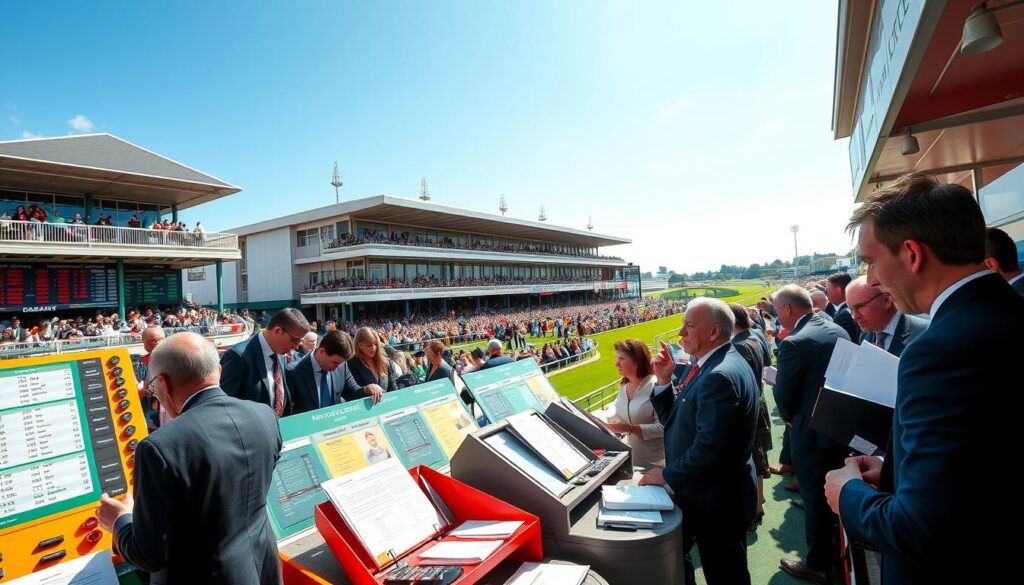
The Grand National draws a wide range of wager styles, from single-line bets to complex multi-leg tickets. Understanding the landscape of aintree betting markets helps U.S. bettors pick the right approach for race day. The huge field and unpredictable finishing order make flexibility and market shopping important.
Common bet types
Win and place bets are the basics. Each-way Aintree plays are popular because they pay out if a selection finishes in the places set by the bookmaker. Accumulators let you combine legs across the card, boosting returns while raising risk. Ante-post Grand National bets lock in prices ahead of race day and suit bettors who seek early value, but these carry non-runner and form-change risks.
Bookmaker promotions
Bookmaker offers often shape how people bet the festival. Promotions such as best odds guaranteed can protect you if a selection drifts before the off. Extra places increase the number of paying place positions on big races, useful for wide each-way coverage. Operators including BetMGM, William Hill, BoyleSports, and Unibet run targeted campaigns, though terms and eligibility vary.
Shopping odds and using promos
Compare prices across bookmakers to find superior value in aintree betting markets. Seek accounts that provide best odds guaranteed and extra places on the Grand National, then confirm minimum odds and jurisdiction limits. Avoid treating free bets or bonus funds as a substitute for true value. Read promotion rules and account for non-runner-no-bet clauses before staking.
Responsible promotion use
Use promotions to enhance returns, not to justify oversized stakes. Spread exposure across several selections and cap liability on single-event accumulators. Ante-post Grand National punts should form part of a diversified plan so one bad result does not derail your bankroll.
Understanding odds at Aintree: reading prices and implied probability
Betting at Aintree combines simple math with market movement. The same runner can show different numbers depending on timing and venue. Knowing how fractional and decimal odds convert to chance helps you judge whether a price looks fair before you stake money.
Decimal odds display total return per dollar staked. A decimal 7.0 returns $7 on a $1 bet. Bookies and exchanges pair that view with traditional fractional odds, like 6/1. For example, I Am Maximus listed at 6/1 has a decimal equivalent of 7.0. Stumptown and Iroko quoted at 8/1 show as 9.0 in decimal, making it easy to compare offers across sites.
Converting odds to implied probability is straightforward. Use the formula 1 / decimal odds. A fractional 6/1 equals an implied probability near 14.3 percent, while a 20/1 price equals roughly 4.8 percent. Traders factor in bookmaker margin, so a market-implied chance will sum to more than 100 percent.
Spotting value means your own chance estimate exceeds the bookmaker’s implied probability. If you believe a horse’s realistic chance is 20 percent but the starting price Grand National shows 6/1 (about 14.3 percent), that gap suggests value. Adjust for form, course, and jockey changes before you act.
Ante-post betting risks differ from race-day stakes. Early markets lock in prices such as Haiti Couleurs at 16/1 or I Am Maximus at 20/1 in next-year books. Those offers can be generous but bring non-runner and withdrawal exposure. Liquidity tends to be lower ante-post, so prices can swing dramatically if news breaks.
Starting price Grand National figures reflect late betting and scratches. Odds move toward the start as money flows. A bookie’s 6/1 favorite may shorten from ante-post life pricing. Use exchanges to see live market sentiment and to hedge if you need to limit downside.
Practical use of these ideas requires tracking movement and calculating implied probability on each available price. Shop fractional and decimal displays, factor in book margins, and weigh ante-post betting risks against the security of a starting price Grand National wager.
Key runners to watch at the Grand National and their betting implications
A quick scan of the ante-post lists shows established names and fresh challengers shaping betting markets. Focus on proven staying power, course experience, and recent peaks in form when weighing odds. Use the official runners page at Grand National runners for the latest declarations and to track shifts among Grand National contenders.
Top contenders and market favorites
I Am Maximus remains central to many plans after back-to-back high finishes. Review I Am Maximus odds to see how bookmakers treat his weight and consistency when you make a pick. Trainers and bettors watch seasonal targets closely because race fitness can swing prices sharply.
Stumptown profile shows a solid jumper with stamina, making him a natural candidate in big-field handicaps. Iroko form is relevant after a strong Aintree showing, giving him proven course experience that matters over four miles.
Early 2026 markets placed Haiti Couleurs favorite on the strength of Irish Grand National form. That Irish success and a consistent record explain why connections and punters have him near the head of the lists.
Each-way values and outsider prospects
Scouting uncovers attractive each-way options beyond the headline names. Perceval Legallois each-way claims come from two solid handicap wins and a campaign that favors big-field handicaps.
Vanillier Grand National interest grows after cross-country wins and a tweak in headgear. He looks like a candidate for bettors who want a value play against shorter-priced rivals.
Meetingofthewaters deserves attention despite a light campaign. Past Aintree runs and a tidy finishing kick can turn into a surprise in a chaotic renewal where stamina counts.
How form, fences, and course experience alter chances
Form lines tell one story, but Aintree fences add another layer. Horses with prior runs over the National obstacles or at extended trips tend to cope better when the field splinters in the final circuits.
Assess recent race patterns, finishing speeds, and whether a horse has carried top weight successfully. Those details affect how you interpret headlines like Iroko form or Haiti Couleurs favorite.
Jockey bookings and prep races give extra context for each runner’s chance. Shortlists that combine course experience, proven stamina, and recent peak form usually produce the most reliable betting clues for Grand National contenders.
Form analysis: how to assess stamina, weight, and course suitability
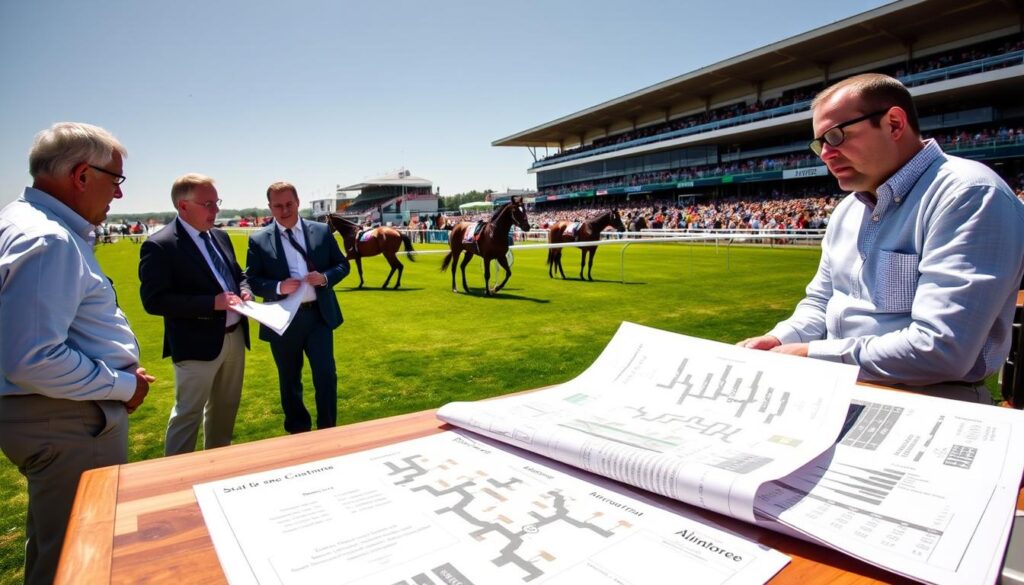
Assessing a horse for the Randox Grand National starts with clear checks on stamina, recent weights carried, and suitability to Aintree’s fences. Aintree stamina assessment relies on recent runs over extended trips, Irish long-distance handicaps, and National Hunt Chase form. Look for horses that finish strongly in four-mile tests and show staying speed on galloping tracks.
Evaluating stamina for Aintree’s extended distance
The Grand National trip of 4m 2½f demands depth of stamina. Review performances in races like the Irish Grand National or long trip chases at Cheltenham and Fairyhouse. Horses such as Stumptown and Intense Raffles have proven staying credentials through cross-country or marathon handicaps.
Pay attention to closing speed in the final two furlongs. A horse that tires badly after three miles will struggle. Trainers who prep over similar distances, or who send a prep run at Sandown or Punchestown, often give better signals for an Aintree stamina assessment.
Weight carried and historical correlations with success
Grand National weight trends favor middle-aged stayers carrying moderate loads. Data shows many winners are 8–10 years old and often carry under 11 stones. Track changes that cut the field and tweak pacing can shift demands, but weight remains a core metric when comparing rivals.
Top-weight Grand National winners are rare but possible. I Am Maximus carried 11st 12lb to victory in 2024. Use weight as a filter rather than a strict exclusion rule. Compare a contender’s best form when carrying similar pounds and note how that form came on comparable ground.
Ground signals and how drying or soft turf alters selection
Ground conditions Aintree can change quickly. Turf going effects influence stamina needs and jumping rhythm. Good, drying ground often speeds the race and favors horses with flat speed and sound jumping. Horses that need deep, soft going can suffer when the track dries.
Check trainer notes and recent runs on matching going. A horse that won on heavy turf may not make the same impact if Hewick-style front-runners thrive on faster turf. Use ground patterns to refine your Aintree stamina assessment and to weigh Grand National weight trends against likely race tempo.
Trainer and jockey influence: reading stable form and ride bookings
Stable form and ride bookings shape market moves in clear ways. Bookmakers watch declarations, shifts in campaign plans, and who the top riders choose. That attention makes it vital for bettors to track both yards and jockey commitments before placing money.
Top trainers and jockeys to follow at Aintree
Willie Mullins, Gordon Elliott, and Henry de Bromhead often appear on lists of leading handlers. Their entries draw early interest and can change ante-post prices when they aim horses at Aintree. Tracking Aintree trainers gives a sense of which yards target the big staying contests.
Why ride selections matter — Paul Townend, Rachael Blackmore, connections to winners
High-profile bookings by riders such as Paul Townend Aintree or Rachael Blackmore Grand National lift market confidence. When top Grand National jockeys link with well-regarded horses, odds tighten and public support follows. A single booking can signal that a stable believes it has a genuine chance.
Stable trends and how campaign planning impacts odds
Trainer trends Grand National show patterns of targeted preparation and specific prep races. Trainers that plan routes clearly tend to affect prices early. Market watchers note seasonal plans, schooling reports, and entries that point to a full campaign toward Aintree.
Small signals matter. A top rider switching mounts, a late declaration, or a trainer cycling horses through particular trials often alters value. Savvy bettors use this information to separate genuine contenders from overhyped entries.
Betting strategies and money management for Aintree festivals
Race day at Aintree can swing between chalky favourites and surprise long-odds winners. Use a mix of backing proven stayers and selective each-way value. Look for runners with course experience and recent staying form. Bookmakers often post extra-place offers; weigh those promotions against true value before committing stakes.
Short-term tactics include limiting exposure to a single market and taking advantage of in-play moves when a horse shows late. Split stakes between a favourite and one or two value picks to protect a day’s profit. Keep records of bets and avoid chasing losses during a busy card.
A thoughtful ante-post strategy locks in early odds but brings non-runner and withdrawal risk. Stake smaller proportions of your bankroll on ante-post selections and accept the chance of losing those stakes if a horse is withdrawn.
Use portfolio staking across markets to reduce volatility. Combine win, each-way, and small forecast bets rather than placing everything on one horse. Diversification helps smooth returns and fits a disciplined Grand National staking plan.
Practical bankroll rules must be simple to follow. Set a fixed percentage of your total funds for each bet and cap exposure to any single ante-post market. Adjust unit sizes after winning or losing streaks with a steady, pre-defined plan.
U.S. bettors should confirm legal betting options in their state and choose regulated sportsbooks. Responsible gambling US means using deposit limits, self-exclusion tools, and timeouts when needed. Treat betting as entertainment and never stake money required for essentials.
Keep a calm mindset during the festival. Good bankroll management and clear staking rules improve long-term outcomes. Use promotions like free bets and boosts as supplements, not substitutes, for careful selection and risk control.
Course-specific tips: fences, circuits, and race-day tactics
Understanding the Grand National fences is vital for choosing contenders. The Aintree obstacles are larger and more demanding than typical chase fences. Horses with proven staying and jumping ability, or previous runs over Aintree-style targets, often handle the rhythm of the race better.
Grand National fences reward brave jumpers who conserve energy early. Trainers such as Gordon Elliott and Willie Mullins send horses with cross-country experience to sharpen technique. Look for evidence of steady jumping under pressure in past form lines.
Race position shapes Aintree race tactics. Front-runners can set a strong pace but risk fading over four miles. Stayers and patient closers benefit from an attritional finish and gain ground when rivals tire. Choose tactics to match a horse’s natural cruising speed and finishing kick.
When assessing staying and jumping ability, focus on recent runs that show late stamina. Horses like Stumptown and Intense Raffles have profiles that combine resilience with reliable jumping. Course experience at Aintree or similar venues is a clear plus.
Aintree course layout influences how trainers prepare. The long straights and tight turns demand balance and stamina. Reduced field sizes and the three-day festival schedule change congestion at fences, so positioning and timing matter more than ever.
Race-day fitness Aintree is often the deciding factor. Recovery from recent campaigns affects sharpness. Trainers will target prep races to build race-day fitness Aintree without over-racing. Check for recent breeze-ups and how the horse finished in testing ground.
Adapt strategy to the day. On soft turf, stamina gains a premium and jumping errors are costly. On firmer ground, speed can keep a horse out of trouble. Use form, course history, and observed jumping to form a view on each runner.
Final choices should balance proven jumping credentials, clear stamina indicators, and suitable race tactics. That blend helps separate contenders in a race that punishes mistakes and rewards persistence over a unique circuit.
Live odds, where to find runner lists, and preparing for race day
For timely live Grand National odds and final Aintree runner lists, monitor major bookmakers such as Bet365, BetMGM, William Hill, BOYLE Sports, and Unibet; their markets update from ante-post through to race off. Final declarations often appear close to race day, with full runner details listing horses and riders — for example I Am Maximus (Paul Townend), Stumptown (Keith Donoghue), Iroko (Jonjo O’Neill Jr.), and Perceval Legallois (Mark Walsh) — and prices move quickly as non-runners and late information arrive.
Use multiple price feeds to shop prices and secure extra places or best-odds guarantees where available, and always read terms for U.S. customers. For consolidated runner-by-runner guides, live TV listings, and day-of updates, consult racecards and media partners; a reliable source for up-to-the-minute entries and form is available at At The Races, which also runs live coverage and race-day content.
Race day preparation starts with an Aintree betting checklist: compile a racecard, note jockey and trainer confirmations, check final weights and the ground forecast, and set clear staking limits. Confirm where to watch Grand National in your region — partner broadcasters and streaming services list coverage windows — and verify the legality of betting options in your state before placing wagers.
Remain vigilant for late market moves and non-runners, and update your notes during warm-ups. With a concise race day preparation plan and access to live Grand National odds and Aintree runner lists, bettors can make informed decisions while managing risk and enjoying the festival.