
The Prix de l’Arc de Triomphe at ParisLongchamp is the centerpiece of a stacked card featuring six Group 1 races and roughly £2,361,157 for the winner. This edition — the 104th running and a $5.8 million prize — draws top trainers such as André Fabre and Aidan O’Brien and remains Europe’s “big one” for turf racing.
For American viewers, Fox Sports provides a live morning window, while bettors worldwide watch Prix de l’Arc de Triomphe odds shift as markets react to form and Group 1 results. This Arc betting guide will set out how to read those moves and where value might hide on the card.
Early Longchamp betting tips already include selections across the day: Diamond Necklace at 6/4 with bet365, Asfoora 9/2 with Unibet, and claims for Daryz at 12/1 with William Hill. Timeform and other analysts flag Daryz as a progressive three-year-old by Sea The Stars, a horse to respect stepping up to 1m4f.
This short intro frames the race’s importance, the prize on offer, and the opening market signals you need before diving deeper into Arc predictions and betting angles later in the guide.
Race overview and why the Prix de l’Arc de Triomphe matters for bettors
The Prix de l’Arc de Triomphe ranks as Europe’s most valuable middle-distance turf contest. Its Arc history stretches back to 1920 and has become an autumn focal point for trainers such as André Fabre and Aidan O’Brien. The event’s Prix de l’Arc prestige draws champions and rising stars, creating a Longchamp race day atmosphere few meetings match.
History and prestige of the Arc
The Arc history shows a long list of elite winners, from Enable to Bluestocking, and occasional shocks like Torquator Tasso in 2021. That legacy boosts the race’s standing with owners and global trainers. The purse size and the depth of entries amplify the Prix de l’Arc prestige, making it a target for horses aiming to cement international reputations.
What the Arc brings to the betting market
For bettors, the Arc betting significance lies in a crowded, high-stakes market. Odds compress, favorites carry heavy attention, and value often hides in mid-priced contenders. Markets respond to recent Group 1 form, draw news and soft or quick going reports. Use the detailed race preview available at this betting deep dive to see how bookmakers shape prices and where overlays appear.
Typical field composition and tactical variables
Arc field composition usually blends seasoned Group 1 winners, improving three-year-olds and international raiders from Japan and beyond. Typical fields number 17–19 runners, which makes pace and positioning crucial. Draw bias persists at Longchamp; inside and outside stalls can change the route to victory on different ground.
Going readings often swing between good-to-soft and quicker ground, which alters how trainers prepare and how bettors size up chances. Tactical variables include early tempo, mid-race positioning and late acceleration. Those factors create live-betting opportunities and shape exotics pricing on Longchamp race day.
arc de triomphe betting: reading the market and latest odds

The ante-post picture for the Prix de l’Arc de Triomphe often shows a clear split between proven stars and emerging threats. Bookmakers listed Minnie Hauk near the head of the market at single-figure prices, with Aventure close behind. That concentration shapes early arc de triomphe odds and sets expectations for how money flows in the weeks before the race.
Market shifts respond fast to trainer moves and late entries. Coolmore’s supplementary payment for a high-profile filly can nudge prices across the board. Bettors tracking ante-post betting Arc need to watch declarations and program changes to understand where value might appear.
How to interpret ante-post favorites and price movement
Favorites in ante-post markets reflect proven Group 1 form impact and public confidence. Four winners from the last ten suggest favorites win with some regularity, but they do not dominate every renewal.
Price movement often starts with news: a strong trial, a trainer announcement, or a stable tour performance. When a horse like Daryz drifts from 12/1 to 14/1, markets may be discounting unexciting prep runs or a change in expected ground.
Value in the market: spotting underpriced chances
Value bets Arc typically hide among progressive three-year-olds and international raiders. Timeform and other analysts point out that improving youngsters can be underpriced compared with proven fillies and older males.
Look for horses with upward trends, favorable draw, and trainers who target the Arc specifically. Each-way prospects at longer ante-post prices can offer better returns, but bettors must accept non-runner risk and changing form.
How supporting Group 1 results on the card affect Arc prices
Group 1 form impact is immediate. If a promising contender posts a decisive win on the Longchamp card, odds on that runner shorten sharply in response. That reaction shapes market movements Longchamp and reorders where bookies see value.
Conversely, a surprise defeat in a key prep race pushes some names out of favor and creates opportunities for shrewd punters who react quickly to the revised probabilities.
| Scenario | Typical Market Response | What to Watch |
|---|---|---|
| Proven Group 1 filly supplemented | Shortens favorites; single-figure arc de triomphe odds for top names | Supplement fees, trainer intent, race fitness |
| Progressive three-year-old posts strong trial | Moves from outsider to attractive ante-post betting Arc price | Improvement rate, jockey booking, ground preference |
| International raider wins local Group 1 | Market movements Longchamp show quick shortening for foreign challengers | Travel history, acclimatization, trainer comments |
| Shock defeat for a market leader | Odds drift for that runner; value bets Arc may appear elsewhere | Race conditions, draw, tactical errors |
Form guide deep-dive: key contenders, strengths and betting angles
The form guide narrows the field by highlighting clear patterns in recent runs, breeding and track preferences. Focus on which horses have stepped up in Group 1 company and who peaks on soft-to-good ground. Use this to spot value among the Arc contenders and to shape each-way Arc tips for race day.
Minnie’s case: why the favorite attracts attention
The Minnie Hauk profile shows a filly with consistent Group 1 form. Trained by Aidan O’Brien and ridden by Christophe Soumillon, she is unbeaten as a three-year-old and carries wins at Epsom, the Irish Oaks and the Yorkshire Oaks. Her unbeaten sequence in top races gives bettors confidence, though she has mainly faced fillies. That raises questions about how she handles a mixed field.
Daryz and progressive three-year-olds to consider
Daryz form suggests a colt on the rise. Trained by Francis-Henri Graffard and usually ridden by Mickael Barzalona, he looks well-suited to a step up to 1m4f. The Sea The Stars pedigree supports stamina and late improvement. Given stall two and a liking for soft-to-good ground, Daryz offers an appealing each-way angle at bigger prices than the favorites.
International contenders and the Japanese challenge
Keep an eye on the Japanese raiders Arc who often bring strong late pace and international form. Horses such as Alohi Aali and Croix Du Nord come with bold Deauville and local wins that translate well to Longchamp. Their trainers travel with clear plans and jockey rides that suit a crowded, tactical Arc race.
Dark horses and each-way plays from the card
Value emerges among lesser-fancied runners with Group 1 or listed wins that day. Analysts name Cualificar, Sosie and Kalpana as credible outsiders. Stable momentum from horses like Diamond Necklace and Zarigana hints at form that can back up in the big race. For punters focused on each-way Arc tips, target horses with a recent uptick in form, suitable draw and ground preference.
The guide stresses comparing race fitness, stall draw influence and jockey booking. Cross-referencing the card for trainers in form helps uncover underpriced Arc contenders and practical each-way Arc tips for bettors who want a balanced approach.
Race-day variables: track, ground, draw and tactical impact
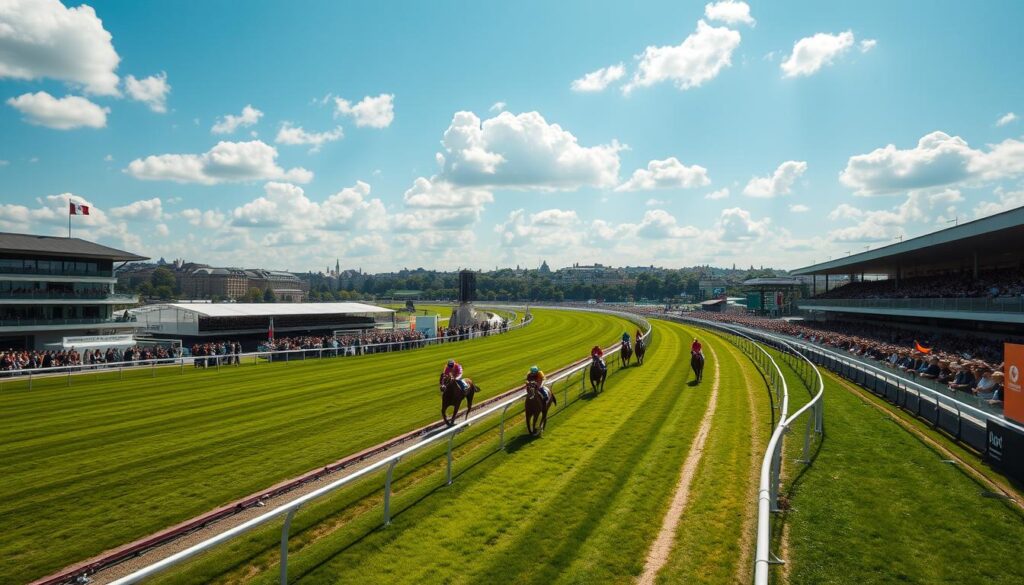
Track and forecast shape pre-race plans. The Longchamp track can swing from good to soft in a few hours in October. Trainers and bettors watch the Arc ground conditions closely because a change from good to soft Arc can transform form lines and value.
Recent results on similar going carry weight. Daryz has a profile that suits the soft side of good. That preference makes monitoring the Arc ground conditions essential for anyone backing progressive types who need cut in the turf.
Draw matters with big fields. A draw bias Longchamp will influence early positioning in a 17–19 runner heat. Stall two for Daryz has been cited as favorable, which could help secure an inside route and avoid mid-race traffic.
Running style dictates tactics. Timeform commentary stresses that a strong pace rewards horses who stay on. Trainers plan Arc race tactics around likely tempo and barrier slots to give stayers a clear run in the straight.
Japanese contenders often hinge on ground. Connections of overseas raiders check forecasts because a soft ground Arc can suit certain pedigrees. Alohi Aali and others will be measured against likely going before final declarations.
Female runners remain a live factor regardless of turf. Historical data shows mares adapt well to mixed conditions at Longchamp track, so handicappers should weigh sex, stamina lines and short-term form when judging suitability to the Arc ground conditions.
Interference and quick changes can skew form lines. One-off poor efforts often trace back to unsuitable firm ground or being boxed in. That is why draw bias Longchamp and last-minute reports feed directly into market moves and Arc race tactics adjustments.
| Variable | Key impact | What to watch |
|---|---|---|
| Going | Alters stamina demands and finishing kick | Official going reports; recent winners on soft ground Arc |
| Draw | Affects early positioning and traffic | Draw bias Longchamp trends; stall assignments for front-runners |
| Pace | Shapes race shape and mid-race gaps | Likely pacemakers; competing stable tactics |
| Stamina profile | Determines ability to sustain 1m4f | Pedigree notes like Sea The Stars line; recent staying performances |
| Weather volatility | Can cause late reversals in odds | Short-term forecasts and track watering plans |
Practical betting strategies and staking plans for the Arc weekend
A clear plan helps navigate the cluttered markets around the Prix de l’Arc de Triomphe. Set bankroll rules, pick a mix of ante-post and race-day plays, and decide how much you risk on outright winners versus place-heavy tickets.
Ante-post vs. race-day betting: pros and cons
Ante-post bets can deliver stronger returns when you back progressive types early. You lock value before owners and trainers confirm entries or pay supplementary fees. Remember Coolmore’s move to pay for a late entry changes prices and removes simple non-runner refunds.
Race-day markets offer clearer ground, draw information, and confirmed fields. Those details reduce volatility and help you fine-tune each-way Arc strategies. Split stakes to balance upside and certainty.
Staking examples based on suggested tips
Use a graded Arc staking plan tied to a unit size. Follow example stakes: 2 units on a top confidence win, 1 unit on a second-choice win, 0.5 units each-way for longer shots. That mirrors common tipster mixes such as backing a strong single at 2 points and smaller each-way plays at longer odds.
Size stakes to bankroll percentage and set a stop-loss. If you adopt mixed ante-post vs race-day action, reserve funds for late opportunities when odds settle.
Using multiple markets: outright, each-way, exotic bets
Outright bets reward conviction. Each-way Arc strategies protect against narrow defeats in large fields. Place terms and field size determine value, so pick each-way targets carefully—look for Daryz-style progressive horses or proven outsiders at double-figure quotes.
Exotics Arc betting can magnify returns with tricast and quinella combinations. Allocate a small portion of the bankroll to exotics to chase high-payoff outcomes while keeping core funds in win and each-way plays.
Manage bookmaker tools: use free bets, early payout offers, and cash-out sparingly. Stick to the Arc staking plan and keep records of bets for performance review.
Responsible gambling, resources and final pre-race checklist
Set a clear staking plan before the Arc and stick to it. Decide separate bankrolls for ante-post and live bets, activate bookmaker tools like deposit limits, loss limits, time-outs and self-exclusion, and avoid chasing losses. These practical steps help enforce betting limits and keep the day focused on Longchamp betting tips rather than emotion.
Use reliable gambling help resources if betting feels risky. Organisations such as NHS Help, GamCare, and Gamblers Anonymous offer confidential support and guidance. Be cautious with sign-up offers and remember that editorial coverage may include affiliate links while remaining independent in analysis.
For U.S. viewers, factor broadcast schedules into your plan—Fox Sports morning windows often cover late developments. Monitor live reports for non-runners and ground updates, and treat single poor runs with context: check draw, ground, interference and trainer comments before reacting. Analyst caution can prevent knee-jerk moves that hurt long-term returns.
Finalize a short Arc pre-race checklist: confirm final declarations and non-runners, read the official ground report, note the stall draw and any jockey changes, ensure responsible gambling Arc settings are active, and separate live-betting funds from ante-post stakes. A calm, methodical approach tied to these items will improve decision-making on race day.