
This live greyhound betting guide is written for U.S. bettors who want clear, practical advice on in-play greyhound wagering. You will find site recommendations, from Bovada and BetOnline to XBet, MyBookie, and Bookmaker, alongside international options for comparison. The goal is to point you to the best greyhound betting sites that offer strong markets, live streaming, and reliable odds feeds.
We cover how live greyhound odds move before and during races, the difference between tote and fixed-odds pools, and the mechanics of live markets. Expect straightforward explanations of bet types — win, place, each-way, forecasts, trifectas, and superfectas — plus guidance on exotic and multi-race plays.
The guide also focuses on data-driven strategies using speed figures and APIs, as well as practical bankroll and staking advice to improve long-term results. You’ll get tips on promos and bonuses, live streaming tools, and common beginner mistakes to avoid when betting in-play.
Why Live Greyhound Betting Is Popular and How It Works
Short, intense races create a strong appeal. The greyhound race speed means outcomes arrive in roughly 30 seconds. That pace drives frequent action and keeps bettors engaged through rapid cycles of decision and reward.
Speed and immediacy of races
Races that last half a minute reward quick thinking. Many punters favor the instant feedback loop. The rush of a fast finish and the chance to place another bet within minutes explains part of why live greyhound betting is popular.
Overview of live betting mechanics
Live wagering opens when a race nears declaration. Pre-race markets roll into in-play offerings as handlers confirm traps. Platforms update prices in real time so bettors can react to late information and visible warm-ups.
Types of in-play markets commonly offered
Common in-play greyhound markets include live win and place bets, same-race multis, and quick prop markets for the break or sectional times. Some sportsbooks add cash-out options and low minimum stakes to keep action accessible.
How live odds move and what influences them
Live odds movement reflects bets, scratches, trap confirmations, and track reports. Bookmakers tweak fixed lines while tote pools shift with pooled money, producing different end dividends. Visible behavior during warm-ups can trigger sharp moves from both public bets and professional traders.
Top Sites for Greyhound Betting in the United States and International Options
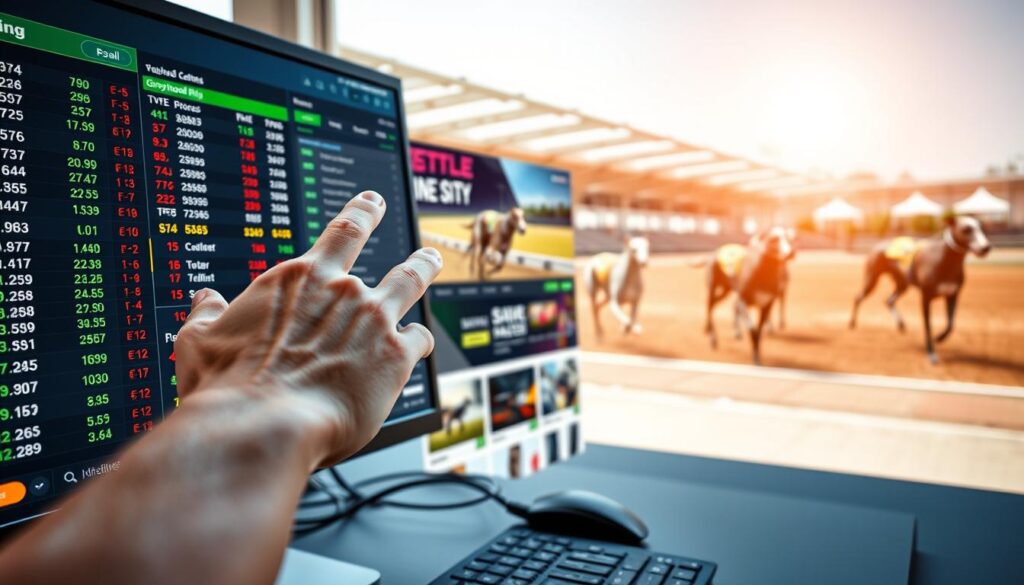
Choosing the right provider shapes your live and pre-race experience. Focus on clear race cards, fast odds feeds, dependable live streaming, and a wide menu of markets such as win/place, each-way, forecasts, and exotic bets. Security and payment options matter when moving funds. Compare user interfaces so you can place in-play wagers quickly during a short greyhound race.
Criteria to weigh: market depth, competitive odds, transparent settlement rules, quality of data integration, and small print on withdrawals and identity checks. Good customer support keeps minor issues from turning into lost bets.
US-friendly options: Bovada and BetOnline remain top choices for many American bettors because they list trifectas, props, and steady live odds. XBet emphasizes in-play greyhound markets and a clean mobile layout for fast wagers. MyBookie stands out with regular greyhound betting bonuses and seasonal offers that appeal to bankroll builders. Bookmaker rewards loyal players with tiered perks and multiple funding methods.
International greyhound bookmakers: Unibet brings Racing Post data and Unibet TV for broad coverage. Paddy Power offers educational features and sharp pricing for UK and Irish meetings. Ladbrokes provides Best Odds Guaranteed on many greyhound races. Coral pairs live streaming with Timeform analysis for each meeting. 10Bet delivers a tidy interface plus PA Betting Services data, while BoyleSports backs major Irish events and strong ante-post markets. TAB covers Australian and New Zealand racing with Trackside streaming and Same Race Multi options.
Comparing promotions: welcome offers vary widely and affect value. Typical US welcome deals include 50% up to $250 at Bovada and BetOnline, 50% up to $200 at XBet, 100% up to $1,000 at MyBookie, and a 25% match at Bookmaker. International sites may offer money-back specials, enhanced odds, and Best-Odds-Guaranteed on selected races.
Scan wagering requirements before you accept any offer. Look at minimum deposits, rollover rules, and which markets qualify for greyhound betting bonuses. That step prevents surprises and keeps your strategy aligned with the most reliable platforms.
live greyhound betting
Live greyhound betting moves fast. This short guide breaks the action into clear steps and tools so you can react with confidence. Read each part before you place a stake.
How to place live bets step by step
Create and verify an account at a licensed operator like BetOnline or Unibet. Fund your account with an accepted method, such as card, e-wallet, or bank transfer. Open the racing section and pick the greyhound meeting you want. Load the race card, choose a market—win/place, each-way, or a same-race multi—enter your stake and confirm the bet. For in-play, wait until the race opens to live betting, watch the odds feed for changes, select any available props and lock in your wager before the market closes.
When to use pre-race vs. in-play markets
Use pre-race when your decision rests on form, trap bias, trainer trends, or distance suitability. These factors give time to compare lines across bookmakers and find value.
Switch to in-play when warm-up behavior, scratches, or late trap changes change the picture. Short windows of in-play value appear after an unexpected break or a visible stumble. Skilled punters exploit these shifts during brief moments of advantage.
Tools and features that improve live betting
Live streaming greyhound betting helps you watch starts and early splits in real time. Services such as Unibet TV or Trackside on TAB give visual context for quick reads.
Fast odds feeds and low-latency price updates reduce execution risk. Same-race multis let you combine markets within a single race for compound value. Cash-out greyhound bets offer a way to lock profit or limit loss when markets swing unexpectedly.
Data APIs and live stat overlays supply split times and sectional data you can use to refine in-play calls.
Risk considerations for in-play wagering
In-play markets move quickly. Execution risk and slippage are higher than pre-race, especially on mobile networks or slow interfaces. Low liquidity pools, such as certain tote markets, may produce unpredictable dividends.
Emotional or reactive betting inflates variance. Set clear stake limits and use cash-out greyhound bets sparingly to manage downside rather than chase losses. Always confirm minimum bet and settlement rules before wagering in-play.
| Step | Action | Why it matters |
|---|---|---|
| 1 | Create & verify account | Ensures withdrawals and compliance with site rules |
| 2 | Fund account | Needed to place bets instantly when live windows open |
| 3 | Select meeting & load race card | Shows markets, starters, and any late changes |
| 4 | Choose market & stake | Targets the outcome you want: win, place, each-way, multi |
| 5 | Monitor odds feed or stream | Captures shifts you can exploit with timely bets |
| 6 | Place bet or use cash-out | Locks position or cuts losses as conditions change |
Essential Bet Types and How Payouts Work
Learning core greyhound bet types gives you control at the tote and with bookmakers. Start with straight bets: a win pays only when your greyhound crosses first. A place pays for top-two or top-three finishes depending on the track’s rules, which lowers risk and trims potential returns.
Read a clear primer on Win, Place and Show to see how the basics stack up before moving on to more complex markets.
Straight win and place bets explained
Win wagers reward single-dog first-place finishes. Place wagers pay when your pick finishes in the top slots set by track rules. Expect win bets to offer the highest payouts and place bets to reduce volatility.
Each-way, forecasts, trifectas, superfectas and how they pay
Each-way splits your stake into a win part and a place part. If the dog wins you collect both portions. Forecasts ask you to pick first and second in exact order. Reverse forecasts let either order pay but cost more.
Trifecta greyhound betting requires selecting first, second and third in exact order, which creates very large payouts when you hit. Superfectas raise the difficulty by requiring the first four in order. These exotics deliver high rewards and steep risk.
Exotic and multi-race bets and boxing options
Multi-race bets such as Pick Three demand correct winners across consecutive races. Same Race Multi combines multiple selections inside one race, often offered by TAB and leading bookmakers. These products multiply payout potential across events.
Boxing lets you cover permutations. Box a forecast or trifecta to cover all orders among chosen dogs. Boxing increases your stake but protects against order mistakes when chasing exotic returns.
Tote vs fixed-odds markets and when each matters
Tote vs fixed odds greyhound markets settle differently. Tote, or pari-mutuel, pools share the prize pot among winners after commission and provide dividends based on total pool size. Fixed-odds guarantee the price when your bet is accepted by the bookmaker.
Use fixed odds when you need a locked-in price. Choose totes when pools are deep and can produce surprising dividends. Know settlement timing and rules for the product you pick so you avoid unexpected results.
| Bet Type | What You Must Predict | Risk Level | Typical Payout |
|---|---|---|---|
| Win | First place | High | Highest |
| Place | Top two or three (track rules) | Medium | Medium |
| Show / Each-way (place part) | Top three | Low | Lowest |
| Forecast / Reverse Forecast | First & second (order matters for forecast) | Very High | Very High |
| Trifecta / Boxed Trifecta | First, second, third (exact order or boxed) | Very High | Very High to Massive |
| Superfecta | First through fourth exact | Extreme | Massive |
| Pick Three / Same Race Multi | Multiple race winners or multiple selections in one race | High to Extreme | High to Massive |
| Tote (Pari-mutuel) | Pool-based pricing | Varies | Pool-dependent |
| Fixed Odds (Bookmaker) | Price locked at bet acceptance | Varies | Guaranteed at acceptance |
Key Factors to Analyze Before You Bet
Before staking money, run a quick checklist to avoid surprises. Focus on measurable items you can verify on race cards and past performance sheets. Break each element into simple questions you can answer in a minute.
Form and recent results
Study recent finishes, margins, recovery between runs, and published speed figures. Use greyhound form analysis to compare times at similar distances. Consistent performers with strong recent form tend to be lower-risk targets.
Trap draw and running style
Check how the trap draw affects early positioning. A trap bias greyhound often shows clear patterns at a venue. Match a dog’s preferred running line to the trap it draws to predict early traffic and finishing chances.
Trainer and kennel patterns
Review local trainer records and recent shipping behavior. Trainer trends greyhound can reveal who peaks dogs for specific tracks or distances. Multiple runners from the same kennel hint at current fitness levels and preparation quality.
Weather, surface and distance fit
Track conditions greyhound vary with rain and temperature. Some dogs handle wet or heavy surfaces better than dry tracks. Confirm a dog’s past performance at the planned distance and under similar track states before committing funds.
A simple table below helps compare the main factors quickly for any race you study.
| Factor | What to Check | Quick Action |
|---|---|---|
| Form | Recent finishing positions, margins, speed figures | Flag consistent top-three finishes and similar-distance times |
| Trap Draw | Inside vs. wide wins, first-turn losses, track-specific bias | Pair dog running line with likely trap outcome |
| Trainer | Strike rate at track, recent kennel runners, shipping notes | Prefer trainers with positive short-term trends |
| Track & Weather | Surface state, recent rain, race-day maintenance | Match a dog’s past success on similar surfaces |
| Distance Suitability | Split times, finishing speed, past results at distance | Select sprinters for short trips and stayers for longer races |
Use the checklist to create a short entry note for each race. Keep language simple: list the main advantage and the main risk. That method helps you make faster, cleaner decisions during live betting.
Proven Strategies and Money Management for Consistent Results
Smart greyhound betting strategies mix disciplined money rules with sharp selection. Start with a reliable process that prioritizes small, repeatable edges. Focus on sustainable returns rather than one-off wins.
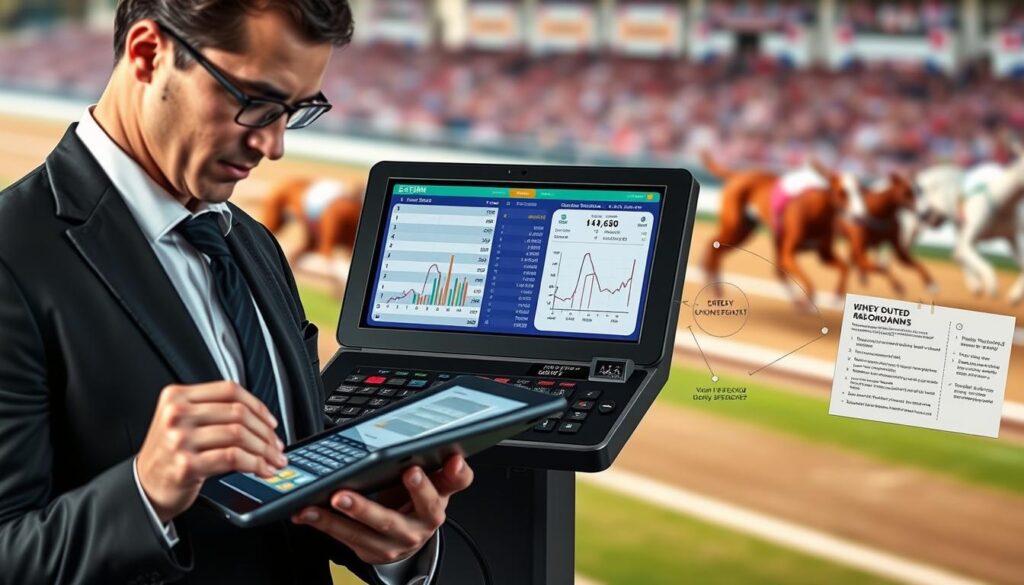
Value betting means looking for odds that misprice a dog versus your probability model. Compare lines from Bovada, BetOnline, XBet, MyBookie and overlay tote prices to spot divergence. Target clear overlays and be patient; value betting greyhounds is about steady advantage, not chasing longshots.
Use a greyhound betting API to pull live speed figures, sectional times and trap stats. Automate alerts for sudden odds shifts and integrate historical datasets to quantify trap bias and trainer form. Real-time feeds give you a timing edge when in-play value appears.
Bankroll management greyhound plans protect capital across swings. Adopt fixed-percentage staking or unit-based systems and cap single-race exposure. For exotics, cut units and treat them as smaller allocation bets to reduce ruin risk.
Pick when to back favorites and when to hunt underdogs. Favor consistent, well-backed runners for steady profit and move to underdogs when data shows true mispricing. Use props, same-race multis and parlays sparingly; they amplify variance and should follow clear value signals.
Track performance and refine tactics with simple metrics: return on investment, strike rate and average odds. Revisit staking rules after long losing stretches and avoid increasing stake size to chase losses. Discipline keeps models effective.
Common Mistakes to Avoid and Practical Tips for New Live Bettors
Many newcomers fall into predictable greyhound betting mistakes, most commonly backing favorites without checking form. Avoid emotional plays and study recent results, trap bias, and trainer trends before staking money. Small, focused research beats spreading bets across too many races.
Use live betting tips greyhound to shape in-play choices: compare odds on Bovada, BetOnline, XBet, MyBookie, and Bookmaker and check international feeds from Unibet or TAB for price moves. Leverage live streaming and fast odds feeds to confirm what you see on the tote versus fixed markets. Verify bonus terms before accepting offers so promotions don’t lock you into poor value.
Beginner greyhound betting tips include starting with very small stakes while you learn—some operators accept bets under $1—then scale up only when a method proves profitable. Prefer races with clear form and stable market depth. For exotics, use boxed bets or reverse forecasts to limit downside while you practice combinations.
Keep long-term focus: stick to bankroll rules, avoid chasing losses, and use data sources and APIs to test edge over time. Patience and discipline turn the fast pace of live greyhound betting into consistent results, provided you eliminate common errors and follow proven live betting tips greyhound.
FAQ
What makes live greyhound betting different from other racing markets?
Which US sportsbooks offer the best live greyhound coverage?
Are there good international alternatives for greyhound racing?
How do tote (pari‑mutuel) pools differ from fixed‑odds markets?
What in-play markets are commonly available for greyhound races?
FAQ
What makes live greyhound betting different from other racing markets?
Live greyhound betting moves extremely fast because races last roughly 30 seconds. That speed creates instant outcomes and rapid decision cycles. Markets convert from pre-race to in-play quickly, odds shift on visible warm-ups, trap confirmations, scratches, and betting volume, and execution risk (slippage) is higher than in slower sports.
Which US sportsbooks offer the best live greyhound coverage?
Recommended US-friendly operators include Bovada, BetOnline, XBet, MyBookie, and Bookmaker. These sites provide extensive greyhound markets—win/place, each-way, forecasts, trifectas, and props—live odds feeds, competitive promos, and low minimums. Choose based on live streaming availability, market depth, and withdrawal reliability.
Are there good international alternatives for greyhound racing?
Yes. Unibet, Paddy Power, Ladbrokes, Coral, 10Bet, BoyleSports, and TAB offer strong international coverage. Features often include live streaming (Unibet TV, TAB Trackside), Best Odds Guaranteed (Ladbrokes, BoyleSports), Timeform or Racing Post data, and large tote pools for certain meetings.
How do tote (pari‑mutuel) pools differ from fixed‑odds markets?
Tote pools calculate dividends from all pooled stake money, so returns depend on the final pool split at settlement. Fixed‑odds bookmakers lock in the price when your bet is accepted. Use fixed odds for guaranteed price and totes when large pools may produce superior dividends—understand settlement timing and liquidity differences first.
What in-play markets are commonly available for greyhound races?
Common in-play options include live win/place, same‑race multis, short‑window prop bets (first to break, sectional performance), and cash‑out offers. Many operators support low minimum wagers (often
FAQ
What makes live greyhound betting different from other racing markets?
Live greyhound betting moves extremely fast because races last roughly 30 seconds. That speed creates instant outcomes and rapid decision cycles. Markets convert from pre-race to in-play quickly, odds shift on visible warm-ups, trap confirmations, scratches, and betting volume, and execution risk (slippage) is higher than in slower sports.
Which US sportsbooks offer the best live greyhound coverage?
Recommended US-friendly operators include Bovada, BetOnline, XBet, MyBookie, and Bookmaker. These sites provide extensive greyhound markets—win/place, each-way, forecasts, trifectas, and props—live odds feeds, competitive promos, and low minimums. Choose based on live streaming availability, market depth, and withdrawal reliability.
Are there good international alternatives for greyhound racing?
Yes. Unibet, Paddy Power, Ladbrokes, Coral, 10Bet, BoyleSports, and TAB offer strong international coverage. Features often include live streaming (Unibet TV, TAB Trackside), Best Odds Guaranteed (Ladbrokes, BoyleSports), Timeform or Racing Post data, and large tote pools for certain meetings.
How do tote (pari‑mutuel) pools differ from fixed‑odds markets?
Tote pools calculate dividends from all pooled stake money, so returns depend on the final pool split at settlement. Fixed‑odds bookmakers lock in the price when your bet is accepted. Use fixed odds for guaranteed price and totes when large pools may produce superior dividends—understand settlement timing and liquidity differences first.
What in-play markets are commonly available for greyhound races?
Common in-play options include live win/place, same‑race multis, short‑window prop bets (first to break, sectional performance), and cash‑out offers. Many operators support low minimum wagers (often $1 or less) and fast odds feeds to handle the quick tempo of greyhound racing.
How and why do live odds move before and during a race?
Odds change from betting volume, late scratches, trap confirmations, visible warm‑up behavior, and weather or track updates. Bookmakers adjust fixed lines to hedge exposure; tote pools reflect real‑time money and produce final dividends. Sudden market swings often follow last‑minute information that affects perceived probability.
What tools improve my chances when betting in-play?
Use live streaming (Unibet TV, TAB Trackside), fast odds feeds, cash‑out functions, same‑race multis, and APIs or data services for sectional times and speed figures. Real‑time data and high‑quality video let you spot a poor break or strong early split and react within the short live window.
How should I place a live greyhound bet step by step?
Create and verify an account with a licensed operator, fund it, navigate to the racing section and select the greyhound meeting, open the race card, pick a market (win/place, each‑way, same‑race multi), enter your stake and confirm. For in‑play, wait for the race to enter the live window, monitor the odds feed, and act quickly before the market closes.
When is pre‑race betting preferable to in‑play betting?
Pre‑race is better when you rely on form, trainer trends, trap bias, and distance suitability. In‑play is useful to exploit scratches, trap changes, warm‑up behavior, or an unexpected break. Experienced punters use short in‑play windows to capture transient value, but execution risk is higher.
What are the main bet types and how do payouts work?
Straight win pays if the dog finishes first. Place pays for top positions (top two or three depending on rules), lowering risk. Each‑way combines win and place. Forecasts (exacta) require first and second in order; trifectas and superfectas require first three or four in order and pay much higher. Exotics and multi‑race bets offer larger returns but higher difficulty.
How do boxed bets and Same Race Multis work?
Boxing permutations lets you cover all order combinations for forecasts or trifectas by selecting multiple dogs, increasing stake but reducing order risk. Same Race Multis combine different market types within the same race (for example, win and exacta) to create parlay‑style payouts. They are useful for targeted coverage but raise variance.
What data should I study before placing a live greyhound bet?
Focus on recent results, margins, recovery between runs, speed figures, sectional times, trap draw history, running style, trainer and kennel form, and weather or track condition. Use race cards, historical datasets, and speed‑figure services to quantify trends and spot trap bias at specific tracks.
How important is trap draw and running style?
Very important. Trap (box) position affects a dog’s chance depending on track geometry. Inside traps favor quick breakers; wide traps help late runners. Identify track‑specific trap bias from past results and match it against each dog’s preferred line to reduce selection risk.
What staking strategies help manage risk in greyhound betting?
Use fixed‑percentage staking or unit‑based plans to protect capital. Limit individual stakes to a small percent of your bankroll. Allocate smaller stakes to exotics and multi‑race bets. Keep disciplined records and avoid increasing stakes to chase losses; variance in exotics can be severe.
How can I spot value and mismatches between bookmakers and totes?
Compare prices across multiple operators (Bovada, BetOnline, XBet, MyBookie) and check tote dividends. Calculate your modelled probability versus the bookmaker odds to find overlays. Use APIs and live feeds to detect transient mispricings, and focus on consistent small edges rather than rare longshots.
What promotions and bonuses should I compare for greyhound betting?
Look at welcome bonuses (Bovada/BetOnline ~50% up to $250; XBet ~50% up to $200; MyBookie 100% up to $1,000; Bookmaker 25% up to $500), enhanced odds, price boosts, Best Odds Guaranteed (Ladbrokes, BoyleSports), and race‑specific offers. Always read wagering requirements, minimum deposits, and eligible markets before accepting.
What common beginner mistakes should I avoid in live greyhound betting?
Avoid emotional betting, overbetting across many races, ignoring trap bias, neglecting trainer trends and distance suitability, and failing to follow bankroll rules. Also beware of low‑liquidity tote pools and high execution risk in fast markets. Start with small stakes while learning.
Is live betting suitable for automated strategies using APIs?
Yes. Live APIs and data feeds enable automated signals, alerts, and execution to exploit brief in‑play value. Use speed figures, sectional times, and trap statistics to build models. Ensure your execution latency is low and account for slippage and bookmaker acceptance rules when automating.
How should I approach favorites versus underdogs in live markets?
Play favorites for stable returns when form and data support them. Target underdogs when your model shows genuine mispricing. Use props and parlays sparingly; parlays amplify variance. For exotics, consider boxed bets or reverse forecasts to balance coverage and cost.
What practical tips help improve live betting execution?
Use reputable operators, verify bonus terms, compare odds across recommended sites, leverage live streaming and fast feeds, and start with small stakes (often under $1 minimum at some sites). Prioritize races with clear form and market depth, and use boxed bets to reduce exposure on exotics.
What are the main risks of in‑play greyhound wagering?
Risks include rapid market moves causing slippage, emotional or reactive betting, low liquidity in tote pools, and greater variance from exotics. Also monitor settlement rules, minimum bet sizes, and cash‑out conditions. Maintain strict bankroll controls to mitigate downside.
or less) and fast odds feeds to handle the quick tempo of greyhound racing.
How and why do live odds move before and during a race?
Odds change from betting volume, late scratches, trap confirmations, visible warm‑up behavior, and weather or track updates. Bookmakers adjust fixed lines to hedge exposure; tote pools reflect real‑time money and produce final dividends. Sudden market swings often follow last‑minute information that affects perceived probability.
What tools improve my chances when betting in-play?
Use live streaming (Unibet TV, TAB Trackside), fast odds feeds, cash‑out functions, same‑race multis, and APIs or data services for sectional times and speed figures. Real‑time data and high‑quality video let you spot a poor break or strong early split and react within the short live window.
How should I place a live greyhound bet step by step?
Create and verify an account with a licensed operator, fund it, navigate to the racing section and select the greyhound meeting, open the race card, pick a market (win/place, each‑way, same‑race multi), enter your stake and confirm. For in‑play, wait for the race to enter the live window, monitor the odds feed, and act quickly before the market closes.
When is pre‑race betting preferable to in‑play betting?
Pre‑race is better when you rely on form, trainer trends, trap bias, and distance suitability. In‑play is useful to exploit scratches, trap changes, warm‑up behavior, or an unexpected break. Experienced punters use short in‑play windows to capture transient value, but execution risk is higher.
What are the main bet types and how do payouts work?
Straight win pays if the dog finishes first. Place pays for top positions (top two or three depending on rules), lowering risk. Each‑way combines win and place. Forecasts (exacta) require first and second in order; trifectas and superfectas require first three or four in order and pay much higher. Exotics and multi‑race bets offer larger returns but higher difficulty.
How do boxed bets and Same Race Multis work?
Boxing permutations lets you cover all order combinations for forecasts or trifectas by selecting multiple dogs, increasing stake but reducing order risk. Same Race Multis combine different market types within the same race (for example, win and exacta) to create parlay‑style payouts. They are useful for targeted coverage but raise variance.
What data should I study before placing a live greyhound bet?
Focus on recent results, margins, recovery between runs, speed figures, sectional times, trap draw history, running style, trainer and kennel form, and weather or track condition. Use race cards, historical datasets, and speed‑figure services to quantify trends and spot trap bias at specific tracks.
How important is trap draw and running style?
Very important. Trap (box) position affects a dog’s chance depending on track geometry. Inside traps favor quick breakers; wide traps help late runners. Identify track‑specific trap bias from past results and match it against each dog’s preferred line to reduce selection risk.
What staking strategies help manage risk in greyhound betting?
Use fixed‑percentage staking or unit‑based plans to protect capital. Limit individual stakes to a small percent of your bankroll. Allocate smaller stakes to exotics and multi‑race bets. Keep disciplined records and avoid increasing stakes to chase losses; variance in exotics can be severe.
How can I spot value and mismatches between bookmakers and totes?
Compare prices across multiple operators (Bovada, BetOnline, XBet, MyBookie) and check tote dividends. Calculate your modelled probability versus the bookmaker odds to find overlays. Use APIs and live feeds to detect transient mispricings, and focus on consistent small edges rather than rare longshots.
What promotions and bonuses should I compare for greyhound betting?
Look at welcome bonuses (Bovada/BetOnline ~50% up to 0; XBet ~50% up to 0; MyBookie 100% up to
FAQ
What makes live greyhound betting different from other racing markets?
Live greyhound betting moves extremely fast because races last roughly 30 seconds. That speed creates instant outcomes and rapid decision cycles. Markets convert from pre-race to in-play quickly, odds shift on visible warm-ups, trap confirmations, scratches, and betting volume, and execution risk (slippage) is higher than in slower sports.
Which US sportsbooks offer the best live greyhound coverage?
Recommended US-friendly operators include Bovada, BetOnline, XBet, MyBookie, and Bookmaker. These sites provide extensive greyhound markets—win/place, each-way, forecasts, trifectas, and props—live odds feeds, competitive promos, and low minimums. Choose based on live streaming availability, market depth, and withdrawal reliability.
Are there good international alternatives for greyhound racing?
Yes. Unibet, Paddy Power, Ladbrokes, Coral, 10Bet, BoyleSports, and TAB offer strong international coverage. Features often include live streaming (Unibet TV, TAB Trackside), Best Odds Guaranteed (Ladbrokes, BoyleSports), Timeform or Racing Post data, and large tote pools for certain meetings.
How do tote (pari‑mutuel) pools differ from fixed‑odds markets?
Tote pools calculate dividends from all pooled stake money, so returns depend on the final pool split at settlement. Fixed‑odds bookmakers lock in the price when your bet is accepted. Use fixed odds for guaranteed price and totes when large pools may produce superior dividends—understand settlement timing and liquidity differences first.
What in-play markets are commonly available for greyhound races?
Common in-play options include live win/place, same‑race multis, short‑window prop bets (first to break, sectional performance), and cash‑out offers. Many operators support low minimum wagers (often $1 or less) and fast odds feeds to handle the quick tempo of greyhound racing.
How and why do live odds move before and during a race?
Odds change from betting volume, late scratches, trap confirmations, visible warm‑up behavior, and weather or track updates. Bookmakers adjust fixed lines to hedge exposure; tote pools reflect real‑time money and produce final dividends. Sudden market swings often follow last‑minute information that affects perceived probability.
What tools improve my chances when betting in-play?
Use live streaming (Unibet TV, TAB Trackside), fast odds feeds, cash‑out functions, same‑race multis, and APIs or data services for sectional times and speed figures. Real‑time data and high‑quality video let you spot a poor break or strong early split and react within the short live window.
How should I place a live greyhound bet step by step?
Create and verify an account with a licensed operator, fund it, navigate to the racing section and select the greyhound meeting, open the race card, pick a market (win/place, each‑way, same‑race multi), enter your stake and confirm. For in‑play, wait for the race to enter the live window, monitor the odds feed, and act quickly before the market closes.
When is pre‑race betting preferable to in‑play betting?
Pre‑race is better when you rely on form, trainer trends, trap bias, and distance suitability. In‑play is useful to exploit scratches, trap changes, warm‑up behavior, or an unexpected break. Experienced punters use short in‑play windows to capture transient value, but execution risk is higher.
What are the main bet types and how do payouts work?
Straight win pays if the dog finishes first. Place pays for top positions (top two or three depending on rules), lowering risk. Each‑way combines win and place. Forecasts (exacta) require first and second in order; trifectas and superfectas require first three or four in order and pay much higher. Exotics and multi‑race bets offer larger returns but higher difficulty.
How do boxed bets and Same Race Multis work?
Boxing permutations lets you cover all order combinations for forecasts or trifectas by selecting multiple dogs, increasing stake but reducing order risk. Same Race Multis combine different market types within the same race (for example, win and exacta) to create parlay‑style payouts. They are useful for targeted coverage but raise variance.
What data should I study before placing a live greyhound bet?
Focus on recent results, margins, recovery between runs, speed figures, sectional times, trap draw history, running style, trainer and kennel form, and weather or track condition. Use race cards, historical datasets, and speed‑figure services to quantify trends and spot trap bias at specific tracks.
How important is trap draw and running style?
Very important. Trap (box) position affects a dog’s chance depending on track geometry. Inside traps favor quick breakers; wide traps help late runners. Identify track‑specific trap bias from past results and match it against each dog’s preferred line to reduce selection risk.
What staking strategies help manage risk in greyhound betting?
Use fixed‑percentage staking or unit‑based plans to protect capital. Limit individual stakes to a small percent of your bankroll. Allocate smaller stakes to exotics and multi‑race bets. Keep disciplined records and avoid increasing stakes to chase losses; variance in exotics can be severe.
How can I spot value and mismatches between bookmakers and totes?
Compare prices across multiple operators (Bovada, BetOnline, XBet, MyBookie) and check tote dividends. Calculate your modelled probability versus the bookmaker odds to find overlays. Use APIs and live feeds to detect transient mispricings, and focus on consistent small edges rather than rare longshots.
What promotions and bonuses should I compare for greyhound betting?
Look at welcome bonuses (Bovada/BetOnline ~50% up to $250; XBet ~50% up to $200; MyBookie 100% up to $1,000; Bookmaker 25% up to $500), enhanced odds, price boosts, Best Odds Guaranteed (Ladbrokes, BoyleSports), and race‑specific offers. Always read wagering requirements, minimum deposits, and eligible markets before accepting.
What common beginner mistakes should I avoid in live greyhound betting?
Avoid emotional betting, overbetting across many races, ignoring trap bias, neglecting trainer trends and distance suitability, and failing to follow bankroll rules. Also beware of low‑liquidity tote pools and high execution risk in fast markets. Start with small stakes while learning.
Is live betting suitable for automated strategies using APIs?
Yes. Live APIs and data feeds enable automated signals, alerts, and execution to exploit brief in‑play value. Use speed figures, sectional times, and trap statistics to build models. Ensure your execution latency is low and account for slippage and bookmaker acceptance rules when automating.
How should I approach favorites versus underdogs in live markets?
Play favorites for stable returns when form and data support them. Target underdogs when your model shows genuine mispricing. Use props and parlays sparingly; parlays amplify variance. For exotics, consider boxed bets or reverse forecasts to balance coverage and cost.
What practical tips help improve live betting execution?
Use reputable operators, verify bonus terms, compare odds across recommended sites, leverage live streaming and fast feeds, and start with small stakes (often under $1 minimum at some sites). Prioritize races with clear form and market depth, and use boxed bets to reduce exposure on exotics.
What are the main risks of in‑play greyhound wagering?
Risks include rapid market moves causing slippage, emotional or reactive betting, low liquidity in tote pools, and greater variance from exotics. Also monitor settlement rules, minimum bet sizes, and cash‑out conditions. Maintain strict bankroll controls to mitigate downside.
,000; Bookmaker 25% up to 0), enhanced odds, price boosts, Best Odds Guaranteed (Ladbrokes, BoyleSports), and race‑specific offers. Always read wagering requirements, minimum deposits, and eligible markets before accepting.
What common beginner mistakes should I avoid in live greyhound betting?
Avoid emotional betting, overbetting across many races, ignoring trap bias, neglecting trainer trends and distance suitability, and failing to follow bankroll rules. Also beware of low‑liquidity tote pools and high execution risk in fast markets. Start with small stakes while learning.
Is live betting suitable for automated strategies using APIs?
Yes. Live APIs and data feeds enable automated signals, alerts, and execution to exploit brief in‑play value. Use speed figures, sectional times, and trap statistics to build models. Ensure your execution latency is low and account for slippage and bookmaker acceptance rules when automating.
How should I approach favorites versus underdogs in live markets?
Play favorites for stable returns when form and data support them. Target underdogs when your model shows genuine mispricing. Use props and parlays sparingly; parlays amplify variance. For exotics, consider boxed bets or reverse forecasts to balance coverage and cost.
What practical tips help improve live betting execution?
Use reputable operators, verify bonus terms, compare odds across recommended sites, leverage live streaming and fast feeds, and start with small stakes (often under
FAQ
What makes live greyhound betting different from other racing markets?
Live greyhound betting moves extremely fast because races last roughly 30 seconds. That speed creates instant outcomes and rapid decision cycles. Markets convert from pre-race to in-play quickly, odds shift on visible warm-ups, trap confirmations, scratches, and betting volume, and execution risk (slippage) is higher than in slower sports.
Which US sportsbooks offer the best live greyhound coverage?
Recommended US-friendly operators include Bovada, BetOnline, XBet, MyBookie, and Bookmaker. These sites provide extensive greyhound markets—win/place, each-way, forecasts, trifectas, and props—live odds feeds, competitive promos, and low minimums. Choose based on live streaming availability, market depth, and withdrawal reliability.
Are there good international alternatives for greyhound racing?
Yes. Unibet, Paddy Power, Ladbrokes, Coral, 10Bet, BoyleSports, and TAB offer strong international coverage. Features often include live streaming (Unibet TV, TAB Trackside), Best Odds Guaranteed (Ladbrokes, BoyleSports), Timeform or Racing Post data, and large tote pools for certain meetings.
How do tote (pari‑mutuel) pools differ from fixed‑odds markets?
Tote pools calculate dividends from all pooled stake money, so returns depend on the final pool split at settlement. Fixed‑odds bookmakers lock in the price when your bet is accepted. Use fixed odds for guaranteed price and totes when large pools may produce superior dividends—understand settlement timing and liquidity differences first.
What in-play markets are commonly available for greyhound races?
Common in-play options include live win/place, same‑race multis, short‑window prop bets (first to break, sectional performance), and cash‑out offers. Many operators support low minimum wagers (often $1 or less) and fast odds feeds to handle the quick tempo of greyhound racing.
How and why do live odds move before and during a race?
Odds change from betting volume, late scratches, trap confirmations, visible warm‑up behavior, and weather or track updates. Bookmakers adjust fixed lines to hedge exposure; tote pools reflect real‑time money and produce final dividends. Sudden market swings often follow last‑minute information that affects perceived probability.
What tools improve my chances when betting in-play?
Use live streaming (Unibet TV, TAB Trackside), fast odds feeds, cash‑out functions, same‑race multis, and APIs or data services for sectional times and speed figures. Real‑time data and high‑quality video let you spot a poor break or strong early split and react within the short live window.
How should I place a live greyhound bet step by step?
Create and verify an account with a licensed operator, fund it, navigate to the racing section and select the greyhound meeting, open the race card, pick a market (win/place, each‑way, same‑race multi), enter your stake and confirm. For in‑play, wait for the race to enter the live window, monitor the odds feed, and act quickly before the market closes.
When is pre‑race betting preferable to in‑play betting?
Pre‑race is better when you rely on form, trainer trends, trap bias, and distance suitability. In‑play is useful to exploit scratches, trap changes, warm‑up behavior, or an unexpected break. Experienced punters use short in‑play windows to capture transient value, but execution risk is higher.
What are the main bet types and how do payouts work?
Straight win pays if the dog finishes first. Place pays for top positions (top two or three depending on rules), lowering risk. Each‑way combines win and place. Forecasts (exacta) require first and second in order; trifectas and superfectas require first three or four in order and pay much higher. Exotics and multi‑race bets offer larger returns but higher difficulty.
How do boxed bets and Same Race Multis work?
Boxing permutations lets you cover all order combinations for forecasts or trifectas by selecting multiple dogs, increasing stake but reducing order risk. Same Race Multis combine different market types within the same race (for example, win and exacta) to create parlay‑style payouts. They are useful for targeted coverage but raise variance.
What data should I study before placing a live greyhound bet?
Focus on recent results, margins, recovery between runs, speed figures, sectional times, trap draw history, running style, trainer and kennel form, and weather or track condition. Use race cards, historical datasets, and speed‑figure services to quantify trends and spot trap bias at specific tracks.
How important is trap draw and running style?
Very important. Trap (box) position affects a dog’s chance depending on track geometry. Inside traps favor quick breakers; wide traps help late runners. Identify track‑specific trap bias from past results and match it against each dog’s preferred line to reduce selection risk.
What staking strategies help manage risk in greyhound betting?
Use fixed‑percentage staking or unit‑based plans to protect capital. Limit individual stakes to a small percent of your bankroll. Allocate smaller stakes to exotics and multi‑race bets. Keep disciplined records and avoid increasing stakes to chase losses; variance in exotics can be severe.
How can I spot value and mismatches between bookmakers and totes?
Compare prices across multiple operators (Bovada, BetOnline, XBet, MyBookie) and check tote dividends. Calculate your modelled probability versus the bookmaker odds to find overlays. Use APIs and live feeds to detect transient mispricings, and focus on consistent small edges rather than rare longshots.
What promotions and bonuses should I compare for greyhound betting?
Look at welcome bonuses (Bovada/BetOnline ~50% up to $250; XBet ~50% up to $200; MyBookie 100% up to $1,000; Bookmaker 25% up to $500), enhanced odds, price boosts, Best Odds Guaranteed (Ladbrokes, BoyleSports), and race‑specific offers. Always read wagering requirements, minimum deposits, and eligible markets before accepting.
What common beginner mistakes should I avoid in live greyhound betting?
Avoid emotional betting, overbetting across many races, ignoring trap bias, neglecting trainer trends and distance suitability, and failing to follow bankroll rules. Also beware of low‑liquidity tote pools and high execution risk in fast markets. Start with small stakes while learning.
Is live betting suitable for automated strategies using APIs?
Yes. Live APIs and data feeds enable automated signals, alerts, and execution to exploit brief in‑play value. Use speed figures, sectional times, and trap statistics to build models. Ensure your execution latency is low and account for slippage and bookmaker acceptance rules when automating.
How should I approach favorites versus underdogs in live markets?
Play favorites for stable returns when form and data support them. Target underdogs when your model shows genuine mispricing. Use props and parlays sparingly; parlays amplify variance. For exotics, consider boxed bets or reverse forecasts to balance coverage and cost.
What practical tips help improve live betting execution?
Use reputable operators, verify bonus terms, compare odds across recommended sites, leverage live streaming and fast feeds, and start with small stakes (often under $1 minimum at some sites). Prioritize races with clear form and market depth, and use boxed bets to reduce exposure on exotics.
What are the main risks of in‑play greyhound wagering?
Risks include rapid market moves causing slippage, emotional or reactive betting, low liquidity in tote pools, and greater variance from exotics. Also monitor settlement rules, minimum bet sizes, and cash‑out conditions. Maintain strict bankroll controls to mitigate downside.
minimum at some sites). Prioritize races with clear form and market depth, and use boxed bets to reduce exposure on exotics.
What are the main risks of in‑play greyhound wagering?
Risks include rapid market moves causing slippage, emotional or reactive betting, low liquidity in tote pools, and greater variance from exotics. Also monitor settlement rules, minimum bet sizes, and cash‑out conditions. Maintain strict bankroll controls to mitigate downside.
FAQ
What makes live greyhound betting different from other racing markets?
Live greyhound betting moves extremely fast because races last roughly 30 seconds. That speed creates instant outcomes and rapid decision cycles. Markets convert from pre-race to in-play quickly, odds shift on visible warm-ups, trap confirmations, scratches, and betting volume, and execution risk (slippage) is higher than in slower sports.
Which US sportsbooks offer the best live greyhound coverage?
Recommended US-friendly operators include Bovada, BetOnline, XBet, MyBookie, and Bookmaker. These sites provide extensive greyhound markets—win/place, each-way, forecasts, trifectas, and props—live odds feeds, competitive promos, and low minimums. Choose based on live streaming availability, market depth, and withdrawal reliability.
Are there good international alternatives for greyhound racing?
Yes. Unibet, Paddy Power, Ladbrokes, Coral, 10Bet, BoyleSports, and TAB offer strong international coverage. Features often include live streaming (Unibet TV, TAB Trackside), Best Odds Guaranteed (Ladbrokes, BoyleSports), Timeform or Racing Post data, and large tote pools for certain meetings.
How do tote (pari‑mutuel) pools differ from fixed‑odds markets?
Tote pools calculate dividends from all pooled stake money, so returns depend on the final pool split at settlement. Fixed‑odds bookmakers lock in the price when your bet is accepted. Use fixed odds for guaranteed price and totes when large pools may produce superior dividends—understand settlement timing and liquidity differences first.
What in-play markets are commonly available for greyhound races?
Common in-play options include live win/place, same‑race multis, short‑window prop bets (first to break, sectional performance), and cash‑out offers. Many operators support low minimum wagers (often
FAQ
What makes live greyhound betting different from other racing markets?
Live greyhound betting moves extremely fast because races last roughly 30 seconds. That speed creates instant outcomes and rapid decision cycles. Markets convert from pre-race to in-play quickly, odds shift on visible warm-ups, trap confirmations, scratches, and betting volume, and execution risk (slippage) is higher than in slower sports.
Which US sportsbooks offer the best live greyhound coverage?
Recommended US-friendly operators include Bovada, BetOnline, XBet, MyBookie, and Bookmaker. These sites provide extensive greyhound markets—win/place, each-way, forecasts, trifectas, and props—live odds feeds, competitive promos, and low minimums. Choose based on live streaming availability, market depth, and withdrawal reliability.
Are there good international alternatives for greyhound racing?
Yes. Unibet, Paddy Power, Ladbrokes, Coral, 10Bet, BoyleSports, and TAB offer strong international coverage. Features often include live streaming (Unibet TV, TAB Trackside), Best Odds Guaranteed (Ladbrokes, BoyleSports), Timeform or Racing Post data, and large tote pools for certain meetings.
How do tote (pari‑mutuel) pools differ from fixed‑odds markets?
Tote pools calculate dividends from all pooled stake money, so returns depend on the final pool split at settlement. Fixed‑odds bookmakers lock in the price when your bet is accepted. Use fixed odds for guaranteed price and totes when large pools may produce superior dividends—understand settlement timing and liquidity differences first.
What in-play markets are commonly available for greyhound races?
Common in-play options include live win/place, same‑race multis, short‑window prop bets (first to break, sectional performance), and cash‑out offers. Many operators support low minimum wagers (often $1 or less) and fast odds feeds to handle the quick tempo of greyhound racing.
How and why do live odds move before and during a race?
Odds change from betting volume, late scratches, trap confirmations, visible warm‑up behavior, and weather or track updates. Bookmakers adjust fixed lines to hedge exposure; tote pools reflect real‑time money and produce final dividends. Sudden market swings often follow last‑minute information that affects perceived probability.
What tools improve my chances when betting in-play?
Use live streaming (Unibet TV, TAB Trackside), fast odds feeds, cash‑out functions, same‑race multis, and APIs or data services for sectional times and speed figures. Real‑time data and high‑quality video let you spot a poor break or strong early split and react within the short live window.
How should I place a live greyhound bet step by step?
Create and verify an account with a licensed operator, fund it, navigate to the racing section and select the greyhound meeting, open the race card, pick a market (win/place, each‑way, same‑race multi), enter your stake and confirm. For in‑play, wait for the race to enter the live window, monitor the odds feed, and act quickly before the market closes.
When is pre‑race betting preferable to in‑play betting?
Pre‑race is better when you rely on form, trainer trends, trap bias, and distance suitability. In‑play is useful to exploit scratches, trap changes, warm‑up behavior, or an unexpected break. Experienced punters use short in‑play windows to capture transient value, but execution risk is higher.
What are the main bet types and how do payouts work?
Straight win pays if the dog finishes first. Place pays for top positions (top two or three depending on rules), lowering risk. Each‑way combines win and place. Forecasts (exacta) require first and second in order; trifectas and superfectas require first three or four in order and pay much higher. Exotics and multi‑race bets offer larger returns but higher difficulty.
How do boxed bets and Same Race Multis work?
Boxing permutations lets you cover all order combinations for forecasts or trifectas by selecting multiple dogs, increasing stake but reducing order risk. Same Race Multis combine different market types within the same race (for example, win and exacta) to create parlay‑style payouts. They are useful for targeted coverage but raise variance.
What data should I study before placing a live greyhound bet?
Focus on recent results, margins, recovery between runs, speed figures, sectional times, trap draw history, running style, trainer and kennel form, and weather or track condition. Use race cards, historical datasets, and speed‑figure services to quantify trends and spot trap bias at specific tracks.
How important is trap draw and running style?
Very important. Trap (box) position affects a dog’s chance depending on track geometry. Inside traps favor quick breakers; wide traps help late runners. Identify track‑specific trap bias from past results and match it against each dog’s preferred line to reduce selection risk.
What staking strategies help manage risk in greyhound betting?
Use fixed‑percentage staking or unit‑based plans to protect capital. Limit individual stakes to a small percent of your bankroll. Allocate smaller stakes to exotics and multi‑race bets. Keep disciplined records and avoid increasing stakes to chase losses; variance in exotics can be severe.
How can I spot value and mismatches between bookmakers and totes?
Compare prices across multiple operators (Bovada, BetOnline, XBet, MyBookie) and check tote dividends. Calculate your modelled probability versus the bookmaker odds to find overlays. Use APIs and live feeds to detect transient mispricings, and focus on consistent small edges rather than rare longshots.
What promotions and bonuses should I compare for greyhound betting?
Look at welcome bonuses (Bovada/BetOnline ~50% up to $250; XBet ~50% up to $200; MyBookie 100% up to $1,000; Bookmaker 25% up to $500), enhanced odds, price boosts, Best Odds Guaranteed (Ladbrokes, BoyleSports), and race‑specific offers. Always read wagering requirements, minimum deposits, and eligible markets before accepting.
What common beginner mistakes should I avoid in live greyhound betting?
Avoid emotional betting, overbetting across many races, ignoring trap bias, neglecting trainer trends and distance suitability, and failing to follow bankroll rules. Also beware of low‑liquidity tote pools and high execution risk in fast markets. Start with small stakes while learning.
Is live betting suitable for automated strategies using APIs?
Yes. Live APIs and data feeds enable automated signals, alerts, and execution to exploit brief in‑play value. Use speed figures, sectional times, and trap statistics to build models. Ensure your execution latency is low and account for slippage and bookmaker acceptance rules when automating.
How should I approach favorites versus underdogs in live markets?
Play favorites for stable returns when form and data support them. Target underdogs when your model shows genuine mispricing. Use props and parlays sparingly; parlays amplify variance. For exotics, consider boxed bets or reverse forecasts to balance coverage and cost.
What practical tips help improve live betting execution?
Use reputable operators, verify bonus terms, compare odds across recommended sites, leverage live streaming and fast feeds, and start with small stakes (often under $1 minimum at some sites). Prioritize races with clear form and market depth, and use boxed bets to reduce exposure on exotics.
What are the main risks of in‑play greyhound wagering?
Risks include rapid market moves causing slippage, emotional or reactive betting, low liquidity in tote pools, and greater variance from exotics. Also monitor settlement rules, minimum bet sizes, and cash‑out conditions. Maintain strict bankroll controls to mitigate downside.
or less) and fast odds feeds to handle the quick tempo of greyhound racing.
How and why do live odds move before and during a race?
Odds change from betting volume, late scratches, trap confirmations, visible warm‑up behavior, and weather or track updates. Bookmakers adjust fixed lines to hedge exposure; tote pools reflect real‑time money and produce final dividends. Sudden market swings often follow last‑minute information that affects perceived probability.
What tools improve my chances when betting in-play?
Use live streaming (Unibet TV, TAB Trackside), fast odds feeds, cash‑out functions, same‑race multis, and APIs or data services for sectional times and speed figures. Real‑time data and high‑quality video let you spot a poor break or strong early split and react within the short live window.
How should I place a live greyhound bet step by step?
Create and verify an account with a licensed operator, fund it, navigate to the racing section and select the greyhound meeting, open the race card, pick a market (win/place, each‑way, same‑race multi), enter your stake and confirm. For in‑play, wait for the race to enter the live window, monitor the odds feed, and act quickly before the market closes.
When is pre‑race betting preferable to in‑play betting?
Pre‑race is better when you rely on form, trainer trends, trap bias, and distance suitability. In‑play is useful to exploit scratches, trap changes, warm‑up behavior, or an unexpected break. Experienced punters use short in‑play windows to capture transient value, but execution risk is higher.
What are the main bet types and how do payouts work?
Straight win pays if the dog finishes first. Place pays for top positions (top two or three depending on rules), lowering risk. Each‑way combines win and place. Forecasts (exacta) require first and second in order; trifectas and superfectas require first three or four in order and pay much higher. Exotics and multi‑race bets offer larger returns but higher difficulty.
How do boxed bets and Same Race Multis work?
Boxing permutations lets you cover all order combinations for forecasts or trifectas by selecting multiple dogs, increasing stake but reducing order risk. Same Race Multis combine different market types within the same race (for example, win and exacta) to create parlay‑style payouts. They are useful for targeted coverage but raise variance.
What data should I study before placing a live greyhound bet?
Focus on recent results, margins, recovery between runs, speed figures, sectional times, trap draw history, running style, trainer and kennel form, and weather or track condition. Use race cards, historical datasets, and speed‑figure services to quantify trends and spot trap bias at specific tracks.
How important is trap draw and running style?
Very important. Trap (box) position affects a dog’s chance depending on track geometry. Inside traps favor quick breakers; wide traps help late runners. Identify track‑specific trap bias from past results and match it against each dog’s preferred line to reduce selection risk.
What staking strategies help manage risk in greyhound betting?
Use fixed‑percentage staking or unit‑based plans to protect capital. Limit individual stakes to a small percent of your bankroll. Allocate smaller stakes to exotics and multi‑race bets. Keep disciplined records and avoid increasing stakes to chase losses; variance in exotics can be severe.
How can I spot value and mismatches between bookmakers and totes?
Compare prices across multiple operators (Bovada, BetOnline, XBet, MyBookie) and check tote dividends. Calculate your modelled probability versus the bookmaker odds to find overlays. Use APIs and live feeds to detect transient mispricings, and focus on consistent small edges rather than rare longshots.
What promotions and bonuses should I compare for greyhound betting?
Look at welcome bonuses (Bovada/BetOnline ~50% up to 0; XBet ~50% up to 0; MyBookie 100% up to
FAQ
What makes live greyhound betting different from other racing markets?
Live greyhound betting moves extremely fast because races last roughly 30 seconds. That speed creates instant outcomes and rapid decision cycles. Markets convert from pre-race to in-play quickly, odds shift on visible warm-ups, trap confirmations, scratches, and betting volume, and execution risk (slippage) is higher than in slower sports.
Which US sportsbooks offer the best live greyhound coverage?
Recommended US-friendly operators include Bovada, BetOnline, XBet, MyBookie, and Bookmaker. These sites provide extensive greyhound markets—win/place, each-way, forecasts, trifectas, and props—live odds feeds, competitive promos, and low minimums. Choose based on live streaming availability, market depth, and withdrawal reliability.
Are there good international alternatives for greyhound racing?
Yes. Unibet, Paddy Power, Ladbrokes, Coral, 10Bet, BoyleSports, and TAB offer strong international coverage. Features often include live streaming (Unibet TV, TAB Trackside), Best Odds Guaranteed (Ladbrokes, BoyleSports), Timeform or Racing Post data, and large tote pools for certain meetings.
How do tote (pari‑mutuel) pools differ from fixed‑odds markets?
Tote pools calculate dividends from all pooled stake money, so returns depend on the final pool split at settlement. Fixed‑odds bookmakers lock in the price when your bet is accepted. Use fixed odds for guaranteed price and totes when large pools may produce superior dividends—understand settlement timing and liquidity differences first.
What in-play markets are commonly available for greyhound races?
Common in-play options include live win/place, same‑race multis, short‑window prop bets (first to break, sectional performance), and cash‑out offers. Many operators support low minimum wagers (often $1 or less) and fast odds feeds to handle the quick tempo of greyhound racing.
How and why do live odds move before and during a race?
Odds change from betting volume, late scratches, trap confirmations, visible warm‑up behavior, and weather or track updates. Bookmakers adjust fixed lines to hedge exposure; tote pools reflect real‑time money and produce final dividends. Sudden market swings often follow last‑minute information that affects perceived probability.
What tools improve my chances when betting in-play?
Use live streaming (Unibet TV, TAB Trackside), fast odds feeds, cash‑out functions, same‑race multis, and APIs or data services for sectional times and speed figures. Real‑time data and high‑quality video let you spot a poor break or strong early split and react within the short live window.
How should I place a live greyhound bet step by step?
Create and verify an account with a licensed operator, fund it, navigate to the racing section and select the greyhound meeting, open the race card, pick a market (win/place, each‑way, same‑race multi), enter your stake and confirm. For in‑play, wait for the race to enter the live window, monitor the odds feed, and act quickly before the market closes.
When is pre‑race betting preferable to in‑play betting?
Pre‑race is better when you rely on form, trainer trends, trap bias, and distance suitability. In‑play is useful to exploit scratches, trap changes, warm‑up behavior, or an unexpected break. Experienced punters use short in‑play windows to capture transient value, but execution risk is higher.
What are the main bet types and how do payouts work?
Straight win pays if the dog finishes first. Place pays for top positions (top two or three depending on rules), lowering risk. Each‑way combines win and place. Forecasts (exacta) require first and second in order; trifectas and superfectas require first three or four in order and pay much higher. Exotics and multi‑race bets offer larger returns but higher difficulty.
How do boxed bets and Same Race Multis work?
Boxing permutations lets you cover all order combinations for forecasts or trifectas by selecting multiple dogs, increasing stake but reducing order risk. Same Race Multis combine different market types within the same race (for example, win and exacta) to create parlay‑style payouts. They are useful for targeted coverage but raise variance.
What data should I study before placing a live greyhound bet?
Focus on recent results, margins, recovery between runs, speed figures, sectional times, trap draw history, running style, trainer and kennel form, and weather or track condition. Use race cards, historical datasets, and speed‑figure services to quantify trends and spot trap bias at specific tracks.
How important is trap draw and running style?
Very important. Trap (box) position affects a dog’s chance depending on track geometry. Inside traps favor quick breakers; wide traps help late runners. Identify track‑specific trap bias from past results and match it against each dog’s preferred line to reduce selection risk.
What staking strategies help manage risk in greyhound betting?
Use fixed‑percentage staking or unit‑based plans to protect capital. Limit individual stakes to a small percent of your bankroll. Allocate smaller stakes to exotics and multi‑race bets. Keep disciplined records and avoid increasing stakes to chase losses; variance in exotics can be severe.
How can I spot value and mismatches between bookmakers and totes?
Compare prices across multiple operators (Bovada, BetOnline, XBet, MyBookie) and check tote dividends. Calculate your modelled probability versus the bookmaker odds to find overlays. Use APIs and live feeds to detect transient mispricings, and focus on consistent small edges rather than rare longshots.
What promotions and bonuses should I compare for greyhound betting?
Look at welcome bonuses (Bovada/BetOnline ~50% up to $250; XBet ~50% up to $200; MyBookie 100% up to $1,000; Bookmaker 25% up to $500), enhanced odds, price boosts, Best Odds Guaranteed (Ladbrokes, BoyleSports), and race‑specific offers. Always read wagering requirements, minimum deposits, and eligible markets before accepting.
What common beginner mistakes should I avoid in live greyhound betting?
Avoid emotional betting, overbetting across many races, ignoring trap bias, neglecting trainer trends and distance suitability, and failing to follow bankroll rules. Also beware of low‑liquidity tote pools and high execution risk in fast markets. Start with small stakes while learning.
Is live betting suitable for automated strategies using APIs?
Yes. Live APIs and data feeds enable automated signals, alerts, and execution to exploit brief in‑play value. Use speed figures, sectional times, and trap statistics to build models. Ensure your execution latency is low and account for slippage and bookmaker acceptance rules when automating.
How should I approach favorites versus underdogs in live markets?
Play favorites for stable returns when form and data support them. Target underdogs when your model shows genuine mispricing. Use props and parlays sparingly; parlays amplify variance. For exotics, consider boxed bets or reverse forecasts to balance coverage and cost.
What practical tips help improve live betting execution?
Use reputable operators, verify bonus terms, compare odds across recommended sites, leverage live streaming and fast feeds, and start with small stakes (often under $1 minimum at some sites). Prioritize races with clear form and market depth, and use boxed bets to reduce exposure on exotics.
What are the main risks of in‑play greyhound wagering?
Risks include rapid market moves causing slippage, emotional or reactive betting, low liquidity in tote pools, and greater variance from exotics. Also monitor settlement rules, minimum bet sizes, and cash‑out conditions. Maintain strict bankroll controls to mitigate downside.
,000; Bookmaker 25% up to 0), enhanced odds, price boosts, Best Odds Guaranteed (Ladbrokes, BoyleSports), and race‑specific offers. Always read wagering requirements, minimum deposits, and eligible markets before accepting.
What common beginner mistakes should I avoid in live greyhound betting?
Avoid emotional betting, overbetting across many races, ignoring trap bias, neglecting trainer trends and distance suitability, and failing to follow bankroll rules. Also beware of low‑liquidity tote pools and high execution risk in fast markets. Start with small stakes while learning.
Is live betting suitable for automated strategies using APIs?
Yes. Live APIs and data feeds enable automated signals, alerts, and execution to exploit brief in‑play value. Use speed figures, sectional times, and trap statistics to build models. Ensure your execution latency is low and account for slippage and bookmaker acceptance rules when automating.
How should I approach favorites versus underdogs in live markets?
Play favorites for stable returns when form and data support them. Target underdogs when your model shows genuine mispricing. Use props and parlays sparingly; parlays amplify variance. For exotics, consider boxed bets or reverse forecasts to balance coverage and cost.
What practical tips help improve live betting execution?
Use reputable operators, verify bonus terms, compare odds across recommended sites, leverage live streaming and fast feeds, and start with small stakes (often under
FAQ
What makes live greyhound betting different from other racing markets?
Live greyhound betting moves extremely fast because races last roughly 30 seconds. That speed creates instant outcomes and rapid decision cycles. Markets convert from pre-race to in-play quickly, odds shift on visible warm-ups, trap confirmations, scratches, and betting volume, and execution risk (slippage) is higher than in slower sports.
Which US sportsbooks offer the best live greyhound coverage?
Recommended US-friendly operators include Bovada, BetOnline, XBet, MyBookie, and Bookmaker. These sites provide extensive greyhound markets—win/place, each-way, forecasts, trifectas, and props—live odds feeds, competitive promos, and low minimums. Choose based on live streaming availability, market depth, and withdrawal reliability.
Are there good international alternatives for greyhound racing?
Yes. Unibet, Paddy Power, Ladbrokes, Coral, 10Bet, BoyleSports, and TAB offer strong international coverage. Features often include live streaming (Unibet TV, TAB Trackside), Best Odds Guaranteed (Ladbrokes, BoyleSports), Timeform or Racing Post data, and large tote pools for certain meetings.
How do tote (pari‑mutuel) pools differ from fixed‑odds markets?
Tote pools calculate dividends from all pooled stake money, so returns depend on the final pool split at settlement. Fixed‑odds bookmakers lock in the price when your bet is accepted. Use fixed odds for guaranteed price and totes when large pools may produce superior dividends—understand settlement timing and liquidity differences first.
What in-play markets are commonly available for greyhound races?
Common in-play options include live win/place, same‑race multis, short‑window prop bets (first to break, sectional performance), and cash‑out offers. Many operators support low minimum wagers (often $1 or less) and fast odds feeds to handle the quick tempo of greyhound racing.
How and why do live odds move before and during a race?
Odds change from betting volume, late scratches, trap confirmations, visible warm‑up behavior, and weather or track updates. Bookmakers adjust fixed lines to hedge exposure; tote pools reflect real‑time money and produce final dividends. Sudden market swings often follow last‑minute information that affects perceived probability.
What tools improve my chances when betting in-play?
Use live streaming (Unibet TV, TAB Trackside), fast odds feeds, cash‑out functions, same‑race multis, and APIs or data services for sectional times and speed figures. Real‑time data and high‑quality video let you spot a poor break or strong early split and react within the short live window.
How should I place a live greyhound bet step by step?
Create and verify an account with a licensed operator, fund it, navigate to the racing section and select the greyhound meeting, open the race card, pick a market (win/place, each‑way, same‑race multi), enter your stake and confirm. For in‑play, wait for the race to enter the live window, monitor the odds feed, and act quickly before the market closes.
When is pre‑race betting preferable to in‑play betting?
Pre‑race is better when you rely on form, trainer trends, trap bias, and distance suitability. In‑play is useful to exploit scratches, trap changes, warm‑up behavior, or an unexpected break. Experienced punters use short in‑play windows to capture transient value, but execution risk is higher.
What are the main bet types and how do payouts work?
Straight win pays if the dog finishes first. Place pays for top positions (top two or three depending on rules), lowering risk. Each‑way combines win and place. Forecasts (exacta) require first and second in order; trifectas and superfectas require first three or four in order and pay much higher. Exotics and multi‑race bets offer larger returns but higher difficulty.
How do boxed bets and Same Race Multis work?
Boxing permutations lets you cover all order combinations for forecasts or trifectas by selecting multiple dogs, increasing stake but reducing order risk. Same Race Multis combine different market types within the same race (for example, win and exacta) to create parlay‑style payouts. They are useful for targeted coverage but raise variance.
What data should I study before placing a live greyhound bet?
Focus on recent results, margins, recovery between runs, speed figures, sectional times, trap draw history, running style, trainer and kennel form, and weather or track condition. Use race cards, historical datasets, and speed‑figure services to quantify trends and spot trap bias at specific tracks.
How important is trap draw and running style?
Very important. Trap (box) position affects a dog’s chance depending on track geometry. Inside traps favor quick breakers; wide traps help late runners. Identify track‑specific trap bias from past results and match it against each dog’s preferred line to reduce selection risk.
What staking strategies help manage risk in greyhound betting?
Use fixed‑percentage staking or unit‑based plans to protect capital. Limit individual stakes to a small percent of your bankroll. Allocate smaller stakes to exotics and multi‑race bets. Keep disciplined records and avoid increasing stakes to chase losses; variance in exotics can be severe.
How can I spot value and mismatches between bookmakers and totes?
Compare prices across multiple operators (Bovada, BetOnline, XBet, MyBookie) and check tote dividends. Calculate your modelled probability versus the bookmaker odds to find overlays. Use APIs and live feeds to detect transient mispricings, and focus on consistent small edges rather than rare longshots.
What promotions and bonuses should I compare for greyhound betting?
Look at welcome bonuses (Bovada/BetOnline ~50% up to $250; XBet ~50% up to $200; MyBookie 100% up to $1,000; Bookmaker 25% up to $500), enhanced odds, price boosts, Best Odds Guaranteed (Ladbrokes, BoyleSports), and race‑specific offers. Always read wagering requirements, minimum deposits, and eligible markets before accepting.
What common beginner mistakes should I avoid in live greyhound betting?
Avoid emotional betting, overbetting across many races, ignoring trap bias, neglecting trainer trends and distance suitability, and failing to follow bankroll rules. Also beware of low‑liquidity tote pools and high execution risk in fast markets. Start with small stakes while learning.
Is live betting suitable for automated strategies using APIs?
Yes. Live APIs and data feeds enable automated signals, alerts, and execution to exploit brief in‑play value. Use speed figures, sectional times, and trap statistics to build models. Ensure your execution latency is low and account for slippage and bookmaker acceptance rules when automating.
How should I approach favorites versus underdogs in live markets?
Play favorites for stable returns when form and data support them. Target underdogs when your model shows genuine mispricing. Use props and parlays sparingly; parlays amplify variance. For exotics, consider boxed bets or reverse forecasts to balance coverage and cost.
What practical tips help improve live betting execution?
Use reputable operators, verify bonus terms, compare odds across recommended sites, leverage live streaming and fast feeds, and start with small stakes (often under $1 minimum at some sites). Prioritize races with clear form and market depth, and use boxed bets to reduce exposure on exotics.
What are the main risks of in‑play greyhound wagering?
Risks include rapid market moves causing slippage, emotional or reactive betting, low liquidity in tote pools, and greater variance from exotics. Also monitor settlement rules, minimum bet sizes, and cash‑out conditions. Maintain strict bankroll controls to mitigate downside.
minimum at some sites). Prioritize races with clear form and market depth, and use boxed bets to reduce exposure on exotics.
What are the main risks of in‑play greyhound wagering?
Risks include rapid market moves causing slippage, emotional or reactive betting, low liquidity in tote pools, and greater variance from exotics. Also monitor settlement rules, minimum bet sizes, and cash‑out conditions. Maintain strict bankroll controls to mitigate downside.
FAQ
What makes live greyhound betting different from other racing markets?
Live greyhound betting moves extremely fast because races last roughly 30 seconds. That speed creates instant outcomes and rapid decision cycles. Markets convert from pre-race to in-play quickly, odds shift on visible warm-ups, trap confirmations, scratches, and betting volume, and execution risk (slippage) is higher than in slower sports.
Which US sportsbooks offer the best live greyhound coverage?
Recommended US-friendly operators include Bovada, BetOnline, XBet, MyBookie, and Bookmaker. These sites provide extensive greyhound markets—win/place, each-way, forecasts, trifectas, and props—live odds feeds, competitive promos, and low minimums. Choose based on live streaming availability, market depth, and withdrawal reliability.
Are there good international alternatives for greyhound racing?
Yes. Unibet, Paddy Power, Ladbrokes, Coral, 10Bet, BoyleSports, and TAB offer strong international coverage. Features often include live streaming (Unibet TV, TAB Trackside), Best Odds Guaranteed (Ladbrokes, BoyleSports), Timeform or Racing Post data, and large tote pools for certain meetings.
How do tote (pari‑mutuel) pools differ from fixed‑odds markets?
Tote pools calculate dividends from all pooled stake money, so returns depend on the final pool split at settlement. Fixed‑odds bookmakers lock in the price when your bet is accepted. Use fixed odds for guaranteed price and totes when large pools may produce superior dividends—understand settlement timing and liquidity differences first.
What in-play markets are commonly available for greyhound races?
Common in-play options include live win/place, same‑race multis, short‑window prop bets (first to break, sectional performance), and cash‑out offers. Many operators support low minimum wagers (often
FAQ
What makes live greyhound betting different from other racing markets?
Live greyhound betting moves extremely fast because races last roughly 30 seconds. That speed creates instant outcomes and rapid decision cycles. Markets convert from pre-race to in-play quickly, odds shift on visible warm-ups, trap confirmations, scratches, and betting volume, and execution risk (slippage) is higher than in slower sports.
Which US sportsbooks offer the best live greyhound coverage?
Recommended US-friendly operators include Bovada, BetOnline, XBet, MyBookie, and Bookmaker. These sites provide extensive greyhound markets—win/place, each-way, forecasts, trifectas, and props—live odds feeds, competitive promos, and low minimums. Choose based on live streaming availability, market depth, and withdrawal reliability.
Are there good international alternatives for greyhound racing?
Yes. Unibet, Paddy Power, Ladbrokes, Coral, 10Bet, BoyleSports, and TAB offer strong international coverage. Features often include live streaming (Unibet TV, TAB Trackside), Best Odds Guaranteed (Ladbrokes, BoyleSports), Timeform or Racing Post data, and large tote pools for certain meetings.
How do tote (pari‑mutuel) pools differ from fixed‑odds markets?
Tote pools calculate dividends from all pooled stake money, so returns depend on the final pool split at settlement. Fixed‑odds bookmakers lock in the price when your bet is accepted. Use fixed odds for guaranteed price and totes when large pools may produce superior dividends—understand settlement timing and liquidity differences first.
What in-play markets are commonly available for greyhound races?
Common in-play options include live win/place, same‑race multis, short‑window prop bets (first to break, sectional performance), and cash‑out offers. Many operators support low minimum wagers (often $1 or less) and fast odds feeds to handle the quick tempo of greyhound racing.
How and why do live odds move before and during a race?
Odds change from betting volume, late scratches, trap confirmations, visible warm‑up behavior, and weather or track updates. Bookmakers adjust fixed lines to hedge exposure; tote pools reflect real‑time money and produce final dividends. Sudden market swings often follow last‑minute information that affects perceived probability.
What tools improve my chances when betting in-play?
Use live streaming (Unibet TV, TAB Trackside), fast odds feeds, cash‑out functions, same‑race multis, and APIs or data services for sectional times and speed figures. Real‑time data and high‑quality video let you spot a poor break or strong early split and react within the short live window.
How should I place a live greyhound bet step by step?
Create and verify an account with a licensed operator, fund it, navigate to the racing section and select the greyhound meeting, open the race card, pick a market (win/place, each‑way, same‑race multi), enter your stake and confirm. For in‑play, wait for the race to enter the live window, monitor the odds feed, and act quickly before the market closes.
When is pre‑race betting preferable to in‑play betting?
Pre‑race is better when you rely on form, trainer trends, trap bias, and distance suitability. In‑play is useful to exploit scratches, trap changes, warm‑up behavior, or an unexpected break. Experienced punters use short in‑play windows to capture transient value, but execution risk is higher.
What are the main bet types and how do payouts work?
Straight win pays if the dog finishes first. Place pays for top positions (top two or three depending on rules), lowering risk. Each‑way combines win and place. Forecasts (exacta) require first and second in order; trifectas and superfectas require first three or four in order and pay much higher. Exotics and multi‑race bets offer larger returns but higher difficulty.
How do boxed bets and Same Race Multis work?
Boxing permutations lets you cover all order combinations for forecasts or trifectas by selecting multiple dogs, increasing stake but reducing order risk. Same Race Multis combine different market types within the same race (for example, win and exacta) to create parlay‑style payouts. They are useful for targeted coverage but raise variance.
What data should I study before placing a live greyhound bet?
Focus on recent results, margins, recovery between runs, speed figures, sectional times, trap draw history, running style, trainer and kennel form, and weather or track condition. Use race cards, historical datasets, and speed‑figure services to quantify trends and spot trap bias at specific tracks.
How important is trap draw and running style?
Very important. Trap (box) position affects a dog’s chance depending on track geometry. Inside traps favor quick breakers; wide traps help late runners. Identify track‑specific trap bias from past results and match it against each dog’s preferred line to reduce selection risk.
What staking strategies help manage risk in greyhound betting?
Use fixed‑percentage staking or unit‑based plans to protect capital. Limit individual stakes to a small percent of your bankroll. Allocate smaller stakes to exotics and multi‑race bets. Keep disciplined records and avoid increasing stakes to chase losses; variance in exotics can be severe.
How can I spot value and mismatches between bookmakers and totes?
Compare prices across multiple operators (Bovada, BetOnline, XBet, MyBookie) and check tote dividends. Calculate your modelled probability versus the bookmaker odds to find overlays. Use APIs and live feeds to detect transient mispricings, and focus on consistent small edges rather than rare longshots.
What promotions and bonuses should I compare for greyhound betting?
Look at welcome bonuses (Bovada/BetOnline ~50% up to $250; XBet ~50% up to $200; MyBookie 100% up to $1,000; Bookmaker 25% up to $500), enhanced odds, price boosts, Best Odds Guaranteed (Ladbrokes, BoyleSports), and race‑specific offers. Always read wagering requirements, minimum deposits, and eligible markets before accepting.
What common beginner mistakes should I avoid in live greyhound betting?
Avoid emotional betting, overbetting across many races, ignoring trap bias, neglecting trainer trends and distance suitability, and failing to follow bankroll rules. Also beware of low‑liquidity tote pools and high execution risk in fast markets. Start with small stakes while learning.
Is live betting suitable for automated strategies using APIs?
Yes. Live APIs and data feeds enable automated signals, alerts, and execution to exploit brief in‑play value. Use speed figures, sectional times, and trap statistics to build models. Ensure your execution latency is low and account for slippage and bookmaker acceptance rules when automating.
How should I approach favorites versus underdogs in live markets?
Play favorites for stable returns when form and data support them. Target underdogs when your model shows genuine mispricing. Use props and parlays sparingly; parlays amplify variance. For exotics, consider boxed bets or reverse forecasts to balance coverage and cost.
What practical tips help improve live betting execution?
Use reputable operators, verify bonus terms, compare odds across recommended sites, leverage live streaming and fast feeds, and start with small stakes (often under $1 minimum at some sites). Prioritize races with clear form and market depth, and use boxed bets to reduce exposure on exotics.
What are the main risks of in‑play greyhound wagering?
Risks include rapid market moves causing slippage, emotional or reactive betting, low liquidity in tote pools, and greater variance from exotics. Also monitor settlement rules, minimum bet sizes, and cash‑out conditions. Maintain strict bankroll controls to mitigate downside.
or less) and fast odds feeds to handle the quick tempo of greyhound racing.
How and why do live odds move before and during a race?
Odds change from betting volume, late scratches, trap confirmations, visible warm‑up behavior, and weather or track updates. Bookmakers adjust fixed lines to hedge exposure; tote pools reflect real‑time money and produce final dividends. Sudden market swings often follow last‑minute information that affects perceived probability.
What tools improve my chances when betting in-play?
Use live streaming (Unibet TV, TAB Trackside), fast odds feeds, cash‑out functions, same‑race multis, and APIs or data services for sectional times and speed figures. Real‑time data and high‑quality video let you spot a poor break or strong early split and react within the short live window.
How should I place a live greyhound bet step by step?
Create and verify an account with a licensed operator, fund it, navigate to the racing section and select the greyhound meeting, open the race card, pick a market (win/place, each‑way, same‑race multi), enter your stake and confirm. For in‑play, wait for the race to enter the live window, monitor the odds feed, and act quickly before the market closes.
When is pre‑race betting preferable to in‑play betting?
Pre‑race is better when you rely on form, trainer trends, trap bias, and distance suitability. In‑play is useful to exploit scratches, trap changes, warm‑up behavior, or an unexpected break. Experienced punters use short in‑play windows to capture transient value, but execution risk is higher.
What are the main bet types and how do payouts work?
Straight win pays if the dog finishes first. Place pays for top positions (top two or three depending on rules), lowering risk. Each‑way combines win and place. Forecasts (exacta) require first and second in order; trifectas and superfectas require first three or four in order and pay much higher. Exotics and multi‑race bets offer larger returns but higher difficulty.
How do boxed bets and Same Race Multis work?
Boxing permutations lets you cover all order combinations for forecasts or trifectas by selecting multiple dogs, increasing stake but reducing order risk. Same Race Multis combine different market types within the same race (for example, win and exacta) to create parlay‑style payouts. They are useful for targeted coverage but raise variance.
What data should I study before placing a live greyhound bet?
Focus on recent results, margins, recovery between runs, speed figures, sectional times, trap draw history, running style, trainer and kennel form, and weather or track condition. Use race cards, historical datasets, and speed‑figure services to quantify trends and spot trap bias at specific tracks.
How important is trap draw and running style?
Very important. Trap (box) position affects a dog’s chance depending on track geometry. Inside traps favor quick breakers; wide traps help late runners. Identify track‑specific trap bias from past results and match it against each dog’s preferred line to reduce selection risk.
What staking strategies help manage risk in greyhound betting?
Use fixed‑percentage staking or unit‑based plans to protect capital. Limit individual stakes to a small percent of your bankroll. Allocate smaller stakes to exotics and multi‑race bets. Keep disciplined records and avoid increasing stakes to chase losses; variance in exotics can be severe.
How can I spot value and mismatches between bookmakers and totes?
Compare prices across multiple operators (Bovada, BetOnline, XBet, MyBookie) and check tote dividends. Calculate your modelled probability versus the bookmaker odds to find overlays. Use APIs and live feeds to detect transient mispricings, and focus on consistent small edges rather than rare longshots.
What promotions and bonuses should I compare for greyhound betting?
Look at welcome bonuses (Bovada/BetOnline ~50% up to 0; XBet ~50% up to 0; MyBookie 100% up to
FAQ
What makes live greyhound betting different from other racing markets?
Live greyhound betting moves extremely fast because races last roughly 30 seconds. That speed creates instant outcomes and rapid decision cycles. Markets convert from pre-race to in-play quickly, odds shift on visible warm-ups, trap confirmations, scratches, and betting volume, and execution risk (slippage) is higher than in slower sports.
Which US sportsbooks offer the best live greyhound coverage?
Recommended US-friendly operators include Bovada, BetOnline, XBet, MyBookie, and Bookmaker. These sites provide extensive greyhound markets—win/place, each-way, forecasts, trifectas, and props—live odds feeds, competitive promos, and low minimums. Choose based on live streaming availability, market depth, and withdrawal reliability.
Are there good international alternatives for greyhound racing?
Yes. Unibet, Paddy Power, Ladbrokes, Coral, 10Bet, BoyleSports, and TAB offer strong international coverage. Features often include live streaming (Unibet TV, TAB Trackside), Best Odds Guaranteed (Ladbrokes, BoyleSports), Timeform or Racing Post data, and large tote pools for certain meetings.
How do tote (pari‑mutuel) pools differ from fixed‑odds markets?
Tote pools calculate dividends from all pooled stake money, so returns depend on the final pool split at settlement. Fixed‑odds bookmakers lock in the price when your bet is accepted. Use fixed odds for guaranteed price and totes when large pools may produce superior dividends—understand settlement timing and liquidity differences first.
What in-play markets are commonly available for greyhound races?
Common in-play options include live win/place, same‑race multis, short‑window prop bets (first to break, sectional performance), and cash‑out offers. Many operators support low minimum wagers (often $1 or less) and fast odds feeds to handle the quick tempo of greyhound racing.
How and why do live odds move before and during a race?
Odds change from betting volume, late scratches, trap confirmations, visible warm‑up behavior, and weather or track updates. Bookmakers adjust fixed lines to hedge exposure; tote pools reflect real‑time money and produce final dividends. Sudden market swings often follow last‑minute information that affects perceived probability.
What tools improve my chances when betting in-play?
Use live streaming (Unibet TV, TAB Trackside), fast odds feeds, cash‑out functions, same‑race multis, and APIs or data services for sectional times and speed figures. Real‑time data and high‑quality video let you spot a poor break or strong early split and react within the short live window.
How should I place a live greyhound bet step by step?
Create and verify an account with a licensed operator, fund it, navigate to the racing section and select the greyhound meeting, open the race card, pick a market (win/place, each‑way, same‑race multi), enter your stake and confirm. For in‑play, wait for the race to enter the live window, monitor the odds feed, and act quickly before the market closes.
When is pre‑race betting preferable to in‑play betting?
Pre‑race is better when you rely on form, trainer trends, trap bias, and distance suitability. In‑play is useful to exploit scratches, trap changes, warm‑up behavior, or an unexpected break. Experienced punters use short in‑play windows to capture transient value, but execution risk is higher.
What are the main bet types and how do payouts work?
Straight win pays if the dog finishes first. Place pays for top positions (top two or three depending on rules), lowering risk. Each‑way combines win and place. Forecasts (exacta) require first and second in order; trifectas and superfectas require first three or four in order and pay much higher. Exotics and multi‑race bets offer larger returns but higher difficulty.
How do boxed bets and Same Race Multis work?
Boxing permutations lets you cover all order combinations for forecasts or trifectas by selecting multiple dogs, increasing stake but reducing order risk. Same Race Multis combine different market types within the same race (for example, win and exacta) to create parlay‑style payouts. They are useful for targeted coverage but raise variance.
What data should I study before placing a live greyhound bet?
Focus on recent results, margins, recovery between runs, speed figures, sectional times, trap draw history, running style, trainer and kennel form, and weather or track condition. Use race cards, historical datasets, and speed‑figure services to quantify trends and spot trap bias at specific tracks.
How important is trap draw and running style?
Very important. Trap (box) position affects a dog’s chance depending on track geometry. Inside traps favor quick breakers; wide traps help late runners. Identify track‑specific trap bias from past results and match it against each dog’s preferred line to reduce selection risk.
What staking strategies help manage risk in greyhound betting?
Use fixed‑percentage staking or unit‑based plans to protect capital. Limit individual stakes to a small percent of your bankroll. Allocate smaller stakes to exotics and multi‑race bets. Keep disciplined records and avoid increasing stakes to chase losses; variance in exotics can be severe.
How can I spot value and mismatches between bookmakers and totes?
Compare prices across multiple operators (Bovada, BetOnline, XBet, MyBookie) and check tote dividends. Calculate your modelled probability versus the bookmaker odds to find overlays. Use APIs and live feeds to detect transient mispricings, and focus on consistent small edges rather than rare longshots.
What promotions and bonuses should I compare for greyhound betting?
Look at welcome bonuses (Bovada/BetOnline ~50% up to $250; XBet ~50% up to $200; MyBookie 100% up to $1,000; Bookmaker 25% up to $500), enhanced odds, price boosts, Best Odds Guaranteed (Ladbrokes, BoyleSports), and race‑specific offers. Always read wagering requirements, minimum deposits, and eligible markets before accepting.
What common beginner mistakes should I avoid in live greyhound betting?
Avoid emotional betting, overbetting across many races, ignoring trap bias, neglecting trainer trends and distance suitability, and failing to follow bankroll rules. Also beware of low‑liquidity tote pools and high execution risk in fast markets. Start with small stakes while learning.
Is live betting suitable for automated strategies using APIs?
Yes. Live APIs and data feeds enable automated signals, alerts, and execution to exploit brief in‑play value. Use speed figures, sectional times, and trap statistics to build models. Ensure your execution latency is low and account for slippage and bookmaker acceptance rules when automating.
How should I approach favorites versus underdogs in live markets?
Play favorites for stable returns when form and data support them. Target underdogs when your model shows genuine mispricing. Use props and parlays sparingly; parlays amplify variance. For exotics, consider boxed bets or reverse forecasts to balance coverage and cost.
What practical tips help improve live betting execution?
Use reputable operators, verify bonus terms, compare odds across recommended sites, leverage live streaming and fast feeds, and start with small stakes (often under $1 minimum at some sites). Prioritize races with clear form and market depth, and use boxed bets to reduce exposure on exotics.
What are the main risks of in‑play greyhound wagering?
Risks include rapid market moves causing slippage, emotional or reactive betting, low liquidity in tote pools, and greater variance from exotics. Also monitor settlement rules, minimum bet sizes, and cash‑out conditions. Maintain strict bankroll controls to mitigate downside.
,000; Bookmaker 25% up to 0), enhanced odds, price boosts, Best Odds Guaranteed (Ladbrokes, BoyleSports), and race‑specific offers. Always read wagering requirements, minimum deposits, and eligible markets before accepting.
What common beginner mistakes should I avoid in live greyhound betting?
Avoid emotional betting, overbetting across many races, ignoring trap bias, neglecting trainer trends and distance suitability, and failing to follow bankroll rules. Also beware of low‑liquidity tote pools and high execution risk in fast markets. Start with small stakes while learning.
Is live betting suitable for automated strategies using APIs?
Yes. Live APIs and data feeds enable automated signals, alerts, and execution to exploit brief in‑play value. Use speed figures, sectional times, and trap statistics to build models. Ensure your execution latency is low and account for slippage and bookmaker acceptance rules when automating.
How should I approach favorites versus underdogs in live markets?
Play favorites for stable returns when form and data support them. Target underdogs when your model shows genuine mispricing. Use props and parlays sparingly; parlays amplify variance. For exotics, consider boxed bets or reverse forecasts to balance coverage and cost.
What practical tips help improve live betting execution?
Use reputable operators, verify bonus terms, compare odds across recommended sites, leverage live streaming and fast feeds, and start with small stakes (often under
FAQ
What makes live greyhound betting different from other racing markets?
Live greyhound betting moves extremely fast because races last roughly 30 seconds. That speed creates instant outcomes and rapid decision cycles. Markets convert from pre-race to in-play quickly, odds shift on visible warm-ups, trap confirmations, scratches, and betting volume, and execution risk (slippage) is higher than in slower sports.
Which US sportsbooks offer the best live greyhound coverage?
Recommended US-friendly operators include Bovada, BetOnline, XBet, MyBookie, and Bookmaker. These sites provide extensive greyhound markets—win/place, each-way, forecasts, trifectas, and props—live odds feeds, competitive promos, and low minimums. Choose based on live streaming availability, market depth, and withdrawal reliability.
Are there good international alternatives for greyhound racing?
Yes. Unibet, Paddy Power, Ladbrokes, Coral, 10Bet, BoyleSports, and TAB offer strong international coverage. Features often include live streaming (Unibet TV, TAB Trackside), Best Odds Guaranteed (Ladbrokes, BoyleSports), Timeform or Racing Post data, and large tote pools for certain meetings.
How do tote (pari‑mutuel) pools differ from fixed‑odds markets?
Tote pools calculate dividends from all pooled stake money, so returns depend on the final pool split at settlement. Fixed‑odds bookmakers lock in the price when your bet is accepted. Use fixed odds for guaranteed price and totes when large pools may produce superior dividends—understand settlement timing and liquidity differences first.
What in-play markets are commonly available for greyhound races?
Common in-play options include live win/place, same‑race multis, short‑window prop bets (first to break, sectional performance), and cash‑out offers. Many operators support low minimum wagers (often $1 or less) and fast odds feeds to handle the quick tempo of greyhound racing.
How and why do live odds move before and during a race?
Odds change from betting volume, late scratches, trap confirmations, visible warm‑up behavior, and weather or track updates. Bookmakers adjust fixed lines to hedge exposure; tote pools reflect real‑time money and produce final dividends. Sudden market swings often follow last‑minute information that affects perceived probability.
What tools improve my chances when betting in-play?
Use live streaming (Unibet TV, TAB Trackside), fast odds feeds, cash‑out functions, same‑race multis, and APIs or data services for sectional times and speed figures. Real‑time data and high‑quality video let you spot a poor break or strong early split and react within the short live window.
How should I place a live greyhound bet step by step?
Create and verify an account with a licensed operator, fund it, navigate to the racing section and select the greyhound meeting, open the race card, pick a market (win/place, each‑way, same‑race multi), enter your stake and confirm. For in‑play, wait for the race to enter the live window, monitor the odds feed, and act quickly before the market closes.
When is pre‑race betting preferable to in‑play betting?
Pre‑race is better when you rely on form, trainer trends, trap bias, and distance suitability. In‑play is useful to exploit scratches, trap changes, warm‑up behavior, or an unexpected break. Experienced punters use short in‑play windows to capture transient value, but execution risk is higher.
What are the main bet types and how do payouts work?
Straight win pays if the dog finishes first. Place pays for top positions (top two or three depending on rules), lowering risk. Each‑way combines win and place. Forecasts (exacta) require first and second in order; trifectas and superfectas require first three or four in order and pay much higher. Exotics and multi‑race bets offer larger returns but higher difficulty.
How do boxed bets and Same Race Multis work?
Boxing permutations lets you cover all order combinations for forecasts or trifectas by selecting multiple dogs, increasing stake but reducing order risk. Same Race Multis combine different market types within the same race (for example, win and exacta) to create parlay‑style payouts. They are useful for targeted coverage but raise variance.
What data should I study before placing a live greyhound bet?
Focus on recent results, margins, recovery between runs, speed figures, sectional times, trap draw history, running style, trainer and kennel form, and weather or track condition. Use race cards, historical datasets, and speed‑figure services to quantify trends and spot trap bias at specific tracks.
How important is trap draw and running style?
Very important. Trap (box) position affects a dog’s chance depending on track geometry. Inside traps favor quick breakers; wide traps help late runners. Identify track‑specific trap bias from past results and match it against each dog’s preferred line to reduce selection risk.
What staking strategies help manage risk in greyhound betting?
Use fixed‑percentage staking or unit‑based plans to protect capital. Limit individual stakes to a small percent of your bankroll. Allocate smaller stakes to exotics and multi‑race bets. Keep disciplined records and avoid increasing stakes to chase losses; variance in exotics can be severe.
How can I spot value and mismatches between bookmakers and totes?
Compare prices across multiple operators (Bovada, BetOnline, XBet, MyBookie) and check tote dividends. Calculate your modelled probability versus the bookmaker odds to find overlays. Use APIs and live feeds to detect transient mispricings, and focus on consistent small edges rather than rare longshots.
What promotions and bonuses should I compare for greyhound betting?
Look at welcome bonuses (Bovada/BetOnline ~50% up to $250; XBet ~50% up to $200; MyBookie 100% up to $1,000; Bookmaker 25% up to $500), enhanced odds, price boosts, Best Odds Guaranteed (Ladbrokes, BoyleSports), and race‑specific offers. Always read wagering requirements, minimum deposits, and eligible markets before accepting.
What common beginner mistakes should I avoid in live greyhound betting?
Avoid emotional betting, overbetting across many races, ignoring trap bias, neglecting trainer trends and distance suitability, and failing to follow bankroll rules. Also beware of low‑liquidity tote pools and high execution risk in fast markets. Start with small stakes while learning.
Is live betting suitable for automated strategies using APIs?
Yes. Live APIs and data feeds enable automated signals, alerts, and execution to exploit brief in‑play value. Use speed figures, sectional times, and trap statistics to build models. Ensure your execution latency is low and account for slippage and bookmaker acceptance rules when automating.
How should I approach favorites versus underdogs in live markets?
Play favorites for stable returns when form and data support them. Target underdogs when your model shows genuine mispricing. Use props and parlays sparingly; parlays amplify variance. For exotics, consider boxed bets or reverse forecasts to balance coverage and cost.
What practical tips help improve live betting execution?
Use reputable operators, verify bonus terms, compare odds across recommended sites, leverage live streaming and fast feeds, and start with small stakes (often under $1 minimum at some sites). Prioritize races with clear form and market depth, and use boxed bets to reduce exposure on exotics.
What are the main risks of in‑play greyhound wagering?
Risks include rapid market moves causing slippage, emotional or reactive betting, low liquidity in tote pools, and greater variance from exotics. Also monitor settlement rules, minimum bet sizes, and cash‑out conditions. Maintain strict bankroll controls to mitigate downside.
minimum at some sites). Prioritize races with clear form and market depth, and use boxed bets to reduce exposure on exotics.
What are the main risks of in‑play greyhound wagering?
Risks include rapid market moves causing slippage, emotional or reactive betting, low liquidity in tote pools, and greater variance from exotics. Also monitor settlement rules, minimum bet sizes, and cash‑out conditions. Maintain strict bankroll controls to mitigate downside.
How and why do live odds move before and during a race?
What tools improve my chances when betting in-play?
How should I place a live greyhound bet step by step?
When is pre‑race betting preferable to in‑play betting?
What are the main bet types and how do payouts work?
How do boxed bets and Same Race Multis work?
What data should I study before placing a live greyhound bet?
How important is trap draw and running style?
What staking strategies help manage risk in greyhound betting?
How can I spot value and mismatches between bookmakers and totes?
What promotions and bonuses should I compare for greyhound betting?
FAQ
What makes live greyhound betting different from other racing markets?
Live greyhound betting moves extremely fast because races last roughly 30 seconds. That speed creates instant outcomes and rapid decision cycles. Markets convert from pre-race to in-play quickly, odds shift on visible warm-ups, trap confirmations, scratches, and betting volume, and execution risk (slippage) is higher than in slower sports.
Which US sportsbooks offer the best live greyhound coverage?
Recommended US-friendly operators include Bovada, BetOnline, XBet, MyBookie, and Bookmaker. These sites provide extensive greyhound markets—win/place, each-way, forecasts, trifectas, and props—live odds feeds, competitive promos, and low minimums. Choose based on live streaming availability, market depth, and withdrawal reliability.
Are there good international alternatives for greyhound racing?
Yes. Unibet, Paddy Power, Ladbrokes, Coral, 10Bet, BoyleSports, and TAB offer strong international coverage. Features often include live streaming (Unibet TV, TAB Trackside), Best Odds Guaranteed (Ladbrokes, BoyleSports), Timeform or Racing Post data, and large tote pools for certain meetings.
How do tote (pari‑mutuel) pools differ from fixed‑odds markets?
Tote pools calculate dividends from all pooled stake money, so returns depend on the final pool split at settlement. Fixed‑odds bookmakers lock in the price when your bet is accepted. Use fixed odds for guaranteed price and totes when large pools may produce superior dividends—understand settlement timing and liquidity differences first.
What in-play markets are commonly available for greyhound races?
Common in-play options include live win/place, same‑race multis, short‑window prop bets (first to break, sectional performance), and cash‑out offers. Many operators support low minimum wagers (often
FAQ
What makes live greyhound betting different from other racing markets?
Live greyhound betting moves extremely fast because races last roughly 30 seconds. That speed creates instant outcomes and rapid decision cycles. Markets convert from pre-race to in-play quickly, odds shift on visible warm-ups, trap confirmations, scratches, and betting volume, and execution risk (slippage) is higher than in slower sports.
Which US sportsbooks offer the best live greyhound coverage?
Recommended US-friendly operators include Bovada, BetOnline, XBet, MyBookie, and Bookmaker. These sites provide extensive greyhound markets—win/place, each-way, forecasts, trifectas, and props—live odds feeds, competitive promos, and low minimums. Choose based on live streaming availability, market depth, and withdrawal reliability.
Are there good international alternatives for greyhound racing?
Yes. Unibet, Paddy Power, Ladbrokes, Coral, 10Bet, BoyleSports, and TAB offer strong international coverage. Features often include live streaming (Unibet TV, TAB Trackside), Best Odds Guaranteed (Ladbrokes, BoyleSports), Timeform or Racing Post data, and large tote pools for certain meetings.
How do tote (pari‑mutuel) pools differ from fixed‑odds markets?
Tote pools calculate dividends from all pooled stake money, so returns depend on the final pool split at settlement. Fixed‑odds bookmakers lock in the price when your bet is accepted. Use fixed odds for guaranteed price and totes when large pools may produce superior dividends—understand settlement timing and liquidity differences first.
What in-play markets are commonly available for greyhound races?
Common in-play options include live win/place, same‑race multis, short‑window prop bets (first to break, sectional performance), and cash‑out offers. Many operators support low minimum wagers (often $1 or less) and fast odds feeds to handle the quick tempo of greyhound racing.
How and why do live odds move before and during a race?
Odds change from betting volume, late scratches, trap confirmations, visible warm‑up behavior, and weather or track updates. Bookmakers adjust fixed lines to hedge exposure; tote pools reflect real‑time money and produce final dividends. Sudden market swings often follow last‑minute information that affects perceived probability.
What tools improve my chances when betting in-play?
Use live streaming (Unibet TV, TAB Trackside), fast odds feeds, cash‑out functions, same‑race multis, and APIs or data services for sectional times and speed figures. Real‑time data and high‑quality video let you spot a poor break or strong early split and react within the short live window.
How should I place a live greyhound bet step by step?
Create and verify an account with a licensed operator, fund it, navigate to the racing section and select the greyhound meeting, open the race card, pick a market (win/place, each‑way, same‑race multi), enter your stake and confirm. For in‑play, wait for the race to enter the live window, monitor the odds feed, and act quickly before the market closes.
When is pre‑race betting preferable to in‑play betting?
Pre‑race is better when you rely on form, trainer trends, trap bias, and distance suitability. In‑play is useful to exploit scratches, trap changes, warm‑up behavior, or an unexpected break. Experienced punters use short in‑play windows to capture transient value, but execution risk is higher.
What are the main bet types and how do payouts work?
Straight win pays if the dog finishes first. Place pays for top positions (top two or three depending on rules), lowering risk. Each‑way combines win and place. Forecasts (exacta) require first and second in order; trifectas and superfectas require first three or four in order and pay much higher. Exotics and multi‑race bets offer larger returns but higher difficulty.
How do boxed bets and Same Race Multis work?
Boxing permutations lets you cover all order combinations for forecasts or trifectas by selecting multiple dogs, increasing stake but reducing order risk. Same Race Multis combine different market types within the same race (for example, win and exacta) to create parlay‑style payouts. They are useful for targeted coverage but raise variance.
What data should I study before placing a live greyhound bet?
Focus on recent results, margins, recovery between runs, speed figures, sectional times, trap draw history, running style, trainer and kennel form, and weather or track condition. Use race cards, historical datasets, and speed‑figure services to quantify trends and spot trap bias at specific tracks.
How important is trap draw and running style?
Very important. Trap (box) position affects a dog’s chance depending on track geometry. Inside traps favor quick breakers; wide traps help late runners. Identify track‑specific trap bias from past results and match it against each dog’s preferred line to reduce selection risk.
What staking strategies help manage risk in greyhound betting?
Use fixed‑percentage staking or unit‑based plans to protect capital. Limit individual stakes to a small percent of your bankroll. Allocate smaller stakes to exotics and multi‑race bets. Keep disciplined records and avoid increasing stakes to chase losses; variance in exotics can be severe.
How can I spot value and mismatches between bookmakers and totes?
Compare prices across multiple operators (Bovada, BetOnline, XBet, MyBookie) and check tote dividends. Calculate your modelled probability versus the bookmaker odds to find overlays. Use APIs and live feeds to detect transient mispricings, and focus on consistent small edges rather than rare longshots.
What promotions and bonuses should I compare for greyhound betting?
Look at welcome bonuses (Bovada/BetOnline ~50% up to $250; XBet ~50% up to $200; MyBookie 100% up to $1,000; Bookmaker 25% up to $500), enhanced odds, price boosts, Best Odds Guaranteed (Ladbrokes, BoyleSports), and race‑specific offers. Always read wagering requirements, minimum deposits, and eligible markets before accepting.
What common beginner mistakes should I avoid in live greyhound betting?
Avoid emotional betting, overbetting across many races, ignoring trap bias, neglecting trainer trends and distance suitability, and failing to follow bankroll rules. Also beware of low‑liquidity tote pools and high execution risk in fast markets. Start with small stakes while learning.
Is live betting suitable for automated strategies using APIs?
Yes. Live APIs and data feeds enable automated signals, alerts, and execution to exploit brief in‑play value. Use speed figures, sectional times, and trap statistics to build models. Ensure your execution latency is low and account for slippage and bookmaker acceptance rules when automating.
How should I approach favorites versus underdogs in live markets?
Play favorites for stable returns when form and data support them. Target underdogs when your model shows genuine mispricing. Use props and parlays sparingly; parlays amplify variance. For exotics, consider boxed bets or reverse forecasts to balance coverage and cost.
What practical tips help improve live betting execution?
Use reputable operators, verify bonus terms, compare odds across recommended sites, leverage live streaming and fast feeds, and start with small stakes (often under $1 minimum at some sites). Prioritize races with clear form and market depth, and use boxed bets to reduce exposure on exotics.
What are the main risks of in‑play greyhound wagering?
Risks include rapid market moves causing slippage, emotional or reactive betting, low liquidity in tote pools, and greater variance from exotics. Also monitor settlement rules, minimum bet sizes, and cash‑out conditions. Maintain strict bankroll controls to mitigate downside.
or less) and fast odds feeds to handle the quick tempo of greyhound racing.
How and why do live odds move before and during a race?
Odds change from betting volume, late scratches, trap confirmations, visible warm‑up behavior, and weather or track updates. Bookmakers adjust fixed lines to hedge exposure; tote pools reflect real‑time money and produce final dividends. Sudden market swings often follow last‑minute information that affects perceived probability.
What tools improve my chances when betting in-play?
Use live streaming (Unibet TV, TAB Trackside), fast odds feeds, cash‑out functions, same‑race multis, and APIs or data services for sectional times and speed figures. Real‑time data and high‑quality video let you spot a poor break or strong early split and react within the short live window.
How should I place a live greyhound bet step by step?
Create and verify an account with a licensed operator, fund it, navigate to the racing section and select the greyhound meeting, open the race card, pick a market (win/place, each‑way, same‑race multi), enter your stake and confirm. For in‑play, wait for the race to enter the live window, monitor the odds feed, and act quickly before the market closes.
When is pre‑race betting preferable to in‑play betting?
Pre‑race is better when you rely on form, trainer trends, trap bias, and distance suitability. In‑play is useful to exploit scratches, trap changes, warm‑up behavior, or an unexpected break. Experienced punters use short in‑play windows to capture transient value, but execution risk is higher.
What are the main bet types and how do payouts work?
Straight win pays if the dog finishes first. Place pays for top positions (top two or three depending on rules), lowering risk. Each‑way combines win and place. Forecasts (exacta) require first and second in order; trifectas and superfectas require first three or four in order and pay much higher. Exotics and multi‑race bets offer larger returns but higher difficulty.
How do boxed bets and Same Race Multis work?
Boxing permutations lets you cover all order combinations for forecasts or trifectas by selecting multiple dogs, increasing stake but reducing order risk. Same Race Multis combine different market types within the same race (for example, win and exacta) to create parlay‑style payouts. They are useful for targeted coverage but raise variance.
What data should I study before placing a live greyhound bet?
Focus on recent results, margins, recovery between runs, speed figures, sectional times, trap draw history, running style, trainer and kennel form, and weather or track condition. Use race cards, historical datasets, and speed‑figure services to quantify trends and spot trap bias at specific tracks.
How important is trap draw and running style?
Very important. Trap (box) position affects a dog’s chance depending on track geometry. Inside traps favor quick breakers; wide traps help late runners. Identify track‑specific trap bias from past results and match it against each dog’s preferred line to reduce selection risk.
What staking strategies help manage risk in greyhound betting?
Use fixed‑percentage staking or unit‑based plans to protect capital. Limit individual stakes to a small percent of your bankroll. Allocate smaller stakes to exotics and multi‑race bets. Keep disciplined records and avoid increasing stakes to chase losses; variance in exotics can be severe.
How can I spot value and mismatches between bookmakers and totes?
Compare prices across multiple operators (Bovada, BetOnline, XBet, MyBookie) and check tote dividends. Calculate your modelled probability versus the bookmaker odds to find overlays. Use APIs and live feeds to detect transient mispricings, and focus on consistent small edges rather than rare longshots.
What promotions and bonuses should I compare for greyhound betting?
Look at welcome bonuses (Bovada/BetOnline ~50% up to 0; XBet ~50% up to 0; MyBookie 100% up to
FAQ
What makes live greyhound betting different from other racing markets?
Live greyhound betting moves extremely fast because races last roughly 30 seconds. That speed creates instant outcomes and rapid decision cycles. Markets convert from pre-race to in-play quickly, odds shift on visible warm-ups, trap confirmations, scratches, and betting volume, and execution risk (slippage) is higher than in slower sports.
Which US sportsbooks offer the best live greyhound coverage?
Recommended US-friendly operators include Bovada, BetOnline, XBet, MyBookie, and Bookmaker. These sites provide extensive greyhound markets—win/place, each-way, forecasts, trifectas, and props—live odds feeds, competitive promos, and low minimums. Choose based on live streaming availability, market depth, and withdrawal reliability.
Are there good international alternatives for greyhound racing?
Yes. Unibet, Paddy Power, Ladbrokes, Coral, 10Bet, BoyleSports, and TAB offer strong international coverage. Features often include live streaming (Unibet TV, TAB Trackside), Best Odds Guaranteed (Ladbrokes, BoyleSports), Timeform or Racing Post data, and large tote pools for certain meetings.
How do tote (pari‑mutuel) pools differ from fixed‑odds markets?
Tote pools calculate dividends from all pooled stake money, so returns depend on the final pool split at settlement. Fixed‑odds bookmakers lock in the price when your bet is accepted. Use fixed odds for guaranteed price and totes when large pools may produce superior dividends—understand settlement timing and liquidity differences first.
What in-play markets are commonly available for greyhound races?
Common in-play options include live win/place, same‑race multis, short‑window prop bets (first to break, sectional performance), and cash‑out offers. Many operators support low minimum wagers (often $1 or less) and fast odds feeds to handle the quick tempo of greyhound racing.
How and why do live odds move before and during a race?
Odds change from betting volume, late scratches, trap confirmations, visible warm‑up behavior, and weather or track updates. Bookmakers adjust fixed lines to hedge exposure; tote pools reflect real‑time money and produce final dividends. Sudden market swings often follow last‑minute information that affects perceived probability.
What tools improve my chances when betting in-play?
Use live streaming (Unibet TV, TAB Trackside), fast odds feeds, cash‑out functions, same‑race multis, and APIs or data services for sectional times and speed figures. Real‑time data and high‑quality video let you spot a poor break or strong early split and react within the short live window.
How should I place a live greyhound bet step by step?
Create and verify an account with a licensed operator, fund it, navigate to the racing section and select the greyhound meeting, open the race card, pick a market (win/place, each‑way, same‑race multi), enter your stake and confirm. For in‑play, wait for the race to enter the live window, monitor the odds feed, and act quickly before the market closes.
When is pre‑race betting preferable to in‑play betting?
Pre‑race is better when you rely on form, trainer trends, trap bias, and distance suitability. In‑play is useful to exploit scratches, trap changes, warm‑up behavior, or an unexpected break. Experienced punters use short in‑play windows to capture transient value, but execution risk is higher.
What are the main bet types and how do payouts work?
Straight win pays if the dog finishes first. Place pays for top positions (top two or three depending on rules), lowering risk. Each‑way combines win and place. Forecasts (exacta) require first and second in order; trifectas and superfectas require first three or four in order and pay much higher. Exotics and multi‑race bets offer larger returns but higher difficulty.
How do boxed bets and Same Race Multis work?
Boxing permutations lets you cover all order combinations for forecasts or trifectas by selecting multiple dogs, increasing stake but reducing order risk. Same Race Multis combine different market types within the same race (for example, win and exacta) to create parlay‑style payouts. They are useful for targeted coverage but raise variance.
What data should I study before placing a live greyhound bet?
Focus on recent results, margins, recovery between runs, speed figures, sectional times, trap draw history, running style, trainer and kennel form, and weather or track condition. Use race cards, historical datasets, and speed‑figure services to quantify trends and spot trap bias at specific tracks.
How important is trap draw and running style?
Very important. Trap (box) position affects a dog’s chance depending on track geometry. Inside traps favor quick breakers; wide traps help late runners. Identify track‑specific trap bias from past results and match it against each dog’s preferred line to reduce selection risk.
What staking strategies help manage risk in greyhound betting?
Use fixed‑percentage staking or unit‑based plans to protect capital. Limit individual stakes to a small percent of your bankroll. Allocate smaller stakes to exotics and multi‑race bets. Keep disciplined records and avoid increasing stakes to chase losses; variance in exotics can be severe.
How can I spot value and mismatches between bookmakers and totes?
Compare prices across multiple operators (Bovada, BetOnline, XBet, MyBookie) and check tote dividends. Calculate your modelled probability versus the bookmaker odds to find overlays. Use APIs and live feeds to detect transient mispricings, and focus on consistent small edges rather than rare longshots.
What promotions and bonuses should I compare for greyhound betting?
Look at welcome bonuses (Bovada/BetOnline ~50% up to $250; XBet ~50% up to $200; MyBookie 100% up to $1,000; Bookmaker 25% up to $500), enhanced odds, price boosts, Best Odds Guaranteed (Ladbrokes, BoyleSports), and race‑specific offers. Always read wagering requirements, minimum deposits, and eligible markets before accepting.
What common beginner mistakes should I avoid in live greyhound betting?
Avoid emotional betting, overbetting across many races, ignoring trap bias, neglecting trainer trends and distance suitability, and failing to follow bankroll rules. Also beware of low‑liquidity tote pools and high execution risk in fast markets. Start with small stakes while learning.
Is live betting suitable for automated strategies using APIs?
Yes. Live APIs and data feeds enable automated signals, alerts, and execution to exploit brief in‑play value. Use speed figures, sectional times, and trap statistics to build models. Ensure your execution latency is low and account for slippage and bookmaker acceptance rules when automating.
How should I approach favorites versus underdogs in live markets?
Play favorites for stable returns when form and data support them. Target underdogs when your model shows genuine mispricing. Use props and parlays sparingly; parlays amplify variance. For exotics, consider boxed bets or reverse forecasts to balance coverage and cost.
What practical tips help improve live betting execution?
Use reputable operators, verify bonus terms, compare odds across recommended sites, leverage live streaming and fast feeds, and start with small stakes (often under $1 minimum at some sites). Prioritize races with clear form and market depth, and use boxed bets to reduce exposure on exotics.
What are the main risks of in‑play greyhound wagering?
Risks include rapid market moves causing slippage, emotional or reactive betting, low liquidity in tote pools, and greater variance from exotics. Also monitor settlement rules, minimum bet sizes, and cash‑out conditions. Maintain strict bankroll controls to mitigate downside.
,000; Bookmaker 25% up to 0), enhanced odds, price boosts, Best Odds Guaranteed (Ladbrokes, BoyleSports), and race‑specific offers. Always read wagering requirements, minimum deposits, and eligible markets before accepting.
What common beginner mistakes should I avoid in live greyhound betting?
Avoid emotional betting, overbetting across many races, ignoring trap bias, neglecting trainer trends and distance suitability, and failing to follow bankroll rules. Also beware of low‑liquidity tote pools and high execution risk in fast markets. Start with small stakes while learning.
Is live betting suitable for automated strategies using APIs?
Yes. Live APIs and data feeds enable automated signals, alerts, and execution to exploit brief in‑play value. Use speed figures, sectional times, and trap statistics to build models. Ensure your execution latency is low and account for slippage and bookmaker acceptance rules when automating.
How should I approach favorites versus underdogs in live markets?
Play favorites for stable returns when form and data support them. Target underdogs when your model shows genuine mispricing. Use props and parlays sparingly; parlays amplify variance. For exotics, consider boxed bets or reverse forecasts to balance coverage and cost.
What practical tips help improve live betting execution?
Use reputable operators, verify bonus terms, compare odds across recommended sites, leverage live streaming and fast feeds, and start with small stakes (often under
FAQ
What makes live greyhound betting different from other racing markets?
Live greyhound betting moves extremely fast because races last roughly 30 seconds. That speed creates instant outcomes and rapid decision cycles. Markets convert from pre-race to in-play quickly, odds shift on visible warm-ups, trap confirmations, scratches, and betting volume, and execution risk (slippage) is higher than in slower sports.
Which US sportsbooks offer the best live greyhound coverage?
Recommended US-friendly operators include Bovada, BetOnline, XBet, MyBookie, and Bookmaker. These sites provide extensive greyhound markets—win/place, each-way, forecasts, trifectas, and props—live odds feeds, competitive promos, and low minimums. Choose based on live streaming availability, market depth, and withdrawal reliability.
Are there good international alternatives for greyhound racing?
Yes. Unibet, Paddy Power, Ladbrokes, Coral, 10Bet, BoyleSports, and TAB offer strong international coverage. Features often include live streaming (Unibet TV, TAB Trackside), Best Odds Guaranteed (Ladbrokes, BoyleSports), Timeform or Racing Post data, and large tote pools for certain meetings.
How do tote (pari‑mutuel) pools differ from fixed‑odds markets?
Tote pools calculate dividends from all pooled stake money, so returns depend on the final pool split at settlement. Fixed‑odds bookmakers lock in the price when your bet is accepted. Use fixed odds for guaranteed price and totes when large pools may produce superior dividends—understand settlement timing and liquidity differences first.
What in-play markets are commonly available for greyhound races?
Common in-play options include live win/place, same‑race multis, short‑window prop bets (first to break, sectional performance), and cash‑out offers. Many operators support low minimum wagers (often $1 or less) and fast odds feeds to handle the quick tempo of greyhound racing.
How and why do live odds move before and during a race?
Odds change from betting volume, late scratches, trap confirmations, visible warm‑up behavior, and weather or track updates. Bookmakers adjust fixed lines to hedge exposure; tote pools reflect real‑time money and produce final dividends. Sudden market swings often follow last‑minute information that affects perceived probability.
What tools improve my chances when betting in-play?
Use live streaming (Unibet TV, TAB Trackside), fast odds feeds, cash‑out functions, same‑race multis, and APIs or data services for sectional times and speed figures. Real‑time data and high‑quality video let you spot a poor break or strong early split and react within the short live window.
How should I place a live greyhound bet step by step?
Create and verify an account with a licensed operator, fund it, navigate to the racing section and select the greyhound meeting, open the race card, pick a market (win/place, each‑way, same‑race multi), enter your stake and confirm. For in‑play, wait for the race to enter the live window, monitor the odds feed, and act quickly before the market closes.
When is pre‑race betting preferable to in‑play betting?
Pre‑race is better when you rely on form, trainer trends, trap bias, and distance suitability. In‑play is useful to exploit scratches, trap changes, warm‑up behavior, or an unexpected break. Experienced punters use short in‑play windows to capture transient value, but execution risk is higher.
What are the main bet types and how do payouts work?
Straight win pays if the dog finishes first. Place pays for top positions (top two or three depending on rules), lowering risk. Each‑way combines win and place. Forecasts (exacta) require first and second in order; trifectas and superfectas require first three or four in order and pay much higher. Exotics and multi‑race bets offer larger returns but higher difficulty.
How do boxed bets and Same Race Multis work?
Boxing permutations lets you cover all order combinations for forecasts or trifectas by selecting multiple dogs, increasing stake but reducing order risk. Same Race Multis combine different market types within the same race (for example, win and exacta) to create parlay‑style payouts. They are useful for targeted coverage but raise variance.
What data should I study before placing a live greyhound bet?
Focus on recent results, margins, recovery between runs, speed figures, sectional times, trap draw history, running style, trainer and kennel form, and weather or track condition. Use race cards, historical datasets, and speed‑figure services to quantify trends and spot trap bias at specific tracks.
How important is trap draw and running style?
Very important. Trap (box) position affects a dog’s chance depending on track geometry. Inside traps favor quick breakers; wide traps help late runners. Identify track‑specific trap bias from past results and match it against each dog’s preferred line to reduce selection risk.
What staking strategies help manage risk in greyhound betting?
Use fixed‑percentage staking or unit‑based plans to protect capital. Limit individual stakes to a small percent of your bankroll. Allocate smaller stakes to exotics and multi‑race bets. Keep disciplined records and avoid increasing stakes to chase losses; variance in exotics can be severe.
How can I spot value and mismatches between bookmakers and totes?
Compare prices across multiple operators (Bovada, BetOnline, XBet, MyBookie) and check tote dividends. Calculate your modelled probability versus the bookmaker odds to find overlays. Use APIs and live feeds to detect transient mispricings, and focus on consistent small edges rather than rare longshots.
What promotions and bonuses should I compare for greyhound betting?
Look at welcome bonuses (Bovada/BetOnline ~50% up to $250; XBet ~50% up to $200; MyBookie 100% up to $1,000; Bookmaker 25% up to $500), enhanced odds, price boosts, Best Odds Guaranteed (Ladbrokes, BoyleSports), and race‑specific offers. Always read wagering requirements, minimum deposits, and eligible markets before accepting.
What common beginner mistakes should I avoid in live greyhound betting?
Avoid emotional betting, overbetting across many races, ignoring trap bias, neglecting trainer trends and distance suitability, and failing to follow bankroll rules. Also beware of low‑liquidity tote pools and high execution risk in fast markets. Start with small stakes while learning.
Is live betting suitable for automated strategies using APIs?
Yes. Live APIs and data feeds enable automated signals, alerts, and execution to exploit brief in‑play value. Use speed figures, sectional times, and trap statistics to build models. Ensure your execution latency is low and account for slippage and bookmaker acceptance rules when automating.
How should I approach favorites versus underdogs in live markets?
Play favorites for stable returns when form and data support them. Target underdogs when your model shows genuine mispricing. Use props and parlays sparingly; parlays amplify variance. For exotics, consider boxed bets or reverse forecasts to balance coverage and cost.
What practical tips help improve live betting execution?
Use reputable operators, verify bonus terms, compare odds across recommended sites, leverage live streaming and fast feeds, and start with small stakes (often under $1 minimum at some sites). Prioritize races with clear form and market depth, and use boxed bets to reduce exposure on exotics.
What are the main risks of in‑play greyhound wagering?
Risks include rapid market moves causing slippage, emotional or reactive betting, low liquidity in tote pools, and greater variance from exotics. Also monitor settlement rules, minimum bet sizes, and cash‑out conditions. Maintain strict bankroll controls to mitigate downside.
minimum at some sites). Prioritize races with clear form and market depth, and use boxed bets to reduce exposure on exotics.
What are the main risks of in‑play greyhound wagering?
Risks include rapid market moves causing slippage, emotional or reactive betting, low liquidity in tote pools, and greater variance from exotics. Also monitor settlement rules, minimum bet sizes, and cash‑out conditions. Maintain strict bankroll controls to mitigate downside.
FAQ
What makes live greyhound betting different from other racing markets?
Live greyhound betting moves extremely fast because races last roughly 30 seconds. That speed creates instant outcomes and rapid decision cycles. Markets convert from pre-race to in-play quickly, odds shift on visible warm-ups, trap confirmations, scratches, and betting volume, and execution risk (slippage) is higher than in slower sports.
Which US sportsbooks offer the best live greyhound coverage?
Recommended US-friendly operators include Bovada, BetOnline, XBet, MyBookie, and Bookmaker. These sites provide extensive greyhound markets—win/place, each-way, forecasts, trifectas, and props—live odds feeds, competitive promos, and low minimums. Choose based on live streaming availability, market depth, and withdrawal reliability.
Are there good international alternatives for greyhound racing?
Yes. Unibet, Paddy Power, Ladbrokes, Coral, 10Bet, BoyleSports, and TAB offer strong international coverage. Features often include live streaming (Unibet TV, TAB Trackside), Best Odds Guaranteed (Ladbrokes, BoyleSports), Timeform or Racing Post data, and large tote pools for certain meetings.
How do tote (pari‑mutuel) pools differ from fixed‑odds markets?
Tote pools calculate dividends from all pooled stake money, so returns depend on the final pool split at settlement. Fixed‑odds bookmakers lock in the price when your bet is accepted. Use fixed odds for guaranteed price and totes when large pools may produce superior dividends—understand settlement timing and liquidity differences first.
What in-play markets are commonly available for greyhound races?
Common in-play options include live win/place, same‑race multis, short‑window prop bets (first to break, sectional performance), and cash‑out offers. Many operators support low minimum wagers (often
FAQ
What makes live greyhound betting different from other racing markets?
Live greyhound betting moves extremely fast because races last roughly 30 seconds. That speed creates instant outcomes and rapid decision cycles. Markets convert from pre-race to in-play quickly, odds shift on visible warm-ups, trap confirmations, scratches, and betting volume, and execution risk (slippage) is higher than in slower sports.
Which US sportsbooks offer the best live greyhound coverage?
Recommended US-friendly operators include Bovada, BetOnline, XBet, MyBookie, and Bookmaker. These sites provide extensive greyhound markets—win/place, each-way, forecasts, trifectas, and props—live odds feeds, competitive promos, and low minimums. Choose based on live streaming availability, market depth, and withdrawal reliability.
Are there good international alternatives for greyhound racing?
Yes. Unibet, Paddy Power, Ladbrokes, Coral, 10Bet, BoyleSports, and TAB offer strong international coverage. Features often include live streaming (Unibet TV, TAB Trackside), Best Odds Guaranteed (Ladbrokes, BoyleSports), Timeform or Racing Post data, and large tote pools for certain meetings.
How do tote (pari‑mutuel) pools differ from fixed‑odds markets?
Tote pools calculate dividends from all pooled stake money, so returns depend on the final pool split at settlement. Fixed‑odds bookmakers lock in the price when your bet is accepted. Use fixed odds for guaranteed price and totes when large pools may produce superior dividends—understand settlement timing and liquidity differences first.
What in-play markets are commonly available for greyhound races?
Common in-play options include live win/place, same‑race multis, short‑window prop bets (first to break, sectional performance), and cash‑out offers. Many operators support low minimum wagers (often $1 or less) and fast odds feeds to handle the quick tempo of greyhound racing.
How and why do live odds move before and during a race?
Odds change from betting volume, late scratches, trap confirmations, visible warm‑up behavior, and weather or track updates. Bookmakers adjust fixed lines to hedge exposure; tote pools reflect real‑time money and produce final dividends. Sudden market swings often follow last‑minute information that affects perceived probability.
What tools improve my chances when betting in-play?
Use live streaming (Unibet TV, TAB Trackside), fast odds feeds, cash‑out functions, same‑race multis, and APIs or data services for sectional times and speed figures. Real‑time data and high‑quality video let you spot a poor break or strong early split and react within the short live window.
How should I place a live greyhound bet step by step?
Create and verify an account with a licensed operator, fund it, navigate to the racing section and select the greyhound meeting, open the race card, pick a market (win/place, each‑way, same‑race multi), enter your stake and confirm. For in‑play, wait for the race to enter the live window, monitor the odds feed, and act quickly before the market closes.
When is pre‑race betting preferable to in‑play betting?
Pre‑race is better when you rely on form, trainer trends, trap bias, and distance suitability. In‑play is useful to exploit scratches, trap changes, warm‑up behavior, or an unexpected break. Experienced punters use short in‑play windows to capture transient value, but execution risk is higher.
What are the main bet types and how do payouts work?
Straight win pays if the dog finishes first. Place pays for top positions (top two or three depending on rules), lowering risk. Each‑way combines win and place. Forecasts (exacta) require first and second in order; trifectas and superfectas require first three or four in order and pay much higher. Exotics and multi‑race bets offer larger returns but higher difficulty.
How do boxed bets and Same Race Multis work?
Boxing permutations lets you cover all order combinations for forecasts or trifectas by selecting multiple dogs, increasing stake but reducing order risk. Same Race Multis combine different market types within the same race (for example, win and exacta) to create parlay‑style payouts. They are useful for targeted coverage but raise variance.
What data should I study before placing a live greyhound bet?
Focus on recent results, margins, recovery between runs, speed figures, sectional times, trap draw history, running style, trainer and kennel form, and weather or track condition. Use race cards, historical datasets, and speed‑figure services to quantify trends and spot trap bias at specific tracks.
How important is trap draw and running style?
Very important. Trap (box) position affects a dog’s chance depending on track geometry. Inside traps favor quick breakers; wide traps help late runners. Identify track‑specific trap bias from past results and match it against each dog’s preferred line to reduce selection risk.
What staking strategies help manage risk in greyhound betting?
Use fixed‑percentage staking or unit‑based plans to protect capital. Limit individual stakes to a small percent of your bankroll. Allocate smaller stakes to exotics and multi‑race bets. Keep disciplined records and avoid increasing stakes to chase losses; variance in exotics can be severe.
How can I spot value and mismatches between bookmakers and totes?
Compare prices across multiple operators (Bovada, BetOnline, XBet, MyBookie) and check tote dividends. Calculate your modelled probability versus the bookmaker odds to find overlays. Use APIs and live feeds to detect transient mispricings, and focus on consistent small edges rather than rare longshots.
What promotions and bonuses should I compare for greyhound betting?
Look at welcome bonuses (Bovada/BetOnline ~50% up to $250; XBet ~50% up to $200; MyBookie 100% up to $1,000; Bookmaker 25% up to $500), enhanced odds, price boosts, Best Odds Guaranteed (Ladbrokes, BoyleSports), and race‑specific offers. Always read wagering requirements, minimum deposits, and eligible markets before accepting.
What common beginner mistakes should I avoid in live greyhound betting?
Avoid emotional betting, overbetting across many races, ignoring trap bias, neglecting trainer trends and distance suitability, and failing to follow bankroll rules. Also beware of low‑liquidity tote pools and high execution risk in fast markets. Start with small stakes while learning.
Is live betting suitable for automated strategies using APIs?
Yes. Live APIs and data feeds enable automated signals, alerts, and execution to exploit brief in‑play value. Use speed figures, sectional times, and trap statistics to build models. Ensure your execution latency is low and account for slippage and bookmaker acceptance rules when automating.
How should I approach favorites versus underdogs in live markets?
Play favorites for stable returns when form and data support them. Target underdogs when your model shows genuine mispricing. Use props and parlays sparingly; parlays amplify variance. For exotics, consider boxed bets or reverse forecasts to balance coverage and cost.
What practical tips help improve live betting execution?
Use reputable operators, verify bonus terms, compare odds across recommended sites, leverage live streaming and fast feeds, and start with small stakes (often under $1 minimum at some sites). Prioritize races with clear form and market depth, and use boxed bets to reduce exposure on exotics.
What are the main risks of in‑play greyhound wagering?
Risks include rapid market moves causing slippage, emotional or reactive betting, low liquidity in tote pools, and greater variance from exotics. Also monitor settlement rules, minimum bet sizes, and cash‑out conditions. Maintain strict bankroll controls to mitigate downside.
or less) and fast odds feeds to handle the quick tempo of greyhound racing.
How and why do live odds move before and during a race?
Odds change from betting volume, late scratches, trap confirmations, visible warm‑up behavior, and weather or track updates. Bookmakers adjust fixed lines to hedge exposure; tote pools reflect real‑time money and produce final dividends. Sudden market swings often follow last‑minute information that affects perceived probability.
What tools improve my chances when betting in-play?
Use live streaming (Unibet TV, TAB Trackside), fast odds feeds, cash‑out functions, same‑race multis, and APIs or data services for sectional times and speed figures. Real‑time data and high‑quality video let you spot a poor break or strong early split and react within the short live window.
How should I place a live greyhound bet step by step?
Create and verify an account with a licensed operator, fund it, navigate to the racing section and select the greyhound meeting, open the race card, pick a market (win/place, each‑way, same‑race multi), enter your stake and confirm. For in‑play, wait for the race to enter the live window, monitor the odds feed, and act quickly before the market closes.
When is pre‑race betting preferable to in‑play betting?
Pre‑race is better when you rely on form, trainer trends, trap bias, and distance suitability. In‑play is useful to exploit scratches, trap changes, warm‑up behavior, or an unexpected break. Experienced punters use short in‑play windows to capture transient value, but execution risk is higher.
What are the main bet types and how do payouts work?
Straight win pays if the dog finishes first. Place pays for top positions (top two or three depending on rules), lowering risk. Each‑way combines win and place. Forecasts (exacta) require first and second in order; trifectas and superfectas require first three or four in order and pay much higher. Exotics and multi‑race bets offer larger returns but higher difficulty.
How do boxed bets and Same Race Multis work?
Boxing permutations lets you cover all order combinations for forecasts or trifectas by selecting multiple dogs, increasing stake but reducing order risk. Same Race Multis combine different market types within the same race (for example, win and exacta) to create parlay‑style payouts. They are useful for targeted coverage but raise variance.
What data should I study before placing a live greyhound bet?
Focus on recent results, margins, recovery between runs, speed figures, sectional times, trap draw history, running style, trainer and kennel form, and weather or track condition. Use race cards, historical datasets, and speed‑figure services to quantify trends and spot trap bias at specific tracks.
How important is trap draw and running style?
Very important. Trap (box) position affects a dog’s chance depending on track geometry. Inside traps favor quick breakers; wide traps help late runners. Identify track‑specific trap bias from past results and match it against each dog’s preferred line to reduce selection risk.
What staking strategies help manage risk in greyhound betting?
Use fixed‑percentage staking or unit‑based plans to protect capital. Limit individual stakes to a small percent of your bankroll. Allocate smaller stakes to exotics and multi‑race bets. Keep disciplined records and avoid increasing stakes to chase losses; variance in exotics can be severe.
How can I spot value and mismatches between bookmakers and totes?
Compare prices across multiple operators (Bovada, BetOnline, XBet, MyBookie) and check tote dividends. Calculate your modelled probability versus the bookmaker odds to find overlays. Use APIs and live feeds to detect transient mispricings, and focus on consistent small edges rather than rare longshots.
What promotions and bonuses should I compare for greyhound betting?
Look at welcome bonuses (Bovada/BetOnline ~50% up to 0; XBet ~50% up to 0; MyBookie 100% up to
FAQ
What makes live greyhound betting different from other racing markets?
Live greyhound betting moves extremely fast because races last roughly 30 seconds. That speed creates instant outcomes and rapid decision cycles. Markets convert from pre-race to in-play quickly, odds shift on visible warm-ups, trap confirmations, scratches, and betting volume, and execution risk (slippage) is higher than in slower sports.
Which US sportsbooks offer the best live greyhound coverage?
Recommended US-friendly operators include Bovada, BetOnline, XBet, MyBookie, and Bookmaker. These sites provide extensive greyhound markets—win/place, each-way, forecasts, trifectas, and props—live odds feeds, competitive promos, and low minimums. Choose based on live streaming availability, market depth, and withdrawal reliability.
Are there good international alternatives for greyhound racing?
Yes. Unibet, Paddy Power, Ladbrokes, Coral, 10Bet, BoyleSports, and TAB offer strong international coverage. Features often include live streaming (Unibet TV, TAB Trackside), Best Odds Guaranteed (Ladbrokes, BoyleSports), Timeform or Racing Post data, and large tote pools for certain meetings.
How do tote (pari‑mutuel) pools differ from fixed‑odds markets?
Tote pools calculate dividends from all pooled stake money, so returns depend on the final pool split at settlement. Fixed‑odds bookmakers lock in the price when your bet is accepted. Use fixed odds for guaranteed price and totes when large pools may produce superior dividends—understand settlement timing and liquidity differences first.
What in-play markets are commonly available for greyhound races?
Common in-play options include live win/place, same‑race multis, short‑window prop bets (first to break, sectional performance), and cash‑out offers. Many operators support low minimum wagers (often $1 or less) and fast odds feeds to handle the quick tempo of greyhound racing.
How and why do live odds move before and during a race?
Odds change from betting volume, late scratches, trap confirmations, visible warm‑up behavior, and weather or track updates. Bookmakers adjust fixed lines to hedge exposure; tote pools reflect real‑time money and produce final dividends. Sudden market swings often follow last‑minute information that affects perceived probability.
What tools improve my chances when betting in-play?
Use live streaming (Unibet TV, TAB Trackside), fast odds feeds, cash‑out functions, same‑race multis, and APIs or data services for sectional times and speed figures. Real‑time data and high‑quality video let you spot a poor break or strong early split and react within the short live window.
How should I place a live greyhound bet step by step?
Create and verify an account with a licensed operator, fund it, navigate to the racing section and select the greyhound meeting, open the race card, pick a market (win/place, each‑way, same‑race multi), enter your stake and confirm. For in‑play, wait for the race to enter the live window, monitor the odds feed, and act quickly before the market closes.
When is pre‑race betting preferable to in‑play betting?
Pre‑race is better when you rely on form, trainer trends, trap bias, and distance suitability. In‑play is useful to exploit scratches, trap changes, warm‑up behavior, or an unexpected break. Experienced punters use short in‑play windows to capture transient value, but execution risk is higher.
What are the main bet types and how do payouts work?
Straight win pays if the dog finishes first. Place pays for top positions (top two or three depending on rules), lowering risk. Each‑way combines win and place. Forecasts (exacta) require first and second in order; trifectas and superfectas require first three or four in order and pay much higher. Exotics and multi‑race bets offer larger returns but higher difficulty.
How do boxed bets and Same Race Multis work?
Boxing permutations lets you cover all order combinations for forecasts or trifectas by selecting multiple dogs, increasing stake but reducing order risk. Same Race Multis combine different market types within the same race (for example, win and exacta) to create parlay‑style payouts. They are useful for targeted coverage but raise variance.
What data should I study before placing a live greyhound bet?
Focus on recent results, margins, recovery between runs, speed figures, sectional times, trap draw history, running style, trainer and kennel form, and weather or track condition. Use race cards, historical datasets, and speed‑figure services to quantify trends and spot trap bias at specific tracks.
How important is trap draw and running style?
Very important. Trap (box) position affects a dog’s chance depending on track geometry. Inside traps favor quick breakers; wide traps help late runners. Identify track‑specific trap bias from past results and match it against each dog’s preferred line to reduce selection risk.
What staking strategies help manage risk in greyhound betting?
Use fixed‑percentage staking or unit‑based plans to protect capital. Limit individual stakes to a small percent of your bankroll. Allocate smaller stakes to exotics and multi‑race bets. Keep disciplined records and avoid increasing stakes to chase losses; variance in exotics can be severe.
How can I spot value and mismatches between bookmakers and totes?
Compare prices across multiple operators (Bovada, BetOnline, XBet, MyBookie) and check tote dividends. Calculate your modelled probability versus the bookmaker odds to find overlays. Use APIs and live feeds to detect transient mispricings, and focus on consistent small edges rather than rare longshots.
What promotions and bonuses should I compare for greyhound betting?
Look at welcome bonuses (Bovada/BetOnline ~50% up to $250; XBet ~50% up to $200; MyBookie 100% up to $1,000; Bookmaker 25% up to $500), enhanced odds, price boosts, Best Odds Guaranteed (Ladbrokes, BoyleSports), and race‑specific offers. Always read wagering requirements, minimum deposits, and eligible markets before accepting.
What common beginner mistakes should I avoid in live greyhound betting?
Avoid emotional betting, overbetting across many races, ignoring trap bias, neglecting trainer trends and distance suitability, and failing to follow bankroll rules. Also beware of low‑liquidity tote pools and high execution risk in fast markets. Start with small stakes while learning.
Is live betting suitable for automated strategies using APIs?
Yes. Live APIs and data feeds enable automated signals, alerts, and execution to exploit brief in‑play value. Use speed figures, sectional times, and trap statistics to build models. Ensure your execution latency is low and account for slippage and bookmaker acceptance rules when automating.
How should I approach favorites versus underdogs in live markets?
Play favorites for stable returns when form and data support them. Target underdogs when your model shows genuine mispricing. Use props and parlays sparingly; parlays amplify variance. For exotics, consider boxed bets or reverse forecasts to balance coverage and cost.
What practical tips help improve live betting execution?
Use reputable operators, verify bonus terms, compare odds across recommended sites, leverage live streaming and fast feeds, and start with small stakes (often under $1 minimum at some sites). Prioritize races with clear form and market depth, and use boxed bets to reduce exposure on exotics.
What are the main risks of in‑play greyhound wagering?
Risks include rapid market moves causing slippage, emotional or reactive betting, low liquidity in tote pools, and greater variance from exotics. Also monitor settlement rules, minimum bet sizes, and cash‑out conditions. Maintain strict bankroll controls to mitigate downside.
,000; Bookmaker 25% up to 0), enhanced odds, price boosts, Best Odds Guaranteed (Ladbrokes, BoyleSports), and race‑specific offers. Always read wagering requirements, minimum deposits, and eligible markets before accepting.
What common beginner mistakes should I avoid in live greyhound betting?
Avoid emotional betting, overbetting across many races, ignoring trap bias, neglecting trainer trends and distance suitability, and failing to follow bankroll rules. Also beware of low‑liquidity tote pools and high execution risk in fast markets. Start with small stakes while learning.
Is live betting suitable for automated strategies using APIs?
Yes. Live APIs and data feeds enable automated signals, alerts, and execution to exploit brief in‑play value. Use speed figures, sectional times, and trap statistics to build models. Ensure your execution latency is low and account for slippage and bookmaker acceptance rules when automating.
How should I approach favorites versus underdogs in live markets?
Play favorites for stable returns when form and data support them. Target underdogs when your model shows genuine mispricing. Use props and parlays sparingly; parlays amplify variance. For exotics, consider boxed bets or reverse forecasts to balance coverage and cost.
What practical tips help improve live betting execution?
Use reputable operators, verify bonus terms, compare odds across recommended sites, leverage live streaming and fast feeds, and start with small stakes (often under
FAQ
What makes live greyhound betting different from other racing markets?
Live greyhound betting moves extremely fast because races last roughly 30 seconds. That speed creates instant outcomes and rapid decision cycles. Markets convert from pre-race to in-play quickly, odds shift on visible warm-ups, trap confirmations, scratches, and betting volume, and execution risk (slippage) is higher than in slower sports.
Which US sportsbooks offer the best live greyhound coverage?
Recommended US-friendly operators include Bovada, BetOnline, XBet, MyBookie, and Bookmaker. These sites provide extensive greyhound markets—win/place, each-way, forecasts, trifectas, and props—live odds feeds, competitive promos, and low minimums. Choose based on live streaming availability, market depth, and withdrawal reliability.
Are there good international alternatives for greyhound racing?
Yes. Unibet, Paddy Power, Ladbrokes, Coral, 10Bet, BoyleSports, and TAB offer strong international coverage. Features often include live streaming (Unibet TV, TAB Trackside), Best Odds Guaranteed (Ladbrokes, BoyleSports), Timeform or Racing Post data, and large tote pools for certain meetings.
How do tote (pari‑mutuel) pools differ from fixed‑odds markets?
Tote pools calculate dividends from all pooled stake money, so returns depend on the final pool split at settlement. Fixed‑odds bookmakers lock in the price when your bet is accepted. Use fixed odds for guaranteed price and totes when large pools may produce superior dividends—understand settlement timing and liquidity differences first.
What in-play markets are commonly available for greyhound races?
Common in-play options include live win/place, same‑race multis, short‑window prop bets (first to break, sectional performance), and cash‑out offers. Many operators support low minimum wagers (often $1 or less) and fast odds feeds to handle the quick tempo of greyhound racing.
How and why do live odds move before and during a race?
Odds change from betting volume, late scratches, trap confirmations, visible warm‑up behavior, and weather or track updates. Bookmakers adjust fixed lines to hedge exposure; tote pools reflect real‑time money and produce final dividends. Sudden market swings often follow last‑minute information that affects perceived probability.
What tools improve my chances when betting in-play?
Use live streaming (Unibet TV, TAB Trackside), fast odds feeds, cash‑out functions, same‑race multis, and APIs or data services for sectional times and speed figures. Real‑time data and high‑quality video let you spot a poor break or strong early split and react within the short live window.
How should I place a live greyhound bet step by step?
Create and verify an account with a licensed operator, fund it, navigate to the racing section and select the greyhound meeting, open the race card, pick a market (win/place, each‑way, same‑race multi), enter your stake and confirm. For in‑play, wait for the race to enter the live window, monitor the odds feed, and act quickly before the market closes.
When is pre‑race betting preferable to in‑play betting?
Pre‑race is better when you rely on form, trainer trends, trap bias, and distance suitability. In‑play is useful to exploit scratches, trap changes, warm‑up behavior, or an unexpected break. Experienced punters use short in‑play windows to capture transient value, but execution risk is higher.
What are the main bet types and how do payouts work?
Straight win pays if the dog finishes first. Place pays for top positions (top two or three depending on rules), lowering risk. Each‑way combines win and place. Forecasts (exacta) require first and second in order; trifectas and superfectas require first three or four in order and pay much higher. Exotics and multi‑race bets offer larger returns but higher difficulty.
How do boxed bets and Same Race Multis work?
Boxing permutations lets you cover all order combinations for forecasts or trifectas by selecting multiple dogs, increasing stake but reducing order risk. Same Race Multis combine different market types within the same race (for example, win and exacta) to create parlay‑style payouts. They are useful for targeted coverage but raise variance.
What data should I study before placing a live greyhound bet?
Focus on recent results, margins, recovery between runs, speed figures, sectional times, trap draw history, running style, trainer and kennel form, and weather or track condition. Use race cards, historical datasets, and speed‑figure services to quantify trends and spot trap bias at specific tracks.
How important is trap draw and running style?
Very important. Trap (box) position affects a dog’s chance depending on track geometry. Inside traps favor quick breakers; wide traps help late runners. Identify track‑specific trap bias from past results and match it against each dog’s preferred line to reduce selection risk.
What staking strategies help manage risk in greyhound betting?
Use fixed‑percentage staking or unit‑based plans to protect capital. Limit individual stakes to a small percent of your bankroll. Allocate smaller stakes to exotics and multi‑race bets. Keep disciplined records and avoid increasing stakes to chase losses; variance in exotics can be severe.
How can I spot value and mismatches between bookmakers and totes?
Compare prices across multiple operators (Bovada, BetOnline, XBet, MyBookie) and check tote dividends. Calculate your modelled probability versus the bookmaker odds to find overlays. Use APIs and live feeds to detect transient mispricings, and focus on consistent small edges rather than rare longshots.
What promotions and bonuses should I compare for greyhound betting?
Look at welcome bonuses (Bovada/BetOnline ~50% up to $250; XBet ~50% up to $200; MyBookie 100% up to $1,000; Bookmaker 25% up to $500), enhanced odds, price boosts, Best Odds Guaranteed (Ladbrokes, BoyleSports), and race‑specific offers. Always read wagering requirements, minimum deposits, and eligible markets before accepting.
What common beginner mistakes should I avoid in live greyhound betting?
Avoid emotional betting, overbetting across many races, ignoring trap bias, neglecting trainer trends and distance suitability, and failing to follow bankroll rules. Also beware of low‑liquidity tote pools and high execution risk in fast markets. Start with small stakes while learning.
Is live betting suitable for automated strategies using APIs?
Yes. Live APIs and data feeds enable automated signals, alerts, and execution to exploit brief in‑play value. Use speed figures, sectional times, and trap statistics to build models. Ensure your execution latency is low and account for slippage and bookmaker acceptance rules when automating.
How should I approach favorites versus underdogs in live markets?
Play favorites for stable returns when form and data support them. Target underdogs when your model shows genuine mispricing. Use props and parlays sparingly; parlays amplify variance. For exotics, consider boxed bets or reverse forecasts to balance coverage and cost.
What practical tips help improve live betting execution?
Use reputable operators, verify bonus terms, compare odds across recommended sites, leverage live streaming and fast feeds, and start with small stakes (often under $1 minimum at some sites). Prioritize races with clear form and market depth, and use boxed bets to reduce exposure on exotics.
What are the main risks of in‑play greyhound wagering?
Risks include rapid market moves causing slippage, emotional or reactive betting, low liquidity in tote pools, and greater variance from exotics. Also monitor settlement rules, minimum bet sizes, and cash‑out conditions. Maintain strict bankroll controls to mitigate downside.
minimum at some sites). Prioritize races with clear form and market depth, and use boxed bets to reduce exposure on exotics.
What are the main risks of in‑play greyhound wagering?
Risks include rapid market moves causing slippage, emotional or reactive betting, low liquidity in tote pools, and greater variance from exotics. Also monitor settlement rules, minimum bet sizes, and cash‑out conditions. Maintain strict bankroll controls to mitigate downside.
FAQ
What makes live greyhound betting different from other racing markets?
Live greyhound betting moves extremely fast because races last roughly 30 seconds. That speed creates instant outcomes and rapid decision cycles. Markets convert from pre-race to in-play quickly, odds shift on visible warm-ups, trap confirmations, scratches, and betting volume, and execution risk (slippage) is higher than in slower sports.
Which US sportsbooks offer the best live greyhound coverage?
Recommended US-friendly operators include Bovada, BetOnline, XBet, MyBookie, and Bookmaker. These sites provide extensive greyhound markets—win/place, each-way, forecasts, trifectas, and props—live odds feeds, competitive promos, and low minimums. Choose based on live streaming availability, market depth, and withdrawal reliability.
Are there good international alternatives for greyhound racing?
Yes. Unibet, Paddy Power, Ladbrokes, Coral, 10Bet, BoyleSports, and TAB offer strong international coverage. Features often include live streaming (Unibet TV, TAB Trackside), Best Odds Guaranteed (Ladbrokes, BoyleSports), Timeform or Racing Post data, and large tote pools for certain meetings.
How do tote (pari‑mutuel) pools differ from fixed‑odds markets?
Tote pools calculate dividends from all pooled stake money, so returns depend on the final pool split at settlement. Fixed‑odds bookmakers lock in the price when your bet is accepted. Use fixed odds for guaranteed price and totes when large pools may produce superior dividends—understand settlement timing and liquidity differences first.
What in-play markets are commonly available for greyhound races?
Common in-play options include live win/place, same‑race multis, short‑window prop bets (first to break, sectional performance), and cash‑out offers. Many operators support low minimum wagers (often
FAQ
What makes live greyhound betting different from other racing markets?
Live greyhound betting moves extremely fast because races last roughly 30 seconds. That speed creates instant outcomes and rapid decision cycles. Markets convert from pre-race to in-play quickly, odds shift on visible warm-ups, trap confirmations, scratches, and betting volume, and execution risk (slippage) is higher than in slower sports.
Which US sportsbooks offer the best live greyhound coverage?
Recommended US-friendly operators include Bovada, BetOnline, XBet, MyBookie, and Bookmaker. These sites provide extensive greyhound markets—win/place, each-way, forecasts, trifectas, and props—live odds feeds, competitive promos, and low minimums. Choose based on live streaming availability, market depth, and withdrawal reliability.
Are there good international alternatives for greyhound racing?
Yes. Unibet, Paddy Power, Ladbrokes, Coral, 10Bet, BoyleSports, and TAB offer strong international coverage. Features often include live streaming (Unibet TV, TAB Trackside), Best Odds Guaranteed (Ladbrokes, BoyleSports), Timeform or Racing Post data, and large tote pools for certain meetings.
How do tote (pari‑mutuel) pools differ from fixed‑odds markets?
Tote pools calculate dividends from all pooled stake money, so returns depend on the final pool split at settlement. Fixed‑odds bookmakers lock in the price when your bet is accepted. Use fixed odds for guaranteed price and totes when large pools may produce superior dividends—understand settlement timing and liquidity differences first.
What in-play markets are commonly available for greyhound races?
Common in-play options include live win/place, same‑race multis, short‑window prop bets (first to break, sectional performance), and cash‑out offers. Many operators support low minimum wagers (often $1 or less) and fast odds feeds to handle the quick tempo of greyhound racing.
How and why do live odds move before and during a race?
Odds change from betting volume, late scratches, trap confirmations, visible warm‑up behavior, and weather or track updates. Bookmakers adjust fixed lines to hedge exposure; tote pools reflect real‑time money and produce final dividends. Sudden market swings often follow last‑minute information that affects perceived probability.
What tools improve my chances when betting in-play?
Use live streaming (Unibet TV, TAB Trackside), fast odds feeds, cash‑out functions, same‑race multis, and APIs or data services for sectional times and speed figures. Real‑time data and high‑quality video let you spot a poor break or strong early split and react within the short live window.
How should I place a live greyhound bet step by step?
Create and verify an account with a licensed operator, fund it, navigate to the racing section and select the greyhound meeting, open the race card, pick a market (win/place, each‑way, same‑race multi), enter your stake and confirm. For in‑play, wait for the race to enter the live window, monitor the odds feed, and act quickly before the market closes.
When is pre‑race betting preferable to in‑play betting?
Pre‑race is better when you rely on form, trainer trends, trap bias, and distance suitability. In‑play is useful to exploit scratches, trap changes, warm‑up behavior, or an unexpected break. Experienced punters use short in‑play windows to capture transient value, but execution risk is higher.
What are the main bet types and how do payouts work?
Straight win pays if the dog finishes first. Place pays for top positions (top two or three depending on rules), lowering risk. Each‑way combines win and place. Forecasts (exacta) require first and second in order; trifectas and superfectas require first three or four in order and pay much higher. Exotics and multi‑race bets offer larger returns but higher difficulty.
How do boxed bets and Same Race Multis work?
Boxing permutations lets you cover all order combinations for forecasts or trifectas by selecting multiple dogs, increasing stake but reducing order risk. Same Race Multis combine different market types within the same race (for example, win and exacta) to create parlay‑style payouts. They are useful for targeted coverage but raise variance.
What data should I study before placing a live greyhound bet?
Focus on recent results, margins, recovery between runs, speed figures, sectional times, trap draw history, running style, trainer and kennel form, and weather or track condition. Use race cards, historical datasets, and speed‑figure services to quantify trends and spot trap bias at specific tracks.
How important is trap draw and running style?
Very important. Trap (box) position affects a dog’s chance depending on track geometry. Inside traps favor quick breakers; wide traps help late runners. Identify track‑specific trap bias from past results and match it against each dog’s preferred line to reduce selection risk.
What staking strategies help manage risk in greyhound betting?
Use fixed‑percentage staking or unit‑based plans to protect capital. Limit individual stakes to a small percent of your bankroll. Allocate smaller stakes to exotics and multi‑race bets. Keep disciplined records and avoid increasing stakes to chase losses; variance in exotics can be severe.
How can I spot value and mismatches between bookmakers and totes?
Compare prices across multiple operators (Bovada, BetOnline, XBet, MyBookie) and check tote dividends. Calculate your modelled probability versus the bookmaker odds to find overlays. Use APIs and live feeds to detect transient mispricings, and focus on consistent small edges rather than rare longshots.
What promotions and bonuses should I compare for greyhound betting?
Look at welcome bonuses (Bovada/BetOnline ~50% up to $250; XBet ~50% up to $200; MyBookie 100% up to $1,000; Bookmaker 25% up to $500), enhanced odds, price boosts, Best Odds Guaranteed (Ladbrokes, BoyleSports), and race‑specific offers. Always read wagering requirements, minimum deposits, and eligible markets before accepting.
What common beginner mistakes should I avoid in live greyhound betting?
Avoid emotional betting, overbetting across many races, ignoring trap bias, neglecting trainer trends and distance suitability, and failing to follow bankroll rules. Also beware of low‑liquidity tote pools and high execution risk in fast markets. Start with small stakes while learning.
Is live betting suitable for automated strategies using APIs?
Yes. Live APIs and data feeds enable automated signals, alerts, and execution to exploit brief in‑play value. Use speed figures, sectional times, and trap statistics to build models. Ensure your execution latency is low and account for slippage and bookmaker acceptance rules when automating.
How should I approach favorites versus underdogs in live markets?
Play favorites for stable returns when form and data support them. Target underdogs when your model shows genuine mispricing. Use props and parlays sparingly; parlays amplify variance. For exotics, consider boxed bets or reverse forecasts to balance coverage and cost.
What practical tips help improve live betting execution?
Use reputable operators, verify bonus terms, compare odds across recommended sites, leverage live streaming and fast feeds, and start with small stakes (often under $1 minimum at some sites). Prioritize races with clear form and market depth, and use boxed bets to reduce exposure on exotics.
What are the main risks of in‑play greyhound wagering?
Risks include rapid market moves causing slippage, emotional or reactive betting, low liquidity in tote pools, and greater variance from exotics. Also monitor settlement rules, minimum bet sizes, and cash‑out conditions. Maintain strict bankroll controls to mitigate downside.
or less) and fast odds feeds to handle the quick tempo of greyhound racing.
How and why do live odds move before and during a race?
Odds change from betting volume, late scratches, trap confirmations, visible warm‑up behavior, and weather or track updates. Bookmakers adjust fixed lines to hedge exposure; tote pools reflect real‑time money and produce final dividends. Sudden market swings often follow last‑minute information that affects perceived probability.
What tools improve my chances when betting in-play?
Use live streaming (Unibet TV, TAB Trackside), fast odds feeds, cash‑out functions, same‑race multis, and APIs or data services for sectional times and speed figures. Real‑time data and high‑quality video let you spot a poor break or strong early split and react within the short live window.
How should I place a live greyhound bet step by step?
Create and verify an account with a licensed operator, fund it, navigate to the racing section and select the greyhound meeting, open the race card, pick a market (win/place, each‑way, same‑race multi), enter your stake and confirm. For in‑play, wait for the race to enter the live window, monitor the odds feed, and act quickly before the market closes.
When is pre‑race betting preferable to in‑play betting?
Pre‑race is better when you rely on form, trainer trends, trap bias, and distance suitability. In‑play is useful to exploit scratches, trap changes, warm‑up behavior, or an unexpected break. Experienced punters use short in‑play windows to capture transient value, but execution risk is higher.
What are the main bet types and how do payouts work?
Straight win pays if the dog finishes first. Place pays for top positions (top two or three depending on rules), lowering risk. Each‑way combines win and place. Forecasts (exacta) require first and second in order; trifectas and superfectas require first three or four in order and pay much higher. Exotics and multi‑race bets offer larger returns but higher difficulty.
How do boxed bets and Same Race Multis work?
Boxing permutations lets you cover all order combinations for forecasts or trifectas by selecting multiple dogs, increasing stake but reducing order risk. Same Race Multis combine different market types within the same race (for example, win and exacta) to create parlay‑style payouts. They are useful for targeted coverage but raise variance.
What data should I study before placing a live greyhound bet?
Focus on recent results, margins, recovery between runs, speed figures, sectional times, trap draw history, running style, trainer and kennel form, and weather or track condition. Use race cards, historical datasets, and speed‑figure services to quantify trends and spot trap bias at specific tracks.
How important is trap draw and running style?
Very important. Trap (box) position affects a dog’s chance depending on track geometry. Inside traps favor quick breakers; wide traps help late runners. Identify track‑specific trap bias from past results and match it against each dog’s preferred line to reduce selection risk.
What staking strategies help manage risk in greyhound betting?
Use fixed‑percentage staking or unit‑based plans to protect capital. Limit individual stakes to a small percent of your bankroll. Allocate smaller stakes to exotics and multi‑race bets. Keep disciplined records and avoid increasing stakes to chase losses; variance in exotics can be severe.
How can I spot value and mismatches between bookmakers and totes?
Compare prices across multiple operators (Bovada, BetOnline, XBet, MyBookie) and check tote dividends. Calculate your modelled probability versus the bookmaker odds to find overlays. Use APIs and live feeds to detect transient mispricings, and focus on consistent small edges rather than rare longshots.
What promotions and bonuses should I compare for greyhound betting?
Look at welcome bonuses (Bovada/BetOnline ~50% up to 0; XBet ~50% up to 0; MyBookie 100% up to
FAQ
What makes live greyhound betting different from other racing markets?
Live greyhound betting moves extremely fast because races last roughly 30 seconds. That speed creates instant outcomes and rapid decision cycles. Markets convert from pre-race to in-play quickly, odds shift on visible warm-ups, trap confirmations, scratches, and betting volume, and execution risk (slippage) is higher than in slower sports.
Which US sportsbooks offer the best live greyhound coverage?
Recommended US-friendly operators include Bovada, BetOnline, XBet, MyBookie, and Bookmaker. These sites provide extensive greyhound markets—win/place, each-way, forecasts, trifectas, and props—live odds feeds, competitive promos, and low minimums. Choose based on live streaming availability, market depth, and withdrawal reliability.
Are there good international alternatives for greyhound racing?
Yes. Unibet, Paddy Power, Ladbrokes, Coral, 10Bet, BoyleSports, and TAB offer strong international coverage. Features often include live streaming (Unibet TV, TAB Trackside), Best Odds Guaranteed (Ladbrokes, BoyleSports), Timeform or Racing Post data, and large tote pools for certain meetings.
How do tote (pari‑mutuel) pools differ from fixed‑odds markets?
Tote pools calculate dividends from all pooled stake money, so returns depend on the final pool split at settlement. Fixed‑odds bookmakers lock in the price when your bet is accepted. Use fixed odds for guaranteed price and totes when large pools may produce superior dividends—understand settlement timing and liquidity differences first.
What in-play markets are commonly available for greyhound races?
Common in-play options include live win/place, same‑race multis, short‑window prop bets (first to break, sectional performance), and cash‑out offers. Many operators support low minimum wagers (often $1 or less) and fast odds feeds to handle the quick tempo of greyhound racing.
How and why do live odds move before and during a race?
Odds change from betting volume, late scratches, trap confirmations, visible warm‑up behavior, and weather or track updates. Bookmakers adjust fixed lines to hedge exposure; tote pools reflect real‑time money and produce final dividends. Sudden market swings often follow last‑minute information that affects perceived probability.
What tools improve my chances when betting in-play?
Use live streaming (Unibet TV, TAB Trackside), fast odds feeds, cash‑out functions, same‑race multis, and APIs or data services for sectional times and speed figures. Real‑time data and high‑quality video let you spot a poor break or strong early split and react within the short live window.
How should I place a live greyhound bet step by step?
Create and verify an account with a licensed operator, fund it, navigate to the racing section and select the greyhound meeting, open the race card, pick a market (win/place, each‑way, same‑race multi), enter your stake and confirm. For in‑play, wait for the race to enter the live window, monitor the odds feed, and act quickly before the market closes.
When is pre‑race betting preferable to in‑play betting?
Pre‑race is better when you rely on form, trainer trends, trap bias, and distance suitability. In‑play is useful to exploit scratches, trap changes, warm‑up behavior, or an unexpected break. Experienced punters use short in‑play windows to capture transient value, but execution risk is higher.
What are the main bet types and how do payouts work?
Straight win pays if the dog finishes first. Place pays for top positions (top two or three depending on rules), lowering risk. Each‑way combines win and place. Forecasts (exacta) require first and second in order; trifectas and superfectas require first three or four in order and pay much higher. Exotics and multi‑race bets offer larger returns but higher difficulty.
How do boxed bets and Same Race Multis work?
Boxing permutations lets you cover all order combinations for forecasts or trifectas by selecting multiple dogs, increasing stake but reducing order risk. Same Race Multis combine different market types within the same race (for example, win and exacta) to create parlay‑style payouts. They are useful for targeted coverage but raise variance.
What data should I study before placing a live greyhound bet?
Focus on recent results, margins, recovery between runs, speed figures, sectional times, trap draw history, running style, trainer and kennel form, and weather or track condition. Use race cards, historical datasets, and speed‑figure services to quantify trends and spot trap bias at specific tracks.
How important is trap draw and running style?
Very important. Trap (box) position affects a dog’s chance depending on track geometry. Inside traps favor quick breakers; wide traps help late runners. Identify track‑specific trap bias from past results and match it against each dog’s preferred line to reduce selection risk.
What staking strategies help manage risk in greyhound betting?
Use fixed‑percentage staking or unit‑based plans to protect capital. Limit individual stakes to a small percent of your bankroll. Allocate smaller stakes to exotics and multi‑race bets. Keep disciplined records and avoid increasing stakes to chase losses; variance in exotics can be severe.
How can I spot value and mismatches between bookmakers and totes?
Compare prices across multiple operators (Bovada, BetOnline, XBet, MyBookie) and check tote dividends. Calculate your modelled probability versus the bookmaker odds to find overlays. Use APIs and live feeds to detect transient mispricings, and focus on consistent small edges rather than rare longshots.
What promotions and bonuses should I compare for greyhound betting?
Look at welcome bonuses (Bovada/BetOnline ~50% up to $250; XBet ~50% up to $200; MyBookie 100% up to $1,000; Bookmaker 25% up to $500), enhanced odds, price boosts, Best Odds Guaranteed (Ladbrokes, BoyleSports), and race‑specific offers. Always read wagering requirements, minimum deposits, and eligible markets before accepting.
What common beginner mistakes should I avoid in live greyhound betting?
Avoid emotional betting, overbetting across many races, ignoring trap bias, neglecting trainer trends and distance suitability, and failing to follow bankroll rules. Also beware of low‑liquidity tote pools and high execution risk in fast markets. Start with small stakes while learning.
Is live betting suitable for automated strategies using APIs?
Yes. Live APIs and data feeds enable automated signals, alerts, and execution to exploit brief in‑play value. Use speed figures, sectional times, and trap statistics to build models. Ensure your execution latency is low and account for slippage and bookmaker acceptance rules when automating.
How should I approach favorites versus underdogs in live markets?
Play favorites for stable returns when form and data support them. Target underdogs when your model shows genuine mispricing. Use props and parlays sparingly; parlays amplify variance. For exotics, consider boxed bets or reverse forecasts to balance coverage and cost.
What practical tips help improve live betting execution?
Use reputable operators, verify bonus terms, compare odds across recommended sites, leverage live streaming and fast feeds, and start with small stakes (often under $1 minimum at some sites). Prioritize races with clear form and market depth, and use boxed bets to reduce exposure on exotics.
What are the main risks of in‑play greyhound wagering?
Risks include rapid market moves causing slippage, emotional or reactive betting, low liquidity in tote pools, and greater variance from exotics. Also monitor settlement rules, minimum bet sizes, and cash‑out conditions. Maintain strict bankroll controls to mitigate downside.
,000; Bookmaker 25% up to 0), enhanced odds, price boosts, Best Odds Guaranteed (Ladbrokes, BoyleSports), and race‑specific offers. Always read wagering requirements, minimum deposits, and eligible markets before accepting.
What common beginner mistakes should I avoid in live greyhound betting?
Avoid emotional betting, overbetting across many races, ignoring trap bias, neglecting trainer trends and distance suitability, and failing to follow bankroll rules. Also beware of low‑liquidity tote pools and high execution risk in fast markets. Start with small stakes while learning.
Is live betting suitable for automated strategies using APIs?
Yes. Live APIs and data feeds enable automated signals, alerts, and execution to exploit brief in‑play value. Use speed figures, sectional times, and trap statistics to build models. Ensure your execution latency is low and account for slippage and bookmaker acceptance rules when automating.
How should I approach favorites versus underdogs in live markets?
Play favorites for stable returns when form and data support them. Target underdogs when your model shows genuine mispricing. Use props and parlays sparingly; parlays amplify variance. For exotics, consider boxed bets or reverse forecasts to balance coverage and cost.
What practical tips help improve live betting execution?
Use reputable operators, verify bonus terms, compare odds across recommended sites, leverage live streaming and fast feeds, and start with small stakes (often under
FAQ
What makes live greyhound betting different from other racing markets?
Live greyhound betting moves extremely fast because races last roughly 30 seconds. That speed creates instant outcomes and rapid decision cycles. Markets convert from pre-race to in-play quickly, odds shift on visible warm-ups, trap confirmations, scratches, and betting volume, and execution risk (slippage) is higher than in slower sports.
Which US sportsbooks offer the best live greyhound coverage?
Recommended US-friendly operators include Bovada, BetOnline, XBet, MyBookie, and Bookmaker. These sites provide extensive greyhound markets—win/place, each-way, forecasts, trifectas, and props—live odds feeds, competitive promos, and low minimums. Choose based on live streaming availability, market depth, and withdrawal reliability.
Are there good international alternatives for greyhound racing?
Yes. Unibet, Paddy Power, Ladbrokes, Coral, 10Bet, BoyleSports, and TAB offer strong international coverage. Features often include live streaming (Unibet TV, TAB Trackside), Best Odds Guaranteed (Ladbrokes, BoyleSports), Timeform or Racing Post data, and large tote pools for certain meetings.
How do tote (pari‑mutuel) pools differ from fixed‑odds markets?
Tote pools calculate dividends from all pooled stake money, so returns depend on the final pool split at settlement. Fixed‑odds bookmakers lock in the price when your bet is accepted. Use fixed odds for guaranteed price and totes when large pools may produce superior dividends—understand settlement timing and liquidity differences first.
What in-play markets are commonly available for greyhound races?
Common in-play options include live win/place, same‑race multis, short‑window prop bets (first to break, sectional performance), and cash‑out offers. Many operators support low minimum wagers (often $1 or less) and fast odds feeds to handle the quick tempo of greyhound racing.
How and why do live odds move before and during a race?
Odds change from betting volume, late scratches, trap confirmations, visible warm‑up behavior, and weather or track updates. Bookmakers adjust fixed lines to hedge exposure; tote pools reflect real‑time money and produce final dividends. Sudden market swings often follow last‑minute information that affects perceived probability.
What tools improve my chances when betting in-play?
Use live streaming (Unibet TV, TAB Trackside), fast odds feeds, cash‑out functions, same‑race multis, and APIs or data services for sectional times and speed figures. Real‑time data and high‑quality video let you spot a poor break or strong early split and react within the short live window.
How should I place a live greyhound bet step by step?
Create and verify an account with a licensed operator, fund it, navigate to the racing section and select the greyhound meeting, open the race card, pick a market (win/place, each‑way, same‑race multi), enter your stake and confirm. For in‑play, wait for the race to enter the live window, monitor the odds feed, and act quickly before the market closes.
When is pre‑race betting preferable to in‑play betting?
Pre‑race is better when you rely on form, trainer trends, trap bias, and distance suitability. In‑play is useful to exploit scratches, trap changes, warm‑up behavior, or an unexpected break. Experienced punters use short in‑play windows to capture transient value, but execution risk is higher.
What are the main bet types and how do payouts work?
Straight win pays if the dog finishes first. Place pays for top positions (top two or three depending on rules), lowering risk. Each‑way combines win and place. Forecasts (exacta) require first and second in order; trifectas and superfectas require first three or four in order and pay much higher. Exotics and multi‑race bets offer larger returns but higher difficulty.
How do boxed bets and Same Race Multis work?
Boxing permutations lets you cover all order combinations for forecasts or trifectas by selecting multiple dogs, increasing stake but reducing order risk. Same Race Multis combine different market types within the same race (for example, win and exacta) to create parlay‑style payouts. They are useful for targeted coverage but raise variance.
What data should I study before placing a live greyhound bet?
Focus on recent results, margins, recovery between runs, speed figures, sectional times, trap draw history, running style, trainer and kennel form, and weather or track condition. Use race cards, historical datasets, and speed‑figure services to quantify trends and spot trap bias at specific tracks.
How important is trap draw and running style?
Very important. Trap (box) position affects a dog’s chance depending on track geometry. Inside traps favor quick breakers; wide traps help late runners. Identify track‑specific trap bias from past results and match it against each dog’s preferred line to reduce selection risk.
What staking strategies help manage risk in greyhound betting?
Use fixed‑percentage staking or unit‑based plans to protect capital. Limit individual stakes to a small percent of your bankroll. Allocate smaller stakes to exotics and multi‑race bets. Keep disciplined records and avoid increasing stakes to chase losses; variance in exotics can be severe.
How can I spot value and mismatches between bookmakers and totes?
Compare prices across multiple operators (Bovada, BetOnline, XBet, MyBookie) and check tote dividends. Calculate your modelled probability versus the bookmaker odds to find overlays. Use APIs and live feeds to detect transient mispricings, and focus on consistent small edges rather than rare longshots.
What promotions and bonuses should I compare for greyhound betting?
Look at welcome bonuses (Bovada/BetOnline ~50% up to $250; XBet ~50% up to $200; MyBookie 100% up to $1,000; Bookmaker 25% up to $500), enhanced odds, price boosts, Best Odds Guaranteed (Ladbrokes, BoyleSports), and race‑specific offers. Always read wagering requirements, minimum deposits, and eligible markets before accepting.
What common beginner mistakes should I avoid in live greyhound betting?
Avoid emotional betting, overbetting across many races, ignoring trap bias, neglecting trainer trends and distance suitability, and failing to follow bankroll rules. Also beware of low‑liquidity tote pools and high execution risk in fast markets. Start with small stakes while learning.
Is live betting suitable for automated strategies using APIs?
Yes. Live APIs and data feeds enable automated signals, alerts, and execution to exploit brief in‑play value. Use speed figures, sectional times, and trap statistics to build models. Ensure your execution latency is low and account for slippage and bookmaker acceptance rules when automating.
How should I approach favorites versus underdogs in live markets?
Play favorites for stable returns when form and data support them. Target underdogs when your model shows genuine mispricing. Use props and parlays sparingly; parlays amplify variance. For exotics, consider boxed bets or reverse forecasts to balance coverage and cost.
What practical tips help improve live betting execution?
Use reputable operators, verify bonus terms, compare odds across recommended sites, leverage live streaming and fast feeds, and start with small stakes (often under $1 minimum at some sites). Prioritize races with clear form and market depth, and use boxed bets to reduce exposure on exotics.
What are the main risks of in‑play greyhound wagering?
Risks include rapid market moves causing slippage, emotional or reactive betting, low liquidity in tote pools, and greater variance from exotics. Also monitor settlement rules, minimum bet sizes, and cash‑out conditions. Maintain strict bankroll controls to mitigate downside.
minimum at some sites). Prioritize races with clear form and market depth, and use boxed bets to reduce exposure on exotics.
What are the main risks of in‑play greyhound wagering?
Risks include rapid market moves causing slippage, emotional or reactive betting, low liquidity in tote pools, and greater variance from exotics. Also monitor settlement rules, minimum bet sizes, and cash‑out conditions. Maintain strict bankroll controls to mitigate downside.
What common beginner mistakes should I avoid in live greyhound betting?
Is live betting suitable for automated strategies using APIs?
How should I approach favorites versus underdogs in live markets?
What practical tips help improve live betting execution?
FAQ
What makes live greyhound betting different from other racing markets?
Live greyhound betting moves extremely fast because races last roughly 30 seconds. That speed creates instant outcomes and rapid decision cycles. Markets convert from pre-race to in-play quickly, odds shift on visible warm-ups, trap confirmations, scratches, and betting volume, and execution risk (slippage) is higher than in slower sports.
Which US sportsbooks offer the best live greyhound coverage?
Recommended US-friendly operators include Bovada, BetOnline, XBet, MyBookie, and Bookmaker. These sites provide extensive greyhound markets—win/place, each-way, forecasts, trifectas, and props—live odds feeds, competitive promos, and low minimums. Choose based on live streaming availability, market depth, and withdrawal reliability.
Are there good international alternatives for greyhound racing?
Yes. Unibet, Paddy Power, Ladbrokes, Coral, 10Bet, BoyleSports, and TAB offer strong international coverage. Features often include live streaming (Unibet TV, TAB Trackside), Best Odds Guaranteed (Ladbrokes, BoyleSports), Timeform or Racing Post data, and large tote pools for certain meetings.
How do tote (pari‑mutuel) pools differ from fixed‑odds markets?
Tote pools calculate dividends from all pooled stake money, so returns depend on the final pool split at settlement. Fixed‑odds bookmakers lock in the price when your bet is accepted. Use fixed odds for guaranteed price and totes when large pools may produce superior dividends—understand settlement timing and liquidity differences first.
What in-play markets are commonly available for greyhound races?
Common in-play options include live win/place, same‑race multis, short‑window prop bets (first to break, sectional performance), and cash‑out offers. Many operators support low minimum wagers (often
FAQ
What makes live greyhound betting different from other racing markets?
Live greyhound betting moves extremely fast because races last roughly 30 seconds. That speed creates instant outcomes and rapid decision cycles. Markets convert from pre-race to in-play quickly, odds shift on visible warm-ups, trap confirmations, scratches, and betting volume, and execution risk (slippage) is higher than in slower sports.
Which US sportsbooks offer the best live greyhound coverage?
Recommended US-friendly operators include Bovada, BetOnline, XBet, MyBookie, and Bookmaker. These sites provide extensive greyhound markets—win/place, each-way, forecasts, trifectas, and props—live odds feeds, competitive promos, and low minimums. Choose based on live streaming availability, market depth, and withdrawal reliability.
Are there good international alternatives for greyhound racing?
Yes. Unibet, Paddy Power, Ladbrokes, Coral, 10Bet, BoyleSports, and TAB offer strong international coverage. Features often include live streaming (Unibet TV, TAB Trackside), Best Odds Guaranteed (Ladbrokes, BoyleSports), Timeform or Racing Post data, and large tote pools for certain meetings.
How do tote (pari‑mutuel) pools differ from fixed‑odds markets?
Tote pools calculate dividends from all pooled stake money, so returns depend on the final pool split at settlement. Fixed‑odds bookmakers lock in the price when your bet is accepted. Use fixed odds for guaranteed price and totes when large pools may produce superior dividends—understand settlement timing and liquidity differences first.
What in-play markets are commonly available for greyhound races?
Common in-play options include live win/place, same‑race multis, short‑window prop bets (first to break, sectional performance), and cash‑out offers. Many operators support low minimum wagers (often $1 or less) and fast odds feeds to handle the quick tempo of greyhound racing.
How and why do live odds move before and during a race?
Odds change from betting volume, late scratches, trap confirmations, visible warm‑up behavior, and weather or track updates. Bookmakers adjust fixed lines to hedge exposure; tote pools reflect real‑time money and produce final dividends. Sudden market swings often follow last‑minute information that affects perceived probability.
What tools improve my chances when betting in-play?
Use live streaming (Unibet TV, TAB Trackside), fast odds feeds, cash‑out functions, same‑race multis, and APIs or data services for sectional times and speed figures. Real‑time data and high‑quality video let you spot a poor break or strong early split and react within the short live window.
How should I place a live greyhound bet step by step?
Create and verify an account with a licensed operator, fund it, navigate to the racing section and select the greyhound meeting, open the race card, pick a market (win/place, each‑way, same‑race multi), enter your stake and confirm. For in‑play, wait for the race to enter the live window, monitor the odds feed, and act quickly before the market closes.
When is pre‑race betting preferable to in‑play betting?
Pre‑race is better when you rely on form, trainer trends, trap bias, and distance suitability. In‑play is useful to exploit scratches, trap changes, warm‑up behavior, or an unexpected break. Experienced punters use short in‑play windows to capture transient value, but execution risk is higher.
What are the main bet types and how do payouts work?
Straight win pays if the dog finishes first. Place pays for top positions (top two or three depending on rules), lowering risk. Each‑way combines win and place. Forecasts (exacta) require first and second in order; trifectas and superfectas require first three or four in order and pay much higher. Exotics and multi‑race bets offer larger returns but higher difficulty.
How do boxed bets and Same Race Multis work?
Boxing permutations lets you cover all order combinations for forecasts or trifectas by selecting multiple dogs, increasing stake but reducing order risk. Same Race Multis combine different market types within the same race (for example, win and exacta) to create parlay‑style payouts. They are useful for targeted coverage but raise variance.
What data should I study before placing a live greyhound bet?
Focus on recent results, margins, recovery between runs, speed figures, sectional times, trap draw history, running style, trainer and kennel form, and weather or track condition. Use race cards, historical datasets, and speed‑figure services to quantify trends and spot trap bias at specific tracks.
How important is trap draw and running style?
Very important. Trap (box) position affects a dog’s chance depending on track geometry. Inside traps favor quick breakers; wide traps help late runners. Identify track‑specific trap bias from past results and match it against each dog’s preferred line to reduce selection risk.
What staking strategies help manage risk in greyhound betting?
Use fixed‑percentage staking or unit‑based plans to protect capital. Limit individual stakes to a small percent of your bankroll. Allocate smaller stakes to exotics and multi‑race bets. Keep disciplined records and avoid increasing stakes to chase losses; variance in exotics can be severe.
How can I spot value and mismatches between bookmakers and totes?
Compare prices across multiple operators (Bovada, BetOnline, XBet, MyBookie) and check tote dividends. Calculate your modelled probability versus the bookmaker odds to find overlays. Use APIs and live feeds to detect transient mispricings, and focus on consistent small edges rather than rare longshots.
What promotions and bonuses should I compare for greyhound betting?
Look at welcome bonuses (Bovada/BetOnline ~50% up to $250; XBet ~50% up to $200; MyBookie 100% up to $1,000; Bookmaker 25% up to $500), enhanced odds, price boosts, Best Odds Guaranteed (Ladbrokes, BoyleSports), and race‑specific offers. Always read wagering requirements, minimum deposits, and eligible markets before accepting.
What common beginner mistakes should I avoid in live greyhound betting?
Avoid emotional betting, overbetting across many races, ignoring trap bias, neglecting trainer trends and distance suitability, and failing to follow bankroll rules. Also beware of low‑liquidity tote pools and high execution risk in fast markets. Start with small stakes while learning.
Is live betting suitable for automated strategies using APIs?
Yes. Live APIs and data feeds enable automated signals, alerts, and execution to exploit brief in‑play value. Use speed figures, sectional times, and trap statistics to build models. Ensure your execution latency is low and account for slippage and bookmaker acceptance rules when automating.
How should I approach favorites versus underdogs in live markets?
Play favorites for stable returns when form and data support them. Target underdogs when your model shows genuine mispricing. Use props and parlays sparingly; parlays amplify variance. For exotics, consider boxed bets or reverse forecasts to balance coverage and cost.
What practical tips help improve live betting execution?
Use reputable operators, verify bonus terms, compare odds across recommended sites, leverage live streaming and fast feeds, and start with small stakes (often under $1 minimum at some sites). Prioritize races with clear form and market depth, and use boxed bets to reduce exposure on exotics.
What are the main risks of in‑play greyhound wagering?
Risks include rapid market moves causing slippage, emotional or reactive betting, low liquidity in tote pools, and greater variance from exotics. Also monitor settlement rules, minimum bet sizes, and cash‑out conditions. Maintain strict bankroll controls to mitigate downside.
or less) and fast odds feeds to handle the quick tempo of greyhound racing.
How and why do live odds move before and during a race?
Odds change from betting volume, late scratches, trap confirmations, visible warm‑up behavior, and weather or track updates. Bookmakers adjust fixed lines to hedge exposure; tote pools reflect real‑time money and produce final dividends. Sudden market swings often follow last‑minute information that affects perceived probability.
What tools improve my chances when betting in-play?
Use live streaming (Unibet TV, TAB Trackside), fast odds feeds, cash‑out functions, same‑race multis, and APIs or data services for sectional times and speed figures. Real‑time data and high‑quality video let you spot a poor break or strong early split and react within the short live window.
How should I place a live greyhound bet step by step?
Create and verify an account with a licensed operator, fund it, navigate to the racing section and select the greyhound meeting, open the race card, pick a market (win/place, each‑way, same‑race multi), enter your stake and confirm. For in‑play, wait for the race to enter the live window, monitor the odds feed, and act quickly before the market closes.
When is pre‑race betting preferable to in‑play betting?
Pre‑race is better when you rely on form, trainer trends, trap bias, and distance suitability. In‑play is useful to exploit scratches, trap changes, warm‑up behavior, or an unexpected break. Experienced punters use short in‑play windows to capture transient value, but execution risk is higher.
What are the main bet types and how do payouts work?
Straight win pays if the dog finishes first. Place pays for top positions (top two or three depending on rules), lowering risk. Each‑way combines win and place. Forecasts (exacta) require first and second in order; trifectas and superfectas require first three or four in order and pay much higher. Exotics and multi‑race bets offer larger returns but higher difficulty.
How do boxed bets and Same Race Multis work?
Boxing permutations lets you cover all order combinations for forecasts or trifectas by selecting multiple dogs, increasing stake but reducing order risk. Same Race Multis combine different market types within the same race (for example, win and exacta) to create parlay‑style payouts. They are useful for targeted coverage but raise variance.
What data should I study before placing a live greyhound bet?
Focus on recent results, margins, recovery between runs, speed figures, sectional times, trap draw history, running style, trainer and kennel form, and weather or track condition. Use race cards, historical datasets, and speed‑figure services to quantify trends and spot trap bias at specific tracks.
How important is trap draw and running style?
Very important. Trap (box) position affects a dog’s chance depending on track geometry. Inside traps favor quick breakers; wide traps help late runners. Identify track‑specific trap bias from past results and match it against each dog’s preferred line to reduce selection risk.
What staking strategies help manage risk in greyhound betting?
Use fixed‑percentage staking or unit‑based plans to protect capital. Limit individual stakes to a small percent of your bankroll. Allocate smaller stakes to exotics and multi‑race bets. Keep disciplined records and avoid increasing stakes to chase losses; variance in exotics can be severe.
How can I spot value and mismatches between bookmakers and totes?
Compare prices across multiple operators (Bovada, BetOnline, XBet, MyBookie) and check tote dividends. Calculate your modelled probability versus the bookmaker odds to find overlays. Use APIs and live feeds to detect transient mispricings, and focus on consistent small edges rather than rare longshots.
What promotions and bonuses should I compare for greyhound betting?
Look at welcome bonuses (Bovada/BetOnline ~50% up to 0; XBet ~50% up to 0; MyBookie 100% up to
FAQ
What makes live greyhound betting different from other racing markets?
Live greyhound betting moves extremely fast because races last roughly 30 seconds. That speed creates instant outcomes and rapid decision cycles. Markets convert from pre-race to in-play quickly, odds shift on visible warm-ups, trap confirmations, scratches, and betting volume, and execution risk (slippage) is higher than in slower sports.
Which US sportsbooks offer the best live greyhound coverage?
Recommended US-friendly operators include Bovada, BetOnline, XBet, MyBookie, and Bookmaker. These sites provide extensive greyhound markets—win/place, each-way, forecasts, trifectas, and props—live odds feeds, competitive promos, and low minimums. Choose based on live streaming availability, market depth, and withdrawal reliability.
Are there good international alternatives for greyhound racing?
Yes. Unibet, Paddy Power, Ladbrokes, Coral, 10Bet, BoyleSports, and TAB offer strong international coverage. Features often include live streaming (Unibet TV, TAB Trackside), Best Odds Guaranteed (Ladbrokes, BoyleSports), Timeform or Racing Post data, and large tote pools for certain meetings.
How do tote (pari‑mutuel) pools differ from fixed‑odds markets?
Tote pools calculate dividends from all pooled stake money, so returns depend on the final pool split at settlement. Fixed‑odds bookmakers lock in the price when your bet is accepted. Use fixed odds for guaranteed price and totes when large pools may produce superior dividends—understand settlement timing and liquidity differences first.
What in-play markets are commonly available for greyhound races?
Common in-play options include live win/place, same‑race multis, short‑window prop bets (first to break, sectional performance), and cash‑out offers. Many operators support low minimum wagers (often $1 or less) and fast odds feeds to handle the quick tempo of greyhound racing.
How and why do live odds move before and during a race?
Odds change from betting volume, late scratches, trap confirmations, visible warm‑up behavior, and weather or track updates. Bookmakers adjust fixed lines to hedge exposure; tote pools reflect real‑time money and produce final dividends. Sudden market swings often follow last‑minute information that affects perceived probability.
What tools improve my chances when betting in-play?
Use live streaming (Unibet TV, TAB Trackside), fast odds feeds, cash‑out functions, same‑race multis, and APIs or data services for sectional times and speed figures. Real‑time data and high‑quality video let you spot a poor break or strong early split and react within the short live window.
How should I place a live greyhound bet step by step?
Create and verify an account with a licensed operator, fund it, navigate to the racing section and select the greyhound meeting, open the race card, pick a market (win/place, each‑way, same‑race multi), enter your stake and confirm. For in‑play, wait for the race to enter the live window, monitor the odds feed, and act quickly before the market closes.
When is pre‑race betting preferable to in‑play betting?
Pre‑race is better when you rely on form, trainer trends, trap bias, and distance suitability. In‑play is useful to exploit scratches, trap changes, warm‑up behavior, or an unexpected break. Experienced punters use short in‑play windows to capture transient value, but execution risk is higher.
What are the main bet types and how do payouts work?
Straight win pays if the dog finishes first. Place pays for top positions (top two or three depending on rules), lowering risk. Each‑way combines win and place. Forecasts (exacta) require first and second in order; trifectas and superfectas require first three or four in order and pay much higher. Exotics and multi‑race bets offer larger returns but higher difficulty.
How do boxed bets and Same Race Multis work?
Boxing permutations lets you cover all order combinations for forecasts or trifectas by selecting multiple dogs, increasing stake but reducing order risk. Same Race Multis combine different market types within the same race (for example, win and exacta) to create parlay‑style payouts. They are useful for targeted coverage but raise variance.
What data should I study before placing a live greyhound bet?
Focus on recent results, margins, recovery between runs, speed figures, sectional times, trap draw history, running style, trainer and kennel form, and weather or track condition. Use race cards, historical datasets, and speed‑figure services to quantify trends and spot trap bias at specific tracks.
How important is trap draw and running style?
Very important. Trap (box) position affects a dog’s chance depending on track geometry. Inside traps favor quick breakers; wide traps help late runners. Identify track‑specific trap bias from past results and match it against each dog’s preferred line to reduce selection risk.
What staking strategies help manage risk in greyhound betting?
Use fixed‑percentage staking or unit‑based plans to protect capital. Limit individual stakes to a small percent of your bankroll. Allocate smaller stakes to exotics and multi‑race bets. Keep disciplined records and avoid increasing stakes to chase losses; variance in exotics can be severe.
How can I spot value and mismatches between bookmakers and totes?
Compare prices across multiple operators (Bovada, BetOnline, XBet, MyBookie) and check tote dividends. Calculate your modelled probability versus the bookmaker odds to find overlays. Use APIs and live feeds to detect transient mispricings, and focus on consistent small edges rather than rare longshots.
What promotions and bonuses should I compare for greyhound betting?
Look at welcome bonuses (Bovada/BetOnline ~50% up to $250; XBet ~50% up to $200; MyBookie 100% up to $1,000; Bookmaker 25% up to $500), enhanced odds, price boosts, Best Odds Guaranteed (Ladbrokes, BoyleSports), and race‑specific offers. Always read wagering requirements, minimum deposits, and eligible markets before accepting.
What common beginner mistakes should I avoid in live greyhound betting?
Avoid emotional betting, overbetting across many races, ignoring trap bias, neglecting trainer trends and distance suitability, and failing to follow bankroll rules. Also beware of low‑liquidity tote pools and high execution risk in fast markets. Start with small stakes while learning.
Is live betting suitable for automated strategies using APIs?
Yes. Live APIs and data feeds enable automated signals, alerts, and execution to exploit brief in‑play value. Use speed figures, sectional times, and trap statistics to build models. Ensure your execution latency is low and account for slippage and bookmaker acceptance rules when automating.
How should I approach favorites versus underdogs in live markets?
Play favorites for stable returns when form and data support them. Target underdogs when your model shows genuine mispricing. Use props and parlays sparingly; parlays amplify variance. For exotics, consider boxed bets or reverse forecasts to balance coverage and cost.
What practical tips help improve live betting execution?
Use reputable operators, verify bonus terms, compare odds across recommended sites, leverage live streaming and fast feeds, and start with small stakes (often under $1 minimum at some sites). Prioritize races with clear form and market depth, and use boxed bets to reduce exposure on exotics.
What are the main risks of in‑play greyhound wagering?
Risks include rapid market moves causing slippage, emotional or reactive betting, low liquidity in tote pools, and greater variance from exotics. Also monitor settlement rules, minimum bet sizes, and cash‑out conditions. Maintain strict bankroll controls to mitigate downside.
,000; Bookmaker 25% up to 0), enhanced odds, price boosts, Best Odds Guaranteed (Ladbrokes, BoyleSports), and race‑specific offers. Always read wagering requirements, minimum deposits, and eligible markets before accepting.
What common beginner mistakes should I avoid in live greyhound betting?
Avoid emotional betting, overbetting across many races, ignoring trap bias, neglecting trainer trends and distance suitability, and failing to follow bankroll rules. Also beware of low‑liquidity tote pools and high execution risk in fast markets. Start with small stakes while learning.
Is live betting suitable for automated strategies using APIs?
Yes. Live APIs and data feeds enable automated signals, alerts, and execution to exploit brief in‑play value. Use speed figures, sectional times, and trap statistics to build models. Ensure your execution latency is low and account for slippage and bookmaker acceptance rules when automating.
How should I approach favorites versus underdogs in live markets?
Play favorites for stable returns when form and data support them. Target underdogs when your model shows genuine mispricing. Use props and parlays sparingly; parlays amplify variance. For exotics, consider boxed bets or reverse forecasts to balance coverage and cost.
What practical tips help improve live betting execution?
Use reputable operators, verify bonus terms, compare odds across recommended sites, leverage live streaming and fast feeds, and start with small stakes (often under
FAQ
What makes live greyhound betting different from other racing markets?
Live greyhound betting moves extremely fast because races last roughly 30 seconds. That speed creates instant outcomes and rapid decision cycles. Markets convert from pre-race to in-play quickly, odds shift on visible warm-ups, trap confirmations, scratches, and betting volume, and execution risk (slippage) is higher than in slower sports.
Which US sportsbooks offer the best live greyhound coverage?
Recommended US-friendly operators include Bovada, BetOnline, XBet, MyBookie, and Bookmaker. These sites provide extensive greyhound markets—win/place, each-way, forecasts, trifectas, and props—live odds feeds, competitive promos, and low minimums. Choose based on live streaming availability, market depth, and withdrawal reliability.
Are there good international alternatives for greyhound racing?
Yes. Unibet, Paddy Power, Ladbrokes, Coral, 10Bet, BoyleSports, and TAB offer strong international coverage. Features often include live streaming (Unibet TV, TAB Trackside), Best Odds Guaranteed (Ladbrokes, BoyleSports), Timeform or Racing Post data, and large tote pools for certain meetings.
How do tote (pari‑mutuel) pools differ from fixed‑odds markets?
Tote pools calculate dividends from all pooled stake money, so returns depend on the final pool split at settlement. Fixed‑odds bookmakers lock in the price when your bet is accepted. Use fixed odds for guaranteed price and totes when large pools may produce superior dividends—understand settlement timing and liquidity differences first.
What in-play markets are commonly available for greyhound races?
Common in-play options include live win/place, same‑race multis, short‑window prop bets (first to break, sectional performance), and cash‑out offers. Many operators support low minimum wagers (often $1 or less) and fast odds feeds to handle the quick tempo of greyhound racing.
How and why do live odds move before and during a race?
Odds change from betting volume, late scratches, trap confirmations, visible warm‑up behavior, and weather or track updates. Bookmakers adjust fixed lines to hedge exposure; tote pools reflect real‑time money and produce final dividends. Sudden market swings often follow last‑minute information that affects perceived probability.
What tools improve my chances when betting in-play?
Use live streaming (Unibet TV, TAB Trackside), fast odds feeds, cash‑out functions, same‑race multis, and APIs or data services for sectional times and speed figures. Real‑time data and high‑quality video let you spot a poor break or strong early split and react within the short live window.
How should I place a live greyhound bet step by step?
Create and verify an account with a licensed operator, fund it, navigate to the racing section and select the greyhound meeting, open the race card, pick a market (win/place, each‑way, same‑race multi), enter your stake and confirm. For in‑play, wait for the race to enter the live window, monitor the odds feed, and act quickly before the market closes.
When is pre‑race betting preferable to in‑play betting?
Pre‑race is better when you rely on form, trainer trends, trap bias, and distance suitability. In‑play is useful to exploit scratches, trap changes, warm‑up behavior, or an unexpected break. Experienced punters use short in‑play windows to capture transient value, but execution risk is higher.
What are the main bet types and how do payouts work?
Straight win pays if the dog finishes first. Place pays for top positions (top two or three depending on rules), lowering risk. Each‑way combines win and place. Forecasts (exacta) require first and second in order; trifectas and superfectas require first three or four in order and pay much higher. Exotics and multi‑race bets offer larger returns but higher difficulty.
How do boxed bets and Same Race Multis work?
Boxing permutations lets you cover all order combinations for forecasts or trifectas by selecting multiple dogs, increasing stake but reducing order risk. Same Race Multis combine different market types within the same race (for example, win and exacta) to create parlay‑style payouts. They are useful for targeted coverage but raise variance.
What data should I study before placing a live greyhound bet?
Focus on recent results, margins, recovery between runs, speed figures, sectional times, trap draw history, running style, trainer and kennel form, and weather or track condition. Use race cards, historical datasets, and speed‑figure services to quantify trends and spot trap bias at specific tracks.
How important is trap draw and running style?
Very important. Trap (box) position affects a dog’s chance depending on track geometry. Inside traps favor quick breakers; wide traps help late runners. Identify track‑specific trap bias from past results and match it against each dog’s preferred line to reduce selection risk.
What staking strategies help manage risk in greyhound betting?
Use fixed‑percentage staking or unit‑based plans to protect capital. Limit individual stakes to a small percent of your bankroll. Allocate smaller stakes to exotics and multi‑race bets. Keep disciplined records and avoid increasing stakes to chase losses; variance in exotics can be severe.
How can I spot value and mismatches between bookmakers and totes?
Compare prices across multiple operators (Bovada, BetOnline, XBet, MyBookie) and check tote dividends. Calculate your modelled probability versus the bookmaker odds to find overlays. Use APIs and live feeds to detect transient mispricings, and focus on consistent small edges rather than rare longshots.
What promotions and bonuses should I compare for greyhound betting?
Look at welcome bonuses (Bovada/BetOnline ~50% up to $250; XBet ~50% up to $200; MyBookie 100% up to $1,000; Bookmaker 25% up to $500), enhanced odds, price boosts, Best Odds Guaranteed (Ladbrokes, BoyleSports), and race‑specific offers. Always read wagering requirements, minimum deposits, and eligible markets before accepting.
What common beginner mistakes should I avoid in live greyhound betting?
Avoid emotional betting, overbetting across many races, ignoring trap bias, neglecting trainer trends and distance suitability, and failing to follow bankroll rules. Also beware of low‑liquidity tote pools and high execution risk in fast markets. Start with small stakes while learning.
Is live betting suitable for automated strategies using APIs?
Yes. Live APIs and data feeds enable automated signals, alerts, and execution to exploit brief in‑play value. Use speed figures, sectional times, and trap statistics to build models. Ensure your execution latency is low and account for slippage and bookmaker acceptance rules when automating.
How should I approach favorites versus underdogs in live markets?
Play favorites for stable returns when form and data support them. Target underdogs when your model shows genuine mispricing. Use props and parlays sparingly; parlays amplify variance. For exotics, consider boxed bets or reverse forecasts to balance coverage and cost.
What practical tips help improve live betting execution?
Use reputable operators, verify bonus terms, compare odds across recommended sites, leverage live streaming and fast feeds, and start with small stakes (often under $1 minimum at some sites). Prioritize races with clear form and market depth, and use boxed bets to reduce exposure on exotics.
What are the main risks of in‑play greyhound wagering?
Risks include rapid market moves causing slippage, emotional or reactive betting, low liquidity in tote pools, and greater variance from exotics. Also monitor settlement rules, minimum bet sizes, and cash‑out conditions. Maintain strict bankroll controls to mitigate downside.
minimum at some sites). Prioritize races with clear form and market depth, and use boxed bets to reduce exposure on exotics.
What are the main risks of in‑play greyhound wagering?
Risks include rapid market moves causing slippage, emotional or reactive betting, low liquidity in tote pools, and greater variance from exotics. Also monitor settlement rules, minimum bet sizes, and cash‑out conditions. Maintain strict bankroll controls to mitigate downside.
FAQ
What makes live greyhound betting different from other racing markets?
Live greyhound betting moves extremely fast because races last roughly 30 seconds. That speed creates instant outcomes and rapid decision cycles. Markets convert from pre-race to in-play quickly, odds shift on visible warm-ups, trap confirmations, scratches, and betting volume, and execution risk (slippage) is higher than in slower sports.
Which US sportsbooks offer the best live greyhound coverage?
Recommended US-friendly operators include Bovada, BetOnline, XBet, MyBookie, and Bookmaker. These sites provide extensive greyhound markets—win/place, each-way, forecasts, trifectas, and props—live odds feeds, competitive promos, and low minimums. Choose based on live streaming availability, market depth, and withdrawal reliability.
Are there good international alternatives for greyhound racing?
Yes. Unibet, Paddy Power, Ladbrokes, Coral, 10Bet, BoyleSports, and TAB offer strong international coverage. Features often include live streaming (Unibet TV, TAB Trackside), Best Odds Guaranteed (Ladbrokes, BoyleSports), Timeform or Racing Post data, and large tote pools for certain meetings.
How do tote (pari‑mutuel) pools differ from fixed‑odds markets?
Tote pools calculate dividends from all pooled stake money, so returns depend on the final pool split at settlement. Fixed‑odds bookmakers lock in the price when your bet is accepted. Use fixed odds for guaranteed price and totes when large pools may produce superior dividends—understand settlement timing and liquidity differences first.
What in-play markets are commonly available for greyhound races?
Common in-play options include live win/place, same‑race multis, short‑window prop bets (first to break, sectional performance), and cash‑out offers. Many operators support low minimum wagers (often
FAQ
What makes live greyhound betting different from other racing markets?
Live greyhound betting moves extremely fast because races last roughly 30 seconds. That speed creates instant outcomes and rapid decision cycles. Markets convert from pre-race to in-play quickly, odds shift on visible warm-ups, trap confirmations, scratches, and betting volume, and execution risk (slippage) is higher than in slower sports.
Which US sportsbooks offer the best live greyhound coverage?
Recommended US-friendly operators include Bovada, BetOnline, XBet, MyBookie, and Bookmaker. These sites provide extensive greyhound markets—win/place, each-way, forecasts, trifectas, and props—live odds feeds, competitive promos, and low minimums. Choose based on live streaming availability, market depth, and withdrawal reliability.
Are there good international alternatives for greyhound racing?
Yes. Unibet, Paddy Power, Ladbrokes, Coral, 10Bet, BoyleSports, and TAB offer strong international coverage. Features often include live streaming (Unibet TV, TAB Trackside), Best Odds Guaranteed (Ladbrokes, BoyleSports), Timeform or Racing Post data, and large tote pools for certain meetings.
How do tote (pari‑mutuel) pools differ from fixed‑odds markets?
Tote pools calculate dividends from all pooled stake money, so returns depend on the final pool split at settlement. Fixed‑odds bookmakers lock in the price when your bet is accepted. Use fixed odds for guaranteed price and totes when large pools may produce superior dividends—understand settlement timing and liquidity differences first.
What in-play markets are commonly available for greyhound races?
Common in-play options include live win/place, same‑race multis, short‑window prop bets (first to break, sectional performance), and cash‑out offers. Many operators support low minimum wagers (often $1 or less) and fast odds feeds to handle the quick tempo of greyhound racing.
How and why do live odds move before and during a race?
Odds change from betting volume, late scratches, trap confirmations, visible warm‑up behavior, and weather or track updates. Bookmakers adjust fixed lines to hedge exposure; tote pools reflect real‑time money and produce final dividends. Sudden market swings often follow last‑minute information that affects perceived probability.
What tools improve my chances when betting in-play?
Use live streaming (Unibet TV, TAB Trackside), fast odds feeds, cash‑out functions, same‑race multis, and APIs or data services for sectional times and speed figures. Real‑time data and high‑quality video let you spot a poor break or strong early split and react within the short live window.
How should I place a live greyhound bet step by step?
Create and verify an account with a licensed operator, fund it, navigate to the racing section and select the greyhound meeting, open the race card, pick a market (win/place, each‑way, same‑race multi), enter your stake and confirm. For in‑play, wait for the race to enter the live window, monitor the odds feed, and act quickly before the market closes.
When is pre‑race betting preferable to in‑play betting?
Pre‑race is better when you rely on form, trainer trends, trap bias, and distance suitability. In‑play is useful to exploit scratches, trap changes, warm‑up behavior, or an unexpected break. Experienced punters use short in‑play windows to capture transient value, but execution risk is higher.
What are the main bet types and how do payouts work?
Straight win pays if the dog finishes first. Place pays for top positions (top two or three depending on rules), lowering risk. Each‑way combines win and place. Forecasts (exacta) require first and second in order; trifectas and superfectas require first three or four in order and pay much higher. Exotics and multi‑race bets offer larger returns but higher difficulty.
How do boxed bets and Same Race Multis work?
Boxing permutations lets you cover all order combinations for forecasts or trifectas by selecting multiple dogs, increasing stake but reducing order risk. Same Race Multis combine different market types within the same race (for example, win and exacta) to create parlay‑style payouts. They are useful for targeted coverage but raise variance.
What data should I study before placing a live greyhound bet?
Focus on recent results, margins, recovery between runs, speed figures, sectional times, trap draw history, running style, trainer and kennel form, and weather or track condition. Use race cards, historical datasets, and speed‑figure services to quantify trends and spot trap bias at specific tracks.
How important is trap draw and running style?
Very important. Trap (box) position affects a dog’s chance depending on track geometry. Inside traps favor quick breakers; wide traps help late runners. Identify track‑specific trap bias from past results and match it against each dog’s preferred line to reduce selection risk.
What staking strategies help manage risk in greyhound betting?
Use fixed‑percentage staking or unit‑based plans to protect capital. Limit individual stakes to a small percent of your bankroll. Allocate smaller stakes to exotics and multi‑race bets. Keep disciplined records and avoid increasing stakes to chase losses; variance in exotics can be severe.
How can I spot value and mismatches between bookmakers and totes?
Compare prices across multiple operators (Bovada, BetOnline, XBet, MyBookie) and check tote dividends. Calculate your modelled probability versus the bookmaker odds to find overlays. Use APIs and live feeds to detect transient mispricings, and focus on consistent small edges rather than rare longshots.
What promotions and bonuses should I compare for greyhound betting?
Look at welcome bonuses (Bovada/BetOnline ~50% up to $250; XBet ~50% up to $200; MyBookie 100% up to $1,000; Bookmaker 25% up to $500), enhanced odds, price boosts, Best Odds Guaranteed (Ladbrokes, BoyleSports), and race‑specific offers. Always read wagering requirements, minimum deposits, and eligible markets before accepting.
What common beginner mistakes should I avoid in live greyhound betting?
Avoid emotional betting, overbetting across many races, ignoring trap bias, neglecting trainer trends and distance suitability, and failing to follow bankroll rules. Also beware of low‑liquidity tote pools and high execution risk in fast markets. Start with small stakes while learning.
Is live betting suitable for automated strategies using APIs?
Yes. Live APIs and data feeds enable automated signals, alerts, and execution to exploit brief in‑play value. Use speed figures, sectional times, and trap statistics to build models. Ensure your execution latency is low and account for slippage and bookmaker acceptance rules when automating.
How should I approach favorites versus underdogs in live markets?
Play favorites for stable returns when form and data support them. Target underdogs when your model shows genuine mispricing. Use props and parlays sparingly; parlays amplify variance. For exotics, consider boxed bets or reverse forecasts to balance coverage and cost.
What practical tips help improve live betting execution?
Use reputable operators, verify bonus terms, compare odds across recommended sites, leverage live streaming and fast feeds, and start with small stakes (often under $1 minimum at some sites). Prioritize races with clear form and market depth, and use boxed bets to reduce exposure on exotics.
What are the main risks of in‑play greyhound wagering?
Risks include rapid market moves causing slippage, emotional or reactive betting, low liquidity in tote pools, and greater variance from exotics. Also monitor settlement rules, minimum bet sizes, and cash‑out conditions. Maintain strict bankroll controls to mitigate downside.
or less) and fast odds feeds to handle the quick tempo of greyhound racing.
How and why do live odds move before and during a race?
Odds change from betting volume, late scratches, trap confirmations, visible warm‑up behavior, and weather or track updates. Bookmakers adjust fixed lines to hedge exposure; tote pools reflect real‑time money and produce final dividends. Sudden market swings often follow last‑minute information that affects perceived probability.
What tools improve my chances when betting in-play?
Use live streaming (Unibet TV, TAB Trackside), fast odds feeds, cash‑out functions, same‑race multis, and APIs or data services for sectional times and speed figures. Real‑time data and high‑quality video let you spot a poor break or strong early split and react within the short live window.
How should I place a live greyhound bet step by step?
Create and verify an account with a licensed operator, fund it, navigate to the racing section and select the greyhound meeting, open the race card, pick a market (win/place, each‑way, same‑race multi), enter your stake and confirm. For in‑play, wait for the race to enter the live window, monitor the odds feed, and act quickly before the market closes.
When is pre‑race betting preferable to in‑play betting?
Pre‑race is better when you rely on form, trainer trends, trap bias, and distance suitability. In‑play is useful to exploit scratches, trap changes, warm‑up behavior, or an unexpected break. Experienced punters use short in‑play windows to capture transient value, but execution risk is higher.
What are the main bet types and how do payouts work?
Straight win pays if the dog finishes first. Place pays for top positions (top two or three depending on rules), lowering risk. Each‑way combines win and place. Forecasts (exacta) require first and second in order; trifectas and superfectas require first three or four in order and pay much higher. Exotics and multi‑race bets offer larger returns but higher difficulty.
How do boxed bets and Same Race Multis work?
Boxing permutations lets you cover all order combinations for forecasts or trifectas by selecting multiple dogs, increasing stake but reducing order risk. Same Race Multis combine different market types within the same race (for example, win and exacta) to create parlay‑style payouts. They are useful for targeted coverage but raise variance.
What data should I study before placing a live greyhound bet?
Focus on recent results, margins, recovery between runs, speed figures, sectional times, trap draw history, running style, trainer and kennel form, and weather or track condition. Use race cards, historical datasets, and speed‑figure services to quantify trends and spot trap bias at specific tracks.
How important is trap draw and running style?
Very important. Trap (box) position affects a dog’s chance depending on track geometry. Inside traps favor quick breakers; wide traps help late runners. Identify track‑specific trap bias from past results and match it against each dog’s preferred line to reduce selection risk.
What staking strategies help manage risk in greyhound betting?
Use fixed‑percentage staking or unit‑based plans to protect capital. Limit individual stakes to a small percent of your bankroll. Allocate smaller stakes to exotics and multi‑race bets. Keep disciplined records and avoid increasing stakes to chase losses; variance in exotics can be severe.
How can I spot value and mismatches between bookmakers and totes?
Compare prices across multiple operators (Bovada, BetOnline, XBet, MyBookie) and check tote dividends. Calculate your modelled probability versus the bookmaker odds to find overlays. Use APIs and live feeds to detect transient mispricings, and focus on consistent small edges rather than rare longshots.
What promotions and bonuses should I compare for greyhound betting?
Look at welcome bonuses (Bovada/BetOnline ~50% up to 0; XBet ~50% up to 0; MyBookie 100% up to
FAQ
What makes live greyhound betting different from other racing markets?
Live greyhound betting moves extremely fast because races last roughly 30 seconds. That speed creates instant outcomes and rapid decision cycles. Markets convert from pre-race to in-play quickly, odds shift on visible warm-ups, trap confirmations, scratches, and betting volume, and execution risk (slippage) is higher than in slower sports.
Which US sportsbooks offer the best live greyhound coverage?
Recommended US-friendly operators include Bovada, BetOnline, XBet, MyBookie, and Bookmaker. These sites provide extensive greyhound markets—win/place, each-way, forecasts, trifectas, and props—live odds feeds, competitive promos, and low minimums. Choose based on live streaming availability, market depth, and withdrawal reliability.
Are there good international alternatives for greyhound racing?
Yes. Unibet, Paddy Power, Ladbrokes, Coral, 10Bet, BoyleSports, and TAB offer strong international coverage. Features often include live streaming (Unibet TV, TAB Trackside), Best Odds Guaranteed (Ladbrokes, BoyleSports), Timeform or Racing Post data, and large tote pools for certain meetings.
How do tote (pari‑mutuel) pools differ from fixed‑odds markets?
Tote pools calculate dividends from all pooled stake money, so returns depend on the final pool split at settlement. Fixed‑odds bookmakers lock in the price when your bet is accepted. Use fixed odds for guaranteed price and totes when large pools may produce superior dividends—understand settlement timing and liquidity differences first.
What in-play markets are commonly available for greyhound races?
Common in-play options include live win/place, same‑race multis, short‑window prop bets (first to break, sectional performance), and cash‑out offers. Many operators support low minimum wagers (often $1 or less) and fast odds feeds to handle the quick tempo of greyhound racing.
How and why do live odds move before and during a race?
Odds change from betting volume, late scratches, trap confirmations, visible warm‑up behavior, and weather or track updates. Bookmakers adjust fixed lines to hedge exposure; tote pools reflect real‑time money and produce final dividends. Sudden market swings often follow last‑minute information that affects perceived probability.
What tools improve my chances when betting in-play?
Use live streaming (Unibet TV, TAB Trackside), fast odds feeds, cash‑out functions, same‑race multis, and APIs or data services for sectional times and speed figures. Real‑time data and high‑quality video let you spot a poor break or strong early split and react within the short live window.
How should I place a live greyhound bet step by step?
Create and verify an account with a licensed operator, fund it, navigate to the racing section and select the greyhound meeting, open the race card, pick a market (win/place, each‑way, same‑race multi), enter your stake and confirm. For in‑play, wait for the race to enter the live window, monitor the odds feed, and act quickly before the market closes.
When is pre‑race betting preferable to in‑play betting?
Pre‑race is better when you rely on form, trainer trends, trap bias, and distance suitability. In‑play is useful to exploit scratches, trap changes, warm‑up behavior, or an unexpected break. Experienced punters use short in‑play windows to capture transient value, but execution risk is higher.
What are the main bet types and how do payouts work?
Straight win pays if the dog finishes first. Place pays for top positions (top two or three depending on rules), lowering risk. Each‑way combines win and place. Forecasts (exacta) require first and second in order; trifectas and superfectas require first three or four in order and pay much higher. Exotics and multi‑race bets offer larger returns but higher difficulty.
How do boxed bets and Same Race Multis work?
Boxing permutations lets you cover all order combinations for forecasts or trifectas by selecting multiple dogs, increasing stake but reducing order risk. Same Race Multis combine different market types within the same race (for example, win and exacta) to create parlay‑style payouts. They are useful for targeted coverage but raise variance.
What data should I study before placing a live greyhound bet?
Focus on recent results, margins, recovery between runs, speed figures, sectional times, trap draw history, running style, trainer and kennel form, and weather or track condition. Use race cards, historical datasets, and speed‑figure services to quantify trends and spot trap bias at specific tracks.
How important is trap draw and running style?
Very important. Trap (box) position affects a dog’s chance depending on track geometry. Inside traps favor quick breakers; wide traps help late runners. Identify track‑specific trap bias from past results and match it against each dog’s preferred line to reduce selection risk.
What staking strategies help manage risk in greyhound betting?
Use fixed‑percentage staking or unit‑based plans to protect capital. Limit individual stakes to a small percent of your bankroll. Allocate smaller stakes to exotics and multi‑race bets. Keep disciplined records and avoid increasing stakes to chase losses; variance in exotics can be severe.
How can I spot value and mismatches between bookmakers and totes?
Compare prices across multiple operators (Bovada, BetOnline, XBet, MyBookie) and check tote dividends. Calculate your modelled probability versus the bookmaker odds to find overlays. Use APIs and live feeds to detect transient mispricings, and focus on consistent small edges rather than rare longshots.
What promotions and bonuses should I compare for greyhound betting?
Look at welcome bonuses (Bovada/BetOnline ~50% up to $250; XBet ~50% up to $200; MyBookie 100% up to $1,000; Bookmaker 25% up to $500), enhanced odds, price boosts, Best Odds Guaranteed (Ladbrokes, BoyleSports), and race‑specific offers. Always read wagering requirements, minimum deposits, and eligible markets before accepting.
What common beginner mistakes should I avoid in live greyhound betting?
Avoid emotional betting, overbetting across many races, ignoring trap bias, neglecting trainer trends and distance suitability, and failing to follow bankroll rules. Also beware of low‑liquidity tote pools and high execution risk in fast markets. Start with small stakes while learning.
Is live betting suitable for automated strategies using APIs?
Yes. Live APIs and data feeds enable automated signals, alerts, and execution to exploit brief in‑play value. Use speed figures, sectional times, and trap statistics to build models. Ensure your execution latency is low and account for slippage and bookmaker acceptance rules when automating.
How should I approach favorites versus underdogs in live markets?
Play favorites for stable returns when form and data support them. Target underdogs when your model shows genuine mispricing. Use props and parlays sparingly; parlays amplify variance. For exotics, consider boxed bets or reverse forecasts to balance coverage and cost.
What practical tips help improve live betting execution?
Use reputable operators, verify bonus terms, compare odds across recommended sites, leverage live streaming and fast feeds, and start with small stakes (often under $1 minimum at some sites). Prioritize races with clear form and market depth, and use boxed bets to reduce exposure on exotics.
What are the main risks of in‑play greyhound wagering?
Risks include rapid market moves causing slippage, emotional or reactive betting, low liquidity in tote pools, and greater variance from exotics. Also monitor settlement rules, minimum bet sizes, and cash‑out conditions. Maintain strict bankroll controls to mitigate downside.
,000; Bookmaker 25% up to 0), enhanced odds, price boosts, Best Odds Guaranteed (Ladbrokes, BoyleSports), and race‑specific offers. Always read wagering requirements, minimum deposits, and eligible markets before accepting.
What common beginner mistakes should I avoid in live greyhound betting?
Avoid emotional betting, overbetting across many races, ignoring trap bias, neglecting trainer trends and distance suitability, and failing to follow bankroll rules. Also beware of low‑liquidity tote pools and high execution risk in fast markets. Start with small stakes while learning.
Is live betting suitable for automated strategies using APIs?
Yes. Live APIs and data feeds enable automated signals, alerts, and execution to exploit brief in‑play value. Use speed figures, sectional times, and trap statistics to build models. Ensure your execution latency is low and account for slippage and bookmaker acceptance rules when automating.
How should I approach favorites versus underdogs in live markets?
Play favorites for stable returns when form and data support them. Target underdogs when your model shows genuine mispricing. Use props and parlays sparingly; parlays amplify variance. For exotics, consider boxed bets or reverse forecasts to balance coverage and cost.
What practical tips help improve live betting execution?
Use reputable operators, verify bonus terms, compare odds across recommended sites, leverage live streaming and fast feeds, and start with small stakes (often under
FAQ
What makes live greyhound betting different from other racing markets?
Live greyhound betting moves extremely fast because races last roughly 30 seconds. That speed creates instant outcomes and rapid decision cycles. Markets convert from pre-race to in-play quickly, odds shift on visible warm-ups, trap confirmations, scratches, and betting volume, and execution risk (slippage) is higher than in slower sports.
Which US sportsbooks offer the best live greyhound coverage?
Recommended US-friendly operators include Bovada, BetOnline, XBet, MyBookie, and Bookmaker. These sites provide extensive greyhound markets—win/place, each-way, forecasts, trifectas, and props—live odds feeds, competitive promos, and low minimums. Choose based on live streaming availability, market depth, and withdrawal reliability.
Are there good international alternatives for greyhound racing?
Yes. Unibet, Paddy Power, Ladbrokes, Coral, 10Bet, BoyleSports, and TAB offer strong international coverage. Features often include live streaming (Unibet TV, TAB Trackside), Best Odds Guaranteed (Ladbrokes, BoyleSports), Timeform or Racing Post data, and large tote pools for certain meetings.
How do tote (pari‑mutuel) pools differ from fixed‑odds markets?
Tote pools calculate dividends from all pooled stake money, so returns depend on the final pool split at settlement. Fixed‑odds bookmakers lock in the price when your bet is accepted. Use fixed odds for guaranteed price and totes when large pools may produce superior dividends—understand settlement timing and liquidity differences first.
What in-play markets are commonly available for greyhound races?
Common in-play options include live win/place, same‑race multis, short‑window prop bets (first to break, sectional performance), and cash‑out offers. Many operators support low minimum wagers (often $1 or less) and fast odds feeds to handle the quick tempo of greyhound racing.
How and why do live odds move before and during a race?
Odds change from betting volume, late scratches, trap confirmations, visible warm‑up behavior, and weather or track updates. Bookmakers adjust fixed lines to hedge exposure; tote pools reflect real‑time money and produce final dividends. Sudden market swings often follow last‑minute information that affects perceived probability.
What tools improve my chances when betting in-play?
Use live streaming (Unibet TV, TAB Trackside), fast odds feeds, cash‑out functions, same‑race multis, and APIs or data services for sectional times and speed figures. Real‑time data and high‑quality video let you spot a poor break or strong early split and react within the short live window.
How should I place a live greyhound bet step by step?
Create and verify an account with a licensed operator, fund it, navigate to the racing section and select the greyhound meeting, open the race card, pick a market (win/place, each‑way, same‑race multi), enter your stake and confirm. For in‑play, wait for the race to enter the live window, monitor the odds feed, and act quickly before the market closes.
When is pre‑race betting preferable to in‑play betting?
Pre‑race is better when you rely on form, trainer trends, trap bias, and distance suitability. In‑play is useful to exploit scratches, trap changes, warm‑up behavior, or an unexpected break. Experienced punters use short in‑play windows to capture transient value, but execution risk is higher.
What are the main bet types and how do payouts work?
Straight win pays if the dog finishes first. Place pays for top positions (top two or three depending on rules), lowering risk. Each‑way combines win and place. Forecasts (exacta) require first and second in order; trifectas and superfectas require first three or four in order and pay much higher. Exotics and multi‑race bets offer larger returns but higher difficulty.
How do boxed bets and Same Race Multis work?
Boxing permutations lets you cover all order combinations for forecasts or trifectas by selecting multiple dogs, increasing stake but reducing order risk. Same Race Multis combine different market types within the same race (for example, win and exacta) to create parlay‑style payouts. They are useful for targeted coverage but raise variance.
What data should I study before placing a live greyhound bet?
Focus on recent results, margins, recovery between runs, speed figures, sectional times, trap draw history, running style, trainer and kennel form, and weather or track condition. Use race cards, historical datasets, and speed‑figure services to quantify trends and spot trap bias at specific tracks.
How important is trap draw and running style?
Very important. Trap (box) position affects a dog’s chance depending on track geometry. Inside traps favor quick breakers; wide traps help late runners. Identify track‑specific trap bias from past results and match it against each dog’s preferred line to reduce selection risk.
What staking strategies help manage risk in greyhound betting?
Use fixed‑percentage staking or unit‑based plans to protect capital. Limit individual stakes to a small percent of your bankroll. Allocate smaller stakes to exotics and multi‑race bets. Keep disciplined records and avoid increasing stakes to chase losses; variance in exotics can be severe.
How can I spot value and mismatches between bookmakers and totes?
Compare prices across multiple operators (Bovada, BetOnline, XBet, MyBookie) and check tote dividends. Calculate your modelled probability versus the bookmaker odds to find overlays. Use APIs and live feeds to detect transient mispricings, and focus on consistent small edges rather than rare longshots.
What promotions and bonuses should I compare for greyhound betting?
Look at welcome bonuses (Bovada/BetOnline ~50% up to $250; XBet ~50% up to $200; MyBookie 100% up to $1,000; Bookmaker 25% up to $500), enhanced odds, price boosts, Best Odds Guaranteed (Ladbrokes, BoyleSports), and race‑specific offers. Always read wagering requirements, minimum deposits, and eligible markets before accepting.
What common beginner mistakes should I avoid in live greyhound betting?
Avoid emotional betting, overbetting across many races, ignoring trap bias, neglecting trainer trends and distance suitability, and failing to follow bankroll rules. Also beware of low‑liquidity tote pools and high execution risk in fast markets. Start with small stakes while learning.
Is live betting suitable for automated strategies using APIs?
Yes. Live APIs and data feeds enable automated signals, alerts, and execution to exploit brief in‑play value. Use speed figures, sectional times, and trap statistics to build models. Ensure your execution latency is low and account for slippage and bookmaker acceptance rules when automating.
How should I approach favorites versus underdogs in live markets?
Play favorites for stable returns when form and data support them. Target underdogs when your model shows genuine mispricing. Use props and parlays sparingly; parlays amplify variance. For exotics, consider boxed bets or reverse forecasts to balance coverage and cost.
What practical tips help improve live betting execution?
Use reputable operators, verify bonus terms, compare odds across recommended sites, leverage live streaming and fast feeds, and start with small stakes (often under $1 minimum at some sites). Prioritize races with clear form and market depth, and use boxed bets to reduce exposure on exotics.
What are the main risks of in‑play greyhound wagering?
Risks include rapid market moves causing slippage, emotional or reactive betting, low liquidity in tote pools, and greater variance from exotics. Also monitor settlement rules, minimum bet sizes, and cash‑out conditions. Maintain strict bankroll controls to mitigate downside.
minimum at some sites). Prioritize races with clear form and market depth, and use boxed bets to reduce exposure on exotics.
What are the main risks of in‑play greyhound wagering?
Risks include rapid market moves causing slippage, emotional or reactive betting, low liquidity in tote pools, and greater variance from exotics. Also monitor settlement rules, minimum bet sizes, and cash‑out conditions. Maintain strict bankroll controls to mitigate downside.
FAQ
What makes live greyhound betting different from other racing markets?
Live greyhound betting moves extremely fast because races last roughly 30 seconds. That speed creates instant outcomes and rapid decision cycles. Markets convert from pre-race to in-play quickly, odds shift on visible warm-ups, trap confirmations, scratches, and betting volume, and execution risk (slippage) is higher than in slower sports.
Which US sportsbooks offer the best live greyhound coverage?
Recommended US-friendly operators include Bovada, BetOnline, XBet, MyBookie, and Bookmaker. These sites provide extensive greyhound markets—win/place, each-way, forecasts, trifectas, and props—live odds feeds, competitive promos, and low minimums. Choose based on live streaming availability, market depth, and withdrawal reliability.
Are there good international alternatives for greyhound racing?
Yes. Unibet, Paddy Power, Ladbrokes, Coral, 10Bet, BoyleSports, and TAB offer strong international coverage. Features often include live streaming (Unibet TV, TAB Trackside), Best Odds Guaranteed (Ladbrokes, BoyleSports), Timeform or Racing Post data, and large tote pools for certain meetings.
How do tote (pari‑mutuel) pools differ from fixed‑odds markets?
Tote pools calculate dividends from all pooled stake money, so returns depend on the final pool split at settlement. Fixed‑odds bookmakers lock in the price when your bet is accepted. Use fixed odds for guaranteed price and totes when large pools may produce superior dividends—understand settlement timing and liquidity differences first.
What in-play markets are commonly available for greyhound races?
Common in-play options include live win/place, same‑race multis, short‑window prop bets (first to break, sectional performance), and cash‑out offers. Many operators support low minimum wagers (often
FAQ
What makes live greyhound betting different from other racing markets?
Live greyhound betting moves extremely fast because races last roughly 30 seconds. That speed creates instant outcomes and rapid decision cycles. Markets convert from pre-race to in-play quickly, odds shift on visible warm-ups, trap confirmations, scratches, and betting volume, and execution risk (slippage) is higher than in slower sports.
Which US sportsbooks offer the best live greyhound coverage?
Recommended US-friendly operators include Bovada, BetOnline, XBet, MyBookie, and Bookmaker. These sites provide extensive greyhound markets—win/place, each-way, forecasts, trifectas, and props—live odds feeds, competitive promos, and low minimums. Choose based on live streaming availability, market depth, and withdrawal reliability.
Are there good international alternatives for greyhound racing?
Yes. Unibet, Paddy Power, Ladbrokes, Coral, 10Bet, BoyleSports, and TAB offer strong international coverage. Features often include live streaming (Unibet TV, TAB Trackside), Best Odds Guaranteed (Ladbrokes, BoyleSports), Timeform or Racing Post data, and large tote pools for certain meetings.
How do tote (pari‑mutuel) pools differ from fixed‑odds markets?
Tote pools calculate dividends from all pooled stake money, so returns depend on the final pool split at settlement. Fixed‑odds bookmakers lock in the price when your bet is accepted. Use fixed odds for guaranteed price and totes when large pools may produce superior dividends—understand settlement timing and liquidity differences first.
What in-play markets are commonly available for greyhound races?
Common in-play options include live win/place, same‑race multis, short‑window prop bets (first to break, sectional performance), and cash‑out offers. Many operators support low minimum wagers (often $1 or less) and fast odds feeds to handle the quick tempo of greyhound racing.
How and why do live odds move before and during a race?
Odds change from betting volume, late scratches, trap confirmations, visible warm‑up behavior, and weather or track updates. Bookmakers adjust fixed lines to hedge exposure; tote pools reflect real‑time money and produce final dividends. Sudden market swings often follow last‑minute information that affects perceived probability.
What tools improve my chances when betting in-play?
Use live streaming (Unibet TV, TAB Trackside), fast odds feeds, cash‑out functions, same‑race multis, and APIs or data services for sectional times and speed figures. Real‑time data and high‑quality video let you spot a poor break or strong early split and react within the short live window.
How should I place a live greyhound bet step by step?
Create and verify an account with a licensed operator, fund it, navigate to the racing section and select the greyhound meeting, open the race card, pick a market (win/place, each‑way, same‑race multi), enter your stake and confirm. For in‑play, wait for the race to enter the live window, monitor the odds feed, and act quickly before the market closes.
When is pre‑race betting preferable to in‑play betting?
Pre‑race is better when you rely on form, trainer trends, trap bias, and distance suitability. In‑play is useful to exploit scratches, trap changes, warm‑up behavior, or an unexpected break. Experienced punters use short in‑play windows to capture transient value, but execution risk is higher.
What are the main bet types and how do payouts work?
Straight win pays if the dog finishes first. Place pays for top positions (top two or three depending on rules), lowering risk. Each‑way combines win and place. Forecasts (exacta) require first and second in order; trifectas and superfectas require first three or four in order and pay much higher. Exotics and multi‑race bets offer larger returns but higher difficulty.
How do boxed bets and Same Race Multis work?
Boxing permutations lets you cover all order combinations for forecasts or trifectas by selecting multiple dogs, increasing stake but reducing order risk. Same Race Multis combine different market types within the same race (for example, win and exacta) to create parlay‑style payouts. They are useful for targeted coverage but raise variance.
What data should I study before placing a live greyhound bet?
Focus on recent results, margins, recovery between runs, speed figures, sectional times, trap draw history, running style, trainer and kennel form, and weather or track condition. Use race cards, historical datasets, and speed‑figure services to quantify trends and spot trap bias at specific tracks.
How important is trap draw and running style?
Very important. Trap (box) position affects a dog’s chance depending on track geometry. Inside traps favor quick breakers; wide traps help late runners. Identify track‑specific trap bias from past results and match it against each dog’s preferred line to reduce selection risk.
What staking strategies help manage risk in greyhound betting?
Use fixed‑percentage staking or unit‑based plans to protect capital. Limit individual stakes to a small percent of your bankroll. Allocate smaller stakes to exotics and multi‑race bets. Keep disciplined records and avoid increasing stakes to chase losses; variance in exotics can be severe.
How can I spot value and mismatches between bookmakers and totes?
Compare prices across multiple operators (Bovada, BetOnline, XBet, MyBookie) and check tote dividends. Calculate your modelled probability versus the bookmaker odds to find overlays. Use APIs and live feeds to detect transient mispricings, and focus on consistent small edges rather than rare longshots.
What promotions and bonuses should I compare for greyhound betting?
Look at welcome bonuses (Bovada/BetOnline ~50% up to $250; XBet ~50% up to $200; MyBookie 100% up to $1,000; Bookmaker 25% up to $500), enhanced odds, price boosts, Best Odds Guaranteed (Ladbrokes, BoyleSports), and race‑specific offers. Always read wagering requirements, minimum deposits, and eligible markets before accepting.
What common beginner mistakes should I avoid in live greyhound betting?
Avoid emotional betting, overbetting across many races, ignoring trap bias, neglecting trainer trends and distance suitability, and failing to follow bankroll rules. Also beware of low‑liquidity tote pools and high execution risk in fast markets. Start with small stakes while learning.
Is live betting suitable for automated strategies using APIs?
Yes. Live APIs and data feeds enable automated signals, alerts, and execution to exploit brief in‑play value. Use speed figures, sectional times, and trap statistics to build models. Ensure your execution latency is low and account for slippage and bookmaker acceptance rules when automating.
How should I approach favorites versus underdogs in live markets?
Play favorites for stable returns when form and data support them. Target underdogs when your model shows genuine mispricing. Use props and parlays sparingly; parlays amplify variance. For exotics, consider boxed bets or reverse forecasts to balance coverage and cost.
What practical tips help improve live betting execution?
Use reputable operators, verify bonus terms, compare odds across recommended sites, leverage live streaming and fast feeds, and start with small stakes (often under $1 minimum at some sites). Prioritize races with clear form and market depth, and use boxed bets to reduce exposure on exotics.
What are the main risks of in‑play greyhound wagering?
Risks include rapid market moves causing slippage, emotional or reactive betting, low liquidity in tote pools, and greater variance from exotics. Also monitor settlement rules, minimum bet sizes, and cash‑out conditions. Maintain strict bankroll controls to mitigate downside.
or less) and fast odds feeds to handle the quick tempo of greyhound racing.
How and why do live odds move before and during a race?
Odds change from betting volume, late scratches, trap confirmations, visible warm‑up behavior, and weather or track updates. Bookmakers adjust fixed lines to hedge exposure; tote pools reflect real‑time money and produce final dividends. Sudden market swings often follow last‑minute information that affects perceived probability.
What tools improve my chances when betting in-play?
Use live streaming (Unibet TV, TAB Trackside), fast odds feeds, cash‑out functions, same‑race multis, and APIs or data services for sectional times and speed figures. Real‑time data and high‑quality video let you spot a poor break or strong early split and react within the short live window.
How should I place a live greyhound bet step by step?
Create and verify an account with a licensed operator, fund it, navigate to the racing section and select the greyhound meeting, open the race card, pick a market (win/place, each‑way, same‑race multi), enter your stake and confirm. For in‑play, wait for the race to enter the live window, monitor the odds feed, and act quickly before the market closes.
When is pre‑race betting preferable to in‑play betting?
Pre‑race is better when you rely on form, trainer trends, trap bias, and distance suitability. In‑play is useful to exploit scratches, trap changes, warm‑up behavior, or an unexpected break. Experienced punters use short in‑play windows to capture transient value, but execution risk is higher.
What are the main bet types and how do payouts work?
Straight win pays if the dog finishes first. Place pays for top positions (top two or three depending on rules), lowering risk. Each‑way combines win and place. Forecasts (exacta) require first and second in order; trifectas and superfectas require first three or four in order and pay much higher. Exotics and multi‑race bets offer larger returns but higher difficulty.
How do boxed bets and Same Race Multis work?
Boxing permutations lets you cover all order combinations for forecasts or trifectas by selecting multiple dogs, increasing stake but reducing order risk. Same Race Multis combine different market types within the same race (for example, win and exacta) to create parlay‑style payouts. They are useful for targeted coverage but raise variance.
What data should I study before placing a live greyhound bet?
Focus on recent results, margins, recovery between runs, speed figures, sectional times, trap draw history, running style, trainer and kennel form, and weather or track condition. Use race cards, historical datasets, and speed‑figure services to quantify trends and spot trap bias at specific tracks.
How important is trap draw and running style?
Very important. Trap (box) position affects a dog’s chance depending on track geometry. Inside traps favor quick breakers; wide traps help late runners. Identify track‑specific trap bias from past results and match it against each dog’s preferred line to reduce selection risk.
What staking strategies help manage risk in greyhound betting?
Use fixed‑percentage staking or unit‑based plans to protect capital. Limit individual stakes to a small percent of your bankroll. Allocate smaller stakes to exotics and multi‑race bets. Keep disciplined records and avoid increasing stakes to chase losses; variance in exotics can be severe.
How can I spot value and mismatches between bookmakers and totes?
Compare prices across multiple operators (Bovada, BetOnline, XBet, MyBookie) and check tote dividends. Calculate your modelled probability versus the bookmaker odds to find overlays. Use APIs and live feeds to detect transient mispricings, and focus on consistent small edges rather than rare longshots.
What promotions and bonuses should I compare for greyhound betting?
Look at welcome bonuses (Bovada/BetOnline ~50% up to 0; XBet ~50% up to 0; MyBookie 100% up to
FAQ
What makes live greyhound betting different from other racing markets?
Live greyhound betting moves extremely fast because races last roughly 30 seconds. That speed creates instant outcomes and rapid decision cycles. Markets convert from pre-race to in-play quickly, odds shift on visible warm-ups, trap confirmations, scratches, and betting volume, and execution risk (slippage) is higher than in slower sports.
Which US sportsbooks offer the best live greyhound coverage?
Recommended US-friendly operators include Bovada, BetOnline, XBet, MyBookie, and Bookmaker. These sites provide extensive greyhound markets—win/place, each-way, forecasts, trifectas, and props—live odds feeds, competitive promos, and low minimums. Choose based on live streaming availability, market depth, and withdrawal reliability.
Are there good international alternatives for greyhound racing?
Yes. Unibet, Paddy Power, Ladbrokes, Coral, 10Bet, BoyleSports, and TAB offer strong international coverage. Features often include live streaming (Unibet TV, TAB Trackside), Best Odds Guaranteed (Ladbrokes, BoyleSports), Timeform or Racing Post data, and large tote pools for certain meetings.
How do tote (pari‑mutuel) pools differ from fixed‑odds markets?
Tote pools calculate dividends from all pooled stake money, so returns depend on the final pool split at settlement. Fixed‑odds bookmakers lock in the price when your bet is accepted. Use fixed odds for guaranteed price and totes when large pools may produce superior dividends—understand settlement timing and liquidity differences first.
What in-play markets are commonly available for greyhound races?
Common in-play options include live win/place, same‑race multis, short‑window prop bets (first to break, sectional performance), and cash‑out offers. Many operators support low minimum wagers (often $1 or less) and fast odds feeds to handle the quick tempo of greyhound racing.
How and why do live odds move before and during a race?
Odds change from betting volume, late scratches, trap confirmations, visible warm‑up behavior, and weather or track updates. Bookmakers adjust fixed lines to hedge exposure; tote pools reflect real‑time money and produce final dividends. Sudden market swings often follow last‑minute information that affects perceived probability.
What tools improve my chances when betting in-play?
Use live streaming (Unibet TV, TAB Trackside), fast odds feeds, cash‑out functions, same‑race multis, and APIs or data services for sectional times and speed figures. Real‑time data and high‑quality video let you spot a poor break or strong early split and react within the short live window.
How should I place a live greyhound bet step by step?
Create and verify an account with a licensed operator, fund it, navigate to the racing section and select the greyhound meeting, open the race card, pick a market (win/place, each‑way, same‑race multi), enter your stake and confirm. For in‑play, wait for the race to enter the live window, monitor the odds feed, and act quickly before the market closes.
When is pre‑race betting preferable to in‑play betting?
Pre‑race is better when you rely on form, trainer trends, trap bias, and distance suitability. In‑play is useful to exploit scratches, trap changes, warm‑up behavior, or an unexpected break. Experienced punters use short in‑play windows to capture transient value, but execution risk is higher.
What are the main bet types and how do payouts work?
Straight win pays if the dog finishes first. Place pays for top positions (top two or three depending on rules), lowering risk. Each‑way combines win and place. Forecasts (exacta) require first and second in order; trifectas and superfectas require first three or four in order and pay much higher. Exotics and multi‑race bets offer larger returns but higher difficulty.
How do boxed bets and Same Race Multis work?
Boxing permutations lets you cover all order combinations for forecasts or trifectas by selecting multiple dogs, increasing stake but reducing order risk. Same Race Multis combine different market types within the same race (for example, win and exacta) to create parlay‑style payouts. They are useful for targeted coverage but raise variance.
What data should I study before placing a live greyhound bet?
Focus on recent results, margins, recovery between runs, speed figures, sectional times, trap draw history, running style, trainer and kennel form, and weather or track condition. Use race cards, historical datasets, and speed‑figure services to quantify trends and spot trap bias at specific tracks.
How important is trap draw and running style?
Very important. Trap (box) position affects a dog’s chance depending on track geometry. Inside traps favor quick breakers; wide traps help late runners. Identify track‑specific trap bias from past results and match it against each dog’s preferred line to reduce selection risk.
What staking strategies help manage risk in greyhound betting?
Use fixed‑percentage staking or unit‑based plans to protect capital. Limit individual stakes to a small percent of your bankroll. Allocate smaller stakes to exotics and multi‑race bets. Keep disciplined records and avoid increasing stakes to chase losses; variance in exotics can be severe.
How can I spot value and mismatches between bookmakers and totes?
Compare prices across multiple operators (Bovada, BetOnline, XBet, MyBookie) and check tote dividends. Calculate your modelled probability versus the bookmaker odds to find overlays. Use APIs and live feeds to detect transient mispricings, and focus on consistent small edges rather than rare longshots.
What promotions and bonuses should I compare for greyhound betting?
Look at welcome bonuses (Bovada/BetOnline ~50% up to $250; XBet ~50% up to $200; MyBookie 100% up to $1,000; Bookmaker 25% up to $500), enhanced odds, price boosts, Best Odds Guaranteed (Ladbrokes, BoyleSports), and race‑specific offers. Always read wagering requirements, minimum deposits, and eligible markets before accepting.
What common beginner mistakes should I avoid in live greyhound betting?
Avoid emotional betting, overbetting across many races, ignoring trap bias, neglecting trainer trends and distance suitability, and failing to follow bankroll rules. Also beware of low‑liquidity tote pools and high execution risk in fast markets. Start with small stakes while learning.
Is live betting suitable for automated strategies using APIs?
Yes. Live APIs and data feeds enable automated signals, alerts, and execution to exploit brief in‑play value. Use speed figures, sectional times, and trap statistics to build models. Ensure your execution latency is low and account for slippage and bookmaker acceptance rules when automating.
How should I approach favorites versus underdogs in live markets?
Play favorites for stable returns when form and data support them. Target underdogs when your model shows genuine mispricing. Use props and parlays sparingly; parlays amplify variance. For exotics, consider boxed bets or reverse forecasts to balance coverage and cost.
What practical tips help improve live betting execution?
Use reputable operators, verify bonus terms, compare odds across recommended sites, leverage live streaming and fast feeds, and start with small stakes (often under $1 minimum at some sites). Prioritize races with clear form and market depth, and use boxed bets to reduce exposure on exotics.
What are the main risks of in‑play greyhound wagering?
Risks include rapid market moves causing slippage, emotional or reactive betting, low liquidity in tote pools, and greater variance from exotics. Also monitor settlement rules, minimum bet sizes, and cash‑out conditions. Maintain strict bankroll controls to mitigate downside.
,000; Bookmaker 25% up to 0), enhanced odds, price boosts, Best Odds Guaranteed (Ladbrokes, BoyleSports), and race‑specific offers. Always read wagering requirements, minimum deposits, and eligible markets before accepting.
What common beginner mistakes should I avoid in live greyhound betting?
Avoid emotional betting, overbetting across many races, ignoring trap bias, neglecting trainer trends and distance suitability, and failing to follow bankroll rules. Also beware of low‑liquidity tote pools and high execution risk in fast markets. Start with small stakes while learning.
Is live betting suitable for automated strategies using APIs?
Yes. Live APIs and data feeds enable automated signals, alerts, and execution to exploit brief in‑play value. Use speed figures, sectional times, and trap statistics to build models. Ensure your execution latency is low and account for slippage and bookmaker acceptance rules when automating.
How should I approach favorites versus underdogs in live markets?
Play favorites for stable returns when form and data support them. Target underdogs when your model shows genuine mispricing. Use props and parlays sparingly; parlays amplify variance. For exotics, consider boxed bets or reverse forecasts to balance coverage and cost.
What practical tips help improve live betting execution?
Use reputable operators, verify bonus terms, compare odds across recommended sites, leverage live streaming and fast feeds, and start with small stakes (often under
FAQ
What makes live greyhound betting different from other racing markets?
Live greyhound betting moves extremely fast because races last roughly 30 seconds. That speed creates instant outcomes and rapid decision cycles. Markets convert from pre-race to in-play quickly, odds shift on visible warm-ups, trap confirmations, scratches, and betting volume, and execution risk (slippage) is higher than in slower sports.
Which US sportsbooks offer the best live greyhound coverage?
Recommended US-friendly operators include Bovada, BetOnline, XBet, MyBookie, and Bookmaker. These sites provide extensive greyhound markets—win/place, each-way, forecasts, trifectas, and props—live odds feeds, competitive promos, and low minimums. Choose based on live streaming availability, market depth, and withdrawal reliability.
Are there good international alternatives for greyhound racing?
Yes. Unibet, Paddy Power, Ladbrokes, Coral, 10Bet, BoyleSports, and TAB offer strong international coverage. Features often include live streaming (Unibet TV, TAB Trackside), Best Odds Guaranteed (Ladbrokes, BoyleSports), Timeform or Racing Post data, and large tote pools for certain meetings.
How do tote (pari‑mutuel) pools differ from fixed‑odds markets?
Tote pools calculate dividends from all pooled stake money, so returns depend on the final pool split at settlement. Fixed‑odds bookmakers lock in the price when your bet is accepted. Use fixed odds for guaranteed price and totes when large pools may produce superior dividends—understand settlement timing and liquidity differences first.
What in-play markets are commonly available for greyhound races?
Common in-play options include live win/place, same‑race multis, short‑window prop bets (first to break, sectional performance), and cash‑out offers. Many operators support low minimum wagers (often $1 or less) and fast odds feeds to handle the quick tempo of greyhound racing.
How and why do live odds move before and during a race?
Odds change from betting volume, late scratches, trap confirmations, visible warm‑up behavior, and weather or track updates. Bookmakers adjust fixed lines to hedge exposure; tote pools reflect real‑time money and produce final dividends. Sudden market swings often follow last‑minute information that affects perceived probability.
What tools improve my chances when betting in-play?
Use live streaming (Unibet TV, TAB Trackside), fast odds feeds, cash‑out functions, same‑race multis, and APIs or data services for sectional times and speed figures. Real‑time data and high‑quality video let you spot a poor break or strong early split and react within the short live window.
How should I place a live greyhound bet step by step?
Create and verify an account with a licensed operator, fund it, navigate to the racing section and select the greyhound meeting, open the race card, pick a market (win/place, each‑way, same‑race multi), enter your stake and confirm. For in‑play, wait for the race to enter the live window, monitor the odds feed, and act quickly before the market closes.
When is pre‑race betting preferable to in‑play betting?
Pre‑race is better when you rely on form, trainer trends, trap bias, and distance suitability. In‑play is useful to exploit scratches, trap changes, warm‑up behavior, or an unexpected break. Experienced punters use short in‑play windows to capture transient value, but execution risk is higher.
What are the main bet types and how do payouts work?
Straight win pays if the dog finishes first. Place pays for top positions (top two or three depending on rules), lowering risk. Each‑way combines win and place. Forecasts (exacta) require first and second in order; trifectas and superfectas require first three or four in order and pay much higher. Exotics and multi‑race bets offer larger returns but higher difficulty.
How do boxed bets and Same Race Multis work?
Boxing permutations lets you cover all order combinations for forecasts or trifectas by selecting multiple dogs, increasing stake but reducing order risk. Same Race Multis combine different market types within the same race (for example, win and exacta) to create parlay‑style payouts. They are useful for targeted coverage but raise variance.
What data should I study before placing a live greyhound bet?
Focus on recent results, margins, recovery between runs, speed figures, sectional times, trap draw history, running style, trainer and kennel form, and weather or track condition. Use race cards, historical datasets, and speed‑figure services to quantify trends and spot trap bias at specific tracks.
How important is trap draw and running style?
Very important. Trap (box) position affects a dog’s chance depending on track geometry. Inside traps favor quick breakers; wide traps help late runners. Identify track‑specific trap bias from past results and match it against each dog’s preferred line to reduce selection risk.
What staking strategies help manage risk in greyhound betting?
Use fixed‑percentage staking or unit‑based plans to protect capital. Limit individual stakes to a small percent of your bankroll. Allocate smaller stakes to exotics and multi‑race bets. Keep disciplined records and avoid increasing stakes to chase losses; variance in exotics can be severe.
How can I spot value and mismatches between bookmakers and totes?
Compare prices across multiple operators (Bovada, BetOnline, XBet, MyBookie) and check tote dividends. Calculate your modelled probability versus the bookmaker odds to find overlays. Use APIs and live feeds to detect transient mispricings, and focus on consistent small edges rather than rare longshots.
What promotions and bonuses should I compare for greyhound betting?
Look at welcome bonuses (Bovada/BetOnline ~50% up to $250; XBet ~50% up to $200; MyBookie 100% up to $1,000; Bookmaker 25% up to $500), enhanced odds, price boosts, Best Odds Guaranteed (Ladbrokes, BoyleSports), and race‑specific offers. Always read wagering requirements, minimum deposits, and eligible markets before accepting.
What common beginner mistakes should I avoid in live greyhound betting?
Avoid emotional betting, overbetting across many races, ignoring trap bias, neglecting trainer trends and distance suitability, and failing to follow bankroll rules. Also beware of low‑liquidity tote pools and high execution risk in fast markets. Start with small stakes while learning.
Is live betting suitable for automated strategies using APIs?
Yes. Live APIs and data feeds enable automated signals, alerts, and execution to exploit brief in‑play value. Use speed figures, sectional times, and trap statistics to build models. Ensure your execution latency is low and account for slippage and bookmaker acceptance rules when automating.
How should I approach favorites versus underdogs in live markets?
Play favorites for stable returns when form and data support them. Target underdogs when your model shows genuine mispricing. Use props and parlays sparingly; parlays amplify variance. For exotics, consider boxed bets or reverse forecasts to balance coverage and cost.
What practical tips help improve live betting execution?
Use reputable operators, verify bonus terms, compare odds across recommended sites, leverage live streaming and fast feeds, and start with small stakes (often under $1 minimum at some sites). Prioritize races with clear form and market depth, and use boxed bets to reduce exposure on exotics.
What are the main risks of in‑play greyhound wagering?
Risks include rapid market moves causing slippage, emotional or reactive betting, low liquidity in tote pools, and greater variance from exotics. Also monitor settlement rules, minimum bet sizes, and cash‑out conditions. Maintain strict bankroll controls to mitigate downside.
minimum at some sites). Prioritize races with clear form and market depth, and use boxed bets to reduce exposure on exotics.
What are the main risks of in‑play greyhound wagering?
Risks include rapid market moves causing slippage, emotional or reactive betting, low liquidity in tote pools, and greater variance from exotics. Also monitor settlement rules, minimum bet sizes, and cash‑out conditions. Maintain strict bankroll controls to mitigate downside.