
This short guide is for U.S. bettors who want practical, evidence-based responsible gambling tips to keep wagering an entertainment activity. The global casino and online gambling sector was estimated at about $265 billion in 2019, so gambling safety and betting control matter for many players and communities.
We cover both player protection and data security. Licensed operators such as BetMGM, DraftKings, and Caesars offer tools and policies that secure financial data and help limit harm. Expect clear Responsible Gambling Tip advice on budgets, time limits, and platform tools like timeouts and self-exclusion.
You will also get simple explanations of odds, randomness, and wagering requirements; sports-betting best practices; signs of trouble; and where to find gambling help US resources like the National Problem Gambling Helpline. The aim is safe betting that stays fun and under your control.
Why Responsible Gambling Matters for Safe Play
Gambling should be a form of entertainment, not a way to pay bills. Understanding why responsible gambling matters helps players protect their money and their wellbeing. Clear limits on time and spend keep play enjoyable and reduce risks to player safety.
Defining responsible gambling means treating betting as leisure, not income. Set deposit and time limits, use account tools, and avoid wagering while emotionally upset. These steps form the core of a responsible gambling definition most experts recommend.
Industry responsibility rests with licensed sportsbooks and regulated casinos. Legal operators like Caesars Interactive and FanDuel must verify age, offer self-exclusion, and provide deposit and loss limits. Independent testing of random number generators and consumer protections give players safeguards that offshore sites often lack.
Platforms monitor patterns such as deposit spikes, long sessions, and rapid losses. When risk appears, operators can suggest cooling-off periods, offer limits, or close an account. These proactive measures support player safety and lower the chance of harm.
Recognizing gambling harm signs matters for early intervention. Warning behaviors include chasing losses, needing larger bets for the same thrill, lying about play, or borrowing money. Relationship strain, job problems, restlessness when not gambling, and planning ways to get money are common signals.
Family and friends feel an emotional toll when a loved one struggles. Guilt, anger, and stress can push people toward secrecy or denial. State programs such as Time Out Ohio and national helplines show how regulators and operators can share responsibility to protect communities.
- Set short limits on deposits and time to reduce risk.
- Use self-exclusion and cooling-off tools if warning signs appear.
- Choose licensed sportsbooks and casinos that provide clear protections.
Responsible Gambling Tip
Keeping play safe starts with simple rules. A clear plan makes it easier to enjoy games without risking essential money or relationships. Use platform tools and personal habits to stay in control.
Set clear budgets: decide in advance how much entertainment money you will spend. Create daily, weekly, and monthly limits that match your finances. Many sites let you set deposit caps so increases take effect after a delay and decreases apply immediately.
Set deposit limits on your account and keep them firm. Treat these caps like a ticket price for entertainment. If a platform offers loss limits and wager caps, enable them to prevent surprises.
Use time limits to stop marathon sessions. Set hourly session reminders and consider regular cooling-off periods. Short breaks help you make calmer choices and avoid chasing losses.
Session reminders can be simple alarms or built-in game timers. If play feels longer than planned, pause and reassess. Many operators support timeouts from 72 hours up to a year if you need distance.
Never gamble with money you can’t afford to lose. Keep savings, bills, and essentials separate from your entertainment fund. Treat losses as the price of fun, not a route to income.
Never borrow to gamble. Avoid credit, loans, or borrowing from friends and family. Debt raises stress and makes it harder to stop when losses mount.
- Decide a gambling budget and stick to it.
- Use deposit limits and loss caps offered by your platform.
- Set session reminders and regular cooling-off breaks.
- Never borrow to gamble; never use essential funds.
When emotions run high—anger, sadness, or pressure—step away. Pause, review your budget, and use timeout tools before returning. Small safeguards protect long-term wellbeing and keep gambling within safe limits.
How to Create a Practical Betting Budget and Stick to It
Good money habits start with simple rules. Treat gambling as entertainment and separate play money from bills, rent, and savings. Clear betting finance separation helps you avoid dipping into essentials and keeps stress low when results swing.
Separate funds
- Decide a monthly entertainment amount and move that to a dedicated account or e‑wallet.
- Use that pool alone for wagering so your household budget stays intact.
- Record transfers so you can reconcile gambling account history with bank statements.
Bankroll management basics
- For sports betting, pick a flat stake or a percentage model. Commit 1–5% of your bankroll per bet to limit variance.
- For casinos, set a session bankroll and a loss limit. Favor low‑variance bets to stretch playtime.
- Adjust unit sizes to match personal risk tolerance. Beginners should start small and grow only with disciplined gains.
Tools to track play
- Use sportsbook and casino account history to review deposits, wagers, wins, and losses.
- Keep a simple spreadsheet logging date, stake, outcome, and running balance to track gambling spend over time.
- Try budgeting apps that let you categorize entertainment transactions so you can easily see trends.
Reconcile and review
Set a weekly or monthly review to compare your gambling account history against bank records. Tracking discrepancies helps spot overspending early.
Practical habits
Limit transfers into your play account, automate deposit caps, and pause refills if patterns show risk. When you consistently track gambling spend, decisions become clearer and habits more sustainable.
“A clear betting budget and strict bankroll management turn gambling from guesswork into disciplined recreation.”
Using Platform Tools: Limits, Timeouts, and Self-Exclusion
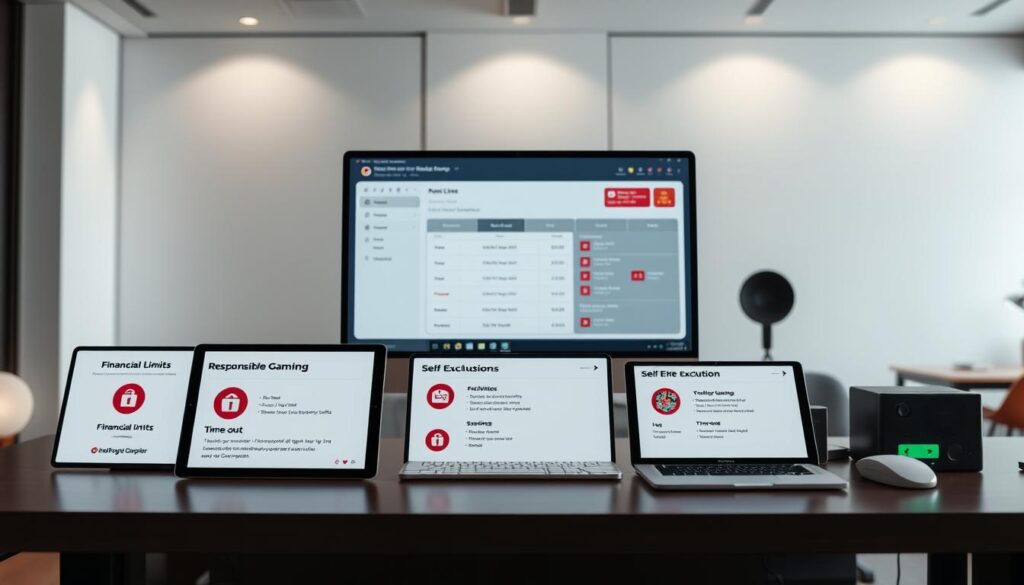
Most licensed operators offer a suite of responsible gambling tools that let you control spending and session length. These features work best when set up before losses pile up. A quick setup can include deposit limits, wager caps, and short breaks to curb impulsive play.
How deposit limits, loss limits, and wager caps work
Deposit limits let you set how much money enters your account over daily, weekly, or monthly periods. Loss or spending limits stop wagering after you reach a chosen loss threshold and usually apply to funds you put in, not to winnings. Wager caps reduce single-bet exposure by limiting maximum stake sizes.
Operators typically allow immediate decreases to limits. Increasing a limit often requires a waiting period for safety and verification. Check each operator’s terms for exact timing and procedures.
Cooling-off periods and timeouts: when and how to use them
Timeouts and cooling-off offer short breaks from play. Typical spans range from 72 hours to several weeks. These measures block deposits and wagers while often allowing account access for withdrawals.
Use a timeout when you notice impulsive betting or a losing streak that affects judgment. A short pause gives time to reflect and prevents escalation. Reapply or extend breaks if you still feel at risk.
Self-exclusion programs and what to expect
Self-exclusion is a voluntary ban for fixed terms, such as one year, five years, or lifetime. Enrollment can be online or in-person, depending on the state and operator. Some programs, like Time Out Ohio, link to wider exclusion schemes that affect multiple operators.
Expect confidentiality and potential forfeiture of bonuses, loyalty points, and promotional credits when you self-exclude. Reinstatement typically requires an application after the minimum term ends. Operators must try to stop marketing to excluded customers and may share exclusion lists across affiliated sites.
For a practical guide to tools, apps, and budgeting methods that support these controls, read this helpful overview on strategies and tools available for bettors to set time and money limits: responsible gambling tools.
- Deposit limits — set amounts for set periods to curb over-depositing.
- Timeouts — short cooling-off windows to regain control quickly.
- Self-exclusion — long-term removal when short breaks are not enough.
Understanding Games, Odds, and Randomness to Bet Smarter
Knowing how games work helps you place smarter bets. The house edge tells you the expected share the casino keeps over time. Blackjack can show a house edge near 0.5% with perfect basic strategy, yet most players face a higher edge when they deviate from optimal play.
Short sessions can produce big wins or losses, but long-term results move toward the stated odds. Variance creates streaks that feel meaningful, yet each result is tied to probability. Treat streaks as noise rather than a change in expected outcomes.
Randomness in modern games relies on RNG systems. Slot machines use Random Number Generators that produce thousands of numbers per second so every spin is independent. Online table games shuffle and use multiple decks to reduce predictability. Sports outcomes remain uncertain because of injuries, weather, and officiating, which affects bettors at all levels.
Misconceptions about luck persist. Rituals, lucky charms, and hot-cold betting systems do not alter actual odds. Understanding this can protect your bankroll and reduce risky chasing behavior.
Bonuses often carry wagering rules that interact with game contribution rates. A 10× wagering requirement means you must bet ten times the bonus amount before cashing out. Slots commonly contribute 100% toward this total, while games like blackjack might count as little as 10% or less.
Consider bankroll impact when choosing games. Low house-edge options deliver better theoretical value for players focused on minimizing loss over time. Slots offer entertainment but can drain a bankroll faster if the contribution to wagering is high and volatility is steep.
Use these facts to align play with goals. If you want value, prioritize games with low house edge and favorable game contribution rates for bonus play. If you seek fun, accept higher variance and plan for its bankroll impact.
How to Read Terms & Conditions, Bonuses, and Wagering Requirements
Before you claim any offer, take a moment to read terms and conditions. The general T&Cs can affect bonus use even when the bonus page omits them. Skimming bonus T&C risks surprises like play restrictions, time limits, or reversed wins.
Why it matters
Understanding wagering requirements helps you judge whether a promotion is valuable. Use a simple formula: total wagering required = bonus amount × wagering multiplier. For example, a $100 bonus with a 10× rule means you must wager $1,000 before you can withdraw cashable winnings.
Game contribution and how it changes the math
Different games count at different rates toward playthrough. Slots often give 100% game contribution, while blackjack might be 10% or less. Check the contribution matrix in the bonus T&C so you know how fast the requirement will clear.
Sticky bonus versus cashable offers
A sticky bonus typically stays locked to the bonus balance and is removed if you withdraw. Cashable bonuses let you keep winnings after meeting wagering requirements. Always confirm the type of bonus before you play and prioritize cashable offers when possible.
How to cancel bonus or forfeit one
Some sites let you cancel bonus funds via an account button labeled Forfeit or Cancel Bonus. If you can’t find that option, contact support through live chat or email. Be aware that canceling a bonus often removes both the bonus and any winnings derived from it, leaving only the original deposit.
Risks and code of conduct
Violating bonus rules can lead to confiscated deposits and cleared winnings. Casinos and sportsbooks can void offers or freeze accounts if they detect abuse. When in doubt, reach out to customer support before using the promotion.
Practical checklist
- Read terms and conditions and the bonus T&C in full.
- Calculate wagering requirements using the multiplier formula.
- Verify game contribution rates for your planned play.
- Decide whether to accept, cancel bonus, or pass on sticky bonus offers.
- Use a wagering calculator to test if a deal is worth your time.
Smart Sports Betting Practices to Reduce Risk
Smart sports betting starts with choosing bet types that fit your comfort with risk. Beginners often prefer the moneyline because it is simple: pick the winner. Bettors who want to balance risk and reward can use the point spread to even the odds. Totals, or over/under bets, focus on scoring and can be a solid option when you expect a clear trend in offense or defense.
Do careful research before you stake money. Check injuries, weather, matchup history and coaching changes. Watch line movement for clues about sharp money and market reaction. Public percentages provide context, but a sudden swing in the line may signal informed action worth noting.
Set clear rules to avoid emotional bets. Never wager on a favorite just because you support the team. Avoid chasing losses and resist increasing stakes after a bad run. Predefine unit sizes and stick to a flat-betting or percentage plan to protect your bankroll.
Manage parlays and prop bets with extra caution. Parlays increase payout but reduce long-term value because every leg must hit. Keep parlays small, ideally two to four legs. Use props sparingly and only when your research gives a real edge rather than a hunch.
Shop for the best sportsbook prices and offers. Maintain accounts at licensed operators such as DraftKings, FanDuel, BetMGM, Caesars, bet365, and Fanatics to compare odds. Line shopping helps you capture value. Use promotions and odds boosts when the terms make sense, and read each offer closely before claiming it.
Track line movement and staking over time to learn patterns. Record wagers, outcomes, and reasons for each bet. This habit highlights mistakes, prevents repeat emotional bets, and refines your approach toward long-term success.
Balance risk with strategy by favoring single bets and modest stakes over large rolls on parlays. When you use multiple sportsbooks, you gain access to the best odds and can limit exposure. Emphasize disciplined planning and consistent research to keep betting a controlled form of entertainment.
Maintaining Wellbeing: When to Stop and Where to Get Help
Gambling should stay a form of entertainment, not a source of harm. Watch for problem gambling signs early so you can act before relationships, work, or finances suffer. Honest self-assessment makes it easier to choose sensible steps and find the right support.

Recognizing behavioral warning signs
Common warning signs include reliving past wins, planning the next gambling session, needing larger stakes for the same thrill, restlessness when cutting down, and chasing losses. People may gamble to escape guilt, anxiety, or depression. Lying to conceal play, risking relationships or jobs, and relying on others for money are red flags.
How to self-assess and immediate steps
Start with a frank review of account history to document frequency and losses. Set hard limits, close accounts, or request timeouts from operators. Consider self-exclusion if limits fail. Seek financial counseling and involve trusted friends or family to build accountability.
Practical steps on how to stop gambling
Platform tools can help: deposit limits, wager caps, cooling-off periods, and self-exclusion. Learn program rules before self-excluding; forfeiture of bonuses or points may apply. Do not try to access banned sites during exclusion. If online controls are insufficient, remove saved payment methods and use software blockers.
U.S. resources and helplines
For gambling help US residents can call the National Problem Gambling Helpline at 1-800-GAMBLER. State programs also offer local support; for Ohio, Time Out Ohio and the Ohio Problem Gambling Helpline at 1-800-589-9966 provide counseling and referrals. Additional resources include GamblingHelpOhio.org, Ohio for Responsible Gambling, Ohio Department of Mental Health and Addiction Services, Gamblers Anonymous, and Gam-Anon for family members.
When there is immediate risk
If thoughts of self-harm arise, contact the National Suicide Prevention Lifeline or 988. Crisis Text Line is available by texting 4hope to 741741. These services offer confidential support and can connect callers to treatment and local gambling help.
Shared responsibility and next steps
Addressing gambling harm involves industry, government, treatment providers, and players. Many operators partner with public health groups to improve programs. Reach out for professional help early; doing so increases options for recovery and restores balance to daily life.
Practical Habits and Alternatives to Keep Gambling Fun
Adopt simple, practical gambling habits to make play sustainable. Set clear budgets and time limits, then honor them. Use your account play-history and in-app tools to review activity weekly; seeing patterns helps you adjust before losses pile up.
Plan breaks and avoid wagering when upset or stressed. Treat gambling as social entertainment—play with friends or at venues with companions rather than late at night alone. This reduces impulse sessions and helps you keep it fun while maintaining responsible play habits.
Build gambling alternatives and hobbies instead of gambling to fill free time. Join a local recreation league, learn guitar, or volunteer; those options protect relationships and savings and give you rewarding ways to unwind without risk.
Use platform controls proactively: time reminders, cooling-off periods, self-exclusion, and account closure options all work to curb excess. Keep expectations realistic—gambling is chance-based, not income—and follow the checklist from earlier sections: budget, time limits, don’t borrow, and read terms. If behavior becomes hard to manage, contact licensed operator support or national helplines for help.