
Nearly 70% of title-winning clubs in 2025 sustained performance through heavy calendars by using planned rotation and deeper benches, a trend that singles out squad depth football as the decisive factor when competitions overlap.
Kashima Antlers’ 2025 J.League title run shows depth in football squads at work. Kashima finished first with 76 points (23W-7D-8L), scoring 58 goals and conceding 31. After midseason injuries to Ikuma Sekigawa, Koki Anzai, and Shu Morooka, manager Tohru Oniki turned to internal replacements and targeted signings. The team did not lose after July 5 (Matchday 23) and conceded only four goals in their last 10 matches, a tally driven by aggressive substitutions and measured squad rotation around a core spine led by Hayakawa, Naomichi Ueda, Ryuta Koike, Leo Ceara, and Yuma Suzuki.
Portugal’s national transformation provides a second lens on depth. Since their Euro 2016 and 2019 Nations League success, and under Roberto Martínez from January 2023, Portugal has built a larger pool of flexible players — Bruno Fernandes, Bernardo Silva, João Palhinha, Rúben Dias and João Neves among them — enabling formation morphing and sustained intensity across congested international windows. This shows how managerial systems leverage squad rotation and tactical adaptability to counter fixture congestion.
At club level, UEFA competition weeks and high-profile friendlies reshape availability for teams with U.S. internationals. Performances by Ricardo Pepi at PSV, Weston McKennie at Juventus, Christian Pulisic at AC Milan, and Folarin Balogun at Monaco underline how American players affect results amid fixture congestion. Inter Miami’s MLS Cup victory with Lionel Messi, Jordi Alba, and Sergio Busquets further illustrates how concentrated star signings plus a supporting depth in football squads manage competitive overlap between MLS, CONCACAF ties, and friendlies.
Key Takeaways
- Squad depth football is measurable and often decisive in heavy calendars.
- Planned squad rotation limits burnout and preserves form across competitions.
- Kashima Antlers’ title run is a practical blueprint for depth in football squads.
- Portugal’s national setup shows tactical systems can magnify a deep player pool.
- U.S.-focused clubs must balance marquee signings with reliable supporting depth.
Why squad depth football matters when calendars collide
When leagues, cups, continental ties, and international windows stack up, squads face test after test. Defining squad depth means more than counting faces on a roster. It measures the quality and quantity of players who can start, change game outcomes, or come on and alter momentum. Minutes-management ability, interchangeability across positions, and tactical fit shape how a club survives fixture congestion and overlapping competitions.
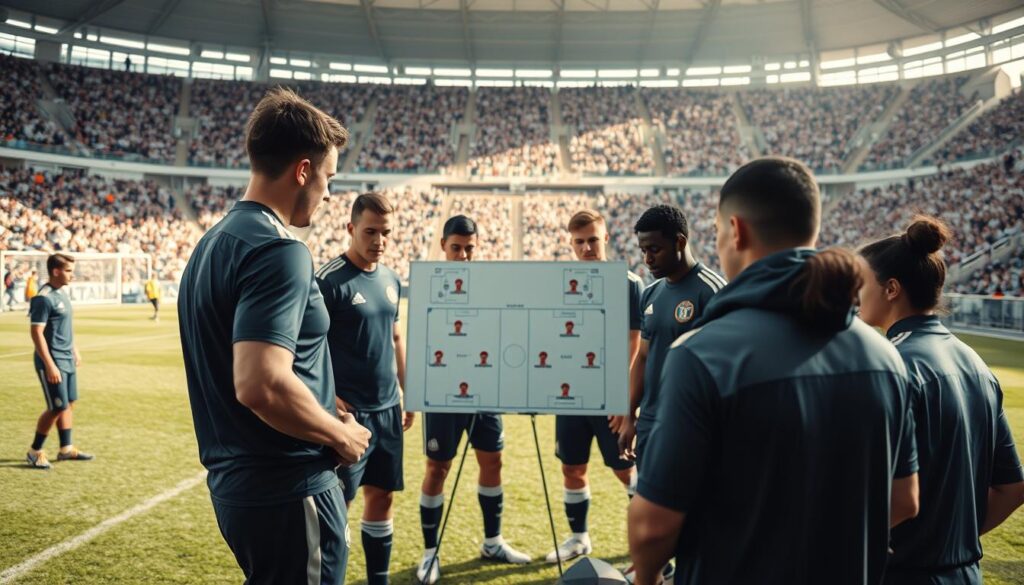
Defining squad depth and measurable indicators
Operationally, depth covers starters and dependable backups across roles. Metrics for squad depth include minutes distribution, bench goal contributions, and rotation metrics that show who carries load and who relieves it. Tracking xG per 90 for starters versus bench helps expose scoring gaps. Positional depth scores count how many players in each role meet minutes and performance thresholds.
Analytics signals to track also include recovery times, injury cover rates, successful substitution impact rates, and substitution impact measured as goals or assists after a change. Bench metrics matter. Kashiwa Reysol’s Mao Hosoya tallied 11 goals despite limited starts, showing impact from non-regulars. Kashima’s non-penalty xG and xGA differentials expose finishing quality versus chance volume.
Overlap of competitions: league, cups, continental ties, and international windows
Clubs juggle domestic leagues like MLS, EPL, and J.League along with domestic cups and continental competitions such as the CONCACAF Champions Cup and UEFA Champions League. Midweek Champions League ties force quick turnarounds for weekend league matches, raising fixture congestion and travel strain.
International windows complicate matters. National teams call players for friendlies, qualifiers, and World Cup prep. The 2026 World Cup schedule will shape USMNT plans and club availability. Many U.S. internationals play in Europe — Christian Pulisic at AC Milan, Weston McKennie at Juventus, Ricardo Pepi at PSV — which further links club and country calendars.
MLS Cup runs add pressure on rosters carrying marquee signings. Inter Miami’s integration of Lionel Messi, Jordi Alba, and Sergio Busquets shows how elite signings need supporting depth when cups and continental ties loom. European examples such as Arsenal, Bayern, and PSG demonstrate rotation needs during congested midweek-weekend cycles.
Performance outcomes tied to depth
Depth influences title races and late-season form. Kashima Antlers replaced injured starters and kept momentum, conceding only four goals in their last ten games. That injury resilience came from successful replacement minutes and contributions from players like Kim Taehyeon and Naomichi Ueda.
Kashiwa Reysol highlights strengths and limits of rotation. Two players logged every minute while others provided strong rotation, yet draws and finishing issues showed gaps in depth quality. Inter Miami’s MLS Cup success underlines how supporting squads turn star performances into trophies when substitution impact and rotation metrics align.
- Key metrics to monitor: late-season goals conceded rate, bench goal contributions, and points-per-rotation.
- National teams benefit when depth yields tactical options, as Portugal’s array of midfield and defensive choices shows.
- Player load rises with frequent travel, international call-ups, and midweek fixtures, increasing the need for injury cover and load management.
Squad management strategies to win across overlapping competitions

When calendars crowd, managers need clear rules to keep the team competitive. Start with a planned rotation that preserves a reliable spine while protecting midfield and wing minutes. Use tactical rotation to shift formations so rested players slot in without breaking the system. A smart substitution strategy and targeted half-time changes help sustain intensity late in matches.
Analytics guide who plays and when. Match data selection should include xG-based selection, pressing metrics, and GPS load figures. Combine analytics in rotation with load management metrics to trigger substitutions when sprint counts drop or accumulated minutes rise. Bench-value statistics like minutes-to-impact and expected points added by substitutions reveal which players are true super-subs.
Squad building requires balance between big names and utility depth. Pair marquee signings with role-specific depth through transfer strategy and depth recruitment. Use academy promotion to fill low-cost gaps with system-ready talent. Contracts should stagger expiries so depth remains available across congested windows.
Protecting stars means practical load management for stars and close tracking of marquee player minutes. Clubs such as Inter Miami show how Messi rotation and reduced starts can preserve sharpness for decisive fixtures. Plan scheduled rest days, shorter pre-match minutes, and tactical shading to lower defensive demands when a star sits.
Practical steps managers can deploy:
- Create in-season micro-cycles that rest starters before continental ties.
- Build rosters with 2–3 quality backups per position and multi-positional players.
- Define bench roles so substitutes like super-subs have clear impact jobs.
- Use xG, expected assists, and heart-rate data to refine substitution strategy.
Examples of these ideas in action support adoption. Kashima Antlers used aggressive substitutions and role clarity to sustain form, and clubs that combine scouting with academy promotion reduce reliance on expensive signings. Read a detailed analogy between squad depth and layered defense in cybersecurity at defence depth lessons.
Coaches should coordinate with medical and national-team staff on cumulative minutes and recovery. When selection is ruled by match data selection and load management metrics, teams keep competitive balance across league, cup, and international duties while protecting elite performers and developing future starters.
Case studies and tactical lessons for U.S.-focused clubs and national teams
Kashima Antlers provide a clear blueprint for U.S. football squad depth. After losing key players to season-ending injuries, Kashima still finished with 76 points, scored 58 goals, and conceded 31 while going unbeaten after July 5. Manager Tohru Oniki’s aggressive substitutions and rotation kept form intact. The takeaway for MLS clubs is to embed internal replacements and sign versatile players who can shore up defense late in the season and deliver clutch goals.
Kashiwa Reysol’s near-miss underscores a different risk. They amassed 75 points with 60 goals but relied heavily on ever-present starters like Taiyo Koga and Ryosuke Kojima. Their 12 draws show that heavy minute loads can blunt attacking punch from the bench. MLS squad building should therefore plan for bench scorers and clear super-sub roles to convert possession into points.
Portugal’s national setup highlights tactical morphing and club-to-country depth. Under Fernando Santos and Roberto Martínez the team shifted between 4-3-3 and 3-2-5/3-4-3, using Rúben Dias as a ball-playing center-back and Bruno Fernandes and Bernardo Silva as interchangeable creative hubs. For USMNT depth lessons, this means cultivating club-level depth that allows national coaches to switch systems without dropping intensity across tournament windows.
Inter Miami’s MLS Cup shows how superstar impact and supporting depth combine. Targeted signings such as Jordi Alba and Sergio Busquets paired with rotation-capable squad members to carry the load during a congested schedule. For the U.S. national team preparing for 2026, synchronized load management between clubs and country is vital. Christian Pulisic and others must have match-ready depth behind them—bench scorers, versatile defenders, and experienced keepers—sourced from MLS, USL, and academies. Practical KPIs to adopt include bench contributions per 90, minutes lost to injury, points per rotated lineup, and late-season goals-conceded trends.

