
Nearly 70% of recreational wagers land on favorites or overs on any given weekend, a public bias that sharp bettors increasingly exploit to find a sports betting edge.
Fading the public — also called betting against the public — means placing stakes opposite the majority of recreational action. Contrarian bettors use this approach when public betting trends and market movement suggest value on the other side.
Sportsbooks build products for the average bettor, and over time that creates predictable skews. When the public overweights recent results, favors big-name teams like the New York Yankees, or leans toward overs in primetime, a systematic opportunity can appear for disciplined bettors.
That opportunity is not automatic. Fading the public works best when paired with timing awareness, market volume, and line movement analysis. Low-handle markets or blanket rules rarely pay off, so pros combine betting-against-the-public signals with analytics, computer models, and sportsbook shopping to reduce variance.
Key Takeaways
- Fading the public means wagering against the majority and is a core contrarian bettors’ tactic.
- Public betting trends often favor favorites and overs, creating exploitable market biases.
- Use line movement, timing, and volume to verify when betting against the public adds value.
- Combine fading with analytics and multiple sportsbooks to build a repeatable sports betting edge.
- Track public percentages and regional skews; resources like Oddsshark publish useful public-bet data.
Why bettors choose to fade the public: the logic and evidence

Bettors who adopt a contrarian betting strategy wager opposite the majority of recreational action. This approach rests on clear behavioral patterns: favorite bias, recency bias, and emotional support for popular teams. Oddsmakers price those tendencies into lines to limit liability, which can create exploitable gaps when public sentiment overwhelms a market.
Sharp money often shows up as reverse line movement when books move lines to attract more public bets. That mismatch between tickets and true value explains why many consider fade the public logic a sound foundation for profitable betting strategies. Matching public splits with line moves helps separate noise from informed action.
Understanding the contrarian betting strategy
Contrarian bettors track where volume and tickets concentrate and then take the opposite side when the market tilts too far. This method relies on data, not gut feelings, and uses tools like betting-split systems to quantify extremes. When a majority backs one side heavily, the contrarian looks for indicators that sharp money is elsewhere.
Data from split-based services shows repeated instances where heavy public backing underperforms. That pattern supports the idea that recreational bettors lose more often, which is why fading them can make sense as a repeatable tactic.
Why it can be profitable over the long run
Sportsbooks build a business model around casual bettors losing over time. Consistently opposing predictable public mistakes can capture small edges that compound. Historical aggregates and DK Betting Splits analyses show many situations where majority backing produced weak ATS records, offering durable opportunities for disciplined players.
Profitability improves when contrarian plays align with sharp action. Blend fade-the-public decisions with timing, line movement reading, and bankroll rules to turn occasional wins into sustainable gains. Treat this as a component of profitable betting strategies rather than a standalone fix.
When fading the public is most effective
Fading yields better results in high-volume primetime games such as Thursday, Sunday night, and Monday night matchups, where public volume is large and predictable. Super-majority handle percentages — for example, >=68% on one side or >=74% on Overs — are classic triggers that signal a potential reverse or poor performance by the public.
Divisional rivalry games have shown persistent weaknesses in majority-handle bettors, making them attractive spots for contrarian plays. Watch for heavy favorite or Overs backing paired with line moves toward the opposite side; that combination often flags when to fade public.
Exceptions exist. Some contexts, like certain non-conference NFL games or very high projected totals, have favored the public in recent seasons. That reality makes it essential to evaluate each matchup on its merits and avoid blanket rules about when to fade public.
For further reader perspectives and community debate on this topic, consult a long thread on wagering behavior and sharps versus public opinion at community discussion.
How to spot public action and interpret betting splits
To read the market you need a clear process. Start by checking published betting splits and betting percentages from major books like DraftKings and BetMGM, plus aggregators such as VSiN. These figures report both the share of tickets and the share of handle on each side for spreads, moneylines, and totals.
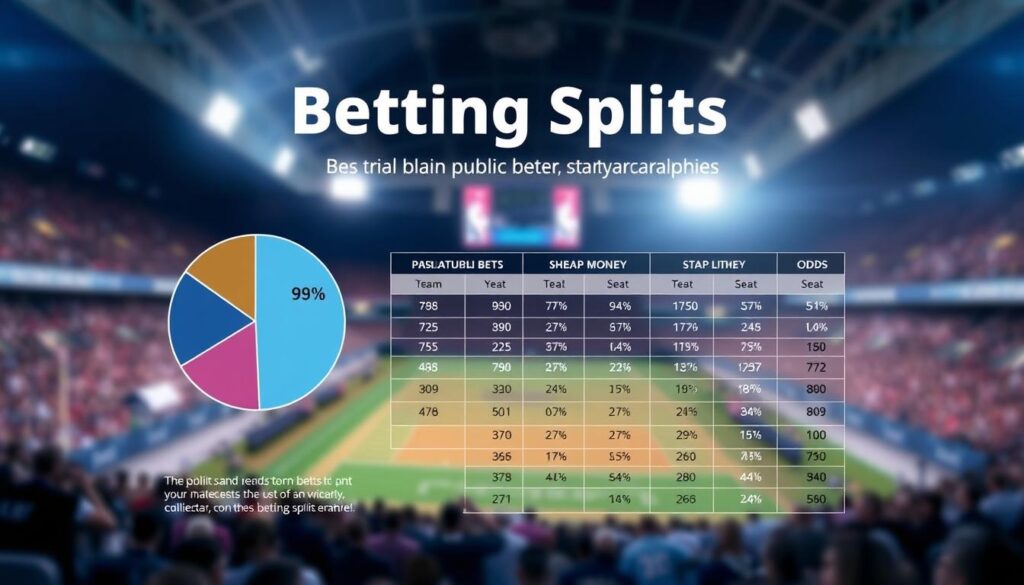
Look for mismatches between tickets and money. A game that shows 80% of bets but only 25% of handle often means many small wagers crowding one side while a few large stakes oppose them. That signature separates recreational players from pros.
Where to find betting percentages and what they mean
Betting percentages appear on sportsbook pages and on split reports. The typical display gives percent of bets and percent of handle per side. Use those numbers to judge who is moving the market and where public volume concentrates.
When tickets dominate but handle does not, assume public interest. When handle outweighs tickets, suspect sharp action. Track these readings across several books to avoid book-specific bias.
Reading handle versus tickets: Pros vs. Joes signals
Wise bettors focus on handle vs tickets rather than a single data point. Tickets measure the number of wagers. Handle measures dollars risked. Sharps tend to shift handle more than tickets because pro bets carry larger stakes.
Some sportsbooks are known to accept larger sharp bets. In states where those books operate, splits from those outlets carry extra weight. Compare splits from DraftKings, BetMGM, and smaller books to see where pros are placing money.
Line movement, timing, and reverse line movement
Watch movement timing closely. Early moves, often on Sunday night or early in the week, can reveal professional activity. Public bets pile up nearer to game time, and late movement may reflect recreational flows.
Reverse line movement occurs when the line shifts toward the public side while handle suggests the opposite. This pattern often means bookmakers are balancing liability after sharp bets hit the other side. Treat reverse line movement as a warning to dig deeper.
Using DK Betting Splits systems to identify repeatable edges
DraftKings split pages have been the basis for repeatable systems through recent seasons. Analysts track where majority-handle and super-majority-handle groups over- or underperform. Use those historic tendencies as hypotheses to test, not as automatic triggers.
- Test DK Betting Splits systems against line movement, injuries, and weather before staking money.
- Keep simple records: date, market, split, movement, outcome.
- Look for patterns by game type, such as divisional matchups or primetime events, where public bias shows up repeatedly.
Combine betting splits with contextual checks and treat system outputs as rules to test rather than certainties.
How to combine fading the public with research and bankroll strategy
Treat public splits as one datapoint, not the whole story. Cross-check DK Betting Splits and sportsbook line histories with analytics sources such as Pro Football Focus metrics, computer models, and reputable handicappers. Use situational reporting — weather, injuries, and likely game script — to confirm a fade the public with research approach before sizing a wager.
Look for concrete situational signals. For example, cold-weather snaps have measurable effects: Tua Tagovailoa’s underperformance in kickoff temps at or below 46°F shows how environment can flip a public-heavy market into a legitimate edge. If a primetime game has heavy public handle but reverse line movement and a weather or injury factor (De’Von Achane listed limited, for instance), those combined signals support a targeted fade with disciplined sizing.
Adopt strict sports betting bankroll management. Don’t treat fading as all-or-nothing; employ flat stakes or a percentage-based staking plan to limit single-game variance. Use promotions and multiple sportsbook accounts to test ideas cheaply and to line-shop. When professional money aligns with a fade — handle skew toward one side while tickets favor the public — your long-term win rate improves.
Keep a detailed log and adapt. Track outcomes by context (primetime vs. non-primetime, divisional matchups, total-heavy markets) and compare results to DK Betting Splits systems to see which situations show positive expectancy. Favor books with credible sharp activity and reduce or avoid fades where historical splits show the public was right. This blend of betting bankroll strategy, combine analytics and fading public tactics, and ongoing review is the most durable path to sustainable returns.

