
Atalanta lost 3-1 to Hellas Verona at Stadio Marcantonio Bentegodi on December 6, 2025, a result shaped by a match-changing VAR intervention that left coach Raffaele Palladino calling the performance “unacceptable.”
Palladino singled out the controversial VAR call that allowed Verona’s third goal to stand, arguing Armel Bella-Kotchap’s touch on the ball was too obvious to ignore and that a different outcome could have left Atalanta trailing only 2-1. The coach also said the VAR decision narrowed its focus on whether the ball changed direction, undermining on-field clarity.
The refereeing controversy follows wider debates about consistency in VAR decision-making across Europe, from Premier League rulings to Serie A disputes. Officials and panels have clashed over when to apply the “clear and obvious error” threshold, a theme explored in recent reviews and reporting such as this analysis of VAR incidents.
Key Takeaways
- Atalanta lost 3-1 to Hellas Verona; Palladino criticized the match-changing VAR call.
- The disputed third goal hinged on a touch by Armel Bella-Kotchap and a VAR decision to let the goal stand.
- Players and coaches warned VAR inconsistency threatens competition fairness.
- Similar refereeing controversy has appeared in Premier League incidents, highlighting interpretation gaps.
- Atalanta must regroup tactically ahead of a crucial Champions League trip to Chelsea.
Match summary and the pivotal moment
The match summary opens with an unexpected early lead for Hellas Verona in Serie A on December 6, 2025. Atalanta arrived on form, having won three matches across Serie A, the Champions League, and Coppa Italia, while Verona sat bottom of the table and sought a first win. The upset result carried major implications for momentum, morale, and the race up the standings.
Play swung swiftly after Verona’s second and third goals. Rafik Belghali, Giovane and Antoine Bernede combined to put Verona 3-0 ahead. Atalanta’s late penalty by Gianluca Scamacca narrowed the gap to 3-1 but arrived too late to change the outcome. This sequence set the scene for a pivotal VAR moment that defined the final scoreline.
Game context and stakes
The game context raised the stakes on both sides. Atalanta faced a tough Champions League tie against Chelsea in the days that followed and could not afford a collapse. Verona needed points to escape the relegation zone and a win would have broken a long run of winless league fixtures. The result therefore mattered beyond a single matchday.
Timeline leading to the controversial call
The timeline VAR review began after Verona’s third goal. Lazar Samardzic protested an apparent handball by Armal Bella-Kotchap during the counterattack that led to the score. VAR stopped play to examine the footage and assess whether the ball’s path had been materially altered before the move continued.
- 0–60 minutes: Open, with both teams creating chances.
- 60–75 minutes: Verona scored twice to extend the lead.
- Late in the match: Third goal triggers referee attention and a timeline VAR review.
Details of the referee’s original on-field call
Match officials on the pitch allowed the third Verona goal to stand. The referee’s original on-field call did not indicate a stoppage for handball at the time of the attack. The VAR team reviewed replays and judged Bella-Kotchap’s fingertips did not make sufficient contact to change direction or influence the build-up.
The VAR team therefore did not recommend an On-Field Review, and the referee’s on-field call—goal allowed—stood. Coach Paolo Palladino publicly contested that interpretation, arguing replays showed a touch that should have led to disallowing the goal. That dispute echoes past controversies where officials applied the clear and obvious error standard in tight situations.
VAR decision: review, rationale, and process
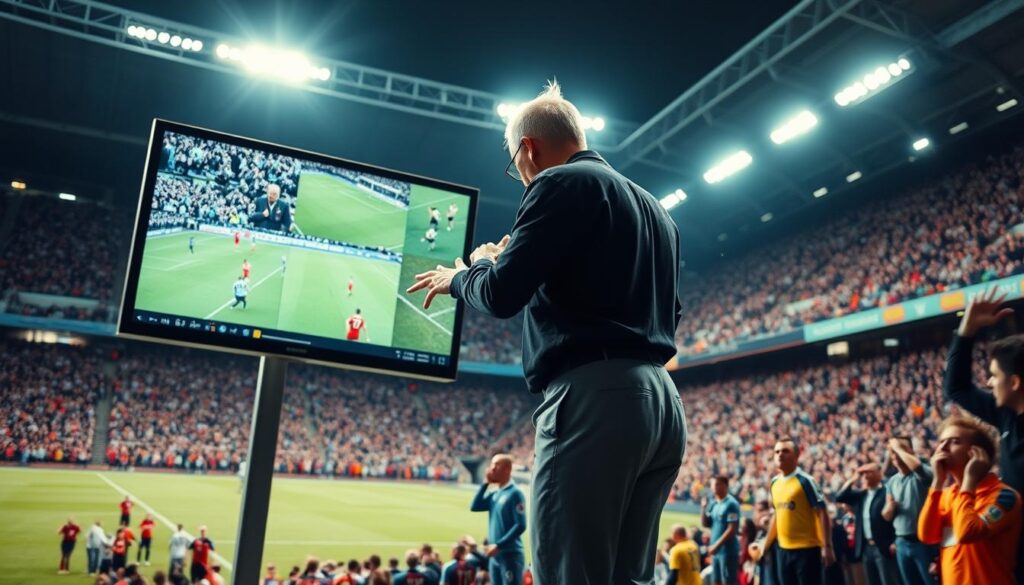
The match officials released a step-by-step account of the VAR review process after the disputed goal. The summary explains how the footage was assessed, which angles were prioritized, and the point at which VAR staff judged whether an on-field review was needed.
How the review was conducted
VAR protocol requires teams to look for a clear and obvious error. Video officials first watched multiple replays of Armal Bella-Kotchap’s touch. They checked slow motion and normal speed to decide if the original call stood.
When the VAR team found no decisive evidence to show the ball’s path changed, they did not recommend an on-field review. That step leaves the final visual judgment to the referee at the pitchside monitor when recommended.
Technical findings and official reasoning
Officials reported specific VAR technical findings about fingertip contact. Analysts noted Bella-Kotchap leaned toward the ball but that the tip of his fingers did not alter trajectory in a measurable way. This assessment formed the basis of the VAR rationale.
The decision document stressed the threshold for overturning decisions is high. Unless the ball’s direction can be shown to have changed, the original call typically stands under current guidelines.
Why the decision remains disputed
Coaches and players argued the fingertip contact was visible and material to the play. Raffaele Palladino and members of the Atalanta squad said the action should have been treated as more than incidental contact.
Debate centers on how to interpret sufficient contact and what counts as a clear and obvious error. Past controversies in top leagues show similar disagreements, which fuels claims of inconsistency in application.
- Some experts cite the need for clearer visual markers to show trajectory change.
- Others say subjective judgment will always produce split views when contact is minimal.
Reactions, controversy, and broader implications

Reactions to the call arrived fast and sharp from the touchline. Atalanta head coach Raffaele Palladino spoke with visible anger, calling the decision “too obvious to ignore” while urging his players to raise intensity before their Champions League tie. That manager response VAR added heat to an already tense debate.
Manager and player responses
Palladino mixed criticism of his squad’s first-half performance with a public challenge to the VAR outcome. He said the system was supposed to simplify decisions but instead created fresh arguments over direction and contact.
Players and staff expressed quiet disappointment and offered apologies to fans after the match. The collective tone was a blend of frustration and resolve, with the coach framing the result as a wake-up call rather than an excuse.
Media, pundit, and fan perspectives
Coverage from outlets such as BBC Sport and Sky Sports amplified comparisons to past cases, including the Bentancur and Caicedo incidents. Media opinion VAR focused on perceived inconsistencies and called attention to how different panels have reached divergent outcomes.
Pundits cited manager complaints from clubs like Chelsea to question consistency. Fans on social channels reacted emotionally, noting that conflicting verdicts erode trust in officiating and the system overall.
Impact on competition and teams
The defeat stopped Atalanta’s run of three straight wins and complicated their league push ahead of a big European fixture with Chelsea. The immediate impact on competition can be severe when match-changing decisions shift points and momentum.
In the Premier League, variations in red or yellow rulings have tangible effects. Teams forced to play with ten men can drop points, changing title races and relegation battles. This real-world fallout underlines why the VAR controversy reactions matter beyond talk shows and headlines.
What this says about VAR policy and future changes
Patterned disputes highlight the limits of human interpretation within VAR’s “clear and obvious” standard. League panels often defend outcomes using tight technical criteria while critics press for clearer thresholds and better communication.
Calls for procedural reform include standardized contact measures, expanded on-field reviews, and improved referee training. Pressure from clubs, media, and fans could drive officials toward a VAR policy change that reduces subjective variance and restores confidence.
Conclusion
The VAR decision conclusion in the Atalanta–Verona match leaves a clear impact on immediate results and longer-term debates. Atalanta lost momentum after the 3-1 defeat, with coach Raffaele Palladino publicly questioning both the squad’s showing and the upheld goal that followed VAR’s finding of no sufficient fingertip contact by Armal Bella-Kotchap. That outcome altered the match narrative and fed into wider scrutiny of officiating standards.
Wider match analysis shows similar incidents, such as those in the Premier League involving Rodrigo Bentancur and Moisés Caicedo, often lead to divergent outcomes. These cases underline how subjective standards — like the dangerous play test and the “clear and obvious” error threshold — produce inconsistent results. League panels sometimes endorse on-field calls and sometimes back VAR interventions, which weakens public trust when patterns seem unpredictable.
The dispute also raises questions about refereeing transparency and the future of VAR. Fans, clubs, and broadcasters expect clearer protocols and consistent explanations so that decisions feel fair and defensible. Media outlets must also respect source rights and proper attribution when reporting on reviews, preserving credibility while informing debate.
Unless governing bodies improve communication and standardize review criteria, similar controversies will recur and shape high-stakes fixtures. For now, this VAR decision conclusion stands as a reminder: technology can aid referees, but human judgment and transparent procedures remain essential to restoring confidence in football officiating.

