
75% of professional teams now report faster return-to-play timelines after adopting integrated testing and regenerative protocols, according to recent industry surveys.
Across the United States, sports science is reshaping how teams manage athlete recovery and long-term availability. New sports medicine advances combine precision physiological testing—like VO2 max and metabolic profiling—with emerging bioregenerative therapies. Together, these approaches aim to shorten downtime, lower injury risk, and improve late-game performance.
Practical outcomes matter: coaches and athletic trainers want consistent training availability across a long season, quicker player recovery after heavy loads, and reliable metrics to guide practice intensity. Team performance optimization now rests on data-driven decisions and targeted medical interventions rather than intuition alone.
Real-world anchors inform this shift. Equipment and protocols from companies such as KORR CardioCoach and mixing chamber systems are changing lab- and field-based testing. Meanwhile, international collaborations—like Sabah FC’s work with European Wellness Premier Centre and Prof. Dato’ Sri Dr. Mike Chan—illustrate how cellular therapies and regenerative medicine are moving into team care.
Key Takeaways
- Sports science now pairs metabolic testing with regenerative medicine to speed player recovery.
- VO2 max and related profiling give teams precise data for team performance optimization.
- Sports medicine advances reduce injury downtime and support consistent season-long availability.
- Products like KORR CardioCoach and mixing chamber systems enable roster-friendly testing.
- Emerging cellular therapies demonstrated by Sabah FC highlight real-world clinical adoption.
How VO2 max Testing Is Changing Team Conditioning in Sports science
Teams now treat conditioning as measurable work, not guesswork. VO2 max testing gives a clear snapshot of an athlete’s aerobic capacity and reveals who needs endurance building or maintenance. Coaches and sports dietitians use this data to set target heart rates and refine fueling plans for high-distance roles like soccer midfielders.
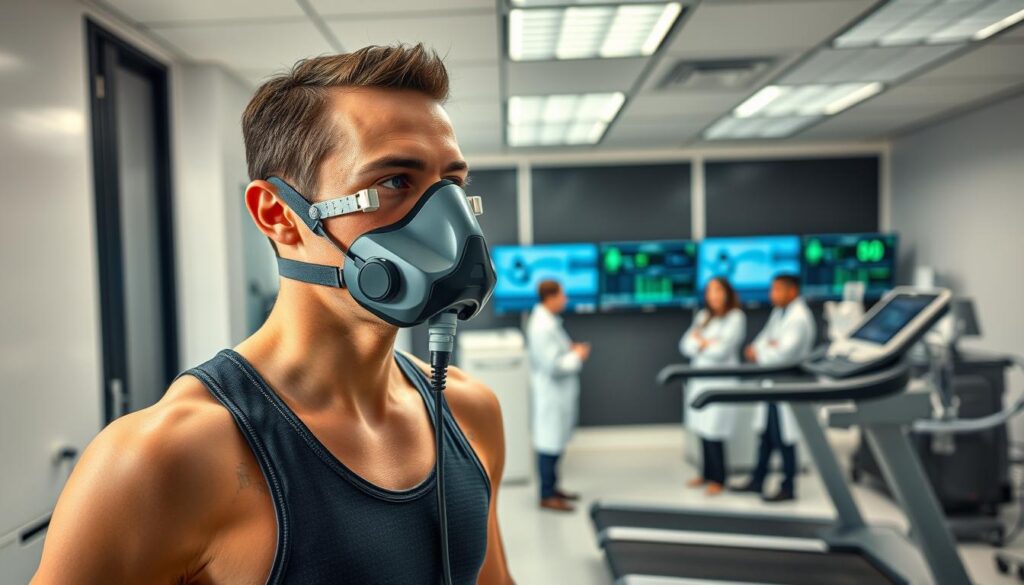
What VO2 max measures and why it matters for recovery
VO2 max measures the maximum rate of oxygen an athlete can use during intense exercise. That single metric predicts cardiovascular fitness and endurance across sports such as soccer, basketball, tennis, and track.
High aerobic capacity helps players sustain output late in games. Teams use those insights to limit unnecessary load and protect athletes from overuse injuries.
From data to action: tailoring precision training loads
Conditioning analytics translate VO2 results into actionable numbers. Staff derive heart-rate zones, anaerobic threshold points, and caloric burn to design individualized plans.
With those targets, coaches avoid blanket sessions. Athletes who need endurance focus on steady blocks while others receive maintenance or power work. The result is reduced burnout and smarter recovery scheduling.
Zone 2 optimization and its role in recovery between high-intensity efforts
VO2 profiles pinpoint the precise heart-rate band for Zone 2 training. Spending time in this zone builds base endurance without excess fatigue.
Zone 2 training supports recovery between high-intensity bouts by improving mitochondrial function and clearing metabolites. Teams program low-intensity days to strengthen tolerance below the anaerobic threshold.
Monitoring progress: preseason, mid-season, and post-season testing
Regular VO2 max testing gives a timeline of progress and plateaus. Preseason tests set baselines, mid-season checks track adaptation, and post-season reviews inform next-cycle planning.
Using conditioning analytics with scheduled tests helps staff adjust loads, refine recovery heart rate zones, and protect roster depth across a long season.
Technology and Equipment That Speed Up Athlete Recovery
Modern recovery protocols hinge on reliable metabolic data and field-ready tools. Coaches weigh portability, time per test, and the cleanliness of results when choosing equipment for daily workflows. Clear decisions on hardware affect training loads and player availability across a season.
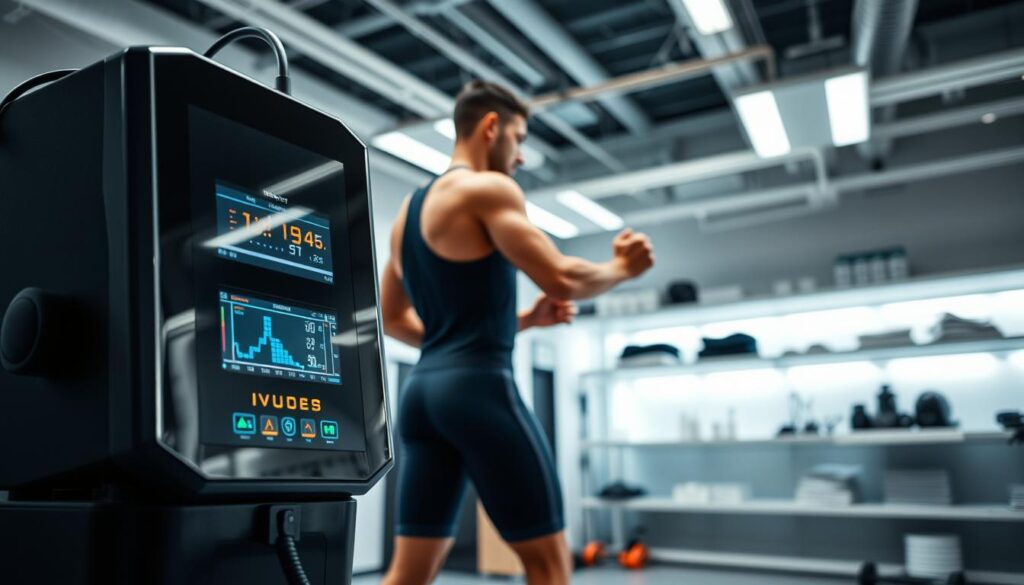
Mixing chamber vs breath-by-breath systems: accuracy and reliability
Two main approaches drive metabolic assessment: breath-by-breath accuracy systems and mixing chamber systems. Breath-by-breath instruments can flag subtle variations but often need heavy post-processing to filter noise from real signals.
Mixing chamber systems deliver steadier outputs in variable conditions. Teams using the KORR CardioCoach report cleaner data that requires less correction, making it easier to trust numbers during back-to-back testing days.
Practical benefits for teams: rapid auto-calibration and roster-friendly testing
Time is scarce on game weeks. The KORR CardioCoach speeds setup with rapid auto-calibration under 90 seconds and no gas tanks or syringes. That means testing can be ready in under three minutes for each athlete.
Compact VO2 technology and user-friendly interfaces reduce reliance on specialist technicians. Programs from college squads to pro clubs find such field testing equipment keeps large rosters moving through screening without bottlenecks.
Hygiene, safety, and field-ready designs for frequent use
Frequent team-wide testing raises concerns about cross-contamination. One-way valve designs and disposable components improve athlete testing hygiene and build confidence among medical staff.
Portable units survive travel and repeated setup in training centers. Durable construction and straightforward maintenance extend the useful life of systems, making the investment practical across sports like soccer, basketball, and track.
Emerging Medical Approaches and Real-World Team Applications
Teams are expanding recovery toolkits beyond cryotherapy and compression. Clinics now pair physiological testing with targeted medical plans to treat fatigue at the organ and cellular level. This blended approach aims to shorten downtime and keep rosters available for crucial matches.
Bioregenerative medicine and cellular therapies used with professional teams
Bioregenerative medicine is moving into professional sport, focused on repairing tissues rather than masking symptoms. Clubs combine cellular therapy with tailored conditioning to address tendon, muscle, and organ wear. Teams report quicker recovery windows when therapies are chosen to complement workload data from VO2 and performance metrics.
Case study: Sabah FC’s Diagnose, Detox, Repair, Rejuvenate protocol
Sabah FC partnered with the European Wellness Premier Centre to launch a four-step regimen known as the Sabah FC protocol. The program begins with deep screening, then removes biological barriers to recovery, follows with targeted repair treatments, and finishes with rejuvenation therapies for energy and focus.
The Sabah FC protocol includes individualized cellular therapy plans meant to strengthen tissue integrity and hormonal balance. Club officials and Professor Mike Chan cite improvements in recovery speed, reduced fatigue, and better joint resilience after implementation.
Organ-specific treatments, oxygen therapy, and advanced nutrition for recovery
Organ-targeted plans make a clear distinction between treating a knee and treating a brain. Oxygen therapy often pairs with nutritional interventions to boost cellular repair and support metabolic recovery. Multi-omics and wearables guide personalized regimens, refining which organ-specific treatment will best support an athlete’s return to play.
Clinicians reference genetic and molecular markers to refine interventions. Readers can explore deeper background on genetic links to tissue repair and recovery in this review: genetics and recovery research.
Implications for major U.S. sports: NFL interest and Super Bowl–stage visibility
NFL sports medicine groups are tracking these developments closely. Invitations to speak during Super Bowl Week highlight growing curiosity about brain-targeted therapies for concussion and organ-specific cell treatments for chronic wear.
Adoption in U.S. pro sport will depend on standardization, safety data, and alignment with anti-doping rules. Early adopters aim to pair medical innovation with established conditioning systems so athlete regeneration occurs within ethical, competitive frameworks.
Conclusion
Modern sports science breakthroughs are changing how teams recover and perform. By combining precise physiological tools like VO2 testing benefits with targeted medical approaches such as bioregenerative sports medicine, organizations can shorten recovery times and keep players available across long seasons.
Practical team recovery strategies include routine VO2 testing at preseason, mid-season, and post-season, and investing in reliable equipment such as mixing chamber systems for accurate, roster-friendly assessments. These steps, paired with integrated athlete care that brings coaches, sports physicians, nutritionists, and strength staff together, turn data into consistent training decisions.
Small, science-driven gains compound: better aerobic capacity and focused recovery translate into reduced injury downtime, improved late‑game endurance, and steadier training blocks. Real-world attention from professional programs and major U.S. leagues highlights why evidence-based adoption matters now more than ever.
Implementation requires disciplined data collection, careful technology choices, and rigorous evaluation of any medical interventions for safety and efficacy. When teams align strategy, staff, and tools, the combined impact of VO2 testing benefits, bioregenerative sports medicine, and thoughtful team recovery strategies becomes a durable competitive edge under the umbrella of integrated athlete care.

