
Clubs played an average of 3.4 matches per week during recent midseason windows, a pace that has turned the winter football schedule into a grind for managers and medical teams alike.
Fixture congestion across domestic leagues, cup ties and European nights forces teams to test squad depth more than ever. Brentford’s rotation choices under interim coach Keith Andrews, including repeated changes ahead of three-games-in-a-week stretches, show how thin attacking options can become. Igor Thiago’s return and 11 goals in 15 league appearances after a major knee injury underline the fine margins managers face when balancing form and fitness.
The pressure ramps up for American players abroad and for Major League Soccer clubs observing the clash of calendars. Midseason fixtures, UCL and Europa commitments, plus winter friendlies for national teams, compress recovery windows and push clubs toward looking at the January transfer window for immediate reinforcements.
Key Takeaways
- Winter football schedule heightens the risk of player fatigue and injuries.
- Fixture congestion makes squad depth a strategic priority for managers.
- Midseason fixtures force more rotation, affecting team consistency.
- January transfer window often becomes a reactive tool to plug thin positions.
- U.S. audiences should watch how European responses to congestion inform MLS planning.
How the winter football schedule increases fixture congestion and stress on squads
Winter brings packed calendars that test clubs’ planning and players’ fitness. Fixture schedule overlaps force managers to weigh weekend league matches against midweek commitments. That pressure shows up when clubs balance Premier League weekends with domestic cups and midweek European travel.
Calendar overlaps: domestic leagues, cups and European competitions
Top teams juggle multiple fronts. The Champions League schedule puts matchdays on Tuesdays and Wednesdays, while Europa fixtures can fall on Thursdays. Those dates collide with domestic cups and league rounds, creating weeks with two or three high-intensity games.
Clubs such as Arsenal, Bayern Munich and Paris Saint-Germain face long travel and quick turnarounds. Brentford’s run of Premier League games against Arsenal, Tottenham and Leeds shows how a congested slate compresses recovery time for starters and squad players alike.
Impact of international tournaments and winter breaks
International fixtures add another strain. Players called up for friendlies, qualifiers or tournaments can miss club matches and return with little rest. American internationals like Christian Pulisic and Weston McKennie often link national duty with club responsibilities.
Different leagues handle winter breaks in varied ways. Some leagues pause play, offering recovery windows. Others continue with no break, creating uneven advantages and added scheduling headaches for clubs with players in international competitions.
Match density metrics and player workload
Sports science teams track match density to guide selection. Metrics such as matches per week, minutes over rolling periods, accelerations and collision counts highlight fatigue risk. These measures inform rotation and training loads.
Coaches use those data points when a player logs heavy minutes. Igor Thiago’s concentrated playing time and goal returns illustrate the trade-off between form and overload. Monitoring match density helps staff decide when to rest key contributors and when to rotate.
Squad depth becomes tactical and strategic currency for managers

Managers treat squad rotation as a chess match. Weekly lineups hinge on results, fitness and upcoming fixtures. Tactical rotation lets coaches change shape without sacrificing balance. That makes selection a constant trade-off between short-term points and long-term fitness.
Brentford’s recent choices show the risks and rewards of rotation. A five-player switch against Arsenal helped preserve energy across three games in a week. A later return to a settled XI reflected the need to prioritize a must-win match. Those moves underline how club depth and confidence in backups shape decisions.
Rotation policies and selection dilemmas
Coaches must weigh form, fatigue and squad hierarchy when picking teams. Switching to a back five late in a match can secure a result yet draw criticism for conservative game management. Young pros and fringe players must be ready for surprise starts when suspensions or injuries thin options.
Clear rules on minutes, rest and role help. Some clubs map condition to training load so Very Poor and Poor players avoid pitch work, while Excellent players may handle double intensity. That system supports tactical rotation without burning out veterans.
Youth integration and emergency promotions
Academies become essential when senior depth is strained. Promoting U18s or B-team prospects gives managers cover and can inject energy into stalled squads. Brentford considered Gustavo Nunes and Romelle Donovan as emergency wide options, showing how youth promotion fills sudden gaps.
Clubs often let best young talents train with the first team and play for the reserves. This shared regimen smooths transitions and keeps development on track. Loaning excess reserves gives match time while preserving long-term value.
Transfer window responses and mid-season reinforcements
The January transfer window is the natural fix for thin rosters. Clubs facing limited attacking options look to add strikers or wingers to spread scoring responsibility. Midseason signings can immediately ease pressure or fail to settle, so scouting must weigh culture fit and readiness.
Summer turnover affects winter needs. Departures like Bryan Mbeumo or Yoane Wissa change priorities and force aggressive January plans. Champions League cash or MLS-style midseason moves show how finances and opportunity shape responses.
Managers who manage depth through youth promotion, loaning and cautious midseason signings create durable squads. That blended approach treats reserves, academy and transfer market activity as interlocking tools rather than separate solutions.
Read more about training and scheduling methods that support tactical rotation and depth planning here.
Medical, recovery and rotation best practices under fixture pressure
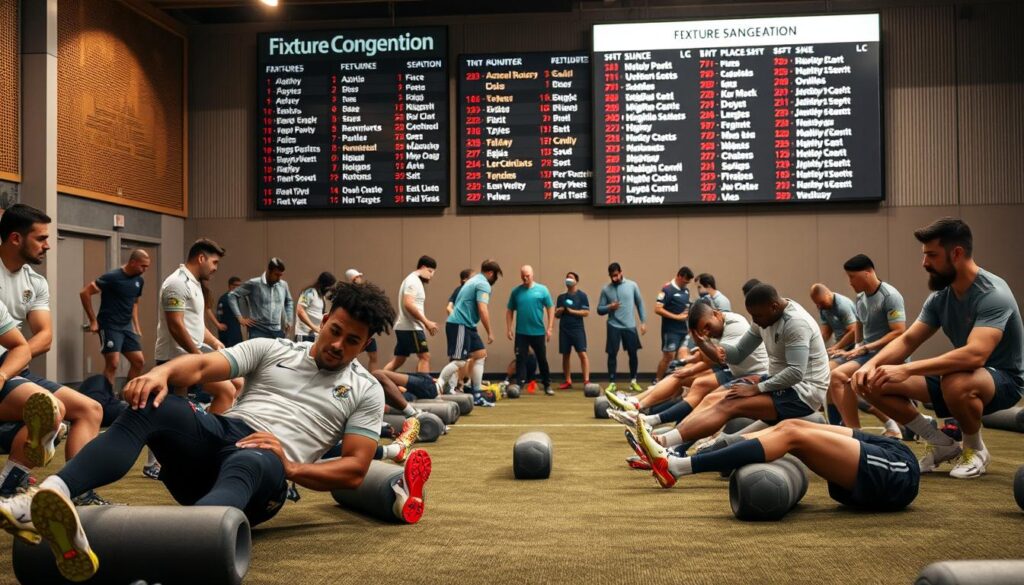
Clubs facing a packed winter calendar lean on clear medical plans and precise recovery routines to keep players available. Teams combine monitoring tools with hands-on care to reduce injury risk and sustain performance. This is where load management and sports science meet daily coaching choices.
Load control and sports science interventions
Coaches use individualized programs that track minutes, GPS output and wellness scores. Sports science teams schedule deload sessions, adapt training loads after heavy games and use data to decide who needs rest. These steps speed player recovery and lower the chance of muscle and soft-tissue problems.
Practical steps clubs take
- Daily wellness questionnaires and sleep tracking to flag issues early.
- GPS and heart-rate monitors to inform training adjustments.
- Targeted soft-tissue therapy, cold-water immersion and compression for quick recovery.
Goalkeeping and defensive rotation considerations
Defenses need trust and shared positioning. Managers balance that need against fatigue when planning changes. Many keep a consistent goalkeeper to preserve communication while rotating full-backs or midfielders who cover lots of ground.
Shifting shape can protect tired defenders. A temporary move to a more conservative back line or leaving a senior center-back in to organize play are common tactics. These choices aim to limit lapses that occur when cohesion breaks down.
Managing morale and fan expectations during rotation
Fans expect strong lineups and immediate results. Clear messages from managers help explain rotation choices and show faith in younger players. Praising contributions and sharing the rotation rationale reduces backlash and maintains team confidence.
Home results and visible progress ease tension. When supporters see a plan and occasional success, acceptance of rotation rises and squad morale holds steadier under fixture pressure.
Case studies: clubs navigating winter congestion and lessons for U.S. audiences
The Brentford case study shows how a thin attacking group and international call‑ups force tactical changes. Igor Thiago’s burst of 11 goals in 15 Premier League appearances made him vital, while Reiss Nelson’s injury, Kevin Schade’s suspension and Dango Ouattara’s AFCON duty left Thomas Frank with few senior forwards. Brentford rotated heavily—five changes against Arsenal and a back‑five switch versus Leeds—to survive three‑games‑in‑a‑week cycles and openly signaled January reinforcements were under review.
Tottenham Hotspur provides a contrast on how home pressure compounds congestion problems. Poor home form, vocal fan reactions and in‑stadium booing of players like Guglielmo Vicario have shaped tactical choices and media narratives. For U.S. audiences, the lesson is that crowd environment and media scrutiny interact with fixture density and can alter a manager’s rotation policy and risk tolerance.
European examples with US players abroad highlight workload trade‑offs across competitions. Christian Pulisic at AC Milan, Weston McKennie at Juventus, Sergiño Dest and Ricardo Pepi at PSV, Tim Weah at Marseille, Folarin Balogun at Monaco and Auston Trusty at Celtic all face domestic and continental calendars. Pulisic’s scoring in Serie A and McKennie’s UCL goal illustrate how American internationals are affected by match congestion and rotation decisions managers must make.
MLS scheduling and roster strategy also offer clear takeaways. Inter Miami’s midseason investment in Lionel Messi, Jordi Alba and Sergio Busquets shows how targeted additions can tilt a title race and force concentrated rest plans; Messi’s regular‑season numbers and playoff output reshaped minutes management. The practical lessons for American clubs are consistent: prioritize depth, build sports‑science capacity, track minutes across international windows, and use transfer periods to add reinforcements. These case studies give actionable guidance for U.S. teams and fans monitoring winter congestion and squad planning.

