
Nearly one-third of global federations now cite December as the pivotal window for final rankings, transfers, and policy rollouts, a shift underscored after the IOC’s recent Olympic Summit in Lausanne.
The Summit, chaired by IOC President Kirsty Coventry, tied winter sports planning and year-end competitions to broader governance and integrity priorities. Leaders from World Athletics, FIFA and the World Anti-Doping Agency joined athletes’ commission chairs to reaffirm protections for political neutrality and athletes’ rights, while flagging the need for clearer definitions that will shape access to international sports events.
Social platforms are already amplifying announcements and fan reactions, making the December sports calendar as much about media strategy as it is about results. From Milano Cortina 2026 coordination updates to Dakar 2026 youth pathways and LA28 planning notes, the IOC recapped “Fit for the Future” consultations that set the tone for winter sports planning and next-stage reforms.
As editorial cycles turn and broadcasters prepare year-end packages, December’s dense slate of fixtures and governance decisions will drive global sports news and influence policy, rights negotiations, and athlete pathways well into 2026.
Key Takeaways
- IOC Summit linked Milano Cortina 2026, Dakar 2026 and LA28 planning to anti-doping and neutrality discussions.
- Leaders including Sebastian Coe and Gianni Infantino joined athletes’ representatives to stress athletes’ rights and responsibilities.
- Social media remains central for distributing updates about international sports events and shaping fan engagement.
- December sports calendar now doubles as a decision-making period for governance, broadcast rights and winter sports planning.
- Year-end competitions will influence global sports news agendas and policy shifts into 2026.
High-stakes winter and year-end competitions shaping the global calendar
The year-end stretch tightens timelines for organizers, federations, and athletes. Olympic planning for Milano Cortina 2026 and other winter events drives decisions on qualification windows, broadcast slots, and venue readiness. Summit briefings highlighted how Olympic coordination commissions keep operations on track while federations balance calendars with broadcaster demands.
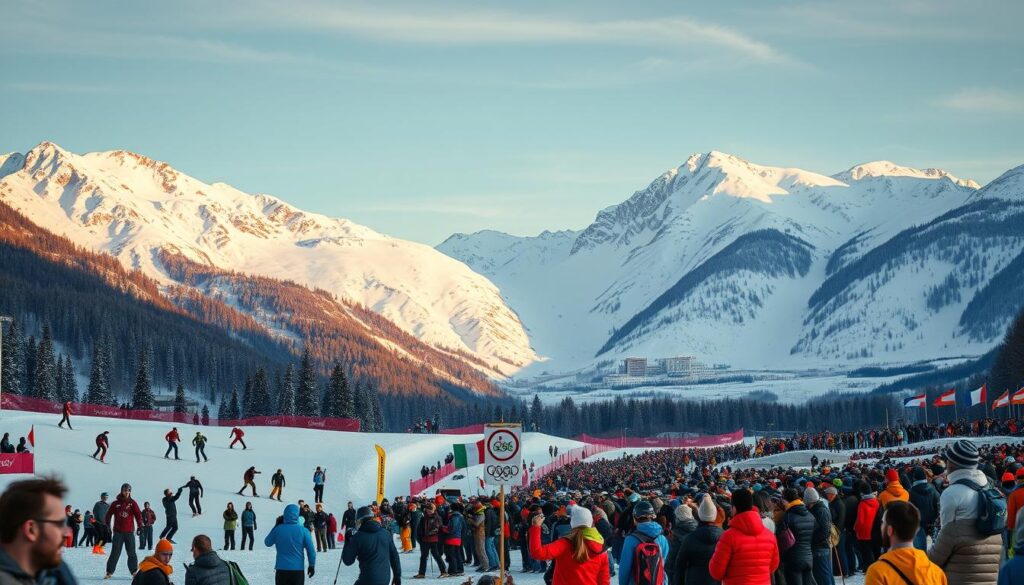
Milano Cortina 2026 and Olympic movement updates
Recent meetings updated stakeholders on coordination for Milano Cortina 2026. The IOC Fit for the Future consultations shaped recommendations used by Olympic coordination commissions to refine athlete qualification timelines and venue logistics. Organizers are urged to apply standard federation protocols for flags, anthems, and uniforms where national bodies remain in good standing.
International federation governance and athlete access
International federation governance decisions in December affect talent pipelines and athlete mobility. The Summit reinforced that IOC political neutrality supports broad athlete access. Member bodies were asked to consider restoring entry for youth athletes Russia Belarus at youth competitions, with implementation depending on each federation’s rules. Senior-level government sanctions remain, and federations were advised against hosting events in Russia.
Anti-doping and integrity developments
Anti-doping measures received focused attention after the 2025 World Conference on Doping. WADA and the International Testing Agency discussed enforcement and testing protocols for both senior and youth competitions. Summit participants agreed testing intensity may rise at year-end events to protect integrity and to deter conduct that conflicts with the Olympic movement’s mission.
- Coordination bodies clarifying December qualification windows and broadcast-friendly schedules.
- Federations balancing international federation governance with national rules on athlete access.
- WADA and ITA reinforcing testing protocols learned at the 2025 World Conference on Doping.
international sports events: marquee matches, tournaments and turning points in December
December compresses big moments into a short span. Marquee matches December and late-season championships push narratives from domestic playoffs into global conversation. Single-decision drama, like a Game 7 or a decisive World Series inning, drives social feeds and forces broadcasters to adapt schedules to capture fleeting attention.
Major professional and international fixtures that define narratives
High-profile fixtures create compact storylines that travel fast. A sudden-death frame or a dramatic run alters rights windows and boosts demand for on-demand clips. Broadcast rights buyers and leagues watch these peaks closely to shape year-end programming and sponsorship value.
Platforms such as Instagram accelerate highlight distribution, feeding younger audiences who expect short, shareable moments. The way broadcasters package those moments affects negotiations on long-term broadcast rights and the entry of private capital in sports.
Youth events and policy changes affecting participation
Policy shifts around youth competitions are changing access and eligibility. Recommendations to reinstate Russia Belarus youth athletes for international youth competitions highlight tensions between IF youth definitions and national policies.
Those recommendations aim to standardize flags, anthems and uniforms when federations meet governance tests. Event organizers preparing for Dakar 2026 must balance IOC guidance with travel and accreditation calendars in December qualifying windows.
College and domestic sports developments with international reverberations
U.S. college athletics regulation debates echo abroad. College athletics regulation conversations about student-athlete compensation and Title IX implications reshape talent flows that appear in December tournaments and transfer periods.
Private capital in sports has grown, changing how leagues monetize content and package late-season championships. Investors target predictable cash streams tied to marquee matches and international fixtures, which reshapes scheduling, media deals and the timing of key events.
Ticket markets react to clarity. The World Cup draw proved a turning point for resale pricing in another major tournament, showing how concrete schedules influence fan behavior and secondary markets. Read more on how ticket markets shift after draws here.
Fan engagement, media production and technological challenges during year-end sport
December’s packed schedule forces rights-holders and broadcasters to rethink how they reach audiences. Fan engagement December now favors short-form social clips, newsletters and on-demand content to deliver bite-sized moments that keep fans returning each day. Gen Z sports consumption leans heavily on mobile, shareable highlights and social-first highlights, so content pipelines must prioritize speed and platform-native formats.
Fan engagement, content and social distribution
Teams and leagues are investing in direct distribution and personalized outreach to build loyalty. Newsletters and push notifications create appointment moments while on-demand content and social reels extend lifetime value. Platforms like Instagram remain central for quick highlight delivery, and lessons from D2C experiments show that first-party data enables smarter offers and better conversion.
Production technology, contingency planning and lessons from recent events
High-profile incidents, including London event technology issues during recent international fixtures, underline the cost of broadcasting technology failures. Production resilience requires redundant transmission routes, rapid asset management for clips, and clear public communications when failures occur. Contingency planning sports events now includes vendor coordination, backup encoding and workflows that prioritize social-first highlights when linear feeds falter.
Political neutrality, sanctions and accreditation impacts on event narratives
Operational planning must also account for political neutrality in sport and evolving policies on sanctions Russia Belarus. Event accreditation restrictions and IOC guidance shape who attends and how media frame participation, affecting public narratives and sponsor exposure. Organizers that align communications with Olympic values and transparent accreditation rules reduce reputational risk and help maintain fan trust.
For a deeper look at how direct-to-consumer strategies, personalization and technology drive fan experiences, read this perspective on the D2C revolution: fan engagement and D2C trends.

