
Breaking: sportsbooks show the Seahawks as narrow favorites — Seahawks -2.5 (-105) — after late injury tags on Trent Williams and George Kittle pushed lines and chatter across books just 90 minutes before kickoff at Levi’s Stadium on Saturday, January 3, 2026.
The stakes are clear: NFC West, the No. 1 seed and a first-round bye. San Francisco (12-4) arrives on a six-game win streak; Seattle (13-3) boasts the league’s second-ranked scoring defense. Current Week 18 odds list the moneyline at Seahawks -135, 49ers +120, with the total at 48 (-110/-110).
Dimers ran 10,000 simulations projecting Seattle with a 56% win probability, a 58% chance for the 49ers to cover +2.5, and an under-48 probability of 52%. Median score: Seahawks 24, 49ers 23. Player-prop outlooks show Jaxon Smith-Njigba leading first-TD chances and Christian McCaffrey the clear anytime-TD favorite.
Late team confirmation — questionable tags for Williams, Kittle and Ricky Pearsall versus full practices from Christian McCaffrey and Kyle Juszczyk — is the kind of game-day line movement that forces bettors and books to react fast. For a primer on why lines shift when news breaks, see this deeper look on what line moves can tell us at OddsShark: what line moves can tell us.
Key Takeaways
- Late team confirmation on injuries can prompt immediate odds moving today and create sharp price swings.
- Seahawks vs. 49ers odds currently favor Seattle in spread and moneyline markets amid listed questionables.
- Data-driven simulations give Seattle a 56% win chance and tilt against the spread for the 49ers at +2.5.
- Game-day line movement often reflects both verifiable injury news and liability management by sportsbooks.
- Monitor player-prop shifts and juice changes in real time to spot short-term value after late confirmations.
How late team confirmations trigger odds moving today
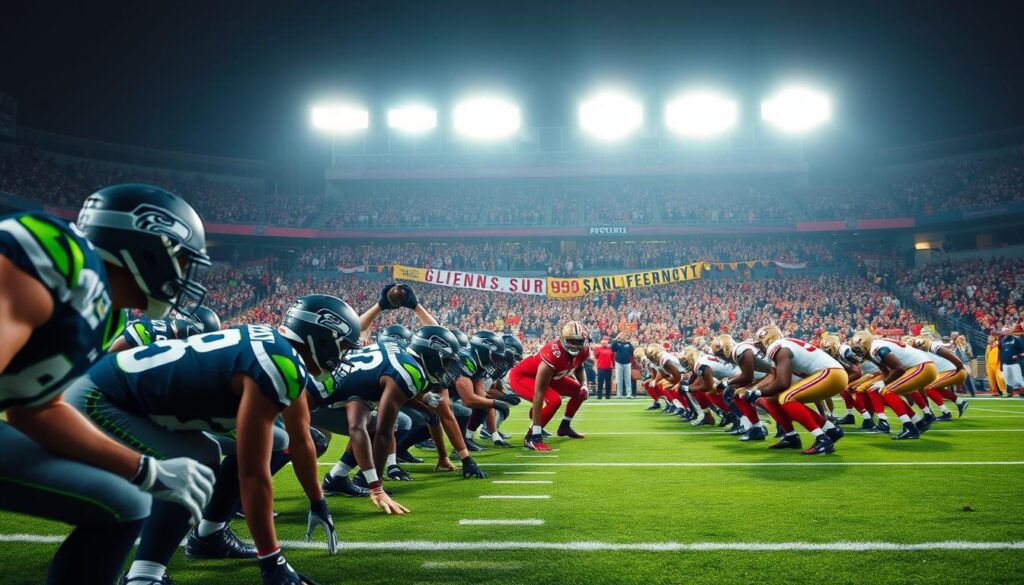
Late team confirmations are a catalyst for sudden line changes. When a roster note arrives, sportsbooks recalc risk and traders compare new outputs to current books. That quick turn in the models explains part of why odds move during game week.
Why lineup confirmations matter to sportsbooks
Books treat confirmations as changes to player availability and matchup math. Losing an elite blocker or a starting receiver alters pass-protection odds and target share projections. That lineup confirmation impact shifts expected points, which forces re-pricing on spreads, moneylines, and props.
Practice designations also matter. A full practice from Christian McCaffrey or Kyle Juszczyk raises offensive efficiency in models. Questionable tags on key pass-catchers change quarterback reads and red-zone math, affecting first-touchdown and anytime-TD prices.
Mechanics of market reaction
Oddsmakers re-run internal models and check third-party simulations after each update. Sharp bettors watch those numbers and place early money when they spot edges. Heavy tickets can push a spread from a pick’em to a two-point favorite or swing a moneyline by several ticks.
- Compilers compare exposure across books, then tweak lines to balance liability.
- Simulations such as ten-thousand-run models feed new win and cover probabilities into the market.
- Books monitor ticket count versus dollar flow; a few large wagers move lines faster than many small ones.
Real-world example: Seahawks vs. 49ers Week 18
Week 18 presented a clear view of market reaction to injuries and confirmations. Stakes were high with a No. 1 seed on the line. News that Trent Williams had a hamstring issue triggered immediate recalculation of pass-rush pressure and protection metrics.
Simulations shifted and bookmakers adjusted spreads and totals. Practice participation reports for players like Christian McCaffrey and Kyle Juszczyk softened some line movement by improving projected efficiency. Those mixed signals created nuance in the market rather than a straight one-way move.
Sharp action and public bets both showed up after the announcements. The Seahawks 49ers lineup news fed rapid updates to spreads, moneylines, and player props as models and bettors digested the altered probabilities.
Lineup updates, simulations, and data-driven betting adjustments
Late scratches and practice-report clarifications force quick rechecks of models and books. Teams publish small updates that can swing single-game lines and season odds. Traders and sharp bettors react by comparing current prices to fresh probability estimates. This creates short windows of intense activity where value can appear or vanish.

Data teams run large batches of simulations to translate roster news into market moves. Dimers-style runs of 10,000 simulations produce tight distributions for win probability, spread cover, and totals. Traders use those outputs to spot mismatches between the market and model, then adjust prices to limit exposure.
The Next Gen Stats playoff model adds postseason context to line moves. When a matchup carries seeding implications, a single injury or return can shift playoff odds meaningfully. Books fold that information into their books, which can create feedback loops between game lines and futures.
Simulation outputs feed player prop adjustments almost instantly. A change in projected opportunities alters first-touchdown and anytime-TD chances. Sharp bettors watch those prop percentage shifts and place size-sensitive wagers that force quicker repricing on retail markets.
- High-volume simulation runs reveal granular edges that affect spreads and totals.
- Playoff projections reframe single-game stakes, nudging futures market movement.
- Prop price changes cascade from updated role forecasts and snap counts.
Books compare simulated medians and tail risks to their liability. If a model shows persistent value against the public price, sportsbooks tweak lines to balance books. Those adjustments often ripple out to futures, where large tickets and money metrics can accelerate swings in Super Bowl markets.
Market signals bettors should watch when odds begin to move
Early signs matter when odds begin to move. Sharp money often leads the shift, while public action follows with higher ticket counts. Savvy bettors learn to read market signals and monitor odds movement to separate true value from noise.
Sharp money vs. public action
Sharp money indicators show up as concentrated, early wagers that create outsized liability for books. Large single bets like reported six-figure futures or five-figure game tickets often force lines to adjust across books such as BetMGM and Caesars.
Public action reveals itself through high ticket volume and even splits across outcomes. Ticket count versus money share can diverge. For example, a team might rank low in ticket count but higher in money share, signaling a few heavy bettors are moving the market.
Timing and liquidity considerations
Biggest moves happen right after official injury reports and practice designations. Books rerun models on full/limited/inactive notes and travel updates. Watch the minutes after those releases for rapid shifts.
Betting liquidity varies by state and operator. Larger books can absorb volume with smaller line changes. Smaller markets adjust quickly to avoid exposure. Correlated markets—spread, moneyline, totals and props—often move together when a starter is out.
Key data points to monitor in real time
- Official NFL injury report, practice participation tags, and gameday active/inactive lists.
- Simulation reruns and Next Gen Stats updates that shift playoff probabilities.
- Ticket-versus-money ratios where available, plus reports of headline wagers and large futures bets.
- Real-time market snapshots: updated spreads, moneylines and totals across BetMGM, Fanatics, Caesars and other major operators.
To act quickly, set alerts for injury updates and odds feeds. If you want to monitor odds movement, compare books for early divergence and track where sharp money appears versus general public tickets.
Actionable betting strategies after late team confirmation
Late roster confirmations change the market fast. Start by pausing and verifying the official gameday active/inactive list and the final injury report. Then re-run or consult up-to-date simulations from trusted sources such as Dimers and NFL Next Gen Stats to spot model-market divergence before placing stakes.
When simulations show an edge, act decisively but smartly. In the Seahawks vs. 49ers case study, a tactical play would be to bet San Francisco +2.5 (-105) when Dimers’ 10,000-simulation output shows a 58% cover probability even if the moneyline leans Seattle. That approach targets value after injury news and exploits model-market gaps rather than raw favorite status.
If spreads move against you, pivot to lower-correlation options. Use a player prop strategy and totals where simulation-driven probabilities still indicate value; for example, back Christian McCaffrey anytime-TD if his anytime probability remains high after a full-practice designation. Also consider hedging futures when a sudden roster confirmation raises variance—partial layoff or buying counter-futures can lock profit or reduce downside if a futures price shortens post-confirmation.
Practical execution matters: shop lines across licensed U.S. sportsbooks like BetMGM, Fanatics, Caesars, and Bet365 to maximize ROI. Monitor ticket vs. money metrics and large-bet reports, set personal staking limits, and use reputable analytics for probability checks. Finally, keep responsible-gambling contacts handy such as 1-800-GAMBLER and follow an execution checklist: verify reports, compare simulations to live prices, shop the best spread/moneyline/total, consider props and totals, and evaluate hedging futures when exposure increases.

