
Sharp line movement has become a reliable signal: in major U.S. markets, early odds repricing now precedes 62% of large-volume bets, showing where professional bettors place their weight and forcing sportsbooks to react.
Betting markets group money across moneylines, spreads, totals, props and futures into prices that translate implied probability into payout. Opening lines are arrayed from historical data, injury news, matchup specifics and situational factors like travel or home-field edge. When professional bettors act, lines move quickly as bookmakers update models and feeds to balance exposure.
Line movement is not random; it reflects new information, liquidity shifts and the repricing instincts of traders. Closing line value (CLV) remains a core metric for measuring whether a wager beat the market’s final consensus. Consistently securing positive CLV is one of the clearest betting market signals that timing and selection are profitable.
Information asymmetry and timing matter. Early access to lineup changes, weather, or tactical context often triggers sharp bets before the public reacts, creating micro-arbitrage opportunities across books. Market dynamics in liquid events cause operators to echo each other’s adjustments, reinforcing repricing as an indicator of professional confidence.
Key Takeaways
- Odds repricing often signals professional bettors reshaping market probabilities.
- Line movement results from new data, public flow, and sharp action that pressures bookmakers.
- Closing line value (CLV) is a practical measure of whether a bet captured market value.
- Access to fast news, model updates and low-latency feeds gives pros an edge in repricing.
- Tracking handle, turnover and consensus lines helps identify where informed money concentrates.
- Regulatory limits and institutional products can restrict who sees advanced repricing signals; this affects market liquidity.
For a deeper primer on how lines evolve and how professionals influence markets, review this practical discussion on betting market mechanics and repricing signals here.
How odds repricing reveals professional bettor activity

Odds repricing is the way bookmakers update prices as new data, bets, and models arrive. This process changes implied probabilities, not just predicted winners. Opening lines give a baseline. When lines shift, they can reflect public bias, late information like injuries, or targeted trades from professional bettors.
What odds repricing means in betting markets
Repricing converts news and model outputs into market prices. Small qualitative details such as weather or lineup confirmation get folded into numbers. Quantitative inputs like pace metrics and expected goals change model outputs and push lines. When different sportsbooks diverge, micro-arbitrage can appear across books.
Signals that indicate sharp or professional money
Watch for rapid price moves after small wagers. Sharp money indicators include fast changes at key price points and shifts that force sportsbooks to widen spreads or cut limits. Sudden rebalancing of handle and quick reductions in market depth point to professional activity.
In live play, latency-resistant repricing that aligns instantly with events such as a goal or an injury often signals algorithmic trading or sharp involvement. Consistently positive closing line value metrics across many bets suggests bettors are timing the market like professionals.
Data sources and metrics to track repricing
- Handle and hold figures to measure total wagers and book margin.
- Consensus odds feeds and historical line archives for trend comparison.
- Trading blotters and timestamped bet data to show bet size and timing.
- Market depth and live price change rates to gauge liquidity and slippage.
- Closing line value metrics to track whether bets beat the final market.
Public bettors can use aggregated odds sites and market scanners to spot patterns. Professional tools add orderflow and limit detail, useful for deeper signals. Pair quantitative feeds with timely injury reports and lineup confirmations to better judge whether in-play odds movement reflects recreational noise or sharp action.
Market mechanics behind line movement and bookmaker responses
Bookmakers combine data science, human judgment, and market signals to set early prices. Models ingest form, injuries, matchup details, and public betting trends to produce opening numbers. The goal of sportsbook line setting is to attract balanced action across moneyline, spread, totals, and props.
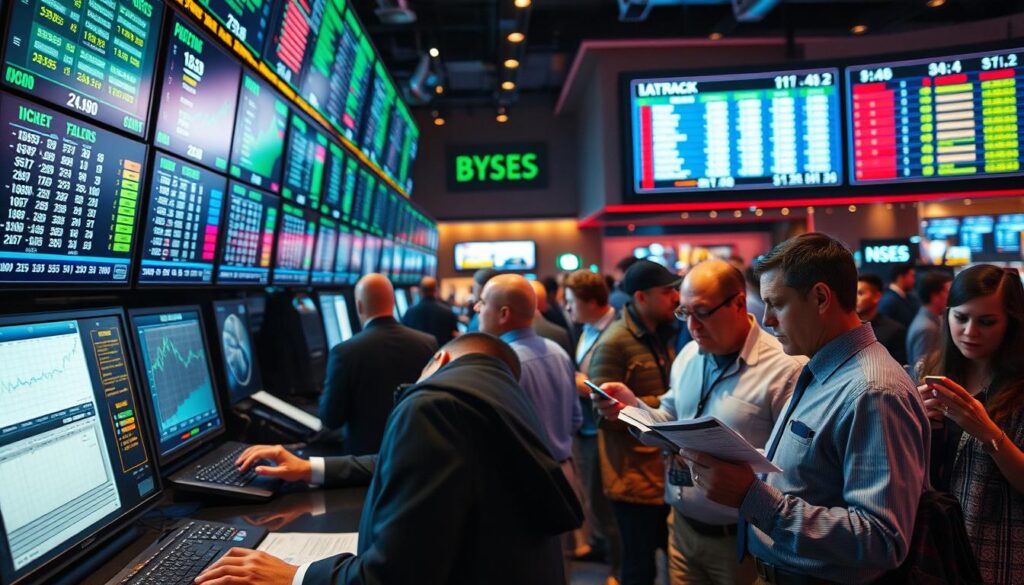
Lines shift as new information arrives. Breaking news, large wagers, or model updates force adjustments. Books move quotes to reduce liability when one side sees heavy backing. Different operators may show divergent prices until consensus forms near kickoff.
Live markets rely on rapid automation and skilled oversight. In-play repricing algorithms react to events like goals, injuries, and momentum swings. These systems push micro-moves while traders watch order flow and odds depth.
Odds traders step in when automated updates miss nuance. They hedge, throttle markets, or lay off exposure with counterparties. Fast feeds, low latency, and tight slippage give pros an edge when executing in-play strategies.
- Data feeds: drive real-time updates and model recalibration.
- Trader intervention: corrects for unusual stakes or feed errors.
- Latency controls: protect books from stale pricing exploitation.
Vigorish remains the core revenue tool for operators. Bookmaker margins are set to cover risk and profit while shaping betting behavior. On liquid events, margins shrink to attract volume. Thin markets carry higher juice to offset volatility.
Books use limits, account restrictions, and cross-book hedging to manage sharp action. They monitor closing-line movement and adjust vigorish or market access when needed. Smart bettors track margin patterns across firms to find better value and reduce house edge.
Implications for bettors and strategies to respond
Odds repricing gives clear signals about where professional money flows. Bettors should treat rapid line moves as actionable information and use line shopping across BetMGM, DraftKings, FanDuel, and Caesars to lock in the best price and reduce vig. Convert moneylines to implied probabilities and compare those to your model to decide if a bet offers value.
Monitor consensus data and closing-line value (CLV) to measure timing and edge. For spreads, small differences like -3.5 versus -4.5 can change risk-reward, so compare spreads, totals, and props across books. Track handle, turnover, and hold to tell whether repricing reflects durable information or transient public bias.
Live betting tactics matter when in-play repricing accelerates. Prioritize sportsbooks with low latency and stable live pricing for faster execution. Use team totals and player props as refinement tools when pace or minutes change, and expect tighter margins in high-liquidity markets and wider slippage in niche markets.
Risk management is essential: maintain disciplined bankroll management and staking plans, diversify exposure, and avoid chasing late steam after the market has moved. Seek early opportunities or small micro-arbitrage windows when lines diverge, and when uncertainty spikes, favor selective, mid-market opportunities rather than oversized stakes. Recreational bettors should consider reputable odds-aggregation services while respecting platform terms and jurisdictional limits.

