
Clubs now treat rotation as strategy: since IFAB ratified five substitutions on July 1, 2022, teams are making in-game and season-long choices that reflect deliberate long-term team planning rather than short-term tinkering.
The rule change followed decades of regulatory shifts — from the back-pass rule in 1992 to VAR in 2018 — that reshaped match tempo and player workload. Those evolutions, and recent data like FIFPRO’s World Cup 2022 finding of extended added time, mean coaches must balance immediate results with player welfare and squad depth across competitions.
What looks like simple bench management is often a signal of broader roster construction: deliberate rotation policies affect transfer strategy, youth integration, and medical planning. This squad rotation update is now a visible marker of clubs planning seasons, not just single matches.
Key Takeaways
- Five substitutions have institutionalized in-game personnel management and influenced long-term team planning.
- Rule changes over decades altered match demands, raising the importance of player welfare in selection decisions.
- Longer effective playing time increases cumulative load, making squad depth essential for season objectives.
- Rotation choices inform transfer-market strategy and talent development pathways.
- Expect clubs to use rotation as both a tactical tool and a public signal of strategic intent.
Why Squad Rotation Matters for Long-Term Team Strategy
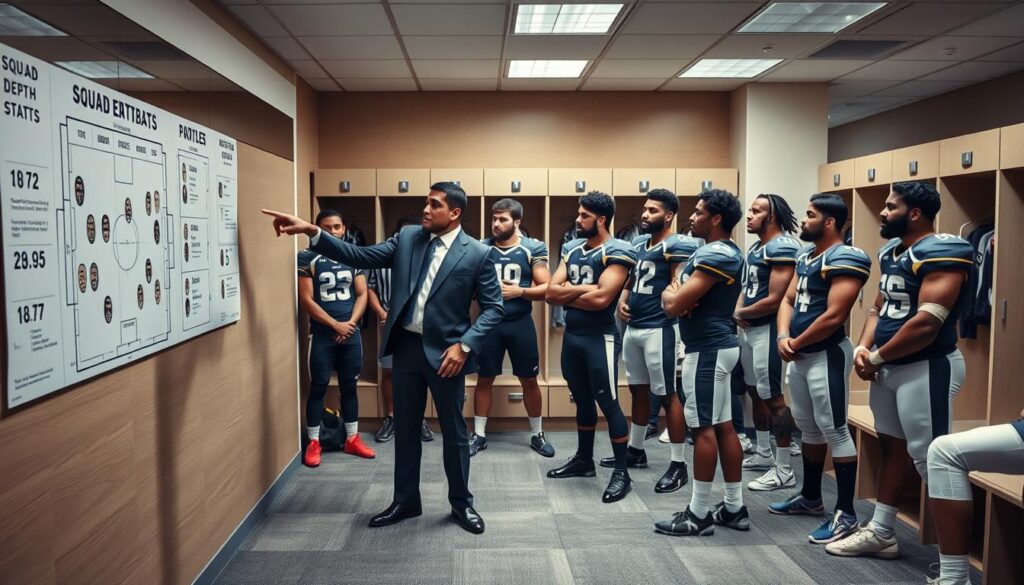
Squad rotation shapes how clubs manage a long season. Teams that rotate well protect player fitness, reduce injury risk, and keep performance levels high across competitions.
Historical rule changes shifted incentives for rotation. The 1992 back-pass rule forced goalkeepers and outfield players to be more comfortable on the ball, raising the value of technical versatility across the roster. The adoption of VAR and trials of Semi-Automated Offside Technology changed match rhythms and increased stoppage time for reviews, which can alter fatigue patterns and strategic substitutions. The move to five substitutions, introduced in 2020 and made permanent in 2022, expanded in-game rotation options and made bench strength more decisive for season planning.
Historical rule shifts that changed rotation incentives
Each rule tweak nudges club behavior. The back-pass rule increased pressing intensity and turnover moments, requiring more rotation to sustain high-tempo systems. VAR means longer breaks and micro-recoveries, which coaches must consider when planning minutes. The five-sub rule allows managers to protect key players while keeping tactical flexibility.
Physical load, recovery and modern match demands
Modern schedules include domestic leagues, cups, and continental fixtures. Added time has grown, with tournaments showing extended stoppages that raise cumulative minutes. Greater effective playing time increases player load and magnifies recovery needs between matches.
Sports science now focuses on individualized monitoring. Teams use GPS, heart-rate metrics, and wellness scores to decide who trains hard and who rests. These tools let staff plan scheduled rest and manage minutes to lower injury probability.
Roster depth and transfer-market implications
Squad depth is central to rotation strategy. The five-sub rule raised the market value of versatile players who can cover several roles. Clubs that scout and develop adaptable talent gain flexibility without overspending on marquee starters.
Transfer market behavior reflects this shift. Teams buy players who can slot into rotation plans and sell feeder-club assets for profit when those players mature. Smart recruitment and youth pipelines help clubs balance short-term results with long-term sustainability. For a deeper look at rotation as a planning tool, read this analysis on the art of squad rotation: squad rotation and performance.
- Rotation protects players and keeps intensity high.
- Rule changes such as the back-pass rule and VAR affect match tempo and stoppage patterns.
- Strong squad depth reduces reliance on single stars and shapes transfer market targets.
squad rotation update
Teams across Europe are revising minutes plans to protect players and sharpen competitive edges. This squad rotation update looks at club-level moves, the rule shifts that shaped them, and how managers will respond in the next run of fixtures and transfer windows. The aim is practical: keep stars fresh, expose young talent, and preserve form across competitions.
Recent club examples of deliberate rotation policy
Liverpool scouting has become more targeted toward versatile wide players who can cover multiple roles in a congested calendar. The club’s interest in Watford’s Othmane Maamma shows a pattern: recruit youngsters who adapt to rotation without a drop in output.
Manchester United and Newcastle United have tracked similar profiles, creating a competitive market for rotation-ready talent. Clubs now plan playing time as an asset, not a liability, with rotation built into season roadmaps.
How rule environment enabled current updates
The permanent five substitutions impact has been decisive. Coaches can manage in-game loads, change tactical shape more often, and protect key players from excessive minutes.
Law changes around added time, VAR adjustments, and SAOT trials lengthen and complicate match rhythms. That uncertainty makes fixture management more important than ever, so teams recruit and rotate with those variables in mind.
Immediate implications for upcoming fixtures and transfer windows
In the short term, managers will use rotation to target crucial matches and rest starters ahead of European ties. The five substitutions impact lets them spread minutes across the squad while preserving intensity for decisive periods.
- Fixture management: expect selective resting and minute plans for congested weeks.
- Transfer window implications: summer windows will see top clubs pursue versatile youth rather than rely on emergency January buys.
- Market behavior: players with multi-position skills will draw premium interest from teams refining their club rotation policy.
Operationalizing rotation: coaching, analytics and medical coordination
Bringing rotation from idea to practice needs tight links between medical staff, analysts and the coaching team. Clear protocols help teams use data to set minutes, shape training loads and plan rest windows without breaking tactical patterns.

Sports science and load-management systems give objective signals that inform day-to-day decisions. GPS tracking, heart-rate metrics and movement analysis quantify match stress. Sports science teams translate that input into recovery plans and return-to-play timelines so managers can adjust lineups with confidence.
Medical input must match competitive context. When tournaments stretch matches with extra added time, staff tailor rehab and conditioning to match intensity. Those adaptations stop small knocks from turning into long absences and let coaches lean on rotation as a preventive tool.
Coaching philosophies that support rotation value continuity while changing personnel. Coaches create role overlap so players step into the same shape and tactical brief. That model lets a manager protect form and fitness during dense schedules without sacrificing style.
Some coaches favor multi-role attackers and wide forwards who can swap positions across a block of fixtures. This approach preserves high performance and reduces the need for wholesale tactical shifts when rotating. Planning substitutions and rest windows becomes a routine element of match preparation.
Analytics for rotation bridges the gap between science and selection. Models that forecast fatigue, performance decay and recovery timelines let staff weigh short-term match needs against season-long targets. Clubs use these tools to choose which competitions deliver development minutes and which demand core availability.
Talent pipeline and player development work together to sustain rotation across a season. Academies that produce adaptable, positionally flexible players create internal depth. That reduces reliance on midseason signings and gives managers trusted options when balancing minutes.
A coordinated pathway ensures younger players receive real minutes in cup games and managed league appearances. Those minutes build experience, keep squad members match-ready and seed future starters who understand club tactics and physical expectations.
- Integrate monitoring: share GPS and recovery data between sports science and coaching.
- Design tactical templates: train substitutes to fit predefined roles and in-game switches.
- Map development minutes: allocate competitive minutes to accelerate player development.
What stakeholders should watch next: market, regulation and fan perception
Market watchers should track transfer market signals closely this spring. Expect clubs to chase two-footed, multi-positional players and to front-load summer deals rather than rush January sales. Watch scouting reports and reported valuations from Premier League clubs and Serie A sides; activity around players at Watford or similar lower-league teams often signals who top clubs view as rotation-ready. This squad rotation update will be visible in frequency of scouting trips and early bids.
Regulatory developments will shape rotation incentives. Follow IFAB meetings and FIFA pilot programs for any changes to offside interpretation, added-time enforcement, or substitution rules. Continued VAR and SAOT adoption, along with stricter stoppage accounting, will keep fixture congestion high and make rotation a practical necessity. Stakeholders should monitor announcements from IFAB and match-centre experiments that could tilt planning toward deeper benches.
Fan perception matters as much as market and rule shifts. Rotation communication from managers and sporting directors can reduce backlash when short-term results lag. Clubs that explain rotation as part of long-term competitiveness, and that link it to recruitment and development plans, build patience and buy-in. For a deeper look at how fans act as co-creators and local stakeholders, see this study on fan roles and stadium dynamics: fan stakeholder mapping.
Short-term watchlist: monitor scouting for adaptable wide forwards, track IFAB announcements and SAOT outcomes, and observe whether five-substitution usage correlates with lower injury rates and stronger late-season form. Clear rotation communication and steady market signals will be the clearest indicators that clubs are committing to a sustainable, long-term rotation model.

