
Sixty-seven percent of NFL fans say pregame headlines shape their expectations, and this week’s coaching strategy news is proving why. Media cycles now fuse coach statements, front-office moves, and viral social clips into a single narrative that sets the tone before kickoff.
Pregame coaching analysis matters because tactical choices and staff decisions affect preparation, roster usage, and playoff readiness. Outlets like The Sporting News and ESPN quickly thread quotes and timelines to explain why a late coordinator review can ripple through a locker room.
The Dallas Cowboys defensive-coordinator debate after Week 18 is a timely example. Public reaction, internal deliberations by head coach Mike McCarthy and the front office, and a multi-day review reported by national media show how NFL coaching decisions become a national conversation.
This article will move from today’s coaching headlines to an in-depth coordinator case study, then examine in-game tactics and the role of experts, fans, and media in shaping expectations ahead of kickoff.
Key Takeaways
- Coaching headlines now combine press quotes, front-office moves, and viral content into pregame narratives.
- Pregame coaching analysis can change how teams allocate practice time and use personnel.
- The Dallas Cowboys’ post-Week 18 coordinator debate highlights how internal reviews spill into public discourse.
- Major outlets like The Sporting News play a central role in framing coaching and coordinator developments.
- Kickoff strategy and NFL coaching decisions directly affect playoff readiness and fan expectations.
Pre-Kickoff Coaching Strategy News and Headlines
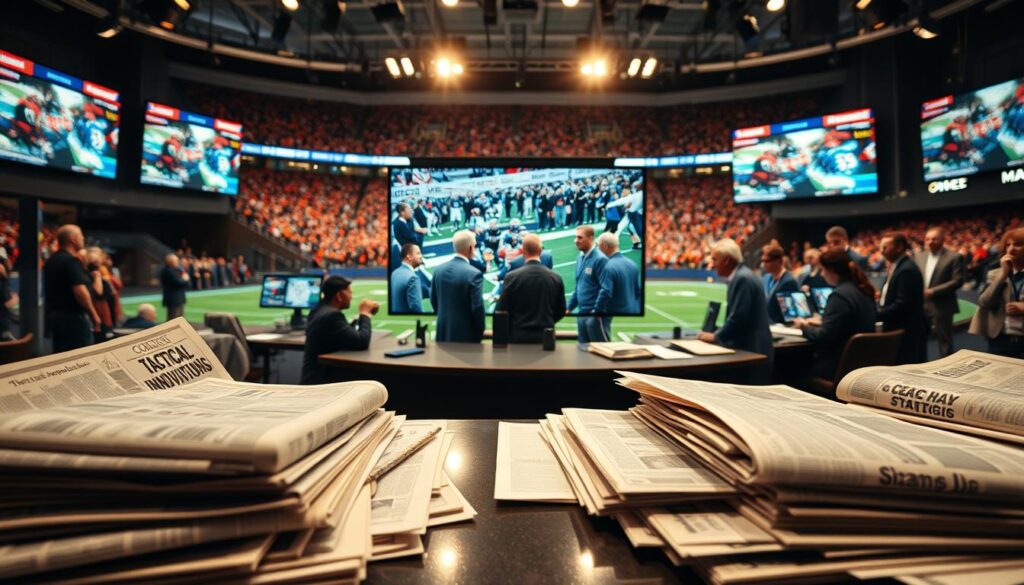
As game day nears, pre-kickoff headlines set the tone for what fans and media expect on the field. Fast-moving reports can shape narratives about unit strength, play-calling tendencies, and game tempo. Outlets like The Sporting News and team beat writers often frame early storylines that steer attention toward matchup keys.
Reporting cycles speed up when teams travel cross-country or face a short week. Coaches balance rest with necessary reps, which changes practice timing and focus. That balance shows up in coverage of coaching staff changes and how teams plan to adjust their week to ensure players are fresh and sharp.
Latest developments shaping pregame narratives
Real-time updates help define a team’s outlook with clarity. Public debates over coordinator retention or firing, plus postgame evaluations, influence expectations about offensive or defensive direction. Reporters trace those threads into pre-kickoff headlines that shape public perception hours before first snap.
How roster moves and staff changes feed into coaching chatter
Roster decisions such as benching starters or elevating backups alter game plans immediately. Teams may accelerate coordinator reviews or delay moves based on playoff implications. Analysts link those items to roster moves coaching impact when projecting play-calling and depth chart shifts.
Notable quotes and reactions from coaches and front offices
Coach quotes often reveal tone and intent without giving away detailed strategy. For example, public comments about taking time to evaluate staff over a defined period send a clear message: leadership plans to follow process rather than react to noise. Those remarks calm or stoke fan expectations depending on context.
“We’re going to go through the process and give it the time it needs,” a coordinator said after Week 18, signaling deliberative next steps.
Role of social media and viral moments in amplifying coaching stories
Social platforms accelerate the spread of official statements and fan reaction. Viral clips and highlight reels can quickly increase scrutiny on decisions made by coaches and personnel departments. Fans encountering an Instagram login prompt often still engage, which shows how central those networks have become to pregame chatter and social media coaching news.
For a look at how a team handled a short-week buildup with staff comments and injury context, see this brief report from the Seahawks’ press conference coverage here.
How Defensive Coordinator Decisions Influence Team Readiness
The defensive coordinator news cycle can shape a team’s mindset in the final days before a big game. Teams balance public pressure with internal evaluation when a coordinator’s future is uncertain. Fans notice every headline. Players notice the tone in meetings.

After the Week 18 loss to the New York Giants the Dallas Cowboys coordinator debate intensified. Calls for change rose as the defense allowed 30 or more points for the ninth time that season. Head coach Brian Schottenheimer said the club would “go through the process” and take about 10 to 12 days to evaluate options. That timeline mirrored public reporting and showed the clash between outside pressure and an internal review.
Timeline and process teams use when considering coordinator changes
- Postgame evaluation and initial staff meetings to isolate issues.
- Film study and detailed performance metrics review.
- Candidate scouting and background checks on potential hires.
- Interviews that focus on scheme fit and alignment with the head coach.
- Negotiations that may be paused if candidates remain with playoff teams.
Many clubs follow roughly the same coaching decision timeline used by the Cowboys and other franchises. That schedule commonly spans 10–12 days or longer when sought-after assistants are still coaching in postseason games.
Impact of delayed decisions on preparation and playoff scenarios
Waiting on a hire can stabilize practice plans because the existing staff stays in place. It can also breed uncertainty for position coaches and players who wonder about future schemes. Teams risk losing top candidates if they delay while those candidates chase postseason success. Rushing a hire can produce a poor fit that harms long-term progress.
The Dallas example shows the trade-off. A measured approach aims to preserve search quality and respect playoff timelines. It can frustrate fans and media who want immediate action. It may help franchises avoid mistakes that cost continuity in future seasons.
In-Game Tactics and Adjustments That Matter at Kickoff
A clear pregame plan sets the tone for the first whistle. Coaches use targeted prep to shape early momentum. That preparation makes tactical signals and play-calling strategy easier to read for staff and players. Observers track these cues to predict intent and respond quickly on the sideline.
Common pregame tactical signals and why they’re important
Teams highlight formation packages in walkthroughs to telegraph what they’ll run early. Situational scripts, like the first 15 plays, reveal intent in short bursts. Personnel groupings and special-teams alignment choices act as tactical signals opponents study closely. Media and opposing coaches use those signs to shape counterplans and test tendencies before contact begins.
How coaches allocate practice time in the final days before kickoff
Practice allocation before kickoff follows a familiar pattern. Early-week install sessions teach new calls and concepts. Midweek shifts to situational work for two-minute, red-zone, and third-down reps. Late in the week, coaches cut contact and boost mental reps to preserve players while sharpening reads.
Staff stability affects that distribution. If a coordinator change is unresolved, priorities can tilt toward fundamentals and communication. Special-teams reps remain a constant priority because they change field position and game flow.
Examples of midgame adjustments tied to pregame strategy
- Switching coverage shells after seeing offensive tempo that forces a different matchup approach.
- Altering blitz frequency if the offensive line struggles versus pressure the game plan expected.
- Changing run fits to account for unexpected personnel packages the opponent deploys.
- Varying play-calling cadence to disrupt rhythm and exploit matchup advantages uncovered early.
Those midgame shifts often trace back to film study done before kickoff. Clear lines of communication between head coach and coordinators speed implementation of in-game adjustments. Teams that rehearse contingency plans during prep gain the best chance to pivot when the contest departs from script.
Expert Analysis, Fan Reaction, and Media Coverage of Coaching Moves
Analysts and former coaches break down coaching choices by weighing personnel fit, scheme compatibility, and past results. Expert analysis coaching changes focuses on both immediate game impact and long-term direction. Outlets like The Sporting News often frame debates—such as discussions around defensive leadership—in ways that turn local personnel decisions into national storylines and shape follow-up coverage.
Fan reaction coaching news is intense in U.S. markets. Social media threads, viral clips, and local talk radio can push for urgent change after a poor performance; the Dallas Cowboys example shows how a single bad defensive outing triggered calls for staff moves and amplified scrutiny. That public pressure forces teams to balance short-term appeasement with measured internal timelines.
Media coverage coaching strategy routinely compiles coach quotes, internal timelines, and third-party analysis to contrast public pressure with organizational process. When coaches or assistants offer statements about review periods, reporters use those remarks to assess intent and pace. For guidance on managing media dynamics, see this piece on effective coach-media interactions from Athletic Director University at coach media opportunities.
Coaching narrative amplification happens when repeated messages, viral moments, and steady analyst focus combine. Teams that prepare tight, repeatable messages and control interview dynamics can influence coverage and protect program value. In practice, that discipline helps translate expert analysis coaching changes and fan reaction coaching news into constructive outcomes rather than chaotic headlines.

